South African Football Association - South African Football ...
←
→
Page content transcription
If your browser does not render page correctly, please read the page content below
FINANCEREPORT2016:Layout 1   12/5/16   11:25 AM   Page 1

                                          South African
                                       Football Association

                            A N N UA L F I NA N C I A L REP O RT i nco rp or a t ing
                         G R O U P A N N U A L F I N A N C I A L S TAT E M E N T S a n d
                        A S S O C I AT I O N A N N U A L F I N A N C I A L S TAT E M E N T S
                                   f or th e yea r end ed 3 0 J un e 2 01 6
FINANCEREPORT2016:Layout 1 12/5/16 11:25 AM Page 2

FINANCEREPORT2016:Layout 1   12/5/16    11:25 AM      Page 3

                             S o uth A f ri can Fo otb al l A ss oc ia tio n

                             An nu al Fi na nci al R epor t fo r the year en ded 30 J un e 2016

                             Governance Reports:

                                       Chairman of the Finance and Procurement Committee              4

                                       Chairman of the Audit and Risk Committee                       5

                             Administration Reports:

                                       Chief Executive Officer                                        7

                                       Chief Financial Officer                                        8

                                       EY Financial Platform Leader                                   9

                             Charts & Graphs                                                          10 – 13

                             National Executive Committee’s responsibility statement                  14

                             National Executive Committee’s statement on corporate governance         15

                             Composition of the National Executive Committee                          16

                             Report of the National Executive Committee                               17 – 21

                             Independent auditor’s report                                             23

                             Statements of comprehensive income                                       24

                             Statements of financial position                                         25

                             Statements of changes in equity                                          26

                             Statements of cash flows                                                 27

                             Notes to the financial statements                                        28 – 55

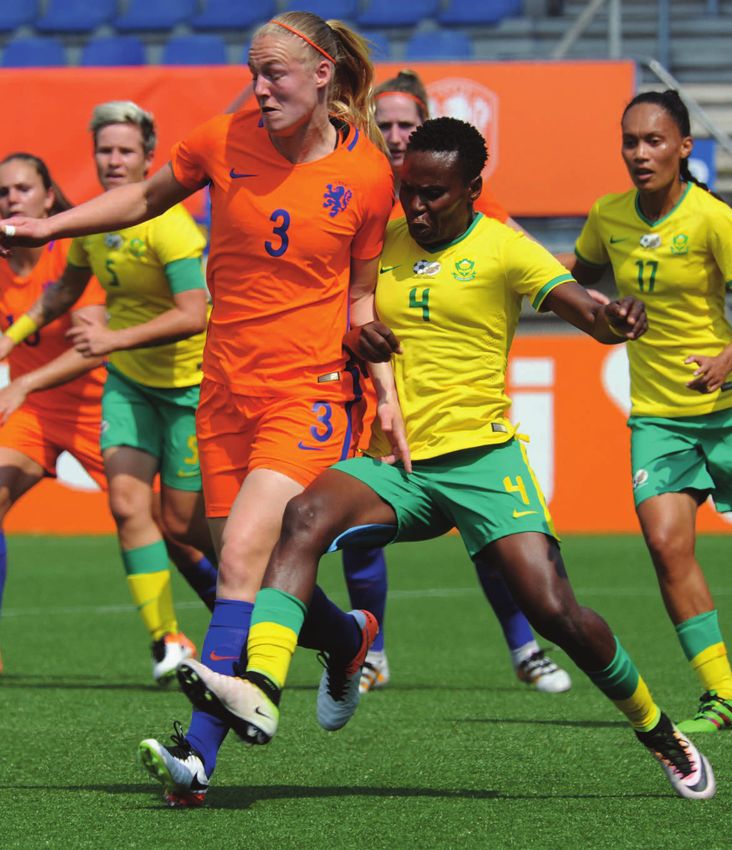
                             In June 2016 the Sasol-powered Banyana Banyana travelled to the
                             Netherlands for two international friendlies against the Orange
                             Lionesses forming part of their Rio warm-up. The ladies suffered two

                                                                                                                3
                             defeats (0 – 1 and 0 – 2) in their admirable performances against this
                             European side ranked 13th in the world.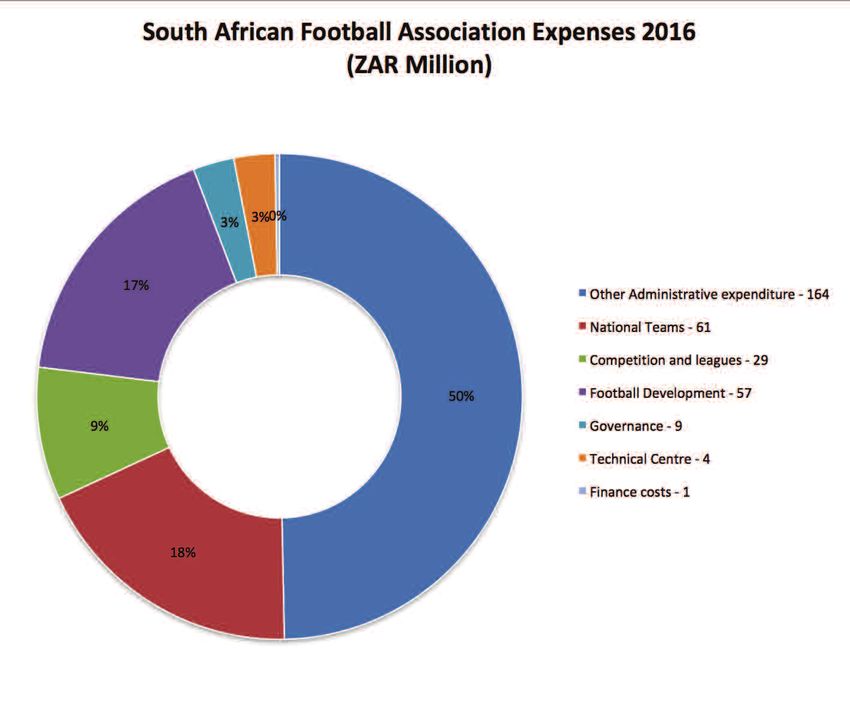
FINANCEREPORT2016:Layout 1   12/5/16   11:25 AM     Page 4

              G overnance Rep orts

                                                          Mr Thamsanqa Gay Mokoena

                                                          Chairman:
                                                          Finance and Procurement Committee

                                The past year has been a very successful one for our junior teams such as the Boys U17, Men U20, the
                                Olympic Team (Men U23) and the Women’s Senior National Team, the adorable Banyana Banyana. But
                                the year has been a difficult one for the Association in financial terms. We have made a loss of R42,3m.

                                The success of our junior teams brings about increased preparation costs and yet the teams are not
                                winning major prizes to defray the expenses. In addition, these teams are unfortunately not sponsored
                                at the moment and they do not generate any additional sponsorships even if they play at a world event
                                such as the Olympics because of the nature of representation. Whilst the cost of developing our junior
                                teams to succeed contributed to the loss position, it is an absolutely necessary cost that we cannot do
                                without. This cost is the prize we have to pay for a successful Vision 2022 Plan.

                                The costs of preparing the junior teams were not the only and the major contributor to our financial
                                performance. The main contributor to our poor performance is that we did not generate the revenue we
                                had budgeted. We were 17% below budget. The main reason for this poor performance is that one
                                of our commercial partners is still awaiting an enabling legislation to perform as per our agreements.
                                Nevertheless, the Association worked hard to establish alternative sources of revenues in the meanwhile.
                                As a result, although the results were poor in the end, I am glad to report that there was an improvement
                                of 14.6% in sponsorship revenues and that the expenditure budget was well managed.

                                It is also a pleasure to report that, despite the loss situation, the Association has continued to implement
                                its mandate of developing coaches, referees, medical and administrative staff. For example, during the past
                                year, 2,174 coaches were trained by both the Association and its affiliate, the SAFA Development Agency.
                                Significant progress has been made to prepare the National Technical Centre through support from FIFA
                                and the 2010 FIFA World Cup Legacy Trust. The Centre has already played a major role in reducing
                                accommodation, training venues and tournament related costs.

                                The turnaround strategy to build the Association to a billion rand organization is still intact. Although the
                                past year was a slight setback in our plans, we are still resolute that our goal is still within reach. Although
                                the football family in general has received negative publicity recently, it is pleasing to mention that there
                                are positive developments from the international arena. The FIFA Forward Programme and the CAF
                                improved TV Rights should bring about improved financial support to the Association. However, the
                                elephant in the room is still the poor liquidity ratio. We still have more current liabilities than current
                                assets. This is one of the major reasons that members, associates and clubs do not always receive their
                                grants timeously. However, the Executive is working on new sources of revenues to address this challenge.

                                On behalf of the Finance and Procurement Committee, I would like to convey our sincere appreciation
                                for the support we receive from the President, the Presidency, the NEC members, the CEO and his staff.
                                We would also like to thank all our members and stakeholders for their patience and tolerance throughout
                                the year. We look forward to a better year next year. Thank you.

             4       South African Football Association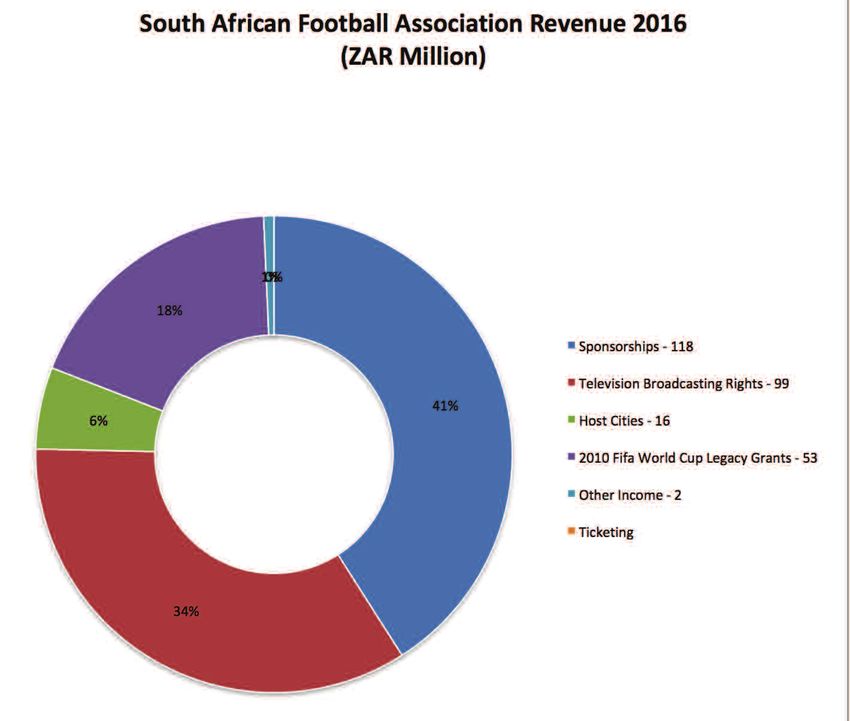
FINANCEREPORT2016:Layout 1       12/5/16    11:25 AM    Page 5

        Mr Lucas Nhlapo

        Chairman:
        Audit and Risk Committee

        On behalf of my fellow Audit and Risk Committee members, I would like to report on our assessment
        of the 2016 financial year. The financial performance was below expectation and this was mainly due
        to unrealised revenues. However, I am happy with the Group’s systems, internal controls and risk
        management programme.

        The Group continues to receive unqualified audit opinions from its auditors. This is a culmination of
        the effectiveness and efficiency of the systems and internal controls that have been in place throughout
        the financial year. The committee met four (4) times during the financial year to carry out its functions
        as prescribed by the SAFA Constitution and its Terms of Reference. The members demonstrated their
        commitment by attending most of the meetings and participating intensely.

        The committee continuously assessed the group’s systems and internal controls. We ensured that these
        are appropriate and adequate for the group and also that they are being implemented throughout the
        year. The committee continuously assessed the group’s risk profile and ensured that appropriate measures
        are taken to deal with any risk. The committee is comfortable that proper and appropriate systems and
        internal controls are in place throughout the group.

        The committee ensured that the group financial statements for year ended 30 June 2016 were prepared
        in compliance with all applicable legal and regulatory requirements and accounting standards. The
        committee also actively oversaw the external audit function by KPMG. This included approving the audit
        plan, monitoring the audit progress and reviewing KPMG’s final report including the management report.

        The committee is therefore glad to confirm the following results for the Group:

        •        Loss from operations                  R 39.2m
        •        Loss for the year                     R 42.3m
        •        Total assets                          R 205.3m
        •        Net current liabilities               R 123.1m
        •        Retained earnings                     R 6.3m

        We would like to thank the National Executive Committee for the confidence that they have shown in
        our committee.

                                                                                   2015 – 2016 Annual Financial Report   5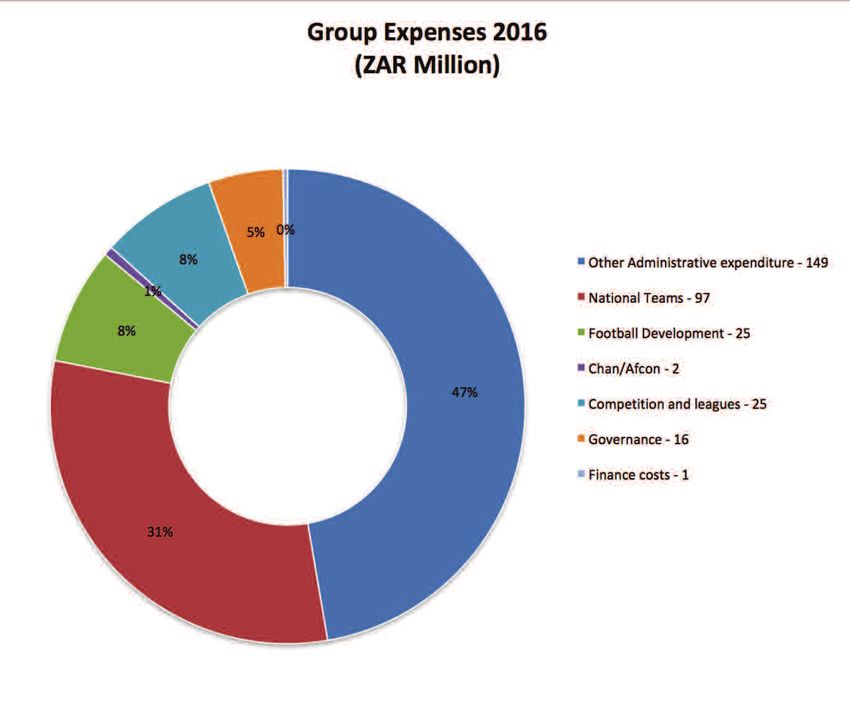
FINANCEREPORT2016:Layout 1   12/5/16   11:25 AM   Page 6

             POWERING BANYANA
             BANYANA TO THE
             WOMEN AFRICA CUP OF
             NATIONS AND BEYOND.

                                                           Sasol. Powering women’s football.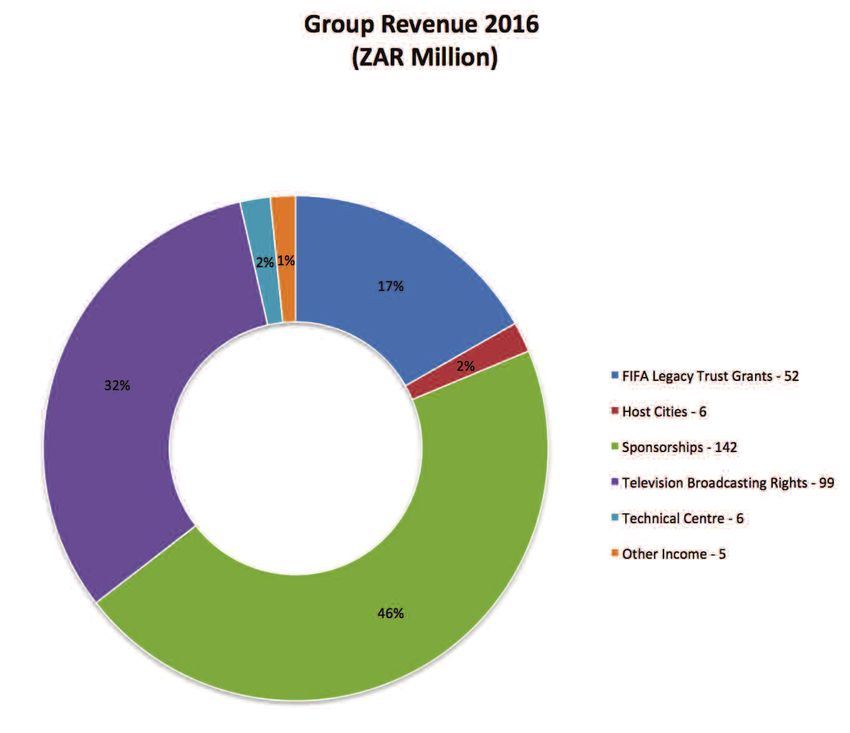
FINANCEREPORT2016:Layout 1         12/5/16     11:25 AM     Page 7

        A dm i ni s tra t i o n R e p or ts

        Mr Dennis A. Mumble

        Chief Executive Officer

        The past four years have witnessed a sea change in the way the Association governs itself, laying the
        foundation for the transformation of the Association’s governance structures – an integral part of the
        Vision 2022 Strategic Plan of the SAFA National Executive Committee.

        One of the primary pillars of Vision 2022 is the absolute requirement that the Association and all of its
        structures must perform much better on the field of play. Consistent with this, the Association has ensured
        in the past year that football is being played locally, regionally, provincially, nationally and internationally.

        We have ensured that our U13, U15, U17 and U19 leagues continue in all 343 functional Local Football
        Associations (LFAs) and Regions, that national competitions are held and that our national teams enter
        all FIFA, CAF and COSAFA tournaments.

        We were most fortunate, being the only country on the African continent, to have two national
        teams qualify for the 2016 Rio Olympic Games. Our junior national teams continue to perform well in
        international competitions and our senior teams appear well on their way to qualifying for their respective
        international competitions as of the writing of this review.

        We cannot express just how much we continue to be grateful to our sponsors and partners for their
        continued support and confidence in the Association. Castle Lager, Sasol, BURGER KING®, South African
        Airways, Nike, SABC, Motsepe Foundation, Tiger Brands, Tsogo Sun, Avis, Computicket, Netcare and the
        2010 FIFA World Cup Legacy Trust have been stalwarts in our continued delivery of Vision 2022 and must
        be saluted for their support. We trust that we can deliver on the promise they have invested in over the
        years of our partnership.

        As reported last year, most of our properties remain unfunded in a tight sponsorship market and we
        anticipated in our report that we would not be able to produce the same results as last year.

        We continued to prepare our national teams for what promised to be an eventful Rio Olympic Games
        despite the fact such preparation required an investment beyond what had been budgeted. Similarly, we
        were also faced with hosting a very successful CAF Futsal Africa Cup of Nations in the period under
        review without commercial support. These two activities remain primarily responsible for the current
        position that we are reporting on this year.

        However, whilst we were aware of these challenges and tried to ameliorate our situation, the South
        African economy caused even further contractions in the sponsorship market overall and we did not
        realise the additional anticipated revenue. But, we have made the necessary adjustments in our approach
        to the 2016-2017 budget, with a plan that we can once more produce a small surplus and grow that
        further in the 2017-2018 financial year.

        We trust that you will receive this report well and wish that you have productive deliberations at Congress.

                                                                                        2015 – 2016 Annual Financial Report   7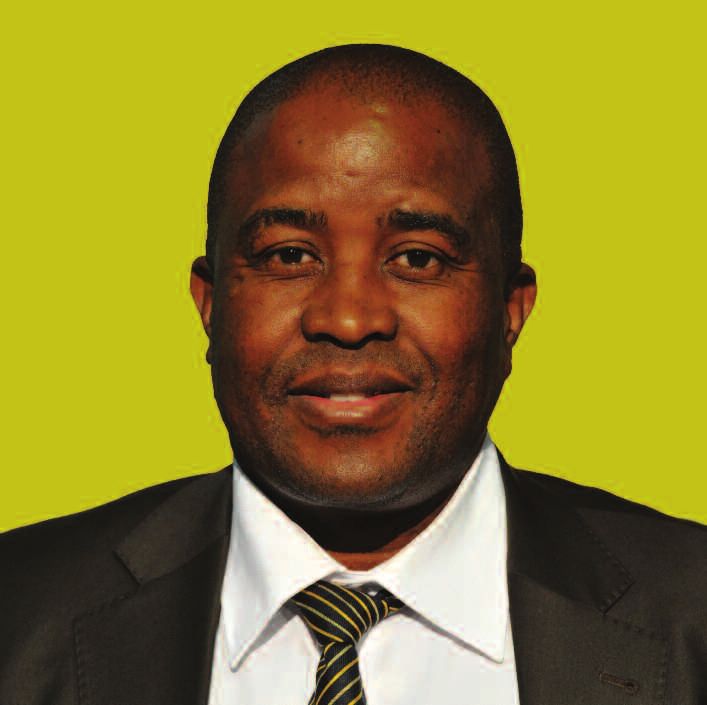
FINANCEREPORT2016:Layout 1   12/5/16   11:25 AM     Page 8

              A d ministr ation Rep ort s

                                                          Mr Gronie Hluyo

                                                          Chief Financial Officer

                                The 2016 Financial Year has been quite a challenging one and our financial results reflect that. Our 2016
                                financial performance is a direct contrast to the 2015 financial year. However, let me hasten to state that
                                the 2015 financial year results were boosted by the 2010 FIFA World Cup Legacy Trust grant that was
                                awarded for the specific purpose of purchasing the Fun Valley property. The effects of our unsatisfactory
                                financial performance were felt through strained cash flows and delays in liquidating some of our liabilities.
                                Despite this, we however managed to execute most of our programmes, especially around the national
                                teams, successfully.

                                Due to the increasingly difficult economic conditions, we could not meet our revenue target. Some
                                sponsors did not renew, citing changes in corporate strategy. Our broadcast fees target was also missed,
                                mainly Satellite rights, due to the market conditions and the unexpected delays in the broadcasting by one
                                of our broadcast partners. Consequently our actual revenue was 17% below budget.

                                The success of our national teams resulted in an increase in their activities. There are significant preparation
                                costs that come with our teams qualifying for major tournaments. Our Under 17 boys qualified for the
                                2015 FIFA World Cup Chile and both our Women's Senior National Team and Under 23 Men qualified for
                                the 2016 Summer Rio Olympics. In April 2016 we also hosted the Africa Futsal Cup of Nations which
                                involved the top 8 countries in Africa. The Siyaya TV annual fees also contributed to our increased costs.
                                This enabled us to conclude a new and much improved agreement with the South African Broadcasting
                                Corporation (SABC). Our accounting fees increased as a result of EY not renewing the sponsorship
                                component of our partnership. Our legal fees increased arising from a number of matters that we had
                                to deal with.

                                The future prospects are quite positive though. We have some diverse revenue sources that are now
                                already being realised. FIFA has increased its funding support to Member Associations. We will realise the
                                full benefit of these grants in the 2017 financial year. CAF has also announced a significant increase in
                                share of TV revenues by its member countries. The licensing and merchandising programme has now
                                kicked off after FIFA approved the programme and committed some seed funding for it. The SAFA Digital
                                project has been approved and work has now started in earnest. The appointment of a new sponsorship
                                agency is expected to bring in some new sponsors. The acquisition of the Fun Valley property and
                                development of the SAFA Technical Centre has resulted in significant cost-savings, especially
                                accommodation costs. We are therefore quite optimistic that the 2017 financial year will produce much
                                better results.

                                Lastly, I would like to thank the Finance & Procurement Committee and Audit & Risk Committee for their
                                continued guidance on finance matters.

             8       South African Football Association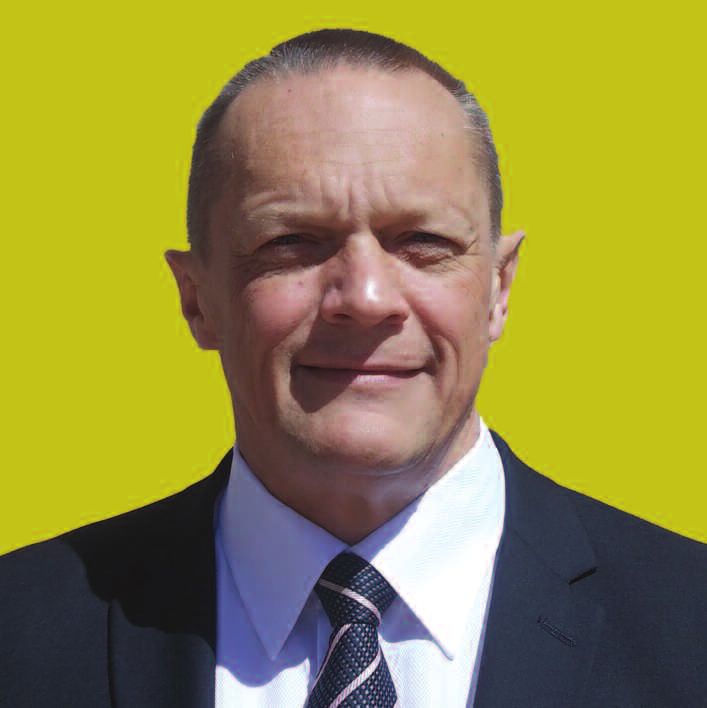
FINANCEREPORT2016:Layout 1   12/5/16   11:25 AM   Page 9

                                                           Mr Jaco van der Walt
                                                           EY Financial Platform Leader

                                                           During the past year, FIFA elected a new President,
                                                           investigations into bribery allegations in football are
                                                           ongoing and funders providing support to football
                                                           projects are applying stricter compliance standards.

                                                           The Association has already begun implementing the
                                                           recently acquired National Technical Centre for the
                                                           accommodation of the Junior National Teams and the
                                                           hosting of coaching and referees workshops. Funding
                                                           from FIFA and the 2010 FIFA World Cup Legacy Trust is
                                                           assisting in the current improvements to the National
                                                           Technical Centre to assist the Association in its
                                                           ambitions to build a world class Technical Centre.
                                                           Congratulations to Bafana Bafana for winning the 2017
                                                           COSAFA Cup and to the Junior Teams in qualifying for
                                                           the FIFA U17 World Cup and the Men's Under 23 and
                                                           Women’s Senior National Teams for the 2016 Rio
                                                           Olympic Games.

                                                           I trust that the Financial Platform has brought
                                                           transparency and has contributed towards the
                                                           Association meeting its objectives for Vision 2020.

                                                           Our thanks go out to the Financial Platform team and
                                                           the SAFA leadership and for their guidance over the
                                                           past financial year and our best wishes on your journey
                                                           in implementing your strategy.

                                                                  2015 – 2016 Annual Financial Report                9
FINANCEREPORT2016:Layout 1   12/5/16   11:25 AM               Page 10

              C h a rt s & Gr a ph s

                                                        !"#$"%&'()*'+,(%(#!*+$-**)+($+()+./+01#*+2/34
                                                        !"#$%&'((')*+

                                                        (55675                                      2/8       %9:;9+?656?@65                             2/8

                                                        ./001-2%477127                             =A

                                                                                                              ./001-2%(3453632317                                  ;?/001-2%477127                         ;@;
                                                                                                              *,-%./001-2%(3453632317                                  8
                                                                                                              $1710917                                                 :

                                               !"#$%&'()*+',&(""$-'..&'!!"+*'$*",&
                                               -'.',+/&!%//$&'!&'$&01&2#,/&3145
                                               !"#$%&'((')*+

                                               '66786                                        494   .:;?&@767@A76                            494

                                       ,-./0 7899:6;%=@@:;@                                  4,

                                                                                                                                                                               ,-123//2
                                                                                                                 7899:6;%(
FINANCEREPORT2016:Layout 1 12/5/16 11:25 AM Page 11
)*+,-$./01234$5**,6377$.88*213,1*4$942*:;$
)*+,-$./01234$5**,6377$.88*213,1*4$942*:;$
),3,;:;4,$<
),3,;:;4,$< B;
B;E;4+;$
E;4+;$@A.B$
@A.B$C1771*4D
C1771*4D
!%'$ !!#$
%"%$ %"($
%#"$
!"#! !"#$ !"#% !"#& !"#'
)*+,-$./01234$5**,6377$.88*213,1*4$942*:;$
)*+,-$./01234$5**,6377$.88*213,1*4$942*:;$
),3,;:;4,$<
),3,;:;4,$< =>
=>?;48;8$@A.B$C1771*4D
?;48;8$@A.B$C1771*4D
!"#$
!!%$
%(!$ %"'$
%&'$
!"#! !"#$ !"#% !"#& !"#'
)*+,-$./01234$5**,6377$.88*213,1*4$942*:;$
)*+,-$./01234$5**,6377$.88*213,1*4$942*:;$
),3,;:;4,$<
),3,;:;4,$< B;
B;8+7,$
8+7,$@@A.B$
A.B$C
C1771*4D
1771*4D
'F$
G#$
!"#! !"#$ !"#% !"#& !"#'FINANCEREPORT2016:Layout 1 12/5/16 11:25 AM Page 12
C h a rt s & Gr a ph s
12 South African Football AssociationFINANCEREPORT2016:Layout 1 12/5/16 11:25 AM Page 13
2015 – 2016 Annual Financial Report 13FINANCEREPORT2016:Layout 1 12/5/16 11:25 AM Page 14
A nnual Financial St atements
South African Football Association
National Executive Committee’s responsibility statement
The National Executive Committee is responsible for the preparation and fair presentation of the group financial
statements and financial statements of South African Football Association, comprising the statements of financial
position at 30 June 2016, and the statements of comprehensive income, changes in equity and cash flows for the year
then ended, and the notes to the financial statements, which include a summary of significant accounting policies and
other explanatory notes in accordance with International Financial Reporting Standards. In addition the National Executive
Committee is responsible for preparing the report of the National Executive Committee, statement on corporate
governance and composition of the National Executive Committee.
The National Executive Committee is also responsible for such internal controls to enable the preparation of financial
statements that are free from material misstatement, whether due to fraud or error, and for maintaining adequate
accounting records and an effective system of risk management.
The National Executive Committee has made an assessment of the Association and its subsidiaries ability to continue as
going concerns and for the reasons stated in the report of the National Executive Committee believe that the Association
and its subsidiaries will be going concerns in the year ahead.
The auditor is responsible for reporting on whether the group financial statements and financial statements of the South
African Football Association are fairly presented in accordance with the applicable financial reporting framework.
Approval of the group financial statements and financial statements
The group financial statements and financial statements of South African Football Association for the year ended 30 June
2016 as identified in the first paragraph were approved by the National Executive Committee on 05 December 2016
and are signed by:
Dr Danny A. Jordaan
President
Mr Dennis A. Mumble
Chief Executive Officer
14 South African Football AssociationFINANCEREPORT2016:Layout 1 12/5/16 11:25 AM Page 15
South African Football Association
National Executive Committee’s statement on corporate governance
for the year ended 30 June 2016
The National Executive Committee supports the principles incorporated in the Code of Corporate Practices and Conduct
as set out in King Code of Corporate Practices and Conduct. By supporting the Code, the Committee has recognised
the need to conduct the Association with integrity and to issue financial statements which comply with International
Financial Reporting Standards.
Group financial statements and financial statements
The members of the National Executive Committee are responsible for preparing the group financial statements and
financial statements in a manner which fairly presents the state of affairs and results of the operations of the Group and
the Association. The financial statements are prepared in accordance with International Financial Reporting Standards.
The significant accounting policies adopted in the preparation of these group financial statements and financial
statements are set out in note 2 to the financial statements.
The auditor’s responsibility is to express an opinion on these financial statements based on an audit conducted in
accordance with International Standards on Auditing.
Internal controls
The members of the National Executive Committee are responsible for maintaining adequate accounting records and
for taking reasonable steps to safeguard the assets of the Association and its subsidiaries to prevent and detect fraud
and other irregularities. The internal controls implemented operated effectively throughout the year.
Audit and risk committee
The committee members are appointed by the National Executive Committee.
The committee has met regularly over the past year to discuss accounting, auditing, internal control and other financial
related matters. The committee provides a forum through which the independent auditor reports to the National
Executive Committee.
Finance committee
The committee members are appointed by the National Executive Committee.
The committee has met regularly over the past year to discuss accounting, auditing, internal control and other financially
related matters.
2015 – 2016 Annual Financial Report 15FINANCEREPORT2016:Layout 1 12/5/16 11:25 AM Page 16
A nnual Financial St atements
South African Football Association
Composition of the National Executive Committee
for the year ended 30 June 2016
At the date of this report the composition of the National Executive Committee was as follows:
President
JORDAAN, Danny
Vice Presidents
KHOZA, Irvin
NHLAPO, Lucas
SHISHANA, Elvis
Chief Executive Officer
MUMBLE, Dennis
Members
ARENDSE, Norman
BAARTMAN, Aubrey
BANTU, David
BUSHWANA, Mlungisi
DON, Gerald
GOVINDASAMY, Poobalan
KUBEKA, Velaphi
LEDWABA, Ria
MADLALA, Mato
MAFORVANE, Mzwandile
MAHLANGU, Nomsa
MALULEKA, Jack
MANCHONYANE, Peter
MATTHEWS, Stanley
MOGOROSI, Letima
MOKOENA, Thamsanqa Gay
MONTSHIWA, Monde
MOOKA, William
MOTAUNG, Kaizer
MZIMKHULU, Fina
MZIMKHULU, Ndlelo
NGWENYA, Kwenzakwakhe
NKOMPELA, Xolile
NKONE, Paseka
PRINCE, Truman
RAKOMA, Abel
REEVES, Anthony
TSICHLAS, Anastasia
WHITE, Gladwyn
XABA, Simphiwe
ZULU, David
The above members, save for the position of the Chief Executive Officer, were elected onto the National Executive
Committee on 28 September 2013. In terms of paragraph 13.23 of the Association’s Statutes, these members will hold
office for a period of four years. However, the Extraordinary Congress of the 26 September 2015 resolved that the
current NEC members’ term should be extended to until after the conclusion of the 2018 FIFA World Cup™.
16FINANCEREPORT2016:Layout 1 12/5/16 11:25 AM Page 17
South African Football Association
Report of the National Executive Committee
for the year ended 30 June 2016
Nature of business
The South African Football Association (“the Association”) is the governing body for football in South Africa. Its main
aim and objectives are to promote, advance, administer, co-ordinate and generally encourage the game of football in
South Africa in accordance with the principles as laid down in the statutes of FIFA. There was no major change in the
nature of the business of the Association during the year. The Association has subsidiaries which collectively are referred
to as the Group.
Financial results
The Group’s results, comprising the Association and its subsidiaries, are contained in the attached financial statements.
The Group incurred a loss of R42.3 million (2015: profit: R40.7 million). The Group’s financial position reflects a net asset
value of R6.3 million. The Group’s financial performance is not satisfactory and this is mainly due to revenue that did
not materialise and some exceptional expenses that were not anticipated. In addition, some of our teams achieved a
fair amount of success and, as they progressed further in various competitions, the preparation and participation costs
escalated. Our main subsidiary, namely the South African Football Association Development Agency (“SDA”) achieved
a profit which has made a positive contribution to the Group’s financial results.
Going concern
The Group incurred a loss of R42.3 million for the year ended 30 June 2016 and, as of that date, the Association’s
current liabilities exceeded its current assets by R50.6 million (excluding income received in advance). The Group has put
plans in place to improve this position and is still determined to achieve a net current asset position within the next few
years. It is quite important for this to be achieved because it would result in the debts being settled quicker. The Group
has therefore set to achieve significant operating surpluses during the next few years in order to achieve the net current
assets position. However, in the meantime we successfully negotiated and agreed payment plans with our major service
providers.
The Group has long-term sponsorship contracts with most of its sponsors and this assures it of future revenue inflows.
These sponsorships are expected to continue in view of the long-term nature and the mutual relationships that are long
standing. We expect R191.8 million to flow from existing sponsorship and broadcast contracts. The Group has also
commenced exploiting a number of revenue opportunities that it identified previously. This is in addition to the continued
implementation of its financial recovery plan which has achieved a fair amount of success so far.
The Association has appointed a new Sponsorship Agency who has vast experience and expertise in sports sponsorship
acquisitions and fundraising. Their mandate is to raise funding for the Group and also for our members, specifically SAFA
Regions. Their strategy is to maximise on the underlying value of our products and secure the best deals for the
Association. The Association has a substantial amount of unsold inventory and we are therefore confident that we will
succeed in securing funding for these. We are expecting to achieve a R10 million sponsorship income within the first year.
The 2010 FIFA World Cup Legacy Trust (“the Trust”) continues to support our development activities. We have successfully
applied for regular funding since 2012 and we expect this funding to continue in the future. The implementation of the
deferred projects and new funding from the Trust should result in revenue of about R59 million. This means that the
Group’s development programmes will continue unhampered by possible financial constraints. Therefore management’s
efforts can be channelled towards generating funds for other programmes and improving the current assets position of
the Group.
2015 – 2016 Annual Financial Report 17FINANCEREPORT2016:Layout 1 12/5/16 11:25 AM Page 18
A nnual Financial St atements
South African Football Association
Report of the National Executive Committee
for the year ended 30 June 2016 (continued)
Going concern (continued)
FIFA recently approved the Association’s licensing and merchandising programme and the seed capital for implementing
it. The merchandise range will include national team jerseys, tracksuits, casual wear, formal wear clothing accessories,
supporters‘ wear and other accessories like cups, pens, rings, balls, etc. An Agency was appointed to manage this
programme, specifically establishing the distribution networks, implementing the licensing of outlets and managing the
rights protection aspects. Due to the seed funding from FIFA, this project will be profitable from the second year and
should generate an average surplus of R4 million per year from the third year.
The Association has kicked started the SAFA Digital project by running pilot projects within certain schools and SAFA
Regions. The project includes the creation of database for all our players and teams, the competition system and other
modules. The SAFA Digital project is also a commercial project that will generate revenues for the Group. The commercial
opportunities associated with SAFA Digital are as follows:
• Telco partnership that will benefit both the Group and its members.
• Advertising served on both the Registration and Competition systems, as well as associated apps.
• Big data marketing, that is partnering with an agency to direct market to our members.
• Presenting sponsors for apps, competition website, talent identification.
• Membership registration fees.
We estimate that this project has a payback period of 3 years. We are also in discussion with a few possible funders
and if we are successful, this will reduce the payback period quite significantly. This is will also result in additional,
unencumbered and diversified revenue streams for the Group. The project will become profitable within the first
12 months. Conservatively we project average surpluses of R10 million per year commencing from the third year.
FIFA recently announced a vastly improved financial support programme for its member associations. This programme,
known as FIFA Forward Programme, will assist member associations with their operational costs and certain approved
projects. This funding will be a cost relief as it partly covers the Association’s normal operational costs. The Association
will also be strategic about the project funding so that it is invested in projects that will provide future returns, including
financial, to the Association. An investment in the SAFA National Technical Centre is one of such envisaged projects. The
annual allocation by FIFA per Member Association is about R10.1 million at the current exchange rates.
CAF also recently announced, after it signed a much improved TV rights deals with its broadcast partner, an increased
share of TV rights revenue with its members. This means that the CAF members are guaranteed TV revenue for participating
in CAF competitions and tournaments. The Association has already started enjoying these financial benefits which
accrued from its participation in the 2017 Gabon Africa Cup of Nations qualifying matches and the 2018 Russia FIFA
World Cup qualifying matches.
The developments at the SAFA National Technical Centre (“the Centre”) are in progress. The Centre is already providing
much needed financial relief to the Association in the form of significant savings in accommodation costs. The Fun
Valley business is also cash generating and is contributing to the Association’s net revenue. With the completion of
various milestones at the Centre, the financial benefits will increase and these include:
• Increased savings in accommodation costs as we would be able to accommodate all our teams and for all our
activities. We estimate annual cost savings of at least R10 million. This is based on our all teams, except Bafana
Bafana currently, staying at the Centre. It is also based on most of courses and some of our tournaments being
hosted at the Centre.
• Cost savings for field hire which is estimated at about R1 million per annum.
• Additional revenue from hiring our facilities to other sporting codes and any other interested parties.
18 South African Football AssociationFINANCEREPORT2016:Layout 1 12/5/16 11:25 AM Page 19
South African Football Association
Report of the National Executive Committee
for the year ended 30 June 2016 (continued)
Going concern (continued)
The Group’s stream of grant revenue from other sources is becoming more consistent. Sport and Recreation South
Africa is providing an annual grant for development programmes. The National Lotteries Commission (“NLC”) has also
started to fund the Association’s programmes and our relationship with them is strengthening. During the year the PSL
increased their grant funding allocation. The Association has also identified an opportunity for the CATHSETA to fund
our courses including Coaching and Referees’ courses.
The SAFA Development Agency was set up to secure funding for football development in line with the SAFA Vision 2022
Football Development Plan. A critical condition of the establishment of the Agency was that it was able to generate
sufficient funding to cover its operating costs. The Association agreed to fund the start-up costs of the Agency by means
of a long-term loan.
The Agency has now managed to achieve a break-even operational status in June 2016, and with new partnerships to
be concluded, and a new funding model via the Safe-Hub youth development centres, is confident of not only achieving
its goal of raising funding for football development, but also of funding its own operations profitably.
The new funding strategy has already achieved some success, and by the end of the 2016 calendar year the Agency will
conclude two new significant funding deals that will secure its revenues for the coming financial year, with a number
of other partners making commitments in early 2017. The Agency has also reduced its operating costs significantly via
a more sustainable cost allocation model. The structure of the Development Agency, and the new funding model via
the Safe-Hubs, make it possible for funding to be secured from corporate BBBEE scorecard spend.
The Group continues to vigorously manage its costs by being innovative in the way that we carry out our activities.
Fiscal discipline is being practised across the full organisation’s spectrum. This is strengthened by, among other tools,
operating with an approved budgets, enforcement of procurement policies and regular financial reporting. We are also
creating value within the supply chain by working closely with our suppliers.
We have budgeted for an accounting profit of R1.2 million and a cash balance of R16.8 million for the financial year
ending 30 June 2017.
The Association has also successfully managed to restructure some of its debts by negotiating favourable repayment
periods. This was achieved through the healthy partnerships that we have with our service providers.
The National Executive Committee (“NEC”) is therefore confident that the Group is a going concern.
Property, plant and equipment
Details of changes in property, plant and equipment are shown in note 6 to the annual financial statements.
The Association received a grant from FIFA for the development of SAFA House during the 2006 financial year. SAFA House
has been built on land to which the Association was granted a right to erect improvements. This land belongs to the
Department of Public Works. There is an understanding that the land on which SAFA House was built, would
ultimately be transferred to the Association. At the date of this report this has not happened. The Association is in the
process of resolving this matter with the Government but currently there is no indication that the Government will
request the Association to vacate the building. In the opinion of the National Executive Committee the matter does not
affect the value of, or the Association’s rights to SAFA House. The carrying value of SAFA House is R33.7 million, however
the Association has received a valuation report indicating that the market value for SAFA House was R105 million in 2010.
The National Executive Committee estimates that the current market value of SAFA House is approximately R135 million.
2015 – 2016 Annual Financial Report 19FINANCEREPORT2016:Layout 1 12/5/16 11:25 AM Page 20
A nnual Financial St atements
South African Football Association
Report of the National Executive Committee
for the year ended 30 June 2016 (continued)
Property, plant and equipment (continued)
In May 2015, the Association received a grant from the 2010 FIFA World Cup Legacy Trust for the acquisition and
development of the Fun Valley property. The property is located on Plots 32 – 54, Olivantvlei, South of Johannesburg.
The property is now being developed into a SAFA National Technical Centre (“the Centre”). The developments at the
Centre will result in both significant cost-savings and potential revenue generation opportunities for the Association. The
proposed developments will include construction of football pitches, sports medicine (including gym and rehabilitation
pool), offices, academy facilities, additional accommodation units and conference centre. The Association will also
continue to operate the Fun Valley business which is leisure and entertainment business. Historically the business has
been quite profitable and we foresee that this trend will continue into the forseeable future.
Financial asset
Network Healthcare Holdings Limited (“Netcare”) established the Healthy Lifestyle Trust as part of its Broad Based Black
Economic Empowerment initiative. The Association was allocated 4 million trust units. This investment has been
accounted for in terms of International Accounting Standard 39: “Financial Instruments: Recognition and Measurement”.
Refer to note 8 for further details.
The Netcare shares will be retained by the Association since this is viewed as a strategic investment for future benefits.
Management also continues to engage with Netcare in a bid to maximise mutual benefits from this strategic partnership.
Group Annual Financial Statements
The Association has consolidated some of its subsidiaries and the reasons for this are set out below.
Africa Cup of Nations 2013 Local Organising Committee South Africa NPC
Nature of activities and consolidation
The Africa Cup of Nations 2013 Local Organising Committee South Africa NPC was established to organise and host
the Orange Africa Cup of Nations 2013 tournament in South Africa in 2013 and the African Nations Championship in
2014 (“CHAN”). The Association was granted the rights by Confederation Africaine de Football (“CAF”) to host these
tournaments and thereafter ceded these rights to the Africa Cup of Nations 2013 Local Organising Committee South
Africa NPC (“the LOC”). The Association is the sole member of this entity and has control over the LOC. The government
was the major funder. This entity has therefore been consolidated. This entity is currently winding down operations.
The South African Football Association Development Agency Trust
The Association has a 100% interest in the South African Football Association Development Agency (“the Development
Agency”). This entity was formed to implement and source funding the Technical Master Plan (“TMP”). The TMP focuses
on the development drive of the Association. This entity has been consolidated in the Group Financial Statements.
SA Infrastructure Development Foundation Trust
The Association has a 100% (one hundred per cent) shareholding in SA Infrastructure Development Foundation (“the
Foundation”). The Foundation was established to rollout the infrastructure, mainly artificial turfs, for the benefit of
football. This entity has been consolidated in the Group Financial Statements. On 24 June 2016, the Trustees agreed to
dissolve the Trust.
20 South African Football AssociationFINANCEREPORT2016:Layout 1 12/5/16 11:25 AM Page 21
South African Football Association
Report of the National Executive Committee
for the year ended 30 June 2016 (continued)
Taxation matters
Tax status
On the 3rd June 2010, the association was approved by the South African Revenue Services (“SARS”) as a public benefit
organisation (“PBO”) in terms of Section 30(3) of the Income Tax Act (“the Act”). This means that annual receipts and
accruals will therefore be subject to section 10(1)(cN) of the Act and receipts and accruals from trading or business
activities which fall outside the parameters of section 10(1)(cN) will be subject to tax. This approval means that more funds
will now be available for the development of football which is in line with the key objectives of the association.
Addresses
Business address: SAFA House Postal address: PO Box 910
76 Nasrec Road Johannesburg
Nasrec Ext 3 2000
Johannesburg 2000
Subsequent events
No significant events have occurred after the 30 June 2016 that will have an impact on the reported financial results.
Auditors
The Association’s auditors are KPMG Inc. and were appointed in terms of paragraph 9.13 of the Association’s Statutes on
01 October 2011.
2015 – 2016 Annual Financial Report 21FINANCEREPORT2016:Layout 1 12/5/16 11:25 AM Page 22
NKE SAFA 0311FINANCEREPORT2016:Layout 1 12/5/16 11:25 AM Page 23
Independent auditor’s report to the members of the South African Football Association
28 to 55.
23FINANCEREPORT2016:Layout 1 12/5/16 11:25 AM Page 24
A n nu a l F i n a nc i a l S ta t e m e n ts
South African Football Association
Statements of comprehensive income for the year ended 30 June 2016
Group Association
Note 2016 2015 2016 2015
Revenue R R R R
Ticketing revenue 297 544 6 950 683 297 544 6 950 683
Confédération Africaine de
Football (“CAF”) grants – 1 670 015 – –
Television broadcasting rights 98 897 084 76 735 955 98 897 084 76 735 955
Other grants – 9 634 662 – 768 778
Host Cities’ income 5 691 770 15 890 100 5 691 770 15 890 100
Sponsorship income 141 666 250 139 105 040 118 183 998 124 120 031
Rental income 180 495 86 500 180 495 86 500
2010 FIFA World Cup
Legacy Trust – grants 52 933 510 94 938 170 52 444 036 94 938 170
Technical Centre – day visitors
and use of facilites 6 384 487 – 6 384 487 –
306 051 140 345 011 125 282 079 414 319 490 217
Expenses (345 264 158) (314 324 463) (323 995 180) (282 780 401)
CHAN/AFCON Tournament
expenses – (2 314 969) – –
National Team costs (87 891 000) (97 396 780) (80 107 623) (97 396 780)
Competition and leagues costs (29 115 891) (25 105 736) (29 115 891) (25 105 736)
Football development costs (35 348 405) (25 365 526) (16 692 762) (17 720 941)
Governance costs (9 005 584) (15 834 469) (15 834 469) (15 834 469)
Technical Centre (3 956 837) – (3 956 837) _
Other administration costs (179 946 441) (148 306 983) (185 116 483) (126 722 475)
(Deficit)/surplus from operations 3 (39 213 018) 30 686 662 (41 915 766) 36 709 816
(Decrease)/increase in fair value
of financial asset (6 323 285) 6 835 205 (6 323 285) 6 835 205
(Loss)/profit on sale of non-current
assets and assets classified
as held for sale (578 688) 2 063 117 (578 688) 2 063 117
Other income 2 371 127 2 343 803 2 371 127 1 592 564
Finance costs 4 (1 199 268) (1 428 072) (1 197 061) (1 399 633)
Finance income 4 2 614 063 239 432 2 481 591 174 802
(Loss)/profit before taxation (42 329 069) 40 740 147 (45 162 082) 45 975 871
Taxation 5 – – – –
(Loss)/profit for the year (42 329 069) 40 740 147 (45 162 082) 45 975 871
Other comprehensive income – – – –
Total comprehensive income (42 329 069) 40 740 147 (45 162 082) 45 975 871
24 South African Football AssociationFINANCEREPORT2016:Layout 1 12/5/16 11:25 AM Page 25
South African Football Association
Statements of financial position at 30 June 2016
Group Association
Note 2016 2015 2016 2015
R R R R
Assets
Non-current assets
Property, plant and equipment 6 100 383 376 114 396 358 100 358 849 114 351 018
Financial asset 8 25 944 130 32 267 415 25 944 130 32 267 415
Intangible asset 9 5 000 000 5 000 000 5 000 000 5 000 000
Investment in subsidiaries 10 – – – –
Total non-current assets 131 327 506 151 663 773 131 302 979 151 618 433
Current assets
Trade and other receivables 11 50 582 099 35 664 645 40 149 556 29 966 134
Bank balances and cash 23 437 632 87 431 640 20 349 833 82 470 515
Total current assets 74 019 731 123 096 285 60 499 389 112 436 649
Total assets 205 347 237 274 760 058 191 802 368 264 055 082
Reserves
Retained income 6 308 472 48 637 541 6 438 332 51 600 414
Liabilities
Non-current liabilities
Interest-bearing loans 12 1 952 192 5 000 000 1 952 192 5 000 000
Total non-current liabilities 1 952 192 5 000 000 1 952 192 5 000 000
Current liabilities
Trade and other payables 13 113 193 163 145 529 079 100 384 614 133 054 563
Short-term portion of
interest-bearing loans 12 11 457 011 9 232 929 11 457 011 9 232 929
Income received in advance 14 72 436 399 66 360 509 71 570 219 65 167 176
Total current liabilities 197 086 573 221 122 517 183 411 844 207 454 668
Total reserves and liabilities 205 347 237 274 760 058 191 802 368 264 055 082
2015 – 2016 Annual Financial Report 25FINANCEREPORT2016:Layout 1 12/5/16 11:25 AM Page 26
A nnual Financial St atements
South African Football Association
Statements of changes in equity for the year ended 30 June 2016
Retained
income
R
Group
Balance at 30 June 2014 7 897 394
Profit for the year 40 740 147
Other comprehensive income –
Balance at 30 June 2015 48 637 541
Loss for the year (42 329 069)
Other comprehensive income –
Balance at 30 June 2016 6 308 472
Association
Balance at 30 June 2014 5 624 543
Profit for the year 49 975 872
Other comprehensive income –
Balance at 30 June 2015 51 600 414
Loss for the year (45 162 082)
Other comprehensive income –
Balance at 30 June 2016 6 438 332
26 South African Football AssociationFINANCEREPORT2016:Layout 1 12/5/16 11:25 AM Page 27
South African Football Association
Statements of cash flows for the year ended 30 June 2016
Group Association
Note 2015 2014 2015 2014
R R R R
Operating activities:
Cash (utilised by)/generated
from operations 15 (56 292 179) 137 919 972 (54 288 588) 136 510 855
Finance income 2 614 063 239 432 2 481 591 174 802
Finance costs (1 199 268) (1 428 072) (1 197 061) (1 399 633)
Net cash (utilised by)/generated
from operating activities (54 877 382) 136 731 332 53 004 058 135 286 024
Investing activities:
Additions to property, plant
and equipment 16 (8 426 250) (70 413 850) (8 426 250) (70 352 250)
Proceeds from disposal of property,
plant and equipment 17 133 352 5 356 333 133 352 5 356 333
Net cash utilised by
investing activities (8 292 898) (65 057 517) (8 292 898) (64 995 917)
Financing activities:
Decrease in loans (823 726) (8 723 538) (823 726) (8 723 538)
Net outflow from
financing activities (823 726) (8 723 538) (823 726) (8 723 538)
Net (decrease)/increase in cash
and cash equivalents (63 994 008) 62 950 277 (62 120 682) 61 566 569
Cash and cash equivalents at
beginning of the year 87 431 640 24 481 363 82 470 515 20 903 946
Cash and cash equivalents at
end of the year 23 437 632 87 431 640 20 349 833 82 470 515
2015 – 2016 Annual Financial Report 27FINANCEREPORT2016:Layout 1 12/5/16 11:25 AM Page 28
A nnual Financial St atements
South African Football Association
Notes to the financial statements for the year ended 30 June 2016
1. Reporting entity
The South African Football Association (“Association”) is domiciled in South Africa. The Association and Group
financial statements for the year ended 30 June 2016 comprise the Association and its subsidiaries (together
referred to as the “Group”). The Association is the governing body for football in South Africa. The main aim
and objectives are to promote, advance, administer, co-ordinate and generally encourage the game of football
in South Africa.
1.2 Basis of preparation
These Group financial statements and financial statements are presented in South African Rands which is
the functional currency of the Group and the Association and the presentation currency for the financial
statements.
The Group financial statements and financial statements have been prepared in accordance with International
Financial Reporting Standards (“IFRS”) on the historical cost basis, except for the revaluation of certain financial
instruments which are stated at fair value.
2. Summary of significant accounting policies
The principal accounting policies adopted in the preparation of these Group financial statements and
Association financial statements are set out below and are consistent in all material respects for the Group with
those applied in the previous year.
2.1 Property, plant and equipment
Property, plant and equipment that have been acquired is stated at historical cost less accumulated depreciation
and accumulated impairment losses. Property, plant and equipment that is received as donations are initially
recorded at the fair value of the assets received.
Depreciation is charged so as to write off the cost of assets over their estimated useful lives to their residual
values, using the straight line method. The following rates are applied:
Buses 20%
Computer equipment 33,3%
Furniture and fittings 16,7%
General equipment 20%
Leasehold property – SAFA House 5%
Motor vehicles 20%
Office equipment 20%
Buildings 5%
Land and buildings are stated at cost less accumulated depreciation and impairment losses. Costs include
expenditure that is directly attributable to the cost of the asset. Depreciation is charged so as to write-off the
cost of property, plant and equipment over their expected useful life using the straight-line basis. Land is not
depreciated. The expected useful lives, residual values and depreciation methods are reviewed at each reporting
date.
28 South African Football AssociationFINANCEREPORT2016:Layout 1 12/5/16 11:25 AM Page 29
South African Football Association
Notes to the financial statements for the year ended 30 June 2016 (continued)
2. Summary of significant accounting policies (continued)
2.1 Property, plant and equipment (continued)
Subsequent expenditure is recognised at cost in the carrying amount of property, plant and equipment if it is
probable that future economic benefits embodied in the item will flow to the Association and the cost of the
item can be measured reliably. All other costs are recognised in profit or loss as an expense.
Leasehold improvements are capitalised and written-off at 5% per annum. The expected useful lives, residual
values and depreciation method are reviewed at each reporting date. The effect of any changes in estimate is
accounted for in the year the change occurs.
The gain or loss arising on disposal or retirement of an item of property, plant and equipment is determined
as the difference between the sales proceeds and the carrying amount of the asset and is recognised in profit
or loss.
2.2 Trademarks
Trademarks acquired by the Group, which have an indefinite useful life, are measured at the cost less
accumulated impairment losses. These trademarks are not amortised but are tested annually for impairment.
Subsequent expenditure is capitalised only when it increases the future economic benefits embodied in the
specific asset to which it relates. All other expenditure, including expenditure on internally generated goodwill
and brands is recognised in profit or loss as incurred.
2.3 Business combinations
The Group accounts for business combinations using the acquisition method when control is transferred to the
Group. The consideration transferred in the acquisition is generally measured at fair value, as are the identifiable
net assets acquired.
Any goodwill that arises is tested annually for impairment and any gain on a bargain purchase is recognised
in profit or loss immediately. Transaction costs are expensed as incurred.
2.4 Basis of consolidation
Investment in subsidiaries
Subsidiaries are entities controlled by the Group. The Group controls an entity when it is exposed to, or has
rights to, variable returns from its involvement with the entity and has the ability to affect these returns through
its power over the entity. The financial statements of subsidiaries are included in the consolidated financial
statements from the date that control commences until the date that control ceases.
The Group financial statements incorporate the assets, liabilities and results of the operations of the Association
and its subsidiaries. The results of subsidiaries acquired and disposed of during a financial year are included
from the effective dates of acquisition and to the effective dates of disposal.
2015 – 2016 Annual Financial Report 29FINANCEREPORT2016:Layout 1 12/5/16 11:25 AM Page 30
A nnual Financial St atements
South African Football Association
Notes to the financial statements for the year ended 30 June 2016 (continued)
2. Summary of significant accounting policies (continued)
2.4 Basis of consolidation (continued)
Transactions eliminated on consolidation
Intra group balances and any unrealised gains and losses or income and expenses arising from intra group
transactions, are eliminated in preparing the consolidated financial statements.
2.5 Impairment
At each reporting date, the Group reviews the carrying amounts of its tangible, trademarks and goodwill to
determine whether there is any indication that those assets may be impaired. If any such indication exists, the
recoverable amount of the asset is estimated in order to determine the extent of the impairment loss (if any).
Where it is not possible to estimate the recoverable amount for an individual asset, the recoverable amount is
determined for the cash-generating unit to which the asset belongs.
Recoverable amount is the higher of fair value less costs to sell and value in use. In assessing value in use, the
estimated future cash flows are discounted to their present value using a pre-tax discount rate that reflects
current market assessments of the time value of money and the risks specific to the asset for which the
estimates of future cash flows have not been adjusted.
If the recoverable amount of an asset (or cash-generating unit) is estimated to be less than its carrying amount,
the carrying amount of the asset (cash-generating unit) is reduced to its recoverable amount. Impairment
losses are recognised as an expense immediately in profit or loss.
Where an impairment loss subsequently reverses, the carrying amount of the asset (cash-generating unit) is
increased to the revised estimate of its recoverable amount, but so that the increased carrying amount does
not exceed the carrying amount that would have been determined had no impairment loss been recognised
for the asset (cash-generating unit) in prior years. A reversal of an impairment loss is recognised as income
immediately in profit or loss.
2.6 Income received in advance
Funds received from sponsors and other contract suppliers, which do not meet the recognition of revenue
associated with contracts, are deferred and recorded as “income received in advance”.
2.7 Financial instruments
Financial assets and financial liabilities are recognised in the Group’s statement of financial position when the
Group has become party to the contractual provisions of the instrument.
Financial assets at fair value through profit or loss
The financial asset is classified as at the fair value through profit or loss as designated as such on initial
recognition. Financial assets are designated as at fair value through profit or loss if the Group manages such
investments and makes purchase and sale decisions based on their fair value in accordance with the Group’s
investment strategy. Financial assets at fair value through profit and loss are measured at fair value and changes
therein, attributable transaction costs, dividend income and gains and losses on sale of shares are recognised
in profit or loss.
30 South African Football AssociationFINANCEREPORT2016:Layout 1 12/5/16 11:25 AM Page 31
South African Football Association
Notes to the financial statements for the year ended 30 June 2016 (continued)
2. Summary of significant accounting policies (continued)
2.7 Financial instruments (continued)
Trade and other receivables
Trade and other receivables are measured at amortised cost as reduced by appropriate allowances for estimated
irrecoverable amounts.
Trade and other payables
Trade and other payables are measured at amortised cost.
Financial liabilities and equity
Financial liabilities and equity instruments issued by the Group are classified according to the substance of the
contractual arrangements entered into and the definitions of a financial liability and an equity instrument. An
equity instrument is any contract that evidences a residual interest in the assets of the Group after deducting
all of its liabilities.
Borrowings
Interest-bearing loans and overdrafts are recorded at the proceeds received, net of direct issue costs. Finance
charges, including premiums payable on settlement or redemption, are accounted for on an accrual basis and
are added to the carrying amount of the instrument to the extent that they are not settled in the year in which
they arise.
Cash and cash equivalents
Cash and cash equivalents comprise cash on hand, deposits held on call with banks and bank overdrafts. Bank
overdrafts that are repayable on demand and form part of an integral part of the Group’s cash management
are included as a component of cash and cash equivalents for the purpose of the statement of cash flows.
2.8 Foreign exchange
Transactions in currencies other than the Group’s functional currency (Rands) are initially recorded at the rates
of exchange ruling on the date of the transactions.
Monetary assets and liabilities denominated in foreign currencies are retranslated to the functional currency
at rates at reporting date.
Exchange rate differences arising from the settlement of monetary items or on reporting the Group’s monetary
items at rates different from those at which they are initially recorded are recognised as profit or loss in the
period in which they arise.
2.9 Revenue recognition
Revenue is measured at the fair value of the consideration received or receivable.
Revenue comprises sponsorship revenue from various sponsors, sale of television broadcasting rights, ticket
sales, income from Confederation Africaine de Football (“CAF”), income for Host Cities, royalties, gate revenue
from competitions, club affiliation fees, advertising fees, government and other grants and the cash equivalent
value of non-cash items supplied to the Group.
2015 – 2016 Annual Financial Report 31You can also read


