Sport Fishing and Game Hunting in Canada - An Assessment on the Potential International Tourism Opportunity
←
→
Page content transcription
If your browser does not render page correctly, please read the page content below
Sport Fishing and
                        Game Hunting in Canada
                        An Assessment on the Potential International
                        Tourism Opportunity

                        CTC Research & Evaluation
                        October 2012
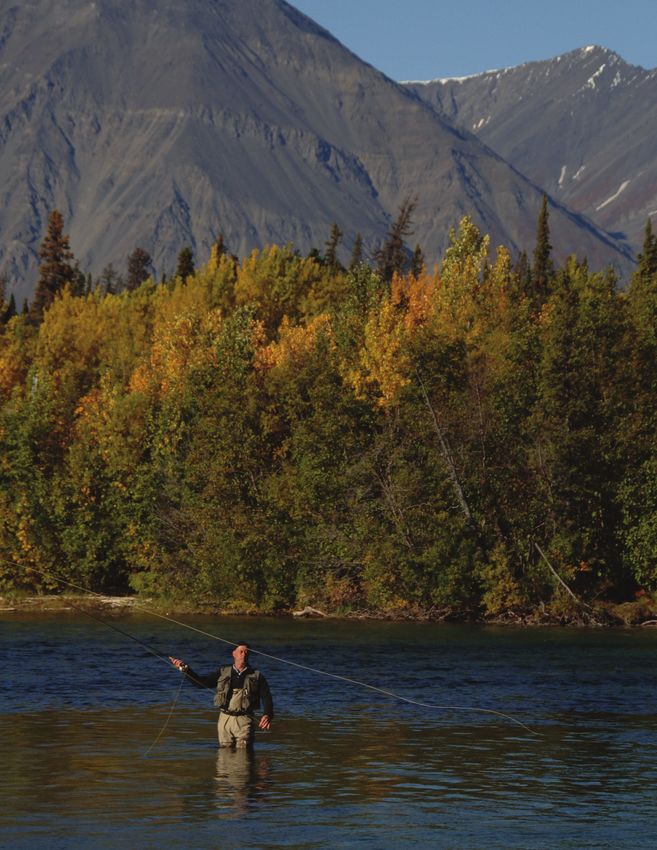
© Government of Yukon
Sport Fishing and Game Hunting in Canada - An Assessment on the Potential International Tourism Opportunity 2
Summary: Canada’s vast land and beautiful wilderness offers amazing landscapes and an unprecedented variety of outdoor activities. Its lakes, rivers and rugged coastlines are prime sport fishing grounds, and from its inland central forests, to the Rockies in the west, to the pure expanse of vast arctic plains, are home to some of the best outdoor activities ever experienced. This has made Canada a year-round, season to season ground for outdoor enthusiasts from all over the world. This secondary research aims to provide an assessment on the potential international tourism opportunity of sport fishing and game hunting in Canada. A gap in recent research studies present however a challenge in providing a comprehensive assessment from a national perspective. Various studies produced by provincial jurisdictions do help paint a fragmented picture and despite some gaps, confirm that sport fishing and game hunting is already significant, helping to power tourism and the economy during off-peak seasons, and to parts of Canada that normally receive fewer tourism benefits. Sport fishermen and game hunters assist in generating economic prosperity. They not only purchase gear, trucks and boats – they also fill their gas tanks and coolers. They stay at motels and resorts. These expenditures then ripple through the economy generating more impact through the retail chain. For many communities, sport fishing and hunting dollars keep them afloat even in hard economic times. Without the steadfast economic input from them, rural businesses that rely on tourism, would suffer significantly otherwise. Sport fishing and game hunting in Canada could mean potential bigger business, particularly from the US market. Based on the Travel Motivation and Attitudes Survey (TAMS) profiles on fishing and hunting produced in 2006, over the period of 2004 to 2005, 9.2 million adult Americans went hunting while on an out-of-town trip of one or more nights while 32.1 million went fishing. These results demonstrate that there is a great potential tourism opportunities to tap-in. Like baseball and hockey, these outdoor activities are an American tradition (40 million) shared by young and old, rich and poor, regardless of social or economic status. They are healthy activities for them, steeped in their heritage as it is to Canadians, touching the most important aspects of their lives, like families and friends, and a sense of stewardship for all things wild. As reported by the Outdoor Industry Association from the United States, in 2007, Americans enjoying sport fishing and hunting spent $58.6 billion supporting 509,000 jobs and generated $7.6 billion in Federal, State and Local taxes. In addition, the ripple effect created from the direct spending by sport fishing and game hunters generated an additional $159.7 billion in spending and 1.2 million jobs. Canada has only tapped in a small fraction of the avid game hunters and enthusiasts for sport fishing from the US. While Canada is a close by option for many American outdoor enthusiasts, Canada could capture a bigger share of the American pie. A study undertaken on the Importance of Nature to Canadians (Federal-Provincial- Territorial Task Force, 1996) uncovered that Canadians - along with U.S. tourists - spent a total of $11.7 billion on nature-related activities in Canada. Of these expenditures, over $800 million was spent in the pursuit of hunting. The sport fishing and hunting tourism industry not only injects large amounts of revenue into the economy but provides increased job opportunities, supporting numerous small and medium sized businesses. Sport Fishing and Game Hunting in Canada - An Assessment on the Potential International Tourism Opportunity 3
Notwithstanding that a holistic assessment of sport fishing and game hunting in Canada would better delineate the international tourism opportunity, there is evidence provided in this secondary research that Canada could capitalized more on the opportunity presented by these outdoor activities, particularly in the United States. Sport Fishing and Game Hunting in Canada - An Assessment on the Potential International Tourism Opportunity 4
What do we know on the importance of sport fishing and game hunting in Canada?
Although a holistic assessment on the game hunting and sport fishing industry in Canada has not been
completed recently, various provincial studies described below confirm that this industry is significant and helps
power its tourism and the Canadian economy. An older report “The Economics of Fishing” produced by the
Canadian Sportfishing Industry Association in 2001 revealed that anglers collectively in all provinces and
territories spent $6.7 billion annually to support their outdoor passion, creating jobs in tourism, transportation,
retail goods, boating, and more.
Revenue Generated by Canadian Anglers - 2000
Province/Territory Revenue ($M)
Newfoundland/Labrador $207.1
PEI $4.6
Nova Scotia $93.2
New Brunswick $82.1
Québec $1,571.8
Ontario $2,333.4
Manitoba $298.7
Saskatchewan $255.0
Alberta $600.0
British Columbia $1,198.6
Yukon $17.1
Northwest Territories $32.4
Nunavut $2.3
Total $6,696.2
Source: Canadian Sportfishing Industry Association
Québec:
A study produced in 2004 for the “Ministère des Resources naturelles de la Faune et des Parcs” from Québec,
relates to the importance of the game hunting industry in Quebec. With over 400,000 enthusiastic annual
hunters (based on license sold), this industry generated economic benefits of over $300 million.
Ontario:
According to the Ontario Federation of Anglers and Hunters, hunting has become an important industry, part of
Canada’s resource-based economy. In 2000, the net economic benefits associated with recreational hunting in
Ontario represented over $1.5 billion in economic activity. It employed approximately 20,000 people, with
many jobs away from the city. Federal, provincial, and municipal governments collected an additional $140
million directly as a result of hunters’ expenditures.
• Canadian hunters spent about $1.2 billion a year on hunting trips, and paid $70 million for hunting
licenses.
• Hunting and fishing license sales represented approximately 70% of the total operating budget of the
Ontario Ministry of natural Resources.
Sport Fishing and Game Hunting in Canada - An Assessment on the Potential International Tourism Opportunity
5• Ontario’s hunting industry generated more wealth than Ontario’s television and film production industry
($1.4 billion in 2000).
Alberta:
The 2009 report Hunting in Alberta Performance, Value and Socioeconomic Impact stated that a total of 99,001
adult hunters were identified to have held hunting licenses in Alberta in 2008. Of these, 90% were Alberta
residents, 3% were from other parts of Canada and 7% from outside of Canada. Albertan hunters spent more
than $102.5 million in direct hunting expenditures in 2008, compared to the $4.2 million spent by non-resident
hunters from the rest of Canada and the $7 million spent by non-resident hunters from outside Canada.
Source: Econometric Research Limited, 2008
British Columbia:
According to the report by BC Stats in 2005, titled British Columbia’s Hunting, Trapping & Wildlife Viewing
Sector, more than 5,000 non-residents come to BC to hunt each year. The report indicates that they purchase
about 7% of basic hunting licenses sold in BC, and harvest about 9% of the large game caught in the province.
The vast majority of non-resident hunters are from the US (86% in 2002), while virtually none are from other
Sport Fishing and Game Hunting in Canada - An Assessment on the Potential International Tourism Opportunity
6provinces. Germany is also a common source of non-resident hunters. The trend in non-resident hunting has been considerably different than for BC hunters. The non-resident harvest has increased by more than 20% since 1992. In terms of industry revenues, hunters spent an estimated $116 million in BC in 2003. Of this total, resident hunter spending was $70 million, with another $46 million of spending by non-residents. The market for these activities is, however, rather limited. Source: British Columbia’s Hunting, Trapping & Wildlife Viewing Sector, BC Stats 2005 The report highlighted that resident hunters generated the lion’s share of total GDP and revenues for BC. However non-resident hunters were gaining in prominence up until 2003. This prominence was attributable to non-residents spending more money participating in this sport than resident hunters. Manitoba: The Manitoba report Economic Evaluation of Manitoba’s Hunting and Fishing Industry detailed that the hunting and fishing industry in Manitoba is comprised of approximately 258 lodges and outfitters and over 250,000 license holders pursuing hunting and fishing in the province (2010). The report also highlights that the resident market is especially healthy, with over 214,000 licenses sold in 2010. The report estimates that there are 179,405 hunters and anglers in Manitoba and on average each purchase 1.2 different licenses. Of these license holders, 81% are Manitoba residents, 7% are non-resident Canadians (esp. from Saskatchewan, Alberta and Ontario), and 12% are from the US (esp. from Minnesota and Wisconsin). Ten percent hunt and fish, while 66% only fish and 24% hunt exclusively. According to this report non-resident Canadians were among the least likely to hunt. Hunter and angler trip expenditures in 2010 were $469.1 million. Manitoba residents were said to account for 88% of all expenditures, with US residents accounting for 8% and making up the majority of expenditures on Sport Fishing and Game Hunting in Canada - An Assessment on the Potential International Tourism Opportunity 7
packages and a significant share on professional services. Note: Note economic impact is not separated for hunting and fishing. The report also highlighted that Hunters and anglers in-Manitoba expenditures generated $312.2 million in Manitoba GDP (0.58%) along with 7,499 jobs (equal to 1.2% of Manitoba employment and 6,180 full-time equivalent positions) in 2010. The share that went to lodges and outfitters generated $25.8 million in GDP and 674 jobs (543 full-time equivalents). Government revenues (all levels together net of subsidies and taxes) were estimated at $70.1 million. Saskatchewan: The report Economic Evaluation of Hunting in Saskatchewan stated that Hunting license sales were in a state of decline between 1995 and 2004 in Saskatchewan and throughout North America. The report does however highlight that at the same time as overall declines were reported there was a steady increase in out of province hunting visitation to Saskatchewan. Source: Economic Evaluation of Hunting in Saskatchewan, December of 2006, Derek Murray Consulting Associates The report further stated that Saskatchewan’s hunting and fishing products are a significant part of Saskatchewan’s tourism economy. 15% of Canadian visits and 19% of American visits to the province involve a fishing activity while 2% of Canadian visits and 6% of American visits will involve a hunting activity. Sport Fishing and Game Hunting in Canada - An Assessment on the Potential International Tourism Opportunity 8
Source: Economic Evaluation of Hunting in Saskatchewan December, 2006, Derek Murray Consulting Associates Total expenditures generated by outfitted hunting and fishing in Saskatchewan were $82,457,465 in 2008. Source: Economic Evaluation of Hunting in Saskatchewan December, 2006, Derek Murray Consulting Associates Sport Fishing and Game Hunting in Canada - An Assessment on the Potential International Tourism Opportunity 9
Sport Fishing and Game Hunting in Canada - An Assessment on the Potential International Tourism Opportunity 10
Where do Canada’s Sport Fishing & Game Hunting Avid come from?
International Traveller Characteristics from Statistics Canada:
Data derived from Statistics Canada’s International Travellers Characteristics provides annual participation rates,
expenditures relating to travellers to Canada along with demographic characteristics. When isolating those
travellers participating in fishing and hunting, the number of records reported for overseas markets are too
small to report on. That said, data are available on US residents fishing and hunting while on a vacation trip to
Canada. As illustrated in the table below, the level of Americans visiting Canada for one night or more since
2001 has seen a declining trend, dropping by half from 1.8 million in 2001 to 939 thousand in 2011. This is not
surprising, as it follows a similar trend experienced by the drop in all US visitations to Canada.
One or more night Fishing and/or Hunting
2,200
000's
1,700
1,200
700
01
02
03
04
05
06
07
08
09
10
11
20
20
20
20
20
20
20
20
20
20
20
US Visits to Canada
Source: Statistics Canada, International Travel Survey
As illustrated in the tables below, the appeal of Canada as a travel destination for hunting and/or fishing by
Americans has not shifted significantly, as the share of these enthusiasts have not shift drastically since 2001,
following a similar pattern as the slide in US visitation to Canada. More importantly is that hunters and
fishermen from the US are higher yield travellers, staying for a longer time in Canada than the average stay by
Americans while visiting Canada.
Sport Fishing and Game Hunting in Canada - An Assessment on the Potential International Tourism Opportunity
11US Travellers to Canada participating in hunting & fishing activities 2001 - 2010:
# of Total Average
Total Share of Total Share of Person
Year of Leisure Leisure Length of
Entries - Total Spending Total nights
entry Travellers Spending Stay
(000's) Entries (millions) Spending (000's)
(000's) (millions) (nights)
2001 1,753 13,650 13% $1,229 $6,415 19% 12,030 6.9
2002 1,573 14,213 11% $1,187 $6,834 17% 10,815 6.9
2003 1,484 12,524 12% $1,147 $5,928 19% 9,694 6.5
2004 1,528 13,097 12% $1,268 $6,585 19% 10,046 6.6
2005 1,347 12,427 11% $1,063 $5,940 18% 9,152 6.8
2006 1,266 11,906 11% $920 $5,729 16% 8,247 6.5
2007 1,230 11,423 11% $924 $5,517 17% 8,323 6.8
2008 1,052 10,571 10% $774 $5,019 15% 7,168 6.8
2009 1,006 9,923 10% $817 $4,709 17% 6,827 6.8
2010 1,014 10,008 10% $806 $4,836 17% 6,776 6.7
Source: Statistics Canada, International Travel Survey
Yield of US Travellers to Canada participating in hunting & fishing activities 2001-2010:
Yield per Yield per Yield per
Yield Yield per Trip
Year of Trip of Trip of US Day –
per Trip Day - Yield
entry US Leisure Hunting/
Ratio Leisure Ratio
Travellers Travellers Fishing
2001 $702 $470 1.5 $102 $114 0.9
2002 $755 $481 1.6 $110 $117 0.9
2003 $773 $473 1.6 $118 $116 1.0
2004 $829 $503 1.6 $126 $121 1.0
2005 $789 $478 1.7 $116 $116 1.0
2006 $726 $481 1.5 $112 $117 1.0
2007 $751 $483 1.6 $111 $115 1.0
2008 $736 $475 1.6 $108 $111 1.0
2009 $812 $475 1.7 $120 $113 1.1
2010 $795 $483 1.6 $119 $116 1.0
Source: Statistics Canada, International Travel Survey
Sport Fishing and Game Hunting in Canada - An Assessment on the Potential International Tourism Opportunity
12TAMS US Activity Profile: Hunting while on a trip
The TAMS survey conducted in 2006, examined the recreational activities and travel habits of
Americans. The following provides details on Americans who game hunted and sport fished while on a
trip to Canada:
• Over the period of 2004 to 2005, 9.2 million adult Americans went hunting while on an out-of-
town trip of one or more nights. 6.4 million reported hunting for large animals, 4.1 million for
small game and 3.4 million hunted for birds. Of those who hunted, 73% reported that hunting
was the main reason for taking at least one trip in the past two years. An additional 32.1 million
reported sport fishing for either fresh-water, salt-water, Ice or Trophy fishing. Of those who went
fishing, 41% reported that fishing was the main reason for taking at least one trip in the past
two years.
• Both US anglers and hunters were more likely than the average US pleasure traveler to have
taken a trip to Canada in the past two years (17.9% and 19.0% versus 14.6%) and for that,
especially a trip to Ontario.
• US Anglers and hunters while on a trip to Canada normally participate in many other outdoor
activities, especially those with a nature theme: wildlife viewing, hiking, climbing and paddling.
Sport Fishing and Game Hunting in Canada - An Assessment on the Potential International Tourism Opportunity
13Sport Fishing and Game Hunting in Canada - An Assessment on the Potential International Tourism Opportunity 14
Where does the International Tourism Opportunity Lie for Canada?
Hunting/Fishing Market Potential for Canada – Global Tourism Watch (GTW)
Based on the 2008 Global Tourism Watch, there is an excellent base of outdoor enthusiasts to tap in globally.
The following tables provides an estimate of the size of the market potential in selected CTC target markets for
hunting & fishing based on overall interest levels. The table also shows the size of the market potential (32.2
million) for Canada (based on the proportion of the hunting & fishing segment that is very or somewhat
interested in visiting Canada). While the lion share in market potential (18.4 million) lies with the US, overseas
markets collectively represent an appreciable market potential (13.8 million) to consider.
Estimated Total % of hunting & Estimated Potential
Market Size fishing segment Market Size
(M) interested in (M)
Canada in next
2 years
US 23.3 79% 18.4
Mexico 1.1 83% 0.8
UK 2.2 82% 1.8
France 2.0 83% 1.6
Germany 2.1 82% 1.7
Australia 1.5 75% 1.1
Japan 2.3 86% 2.0
S Korea 3.4 79% 2.7
China 2.8 76% 2.1
Total 40.7 79% 32.2
Source: 2008 Global Tourism Watch; n=3,100 for US and 1,500 for other markets
United States
As suggested by the 2008 GTW, the US represents the best opportunity to capitalize on. The US Fish and Wildlife
Service sponsors a National Survey of Fishing, Hunting, and Wildlife-Associated Recreation (U.S. Department of
the Interior, Fish and Wildlife Service, and U.S. Department of Commerce, U.S., 2006) every five years with the
last survey conducted in 2006. While this survey focusses on domestic US game hunting, it provides a picture of
the game hunting market overall and offers the perspective that 15% of American game hunters left their state
to hunt in 2006. The report highlights that 12.5 million people 16 years old and older enjoyed game hunting a
variety of animals within the United States. Those identified hunted 220 million days and took 185 million trips
with hunting expenditures totaling $22.9 billion. Of the total game hunters, an estimated 10.7 million hunters
pursued big game, such as deer and elk, with 4.8 million hunters of small game including squirrels and rabbits.
The report highlights that there was a decline in game hunters from 1996 through 2006, although big game
hunting remained relatively stable, compared to small game and migratory bird hunting which saw larger
declines.
Sport Fishing and Game Hunting in Canada - An Assessment on the Potential International Tourism Opportunity
15Source: United States Fish and Wildlife Service Data. Based on a report produced by the American Sportfishing Association “Sportfishing in America, An Economic Engine & Conservation Powerhouse”, to Americans, sport fishing is seen as an enjoyable escape from life’s daily pressure and become a major gateway for millions of Americans. In fact, more Americans (40 million) fish than play golf (24.4 million) and tennis (10.4 million) combined. The spending of America’s 40 million anglers had in 2006 an overall economic impact of $125 billion and supported over one million jobs nationwide. Ultimately, Americans lives directly depend on outdoor recreation, and game hunting and sport fishing are a priority of the daily lives of many. Sport Fishing and Game Hunting in Canada - An Assessment on the Potential International Tourism Opportunity 16
What are the Opportunities/Challenges Moving Forward?
Opportunities:
• Excellent supportive industry with considerable capacity to grow;
• Majority of industry have a website;
• Broadly based economic benefits from central urban areas to remote areas;
• Economic benefits during off-peak seasons;
• Renewed opportunities in the US – Americans are avid hunters;
• Proximity of the United States;
• Limited recent assessment of the hunting industry – opportunity to refresh the intelligence on the
potential of the sport fishing and game hunting industry to better assist in the development and
implementation of a potential marketing strategy to attract international travelers with a motivation for
these activities;
Challenges:
• Lack of a strong marketing voice on the international front;
• Limited labor supply;
• Intensified competition, primarily from the US;
• Gaps in knowledge;
• Long term decline in US Hunting licenses (1980 – 2004);
• Lack of resources for CTC to engage in this space in a meaningful manner;
Sport Fishing and Game Hunting in Canada - An Assessment on the Potential International Tourism Opportunity
17Sport Fishing and Game Hunting in Canada - An Assessment on the Potential International Tourism Opportunity 18
Appendix I - Provincial Regulatory Information
Prerequisites/Requirements
Alberta Non-resident (Canadian) and Non-resident Alien hunters of big
game, wolf and coyote must be accompanied by a licensed
guide or a Hunter Host.
British Columbia Non-residents of BC hunting big game must be accompanied
by either a licensed BC guide or a resident who holds a “Permit
to Accompany”.
Manitoba To hunt big game (deer, moose, black bear, and caribou) in
Manitoba, all foreign resident hunters must book their hunt
through a registered lodge or outfitter, authorized to outfit
foreign resident hunters. It is also mandatory for all foreign
resident hunters to be accompanied by a licensed Manitoba
guide, with no more than three hunters per guide. Non-
resident hunters must only use the services of the outfitter
specified on their hunting license.
Newfoundland and Labrador Non-resident big game hunters are required to be
accompanied by licensed guides. Guides are supplied by
licensed outfitters. Small game or waterfowl hunters do not
require guides. Non-resident small game licenses are available
through regular vendor outlets including convenience and
sporting goods stores, and at Government Services Centres.
Federal Migratory Game Bird Permits are available through
Canada Post Offices.
Northwest Territories Non-residents and non-resident aliens require an outfitter to
hunt big game (but not small game).
Information of outfitters in the NWT may be obtained by
contacting “Northwest Territories Tourism”.
Nova Scotia Licensed Guide or a resident (over 19) who has obtained a
Special Permit to Guide.
Nunavut A person who is a non-resident or a non-resident foreigner can
only hunt big game if they use the services of a licensed
outfitter and are accompanied by a licensed guide.
Ontario Any hunter who is not a resident of Ontario who wants to hunt
in the province needs an Outdoors Card. The Non-Resident
Outdoors Card is similar to the Outdoors Card Ontario
residents have been using since 1993. It is required in order to
purchase Ontario hunting and fishing license tags.
Prince Edward Island No person who is a non-resident shall hunt unless the person
is accompanied by a licensed resident hunter or a registered
guide.
Sport Fishing and Game Hunting in Canada - An Assessment on the Potential International Tourism Opportunity
19Québec Non-residents are not required to hold a hunter’s certificate.
Non-residents are limited to the purchase of certain hunting
license and restricted to frequenting certain hunting zones or
to visiting certain areas, depending on the game hunted.
Saskatchewan Non-residents of Canada must use the services of a licensed
outfitter while hunting black bear, white-tailed deer and
moose.
Yukon To hunt big game, non-resident aliens must be guided by a
registered Yukon outfitter. Non-resident Canadians must be
guided by a registered Yukon outfitter or guided by a Yukon
resident holding a Special Guide License.
Sport Fishing and Game Hunting in Canada - An Assessment on the Potential International Tourism Opportunity

20Appendix II:
A. Regulatory Bodies:
Prerequisites
/
Required to
purchase
Jurisdiction License Fees (2012 season) license Notes (Non-residents)
Ministry of Resident - all game $32.00 Conservation Non-residents of BC
British Forests, Resident who is 65 years of age or and Outdoor hunting big game
Columbia Lands and over - all game $7.00 Recreation must be accompanied
Natural Resident of Canada (not BC) - all Education by either a licensed BC
Resource game $75.00 (CORE) – Not guide or a resident
Operations, Non-resident - all game (Resident of Compulsory who holds a “Permit
Fish, Wildlife another country) $180.00 to Accompany”.
and Habitat Canada Migratory Game Bird Hunting
Management Permit $17.00 (Federal) Total License Sold in
Branch 2011: 96,292
Resident – Black Bear $15.65 Wildlife Non-resident
Alberta Ministry of Resident – White-tailed Deer $36.95 Identification (Canadian)/Non-
Alberta Resident – Moose $36.95 Number: $8 resident alien hunters
Sustainable Resident - Trophy Sheet $51.31 Non-resident of big game, wolf and
Resource Non-resident – Black Bear $63.61 Wildlife coyote must be
Development, Non-resident – White-tailed Deer Certificate: accompanied by a
Fish and $122.33 $28.22 licensed guide or a
Wildlife Non-resident – Moose $135.31 Non- Hunter Host.
Division Non-resident - Trophy Sheet $317.82 Resident Non-resident/Non-
Non-resident Alien– Black Bear Alien Wildlife resident alien hunters
$79.62 Certificate: are exempt from the
Non-resident Alien – White-tailed $68.22 first-time hunter
Deer $188.57 eligibility requirement
Non-resident Alien – Moose $254.97 if they are
Non-resident Alien - Trophy Sheet accompanied by a
$317.82 Hunter Host or a
Hunter Host License - $27 Designated Guide.
Sport Fishing and Game Hunting in Canada - An Assessment on the Potential International Tourism Opportunity
21Resident – Black Bear $16.68 Wildlife Non-residents of
Saskatchewan Ministry of Resident – White-tailed Deer $32.38 Habitat Canada must use the
Environment Resident – Moose $32.38 Certificate: services of a licensed
Non-resident (Canadian) – Black Bear $10.79 outfitter while
$53.97 hunting black bear,
Non-resident (Canadian) – White- white-tailed deer and
tailed Deer $137.38 moose.
Non-resident (Canadian) – Moose
$53.97 (Guided)
Non-resident Alien– Black Bear
$161.92 (Guided)
Non-resident Alien – White-tailed
Deer $274.76 (Guided)
Non-resident Alien – Moose $323.83
(Guided)
Resident – Black Bear $31 Hunter Must be a graduate of
Manitoba Ministry of Resident – White-tailed Deer $36 Education the Manitoba Hunter
Conservation Resident – Moose $52 Card or Education course or a
and Water Non-resident (Canadian) – Black Bear Certificate similar hunter
Stewardship $103 education course from
Non-resident (Canadian) – White- another jurisdiction.
tailed Deer $155
Non-resident (Canadian) – Moose
$299
Non-resident Alien– Black Bear $217
Non-resident Alien – White-tailed
Deer $217
Non-resident Alien – Moose $360
Resident – Moose $52.31 Non- Non-resident s must
Ontario Ministry of Resident – Deer $45.04 Resident have a Non-resident
Natural Resident – Black Bear $45.04 Outdoor Black Bear Hunting
Resources Non-resident – Moose $449.58 Card : $9.68 License Validation
Non-resident – Deer $224.66 Ontario Certificate.
Non-resident – Black Bear $224.66 Hunter
Education
Program –
Not
Compulsory
Sport Fishing and Game Hunting in Canada - An Assessment on the Potential International Tourism Opportunity
22Ministry for Resident – Caribou $64.70 Hunter's Non-residents are not
Québec Natural Resident – White-tailed Deer $52.24 Certificate required to hold a
Resources Resident – Moose $58.35 hunter’s certificate.
and Wildlife Canadian non-residents - Caribou Non-residents are
(Ministère $144.26 limited to the
des Non-resident – Caribou $354.26 purchase of certain
Ressources Non-resident – White-tailed Deer hunting license and
naturelles et $280.02 restricted to
de la Faune) Non-resident – Moose $363.82 frequenting certain
hunting zones or to
visiting certain areas,
depending on the
game hunted.
Resident – Black Bear $47.46 Firearm Firearm Safety/Hunter
New Ministry of Resident – Deer $38.42 Safety and Education and Bow
Brunswick Natural Resident – Moose $81.36 Hunter Hunter Education
Resources Non-resident (Cnd&Alien) – Black Education certificates from other
Bear $184.19 (Guided) course. provinces, territories
Non-resident (Cnd&Alien) – Deer and the United States
$206.79 are valid in New
Non-resident (Cnd&Alien) – Moose Brunswick.
$619.24 All non-resident
hunters must hunt
with a licensed guide.
License Fee: Resident - $10 Yukon To hunt big game,
Yukon Environment Non-resident Canadian $75 Hunter non-resident aliens
Yukon Non-resident Alien $150 Education must be guided by a
Small Game Only License Fees and Ethics registered Yukon
Resident - $5 Development outfitter. Non-
Non-resident $20 (HEED) resident Canadians
Big Game Seal Fees – A big game seal Certificate – must be guided by a
for each animal must be obtained requirement registered Yukon
before hunting. only for outfitter or guided by
All non-resident must pay Harvest Yukon a Yukon resident
Fees on any big game animals killed. residents holding a Special
Non-resident Harvest Fees: Moose Guide License.
$150, Grizzly Bear $500 (male) $750
(female), Black Bear $7, Bison $500
Sport Fishing and Game Hunting in Canada - An Assessment on the Potential International Tourism Opportunity
23Tag Fees: For all classes of hunters, Non-residents and
fees must be paid before you go non-resident aliens
Northwest Environment hunting. require an outfitter to
Territories and Natural Trophy Fees: Must be paid by non- hunt big game (but
Resources resident and non-resident aliens not small game).
before a harvested animal. Information of
Resident – Moose Tag Fee only $20 outfitters in the NWT
Resident – Black Bear Tag Fee only may be obtained by
$20 contacting
Resident – Polar Bear Tag Fee Only “Northwest Territories
$20 Tourism”.
Resident – Grizzly Bear Tag Fee Only
$20
Non-resident (Cnd) – Moose Tag $40
+ Trophy $400
Non-resident (Cnd) – Black Bear Tag
$40 + Trophy $200
Non-resident (Cnd) – Polar Bear Tag
$40 + Trophy $1,500
Non-resident (Cnd)– Grizzly Bear Tag
$40 + Trophy $2,000
Non-resident Alien – Moose Tag $100
+ Trophy $400
Non-resident Alien– Black Bear Tag
$100 + Trophy $200
Non-resident Alien – Polar Bear Tag
$100 +Trophy $1,500
Non-resident Alien–Grizzly Bear Tag
$100 +Trophy $2,000
Sport Fishing and Game Hunting in Canada - An Assessment on the Potential International Tourism Opportunity
24Appendix III
US Outbound Travellers citing Hunting as appealing for an International trip of one night or longer with one
night in paid accommodations
USA Characteristic Category % No Appeal Category % Appeal Category
Distribution Distribution
Total Market Hunting 81% N/A 19% N/A
Gender Male 72% 42% 28% 68%
Female 88% 58% 12% 32%
Age 18 - 34 yrs 75% 28% 25% 40%
35 - 54 yrs 83% 39% 17% 34%
55+ yrs 84% 33% 16% 26%
Marital Status Married/Common 81% 66% 19% 64%
Law
Single 80% 34% 20% 36%
Education HS or Less 79% 22% 21% 25%
University/College 81% 61% 19% 60%
Post-Graduate 83% 17% 17% 15%
HouseholdAppendix IV:
Profile on US Outbound Travellers showing Hunting as a driver for an International trip of one night or longer
with one night in paid accommodations.
USA Characteristic Category % Not Category % Category
Driver Distribution Driver Distribution
Total Market Hunting 90.4% N/A 9.6% N/A
Gender Male 85% 45% 15% 73%
Female 95% 55% 5% 27%
Age in 3 18 - 34 yrs 87% 29% 13% 43%
Categories 35 - 54 yrs 91% 38% 9% 37%
55+ yrs 94% 33% 6% 21%
Marital Status Married/Common 91% 66% 9% 65%
Law
Single 90% 34% 10% 35%
Education HS or Less 89% 22% 11% 25%
University/College 90% 60% 10% 63%
Post-Graduate 93% 17% 7% 12%
HouseholdSource: Canadian Tourism Commission’s US Explorer Quotient 2010-2011 segmentation study N=3,000
Appendix: V
Hunting Stakeholders:
Members of the National Hunting and Angling Advisory Panel:
• Canadian Shooting Sports Association • Alberta Fish and Game Association
• Fur Institute of Canada • British Columbia Wildlife Federation
• Newfoundland and Labrador Wildlife • Safari Club International - Canada
Federation • Canadian Sportfishing Industry Association
• Nova Scotia Federation of Anglers and • Ducks Unlimited Canada
Hunters • Wildlife Habitat Canada
• New Brunswick Wildlife Federation • Delta Waterfowl
• La Federation Québécoise des Chasseurs et • Trout Unlimited
Pecheurs • Pacific Salmon Foundation
• Ontario Federation of Anglers and Hunters • Atlantic Salmon Federation
• Manitoba Wildlife Federation
• Saskatchewan Wildlife Federation
Outfitters:
• Canada’s Hunting Network: www.Huntingoutfitters.ca
• Canadian Federation of Outfitter Associations: http://canada-outfitters.com/
• Alberta Professional Outfitters Society: http://www.apos.ab.ca/
• Guides and Outfitters Association of British Columbia: http://www.goabc.org/
• New Brunswick Outfitters Association: http://www.nboa.nb.ca/
• Newfoundland and Labrador Outfitters: http://www.nloa.ca/
• Manitoba Lodge and Outfitters Association: http://www.mloa.com/
• Ontario Federation of Anglers and Hunters (OFAH): http://www.ofah.org/
• Northern Ontario Tourism Outfitters (NOTO): http://www.noto.net/
• Federation of Quebec Outfitters (FPQ): http://www.pourvoiries.com/
• Association des sauvaginiers de la grande région de Québec: http://www.asgrq.com/
• Saskatchewan Outfitters Association (SOA): http://www.soa.ca/
• Yukon Outfitters Association (YOA): http://www.yukonoutfitters.net/
• Yukon Fish and Game Association: http://www.yukonfga.ca/
Conservation organizations:
• Canadian Wildlife Federation http://www.cwf-fcf.org/en/about-cwf
• World Wildlife Federation: http://www.wwf.ca/
• PacificWild.org: http://www.pacificwild.org/site/our-work/stop-the-trophy-hunt.html
• Ducks Unlimited Canada: http://www.ducks.ca/conserve/index.html
• Nature Canada: http://www.naturecanada.ca/about_history.asp
Sport Fishing and Game Hunting in Canada - An Assessment on the Potential International Tourism Opportunity
27The Canadian Hunting Landscape: With a Special Focus on Inbound Visitors to Canada
• Wildlife Conservation Society: http://www.wcscanada.org/
Sources:
BC Stats. (2005). British Columbia’s Hunting, Trapping & Wildlife Viewing Sector .
Canadian Tourism Commission. (2011). Explorer Quotient Segmentation Research. Vancouver.
Derek Murray Consulting Associates. (2006). Economic Evaluation of Hunting in Saskatchewan.
Econometric Research Limited. (2008). Hunting in Alberta in 2008: Performance, Value and Socioeconomic
Impacts .
Federal-Provincial-Territorial Task Force. (1996). Importance of Nature to Canadians. Canada: Federal-Provincial-
Territorial Task Force.
Kent, P. (2012, MAy 31). Speech National Fish and Wildlife Conservation Congress. Ottawa, Ontario, Canada.
Kisquared. (2012). Economic Evaluation of Manitoba’s Hunting and Fishing Industry.
Office of the Prime Minister. (2012, August 6th). Office of the Prime Minister. Retrieved August 6th, 2012, from
Office of the Prime Minister: http://pm.gc.ca/eng/media.asp?id=4830
U.S. Department of the Interior, Fish and Wildlife Service, and U.S. Department of Commerce, U.S. (2006). The
National Survey of Fishing, Hunting, and Wildlife-associated Recreation Survey .
AB: Environment and Sustainable Development, Government of Alberta
http://albertaregulations.ca/pdfs/hunting-regs/Licensing.pdf
BC: 2012 – 2014 HUNTING & TRAPPING, Government of British Columbia,
http://www.env.gov.bc.ca/fw/wildlife/hunting/regulations/1214/docs/hunting_trapping_2012_2014.pdf
MB: Province of Manitoba
http://www.gov.mb.ca//conservation/wildlife/hunting/index.html
NB: Hunt & Trap, Natural Resources Government of New Brunswick,
http://www2.gnb.ca/content/dam/gnb/Departments/nr-rn/pdf/en/Wildlife/HuntTrap.pdfNunavut:
NFLD and LAB: Government of Newfoundland and Labrador,
http://www.env.gov.nl.ca/env/wildlife/hunting/nonres.html
NT: Department of Environment, Summary of Hunting Regulations 2012/2013,
http://env.gov.nu.ca/sites/default/files/2012nuhuntingguide.pdf
NS: Department of Natural Resources, Government of Nova Scotia
http://www.gov.ns.ca/natr/hunt/nonresidents.asp
NWT: Environment and Natural Resources, Government of the Northwest Territories
http://www.enr.gov.nt.ca/_live/pages/wpPages/Do_You_Need_an_Outfitter.aspx
ON: Hunting Regulations 2012 • 2013, Ontario Government, Ministry of Natural Resources
http://www.mnr.gov.on.ca/stdprodconsume/groups/lr/@mnr/@fw/documents/document/239844.pdf
Sport Fishing and Game Hunting in Canada - An Assessment on the Potential International Tourism Opportunity
28The Canadian Hunting Landscape: With a Special Focus on Inbound Visitors to Canada PE: Legislative Counsel Office, Prince Edward Island http://www.gov.pe.ca/law/regulations/pdf/W&04-1-07.pdf QB: Ressources naturelles et Faune, Gouvernement du Québec http://www.mrnf.gouv.qc.ca/english/publications/online/wildlife/hunting-regulations/special-rules/non- residents.asp SK: 2012 Saskatchewan Hunters’ and Trappers’ Guide, Saskatchewan Ministry of Environment http://www.environment.gov.sk.ca/Default.aspx?DN=2a5dfe9f-6442-4667-ad59-253883e8b8e2 Sport Fishing and Game Hunting in Canada - An Assessment on the Potential International Tourism Opportunity 29
You can also read


