St Anthony's School - SUMMER TERM 2021 HOME LEARNING BOOKLET NAME : CLASS: Year 11 - St. Anthony's School
←
→
Page content transcription
If your browser does not render page correctly, please read the page content below

St Anthony’s School

    SUMMER TERM 2021

  HOME LEARNING BOOKLET

NAME :

CLASS: Year 11

             1
Contents
                                       Page
                    Contents
Instructions……………………………………………………………………….3
                                        Page
Reward System………………………………………………………………….4
Instructions……………………………………………………………………….3
Summer Homework Timetable…………..…………………………..5
Reward System………………………………………………………………….4
Purple Mash………………………………………………………………………..6-7
Summer Homework Timetable……………………………………….5
PSD……………………………………………………………………………………...8-9
Purple Mash…………………………………..…………………………………..6-7
Food Technology……………………………………………………………….10-11
PE………………………………………………………………………………………...8-9
English………………………………………………………………………………...12-13
Maths………………………………………………………………………………….10-11
Art………………………………………………………………………………………..14-15
History……………………………………………………………………………….12-13
RE………………………………………………………………………………………….16-17
Computing…………………………………………………………………………..14-15
Music…………………………………………………………………………………….18-24
Science………………………………………………………………………………..16-18
Geography…………………………………………………………………………….26-27
Geography…………………………………………………………………………..20-21
PE…………………………………………………………………………………………..28-29
Food Technology………………………………………………………………..22-23
History………………………………………………………………………………….30-31
Duke of Edinburgh…………………………………………………………….24-25
French………………………………………………………………………..………..32-33
English………………………………………………………………………………….26-27
Computing…………………………………………………………………………….34-35
PSD……………………………………………………………………………………….28-30
Maths…………………………………………………………………………………...36-37
Music…………………………………………………………………………………….31-33
Science…………………………………………………………………………………38-39

                        2
Your Home Activities Booklet

Summer Term 2021

This booklet contains all your home learning activities for the Summer
Term. Hand in dates for home activities/project have been set to when
homework should be completed and handed in. There are also opportunities
for pupils, parents and teachers to comment on work. This booklet should be
brought in with completed tasks, so that feedback can be shared.

Completing Home Activities:
Each subject should provide between 2-3 hours of activities per week.
Each subject will break down activities into small steps.
Each subject area will provide an extension activity for you to complete if
you would like.

Once activities have been completed parents and pupils can add a comment
about the work and send in the booklet with work to be signed and
feedback given from the teacher.

                                      3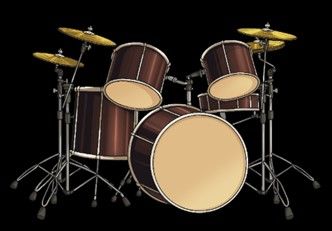
Reward System

Should you complete a Home Activity, the following merits will be
awarded.

3 Merits if all tasks are completed that have been set.
1 Merit if some of the tasks have been attempted.

An extra merit if a extension activity has been completed.

There will also be an end of term special reward for those pupils who have
achieved the most homework merits. 1 for Key Stage 3 and 1 for Key Stage
4.

If you have any queries, please contact Miss Ball in school.

                                       4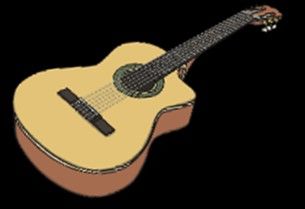
Summer Term
                       Homework Timetable

WEEK         SUBJECT         HAND IN DATE   SIGNED    MERITS
                                            TEACHER   GIVEN

19th April   PE              26th April

26th April   Maths           4th May
             History

3rd May      Computing       10th May

10th May     Science         17th May

17th May     Geography       24th May

24th May     Food Technology 7th June
             D of E

7th June     English         14th June

14th June    PSD             21st June
             Music

                                    5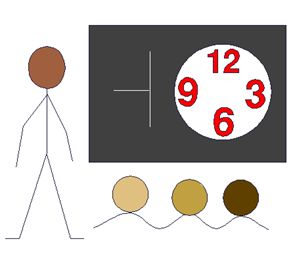
Dear Parent/Carer,

We would like to remind you that we have a subscription to Purple Mash,
which is a creative educational website for children. Purple Mash is a
cross-curricular resource covering art to science and all subjects in
between. Your child can access Purple Mash from home on a laptop, desktop
or a tablet.

Purple Mash is a safe environment that does not require any downloading or
allow interaction with people online and children cannot make any financial
transactions.

Purple Mash is a great resource for this for completing many of the tasks
within the homework booklet. Your child been using Purple Mash in school
so should be able to use it without supervision, but you may want to take a
few minutes to explore it yourself so that you can help them with their
work.

                                      6
Saving and Sharing Work
Purple Mash lets your child save their work online. It’s very easy, just look
out for the floppy disk icon on the toolbar and follow the simple
instructions. To access saved files, go to the ‘Online Work’ tab. Once saved
you can also ‘share’ work. Just look out for the globe icon on the toolbar.
This will share work to one of our school’s “display boards” or create a link
so your work can be viewed online by people that don’t have Purple Mash.
Purple Mash on Tablets
The vast majority of Purple Mash is
accessible when using iPads or Android
tablets.
Use Purple Mash via your tablet’s
browser.
Your child was given their Purple Mash login details last October. If these
have been mislaid or forgotten please ask Mr Bridges or your form tutor
for a reminder.
7.
Physical Education
Sports
Overview of Subject covered this term
During the Summer term pupils will be looking at variety of sports. These will
include Athletics, Rounders, Swimming and Cricket.
All of the sports will require pupils to work on existing or new skills and as part of
a team. Pupils will have many opportunities to take on a greater role of
responsibility in terms of leading a task or officiating game situations.
Task to complete Tick when completed
The brain which lives inside of your skull has many
different parts. Can you name 5?
Which is the biggest part?
The brain can not work alone. It requires the support
of things which send messages. These are called?
Extension Activity
How can you be good to your brain? List 2 ways.
Key Words
Links to Help
Brain
Kidshealth.org/kid/htbw/brain.html#
Skull
8.
Home School Activity Feedback
Student Comment Date
Parent Comment Date
Teacher Comment Date
Merits Awarded
9.
Maths
Money
Overview of Subject covered this term
This term pupils are preparing for their Functional Skills assessment in June. All
topics have been covered with a focus on real-life maths skills that will be used
throughout life. Topics such as time, using timetables and money are key skills and
should be developed.
Pupils need to be able to recognise coins and count out the correct coins to ‘buy’
objects. They have compared the prices of two objects and stated which is the most
expensive. They have also practised counting up in a given number.
Pupils following the Foundation Learning course have been working on their money unit.
They have practiced recognising coins and can describe places where money is used.
They are able to count small amounts of money and understand the consequences of
not having any money.
Task to complete Tick when completed
When shopping can you count out the correct amount of
money to buy your items? If you should receive change,
how much should it be?
When eating out in a restaurant look at the prices on
the menu. Which is the most expensive meal? How much
would it cost in total for a meal and a drink?
Find out the names of different currency around the
world. How many Euros are worth the same as £1?
Extension Activity
Online homework activities are also available via the www.mymaths.co.uk website
Login: stanth password: green
Key Words Links to help
Pence, pound, coin, note, how much? www.mymaths.co.uk
KS3 Maths - BBC Bitesize
Bigger, more than, smaller, less
than. www.bbc.co.uk/schools/gcsebitesize/
maths/
Euro, Dollar, currency, bureau de
http://www.familylearning.org.uk/
change money_games.html
10.
Home School Activity Feedback
Student Comment Date
Parent Comment Date
Teacher Comment Date
Merits Awarded
11.
History
A British Society in the Past: Britain and the Second
World War 1939-1945
Overview of Subject covered this term
WJEC Humanities Entry Pathways:
This term we will investigate life in Britain during World War 2. We will be
learning about how life then was different from our lives today and look at how the
War affected people on a day to day basis. Topics such as The Blitz, Dig for
Victory, Evacuating and rationing, the role of women and Churchill will be covered.
Task to complete Tick when completed
Cook a war time recipe
Use Purple Mash to write a newspaper report on life in
WW2
Research: What is an Anderson Shelter? Make a list
What would you take/need in your Anderson shelter?
Extension Activity
Write a short speech about community spirit for your local area.
This website can help you:
http://www.museumoflondon.org.uk/Explore-online/Pocket-histories/world-war-2/
page6.htm
Links to Help
Key Words
The museum of London website has lots of information
Anderson Shelter to help you.
Rationing http://www.museumoflondon.org.uk
Dig for Victory http://www.purplemash.com
Victory Home Learning Zone:
Bunting Purple Mash
Union Jack BBC Bitesize
12.
Home School Activity Feedback
Student Comment Date
Parent Comment Date
Teacher Comment Date
Merits Awarded
13.
Computing
Creative Computer Use
Overview of Subject covered this term
Pupils will spend the first 2 weeks finalising their course work.
Activities for the rest of the term will centre around using the computer
creatively. Pupils will choose from a range of activities to develop their skills in
becoming active rather than passive computer users.
They may choose to create their own Year Book, create a music track, develop
their digital photography skills, research and present information about a topic of
personal interest or work with code to create simple apps and games.
Task to complete Tick when completed
Extend their use of creative computing on their own
computers
Use free software such as Scratch, Audacity, Open
Office, Serif DrawPlus to start your own creative
projects
Create a presentation that includes information about
themselves from birth to the present day
Key Words
creative, design, edit, digital, image, text, code,
Links to help
Download free software from these links
http://www.freeserifsoftware.com/
https://scratch.mit.edu/
https://www.kodugamelab.com/
https://www.openoffice.org/
http://www.audacityteam.org/
14.
Home School Activity Feedback
Student Comment Date
Parent Comment Date
Teacher Comment Date
Merits Awarded
15.
Science
GCSE Class (8464)
Overview of Subject covered this term:
Complete Required Practical for Combined Science: Trilogy Foundation.
Electrolysis
Temperature changes (Reaction profiles)
Rates of reaction.
Chromatography
Specific heat capacity
Resistance
Force and Extension
Acceleration
Waves
Task to complete Tick when completed
Use practical/experiment to complete the above.
Simulations would also be used where possible.
Record your observations or primary data from your
investigation. Compare your primary data to some
secondary data.
Key Words
Variables Independent Dependent Control
Risk Hazards Data Primary
Secondary Continuous Discrete
Links to help
https://www.bbc.co.uk/bitesize/subjects
AQA | Find past papers and mark schemes
Filter - PhET Interactive Simulations (colorado.edu)
https://app.senecalearning.com
16.
Science
Health and Safety in the Workplace
Overview of Subject covered this term:
The Unit on Health and Safety in the Workplace and completing coursework
In this unit pupils:
- Identify hazards when using equipment in the lab.
- Carry out experiment using simple hazardous chemicals.
- Describe actions to be taken in the event of fire at school.
- Explore type of fire extinguishers
Task to complete Tick when completed
Make a poster to show the different types of fire
extinguishers and the types of fire they can be used
for.
Include picture or diagram of each of the above.
Extension Activity
Make a poster or use a word document to show the limitations of water and fire.
Key Words
Hazard Risk Equipment Extinguishers Fires
Carbon dioxide Oxygen Fuel
Links to help
The periodic table - The periodic table - KS3 Chemistry Revision - BBC Bitesize
http://www.firesafe.org.uk/types-use-and-colours-of-portable-fire-extinguishers/
#ext1
17.
Home School Activity Feedback
Student Comment Date
Parent Comment Date
Teacher Comment Date
Merits Awarded
1819
.
                         Geography

                              Coasts

    Overview of Subject covered this term

    Pupils will identify the key features of the coastal landscape and investigate the
    processes of erosion and deposition responsible for the features.
    Pupils will also consider the impact of these processes and identify ways that
    coastlines can be managed.

    Task to complete                                            Tick when completed

    Explain how a Spit is Formed? Use ’East Head’ (West
    Wittering) as a example
    Long shore Drift = what is it, and how does it work?

    How can coasts be managed? Research and give
    examples of hard and soft engineering.

    Extension Activity

    Visit a local beach and take pictures of the features you see.
    Consider how the beach is being managed. Is there any hard engineering like
    groynes or revetments.

                                                     Links to Help
    Key Words
                                                     https://www.bbc.co.uk/bitesize/
    Erosion                 Deposition               topics/z6bd7ty
    Spits                   Cliff
    Arch                    Stack                    www.geography.learnontheinternet
    Transportation          groynes                  .co.uk/topics/coasts.html
    Revetments              engineering              www.geography.learnontheinternet
    Coastal management                               .co.uk/topics/
    Long shore Drift                                 holdernesscoast.html

                                             20
.
Home School Activity Feedback
Student Comment Date
Parent Comment Date
Teacher Comment Date
Merits Awarded
21.
Food Technology
Famous Chefs and Bakers
Overview of Subject covered this term
We will look at a variety of recipes from a variety of chefs. Find a little bit out
about them and investigate their style of cooking using books and websites to
choose recipes from.
Independent cooking is highly encouraged this term. As is sharing cooking at home
as part of Btec qualification.
Task to complete Tick when completed
Look at different recipes that we have followed at
school. Choose one to follow at home with
someone then send in evidence of you doing this.
Use BBC Food website to pick a recipe for a starter,
main and then dessert.
Choose a famous chef to create a ‘Fact File’ on.
Extension Activity
Follow further recipes at home as independently as possible.
Links to help
Key Words
BBC Food
Meal Planning Food for Life
Recipe
Methods
22.
Home School Activity Feedback
Student Comment Date
Parent Comment Date
Teacher Comment Date
Merits Awarded
23.
Duke of Edinburgh
Bronze Award
About the Award
The DofE programme is a real adventure for pupils. It doesn’t matter who you are
or where you’re from you just need to be aged between 14 and 24 to complete the
award.
Pupils at St Anthony's will complete the Bronze Level over the next two years
following a programme of study that offers opportunities to work with the Nation-
al Trust, local charities and opportunities to canoe and kayak. In addition pupils will
learn the skills to complete a 2day 1 night expedition in Year 11.
Task to complete Tick when completed
What Section of the award has been most rewarding
over the 2yrs? Explain why.
What advice would you give other pupils who are just
starting the award?
Would you like to complete the silver award if you
could?
Extension Activity
What was the highlight of the expedition? Did you enjoy spending time away from
home and would you go camping again?
Key Words
Team Physical Links to help
Skills Education
Learning Independence https://www.dofe.org/
Volunteering Expedition
Leadership
24.
Home School Activity Feedback
Student Comment Date
Parent Comment Date
Teacher Comment Date
Merits Awarded
25.
English
Non-Fiction Texts
Overview of Subject covered this term
This term pupils in Year 11 will be studying non-fiction texts. They will be looking at
a range of texts commenting on layout, presentation and content. They will then
design their own non-fiction booklets around their topic of choice.
Task to complete Tick when completed
Use the internet or the library to find out some
information about your topic.
Visit the library and look in the non-fiction section.
Practise reading a newspaper at home with an adult.
Make a list of any words you find tricky and practise
these separately.
Extension Activity
Create either a map, collage, model or interactive piece based on your topic of
choice.
Example: if you are writing about a country create a map and collage about that
country.
Key Words
Links to help
Non fiction
Diagram Great games to help develop literacy skills:
Layout
Presentation http://www.bbc.co.uk/bitesize/ks1/
Information literacy/
Facts
26.
Home School Activity Feedback
Student Comment Date
Parent Comment Date
Teacher Comment Date
Merits Awarded
27.
PSD—11A
Finance
Key questions covered this term
How do I get paid?
How do bank accounts work?
Why bother budgeting?
It’s ok to be in debt?
How much does it cost to support myself?
How much can I earn?
Task to complete Tick when completed
Ask someone to help you set up your own bank account
if you haven’t one already. You will need this in the
future, whether you are going to work, receiving
Find out at home what needs to be budgeted for each
month. What surprised you the most?
Ask someone at home to help you compile a list of what
costs are involved if you were living on your own.
Extension Activity
Find information about driving schools in the area. Who? Where? How many
lessons? How much does it cost?
Key Words Links to help
Paid tax national insurance www.direct.gov.uk/en/
pension wage salary YoungPeople/index.htm
Account budget budgeting
Saving debt credit
28.
PSD—11B
Moving On
Key Skills
Communication
- Gather information both verbal and written.
- Share the student’s progress file with others.
Application and Number
- Money and numeracy skills.
- Working with Others
- Work co-operatively in group activities
- Demonstrate a mature attitude and handle responsibility.
Information Technology
- Word processing
- Accessing information.
Problem Solving
- Demonstrate an ability to deal with change
- Identify feelings about change.
Task to complete Tick when completed
Brainstorm a list of people you may be able to confide in
when you have left school and record: tutor, training
manager, family, social worker, Connexions Advisor,
friends etc.
Discuss with a family member times in your life when
you have experienced change. For example, moving
house, changing school, new brother/sister, new
teacher, changes in taste in music/clothes/food.
Make a personal time-line of changes—written or
pictorial.
Extension Activity
Discuss with a member of your family the range of feelings experienced when
changes occur—anxiety, pleasure, expectancy, excitement, fear.
Key Words
Links to help
Change, transition, leaver,
celebration, action plan, signature,
finances, progress file
29.
Home School Activity Feedback
Student Comment Date
Parent Comment Date
Teacher Comment Date
Merits Awarded
30.
Music
Performance Skills
Overview of Subject covered this term
First half of term: This unit aims to review and develop performance skills covered
over the Entry Pathways course. Pupils will work on rhythm with a focus on
drumming. Pupils will also continue to learn chords on the guitars, keyboards and
Ukuleles. After this pupils will choose their own pieces to perform either as a solo
or as part of an ensemble.
Second half of term: This unit aims to recap and build on the knowledge required
to be able to make distinctions within the musical elements and to identify a range
of styles and traditions.
Task to complete Tick when completed
Find a piece of music you would like to learn on an
instrument. Bring it in to school or choose one of our
pieces in school. It must be suitable for a solo
performance.
Practise your solo performance on a tuned instrument at
home. Add dynamics (loud and quiet passages). Show in
school during the music lesson.
Complete the Key Stage 4 exam module evaluation sheet
about your Music Pathways course.
31Year 11 Evaluation
Which exam module in music did you like best?
1. Solo Performance (Year 10)
2. Ensemble Performance (Year 10)
3. Appraising Music (Year 10)
4. Composing Music using Garageband (Year 11)
Why?____________________________________
_____________________________________________
_____________________________________________
Think about how easy or hard you found each module.
Put a number in each box to grade the modules from
easiest to hardest. 1= easiest to 4 = hardest
Solo Performance (Year 10)
Ensemble Performance (Year 10)
Appraising Music (Year 10)
Composing Music using Garageband (Year 11)
Any other feedback?____________________________
_____________________________________________
32.
Home School Activity Feedback
Student Comment Date
Parent Comment Date
Teacher Comment Date
Merits Awarded
33You can also read


