Brexit Directorate General of Customs and Excise Preparing for Brexit -Customs Guidelines - Podatki.gov.pl
←
→
Page content transcription
If your browser does not render page correctly, please read the page content below
Brexit
Directorate General of Customs and Excise
Preparing for Brexit – Customs Guidelines

Information for border users in a “no-deal” Brexit scenario

                                                              February 2019
Edito

                                       Cross the Brexit together !

 Brexit without a withdrawal agreement ("no deal" scenario) would mean that the United Kingdom
 becomes from 30 March 2019 a third country to the European Union and leaves the internal market.
 Customs formalities and controls at the border will be reinstated for goods.

 Any exchange of goods between France and the United Kingdom, both for imports and exports, will be
 subjected to two customs declarations, one to British Customs and one to French Customs.

 For several months alongside its partners, French Customs has been preparing in order to ensure the
 continuity and fluidity of trade in goods between France and the United Kingdom in such a scenario. It
 has reviewed its internal organization and developed a "smart border" system based on the anticipation
 and dematerialization of customs formalities.

 To "work through Brexit" successfully, businesses like yours that trade with the United Kingdom, have to
 get prepared without delay to handle procedures and delivery times for moving goods between France
 and the United Kingdom, and thus to maintain their international competitiveness.

 These customs guidelines are made available to you in order to assist you in your preparation.

 I wish you an enjoyable reading.

 French Customs remains at your disposal, especially through its regional Economic Action Centres, to
 answer your questions.

                                                                                    Rodolphe Gintz

                                                                       Director General of Customs and Excise

                             © French Directorate General of Customs and Excise- 2019                           2
Contents

I.          Why does my business have to prepare for a no-deal Brexit scenario?                       P.4

II.         What is customs clearance ?                                                               P.5

III.        French Customs has ramped up human and technology resources to ensure
            border controls go smoothly, you should be prepared, too !                                P.8

IV.         Should my business outsource customs procedures to a registered customs                  P.11
            representative?

V.          What information does my business need to provide to a registered customs                P.12
            representative?

VI.         What financial impact will Brexit have on my business?                                   P.13

VII.        How can I register my business with customs?                                             P.14

VIII.       What goods require special treatment by my business?                                     P.15

        •   Excise goods                                                                             P.16
        •   Goods subject to special procedures: Plants and plant products                           P.18
        •   Goods subject to special procedures: Live animals and animal-based products              P.19
        •   Goods subject to special procedures: Chemicals                                           P.20
        •   Goods subject to special procedures: Medicines                                           P.21
        •   Goods subject to special procedures: Waste                                               P.22
        •   Goods subject to special procedures: Arms, war material and explosives                   P.23

        Other goods subject to special procedures will be detailed in a subsequent edition of this
        document:
        • Goods subject to special procedures: Dual-use goods
        • Goods subject to special procedures: Fishery products
        • Goods subject to special procedures: Express and postal shipments
        • Goods subject to special procedures: Groupage
        • Empty running in road freight transport (packaging, pallets, etc.)
        • Empty running in road freight transport (empty packaging)

IX.         Appendices                                                                               P.25
        •   Economic Action Centre contacts                                                          P.26
        •   Registered customs representatives federation contacts                                   P.27
        •   Useful information                                                                       P.28
        •   Glossary                                                                                 P.29

                                  © French Directorate General of Customs and Excise- 2019                  3
Why does my business have to prepare for a no-
deal Brexit scenario ?

 Prior to 29 March, the United Kingdom was a member of the European Union. There was free
 movement of goods and no border controls and consequently no customs clearance procedures
 and, more broadly, no formalities connected with the crossing of the frontier.

 If the United Kingdom (UK) leaves the European Union (EU) without a deal on 29 March 2019, the
 EU-UK relations will immediately be governed by World Trade Organization (WTO) rules. The UK will
 become a third country, just like Brazil, China and the United States.

 In practical terms, this means:

 • Border controls will resume
 • Ministry of Agriculture inspections will resume (e.g. health inspections and health certificates)
 • The free movement of capital, goods, services and people (workers, students and travellers) will
    cease

 • Some regulatory barriers to be decided by the UK will resume immediately
 Businesses which do not trade up to now with countries outside the EU, otherwise known as third
 countries, will be required to carry out customs procedures which were previously not part of their
 standard business practices.

 Customs clearance procedures can be carried out either:

 • By the business itself, or
 • By a broker acting on behalf of the business. This is called a registered customs representative,
    formerly known as a customs declarant or a forwarder or a customs broker

 In both instances, businesses remain responsible for their customs operations. Further, businesses
 are required to have a sound understanding of customs clearance procedures, presented in the
 following fact sheets.

 The Preparing for Brexit – Customs Guidelines are designed to help your business to plan and
 prepare for customs clearance procedures, regardless of the size of your business or whether
 you are a carrier. In order to ensure continuity of supply, deliveries to your customers, your logistic flows
 and your costs, you have to anticipate your operations with the UK from customs angle.

 These guidelines should allow you to assess Brexit impacts on your business as well as your
 readiness before initiating the necessary action.

 There are 40 Business Consulting Units across France to help answer your questions and provide
 assistance. You can also phone our Customs Helpline for any routine queries about customs
 clearance procedures. We have provided a list of useful contacts at the end of these Customs
 Guidelines.

                                © French Directorate General of Customs and Excise- 2019                         4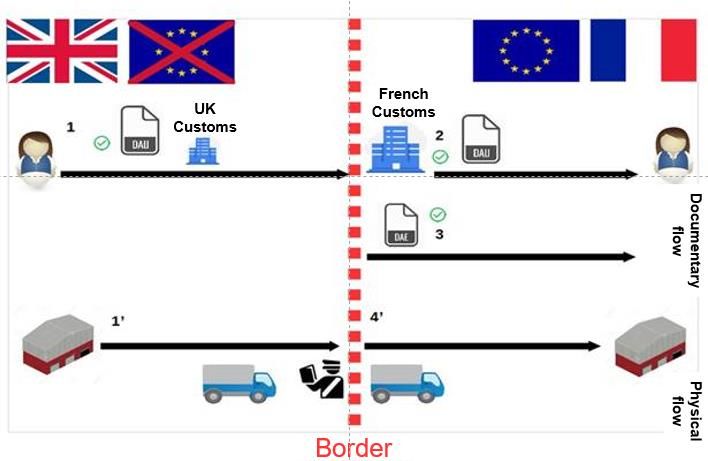
What is customs clearance ?

     Target Audience
     Enterprises that import/export goods from or to the UK.

     Introduction
What are customs procedures ?

•   Filling out a mandatory customs declaration form which details my goods : its tariff description
    (what it is), its origin (where and how it has been produced) and its value
•   Applying customs duties to imported goods when they enter the customs territory
•   Implementing trade policy measures (e.g. anti-dumping duties)

What is the purpose of customs clearance ?

•   Import : Under the customs clearance process, duties and taxes are collected and foreign trade rules
    are enforced (restrictions and bans), e.g. arms, standards, medicines, etc.

•   Export : Under the customs clearance process, goods leaving a customs territory are checked,
    providing evidence of sales exempt from VAT. Some goods are subject to customs clearance
    restrictions and the export declaration checks their exit authorization, e.g. cultural goods, arms, etc.

➢ To plan ahead and safeguard the customs clearance process, businesses may establish a
  partnership with French Customs. This will help them save time and money. If businesses are not
  sufficiently prepared for the process, there is a risk they will make mistakes, waste time and possibly
  even additional costs.

     A general principle : two different customs declarations
 Goods that are imported and exported go through customs twice:
 • Once when they leave the territory from which they are exported
 • Once when they enter the territory to which they are imported

 Below is an example of customs clearance at the French-UK border:
 • You produce goods that are shipped to Calais
 • Before the goods leave France, they are declared to French customs (export declaration)
 • When the goods arrive in the UK, they are presented to UK customs (import declaration)
 • The goods can then be delivered to your customer

       Whichever Brexit scenario eventually plays
      out, you need to start preparing now
      because you will be required to carry out a
      number of procedures. You will need to
      incorporate customs into your business
      strategy as it will impact each and every one                                  Main      Post-
                                                         Production
      of your processes                                                           transport    routing

                             © French Directorate General of Customs and Excise- 2019                    1/3   5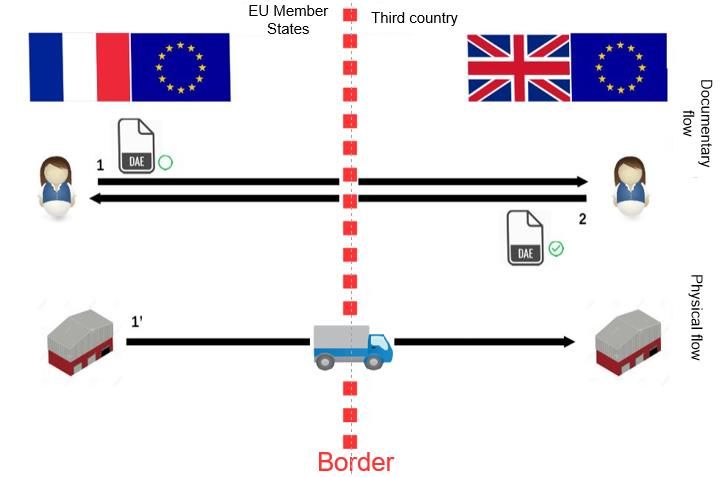
What is customs clearance ?

   Questions you need to consider before importing
 N.B. “Importing” means any trade coming into the EU from a non-EU, or third, country.

 1. Who can get my goods cleared for me?                        the customs duty rate payable on the
    • In most cases, a customs broker (a                        imported goods.
      registered customs representative) can                  • In the event of a trade agreement (free trade
      handle your customs clearance procedures                  agreement) between the EU and the UK, a
      and pay any customs duty and VAT that are                 preferential tariff rate may apply. An
      then invoiced to the receiving party. Other               imported product that comes under the rules
      fees (sometimes called customs charges)                   of the agreement may attract a lower
      are also invoiced but are in no way related to            customs duty or no duty at all.
      customs duties.
                                                          6. What duties and taxes will I need to pay to
 2. What do I need to do before I can start                   import my goods?
     importing?                                              • Customs duty is calculated based on the
    • You need to apply for an Economic Operator                value of the goods, plus other costs
       Registration and Identification (EORI)                   (insurance, transport, etc.) until the goods
       number. You need this free of charge                     enter the EU.
       formality to import goods from outside the            • VAT is calculated based on the value of the
       EU. You must register your EORI number                   goods, plus all the freight and insurance
       with your customs economic action centre. It             costs up to the final point of delivery and any
       is valid throughout the EU.                              customs duty.
                                                             • Any other taxes may be added.
 3. What do I need to do to import goods from
     a country outside the EU?                       7. Will my goods be subject to any particular
    • A customs declaration form needs to be filled      standards or regulations?
       out for all imported goods, which may be         • Some goods have to fulfil certain conditions
       subject to customs duty and VAT.                     or need to go through certain procedures in
    • Customs duty rates depend on the class of             order to be imported (standards, health
       goods (“tariff code”) and their origin. The          inspections, special authorizations, etc.).
       applicable VAT rate depends on the type of
       goods.                                        8. Why is the choice of Incoterms decisive?
                                                         (Incoterms is an abbreviation for International
 4. What is a tariff code and where can I find it?       Commercial Terms)
    • All goods are classified for trade purposes       • Incoterms determine the mutual obligations
       and given a tariff code that is recognized           of the seller and the buyer under
       throughout the EU. The tariff code                   international sales/purchase contracts.
       determines customs duty rates, applicable        • Incoterms          define      the     individual
       trade policy measures, technical standards           responsibilities and respective charges of the
       that need to be complied with, etc. This is          supplier and the buyer.
       essential information.
    • To help you to determine the tariff code, 9. What are my tax obligations?
       contact your supplier if you are not the         • If your business has the legal status of a
       manufacturer of your goods. You can also             EURL, an SARL or an SAS in France: You
       search the RITA online customs database              will have a tax identification number and you
       for more information on customs duty rates           can buy tax-free in the EU and reclaim
       for your goods. Your customs economic                besides VAT when importing from a third
       action centre is at your disposal to help you        country outside the EU.
       using RITA.                                      • If you are self-employed: You will pay VAT
                                                            on imported goods and you will not be able
 5. Why is the origin of the goods important?               to claim it back.
    • The origin of the goods helps to determine

                             © French Directorate General of Customs and Excise- 2019                     2/3     6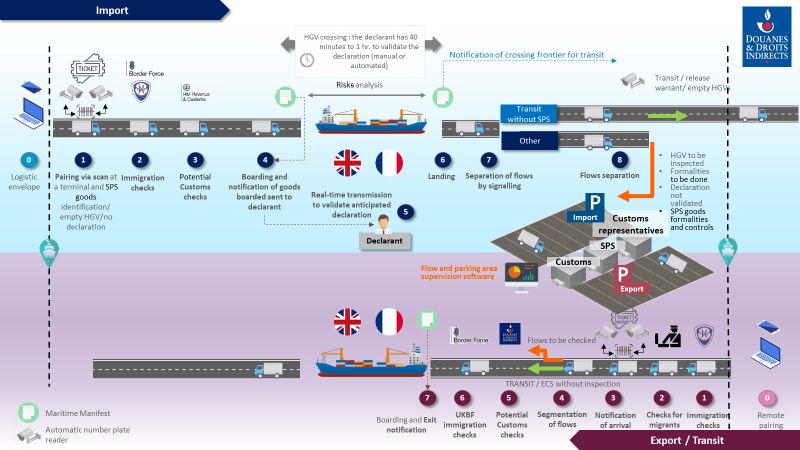
What is customs clearance ?

   Questions you need to consider before exporting
 N.B. “Exporting” means any trade from the EU to a third country.

 1. Who can get my goods cleared for me?              6. Why is the origin of the goods important?
    • In most cases, a customs broker (a                 • The origin of the goods helps to determine
       registered customs representative, formerly           the applicable customs duty rate in the UK. If
       known as a customs declarant) can handle              there is no trade agreement between the EU
       your customs clearance procedures. Fees               and the UK, the UK will apply the same
       are then invoiced to the exporter, sometimes          customs duty rate to the EU as it does to
       called customs charges, that are in no way            third countries. In the event of a trade
       related to customs duties.                            agreement, a preferential tariff rate may
                                                             apply.
 2. What do I need to do before I can start              • The customs origin of a good should not be
     exporting?                                              confused with its provenance.
    • You need to apply for an Economic Operator
       Registration and Identification (EORI) 7. Why is the choice of Incoterms decisive?
       number. You need this free of charge               (Incoterms is an abbreviation for International
       formality to import goods outside the EU.          Commercial Terms)
       You must register your EORI number with           • Incoterms determine the mutual obligations
       your customs economic action centre. It is            of the seller and the buyer under
       valid throughout the EU.                              international sales/purchase contracts.
                                                         • For customs purposes, Incoterms define the
 3. What are my tax obligations?                             individual responsibilities of the supplier and
    • If your business has the legal status of a             the buyer.
       EURL, an SARL or an SAS in France: you
       will have a tax identification number and you 8. How can I find out about another country’s
       can export tax-free.                               customs duty rates?
    • If you are self-employed: You will pay VAT         • For more information on customs duty rates
       on exported goods                                     in the export markets of your goods, contact
                                                             the Department of Economic Affairs at the
 4. How can I export goods without paying                    French Embassy in your market.
     VAT?
    • When goods are exported, the customs
       office checks that the goods declared exit
       the territory and issues an export certificate
       which may exempt you from VAT.

 5. What is a tariff code and where can I find it?
    • All goods are classified for trade purposes
      and given a customs tariff code that is
      recognized      internationally    (Harmonized
      System, or HS).
    • The tariff code determines customs duty
      rates, applicable trade policy measures,
      technical standards that need to be complied
      with, etc. This is essential information.
    • To help you to determine the customs tariff
      code, contact your customs broker and/or
      search the RITA online customs database
      for more information on customs duty rates
      for your goods.

                             © French Directorate General of Customs and Excise- 2019                   3/3    7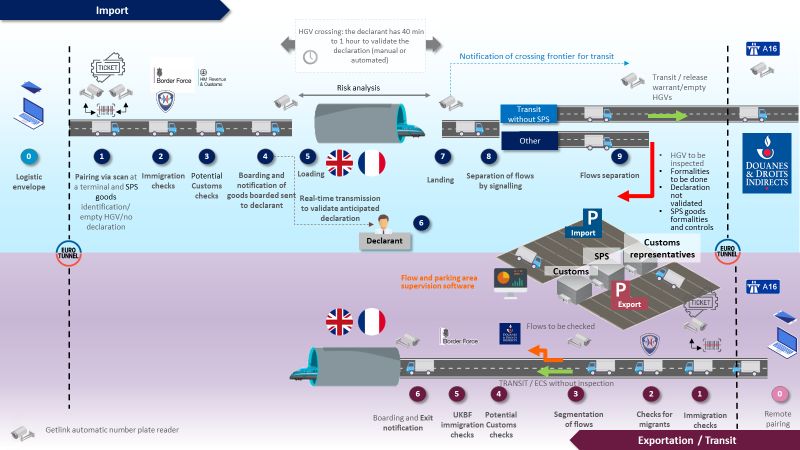
French Customs has ramped up human and
technology resources to ensure border controls go
smoothly. You should be prepared, too!
     Target audience
     Enterprises that export goods to, or import goods from, the UK.

     Background                                                Goals
 When the United Kingdom leaves the European              • To maintain smooth circulation of goods,
 Union on 29 March 2019, border controls and                  French    Customs      has      developed     a
 related procedures will be re-established. The UK            technological solution based on early
 will become a “third country” from the EU’s                  completion of Customs procedures and
 perspective, and all trade of goods must be                  automation of declarations : the “smart
 declared to Customs on each side of the                      border”: It will be applicable from 29 March
 border. There is a risk of infrastructure being              2019 at all points of entry/exit to/from Calais
 saturated and border fluidity being adversely                region and more broadly from Channel-North
 impacted. Every year, 4 million HGVs cross the               Sea.
 border between the UK and France’s Hauts-de-
 France region.

     Main principles
 Smart border was designed for all Customs procedures: transit, import or export. Its core principle is
 early completion of Customs procedures for import and export.

 Under this approach, Customs declarations must be identified with a bar code in the driver’s
 possession. The bar code establishes a link between the number plates of the HGV and its Customs
 or transit declaration(s).

 All these declarations cover the contents of a HGV identified via its number plate upon arrival at the
 Customs facility (port or Eurotunnel terminal): electronic registration of the HGV number plate and
 Customs forms (also known as “pairing”) enables the HGV to be tracked as it goes through the facility,
 especially when it crosses the border. After the border has been crossed, the vehicle is not permitted to
 turn back.

 Thus, upon arriving in France, the haulier will automatically be directed to the green or orange lane
 depending on the declaration status of the imported goods. Conversely, for exports, a HGV without
 customs formalities cannot leave EU territory.

                             © French Directorate General of Customs and Excise- 2019                     1/3   8
French Customs has ramped up human and
technology resources to ensure border controls go
smoothly. You should be prepared, too!
  Circulation of goods through the Channel Tunnel

  Steps to Import/Export

                   © French Directorate General of Customs and Excise- 2019   2/3   9
French Customs has ramped up human and
technology resources to ensure border controls go
smoothly. You should be prepared, too!
Circulation of goods through Calais region seaports and Channel-North
Sea border points
Steps to Import/Export
© French Directorate General of Customs and Excise- 2019 3/3 10Should my business outsource customs
procedures to a registered customs
representative?
Target audience
First-time importers/exporters of goods to/from the UK.
Background Objectives
Customs clearance procedures can be carried • Based on its needs, your business works out
out either ; whether it wants to carry out its own
• By yourself, or customs procedures in-house or
• By a broker acting on your behalf. This is called outsource them. In both instances, the aim is
a registered customs representative to safeguard your procedures and ensure
seamless trade flows with the UK
How does it work
1. If you want to handle the customs clearance of your goods yourself (for importing and
exporting), your business will need to file a customs declaration through the DELTA online
service once you have obtained an EORI number from customs.
We recommend you consider the following questions:
• Do you already carry out customs clearance procedures with third countries outside the EU?
• Are you in a position to fill out all the information in the customs declaration (there are 54) for
customs clearance?
If you answer yes to these questions, we do not expect you to encounter any problems if the border is
set up again between the EU and the UK.
2. However, if you are not familiar with customs clearance procedures, you can engage a
registered customs representative.
The registered customs representative will provide assistance and carry out customs clearance
procedures on your behalf (imports, exports and transit) in order to allow your goods to be imported
from the UK to France and exported to the UK from France. The registered customs representative will
also pay any import duties and taxes for these goods.
Under this arrangement, the registered customs representative will ask your business to sign a contract
to act on your behalf, either for direct representation or indirect representation.
• Direct representation means the registered customs representative will act in your name and on your
behalf
• Indirect representation means the registered customs representative will act in his/her name, but on
your behalf.
In both instances, the registered customs representative will provide you with advice. However, he/she
will need you to supply accurate information in order to be able to assist you.
➢ For more information about registered customs representatives, please refer to the useful contacts at
the end of this document
© French Directorate General of Customs and Excise- 2019 11What information does my business need to
provide to a registered customs representative?
Target audience
Enterprises which import/export goods to/from the UK
Background Objectives
Customs procedures and border controls will • Once you have identified your business’s
resume when the UK leaves the EU on 29 March needs, you can decide to outsource the
2019. The UK will become a third country and any customs process to a registered customs
trade in goods will be subject to a customs representative. You will need to supply
declaration. him/her with any information required for
customs clearance.
Those economic operators which have opted to
engage a registered customs representative
will outsource the customs process. However,
each business remains responsible for its
customs clearance procedures.
How does it work?
In order to file the customs declaration with customs for importing purposes and work out the
amount of duties and taxes owing, the registered customs representative will need the following
information:
• The name and address of the person he/she is representing in order to file the customs declaration
on his/her behalf
• The description and quantity of the goods
• The origin or destination of the goods
• The value of the goods
You will need to provide the registered customs representative with the following documents:
• The invoice
• Details of the commercial agreement between the seller and the buyer. This will enable the registered
customs representative to determine the Incoterms (outlining the individual responsibilities of the
supplier and the buyer and defining the point in the transaction when ownership of the goods is
transferred from the seller to the buyer).
• Any other accompanying documents for the goods
If the business has a tax identification number, it can export tax-free (this does not apply to the self-
employed).
➢ For more information about registered customs representatives, please refer to the useful contacts at
the end of this document.
© French Directorate General of Customs and Excise- 2019 12What financial impact will Brexit have on my
business?
Target audience
Enterprises which import/export goods to/from the UK
Background Objectives
Customs procedures and border controls will • Businesses shall be able to assess the
resume when the UK leaves the EU on 29 March financial impact on their trade of goods with a
2019. The UK will become a third country and any third country outside the EU (UK).
trade in goods will be subject to a customs
declaration.
These procedures will bring with them additional
costs in trading with the UK, particularly
associated with customs duties and taxes. If you
engage a customs broker for your customs
procedures (a registered customs representative),
you will also be charged for this service.
How does it work?
Customs clearance procedures for imports attract customs duties and taxes (generally VAT), which
are calculated on the basis of the customs declaration.
Determining the customs duty rate and associated taxes depends on the tariff classification of the
goods and their value and origin.
You will need to pay the amounts owing up front in order to be able to access your cleared goods.
• If you want to defer payment (you can access your goods immediately and pay 30 days in
arrears) and you handle your own customs clearance procedures, you will need to set up a
deferment account. You must provide a financial guarantee from a bank. Contact your
bank for further information about their commission and their terms and conditions for
obtaining a financial guarantee for your customs clearance procedures.
• If you get goods cleared regularly by customs, there are a range of procedures and
measures offered by the French Directorate General of Customs and Excise which allow you
to claim relief from financial charges. Detailed information about these measures will be
provided at a later date. You can visit the douane.gouv.fr website to find out more or contact
the Business Consulting Unit of your nearest Regional Customs Department.
• If you engage a registered customs representative to carry out your customs clearance
procedures, he/she will give you the option of using his/her own deferment account, but
you will need to pay for this service.
© French Directorate General of Customs and Excise- 2019 13How can I register my business with customs?
Target audience
First-time importers/exporters of goods to/from the UK
Background Objectives
On 1 July 2009 it became mandatory for all • Economic operators which have never
economic operators engaging in customs activities carried out customs procedures must
to obtain an Economic Operator Registration apply for an EORI number through the
and Identification (EORI) number. SOPRANO EORI online service, which can be
accessed from the pro.douane website.
The number is required by economic operators
involved in import and export activities, in • You can also contact your nearest
particular exporting to the UK, which will become a Business Consulting Unit for assistance
third country on 29 March 2019. In France, the with applying for an EORI number.
EORI number given to your entity is the same as
your SIRET number with the following format: FR
+ SIRET.
How does it work?
If you have a pro.douane account If you do not have a pro.douane account
1. Sign in with your login and password. 1. Click on the registration tab on the top
right-hand side of your screen
2. Click on SOPRANO in the “Mes téléservices” (https://pro.douane.gouv.fr/prodouane.asp)
menu.
2. Click on SOPRANO in the “Mes téléservices”
3. Click on “Déposer un nouveau dossier” to menu.
apply for a number.
3. Click on “Déposer un nouveau dossier” to
4. Fill in the relevant department from the drop- apply for a number.
down list and enter your SIRET number
(pre-filled fields). 4. Fill in the relevant department from the drop-
down list and enter your SIRET number
5. After your information has been verified, you (pre-filled fields).
will receive an email acknowledging
receipt. 5. After your information has been verified, you
will receive an email acknowledging
6. Your EORI number will be sent to your receipt.
email address in about three hours.
6. Your EORI number will be sent to your
email address in about three hours.
© French Directorate General of Customs and Excise- 2019 14What goods require special treatment by my
business?
Target audience
Enterprises which import/export goods to/from the UK
Background Objectives
Prohibited or restricted goods fall under special • After 29 March 2019, the UK will become a
regulations and require an authorisation prior to third country with respect to the EU. As a
customs clearance to be allowed into a territory. result, the prior authorisation system will
likely change and the enterprise will have to
be aware of that.
How does it work?
Goods which fall under special regulations and require an authorisation prior to customs clearance
are classified as follows (this list is not exhaustive) :
• Healthcare products (medicines)
• Sanitary products (perishable animal and plant products, etc.)
• Products impacting the environment (waste, chemicals, etc.)
• Fauna and flora protected under the Washington Convention on International Trade in
Endangered Species of Wild Fauna and Flora (CITES)
• War material, firearms and munitions
• Explosives and fireworks
• Dual-use goods
In practical terms,
1. Identify your goods.
2. Read through the fact sheets on goods subject to special procedures and check that your
authorisations are still valid after Brexit.
3. Where necessary, plan ahead and apply for new authorisations from the relevant government
departments depending on the type of goods:
• French National Agency for Medicines and Health Products Safety (ANSM)/Ministry for
Solidarity and Health, especially for medicines marketing authorisations
• Directorate General for Food/Ministry of Agriculture and Food for products subject to sanitary
or phytosanitary inspection
• Directorate General for Competition Policy, Consumer Affairs and Fraud Control/Ministry for
the Economy and Finance for animal-based products
• Directorate General for the Prevention of Risks/Ministry for the Ecological and Inclusive
Transition for chemicals and waste
• Directorate General for Planning, Housing and the Environment/ Ministry for the Ecological
and Inclusive Transition for CITES certificates in the framework of flora and fauna protection
• International Development Department of the Defence Procurement Agency/Ministry for the
Armed Forces for export licenses of war material
• Central Armament Department/Ministry of the Interior for classifying firearms
• Directorate General of Customs and Excise/Ministry for Government Action and Public
Accounts for importation or exportation of arms or explosives (AIMG, LEAF, AEPE, AIPE)
4. File a customs declaration for each trade in goods
For more information about goods requiring a special attention, the registered customs representative
may advice you or help you to fill in the declaration.
© French Directorate General of Customs and Excise- 2019 15Fact sheet #1 :
#F1
Imports of excise goods
EXCISE GOODS
Background Objectives
After 29 March 2019, the UK will become a third • Outline the new trade management system
country with respect to the EU. As a result, for importing excise goods from the UK with
trading with the UK will involve importing and the GAMMA online service.
exporting and operators will need to use an
electronic accompanying document.
Overview
Excise goods include :
▪ Energy products and electricity
▪ Alcohol and alcoholic beverages (beer, wine, etc.)
▪ Manufactured tobacco
From 30 March 2019, all shipments of excise goods from the UK will require an electronic
accompanying document and an import declaration.
Importing from the UK
When importing from the UK, the operator will need to file an import declaration at the border point (as a
general rule). The import declaration will be used to fill out the electronic accompanying document, which
will be required for the goods to be able to move from the border point to their final destination.
© French Directorate General of Customs and Excise- 2019 1/2 16Fact sheet #1 :
#F1
Exports of excise goods
EXCISE GOODS
Background Objectives
After 29 March 2019, the UK will become a third • Outline the new trade management system
country with respect to the EU. As a result, for exporting excise goods to the UK with
trading with the UK will involve importing and the GAMMA online service.
exporting and operators will need to use an
electronic accompanying document.
Overview
Excise goods include:
▪ Energy products and electricity
▪ Alcohol and alcoholic beverages (beer, wine, etc.)
▪ Manufactured tobacco
From 30 March 2019, all exports of excise goods to the UK will require an electronic accompanying
document and an export declaration.
Exporting to the UK
When exporting to the UK, the operator will need to fill out an electronic accompanying document, which
will be required for the goods to be able to move from the loading point to the border point (customs
office of exit). The electronic accompanying document must mention the customs office of export which
will be responsible for filling out the export declaration.
Legend
BE = Customs
office of export
BS = Customs
office of exit
© French Directorate General of Customs and Excise- 2019 2/2 17Fact sheet #2 :
#F2 Goods subject to special procedures: Plants
and plant products
PLANTS AND PLANT PRODUCTS
Background Objectives
Plants and plant products imported from the UK • Ensure that plants and plant products
will be subject to phytosanitary inspection, imported into the EU do not carry any
carried out by the Veterinary and Phytosanitary harmful organisms.
Border Inspection Office (SIVEP) at a point of
entry into the Community located at the first
point of entry into the EU. After inspecting the
goods, the SIVEP will issue a Common Health
Entry Document for Plant Products (CHED-PP).
You will need the CHED-PP to clear your goods at
customs, regardless of the customs procedure you
have chosen. You will also need to file an import
notification for your plants and plant products in
the Trade Control and Expert System (TRACES)
application before they are imported.
Overview
1 2 3 4
Pre-notification of Phytosanitary CHED-PP issued in Customs clearance
arrival of batch at inspection TRACES (mandatory for
border point via the all customs clearance
Trade Control and procedures)
Expert System
(TRACES)
Scenario #1
Transit in the EU
If you are transporting EU goods from Ireland to France via the UK, the SIVEP will perform a basic check
of your documents at the first point of re-entry into the EU.
Scenario #2
Export
A phytosanitary certificate for export (or re-export) may be requested in the importing country (UK).
Please contact your nearest Regional Directorate for Food, Agriculture and Forestry for more
information.
Scenario #3
Common Transit
If you are importing plants and plant products, you will not be allowed to defer the phytosanitary
inspection to the place of destination under the Common Transit procedure, although some exceptions
may apply. The phytosanitary inspection must be carried out at the first point of entry into EU territory.
© French Directorate General of Customs and Excise- 2019 18Fact sheet #3 :
#F3 Goods subject to special procedures: Live
animals and animal-based products
LIVE ANIMALS AND ANIMAL-BASED PRODUCTS
Background Objectives
Live animals and animal-based products imported • Ensure that imports of live animals and
into the EU will be subject to veterinary animal-based products do not pose any
inspection, carried out by the Veterinary and risks to the health of humans or animals.
Phytosanitary Border Inspection Office
(SIVEP) at the Border Inspection Post (BIP) of the
first point of entry into the EU. After inspecting
the goods, the SIVEP will issue a Common
Veterinary Entry Document (CVED).
You will need the CVED to clear your goods at
customs, regardless of the customs procedure
you have chosen.
You will also need to file a pre-import
notification for your live animals and animal-
based products with the Trade Control and Expert
System (TRACES) application before they are
imported.
.
Overview
1 2 3 4
Pre-notification of Veterinary CVED issued in Customs clearance
arrival of batch at inspection TRACES (mandatory for
border point via the all customs clearance
Trade Control and procedures)
Expert System
(TRACES)
Scenario #1
Transit in the EU
If you are transporting goods with EU status from Ireland to France via the UK, the SIVEP will perform a
basic check of your documents at the BIP at the first point of re-entry into the EU.
Scenario #2
Export
Live animals and animal-based products must carry a health certificate, although this certificate will not
determine whether your export declaration will be accepted by customs. However, it will probably be
requested in the importing country (UK). Please contact your nearest regional Directorate for
Citizen/Consumer Protection and Veterinary Services for more information.
Scenario #3
Common Transit
If you are importing live animals and animal-based products, you will not be allowed to defer the
veterinary inspection to the place of destination under the Common Transit procedure. The veterinary
inspection must be carried out at the first point of entry into EU territory.
© French Directorate General of Customs and Excise- 2019 19Fact sheet #4 :
#F4 Goods subject to special procedures:
Chemicals
CHEMICALS
Background Objectives
There are regulations governing chemicals in a Several EU regulations govern the import and
wide range of economic sectors, including the placing on the market of chemical products,
metalworking, pharmaceutical, veterinary, mixtures and substances incorporated into
cosmetic and agri-food industry, agriculture, articles or contained in equipment in order to:
machinery, car manufacturing, aeronautic,
construction, textile, electronic, etc. • Maintain a minimum level of information for
consumer safety and respect for the
The trade in chemicals is subject to international environment;
regulations under various conventions which have • Prevent the use, import or export of
been transposed into EU law. hazardous substances for human health or
the environment.
Overview
If you are importing
Chemical substances and mixtures:
• You will need to pre-register these under Regulation (EC) No 1907/2006 (REACH: Registration,
Evaluation, Authorisation and Restriction of Chemicals). In addition, some substances are banned
and others require an authorisation.
• Importing substances listed in Annex I of Regulation (EC) No 850/2004 on persistent organic
pollutants is banned, whether they are used separately, in preparations or as constituents in articles.
• Substances, mixtures and articles must also be classified and labelled (Regulation (EC) No
1272/2008 on classification, labelling and packaging).
Equipment containing fluorinated greenhouse gases: You will need to have a greenhouse gas quota
(under Regulation (EU) No 514/2017) and provide a certificate of conformity when you file the import
declaration with customs. Labelling of goods must comply with regulations.
Ozone-depleting substances: You will need to apply for a licence on the European Commission’s
ODS2 Licensing System (controlled substances are listed in the Annex to Regulation (EC) No
1005/2009).
Mercury, mercury-added products and mixtures of mercury: These are banned or restricted in
accordance with Annex I of Regulation (EU) 2017/852.
You are exporting
Chemicals: Some chemicals are subject to the export notification procedure and the Prior Informed
Consent (PIC) procedure (Regulation (EU) 649/2012 (PIC)). To export PIC substances, you will need to
obtain a Reference Identification Number (RIN) from the ECHA platform (ePIC site).
N.B. All exports of mercury and mercury-added products, mixtures and compounds are banned under
Regulation (EU) 2017/852 unless they are for military or laboratory research/analysis purposes.
© French Directorate General of Customs and Excise- 2019 20Fact sheet #5 :
#F5
Goods subject to special procedures: Medicines
MEDICINES
Background Objectives
Importing medicines into the national customs • Guarantee the flow of imports and exports of
territory, even from another State party to the medicines.
Agreement on the European Economic Area • Verify the consistency of customs
(EEA), requires prior authorisation. The French procedures for these flows.
National Agency for Medicines and Health
Products Safety (ANSM) handles applications for
import authorisations, which are detailed on the
ANSM website (online application available).
Overview
Importing medicines into the national customs territory, even from another State party to the Agreement
on the European Economic Area (EEA), requires prior authorisation.
The authorisation process includes marketing authorisations, registration, a temporary
authorisation for use, a clinical trial authorisation, or an import authorisation. The importer must
also be registered as a pharmaceutical company.
Steps:
1. Obtain prior authorisation from the ANSM for your planned marketing operation;
2. File a customs declaration for each consignment;
3. The reference number of the ANSM authorisation will be used as the document code for the
information provided on the customs declaration.
.
© French Directorate General of Customs and Excise- 2019 21Fact sheet #6 :
#F6
Goods subject to special procedures: Waste
WAS T E
Background Objectives
Under Regulation (EC) No 1013/2006 on • Ensure the traceability of shipments of waste
shipments of waste, a mandatory movement and gain information about the volume of
document is required for cross-border shipments waste.
of flows of waste. This document must be • Guarantee the safety of shipments of
presented to the customs office of entry and exit hazardous waste and prevent hazardous
of the EU and at the first point of entry into the waste from being diverted to sites where it
national territory. would not be recovered or disposed of
responsibly.
Overview
The waste shipment procedure is determined on the basis of three criteria:
• The type of waste: its classification (waste identification codes are detailed in the Annexes of
Regulation (EC) No 1013/2006) and its degree of danger
• The purpose of the shipment: recovery or disposal
• The origin and destination of the shipment, and the countries of transit.
The cross-border shipment of waste is subject either to:
• A notification procedure and a prior consent procedure from the National Centre for Cross-Border
Waste Shipment (PNTRD), or
• An information procedure.
Steps :
1. Work out your type of waste and the waste identification code under Regulation (EC) No
1013/2006 based on the purpose of the waste shipment and the shipment.
2. Check which procedure applies to you on the PNTTD website.
3. Comply with the right procedure:
• If the waste shipment is subject to an information procedure: fill out a document based on
the template provided in Annex VII. This document must accompany the waste shipment, be
presented to customs on request and be mentioned in the customs declaration ;
or
• If the waste shipment is subject to a notification procedure: fill an application for consent
with the PNTTD and provide the documents (in Annex IA and IB of Regulation (EC) No
1013/2006) for approval which accompany the waste shipment. These documents are
mentioned in the customs declaration and must be presented to customs on request.
© French Directorate General of Customs and Excise- 2019 22Fact sheet #7 :
#F7 Goods subject to special procedures: Arms, war
material and explosives
ARMS, WAR MATERIAL AND EXPLOSIVES
Background Objectives
Brexit will bring about a change in the systems to • Plan for the change in the control system.
control the transfer of arms, war material and • Maintain the flow of authorised imports and
explosives between the EU and the UK. A exports of arms and war material.
transition from the intra-EU arms transfer control • Ensure trade flows are controlled
system to an arms transfer control system with efficiently.
third countries is planned for 29 March 2019
Overview
War material and arms, munitions and their elements and explosives are banned goods. Importing
and exporting these goods require prior authorisation for customs clearance.
• In order to continue trading with the UK, you will need to identify the impact of Brexit on each
type of authorisation which has been issued and which is still valid:
1. Current authorisations will lapse :
• Firearms and war material: transfer licences, transfer permits, prior agreements, UK transfer
licences and transfer licences from other Member States.
• Explosives and fireworks: intra-Community transfer of explosives documents.
Businesses will need to apply for new authorisations from the relevant authorities in accordance with
the UK’s legal status.
2. Current authorisations will lapse, but they will still be valid under law:
• The Order of 30 January 2019 allows you to continue to ship war material to the UK using the
authorisations issued under the UK’s previous legal status.
3. Current authorisations will remain valid:
• Arms and war material: war material import authorisations (AIMG) which have been issued and
are still valid for importing war material listed under 1 or 2 of category A2 and war material, arms,
munitions and their elements listed under 6, 7, 8 or 9 of category B and a, b or c of category D.
• Explosives and fireworks: import/export authorisations for explosives (AIPE and AEPE).
• Preparing for new trade flows means you need to plan ahead and apply for new prior
authorisations.
Once issued, the authorisation must be presented during customs clearance procedures for
document checking and recording of the quantity and value. The authorisation must accompany the
goods when they are transported. It must be presented at the request of any relevant authorities.
© French Directorate General of Customs and Excise- 2019 1/2 23Fact sheet #7 :
#F7 Goods subject to special procedures: Arms, war
material and explosives
ARMS, WAR MATERIAL AND EXPLOSIVES
Procedures
Procedure #1 Procedure #2 Procedure #3
Apply to the relevant government department in The authorisation The authorisation is
order to obtain the necessary authorisation in accompanies the goods. presented to the
accordance with the trade flow and the classification customs office.
of the goods.
If you are importing war material from category A2,
arms, munitions and their elements from categories
A1, B or C or goods listed under a, b or c of
category D:
→ You need to hold a war material import
authorisation (AIMG) from the French Directorate
General of Customs and Excise/ Ministry for
Government Action and Public Accounts.
→ Set up a pro.douane account to file your
application online using e-APS (SOPRANO) and get
your account certified by your nearest Regional
Customs Department (Business Consulting Unit).
If you are exporting If you are exporting civilian
war material and firearms, munitions and
associated material their elements (listed in
listed under the Military Article R. 316-40 of the
List (ML): French Internal Security
→ You need to hold an Code):
Once issued, the
war material export → You need to obtain a The authorisation must
authorisation must
licence (LEMG) from firearms export licence be presented in order to
accompany the goods
the French Directorate (LEAF) from the French complete customs
when they are
of arms /Ministry for Directorate General of clearance procedures.
transported.
the Armed Forces. Customs and Excise/ → Approval and
→ It must be presented at
→ Set up an account /Ministry for Government recording of the
the request of any
to access SIGALE (go Action and Public authorisation
relevant authorities.
to Accounts.
https://www.ixarm.com/ → Set up a pro.douane
fr/). account to file your
application online using e-
APS (SOPRANO) and get
your account certified by
your nearest Business
Consulting Unit.
If you are exporting arms, munitions and their
elements listed under 6, 7 or 8 of category B or b or
c of category D:
→ You need to hold an authorisation under Council
Regulation (EC) No 1236/2005 (anti-torture
regulation).
→ File an application form with the French
Directorate General of Customs and Excise
/Ministry for Government Action and Public
Accounts.
© French Directorate General of Customs and Excise- 2019 2/2 24Appendices
Economic Action Centre contacts
AIX-EN-PROVENCE LE HAVRE PARIS (département 75)
Tel : 09 70 27 91 09 Tel : 09 70 27 41 41 Tel : 09 70 27 19 29 –
Fax : 04 42 59 46 58 Fax : 02 35 19 51 36 (pour le n° EORI : 09 70 27 19 00)
pae-provence@douane.finances.gouv.fr pae-le-havre@douane.finances.gouv.fr Fax : 01 42 40 47 90
pae-paris@douane.finances.gouv.fr
AJACCIO (2B-2A) LILLE
Tel : 09 70 27 89 16 Arrondissement de Lille PARIS-EST (dép. 77, 93, 94)
Fax : 04 95 51 39 00 Tel : 09 70 27 13 05 Tel : 09 70 27 21 27 - (pour le n° EORI :
pae-corse@douane.finances.gouv.fr Fax : 03 28 36 36 78 09 70 27 21 20)
Arrondissements de Valenciennes, Fax : 01 60 17 85 77
AMIENS Douai, Avesnes-sur-Helpe, Cambrai pae-paris-est@douane.finances.gouv.fr
Tel : 09 70 27 11 00 Tel : 09 70 27 09 95
Fax : 03 22 46 40 13 Fax : 03 27 45 80 25 PARIS-OUEST (dép. 78, 91, 92, 95)
pae-picardie@douane.finances.gouv.fr pae-lille@douane.finances.gouv.fr Tel : 09 70 27 23 45 / 98 (pour le n° EORI
LYON : 09 70 27 23 89)
ANNECY Tel : 09 70 27 27 89 / 87 / 17 Fax : 01 34 51 30 78
Tel : 09 70 27 30 34 Fax : 04 78 42 88 39 pae-paris-
Fax : 04 50 51 00 68 pae-lyon@douane.finances.gouv.fr ouest@douane.finances.gouv.fr
pae-leman@douane.finances.gouv.fr
MARSEILLE PERPIGNAN
BAYONNE Tel : 09 70 27 84 29 / 26 Tel : 09 70 27 71 60
Tel : 09 70 27 58 30 Fax : 04 91 19 77 95 Fax : 04 68 50 51 61
Fax : 05 59 31 46 11 pae-marseille@douane.finances.gouv.fr pae-perpignan@douane.finances.gouv.fr
pae-bayonne@douane.finances.gouv.fr
MONTPELLIER POITIERS
BESANÇON Tel : 09 70 27 69 44 Tel : 09 70 27 51 69
Tel : 09 70 27 66 16 Fax : 04 67 58 79 15 Fax : 05 49 42 32 29
Fax : 03 81 81 81 32 pae- pae-poitiers@douane.finances.gouv.fr
pae-franche- montpellier@douane.finances.gouv.fr
comte@douane.finances.gouv.fr REIMS
BORDEAUX MULHOUSE Tel : 09 70 27 80 26 / 23
Tel : 09 70 27 55 82 Tel : 09 70 27 78 26 Fax : 03 26 40 96 88
Fax : 05 57 30 93 72 Fax : 03 89 66 35 99 pae-reims@douane.finances.gouv.fr
pae-bordeaux@douane.finances.gouv.fr pae-mulhouse@douane.finances.gouv.fr
RENNES
CAEN NANCY Tel : 09 70 27 51 46
Tel : 09 70 27 45 20 Tel : 09 70 27 75 48 Fax : 02 99 31 89 64
Fax : 02 31 39 46 00 Fax : 03 83 17 72 12 pae-bretagne@douane.finances.gouv.fr
pae-caen@douane.finances.gouv.fr pae-lorraine@douane.finances.gouv.fr
ROISSY
CHAMBERY NANTES Tel : 01 48 62 62 88 / 75 28
Tel : 09 70 27 34 36 Tel : 09 70 27 51 14 Fax : 01 48 62 66 85
Fax : 04 79 85 28 61 Fax : 02 40 73 37 95 pae-roissy@douane.finances.gouv.fr
pae-chambery@douane.finances.gouv.fr pae-nantes@douane.finances.gouv.fr
ROUEN
CLERMONT-FERRAND NICE Tel : 09 70 27 39 11
Tel : 09 70 27 32 59 Tel : 09 70 27 87 30 Fax : 02 35 52 36 82
Fax : 04 73 34 79 30 Fax : 04 93 16 94 81 pae-rouen@douane.finances.gouv.fr
pae-auvergne@douane.finances.gouv.fr pae-nice@douane.finances.gouv.fr
STRASBOURG
DIJON ORLEANS Tel : 09 70 27 77 36
Tel : 09 70 27 64 34 Tel : 09 70 27 65 00 Fax : 03 88 25 66 11
Fax : 03 80 41 39 71 Fax : 02 38 62 92 73 pae-strasbourg@douane.finances.gouv.fr
pae-bourgogne@douane.finances.gouv.fr pae-orleans@douane.finances.gouv.fr
TOULOUSE
DUNKERQUE ORLY Tel : 09 70 27 60 00
Tel : 09 70 27 07 24 / 25 Tel : 01 49 75 84 11 Fax : 05 61 21 81 65
Fax : 03 28 61 33 27 Fax : 01 49 75 84 01 pae-toulouse@douane.finances.gouv.fr
pae-dunkerque@douane.finances.gouv.fr pae-orly@douane.finances.gouv.fr
© French Directorate General of Customs and Excise- 2019 26Economic Action Centre contacts
GUADELOUPE MAYOTTE
Tel : (0590) 41 19 40 Tel : (0269) 61 42 22
Fax : (0590) 41 19 43 Fax : (0269) 62 02 07
pae-guadeloupe@douane.finances.gouv.fr pae-mayotte@douane.finances.gouv.fr
GUYANE NOUVELLE-CALEDONIE
Tel : (05 94) 29 74 73 Tel : (00687) 26 53 00-00
Fax : (00687) 27 64 97
pae-guyane@douane.finances.gouv.fr dr-nouvelle-caledonie@douane.finances.gouv.fr
LA REUNION POLYNESIE FRANÇAISE
Tel : (0262) 90 81 00 Tel : (00689) 40 50 55 58
Fax : (0262) 41 09 81 Fax : (00689) 40 43 55 45
pae-reunion@douane.finances.gouv.fr cce-polynesie@douane.finances.gouv.fr
MARTINIQUE SAINT-PIERRE-ET-MIQUELON
Tel : (0596) 70 72 81 Tel : (0508) 41 17 41
Fax : (0596) 70 73 65 Fax : (0508) 41 41 94
pae-martinique@douane.finances.gouv.fr dr-saint-pierre-et-miquelon@douane.finances.gouv.fr
Registered customs representative federation contacts
French federation of transport and logistics companies (TLF)
rde.brexit@e-tlf.com
French national federation of road transport (FNTR)
thierry.grumiaux@fntr.fr
French federation of Transport Organisers (FOTF)
sth@sth-lehavre.fr
© French Directorate General of Customs and Excise- 2019 27Useful information
For more customs information, see the following pages on the French Customs website:
www.douane.gouv.fr
• The Business Advisory Units: http://www.douane.gouv.fr/articles/a13000-regional-customs-
information-centers-in-France
• The Customs Info Service (IDS) (in French): https://lannuaire.service-public.fr/centres-
contact/R16283
• Lexicon (in French): http://www.douane.gouv.fr/articles/a11056-lexique-des-termes-douaniers
• Import essentials (in French): http://www.douane.gouv.fr/articles/c807-importation
• Export essentials (in French): http://www.douane.gouv.fr/articles/c808-exportation
Or contact the London Customs Attaché: londres.douane@dgtresor.gouv.fr
For more information on Brexit, see the following pages on the French Customs website:
http://www.douane.gouv.fr/articles/a15055-get-ready-for-the-brexit
Customs Magazine No. 12 Businesses: Prepare for Brexit (in French):
http://www.douane.gouv.fr/articles/c953-douane-magazine-12-entreprises-preparez-vous-au-brexit-
Partner administration websites (for specific points on regulations)
• Directorate General for Enterprise: https://www.entreprises.gouv.fr/home?language=en-gb
• Ministry for Social Affairs, Health and W omen’s Rights (in French): www.sante.gouv.fr
• Ministry for Agriculture: https://agriculture.gouv.fr/english-contents
Find applicable customs duties in destination countries:
• Visit the European Commission website (DG Trade) : www.entreprises.gouv.fr
• Market Access Database: http://madb.europa.eu/madb/indexPubli.htm
For more information on customs duties applicable in the UK:
• European Commission website : Market Access Database: www.madb.europa.eu
• French Embassy service in the United Kingdom: londres@dgtresor.gouv.fr
© French Directorate General of Customs and Excise- 2019 28Glossary
• Border Inspection Post (BIP): Import • DELTA G for domiciled operators and
control point for products of animal origin and two- step customs clearance (simplified
live animals. declaration followed by general
supplementary declaration);
• Business Consulting Unit: Service within the
Economic Action centre (PAE) of each • DELTA X for operators authorised to use
French Customs regional directorate, the clearance procedure for express
dedicated to the information and advice of consignments.
business about customs formalities and
procedures. • Directorate General for Competition
Policy, Consumer Affairs and Fraud
• Central Weapons Department (MIN INT) Control (DGCCRF-MINEF)
• CITES: Washington Convention on • Directorate General of Customs and
International Trade in Endangered Excise (DGDDI)
Species of Wild Fauna and Flora.
• Directorate General for Food (DGAL-
• Common Health Entry Document MAAF)
(CHED- PP): Document covering plant
products issued by the Animal and Plant • Directorate for the International
Health Border Inspection Service (SIVEP). Development of the Directorate General
for Arms (MIN ARM)
• Common Veterinary Entry Document
(CVED): The Common Veterinary Entry • Directorate General for Planning,
Document (CVED) is an authorisation to Housing and Nature (DGALN-Ministry for
import produce or animals from third the Ecological and Inclusive Transition
countries into the European Union (EU). It is (MTES))
issued by the veterinary services via the • Directorate General for the Prevention
TRACES system after a control. of Risks (DGPR-MTES)
• Customs territory of the Community: The • Dual-Use Goods Department (DGE-
customs territory of the Community Ministry for Government Action and Public
comprises the territories of the Member Accounts (MACP)
States of the European Union, the
principality of Monaco, the Spanish Canary • ECHA: European Chemical Agency (EU
Islands, French Overseas Department, the agency)
Finnish Aland Islands, the Channel Islands
and the Isle of Man. Excluded from the • Economic Action Centre (PAE): Regional
customs territory of the Community are non- Customs Directorate service providing
EU countries and certain Member State international trade operators with
territories: the German archipelago of personalised information and advice on
Heligoland and exclave of Büsingen, the customs procedures.
Danish Faroe Islands and Greenland, the • Economic Operators Registration and
Spanish autonomous cities of Ceuta and Identification (EORI): An EU database
Melilla, French overseas territories, the issuing a single identification number to
Italian territories of Livigno and Campione each economic operator that has dealings
d’Italia, the Dutch islands of Aruba, Bonaire, with the European Union (EU) customs
Curaçao, Saba and Saint Martin, the British administrations or conducts trade covered
islands and territories of Anguilla, Bermuda, by customs legislation.
Cayman Islands, Falkland Islands, South
Georgia, South Sandwich Islands, • European Economic Area (E.E.A):
Gibraltar, Monserrat, Pitcairn Islands, Saint Agreement signed in Porto on 2 May 1992
Helena, Ascension and Tristan da Cunha, between the Member States of the
the British Antarctic Territory, the British European Union (EU) and the member
Indian Ocean Territory, Turks and Caicos states of the European Free Trade
Islands, and the British Virgin Islands. Association (EFTA) to establish a free
trade area between contracting states.
• DELTA: Online customs clearance
procedure: © French Directorate General of Customs and Excise- 2019 29You can also read


