Strategic Plan 2021 - Flower Mound, TX
←
→
Page content transcription
If your browser does not render page correctly, please read the page content below
Strategic Plan 2021

              Sue Ridnour, Director of Library Services
Jennie Evans, Library Assistant Director / Technical Services Manager
         Heather Botelho, Library Youth Services Manager
          Lynne Craddock, Library Adult Services Manager
     Tanya Underwood, Library Circulation Services Supervisor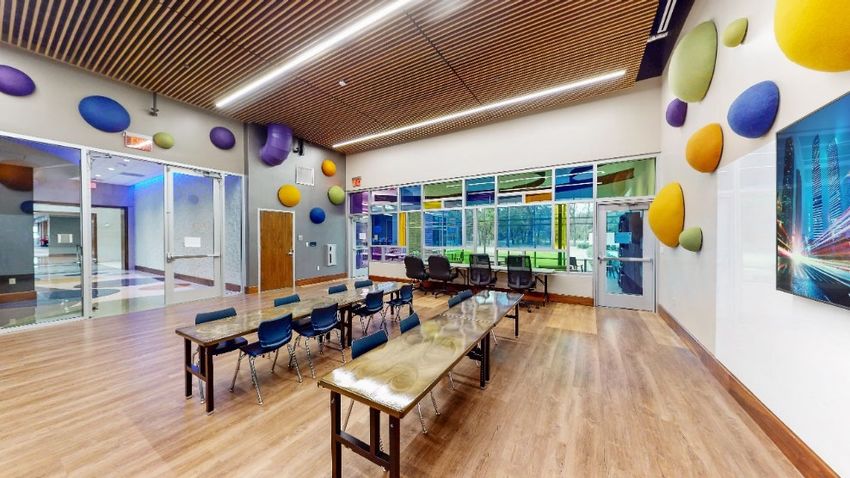
Flower Mound Public Library Strategic Plan 2021

Table of Contents
Introduction                                                                                      3

Community Profile                                                                                 3

Library Profile                                                                                   5

Library Expansion                                                                                 6

Library Goals                                                                                     8

2021 Strategic Plan Objectives                                                                    9

Appendix A: Sources                                                                               11

Mission Statement:
The Flower Mound Public Library supports education in our community by providing access to
information, creating young readers, fostering success in school, and facilitating lifelong learning.

The Library contributes to quality of life in Flower Mound by stimulating imagination, celebrating
diversity, and encouraging creativity in a space that meets the needs of the community.

Page | 2
Flower Mound Public Library Strategic Plan 2021

                                    Introduction
The Flower Mound Public Library staff develops a Strategic Plan each year. The planning
process relies on the book Strategic Planning for Results by Sandra Nelson (American Library
Association, 2008.) The book sets out 18 roles, or service responses, that encompass all
possible services provided by public libraries in the United States. During the 2015 planning
process, eight responses were identified that meet the needs of the residents of Flower
Mound and the surrounding area, and which the Library is positioned to provide. These
responses were translated into the goals that form the basis for the 2015 and subsequent
annual strategic plans.

The goals chosen for the Library fall under two broad categories that comprise the Library’s
mission: Supporting Education and Contributing to the Quality of Life. Using surveys and
other sources of community input, Library staff annually identifies objectives to be met in
the coming year under each of the eight goals.

                               Community Profile
The Town of Flower Mound is located in the Dallas/Fort Worth Metroplex in southern
Denton County. It encompasses approximately 45 square miles. The population in 2020 was
78,080. A master‐planned community incorporated in 1961, Flower Mound is 28 miles
northwest of Dallas, 25 miles northeast of Fort Worth and three miles north of the
Dallas/Fort Worth International Airport. The Town is uniquely located between two large
lakes; Lake Grapevine at the southern border and Lake Lewisville to the north.

Flower Mound derives its name from the historical site located near the intersection of FM
2499 and FM 3040. This site, known as The Mound, rises nearly 50 feet above the plains and
is home to more than 500 different varieties of wildflowers and native prairie grasses. In the
early 1800s, Wichita Indians were the main inhabitants of the area.

Demographics
The estimated number of households in Flower Mound in 2020 was 22,624. The median
home value was $359,036. The median household income was $138,873. The racial makeup
of the town in 2020 was 77.7% White; 12.5% Asian; 4.4% Black; 0.5% Native American; 0.1%
Pacific Islander; and 4.8% other. Hispanic or Latino of any race make up 9.9% of the
population.

Residents under age 20 constituted 30.0% of the population in 2020, and those over age 65
made up 10.8%. The median age was 39.7.

A little more than 16% of Flower Mound residents speak a language other than English.
Page | 3
Flower Mound Public Library Strategic Plan 2021

Government
The Town of Flower Mound has a Council‐Manager form of government. A Mayor heads a
Council of five members who are elected at large and serve staggered three‐year terms.
(The voters amended the Town Charter on November 8, 2016 to transition from two‐year, to
three‐year terms; the transition will be complete in 2025.) The Flower Mound Public Library
is a Town Department. It is advised by the Cultural Arts Commission, and the Director of
Library Services reports to an Assistant Town Manager.

Education
More than 85 percent of the adult population of Flower Mound over age 25 has had at least
some post‐secondary education. The majority of Flower Mound is served by the Lewisville
Independent School District (LISD). LISD encompasses 127 square miles and serves 13
communities. Portions of Flower Mound are also served by Northwest, Argyle, Denton and
Grapevine‐Colleyville School Districts. Within the Flower Mound Public Library immediate
service area, there are 12 LISD elementary schools, six middle schools, two ninth‐grade
campuses and two high schools, along with numerous private schools and preschool
programs. The Town is also served by satellite campuses of NCTC (North Central Texas
College) and MSU (Midwestern State University.) There are approximately 28 four‐year
colleges within 50 miles of Flower Mound.

The Community and Surrounding Area
The Town regularly receives various livability awards. In 2020, these included “Number 1 Best
Suburb to Buy a House in the DFW area” (Niche), “Number 4 Safest City in Texas”
(LendEDU), and “Number 5 City with the Highest Percentage of College Graduates in
Texas.” (LendEDU.)

The Parks and Recreation Division maintains close to 1,000 acres of parkland. This includes
approximately 59 miles of multi‐purpose trails that link parks, neighborhoods, schools and
businesses; two miles of equestrian trails; a dog park; a splash pad; a disc golf course; and
multiple athletic complexes. A senior center with over 2,000 members and a Community
Activity Center that averages over 5,000 members provide a variety of recreational
amenities and programming. A new 3.3‐acre memorial park which is located adjacent to the
Library is currently under design, projected to open in summer of 2022.

The Town’s Lakeside Business District on the south side of town continues to prosper with
the completion of Lakeside Center, a Class‐A office building; the Lakeside Condo Tower in
Lakeside DFW; and almost 200,000 square feet of flex office/warehouse space called
Eastgroup. Construction has commenced on the southern half of Lakeside DFW, named
Lakeside Village, bringing mixed‐use development including restaurant and retail space,
hotels, office, single‐family, and condominium residences. Construction continues on The
River Walk, located near the center of town, bringing a variety of residential, retail, office,
eateries, hotel accommodations, and entertainment spaces. On the west side of Town, Furst
Page | 4
Flower Mound Public Library Strategic Plan 2021

Ranch is currently in the application process and is proposing a mixed‐use development
totaling more than 2,000 acres, bringing a mixture of retail and restaurant, corporate office,
industrial, single family, multi family, and condominium residences. All of these projects will
bring additional population to the Flower Mound Library service area.

                                   Library Profile
History
Flower Mound Public Library opened to the public in November 1985. The first facility was a
1,500 square‐foot house which was later expanded to 2,000 square feet. In 1993 the Library
moved to a 4,000 square‐foot space in the new Town Hall. A bond election in 1994 for a new
library failed but a second election in 1997 passed. Construction began in 1998 on a 25,000
square‐foot facility which opened to the public in February 2000.

Library Statistics
The Flower Mound Public Library serves the residents of Flower Mound, as well as residents
of Denton County through an Interlocal Agreement. At the end of FY2020, Flower Mound
residents holding library cards totaled 24,693 (34% of the population), and 10,457 Denton
County residents living outside the Town limits had Flower Mound library cards. During
FY2019, the Library had 175,584 visits. Programs offered totaled 530, attended by almost
17,000 residents.

In FY2020, Library usage numbers were reduced substantially due to periods of closure
necessitated by COVID‐19 and Library construction. Visits totaled 97,446 in FY2020 and
program attendance was 7,059. The Library owned 124,902 physical items (1.71 per capita) at
the end of FY2020 but only circulated 337,817 items. This was a decrease over FY2019 of 25%.
Curbside services, use of the drive‐thru window, and circulation of e‐content resulted in less
of a drop in circulation than was seen in Library visits and program participation. Circulation
of e‐content constituted 24% of total circulation in FY2020, up from 16% in FY2019.

The Library is open seven days a week for a total of 64 hours. The Library has 29 staff
members (23 FTEs.) Ten positions require a Master of Library Science degree.

Funding and Expenditures
The Library receives funding from the Town of Flower Mound. The budget for FY2021 is
$1,921,013. Personnel costs comprise approximately $1,495,471 of this amount. The Library
budget for books and media is $115,000, with an additional $201,375 for non‐capital content
and associated platforms, including e‐content, subscriptions and databases. Donations from
The Friends of the Flower Mound Public Library, a non‐profit support organization, as well as
from other sources, add up to between $10,000 and $25,000 annually.

Page | 5
Flower Mound Public Library Strategic Plan 2021
Services
The Library offers eight weekly programs for young children, as well as numerous monthly
and annual programs and outreach events for school age children and teens. A monthly
book club and occasional programs on topics of interest are offered for adults, and a
monthly gaming program is open to all ages. All these programs are currently either
suspended or being offered virtually for the duration of the COVID‐19 crisis. The Library has
12 public Internet access computers and a wireless network that provides free internet
access for mobile devices. Seven private study rooms and a large meeting room are available
for use by the public. The Library also provides Interlibrary Loan services, TexShare Cards
and TexShare databases through the Texas State Library. Two services desks – Circulation /
Adult Services and Youth Services – are staffed to provide assistance when the library is
open.
Library Expansion
Planning for Expansion
In June of 2012, the Town approved “A Library Master Plan for the Town of Flower Mound
Public Library” prepared by consultants Dewberry Architects, Inc. The consultants were
hired to produce a master plan that would:
address what the town expects from the library
look to the future and plan for ten years with a five‐year update
address the size and location(s) of the library
plan for a build‐out population of 90,000
Through a six‐month process of site visits, data collection, peer review and community input,
the consultants produced a master plan for an expansion and renovation project.
Expansion and Renovation Project
Based on the Library Master Plan, the Library underwent an expansion and renovation
project. Design work on the project began in January of 2018, and the work was completed
in October of 2020. The expansion increased the Library square footage from 25,000 to
40,000. This increased the square footage per capita from 0.34 to approximately 0.51. This
increase brought the Library more in line with the statewide average of 0.47 square footage
per capita for Texas libraries serving populations of 50,000‐99,999, and the overall
statewide average of 1.06.
The budget for this project was $12,500,000, which was funded by $10,900,000 in TIRZ
funds; $1,500,000 in Town of Flower Mound General Revenue funds; and $100,000 in Town
of Flower Mound Tree Preservation Funds. The architect was Komatsu Architecture and the
Construction Manager‐at‐Risk was Steele & Freeman.
Page | 6Flower Mound Public Library Strategic Plan 2021
Features added by the expansion include:
a dedicated children’s storytime room
Creation Lab, featuring no‐ and low‐tech equipment and digital content creation
tools, as selected with input from residents
teen area with a lounge and separate shelving for the teen collections
family restroom
three additional study rooms, bringing the total to seven
additional multipurpose room
additional seating throughout
quiet reading room for adults, with an adjacent seating area featuring a fireplace
small vending area with indoor and outdoor seating
reading patios overlooking the new Peter’s Colony Memorial Park to the west
expanded parking
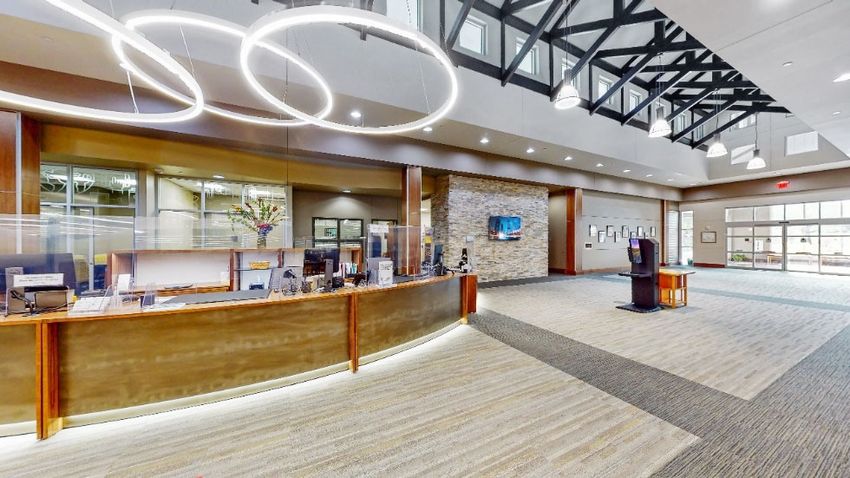
Top: Adult Services / Circulation Desk. Bottom: Storytime Room
Page | 7Flower Mound Public Library Strategic Plan 2021 Library Goals SUPPORT EDUCATION OF FLOWER MOUND RESIDENTS: Goal 1 Residents will have the knowledge and skills to search for, locate, evaluate and effectively use information to meet their needs. Goal 2 Children from birth to five will have programs and services designed to ensure they will enter school ready to learn to read, write and listen. Goal 3 Students in kindergarten through Grade 12 will have the resources they need to succeed in school. Goal 4 Teens and Adults will have the resources they need to explore topics of personal interest and to continue learning throughout their lives. CONTRIBUTE TO QUALITY OF LIFE for FLOWER MOUND RESIDENTS: Goal 5 Residents will find the books, movies and other materials they want to enhance their leisure time and will have assistance in making choices. Goal 6 Residents will have programs and services that promote appreciation and understanding of their personal heritage and the heritage of others in the community. Goal 7 Residents will have the services and support they need to express themselves by creating original content in a variety of formats. Goal 8 Residents will have safe and welcoming physical places to meet and interact with others as well as quiet spaces to read or study and will have spaces that support their technology needs. Page | 8
Flower Mound Public Library Strategic Plan 2021

                               2021 Strategic Plan Objectives:

                   Goal                                Objective                    Team Lead(s)

                              Support Education of Flower Mound Residents

     1. Residents will have the         a. Update “Research Tools” links on              LC
        knowledge and skills to            website and showcase subscription
        search for, locate, evaluate       services.
        and effectively use
        information to meet their       b. Develop a schedule for targeted               SR
        needs.                             newsletters using the Savannah
                                           marketing tool.

     2. Children from birth to five    a. Research and develop a plan to                 HB
        will have programs and            present sensory‐friendly preschool
        services designed to ensure       storytimes.
        they will enter school ready
        to learn to read, write and
        listen.

     3. Students in kindergarten        a. Design an awareness campaign for            HB / LC
        through Grade 12 will have         EBSCO Discovery Service, targeted
        the resources they need to         toward school librarians and
        succeed in school.                 teachers.

                                        b. Create an early chapter book                  HB
                                           collection.

                                        c. Partner with other groups to offer            HB
                                           programming and resources for at‐
                                           risk and underserved teens.
     4. Teens and Adults will have      a. Complete Edge 2.0 Assessment                  SR
        the resources they need to         Action Plans for highest priority
        explore topics of personal         areas under the following
        interest and to continue           benchmarks: (1) Digital Skills, (6)
        learning throughout their          Community and User Engagement,
        lives.                             and (10) Staff Digital Knowledge.

       (Continued on next page…)

Page | 9
Flower Mound Public Library Strategic Plan 2021
2021 Strategic Plan Objectives, continued:
Goal Objective Team Lead(s)
Contribute to Quality of Life for Flower Mound Residents
5. Residents will find the a. Update Collection Development JE
books, movies and other Procedures manual.
materials they want to
enhance their leisure time b. Expand and promote the collection of HB
and will have assistance in games for use in the Library.
making choices.
6. Residents will have a. Develop plan to continue the Culture & LC
programs and services that Heritage Series.
promote appreciation and
understanding of their
personal heritage and the
heritage of others in the
community.
7. Residents will have the b. Implement Creation Lab, including JE / SR
services and support they hardware and software selections,
need to express policies, programming and staffing.
themselves by creating
original content in a variety
of formats.
8. Residents will have safe a. Update Emergency Response Manual. TU / SR
and welcoming physical
places to meet and interact b. Implement Communico Software to
with others as well as quiet facilitate study room and program JE / LC / SR
spaces to read or study and reservations.
will have spaces that
support their technology
needs.
Page | 10Flower Mound Public Library Strategic Plan 2021 Appendix A: Sources Nelson, Sandra. Strategic Planning for Results. American Library Association, 2008. Texas State Library and Archives Commission www.tsl.texas.gov Town of Flower Mound www.flower‐mound.com United States Census Bureau https://data.census.gov/cedsci/ Page | 11
You can also read


