Support to Vaccine Equity - Beyond Recovery: Towards 2030 - UNITED NATIONS DEVELOPMENT PROGRAMME JUNE 2021
←
→
Page content transcription
If your browser does not render page correctly, please read the page content below
UNITED NATIONS DEVELOPMENT PROGRAMME · JUNE 2021

Support to Vaccine Equity

Beyond Recovery:
Towards 2030

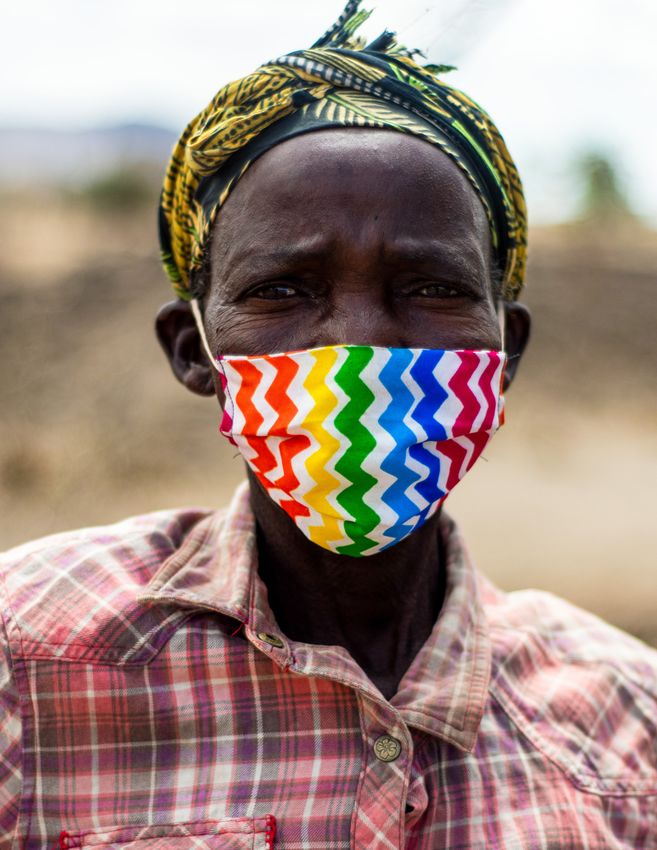
UNDP Malawi, 2020

            “ Greater cooperation is the only way to defeat
              COVID-19 and restore and accelerate progress on
              the SDGs and the pledge to leave no one behind.
                                                              ”
                                            Achim Steiner
                                            UNDP Administrator
                                                  COVID-19 vaccination offer   ii
    United Nations Development Programme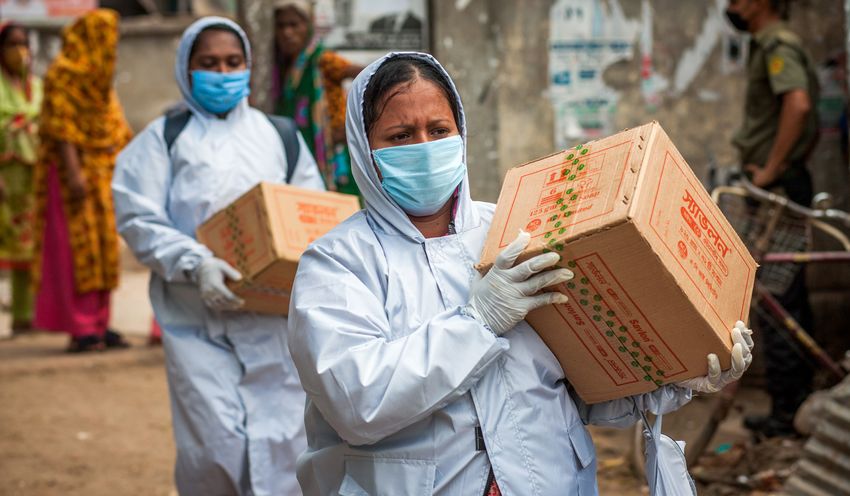
Context
    Over the past 500 years humanity has seen three pandemics per century on average. COVID-19 – a syndemic
    of multiple, intersecting crises – has unleashed enormous socio-economic consequences in all countries,
    especially for poor and vulnerable populations. COVID-19 has reversed decades of progress on poverty, health
    care and education, causing major disruptions in basic services and systems more broadly.1 The pandemic has also
    disproportionately impacted women and girls, setting back important gains in gender equality.2 By 2030, eight
    out of ten people pushed into poverty, as a result of COVID-19, will live in low and medium human development
    countries.3 The achievement of the Sustainable Development Goals (SDGs) and the pledge to leave no one behind,
    including through improved financing, is now under greater threat.

    COVID-19 diagnostics, therapeutics and vaccines are essential life-saving tools
    for containing and suppressing the virus. Unprecedented collaboration in
    science has delivered multiple safe and effective COVID-19 vaccines
    in record time. Affordable, non-discriminatory access to diagnostics,
    therapeutics and vaccines is a human right. However, COVID-19
    vaccination across and within countries is uneven and inequitable
    due to challenges in manufacturing, supplies, logistics,
    systems, and resources. And many low and medium human
    development countries are being left behind, revealing
    deficiencies in global solidarity.

    According to WHO, as of 2 June 2021, a total of
    1,581,509,628 vaccine doses have been administered4

                                                                                          167 MILLION
    and over 80 percent of these have been in high-income
    countries. Vaccine doses administered in relation to the
    share of global COVID-19 cases reveal acute disparities
    across high and low- and middle-income countries (LMIC).                                people are at risk of
    The UN Secretary-General recently noted that the richest
    countries and regions are getting vaccinated more than                                   EXCLUSION
    30 times faster than those with the lowest incomes. Experts
    note that at the current pace, many LMICs would only achieve                           FROM COVID-19
    widespread vaccination coverage by 2024-2025,5 prolonging
    the pandemic and potentially causing as much as US $9.2 trillion in
                                                                                            VACCINATION
    global economic damages.6

    Rampant vaccine inequity is leaving many millions of people vulnerable
    to the virus while allowing deadly variants to emerge and ricochet back across
    the world. Multiple variants of concern are showing increased transmissibility. The
    possibility of convergence of variants may cause resistance to the tools needed to tackle the
    virus. Moreover, variants of concern could potentially render first-generation vaccines ineffective in less than a year,7
    prolong the pandemic, deepen the negative development impact and impede a fair and sustainable recovery.

    In fragile and conflict-affected settings, the additional challenges of vaccinating populations of humanitarian
    concern are amplified. The Inter-Agency Standing Committee estimates that 167 million people are at risk of
    exclusion from COVID-19 vaccination. A global humanitarian buffer system has been established.8 Five percent of the
    total number of available doses procured through the COVAX Facility9 led by the WHO and UNICEF will be allocated
    to the buffer; up to 100 million doses could be made available by the end of 2021.

United Nations Development Programme                                                            Support to Vaccine Equity       1
Urgent efforts are needed to step up the pace of vaccination and reduce vaccine inequity which is a threat to
everyone. The 2021 Political Declaration on Equitable Global Access to COVID-19 Vaccines10, endorsed by over
180 Member States, notes that recovery relies on accelerating vaccination efforts and investing in the systems and
capacities needed to rapidly scale vaccination. An imperative of this scope and scale requires going beyond the
health sector and mobilizing a UN-wide, whole-of-government and whole-of society response. From a development
perspective, driving greater equity, resilience and sustainability in COVID-19 vaccination should also contribute to
tackling the other great challenges of our time – including inequalities, the climate crisis and pandemic preparedness –
in line with efforts to build forward better.
The UN response
The Political Declaration on Equitable Global Access to COVID-19 Vaccines, underlines “the importance of
vaccine preparedness and the important role of resilient health systems in the fight against COVID-19” and further
requests support for strengthening systems needed to accelerate vaccination and overcome challenges to vaccine
storage, distribution, and management, especially in areas where health infrastructure is weak, including in least
developed countries and crises-affected countries.11
The multilateral system is supporting countries to distribute safe and effective COVID-19 vaccines quickly and
equitably. Globally, the UN is calling for stronger collaboration, equity, and solidarity. Through mechanisms such as
the Access to COVID-19 Tools – Accelerator (ACT-A) and its COVAX Facility led by WHO and UNICEF, the multilateral
system and partners are advancing COVID-19 vaccine access and equity. The leaders of WHO, WTO, IMF and the
World Bank are calling for a more ambitious response to COVID-19, which could substantially reduce the vaccine
gap by vaccinating 40 percent of the global population by the end of 2021 and at least 60 percent by the first half of
2022 at a cost of $50 billion. This would generate $9 trillion in additional global output by 2025 which is a 180 times
return on investment.12
The full UN system is mobilized in responding to COVID-19, drawing on the strengths of over 40 UN Development
System entities. The UN response at global level is coordinated through the Crisis Management Team (CMT),
convened by WHO, of which UNDP is an active member. All UN members of the CMT are encouraged to engage
in the vaccination effort, under the leadership of WHO, UNICEF and the World Bank Group. Globally, as of 25
March 2021, international financial institutions (IFIs) have committed more than $25 billion to fund the purchase and
distribution of COVID-19 vaccines. In addition to investments to expand vaccine access to developing countries,
IFIs are partnering with countries including on strengthening capacity to deploy vaccinations effectively. This $25
billion includes $12 billion from the World Bank Group and $9.5 billion from the Asian Development Bank; this aims to
support countries to finance the implementation of national deployment and vaccination plans being developed by
governments with support from WHO, UNICEF and UN Country Teams (UNCTs) led by Resident Coordinators more
broadly. As with UNDP’s lead role in the UN framework for the immediate socio-economic response to COVID-19,
close cooperation with UNCTs and IFIs is critical.
The response to COVID-19 is providing an opportunity to accelerate systems transformation toward more inclusive,
accountable and sustainable models, leveraging innovation and digitalization.13 The COVID-19 crisis is pushing
governments to rethink development, ways of working and use of existing resources, and to come up with innovative
and scalable solutions to help fight the spread of virus and close the vaccine equity gap.
COVID-19 vaccination requires multi-sectoral engagement and action; innovative financing and robust systems for
equitable and rapid access; and management of increased energy demands for vaccine delivery systems and the
vast medical and other waste that vaccination programmes generate. These challenges demand a development
response which leverages innovation, technological advances and governance to build systems for health that are
resilient and sustainable; future forward and fit-for-purpose in a post-COVID world that will undoubtedly have to be
prepared for future outbreaks, pandemics and crises.
United Nations Development Programme Support to Vaccine Equity 2The UNDP-WHO
MoU includes health
emergencies as a
strategic priority for
collaboration, UNDP is
a signatory to the SDG
3 Global Action Plan for
Healthy Lives and Well-
being for All and co-leads
its cluster focusing on
COVID-19 vaccine equity
with WHO, UN Women
and UNAIDS, and UNDP
contributes to the health
systems connector pillar
of the ACT-Accelerator.
UNDP Bangladesh, 2020
UNDP’s contribution
UNDP’s support to vaccine equity contributes to the overall UN COVID-19 response which aims to deliver a global
response that leaves no one behind, reduces vulnerability to future pandemics, builds resilience to future shocks
such as the climate crisis and overcomes the stark inequalities exposed and exacerbated by the pandemic.
As a part of its COVID-19 response, and as the technical lead of the UN’s socio-economic response to the COVID-19
crisis, UNDP is assisting 144 countries in responding to the crisis. UNDP’s support to vaccine equity is grounded
in its COVID-19 response on the ground, focusing on four integrated areas: governance, social protection, green
economy, and digital disruption.14 It is based on UNDP’s longstanding experience in strengthening institutions and
capacity development, expertise in multidimensional approaches, and leveraging digital transformation and strategic
innovation to build more resilient and sustainable systems.
UNDP’s value proposition builds on its integrator role and its presence at country level. National deployment and
vaccination plans, developed under the leadership of WHO and UNICEF with support from UNCTs, including UNDP,
led by UN Resident Coordinators, are the overarching country plans for COVID-19 vaccine deployment as well as the
main framework for country support. National deployment and vaccination plans are being used to work with partners
including IFIs and the COVID-19 Vaccines Advance Market Commitment (COVAX AMC) for 92 eligible LMICs.15
In line with its COVID-19 response, UNDP’s support to vaccine equity is a collaborative, country-facing endeavour,
guided by WHO, UNICEF and other key partners. Greater collaboration and partnership are hardwired including
with IFIs and signatories of the SDG 3 Global Action Plan for Healthy Lives and Well-being for All.16 As the UN’s
development agency, UNDP’s contribution to COVID-19 vaccine equity leverages its:
• Presence and network across low and medium development contexts;
• Portfolios and expertise (i.e. digital, SDG integration, health, environment, energy, financing, private sector
partnerships); and
• Partnerships including with WHO, UNICEF, UNEP, the Informal Inter-Agency Task Team on Sustainable
Procurement in the Health Sector, Global Working Group on Health Waste Management17, the Global Fund to
Fight AIDS, Tuberculosis and Malaria, UNV, private sector partners, academia, and civil society.
UNDP’s support to vaccine equity takes a systems and governance approach to advancing inclusion, resilience, and
sustainability in COVID-19 vaccination, focusing on three action areas (next page):
United Nations Development Programme Support to Vaccine Equity 3DIGITAL SOLUTIONS
FOR VACCINE
DELIVERY & SYSTEMS
STRENGTHENING
DATA FOR GREENING
VACCINE VACCINE
EQUITY DELIVERY
United Nations Development Programme Support to Vaccine Equity 4Digital solutions for vaccine delivery & systems strengthening
Closing the digital divide and harnessing the power of digital technologies for COVID-19 vaccination is es-
sential for driving faster and fairer vaccination and achieving universal health coverage. In line with the UN
Secretary-General’s Roadmap for Digital Cooperation, the WHO Global Strategy on Digital and UNDP’s digital
transformation, UNDP is supporting countries to implement digital solutions for vaccine delivery and health
systems strengthening, as part of country-led efforts to scale the use of digital tools to address health and
development challenges.
As part of national deployment and vaccination plans, UNDP is working with government, UN and
other partners to:
• Introduce digital solutions for vaccine delivery and health systems strengthening, adapted to
country-contexts to ensure that safe and effective vaccines are distributed rapidly, efficiently, and
equitably. Typically, these involve strengthening systems and governance, including the use of open
source tools such as software, platforms and applications as well as capacity development.
• Link vaccine delivery to enabling energy-independent infrastructure with built-in connectivity to
support strengthening the resilience and sustainability of cold chains and reaching the last mile.
Leveraging its experience in Burundi, Ghana, India, Indonesia, and Malawi, among others, and its partnership with the Global
Fund to Fight AIDS, Tuberculosis and Malaria, UNDP has initiated implementation of digital solutions for COVID-19 vaccine
delivery and health systems strengthening in over 30 countries. UNDP has brought Smart Facilities with enabling energy-
independent infrastructure, built-in connectivity, and Internet of Things (IoT) sensor technology to 17 countries, including large
national hospitals and remote rural clinics. A Digital Toolkit has also been developed to support countries.
Data for vaccine equity
Data and digital tools have come to the fore in UNDP’s COVID-19 response. Granular, multidimensional, and
real-time data and analytics can support better decision making for vaccine equity. Leveraging its data capac-
ities, including the COVID-19 Data Futures Platform18, UNDP is working with partners to support countries in
using hyperlocal and multidimensional analytics to inform and drive equity.
A UNDP and WHO collaboration with the University of Oxford School of Government is contributing to
national deployment and vaccination plans through:
• Building and deploying hyperlocal vaccine data analytics through artificial intelligence (AI) and
machine learning (ML) algorithms that leverage data spanning demographics, socio-economics,
geography, and environment to inform and drive greater equity in COVID-19 vaccination rollout. Data from
the COVID-19 Gender Response Tracker19 is also being used. This includes supporting countries in using
data analytics for decision making and more effective governance.
• Building and deploying multidimensional analytics for a global dashboard to track vaccine equity.
This builds on existing global dashboards on COVID-19. While there are multiple dashboards on COVID-19
vaccination, the Global Dashboard for Vaccine Equity not only combines the data from the various
dashboards but draws insights and analysis that tells a story of vaccine equity and leaving no one behind.
The Global Dashboard for Vaccine Equity draws available information from existing COVID dashboards20
and combines this with socio-economic information21, to position the goal of vaccine equity in the broader
context of development challenges.
UNDP is collaborating with WHO and the University of Oxford School of Government on an initiative which includes
integrated hyperlocal data analytics to support countries to design and roll out effective, equitable strategies for vaccine
distribution. Work is underway in seven first-mover countries identified with WHO. A global dashboard to drive vaccine
equity is in design.
United Nations Development Programme Support to Vaccine Equity 5Greening vaccine delivery
COVID-19 vaccination is dramatically increasing health waste and increasing energy demands in the health
sector. COVID-19 vaccine rollout must address the health of people and planet, which are bound tightly to-
gether. Together with UN, academic, civil society and private sector partners, UNDP is supporting countries to
develop and deploy integrated solutions for greening COVID-19 vaccine delivery.
As part of national deployment and vaccination plans, UNDP is working with government, UN and
other partners to:
• Support greening of COVID-19 vaccine waste management to ensure environmentally and socially
sustainable disposal of immunization waste, based on guidelines from WHO, UNICEF and UNEP. This in-
cludes tracking the chain of custody of the vaccination waste through digitization of existing systems and
through novel components to minimize waste such as appropriate recycling of materials.
• Scale reliable clean energy solutions across the cold chain for COVID-19 vaccines, as part of efforts to
ensure reliable access to energy for health facilities. This includes deployment of technologies such as
portable solar power battery refrigerators which allow last mile distribution. It will link to Smart Facilities to
green underlying infrastructure across nodes throughout the health system.
Building on COVID-19 health care waste management work, UNDP is working with UNEP, WHO, UNICEF, Engineers Without
Borders and Health Care Without Harm, among other partners, to support COVID-19 vaccine waste management assess-
ments in 10 countries. UNDP, through the COVID-19 Private Sector Global Facility, is working with partners such as DHL to link
and scale the Smart Facilities solution for COVID-19 vaccination efforts. This includes building the capacity of local small and
medium-sized enterprises (SME) service providers in next generation digital and green technologies.
UNDP Yemen, 2020
United Nations Development Programme Support to Vaccine Equity 6Shutterstock, Pratik Chorge UNDP Belarus, 2020 Shutterstock, Parikh Mahendra N UNDP Colombia, 2020 UNDP Serbia, 2021 UNDP Bangladesh, 2020
Advocacy
                          In line with the advocacy from the UN Secretary-General and WHO Director-General, UNDP
                          is engaged, together with UN and other partners, in calling for greater vaccine equity. UNDP
                          was one of the early signatories of WHO’s Vaccine Equity Declaration and has been an
                          important voice in the public domain on the urgent need for COVID-19 vaccine equity in the
                          context of advancing a just, green, and sustainable recovery.

                          UNDP’s support to vaccine equity lends itself to advocacy on key issues of strategic
                          importance to UNDP including the SDGs, leaving no one behind, financing, and sustainability.
                          It benefits from an advocacy and engagement plan with key messages and high impact
                          communications opportunities, including joint communications with key partners such as
                          WHO, UNICEF, UNEP, the World Bank, and others.

    Capacity
                          UNDP’s support to vaccine equity is anchored in its presence and is country-facing. It leverages
                          global, regional and national capacities and partnerships across the organization and the
                          multilateral system.

                          Over 50 UNDP Country Offices are already supporting vaccine equity efforts in line with national
                          deployment and vaccination plans.

                          In addition to the existing Global Policy Network (GPN) resources, the following steps are being
                          taken to implement UNDP’s support to vaccine equity:

                          • Establishing a core team:
                              • Lead: Mandeep Dhaliwal
                                  • Digital: Digital Health Specialist (being recruited) & Samuel Ng
                                  • Data: Laurel Patterson & Babatunde Abidoye
                                  • Greening: Xiaofang Zhou, Rosemary Kumwenda & Sahba Sobhani
                                  • Communications: Anjali Kwatra & Oisika Chakrabarti
                                  • Regional Leads: Hakan Bjorkman, Amitrajit Saha, Elfatih Abdelraheem, Rosemary
                                    Kumwenda & Karin Santi
                         • Supplementing capacity of the GPN/ExpRes Roster
                         • Partnership with UNV
                         • An actively curated Teams space dedicated to UNDP’s support to COVID-19 vaccine equity
                         • LTAs to facilitate procurement in key areas, for example the LTA for open source digital tools

                         The core team is working closely with the Bureau of External Relations and Advocacy (BERA)
                         on resource mobilisation. Work is already underway with the inter-bureau IFF Working Group
                         to support country offices.

    NOTE: In view of the expertise of UNICEF in vaccine procurement, UNDP support to COVID vaccine programmes will
    not include the procurement of vaccines or cold chain equipment. Please refer to the Weekly Update from the BMS
    Director of 5 December 2020 stating “In response to recent queries internally and the need to ensure expectation
    management, it is important to note that UNDP’s COVID-19 response will not extend to procuring COVID-19 vaccines
    and cold chain equipment for countries”. In case of formal Government requests, exceptions would need to be
    agreed with UNICEF at country level and cleared by BMS.

United Nations Development Programme                                                          Support to Vaccine Equity      8
Sources and footnotes
1
United Nations. 2020. The Sustainable Development Goals Report 2020. Accessed at https://unstats.un.org/sdgs/report/2020/
2
Studies show that the pandemic will push 47 million more women and girls below the poverty line, reversing decades of
progress to eradicate extreme poverty. Accessed at https://www.unwomen.org/en/news/stories/2020/8/press-release-covid-19-
will-widen-poverty-gap-between-women-and-men. In addition, a surge of domestic violence against women has been reported
globally. Accessed at https://www.sixthtone.com/news/1005253/domestic-violence-cases-surge-during-covid-19-epidemic
3
Pardee Centre for International Futures, University of Denver and UNDP. Assessing the Impact of COVID-19 on the Sustainable
Development Goals. 2021. Accessed at https://sdgintegration.undp.org/sites/default/files/Flagship_1.pdf
4
Accessed at https://covid19.who.int/
5
Katz., I et al., (8 April 2021). From vaccine nationalism to vaccine equity – finding a path forward. New England Journal of Medi-
cine; data from U.S. Centers for Disease Control and Prevention.
6
Study shows vaccine nationalism could cost rich countries US $4.5 trillion. Accessed at https://iccwbo.org/media-wall/
news-speeches/study-shows-vaccine-nationalism-could-cost-rich-countries-us4-5-trillion/
7
Scientists warn new COVID mutations in a year as vaccines stall. Accessed at https://www.aljazeera.com/news/2021/3/30/scien-
tists-warn-new-covid-mutations-in-a-year-as-vaccines-stall
8
Gavi Board approves COVAX Buffer for high-risk groups in humanitarian settings. Accessed at https://www.gavi.org/news/me-
dia-room/gavi-board-approves-covax-buffer-high-risk-groups-humanitarian-settings
9
COVAX, convened by WHO, Gavi & CEPI along with its key delivery partner UNICEF, is focused on speeding up access to safe
and effective COVID-19 vaccines for all countries, as well as supporting the building of manufacturing capabilities and buying
supply ahead of time so that the 2 billion doses can be fairly distributed by the end of 2021. Participating countries will be able to
procure vaccines on a self-financing basis or on a cost-sharing arrangement; 92 LMICs are eligible for the cost-sharing under the
COVAX Advanced Market Commitment which aims to provide financing support for these countries.
10
Accessed at https://www.un.org/pga/75/wp-content/uploads/sites/100/2021/03/PGA-letter-The-Political-Declaration-on-Equita-
ble-Global-Access-to-COVID-19-Vaccines.pdf
Accessed at https://www.un.org/pga/75/wp-content/uploads/sites/100/2021/03/PGA-letter-The-Political-Declaration-on-Equita-
11
ble-Global-Access-to-COVID-19-Vaccines.pdf
12
Agarwal, R & Gopinath, G. A Proposal to End the COVID-19 Pandemic, IMF Staff Discussion Note. May 2021.
13
UNDP. Update on UNDP’s Socio-economic Response, Beyond Recovery: Towards 2030. Briefing Note #2. 25 January 2021.
14
UNDP. Beyond Recovery: Towards 2030
15
Low income: Afghanistan, Benin, Burkina Faso, Burundi, Central African Republic, Chad, Democratic People’s Republic of Korea,
Democratic Republic of the Congo, Eritrea, Ethiopia, Gambia, Guinea, Guinea-Bissau, Haiti, Liberia, Madagascar, Malawi, Mali,
Mozambique, Nepal, Niger, Rwanda, Sierra Leone, Somalia, South Sudan, Syrian Arab Republic, Tajikistan, Togo, Uganda, United
Republic of Tanzania, Yemen.
Lower-middle income: Angola, Algeria, Bangladesh, Bhutan, Bolivia (Plurinational State of), Cabo Verde, Cambodia, Cameroon,
Comoros, Congo, Côte d’Ivoire, Djibouti, Egypt, El Salvador, Eswatini, Ghana, Honduras, India, Indonesia, Kenya, Kiribati, Kyrgyz-
stan, Lao People’s Democratic Republic, Lesotho, Mauritania, Micronesia (Federated States of), Moldova, Mongolia, Morocco,
Myanmar, Nicaragua, Nigeria, Pakistan, Papua New Guinea, Philippines, São Tomé and Príncipe, Senegal, Solomon Islands, Sri
Lanka, Sudan, Timor-Leste, Tunisia, Ukraine, Uzbekistan, Vanuatu, Viet Nam, West Bank and Gaza Strip, Zambia, Zimbabwe.
Additional International Development Association eligible: Dominica, Fiji, Grenada, Guyana, Kosovo, Maldives, Marshall Is-
lands, Samoa, Saint Lucia, Saint Vincent and the Grenadines, Tonga, Tuvalu.
16
Accessed at https://www.who.int/initiatives/sdg3-global-action-plan
UNDP is coordinating the informal partners platform on Green Healthcare Waste, which includes resources on COVID-19 and
17
health care waste management including in relation to COVID-19 vaccines. Partners include: UNEP, UNICEF, WHO, PAHO, UNIDO,
World Bank, Global Fund, Gavi, GEF, Engineers Without Boarders, GIZ, MSF, Health Care Without Harm, and WaterAid.
UNDP’s COVID-19 Data Futures Platform pulls together data from the UN System, nonprofit partners, academia, development
18
partners and countries around the world. Interactive tools provide unique opportunities for data analysis, insights identification,
and collaboration around strategies and solutions. Accessed at https://data.undp.org/
19
COVID-19 Global Gender Response Tracker. Accessed at https://data.undp.org/gendertracker/
20
WHO COVID-19 Dashboard, Oxford COVID-19 Government Response Tracker (OxCGRT), UNICEF COVID-19 Vaccine Market
Dashboard, among others.
21
IMF and World Bank.
United Nations Development Programme Support to Vaccine Equity 9United Nations Development Programme Support to Vaccine Equity 10
You can also read


