SUSTAINABLE EDUCATION TRAVEL STRATEGY 2017 - 2021 Schools and Colleges April 2017
←
→
Page content transcription
If your browser does not render page correctly, please read the page content below
SUSTAINABLE EDUCATION
       TRAVEL
      STRATEGY
              for

     Schools and Colleges

      2017 - 2021

          April 2017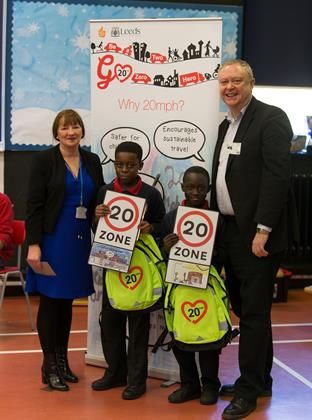
CONTENTS

EXECUTIVE SUMMARY -------------------------------------------------------------------------------            3
1.     INTRODUCTION --------------------------------------------------------------------------------         5
2.     POLICY---------------------------------------------------------------------------------------------   6
3.     AIMS AND OBJECTIVES --------------------------------------------------------------------- 7
4.     SCHOOL TRAVEL PLANS ------------------------------------------------------------------- 8
5.     ENGINEERING -----------------------------------------------------------------------------------       11
6.     PLANNING ---------------------------------------------------------------------------------------      13
7.     EDUCATION---------------------------------------------------------------------------------------      13
8.     SUSTAINABLE TRAVEL----------------------------------------------------------------------- 14
9.     HEALTH AND THE ENVIRONMENT ------------------------------------------------------- 17
10.    FUNDING AND RESOURCES----------------------------------------------------------------                 18
11.    CONSULTATION AND ENGAGEMENT --------------------------------------------------- 19
12.    MONITORING AND EVALUATION---------------------------------------------------------- 20
13     APPENDICES ------------------------------------------------------------------------------------ 22

       APPENDIX 1     ACTION PLAN AND TARGETS
       APPENDIX 2     POLICY
       APPENDIX 3     EDUCATION AND LEARNING IN LEEDS
       APPENDIX 4     ROAD SAFETY AND SCHOOL TRAVEL DATA
       APPENDIX 5     LIST OF SAFE AND SUSTAINABLE TRAVEL INITIATIVES
       APPENDIX 6     THE NATIONAL CHILD MEASUREMENT PROGRAMME

                                                                                                                  2
EXECUTIVE SUMMARY
Leeds City Council is working to be a Child Friendly City. We will support our children to
have the best start in life; to encourage active lifestyles, improve air quality and ensure
children and young people are safe when travelling around a well-planned city. The Best
Council Plan 2015 – 2020 sets out how the council will deliver better outcomes across
Leeds by working in partnership to deliver a strong economy and a compassionate city.
http://www.leeds.gov.uk/council/Pages/Council-plans.aspx.
This strategy will underpin a culture of active and sustainable travel amongst children and
young people that has a long-term impact on future travel choices. It will contribute to the
long term health and wellbeing of children by promoting an active and healthy lifestyle
and reduce carbon emissions in the city by decreasing the number of cars on Leeds’
roads and easing congestion around schools.
Travelling to school or college by car raises issues for air quality, road safety and
contributes to the long term decline in children’s levels of physical exercise. Car
dependency can have a negative effect on the health and independence of young people
and their travel behaviour in later life.
The Council will continue to promote the development and implementation of school
travel plans as a key tool and catalyst for planning and promoting sustainable travel in all
schools and colleges. Travel plans provide the means within schools to provide direction
through parent, pupil and community consultation, which identifies barriers and provides
the school with a clear action plan for the promotion of sustainable travel. This approach
has contributed to the reduction in the number of children travelling to school by car in
Leeds from 28.4% in 2007 to 25.8% in 2016.
Leeds education providers have diversified over recent years, with the introduction of free
schools, academies, through schools and further education (FE) colleges providing
vocational education from the age of 14 years. This, coupled with the increase in the
number of children in the city and parental choice, has led to many pupils not attending
their nearest schools but travelling further to schools that best suit their needs.
This strategy seeks to widen the choice and travel options available to children and
young people of all ages. The strategy sets a clear direction that will promote more
sustainable, safer and less car dependent patterns of travel on the school journey by
bringing together key partners and communities.
The strategy will:-
Continue to meet the requirements of the Education and Inspections Act 2006, to
promote sustainable travel in schools and FE establishments.
Ensure all schools and FE establishments have a travel plan that is implemented and
monitored annually.
Enable parents to access sustainable travel information on each school in the district
through the school admissions booklet or on the Leeds City Council website.
3 Create a platform to unite all external and internal stakeholders in the delivery of
sustainable school travel and help progress towards the Best City outcomes.
Provide direction to schools and colleges and partner organisations, to achieve the
outcome of a reduction to single occupancy car use, whilst also promoting a safe and
active lifestyle.
41. INTRODUCTION
1.1 Leeds is the regional capital of the Yorkshire and Humberside region and is the second
largest Metropolitan District in England covering an area of 552 square kilometres. It is
recognised as one of Britain’s most successful cities socially, economically and
environmentally and is shaped by a council leading an effective city partnership in
pursuit of a clear, strong, widely supported vision.
1.2 In 2014, Leeds had a growing population of 766 399 people (source ONS). There are a
higher proportion of young people than the national average, with Leeds having a large
student population. More than 180,000 children and young people aged 0 - 19 live in
the city. There are 118, 000 school aged pupils in Leeds (excluding independent
schools and FE/HE) in 302 Children and Young Peoples learning establishments and
schools.
1.3 Education establishments in England and Wales have changed over the past 5 years.
In 2010 the Government introduced legislation to make it possible for all schools to
become academies. In addition, in June 2010 the Education Secretary also invited
proposals from groups wanting to set up free schools. In 2016 Leeds had 53 academy
schools and 6 free schools.
1.4 The educational environment no longer involves young people automatically attending
their designated local school or college. Parent, carer and pupil preferences are
supported by increased diversity of education provision. In addition, the increased
attendance age in either education or training from 16 to 18 years adds to the
complexity of school travel due to the increasing distances being travelled by students.
1.5 Leeds has an ambition to be a Child Friendly City where the voices, needs and priorities
of children and young people are heard, where schools are improving and inclusive,
where every young child and every young person can be healthy, happy, be safe and
feel safe and supported to have the best start in life and where no child is left behind.
1.6 All schools in Leeds have a travel plan and actively promote safe and sustainable travel
to school through a variety of initiatives and campaigns. Travel plans are monitored
through an electronic travel planning system which also recognises achievements
through national accreditation. New and expanding schools that require planning
approval produce travel plans in accordance with the Travel Plans supplementary
planning document (SPD) and appropriate infrastructure and facilities are installed to
enable delivery of the travel plan measures.
1.7 The context for school travel plans also includes the wider traffic and environmental
management of school travel especially air quality and congestion. Journeys to school
are a significant generator of trips as well as road vehicle emissions of nitrogen dioxide
and particulate matter. Managing air quality is a particular issue with six defined Air
Quality Management Areas and proposals are now being prepared for a Clean Air Zone
to reduce pollution in line with national and European standards by 2020.
52. POLICY
2.1 Cross functional working across the Council’s Planning Services, Public Health,
Highways and Transportation, Children’s Services and West Yorkshire Combined
Authority (WYCA) draws on national, regional and local policies to enable and promote
sustainable travel across the city.
2.2 The Vision for Leeds (2011 - 2030) sets out the community strategy and aims for Leeds
to be the best city in the UK by 2030. It includes a commitment to create a sustainable
travel culture, increase the investment in walking and cycling and lower carbon
emissions. Within this context, the City Council has a key ambition for Leeds to be a
Child Friendly City - by creating places and services where children and young people
feel safe, welcome, involved and informed about what goes on around them. In taking
this initiative forward, 12 ‘wishes’ have been developed for a more child friendly Leeds.
These include, travel, places and spaces, and a healthy lifestyle. The Best Council Plan
2015-20 provides updated priorities on an annual basis that helps with progression
towards achieving The Vision for Leeds (2011 – 2030).
2.3 The Local Development Framework (LDF) provides the overall context for new
development in the city (see appendix 2) and the draft Site Allocations Plan (SAP) 2015
provides site allocations and requirements that will help to deliver the Core Strategy
policies and ensure that sufficient land is available in appropriate locations to meet the
targets set out in the Core Strategy. The SAP highlights the number of additional school
places needed to meet the demand for new housing developments. Where necessary,
housing allocations will set aside land for provision of a school or schools, to ensure
that there are sufficient school places to meet the needs of an expanding population.
2.4 Leeds LDF Supplementary Planning Document (SPD) 2014 on travel plans elaborates
on the policy requirement relating to travel plans included in the Leeds Core Strategy
and sets out the Council’s requirements for the submission of a travel plan in support of
a planning application. It is also intended for use by existing firms or organisations who
wish to draw up a travel plan to facilitate more efficient and sustainable working
practices.
2.5 Regionally, The West Yorkshire Local Transport Plan 3 (LTP3), ‘My Journey-connecting
people and places’ 2011 – 2026, sets out how to tackle congestion in West Yorkshire.
The West Yorkshire Combined Authority (WYCA) is developing a new Transport
Strategy (TS) and 20 year strategy for transport for the period 2016 - 2036. The TS will
replace the existing Local Transport Plan (LTP3) with one single plan and will provide a
new vision for transport across the region. In addition, WYCA also consulted on a new
bus strategy which sets out what buses across West Yorkshire should achieve between
2016 - 2036.
2.6 In 2016, Leeds embarked on a ‘transport conversation’ with its residents, businesses
and visitors in order to develop a future transport strategy and make plans for transport
investment across the city. This was led by a promise from government to release
£173.5m to Leeds. This funding was further supplemented by additional sources
resulting in £270m projected to be spent in Leeds over the next five years. Provisional
schemes include:
6 Bus Priority enhancements to key radial routes
Investment in First Bus fleet providing the city with low emission vehicles
Development of three new stations while a further four will see improvements to
access and facilities
Investment in real time infrastructure
“Smart” technology capability across the transport network
2.7 These principles will work to provide more reliable and comfortable journeys which will
assist with the delivery of the travel plan for each school and FE Institution. A step
change in the transport offer will also enhance the opportunities for young people not
in education employment or training (NEETS) to access courses which will enable
their skills development.
3. AIMS AND OBJECTIVES
3.1 In developing and implementing the sustainable travel strategy, the Council and its
partners need to balance the objectives of national and local strategies to deliver a
safe and sustainable transport network that encourages the health and environmental
benefits of walking, cycling and public transport to all the children and young people of
Leeds. This includes providing a safe environment for walking and cycling and a safe
and reliable school bus or public transport service.
3.2 As such the overall aim of this strategy is to:-
Enable and promote the use of safe and sustainable travel to all children and
young people of Leeds and increase the number of children and young people
walking, cycling and using public transport to access schools and colleges.
3.3 To deliver the aims of this strategy clear objectives have been set alongside a
comprehensive action plan for the next 5 years (see appendix 1).
Objectives
Develop, implement and monitor travel plans in all schools and FE establishments.
Develop innovative projects, initiatives and campaigns to promote and support
sustainable travel within schools and FE establishments.
Work in partnership with stakeholders, both within and external to the Council, to
maximise the effectiveness of travel plan measures and initiatives as an integrated
part of transport, health and education strategies.
Develop measures which improve the safety and appeal of sustainable school
travel choices.
Collaborate with WYCA and public transport operators to encourage more
sustainable travel to school.
Influence and inform the design and development of new and extended schools
and FE establishments with regard to safe and sustainable travel.
Work with regional partners to develop resources, organise training and share best
practice.
7 To contribute to the immediate long term health and wellbeing of children and
young people in Leeds.
To reduce traffic, ease congestion and reduce carbon emissions around schools.
To use travel planning to create a culture of active and sustainable travel amongst
children and parents.
4. SCHOOL TRAVEL PLANS
4.1 A School Travel Plan aims to reduce the number of children being driven to school and
encourages more sustainable modes of transport such as cycling, walking and public
transport. How children and young people travel to school is an important issue in
Leeds due to levels of congestion and pollution around schools and major roads in the
area. The health of children in Leeds is also of concern as locally and nationally
figures show that obesity levels, despite stabilising, are still too high and this is partly
attributed to sedentary lifestyles.
4.2 The Sustainable Education Travel Strategy and school travel plans are the main
methodology used by the Council to fulfil the requirements of the statutory duty of the
Education Inspections Act 2006 section 508A. The travel plan provides a clear
strategy to each school on how it aims to promote sustainable travel to parents,
visitors, staff and pupils attending the school. It also identifies barriers through the
extensive consultation process, highlights appropriate initiatives to develop and
implement in school, and audits the infrastructure in and around the local area.
4.3 The information gathered through the travel plan process is used to inform many of the
services within the council; particularly Highways and Transportation. Information
provided through the travel plan can help to identify the most appropriate locations for
supportive infrastructure programmes, particularly pedestrian and cycle crossings,
traffic calming measures and 20mph zones. It is widely consulted on regarding the
location of facilities in planning applications for residential areas and when considering
safe routes to school.
4.4 In Leeds, all state maintained schools, academies and free schools have a school
travel plan in place. All new build schools and existing schools that are expanding are
required to submit a new or updated travel plan as part of their planning application
and in accordance with the Travel Plan Supplementary Planning Document.
ALL SCHOOLS IN LEEDS HAVE A SCHOOL TRAVEL PLAN
4.5 All planning obligated school travel plans are monitored by the school and verified
annually by council officers through the online Modeshift Sustainable Travel
Accreditation and Recognition for Schools (STARS) database.
4.6 All non-planning obligated schools can also choose to implement and monitor their
school travel plan by using the Modeshift STARS online database to achieve a
national accreditation for the reduction of car travel to school and the promotion of
road safety initiatives.
84.7 To monitor the success of school travel plans, the usual travel to school mode is
recorded by the annual school census. The long term trend of; ‘percentage of pupils
travelling to school by car’, has gradually decreased from 28.39 % in 2007 to 25.8% in
2016. Walking to school since 2008 has risen steadily to 55.6% in 2016. The public
transport trend is generally in decline at 14.8% in 2016 and cycling to school still
remains well below the national average of 4%, currently standing at 0.5 %.
4.8 How pupils travel to school is collected through the school census with over 90% of
schools supplying data annually. Work is on-going to improve the quality of this data,
for example, at present, in some schools; the mode of transport is only collected at
pupil entry stage and is not updated annually. This approach fails to identify any
changes to their pupils’ mode of travel as they progress through the school in
subsequent years.
Car journeys to school from 28.39% 2007 to 25.8 % in 2016
Promotional Initiatives
4.9 The Council’s Influencing Travel Behaviour Team (ITB) delivers a wide programme of
promotional safe and sustainable travel events and initiatives alongside road safety
education and training. Increasingly over recent years the available budget has been
actively targeted at road safety work that is largely focused around children and young
people. Promotional events are delivered directly in schools and to children and
young people at community events in the city, many in partnership with internal and
external organisations (see appendix 5 for details of initiatives) including Cycle Leeds,
Active Schools, Public Health, Sustrans, The Works and West Yorkshire Combined
Authority who support the delivery of themed and national promotions by providing
additional staffing and promotional resources.
9Sustainable Travel Accreditation and Recognition for Schools (STARS)
4.10 In 2013, the Council introduced a monitoring and accreditation scheme for all schools
that submitted a travel plan as part of a planning application. Modeshift STARS is a
national accreditation scheme that monitors travel plans through a data base and
awards accreditation to schools that implement sustainable travel initiatives and
achieves modal shift away from the car. The website has been in development for two
years and Leeds City Council has been jointly piloting the scheme to improve its
performance.
Case Study - Modeshift STARS (Sustainable Travel Accreditation and Recognition for
Schools)
Leeds City Council has helped in the development of Modeshift STARS which is an online
travel plan monitoring and accreditation system available to all schools in Leeds. STARS
recognises schools that have shown excellence in promoting road safety skills and
sustainable travel by encouraging cycling, walking and public transport for their journey to
school; and by rewarding them with a Bronze, Silver and Gold Level accreditation. To date
103 Leeds schools are actively using STARS and 17 Leeds schools have achieved a Bronze,
Silver or Gold award.
In 2015, Rawdon Littlemoor Primary won the first ever title of National STARS School of the
Year. They were the first school in Leeds to achieve Gold level STARS and won the regional
awards for the North East & Yorkshire and Humber for reducing car use.
The school managed to almost halve the number of pupils travelling to school by car,
reducing car travel from 45.9% to 27.4% between 2013 and 2015 and they have increased
the number of pupils cycling to school from 0 to 42. They have introduced themed
initiatives such as Spooky and Santa scoots to promote scooting to school. The school have
involved all members of the school community; staff, pupils, parents and governors in
developing and promoting sustainable travel events, creating a cycling ethos within the
school and embedding sustainable travel in the curriculum. Fundraising events for a cycle
track included a Glastonbury style festival in which over 500 parents and pupils camped out
overnight.
105. ENGINEERING
Safer journeys to school
5.1 A school travel plan may identify desired improvements on the highway to support
safe and sustainable travel to school. These may reflect requirements for highway
improvements identified through casualty figures, traffic management, new
developments and community needs.
157 schools in Leeds are located within a 20mph speed limit.
5.2 There is an ongoing programme of 20 mph schemes being delivered in Leeds centred
on schools. Around 15 schemes per annum are being delivered which will lead to the
overall programme being completed by the end of the 2019/2020 financial year for the
vast majority of schools in Leeds. These schemes initially had a purely road safety
focus but reducing speed limits in local communities also encourage sustainable
modes of travel such as walking, cycling and scooting.
5.3 A total of 157 schools are situated within a 20 mph speed limit in Leeds including 40
schemes adjacent to the City Connect corridor, completed in spring 2016.
5.4 This is complemented by a road safety engineering programme which allocates
annual funding to schemes that target vulnerable road users; cyclists, pedestrians and
motorcyclists. It also delivers minor engineering schemes to address barriers identified
through the travel plan process or Modeshift STARS to encourage walking, cycling or
scooting to school. In the interests of road safety, and when justified through an
evidence based approach, formal parking restrictions may be introduced to better
manage and control parking around schools.
£1.5m of LTP funding allocated in 2016/17 to road safety
engineering projects which target vulnerable road users.
Audit of Infrastructure
5.5 The on-going audit of travel infrastructure will be through the travel plan process,
either by planning application, monitoring travel plans, Councillor and school contact
or requests or through the STARS system. In addition, an audit of
infrastructure/facilities survey is sent to all schools annually. Information provided by
schools is available on the Leeds City Council Website ‘Find a School’ page and
published alongside schools in the admission booklet which is available to all parents.
11Case Study- 20mph speed limit
Leeds City Council is implementing a programme of 20mph speed limits around schools
prioritised by road casualty data. By 2017, 180 schools will be located within a 20mph
speed limit.
The 20mph schemes cover the whole school catchment area and are accompanied by
school specific packages of complementary road safety education and training as well as the
promotion of active travel when travelling to school.
In 2015, £30k from public health supported the Middleton 20mph scheme which included
Clapgate Primary, Windmill Primary, Middleton St Phillip’s Primary, Middleton St Mary’s
Primary, Westwood Primary and Middleton Primary.
Middleton Primary School launched the 20mph scheme for the Middleton area in January
2016. The scheme involved a design- a- sign competition that will be placed at all the
gateways to the 20mph scheme. The school also took part in a road safety education day
involving a road safety assembly, scooter training, a Speed Indication Device (SID) activity,
Bikeability Balance training and Bikeability Level 2. In addition the school received the
Safety Rangers programme which included a reaction timer activity, large goods vehicle
awareness training, and involvement from local Police officers.
20mph schemes have been effective in improving road safety, reducing the number of
accidents by over 40% and halving pedestrian and child casualties in the areas of Leeds
where the schemes have been introduced.
Cllr Truswell and Cllr Groves with winning pupils from Middleton Primary School
126. PLANNING
6.1 A key element of the planning process is ensuring that effective travel plans for new and
improved schools are submitted with the planning application. Travel plans will be
developed in accordance with the best practice guidance in the Travel Plan SPD,
monitored by the schools and validated by the Influencing Travel Behaviour team, to
ensure that they are being implemented and monitored, and the desired outcomes are
being achieved.
7. EDUCATION
Scope of education provision
7.1 Leeds schools serve the 4 to 18 years age range (4-11years primary and 11-18years
secondary), but there are also 2 infant schools (for ages 4 to 7) and 2 junior schools (for
ages 7 to 11), in addition to 3 through schools for children between 4 - 18 years. All
local authority primary schools offer a comprehensive education and cater for children
of all abilities. All state schools, academies and free schools are non-selective.
7.2 Leeds has a strong higher education sector with three Universities; the University of
Leeds, Leeds Beckett University and Leeds Trinity University College. The City is also
home to 6 FE colleges, Leeds City College, Leeds College of Art, Leeds College of
Music, Leeds College of Building the Northern School of Contemporary Dance and the
University Technical College (14-19 year olds). (See appendix 3 for detailed school
provision).
The Learning Places Programme
7.3 The Learning Places Programme represents the Council’s response to the demographic
growth pressures on the school provision in the city. The rapidly increasing birth rate in
Leeds has required the Council to approve over 1500 new reception places since 2009
in order to fulfil its statutory duty to ensure sufficiency of school places. Across the 22
planning areas there was a need for up to 17 forms of entry, over 500 reception places
of additional primary capacity which have been added in 2016. Demographics suggest
that the birth rate levels out after 2016; up to 20 forms of entry are expected to be
delivered in 2017 and 2018. Pressure on places will also generate a number of large
scale projects to expand secondary and specialist provision across the city.
Statutory school transport assistance
7.4 Leeds’s Home to School Transport Policy for Children with Special Educational Needs
is to embrace a more aspirational strategy which will aim to allow Special Educational
Needs pupils to travel with the highest degree of independence as their abilities will
safely allow. By opening up new levels of independence and enhancing life skills, the
future trend will increasingly be that higher proportions of Special Educational Needs
pupils will travel by sustainable modes of transport.
7.5 The placement of Special Educational Needs pupils within local mainstream schools
has seen further inroads in reducing the levels of ‘taxi dependency’ in the Special
13Educational Needs sector, and as a direct result provides a wider choice of options
reducing the dependency on taxis to get children to their places of learning.
Admissions
7.6 The Council publishes the admissions policy for community and voluntary controlled
schools and has a duty to coordinate admissions to all schools and academies in the
Leeds District. One of the eligibility criteria for admission to any community school is the
prioritisation of places to those children living closest to schools. Without infringing
parents’ rights to express a preference for a school of their choice for their children, this
policy serves both to offer fair access to local schools and to reduce the need to have to
travel long distances to and from school.
8. SUSTAINABLE TRAVEL
Cycling
8.1 The city has a strategic plan for cycling at the heart of which is a Core Network of cycle
routes connecting together the main communities and the city centre. Seventeen
routes have been identified of which 8 have been substantially completed including the
development of two new “superhighways”.
8.2 The West Yorkshire Cycling Map now covers the entire district. Using the map, cycle
journeys to school can be planned to take advantage of the most appropriate and safer
routes for cycling, which are not always obvious on the ground, making cycling easier
and more pleasant. The map will be kept under review and developed further as new
facilities are delivered. The map is further complemented by more locally specific maps
as the Core Cycle Network and superhighway construction programme proceeds.
https://fourpointmapping.sustrans.org.uk/westyorkshirecyclemap/westyorkshire.html
City Connect super cycle highway provides a mainly segregated safe
cycling route which passes close to 42 schools in Leeds.
8.3 The City Connect project has provided a new 14 mile long cycle superhighway from
Seacroft in the East to Leeds City Centre and on to Bradford City Centre, along with
improvements to the Leeds and Liverpool canal towpath from Leeds to Shipley. The
route passes close to 42 schools in Leeds and provides a mainly segregated safe
cycling route. The City Connect 2 programme is developing key superhighway linkages
across the city centre through and adjacent to some of the most deprived wards in the
city.
8.4 The provision of appropriate cycle parking for schools is an integral part of planning
requirements for all new schools in Leeds and forms part of the developers planning
obligations in line with the LDF and the SPD on travel plans. Similarly schools
expanding to meet the needs of the increase in pupil numbers in the city will also need
to either install or increase the amount of cycle parking they provide accordingly.
79% of Leeds schools provide cycle parking.
148.5 A Cycling Strategy for the city is being developed as part of Leeds Tour De France 2014
Grand Depart Legacy. Future direction is being informed by the results of the wide scale
consultation recently undertaken for the ‘Cycling Starts Here’ programme.
38,532 Y6/Y7 pupils have received Bikeability training since 2010.
8.6 The promotion of cycling in schools is delivered by a range of internal and external
partners. The ITB team, Active Schools and Sport and Active Lifestyles provide fun
activities and training to pupils. Cycle Leeds delivers bikeability training on behalf of
Leeds City Council. City Connect, Sustrans, British Cycling and other organisations
offer a variety of supplementary activities to promote cycling as a sport, leisure or
commuting activity.
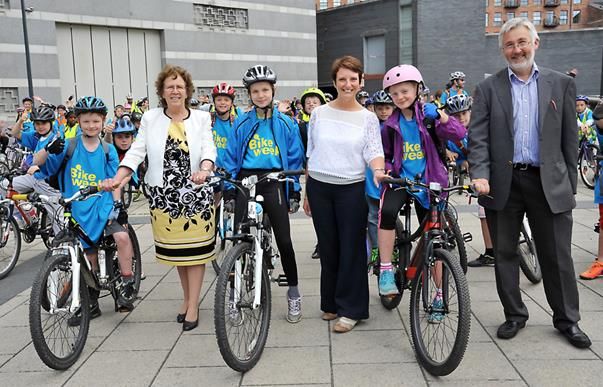
Case Study - National Bike Week
Leeds City Council supports National Bike Week by promoting cycling to school and
delivering bespoke cycle training and cycling events to schools around Leeds. The number of
schools actively taking part in Bike Week has steadily increased from 22 schools in 2009 to
68 schools in 2015.
Organised events in schools have ranged from led rides with pupils from various Otley
schools riding to Almscliffe Crag in 2009, to the Leeds School Cycle Challenge 2014 which
brought 50 Leeds Primary Schools and 5 special schools (550 pupils) together at Temple
Newsam to take part in a junior Tour de Yorkshire. Pupils have also cycled from Wigton
Moor Primary to Harewood House to welcome the Olympic torch in 2012 and in 2013 saw
Corpus Christi and Rodillian High Schools hold a celebration of cycling involving bike checks,
a roller bike challenge, bikers’ breakfasts and a raffle.
In 2015, 80 pupils from 7 schools took part in a led cycle ride along 3 of the routes of the
Leeds Core Cycle Network from Garforth, Middleton and Horsforth where pupils were met
by Councillor Judith Blake, Leader of Leeds City Council, at The Royal Armouries Museum for
lunch and activities before cycling back to school.
Cllr Judith Blake (Leader of Leeds CC), Cllr Yeadon and Cllr R Lewis with pupils from
Horsforth, Middleton and Garforth areas of Leeds on the Leeds Core Cycle Network
15Walking
8.7 Walking is a central part of promoting sustainable travel to school. Walking remains one
of the most popular ways for children to travel to school in Leeds, with well over half of
the children and young people choosing this mode of travel since 2008. The promotion
of walking, through initiatives and events, can encourage children to get active on the
journey to school. In addition, the promotion of park and walk sites near schools means
that even those that are unable to walk the entire distance of the journey can use a
sustainable mode on part of the way to school and help ease congestion around the
school gates.
8.8 Engineering infrastructure such as traffic calming, pedestrian crossings and the creation
of safer routes to school can make the journey to school safer. These measures can
complement initiatives to promote walking which can provide or enhance the life skills of
children and their carers to support a safer journey to school.
8.9 The Council has supported a range of measures to promote walking to school including
“Walkshire,” the web based interactive game to promote walking and scooting to
school, “Walk to School Week” and the ‘Go Green’ schemes. The road safety
education and training programmes support the delivery of walking events and
initiatives with assemblies, pedestrian skills training and scooter training.
Walking to School from 47.9% in 2006 to 55.6% in 2016.
Public Transport
8.10 The West Yorkshire Combined Authority (WYCA) is responsible for the delivery of
school transport in Leeds on behalf of the Local Authority.
8.11 ‘My bus’ yellow school buses were introduced in 2003 thanks to a successful bid to the
Department for Transport. ‘My bus’ vehicles incorporate features such as allocated
places, seatbelts, CCTV and a dedicated driver who drives the vehicle every day.
8.12 In summer 2014, WYCA secured £1m funding from the ‘Clean Bus Technology’ grant
from the Department for Transport, to install clean bus technology to reduce emissions
and make them better for the environment. In addition to this WYCA matched the £1m
with a further £800,000. As part of the project, every yellow bus has been fitted with a
system that helps the drivers to drive in a more fuel-friendly manner, cutting carbon and
improving air quality.
8.13 A key part of access to public transport is knowing where and how to access
information. Young people have access to the full spectrum of information services
including MetroLine / My bus hotline, website, journey planner, ‘yournextbus’ real time
information channels, bus stations, travel centres, printed timetables and leaflets,
together with targeted advertising campaigns with clear and specific messages. All
young people who live in West Yorkshire from the ages of 11-18 are entitled to half fare
16bus and rail travel on production of an 11-18 photocard. See www.generationm.co.uk
for further details.
8.14 The generationM.co.uk website, aimed at young people, continues to be developed by
WYCA and includes the latest information on tickets, passes and school bus services.
GenerationM also has a presence on social media channels including Twitter and
Facebook.
All students ages 11-18 years are entitled to a half fare bus pass.
9. HEALTH AND THE ENVIRONMENT
Healthy Schools Initiative
9.1 The refreshed School Health Check 2015 builds on the underlying principles of the
National Healthy Schools Programme and has been revised in consultation with schools
and health partners and is available to all schools. The self-evaluation tool draws on the
latest Ofsted National guidance and best practice, and uses grade
descriptors. Schools can identify their strengths and areas for development and these
can be added quickly into a simple online action plan. School travel plans form part of
the Physical Activity, Physical Education and School Sport grade descriptors, and
appears in 6 of them.
The National Child Measurement Programme (NCMP) in Leeds
9.2 Childhood obesity is a major public health concern and one which has grown in
importance over the last few decades. From the mid - 1990s until 2007 childhood
obesity rose by around one percentage point every two years showing a worrying
upward trend. The National Child Measurement Programme (NCMP) is a national
initiative designed to gather valuable data to support improved understanding of the
causes of childhood obesity and aid the development of interventions for its prevention
and treatment (see appendix 6).
Active Schools
9.3 Active Schools promote and develop, through collaboration and partnership, a
sustainable system for physical activity, PE and sport that enriches the lives of all
children and young people. By working in partnership and by providing a strategic lead
for schools, Active Schools aim to increase the number of children participating in
school sport, help prevent childhood obesity and support schools in enabling children
and young people to become more active. One of the key aims is to influence young
people and their families to develop physically active habits for life.
170 schools are signed up to Active Schools programme in Leeds.
17Air quality
9.4 Leeds is developing plans for air quality management including a Clean Air Zone and a
package of supporting measures. The National Institute for Health and Care Excellence
(NICE) recommends that schools may consider that opportunities exist to improve local
air quality around the school by implementing a “no idling zone.” This is something
which could augment the educational campaigns and initiatives being developed to
engage with parents, students, teachers and service providers such as bus and taxi
drivers.
10. FUNDING AND RESOURCES
10.1 The City Council’s Influencing Travel Behaviour Team delivers an extensive programme
to develop, promote and implement sustainable travel initiatives in schools throughout
Leeds. The budget for the team meets the costs of this team of road safety officers and
trainers and the resources they need (approximately £437,000 in 2016/17). A
substantial part of this resource is allocated for pedestrian skills training, Year 6
transition programme, 20mph initiatives, and safe and sustainable travel events in
schools which complement the development and implementation of travel plans.
10.2 Leeds City Council maximises funding opportunities to promote sustainable travel by
applying for government grants and through partnership working. Currently funding
from central government helps each local authority to prepare a sustainable travel
strategy and supports cycle training (approximately £300, 000 in 2016/17). The Local
Sustainable Transport Fund contributed to the delivery of sustainable travel through the
Access to Education Programme, Go Walking and the Go Cycling Scheme. These
projects were funded until March 2016.
10.3 The Cycle City Ambition Grant and WYCA provided funding from the Department for
Transport for the ‘City Connect 1’ project to provide a cycle superhighway connection
between Leeds and Bradford. Further DfT funding was allocated in March 2015 for the
‘City Connect 2’ project to expand additional cycle routes across West Yorkshire. The
City Connect projects also deliver complementary engagement and promotional
activities to promote cycling in communities and within schools alongside/neighbouring
the route. This is achieved through close collaborative working between the City
Connect Communications & Engagement team and Leeds City Council’s Influencing
Travel Behaviour team to ensure there is a consistent approach with no duplication of
effort.
Case Study – City Connect
City Connect Leeds-Bradford Cycle Super highway opened in June 2016. It delivers a 14 mile off road
cycle route alongside access to bikes, cycle storage, maps, training and promotional events. It gives
children near the new cycle route the opportunity to ride to school safely. Events delivered in the
summer 2016 include bike safaris, and led rides. Working with Cycle Leeds, 305 children living near
the route have received training on how to ride a bike so far, 180 have cycled on the superhighway,
and children from 5 local schools took part in a 6 mile cycle ride along the tow path for the opening
event. There has been direct engagement with over 1000 people face-to-face – through consultation
events, stakeholder groups and stalls at local festivals. The recently launched Bike Friendly Business
Scheme to support local businesses has already had interest from 7 sites across Leeds & Bradford,
and a further 8 sites have benefited from the installation of 160 extra secure bike parking spaces.
Plans to expand the Bike Friendly scheme specifically for schools are well underway.
1810.4 The delivery of the 20mph ‘design a sign’ competition in schools, development of Bike
Week 2016, plus cycling and road safety education and training in schools have been
delivered in partnership by sharing and directing resources to areas of priority.
10.5 Funding for the West Yorkshire Local Transport Plan 2011 - 2026 supports measures to
assist sustainable travel to school, including a programme of 20mph schemes around
schools and the provision of new road crossings (amounting to £600,000 in 2016/17).
Funding has also been provided on a project specific basis by the Director of Public
Health.
10.6 Looking forward, Leeds City Council are maximising the efficiency and effectiveness of
staffing and financial resources by working in partnership with key organisations and
internal departments such as, WYCA, Cycle Leeds, West Yorkshire Police and the 3rd
sector to deliver training and promotional events to promote sustainable travel to school.
Leeds City Council are embracing capital scheme funding opportunities to deliver road
safety schemes and are actively working with WYCA to submit bids for government
funding such as the Access Fund.
11. CONSULTATION AND ENGAGEMENT
11.1 A School Travel Steering Group has been set up to support the delivery of the school
travel plan programme and this is being expanded to meet the demands of delivering
the Sustainable Travel Strategy. This will consist of internal and external organisations
that will be responsible for promoting sustainable transport to schools and colleges.
Strategy Consultation
11.2 We engage with the Head Teachers Forum to gain their comments about the strategy
and also liaise closely with colleagues in Childrens Services, Public Health and other
partner agencies to seek their views. However, the vast majority of the consultation
work for the strategy comes as a direct result of working with schools and school
communities whilst we are helping them to develop and implement their school travel
plans.
Strategy Engagement
11.3 In Schools, staff engage with parents, pupils, local residents and school governors to
develop and implement their travel plan which identifies barriers and helps determine
which initiatives and promotions to implement. Schools are encouraged to set up a
school travel working group involving the school, families and the wider community and
to include the travel plan in school policy documents such as the school development
plan.
19Case Study – Green Forum -Horsforth Newlaithes Primary School
Horsforth Newlaithes Primary School’s Green Forum is led by pupils to promote sustainable
travel. It’s members includes teaching and support staff, PCSO’s, local councillors,
residents, parents, head teacher, senior leadership team, school council, allotment society
and 1 pupil from every year group.
The group meets every half term to generate ideas, plan, publicise and deliver events with
the local community; it feeds into the School Council and contributes to the School
Development Plan.
Since the forum was established, there have been a range of initiatives organised by the
group e.g. Spooky Scoot in October by 233 pupils, walking bus , the Big Pedal in April
raised £173 and in January 2016 they held a sponsored event to buy additional scooter and
bike storage.
The group records evidence from events which are uploaded to the school website and
published in newsletters. The forum sends out leaflets to local residents and provides
sufficient space where local residents can advise the school of ideas, comments and
observations.
12. MONITORING AND EVALUATION
12.1 The Sustainable Travel Strategy is an evolving document that will change over time to
reflect changing policy and the changing needs of schools and FE establishments. The
audit of travel and transport infrastructure and mode of travel to school are undertaken
in all schools annually as this helps to identify barriers to sustainable travel and directs
appropriate resources to schools in most need. The SETS action plan will be monitored
as part of the 6 monthly steering group meeting to ensure actions are meeting the
desired outcomes.
12.2 Evaluation of the data from the annual audit, particularly in relation to the pupil’s mode
of travel, provides a clear picture of the results that this strategy is delivering on its
objectives. It is also clear from the information available, that those schools and FE
establishments that fully embrace and support the development and implementation of
their travel plans have the biggest impact on increasing the numbers of pupils that travel
sustainably.
12.3 Road casualty data is closely monitored and reported upon quarterly to both internal
and external partner agencies with a public annual report being published on the Leeds
City Council website. The road casualty data is subject to additional in-depth analysis
with adverse trends and patterns identified. These trends and patterns then determine
the ‘priority areas’ and key target groups to which resources can be directed. This
robust data led approach has helped the council to achieve a 35% decrease in the
20number of children and young people (0 – 19yrs) killed or seriously injured over the last
decade (95 KSI in 2006 and 62 KSI in 2016). See Appendix 4.
12.4 The Strategy will be implemented by the School Travel Steering Group who will meet
regularly to discuss progress and update stakeholders and partners on key issues. The
strategy’s action plan and outcomes will be reviewed and monitored annually, with a
summary and outcomes posted on Leeds City Council’s website. Each action will be
reviewed individually by the organisation responsible to ensure that objectives are
achieved.
To provide feedback or for further information please contact:-
Sue Walker
Sustainable Education Travel Coordinator
Transport Policy
Middleton Ring Road
LEEDS
LS10 4AX
Telephone: 0113 3787433
e-mail: susan.e.walker@leeds.gov.uk
21Appendix 1.
SUSTAINABLE TRAVEL - ACTION PLAN 2017-22
This Action Plan has been developed to support the achievement of the strategy objectives. Each objective will have a series of
actions by internal and external organisations which will be implemented within a set timescale. The strategy will be an evolving
document which will be monitored and evaluated on an annual basis.
The Action Plan will be reviewed annually at the same time as the Sustainable Education Travel Strategy. Each plan will provide a
forward programme for the next two year period.
OBJECTIVE 1 Develop, implement and monitor travel plans in all schools and FE establishments.
ACTION RESPONSIBILITY CURRENT POSITION TARGET DATE
Ensure all schools and colleges have Influencing Travel Behaviour All Leeds community and voluntary controlled Ongoing
travel plans in place that are (ITB) team schools have a travel plan. Overarching travel
implemented and monitored. plans are needed for colleges with multiple
sites. Only planning obligated free/
independent schools have school travel plans.
Assist schools and FE colleges with the ITB team, HDS, Planning 69 school and 3 colleges have planning Ongoing
preparation of planning obligated travel Services, Children’s Services obligated travel plans. This figure is continually
plans and encourage the development, increasing due to the school expansion
implementation and monitoring of travel programme and new build schools. All
plans. planning obligated schools and colleges are
supported through monitoring and evaluation
using Modeshift STARS.
Promote Modeshift Sustainable Travel ITB team/Healthy 93 schools are currently signed up to Ongoing
and Recognition for Schools (STARS) Schools/Active Modeshift STARS. Further work needed to
programme to all schools in Leeds. Schools/Public Health engage all schools in Leeds. A school seminar
is planned in 2017 with Healthy Schools in
order to introduce STARS through Healthy
Schools status. Continual promotion to all
schools including independent schools is
needed.
Ensure all schools accurately complete Children’s Services MIS, Collection of travel to school data has Annual
and submit mode of travel to school Schools, ITB team changed. MIS team & ITB team working on a
data new process to collate mode of travel data for
all schools. Data needed from free andindependent schools.
Place all school mode of travel data, ITB team, ICT Services Details of travel to school facilities to be hosted 2018
facilities and infrastructure on Leeds on Leeds City Council’s website. Format
City Council’s website, admissions currently being designed. Currently only
booklet and the Education Hub and limited information in admissions booklet.
school prospectus.
OBJECTIVE 2 Develop innovative projects, initiatives and campaigns to promote and support sustainable travel within schools and
FE establishments.
ACTION RESPONSIBILITY CURRENT POSITION TARGET DATE
Support schools in setting up and ITB team Support given when requested by schools. ITB Ongoing
taking part in sustainable travel team promote national events to all schools in
initiatives and national events such as Leeds, providing resources and incentives to
walking buses, Walk on Wednesday’s, encourage take up.
Go Green etc.
Deliver organised events in schools to ITB team, Active Schools Events in schools delivered by ITB team Ongoing
promote national campaigns eg Walk to annually in order to generate publicity.
School Week.
Introduce a cycle permit scheme in all ITB team, Schools Permit scheme developed, needs to be Sept 2020
schools. promoted in schools and colleges. Currently 1
school has a permit system in operation.
Actively promote Bike Libraries to all ITB team, Active Schools ITB team to promote the 9 city wide Bike April 2017
schools. Libraries to schools and encourage take up.
Actively promote sustainable travel ITB team, Schools, WYCA Currently promoted to schools that have a Ongoing
options for school staff e.g. car share, planning obligated travel plan only. LCC school
bike to work scheme, discounted Metro staff to be included in corporate travel plan
card etc. promotions.
Develop new initiatives and resources ITB team, WYCA, Sustrans, Scootember concept developed and rolled out Ongoing
for schools to promote safe and Living Streets into all schools in Leeds in 2015. More
sustainable travel. resources needed particularly web based. Can
use some of the resources developed by
external organisations, but at a cost.
Update the web based West Yorkshire WYCA and 5 West Yorkshire West Yorkshire cycle map now on line – this Ongoing
Cycle map which shows all educational Local Authorities will need updating.
and community cycling establishments.
23OBJECTIVE 3 Work in partnership with stakeholders both within and external to the Council to maximise the effectiveness of travel
plan measures and initiatives as an integrated part of the Local Transport Plan and other health and education strategies.
ACTION RESPONSIBILITY CURRENT POSITION TARGET DATE
To refer to school travel plans/safe Highways and Transportation/ Travel plans and road safety education Ongoing
and sustainable travel to school in Healthy Schools/Public Health embedded within Healthy Schools status.
LCC strategy documents and Support given at events by Active Schools.
initiatives and in the Healthy Schools,
and Active Schools initiatives.
To provide annual travel to school ITB team, Public Health Mode of travel data provided annually. Ongoing
data for informing Physical Activity
and Healthy Weight objectives and
targets.
Work with partners such as ITB team, Active Schools, Currently use free resources and provide Ongoing
Sustrans/Living Streets/City Connect Public Health support and advice to develop new resources.
to maximise resources in delivering
sustainable travel initiatives.
Consider establishing a vehicle ‘no Highways and Transportation, Car free days delivered in 2 schools across September 2017
idling zone’ outside schools as part of Public Health, schools, Leeds. No idling zone would be a new
air quality management plans. parents, bus operators and taxi initiative.
firms.
To undertake a study to determine if Environments and Housing All new school builds consider parent January 2018
parent car parking/school drop off and and Highways and parking/drop off areas within the school
pick up areas increases pollution Transportation grounds.
levels.
OBJECTIVE 4 Develop measures which improve the safety and appeal of sustainable school travel choices.
ACTION RESPONSIBILITY CURRENT POSITION TARGET DATE
To share information on barriers to ITB team, Traffic Engineering Modeshift STARS can now produce reports April 2017
sustainable travel with the of traffic detailing engineering issues raised by the
engineering for consideration. school community. Reports passed to
engineering every term. Process on feed back
to schools to be developed.
24Develop new road safety initiatives for ITB team Scooter training now delivered in schools Ongoing
children walking, cycling and scooting alongside pedestrian, cycle training andY6
to school. transition. More online resources need to be
developed.
Ensure children and young people are ITB team Currently delivered by road safety trainers. Ongoing
educated about road safety and Sustainable travel needs to be embedded in
sustainable travel initiatives. programme with development of new lesson
plans.
Consult with the Youth Forum to ITB team, WYCA WYCA sit on youth forums, more LCC Annual
identify barriers to school travel. involvement needed.
Develop and implement a 20mph safe ITB team, Transport Strategy Develop and prioitise a sign competition, road 2018
and sustainable travel programme to safety education and training given to schools..
be delivered to schools with high car Programme of works to be developed which
use and/or high child road casualty can be given to identified schools to be
statistics in Leeds. delivered by school staff.
Promote Level 1, 2 & 3 Bikeability ITB team, Cycle Leeds Delivered by Cycle Leeds and offered to all Ongoing
training to Y5/6/7 pupils. schools.
Deliver bespoke practical transition ITB team Targeted at a small number of high car Ongoing
lessons to schools to promote safe use/child road casualty area schools only due
sustainable travel to Y6 pupils moving to capacity (7 in 2016). Resources to be
to secondary schools. developed which can be delivered by school
staff or partner organisations.
Install cycle superhighways and an Transport Policy City Connect 1 opened in June 2016 Subject to funding
orbital cycle superhighway route in
Leeds linking communities.
OBJECTIVE 5 Working in partnership with WYCA and public transport operators when planning sustainable travel
ACTION RESPONSIBILITY CURRENT POSITION TARGET DATE
Promote half fare travel for all 16 -18 WYCA Promoted through travel plan / promoted in all Ongoing
year olds in West Yorkshire. secondary schools and colleges.
Encourage as many schools as WYCA, ITB team Promoted through the travel plan/direct contact Ongoing
possible to participate in the junior with schools.
SAFEmark workshops.
Promote Generation M website and WYCA, ITB team Promoted through the travel plan/direct contact Ongoing
social media feeds in all schools and with schools.
colleges.
25OBJECTIVE 6 Influence and inform the design and development of new build and extensions to schools and FE establishments with
regard to safe and sustainable travel.
ACTION RESPONSIBILITY CURRENT POSITION TARGET DATE
Secure travel plans through the ITB team, Highways Travel plans requested by planners for schools Ongoing
planning process for all schools Development Services and with increased pupil/staff numbers and for new
(including basic needs schools, free Planning Services. build schools.
schools and new builds).
Ensure the ability to promote Highways Development Requests for facilities and infrastructure are Ongoing
sustainable transport is incorporated Services. Estate Management. made based on each development. Not all
into the building design, e.g. cycle requests are conditioned.
provision.
Ensure travel plans are consulted and Planning Services /Highways Travel plans are consulted when schools are Ongoing
acted upon when highway schemes Development Services. Estate expanding and when engineering measures
outside schools and FE facilities are management. are being installed outside schools. Some
being considered. travel plans are old and need updating.
Provide guidance to Highway Highways Development Currently ITB are consulted about individual April 2018
Development Services on Services, ITB team. developments. Guidance document to be
measures/facilities to be installed in all produced.
schools.
Ensure school travel planning Highways Development New online planning tool created to simplify Ongoing
guidance is followed and the Services and Planning planning submissions.
appropriate conditions are placed Services.
upon the development, when
assessing planning applications.
OBJECTIVE 7 Work with regional partners to develop resources, organise training and share best practice.
ACTION RESPONSIBILITY CURRENT POSITION TARGET DATE
Attend regular Regional Modeshift ITB team Regional meetings attended twice a year. Ongoing
meetings and access relevant training
opportunities.
Establish a School Travel steering group. ITB team To be established. April 2017
26You can also read


