Sweets as traditional medicine in winter season: An ethnobotanical study in Udaipur city, India - Ethnobotany Research and Applications
←
→
Page content transcription
If your browser does not render page correctly, please read the page content below
Sweets as traditional
                                      medicine in winter
                                      season: An
                                      ethnobotanical study in
                                      Udaipur city, India
                                      Vartika Jain
Research
                                                              Correspondence
Abstract
Background: Food as medicine has been part of                 Vartika Jain
ancient civilizations and shared among generations
as dietary health practices. Sweets are one of the            Department of Botany, Government Meera Girls’
important constituents of meals in India. Many plants         College, Udaipur-313001, Rajasthan, India
are used to prepare sweets. In Udaipur city,
Rajasthan, India, some specific sweets are                    *
consumed during winter season prepared from                       Corresponding Author: vartikajain31@gmail.com
plants. No scientific study has been carried out to
document the traditional botanical knowledge                  Ethnobotany Research & Applications
associated with winter sweets in Udaipur city. Hence,         20:31 (2020)
the present study was undertaken.

Methods: Ethnobotanical surveys were carried out at           Background
11 most popular sweet shops of Udaipur city from              Food is an integral part of human life. Many of the
October to January, 2018. Semi-structured                     food items in a diet are included for health purpose
interviews were conducted with shopkeepers about
                                                              and some due to good taste. In India, sweets
ingredients, preparation technique of sweets etc. and
with the consumers about reasons of purchasing                possess an essential role in diet mostly due to good
winter sweets.                                                taste and considered not only for sharing happy
                                                              moments but also used as traditional offerings to
Results: In total, 36 plants belonging to 21                  various deities in the country. They are an important
angiosperm families were found to be used in                  part of different festivals and socio-cultural
preparation of winter sweets. The major traditional           ceremonies (Singh & Pandey 1998). Some sweets
winter sweets consumed for health benefits were
                                                              are specifically prepared on a particular festival for
various kinds of Laddu, Halwa and Milk sweets.
These were different from each other in shape, taste,         example, Gujiya on Holi, Sattu on Shravani Teej,
shelf life and plant ingredients. All the consumers           Rabdi and Malpua on Hariyali Amavasya etc. A wide
unanimously affirmed role of some of the winter               variability among sweets depicts rich cultural
sweets as traditional medicine.                               heritage and food diversity spread among several
                                                              districts in various states of India. Recipe of every
Conclusions: The present study has first time                 sweet is different from each other either through
documented different plant species used to prepare
                                                              difference in ingredients or method of preparation.
winter sweets in Udaipur city. Nutritional and
pharmacological potential of some of the plants               These variations are inculcated traditionally among
indirectly supports traditional wisdom behind their           local people.
use in winter sweets for increasing immunity,
treatment of joint pain, arthritis, asthma etc.               Plants and various plant parts are used for preparing
However, clinical studies are required to recommend           many sweets. For example, fruits of Cucurbita
the winter sweets as dietary nutraceutical products
                                                              moschata Duchesne are used to prepare Petha
for the claimed health benefits.
                                                              (Singh & Pandey 1998) and fruits of Madhuca
Keywords:     Health    tradition,   Laddu,    Barfi,         longifolia var. latifolia A. Chev. are used as
Nutraceutical, Jaggery, Almond                                sweetener for offerings on Tinchhat festival in
                                                              eastern Uttar Pradesh, India (Singh & Srivastava

Manuscript received: 24/06/2020 - Revised manuscript received: 30/09/2020 - Published: 05/10/2020
                                     http://dx.doi.org/10.32859/era.20.31.1-17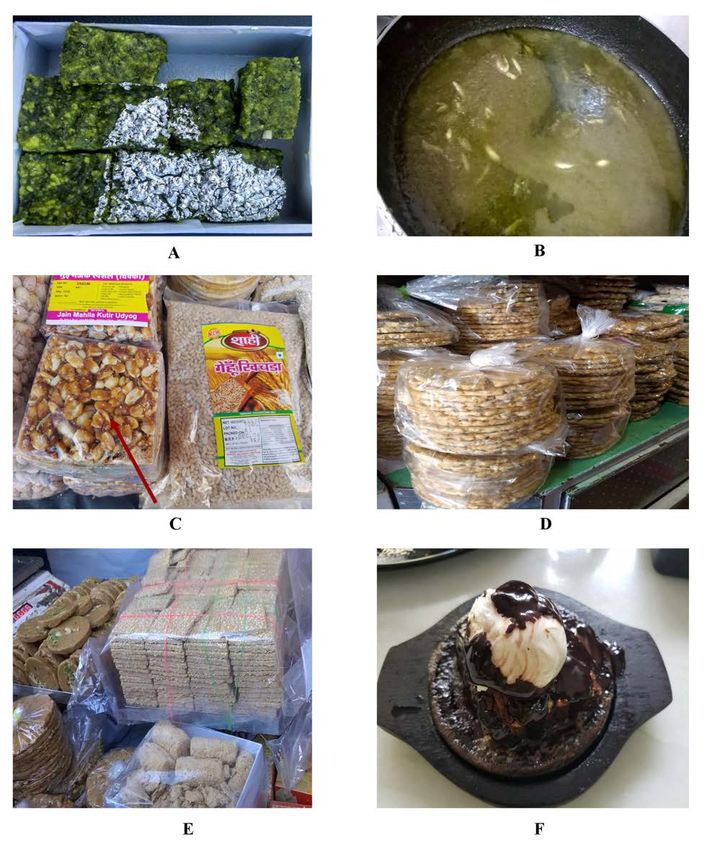
2

2014). Similarly, an Indian traditional sweet ‘Jalebi’ is   population (13.5%) of Rajasthan. Udaipur district
prepared from fermented batter of refined Wheat             covers an area of 11,724 square kilometers and
flour (Triticum aestivum) which is poured in hot oil to     divided into 11 tehsils and the study area Udaipur
make a shape of concentric ring and after frying, it is     city, also known as ‘City of Lakes’ is situated in Girwa
made sweet by soaking in sugar syrup                        tehsil (Fig. 1). Urban population of Udaipur district is
(Chakkaravarthi et al. 2013). Likewise, there are           608426 whereas population of Udaipur metropolitan
many sweets having plants as ingredients but there          region is 474531 (District census handbook 2011).
is still no organized scientific documentation of the       Winters are one of the major seasons in Udaipur
diversity of sweets and their plant ingredients.            which lasts about four months starting from October
                                                            till the end of January (FES 2006). The lowest
Plants possess important roles in traditional               minimum temperature can reach between 5-10°C in
medicinal systems for their medicinal efficacy as well      the peak winter months of December and January
as in modern medicine for development of novel drug         and sometimes as low as 1°C (Singh et al. 2013).
molecules. Recently, there has been an increasing           Ethnomedicinal knowledge of the indigenous
interest in finding out some dietary products as a          communities of Udaipur has been documented in
nutraceutical by providing nutrition and health             some studies (Katewa & Jain 2006) but traditional
benefits together to combat with ever increasing            use of various plants for preparing sweets remained
varied type of diseases (Srivastava 2018, Spoorthi et       undocumented.
al. 2018). Interestingly, there are some sweets
having plant ingredients which are being consumed           Data collection
for preserving health by indigenous communities.            Ethnobotanical surveys were carried out during
For example, tubers of Asparagus racemosus are              winter season from October to January, 2018. For
charred in mustard oil and the oil is used to prepare       this purpose, 11 sweets selling shops of Udaipur city
a sweet dish ‘Halwa’ to be consumed during winter           covering all directions except South (Table 1) were
season by rural people of Shekhawati region,                surveyed once in a fortnight leading to a total of 88
Rajasthan. It is considered good for treatment of joint     visits during the study period. These shops are very
pains in rheumatoid arthritis (Katewa & Jain 2006).         popular in Udaipur city as branded sweet shops.
In this regard, documentation of traditional health         Semi-structured interviews were taken from
foods can give leads for development of a cheap and         shopkeepers considering them as qualified
safe dietary nutraceutical product.                         informants. They were asked questions regarding
                                                            ingredients of winter sweets, local names of
Winter season is a harsh environmental condition for        ingredients, preparation method, daily consumption
living. But in Udaipur (Rajasthan), India; a tribal         quantity, selling rates and any associated
dominated district, winter is considered as a season        therapeutic benefits.
of building immunity and yearlong strength through
dietary modifications by local people. Being a              Besides, semi-structured interviews were also
resident of Udaipur city for more than 35 years,            conducted with 44 consumers (two from each shop
author has observed that every year some specific           every fortnight in December) who were willing to
sweets are consumed here during winters for their           participate in the study irrespective of gender, caste,
health benefits and still no scientific documentation       religion and literacy levels. Mainly, following
of traditional knowledge regarding those winter             information was obtained from consumers:
sweets is available. In view of this, ethnobotanical
surveys were carried out for the first time to note             a)   Reasons for purchasing any particular
down the types of sweets consumed during winter                      sweet in winter season from sweet shops:
season as well as the plant species being utilized to                good taste/health benefit/any other
prepare those sweets in Udaipur city. Traditional               b)   Availability and purchasing of those winter
knowledge associated with sweets including                           sweets in other seasons
consumers’ perspectives about utilizing those                   c)   Perception about difference between their
sweets was also recorded.                                            uses in various seasons if any
                                                                d)   Which types of traditional winter sweets are
Materials and Methods                                                prepared at homes
Study area                                                      e)   Which winter sweets are purchased from
Udaipur district is situated between 23°49’ and                      shops
25°28’ N latitudes and 73°01’ and 75°49’ E                      f)   Affirmation of health benefits by consuming
longitudes in South Rajasthan (India). It has 49.7%                  the winter sweets, if any.
of Scheduled Tribe (ST) population out of total ST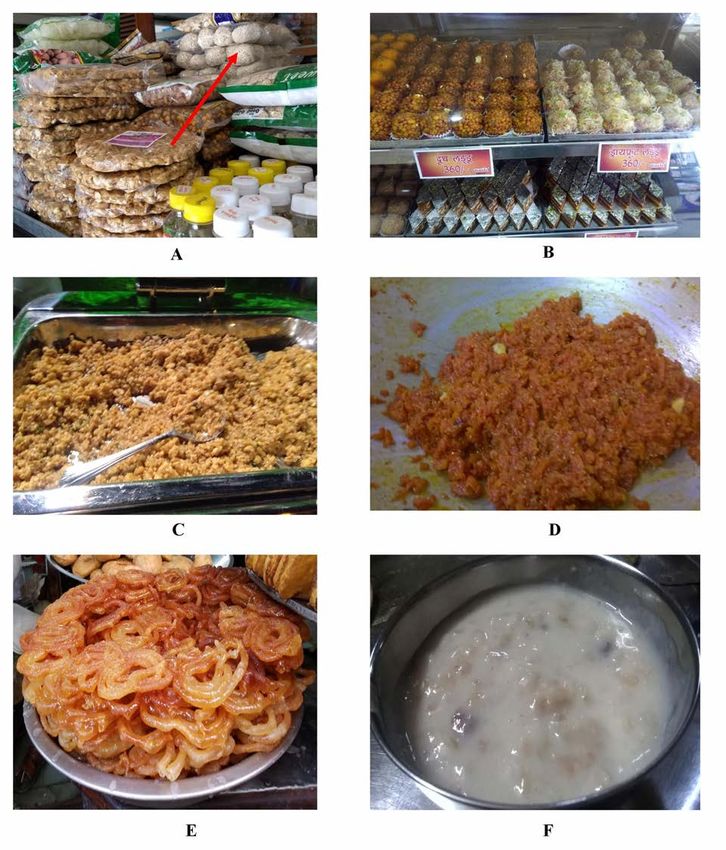
3

Figure 1. Location of the study area.

Table 1. List of traditional sweet shops surveyed in Udaipur city, India

                 Name of Sweet shop                            Locality
                 Jagdish Misthan Bhandar                       Surajpole
                 Indore Namkeen & Sweets                       Panchwati
                 Shastri sweets                                Shastri circle
                 Bikaner Misthan Bhandar                       Ostwal plaza, Sunderwas
                 Jayesh Misthan Bhandar                        Chetak circle
                 Jodhpur Misthan Bhandar                       Bapu Bazar, Opposite Townhall
                 Jain Special Khakhra                          Surya Marg, Jagdish Chowk
                 Arora sweets                                  Jagdish marg, Ghantaghar
                 Shree Balaji Bikaner Misthan Bhandar          Bedla road, Fatehpura
                 Jai Bharat Misthan Bhandar                    Delhi gate circle
                 Ram ji Sweets                                 University Road

All the interviews were conducted in Hindi language            sweets consumed during winter season in Udaipur
after obtaining prior informed consent from the                are presented in Table 2.
informants. Apart from these, keen personal
observations were also made on sweets displayed in             Identification of plants
local fairs and various feasts organized during winter         Taxonomic identification of plants used in preparing
season such as marriages, house-warming                        winter sweets was carried out by consulting standard
ceremonies, birthday and New Year celebrations.                appropriate literature and given in Table 3
Photographs of the sweets displayed in sweet shops             (Anonymous 1948-76, Jain & Jain 2018, Shetty &
and various feasts along with pictures of some of the          Singh 1987-93, The Plant List, Tiagi & Aery 2007).
sweets prepared at home were taken after obtaining
prior consent and some of them are displayed in
Figures 2-5. Various details about different types of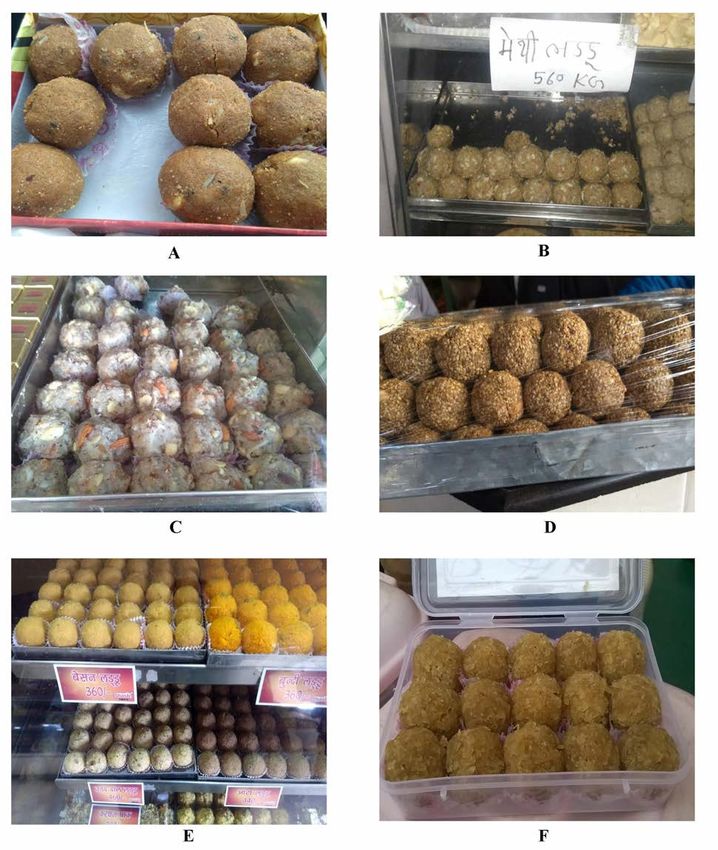
4

Table 2. Types of winter sweets observed in Udaipur city, India

 Name of         Description of      Type of sweet            Plant based ingredients                   Use quantity                    Reasons / Benefits of use
 Sweet           sweet
 Laddu           Round shaped        ‘Urd dal laddu’          Vigna mungo, Acacia nilotica /            One piece of 60-70g once        Increases endurance against cold
                 ball                                         Anogeissus latifolia, Prunus dulcis,      daily for a month
                                                              Saccharum officinarum
                                     ‘Methi ke laddu’         Trigonella foenum-graecum, Triticum       One piece 60-70g once           To treat joint pain, back pain and
                                                              aestivum, Papaver somniferum,             daily for a month               arthritis
                                                              Prunus dulcis, Saccharum officinarum
                                     ‘Gond ke laddu’          Acacia nilotica / Anogeissus latifolia,   One piece of 60-70g once        To provide additional calories to body,
                                                              Prunus dulcis, Triticum aestivum,         daily for a fortnight           good for physically weak persons
                                                              Saccharum officinarum                                                     especially for pregnant and lactating
                                                                                                                                        women
                                     ‘Dry fruit Laddu’        Papaver somniferum, Phoenix               One piece of 60-70g once        To keep body warm by giving additional
                                                              dactylifera, Cocos nucifera, Elettaria    daily for a fortnight           calories
                                                              cardamomum, Prunus dulcis,
                                                              Saccharum officinarum, Triticum
                                                              aestivum, Vitis vinifera
                                     ‘Tilli ke Laddu’         Saccharum officinarum, Sesamum            One piece of 40-50g once        Good in taste and for bone health,
                                                              indicum                                   daily for a fortnight           specially consumed on ‘Makar Sakranti
                                                                                                                                        festival’ in middle of January
                                     ‘Amla laddu’             Phyllanthus emblica, Piper nigrum,        One piece of 40-50g once        For building immunity, general health
                                                              Saccharum officinarum                     daily for one or two months     and protection from cold and flu
                                     ‘Rajgira ke laddu’       Amaranthus sp., Saccharum                 One/two pieces of 30-40g        To give instant energy
                                                              officinarum                               during the days of fasting
 Halwa           Semi-solid          ‘Aate ka halwa’/’Gurh    Myristica fragrans, Elettaria             About 100g daily for 15         Good taste, to give energy and building
                 consistency, rich   ka Halwa’                cardamomum, Saccharum                     days or intermittently          body’s immunity power
                 in pure clarified                            officinarum, Triticum aestivum            during winter season
                 butter fat          ‘Moong Daal halwa’       Elettaria cardamomum, Saccharum           Same as above                   Same as above
                                                              officinarum, Vigna radiata
                                     ‘Badam halwa’            Elettaria cardamomum, Saccharum           Same as above                   Same as above
                                                              officinarum, Prunus dulcis
                                     ‘Akhrot halwa’           Juglans regia, Saccharum                  Same as above                   Good taste and considered good for
                                                              officinarum, Elettaria cardamomum                                         brain
                                     ‘Postadana Halwa’        Papaver somniferum, Saccharum             100 g only for three days       To tolerate intense cold temperature
                                                              officinarum, Elettaria cardamomum         during intense cold
                                     ‘Gajar ka Halwa’         Daucus carota, Papaver somniferum,        100 g daily for a week or       Good taste and for improvement in
                                                              Saccharum officinarum, Elettaria          intermittently during winters   eyesight
                                                              cardamomum
                                     ‘Lauki ka Halwa’         Lagenaria siceraria, Saccharum            100 g during fasting days       To give calories for generating energy
                                                              officinarum, Elettaria cardamomum         in ‘Navratri’ festival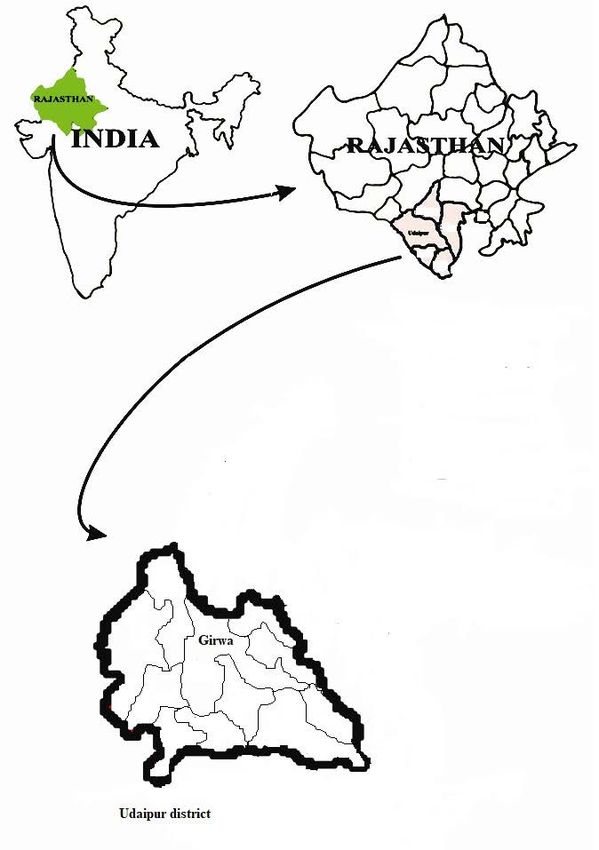
5

                                     ‘Shakarkand ka          Ipomoea batatas, Elettaria                100 g on fasting days           To provide carbohydrates for
                                     Halwa’                  cardamomum                                                                generating energy
Hot milk       Liquid                ‘Cream rich milk’       Saccharum officinarum                     250 ml during peak winter       To tolerate cold
                                                                                                       for 7 days
                                     ‘Kesar ka dudh’         Crocus sativus, Elettaria                 250 ml during peak winter       Good taste and to tolerate excess cold
                                                             cardamomum, Saccharum officinarum         for 3 days or intermittently
                                     ‘Khajur milk’           Phoenix dactylifera                       A full cup is consumed in       To create heat in the body and also to
                                                                                                       winter nights for a fortnight   combat with various respiratory
                                                                                                                                       infections such as asthma
                                     ‘Dry fruit milk’        Anacardium occidentale, Ficus carica,     Half cup three days in a        To build immunity power to fight against
                                                             Prunus dulcis, Saccharum                  week                            various infections
                                                             officinarum, Phoenix dactylifera, Vitis
                                                             vinifera
‘Kheer’        Semi-liquid           ‘Chawal ki kheer’       Oryza sativa, Buchanania                  One bowl                        Good in taste, specially prepared on
               consistency                                   cochinchinesis, Elettaria                                                 ‘Sharad Poornima’ as an old tradition
                                                             cardamomum, Papaver somniferum,
                                                             Saccharum officinarum, Phoenix
                                                             dactylifera
                                     ‘Makhane ki kheer’      Euryale ferox, Saccharum officinarum      One bowl during fasting         Good for treatment of arthritis
                                                                                                       days
‘Kheech’       Semi-liquid           ‘Dudh ka Kheech’        Triticum aestivum, Elettaria              One bowl                        As a tradition on ‘Makar sakranti’
               consistency                                   cardamomum, Vitis vinifera,                                               festival in January
                                                             Saccharum officinarum
‘Jalebi’’      Concentric            ‘Dudh-Jalebi’           Crocus sativus, Triticum aestivum,        50/100g Jalebi in one bowl      Good taste, usually during feast in
               ringed, crispy                                Saccharum officinarum                     of hot milk                     winter season
               texture
‘Imarti’       Concentric            ‘Imarti’                Vigna mungo, Saccharum officinarum        One or two (50 g)               Good taste and satiating capacity
               ringed, crispy
               texture
‘Taarfini’     Concentric            ‘Taarfini’              Triticum aestivum, Saccharum              One piece                       Good taste and satiating capacity
               ringed, soft &                                officinarum
               brittle, very light
               weight
Barfi/Chakki   Square or             ‘Kaju barfi’and ‘Kaju   Anacardium occidentale, Phoenix           25/50g intermittently during    Good taste and for giving energy
               diamond shaped        Khajur barfi’           dactylifera, Saccharum officinarum        winters
               solid pieces          ‘Kardhaan paak’         Acacia nilotica / Anogeissus latifolia,   One piece of 25-30g daily       Good taste and for building immunity
                                                             Cocos nucifera, Cucumis melo,             for 15 days                     power
                                                             Elettaria cardamomum, Euryale ferox,
                                                             Papaver somniferum, Phoenix
                                                             dactylifera, Prunus dulcis, Vitis
                                                             vinifera, Saccharum officinarum,
                                                             Zingiber officinale
6
‘Saunth ki barfi’ Acacia nilotica / Anogeissus latifolia, One piece of 25-30g daily To treat back pain, joint pains and
Saccharum officinarum, Triticum for 15 days arthritis
aestivum, Zingiber officinale
‘Anjeer barfi’ Ficus carica, Saccharum officinarum One piece of 25-30g Good taste and for giving energy
intermittently
‘Bhutte ki barfi’ Zea mays, Saccharum officinarum One/two pieces of 25-30g Good taste and giving strength to body
during early winter season
‘Lilve ki barfi’ and Cicer arietinum, Elettaria One/two pieces of 25-30g Good taste and giving strength to body
‘Lilve ka Jaajriya’ cardamomum, Myristica fragrans, in a day
Saccharum officinarum
‘Mawe ki Round puffed ‘Mawe ki Kachori’ Triticum aestivum, Saccharum One piece of about 120- Excellent taste
Kachori’ ball fried in officinarum, Elettaria cardamomum, 150 g
clarified butter, Pistacia vera
dipped in sugar
syrup
‘Ghewar’ Circular disc ‘Ghewar’ Saccharum officinarum, Triticum One small piece of 50 g Good taste and satiating capacity
aestivum
‘Lapsi’ Solid granules ‘Gud ki Lapsi’ Saccharum officinarum, Triticum One bowl Cooked on auspicious occasions at
aestivum, Cocos nucifera home
‘Gulabjamun’ Round soft ball ‘Gulabjamun’ Amomum subulatum, Pistacia vera, One/two pieces of 20-30 g Good taste, enjoyed in all seasons
Triticum aestivum, Saccharum
officinarum
‘Chikki’ Golden brown ‘Moongphali Chikki’ Arachis hypogaea, Piper nigrum, 20-30g As a snack to give instant energy
colored, square Saccharum officinarum
or round shaped ‘Moongphali Chapda’ Arachis hypogaea, Saccharum 50g As a snack to give instant energy
solid pieces officinarum
‘Gajhak’ Solid fragile ‘Gajhak’ Saccharum officinarum, Sesamum 25-50g during winter As sweet tasty snack and to build
pieces indicum season immunity
‘Rewri’ Solid circular ‘Rewri’ Saccharum officinarum, Sesamum 20-30g As sweet tasty snack and to build
pieces indicum immunity
‘Til papdi’ Thin delicate ‘Til papdi’ Sesamum indicum, Saccharum One thin sheet Good taste
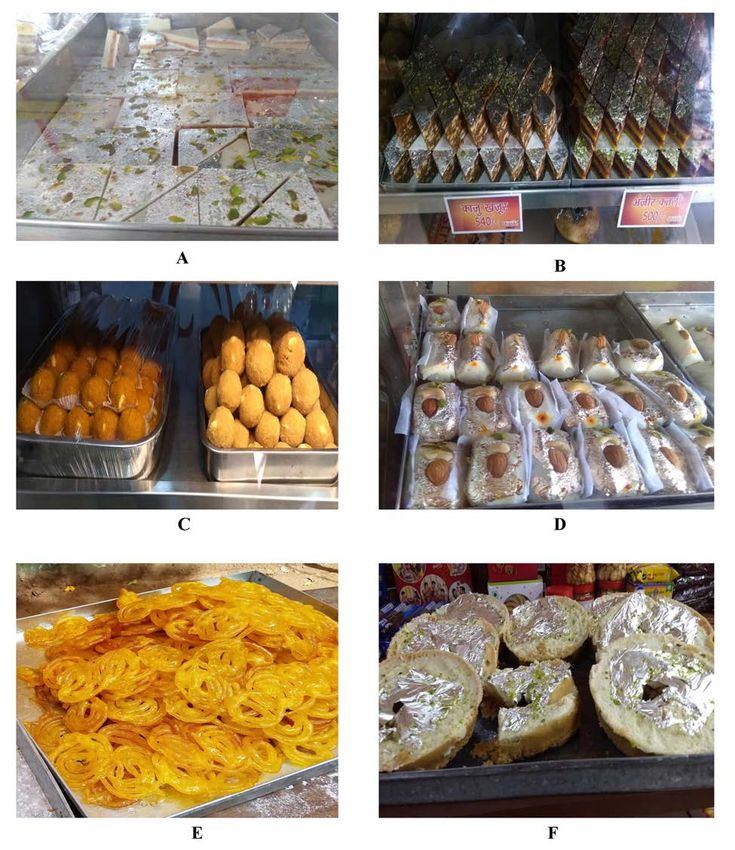
sheets officinarum7 Results square/diamond/triangle shaped ‘Barfi’ or ‘Chakki’ Winter sweets were diverse not only in their and round balls specifically ‘Laddu’. Other shapes ingredients, tastes, names, consistency and were cylinder shaped ‘Kaju-roll’, oblong-oval shaped methods of preparation but also in their shapes. ‘Chamcham’, concentric rings of ‘Jalebi’ and ‘Imarti’, Some of the most common shapes observed were a circular disc of ‘Ghewar’ etc. (Fig. 2, Table 2). Figure 2. Traditional Indian sweets in various shapes A– Triangle shaped Barfi, B– Diamond shaped Barfi C– Round balls of Laddu, D– Oblong-oval shaped Chamcham, E– Concentric rings of Jalebi, F– Circular disc of Ghewar
8

Figure 3. Various kinds of Laddu available in sweet shops at Udaipur, India. A– Urd dal Laddu, B– Methi ke Laddu
C- Dry fruit Laddu, D– Tilli ke Laddu, E– Besan ke Laddu (Top left) and Bundi ke Laddu (Top right), F– Amla Laddu
9

Figure 4. Other traditional Indian sweets. A– Rajgira ke Laddu (shown by red arrow), B– Dudh Laddu C– Akhrot
Halwa, D– Gajar ka Halwa, E– Jalebi, F– Dudh ka Kheech
10

Figure 5. A– Lilve ki Barfi, B– Lilve ka Jaajriya C– Chikki (Indicated with red arrow), D– Chapda, E– Different types
of Gajak, F– Modern sweet : Brownie topped with Ice-cream

Plants as ingredients in Sweets                                these plants, 26 were dicotyledonous and rest ten
The present study reveals 36 plant species (wild,              was monocotyledon. Among the 36 plants, 23 were
cultivated and imported) belonging to 21 Angiosperm            observed to be cultivated and rest 13 (Black Pepper,
families which were being used to prepare various              Cashew nut, Coconut, Foxnut, Saffron, Nutmeg,
winter sweets in Udaipur city. Leguminosae family              Mace, Pistachio, Almond, Raisin, Walnut, Figs,
dominates the list having six plants, followed by              Small and Greater Cardamom) were imported from
Poaceae with four and Anacardiaceae and                        outside the state (Table 3).
Zingiberaceae each with three plant species. Out of
11

Table 3. List of plant species used to prepare various winter sweets in Udaipur city

Botanical name                       Family                 Local name          Common name      Plant part
                                                                                                 used
Acacia nilotica (L.) Delile          Leguminosae            Babul               Gum Arabic       Gum
Amaranthus sp.                       Amaranthaceae          Rajgira             Amaranth grain   Seeds
Amomum subulatum Roxb.               Zingiberaceae          Bari Ilaaichi       Greater          Seeds
                                                                                Cardamom
Anacardium occidentale L.            Anacardiaceae          Kaju                Cashew nut       False fruit
Anogeissus latifolia Wall. ex        Combretaceae           Dhawara             Axle wood        Gum
Guillem & Perr.
Arachis hypogaea L.                  Leguminosae            Moongphali          Groundnut        Seed
Buchanania cochinchinesis (Lour.)    Anacardiaceae          Chironji, Charoli   Cuddapah         Seed
M.R.Almeida                                                                     Almond
Cicer arietinum L.                   Leguminosae            Besan, Lilwa        Bengal Gram      Seed
                                                                                flour & Green
                                                                                gram
Cocos nucifera L.                    Arecaceae              Khopra              Coconut          Dried
                                                                                                 endosperm
Crocus sativus L.                    Iridaceae              Kesar               Saffron          Dried style
Cucumis melo L.                      Cucurbitaceae          Kharbuj             Muskmelon        Seed
Daucus carota L.                     Apiaceae               Gajar               Carrot           Root
Elettaria cardamomum (L.) Maton      Zingiberaceae          Ilaaychi            Green            Seed
                                                                                Cardamom
Euryale ferox Salisb.                Nympheaceae            Makhana             Fox nut          Seed
Ficus carica L.                      Moraceae               Anjeer              Fig              Fruit
Ipomoea batatas Lam.                 Convolvulaceae         Shakarkand          Sweet Potato     Tuberous root
Juglans regia L.                     Juglandaceae           Akhrot              Walnut           Seed
Lagenaria siceraria (Molina)         Cucurbitaceae          Lauki               Bottle Gourd     Fruit
Standl.

Myristica fragrans Houtt.            Myristicaceae          Jaiphal and         Nutmeg & Mace    Seed and aril
                                                            Javitri
Oryza sativa L.                      Poaceae                Chawal              Rice             Seed
Papaver somniferum L.                Papavaraceae           Khas-khas,          Opium Poppy      Seed
                                                            Postadana
Phoenix dactylifera L.               Arecaceae              Pind-Khajur,        Date Palm        Fruit
                                                            Chuaaraa
Phyllanthus emblica L.               Phyllanthaceae         Amla                Indian           Fruit
                                                                                Gooseberry
Piper nigrum L.                      Piperaceae             Kali mirch          Black Pepper     Fruit
Pistacia vera L.                     Anacardiaceae          Pista               Pistachio        Seed
Prunus dulcis (Miller) D.A. Webb     Rosaceae               Badam               Almond           Seed
Rosa spp.                            Rosaceae               Desi gulab          Rose             Petals
Saccharum officinarum L.             Poaceae                Gurh                Jaggery          Processed
                                                                                                 stem juice
                                                            Shakkar             Sugar
Sesamum indicum L.                   Pedaliaceae            Til                 Sesame           Seed
Trigonella foenum-graecum L.         Leguminosae            Methi               Fenugreek        Seed
Triticum aestivum L.                 Poaceae                Aataa, Gaihun       Wheat flour,     Seed
                                                            ka kheech,          Refined flour    Split seeds
                                                            Maida,
                                                            Daliya

Vigna mungo (L.) Hepper              Leguminosae            Urd daal            Black Gram       Split seed
Vigna radiata (L.) R.Wilczek         Leguminosae            Moong daal          Green Gram       Split seed
Vitis vinifera L.                    Vitaceae               Daakh,              Raisin           Fruit
                                                            Munnaka
Zingiber officinale Roscoe.          Zingiberaceae          Saunth              Dry Ginger       Rhizome
Zea mays L.                          Poaceae                Bhutta              Corn             Seed
12
Analysis of plant parts revealed that seeds (54%) Ghewar (made from Wheat and Pistachio) are some
were the most frequently utilized part followed by of the sweets which are available throughout the
fruits (19%) and roots and gum (5% each). Seeds year but preferred in winter season due to their good
were mostly utilized by making powder and some of taste and satiating capacity.
the seeds were directly employed like Cuddaph
Almond, Greater Cardamom, Muskmelon, Sesame Besides good taste and prophylactic and/or curative
etc. (Table 3). health benefits, different reasons were recorded for
purchasing the sweets from sweet shops.
Plant species were used as a major ingredient of Purchasing sweets from shops indicated higher
sweet and/or for garnish or flavoring purpose. Cane financial status and preparing sweets at homes as
sugar (powdered/sugar syrup) and jaggery obtained lower financial status and this was one of the reasons
from the plant Saccharum officinarum was the main which compelled consumers to purchase sweets
ingredient responsible for the sweet taste of all winter from shops. Other reasons behind purchasing were
sweets observed in the study. Besides, Cane sugar, difficulty of preparing sweets at home, lack of time for
Wheat was one of the major ingredients in many of making sweets or sweet as a specialty of the
the winter sweets. Almonds and Cardamom powder particular shop in terms of taste and quality.
were other maximally used ingredients (Table 2).
Cardamom was mainly used as flavoring agent and Survey also revealed that there were diverse
also for proper digestion of sweets. Shopkeepers reasons behind purchasing any specific sweet from
informed about using gum of either Acacia nilotica or a particular shop. These included personal
Anogeissus latifolia depending on availability but preferences for cost, purity, taste, freshness, shelf-
usually preferred A. latifolia for getting more health- life and appearance of sweets or for fulfilling demand
benefits. of a family member or extraordinarily good taste
which could not be created at home.
Reasons for consuming winter sweets
Survey revealed that people consumed some Homemade sweets
specific sweets in winter for getting some health Some winter sweets were exclusively prepared in
benefits either for prophylactic or curative or for both homes or at sweet shops or in feasts and some were
purposes. These sweets were Methi Ke Laddu, prepared at both homes and sweet shops as well as
Gond ke Laddu, Urd Dal Laddu, Tilli Laddu, Dry Fruit in feasts. For example, Lapsi, Lilve ka Jaajriya,
Laddu, Amla Laddu, Gajhak, Rewri, Kardhan paak, Khajur milk, Dry fruit milk, Gurh (Aate) ka halwa,
Kaju-Khajur Barfi, Saunth ki Barfi, Badam Halwa, Lauki ka Halwa, Shakarkand ka halwa, Dudh ka
Akhrot Halwa, Gajar Halwa, Lilve ki Barfi, Lilve ka kheech, Kheer, Makhane ki Kheer are types of
Jaajriya, Khajur milk, Kesar milk and dry fruit milk. sweets which were exclusively prepared at homes.
Interestingly, some of these sweets not only provide
health benefits but also delicious in taste which Some sweets such as Bhutte ki barfi, Akhrot ka
further increases their acceptability (Table 2). Sellers halwa, Anjeer barfi, Kaju khajur barfi, Dudh ke laddu,
informed that demand for these specific winter Bundi ke laddu, Alwarpaak, Taarfini, Imarti, Ghewar,
sweets decreases in other months of the year and Mawe ki kachori were served in sweet shops as well
they are usually available in markets during winters as in feasts and not made in Homes. Gajhak, Rewri
only. All the consumers affirmatively confirmed the and Rajgira ke laddu were exclusively available at
health benefits of the above-mentioned sweets. Rest sweet shops (Table 2). Rest of the sweets were
of the winter sweets was being consumed mainly prepared at homes and also observed at sweet
due to good taste and some were cooked as a shops and feasts.
tradition.
Discussion
Some of the sweets such as Besan barfi and Besan India is one of the leading countries having a variety
Laddu (made from Bengal Gram flour), Anjeer barfi of sweets along with variations in their preparation
(made from Figs), Bundi ke Laddu (having Bengal methods. In urban societies, there is a trend of
Gram flour, Rose petals, Muskmelon seeds), Dudh- consuming sweets in the form of a dessert at the end
Jalebi are available throughout the year and of meal. This practice differs from family to family
consumers told that consumption of these sweets depending on their financial status as due to high
during winter season is better than other seasons as cost, poor people cannot afford sweets on a daily
it is easy to digest these high calorie sweets in winter basis and hence, sweets could be considered as
season. Dudh ke laddu (having Bengal Gram flour, ‘Luxury food item’. The dessert could be any
Rose petals, Muskmelon seeds), Alwarpaak (made traditional sweet or modern era’s dishes like cakes,
from condensed milk and Pistachio), Taarfini (made pastry, brownie (Fig. 5 F), ice-cream etc. These
from Wheat), Imarti (made from Black Gram), modern sweets are cosmopolitan in nature while13
traditional sweets are part of India’s endemic cultural Fruits of Phoenix dactylifera; chiefly consumed
heritage. during winter as raw or after boiling in milk are
recommended for treatment of asthma and cold in
A rich traditional knowledge associated with plants Indian ethnomedicine (Jain & Jain 2016). It has also
exists among local communities. Plants are an demonstrated many pharmacological activities like
important part of diet and various healthy recipes are anti-inflammatory, anti-diabetic, antioxidant, anti-
prepared using various plant parts. There are many tumor, hepato-protective, nephro-protective etc.
plant species which are employed for preparing (Rahmani et al. 2014). Seeds of Papaver
sweet dishes for example, seeds of Perilla somniferum have been recommended for treatment
frutescens Britton for preparing sweet dish in of asthma, cough and cold (Jain & Jain 2016). In this
Arunachal Pradesh in North-East India (Srivastava & regard, their use during intense cold environment
Adi community 2009) and a sweet candy known as may help people both as a prophylactic and curative.
‘Mufar’ prepared from leaves of Cannabis sativa, is
relished by rural population of South Rajasthan (Jain Likewise, scientific studies provide indirect
2016). Due to urbanization and modernization, there evidences of using gum of Acacia nilotica and/or
is a rapid loss in traditional knowledge and in Anogeissus latifolia for treatment of weakness and
absence of proper documentation; existence of pain (Rather et al. 2015, Singh et al. 2016). Rhizome
many health traditions will be jeopardized (Jain & of Zingiber officinale is a very important ingredient
Jain 2017, Posey 1999). recommended for treatment of joint pains and
arthritis and its anti-inflammatory potential serves as
Ethnobotanical knowledge related to plant based indirect evidence against these ailments (Al-Nahain
health foods is scattered among various et al. 2014). Fox nut is rich in calcium, magnesium,
communities of India and should be documented at phosphorus, and iron and its use as ‘Makhane ki
the earliest in order to prevent untimely loss. kheer’ is considered very good for treatment of
Moreover, specific trends in dietary practices arthritis (Jha et al. 2018).
endemic to a particular region etc. could also be
studied in further objective-oriented ethnobotanical Use of Phyllanthus emblica (Amla) fruits as a laddu
studies. In this regard, present study is an important was another interesting observation from Khadi
initiative documenting traditional knowledge about Ghramodyog fair which was held during the month of
winter sweets in Udaipur, India for the first time. December in Udaipur city. Amla is well known for its
health beneficial activities such as anti-inflammatory,
Potential health benefits of plant ingredients in anti-hyperglycemic, anti-hyperlipidemic, antioxidant,
sweets anticoagulant, anti-platelet, anti-aging and a recent
Many of the plant species which are being utilized to double blind, placebo controlled study in healthy
prepare the winter sweets have shown to possess volunteers has demonstrated significant
various health-beneficial pharmacological activities improvement in endothelial functions and reduction
in scientific studies. This indirectly supports the in biomarkers of oxidative stress after 500mg per day
consumers’ affirmation about getting health benefits consumption of Amla for 18 weeks (Kapoor et al.
after consumption of the sweets. Notably, beneficial 2020, ShavezKhan et al. 2019). These vasodilator
effects of some of these plant species have also activities keep much importance during the winters
been mentioned in Indian ethnomedicine. For and might prevent from incidences of cardiovascular
example, seeds of Trigonella foenum-graecum have diseases which tend to increase during winter
been recommended in ethnomedicine for their seasons due to more vasoconstriction and changes
beneficial role in treatment of arthritis, back pain, in coagulation parameters (Fares 2013). All these
rheumatism and joint pains (Jain & Jain 2016) and properties supports role of ‘Amla laddu’ for
shown to possess anti-inflammatory, antioxidant, increasing immunity and general health as described
immuno-modulatory, antidiabetic, by informants in the present study.
antihyperlipidemic, antiobesity, anticancer potential
in scientific studies (Nagulapalli et al. 2017). Dried kernel of Coconut as an important part of dry
Similarly, calcium rich seeds of Sesamum indicum fruits rich sweet ‘Kardhan paak’, has demonstrated
used to prepare ‘Tilli ke laddu’ are recommended for antioxidant, antihypertensive, antidiabetic properties
treatment of gout and rheumatism in ethnomedicine and Coconut oil has shown anti-thrombotic effect
(Jain & Jain 2016) and have demonstrated various (Lima et al. 2015, Müller et al. 2003). Nutritious Mung
activities such as antioxidant, anti-inflammatory, anti- beans used to prepare ‘Moong daal halwa’ have
diabetic, anticancer, anti-hyperlipidemic, gastro- shown to possess antioxidant, anti-inflammatory,
protective and vasorelaxant in animal and human antidiabetic, antihypertensive and antitumor effects
studies (Amoo et al. 2017). in various scientific studies (Tang et al. 2014).14
Many of the spices which are being used in these
sweets such as Small Cardamom, Black Pepper and Many of the traditional winter sweets for example,
Saffron have also shown multifarious Tilli ke Laddu, Gajhak, Rewri, Chikki, Lapsi and
pharmacological activities such as anti- Halwa are sweetened using jaggery (Gurh) which is
inflammatory, antioxidant, antithrombotic, anti- made from Sugarcane juice. It is a traditional nutritive
proliferative, hypolipidemic, platelet aggregation sweetener mentioned in ancient texts such as
inhibition and therefore, their consumption is Rigveda and healthier than refined sugar in terms of
considered advantageous for human health having 50 times more mineral content with many
(Vasanthi & Parameswari 2010, Vázquez-Fresno et medicinal effects (Jaffe 2012, Kumar & Kumar 2018).
al. 2019). In the present study, maximum use of cane sugar
followed by jaggery was observed as a sweetening
It was observed that nuts such as Almonds, Cashew agent for preparing winter sweets.
nuts, Peanuts, Pistachio and Walnuts are important
part of winter sweets. Nutritional analysis of Almonds ‘Rajgira ke laddu’; prepared from a gluten free
have shown to be rich in several minerals and pseudocereal Amaranth were being sold in sealed
vitamins such as calcium, magnesium, potassium, packets in the fair and also at five of the surveyed
phosphorus, thiamine, riboflavin, niacin, and vitamin sweet shops (Fig. 4 A). As Amaranth is rich in
E along with healthy fatty acid composition of mono- proteins, essential amino acids, starch, fiber, vitamin
and polyunsaturated fatty acids. Almonds have A,K,C,E,B,B6 and minerals calcium, iron etc.; it is in
shown to decrease total cholesterol (TC), low density fact a nutritious choice being adopted by people
lipoprotein-cholesterol (LDL-C) and increase good during fasting both in winters and in other seasons
cholesterol that is, high density lipoprotein- as well (Peter & Gandhi 2017). Chikki; containing
cholesterol (HDL-C) in persons having dyslipidemia mainly Peanuts has protein, fat, iron, calcium and
which is one of the major causes behind folic acid and provides instant energy (Pallavi et al.
cardiovascular diseases (Kalita et al. 2018). Walnuts 2014). Efforts are also being made to make it as a
have also shown antioxidant, hypotensive, anti- nutraceutical by fortifying with natural medicinal
diabetic, hypolipidemic and liver protective activities herbs (Ramakrishna et al. 2015).
(Delaviz et al. 2017).
‘Gajar ka Halwa’ (Fig. 4 D) is prepared with grated
Eight weeks consumption of mixed nuts having Carrots which are cooked in cream rich milk. As a
Almonds, Peanuts, Cashews, Brazil nuts, rich source of Vitamin A, use of Carrots for improving
Macadamia nuts and single nut Pistachio has eyesight is well known. More important here is the
demonstrated significant reduction in TC, LDL-C, process of preparing its Halwa with fat rich milk which
triglycerides, c-reactive protein and oxidative stress helps the fat soluble Vitamin A of Carrots to be
in a recent animal study (Hong et al. 2018). Kim et readily absorbed in the body (Reboul 2013). This
al. (2018) have also shown beneficial effect of nuts highlights the wisdom of those people who
consumption on TC, LDL-C, endothelial function in discovered the specific method of its preparation to
various cardio-metabolic diseases. Besides get its maximum benefit.
improving cardiovascular risk factors, nuts have also
shown to improve mental health and bone mineral Notably, consumers were not aware about the
density along with decrease in risk of obesity, scientific evidences for health beneficial properties of
metabolic syndrome and depression in various ingredients of the traditional winter sweets. They told
scientific studies (Rico et al. 2016). that they have heard from their elder family members
that consumption of these sweets during winter
In view of all of these beneficial properties, season is good for health and for treatment of
incorporation of nuts in traditional winter sweets is a particular ailments as described in the present study
reflection of the wisdom of ancient people. These (Table 2). Above-mentioned brief pharmacological
dried nuts not only enhance taste but also improve profiles of these plant ingredients support
health. Here, it should be mentioned that most of the observation of those elderly people and personal
sweets are rich in fat content as prepared from pure experiences of consumers. It also confirms the
clarified butter (‘ghee’) which may raise lipid beneficial role of sweets consumption in winters and
parameters of body. As many of the nuts have shown shows the significance of using food as a medicine
lipid lowering potential, their use in sweets seems in ancient cultures.
appropriate. Moreover, none of these nuts naturally Nowadays, people have become more health
grow in Rajasthan’s climatic conditions and conscious and opting for nutritive and healthy foods
therefore, imported from other states for (Jain 2013). Detailed nutritional and clinical
consumption. Their use in traditional sweet recipes assessment of a winter sweet in its original form
indicates a long history of importing of dried fruits. should be carried out for its claimed health benefits15
and if positive results are obtained, scientific
recommendations for utilization of these traditional
sweets as dietary nutraceuticals could be made.
Literature Cited
Al-Nahain A, Jahan R, Rahmatullah M.2014. Zingiber
Potential economic benefits officinale: A potential plant against rheumatoid
Besides these health benefits, winter sweets could arthritis. Arthritis: 159089. doi: 10.1155/2014/159089
become a good source of income generation as Amoo SO, Okorogbona AOM, DuPlooy CP, Venter
many times the demand of plant ingredients could SL. 2017. Chapter 26 - Sesamum indicum. In
not be supplied with wild plant resources available in Medicinal Spices and Vegetables from Africa,
local area. Hence, cultivation of plant resources at Therapeutic potential against metabolic,
large scale could help in economic enhancement of inflammatory, infectious and systemic diseases.
local communities. However, some of the plant Edited by V Kuete. Academic press, USA, Pp.549-
ingredients are imported from outside as also 579.
observed in present study that 13 plant ingredients Anonymous. 1948-76. The Wealth of India, Raw
could not be cultivated in Rajasthan due to their Materials, Vol. I-XI. Publications & Information
specific climate requirements and were being Directorate, CSIR, New Delhi, India.
imported (Shetty & Singh 1987-93, Tiagi & Aery
Chakkaravarthi A, Kumar HNP, Bhattacharya S.
2007). Though, it helps in boosting economy of the
2013. Jilebi 2: Flowability, pourability and pH of
state/country which is exporting the required plant
batter as affected by fermentation. Journal of Food
ingredient.
Science Technology 50:293-300.
Delaviz H, Mohammadi J, Ghalamfarsa G,
Conclusions Mohammadi B, Farhadi N. 2017. A review study on
Man has been utilizing plant resources growing in phytochemistry and pharmacology applications of
their vicinity for treatment of various ailments since Juglans regia plant. Pharmacognosy Reviews
time immemorial. Traditional health practices using 11:145-152.
plants as food for treatment of many ailments are
District census handbook. 2011. Census of India.
immensely valuable treasure for development of
Directorate of census operations, Rajasthan.
nutraceuticals. Sweets are an integral part of diets in
Available online at:
India and plants are one of their important
http://censusindia.gov.in/2011census/dchb/0832_P
ingredients. The present study is a first attempt to
ART_B_DCHB_UDAIPUR.pdf (Accessed December
document various types of winter sweets and plant
2019).
species being used in preparing those sweets in
Udaipur city. Several of these plants possess various Fares A. 2013. Winter cardiovascular diseases
health benefits in terms of nutrition as well as phenomenon. North American Journal of Medical
medicinal effect and indirectly support their role as Sciences 5:266-279.
traditional medicine for treatment of joint pains, FES. 2006. Ecological Profile. Udaipur, Rajasthan.
arthritis and building immunity power to prevent from Foundation for Ecological Security, Anand, Gujarat,
cold and flu in winter season. Detailed clinical studies India.
will be helpful to project these winter sweets as Hong MY, Groven S, Marx A, Rasmussen C, Beidler
nutraceuticals in modern markets. J. 2018. Anti-inflammatory, antioxidant, and
hypolipidemic effects of mixed nuts in atherogenic
Declarations diet-fed rats. Molecules 23, 3126,
List of abbreviations: Scheduled Tribe: ST; Total doi:10.3390/molecules23123126
Cholesterol: TC; Low Density Lipoprotein- Jaffe WR. 2012. Health effects of non-centrifugal
Cholesterol: LDL-C; High Density Lipoprotein- sugar (NCS): a review. Sugar Tech 14:87-94.
Cholesterol: HDL-C
Jain SK, Jain V. 2017. Methods and Approaches in
Ethics approval and consent to participate:
Ethnobotany (Concepts, Practices and Prospects).
Before conducting interviews, prior informed consent
Deep Publications, New Delhi, India.
was obtained from all participants. No further ethics
approval was required. Jain V, Jain SK. 2016. Compendium of Indian Folk
Consent for publication: Not applicable Medicine and Ethnobotany (1991-2015), Deep
Conflict of interests: Author declares that there is Publications, New Delhi, India.
no conflict of interest. Jain V, Jain SK. 2018. Dictionary of Local-Botanical
Funding: This study did not receive any funding. names in Indian Folk Life (Guide to over 26000 tribal
and rural plant names documented in sixty years
ethnobotanical field work), Scientific Publishers,
Jodhpur, India.16
Jain V. 2013. Traditional subsistence grains of the Peter K, Gandhi P. 2017. Rediscovering the
poor now health foods of the rich. Ethnobotany therapeutic potential of Amaranthus species: A
25:109-114. review. Egyptian Journal of Basic and Applied
Jain V. 2016. Candy of Cannabis sativa L.- A Sciences 4:196-205.
traditional intoxicant in Udaipur, Rajasthan. Journal Posey DA. 1999. Cultural and spiritual values of
of Traditional and Folk Practices 4:129-131. biodiversity. Intermediate Technology Publications,
Jha V, Shalini R, Kumari A, Jha P, Sah NK. 2018. UK.
Aquacultural, nutritional and therapeutic biology of Rahmani AH, Salah MA, Ali H, Babiker AY, Srikar S,
delicious seeds of Euryale ferox Salisb.: A Khan AA. 2014. Therapeutic effects of date fruits
minireview. Current Pharmaceutical Biotechnology (Phoenix dactylifera) in the prevention of diseases
19:545-555. via modulation of anti-inflammatory, anti-oxidant and
Kalita S, Khandelwal S, Madan J, Pandya H, anti-tumour activity. International Journal of Clinical
Sesikeran B, Krishnaswamy K. 2018. Almonds and and Experimental Medicine 7:483-491.
cardiovascular health: A review. Nutrients 10, 468. Ramakrishna C, Pamisetty A, Reddy S, Reddy Y.
Doi:10.3390/nu10040468 2015. Nutraceutical enriched Indian traditional chikki.
Kapoor MP, Suzuki K, Derek T, Makoto O, Okubo T. Journal of Food Science and Technology 52:5138-
2020. Clinical evaluation of Emblica officinalis 5146.
Gaertn (Amla) in healthy human subjects: Health Rather LJ, Islam S, Mohammad F. 2015. Acacia
benefits and safety results from a randomized, nilotica (L.): A review of its traditional uses,
double-blind, crossover placebo-controlled study. phytochemistry, and pharmacology. Sustainable
Contemporary Clinical Trials Communications Chemistry and Pharmacy 2:12-30.
17:100499. Reboul E. 2013. Absorption of Vitamin A and
Katewa SS, Jain A. 2006. Traditional Folk Herbal Carotenoids by the Enterocyte: Focus on Transport
Medicines. Apex Publishing House, Udaipur, India. Proteins. Nutrients 5:3563-3581.
Kim Y, Keogh J, Clifton PM. 2018. Nuts and cardio- Rico R, Bulló M. Salas-Salvadó J. 2016. Nutritional
metabolic disease: A review of meta-analyses. composition of raw fresh cashew (Anacardium
Nutrients 10, 1935; doi:10.3390/nu10121935 occidentale L.) kernels from different origin. Food
Kumar R, Kumar M. 2018. Upgradation of jaggery Science & Nutrition 4:329-338.
production and preservation technologies. ShavezKhan M, Qais FA, Ahmad I. 2019. Chapter 8
Renewable and Sustainable Energy Reviews - Indian berries and their active compounds:
96:167-180. Therapeutic potential in cancer prevention. In New
Lima EBC, Sousa CNS, Meneses LN, Ximenes NC, Look to Phytomedicine. Advancements in Herbal
Santos Júnior MA, Vasconcelos GS, Lima NB, Products as Novel Drug Leads. Edited by Mohd. SA
Patrocínio MC, Macedo D, Vasconcelos SM. 2015. Khan, I Ahmad, D Chattopadhyay. Academic press,
Cocos nucifera L. (Arecaceae): A phytochemical and USA, Pp. 179-201.
pharmacological review. Brazilian Journal of Medical Shetty BV, Singh V. 1987-1993. Flora of Rajasthan.
and Biological Research 48:953-964. Vol. I-III. Botanical Survey of India, Howrah, India.
Müller H, Lindman AS, Blomfeldt A, Seljeflot I, Singh OP, Singh SS, Kumar S. 2013. Rainfall profile
Pedersen JI. 2003. A diet rich in coconut oil reduces of Udaipur. Meteorological Monograph: Hydrology
diurnal postprandial variations in circulating tissue No. 15/2013. Meteorological Centre, Jaipur, India
plasminogen activator antigen and fasting Meteorological Department, New Delhi, India.
lipoprotein(a) compared with a diet rich in Singh D, Baghel US, Gautam A, Baghel DS, Yadav
unsaturated fat in women. Journal of Nutrition D, Malik J, Yadav R. 2016. The Genus Anogeissus:
133:3422-3427. A Review on Ethnopharmacology, Phytochemistry
Nagulapalli VKC, Swaroop A, Bagchi D, Bishayee A. and Pharmacology. Journal of Ethnopharmacology
2017. A small plant with big benefits: Fenugreek 194:30-56. Doi: 10.1016/j.jep.2016.08.025.
(Trigonella foenum-graecum Linn.) for disease Singh V, Pandey RP. 1998. Ethnobotany of
prevention and health promotion. Molecular Nutrition Rajasthan, India. Scientific Publishers, Jodhpur,
& Food Research 61(6). Doi: India.
10.1002/mnfr.201600950
Singh V, Srivastava SK. 2014. Utilization of wild
Pallavi BV, Chetana R, Reddy SY. 2014. Processing, plants during Tinchhath festival in eastern Uttar
physico-chemical, sensory and nutritional evaluation Pradesh. Ethnobotany 26:103-105.
of protein, mineral and vitamin enriched peanut
Spoorthi BC, Gautham SA, More SS, Maiti AK. 2018.
Chikki. Journal of Food Science and Technology
Nutraceuticals: Potential therapeutic agents for the
51:158-162.
treatment and prevention of cardiovascular17 diseases. Journal of Pharmacy Research 12:231- 242. Srivastava RC, Adi community. 2009. Traditional knowledge of Adi tribe of Arunachal Pradesh on plants. Indian Journal of Traditional Knowledge 8:146-153. Srivastava RK. 2018. Need of Nutraceuticals / Functional food products for health benefits to world- wide people. Journal of Biotechnology and Biomedical Science 1:1-13. Tang D, Dong Y, Ren H, Li L, He C. 2014. A review of phytochemistry, metabolite changes, and medicinal uses of the common food mung bean and its sprouts (Vigna radiata). Chemistry Central Journal 8:4. Doi: 10.1186/1752-153X-8-4 The Plant List. (Webpage) http://theplantlist.org/ (Accessed October 2019). Tiagi YD, Aery NC. 2007. Flora of Rajasthan. South & South-east region. Himanshu Publications, Udaipur, Rajasthan, India. Vasanthi HR, Parameswari RP. 2010. Indian spices for healthy heart-An overview. Current Cardiology Reviews 6:274-279. Vázquez-Fresno R, Rosana ARR, Sajed T, Onookome-Okome T, Wishart NA, Wishart DS. 2019. Herbs and Spices- Biomarkers of intake based on human intervention studies - A systematic review. Genes & Nutrition 14:18. doi: 10.1186/s12263-019- 0636-8
You can also read


