Characterizing Changes in Screen Time During the COVID-19 Pandemic School Closures in Canada and Its Perceived Impact on Children With Autism ...
←
→
Page content transcription
If your browser does not render page correctly, please read the page content below
ORIGINAL RESEARCH
                                                                                                                                                  published: 18 August 2021
                                                                                                                                            doi: 10.3389/fpsyt.2021.702774

                                                Characterizing Changes in Screen
                                                Time During the COVID-19 Pandemic
                                                School Closures in Canada and Its
                                                Perceived Impact on Children With
                                                Autism Spectrum Disorder
                                                Robyn E. Cardy 1 , Annie Dupuis 2 , Evdokia Anagnostou 1,3 , Justine Ziolkowski 1 ,
                                                Elaine A. Biddiss 1,4 , Suneeta Monga 5,6 , Jessica Brian 1,3 , Melanie Penner 1,3 and
                                                Azadeh Kushki 1,4*
                                                1
                                                 Bloorview Research Institute, Holland Bloorview Kids Rehabilitation Hospital, Toronto, ON, Canada, 2 Division of
                                                Biostatistics, Dalla Lana School of Public Health, University of Toronto, Toronto, ON, Canada, 3 Department of Paediatrics,
                                                University of Toronto, Toronto, ON, Canada, 4 Institute of Biomedical Engineering, University of Toronto, Toronto, ON,
                                                Canada, 5 Department of Psychiatry, University of Toronto, Toronto, ON, Canada, 6 Department of Psychiatry, Hospital for
                                                Sick Children, Toronto, ON, Canada

                                                The COVID-19 pandemic has led to an increase in screen time for children and families.
                                                Traditionally, screen time has been associated with negative physical and mental health
                                                outcomes, and children with autism spectrum disorder (ASD) are at increased risk of
                            Edited by:          these outcomes. The primary objectives of this study were to (1) characterize the change
                   Jeffrey C. Glennon,          in screen time during COVID-19 school closures for children with ASD, and (2) examine
     University College Dublin, Ireland
                                                the parent perceived impact of screen time on mental health and quality of life of children
                        Reviewed by:
                           Rita Barone,         and their families. Canadian parents and caregivers of children 19 years of age and
            University of Catania, Italy        younger were eligible to participate in an anonymous, online survey study. This survey
                     Michele Roccella,
                                                was available in English, consisted of 28 questions, took ∼10-min to complete, and was
            University of Palermo, Italy
                                                available for 6 weeks (May 22 through July 6, 2020). The total sample consisted of 414
                 *Correspondence:
                      Azadeh Kushki             responses (ASD: n = 127, mean age = 11.7 ± 4.06 years; community sample: n = 287,
         akushki@hollandbloorview.ca            mean age = 9.4 ± 4.26 years). Seventy-one respondents were missing responses to
                                                our primary question and removed from the analyses (final sample n = 344). Compared
                    Specialty section:
          This article was submitted to         to the community sample, the ASD group had a significantly higher screen time use
                                Autism,         before and during the COVID-19 pandemic school closures [weekdays: difference =
                a section of the journal
                 Frontiers in Psychiatry
                                                1.14 (SE = 0.18), t = 6.56, p < 0.0001; weekends: difference = 1.41 (SE = 0.20), t
            Received: 29 April 2021
                                                = 6.93, p < 0.0001]. Mean total screen time during the pandemic was 6.9 h (95% CI
            Accepted: 16 July 2021              6.49, 7.21) on weekdays and 6.3 h (95% CI 5.91, 6.63) on weekends for the ASD group,
          Published: 18 August 2021             and 5.6 h (95% CI 5.28, 5.92) on weekdays and 5.0 h (95% CI 4.70, 5.34) on weekends
                             Citation:          for the community sample. There was a significant increase in screen time during the
  Cardy RE, Dupuis A, Anagnostou E,
  Ziolkowski J, Biddiss EA, Monga S,            COVID-19 pandemic as compared to before the pandemic period in the ASD group
      Brian J, Penner M and Kushki A            [weekdays: mean difference = 3.8 h (95% CI 3.35–4.25), p < 0.0001; weekends: mean
    (2021) Characterizing Changes in
   Screen Time During the COVID-19
                                                difference = 1.5 h (95% CI 1.17–1.92), p < 0.0001]. Gender was a significant predictor
Pandemic School Closures in Canada              of parent perceived mental health and quality of life, with male gender associated with
 and Its Perceived Impact on Children           a higher likelihood of negative impact [quality of life (child/family) OR = 1.8 (95% CI
      With Autism Spectrum Disorder.
         Front. Psychiatry 12:702774.           1.1–2.9), corrected p = 0.040; mental health OR = 1.9 (95% CI 1.1–3.1), corrected
     doi: 10.3389/fpsyt.2021.702774             p = 0.0028]. Parents’ most frequently endorsed emotions toward screen time were

Frontiers in Psychiatry | www.frontiersin.org                                          1                                           August 2021 | Volume 12 | Article 702774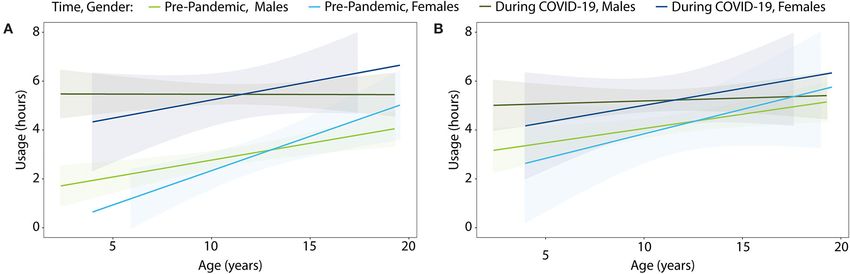
Cardy et al.                                                                                                         Children’s COVID-19 Screen Time Changes

                                                guilt, frustration, and worry. Results of this survey study revealed that children with ASD
                                                were less likely to benefit from screen time to cope with social isolation, and screen
                                                time resulted in significantly more lost time on social interactions than the community
                                                sample, which may exacerbate difficulties in social domains. Given the unprecedented
                                                circumstances of the COVID-19 pandemic and the novel context of technology use, the
                                                findings of this study highlight the need for revision of screen time recommendations to
                                                reflect the current needs of children and families.
                                                Keywords: autism spectrum disorder, screen time, COVID-19, pandemic, children

INTRODUCTION                                                                         the COVID-19 pandemic. Given the shift in the context of use
                                                                                     and increased reliance on technology during the pandemic, there
School closures, social distancing, and other pandemic response                      is a critical need to understand the both the changes in screen
measures introduced to control the spread of the novel                               time use and its impact on the well-being and quality of life (QoL)
coronavirus disease (COVID-19) have led to a massive surge                           of children with ASD.
in screen time for children and youth (1–4). Screen time,                                This study aims to fill the above knowledge gaps by surveying
defined as the amount of time interacting with electronic                            screen time use in Canadian children and youth with ASD during
screen technology, is traditionally associated with a multitude                      the school closures following the pandemic declaration on March
of negative physical and mental health outcomes. However, the                        11, 2020. Our primary objectives were to: (1) characterize the
novel context of technology use during the pandemic period is                        change in parent reported screen time in children with ASD
challenging the traditional notions of harm as many families                         during the COVID-19 school closures, and (2) examine the
now depend on digital devices to cope with the imposed                               parent perceived impact of screen time on mental health and
restrictions and psychological impact of the pandemic. Screen                        QoL of children with ASD and their families. Our exploratory
time, which is typically associated with social isolation (5, 6), is                 aims were to examine predictors of screen time change and
now paradoxically enabling virtual social connections to mitigate                    perceived impact.
the impact of physical and social distancing requirements. Often
viewed as hindering academic activities (7), screen time is quickly
becoming the primary mode of education for many children.                            MATERIALS AND METHODS
And social media, which is thought to contribute to anxiety and                      Research Design
depression (8–13) and misinformation (14) is also becoming a                         An anonymous online parent survey was created and managed
place to seek support, share positive messaging, and disseminate                     using REDCap electronic data capture tools hosted at
COVID-19 resources and strategies to improve mental health.                          Holland Bloorview, Canada’s largest pediatric rehabilitation
   Despite its significant influence on physical and mental health,                  hospital located in Toronto, Ontario (20, 21). The survey was
the impact of screen time on children and youth has been                             disseminated through email distribution lists and/or social media
largely neglected in the current pandemic and very little is                         channels (Twitter, Facebook) belonging to Holland Bloorview,
known about how much screen time use has changed during this                         the Province of Ontario Neurodevelopmental Network (22),
period. Of specific concern, even less is known about screen time                    and autism organizations and research centers. The survey was
experiences of children and youth with autism spectrum disorder                      available for ∼6 weeks (May 22 through July 6, 2020) covering
(ASD), who are at increased risk of adverse outcomes from screen                     the end of the final term of the 2019–2020 school year in Canada.
time (15, 16). ASD is a complex neurodevelopmental disorder                          All participants provided electronic informed consent. Upon
characterized primarily by differences in social communication                       completion of the survey, participants were able to enter a draw
skills and the presence of restricted/repetitive behaviors (17), with                for one of three $50 gift cards. The study was approved by the
a prevalence of 1 in 66 (15.2 per 1,000) children aged 5–17 years                    institution’s Research Ethics Board.
in Canada (18). Prior to the COVID-19 pandemic, children with
ASD were exposed to more screen time compared to typically                           Participants
developing (TD) children and other clinical groups (19). The                         Canadian parents and caregivers of children 19 years of age and
observed greater and earlier onset of interest in screen viewing                     younger were eligible to participate in the survey. Membership
in this population is likely influenced by a multitude of factors                    in the ASD group was determined based on parent-reported
[see systematic review by (19)], such as the amount of social,                       primary diagnosis.
cognitive, or physical effort required, the interpersonal reprieve
it may provide, and the lack of barriers to engagement. Higher                       Instrument
pre-pandemic screen time, combined with the loss of services                         The survey was available in English, took ∼10-min to complete,
and supports during the pandemic and the disorder’s hallmark                         and consisted of 28 close-ended questions (Likert-type, matrix,
pre-disposition for intense and restricted pre-occupations (17),                     single-answer, and multiple-answer) and one open-ended free-
may put children and youth with ASD at a greater risk than other                     text question (Supplementary Methods 1). The survey questions
children for negative outcomes of increased screen time during                       were adapted from existing instruments (1, 23). To answer

Frontiers in Psychiatry | www.frontiersin.org                                    2                                    August 2021 | Volume 12 | Article 702774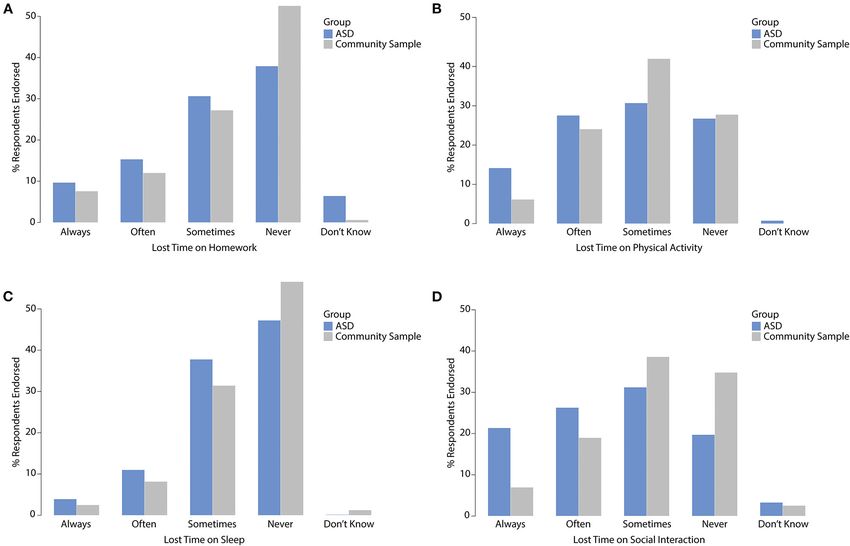
Cardy et al.                                                                                              Children’s COVID-19 Screen Time Changes

our research questions, the survey covered three key content                model fit with respect to heteroscedasticity and non-normality.
areas: (1) technology use before and during the COVID-19                    Participants with incomplete data were included in the analyses
pandemic, (2) the parent perceived impact of technology use on              where possible. Supplementary Table 1 provides the number of
parent perceived QoL and mental health, and (3) the diagnostic,             samples available for each of the demographic variables.
sociodemographic, and family characteristics of respondents.
Technology use was quantified as hours of use (in total, per
device, and per activity) per day on weekdays and weekends                  RESULTS
(1). Parent’s perception of the impact of technology use on child
and family QoL and mental health was measured on a 5-point                  Sample Characteristics
categorical scale from “very negative impact” to “very positive             The sample consisted of 414 responses (ASD n = 127;
impact.” Lost time on other activities in favor of technology               community group n = 287). The community group was
use and parents’ emotions toward screen time (both measured                 composed of children with no diagnosis (TD subgroup; n = 112)
on a 4-point categorical scale from “never” to “always”), as                as well as those with diagnoses of attention deficit/hyperactivity
well as domains of benefit of technology use (e.g., coping                  disorder (ADHD; n = 17), anxiety disorder (n = 5), intellectual
with social isolation, online education, emotion regulation)                disability (n = 8), learning disability (n = 6), other (n =
were also surveyed. The diagnostic, sociodemographic, and                   10), and missing diagnosis information (n = 129). Seventy-one
family characteristics explored included household income and               respondents were missing responses to our primary question and
highest level of education, child’s age, gender, race, diagnoses,           were removed from the analyses. The final sample consisted of
and symptoms, if the child received educational support, the                344 responses. The primary outcome (change in screen time)
respondent’s relationship to child, the number of children in               was not significantly different between the community group and
the home, the number of adults responsible for childcare,                   those with missing diagnoses. Analyses were done with the entire
the number of adults working inside and outside the home,                   community sample as well as the TD subgroup of the community
and geographical information (first three digits of postal                  sample (no missing diagnoses).
code). The survey concluded with a single open-ended free-                      Table 1 details the demographic characteristics of these three
text question, which provided a space for respondents to                    groups. The majority of the participants were from the province
share anything else regarding their child’s technology use                  of Ontario (89%), one of the Canadian provinces with the highest
during the COVID-19 school closures. For the purpose of                     prevalence of COVID-19. As seen, both the community sample
the survey, “technology” referred to electronic screen media                and its TD subgroup were significantly younger than the ASD
that included televisions, computers, laptops, game consoles,               group, had a larger proportion of females, and significantly
handheld consoles, virtual and augmented reality devices,                   higher household income and parental education, but not
smartphones, and tablets.                                                   significantly different in race distribution or number of children
                                                                            in the household. To address the imbalance, two approaches were
Community Involvement                                                       taken. First, the primary analyses were rerun with age, gender,
The survey was developed in consultation with parents of                    household income, and parental education as covariates. Second,
children with ASD.                                                          we subsampled the two groups to generate groups matched
                                                                            in age, gender, race distribution, number of children in the
Analyses                                                                    household, household salary, the number of adults responsible
The data were analyzed in R 3.6.3 statistical programming (24).             for childcare, working from home, and working outside the home
Outliers were identified and removed based on inspection of                 (n = 156; Supplementary Table 2). The primary analyses were
statistical distributions and measures of spread. We examined the           rerun on matched samples.
significance of change during the COVID-19 period using a t-                    The majority of participants in the ASD group communicated
test with Bonferroni correction for two comparisons (weekend,               verbally (83%). They either attended regular classrooms (26%),
weekday). Predictors of change were examined using multiple                 received support in a regular classroom (30%), or attended a
linear regression analysis, logistic regression, and ordinal logistic       special education classroom (32%). The most frequently co-
regression depending on the nature of the data. The primary                 occurring symptoms or conditions in this group were anxiety
predictors examined were group, age, and gender based on                    disorders (34%), ADHD (31%), and learning disability (26%).
existing research on predictors of technology use (25–28).                  Supplementary Table 3 provides detailed characteristics of the
The results are reported with Bonferroni correction for three               group. For both the ASD and community groups, the majority
comparisons. Exploratory predictors examined were the number                of respondents were mothers (ASD: 91%, community: 88%),
of adults working from home, number of siblings, household                  followed by fathers (ASD: 8%, community: 10%). The number
salary, and parental education, as well as the total screen                 of adults responsible for childcare [ASD: mean = 1.9 (SD =
time, the number of hours spent on different activities. These              0.56), community: mean = 2.2 (SD = 0.57), p < 0.0001] and
variables were chosen based on known predictors of screen                   number of adults working from home [ASD: mean = 0.8 (SD =
time as well as demographics factors that may modulate the                  0.71), community: mean = 1.2 (SD = 0.71), p < 0.0001] were
impact of COVID-19 on families (25, 29, 30). No multiple                    both significantly higher in the community group. The number
comparison correction was performed for the exploratory                     of adults working outside the home at least 1 day a week was not
predictors. Regression diagnostics were used to evaluate the                significantly different between the groups.

Frontiers in Psychiatry | www.frontiersin.org                           3                                   August 2021 | Volume 12 | Article 702774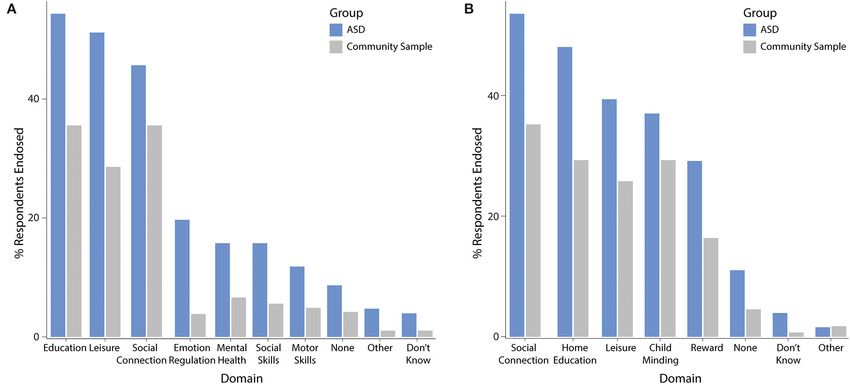
Cardy et al.                                                                                                              Children’s COVID-19 Screen Time Changes

TABLE 1 | Participant demographics.                                                             Analyses revealed a significant increase in total screen time
                                                                                            during the pandemic (vs. before) in the ASD group (Figure 1;
                                ASD             Mixed              TD subgroup
                                                community
                                                                                            two-sided t-test; weekdays: mean difference = 3.8 h [95%
                                                sample                                      confidence interval (CI) 3.35, 4.25], p < 0.0001; weekends: mean
                                                                                            difference = 1.5 h [95% CI 28 1.17, 1.92], p < 0.0001). For the
Age [mean (SD)]                 11.7 (4.06)     9.4 (4.26), p <    8.4 (4.12), p <          ASD group, there was no significant effect of age or gender on
                                                0.0001             0.0001                   the change in screen time.
Gender (Male:Female)            28:99           65:96, p = 0.001   47:65, p =                   When looking at the entire sample, there was a significant age
                                                                   0.001
                                                                                            by group interaction, suggesting increased change in screen time
Race                                            p = 0.16           p = 0.10
                                                                                            for younger children with ASD relative to the community sample
Black                           4%              2%                 3%
                                                                                            {Figure 2; weekdays: difference in regression coefficients = 0.2
East Asian                      6%              10%                12%
                                                                                            [standard error (SE) = 0.06], p = 0.001; weekends: difference =
First Nations/Metis/Inuit       4%              1%                 1%
                                                                                            0.1 (SE = 0.05), p = 0.019}. The interaction remained significant
Latin American                  6%              1%                 2%                       when the analyses were rerun with the TD subgroup (weekdays
Middle Eastern                  4%              2%                 2%                       only), but not with the matched sample. The latter was likely due
South Asian                     3%              5%                 4%                       to limited age range in the matched sample.
Southeast Asian                 4%              4%                 5%                           In terms of the distribution of screen time (Figure 3A), the
White                           63%             67%                66%                      longest screen time durations were reported for watching videos
Other                           2%              3%                 4%                       [ASD: mean hours = 2.4 (SD = 2.09); community: mean hours
Prefer not to say               4%              3%                 1%                       = 1.7 (SD = 1.47)], playing video games [ASD: mean hours =
Annual household income                         p < 0.0001         p < 0.0001               1.6 (SD = 2.18); community: mean hours = 1.2 (SD = 1.94)],
< $29,999                       12%             1%                 1%                       and engaging in online learning [ASD: mean hours = 1.6 (SD =
$30,000–49,999                  9%              6%                 4%                       1.63); community: mean hours = 1.7 (SD = 1.68)]. The highest
$50,000–74,999                  16%             5%                 5%                       usage (Figure 3B) was reported for tablets [ASD: mean hours =
$75,000–99,999                  13%             9%                 8%                       2.7 (SD = 2.93); community: mean hours = 1.5 (SD = 1.65)]
> $100,000                      37%             69%                64%                      and computers/laptops [ASD: mean hours = 2.4 (SD = 2.31);
Prefer not to say               13%             11%                10%                      community: mean hours = 2.1 (SD = 2.22)].
Education                                       p = 0.0002         p < 0.0001
Secondary school                1%              2%                 1%                       Parent Perceived Impact
Elementary school               1%              0%                 0%                       Our results revealed mixed perceptions of impact of screen
College                         25%             8%                 4%                       time on parent perceived child and family QoL and mental
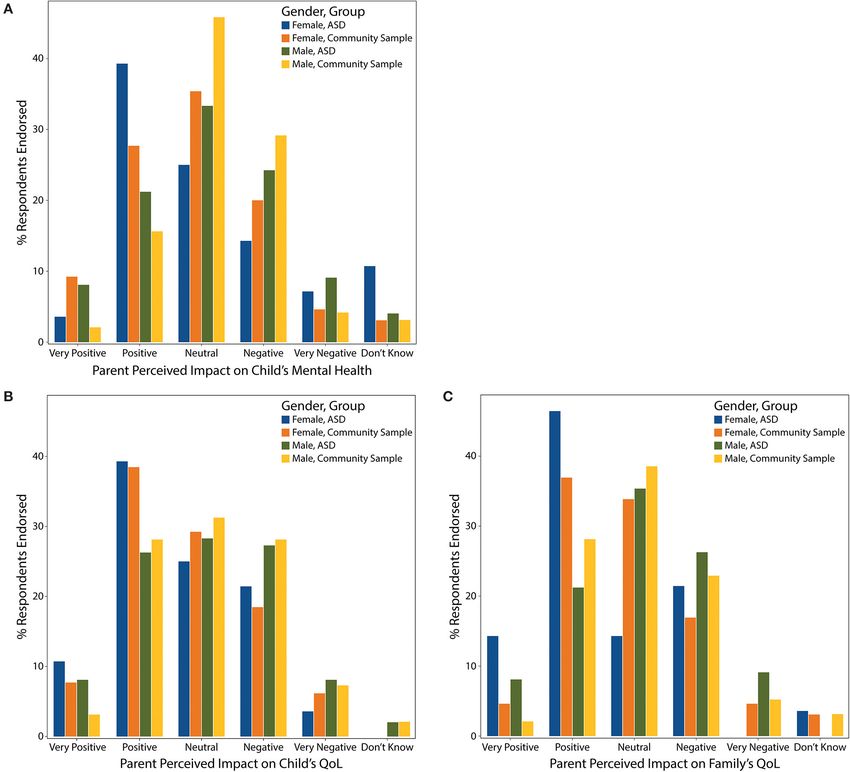
University                      69%             83%                87%                      health, with nearly equal proportions of respondents endorsing
Other                           2%              7%                 6%                       positive and negative impact (Figure 4). There was no significant
Prefer not to say               2%              1%                 2%                       effect of group or age, but gender was a significant predictor
                                                                                            of both parent perceived QoL and mental health, with male
P-values are reported for comparisons relative to the ASD group. ASD, autism spectrum
disorder; TD, typically developing; SD, standard deviation.
                                                                                            gender associated with a higher likelihood of a negative perceived
                                                                                            impact [QoL (child/family) odds ratio (OR) = 1.8 (95% CI
                                                                                            1.1, 2.9), corrected p = 0.040; mental health OR = 1.9 (95%
                                                                                            CI 1.1,3.1), corrected p = 0.0028]. The conclusions remained
Screen Time                                                                                 unchanged when the analyses were rerun with the TD and
Pre-pandemic, mean total screen time in the ASD group was                                   matched subgroups.
perceived by parents to be 3.3 h [95% confidence interval (CI)                                  Supplementary Table 4 provides the results of ordinal
2.92, 3.63] on weekdays and 4.9 h (95% CI 4.55, 5.27) on                                    regression for the exploratory predictors. Higher likelihood of
weekends. In the community sample, mean pre-pandemic screen                                 negative perceived impact was associated with increased screen
time was perceived as 2.0 h (95% CI 1.71, 2.34) on weekdays and                             time on weekdays [family QoL OR = 1.1 (95% CI 1.02, 1.23),
3.7 h (3.34, 3.98) on weekends. During the COVID-19 pandemic                                p = 0.02; child’s mental health OR = 1.1 (95% CI 1.04, 1.25),
school closures, mean weekday and weekend total screen time                                 p = 0.006] and weekends [family QoL OR = 1.1 (95% CI 1.01,
during for the ASD group was 6.9 h (95% CI 6.49, 7.21) and 6.3 h                            1.21), p = 0.04], and the number of hours playing video games
(95% CI 5.91, 6.63) of use, respectively, while the community                               [family QoL OR = 1.1 (95% CI 1.00, 1.26), p = 0.04] and watching
sample reported 5.6 h (95% CI 5.28, 5.92) and 5.0 h (95% CI                                 videos [family QoL OR = 1.1 (95% CI 1.02, 1.28), p = 0.02]
4.70, 5.34) of use, respectively. Compared to the community                                 on weekends. Lower likelihood of negative perceived impact was
sample, the ASD group had significantly higher screen time use                              associated with screen time spent connecting with friends and
before and during the pandemic on weekdays and weekends                                     family on weekdays [child’s QoL OR = 0.7 (95% CI 0.56, 0.92), p
[weekdays: difference = 1.14 (SE = 0.18), t = 6.56, p < 0.0001;                             = 0.01; family QoL OR = 0.8 (95% CI 0.61, 1.0), p = 0.05; child’s
weekends: difference = 1.41 (SE = 0.20), t = 6.93, p < 0.0001].                             mental health OR = 0.7 (95% CI 0.53, 0.87), p = 0.002], playing
The conclusions did not change when controlling for age, gender,                            educational games on weekends [child’s QoL OR = 0.7 (95%
parental education, and income, or after rerunning the analyses                             CI 0.53, 1.012), p = 0.05], using therapeutic apps on weekdays
with the TD and matched subgroups.                                                          [child’s QoL OR = 0.5 (95% CI 0.28, 0.99), p = 0.05], and weekday

Frontiers in Psychiatry | www.frontiersin.org                                           4                                   August 2021 | Volume 12 | Article 702774
Cardy et al. Children’s COVID-19 Screen Time Changes FIGURE 1 | Screen time usage by age for children with ASD before and during the COVID-19 school closures on (A) weekdays and (B) weekends. Colored shading denotes 95% confidence interval. FIGURE 2 | Change in screen time by age during the COVID-19 school closures for children with ASD and the community sample on (A) weekdays and (B) weekends. Colored shading denotes 95% confidence interval. time spent on social media [family QoL OR = 0.7 (95% CI 0.50, activity [OR = 1.5 (95% CI 0.96, 2.47), p = 0.07]. The effects of 1.01), p = 0.05; child’s mental health OR = 0.6 (95% CI 0.44, age and gender were not significant. 0.89), p = 0.008]. The most frequently endorsed domains of benefit for To further probe the specific domains of negative perceived children (Figure 6A) were online education (ASD: 54%, impact, the respondents were asked to indicate how often community sample: 36%), leisure (ASD: 51%, community children lost time on sleep, homework, physical activity, or social sample: 29%), and coping with social isolation (ASD: 46%, interactions because of screen time (Figure 5). For the ASD community sample: 36%). Nine percent (ASD) and 4% group, always/often choices were most frequently endorsed for (community sample) of parents endorsed no benefits of screen losing time on social interactions (47%) and physical activity time for the child. The most frequently endorsed benefit (41%). Ordinal logistic regression revealed significantly more domains for the family (Figure 6B) were similar and included lost time on social interactions for the ASD group compared coping with social isolation (ASD: 53%, community sample: to the community sample [OR = 2.7 (95% CI 1.66, 4.36), p < 35%), home schooling (ASD: 48%, community sample: 29%), 0.0001]. Marginal group effects were also found for lost time on leisure (ASD: 39%, community sample: 26%), followed by homework [OR = 1.6 (95% CI 0.97, 2.65), p = 0.06] and physical child minding (ASD: 37%, community sample: 29%), and Frontiers in Psychiatry | www.frontiersin.org 5 August 2021 | Volume 12 | Article 702774
Cardy et al.                                                                                                                 Children’s COVID-19 Screen Time Changes

 FIGURE 3 | Distribution of screen time during the COVID-19 closures across different (A) activities and (B) devices. Center line represents the median (50% quartile),
 box limits represent upper (75%) and lower (25%) quartiles, whiskers represent 1.58× interquartile range (IQR). Outliers are represented as data points beyond the
 end of the whiskers.

Frontiers in Psychiatry | www.frontiersin.org                                      6                                           August 2021 | Volume 12 | Article 702774
Cardy et al.                                                                                                              Children’s COVID-19 Screen Time Changes

 FIGURE 4 | Perceived impact of screen time on parent perceived (A) child’s mental health, (B) child’s QoL, and (C) family’s QoL displayed by gender and group.

using technology as reward (ASD: 29%, community sample:                              Parental Emotions Toward Screen Time
16%). No benefits of screen time for the family were                                 The most frequently endorsed emotions by parents were
endorsed by 11 and 5% of the ASD group and community                                 (endorsed as always or often; Supplementary Figure 1):
sample, respectively.                                                                guilt (ASD: 48%; community: 53%), frustration (ASD: 40%;
   For the child, the community sample had a higher likelihood                       community: 32%), worry (ASD: 39%; community: 36%), and
of benefiting from screen time to cope with social isolation [OR                     relieved (ASD: 37%; community: 27%). The least frequently
= 2.4 (95% CI 1.43, 4.1), corrected p = 0.003], but decreased                        endorsed emotions were excitement (ASD: 12%; community:
likelihood of benefiting in the emotion regulation domain [OR =                      8%), anger (ASD: 15%; community: 13%), and hope (ASD:
0.27 (95% CI 0.11, 0.59), corrected p = 0.003]. Age was positively                   19%; community: 10%). Examining the predictors of the top
associated with benefits in social coping [OR = 1.1 (95% CI 1.02,                    five emotions did not reveal a group effect but did show an
1.15), corrected p = 0.03]. For the family, age was negatively                       increased likelihood of negative feelings with increasing screen
associated with using technology as reward [OR = 0.86 (95% CI                        time (Supplementary Table 5), and a negative association
0.81, 0.93), corrected p < 0.0001] and child minding [OR = 0.9                       of age with feelings of guilt [OR = 1.1 (95% CI 1.02, 1.14),
(95% CI 0.82, 0.93), corrected p < 0.0001].                                          p = 0.006].

Frontiers in Psychiatry | www.frontiersin.org                                    7                                          August 2021 | Volume 12 | Article 702774
Cardy et al.                                                                                                                  Children’s COVID-19 Screen Time Changes

 FIGURE 5 | Children’s lost time on (A) homework, (B) physical activity, (C) sleep, and (D) social interactions due to screen time.

 FIGURE 6 | Perceived screen time benefits for (A) the child and (B) the family.

Frontiers in Psychiatry | www.frontiersin.org                                       8                                           August 2021 | Volume 12 | Article 702774
Cardy et al.                                                                                            Children’s COVID-19 Screen Time Changes

DISCUSSION                                                               was unexpected given the differential association of technology
                                                                         use with gender, race, and socioeconomic status (25, 27–29), and
Our results showed a significant increase in screen time for             the many inequities moderating the impact of COVID-19 on
children and youth with ASD during the COVID-19 pandemic                 families (33, 34). Given our limited number of responses from
(3.8 h on weekdays, 1.5 h on weekends). This is in line with             racialized and lower income families, further research targeted at
other studies of technology use during COVID-19 in the general           marginalized populations is needed.
pediatric population across the world (1, 2, 4). For example,               Compared to the ASD group, there was a significantly steeper
in their longitudinal survey study in Shanghai, China, Xiang             increase in change in screen time with age for the community
et al. (4) found that screen time of children and adolescents            sample. A positive association of age and screen time is well-
surged by ∼30 h per week from January to March 2020. Another             documented in the literature (35–37), however, there is some
pre-peri lockdown longitudinal study conducted in Italy (2),             research to suggest a milder age gradient for children with ASD
found that leisure screen time of children and adolescents               (38). Similarly, results of the present study suggest children with
increased by more than 4.5 h per day. These studies took place           ASD have exhibited a more consistent change in screen time
in countries that were experienced early COVID-19 outbreaks              across the age span during COVID-19, resulting in an increased
(Italy, China) (31). How and to what extent pandemic measures            change in screen time for younger children with ASD compared
were enforced (e.g., stricter lockdowns), the density of living          to the community sample. This difference may be related to
arrangements (e.g., multi-family residential housing), and the           younger children with ASD relying more heavily on screens
built environment (e.g., availability of parks and outdoor spaces)       for entertainment or distraction than other children during the
may be contributors to the observed variability in screen time           COVID-19 school closures, or the more significant loss of school-
increases. Furthermore, seasonal differences in behavior may             based supports. These results may reflect a greater dependence
have contributed to screen time behaviors for both learning              on screen time to cope with social isolation in adolescents in the
and leisure, as the present study was conducted at the end of            community sample, but not those with ASD. Further research is
the school year in spring/summer as opposed to late winter in            needed to validate this.
previous studies. Regarding total weekday and weekend screen                The impact of screen time on children and families during
time during the COVID-19 school closures, the ASD group                  the COVID-19 pandemic reported by parents was mixed
exhibited 6.9 and 6.3 h of use, respectively, while the community        regarding perceived mental health and QoL, with male gender
sample reported 5.6 and 5.0 h of use, respectively. The latter is        associated with higher likelihood of negative impact despite a
consistent with the results of another pandemic survey study             lack of significant differences in screen time or increase in use
of a representative, nation-wide sample of Canadian children             compared to females. This concern is supported by research
(n = 1,472), in which average daily screen time was calculated           detailing greater adverse effects of screen time for males in terms
at 5.1 h for children (5–11 years) and 6.5 h for youth (12–              of specific mental health [e.g., pathological gaming (39)] and
17 years) (1). Collectively, these findings suggest that, as a           physical health domains [e.g., obesity (40), adiposity (41), and
salient consequence of the pandemic response measures, children          metabolic risk factors (42)], though reported effects are mixed
and youth are spending a substantial proportion of their days            (43, 44). The differences observed in this study may also be
engaged in screen time. This raises concerns over the long-              a reflection of parental attitudes toward specific screen time
term and developmental ramifications of such extensive use.              behaviors (e.g., video gaming compared to social media use),
At the same time, it is important to note that current screen            how parents experience screen time behaviors of their children
time recommendations (32) are based on pre-pandemic evidence             (e.g., video game play may be more disruptive), or a difference
and specified solely for leisure use. Given the unprecedented            in how boys and girls are spending time on each device or
circumstances of the COVID-19 pandemic, and the novel context            activity (e.g., violent vs. non-violent video games, types of videos
of technology use, there is a critical need for revision of screen       watched). The likelihood of negative perceived impact was also
time recommendations to reflect the current needs of children            found to be positively associated with total screen time, number
and families.                                                            of hours playing video games and time spent watching videos,
    We anticipated that children with ASD would exhibit greater          but negatively associated with time spent connecting with friends
surges in screen time during school closures compared to other           and family, on social media, playing educational games, and
children due to loss of supports and services, potential use of          using therapeutic apps. Interestingly, although online learning
screen time by families to manage challenging behaviors, and             accounted for a large proportion of screen time, the amount
difficulties arising from intense and restricted pre-occupations         of time spent online learning was not predictive of the parent
related to screen use. Interestingly, our results did not confirm        perceived impacts of screen time during the COVID-19 school
this. This may be due to the elevated pre-pandemic screen time           closures. Once replicated in other samples, these findings can
levels observed in this population, or a result of a marked loss         lead to formulation of more activity-specific recommendations
of opportunities for in-person participation in social and leisure       to optimize the impact of screen time on mental
activities for the community sample, as these opportunities are          health and QoL.
often limited for children with ASD even without the pandemic               The ASD group and the community sample reported similar
measures in place.                                                       benefits of screen time during the COVID-19 pandemic for
    We also did not find an association between change in screen         their children’s social connectivity, education, and leisure time;
time and other demographic and socio-economic factors. This              however, the community sample had a higher likelihood of

Frontiers in Psychiatry | www.frontiersin.org                        9                                    August 2021 | Volume 12 | Article 702774
Cardy et al. Children’s COVID-19 Screen Time Changes
benefitting from screen time to cope with social isolation. health and quality of life during the COVID-19 pandemic in
Conversely, almost half of children with ASD frequently lost Canada. The results of the exploratory analyses, once replicated,
time on social interactions due to their technology use during can yield actionable targets that can be used to inform guidelines
the COVID-19 pandemic, a rate significantly higher than for the and recommendations for families, and support specific activities
community sample. Due to the hallmark characteristics of ASD for optimal engagement with technology for children and youth
(17), it may be that children with ASD have greater difficulty during the COVID-19 school closures. Specifically, screen time
engaging in social interactions given the physical and social appears to be more beneficial for the child and family when
distancing requirements of the pandemic response, or have a it is used as a means to socially connect with others, to
smaller pool of peers with whom they could socialize (45). learn new skills, and to support one’s mental health through
Alternatively, children with ASD may exhibit a preference for therapeutic apps.
non-social screen time activities as these may be less emotionally
and cognitively demanding. Parents of children with ASD Limitations
further reported disproportionately affected physical activity and The results of this must be interpreted in the context of
time spent on homework due to screen time. Despite similar several limitations. First, all outcomes were based on parent-
increases in screen time during the pandemic period, children report rather than direct quantitative measurement and may be
with ASD appear to be at increased risk for these negative subject to response bias. Parent’s awareness of their children’s
outcomes. This may be due to their higher overall screen time screen time behavior may be facilitated or hindered by their
compared to other children or may be related to characteristic own routine changes due to the COVID-19 pandemic, such
traits of the disorder (i.e., restricted or intense interests) that as working from home, increased childcare demands, and
change how children with ASD engage during screen time. Our financial and psychological stressors. Moreover, parents who
findings reflect the proposed consequences of technology use in are not actively engaged in screen time with their children
children with ASD (15), and raises concerns over compounding may not be able to accurately account for their technology
negative outcomes for this population in instances of prolonged use. Secondly, as parents were not required to answer every
school closures. question to complete the survey, there is uncertainty over
Parents’ emotions toward screen time were overwhelmingly those left unanswered (e.g., missing diagnosis information). To
negative with guilt, frustration, and worry as the most frequently address this, we showed that the conclusions remained similar
endorsed emotions, a finding that transcended diagnoses, when the analyses were rerun on subgroups and matched
socio-economic, and demographic characteristics (except age). samples where appropriate. A third limitation is that our sample
Unsurprisingly, these negative emotions were predicted by total included a disproportionately low number of families with lower
screen time in our exploratory analyses, and feelings of guilt in household incomes (47). Despite this limitation, the observed
particular were negatively associated with age. However, parental screen time in the community sample during the COVID-19
concerns over screen time are not unique to the pandemic school closures was in line with that of a recent representative,
period; prior research indicates as many as 84% of parents report nation-wide sample of screen time in Canadian children during
concerns over their children’s screen use (46). The feeling of relief the pandemic period (1). Lastly, due to our survey distribution
was also frequently endorsed by parents and may be attributed strategy, we were unable to calculate the response rate. It is
to the role digital devices have played in educating, regulating possible that non-respondents differ from respondents in ways
emotion, and child minding (i.e., screen time babysitting). While that are pertinent to the aims of the survey [non-response
there are fewer alternatives to screen time for kids during effect (48)].
the COVID-19 school closures, parental mental health needs
specially related to feelings of guilt over the amount screen time CONCLUSIONS
may be actionable targets.
The present survey characterizes an increase in screen time
Strengths during the COVID-19 school closures in the Canadian pediatric
This study has several strengths and represents a significant and ASD population, with the largest increases in weekday use.
timely contribution to the literature. To our knowledge, this is the Although children with and without ASD exhibited comparable
first study to investigate changes in screen time in children and screen time increases, children with ASD were found to
youth with ASD and assess how that change compares to other have significantly greater usage both prior to and during
children in Canada. A recent nation-wide parent-report survey the pandemic. Parents’ perceived impact of screen time on
conducted by ParticipACTION assessed movement behaviors of child and family mental health and quality of life during the
Canadian children and youth, including sedentary screen time, pandemic was mixed, though a stronger negative influence
∼1-month after COVID-19 was declared a global pandemic for males was found. Children were found to benefit most
(1). The present study extends this research by quantifying the from screen time for social connections, education, and leisure
change in screen time, examining these changes following more time; however, children with ASD were less likely to benefit
prolonged exposure to the pandemic response (2- to 3-months), from screen time to cope with social isolation than other
and investigating screen time in a clinical population of youth. children. In fact, screen time of children with ASD resulted
This study is also the first to investigate the parent perceived in significantly more lost time on social interactions compared
impact of increased screen time on children and families’ mental to the community sample, which may exacerbate difficulties
Frontiers in Psychiatry | www.frontiersin.org 10 August 2021 | Volume 12 | Article 702774Cardy et al. Children’s COVID-19 Screen Time Changes
in this area and raises concerns over compounding negative AUTHOR CONTRIBUTIONS
outcomes for this population from prolonged school closures.
Parental feelings toward their children’s screen time use were AK conceptualized the study, designed the study, created the
overwhelmingly negative, with guilt, frustration, and worry as the data collection instrument, developed the data analysis plan,
most frequently endorsed emotions. Given the unprecedented performed the data analyses, created the figures, interpreted
circumstances of the COVID-19 pandemic, and the novel context the data, and critically reviewed and revised the manuscript.
of technology use during the pandemic school closures, the RC designed the study, created the data collection instrument,
findings of this study highlight the need for revision of screen managed survey distribution, created the figures, interpreted the
time recommendations to reflect the current needs of children data, drafted the initial manuscript, and critically reviewed and
and families. revised the manuscript. JZ performed the initial literature review,
created the data collection instrument, and managed survey
distribution. AD developed the data analysis plan, interpreted
DATA AVAILABILITY STATEMENT the data, and critically reviewed and revised the manuscript
for important intellectual content. EA, EB, SM, JB, and MP
The datasets presented in this article are not readily available
contributed to conceptualizing the study, interpreted the data,
because public disclosure of data was not included in the research
and critically reviewed and revised the manuscript. All authors
ethics approval or participant informed consent.
approved the final manuscript and agree to be accountable for all
aspects of the work.
ETHICS STATEMENT
SUPPLEMENTARY MATERIAL
The studies involving human participants were reviewed and
approved by Research Ethics Board of Holland Bloorview Kids The Supplementary Material for this article can be found
Rehabilitation Hospital. The participants provided electronic online at: https://www.frontiersin.org/articles/10.3389/fpsyt.
informed consent to participate in this study. 2021.702774/full#supplementary-material
REFERENCES 11. Lin L, Sidani JE, Shensa A, Radovic A, Miller E, Colditz JB, et al. Association
between social media use and depression among U.S. young adults. Depress
1. Moore SA, Faulkner G, Rhodes RE, Brussoni M, Chulak-Bozzer T, Ferguson Anxiety. (2016) 33:323–31. doi: 10.1002/da.22466
LJ, et al. Impact of the COVID-19 virus outbreak on movement and play 12. Maras D, Flament MF, Murray M, Buchholz A, Henderson KA, Obeid N, et
behaviours of Canadian children and youth: a national survey. Int. J. Behav. al. Screen time is associated with depression and anxiety in Canadian youth.
Nutr. Phys. Act. (2020) 17:1–11. doi: 10.21203/rs.3.rs-34730/v1 Prev Med. (2015) 73:133–8. doi: 10.1016/j.ypmed.2015.01.029
2. Pietrobelli A, Pecoraro L, Ferruzzi A, Heo M, Faith M, Zoller T, et al. 13. Stiglic N, Viner RM. Effects of screentime on the health and well-being of
Effects of COVID-19 lockdown on lifestyle behaviors in children with children and adolescents: a systematic review of reviews. BMJ Open. (2019)
obesity living in Verona, Italy: a longitudinal study. Obesity. (2020) 28:1382– 9:e023191. doi: 10.1136/bmjopen-2018-023191
5. doi: 10.1002/oby.22861 14. Chou W-YS, Oh A, Klein WMP. Addressing health-related misinformation
3. Qin F, Song Y, Nassis GP, Zhao L, Cui S, Lai L, et al. Prevalence of insufficient on social media. JAMA. (2018) 320:2417–8. doi: 10.1001/jama.2018.
physical activity, sedentary screen time and emotional well-being during the 16865
early days of the 2019 novel coronavirus (COVID-19) outbreak in China: 15. Gwynette MF, Sidhu SS, Ceranoglu TA. Electronic screen media use in
a national cross-sectional study. Int J Environ Res Public Health. (2020) youth with autism spectrum disorder. Child Adolesc Psychiatr Clin. (2018)
14:5170. doi: 10.3390/ijerph17145170 27:203–19. doi: 10.1016/j.chc.2017.11.013
4. Xiang M, Zhang Z, Kuwahara K. Impact of COVID-19 pandemic on children 16. Westby C. Screen time and children with autism spectrum disorder. Folia
and adolescents’ lifestyle behavior larger than expected. Prog Cardiovasc Dis. Phoniatr Logop. (2021) 73:233–40. doi: 10.1159/000506682
(2020) 63:531–32. doi: 10.1016/j.pcad.2020.04.013 17. American Psychiatric Association. Diagnostic and Statistical Manual of Mental
5. Bickham DS, Rich M. Is television viewing associated with social isolation? Disorders. 5th ed. Arlington, VA: American Psychiatric Association (2013).
Roles of exposure time, viewing context, and violent content. Arch Pediatr 18. Ofner M, Coles A, Decou M, Do M, Bienek A, Snider J, et al. Autism Spectrum
Adolesc Med. (2006) 160:387–92. doi: 10.1001/archpedi.160.4.387 Disorder Among Children and Youth in Canada 2018. Ottawa, ON: Public
6. Richards R, McGee R, Williams SM, Welch D, Hancox RJ. Adolescent screen Health Agency of Canada (2018).
time and attachment to parents and peers. Arch Pediatr Adolesc Med. (2010) 19. Slobodin O, Heffler KF, Davidovitch M. Screen media and autism spectrum
164:258–62. doi: 10.1001/archpediatrics.2009.280 disorder: a systematic literature review. J Dev Behav Pediatr. (2019)
7. Tang S, Patrick ME. Technology and interactive social media use among 8th 40:654. doi: 10.1097/DBP.0000000000000654
and 10th graders in the US and associations with homework and school 20. Harris PA, Taylor R, Thielke R, Payne J, Gonzalez N, Conde JG.
grades. Comput Hum Behav. (2018) 86:34–44. doi: 10.1016/j.chb.2018.04.025 Research electronic data capture (REDCap)-A metadata-driven methodology
8. Bickham DS, Hswen Y, Rich M. Media use and depression: exposure, and workflow process for providing translational research informatics
household rules, and symptoms among young adolescents in the USA. Int J support. J Biomed Inform. (2009) 42:377–81. doi: 10.1016/j.jbi.2008.
Public Health. (2015) 60:147–55. doi: 10.1007/s00038-014-0647-6 08.010
9. Hoge E, Bickham D, Cantor J. Digital media, anxiety, and depression in 21. Harris PA, Taylor R, Minor BL, Elliott V, Fernandez M, O’Neal
children. Pediatrics. (2017) 140(Suppl. 2):S76. doi: 10.1542/peds.2016-1758G L, et al. The REDCap consortium: building an international
10. Khouja JN, Munafò MR, Tilling K, Wiles NJ, Joinson C, Etchells PJ, community of software platform partners. J Biomed Inform. (2019)
et al. Is screen time associated with anxiety or depression in young 95:103208. doi: 10.1016/j.jbi.2019.103208
people? Results from a UK birth cohort. BMC Public Health. (2019) 22. Province of Ontario Neurodevelopmental Network (POND). Available online
19:82. doi: 10.1186/s12889-018-6321-9 at: https://pond-network.ca/ (accessed June 25, 2020).
Frontiers in Psychiatry | www.frontiersin.org 11 August 2021 | Volume 12 | Article 702774Cardy et al. Children’s COVID-19 Screen Time Changes
23. CoRonavIruS Health Impact Survey (CRISIS). Adapted for Autism and and obesity in 9-to 16-year-old Australians. Acta Paediatr. (2012)
Related Neurodevelopmental conditions (AFAR). Available online at: http:// 101:1170–4. doi: 10.1111/j.1651-2227.2012.02804.x
www.crisissurvey.org/crisis-afar/ (accessed August 12, 2020). 41. Barnett TA, O’Loughlin J, Sabiston CM, Karp I, Bélanger M, Van Hulst A, et
24. R Core Team. R: A Language and Environment for Statistical Computing. al. Teens and screens: the influence of screen time on adiposity in adolescents.
Vienna, Austria: R Foundation for Statistical Computing (2020). Available Am J Epidemiol. (2010) 172:255–62. doi: 10.1093/aje/kwq125
online at: https://www.R-project.org (accessed August 24, 2020). 42. Hardy LL, Denney-Wilson E, Thrift AP, Okely AD, Baur LA. Screen time and
25. Carson V, Spence JC, Cutumisu N, Cargill L. Association between metabolic risk factors among adolescents. Arch Pediatr Adolesc Med. (2010)
neighborhood socioeconomic status and screen time among pre- 164:643–9. doi: 10.1001/archpediatrics.2010.88
school children: a cross-sectional study. BMC Public Health. (2010) 43. Tremblay MS, LeBlanc AG, Kho ME, Saunders TJ, Larouche R, Colley
10:367. doi: 10.1186/1471-2458-10-367 RC, et al. Systematic review of sedentary behaviour and health indicators
26. Lauricella AR, Wartella E, Rideout VJ. Young children’s screen time: the in school-aged children and youth. Int J Behav Nutr Phys Act. (2011)
complex role of parent and child factors. J Appl Dev Psychol. (2015) 36:11– 8:98. doi: 10.1186/1479-5868-8-98
7. doi: 10.1016/j.appdev.2014.12.001 44. Twenge JM, Martin GN. Gender differences in associations between digital
27. LeBlanc AG, Katzmarzyk PT, Barreira TV, Broyles ST, Chaput J-P, media use and psychological well-being: evidence from three large datasets. J
Church TS, et al. Correlates of total sedentary time and screen time Adolesc. (2020) 79:91–102. doi: 10.1016/j.adolescence.2019.12.018
in 9-11 year-old children around the world: the international study 45. Petrina N, Carter M, Stephenson J. The nature of friendship in children with
of childhood obesity, lifestyle and the environment. PLoS ONE. (2015) autism spectrum disorders: a systematic review. Res Autism Spectr Disord.
10:e0129622. doi: 10.1371/journal.pone.0129622 (2014) 8:111–26. doi: 10.1016/j.rasd.2013.10.016
28. Yamada M, Sekine M, Tatsuse T. Parental internet use and lifestyle 46. Nwankwo F, Shin HD, Al-Habaibeh A, Massoud H. Evaluation of
factors as correlates of prolonged screen time of children in Japan: results children’s screen viewing time and parental role in household context.
from the super Shokuiku school project. J Epidemiol. (2018) 28:407– Glob Pediatr Health. (2019) 6:2333794X19878062. doi: 10.1177/2333794X198
13. doi: 10.2188/jea.JE20170100 78062
29. Anderson SE, Economos CD, Must A. Active play and screen time in US 47. Statistics Canada. Census Profile. 2016 Census. Statistics Canada Catalogue no.
children aged 4 to 11 years in relation to sociodemographic and weight 98-316-X2016001. Ottawa (2017). Available online at: https://www12.statcan.
status characteristics: a nationally representative cross-sectional analysis. BMC gc.ca/census-recensement/2016/dp-pd/prof/details/page.cfm?Lang=E&
Public Health. (2008) 8:366. doi: 10.1186/1471-2458-8-366 Geo1=PR&Code1=01&Geo2=&Code2=&SearchText=Canada&SearchType=
30. Tandon PS, Zhou C, Sallis JF, Cain KL, Frank LD, Saelens BE. Home Begins&SearchPR=01&B1=All&TABID=1&type=0 (accessed July 29, 2020).
environment relationships with children’s physical activity, sedentary time, 48. Groves RM. Survey Errors and Survey Costs. Hoboken, NJ: John Wiley &
and screen time by socioeconomic status. Int J Behav Nutr Phys Act. (2012) Sons (2004).
9:88. doi: 10.1186/1479-5868-9-88
31. Dawood FS, Ricks P, Njie GJ, Daugherty M, Davis W, Fuller JA, et al. Conflict of Interest: AK reports personal fees from Shaftesbury outside the
Observations of the global epidemiology of COVID-19 from the prepandemic submitted work. In addition, AK has a patent US 9,844,332 B2 with royalties paid
period using web-based surveillance: a cross-sectional analysis. Lancet Infect to Awake Labs and a patent US 16/276,208 pending to Awake Labs. AK is the
Dis. (2020) 20:1255–62. doi: 10.1016/S1473-3099(20)30581-8 inventor of a software called the Anxiety Meter. She is involved in commercializing
32. Tremblay MS, Carson V, Chaput J-P, Connor Gorber S, Dinh T, Duggan M, the Anxiety Meter and will financially benefit from its sales. AK served on the
et al. Canadian 24-hour movement guidelines for children and youth: an board of advisors for Shaftesbury, a media company developing virtual reality
integration of physical activity, sedentary behaviour, and sleep. Appl Physiol products for children with ASD, from February 2020–February 2021, and was
Nutr Metab. (2016) 41:S311–27. doi: 10.1139/apnm-2016-0203 compensated financially for this role. SM receives royalties from Springer for her
33. Beaunoyer E, Dupéré S, Guitton MJ. COVID-19 and digital inequalities: book, Assessing and Treating Anxiety Disorders in Young Children. EA reports
reciprocal impacts and mitigation strategies. Comput Hum Behav. (2020) grants from Roche, personal fees from Roche, personal fees from Quadrant,
111:106424. doi: 10.1016/j.chb.2020.106424 personal fees from Wiley, book royalties from Springer, book royalties from APPI,
34. Bonaccorsi G, Pierri F, Cinelli M, Flori A, Galeazzi A, Porcelli and non-financial support from AMO Pharma outside the submitted work. In
F, et al. Economic and social consequences of human mobility addition, EA has a patent US 9,844,332 B2 with royalties paid to Awake Labs.
restrictions under COVID-19. Proc Natl Acad Sci. (2020) EA holds a patent on the software called the Anxiety Meter; the Anxiety Meter is
117:15530–5. doi: 10.1073/pnas.2007658117 being commercialized and she will financially benefit from its sales.
35. Atkin AJ, Corder K, van Sluijs EMF. Bedroom media, sedentary time and
screen-time in children: a longitudinal analysis. Int J Behav Nutr Phys Act. The remaining authors declare that the research was conducted in the absence of
(2013) 10:137. doi: 10.1186/1479-5868-10-137 any commercial or financial relationships that could be construed as a potential
36. Dumith SC, Garcia LMT, da Silva KS, Menezes AMB, Hallal PC. Predictors conflict of interest.
and health consequences of screen-time change during adolescence-1993
Pelotas (Brazil) birth cohort study. Health birth adolesc find 1993 Pelotas
Publisher’s Note: All claims expressed in this article are solely those of the authors
Braz birth cohort study. J Adolesc Health. (2012) 51(Suppl. 6):S16–
21. doi: 10.1016/j.jadohealth.2012.06.025 and do not necessarily represent those of their affiliated organizations, or those of
37. Hardy LL, Bass SL, Booth ML. Changes in sedentary behavior among the publisher, the editors and the reviewers. Any product that may be evaluated in
adolescent girls: a 2.5-year prospective cohort study. J Adolesc Health. (2007) this article, or claim that may be made by its manufacturer, is not guaranteed or
40:158–65. doi: 10.1016/j.jadohealth.2006.09.009 endorsed by the publisher.
38. Montes G. Children with autism spectrum disorder and screen time: results
from a large, nationally representative US study. Acad Pediatr. (2016) 16:122– Copyright © 2021 Cardy, Dupuis, Anagnostou, Ziolkowski, Biddiss, Monga, Brian,
8. doi: 10.1016/j.acap.2015.08.007 Penner and Kushki. This is an open-access article distributed under the terms
39. Gentile DA, Choo H, Liau A, Sim T, Li D, Fung D, et al. Pathological video of the Creative Commons Attribution License (CC BY). The use, distribution or
game use among youths: a two-year longitudinal study. Pediatrics. (2011) reproduction in other forums is permitted, provided the original author(s) and the
127:e319. doi: 10.1542/peds.2010-1353 copyright owner(s) are credited and that the original publication in this journal
40. Maher C, Olds TS, Eisenmann JC, Dollman J. Screen time is is cited, in accordance with accepted academic practice. No use, distribution or
more strongly associated than physical activity with overweight reproduction is permitted which does not comply with these terms.
Frontiers in Psychiatry | www.frontiersin.org 12 August 2021 | Volume 12 | Article 702774You can also read


