Swiss Cooperation Programme Myanmar 2019 2023
←
→
Page content transcription
If your browser does not render page correctly, please read the page content below

Federal Department of Foreign Affairs FDFA

Swiss Cooperation Programme
Myanmar
2019 – 2023
Contents

               Abbreviations and acronyms                             4

               Foreword                                               5

               Executive summary                                      6

           1   Context analysis                                       8

           2   Swiss foreign policy objectives in Myanmar             11

           3   Achievements and lessons learned during 2013–2018      12

           4   Implications for the Cooperation Programme 2019–2023   16

           5   Strategic orientation and priorities for 2019-2023     18

           6   Programme management and implementation                21

           7   Strategic steering                                     23

               Annexes
               Annex A: Results framework synopsis                    25
               Annex B: Scenarios                                     26
               Annex C: Results framework                             28
               Annex D: Budget allocations                            37
               Annex E: Map of Myanmar                                38
Abbreviations and acronyms

        3MDG Fund   Three Millennium Development Goal Fund
        AA          Arakan Army
        ADB         Asian Development Bank
        ACCESS      Access to Health Fund (successor of 3MDG Fund)
        AIIB        Asian Infrastructure Investment Bank
        ARSA        Arakan Rohingya Salvation Army
        ASEAN       Association of Southeast Asian Nations
        CSO         Civil society organisation
        CSPM        Conflict-sensitive programme management
        DRR         Disaster Risk Reduction
        EAO         Ethnic Armed Organisation
        EHO         Ethnic Health Organisation
        HA          Humanitarian Aid
        HSD         Human Security Division
        IDPs        Internally displaced persons
        JPF         Joint Peace Fund
        LIFT        Livelihood and Food Security Fund
        MHF         Myanmar Humanitarian Fund
        MSDP        Myanmar Sustainable Development Plan 2018-2030
        NCA         Nationwide Ceasefire Agreement
        NLD         National League for Democracy
        ODA         Official Development Assistance
        SC          South Cooperation
        SDC         Swiss Agency for Development and Cooperation
        SDG         Sustainable Development Goals
        SECO        State Secretariat for Economic Affairs
        TVET        Technical and Vocational Education and Training
        USDP        Union Solidarity and Development Party
        WASH        Water, Sanitation and Hygiene
        WFP         World Food Programme

4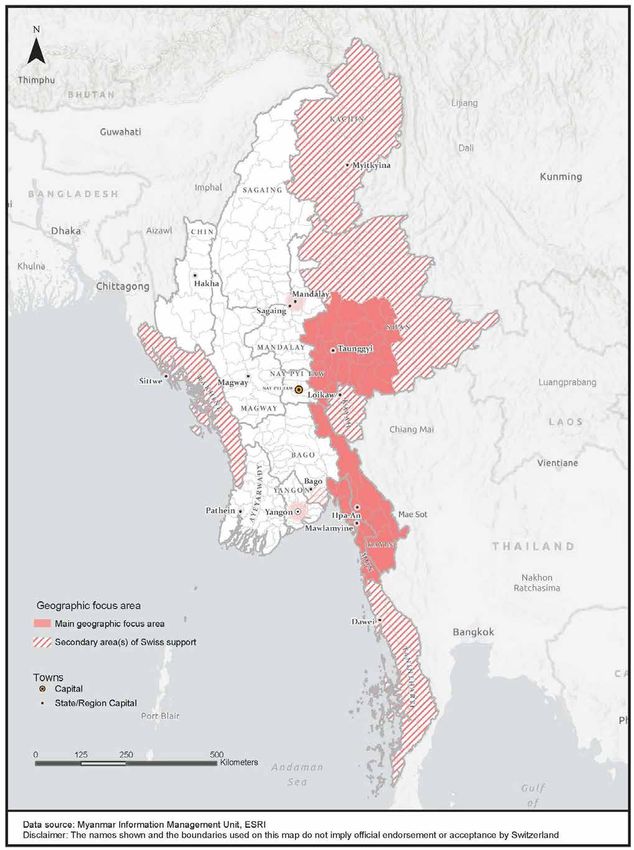
Foreword

       Since 2011, Myanmar has been undergoing a com-            armed ethnic groups. In this new Cooperation Pro-
       plex transition towards peace, democracy and sus-         gramme 2019–2023, it will continue to combine the
       tainable development in order to achieve the goals        tools of diplomacy, human security and peace pro-
       of the 2030 Agenda. Its geostrategic location means       motion with development cooperation and human-
       that it has to deal with fundamental challenges such      itarian aid in order to enhance our impact. As the
       as the rising influence of powerful neighbours and        programme aims at systemic change, close coordina-
       the management of its natural resources. The crisis in    tion with national and sub-national authorities will
       Rakhine State has added another layer of complexity.      be of crucial importance. Switzerland will also seek
                                                                 partners in the private sector, in civil society and in
       Switzerland adopts a long-term perspective on Myan-       multilateral organisations based on the added value
       mar’s transition and continues to support the coun-       they each bring to our activities.
       try in becoming a peaceful, democratic nation and a
       prosperous member of the Association of Southeast         This document begins with an overview of the coun-
       Asian Nations (ASEAN). Under the 2013–2018 Swiss          try’s political, economic and social context. It then
       Cooperation Strategy, the focus was on emergency          presents the rationale of the Swiss engagement
       relief, improvement of social services, skills develop-   in Myanmar, using the achievements and lessons
       ment and livelihood opportunities for disadvantaged       learned from the previous strategic cycle to inform
       populations, and on support for the peace process         the current period. It then goes on to detail the stra-
       and the democratic transition. Through this support,      tegic goals and implementation modalities. With this
       Switzerland has strived to be an independent and re-      new programme, we are confident that Switzerland
       liable, but also a flexible and innovative partner.       is well placed to make a contribution to the improve-
                                                                 ment of the lives of the people of Myanmar and their
       Switzerland plans to pursue its on-going activities       institutions.
       and extend them to Shan State, also home to several

       Federal Department of                                     Swiss Agency for Developmentr
       Foreign Affairs FDFA                                      and Cooperation SDC FDFA

       Pascale Baeriswyl                                         Manuel Sager
       State Secretary                                           Director General

                                                                                                                      5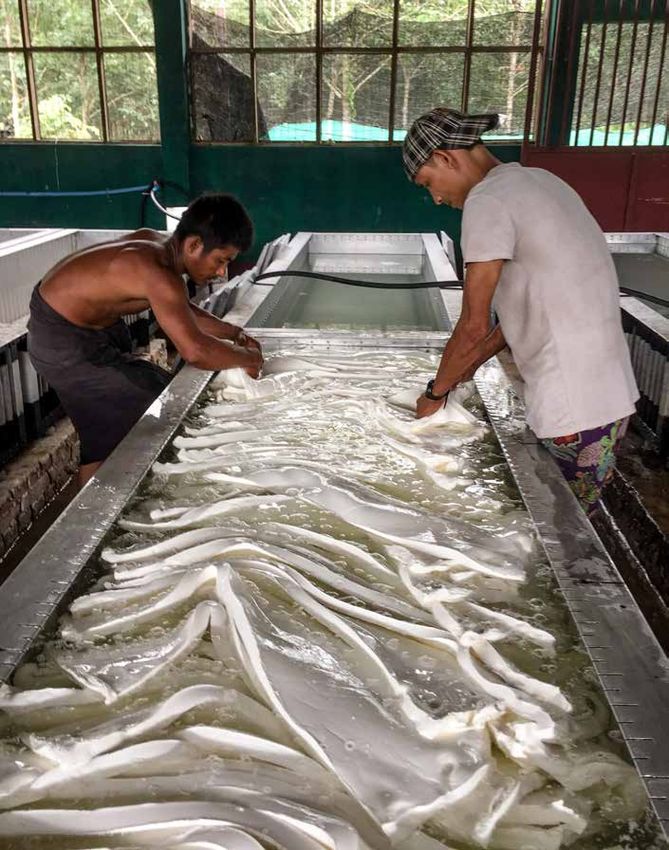
Executive summary

        At the juncture of East, South and Southeast Asia,       that reportedly resulted in the death of 10,000 peo-
        Myanmar is home to a culturally and ecologically di-     ple and caused more than 700,000 to flee to Bang-
        verse country with rich traditions. In a largely rural   ladesh. Denouncing the lack of accountability, sev-
        but rapidly changing economy, around 54m peo-            eral Western countries imposed targeted sanctions,
        ple of different ethnic and religious groups strive to   private investments slowed, and the country came
        overcome a legacy of armed conflict, military rule       under increasing international criticism.
        and self-imposed isolation. In spite of substantial
        progress during the past decade, about 14% of the        Under the integrated Swiss Cooperation Strat-
        population is undernourished, 29% of children are        egy Myanmar 2013-2017, extended through 2018,
        stunted and the maternal mortality rate is 282 deaths    Switzerland supported initiatives in vocational skills
        per 100,000 births, the second-highest in the region.    development, agriculture and food security, health,
                                                                 social services and local governance as well as
        The Government of Myanmar is managing a chal-            peace promotion, democratisation and protection,
        lenging transition towards democracy, a peaceful         with a total expenditure of CHF 179m over 6 years.
        and pluralistic society as well as an open and inclu-    Achievements included 16.6m disadvantaged people
        sive economy. Through the Myanmar Sustainable            reached through multi-donor funds for better health
        Development Plan (MSDP) 2018-2030, the country           and livelihoods, and systems strengthening in vo-
        is committed to achieving the Sustainable Develop-       cational skills training, health and land governance.
        ment Goals (SDGs).                                       Working at national level and on the ground in the
                                                                 southeast of the country (conflict-affected Kayin and
        In 2017, attacks on 30 police posts in Northern Ra-      Mon States) as well as in support of the peace pro-
        khine by the Arakan Rohingya Salvation Army (ARSA)       cess, Switzerland has earned a reputation as reliable
        provoked a violent response by the security forces       partner.

                                         Young woman looking from a traditional house’s window, © John Rae / LIFT-UNOPS

6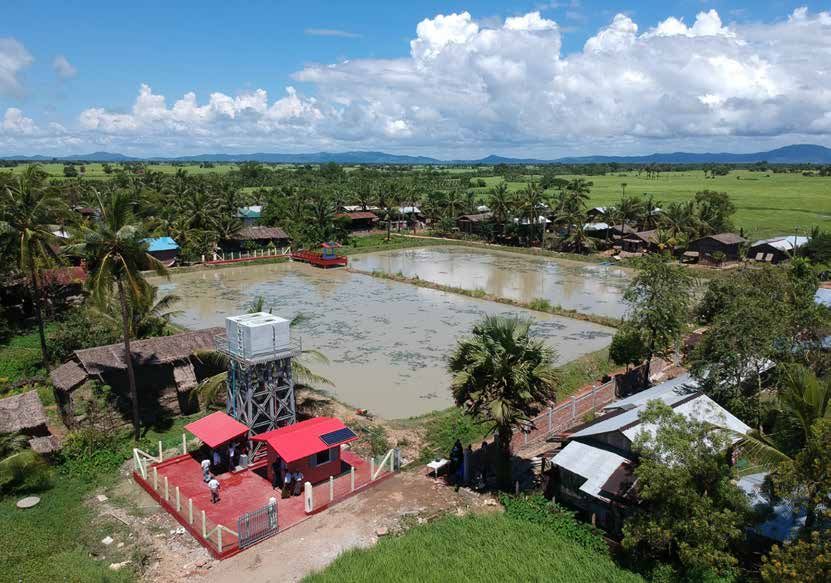
Youth Circle members documenting the 3rd Union Peace Conference, © Youth Circle Myanmar

Under the Swiss Cooperation Programme in Myan-             At the national level, Swiss support targets systemic
mar 2019-2023, Switzerland contributes to a peace-         change in sectors such as health, land governance,
ful, inclusive, democratic and prosperous society by       decentralisation and skills development. Switzerland
promoting sustainable development, conflict trans-         also engages with regional actors such as ASEAN.
formation, reconciliation and the participation of all     A mid-term review of the Swiss Cooperation Pro-
people in statebuilding. The programme prioritises         gramme is planned for 2020.
three domains of intervention: 1. Peace, Statebuild-
ing and Protection; 2. Skills and Market Development;
and 3. Health. Governance, gender as well as disaster
risk reduction/climate change adaptation are cross-
cutting themes. The overall budget is CHF180m,
distributed roughly as follows: Peace, Statebuilding
and Protection 53%; Skills and Market Development
30%; Health 15%; and 2% for other interventions.

Switzerland combines the tools of diplomacy, hu-
man security and peace promotion, development
cooperation and humanitarian aid with the aim to
enhance the impacts of its actions. It builds on the re-
sults achieved in southeast Myanmar, while gradually
expanding to southern Shan State, an area that pre-
sents similar challenges and opportunities for peace
and development. In Rakhine State, Switzerland pro-
motes sustainable solutions to address root causes
of poverty and conflict while providing humanitarian
assistance to people in need.

                                                                                                              7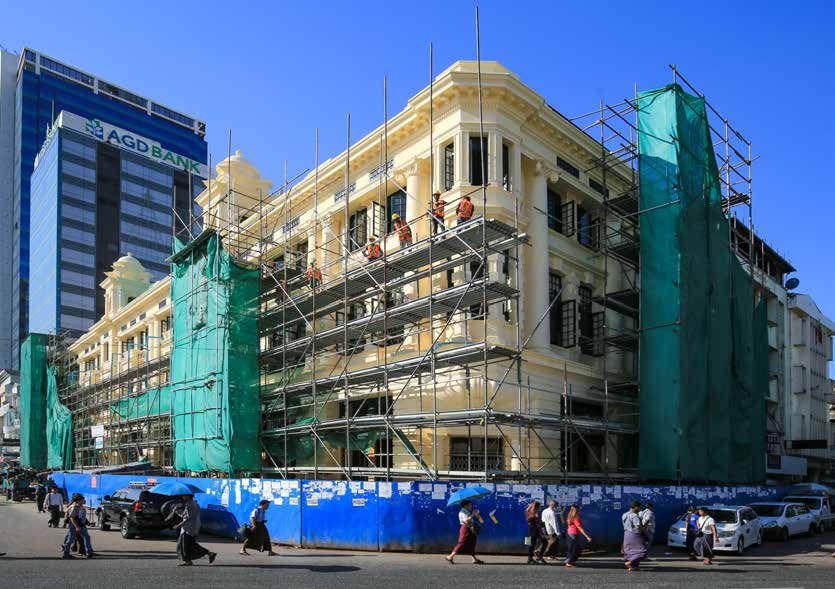
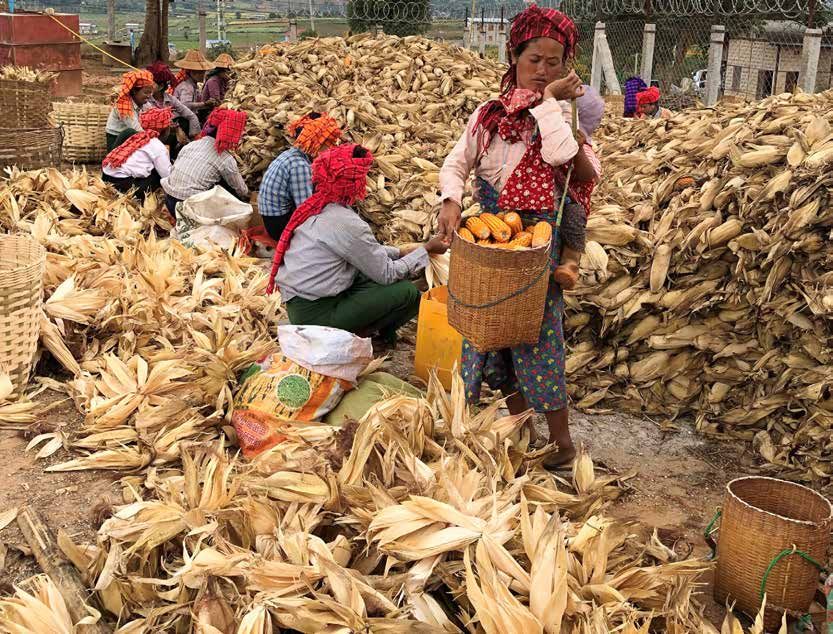
Women dehulling maize in Shan state, © Markus Buerli / Embassy of Switzerland in Myanmar

1. Context analysis

         With an ethnically diverse and largely rural popula-      Transition to democracy
         tion of 53.4m (2017 estimate), Myanmar aims to
         overcome a long legacy of armed conflict, military        Following the first free elections in decades in 2015,
         rule as well as political and economic isolation. In      the National League for Democracy (NLD) under the
         spite of rapid and substantial progress during the        leadership of Aung Sang Suu Kyi gained the majority
         past decade, ongoing conflict, poverty, low skills,       rule. A full transition to democracy, however, is con-
         limited institutional capacities and social services as   strained by the legal and political power of the My-
         well as fragmentation within society are among the        anmar armed forces (Tatmadaw) to veto any reform
         challenges facing the civilian-led government. Vul-       of the 2008 constitution by holding 25% of seats
         nerable populations in conflict-affected areas suffer     in parliament as well as three ministries (Home Af-
         disproportionally, especially ethnic minorities which     fairs, Border Affairs and Defence). The government is
         constitute up to one-third of the population. The         proceeding to strengthen its capacity to set strategic
         Rakhine crisis has added an additional layer of com-      directions, ensure rule of law and the respect of hu-
         plexity to the triple transition to peace, democracy      man rights, and enact legislative reforms and policies.
         and inclusive economic development. A member of           While trying to curb hate speeches and intolerant dis-
         the Association of Southeast Asian Nations (ASEAN),       courses, it is struggling to create an enabling environ-
         Myanmar is strategically situated between India and       ment for civil society, favourable to free speech and
         China, with the latter exerting an assertive policy       open critique.. National elections planned for end-
         towards Myanmar in the framework of its Belt and          2020 could result in a more diverse representation of
         Road Initiative.                                          ethnic parties; the Tatmadaw is expected to continue

8
playing a significant role both through its constitu-       in 2018, making Myanmar a lower middle-income
tional mandate and its proxy parties, in particular the     country, while poverty decreased from 48% to 32%
Union Solidarity and Development Party (USDP).              between 2005 and 2015. Yet, economic develop-
                                                            ment suffers from poor basic infrastructure such as
Peace process                                               roads and electricity and shortage of skills due to
                                                            decades of underinvestment in education. Employ-
The ongoing peace process aims to find a durable            ment opportunities are insufficient to absorb the
resolution to decades of armed conflict, in which           number of young people seeking work. The financial
more than 20 Ethnic Armed Organisations (EAO) have          system is weak and investor confidence low. Though
been fighting at times the central government and/          agriculture contributes nearly 30% of GDP and 56%
or each other. While parts of the territory affected        of employment, agricultural productivity remains
by conflict are under full control of EAOs, most areas      low as a result of insecure land tenure, poor rural
are subject to mixed systems of administration where        infrastructure, and limited access to quality inputs,
EAOs compete with the government for resources,             technologies and markets. A major factor fuelling
taxation and service provision. Living standards are        conflict and hindering inclusive growth is the illicit
on average 23% lower than in the rest of the coun-          economy, cronyism and corruption, linked to the
try and twice as many people have never attended            continued existence of vested interests, high levels of
school. The 2015 Nationwide Ceasefire Agreement             drug production and trafficking as well as to the un-
(NCA) signed by 10 EAOs and the government, and             regulated extraction of resources such as teak, gems
endorsed by the parliament of Myanmar, has reduced          and minerals.
active conflict. However, the implementation of the
ceasefire is not yet effective and political dialogue has   Provision of social services is being accelerated, in-
only progressed slowly. As a result, confidence in the      cluding through the 2016 National Education Strate-
peace process has decreased among key actors. The           gic Plan and the National Health Plan 2017-21. 15.8m
21st Century Panglong Union Peace Conference has            people still live below the poverty line, 87% of them
reached consensus on a number of principles, but a          in rural areas; 14% of the population is undernour-
lasting settlement has remained elusive due to disa-        ished and 29% of children under five are stunted.
greement on key elements such as the future federal         Myanmar still ranks only 148th out of 189 countries
structure and security sector governance.                   in the United Nations Human Development Index
                                                            (2017). Despite progress, wide geographic dispari-
Economic growth and development                             ties characterise access to social services. Drug abuse
                                                            is widespread, especially in conflict-affected areas.
After decades of economic stagnation, GDP grew              Union-wide, Myanmar has achieved near gender
from approximately USD 2bn in 2007 to USD 7bn               parity in primary education enrolment, while more

                     Restoration of a historic building in Yangon, © Nay Myo Zaw / Embassy of Switzerland in Myanmar

                                                                                                                  9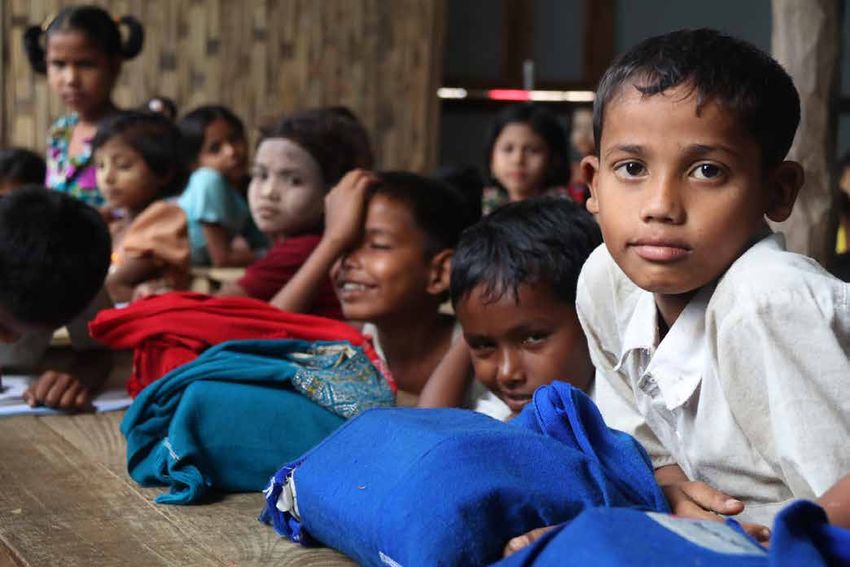
Emergency response for flood victims organised by SDC/HA in Mon state, © Aung Tun Naing, Embassy of Switzerland

     men complete secondary level education. As for the          Crisis in Rakhine
     labour force, 51% of women participate compared
     to 85% of men. Myanmar’s gender gap in legislators,         Attacks on 30 police stations by the Arakan Rohingya
     senior officials and private sector managers remains        Salvation Army (ARSA) in August 2017 provoked a
     wide, ranking 88th in the Gender Gap Report 2018.           disproportionate reaction of the Myanmar security
                                                                 forces, which led to serious human rights violations
     Natural resources management and                            and the flight of over 700,000 persons, mostly Muslim
     disaster risk reduction                                     Rohingya, to Bangladesh. The report of a fact-finding
                                                                 mission mandated by the UN Human Rights Council
     Myanmar covers an area of approximately 680,000             in 2018 concluded that the violations could amount
     km2 with a diverse geography and climate. The coun-         to war crimes and crimes against humanity, including
     try’s natural resources are under threat from defor-        intent of genocide. The events, as well as the lack of
     estation, unsustainable agricultural practices, poorly      acknowledgement of their scope and consequences,
     regulated mining and hydro-power development,               resulted in international condemnation and the adop-
     illicit wildlife trade and extraction of oil and gas. My-   tion of targeted sanctions against high-ranking offic-
     anmar’s high level of biodiversity is rapidly declining.    ers by a number of Western countries. Demands for
     The capacity of the country to sustainably increase         accountability were supported by the recent creation
     its agricultural production while building resilience to    by the UN Human Rights Council of an independent
     climate change is threatened. Myanmar is one of the         impartial investigation mechanism and early proce-
     world’s most disaster-prone areas, exposed to multi-        dures of the International Criminal Court. A volun-
     ple impacts of climate change and extreme weather           tary return in safety and dignity of those who fled
     events, including floods, cyclones, earthquakes and         the country is unlikely, while the Rohingya remaining
     droughts. Vulnerability is very high and dispropor-         in Rakhine continue to face substantial restrictions,
     tionally affects the poor, in particular poor women.        especially on freedom of movement and access to
     The government is investing in national capacities for      health, education, basic services and livelihoods. The
     disaster risk reduction.                                    search for solutions, based on the implementation
                                                                 of the Rakhine Advisory Commission’s recommenda-
                                                                 tions, led by the late Kofi Annan, has been further
                                                                 complicated by the attacks of the Arakan Army (AA),
                                                                 which started in January 2019. Human rights viola-
                                                                 tions also remain widespread in other parts of Myan-
                                                                 mar, such as in Kachin or Shan States.

10
2. Swiss foreign policy objectives in Myanmar
Switzerland has supported Myanmar with humani- will require time, Swiss support to Myanmar’s transi-
tarian assistance since the mid-1990s, focusing on tion takes a long-term perspective.
relief for refugees and victims of civil war and natural
disasters. A humanitarian aid office was opened after Switzerland and international cooperation in Myan-
Cyclone Nargis in 2008; the Embassy of Switzerland mar: The Myanmar Sustainable Development Plan
in Myanmar was established in Yangon in 2012 dur- 2018-30 constitutes the main reference document
ing the transitional government of President Thein for international cooperation. Its successful imple-
Sein. The scope of political, economic, peace and mentation will depend on durable solutions to the
development cooperation was significantly increased Rakhine crisis and the outcome of the peace process.
under the first Swiss Cooperation Strategy Myanmar The NCA will continue to guide development coop-
2013-2017 (extended through 2018). eration in ceasefire areas. Switzerland coordinates
with others through the government-led Develop-
Long-term vision for Swiss-Myanmar cooperation: ment Assistance Coordination Unit and related sec-
In line with the Swiss Federal Council’s Dispatch on tor coordination groups, as well as among donors in
International Cooperation 2017-2020 and the 2030 the development, peace and humanitarian sectors.
Agenda for Sustainable Development, Swiss inter- Official Development Assistance (ODA) to Myanmar
national cooperation focuses on fragile and least- constituted almost 14% of the government’s expen-
developed countries. In spite of notable and varied ditures in 2017. The most significant bilateral donors
improvements, Myanmar remains a highly fragile in 2017 were Japan, the United Kingdom, the United
context. A peaceful, democratic and economically States, the European Union and Australia, with Swit-
strong Myanmar is key for the stability of the region zerland ranking 10th. Non-traditional donors such as
and promises potential for strengthened bilateral China, India and Thailand play an increasingly impor-
economic relations. Switzerland has become a Sec- tant role, mainly outside donor coordination mecha-
toral Dialogue Partner of ASEAN and the bilateral nisms. Since 2013, loans have been the main source
cooperation programmes with Myanmar, Cambodia of aid to Myanmar, fluctuating between 50 and 70%
and Laos are a major dimension of this partnership. of newly committed ODA, primarily sourced from
Myanmar is also at the centre of one of the main Japan, the World Bank and the Asian Development
economic corridors of the Chinese Belt and Road Bank (ADB). As of mid-2018 Myanmar’s total foreign
Initiative and is thus of strategic interest for the re- debt stood at over USD 9bn, of which almost 4bn
gion. With the understanding that progress towards were owed to China, with Japan as the next-highest
durable peace, democracy and inclusive economic lender (around 2bn).
growth - as well as solutions to the Rakhine crisis -
Myanmar participants in the Geneva course on Human Security, © GCSP/DCAF
113. Achievements and lessons learned during
2013–2018
social services and local governance (27%); and
peace, democratisation and protection (25%) as well
as 2% for culture and small projects.
Swiss development cooperation was relevant to
country needs and satisfactory in scope, especially
in light of Switzerland’s only recent presence in the
country and Myanmar’s complex context. Switzer-
land’s strengths were evident in its activities at the
local level, especially in conflict-affected areas, and
its ability to bring local experience to national policy
dialogue. Project implementation responded flexibly
to the rapidly changing situation while maintaining a
medium to long-term perspective.
DOMAIN 1
Employment and Vocational Skills
Development
Switzerland is recognised for its expertise in skills de-
velopment systems. Swiss interventions supported
systemic change for increased employment of dis-
advantaged groups from rural and peri-urban areas.
This was achieved by working with the private sec-
tor to identify market demand and opportunities for
skills development for women and men from disad-
vantaged backgrounds and conflict-affected areas.
Moreover, Switzerland has been an active member
of the technical and vocational education and train-
ing (TVET) sub-sector coordination group led by the
Ministry of Education. Key accomplishments include:
• Over 7,000 youth and adults (50% women) re-
ceived vocational training, out of which almost
70% found employment with an average income
increase of 350%.
• An apprenticeship pilot was launched, inspired by
the Swiss dual education model.
Latex sheets ready for the smoke house, © Markus Buerli / Embassy of Switzerland in Myanmar • Experience from the Swiss skills initiatives contrib-
uted to the elaboration of the National Education
Strategic Plan and the TVET law through active
Under the Swiss Cooperation Strategy Myanmar participation in sector coordination platforms.
2013-2017 (extended through 2018), Switzerland • Support to the National Skills Standards Author-
contributed to political, social and economic transi- ity contributed to a strengthened skills regulatory
tion in Myanmar and, in turn, to a peaceful, inclusive framework.
and equitable society. With a total programme ex-
penditure of CHF179m, Switzerland supported four
areas of intervention: vocational skills development
(15%); agriculture and food security (31%); health,
12Karen Department for Health and Welfare and Ministry of Health and Sports jointly providing immunization to children
in ethnic villages in Kayin state, © KDHW
DOMAIN 2 • With support of Swiss experts seconded to the
Agriculture and Food Security World Food Programme (WFP), cash transfer
schemes have been provided, which give benefi-
The programme portfolio contributed to increased ciaries greater choices than food aid while support-
food security, access to livelihoods and land, sustain- ing the local economy.
able agricultural productivity and income for small-
holder and landless farmers of all ethnicities. Key ac- DOMAIN 3
complishments include: Health, Social Services and Local
Governance
• The multi-donor “Livelihoods and Food Security
Fund” (LIFT) benefitted 9.4m people in rural areas. Swiss interventions increased the access of disad-
Of the 800,000 families with increased income, vantaged populations to basic social services and
more than 100,000 were headed by women; 89% contributed to more participatory governance. In
of the 2,1m served by LIFT-supported microfinance conflict-affected Kayin and Mon States, the interven-
institutions were women. tions built on relationships with both government de-
• Myanmar’s first National Land Use Policy was partments and EAOs to expand access to basic health
adopted with reference to land rights for women services and schools, especially in remote areas under
and recognition of customary tenure systems; a various types of administrative control. Key accom-
“National Land Use Council” was created to facili- plishments include:
tate its implementation.
• Led by the University of Bern, the One Map My- • The 3MDG multi-donor trust fund reached 7.2m
anmar project created an online open-access data people with maternal, newborn and child health
platform to improve policies and practices, for ex- services, accelerating progress towards universal
ample to review the impact of large oil plantations health coverage.
on populations. • Under the SDC-mandated Primary Health Care
• A value chain approach was introduced for the (PHC) project, around 250,000 births were attend-
rubber industry in Mon State, which resulted in ed by skilled health personnel; more than 78’000
increased income and efficiency of rubber produc- pregnant women benefitted from emergency re-
ers. ferrals, including from Ethnic Health Organisations
• A community and government joint management (EHOs), thus reducing maternal and child mortality.
approach was developed for coastal fisheries and • Increased collaboration between the Ministry of
biodiversity conservation in the endangered Gulf Health and Sports and EAOs in conflict-affected
of Mottama. areas, in turn increasing health coverage and trust
13building. • Stabilised living conditions for vulnerable people
• Through the PHC project and policy dialogue, sub- in conflict-affected areas and camps for internally
stantial contributions were made to the elaboration displaced persons (IDPs), and increased awareness
of the National Health Plan 2017-21, which was of mine risks and disasters.
consulted with and legitimises the role of EHOs.
• Over 160 schools and health centres were built Cross-cutting lessons learned
in the southeast and over 500 training sessions
conducted in disaster risk reduction (DRR); water, 1. Health and education services, also thanks to SDC
sanitation and hygiene (WASH); and infrastructure directly implemented infrastructure projects, are
management. effective for building trust within communities as
• Township planning in Mon state has become more well as among government and EAO service pro-
transparent, more inclusive and more accountable viders in government, non-government and mixed
thank to the Swiss-supported UNDP Township administration areas.
Democratic Local Governance Project. 2. In rural areas, people largely depend on self-em-
ployment, agriculture or migration remittances.
DOMAIN 4 Skills development is especially relevant for decent
Peace Promotion, Democratisation employment and in particular for women and oth-
and Protection er disadvantaged groups, such as early school leav-
ers and ethnic minorities.
The overall objective was for institutional reform pro- 3. An approach based on local interventions increases
cesses to lead to a more inclusive and democratic the relevance of Switzerland and generates knowl-
polity and to better protection of the basic rights of edge and evidence for influencing national pro-
especially conflict-affected people. Key accomplish- cesses and policies.
ments thanks to policy dialogue, technical expertise 4. In conflict-affected areas, local non-governmental
and financial support include: organisations (NGOs) are often better placed to
deliver services than international agencies due to
• Wide adherence to the Swiss-facilitated code of their understanding of the context and long-stand-
conduct for political parties during the 2015 elec- ing relations with local actors.
tions. 5. Multi-donor funds allow for a more coordinated
• Contributions to the negotiation of the Nation- approach with government, influencing policy-
wide Ceasefire Agreement (NCA) in 2015. making and providing practical evidence and inno-
• Exposure of various stakeholders (government, vative solutions. Serving on boards of these funds
EAOs, military, civil society) to diversity manage- has leveraged Swiss influence and increased out-
ment, democracy and federalism during study reach to conflict-affected areas.
tours to Switzerland. 6. Civil society plays a key role for social accountabil-
• Increased communal capacities to react adequately ity and human rights, but requires continued sup-
to violence and increasingly conflict-sensitive be- port to maintain and extend its space.
haviours to avoid exacerbating tensions. 7. Respecting priorities and consulting activities with
both government and EAOs in a transparent man-
ner is a key requirement for successful NCA imple-
mentation.
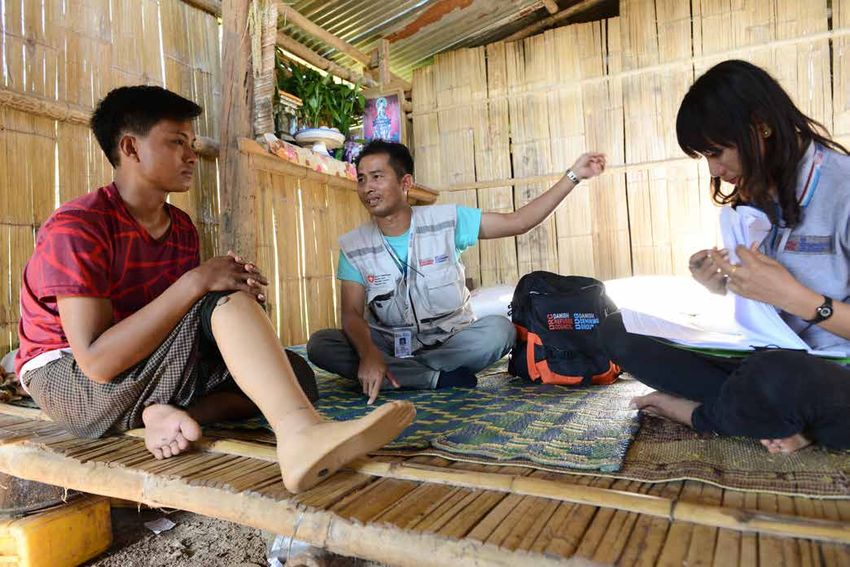
14Land Mine Victim assistance in Shan State, © DRC / DDG
154. Implications for the Cooperation
Programme 2019–2023
Switzerland will build on its successes, lessons learnt ability, Switzerland will engage with Myanmar and
and established relationships to support the “triple the international community to find solutions, rec-
transition” in Myanmar towards more inclusive de- ognising the need to adopt a long-term perspective.
velopment, more democratic institutions, and a more
peaceful society. Switzerland aims to continue the dialogue with all
the parties in the peace process, including the gov-
Support for the peace process and work on the root ernment, the Tatmadaw and EAOs. The importance
causes of conflict are at the centre of Switzerland’s of regional actors for Myanmar is taken into account
engagement in Myanmar. This implies support- in the search for opportunities of engagement, for
ing collaboration between government and EAOs example with ASEAN.
to build trust and enable sustainable development.
Focusing on the local level and improving participa-
tion and equitable access to services, land and re-
sources will help address political and economic
grievances and contribute to conflict transformation.
Switzerland will continue to promote social cohesion
through community-based organisations and moder-
ate religious leaders that encourage diversity.
Ongoing projects under the Agriculture and Food Se-
curity Domain will be reoriented. Those projects that
contribute to land and natural resources governance
will become, together with local governance inter-
ventions, part of a Peace, Statebuilding and Protec-
tion Domain. Value-chain projects will be clustered
with the vocational skills development portfolio to
form a comprehensive Skills and Market Develop-
ment Domain that aims to strengthen engagement
with the private sector. This strategic shift is in line
with the MSDP which prioritises skills development
as one of the pillars for a diversified and productive
economy.
In line with the 2030 Agenda and its core commit-
ment to leave no one behind, Switzerland will con-
tinue targeting vulnerable groups at risk of exclusion
and discrimination, including women, members of
ethnic minorities, youth, migrants, IDPs and return-
ees, and in general those affected by conflict. Ac-
cording to Vulnerability in Myanmar (2018)1, at least
44% of Myanmar’s population are considered to be
vulnerable.
The events in Rakhine have strained relations be-
tween Myanmar and Western democracies. While
supporting international efforts to ensure account-
1 MIMU (2018), Vulnerability in Myanmar: A Secondary Data Review
of Needs, Coverage and Gaps
16Children learning in a Temporary Learning Space in Maw Thi Nyar IDP Camp, Sittwe Rakhine State, © Nwe Nwe Win, NRC
175. Strategic orientation and priorities for
2019–2023
The overall goal of Swiss cooperation with Myanmar transformation, social cohesion and statebuilding.
is to contribute to a peaceful, inclusive, democratic Lead: SDC South Cooperation
and prosperous society by promoting sustainable 3. Protection: The protection of conflict, violence
development, conflict transformation, reconciliation and disaster-affected people, including IDPs and
and the participation of all people in statebuilding. returnees, is enhanced. They are better integrated
To this intent, the programme focuses on three do- in their communities, live in safety and security,
mains of intervention: and have equitable access to basic services and
livelihoods. Returns and relocations are carried
DOMAIN 1 out following international standards. Lead: SDC
Peace, Statebuilding and Protection Humanitarian Aid
Switzerland works with key institutions, state and These three outcomes are mutually reinforcing: Suc-
non-state actors and decision-makers to promote cess in supporting peace and democratisation is
peace, democratic principles and decentralisation. It measured in terms of Swiss contributions to formal
empowers people and communities to participate in and informal peace negotiations, improved public
decisions that affect them directly, including regard- confidence in democratic electoral processes and
ing their access to land, resources and services. Im- more effective policies in the area of human rights.
proved protection, resilience and governance as well This is complemented by Swiss interventions aimed
as greater respect for human rights will contribute to to strengthen the capacity of civil society and de-
social cohesion, conflict transformation and sustain- veloping more efficient decentralised institutions.
able peace. Vulnerable and marginalised communities will ben-
efit from better implemented conflict-sensitive laws
Domain objective and policies on land and natural resources, a more
responsible private sector, as well as enhanced pro-
The people of Myanmar benefit from inclusive peace tection from violence and natural disasters.
agreements and from more accountable, decentral-
ised and democratic institutions that promote public DOMAIN 2
participation. Vulnerable and conflict-affected per- Skills and Market Development
sons are better protected from violence and disas-
ters, experience better respect of their human rights, In areas with private sector engagement, Switzerland
and gain improved access to public services, land and supports market-oriented vocational skills develop-
natural resources. ment. In areas where employment opportunities are
limited, including remote and conflict-affected areas,
Swiss portfolio outcomes Swiss initiatives aim to increase capacities for gain-
ful employment and market-oriented production
1. Peace and Democratisation: Parties to the peace through improved access to services and markets, in
negotiations formulate their aspirations and par- line with the MSDP and the NCA. Switzerland aims
ticipate in processes that lead toward a sustain- to improve income and livelihood opportunities for
able peace agreement, supported by efforts to vulnerable women and men through TVET models
strengthen reconciliation, democratisation and hu- inspired by the Swiss dual education system involving
man rights, and inform a federal arrangement that both public and private actors.
reflects the diversity of the country. Lead: Human
Security Division Domain objective
2. Governance: More accountable, efficient and de-
centralised institutions; a stronger participation of Women and men have increased socio-economic op-
civil society, vulnerable communities and women portunities through inclusive market and technical
in decision-making processes; and more equitable vocational training (TVET) systems that are responsive
access to public services and sustainably managed to market demands.
land and natural resources contribute to conflict
18Drone flying training for land use mapping, © CDE / OneMap Myanmar
Swiss portfolio outcomes ulation. Collaboration between ethnic and govern-
ment health professionals to provide quality health
1. Women and men, especially from disadvantaged services strengthens social cohesion and mitigate
backgrounds and conflict-affected areas, have causes of conflict.
increased employment and self-employment op-
portunities through competitive skills and inclusive Domain objective
market access.
2. Key Myanmar public institutions and private sector Vulnerable people in conflict-affected and remote ar-
actors that define the supply and demand of TVET eas have improved access to quality essential health
and market systems are more responsive to local, care and healthy diets delivered through strength-
national and regional markets for labour, services ened institutions.
and commodities.
Swiss portfolio outcomes
Outcome 1 leads to increased incomes from employ-
ment and self-employment and improved access to 1. Vulnerable people, especially women and children,
TVET and skills development, especially for vulner- have improved and non-discriminatory access to
able segments of the population. Outcome 2 focuses adequate and healthy diets as well as to essential
on institutions and systems, engaging and strength- and affordable quality health services and health
ening national and local government institutions as literacy and know how to stay healthy.
well as furthering a responsible private sector, includ- 2. Capacities of relevant institutions are enhanced
ing actors from areas not under direct government to contribute to improved health sector planning,
control. SECO complementary initiatives, such as the management, coordination and service delivery in
UN Trade Cluster project, the support for intellectual a conflict-sensitive way.
property rights as well as the support for entrepre-
neurship and labour standards are aligned to the do- The first outcome targets vulnerable populations
main objective. and measures progress in terms of health-seeking
behaviour (e.g., number of births attended by
DOMAIN 3 skilled birth attendants) and access to health ser-
Health vices, based on improved emergency obstetric re-
ferrals from EHOs to government health facilities as
By bringing together state and EHOs, this domain well as nutrition support. Equitable access to quality
builds trust and supports health systems strengthen- services also serves to strengthen social cohesion.
ing, the delivery of quality affordable health services Outcome 2 strengthens institutions, resulting in
and universal health coverage as per the National improved coordination across conflict boundaries,
Health Plan. Better access to health services, includ- inclusive local decision-making, better quality basic
ing nutrition support, and to health literacy messages health service provision and increased quality of ser-
contributes to an improved health status of the pop- vices measured.
19Cook apprentices learning how to braise meat, © Saw Vincent Phone Mya / Swisscontact
Transversal themes Geographic focus
Along the lines of SDG 5 and the National Strate- Support for national-level institutions continues to
gic Plan for the Advancement of Women 2013-22, target systemic reforms in key sectors such as health,
gender equality is mainstreamed through gender- TVET, land governance, decentralisation, DRR and
sensitive outcomes and sex disaggregated indicators. mine action. The main geographical focus remains in
The focus on good governance principles (partici- southeast Myanmar (Kayin and Mon states as well as
pation, accountability, transparency, non-discrimi- part of Tanintharyi region) where Switzerland works
nation and human rights) and on beneficiaries, insti- across mixed administration areas. Switzerland is
tutions and political processes allows for systematic progressively extending its combined humanitarian,
integration of governance in line with Myanmar’s in- development and peace interventions to the south-
ternational commitments and the MSDP. The trans- ern part of neighbouring Shan State which has great
versal theme of DRR and climate change adapta- potential for economic development and is key for
tion recognises the high risk of natural disasters and the peace process, but is constrained by a complex
still weak prevention and response capacities. Also mosaic of political interests and active as well as la-
benefiting from the support of the SDC DRR hub in tent armed conflicts. In Rakhine State, Switzerland
Bangkok, projects are planned in a way that respects contributes to durable solutions for IDPs and return-
and promotes climate change adaptation and envi- ees from Bangladesh, while cooperating with local
ronmental sustainability. The Swiss embassy supports partners to support interventions for improving the
cultural initiatives that foster the expression of living conditions of all populations regardless of
Myanmar’s diversity. their ethnic or religious background. Swiss support
intends to promote inter-community cohesion and
strengthen resilience to disasters with a specific focus
on the role of women. In addition to regular contri-
butions to humanitarian actors, long-term solutions
are sought through multi-donor funds, such as LIFT
or ACCESS (Access to Health Fund).
206. Programme management and
implementation
Principles of conflict sensitivity and Responsive aid modalities
flexibility
Switzerland continues applying aid modalities that
“Do no harm”, “conflict sensitivity”, “human rights- respond to needs on the ground, partner capacities
based approach” and “protection” continue to be and geographic access, taking into account the po-
core principles of project design, implementation and litical, operational and fiduciary risks of working in
monitoring, partner selection and resource allocation. fragile contexts. These include:
Applying conflict-sensitive programme management
(CSPM) and protection principles is the responsibil- • Competitive mandates and contributions to NGOs,
ity of both embassy staff and implementing partners. CSOs, UN and other international agencies;
Conflict sensitivity and political economy analyses are • Contributions to multi-donor funds that are con-
especially important as Switzerland engages with a sistent with government priorities and increasingly
new set of partners in the complex context of south- work in conflict-affected areas - i.e., LIFT, ACCESS,
ern Shan State. JPF and MHF;
• Direct support to negotiating parties in the peace
The ability to maintain flexibility in the projects while processes;
engaging over the long run is one of Switzerland’s • Direct implementation in conflict-affected areas to
strengths in the dynamic context of Myanmar. The provide protection through physical presence and
Swiss programme portfolio may also be adjusted on build trust as well as humanitarian and develop-
the basis of context needs, for example along the ment space;
2020 national elections. • Deployment of Swiss experts to strategic partners;
Pond rainwater harvesting in Mon State, © Mark Haeussermann / Embassy of Switzerland in Myanmar
21and participates in the relevant sector coordination
groups. It is a member of the Peace Support Group
and observer to the Humanitarian Country Team. Bi-
annual meetings with Swiss NGOs ensure coherence
on context, approaches, implementation constraints
and policy dialogue.
At a regional level, the Swiss embassy continues
working with the Swiss Cooperation Offices in Lao
PDR and Cambodia to support the Swiss Coopera-
tion Strategy Mekong Region 2018-2021, especially
regarding regional migration, skills development,
land governance and bio-trade. An active exchange
with the Swiss embassy in Bangladesh helps to estab-
lish a joint political dialogue on durable solutions to
the Rakhine crisis. The Swiss representation in Jakarta
is the main regional interlocutor for ASEAN. To en-
sure consistency in strategy implementation as well
as synergies, the embassy supports relevant global
programmes with activities in Myanmar such as SDC
Global Programmes (Agriculture and Food Security,
Climate Change and Environment, Water, Migration
and Health). The embassy actively participates in se-
Attendees at the Womens League conference, © Ei Ei Han / JPF lected SDC thematic networks.
Opportunities for strengthening engagement and
• Synergies with Swiss-supported multilateral institu- coherence will also be explored within the scope
tions as well as with SDC global and regional pro- of Swiss support to ASEAN, with UN agencies, the
grammes and SECO complementary initiatives; World Bank, ADB and the Asian Infrastructure Invest-
• Economic and diplomatic relations, including with ment Bank (AIIB), as well as in relation to China’s Belt
ASEAN and around the Belt and Road Initiative. and Road Initiative.
Switzerland continues supporting country systems Capacity development
strengthening, including at sub-national level, while
promoting synergies and collaboration between gov- Besides individual and organisational strengthening
ernment and EAO service provision systems under at the embassy, capacity development will also tar-
the NCA. Transparent and evidence-based policy dia- get partners by investing in the promotion of values
logue, both bilaterally with national decision-makers and best practices among different stakeholders for
and through multi-stakeholder platforms, supple- knowledge management in support of a more con-
ments Swiss financial contributions. Throughout the ducive institutional framework. Staff competences
Swiss portfolio, there is scope for strengthening part- within the embassy and among project partners will
nerships with private companies. be reinforced as regards gender, CSPM, risk man-
agement, communication for development, security,
Should the political situation deteriorate, adaptive protection and DRR.
measures include options such as increased support
for local NGOs, less direct implementation, increased Stable financial and human
support for multi-donor funds, international NGOs resources
and the UN as well as increased emphasis on policy
dialogue and advocacy. A total budget of around CHF 180m is proposed for
the five-year period, including CHF6.6m from SECO.
Acting in concert with other Planned allocations are 52% for Peace, Statebuilding
partners across the development- and Protection (SDC SC, SDC HA and HSD); 33% for
humanitarian-peace nexus Skills and Market Development (SDC SC and SECO);
14% for Health (SDC SC) and 1% for other interven-
Switzerland cooperates with international and Swiss tions (see budget allocations in Annex 4). Affirmative
actors while interacting with actors ranging from action will be explored to ensure diversity within the
government authorities at Union and state/region embassy, also in view of the programmatic expansion
level to CSOs and EAOs. The Swiss embassy is an to Shan State.
active member of the Cooperation Partners Group
227. Strategic steering
This cooperation programme is subject to regu- Swiss contributions towards these national priorities.
lar monitoring to ensure 1) strategic, effective and Management results focus on the efficiency and ef-
efficient programme steering; 2) results account- fectiveness of programme implementation by the
ing; and 3) continuous learning. In fragile contexts embassy such as compliance with development ef-
like Myanmar, in which alliances and attitudes may fectiveness principles, aid modalities, a consistent
change rapidly, frequent context monitoring is a nec- CSPM approach, cooperation with partners, alloca-
essary prerequisite for strategic risk assessment and tion of financial resources and the operationalisation
management. of transversal themes.
The Monitoring System for Development-Relevant The capacity building and empowerment entails con-
Changes relating to the laid out scenarios (Annex C, tinued learning and training of embassy staff and
MERV in German) is conducted three times a year by partners. Systematically conducted partner risk as-
programme staff, including identification of conse- sessments and regular steering committees provide
quences of change and possible responses. A major guidance on the capacity building needs of partners
shift in the Swiss programme is not expected unless and networks, while the Management by Objectives
the situation deteriorates dramatically. process is the instrument of organisational and indi-
vidual development for all embassy staff.
Domain-level results and related monitoring frame-
works guide Swiss interventions (Annex B). At the A mid-term review of this programme is planned for
level of Swiss portfolio outcomes they include se- early 2021 following the adoption of the new Federal
lected SDC Aggregated Reference Indicators (ARIs). Dispatch on International Cooperation 2021-24 and
The embassy also monitors progress towards country Myanmar’s national elections planned for 2020.
development outcomes and assesses and reports on
Levelling water supply system in Mon State, © Aung Htay Hlaing
23Recording for the peace-related TV show “Khan Sar Kyi”, Kayin State, © BBC Media Action 24
Annex A: Results framework synopsis

                                                     DOMAIN 1
                                                Peace, Statebuilding
                                                     and Protection
                                         The people of Myanmar benefit from
                                    inclusive peace agreements and from more
                                    accountable, decentralised and democratic
                                            institutions that promote public
                                         participation. Vulnerable and conflict-
                                     affected persons are better protected from
                                      violence and disasters, experience better
                                        respect of their human rights and gain
                                          improved access to public services,
                                              land and natural resources.

                                                                                  Dis imat
                                                                                   Cl
                                                                                     as e C
                                                                                        ter ha
                                     e
                                   nc

                                                                                           Ris nge
                                rna

                                                                                              k R Ad
                              ve

                                                                                                 ed ap
                            Go

                                                                                                   uc tat
                                                   OVERALL GOAL
                         od

                                                                                                     tio ion
                       Go

                                                                                                        na

                                             Swiss cooperation with Myanmar
                                           contributes to a peaceful, inclusive,
                                                                                                          nd

                                          democratic and prosperous society by
                                           promoting sustainable development,
                                         conflict transformation, reconciliation and
                                              the participation of all people in
                                                        statebuilding.

             DOMAIN 2                                                                               DOMAIN 3
    Skills and Market Development                                                                        Health
     Women and men have increased                                                        Vulnerable people in conflict-affected
  socio-economic opportunities through                                                 and remote areas have improved access
   inclusive markets and technical and                                                    to quality essential health care and
     vocational training systems that               Gender Equality                                   healthy diets.
       respond to markets demand.

                                                                                                                                  25
Annex B: Scenarios
1
1
Improving Situation Most likely Scenario
Worsening Situation
Progressive but sustained move
Improving towards peace, federalism
Situation Slow progress in Most
peacelikely
democratisation
Scenario but conflict elite
Authoritarian rule and
Worsening elite economy
Situation
Progressive butand more inclusive
sustained economy
move towards peace, federalism economy
Slow progress in peace persists but conflict elite
democratisation
Authoritarian rule and elite economy
and more inclusive economy economy persists
Elections 2020 confirm a democratic path but continue to Elections 2020. NLD loses seats to ethnic parties but Elections 2020 are not free or fair; and/or are
present challenges (maintaining of the influence of the maintains majority in Parliament and forms the overshadowed by violence. Multiplicity of parties is
Military). Increased multiplicity and diversity of political government. Limited progress on constitutional reform. blocked. Polarisation and stagnation in parliament.
parties, including ethnic voices. Corruption persists, especially at lower levels of government Military profits from this blockage and reinforces its
Progressive reduction of corruption, especially at lower Some positive legislative reforms in various sectors; but power.
levels of government. new legislation retrograde in some cases. Corruption prevention measures stagnate and corruption
Legal framework improves significantly with positive Some increase in capacity of parliamentarians, government increases.
legislative reforms in most areas. decision makers/ civil servants, judiciary. Parliamentary Legislative reforms in various sectors stagnate, are
Increase in the capacities of parliamentarians and processes are not transparent and difficult for general blocked, or favour an authoritarian regime and linked
government decision makers/civil servants, judiciary public to influence. private sector.
(including their accountability, receptivity to citizens, and Incremental
Incrementalprogress the General
progress ofof the General Administration Capacity, transparency and accountability of civil servants
transparent processes). Department (GAD) at regional and township levels, are not increasing.
More efficient links and processes between national, accompanied by progressive steps towards increased The General Administration Department (GAD) is too
regional/states and township governments with a more decentralisation and a some improvement in the public slow in reforming and maintain a negative perception
Political Conditions & General Framework
responsive and efficient General Administration perception. with the public. Decentralisation efforts are patchy and
Department (GAD) at state and regional levels. Relations with neighbours are challenging but channels of ineffective.
Decentralisation increases (responsibilities and capacities) dialogue remain open i.e. China, Thailand, Bangladesh. Myanmar isolates itself again or turns increasingly away
and spaces for dialogue with Ethnic groups are created at Western countries impose more targeted bilateral sanctions from reformist agenda).
state and regional as well as township levels. on Myanmar. EU and other western countries impose general bilateral
Increasing integration of Myanmar in international community Regional, ethnic and religious identity issues remain sanctions on Myanmar.
and progress through ASEAN in democratization, sensitive, especially with regard to Rakhine. Regional, ethnic and religious identity issues lead to an
connectivity and economic integration. The nationalist Buddhist movement gains political power. increase of violent conflicts and internally displaced
Sanctions (EU, US) are lifted. Kofi Annan Commission recommendations are people and refugees.
Progressive although slow improvement in relation to implemented in a selective manner but no access to Nationalist Buddhist movement radicalizes big parts of
regional, ethnic and religious identity issues (although international Human Rights inquiry instruments is granted. the society resulting in a rise of instability.
unlikely with regard to Rohingyas and Muslim community). No Rohingya refugees return to Rakhine under the conditions The Kofi Annan Commission recommendations are de
Nationalist Buddhist movement loses momentum and stated in the Kofi Annan report. The remaining Rohingya in facto ignored and access to Rakhine for UN or
moderate, inclusive and tolerant voices progressively gain Rakhine continue living with strong restrictions on the international monitoring and humanitarian agencies is
power. freedom of movement and limited access to basic services. systematically controlled and/or refused.
Kofi Annan Commission recommendations are Press freedom and freedom of speech becomes more More of the remaining Rohingya population in Rakhine
progressively implemented. A limited number of Rohingya restricted. The Telecommunications Act and other leave the country due to the lack of livelihood
refugees return to Rakhine under the conditions stated in outdated or oppressive laws are increasingly used for the opportunities and worsening security situation or live
the Kofi Annan report. detention of media workers and as a political tool. under increasingly segregation.
Reform of Telecommunications Act (criminal law provision Number of political prisoners same as or more than under Heavy restrictions on the freedom of press and speech.
regulating the use of telecommunication networks) and previous government. Hate speech prevalent and unchecked, even outside
other oppressive laws brings positive changes in matters Hate speech continue to widespread, especially through use social media.
of freedom of expression and civil and political rights. of social media i.e. Facebook. Increase in number of political prisoners.
Decrease in number of political prisoners.
Hate speech gets increasingly controlled in a transparent
way.
The peace process moves slowly forward. More EAOs join, The peace process stagnates or makes only little progress The peace process fails and a lack of progress provokes
and all armies are respecting, a general National due to lack of trust between the parties hindering political stalemate and resurgence of violent clashes.
Ceasefire Agreement. The political dialogue brings consensus on strategic approaches or lack of an Foreign support is rejected.
confidence and concrete progresses regarding a agreement on a general roadmap. The Nationwide Ceasefire Agreement - NCA starts
Peace Process
constitutional reform towards a genuine inclusive No other group sign the Nationwide Ceasefire Agreement falling apart.
democracy. – NCA. Only sporadic armed conflict with involvement of No discussion on interim arrangements according to the
Interim arrangements according to the NCA are signatories. NCA.
increasingly agreed upon and lead to positive development Interim arrangements according to the NCA are discussed Armed conflict increasing, in both ceasefire and non-
changes. at different levels with limited progress. ceasefire/NCA and non-signatory areas.
(Northern) Shan State groups join the ceasefire and In Shan state the RCSS and PNLO remain signatories to the Shan State (including southern Shan) remains in a state of
promulgate an ethnically inclusive constitution and relevant NCA, but vulnerability of the population due to a general conflict and its people vulnerable to cross-border
institutions. absence of rule of law and service delivery remains high. exploitation.
Armed conflict diminishes, with occasional flare-ups in Armed conflict due to ethnic differences increases and Armed conflict reaches new areas of the country, even in
Rakhine and/or Shan and Kachin. Muslim or Buddhist violent extremism. Episodes of violent area now open for tourism. Bombs, extortion and gross
Positive Security Sector Reforms (SSR) at both Tatmadaw conflicts in Shan, Kachin and Rakhine and other human rights violation continue in Shan, Kachin and
Security
and EAO levels. regions/states continue and become more intense. Rakhine and other regions/states with occasional
Quantitative Indicator (baseline): Number of fatalities 2018 or clamp-down by the military.
skirmishes or conflict affected areas. No Security Sector Reforms take place
Tatmadaw shows limited openness towards Security Sector
Reform.
26You can also read


