Textiles and Apparel AUGUST 2012 - IBEF
←
→
Page content transcription
If your browser does not render page correctly, please read the page content below
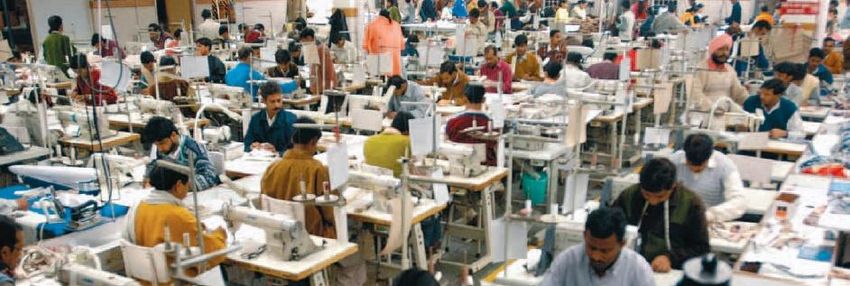
AUGUST
Textiles and Apparel                                 2012

For updated information, please visit www.ibef.org            1
AUGUST
Textiles and Apparel 2012
Contents
Advantage India
Market overview and trends
Growth drivers
Success stories: Raymond, Alok Industries
Opportunities
Useful information
For updated information, please visit www.ibef.org
2
AUGUST
Textiles and Apparel                                                         2012

Advantage India

                                                                                                                                             2020E
                                  Robust demand                                        Increasing investments
                         •   Increased penetration of                              •   Over USD35 billion of                                Market
                             organised retail, favourable                              investments have been made                           Value:
                             demographics ,and rising                                  in the textile and clothing                          USD220
                             income levels to drive textile                            sector during the last four                           billion
                             demand                                                    years, with the cotton textile
                                                                                       segment accounting for
                         •   Growth in building and                                    around 75 per cent
                             construction will continue to
                             drive demand for non-
                             clothing textiles                 Advantage
                                                                 India
                             Competitive advantage                                      Policy support
                     •       Abundant availability of raw                    •   100 per cent FDI (automatic route) is
                             materials such as cotton, wool, silk                allowed in the Indian textile sector
                             and jute
                                                                             •   SITP was approved in July 2005 to
                     •       India enjoys a comparative                          facilitate setting up of textiles parks
                             advantage in terms of skilled                       with world class infrastructure
    2011                     manpower and in cost of production
                             relative to major textile producers             •   Free trade with ASEAN countries
  Market                                                                     •   will boost exports
   Value:
USD99 billion                                                                                                Source: Technopak; Aranca Research
                                                                  Notes: SITP - Scheme for Integrated Textile Park; FDI- Foreign Direct Investment,
                                                              2020 E – Estimated figure for 2020; ASEAN – Association of Southeast Asian Nations

For updated information, please visit www.ibef.org                                                                                 ADVANTAGE INDIA     3
AUGUST
Textiles and Apparel 2012
Contents
Advantage India
Market overview and trends
Growth drivers
Success stories: Raymond, Alok Industries
Opportunities
Useful information
For updated information, please visit www.ibef.org
4AUGUST
Textiles and Apparel 2012
Evolution of the Indian textile sector
2000 onwards
1951-2000
• NTC started selling
1901–50 few mills to private
• In 1999, TUFS was set businesses in 2005
up to provide easy • SITP was
access to capital for implemented to
technological facilitate setting up
• Number of mills upgradation of textile units with
1854-1900 increased from 178 • TMC was launched appropriate support
in 1901 to 417 in 1945 to address issues infrastructure
• Out of 423 textile related to low • Post MFA cotton
mills of the productivity and prices are aligned
• The first cotton textile undivided India, with global prices
infrastructure
mill of Mumbai was India received 409 • Technical textile
• In 2000, NTP was
established in 1854 after partition and industry will be a
announced for the
• The first cotton mill of the remaining 14 new growth avenue
overall development
Ahmedabad was went to Pakistan of the textile and
found in 1861; it
apparel industry
emerged as a rival
Notes: NTP – National Textile Policy; NTC - National Textiles Corporation;
centre to Mumbai
TUFS - Technology Upgradation Fund Scheme; TMC - Technology Mission on Cotton
For updated information, please visit www.ibef.org MARKET OVERVIEW AND TRENDS 5AUGUST
Textiles and Apparel 2012
Segments in the textile and apparel
sector
→ The textile and apparel industry can be broadly divided into two segments:
→ Yarn and fibre (including natural and man-made fibre as well as yarn)
→ Processed fabrics (including woolen textiles, silk textiles, jute textiles, cotton textiles and technical textiles),
readymade garments (RMGs) and apparel
Key segments of the textile industry
Garment/
Raw Weaving/ Apparel
Process Ginning Spinning Processing
material Knitting production
Cotton, Final
Processed
Output jute, silk, Fibre* Yarn Fabric garment/
fabric
wool Apparel
Yarn and fibre segment • Woollen textiles
• Silk textiles
• Jute textiles
• Technical textiles
Source: Aranca Research
Note - * Including cotton, jute, silk, wool and manmade fibres
For updated information, please visit www.ibef.org MARKET OVERVIEW AND TRENDS 6AUGUST
Textiles and Apparel 2012
Key Facts
→ The fundamental strength of the textile industry in India is its strong production base of wide range of fibre /
yarns from natural fibres like cotton, jute, silk and wool to synthetic /man-made fibres like polyester, viscose,
nylon and acrylic
→ India is the world’s second largest producer of textiles and garments
→ Indian textile industry accounts for about 24 per cent of the world’s spindle capacity and eight per cent of
global rotor capacity
→ India has the highest loom capacity (including hand looms) with 63 per cent of the world’s market share
→ India accounts for about 14 per cent of the world’s production of textile fibres and yarns (largest producer of
jute, second largest producer of silk and cotton; and third largest in cellulosic fibre)
Source: Textile Ministry, Aranca Research
For updated information, please visit www.ibef.org MARKET OVERVIEW AND TRENDS 7AUGUST
Textiles and Apparel 2012
The sector has been posting healthy
growth over the years
→ Textile plays major role in the Indian economy India's textile market size (USD billion)
250
→ It accounts for 27 per cent of foreign exchange 220.0
inflows
200
CAGR: 19.3%
→ It has a share of 14 per cent in industrial
150
production
99.7
100
→ It is the largest source of employment generation 70.0 78.0
in the country
50
→ The size of the Indian textile market in 2011 was
USD99.7 billion; the market had recorded a CAGR of 0
19.3 per cent over 2009-11 2009 2010 2011 2020E
Source: Technopak, Ministry of Textiles, Aranca Research
Note: CAGR – Compound Annual Growth Rate, E- Estimated
For updated information, please visit www.ibef.org MARKET OVERVIEW AND TRENDS 8AUGUST
Textiles and Apparel 2012
Market share: Apparel has the larger
share
→ Apparel constitute a large share in the overall sector Shares in India’s textile and apparel sector in 2009
→ In 2009, while Apparel had a share of 62% of
the overall market, textiles contributed the
remaining 38 per cent
38% Apparel
→ To improve technical skills in Apparel industry
government established 75 Apparel training
and design centre across India Textile
62%
→ National Institute of Fashion Technologies
played pioneering role in growth of Apparel
industry and exports
→ To promote Apparel exports 12 locations has Source: Alok Industries Limited, Aranca Research
been approved by the government to set up Note : NIFT – National Institute of Fashion technology
Apparel parks for exports
For updated information, please visit www.ibef.org MARKET OVERVIEW AND TRENDS 9AUGUST
Textiles and Apparel 2012
Cotton production over the past few
years has been volatile
→ Production of raw cotton grew to 35.6 million bales in Production of raw cotton (million bales)
FY12, up from about 28.0 million bales in FY07
37.0
35.6
→ During this period, the CAGR in production was 4.9
35.0
per cent; annual growth in FY12 was even higher at CAGR: 4.9 %
9.5 per cent 33.0
32.5
30.7 30.5
→ Of the total amount of raw cotton produced in the 31.0
country, 25 million bales were used up in domestic
29.0
consumption while 8.5 million bales were exported 29.0
28.0
27.0
Note – CAGR - Compounded Annual Growth Rate
one Bale – 217.7 kilo gram 25.0
FY07 FY08 FY09 FY10 FY11 FY12
Source: Ministry of Textiles, Aranca Research
• Raw cotton and man-made fibres are the major segments in this category
• Raw wool and raw silk are the other components – their production levels are much lower
For updated information, please visit www.ibef.org MARKET OVERVIEW AND TRENDS 10AUGUST
Textiles and Apparel 2012
Production of manmade fibre has also
been rising
→ Production of man-made fibre has also been on an Production of man-made fibre (million tonnes )
upward trend
1.300
1.268 1.285
→ Production stood at 1.285 million tonnes in FY11 1.244
with the figure reinforcing a recovery from 1.250
2009 levels
1.200
1.150 1.139
1.100
1.066
1.050
1.000
FY07 FY08 FY09 FY10 FY11
Source: Ministry of Textiles, Aranca Research
For updated information, please visit www.ibef.org MARKET OVERVIEW AND TRENDS 11AUGUST
Textiles and Apparel 2012
Cotton is the major segment in both
yarn and fabric … (1/2)
→ Production of yarn grew to 6.2 million tonnes in FY11 Production of yarn (million tonnes)
from 5.2 million tonnes in FY07, a CAGR of 4.7 per
cent
6.500
CAGR: 4.7%
6.000
→ Cotton yarn accounts for the largest share in total
yarn production; in FY11 the segment’s share 5.500 1.549
amounted to 56.0 per cent 5.000 1.522
1.509 1.418
4.500 1.370
4.000 1.223
3.500 1.114
1.055 1.016
0.989
3.000 3.490
2.824 2.948 2.896 3.079
2.500
FY07 FY08 FY09 FY10 FY11
Cotton Yarn Other Spun Yarn Manmade Filament Yarn
Source: Ministry of Textiles, Aranca Research
For updated information, please visit www.ibef.org MARKET OVERVIEW AND TRENDS 12AUGUST
Textiles and Apparel 2012
Cotton is the major segment in both
yarn and fabric … (2/2)
→ Fabric production rose to 62,542 million sq metres in Fabric production (million sq mtr)
FY11 from 52,665 million sq metres in FY07, a CAGR of
70,000
4.4 per cent
60,000 8,278
7,767
→ Yet again, the major segment is cotton yarn which
6,888 6,766
accounted for 51 per cent in FY11 50,000 6,882
22,522
40,000 23,652
19,545 21,173 20,534
30,000
20,000
28,914 31,742
26,238 27,196 26,898
10,000
-
FY07 FY08 FY09 FY10 FY11
Cotton 100% Non Cotton Blended
Source: Ministry of Textiles, Aranca Research
Notes: Sq Mtr is Square meter
For updated information, please visit www.ibef.org MARKET OVERVIEW AND TRENDS 13AUGUST
Textiles and Apparel 2012
Exports have posted strong growth
over the years
→ Exports have been a core feature of India’s textile and India's textile trade (USD billion)
apparel sector, a fact corroborated by trade figures
32.0
→ Exports grew to USD27 billion in FY11 from USD17.6 CAGR: 8.8 % 26.8
27.0
billion in FY06, a CAGR of 8.8 per cent 22.1 22.4
21.2
22.0 19.1
17.6
→ FY11 was a particularly good year for the sector
17.0
with exports shooting up by an annual rate of
19.6 per cent 12.0
7.0
2.7 2.8 3.3 3.5 3.4 4.0
2.0
FY06 FY07 FY08 FY09 FY10 FY11
Exports Imports
Source: Ministry of Textiles, Aranca Research
For updated information, please visit www.ibef.org MARKET OVERVIEW AND TRENDS 14AUGUST
Textiles and Apparel 2012
Readymade garments and cotton
textiles dominate exports
→ Readymade garments was the largest contributor to Shares in India’s textile exports (as on December 2011)
total textile and apparel exports from India in FY11*;
the segment had a share of 39 per cent Readymade
3%
4% Garment
3%
→ Cotton and man-made textiles were the other big Cotton Textiles
contributors with shares of 33 per cent and 18.0 per
18% 39%
cent, respectively Man-made textiles
Handicrafts
Silk & Handloom
33%
Woolen & others
Source: Ministry of Textiles, Aranca Research
Note: Others include coir & coir manufacturers and jute
* Figures as of December 2011
For updated information, please visit www.ibef.org MARKET OVERVIEW AND TRENDS 15AUGUST
Textiles and Apparel 2012
Key players in the industry
Company Business areas
Welspun India Ltd Home textiles, bathrobes, terry towels
Vardhman Group Yarn, fabric, sewing threads, acrylic fiber
Home textiles, woven and knitted apparel
Alok Industries Ltd
fabric, garments and polyester yarn
Worsted suiting, tailored clothing, denim,
Raymond Ltd
shirting, woollen outerwear
Spinning, weaving, processing and garment
Arvind Mills Ltd production (denims, shirting, khakis and
knitwear)
Bombay Dyeing & Bed linen, towels, furnishings, fabric for suits,
Manufacturing Company shirts, dresses and saris in cotton and
Ltd polyester blends
Garden Silk Mills Ltd Dyed and printed fabric
Source: Annual Reports, Aranca Research
For updated information, please visit www.ibef.org MARKET OVERVIEW AND TRENDS 16AUGUST
Textiles and Apparel 2012
Notable trends in the Indian textile
sector
• The Ministry of Textiles is encouraging investments through increasing focus on
Increasing investment schemes such as TUFS and cluster development activities
in TUFS • Investments under TUFS increased to USD600 million in FY11, with spinning
accounting for the largest share
Multi-Fibre • With the expiry of MFA in January 2005, cotton prices in India are now fully
Arrangement (MFA) integrated with international rates
• The Ministry of Textiles commenced an initiative to establish institutes under the
Public-Private
public-private partnership (PPP) model to encourage private sector participation in
Partnership (PPP)
the development of the industry
• Technical textiles, which has been growing at around twice the rate of textiles for
Technical textiles clothing applications over the past few years, is now expected to post a CAGR of
20 per cent over FY11-17
Source: Ministry of Textiles, Aranca Research
For updated information, please visit www.ibef.org MARKET OVERVIEW AND TRENDS 17AUGUST
Textiles and Apparel 2012
Contents
Advantage India
Market overview and trends
Growth drivers
Success stories: Raymond, Alok Industries
Opportunities
Useful information
For updated information, please visit www.ibef.org
18AUGUST
Textiles and Apparel 2012
Strong demand and policy support
driving investments
Growing demand Policy support Increasing
Strong investments
government
support
Growing domestic
Rising demand in 100 per cent FDI in and foreign
exports textile sector investments
Inviting Resulting in
Government Commitment of
Increasing
setting up SITPs USD140 billion of
demand in
and Mega Cluster foreign
domestic market
Zones investments
Growing Government
Increasing loans investment
population driving
under TUFS schemes (TCIDS
textile demand
and APES)
Source: Ministry of Textiles, Aranca Research
Note: TCIDS – Textile Centre Infrastructure Development Scheme
APES – Apparel Park for Exports Scheme
For updated information, please visit www.ibef.org GROWTH DRIVERS 19AUGUST
Textiles and Apparel 2012
Continued support to the textile sector by
the government in the FY13 budget • Automatic shuttleless looms
fully exempted from basic
customs duty of 5 per cent
• Automatic silk reeling and
processing machinery as well
Stress on as its parts exempted from
mechanisation basic customs duty
• Financial package of • Mega handloom clusters to
INR38.8 billion (USD809
FY13 Union be set up in Andhra Pradesh
Budget and Jharkhand
million) for waiver of loans
for handloom weavers and • Power loom mega cluster to
their cooperative societies be set up in Maharashtra
• INR5.0 billion (USD100 Financial Infrastructure • Three Weaver’s Service
million) pilot scheme package support Centres (one each in
announced for promotion Mizoram, Nagaland and
and application of geo- Jharkhand) to be set up for
textiles in the North providing technical support
Eastern Region to poor handloom weavers
For updated information, please visit www.ibef.org GROWTH DRIVERS 20AUGUST
Textiles and Apparel 2012
Changing demographics has also
contributed significantly to the sector
→ By 2010, India’s population had close to doubled India‘s population in billions
compared to figures 30 years before
1.4
1.31
→ The IMF expects India’s population to touch 1.31 1.3
1.19
billion by end-2017 1.2 CAGR: 1.8 %
1.1
1.02
→ India’s growing population has been a key driver of 1.0
textile consumption growth in the country
0.9
0.84
→ It has been complemented by a young population which 0.8
0.68
is growing and at the same time is exposed to changing 0.7
tastes and fashion 0.6
0.5
→ Complementing this factor is rising female 1980 1990 2000 2010 2017F
workforce participation in the country
Source: IMF, Aranca Research
Note: F – Forecasts
For updated information, please visit www.ibef.org GROWTH DRIVERS 21AUGUST
Textiles and Apparel 2012
Rising incomes and a growing middle
class have been the key demand drivers
→ Rising incomes has been a key determinant of domestic demand for the sector; with incomes rising in the
rural economy as well, the upward push on demand from the income side is set to continue
→ A rising middle class has also aided demand growth for the sector; the size of the middle class is forecasted
to rise to 550 million by 2025 from more than 50 million in 2011
Trends in per-capita income in India Changing economic fortunes by income segments
2500 30% 70
million
25% Seekers:
households
2000 60 annual income
20% Aspirers: INR200,000-
50 annual 500,000
1500 15% income
Strivers:
40 INR90,000- annual income
1000 10% 200,000 INR500,000-
5% 30 1,000,000
Deprived
500 annual
0% 20 Globals:
income annual income
0 -5% 10 INR1,000,000
2001 2003 2005 2007 2009 2011E 2013F 2015F 2017F
0
2005 2010 2015 2020 2025
Per capita income, USD, LHS Annual growth rate, RHS
Strivers Seekers Deprived
Source: IMF, McKinsey Quarterly, Aranca Research
Notes: E – Estimates, F - Forecasts
For updated information, please visit www.ibef.org GROWTH DRIVERS 22AUGUST
Textiles and Apparel 2012
Exporters gaining from strong global
demand
→ Capacity built over years has led to low cost of Growing textile exports from India (USD billion)
production per unit in India’s textile industry; this has
lent a strong competitive advantage to the country’s 40.0
textile exporters relative to key global peers 34.0
35.0 CAGR 12.1 %
→ The sector has also witnessed increasing outsourcing 30.0
over the years as Indian players moved up the value 26.8
chain from being mere converters to vendor partners 25.0
22.2 22.4
21.1
of global retail giants 19.2
20.0
→ The strong performance of textile exports is reflected 15.0
in the value of exports from the sector over the years;
In FY12, textile exports jumped by 26.8 per cent to 10.0
FY07 FY08 FY09 FY10 FY11 FY12
USD34.0 billion
→ In the coming decades, Africa and Latin America Source: Ministry of Textiles, Aranca Research
could very well turn out to be key markets for Indian
textiles
For updated information, please visit www.ibef.org GROWTH DRIVERS 23AUGUST
Textiles and Apparel 2012
Technical textile industry – A new arena
of growth
→ The major service offerings of the technical textile Technical Textile Industry (USD billion)
industry include thermal protection and blood-
absorbing materials, seatbelts and adhesive tapes 35
31.4
30
→ Technical textile industry market is expected to CAGR: 20 %
expand at a CAGR of 20% during FY11-17 to reach a 25
value of USD31.4 billion in FY17 from USD12.6 billion in 20
FY11
15
12.6
→ Healthcare and infrastructure sector are the major 10
drivers of the technical textile industry
5
→ The government has also supported the technical 0
textile industry during the Union Budget of FY13 with FY11 FY17E
an allotment of USD1 billion for the SMEs in the sector
and an exemption in custom duty for raw materials
Source: Ministry of Textiles, Techtextil , Aranca Research
used by the sector
Note: SME - Small and medium enterprises
For updated information, please visit www.ibef.org GROWTH DRIVERS 24AUGUST
Textiles and Apparel 2012
Policy support has been a key
ingredient to growth
• TUFS infused an investment of more than USD43 billion until June 2010; another
Technology USD3.3 billion has been allocated for the 12th Five Year Plan
Upgradation Fund
Scheme (TUFS) • Investment was made to promote modernisation and upgradation of the textile
industry by providing credit at reduced rates
• The policy was introduced for the overall development of textile industry
National Textile Policy
• Key areas of focus include technological upgrades, enhancement of productivity,
- 2000
product diversification and financing arrangements
Foreign Direct • FDI of up to 100 per cent is allowed in the textile sector through the automatic
Investment route
• SITP was set up in 2005 to provide necessary infrastructure to new textile units;
Scheme for Integrated under SITP, 40 projects (worth USD900 million) have been sanctioned
Textiles Parks (SITP) • The planned outlay for the textiles and apparel sector under the 11th Five Year Plan
(20012–17) was USD2.9 billion
For updated information, please visit www.ibef.org GROWTH DRIVERS 25AUGUST
Textiles and Apparel 2012
Textile SEZs in India
Name of SEZ Area
State Sector Details
and status (hectares)
Mahindra City is India’s first integrated business city,
divided into business and lifestyle zones. It is a cluster of
Mahindra City three sector specific SEZs in Tamil Nadu, for apparels and
Apparel and fashion
SEZ Tamil Nadu 607.1 fashion accessories; IT and hardware; and auto ancillary.
accessories
(Functional) The business zone provides plug-n-play working spaces. This
zone comprises a SEZ (primarily for exporters) and domestic
tariff area (DTA) for companies targeting domestic market.
Surat Apparel Key industrial units include Safari Exports, Venus Garments,
Park Gujarat 56.0 Textiles Benchmark Clothings, P. K. International, Tormal Prints, J.R.
(Functional) Fashion and Ganga Export.
Brandix India
BIAC is an integrated apparel supply chain city, managed by
Apparel City Andhra
404.7 Textiles Brandix Lanka Ltd. It aims to be a end-to-end apparel
(BIAC) Pradesh
solution provider.
(Functional)
Karnataka Industrial Areas Development Board (KIADB) is a
(KIADB) wholly owned infrastructure agency of Government of
Karnataka 16129.0 Several sectors
(Functional) Karnataka. Till date, KIADB has formed 132 industrial areas
spread all over the state.
Source: Aranca Research
Note – KIADB - Karnataka Industrial Areas Development Board
SEZ – Special Economic Zone
For updated information, please visit www.ibef.org GROWTH DRIVERS 26AUGUST
Textiles and Apparel 2012
Key textiles and apparel zones in India
EAST: Bihar for jute, parts of
NORTH: Kashmir, Ludhiana and
Uttar Pradesh for woollen and
Panipat account for 80 per cent
Bengal for cotton and Jute
of woollens in India
industry
WEST: Ahmedabad, Mumbai,
Major Textile and Apparel zones
Surat, Rajkot, Indore and
Vadodara are the key places
for cotton Industry
SOUTH: Tirpur,Coimabtore
and Madurai for hosiery.
Bengaluru, Mysore and
Chennai for Silk
Source: Aranca Research,
Note: All figures as of 2011-12
For updated information, please visit www.ibef.org GROWTH DRIVERS 27AUGUST
Textiles and Apparel 2012
M&A activity up in the sector
→ M&A activity in the sector has been picking up pace over the years; in fact, within January 2000 to June 2011,
482 M&A deals took place and the trend has continued in FY12 as well
→ The five major M&A deals* are listed below
M&A scenario — details
Period: 1 January 2000 to 1 June 2012
Top 5 Deal size
Acquirer Name Target Name
deals (USD million)
1 Madura Garments Pantaloon Retail 333.3
2 Himachal Fibres Balmukhi textiles Pvt Ltd NA
3 BR Machine Tools Pvt Ltd Bombay Rayon Fashions Ltd 721.1
4 Group of investors Provogue (India)Ltd 526.9
5 M C Spinners Pvt Ltd Maxwell Industries 8.47
Sources: “M&A,” Thompson ONE Banker, CMIE, Aranca Research
Notes - * The value for 290 deals were not disclosed
For updated information, please visit www.ibef.org GROWTH DRIVERS 28AUGUST
Textiles and Apparel 2012
Foreign investments flowing into the
sector
→ 100 per cent FDI is approved in the sector Trends of FDI in textile industry (USD million)
190
→ Cumulative FDI in the sector was USD1115.6 million 200
from April 2000 to February 2012 160
160
140
→ The textiles industry in India is experiencing a 130 129
significant increase in collaboration between global 120
majors and domestic companies 90
80
→ International apparel giants like Hugo Boss, Liz 40
Claiborne, Diesel, Kanz and many others have 40
already started operations in India 9
0
FY04 FY05 FY06 FY07 FY08 FY09 FY10 FY11
Source: Ministry of Commerce and Industry, Aranca Research
For updated information, please visit www.ibef.org GROWTH DRIVERS 29AUGUST
Textiles and Apparel 2012
Contents
Advantage India
Market overview and trends
Growth drivers
Success stories: Raymond, Alok Industries
Opportunities
Useful information
For updated information, please visit www.ibef.org
30AUGUST
Textiles and Apparel 2012
Raymond: A long journey of success
JV with GAS in
Retail India - 2007
Acquisition of FY12
Furnishings ColorPlus - 2002 USD758 million
turnover
FY06
Corporate wear Capacity of 40 MM
- 1996 USD364
million
turnover
Woollen outerwear Organic growth in
textiles 1980
Transformed into 670 outlets currently
industrial and plans to add
Apparels conglomerate another 500 outlets
by 2015
1964
Vertical
Fabrics integration in
multi-fibres
1925 1958 1964 1968 1990 1996 2000 2002 2006 2007 2008 2010 2011 2012
Notes: JV – Joint Venture; MM – Million Meters
For updated information, please visit www.ibef.org SUCCESS STORIES: RAYMOND, ALOK INDUSTRIES 31AUGUST
Textiles and Apparel 2012
Alok Industries: Integrated textile
solutions
Plans to enter in
technical textiles
Polyester Yarn and special
textiles market
JV with NTC - 2008
FY12
Home Textile
USD1.8 billion
Acquisition of QS turnover
Garments - Woven & to gain retail
Knitted holding in the UK -
2007
2007
ISO Accreditations
Embroidery Organic growth in
textiles FY04
USD208
Apparel Fabric 1995* million
Financial and turnover
technical
collaboration
Cotton and through JV
Blended Yarn
1986 1988 1990 1992 1993 1995 2003 2004 2006 2007 2008 2010 2011 2012
Notes: NTC - National Textile Corporation
*In 1995 Alok industries had sets up financial and technical collaboration with Grabal, Albert Grabher GmbH & Co of Austria to make embroidered
products through a joint venture company, Grabal Alok Impex Ltd
For updated information, please visit www.ibef.org SUCCESS STORIES: RAYMOND, ALOK INDUSTRIES 32AUGUST
Textiles and Apparel 2012
Contents
Advantage India
Market overview and trends
Growth drivers
Success stories: Raymond, Alok Industries
Opportunities
Useful information
For updated information, please visit www.ibef.org
33AUGUST
Textiles and Apparel 2012
Opportunities … (1/2)
Private sector participation in Proposed FDI in multi-brand
Immense growth potential
silk production retail
• The Indian textile industry • The Central Silk Board • For the textile industry, the
is set for strong growth, sets targets for raw silk proposed hike in FDI limit in
buoyed by both strong production and multi-brand retail will bring
domestic consumption as encourages farmers and in more players, thereby
well as export demand private players to grow providing more options to
silk consumers
• For the near term (2012),
the sector is valued at • To achieve these targets, • It will also bring in greater
USD110 billion by the alliances with the private investments along the entire
Confederation of Indian sector, especially major value chain – from
Textile Industry (CITI) agro-based industries in agricultural production to
pre-cocoon and post- final manufactured goods
• Estimates by the Alok cocoon segments has
Industries Ltd put the been encouraged • With global retail brands
sector market value at assured of a domestic
USD220 billion by 2020 foothold, outsourcing will
also rise significantly
For updated information, please visit www.ibef.org OPPORTUNITIES 34AUGUST
Textiles and Apparel 2012
Opportunities … (2/2)
Centres of Excellence (CoE)
Retail sector offers growth
for research and technical Foreign investments
potential
training
• With consumerism and • The CoEs are aimed at creating • The government is taking
disposable income on the rise, testing and evaluation facilities initiatives to attract foreign
the retail sector has as well as developing resource investments in the textile sector
experienced a rapid growth in centres and training facilities through promotional visits to
the past decade with several countries such as Japan,
international players like Marks • Existing four CoEs, BTRA for Germany, Italy and France
& Spencer, Guess and Next Geotech, SITRA for Meditech,
having entered Indian market NITRA for Protech and
SASMIRA for Agrotech, would
• The organised apparel segment be upgraded in terms of
is expected to grow at a development of incubation
compound annual growth rate centre and support for
(CAGR) of more than 13 per development of prototypes
cent over a 10-year period
• fund support would be
provided for appointing experts
to develop these facilities
Notes: BTRA - The Bombay Textile Research Association
SITRA - South India Textile Research Association
NITRA - Northern India Textile Research Association
SASMIRA - Synthetic & Art Silk Mills Research Association
For updated information, please visit www.ibef.org OPPORTUNITIES 35AUGUST
Textiles and Apparel 2012
Contents
Advantage India
Market overview and trends
Growth drivers
Success stories: Raymond, Alok Industries
Opportunities
Useful information
For updated information, please visit www.ibef.org
36AUGUST Textiles and Apparel 2012 Industry Associations The Textile Association (India) (TAI) 72-A, Santosh, Dr M B Raut Road, Shivaji Park, Dadar, Mumbai- 400 028 Telefax: 91 22 24461145 Website: www.textileassociationindia.org The South India Textile Research Association (SITRA) 13/37, Avanashi Road, Coimbatore - 641 014, Tamil Nadu Phone: 91 422 2574367, 6544188, 4215333 Fax: 91 422 2571896, 4215300 E-mail: sitraindia@dataone.in Website: www.sitra.org.in Northern India Textile Mills’ Association (NITMA) 121, Gagandeep Building (First Floor), 12, Rajendra Palace, New Delhi- 110 008 E-mail: nitma@vsnl.net, nitma@airtelmail.in Website: www.nitma.org For updated information, please visit www.ibef.org USEFUL INFORMATION 37
AUGUST
Textiles and Apparel                                           2012

Glossary … (1/2)

→   BTRA: Bombay Textile Research Association

→   CAGR: Compound Annual Growth Rate

→   FDI: Foreign Direct Investment

→   FY: Indian financial year (April to March)

→   GOI: Government of India

→   INR: Indian Rupee

→   NITRA: Northern India Textile Research Association

→   NTC: National Textiles Corporation

→   NTP: National Textile Policy

→   SASMIRA: Synthetic & Art Silk Mills Research Association

→   SEZ: Special Economic Zone

→   SITP : Scheme for Integrated Textile Park

For updated information, please visit www.ibef.org                      USEFUL INFORMATION   38
AUGUST
Textiles and Apparel                                      2012

Glossary … (2/2)

→   SITRA: South India Textile Research Association

→   TUFS: Technology Upgradation Fund Scheme

→   TMC: Technology Mission on Cotton

→   USD: US Dollar

    →   Conversion rate used: USD1= INR48

→   Wherever applicable, numbers have been rounded off to the nearest whole number

For updated information, please visit www.ibef.org                                   USEFUL INFORMATION   39
AUGUST
Textiles and Apparel 2012
Disclaimer
India Brand Equity Foundation (IBEF) engaged Aranca to presentation to ensure that the information is accurate to
prepare this presentation and the same has been the best of Aranca and IBEF’s knowledge and belief, the
prepared by Aranca in consultation with IBEF. content is not to be construed in any manner whatsoever
as a substitute for professional advice.
All rights reserved. All copyright in this presentation and
related works is solely and exclusively owned by IBEF. Aranca and IBEF neither recommend nor endorse any
The same may not be reproduced, wholly or in part in specific products or services that may have been
any material form (including photocopying or storing it in mentioned in this presentation and nor do they assume
any medium by electronic means and whether or not any liability or responsibility for the outcome of decisions
transiently or incidentally to some other use of this taken as a result of any reliance placed on this
presentation), modified or in any manner communicated presentation.
to any third party except with the written approval of
IBEF. Neither Aranca nor IBEF shall be liable for any direct or
indirect damages that may arise due to any act or
This presentation is for information purposes only. While omission on the part of the user due to any reliance
due care has been taken during the compilation of this placed or guidance taken from any portion of this
presentation.
For updated information, please visit www.ibef.org DISCLAIMER 40You can also read


