THAILAND BIOTECHNOLOGY The Gateway to ASEAN - BOI
←
→
Page content transcription
If your browser does not render page correctly, please read the page content below
THAILAND BIOTECHNOLOGY The Gateway to ASEAN

BIOTECHNOLOGY
The Gateway to ASEAN
The Kingdom’s position as a global leader in
agriculture, one of the top food exporters in the
world, and a medical hub of Asia has encouraged the
emergence of biotechnology in Thailand. For the past
two decades, Thailand has been developing a cutting
edge biotechnology industry. This knowledge-
based industry has diverse applications across the
medical, agricultural, aquatic, and industrial fields.
With a greater focus on science and technology, the
biotechnology sector has evolutionary implications
where industry will move into more value-added
activities to support the industry’s growth and
competitiveness in years ahead.

The foundation of Thailand’s biotechnology industry
was laid in 1983 with the creation of the National
Center for Genetic Engineering and Biotechnology
(BIOTEC). Since then, numerous public and private
institutions have started conducting biotechnology
research. To help facilitate the industry, the National
Science and Technology Development Agency
(NSTDA) provides resources to develop the critical
mass of researchers necessary to achieve Thailand’s
national research and development (R&D) goals
for biotechnology. As the center of biotechnology
development in Thailand, BIOTEC established multiple
laboratories for conducting research and providing
technical services in agricultural, biomedical, and
environmental sciences. Additionally, the Thailand
Center of Excellence for Life Sciences (TCELS) and
the Board of Investment (BOI) have supported the
industry, facilitating its progressive growth.

Under the Biotechnology Development Policy
Framework 2012-2021, the Thai government is the
driving force in stimulating developments in R&D
and applications of biotechnology. This initiative
aims to transform Thailand into the center of
biotechnology in Asia while strengthening the
country’s competitiveness. Thailand currently chairs
the ASEAN sub-committee on biotechnology and is a
regional and global contributor to the industry.
Currently, there are approximately 200 biotechnology
firms in Thailand with a total market value over
US$ 2 billion. Through strong and supportive
governmental policy and the establishment of
alliances between universities and industry these
biotechnology companies have flourished. By
bringing the appropriate stakeholders together,
Thailand has linked science to business and is able
to deliver biotechnological research and innovation
that is applied in the industrial sector.
THAILAND
BIOTECHNOLOGY
DEVELOPMENT
POLICY
The National Science Technology and Innovation
Policy Office (STI) cooperated with the National
Center for Genetic Engineering and Biotechnology
(BIOTEC) in formulating the National Biotechnology
Policy Framework 2012-2021. The policy framework
is directed towards strategic planning, establishing
future R&D, and enhancing the country’s ability
to access new technologies and applications of
biotechnology, as well as development of the
intellectual capital to strengthen the country’s
competitiveness. The National Biotechnology Policy
Framework 2012-2021 emphasizes the development
of four sectors including:

1.   Agriculture and food
2.   Medicine and public health
3.   Bioenergy
4.   Bio industries
AGRICULTURE
            AND FOOD
Thailand’s abundant natural resources provide the
Kingdom with a key competitive advantage over its
regional and global competitors in the food processing
industry. The country’s rich agriculture and the high
technology combined with governmental support
in food R&D have developed Thailand’s reputation
as the “Kitchen of the World”. Thailand is among the
world’s leading suppliers of commodities such as
rice, sugar cassava and rubber, as well as a leading
provider of fresh and canned fish, shrimp, pineapple,
and a variety of fruits and vegetables. Moreover,
the Thai food processing industry comprises more
than 10,000 food-processing companies. In 2013,
Thailand’s food exports were expected to exceed
US$31 billion, an increase of 5% from 2012. As
such a significant player in the global food market,
the Thai government, together with the private
sector, attempts to promote the implementation of
international standards of food safety and hygiene, as
well as increasing advanced technology investment
to maintain Thailand as a world leader in the food
processing industry.

The use of biotechnology will improve food and
agriculture product yields and quality, reduce costs
and also increase product value to support the
country’s competitiveness in the food industry.
Investments in biotechnology R&D facilities enable
product development and improvements in
product quality to strengthen the industry. The Food
Biotechnology Laboratory, a part of BIOTEC’s research
units, was established to improve and upgrade the
processing and quality of traditional Thai fermented
foods and transfer technologies to the private sector.
Additionally, the Agricultural Biotechnology Research
Unit plays a key role to support the development and
implementation of new biotechnologies to drive the
country’s agriculture sector.
Current Agricultural Biotechnology projects in
Thailand focus on plant and animal biotechnology,
including field testing recombinant DNA techniques
in transgenic plants to yield resistance to diseases,
pests and abiotic stress; enhancements in the
nutritional value of rice and its tolerance to flooding,
drought and disease; germplasm collection in
plants; trait selection such as an aroma marker and a
submergence tolerance marker; small particle cassava
starch development for use in the pharmaceutical
and food industries; and, development of methods
to diagnose viruses in shrimp.

Plant Breeding Development
In Thailand, technologies, such as Marker Assisted
Selection (MAS), gene discovery and transformation
systems are adopted for plant breeding with desired
traits, including markers for fragrance, cooking
quality, disease resistance in rice, and sweetness
in sugarcane. BIOTEC and the Rice Department
of Ministry of Agriculture and Cooperatives have
conducted collaborative research using MAS
technology to develop new rice varieties that are
resistant to diseases and insects as well as tolerant
to environmental stresses including submergence-
tolerant Khao Dawk Mali (KDML) 105 jasmine rice
variety, salt-tolerant KDML 105 and blast-resistant
RD6. Moreover, BIOTEC and the Rice Department will
develop additional varieties with desirable traits such
as tolerance to drought and resistance to brown-
plant hopper.

Animal Farming
Thailand is located within tropical and subtropical
areas that allows for potential specific environmental
traits, which creates oppor tunities for the
enhancement of economic productivity within
these specified areas. However, fertility rates for
animals including cattle, pigs, chickens, shrimp,
tilapia fish, and Siamese crocodiles can be limited
in extent though the effects of environmental
stresses. To counter this, breeding programs are in
effect to improve production traits while aiming to
provide measures that adapt development in a more
plausibly sustainable way.
“The Thai seed industry is a good example of a stakeholder
who invests in new technology to improve their competitive
edge. The market value of the seed industry is close to US$0.27
billion. Sizeable companies such as Chia Tai, East-West Seed
Thailand, and Pacific Seeds have their own R&D facilities with
the state of the art technology in screening and improving the
quality of their products. Recently, several seed companies and
related government organizations have come together to start a
“seed cluster” in order to develop Thailand as the “Seed Hub
of Asia.”
                          - Dr. Kanyawim Kirtikara, Executive Director of National Center for
                                        Genetic Engineering and Biotechnology (BIOTEC) -

                        Genetic Engineering Policy: Transgenic
                        plants
                        The National Biotechnology and Biosafety Policy
                        framework is focused on utilizing biotechnology
                        for the prosperity of businesses, economic self-
                        sufficiency, and the wellness of society. The National
                        Biotechnology Policy Committee issued a genetically
                        modified organisms (GMO) roadmap for building
                        R&D capabilities from research and development
                        to commercialization. Thailand has adopted the
                        Biosafety guidelines in 1992 for laboratory and field
                        work and is now preparing the development of a
                        Biosafety law.

                        Diseases Diagnosis and Services
                        Bioactive ingredients, such as the monoclonal
                        antibodies, are developed to detect diseases and
                        select tolerant traits. Monoclonal antibodies have
                        become increasingly important diagnostic tools in
                        agriculture. BIOTEC’s research focuses on monoclonal
                        antibody production and immunoassay development
                        for efficient detection of plant pathogens to be used
                        in agriculture and seed inspection business. For
                        example, white leaf disease test kits are developed
                        and used in the sugarcane industry. The seed
                        industry is also working on generating solutions to
                        detect crop diseases.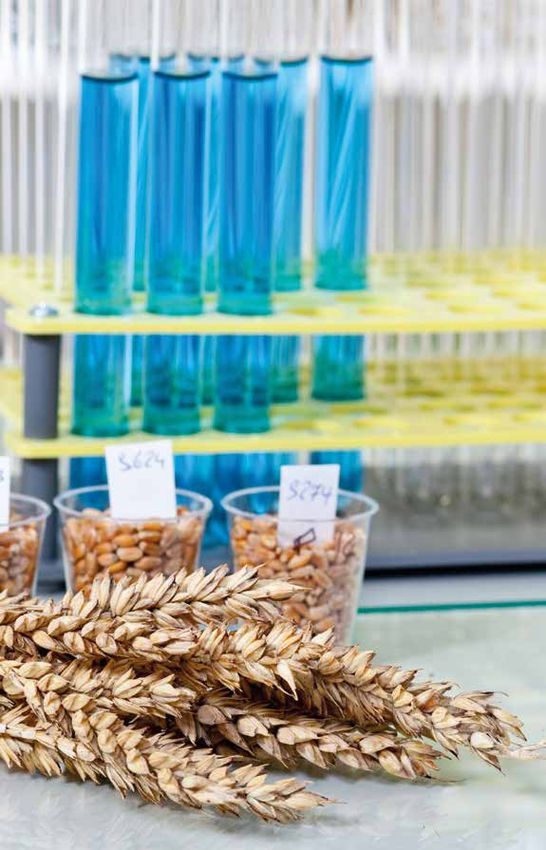
MEDICINE AND HEALTH
Thailand, as the world’s largest medical tourism market, is well positioned to be the
medical hub of Asia. The country offers state-of-the-art technological infrastructure,
premium medical services, excellent medical expertise and a wide range of world-
class hospitals at affordable costs. The price of medical services in Thailand is far below
the USA or Europe. Thailand attracts more than 3 million international patients from
all over the world for a variety of treatments ranging from advanced technologies,
such as research-based stem cell therapy, to general to general treatments like dental
care and basic health check-ups. As a result of the robustness of the medical sector,
Thailand’s 2012 revenue from medical tourism surpassed US$4 billion.

Moreover, Thailand has developed several biotechnology programs to support the
medical sector especially in alternative disease solutions for emerging diseases, re-
emerging diseases, and tropical diseases. Many research programs were created
by BIOTEC to provide the resources and facilities for biotechnology development
including the facilitation of advanced technology transfer from overseas, human
resource development, and specialized laboratories. Thailand, as a gateway into the
AEC markets, welcomes openly the collaboration with investors to support these
technology establishments throughout the region.

Medical Devices
Thailand has begun to initiate the Medical Device Cluster Project to facilitate
development of medical devices under the emerging AEC single market in the year
2015. TCELS, as a major supporter in collaboration with many local and international
institutes, has initiated the medical device development project that aims towards
using advanced emerging technologies and advancements in the future. Furthermore,
the Bioplasma project is a great example to use to show the applying of industry
know how in Nanotechnology within the Biomedical field. On another note, low
temperature, atmospheric pressure Plasma has been proven to be safe, efficacy, and
cost effective to develop. This gives insights for new hope in treating paradigms of
drugs that are resistant to pathogens, viruses, cancers, and wound care problems. The
response of the BioPlasma Medical Device under clinical application has indicated
extremely high potential for future devices that will be established in this emerging
market of need.

Diagnostic Kits
Thailand has invented and developed numerous medical diagnostic kits that can
be used in actual diagnosis efficiently and accurately. The medical diagnostic kits
developed in Thailand include test kits for the Alpha Thalassemia carrier, the Alpha
Thalassemia immune chromatographic strip test, white blood cell count solution,
red blood cell test, conjugate solution for Rabies diagnosis, biosensors for Avian
Influenza H5, biosensors for Bird Flu, and simple CD4+ lymphocyte test for counting
CD4 lymphocytes or T-cells in HIV patients.
Biopharmaceuticals
Many diseases can be treated with protein-based drugs; however, drug manufacturers
face many problems producing large quantities of protein. In order to solve these issues,
Thailand NSTDA has successfully characterized the protein-production performance
of a methylotrophic strain, Pichia thermo methanolica in order to use it as the active
ingredient in innovative protein-based medicine. Intense R&D in biopharmaceuticals
is resulting in pre-industrial production of a recombinant human growth hormone,
supported by TCELS and under trial production at the National Biopharmaceutical
Facility at King Mongkut University of Technology Thonburi.

Stem Cell Technology
Thailand is one of the leaders in stem cell research Thailand is one of the leaders in
stem cell research in Southeast Asia. Thailand adopted a free enterprise model funded
by both public and private institutions. In 2013, Chulalongkorn University successfully
produced human embryonic stem cells, Police General Hospital developed adult stem
cells to treat arthritis sufferers while Siriraj Hospital discovered a method to extract
stem cells from human amniotic fluid. Thailand is also one of the leaders in stem-cell
banking. Chulalongkorn University set up Thailand’s first embryonic stem-cell bank
(supported by TCELS) while THAI StemLife cooperates with Cryoviva Thailand, CordLife
and others to store stem cells from the roughly 800,000 babies born each year in
Thailand.

Vaccine
Thailand NSTDA collaborates with BIONET Asia to develop vaccines. They have
successfully developed a 5-in-1 or ‘cocktail’ vaccine that covers diphtheria, tetanus,
pertussis, hepatitis B, and meningitis. This vaccine is expected to be released in
2017. Moreover, NSTDA developed a dengue vaccine to prevent dengue fever along
Thailand’s borders.

To ensure Thai vaccines meet international standards and gain a competitive
advantage, the National Biopharmaceutical Facility (NBF) was established as the center
of technology transfer for vaccine production in Thailand. The NBF is co-invested by
BIOTEC, NSTDA and King Mongkut’s University Technology Thonburi (KMUTT).
BIO ENERGY
Thailand’s annual energy consumption has risen
sharply during the past decade and will continue its
upward trend. With limited domestic energy sources,
Thailand needs to produce more energy from its
own renewable resources including solar, wind,
hydro power, bio-energy and bio-fuel. In an effort
to maintain the sustainability of energy, the Thai
Government developed the Alternative Energy and
Development Plan (AEDP) 2012-2021, to promote
renewable and alternative energy development to
25% of total energy consumption in 10 years.

Thailand has an abundance of agriculture products
and agriculture waste to be utilized as bio energy.
The bio energy in Thailand includes biomass, biogas,
ethanol and biodiesel.

Biomass
Biomass is an organic and renewable material made
from agricultural waste or by-products of rice husks,
sugarcane, palm oil waste, cassava waste, rubber and
wood waste. Biomass is one of the highest potential
sources of an alternative energy in Thailand. With its
strong agricultural base, Thailand is well positioned
toutilize biomass as an alternative energy source.
Biomass currently accounts for approximately 80%
of Thailand’s renewable energy, representing over
10% of the country’s total energy consumption.
According to the AEDP 2012-2021, Thailand aims to
produce 3,630 megawatts annually from biomass by
2021.

Biogas
Biogas is composed of methane and inert carbonic
gas generated through the process of anaerobic
digestion or the fermentation of biodegradable
materials such as industrial waste, farm waste, waste
water, sewage, and Municipal Solid Waste (MSW).
Due to the abundant availability of industrial waste
and livestock manure in Thailand, biogas has high
potential to generate power. According to the AEDP
2012-2021, Thailand is targeting to generate600
megawatts annually from biogas by 2021.
Ethanol
Ethanol is an alcohol-based fuel made by fermenting
and distilling plant materials such as starch crops,
sugar cane or molasses, tapioca, paddy straw,
cassava, and corn. Most of the ethanol produced in
Thailand is made from cassava and molasses. As the
world’s largest exporter of cassava and the second
largest exporter of sugar in 2013, Thailand has high
potential to increase the production of ethanol. The
use of ethanol can reduce Thailand’s dependence on
foreign oil and reduce greenhouse gas emissions.

In 2013, there were 21 factories producing ethanol in
Thailand with a total capacity of 3.89 million liters per
day. Thailand’s AEDP aims to produce 9 million liters
of ethanol per day by 2021.

Biodiesel
Biodiesel is a form of diesel fuel manufactured from
plant oils. Biodiesel is safe and produces less air
pollutants than petroleum-based diesel. Biodiesel
can be used in pure form (B100) or blended with
petroleum diesel. There are several types of blends
depending on the percentage of biodiesel such as
B2 (2% biodiesel), B5 (5% biodiesel) and B20 (20%
biodiesel).

The Government of Thailand has undertaken serious
efforts to boost the production of biodiesel in the
country. With more than 600,000 hectares of palm
oil plantations, Thailand has abundant resources
to produce biodiesel. Thailand currently has a B5
biodiesel mandate in place. The government aims to
roll out a B7 mandate in 2014 and also plans to roll
out B10 in 2019.

Currently, Thailand has 15 biodiesel plants with a
total production capacity of 5.3 million liters per day.
Thailand’s AEDP
BIO INDUSTRY
Thailand’s agricultural base and the well-developed
biotechnology sector provide a competitive
advantage to the bio industry of Thailand over
neighboring countries. The Thai Government
appointed the National Innovation Agency (NIA) to
create a national roadmap for Thailand to develop the
bio plastic industry as a new wave industry. Thailand
offers huge opportunities for the bio plastic industry
due to its abundant supply of biomass, numerous
supporting industries, and strong government
support.

Bioplastics
Over the past decade, the Thai Government has
taken an active role in developing the bio plastics
industry to support Thailand in becoming a regional
and worldwide leader in industrial growth and
innovation. The Thai government initiated a national
roadmap for the development of the bio-plastics
industry. Recently, Thailand’s National Bio-plastics
Roadmap moved on to Phase 2 (2011-2015) which
aims to develop improved market promotion and
environmental management, R&D, biomass supply
chain and business, and investment incentives and
privileges.

Thailand has plenty of agricultural products that can
be used as biomass feedstock for bio-plastics such
as rice, cassava, and sugarcane. In 2013, Thailand
produced an estimated 28.28 million tons of cassava,
maintaining Thailand as the world’s largest cassava
exporter.

The country has a comprehensive offering of suppliers
across the bio-plastics value chain. According to the
International Trade Center, Thailand was ranked the
second largest exporter of plastic products in ASEAN
and was ranked 20th in the world in 2012. Currently,
Thailand has more than 3,000 companies in the
domestic plastics industry. This ensures that these
established plastics industries can be used effectively
to manufacture biomass into high-value-added bio-
plastics.
Strong Networking to Support Bio-plastics Industry

  Cooperative Funding to Bioplastics Research and Development
   National Research
                                National Innovation Agency
   Council of Thailand

                                   National Roadmap for
                                      the Development
                                   of Bioplastics Industry

                                    Kasetsart Univesity
   R&D to Innovation
                                 (Management Project on
    Helix Program
                                   R&D Thai Bioplastics)

    Thai Bioplastics                                                         Academic University
  Industry Association
                                      Development of                       - Chiangmai University
                                    Platform Technology                    - Chulalongkorn University
                                       for Bioplastics                     - King Mongkut’s Universityof
   Private Companies                                                         Technology North Bangkok
                                                                           - King Mongkut’s Universityof
                                                                             Technology Thonburi
                                                                           - Rajamangala University of
                                                                             Technology Thanyaburi
 Gorvernment Agencies                Research Industries                   - Silpakorn University
                                                                           - Suranaree University of
                                  - National Science and Technology          Technology
                                    Development Agency
                                  - Thailand Institute of Scientific and
                                    Technological Research

      Building strong technology capability as R&D cluster of 2 research institutes and
                           15 universities with 190 researchers

                                                              Source: The National Innovation Agency (NIA)

The Thai government has a strong network to support investment in bio-plastics
industry. The National Innovation Agency (NIA) is one key agency charged with
maintaining a strong network to support the bio-plastics industry.

There are a number of bio plastic firms in Thailand including PURAC, PTTGC/Nature
Work, and PTTMCC Biochem – a joint venture between PTT and Mitsubishi Chemical.

Thailand’s richness of agricultural resources, strong plastics companies and supporting
governmental organizations make it an ideal location for bio-plastics investment.
Thailand is readying itself to be the regional hub of bio-plastics and continues to
develop and implement new innovative technologies.
WHY THAILAND Thailand offers various outstanding advantages for companies in the biotech industry. These include: Skilled Labor Thailand continuously suppor ts work force development to strengthen the biotechnology sector through numerous training programs as well as financial support for students and researchers. Currently, there are 24 universities across the country with biotechnology programs educating approximately 7,000 students in the subject each year. With the National Biotechnology Policy Framework 2012-2021, the government called for the human resource development program to increase the number of bachelor’s, master’s, and doctoral degrees in the field of modern biological science to at least 10,000 students. These statistics should persuade foreign experts in biotech to conduct research and development in Thailand and create on-the-job training to provide a skilled workforce for the private sector through cooperation among research institutes and universities. Access to markets The free trade agreements (FTAs) between Thailand and various countries including India, China, Japan, Australia, New Zealand and Peru, extends international trade opportunities. Moreover, the establishment of the ASEAN Economic Community (AEC) in 2015 will expand the Thai market to more than 600 million consumers across the 10 member states of ASEAN. The AEC will open new doors to manufacturers by transforming ASEAN into a region with the free movement of goods, capital, services, investment, and workforce. With Thailand’s strategic location in the center of Southeast Asia, Thailand is a regional transportation hub. Thailand has excellent transportation infrastructure to support product distribution to nearby countries including Laos, Cambodia, Vietnam, Myanmar, Malaysia, Singapore and also southern China.
“This is an unprecedented moment to invest in biotechnology
in Thailand. With the approaching of AEC in 2015 as well as
the strong capabilities of Thailand, we stand a good chance to
become a “hub” of advanced biotechnology whether it is the
products of local research or the technology introduced from
outside the region. Thailand is attractive as a landing pad for
introduced technology due to its central location among AEC
countries, its strong background in this field including its skilled
workforce, and the readiness of existing large companies to
absorb new technology.”
                            - Dr. Kanyawim Kirtikara, Executive Director of National Center for
                                          Genetic Engineering and Biotechnology (BIOTEC) -

                                           ATTRACTIVE
                                          INVESTMENT
                                           INCENTIVES
                          Recognizing the value of biotechnology to Thailand’s
                          future development, biotechnology is classified as
                          a priority activity that has special importance and
                          benefits to the country.

                          As such, projects in biotechnology that use modern
                          biotechnology approved by the National Science
                          and Technology Development Agency (NSTDA) or
                          the Thailand Centre of Excellence for Life Sciences
                          (TCELS) are granted an eight-year corporate income
                          tax exemption regardless of location and are not
                          subject to the corporate income tax exemption cap.
                          Biotechnology projects also receive an exemption of
                          import duties on machinery, regardless of location,
                          and are eligible for other location-based incentives

                          In addition, projects that are located in science and
                          technology parks receive a five-year additional 50%
                          corporate income tax reduction for net profits after
                          the end of corporate income tax exemption period.

                          The BOI also offers a wide range of non-tax incentives,
                          including permission to own land, permission to
                          bring in foreign experts and skilled technicians to
                          work on promoted projects, and a wide range of
                          added-value services. For example, the BOI operates
                          both a One-Stop Service Center for visas and work
                          Permits, which enables investors to obtain work
                          permits and long-term visas within three hours or
                          less.
DEVELOPED NETWORK
OF SUPPORTING
ORGANIZATIONS
Government and organizations supporting the growth and competitiveness of
biotechnology industry in Thailand include:
• National Science and Technology Development Agency (NSTDA): NSTDA is
home to four national research centers and one technology management center
(TMC). The four national research centers are the National Center for Genetic
Engineering and Biotechnology (BIOTEC), The National Metal and Materials
Technology Center (MTEC), The National Electronics and Computer Technology
Center (NECTEC), and The National Nanotechnology Center (NANOTEC).
NSTDA acts as a bridge between academic research and the private sector. During
the Strategic Planning Alliance II (SPAII:2011-2016), NSTDA focused on five target
sectors including Agriculture & Food, Energy & Environment, Health & Medicine, Bio
resources & Community, and Manufacturing & Services Industries. Along with the
Thailand Science Park, the TMC provides services including intellectual property
management, incubation facilities, industrial consulting and technological
upgrading of the private sector.• National Center for Genetic Engineering and Biotechnology (BIOTEC): Under
the NSTDA umbrella, BIOTEC functions mainly as a premier research institute. With
its vision to push Thailand towards a knowledge based society through science
and technology, platform technology development is emphasized along with
discovering new industrial application with local and global partners. Besides
enhancing technology capability, BIOTEC also focuses on human resource
development in order to solve the shortage of skilled manpower in the field of
biotechnology, while also creating a strong technical linkage for ASEAN. As of
September 2013, BIOTEC employs a staff totaling of 570 personnel (of which 170
are PhD researchers, 200 research assistants and lab technicians).
• Thailand Science Park (TSP): Being the first technology and innovation hub of
Thailand, TSP is a key infrastructure built to support innovation development
and R&D activities in the private sector. In addition to advanced facilities and
business space, TSP serves as a one-stop service center that offers a full range of
value-added services targeted at technology intensive companies. This proximity
provides the opportunity for corporate tenants to gain access to highly-skilled
personnel including 1,600 full-time NSTDA researchers, of which there are upward
of 400 Ph.D. scientists. TSP phase 2 has a total area of 124,000 square meters. It
comprises of four inter-connected towers built around the concept of “Work-Life
Integration” to create a conducive environment, where today’s knowledge workers
can live, work and play
• National Biopharmaceutical Facility (NBF): King Mongkut’s University of
Technology Thonburi (KMUTT) joins forces with BIOTEC to build Thailand’s first
CMO for manufacturing of biopharmaceuticals for phase I/II clinical trials. NBF’s
GMP-compliant facility consists of a microbial fermentation suite, a cell culture
suite (both up to 500L batch size with well segregated downstream processing
areas), and an aseptic fill and finish line with lyophilization capability. Alongside
with other infrastructure projects being conducted in the field of translational
research in Thailand, NBF is expected to play an important role in establishing
Thailand as a R&D and manufacturing hub for biopharmaceuticals in the Greater
Mekong Sub region and the ASEAN Economic Corridor.
• Research and Development Certification Committee Secretariat (RDC): The
RDC, a unit under the supervision of the NSTDA, provides support to the private
sector in the areas of technology research and development investment. Working
closely with the Revenue Department, the RDC grants tax privileges that serve
to promote and attract investment in science and technology within the private
sector. These privileges also aim to stimulate innovation in product and production
procedures in the private sector, raising the overall competence of the nation in
science and technology. Tax amounting to twice the expense of the company’s
corporate income tax can be deducted for approved projects.• Thailand Center of Excellence for Life Sciences (TCELS): TCELS is positioned as a
center for all life science business and research and investment in Thailand. TCELS
was established in 2004 by the government with the core intention of providing the
central link between innovation and investment as well as facilitating domestic and
international partnerships in life science business in Thailand. Its primary functions
are to support the establishment of bioscience companies in Thailand; develop
basic infrastructure to increase product value; service and investment; set up
funding for business; and bridge the public and private sectors in the development
of products, business and investment. TCELS has currently focused on medical
robotics, Stem Cells, Medical Tourism, Natural Products and Cosmeceuticals,
Medical Devices and Drug Discovery and Nutraceuticals.
• Thailand Institute of Scientific and Technological Research (TISTR): TISTR is
a non-profit state scientific research institute under the Ministry of Science and
Technology (MOST). TISTR’s mission is to conduct research and development work
focusing on food technology, pharmaceutical and natural products, post-harvest
technology, agricultural technology, biotechnology, microbiological resources,
environment, ecology and energy, materials technology and engineering.
Additionally, the technology transfer group offers industrial and technical
consulting and training to the public, promoting the creation of a learned society.
The organization also serves as the incubator for the Thai Science Park in Chiang
Mai.
• Biodiversity-Based Economy Development Office (BEDO): BEDO promotes the
management of biodiversity resource utilization for economic purposes, while
encouraging sustainable conservation of biodiversity and local wisdom at both
community and national levels. Thailand has a very high biodiversity that includes
various species and ecosystems. Despite its relatively small land area of 514,000
sq. m. or merely 0.345% of the earth surface, Thailand contributes 8% of flora
and fauna discovered in the world from 15 types of ecosystems. This wealth of
biodiversity allows Thailand to create added value in both manufacturing and
service sectors and innovation.
• The Venture Capital (VC) Industry in Thailand: There are several Thai venture
capital firms focused on the biotechnology industry. One such firm is VNET
Venture Capital which provides financing to Small and Medium Enterprises (SMEs)
companies with technology. Additionally, Khao Kla Venture Capital Management
provides assistance in equity financing to SMEs companies.
• Other associations: Thailand offers a strong framework of intellectual support
to the Biotech industry through such associations as the Thai Pharmaceutical
Manufacturers Association (TPMA), Pharmaceutical Research and Manufacturers
Association (PReMA), Thai Medical Device Technology Industry Association
(THAIMED), Thai Cosmetic Manufacturers Association, Thai Bioplastics Industry
Association, Standards & Quality Association of Thailand and the Thai Society for
Biotechnology.FOR FURTHER
INFORMATION:
The Thailand Board of Investment (BOI): www.boi.go.th
The National Science and Technology Development Agency (NSTDA): www.nstda.or.th
The National Center for Genetic Engineering and Biotechnology (BIOTEC):
www.biotec.or.th
The Thailand Science Park (TSP): www.sciencepark.or.th
The Thailand Center of Excellence for Life Sciences (TCELS): www.tcels.or.th
The Thailand Institute of Scientific and Technological Research (TISTR): www.tistr.or.th
Thai Venture Capital Association: www.venturecapital.or.th
Thai Pharmaceutical Manufacturers Association (TPMA): www.tpma.or.th
The Pharmaceutical Research and Manufacturers Association (PReMA):
www.prema.or.th
The Thai Medical Device Technology Industry Association (THAIMED):
www.thaimed.co.th
Thai Cosmetic Manufacturers Association: www.thaicosmetic.org
Thai Bio-plastics Industry Association: www.tbia.or.th
The Standards & Quality Association of Thailand: www.squat.or.th
The Thai Society for Biotechnology: www.biotec.or.th/tsbCONTACT US
Head Offices
OFFICE OF THE BOARD OF INVESTMENT ONE STOP SERVICE CENTER FOR VISAS AND WORK PERMITS
555 Vibhavadi-Rangsit Rd., Chatuchak, Bangkok 10900 18th Floor, Chamchuri Square Building,
Tel: +66 (0) 2553-8111 319 Phayathai Rd., Pathumwan, Bangkok 10330
Fax: +66 (0) 2553-8222 Tel: +66 (0) 2209-1100
Website: www.boi.go.th Fax: +66 (0) 2209-1194
Email: head@boi.go.th Email: visawork@boi.go.th
ONE START ONE STOP INVESTMENT CENTER (OSOS) INVESTOR CLUB ASSOCIATION (ICA)
18th Floor, Chamchuri Square Building, 12th and 16th Floor, TP&T Building, 1 Soi Vibhavadi-Rangsit 19,
319 Phayathai Rd., Pathumwan, Bangkok 10330 Vibhavadi-Rangsit Rd., Lad Yao, Chatuchak, Bangkok 10900
Tel: +66 (0) 2209-1100 Tel: +66 (0) 2936-1429
Fax: +66 (0) 2209-1199 Fax: +66 (0) 2936-1441-2
Website: osos.boi.go.th Website: www.ic.or.th
Email: osos@boi.go.th Email: is-investor@ic.or.th
Regional Offices
CHIANG MAI SONGKHLA
Regional Investment and Economic Center 1 Regional Investment and Economic Center 5
Airport Business Park 108-110, 7-15 Chaiyong Building Juti Uthit 1 Road, Hadd Yai, Songkhla 90110
90 Mahidol Road, Amphur Muang, Chiang Mai 50100 Tel: +66 (0) 7434 7161-5
Tel: +66 (0) 5320 3397-400 Fax: +66 (0) 7434 7160
Fax: +66 (0) 5320 3404 Email: songkhla@boi.go.th
Email: chmai@boi.go.th
SURAT THANI
NAKHON RATCHASIMA Regional Investment and Economic Center 6
Regional Investment and Economic Center 2 49/21-22 Sriwichai Road, Makhamtia, Amphur Muang,
2112/22 Mitraphab Road, Amphur Muang, Nakhon Ratchasima 30000 Surat Thani 84000
Tel: +66 (0) 4421 3184-6 Tel: +66 (0) 7728 4637, +66 (0) 7728 4435
Fax: +66 (0) 4421 3182 Fax: +66 (0) 7728 4638
Email: korat@boi.go.th Email: surat@boi.go.th
KHONKAEN PHITSANULOK
Regional Investment and Economic Center 3 Regional Investment and Economic Center 7
177/54 Moo 17, Mitraphab Road, Amphur Muang, Khonkaen 40000 3rd Floor, Thai Sivarat Building, 59/15 Boromtrilokkanat 2 Rd.,
Tel: +66 (0) 4327 1300-2 Naimuang, Amphur Muang, Phitsanulok 65000
Fax: +66 (0) 4327 1303 Tel: +66 (0) 5524-8111
Email: khonkaen@boi.go.th Fax: +66 (0) 5524-8777
Email: phitsanulok@boi.go.th
CHONBURI
Regional Investment and Economic Center 4
46 Moo 5 Laem Chabang Industrial Estate, Sukhumvit Road,
Toongsukhla, Sriracha, Chonburi 20230
Tel: +66 (0) 3840 4900
Fax: +66 (0) 3840 4997, +66 (0) 3840 4999
Email: chonburi@boi.go.th
Overseas Offices
BEIJING OSAKA
Thailand Board of Investment, Beijing Office Thailand Board of Investment, Osaka Office
Royal Thai Embassy, No.40 Guang Hua Rd., Beijing 100600 P.R.C. Royal Thai Consulate-General, Bangkok Bank Building, 7th Floor,
Tel: +86-10-6532-4510 1-9-16 Kyutaro-Machi, Chuo-Ku, Osaka 541-0056 Japan
Fax: +86-10-6532-1620 Tel: +81 (0) 6-6271-1395
Email: beijing@boi.go.th Fax: +81 (0) 6-6271-1394
Email: osaka@boi.go.th
FRANKFURT
Thailand Board of Investment, Frankfurt Office PARIS
Investment Section, Royal Thai Consulate-General Thailand Board of Investment, Paris Office
Bethmannstr. 58,5.0G Ambassade Royale de Thaïlande
60311 Frankfurt am Main, 8, rue Greuze, 75116 Paris, France
Federal Republic of Germany Tel: +(33-1) 56 90 26 00
Tel: +49 (069) 92 91 230 Fax: +(33-1) 56 90 26 02
Fax: +49 (069) 92 91 2320 Email: par@boi.go.th
GUANGZHOU SEOUL
Thailand Board of Investment, Guangzhou Office Thailand Board of Investment, Seoul Office
Investment Promotion Section, Royal Thai Consulate-General, #1804, 18th Floor, Koryo Daeyeongak Center,
Room 1216-1218, Garden Tower, 368 Huanshi Dong Rd., 97 Toegye-ro, Jung-gu, Seoul, 100-706, Korea
Guangzhou 510064 P.R.C Tel: +82-2-319-9998
Tel: +86-20-8333-8999 ext. 1216-8, +86-20-8387-7770 Fax: +82-2-319-9997
Fax: +86-20-8387-2700 Email: seoul@boi.go.th
Email: guangzhou@boi.go.th
SHANGHAI
LOS ANGELES Thailand Board of Investment, Shanghai Office
Thailand Board of Investment, Los Angeles Office Royal Thai Consulate-General, 15th Floor, Crystal Century Tower,
Royal Thai Consulate-General, 611 North Larchmont Boulevard, 567 Weihai Rd., Shanghai 200041, P.R.C
3rd Floor, Los Angeles CA 90004, U.S.A. Tel: +86-21-6288-9728-9
Tel: +1 (0)-323-960-1199 Fax: +86-21-6288-9730
Fax: +1 (0)-323-960-1190 Email: shanghai@boi.go.th
Email: boila@boi.go.th
STOCKHOLM
MUMBAI Thailand Board of Investment, Stockholm Office
Thailand Board of Investment, Mumbai Office Stureplan 4C 4th Floor, 114 35 Stockholm, Sweden
Royal Thai Consulate-General Tel: +46 (0) 8463 1158, +46 (0) 8463 1174-75
1st Floor, Dalalmal House, Jamnalal Bajaj Marg, Fax: +46 (0) 8463 1160
Nariman Point, Mumbai - 400 021 Email: stockholm@boi.go.th
Republic of India
Tel: +(91 22) 2204 1589-90 SYDNEY
Fax: +(91 22) 2282 1071 Thailand Board of Investment, Sydney Office
Email: mumbai@boi.go.th Suite 101, Level 1, 234 George Street, Sydney,
New South Wales 2000, Australia
NEW YORK Tel: +61-2-9252-4884
Thailand Board of Investment, New York Office Fax: +61-2-9252-2883
7 World Trade Center, 34th Floor. Suite F, Email: sydney@boi.go.th
250 Greenwich Street, New York, New York 10007, U.S.A.
Tel: +1 (0) 212 422 9009 TAIPEI
Fax: +1 (0) 212 422 9119 Thailand Board of Investment, Taipei Office
Email: nyc@boi.go.th Taipei World Trade Center, 3rd Floor, Room 3E 39-40
Website: www.thinkasiainvestthailand.com No.5 Xin-Yi Rd., Sec. 5 Taipei 110, Taiwan R.O.C.
Tel: +886-2-2345-6663
Fax: +886-2-2345-9223
Email: taipei@boi.go.th
TOKYO
Thailand Board of Investment, Tokyo Office
Royal Thai Embassy, 8th Floor, Fukuda Building West,
2-11-3, Akasaka, Minato-ku, Tokyo 107-0052 Japan
Tel: +81 (0) 3-3582-1806
Fax: +81 (0) 3-3589-5176
Email: tyo@boi.go.thYou can also read


