BUSINESS CLIMATE SURVEY FOR SWEDISH COMPANIES IN THAILAND 2020 - A REPORT FROM TEAM SWEDEN IN THAILAND
←
→
Page content transcription
If your browser does not render page correctly, please read the page content below

BUSINESS CLIMATE SURVEY
FOR SWEDISH COMPANIES IN
THAILAND 2020
A REPORT FROM TEAM SWEDEN IN THAILAND
FOREWORD

KEY CONTRIBUTORS TO THIS REPORT

Business Sweden in Thailand

Embassy of Sweden in Thailand

Thai-Swedish Chamber of Commerce

© Team Sweden in Thailand 2020, all rights reserved. This study may not be
reproduced either in part or in full without prior written consent of Team Sweden
and its constituents in Thailand.

                                                           B U S I N E S S C L I M A T E S U R V E Y F O R S WE D I S H C O M P A N I E S I N T H A I L A N D 2 0 2 0   |   2
FOREWORD

TABLE OF CONTENTS

TABLE OF CONTENTS
FOREWORD ................................................................................. 4
EXECUTIVE SUMMARY ............................................................... 5
ABOUT THE SURVEY .................................................................. 6
ECONOMIC OUTLOOK ................................................................ 7
THE MARKET ............................................................................. 12
HOW SWEDISH COMPANIES SUCCEED IN THAILAND ......... 19
ACTING SUSTAINABLY............................................................. 21
CONTACT US ............................................................................. 24

                                                               B U S I N E S S C L I M A T E S U R V E Y F O R S WE D I S H C O M P A N I E S I N T H A I L A N D 2 0 2 0   |   3
FOREWORD

FOREWORD

Sweden has an active business community in the Kingdom of Thailand, and currently there
are over 85 Swedish companies present – a number that has been growing by an average
of 5% each year during the last two decades.

The first Swedish companies entered the Thai market over a century ago, and the early
Swedish entrants were large, multinational firms in telecommunications, transportation,
and industrial equipment. In recent years, we see a more diverse group of market entrants
comprising more and more of medium-sized businesses with niche solutions.

It is no secret that from a macroeconomic standpoint, Thailand has had a relatively
tumultuous couple of recent years, and the GDP growth forecast of 2020 risks ending up                                           Staffan Herrström
not reaching 2% with the delay in the fiscal budget and the uncertainties of the effects of                                      Ambassador of Sweden
                                                                                                                                 to Thailand
the COVID-19 outbreak hurting especially the tourism and transportation sectors, but also
risks causing disruptions in global supply chains. Swedish companies also increasingly
rate the business climate in Thailand as ‘neutral’. However, Thailand remains an important
market for many present Swedish companies – two-thirds of companies responded that
their Thailand operations were profitable last year, and even more companies expect 2020
to provide healthy margins.

Structural issues disabling Swedish firms to reach its full potential do however remain, with
excessive regulations, corruption, and the political climate being listed as the top-three
concerns for Swedish firms.

                                                                                                                                 Carl Lindwall
We expect Thailand to continue to become increasingly important market to more and
                                                                                                                                 Country Manager
more Swedish firms into the third decade of this century, and companies seeking market                                           Thailand, Business
success state that achieving a strong brand, running cost-effective operations, building a                                       Sweden
solid partnership structure, and developing and investing in the staff are paramount.

 Staffan Herrström                Carl Lindwall                         Anders Lundqvist
 Ambassador of Sweden             Country Manager Thailand,             Chairman, Thai-Swedish                                   Anders Lundqvist
 to Thailand                      Business Sweden                       Chamber of Commerce                                      Chairman, Thai-
                                                                                                                                 Swedish Chamber of
                                                                                                                                 Commerce

                                                                B U S I N E S S C L I M A T E S U R V E Y F O R S WE D I S H C O M P A N I E S I N T H A I L A N D 2 0 2 0   |   4
EXECUTIVE SUMMARY

COVERAGE                            ECONOMY

                                   Current profitability                    Outlook
       53%                                                     % of respondents that expect

                                          68%
                                                              to report a better performance
                                                                     in 2020 regarding

  of Swedish companies                                         Turnover           75%
    present in Thailand             of respondents report
 responded to the survey             profitability for 2019    Profitability      61%

   MARKET

 Business Climate                      Advantages                        Challenges
                                 Top 3 advantages of doing       Top 3 challenges of doing
        Neutral                    business in Thailand            business in Thailand
            N
                                Sell on Thai market            Red tape & Regulation

                                Customer collaboration         Corruption

                                Nearby market access           Political instability

 COMPANIES                                                          SUSTAINABILITY

   Business area                    Success factors            Environmental aspects

40%     Professional Services          Brand awareness
                                       Cost efficiency
                                                                            64%
                                       Partnerships & local      of the respondents believe that

40%      Industrial                    relationships                 their customers consider
                                                                  environmental aspects in their
                                       Staff development
                                                                 purchasing decision to a little or
20%     Consumer                       Sales competence                   very little extent
ABOUT THE SURVEY

ABOUT THE SURVEY

Respondents constitute a mixed crowd
How are the Swedish companies experiencing the business climate in Thailand? Team                                                SIZE OF COMPANIES
Sweden carried out the biennial survey that tracks how Swedish companies operating in
Thailand perceive the market conditions and the economic prospects of their business,
and if and how the views diverge across company type.                                                                                                    Small

Currently, around 85 Swedish companies are present in Thailand. All of them were invited                                                Large              Medium
to participate and share their sentiments. Conducted in December 2019, this survey seeks
to understand the perceptions of economic and market developments and what
opportunities and challenges our companies are facing. With a total of 45 respondents, a
response rate of 53% was achieved which is 3% higher than the 2018 study. The web-                                               NOTE: Turnover and HC. Large
                                                                                                                                 >USD 50m and/or >249 HC. Medium
based survey contained 28 questions and in addition a number of interviews have been                                             USD 11-50m and/or 50-249 HC.
                                                                                                                                 Small USD
ECONOMIC OUTLOOK

ECONOMIC OUTLOOK

Steering times of uncertainty
Thailand has made noteworthy progress over the last decades, improving in both social
and economic aspects and has gone from a low to an upper-middle income country.
Thailand is the second largest economy in Southeast Asia and serves as an important hub
for the whole region. The country’s economy is continuing its development in a more
moderate pace due to uncertain governmental stability and doubts regarding its ability to
steer the country in a clear direction.

Thailand is experiencing a sustainable level of domestic demand, however the value and
volume of trade was declining in the last quarter of 2019. Exports decreased with 2.7%
after having fallen for five months straight. The U.S.-China trade war and the Thai baht
appreciation are pointed out as the main perpetrators. The decrease in exports affected
most destinations, especially ASEAN (-10%) as opposed to U.S. where the exports
increased with 11.8% making U.S. the biggest trading partner in 2019. Imports
experienced a decline (-6%) mainly attributable to the production value chain. For the full
year of 2019, Thai GDP growth is estimated at 2.5% by Bank of Thailand.

Exports from Sweden to Thailand saw an increase by 20% for the first three quarters of
2019, partly driven by the strong THB-SEK rate and partly due to increased export of
manufactured products. Imports to Sweden from Thailand increased by 6% during 2019.

Conversely, although Thailand is facing challenges in terms of overall growth, only a small
number of the survey respondents are reporting a break-even or loss in financial
performance for 2019. Among the Swedish companies, 68% report that their business in
Thailand is profitable or very profitable, and this result spans across all business areas.
Although 2019 was a profitable year and there are vast opportunities in the country,
Swedish companies confirm that it remains difficult to wholly tap the market potential and
uncertainty is clouding business decisions.

                                                                                                                                    “
HOW WOULD YOU CHARACTERISE YOUR COMPANY’S FINANCIAL
PERFORMANCE IN THAILAND IN 2019?
80%
                                                                                                                                               Macro impact
                                                                                                                                               paired with
60%
                                                                                                                                               political
                                                                                                                                               uncertainty
40%
                                                                                                                                               has real
                                                                                                                                               impact on
20%
                                                                                                                                               consumer
                                                                                                                                               confidence
                                                                                                                                               and spending.
  0%
          Loss or significant loss                  Break-even                     Profitable or very
                                                                                                                                               Sustainability &
                                                                                       profitable
                                                                                                                                               Communications Director
NOTE: The number of respondents for this question was 41. “Not applicable” responses are not included.
SOURCE: Business Climate Survey for Swedish Companies in Thailand 2020.                                                                        Large Swedish Consumer
                                                                                                                                               Company

                                                                            B U S I N E S S C L I M A T E S U R V E Y F O R S WE D I S H C O M P A N I E S I N T H A I L A N D 2 0 2 0   |   7
ECONOMIC OUTLOOK

Many of the Swedish companies present in the market also have a footprint in other
countries in Southeast Asia. It is common to operate through local distributors or partners
and in most cases using multiple distributors to spread the risk.

The Southeast Asian economic growth in 2019 at 4.7% was partly impacted by the U.S.-
China trade war which resulted in a drop in demand and reduced exports from the region
due to integrated global supply chains. Vietnam and Philippines outpaced other
developing countries with 7% and 5.9% GDP growth respectively while Indonesia and
Malaysia ended around 5% and 4.3% in 2019. Vietnam has shown impressive
development in recent years sailing up as an alternative regional production hub.
Philippines, Indonesia and Malaysia can dampen harmful effects from international trade
by boosting domestic consumption.

Emerging markets on the rise such as Myanmar, Laos and Cambodia continue at high
growth rates with infrastructure development and rising household income as main drivers.
However, these countries are still struggling with challenges. The European Commission
recently decided to withdraw part of the tariff preferences granted to Cambodia under the
European Union's Everything But Arms' (EBA) trade scheme, tentatively affecting about
20% of Cambodian exports to the EU. The election and Rakhine crisis is pressuring the
Burmese government and high public debt is discouraging Laos to invest in infrastructure
and large-scale projects.

According to the respondents, the most interesting Southeast Asian markets for further
expansion are; Indonesia due to a large population and healthy growth, Vietnam due to a
strong GDP growth and a comparatively friendly business environment for international
investors, and finally The Philippines is also pin-pointed as a country where Swedish
companies see opportunities. The surveyed respondents do however highlight the further
business potential in Thailand but also points out the need for industrial pushes in
conjunction with improved regulations from the government – resulting in a more
straightforward business environment to navigate. This year’s survey reveals that nearly
one out of three companies (32%) generate a significant portion of their SEA revenue from
Thailand. A simple but strong correlation emerged; a vast majority of the small and medium
sized companies generate above 50% of their SEA revenue from Thailand whereas large
companies are more likely to span around 20-30%.

APPROXIMATELY WHAT SHARE OF YOUR REVENUE IN THE SOUTHEAST ASIA
REGION COMES FROM THAILAND?
40%

30%

20%
                                                                                                                                     “          Continued
                                                                                                                                                growth.
                                                                                                                                                Big
                                                                                                                                                population.
                                                                                                                                                Plenty of
                                                                                                                                                opportunities.
10%
                                                                                                                                                Managing Director
                                                                                                                                                Large Swedish Industrial
                                                                                                                                                Company
  0%
               0-10%              10-20%              20-30%               30-50%                      > 50%
NOTE: The number of respondents for this question was 34. “Not applicable” responses are not included.
SOURCE: Business Climate Survey for Swedish Companies in Thailand 2020.

                                                                            B U S I N E S S C L I M A T E S U R V E Y F O R S WE D I S H C O M P A N I E S I N T H A I L A N D 2 0 2 0   |   8
ECONOMIC OUTLOOK
A shifted degree of optimism
The Southeast Asia GDP growth is forecasted to continue at a high rate of 4.1% in 2020
and 4.6% in 2021 according to estimates by the International Monetary Fund. There is
however no shortage of reasons to believe that projections may be adjusted downward
due to several external factors; the geopolitical risks, political uncertainty, trade wars, and
pandemics are causing hesitation and hampering the trading economy. The economical
slowdown would be noteworthy in Thailand given its export orientation.
According to the Bank of Thailand, the Thai economy GDP growth is projected at 2.5% in
2019 which is lower than expected after a decelerating fourth quarter driven by declining
exports, governmental expenditure and public investment. The GDP growth in 2020 has
already faced several challenges; the U.S.-China trade war, delayed government
budgetary approval, a decreased growth of the Chinese economy and the yet-to-be-
understood effects of COVID-19 on the tourism sector as well as global supply chains
could all countribute to a growth rate of below 2%.
PROJECTED GDP GROWTH IN THAILAND
Decreased
6%
confidence
levels for 2020
growth
4% explained by
unresolved
geopolitical
2%
tensions,
delayed
0% governmental
2017 2018 2019 2020 2021 spending,
Thailand Euro area subdued
SOURCE: BoT. IMF, World Economic Outlook. growth in
A faster pace of expansion is expected for 2021 as household consumption and private China and
investment are forecasted to gain momentum, coupled with improved public spending COVID-19
following the roll-out of major infrastructure projects. Recovery of exports and the tourism
sector would also act as major boosts to the expansion of Thai economy.
Thailand is looking to
capitalise on its
strategic location
and quality logistics
network to further
expand the economy
B U S I N E S S C L I M A T E S U R V E Y F O R S WE D I S H C O M P A N I E S I N T H A I L A N D 2 0 2 0 | 9ECONOMIC OUTLOOK
Notwithstanding the above-mentioned factors inspiring uncertainty, Swedish companies’
expectations for the months ahead are in a positive direction, with 75% of the survey
respondents believe in an increased turnover during the coming twelve months. Despite a
small share of the industrial and service companies that foresee a decrease in turnover,
all of the consumer companies predict a slight or significant increase, but with a somewhat
weakened confidence compared to previous years.
WHAT ARE YOUR EXPECTATIONS FOR THE COMING 12 MONTHS FOR YOUR
INDUSTRY/BUSINESS AREA REGARDING TURNOVER?
TURNOVER WILL…
80%
60%
40%
20%
0%
Decrease slightly or Remain unchanged Increase significantly or
significantly slightly
NOTE: The number of respondents for this question was 44. “Not applicable” responses are not included.
SOURCE: Business Climate Survey for Swedish Companies in Thailand 2020.
The survey indicates a gap between turnover and profitability expectations. 74% of the
surveyed predict an increased turnover whereas only 61% are projecting an increased
profitability. This outlook is realising a significant drop compared to two years ago when
84% of the respondents believed the profitability growth would improve the coming years.
WHAT ARE YOUR EXPECTATIONS FOR THE COMING 12 MONTHS FOR YOUR
INDUSTRY/BUSINESS AREA REGARDING PROFITABILITY?
PROFITABILITY WILL…
80%
Turnover
60%
prospects
outnumber
40% profitability
expectations
20%
0%
Decrease slightly or Remain unchanged Increase significantly or
significantly slightly
NOTE: The number of respondents for this question was 44. “Not applicable” responses are not included.
SOURCE: Business Climate Survey for Swedish Companies in Thailand 2020.
B U S I N E S S C L I M A T E S U R V E Y F O R S WE D I S H C O M P A N I E S I N T H A I L A N D 2 0 2 0 | 10ECONOMIC OUTLOOK
Moderate investment plans
Across the board, respondents are exhibiting a more neutral investment attitude compared
to previous years. A growing share of respondents report unchanged investment plans for
the coming twelve months. In this regard, consumer and industrial sectors tend to be more
hesitant than their peers in the service sector.
“
WHAT ARE YOUR COMPANY'S INVESTMENT PLANS FOR THE COMING 12
MONTHS COMPARED TO THE PAST 12 MONTHS?
Location,
INVESTMENTS WILL…
partnership,
co-creation,
50% availability of
40%
land and
location – can
30%
all support and
20% drive
10% investments
0% Sustainability &
Decrease slightly, Remain unchanged Increase significantly or Communications Director
significantly or leave slightly Large Swedish Consumer
Company
market
NOTE: The number of respondents for this question was 43. “Not applicable” responses are not included.
SOURCE: Business Climate Survey for Swedish Companies in Thailand 2020.
Areas of investment show the same pattern as in previous years. Marketing and sales
followed by skills development and staff training remain the most prioritised areas.
Companies are less prone to invest in R&D or to make bigger investments and are instead
more focused on developing the existing business, for example by focusing on increased
dealer coverage, sponsored growth of network and digitalisation of investments.
IN WHAT AREAS DO YOU PLAN TO INCREASE INVESTMENTS IN THAILAND IN
THE COMING 3 YEARS (2020-2022)?
0% 20% 40%
Marketing & Sales
Skills Development / Staff
Training
Product / Solution
Sustainability / CSR
Manufacturing / Logistics
Research & Development
NOTE: The number of respondents for this question was [40]. “Not applicable” responses are not included.
SOURCE: Business Climate Survey for Swedish Companies in Thailand 2020.
B U S I N E S S C L I M A T E S U R V E Y F O R S WE D I S H C O M P A N I E S I N T H A I L A N D 2 0 2 0 | 11THE MARKET
THE MARKET
Diverse range of Swedish companies are
entering the Thai market
Since the Foreign Business Act was enacted in 1999, over 12 000 foreign majority-owned
companies have been granted permission to set up entities in Thailand. Of these, around
9 000 of them are still active. New foreign entity establishment reached its peak in 2016
when 959 entities were established. In 2019, 260 foreign companies closed their
operations, much above the yearly average of around 110.
Japan, U.S., Singapore and China are the largest foreign investors in Thailand. Even
though Japan and U.S. are still the biggest sources of foreign direct investment, the
relative Chinese economic influence is increasing. In 2019, 203 Chinese projects with total
value of 261 bnTHB were approved in 2019 by BOI – a significant increase over the 124
projects of 50 bnTHB in 2018.
The early Swedish entrants into the Thai market entered in the 1960s and the 1970s,
following a general uptake in foreign direct investments into Thailand, driven in no small
part by Japanese players. These companies were often large Swedish multinationals with
global reach. The rate of establishments halted somewhat during and immediately
following the 1997 Asian Financial crisis. With an uptake during the 21st century, the
number of Swedish companies in Thailand have been growing by on average 5% each
year during the last two decades. These companies with a more recent footprint generally
operate in a diverse field of sectors and in general tend to be slightly smaller players, often
in specialised fields and supplying to Thailand’s most significant economic sectors –
especially industrial equipment and automotive. Looking at establishment data, it is clear
that the number of new entrants during and immediately following years of uncertainty
(e.g. aforementioned 1997 Asian Financial Crisis and the 2006 and 2014 coup d'état) tend
to temporarily decrease. The recent few years have seen a steady pace of new Swedish
companies entering the market.
IN WHAT YEAR DID YOUR COMPANY ESTABLISH OPERATIONS IN THAILAND?
60% A solid growth
of Swedish
company
40%
entrants of
around 5%
yearly during
20%
the last two
decades
0%
-2000 2001-2005 2006-2010 2011-2015 2016-
NOTE: The number of respondents for this question was 37.
SOURCE: Business Climate Survey for Swedish Companies in Thailand 2020.THE MARKET
While Swedish companies have chosen different forms of legal setups, around 7 of 10
companies are majority or fully-owned entities, with the remaining faction being minority-
owned joint ventures or representative offices. Given the investments in time and money
necessary to set up a majority-owned foreign entity, smaller Swedish companies tend to
be over-represented among the firms that are minority-owned together with a Thai partner.
As can be seen in the chart below, Swedish companies are active in a wide range of
operations. Companies identifying as being active within the consulting and legal space
constitute the largest individual category, however in terms of sales the largest companies
are within industrial equipment and automotive products.
WHAT IS YOUR COMPANY’S MAIN BUSINESS AREA IN THAILAND?
0% 10% 20%
Consulting/Advisory/Legal
Trading & sourcing of consumer goods
Automotive/Heavy Vehicle
Telecom/ IT
Life Science/MedTech/Healthcare
Packaging
Infrastructure/Construction
Agriculture/Food processing
Defence/Security
Robotics and Automation
Retail/sales of consumer goods
Mining and quarrying
NOTE: The number of respondents for this question was 43.
SOURCE: Business Climate Survey for Swedish Companies in Thailand 2020.
150 years of
Swedish-Thai
relationship,
Thailand is
Sweden’s largest
trading partner in
SEA
B U S I N E S S C L I M A T E S U R V E Y F O R S WE D I S H C O M P A N I E S I N T H A I L A N D 2 0 2 0 | 13THE MARKET
Swedish companies view the business climate
as neutral
Precisely half of all respondents indicated that they perceive the business climate as
neutral, with slightly more companies holding a negative than a positive view. Overall,
respondents indicated that the market was growing at a sluggish pace, and that consumer
confidence and spending remains low. Price sensitivity among customers remain an issue
for Swedish companies, especially those with a premium offering in contested areas where
price tends to be the most important factor. In general, there is a tendency among Swedish
firms to rate the overall business climate as slightly lower in 2020 as opposed to two years
ago, with minor or no perceived governmental progress in decreasing regulation and red
tape. On the other hand, a not-insigificant range of Swedish companies maintain a positive
business outlook and see increasing levels of market growth.
The Southeast Asia region however remains attractive, with the large population and
untapped opportunities for early movers.
HOW DO YOU PERCEIVE THE CURRENT BUSINESS CLIMATE IN THAILAND,
“
FROM VERY POOR TO VERY GOOD?
Neither good
60% nor bad. It’s
difficult to
navigate the
40% regulatory
landscape
20% Sales Director
Large Swedish Automotive
Company
0%
Poor or very poor Neutral Good or very good
NOTE: The number of respondents for this question was 44. “Not applicable” responses are not included.
SOURCE: Business Climate Survey for Swedish Companies in Thailand 2020.
Ease of Doing Business 2019
Ease of Doing Business
86,2
82,0 80,1 81,5
69,6 69,8
62,8
NOTE: An index published by the World Bank. Score 0-100 where 100 = most business friendly.
SOURCE: World Bank 2019
B U S I N E S S C L I M A T E S U R V E Y F O R S WE D I S H C O M P A N I E S I N T H A I L A N D 2 0 2 0 | 14THE MARKET
Domestic market attractiveness triumph
access to nearby markets
Selling to the Thai market remains the most common reason for operations in Thailand for
Swedish companies. However, a non-negligible amount of companies also list being able
to access nearby markets from a regional headquarter in Thailand to be a key reason for
market presence.
Swedish companies within the service sector rate technology and work culture as the most
important success factors, whereas industrial companies instead rate customer
collaboration and market access the most highly.
Looking at the responses in terms of company size, small companies list technology as
well as work culture as increasingly important, while medium and large companies again
list customer collaboration and market access (domestically as well as regionally) as
paramount.
The importance of digitalisation was brought up in several of the interviews, where
companies are using digital technologies at an increasing rate, both in terms of moving
advertising and marketing activities to the online space as well as establishing e-
commerce sales channels.
DO ANY OF THE FOLLOWING FACTORS CONTRIBUTE POSITIVELY TO YOUR
“
BUSINESS IN THAILAND?
TOP TEN AREAS Thailand
remains an
Prevalence Impact attractive
market for us,
40 3 contributing a
30
fair amount of
2 our APAC
20 revenue
1
10 Regional Director
Industrial Tools Manufacturer
0 0
Prevalence Impact
NOTE: The number of respondents for this question was 42.
This question was separated into two parts. First, respondents were asked to select all factors contributing
positively to their business in Thailand. Secondly, they were asked to rate the impact of the factors they selected,
from limited (score 1) to large impact (score 3) on their business success in Thailand. The bars in the figure show
the number of firms that selected a certain factor, and the dots show the average rating of that factor among the
firms that selected it.
SOURCE: Business Climate Survey for Swedish Companies in Thailand 2020.
B U S I N E S S C L I M A T E S U R V E Y F O R S WE D I S H C O M P A N I E S I N T H A I L A N D 2 0 2 0 | 15THE MARKET
Red tape and regulatory burdens remain
challenging
In line with the survey conducted two years ago, the main hurdles for Swedish companies
in Thailand remain red tape, complex regulations, as well as corruption. Matters related to
regulation and compliance are generally perceived to take longer time than necessary and
may involve excessive paperwork. However in certain other areas, an issue is instead a
lack of regulation, especially in certain environmental standards.
The types of challenges reported differ based on industry type. Consumer companies
especially list customs regulations and red tape as challenges, while firms in the service
sector list operational restrictions, and industrial firms tend to find corruption and the level
of digitalisation large obstacles to overcome.
Meanwhile, companies who recently established operations in Thailand find obtaining
skilled labour as a bigger hurdle than companies with a longer history in the country.
As for labour, main challenges listed are the relative lack of English skills, high yearly
expectations for salary increases, and high staff turnover. Finding educated labour with
skills in science and technology remains a particular challenge.
DO ANY OF THE FOLLOWING FACTORS CONTRIBUTE NEGATIVELY TO YOUR
“
BUSINESS IN THAILAND?
TOP TEN AREAS Regulations
can be a mess,
Prevalence Impact
and
30 3 sometimes we
get the feeling
20 2 that they are
there in order
10 1 to protect the
vested
0 0 interests
Country Manager
Transportation Solutions
provider
Prevalence Impact
NOTE: The number of respondents for this question was 41.
This question was separated into two parts. First, respondents were asked to select all factors contributing
negatively to their business in Thailand. Secondly, they were asked to rate the impact of the factors they selected,
from limited (score 1) to large impact (score 3) on their business success in Thailand. The bars in the figure show
the number of firms that selected a certain factor, and the dots show the average rating of that factor among the
firms that selected it.
SOURCE: Business Climate Survey for Swedish Companies in Thailand 2020.
B U S I N E S S C L I M A T E S U R V E Y F O R S WE D I S H C O M P A N I E S I N T H A I L A N D 2 0 2 0 | 16THE MARKET
Shared opinions about the post-election
government
During the most recent military regime, Thai GDP growth averaged a moderately healthy
3.1% between 2014-2018. However, the confidence among investors and consumers was
in doubt resulting in fluctuating FDI inflows, exports, and imports.
The current post-election coalition government sees several different political parties
vouching for control in ministries related to the economy. Palang Pracharath – the military-
backed party leading the government – lost control in several key ministries; Transport,
Agriculture and Commerce. Since the coalition was formed, transport infrastructure
investment and consumer spending stimulation remain two key economic priorities.
Nevertheless, it is yet to be seen how the government will drive the economy and its ability
to push through reforms given the fragmented power centers in the different ministries.
Many survey respondents applaud the return of an elected parliamentary body in principle,
but several companies also raise worries regarding the relative strength and longevity of
the government and the fact that the parliamentary deliberations appear to be slower under
the ruling coalition. Many respondents also express concerns related to the stability of the
democracy with concerns raised about the banning of opposition parties, the
postponement of long-needed infrastructure projects, and environmental concerns not
seen as being acted upon forcefully enough.
“
WHAT IS YOUR PERCEPTION OF THE POLITICAL ENVIRONMENT POST-
ELECTION – HAS THE NEW GOVERNMENT AFFECTED YOUR BUSINESS?
It’s great that
the people
50%
have a voice
again, but I
don’t think that
the current
25%
government
has the ability
to carry
through
necessary
0% reforms
Highly negative or Neutral Positive or highly
negative positive CEO
NOTE: The number of respondents for this question was 34. Swedish middle-sized company
SOURCE: Business Climate Survey for Swedish Companies in Thailand 2020.
B U S I N E S S C L I M A T E S U R V E Y F O R S WE D I S H C O M P A N I E S I N T H A I L A N D 2 0 2 0 | 17THE MARKET
A free trade agreement would have a
substantial business impact
Thailand and the EU started negotiations about a Free Trade Agreement (FTA) in 2013.
These discussions were subsequently frozen during the years of the military regime.
Thailand proposed to resume the negotiations after the election in 2019, and the EU
accepted due to the democratic progress.
Comprehensive and Progressive Agreement for Trans-Pacific Partnership (CPTPP) and
a EU-Thailand FTA are top priorities from the Thai government’s view. Nonetheless,
discussions are still in an early stage and both parties urge each other to be more active
and serious in the negotiation. It is likely that the negotiation would take several years
before any fruits can be reaped.
Many respondents specifically bring up the topic of an EU-Thailand FTA and the positive
effects it would have on their sales in the country, as a significant amount of goods sold
by Swedish companies have their origin in Sweden or within the EU. Almost one-third of
companies indicated that their revenue would increase by more than 20% should such an
agreement be concluded.
IF THAILAND AND THE EU WERE TO CONCLUDE A FREE-TRADE AGREEMENT,
WHAT IMPACT WOULD THAT HAVE TO YOUR BUSINESS?
40%
30% “ A Free-Trade
Agreement
would be the
top of my
wish-list. It
20%
would enable
10%
us to compete
much more
0%
fairly
Negative effect No effect Revenue Revenue Revenue
increase by 0- increase by 10- increase by Regional Manager
10% 20% more than 20% Swedish infrastructure company
NOTE: The number of respondents for this question was 34.
SOURCE: Business Climate Survey for Swedish Companies in Thailand 2020.
B U S I N E S S C L I M A T E S U R V E Y F O R S WE D I S H C O M P A N I E S I N T H A I L A N D 2 0 2 0 | 18HOW SWEDISH COMPANIES SUCCEED IN THAILAND
HOW SWEDISH COMPANIES
SUCCEED IN THAILAND
Swedish offering
Most of the companies are keenly aware that the Thai market has seen fundamental shifts
over the last few years. Consumers have become older, have higher purchasing power
and have evolved in their demands. Digitalisation is disrupting traditional sales and
marketing models across industries. Several new trends are showing among global
companies and successful business practices may need to advance in order to retain
market success.
The customer profiles have also changed over the years but Swedish companies are
happy to continue serving the Thai market, something that is shown in the ambitions
reflected in the survey. The main target customer group for Swedish companies is B2B
whereas some companies target B2C and B2G. The revenue coming from Thai operations
is typically not reliant on one or a few large accounts but rather largely dispersed among
multiple different customers and clients. Several companies also focus on fostering
innovation through employee development programs, exceeding customer expectations
in delivery and/or support through scholarships.
Regarding key operational areas of focus, the vast majority of the Swedish companies
present in Thailand establish a local office to manage sales and marketing, distribution
and customer service. The target market is mainly the industrial sector including
aftermarket followed by professional services including consultancy, logistics, facility and
software. Compared to previous years, there is a propensity among businesses in the
region to largely focus on the sourcing and trading model to leverage volumes, reduce risk
and costs as well as increase efficiency on overall logistics. Moreover, the strategic
location and access to markets with increased importance nearby make Thailand an
attractive regional manufacturing hub for companies with a multimarket footprint.
OPERATIONAL FOCUS OF SWEDISH FIRMS IN THE MARKET
0% 25% 50%
Marketing/Sales: Products While 80%
of the surveyed
Marketing/Sales: Services state their main
operational
Sourcing & Trading focus is
marketing and
Manufacturing sales, sourcing
strategies see
Research & Development an increased
focus
NOTE: The number of respondents for this question was 40.
SOURCE: Business Climate Survey for Swedish Companies in Thailand 2020.
B U S I N E S S C L I M A T E S U R V E Y F O R S WE D I S H C O M P A N I E S I N T H A I L A N D 2 0 2 0 | 19HOW SWEDISH COMPANIES SUCCEED IN THAILAND
Key pillars to remain viable and ahead of
competition
In a changing business environement it is of great importance to have a clear market
approach, especially in times impacted by disrupted strategies, business models,
technologies, changing customer behaviour, an macro-economic uncertainty. Action is
needed to take the business forward, stay relevant and ahead of the competition.
There are some tell-tale signs of how Swedish companies percieve the competitiveness
in the market. While B2C companies find price competition with imports from e.g. China,
India, and Japan in combination with a fierce competition from domestic companies, B2B
companies’ voices are more varied. One success factor is to maintain a diverse portfolio
or sometimes a dual-brand strategy to meet different customer needs. Furthermore, most
large companies recognise the importance of a dealer structure enabling good market
coverage and the relationship to distributors as sales partners. Distributors are often the
first step in internationalisation to the Thai market.
Among the twelve areas presented to respondents, brand awareness (64% high rank),
cost efficiency (47% high rank) and partnerships (43% high rank) are considered the top
three focus areas in order to maintain competitive in the market. Brand awareness and
partnerships are listed as the paramount areas for newcomers as a solid and thought-
through brand awareness strategy is essential to break through and differentiate to
competitors and capture the attention of the target demographic. Experienced and mature
companies tend to rank cost efficiency higher.
TO DATE, WHICH OF THE FOLLOWING AREAS HAVE BEEN IMPORTANT IN
MAINTAINING COMPETITIVENESS IN THE MARKET?
TOP FIVE AREAS
Brand awareness 64% 14% 21%
87% of the
Cost efficiency 47% 29% 24% respondents
think that the
Partnerships/local
relationships
43% 43% 14% “Swedish
brand”
Staff development/training 29% 21% 50%
contributes to
their business
in Thailand
Sales competence 22% 50% 28%
High rank = 1 Mid rank = 2 Low rank = 3
NOTE: The number of respondents for this question was 40.
SOURCE: Business Climate Survey for Swedish Companies in Thailand 2020.
B U S I N E S S C L I M A T E S U R V E Y F O R S WE D I S H C O M P A N I E S I N T H A I L A N D 2 0 2 0 | 20ACTING SUSTAINABLY
ACTING SUSTAINABLY
Legislative priority is on the rise
The Thai government has announced that to counter corruption is a top priority. As a result,
laws empowering authorities to deal with corrupted politicians and civil servants are being
passed. An example is a public procurement law enacted in 2017 which is centered on
anti-competitive behaviour and amplified transparency in the public procurement process.
There are also a number of institutions working to prevent corrupt practices.
Human trafficking is another main priority. Thailand has around five million vulnerable
migrant workers from neighbouring countries that are active in labour-intensive industries.
In 2014, Thailand got downgraded in the U.S. Trafficking in Persons (TIP) report and in
2015 the EU issued a ‘yellow card’ towards Thailand’s fishery sector. The US announced
suspension of Generalized System of Preferences (GSP) certain Thai exports in late 2019,
stating a “failure to adequately provide internationally-recognized worker rights”. Thailand
has however lately taken actions to improve conditions, and in 2018 Thailand got upgraded
back to Tier 2 in the TIP-report and in 2019 the EU lifted its yellow card. Thailand recently
became the first country in Asia to adopt a National Action Plan for Business and Human
Rights, a recommendation proposed by Sweden during the Universal Periodic Review.
In response to environmental concerns the governement launched a campaign in the
beginning of 2020 aiming for no plastic in modern trade. The intention is to increase public
awareness and the movement is a step towards a complete single-use plastic ban by
2021. Apart from these areas, there is however lack of additional initiatives to tackle
environmental concerns, and levels of pollution have become a regular talking point of
inhabitants in the larger city clusters.
Asking the respondents how much effort it takes to act sustainably in the market, the result
shows that about a third put much or very much effort to comply with legislation around
corruption (28%) and environmental laws (28%), whereas a slightly lower share of
“
respondents put effort into human and labour right laws (23%).
Now with the
HOW MUCH EFFORT IS REQUIRED TO COMPLY WITH RELEVANT LEGISLATION
IN THE FOLLOWING AREAS? plastic ban,
there is a
28% 28% 23% difference in
Thailand.
33% 28% 31% However, not
many
environmental
39% 44% 46%
ISO standards
are in place yet.
Anti-corruption Environment Human/labour rights
Very little to little effort Some effort Much or very much effort
President
NOTE: The number of respondents for this question was 40. “Not applicable” responses are not included.
SOURCE: Business Climate Survey for Swedish Companies in Thailand 2020. Large Swedish Industrial Company
B U S I N E S S C L I M A T E S U R V E Y F O R S WE D I S H C O M P A N I E S I N T H A I L A N D 2 0 2 0 | 21ACTING SUSTAINABLY
Corruption remains a challenge in the region
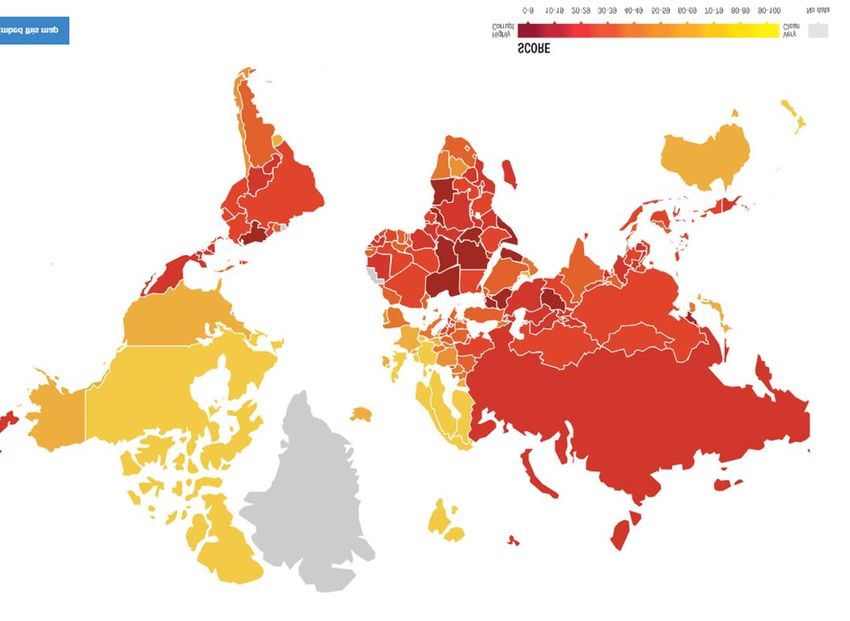
Thailand has dropped for the third consecutive year in the Corruption Perceptions Index
(CPI). Even though the country has the same score as previous year; 36 of 100, Thailand Despite
is ranked at 101st place of all countries in 2019, a drop from 99th last year. Compared to
its ASEAN neighbours, Vietnam (96th), Indonesia (85th), Malaysia (51st) and Singapore numerous
(4th) are all doing better. efforts to
combat
Both the government and the business community have campaigned for anti-corruption
efforts. However, it seems that the society sees only modest development in the area. The corruption,
CPI reflects the situation from the perceptions of business people. Several scandals Thailand –
involving the elites and people close to the government have affected public confidence in amongst
the area.
other Asian
CORRUPTION PERCEPTION INDEX 2018 countries –
scores low
SOURCE: Transparency International.
B U S I N E S S C L I M A T E S U R V E Y F O R S WE D I S H C O M P A N I E S I N T H A I L A N D 2 0 2 0 | 22ACTING SUSTAINABLY
The sustainability agenda
Environmental concerns have been growing among businesses in Thailand and Thai
consumers. Thai consumers increasingly expect businesses to act with a degree of
environmental responsibility. We see an increasing number of projects and activities from
the business community promoting environmentally friendly solutions and sustainability in
general.
Research conducted by Mahidol University found that 37% of the respondents were
committed to “green products” and willing to pay more because of environmental concerns.
Meanwhile, another 15% would agree to pay more for green products due to the prevailing
trends. The rest admits that it is difficult to support green products because of
inconvenience and of price sensitivity.
In every business area – Industrial, Professional Service, Consumer – the dominant
sentiment is the same; customers consider environmental aspects in their purchase only
to a little or very little extent. There is no push from the customers, instead they rather care
about the product specifications and price point. Even though there seems to be a limited
interest in environmental aspects in the purchasing decision, the majority of the surveyed
claim that sustainability is on the agenda and something they work with locally.
TO WHAT EXTENT DO CUSTOMERS IN YOUR INDUSTRY/BUSINESS AREA IN
THAILAND CONSIDER ENVIRONMENTAL ASPECTS OF A PRODUCT OR SERVICE
“
IN THEIR PURCHASING DECISION?
If there are
FROM LITTLE TO GREATLY
some
environmental
70% or social
benefits
60%
associated
50% with the
product it is a
40%
positive
30% characteristic
20%
for the
customer – but
10% not sufficient
0%
for the buying
Very little or little To some extent Much or very much decision.
Sustainability &
NOTE: The number of respondents for this question was 40. “Not applicable” responses are not included. Communications Director
SOURCE: Business Climate Survey for Swedish Companies in Thailand 2020.
Large Swedish Consumer
Company
B U S I N E S S C L I M A T E S U R V E Y F O R S WE D I S H C O M P A N I E S I N T H A I L A N D 2 0 2 0 | 23CONTACT US
BUSINESS SWEDEN
carl.lindwall@business-sweden.se
johanna.winsa@business-sweden.se
panakorn.dejthumrongwat@business-sweden.se
B U S I N E S S C L I M A T E S U R V E Y F O R S WE D I S H C O M P A N I E S I N T H A I L A N D 2 0 2 0 | 24B U S I N E S S C L I M A T E S U R V E Y F O R S WE D I S H C O M P A N I E S I N T H A I L A N D 2 0 2 0 | 25
You can also read


