THE CODE OF PLM OPENNESS - FROM COMMITMENT TO PRACTICAL APPLICATION. Dr. Markus Fricke BMW Group IT IT Systems Research & Development - prostep ivip
←
→
Page content transcription
If your browser does not render page correctly, please read the page content below

THE CODE OF PLM OPENNESS
FROM COMMITMENT TO PRACTICAL APPLICATION.

 Dr. Markus Fricke                          Dr. Dietmar Trippner
 BMW Group IT
 IT Systems Research & Development

AGENDA.

     Current status @ BMW Group and in the initiative "Connected Engineering"

     CPO: Overview and motivation @ BMW Group

     Using CPO to support Connected Engineering objectives

     CPO@ Bosch, Continental, Daimler and Volkswagen

Thema | Abteilung | Datum                                                       Seite 2
AGENDA.

     Current status @ BMW Group and in the initiative "Connected Engineering"

     CPO: Overview and motivation @ BMW Group

     Using CPO to support Connected Engineering objectives

     CPO @ AVL, Bosch, Conti, Daimler, Schaeffler and VW

Thema | Abteilung | Datum                                                       Seite 3
VUCA – THE NEW NORMAL.

                       V U C A
                            Volatile   Unpredictable   Complex   Ambiguous

Thema | Abteilung | Datum                                                    Seite 4
Thema | Abteilung | Datum Seite 5
THE BMW GROUP IT ORGANIZED IN A WORLDWIDE NETWORK.

60 Nationalities in 29 Countries                                                                       BMW GROUP IT.
form the global BMW Group IT network in headquarters, in markets, in                                        5.500 employees
shared service centers and in innovation locations (tech offices).

230 products and a complete product orientation                                                                          BMW Group IT
                                                                                                                         Europe
optimize existing business processes and enable new business areas.         Tech Office       BMW Group IT
                                                                           Silicon Valley     Americas                                               BBA IT (Joint Venture)
                                                                                                             SSC PORT.
694 Locations                                                                               Shared Service
                                                                                            Center USA
                                                                                                             CTW
                                                                                                             (Joint Venture)                          Tech Office Asia

(Sales cooperation, offices, …) are connected through the global network                                                                           BMW Group IT
infrastructure.                                                                                                                                    APAC

                                                                                                                               SAP Shared

~ 12,200,000 Vehicles                                                                                                          Service Center ZA

are connected with the BMW Group ConnectedDrive Backend.

~ 1,000,000,000 Requests
to the BMW Group backend through ConnectedDrive are processed daily.

Thema | Abteilung | Datum                                                                                                                                            Seite 6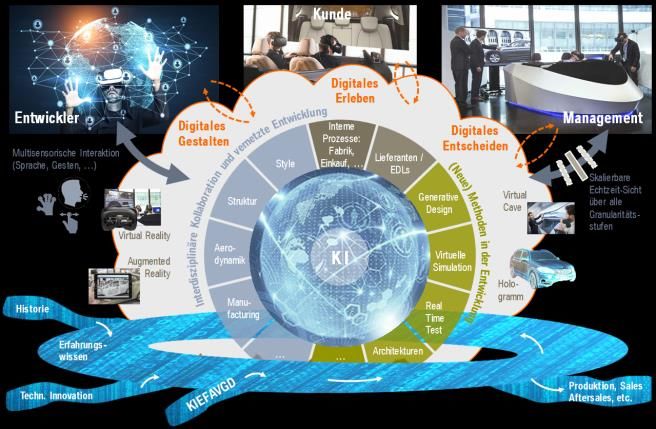
OUR ANSWER: FOCUSED IT STRATEGY AND 100% AGILE.

                                                DIGITALIZATION
                IT IN THE                     (ltO,OtO,OtD,DtCC, BM/RM)
              PRODUCT & IN                         BUSINESS
                SERVICES                          INNOVATION

                               BMW GROUP IT
                                 Strategy                                                              100% AGILE

                                  #enjoyIT
                                                                                                 From
                                                                                      plan-driven to value-driven
         CUSTOMER-CENTRIC                            PEOPLE &                            software development
         IT SERVICE-DELIVERY                         CULTURE
                                                                          WATERFALL

                                                     FLEXIBILITY & SPEED
Thema | Abteilung | Datum                                                                                           Seite 7
100% AGILE IS NOT A BUZZ WORD FOR US.
IT’S A HOLISTIC JOURNEY ALONG 4 CORE DIMENSIONS.

                            PROCESS                   TECHNOLOGY

                            STRUCTURE   100 % AGILE    CULTURE

Thema | Abteilung | Datum                                          Seite 8
ACHIEVEMENTS THROUGH 100% AGILE IN VARIOUS DIMENSIONS SO FAR.

                                                Hybrid environment (Creative & Dynamic)
                                                      with little restrictions to other systems
                                    and loads of requirements that need to be fulfilled in a short period of time

                            Custom Software                                                         PLM-Software
          implementation with high level of                                                         implementation with high level of complexity
           complexity for a huge number of                           TECHNOLOGY                     and interfaces to several core systems for a
                           worldwide users                                                          huge number of users

                                                           Standard Software
                                                            with deep integration and
                                                        high operations / usability impact

Thema | Abteilung | Datum                                                                                                                  Seite 9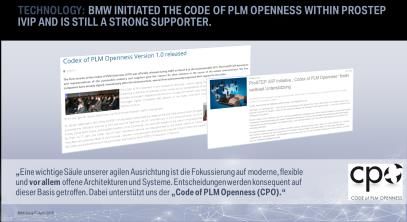
CONNECTED ENGINEERING:
FROM AGILE IT TO AGILE ENTERPRISE. From V to I
→ Continuous, agile & virtual engineering
Erfahrungswissen
Signifikante Reduktion
der HW -Absicherung
Techn. Innovation HW Produkt
Knowledge Stream Akt. Modell
Datenbackbone
Anforderung
→ Enterprise backbone to strenghten virtual, collaborative engineering Partner
Gesamtfzg /
Kontinuierliche
virtuelle
Außenhaut Kontinuierliche
Absicherung
digitale Kollaboration
HMI System
In der virtuellen W elt
Client
Kunde
Komponente
Services
Gesetze
Hologram
configuration
virtual car
geometric
validation … Globale Entwicklung
functional
validation …
Virtual Product Experience
→ Handshake between engineer and AI
Artificial Intelligence
Knowledge Stream
Targets & Modules Type codes logical service backbone
Requirements
GeoTDM E/E Knowledge Mgmt
Geometry Function Cost / Financials Production planning …
Thema | Abteilung | Datum Seite 10AGENDA.
Current status @ BMW Group and in the initiative "Connected Engineering"
CPO: Overview and motivation @ BMW Group
Using CPO to support Connected Engineering objectives
CPO@ Bosch, Continental, Daimler and Volkswagen
Thema | Abteilung | Datum Seite 11CPO@BMW GROUP.
BMW GROUP’S ROLE WITHIN THE PROSTEP ASSOCIATION.
BMW Group demonstrates a long–term dedication in insisting on open PLM systems and supporting the development of PLM standards.
− As a founding member of the prostep association, BMW Group actively drives
PLM standardization since >35 years
− BMW Group continues its engagement with prostep in current topics, e.g. SSB
CeBIT 2012: Approval of the
CPO v1.0 by BMW Group CIO K. Probst
− An open PLM architecture is a visible key element of BMW Group’s PLM strategy
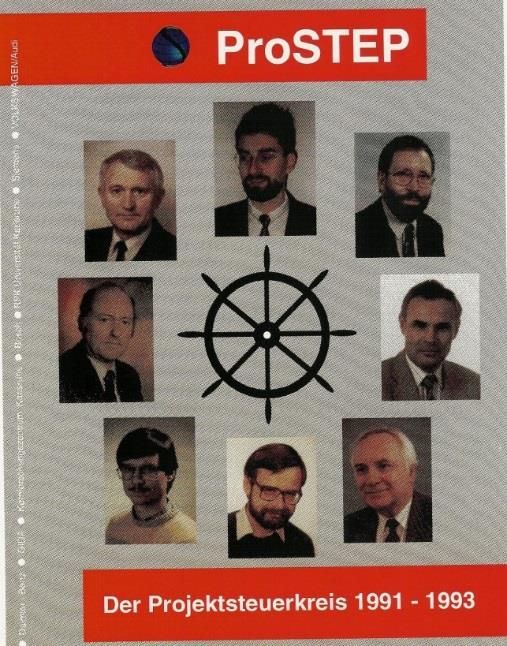
(Photo:automotive Day 2012) − BMW Group initiated the CPO in 2012 and was the first enterprise to sign the CPO
1991: BMW Group initiates
the ProSTEP project
Prostep iViP Symposium 2018: CIO K. Straub
underlines importance of CPO for beeing agile.
Thema | Abteilung | Datum Seite 12CPO@BMW GROUP.
VALUE POTENTIAL.
The CPO value potential has been confirmed in various initiatives at BMW Group:
Optimization of business applications:
− Best-in-class solutions regarding both functionality and TCO
− Speed and flexibility for process optimizations
IT cost reduction for:
− Integration of new applications/systems
− Releases, respectively version or system changes
− Maintenance and operations
Better collaboration between vendors, integrators and users:
− Common understanding und terminology regarding PLM openness
− Rules and agreements realization and adherence to openness
Thema | Abteilung | Datum Seite 13AGENDA.
Current status @ BMW Group and in the initiative "Connected Engineering"
CPO: Overview and motivation @ BMW Group
Using CPO to support Connected Engineering objectives
CPO@ Bosch, Continental, Daimler and Volkswagen
Thema | Abteilung | Datum Seite 14USING CPO TO SUPPORT CONNECTED ENGINEERING.
Services
Hologram
configuration
virtual car
geometric
validation
Focus of the initiative functional
…
„Connected Engineering“ validation …
Engineering Künstliche Intelligenz
− Flexible engineering structures
− Geometry and function combined
Informationsdurchgängigkeit
− Enabler for agile collaboration
PDM
Wissensmagagement
Geometric Geom. Functional Hardware
Development Integration Development Verification
− Master data
− E-BOM Logistics / Production View
− M-BOM
… …
Codex of PLM Openness: Base for cross-domain and cross-solution consistency
Thema | Abteilung | Datum Seite 15CPO IS A PREREQUISITE FOR ALL DATA MANAGEMENT SOLUTIONS IN THE
CONTEXT OF CONNECTED ENGINEERING.
Services
Hologram
configuration
virtual car
geometric
validation …
functional
validation …
Künstliche Intelligenz
Engineering Informationsdurchgängigkeit
− Flexible engineering structures Wissensmagagement
− Geometry and function combined
− Enabler for agile collaboration
CPO has been established as prerequisite for
standard software and hybrid scenarios.
Geometric Geom. Functional Hardware
Development Integration Development Verification
… … Initial strategy phase: Strategic guidelines for Data layer
- Clear strategic vision - Process development - business / IT
- Scoping, approach, setup - Technical development information model
- Top mgmt commitment (geom. & funct. development)
Thema | Abteilung | Datum Seite 16MANIFESTATION OF CPO ADHERENCE IN GUIDELINES, APPROACH AND
ORGANIZATION.
BMW Group Target
Manifestation of the CPO
in vendor selection BMW Group approach for standard software
and solution design Prerequisite
Level of
Openness
Ongoing evaluation (KPI) and
3 predefined actions in case of
deviations CPO has been established as prerequisite for standard software and hybrid scenarios.
Bilateral contractual obligation to
2 openness
Signed CPO / Initial strategy phase: Strategic guidelines for Data layer
1 certified Vendor - Clear strategic vision - Process development - business / IT
- Scoping, approach, setup - Technical development information model
- Top mgmt commitment (geom. & funct. development)
Thema | Abteilung | Datum Seite 17CPO@BMW GROUP. Thema | Abteilung | Datum Seite 18
AGENDA.

     Current status @ BMW Group and in the initiative "Connected Engineering"

     CPO: Overview and motivation @ BMW Group

     Using CPO to support Connected Engineering objectives

     CPO@ Bosch, Continental, Daimler and Volkswagen

Thema | Abteilung | Datum                                                       Seite 19
FROM COMMITMENT TO PRACTICAL APPLICATION
80 Committed CPO-Partners – but how does the practical application look like ?
IT Customers IT Vendors IT Service Provider
▪ Adient ▪ Mazda Motor ▪ Actano ▪ IBM ▪ Atos
▪ Airbus ▪ Mitsubishi Motors ▪ Aras ▪ IPG Automotive ▪ CADFEM
▪ Altran ▪ Nissan Motor ▪ Autodesk ▪ ISD ▪ :em
▪ BMW ▪ Porsche ▪ AVL List ▪ Kronion ▪ enso managers
▪ Bosch ▪ Schaeffler ▪ BETA CAE Systems ▪ MathWorks ▪ InMediasP
▪ Continental ▪ Siemens ▪ BOS ▪ Mentor Graphics ▪ iqs Software
▪ Daimler ▪ SMP Group ▪ Cideon ▪ Modelon AB ▪ M.E.B.
▪ Dräxlmaier ▪ Suzuki Motor ▪ CONTACT Software ▪ Müller-BBM ▪ MetaRatio
▪ EDAG ▪ thyssenkrupp ▪ CONWEAVER ▪ Noesis Solutions ▪ NTT Data
▪ Ford ▪ Toyota Motors ▪ Dassault Systèmes ▪ PROSTEP ▪ Seeburger
▪ Fuji Heavy Industries ▪ Volkswagen ▪ dSPACE ▪ PTC ▪ SSC-Services
▪ Hino Motors ▪ Volvo AB ▪ ECS ▪ Rocket Software ▪ T-Systems
▪ Honda R&D ▪ Yamaha ▪ Elysium ▪ SAP ▪ xPLM
▪ Isuzu Motors ▪ Yazaki ▪ ESI ITI ▪ Siemens PLM
▪ Küster ▪ ZF Friedrichshafen ▪ Eurostep ▪ TechniaTranscat
▪ Gamma Technology ▪ Theorem
▪ HCL
Thema | Abteilung | Datum Seite 20FROM COMMITMENT TO PRACTICAL APPLICATION
An initiative of the prostep ivip association
Practical application of users Certified vendors
presented at the presented at the
prostep ivip symposium 2019 prostep ivip symposium 2018
Thema | Abteilung | Datum Seite 21CPO@WORK
Strategic fields of action using CPO in business
Thema | Abteilung | Datum Seite 22
22 10.04.2019 © Dr. Dietmar TrippnerCPO@INDUSTRY_IN_9/2018
Evaluation of the questionnaires (10 of 11 companies)
1 CPO Umsetzung (Werte von 0 bis 1)
0,9
0,8
0,7
0,6
0,5
0,4
0,3
0,2
0,1
0
1. PLM Strategie 2. PLM 3. Requirement 4. Metric 5. Utilization Plan 6. Internal and 7. Execution in IT 8. Execution in
Architektur Set external Department Purchase
Communication Process
Bester Mittelwert
Thema | Abteilung | Datum Seite 23
23 10.04.2019 © Dr. Dietmar TrippnerCPO@BOSCH
CPO@BOSCH
                                                                                        ProStep IVIP Symposium 2019

STEP BY STEP IMPLEMENTATION OF CPO@BOSCH

06/2018 : CPO Announcement / Communication
          CPO continuously proposed as one of the decision making instruments for
          future engineering IT architecture and tool decisions
03/2019 : Preparation of HPLM Initiative.
                        CPO defined as one of the guiding principles for the upcoming
                        holistic PLM Architecture
07/2019 : Definition of Bosch required details, scope, setup of training material
                        CPO will be announced to and trained with the organisation
                        (Architects, Purchasing etc.)
01/2020 : Start of the HPLM program
          Continuous use of CPO in architecture / vendor decision of the
          HPLM program

2
 Thema | Abteilung | Datum                                                                                            Seite 25
5
Bitte decken Sie die schraffierte Fläche mit einem Bild ab.
Please cover the shaded area with a picture.
(24,4 x 13,2 cm)
CONTINENTAL
Codex of PLM Openness
www.continental-corporation.com27
CPO IS OUR REFERENCE FOR THE STANDARDISATION
2.1 Interoperability 2.5 Standards
▪ IT customers shall be able to realize system ▪ IT vendors should support
integration, on their own or via third parties relevant standards and document
▪ Customers shall have access to their data their usage. IT vendors shall
▪ Therefore IT interfaces shall be provided by the IT provide a list of the standards
vendors that support openness
2.2 Infrastructure
▪ The IT customer and the IT vendor shall share 2.6 Architecture
lifecycle planning ▪ If applicable, the IT system shall
have a clear and documented
2.3 Extensibility separation of the individual tiers
▪ IT vendors shall provide development
environments
▪ In case of an IT system upgrade, IT vendors should
endeavor that the application of extensions realized
by IT customers (or by third parties commissioned 2.4 Interfaces
by these IT customer) is unaffected ▪ IT vendors should offer the same IT interfaces to IT customers
(or third parties commissioned by these IT customers) as those used internally by the IT vendors
Source dreiconsult.
10 April 2019
Automotive IT ©
Thema | Abteilung | Datum Seite 27
Continental AGDRIVING STANDARDS IS A SUCCESS STORY
› Continental is driving standardisation
JT, ReqIF, Standardization Strategy Board
› Open Standards are the fundament for the Digitalization
› Standard format usage (*):
JT, AP242-XML, ReqIF, PDF, ASAM …
› Interaction of open and standardized formats
JT ReqIF, JT STEP-XML , JT SysML
› Cross- discipline collaboration wherever,
whenever
› Continental is putting emphasis on open PLM system
*) Excerpt of usage of standards
10 April 2019
Automotive IT © Continental AG 28
Thema | Abteilung | Datum Seite 28CODE OF PLM OPENNESS INTRODUCTION AT IT4RD | DAIMLER AG HAASIS | EDIG | HANDSCHUH
WHY IS CPO KEY FOR DAIMLER

Usage &
Benefits
                                                 CPO is used on
                                                application level

                              CPO is used on organisational level
                                                                                                               DAI

                                                                                             Member of CPO Coreteam
                                    today                                  Time

                                   The CPO is important for Daimler to ensure open PLM architectures, system landscapes
               Conclusion
                                   and to enforce the usage of Engineering-IT standards | Aiming for efficient PLM processes

  Thema | Abteilung | Datum                                                                                                            Seite 30
                                                                                              Haasis, Edig, Handschuh | Daimler AG   Seite   30
STEPWISE INTRODUCTION OF THE CPO AT IT4RD
2018: Existing IT4RD Architecture Model is the foundation; based on 5 Joint
Priorities (DevOps&Cloud | Security&IAM | FOSS | API | People in IT) Customer
Employee Partner
2019: Daimler Application Assessment (DAA) is introduced; based on the CPO
(open architectures | best integrability | based on Eng.-IT standards)
2020: Sourcing departments are informed and use this assessment for
PDM
Smaragd BOM
Dialog E/E
EPDM SNR
SRM
the sourcing of all new applications (beginning from 2020) 2-/1-Speed Architecture
Beginning from 2020 the CPO criteria will be used for all new (sourced) Engineering-IT
Conclusion
applications while using the tool specific CPO criteria in accordance to their development
Thema | Abteilung | Datum Seite 31
Haasis, Edig, Handschuh | Daimler AG Seite 31CPO@VOLKSWAGEN GROUP
33
     CPO SOLL ZUKÜNFTIG BEI EINKAUFSENTSCHEIDUNGEN VON IT-SYSTEMEN
     ANGEWENDET WERDEN

                                                           Prüfung auf CPO-Zertifizierung vom TÜV

                                 Ability to Execute                                                                                 Completeness of
                                 Scorecard                                                                                          Vision Scorecard
                                                           Ability to
                                                           execute
                                                                             Vendor
                                       Code of
                                       PLM
                                                                100 %
                                                                               a            ?                                                Fit to
                                       Openness                                                                                              Capability
                                       (CPO)

                                                    +                                                                           +
                                       Technical
                                       Maturity                  50%
                                                                                                     ?
                                       Model
                                       (TMM)
                                                                                                    Vendor
                                                    +                                                 b
                                       Standard
                                       Daten-
                                       austausch-                       0%
                                                                                      50%                100 %   Completeness
                                       formate
                                                                                                                   of Vision

                                                        Prüfung des CPOs an Hand technischer
                                                                  Qualitätskriterien

     Thema | Abteilung | Datum                                                                                                                            Seite 33
34
TECHNICAL MATURITY MODEL (TMM)
8 QUALITÄTSKRITERIEN FÜR NACHHALTIGE SOFTWARE
Relevant für CPO-Bewertung
Integrationsfähigkeit Cloud-Fähigkeit
Codequalität Deploybarkeit
Testbarkeit Betreibbarkeit
Open Source
Sicherheit
Compliance
Thema | Abteilung | Datum Seite 3435
PRÜFUNG DER CPO KRITERIEN IM DETAIL
CPO Kriterium Zusammenfassung Beschreibung aus CPO Prüfung des CPO Kriteriums bei VW durch
Interoperability IT system has the ability to be integrated into different environments and that it has to
communicate efficiently with various other IT systems. TMM: Integrationsfähigkeit
Infrastructure IT system can be integrated into an existing or planned IT infrastructure environment
from perspective of network and system platforms (hardware, OS). TMM: Cloud-Fähigkeit
Extensibility IT customers have the option of extending the functionality of an IT system in order to
implement required process adaptations and to map their own know-how in the IT TMM: Integrationsfähigkeit
system.
Interfaces IT customer need access to available, documented and performing IT interfaces.
TMM: Integrationsfähigkeit
Standards The term “standard” as used here is synonymous with norm, standard, industry Use-Case spezifische Betrachtung der Standard-
standard, vendor-specific standard. Standards are used as far as possible in all aspects Formate
of openness (interoperability, IT infrastructure and extensibility). (z.B.: ReqIF im Anforderungsmanagement)
Architecture IT customers need access to the individual components so that:
- they can create GUIs (clients) for specific user groups which leverage the capabilities of
the different IT systems, and TMM: Integrationsfähigkeit + Cloud-Fähigkeit
- administration and continued operation of the different layers (e.g. OS, DB, application
and client) can be delegated to the appropriate internal organizations.
Partnership, IT Third-party solutions are supported. Requirements of IT customers and their purchasing
customers, IT vendors, behavior influence the further development of the openness of marketable IT systems. Aktuell nicht betrachtet
IT service providers
Thema | Abteilung | Datum Seite 3536
„SCHNITTSTELLEN-HÖLLE“
Ist-Stand Vision
IT-System 1 IT-System 2 IT-System 1 IT-System 2
SOAP per ESB*
SOAP-Adapter 1
Export
Export
SOAP ohne ESB* REST-API Adapter 1 REST-API
SOAP-Adapter 2
SOAP Adapter 1 RVS (File-Transfer)
Import
MQ-Adapter 1
Import
REST-API Adapter 2
MQ-Adapter 2 IT-System 3 IT-System 3
RVS Adapter 1 MQ
Export
Export
RVS Adapter 2 Proprietäre API REST-API
REST-API Adapter 3
Propietärer Adapter 1 RVS (File-Transfer)
Propietärer Adapter 2
SOAP per ESB* IT-System 4 IT-System 4
Export
Export
REST-API
MQ MQ
Export
Export
RVS (File-Transfer) SOAP per ESB* REST-API
Proprietäre API
Thema | Abteilung | Datum *ESB = Enterprise Service Bus Seite 3637
BEWERTUNG DER INTEGRATIONSFÄHIGKEIT MIT TECHNICAL MATURITY MODEL
Richardson Level 3: Automatisch
▪ Selbsterklärende Namen
TMM Level 3
Hypermedia Controls generierte API-
▪ Dokumentation (> 80%) Dokumentation
oder
▪ Zugriff auf alle wichtigen
Richardson Level 2: (z.B.: mit Open
Funktionen und Daten
HTTP Verbs API Specification)
Richardson Level 1:
▪ Selbsterklärende Namen
TMM Level 2
Resources
▪ Dokumentation (> 80%)
oder
▪ Zugriff auf alle wichtigen
Richardson Level 0:
Funktionen und Daten
XML-File-Transfer
Quellen: https://martinfowler.com/articles/richardsonMaturityModel.html
https://www.crummy.com/writing/speaking/2008-QCon/act3.html
Thema | Abteilung | Datum https://www.ics.uci.edu/~fielding/pubs/dissertation/rest_arch_style.htm Seite 37CPO@WORK - SUMMARY
practical application of the CPO:
• part of the PLM strategy
• used for PLM architecture planning
• considered in their purchasing
processes
e.g. CPO certification of vendors
• used for interoperabilty management
in large projects
• company specific openness
requirements defined
Thema | Abteilung | Datum Seite 38
38 10.04.2019 © Dr. Dietmar TrippnerCPO@WORK
CPO use cases as suggestions for active operational use of the CPO
UseCase 1: Development of an agile PLM strategy
The CPO is the basic building block for an agile PLM strategy. The strategic goals attached to the CPO are transferred to a
company-specific PLM target picture. The implementation of the strategy is largely guided by the principles of openness.
UseCase 2: Design of an adaptive PLM architecture
The CPO supports the objective of a flexible and adaptive development. This is done on the basis of an n-tier architecture as well as
interfaces and standards for integrating individual functional components. The process design and the required integrated
network are strictly based on the rules of the CPO.
UseCase 3: Specifying openness criteria for system selection
The specifications on system openness defined by the CPO provide a reference for defining the requirements necessary for an open system. Self-
defined KPIs help to make openness measurable and comparable.
UseCase 4: Integrating the CPO into the purchasing process
The compliance rate of CPO-relevant requirements, the CPO vendor commitment, and the CPO organization certificate are used as
input values in the selection of suppliers.
UseCase 5: Set of CPO rules for PLM projects
The consistent compliance with CPO-based regulations by all employees and partner companies on a project team leads to a
modular, open and standard-based solution.
Thema | Abteilung | Datum Seite 39
39 10.04.2019 © Dr. Dietmar Trippner16:15!
Workshop
CPO Workshop für Anwender und Systemanbieter
Dr. Dietmar Trippner, dreiconsult
Dipl.-Ing. Michael Hertwig, Fraunhofer IAO
Thema | Abteilung10.04.2019
| Datum Seite 40THANK YOU
FOR YOUR ATTENTION !
Thema | Abteilung | Datum Seite 41
41 10.04.2019 © Dr. Dietmar TrippnerBACKUP
Thema | Abteilung | Datum Seite 42
42 10.04.2019 © Dr. Dietmar TrippnerAUSGANGSSITUATION UND BEDEUTUNG DES CPO
PLM Kontext und Thesen
▪ Offene PLM Systeme und Bebauungsarchitekturen gewinnen in
einem zunehmend dynamischen Markt noch mehr an
Bedeutung da:
➢ der Zugriff auf Informationen bzw. Daten über Systemgrenzen
hinweg eine immer größere Bedeutung für die Digitalisierung und
Neugestaltung der Geschäftsprozesse hat
➢ eine schnelle Anpassungsfähigkeit der Prozesse und
Systemfunktionen noch wichtiger wird
➢ die Integrationsaufwände leistbar sein müssen und
➢ die Gesamtkomplexität dabei beherrschbar bleiben muss
▪ Der Code of PLM Openness (CPO, DIN SPEC 91372 ) und die seit
4/2018 mögliche Zertifizierung der Systemanbieter leisten
einen wichtigen Beitrag, diese Ziele zu erreichen:
➢ wenn die Grundsätze des CPO zum festen Bestandteil einer PLM
Bebauungsstrategie werden und
➢ wenn Anwender und Systemanbieter darauf aufbauend
technische, prozessuale und vertragliche Vereinbarungen
vornehmen
Thema | Abteilung | Datum Seite 43
43 10.04.2019 © Dr. Dietmar TrippnerCPO FÜR ANWENDER UND SYSTEMANBIETER
Überblick
▪ Die Initiative wurde vom prostep ivip Verein 2013 gestartet
▪ Ziel: Plug&Play bei der PLM Systembebauung
▪ Die Spezifikation umfasst nur 18 Seiten und ist seit März 2018 als
DIN SPEC 91372-1 genormt
▪ Der CPO beschreibt Eigenschaften offener PLM Systeme. In ihm sind
messbare Kriterien in Form von ‚muss’, ‚soll’ oder ‚kann’ Bedingungen
zu den Kategorien: Interoperabilität, Infrastrukturen, Erweiterbarkeit,
Schnittstellen, Standards, Architekturen und Partnerbeziehungen
festgelegt
▪ Das Bundesministerium für Wirtschaft ist Schirmherr des CPO und
der CPO ist ein eingetragenes Markenzeichen
▪ Für PLM Systemanbieter besteht die Möglichkeit, sich beim TÜV Nord
bezüglich der Einhaltung von Standards bei der Entwicklung und
Vermarktung offener PLM Systeme zertifizieren zu lassen
Thema | Abteilung | Datum Seite 44
44 10.04.2019 © Dr. Dietmar TrippnerCPO (DIN SPEC 91372-1)
Übersicht zu den Inhalten
Der Code of PLM Openness (CPO) beschreibt Eigenschaften offener PLM Systeme. In ihm sind messbare
Kriterien in Form von ‚muss’, ‚soll’ oder ‚kann’ Bedingungen zu den Kategorien:
Interoperabilität, Infrastrukturen, Erweiterbarkeit, Schnittstellen, Standards, Architekturen und
Partnerbeziehungen festgelegt.
Mit der Unterzeichnung des CPO
bringen Systemanbieter eine
Selbstverpflichtung für die
Einhaltung dieser Kriterien zum
Ausdruck.
Auf Grundlage des CPO können
auch konkrete Vereinbarungen
zwischen Vendoren und Anwender
definieren und festgehalten
werden.
Thema | Abteilung | Datum Seite 45
45 10.04.2019 © Dr. Dietmar TrippnerInput for strategic devleopment and implementation
CPO USECASES Example
„HAF, IoT etc. move the industry without anybody knowing all the requirements and options today. I want
to be able to respond rapidly and flexibly to changing requirements of the market in my own strategy and
Use Case 1: Development of an agile PLM strategy to use/integrate new technologies in my IT landscape.“
Scheme for a strategic development: Strategic goals supported by the CPO
• Usage of best-in-class solutions with regards to functions and costs
Vision, Direction and Goals • Speed and flexibility for process optimization
Derive sub-goals, prioritize and build hierarchies • Potential ad-hoc integration of new applications/systems
Effectivity
Define strategic framework Efficiency • Minimization of the use of resources for release, version or system changes
• Reduction/Control of process complexity (through modularization)
Information
Applicable Methods
Thinking & Acting
Starting situation (own situation and environment), trends - procure, Strategy- related information
• CPO specification (DIN Spec 91372 ) and explanations www.prostep.org/cpo
Fundamental
analyze, evaluate and form hyphotheses
• Overview of CPO-certified vendors www.prostep.org/cpo/zertifizierung
facilitates
requires
Approach
conceptualize, consider alternatives, evaluate, specify, • Vendor information on supported standards and CPO requirements
deallocate, communicate, implement, adapt
Approach:
Resources • Identification of action fields and assessment of their potential
analyze, plan (define scenarios), evaluate, apply
• Positioning of the CPO in the integration strategy
Time • Assignment of actions fields with measures and implementation plan
• Developing process for application incl. check list (also including e.g. purchasing)
Short-term long-term
• Specifying technical requirements for relevant systems
• Organizational and economic definitions
Resources:
• Architecture and development planning (Personal contribution and if necessary PLM
© Dr. Dietmar Trippner service provider)
• Interface and standard expertise (generally through PLM service provider)
Thema | Abteilung | Datum Seite 46
46 10.04.2019CPO USECASES
Use Case 2: Design of an adaptive PLM architecture
Example of recommendations for the design of an adaptive PLM
architecture
Recommended architectures from the Statement of Principles The CPO defines substantial requirements for an adaptive PLM architecture
Theories on Future PLM (extracts)
1) Monolithic systems are outdated - Against the backdrop of increasing product and 6.6 Architecture
process complexity monolithic solutions are no longer adequate. Nor is there only ONE The IT architecture comprises the components making up an IT system, the
system for all processes and participants in the product lifecycle. We need federated relationships between these components and the way in which they interact and have
semantic networks, which link digital models distributed on different subsystems (e.g. data been integrated. IT customers need access to the individual components so that:
from the design phase, series development and use of the product in the field). ▪ they can create GUIs (clients) for specific user groups which leverage the
2) PLM systems must become more open - Openness as defined by the Code of PLM capabilities of the different IT systems, and
Openness (CPO) is a necessary condition for the implementation of future PLM
architectures and all built-in systems and components. This contrasts immensely with the
▪ administration and continued operation of the different layers (e.g. OS, DB,
application and client) can
self-contained applications of some IT technology providers. Successful PLM systems
be delegated to the appropriate internal organizations.
provide flexible configuration possibilities and open interfaces for data exchange and data
linking.
6.6.1. The IT system shall have a documented architecture, including all given tiers.
3) Future PLM must be adaptable – Future PLM architectures must be based on consistent 6.6.2. If applicable,
but expandable master and structural data but should provide functional components the IT system shall
which are autonomously and flexibly adaptable to modified processes and organizational have a clear and documented
structures. They have to be dynamically adaptable because data models are modified on a separation of the individual
regular basis and as the processes in the organization change so do the owners of the tiers (e.g. n-tier architecture,
individual data objects. peer-to-peer etc.).
4) Successful PLM implementation is more than a system change – New PLM architectures
cannot be implemented by an exchange of systems but have to be adapted continuously
to changing business models and business processes. Prerequisites for this are
standardized services, cross-system integration layers, semantic networks for data links
and role specific application functions.
5) Data linking instead of synchronizing – A modular IT architecture with best-of-breed
solutions ensures a flexible and user-friendly work environment. Context information from
third party systems can be provided via persistent linked data layers across system 6.6.3. If applicable, it should be possible to adapt the tiers independently of one
boundaries, process boundaries and company boundaries. This linked data layer is also a another. This applies in particular to the presentation tier.
prerequisite for efficient MBSE processes.
Source: prostep ivip e.V. 2016
Thema | Abteilung | Datum Seite 47
47 10.04.2019 © Dr. Dietmar TrippnerCPO USECASES
CPO UseCases
Use Case 3: Specifying openness criteria for system selection
Example of an assessment table on PLM openness Openness criteria for a PLM system evaluation can be derived from the CPO
for system selection
source: GAAG 29.1.2014
Thema | Abteilung | Datum Seite 48
48CPO USECASES
Use Case 4: Integrating the CPO into the purchasing process
On the basis of CPO openness criteria, agreements can be made in the procurement process
between user companies and vendors, pertaining to financial arrangements in the case of
fulfillment/non-fulfillment, and defining additional technical arrangements with regards to
the availability of interfaces and standards.
Source of figures based on New PROLAMAT 2013,
Thema | Abteilung | Datum Seite 49
49 10.04.2019 © Dr. Dietmar TrippnerCPO USECASES
Use Case 5: Set of CPO rules for PLM projects
In order to achieve as project result an open solution within the meaning of the CPO, it is useful to
take the following points into account in project planning, implementation and controlling:
Project organization (only CPO relevant point are listed)
• Organization of subprojects according to the primary goals functionality and effect radius
with demand for integration
• Creation of a project function: architecture, compatibility, & standards
Requirements management for project solution (only CPO relevant point are listed)
• Stability evaluation of requirements (in case of low stability, expandability and modifiability
:
with higher priority have to be ensured) Fig.: 1
• Evaluation of effect radiuses for individual functions (in case of a large effect radius generally
especially high integration requirements do apply (Fig. 1)
• Derivation of requirements reg. demand for integration, flexibility, & expandability
Solution concept (only CPO relevant point are listed)
• Assignment requirements and application functions
• Clustering of functions according to effect radius and demand for openness
Solution architecture (only CPO relevant point are listed)
• Assignment of function cluster to possible solution components (in-house dev. and purchase)
• Orientation along CPO architecture principles, identification of necessary interfaces
• Identification and selection of solution-relevant standards (Fig. 2)
• Selection of purchase solutions according to functional requirements and CPO openness Fig. : 2 Source protep ivip e.V. 2018
criteria reg. technology, partnership, release and version management
Thema | Abteilung | Datum Seite 50
50 10.04.2019 © Dr. Dietmar TrippnerAGILE PLM STRATEGY
CPO – The Key Element to an Agile PLM Strategy
Example for a direction of strategy development:
Seize opportunities ▪ Model based Systems Engineering
• Using new Technologies (with best-in-class solutions regarding functions and costs)
• Reduction of operating costs
• Process optimization ▪ Possibility of integration of new
• … applications/systems
▪ Cross discipline configuration management
Continuous
(e.g. Interdisciplinary integration of ALM-PLM-ERP)
Starting point strategy process Goals 1….n
▪ “Digital Master” for end to end processes
Strategy PLM architectural
•Principles foundation
of development
Principles of a development
•e.g. ▪ Supporting collaborative PLM processes
• IT Standards
• ….. ▪ Digital Worplace
▪ Reduction / control of the complexity
(product/process)
Mitigate risk &
Master crisis e.g. :
▪ Speed and flexibility in the process optimization
• Vendors-insolvency ▪ Robustness and security
• System failures
• Loss of data
…..
Page 51 | Datum
Thema | Abteilung
© Dr. Dietmar Trippner Seite 51
10.04.2019THANK YOU.
Dr. Dietmar TrippnerYou can also read


