The Parliamentary Review of Health and Social Care in Wales - Transforming Health and Care in Wales
←
→
Page content transcription
If your browser does not render page correctly, please read the page content below
The Parliamentary Review of Health
and Social Care in Wales

A Revolution from Within:
Transforming Health and Care in Wales

Final Report
January 2018
Acknowledgements
The panel has benefitted from a wide range of views, including those from service users and staff
working in, and leading, services, from many representative bodies, voluntary organisations and
independent providers of care. Welsh Government officials provided information and advice. We
are deeply grateful for the time and effort put into informing our work. We are also appreciative
of the support and advice provided by the Political Reference Group.
The project support team did a sterling job, which we greatly appreciate, in amassing evidence,
engaging stakeholders and helping the panel to synthesise its deliberations.
Contents
Foreword                                                                     4
Introduction                                                                 6
High Level Recommendations                                                   8
           Recommendation 1: One Seamless System for Wales                   10
           Recommendation 2: The Quadruple Aim for All                       12
           Recommendation 3: Bold New Models of Seamless Care –
                             national principles local delivery              13
           Recommendation 4: Put the People in Control                       17
           Recommendation 5: A Great Place to Work                           19
           Recommendation 6: A Health & Care System that’s always learning   22
           Recommendation 7: Harness Innovation, and Accelerate
                             Technology and Infrastructure Developments      24
           Recommendation 8: Align System Design to achieve results          27
           Recommendation 9: Capacity to Transform, Dynamic
                             Leadership, Unprecedented Cooperation           30
           Recommendation 10: Accountability, Progress & Pace                37
           Conclusion                                                        38
Annex A: Engagement undertaken during the review                             39
Annex B: Principles of Good Governance
Annex C: Recommendation 7 – Innovation, Technology and Infrastructure
Annex D: Terms of Reference of review
Annex E: References

Mae’r ddogfen yma hefyd ar gael yn Gymraeg.
This document is also available in Welsh.
          © Crown copyright 2018 WG33336
Digital ISBN 978-1-78903-411-0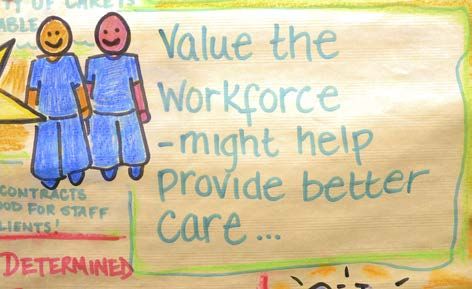
Chair’s Foreword
If the case for change is compelling, then why
hasn’t it compelled?
This year sees the 70th anniversary of the NHS; born in Wales, based on a model
developed by the Tredegar Workmen’s Medical Aid Society. The NHS continues to enjoy
huge public support. However, in the 1940s, no one foresaw that the demand for health
and care would increase rather than diminish, due to changing needs, expectations and
new forms of treatment and care. The key challenge is how public services might better
anticipate and address new demands upon them effectively. This Parliamentary Review
into Health and Social Care was established, on a cross-party basis, to advise on how
this challenge might best be met.

In our Interim Report, we emphasised that           face. The pressure for additional investment in
the current pattern of health and social care       the NHS and social care has already been set
provision is not fit for the future. We presented   out in other reports. Currently health and care
this analysis as a ‘case for change’ which showed   consume a growing proportion of the Welsh
the impact of a growing and changing pattern        Government’s budget, at the expense of other
of need, expectations of services, and the          public service areas, for example education,
challenge of securing a future workforce. We        housing and the arts, which also have a great
said those factors demand a new approach to         influence on the health and wellbeing of the
maintain and improve the quality of health          people of Wales. A key aim therefore should
and care.                                           be to maximise the value of care and by being
                                                    more efficient to enable resources to be
The current situation is of great concern for
                                                    directed to the areas that have a bigger impact
service users, health and care organisations,
                                                    on health and wellbeing.
health and social care workers, and society
more broadly. Health and social care                However, our terms of reference did not
services experience workforce shortages;            include commenting on the level and sources
Wales’ outcomes for health and care are             of funding such as how to pay for social care
not improving as fast as desired; and service       in the long-term. These remain key national
delivery is not consistently good. A risk-averse    issues. Our focus was on how to secure better
culture hampers change in the health and            outcomes. Whatever the overall envelope of
care system, and limits efficient and effective     funding, given current and future demands
decision making.                                    on the system, every pound spent must be
                                                    more effective in improving outcomes for the
On funding, the long run picture is that
                                                    users of services and for the people of Wales.
spending on health and care is outpacing the
                                                    Progress is underway, but it needs to be faster
growth in the country’s wealth – a problem
                                                    even to maintain levels of care.
that many other developed economies also

4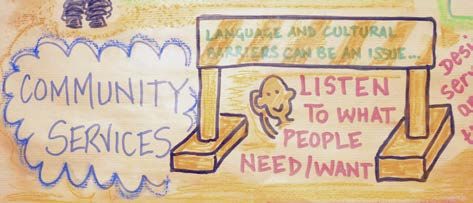
Chair’s Foreword

The extensive engagement we undertook                 means that not every issue has been addressed,
during the course of the review is set out            instead we have focused on the aspects where
in the annex. We very much appreciate the             we think change is most needed.
efforts of all those who gave their time so
                                                      Wales has the potential to overcome all of the
generously to speak and interact with us.
                                                      challenges we have identified. The strong intent
Nobody we spoke to during the course of this
                                                      to improve health and wellbeing is apparent, as
Review disagreed with our assessment that
                                                      is the desire for a high-quality NHS and social
the case for change is compelling. Decision
                                                      care system. Wales’ legislation for sustainable
makers across Wales and front-line staff dealing
                                                      development through the Wellbeing of Future
with these pressures on a daily basis share this
                                                      Generations (Wales) Act, and the Social
perception. The recurrent question we have
                                                      Services and Wellbeing (Wales) Act 2014, and
been asked is this: “If the case for change is
                                                      the Welsh Government’s new national strategy
compelling, then why hasn’t it compelled?
                                                      ‘Prosperity for All’ sets a positive and forward-
Our answer is that there has neither sufficient       looking context that many other health and
clarity of vision to guide the system nor             care systems aspire to. The challenge is turning
sufficient attention on the practical means           the ambition into reality.
of achieving that through such as citizen
                                                      As the Welsh Government aims to steer the
empowerment, leadership, governance,
                                                      health and care system into the next five years
improvement, performance and finance.
                                                      and beyond, our aim in this report is to set out
We aim to address this in our final report.
                                                      a way forward and to make recommendations
This means whilst we aimed to produce
                                                      on how change can be supported and explain,
a strategic report, in some areas we have
                                                      in practical terms, how to meet the challenges
also gone into practical detail to guide
                                                      of the years ahead.
implementation. The breadth of our work

Dr Ruth Hussey       Professor Sir        Professor               Professor Dame         Dr Jennifer Dixon
CB OBE (Chair)       Mansel Aylward CB    Don Berwick             Carol Black DBE        CBE

Nigel Edwards            Professor                 Eric Gregory                     Professor Anne Marie
                         Keith Moultrie                                             Rafferty CBE

                                                                                                             5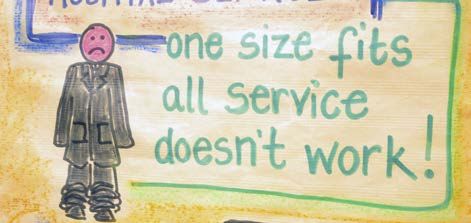
Introduction
Our Interim Report put the stark case that, in its current form, Wales’ health and care
system will need to change. By a health and care ‘system,’ we mean the way care and
support is delivered by public, independent and third sector bodies rather than their
underpinning organisational structures.

    Wales needs a different system of care            Progress towards this vision and the Quadruple
                                                      Aim needs to be significantly accelerated.
Wales is not alone in facing these challenges.
                                                      This will come about through the power of
The vision for care that Wales should achieve
                                                      service users and communities to press for
is one being pursued by most developed
                                                      change, the ability of the workforce to test and
nations in the face of similar circumstances. This
                                                      learn what works and to accelerate change, new
is to revolutionise care so that it empowers
                                                      technology and innovation and the ability of
individuals to take decisions, tailors care to the
                                                      leaders to take bold decisions.
individual’s expressed needs and preferences, is
far more proactive and preventative, is provided      In this final report, we recommend to the Welsh
as close as possible to peoples homes, is             Government some key actions that need to
seamless, and is of the highest quality.              be taken to do that, including: clarifying what
                                                      a set of new models of care might look like;
Internationally, there is growing knowledge of
                                                      strengthening the power of citizens and users
what is needed to achieve this vision. Initially
                                                      to make change; improving the local leadership
called the Triple Aim, a fourth dimension has
                                                      and governance needed to implement change;
been added due to a realisation that a key
                                                      harnessing digital, scientific, technological and
factor is the well-being and engagement of
                                                      infrastructure developments to underpin
staff 1. In our view this approach builds on values
                                                      modernised models of care as well as unlock
already developed in Wales and will help to give
                                                      efficiencies; and at a national level designing the
clear purpose and guide the vision into action.
                                                      system to expedite and incentivise progress
Therefore, we recommend that the vision               through increased transparency. This will not be
should aim to deliver against four mutually           easy, nor is it a short-term task – it is a significant
supportive goals – ‘the Quadruple Aim’ – each         test of leadership in Wales at a national, regional
of which should be vigorously pursued. They are       and local level.
continually to:
                                                      We do acknowledge that healthcare and
a. improve population health and wellbeing            social care in Wales were established as
   through a focus on prevention;                     distinct sectors. Healthcare in Wales is almost
b. improve the experience and quality of care         entirely publicly funded and it is planned and
   for individuals and families;                      commissioned by the NHS. Social care is
c. enrich the wellbeing, capability and               publicly and privately funded and provided
   engagement of the health and social care           through multiple public, private and voluntary
   workforce; and                                     providers. Our recommendations assume
                                                      these arrangements broadly continue in place
d. increase the value achieved from funding
                                                      but the focus should be on developing ‘One
   of health and care through improvement,
                                                      system of seamless health and care for
   innovation, use of best practice, and
                                                      Wales’.
   eliminating waste.

6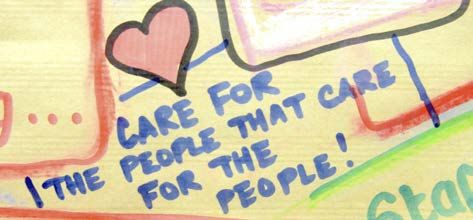
Introduction

Wales is a small country, but it has tremendous   will decline in the face of the predictable
assets in its people, especially those who use,   pressures. The next five years will be a crucial
support and work in the health and care           test, which is why our final recommendation
system. We met many who are innovating and        is to review progress against the vision and
progressing towards the vision we espouse, but    Quadruple Aim, alongside the rest of the UK
they are sometimes doing so against the tide.     and internationally, with open public debate as
Unless faster, more widespread progress can be    to the further action needed.
unlocked, access to and the quality of services

                                                                                                     7
High Level Recommendations Recommendation 1: One seamless system for Wales Rapidly articulate a clear simple vision of what care will look like in the future to meet the needs of the population. Care should be organised around the individual and their family as close to home as possible, be preventative with easy access and of high quality, in part enabled via digital technology, delivering what users and the wider public say really matters to them. Care and support should be seamless, without artificial barriers between physical and mental health, primary and secondary care, or health and social care. The public, voluntary and independent sectors all have a role to meet the needs of the population now and in the future. Recommendation 2: The Quadruple Aim for all Underpin the “one System” vision with four aims - the Quadruple Aim. That is, health and care staff, volunteers and citizens should work together to deliver clear outcomes, improved health and wellbeing, a cared for work force, and better value for money. Recommendation 3: Bold new models of seamless care – national principles, local delivery Move to a seamless new way of working in localities – guided by the vision and Quadruple Aim with national good practice principles. There should now be rapid acceleration of action to develop, implement, and evaluate: seamless care close to home in localities; proactive improvement of population health and wellbeing; and reoriented specialised care. Recommendation 4: Put the people in control Strengthen individual and community involvement, through voice and control in health and care, and ensuring all ages and communities have equal involvement. The public rightly want a modern service in which they have much better information about health and care, shared decision making in treatment, choice of care and setting, and peer support. Recommendation 5: A great place to work Urgently align the workforce with new service models. Staff should be well trained, supported and engaged to deliver and continually improve a quality service consistent with the vision and Quadruple Aim. Wales should aim to be a great place to train and work. 8
High Level Recommendations

Recommendation 6: A Health & Care System that’s always learning
Significantly increase support so that the pace of improvement accelerates. Invest in support to
the front line, service users and local leadership that nurtures team-based learning and the use of
evidence and sharing of best practice. Develop and implement a strategy for quality improvement
and continuous learning for health and care, enhancing the leadership and infrastructure required to
support it.

Recommendation 7: Harness innovation, and accelerate technology and
infrastructure developments
Maximise the benefits of technology and innovation to pursue the Quadruple Aim and deliver
more effective and efficient care. This needs the right culture, behaviours and leadership to embrace
innovation, embed collaboration and support prudent risk-taking.

Recommendation 8: Align system design to achieve results
Design the system better to achieve faster progress. Given the need for transformative change, at
national level there should be focus on designing a more effective blend of incentives, regulation,
planning, targets and performance management.

Recommendation 9: Capacity to transform, dynamic leadership,
unprecedented cooperation
Increase capacity at a national level to drive transformation, and strengthen leadership nationally,
regionally and locally to make progress in line with the vision and Quadruple Aim.

Recommendation 10: Accountability, progress & pace
Publish progress against the vision, Quadruple Aim and new models in one year, three years and five
years, and benchmark progress against the other three countries in the UK, and internationally.

                                                                                                       9
Recommendations
What follows are the specific actions that we recommend the Welsh Government,
Local health boards (LHBs) and trusts, local authorities and partners should undertake
in relation to each of these high-level recommendations.
Recommendation 1 This vision is fully aligned to the requirements
of the Wellbeing of Future Generations
One seamless system for Wales (Wales) Act and will help the health and care
system to respond effectively. It will mean
We need a cultural shift – valuing and substantive change in what is done and how
empowering people and staff, community everyone works. Welsh Government should
and volunteer, as well as a resource shift – urgently engage with the public and with
putting money and people into making the health and care staff from across the public,
vision a reality independent and voluntary sector to publish
– Twitter this vision within three months.
There is not a single, clear and captivating vision To achieve this vision, we advocate the creation
for the future for health and care in Wales. of a time limited, staffed and resourced national
Drawing on the extensive engagement we Transformation Programme to implement the
have already undertaken, it is our view that the recommendations and supporting actions laid
vision should be of care organised around out in this report. This should be informed by
the individual and their family as close to an independent evaluation process to track
home as possible, be preventative with progress and suggest adjustments. Wales needs
easy access and of high quality, in part to transform not just how much is done, but
enabled via digital technology, delivering what and how it is delivered to meet the future
what users and the wider public say really care and support needs for the people of Wales.
matters to them. Care and support should
be seamless, without artificial barriers
between physical and mental health,
primary and secondary care, or health
and social care.
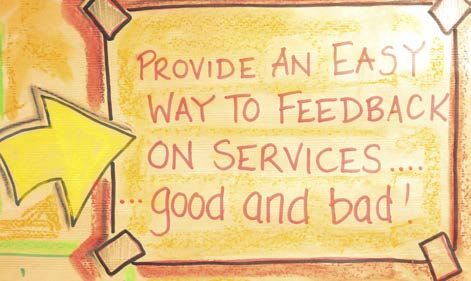
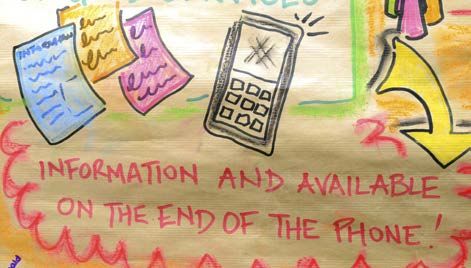
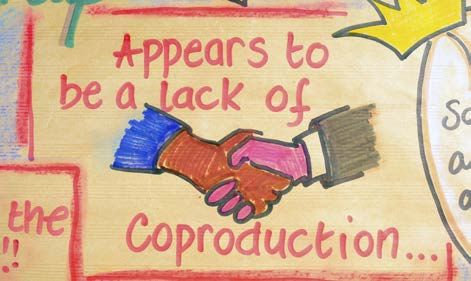
Illustrations from Citizen Panel meetings
10High Level Recommendations
Recommendation 2 d. increase the value achieved from funding
of health and care through improvement,
The Quadruple Aim for all innovation, use of best practice, and
eliminating waste
The Quadruple Aim is really important,
because it builds on Prudent Healthcare Every plan, strategy and practice should be
and gives a tangible way of delivering it driven by the Quadruple Aim. To achieve the
– Twitter first of these aims, Welsh Government and
Health Boards must significantly redistribute
Drawing from international experience and resources to support robust measures aimed
evidence, we advise that the vision for a single at prevention driven by epidemiological data,
system of health and care in Wales will be scoping future trends and adopting a greater
delivered by four mutually supportive goals emphasis on behaviour change methodologies
for Wales which must be vigorously pursued. to significantly improve population health and
These comprise the Quadruple Aim, adapted wellbeing. Health Boards must contribute to
for Wales and supportive of the requirements action on the wider social determinants of
of the Wellbeing of Future Generations health in partnership with other agencies.
(Wales) Act. They are continually to:
Pursuing quality means trying to achieve what
a. improve population health and wellbeing matters to people about their health and
through a focus on prevention; wellbeing. For health and care services, quality
b. improve the experience and quality of care comprises safety, accessibility to all groups in
for individuals and families; society, effectiveness in producing the best
c. enrich the wellbeing, capability and achievable outcomes, and efficient utilisation of
engagement of the health and social care tax payers’ and service users’ resources.
workforce; and A health and care system that supports,
11High Level Recommendations
nurtures and empowers its employees is experienced in Wales are adopting this
essential if the vision is to be achieved. For this broad approach. Wales should therefore seek
reason we have added an additional component to learn from its peers across the UK and
to what was previously the Triple Aim, to internationally, and make the most of its agility
highlight the importance of staff wellbeing, as a small nation to respond at pace.
training, management and engagement.
This vision and these goals provide a clear
Continually seeking better use of resources ‘purpose’ and measurable outcomes that can
to achieve improved outcomes is essential in guide the processes set out in recent policies
order to meet Wales’ needs. Thus ensuring that and legislation, such as Prudent Healthcare
appropriate services are delivered, that provide and the Wellbeing and Social Services Act.
maximum value for the user of services and This legislation is a strong foundation to build
tax payers is essential. These four goals are on, and should be used in conjunction with
interdependent and should be considered and the Quadruple Aim and vision. This should be
used collectively. embedded within the workplace culture of all
health and care organisations.
Many developed health and care systems
faced with similar challenges to those being
Figure 1: Future Generation Goals
Future
Generation
Goals
Quadruple Aim
Social Services
Prudent
and Wellbeing
Health Care
Act Principles
Supported by one system of seamless care
12High Level Recommendations
Recommendation 3 Design characteristics for these new models
should include, among others, the following:
Bold new models of seamless care – (a) make care available as close to the individual’s
national principles, local delivery home surroundings or community as is practical;
(b) maximise the use of digital technology to
From a frontline perspective this [integration] improve the access to and delivery of care; and
has been relatively straightforward, the (c) continually improve the quality of care and
boundaries become less and even non support through increased investment in care
existent when people are focussing on outside hospitals and rebalancing of services
doing the right thing currently provided inside hospitals to maximise
– Stakeholder support of local services.
From a clearer vision, the development, New models of care must be co-designed
adoption and spread of new models of and co-developed with the public and users
seamless health, care and wellbeing can of care alongside front-line health and social
be substantially accelerated. For over a care professionals, and be underpinned by the
decade there has been a strong national and design concepts set out in Prudent Healthcare,
international consensus that three broad shifts the Wellbeing of Future Generations (Wales)
in care are needed: Act 2015, and the Social Services and
Wellbeing (Wales) Act 2014. It is clear from
• Strengthened care close to home;
the case studies of new models of care we
• Reoriented specialised care; and received from different parts of Wales that
• Proactive improvement wof population designs for innovative seamless local health,
health and wellbeing care and wellbeing services are already
emerging, and we want to encourage these to
These three elements will need to be be spread right across the country. We have
accelerated in order to build a different system also heard of examples from outside of Wales
of more effective community-based services, which offer ideas and learning for local partners
supported by a shift of resources towards to draw on. These include the Integrated
early help and support for people in their own Health and Social Care arrangements in
home, and more proactive population health Canterbury District Health Board (CDHB),
and wellbeing measures. New Zealand, and work in England on some
13High Level Recommendations
of the Vanguard health and social care pilot and Quadruple Aim. Specifically, we think older
projects2 . These and many others will offer people in every locality in Wales should expect:
ideas and approaches, but partners in Wales
will need to build their own seamless national • Well-run and well-co-ordinated public,
private and voluntary services designed
principles and local delivery arrangements to
around the needs of the local community.
meet the needs of the Welsh population.
Best use of workforce, resources,
Local innovation needs to be guided and infrastructure and estate to ensure health,
supported by common principles and social care and wellbeing support is effective
implementation support through a national in improving outcomes for the local
programme of transformation, and robust population.
evaluation. Welsh Government, Health Boards • Reliable help to navigate the health and
and local authorities should make realistic and social care systems and access welfare,
stretching projections about the expected rate housing, employment and voluntary
of change. We therefore recommend: services to deal with any issue that inhibits
maintaining their wellbeing.
• National standards and principles of design
created ‘Once for Wales’, supported by a • Effective prevention and early help services
programme of transformation including which ensure that people who may need
joined-up inspection and improvement help are identified, and can get community
support; support, important screening tests, and can
access help with medication, domiciliary
• Regional joined-up leadership to support care and therapies.
implementation;
• A wide range of professionals working
• Joined-up local service design, development in a multidisciplinary way to support
and delivery to meet the specific needs of people at home through safe physical and
each local population; and psychological therapeutic interventions in
• Joint planning, performance, quality, the community.
infrastructure and resources to help local • Nursing and care homes which provide high
areas deliver seamless care that is also quality and flexible respite and long-term
actively working to improve population care for people who cannot live in their
health and wellbeing. own home.
Features of new models of seamless • Fast and responsive local 24/7 services
care and support including intermediate care, ambulance and
other rapid response services with the right
Taking an example from older people’s services, skills and technology to help where people
we explored what a common set of ‘Once for need urgent care without having to go to
Wales’ design principles for seamless locality hospital, nursing or residential care.
care and support might look like, and tested • Easy access to high quality care for people
this with an advisory group. On the basis with complex care needs in the community,
of the evidence we reviewed and emerging to take the right action when needed.
best practice from local examples already in Specialists in hospitals freed up to advise
Wales, we think that every locality should community colleagues assess and treat
work to a common set of principles for the people with specialist needs.
delivery of health, social care and wellbeing • Best use of technology to improve access
services designed co-productively with the to services, reduce the time people have to
local population, and underpinned by the vision spend in or dealing with the current system
14High Level Recommendations
of care, and expand the range of ways in This does not just apply to care and support
which professionals can spot problems, for older people – we think the same approach
provide help and share information. of national principles and local delivery should
• Best systems and practices of assessment, apply to all population groups with different
diagnosis and care planning across agencies specific principles for each based on best
to ensure people’s individual needs are evidence and practice from across Wales.
understood and met.
On population health and wellbeing, we envisage
• Joined-up training and development that the new models of care would include
for professionals, volunteers and carers actively identifying people at high risk of ill
promoting generalist skills delivered in the health using (for example) data analysis and risk
local area. prediction, and work with high risk groups to
• Care and support delivered by public, offer tailored secondary and primary preventive
private and voluntary agencies which are care. Too much of current care is reactive,
so culturally sensitive and well co-ordinated triggered when an individual seeks care leading
that people experience seamless care. to patterns of care that don’t match need.
Performance management and inspection does
This does NOT mean that every locality across
not currently incentivise prevention: they must.
Wales should operate in the same way, or that
services should be identical. It does not mean With respect to wider primary prevention,
that every locality must have every possible tackling the social determinants of health which
service in its local area, nor that the resources result in health inequalities across the country
needed to deliver services should be the same. remains a key area for national and local action.
The needs of populations differ hugely across There is already some good progress for
Wales, and health and care resources must be example in reducing key risk factors of ill health
designed locally to meet those needs. What it such as smoking.
does mean is that local partners must work with
At the root of poor health and well-being
their communities to build care and support
is also the limited opportunity that a sizable
provision that is right for their local population,
number of people have to a good start in life.
is effective and efficient, and is designed on the
Too many children endure multiple adverse
basis of a national framework which requires
childhood experiences, meaning they are
seamless care as close to home as possible.
15High Level Recommendations
significantly more likely to become adults with individuals can live independently and receive
children growing up in the same circumstances. care, when needed, at home. Therefore we urge
The poorest children enter schools already Welsh Government to maximise the benefits
behind their more affluent counterparts and of closer planning and collaboration by taking
few ever catch-up, suffering poor mental and further steps through guidance, legislation and
physical health which also deprives them of a financial incentives to ensure that housing
locus of control over their own lives3 . This often considerations are fully aligned with health and
results in poor health literacy and a passive care planning at local level.
acceptance of inferior healthcare and social
Our Terms of Reference did not ask us to
care which prevents people from accessing the
look at the social determinants of health and
services they need. While inequalities in health
wellbeing, the overwhelming majority of which
literacy remain, equity in health outcomes will
lie outside of the health and care system, or
be most difficult to achieve.
assess the quantum of investment needed to
To give future generations the opportunities address them. However, the health and care
they deserve through the Sustainable system does have an important influence on
Development Goals and their human rights as inequalities of access and outcome, and further
children, Wales will need interventions now to work on what Health Boards, in particular, need
break that cycle, giving everyone the confidence to do to impact meaningfully upon them is
and health literacy they need to manage their vital. This is a statutory function which has not
health and care needs. It will also need to attracted sufficient attention.
adequately invest in a very effective supportive
Organisational responsibility for population
‘welfare state’ beyond the NHS, including
health and wellbeing rests with Local health
education, and housing, which in turn will mean
boards and local authorities. Public Services
making choices about the per capita cost growth
Boards bring these organisations together to
in health and care to pay for it.
agree Local Well-being Plans, whilst Regional
During our engagement work we heard a strong Partnership Boards are tasked with driving
desire among housing providers for closer forward strategic regional delivery of health
involvement with health and care services. and social care. These bodies, using their ability
The proposed vision, and the Quadruple Aim, to pool resources, are key to developing and
builds on services at home and it is vital that implementing new care models in Wales.
Supporting Actions • As suggested above and in the supporting
pack of information on the Parliamentary
• Principles for new models of care should Review website https://beta.gov.wales/
be agreed on a ‘Once for Wales’ basis and review-health-and-social-care, the
guide local service development across the principles should apply to the whole
country. The principles should be developed system of seamless health, care and
by or on behalf of the Welsh Government wellbeing for specific groups in localities.
with the commitment of all key national This includes: services and practices across
health and care delivery, inspection and the NHS, local authorities and the third and
improvement bodies, and with the public. independent sectors; across community,
Design principles and the development primary and specialist care; and across
of services should include the central physical and mental health and wellbeing.
involvement of service user and carers’ We suggest that there should be related
organisations and the models should work but specific principles for older people,
towards the vision and Quadruple Aim. working age adults with disabilities and
16High Level Recommendations
learning disabilities, people with mental people’s services as an example and
health problems and children and young produced a supporting paper summarising
people. For example, we heard many calls what a common set of national principles
for the need to improve collaboration might look like. We have also considered
and timely decision making in services for various examples of emerging promising
children and young people. Through national practice from Wales and more widely, and
principles and local delivery this work must suggest that these resources might be a
be encouraged and further developed as starting point for further work in this area.
the basis for building a seamless system of • Local Health Boards (LHBs) should build
health and care. on the good work that has already taken
• We recommend that as part of the national place to develop primary care clusters and
transformation programme a specific devolve resources and decision making to
workstream is established to support the the cluster level to work in partnership as
development of national principles, and part of these new locality initiatives.
to support the design and development • Seamless locality based care and support
of seamless locality arrangements across for children and young people should
Wales. It needs to be run on a multi- be one of the key priorities for the
agency and multi-disciplinary basis with a transformation programme. At the same
national support team and an independent time, the Welsh Government should
evaluation process to learn what is working prioritise reducing poverty and inequality
well and why. It should have appropriate for children, scaling up what works and
governance, investment, resourcing and creating new interventions using a data-
change management disciplines and driven and outcomes-based approach.
support liaison between local teams and This should include driving improvement
national policymakers as to what features through seamless locality provision for
of national policy could help unblock children and young people, drawing for
progress (see recommendation 8). The example on learning from the Families First
workstream should have national oversight, and Communities First initiatives and the
with successful progress determining further First 1,000 Days Collaborative to exploit
support and investment. An independent potential up-scaling, stronger community
evaluation process would involve service links between health and social care and
users in its design and the methods and the schools, the third sector and leisure facilities,
results made transparent, with effective and a stronger focus on driving health equity,
peer support and learning encouraged continuing to focus on promoting good
between sites. mental health for children through Child
• In the next year, as part of the national and Adolescent Mental Health Services, and
transformation programme, and building on emotional and physical wellbeing and health
learning from the Pacesetter programme literacy.
and the Integrated Care Fund4 , the • As part of Prosperity for All, Welsh
Welsh Government should require each Government has already committed to a
Regional Partnership Board to develop and step-change in public health campaign work.
implement a substantial seamless locality To ensure that this will achieve a maximum
model in at least two new localities in their impact in empowering the people of wales,
region, using extra investment through a this should include a focus on improving
Transformation Fund and support from the health literacy.
transformation programme.
• We have explored different approaches
to the design of local services using older
17High Level Recommendations
Recommendation 4 to contact and receive responses from, but all
groups of citizens, including children and young
Put the people in control people, older people, ethnic minorities, and
those in disadvantaged communities or living in
We must innovate in developing effective isolated locations. One aspect is information –
user voices Welsh citizens should be health literate, so that
– Twitter they are able to take appropriate responsibility
for their own wellbeing, and make informed
At the heart of the vision and the Quadruple choices as to their care, which is fundamental
Aim is the need to empower individuals to to co-production and prudent health care.
have good health and wellbeing. We believe Another aspect is encouraging and supporting
that there is a revolution occurring due the citizens of Wales to be active in guiding
to the digitisation, accessibility and analysis the transformation of health and care in Wales,
of information about people’s health and in particular in designing new models locally.
care which will fundamentally change the
relationship between professionals providing For this to happen there needs to be much
care and users. Building on its commitment stronger effort to find out what users think
in legislation to involve people, Wales must of the care they have received, and the
respond to this ‘customer/user revolution’ very outcomes, and that this information is regularly
actively or risk lagging behind other nations. incorporated into the management of care at
local and national level. We held Citizen Juries
Wales must be a listening nation not just by on the design principles for new models of
paying full regard to citizens’ experiences of care and noted the consistent and clear advice
health and care but actively seeking out diverse on ‘what mattered’ to the people who use the
views and experiences. This empowerment is services. This included a panel specifically with
necessary to accelerate change and improve young carers to understand the issues that
quality. This does not just mean those easiest mattered to them.
18High Level Recommendations
There needs to be more and clearer
information available to the public on care,
the outcomes of local services and the choices
available not just of treatment and setting but
also the location of care. There also need to be
more opportunities and support for the public
and users to take part meaningfully in decisions
affecting them as individuals for example
making choices about care and also for their
communities – for example in having a say
about wider services.
Wales is already already making some progress
such as through the Making Choices Together
work and Dewis. Further efforts must involve
all parts of diverse communities, including
Welsh speakers, rural communities, and
particularly the most deprived and should be
accelerated.
Rapid advances in the availability and use of Making Choices Together (previously called
information in treatment and care, we believe, Choosing Wisely Wales) is a clinician-led
will recast the relationship between users and initiative, that aims to:
professionals. Wales should aim to get ahead • embed a broad culture change in
of the curve and respond to new expectations healthcare where clinicians and patients
of service by the public. This means Wales regularly discuss the value of treatments
actively providing information about care; and make shared decisions.
seeking assessing and scaling technologies that • ensure reliable and valid information
enhance access to advice and information, is available for patients and clinicians
and supporting users and care professionals regarding agreed interventions of low
to adapt. The aim is empowering the public value i.e. where there is a low chance
through information, supporting shared of a beneficial outcome.
decision making, choice, and peer support. • enable participating professional
Some elements of these actions are emerging health organisations such as the health
but an integrated, strategic approach is now professional colleges and societies, to
needed to make it them the usual way of produce with patients lists of commonly
working. used treatments/interventions whose
necessity should be questioned.
Healthcare professionals will need active • encourage local clinical teams to
support to help them adapt to this different use shared decision-making skills in
world. consultations, and adopt or select, locally
relevant interventions, of low value, to
concentrate on when applying shared
decision making.
• reduce harm to patients caused
by inappropriate use of tests or
interventions.
19High Level Recommendations
Supporting Actions • User experience: More sophisticated
methods of gathering service user
• Information access and technology: experience and outcomes are being
The Welsh Government should fully developed and used in Wales, such as
review and assess the opportunities to patient reported outcome measures and
deliver improved access to health and care real time patient feedback on experience.
information, and align this with existing These should be used routinely in the
work in this area. This should cover: service design and improvement of care. LHBs
users’ and citizens’ needs and preferences, to and local authorities should be held to
what extent these are currently being met, account for the quality and extent of user
and new digitally-enabled opportunities, feedback, and comparative metrics about
particularly for remote areas; how health services between LHBs and local authorities
and care organisations are currently published routinely to help users make
providing public access to integrated better decisions about which, if any, service
information regarding advice, support and to use to best meet their needs.
care, including to support choices; and how
• Empowering choice: Wales is already
new apps that help promote independence
on a path to encourage more shared
are identified, assessed, implemented and
decision-making in health and care between
scaled up.
service users, their carers’ and health and
• National public engagement programme: care professionals. In social care users
As part of the Transformation programme, are supported to have voice and control,
a national public engagement project should but there is limited exercise of choice by
be implemented to describe the aspirations patients regarding NHS facilities, or care
for new models of seamless community- setting (such as home, community or
based health, care and wellbeing, consult outpatients). Patients should be given this
on best practice, build principles and freedom, which is entirely consistent with
desired outcomes together, and explore the principles of the NHS and Prudent
the implications for professionals, families Healthcare. To encourage this, more
and individuals across Wales. An emphasis meaningful information must be available
should be on engaging the public with high to the public and to their GPs on the
needs, and those living in more remote availability and quality of services (including
rural areas. feedback from patients and clinical
• Public engagement at local level: outcomes) and transportation access.
The Welsh Government should require • Supporting staff in providers: clearly better
Health Boards and local authorities to user feedback and engagement in designing
integrate the different mechanisms they use care will not help to improve services unless
for public consultation and engagement on health and social care staff are supported
decisions about community wide services, and enabled to act on it. How to do this
where they relate to health and social care better is covered in recommendations 5
services. There are clear standards for public and 6.
involvement in Wales5 and these should
underpin the engagement approach.
20
20High Level Recommendations
Recommendation 5 regarding policies following Brexit makes this
a critical area for attention. Our focus is on
A great place to work the longer-term and how to meet the sharply
rising demand with the predicted decrease in
There’s lots of agreement on what’s needed. working age population. The health and care
The issue is changing behaviours across sector will need to plan for the new models of
professions to implement new models care, understand their impact on the numbers
– Twitter and skills needed in the future, improve
retention and, in order to improve safe and
Workforce shortages are very acute in the
effective care, ensure staff wellbeing. It will also
health and social care system and this is a
need to expand the scope of the workforce to
critical issue which urgently requires both
supporting carers, who provide a large amount
immediate and longer-term action. Active
of unpaid care in Wales and recognise the vital
steps are already being taken to address
support provided by the third sector.
these gaps in Wales, though the uncertainty
Supporting actions shared decision-making with service users
and carers, team working, prevention and
• There should be joint workforce planning population health and wellbeing, formal
at regional (Health Board boundary) level quality improvement techniques and the
supported by Social Care Wales (SCW), use of new technologies to support the
Health Education and Improvement Wales development of new models of providing
(HEIW) and academia, with an emphasis care.
on expanding generalist skills and new ways
• We recognise the importance of the Welsh
of working that enable staff to work at the
language in care and this should be factored
top of their skill set and across professional
into workforce planning with a focus on
boundaries. To deliver this the current
professions that use language based tests and
and future workforce (including those in
therapies such as speech therapists, school
undergraduate and postgraduate specialist
nurses, psychologists and clinical staff likely
training) should be skilled in areas such as
to be in contact with children, older people,
21High Level Recommendations
people suffering from dementia and those opportunities for training and development
with mental health problems. for carers in their current caring role. Carers
• HEIW must work closely with SCW must be seen as an integral and valued part
to deliver new skills and more specific of the care system.
integrated career paths for the health and • There are a number of recent campaigns
social care workforce at a scale aligned including the Train Work Live Campaign
with the new models of care with a focus which have shown how short-term
on training within the new models of recruitment issues can be addressed. Health
care and due attention to Welsh language Boards and Local Authorities in Regional
requirements. Planning Boards should work together with
• Recruitment of health and care staff in rural local providers to build joint campaigns
areas is, and will be, a challenge. wherever appropriate to make best use of
The government needs to develop a strategy resources and recruit the right people.
for enhancing access to good quality care • All large organisations that employ staff
for rural communities. This should include working in health and care should have
the opportunities for using the latest a clearly identified senior executive
digital technologies in new models of care, accountable for staff well-being. All providers
the development of new approaches to delivering health and care services to the
providing emergency hospital care and Welsh NHS or local authorities should be
a comprehensive approach to training in required to report on levels of staff well-
advanced skills, recruitment and retention of being and engagement. These data should be
the workforce. Those in training should have collected regularly (as a minimum annually)
opportunities to learn in rural care settings. using validated tools, and improvement
Such a strategy should also look at how of these scores incentivised by Welsh
the resources of rural communities can be Government. Comparative data across units
mobilised. We suggest that the new models and providers should be publicly available for
(as noted in recommendation 3) are trialled benchmarking.
in rural areas as a priority. • Assessment of staff wellbeing and
• Such models should also be tested as a engagement should be an explicit element
priority for patient or user groups who are of the regulatory inspection process of
known to depend significantly on informal providers by of Health Inspectorate Wales
or volunteer carers. The models would be (HIW) and the Care and Social Services
designed to support the carer on an ongoing, Inspectorate Wales (CSSIW), alongside other
rather than episodic, basis and provide elements of the Quadruple Aim.
22
22High Level Recommendations
Recommendation 6 Leaders also need to build skills for
improvement throughout the service. A quality
A health & care system that’s strategy cannot be delivered by Government,
always learning Boards and senior managers in health and
care alone. Inclusiveness matters, including the
Patient feedback in essential. As a cluster health and care workforce, the citizen, and
pharmacist I rely on patient feedback to the voluntary and independent sectors. The
improve the service culture and behaviour should be one of shared
– Twitter learning, excitement and encouragement, much
more than of judgment, fear and risk aversion.
A leader’s job is to create a system where Recommendation 10 sets out how the system
people can learn all the time through a system can demonstrate progress in this regard.
of continuous improvement. To drive up quality,
leaders must have as a central part of their The evidence received by the panel showed
job not just to manage or deliver care, but many great examples of quality improvement at
continuously to improve it every day. local level, though with many driven by heroic
This means constant and serious attention individuals working in isolation due to a lack of
to quality control, improvement, and planning: support and co-ordination. On innovation, the
there is evidence that if Boards and senior Bevan Academy’s Exemplars programme shows
executives of health and social care focus on how some innovations have been identified
these three issues, the results for service users and scaled up, but they needed support. What
are better. Leadership at Board level in NHS is now needed is a clear plan for embedding
organisations and the senior executives in quality improvement approaches formally within
Health and Social Care, and political leadership and across the health and care system. This
in a local authority have a critical role here to should include how innovative practice can be
lead by example. scaled from a local to national level more quickly.
23High Level Recommendations
Figure 2: Listening and Learning System
ip
rsh C
de
iti
ea
ze
dL
n
Bol
Listening
and
Learning System
rce
Te
k fo
ma
or
or
w
k W
Supporting actions Lives programme, but 1000 Lives must be
re-invigorated and its actions fully integrated
• The Welsh Government and national with those of other improvement agencies.
improvement agencies should work together Medical Colleges, Professional bodies, Trade
to rationalise the range of improvement Unions and others also have an important
support activities across health and social contribution to make to this work.
care in Wales. The Government should
• A unified system to support quality
invest resources in a national programme
improvement should be constructed
to support local partners to achieve the
nationally, linking with the local support
new models of seamless health, care
systems; the broad elements include:
and wellbeing practice using the national
principles and an agreed set of improvement • The principles of co-design and co-
methods for Wales. This will need adequate production embedded in health and
ring-fenced resources, supported by a social care, which will need behavioural
contemporaneous evaluation to monitor and cultural change;
progress and identify areas for further • Development of skills by frontline clinical
improvement. It should be based on a and managerial staff in systematic quality
partnership approach by Health Education improvement, linked to applied projects
and Improvement Wales, Social Care Wales and building on the progress made so
and Good Practice Wales and draw together far with Improving Quality Together, and
all other improvement activity. Within this, Board skills as initially developed by 1000
Public Health Wales has supported the 1000 Lives programme;
24
24High Level Recommendations
• Development of ways to support staff • The above should explicitly link to the
within providers to make change, in organisational development programmes
particular making progress on new care within major providers and continuous
models, with an emphasis on supporting professional development for the main
junior staff as well as senior leaders. This staff groups, learning from best practice
will require senior management level in LHBs and local authorities that already
ownership and buy-in and recognition have developed models that are working
of their duty to create the time and well; and
resources for quality improvement within • The above should also explicitly be
providers, and where repositories of linked to capital or revenue investment in
experience can be developed; innovation.
• Development of linked data and metrics
to assess progress in improving high
priority areas of care, for example new
care models;
25 25High Level Recommendations
Recommendation 7 assistive technology and alerting systems),
robotics, digital therapeutics, data analytics,
Harness innovation and accelerate artificial intelligence (AI) including machine
technology and infrastructure learning, and genome sequencing6 . Importantly,
developments technology is increasingly underpinning online
communities of citizens, service users and
We need a greater focus on agile professionals, including Dewis7 in Wales, which
implementation of innovation in itself is driving the change agenda8 .
– Twitter Welsh local authorities also have extensive
information websites and ratepayer-based
Wales should maximise the benefits of information systems.
technology and innovation to pursue the
Quadruple Aim and deliver more effective There are several examples of technology-
and efficient care. Wales needs the right enabled care initiatives (the collective term for
culture, behaviours and leadership to embrace telehealth, telecare, telemedicine and other
innovation, embed collaboration and support technology-related activities) in Wales, provided
prudent risk-taking. by the health, social care and voluntary sectors,
including: remote consultations and therapy;
New technologies will transform health and teledermatology9 ; telestroke10 ; diabetes and
care in Wales when systematically deployed. cardiac monitoring; and virtual clinical networks.
Our vision for Wales relies upon faster and The NHS Wales Informatics Service (NWIS),
smarter provision of and access to care, and Health Boards, local authorities and industry
better targeted, immediate and co-ordinated partners are developing a national approach,
access to health and care information, which is via the Technology-enabled Care Programme11,
a critical and precious asset for Wales. to accelerate the adoption of technology-
Current and emerging technologies include enabled care services at scale across Wales.
smartphone apps, localised and portable Objectives include facilitating early intervention,
diagnostics and support systems (including avoiding escalation, supporting wellbeing
26High Level Recommendations
and helping people remain at home. Initial Wales has a real opportunity to better
‘pacesetter’ plans will build on the early work leverage its technology and infrastructure
of the mid-Wales Healthcare Collaborative12 assets to deliver a transformed and seamless
and initiatives funded by the Efficiency Through system. The recent life sciences14 and industrial
Technology Fund13 . strategies15 are a sound basis for progress,
provided that these focus on supporting Wales’
There is much to commend regarding the
biggest industry – health and social care – to
established core digital and infrastructure/
modernise and become more cost-effective,
shared services arrangements in Wales, not
and in identifying and scaling up innovations
least the national architecture, cross-sector
across the country. We are pleased to see the
Welsh Community Care Information System
recent publication of Wales’ economic strategy,
(WCCIS), and shared service benefits from
Prosperity for All: the Economic Action Plan, which
procurement, professional influence, e-learning
recognises the importance of digital innovation
and estate services. Nevertheless, we heard a
and that the care sector is a foundational
series of concerns and frustrations emanating
economy Within Wales, the Life Sciences
from both the users and providers of the
Hub16 , Health Technology Wales and the Digital
digital services. Simply put, activity is just too
Ecosystem initiative17 will be pivotal to future
dispersed and stretched, and lacks overall
progress.
commitment around a unified vision and set
of priorities. The principal concerns include Our recommended actions, some of which
integration challenges (centred around have been recognised and are beginning to be
the need for common standards, and data addressed by the Welsh Government and the
and systems interoperability), information service providers, are summarised below with
governance, cultural and behavioural issues, further detail in Annex C.
and the limited capacity and capability to
deliver change and innovation at pace.
Health Technology Wales (HTW) has been established to support a strategic, national
approach to the identification, appraisal and adoption (including disinvestment) of non-
medicine health technologies into health and care settings. This includes medical devices,
surgical procedures and a range of other interventions such as psychological therapies
and rehabilitation. To deliver these functions HTW is working with health, academic,
patient and industry bodies in Wales and internationally.
The Life Sciences Hub Wales supports health professionals, researchers and
entrepreneurs to bring their ideas to the point of being a commercial reality. The Hub
brings together the various elements of the Welsh life sciences network to drive forward
innovation.
27 27You can also read


