A Research on the Classification and Applicability of the Mobile Health Applications - MDPI
←
→
Page content transcription
If your browser does not render page correctly, please read the page content below
Review
A Research on the Classification and Applicability
of the Mobile Health Applications
Ivan Miguel Pires 1,2,†,*, Gonçalo Marques 1,†, Nuno M. Garcia 1,†, Francisco Flórez‐Revuelta 3,†,
Vasco Ponciano 4,5,† and Salome Oniani 6,†
 1 Instituto de Telecomunicações, Universidade da Beira Interior, 6200‐001 Covilhã, Portugal;
   impires@it.ubi.pt (I.M.P.), goncalosantosmarques@gmail.com (G.M.) and ngarcia@di.ubi.pt (N.M.G.)
 2 Computer Science Department, Polytechnic Institute of Viseu, 3504‐510 Viseu, Portugal.

 3 Department of Computer Technology, Universidad de Alicante, , P.O. Box 99, E‐03080 Alicante, Spain;

   francisco.florez@ua.es
 4 R&D Unit in Digital Services, Applications, and Content, Polytechnic Institute of Castelo Branco,

   6000‐767 Castelo Branco, Portugal; vasco.ponciano@ipcbcampus.pt
 5 Altranportugal, 1990‐096 Lisbon, Portugal

 6 Georgian Technical University, 0160 Tbilisi, Georgia; s.oniani@gtu.ge

 * Correspondence: impires@it.ubi.pt; Tel.: +531‐966‐379‐785 (I.M.P.)
 † These authors contributed equally to this work.

Received: 15 January 2020; Accepted: 13 February 2020; Published: 27 February 2020

 Abstract: Mobile health applications are applied for different purposes. Healthcare professionals
 and other users can use this type of mobile applications for specific tasks, such as diagnosis,
 information, prevention, treatment, and communication. This paper presents an analysis of mobile
 health applications used by healthcare professionals and their patients. A secondary objective of
 this article is to evaluate the scientific validation of these mobile health applications and to verify if
 the results provided by these applications have an underlying sound scientific foundation. This
 study also analyzed literature references and the use of mobile health applications available in
 online application stores. In general, a large part of these mobile health applications provides
 information about scientific validation. However, some mobile health applications are not
 validated. Therefore, the main contribution of this paper is to provide a comprehensive analysis of
 the usability and user‐perceived quality of mobile health applications and the challenges related to
 scientific validation of these mobile applications.

 Keywords: diagnosis; diseases; healthcare professionals; mobile applications; mobile computing;
 mobile health; treatment

1. Introduction
     Nowadays, the use of mobile devices has increased, and this trend will continue in the coming
years [1]. These devices make use of different platforms, but the two platforms responsible for the
largest market share are the Android operating system (owned by Google) and the iOS operating
system (owned by Apple) [2]. In general, technology is used to support the vast majority of users’
daily activities [1]. Due to their widespread integration with the users’ lifestyles, mobile devices can
support personal activities anywhere at any time. In addition, these devices integrate numerous
sensors that allow signal acquisition related to different aspects of medical or assisted living purposes
in different environments [3–11].
     Mobile devices integrate sensors and features that help healthcare professionals in the
treatments of their patients with permanent connectivity. Mobile applications are useful for collecting
data related to physical activity, human body images, and other aspects related to healthcare [12–33].

J. Pers. Med. 2020, 10, 11; doi:10.3390/jpm10010011                                  www.mdpi.com/journal/jpm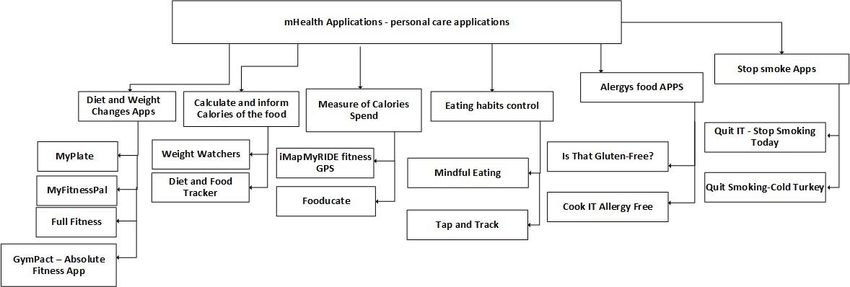
J. Pers. Med. 2020, 10, 11                                                                           2 of 30

     The increase of the complexity and extra processing associated with this type of mobile
applications allows and increases the use of server‐side data processing. Mobile applications or
mobile apps are available for download over the Internet, in online application stores (e.g., Google
Play and iTunes online store), with different categories [34,35].
     Mobile applications help in the practice of health actions, clinical data collection, and health
services. Moreover, these applications support the healthcare professionals to monitor the health
state of their patients, check/share information, and perform diagnosis for several health problems
[36,37]. The various areas for mobile health are “non‐medical” applications critical for healthcare
providers, drug reference, medical literature healing applications, medical calculators, medical
language translators, general reference, patient education, specialty education, continuing medical
education, physical and psychological analysis, health diagnosis, and sharing information over
network, such as social networks [38]. Mobile health applications have issues related to learning rate,
memorable rate, satisfaction, efficiency, and low error rate. In addition, one of the critical issues is the
reliability assessment of mobile health monitoring systems [39,40].
     The main contribution of this paper is to present the impact of mobile health applications for
enhanced public health. The number of mobile apps related to the health topic is enormous, but
several are not correctly validated and do not produce consistent results. Considering the diversity
and the high number of these applications, it is not possible to analyze them all. Therefore, this
document presents an analysis of several approved applications. These mobile applications are
selected by following these four criteria: (1) developed for iOS or Android operating systems; (2)
developed for the healthcare domain; (3) available for download in July 2019; and (4) available in
other reviews or on the online application stores. Moreover, the mobile applications analyzed are
selected according to the Google Play and Apple Store ranking. Other authors performed many
analyses of mobile health applications but rarely analyzed scientific validation [38,41,42].
     The healthcare professionals can use these applications to monitor the patients’ status, record or
verify patients’ information, and consult medical prescriptions. The regulation of mobile health
applications is made by the U.S. Food and Drug Administration, which defines the rules for the
validity of mobile applications [43,44].
     This paper introduces the concept of mobile health applications in Section 2. The relevance and
impact of mobile applications in the overall health domain are presented in Section 3. Section 4
presents numerous features of these applications. Several taxonomies for mobile health applications
are proposed in Section 5. Section 6 presents the conclusions of the study.

2. Concept of Mobile Health Application
     More than 100,000 health mobile applications are currently available in the mobile store of
Android and iOS. This number is anticipated to grow exponentially as technology and healthcare
continue to develop side by side [45].
     Mobile applications are software programs specially developed for mobile devices (e.g.,
smartphone, tablets, and smartwatch), which have a small size and resource consumption due to the
features of these devices. Several types of sensors are available in mobile devices, including motion
sensors, cameras, and proximity sensors. Mobile applications allow us to consult and analyze the
collected data for various purposes. These tools can support the evaluation of clinical history,
objective patient parameters, decision‐making process data, communication with patients, and
observing adherence to treatment [45].
     Mobile health applications are software applications, related to health knowledge and research,
used by health care professionals and patients to improve health treatments and public health. These
applications transform a mobile platform into a regulated medical device. Mobile apps continue to
displace older technologies in several domains, for example, by replacing applied communication
devices for persons with autism and replacing medical bands with medical identification built into
smartphone lock screens [46]. These applications use the data collected by sensors to handle the
identification of various parameters related to patient health, such as physical activity, images of
some part of a person’s body, and health state [47]. Furthermore, it is possible to recognize the vital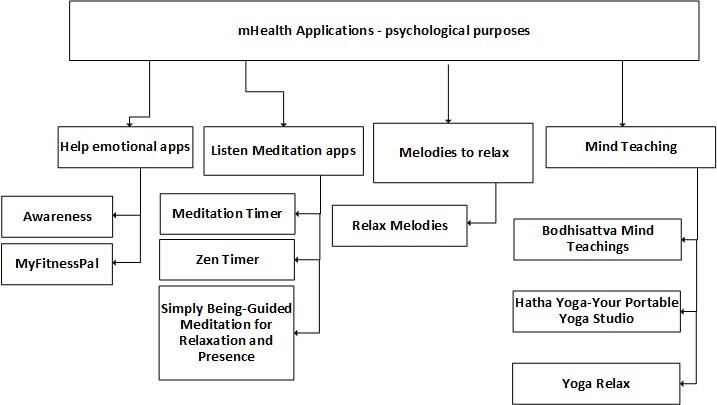
J. Pers. Med. 2020, 10, 11                                                                        3 of 30

parameters of people’s health using mobile sensors, allowing the recognition of daily activities and
lifestyle [48]. Mobile applications help people to regulate or prevent some chronic diseases, such as
obesity, diabetes, and cardiovascular accidents. Healthcare professionals use mobile health
applications to improve and facilitate patient care. One benefit of mobile health, in conjunction with
evidence‐based practice (EBP), concerns its applicability to therapy preparation assignments [49].
Besides, medical apps are available for all types of useful functions such as electronic prescribing,
assessment, clinical decision support, treatment practice management, coding, billing, self‐care, and
e‐learning [50]. The apps are ready to help with the control of health‐related habits such as diet,
exercise, sleep, smoking cessation, relaxation, and medication adherence. They are prepared to aid
the treatment of mental health conditions directly, such as anxiety disorders, depression, eating
disorders, psychosis, and suicide prevention [50]. It is also necessary to involve public health agencies
to provide all relevant information for patients experiencing from allergies and asthma in a daily and
dynamically (ideally real‐time) updated manner [51].
      In general, mobile health applications have several purposes, e.g. diagnosis of cancer, diagnosis
of heat rate problems, and controlling a glucose meter used by diabetic patients. However, a broad
diversity of mobile health applications allows people to learn, improve, or share knowledge about
healthcare, self‐manage their diseases, and track health information. These applications also provide
easy access to information related to health conditions or treatments; describe, show, or communicate
potential medical conditions to their healthcare provider; automate simple tasks; and interact with
electronic health record (EHR) or personal health records (PHR) systems. The mobile health
applications provide rigorous and scientific evaluation and improve the empowerment of patients.
Moreover, these applications provide bases of medicine and personal electronic records accessible
over the Internet and promote the communication between healthcare professionals and patients.
Mobile applications provide useful information to healthcare professionals and patients, enable
information exchange, and enhance the cooperation between clinical units [52].
      Mobile health applications provide numerous advantages related to electronic health processes,
and most of them do not require an Internet connection. Mobile devices promote personalized health
by providing user‐friendly applications that can be used anywhere and at any time [53].

3. Relevance and Expected Impact of Mobile Health in the Overall Health Scenario
      The number of mobile devices has increased, and, as a result, the number of mobile applications
in online application stores, including Google Play and Apple online store, is growing [54].
Smartphones and mobile biosensors are multi‐functional, low‐cost, and have substantial general
business penetration. Moreover, smartphones allow real‐time psychological, behavioral, and
physiological data [55]. The mobile health applications are widely successfully adopted by medical
students, clinicians, and allied health workers for the fast dissemination of health news and critical
health information [54]. Healthcare patients can also use mobile applications for leisure, sports
practice, or other recreational activities. These applications are beneficial for people with chronic
diseases or older adults to monitor their health state. Several studies already analyzed the clinical use
of these applications [56]. These mobile applications use sensors to collect data related to the people,
PHR, and other critical data over the Internet [43,44]. The applicability of mobile health applications
lies in their capacity to enable chronic disease control and overall wellness motivation. By following
a person’s health and raw lifestyle data, and by implementing actionable feedback, these tools
support self‐management. However, medical study and validation protocols are currently powerless
to modify mobile health devices in useful time. Healthcare application development must be aware
of the obstacles related to mobile health instruments, as well as the consequences of their
responsibilities [57].
      Sensors available on mobile devices can collect people’s data during physical activity. These data
can be used to prevent health problems during sports, such as fatigue and cardiovascular issues [48].
These features have several benefits for healthcare professionals, such as for checking hearing,
eyesight, and color recognition; evaluating the mental status; or capturing some information for
future examination [54].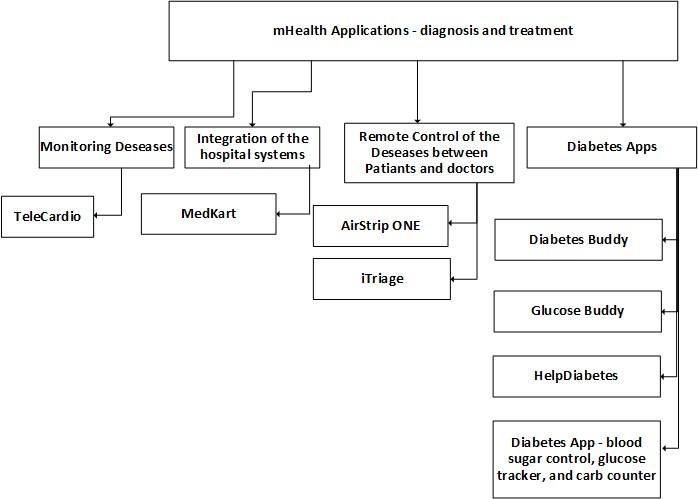
J. Pers. Med. 2020, 10, 11                                                                       4 of 30

     However, mobile health applications have some challenges, such as the requirement of network
connectivity, battery power efficiency, usability, and data privacy [54]. The mobile health
applications can help healthcare professionals to monitor the health state of their patients and the
treatments of the diseases. They can also be used to track their patient’s location and improve the
exchange of medical information using social networks [58].
     For several chronic diseases such as Alzheimer’s and dementia care, the GPS (Global Positioning
Systems) receiver can be used to control the location of these people [59]. The remote data capture at
regular time intervals is useful for chronic diseases, such as diabetes, chronic obstructive pulmonary
disease, and congestive heart failure [59]. Accelerometry sensors allow the recognition of other
people’s physical activities, and this is relevant for older adults and people with some disorders [59].
     The market for mobile health application will develop the following trends [60]:
     • The smartphone user will be the main operator for the mobile health evolution.
      •     Mobile health applications will be tailored especially for smartphones, smartwatches, and
            tablets.
      •     Mobile health applications will be native applications rather than web‐based applications.
      •     Mobile health stores will promote the second generation of mobile health apps.
      •     Lack of protocols and standards are the main challenge for mobile health applications.
      •     Mobile applications will enter common health distribution channels.
      •     Second‐generation mobile health applications will focus on chronic diseases.
       • Mobile health business models will increase.
       Future mobile health business partners should promote multi‐platform applications. Currently,
more than 70% of mobile health app publishers choose both the iOS and Android platforms to present
their applications [60]. As of 2017, there were around 259,000 medical applications in different online
application stores, giving an unambiguous picture of the patient demand for these applications.
According to Abdul Wahid, Lead Analyst at BIS Research, “Europe is the leading contributor to the
global mobile medical apps market. The contribution of Europe to the mobile medical apps market
was valued to be nearly 31.4% in 2016 and is growing at a compound annual growth rate (CAGR) of
29.7% during the forecast period. The rising number of government initiatives aimed at assessing the
efficacy of medical apps for the benefit of public health may also contribute to the high growth rate.
However, the Asia Pacific and Latin America are expected to grow at a higher CAGR than Europe
i.e., 22.1%, and 23.1% respectively during the forecast period from 2017 to 2025” [61].
       According to the results of Global Healthcare Information Software Market Report 2019
Analysis, Size, Share, Growth, Trends and Forecast 2019–2026, healthcare software marketplaces are
mostly classified on the grounds of top advertising players, produce forms, applications, and global
areas including North America, South America, Africa, and the Middle East, Europe, and Asia‐
Pacific. Healthcare Information Software Markets present market information about top
manufacturers, market segmentation, types, application, and region. Healthcare Information
Software Markets also shares market capacity, production, revenue, market drivers, and forecast
opportunities and ambitions in the following years [62].
       On the one hand, for healthcare professionals, mobile applications promote more agile clinical
practices, helping diagnostics, monitoring, and prescription writing [56]. Healthcare professionals
can also use mobile health applications to learn new health techniques, read health books, and
communicate with their patients. On the other hand, for patients, mobile applications are a cost‐
effective approach to support disease treatment [53,63].
       Excellent communication between healthcare professionals and patients anywhere at any time
may minimize numerous health problems and diseases remotely [64]. Mobile health applications
related to social networks allow proper communication between healthcare professionals and
patients, exchanging information. They can share the experience of bodily symptoms, clinical
diagnosis and treatment options, adverse treatment effects, sources of medical evidence, experiences
with individual providers, and opinions about their quality [65].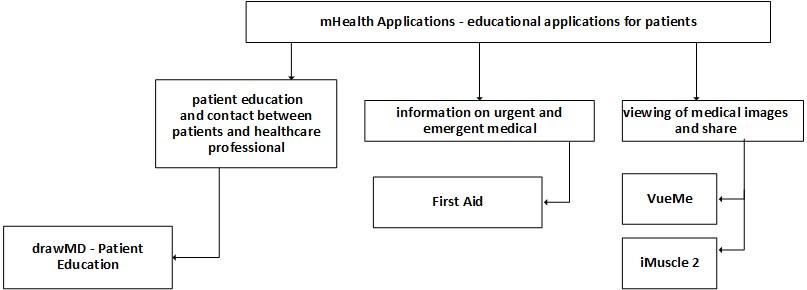
J. Pers. Med. 2020, 10, 11                                                                       5 of 30

      Another purpose of mobile health applications is to help the treatment of psychological diseases.
It involves direct and personal contact between patients and healthcare professionals to provide
psychological support. Furthermore, Mobile health applications can be explored as mobile games
that stimulate people to improve their metabolic health with physical activity and measure vital signs
[66].

4. Mobile Health Applications and Classification
     Mobile health applications are used for medical purposes, such as learning, treatment,
diagnostic, and accomplishment, among others. However, these mobile applications are distributed
by several categories at the online application stores for the utilization by different types of people,
such as healthcare professionals and patients. This study analyzed several mobile health applications
used by healthcare professionals and patients, for the Android and iOS operating systems. On the
one hand, mobile apps used by healthcare professionals are about literature, patient monitoring and
diagnosis, personal care applications, psychological health applications, educational applications,
and social networking applications. On the other hand, mobile apps used by patients are individual
care applications (e.g., fitness, sports, games, and auto diagnosis), application to check their PHR,
apps to contact with their healthcare professional, educational health applications, and social
networking applications.
     The literature applications used by healthcare professionals in their studies, sometimes named
as non‐medical applications, are very useful for improving the treatments and knowledge about
healthcare problems.
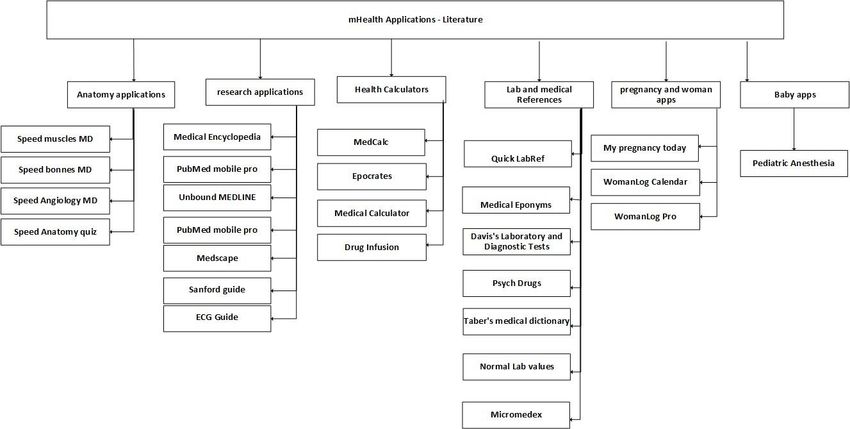
     “Speed muscles MD” [67,68], “Speed bonnes MD” [69,70], “Speed Angiology MD” [71,72] and
“Speed Anatomy quiz” [73,74] are paid mobile health applications, available for Android and iOS
devices, focused on memory tests for the identification of the muscles, bones, arteries, and veins in
the human body [54]. These applications are multilingual and primarily consist of obtaining the
organ/bone that performs in the image. “Speed muscles MD” [67,68], “Speed bonnes MD” [69,70],
“Speed Angiology MD” [71,72], and “Speed Anatomy quiz” [73,74] may be used to test the speed of
reaction of the individual to perform specific actions, implementing a set of questions about anatomy
and muscles with illustrative images on the theme.
     “Medical Encyclopedia” [75] is a free mobile health application, available in Google Play and
iTunes online store, which contains more than 50,000 pages of detailed medical information [54]. It
can schedule an inquiry online, search for a medical specialist, and provide tests online.
     “PubMed mobile pro” [76], a paid mobile health application available in Google Play store, and
“Unbound MEDLINE” [77], developed for iOS devices, provide a responsive web interface to access
the PubMed library [54]. These applications are used to search, read, store, and email articles related
to individual health problems by author, journal, and relevant citations.
     “Medscape” [78,79] is one of the most critical free mobile health applications in this category,
developed for Android and iOS devices, offering a vast drug reference and a disease library,
procedures, and protocols, and a drug interaction checker with more resources [54]. The key features
are related to the access to the latest clinical news, interesting articles, safety information on more
than 8500 prescriptions, and a network of doctors and medical students for consultation.
     “MedCalc” [80,81] is a paid mobile health application, developed for Android and iOS devices,
that provides easy access to a wide array of medical formulas and scores, including detailed
information and bibliographic references for each formula [54]. It focuses on discovering new medical
calculators, synchronizing individual data between web platform and automatic application,
expecting content from use case authorities, and synopsis of evidence from original and validation
research.
     “Drug infusion” [82] is a paid mobile health application, developed for iOS devices, described
as an intravenous medication drip rate calculator, with accurate calculations of dose, concentration,
or rate of infusion, and offers both weight‐based and non‐weight‐based predictions with unit
conversion flexibility [54]. It is created for nurses and anesthetists to support the automatic
calculation of drug dosage.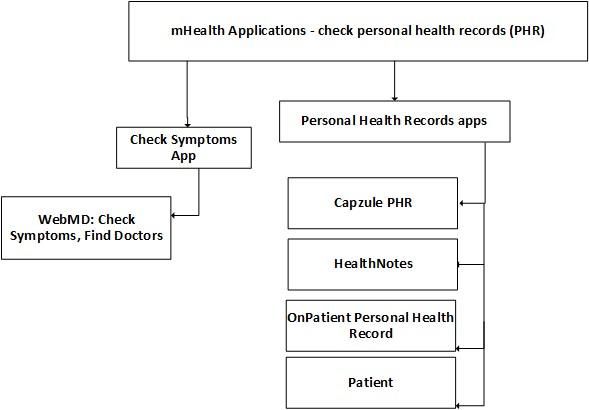
J. Pers. Med. 2020, 10, 11                                                                       6 of 30

      “Quick LabRef” [83] is a free mobile health application developed only for Android devices,
which provides access to information on the most commonly used clinical laboratory values [54]. The
mobile app provides access to laboratory data in several therapeutic areas, including detailed test
protocols, rational of abnormal values, patient notes, and sophisticated graphic design.
      “Medical Eponyms” [79,84] is a paid mobile health application, developed for Android and iOS
devices, that allows for quick lookup of the meaning of more than 1700 medical eponyms using full‐
text search or by selecting from one of 28 categories.
      “Taber’s medical dictionary” [85,86] is a mobile application developed for Android and iOS
devices. This application presents a medical dictionary that contains more than 60,000 terms, 1000
photos, medical abbreviations, symbols and units of measurement, immunization schedules, and
nursing diagnoses [54]. It is a multi‐platform medical dictionary with useful appendices of laboratory
values and alternative medicine plans.
      “Sanford guide” [87,88] is a free Android and iOS mobile health application that allows the
healthcare professionals who care for patients with infectious diseases to see their subscriptions [54].
It is a mobile application that provides information on contagious diseases, including clinical
syndromes, pathogens, anti‐infectious agents, specialized dosage tables and tools, calculators, and
preventive therapy.
      “Epocrates” [89,90] is a group of free mobile health applications, developed for Android and iOS
for various purposes related to healthcare professionals [54]. The main features of these applications
are related to drug prescribing and safety information, different forms, interactions between types of
medications, tables of medications, calculators, and notifications.
      “My pregnancy today” [91,92] is a free mobile health application, which supports 25 million
women worldwide regarding their pregnancy questions available for Android and iOS devices [54].
This mobile application provides the monitoring of the state of the baby, calendar reminders and
recommends physical exercises. Moreover, it includes checklists and turns possible to save photos
and videos of the baby.
      “WomanLog Calendar” [93,94] is a free mobile health application that shows a menstrual and
fertility calendar for women, helping the women to know their fertile period [54]. The main features
of this mobile application are the prediction or registration of the menstrual cycle, ovulation, and
fertility, the tracking of the weight, the information about symptoms, mood and pills, and the
reminders about different woman’s events.
      “Pediatric Anaesthesia” [95], a paid mobile health application available for iOS devices, and
“Pediatric Anesthesia” [96], developed for Android devices, requires the patient’s age, weight, and
fasting time to help estimate the endotracheal tube size and give a maintenance rate [54]. It presents
images with various tools for childcare related to multiple types of health problems, including
breathing problems and glucose.
      “ECG Guide” [97,98] is a paid mobile health application that consists of a teaching guide to
Electrocardiography (ECG) interpretation [54]. It presents ECG images with different characteristics
that represent various health conditions, where the healthcare professional can find in their patients.
      “Normal Lab Values” [99,100] is a paid mobile health application, developed for Android and
iOS devices, which shows reference values both in traditional and System International (SI) units
[101]. This mobile application includes other features, such as organization, sorting, and localization
of normal reference of laboratory values; commonly used clinical laboratory values; and other
information related to the different tests.
      “Medical Calculator” [102] is a paid mobile health application, available for Android and iOS
devices, equivalent to “MedCalc”, which calculates the anion gap, bicarbonate deficit, calcium
corrected for hypoalbuminemia, corrected sodium, glomerular filtration rate, creatinine clearance,
fractional excretion of sodium, fractional excretion of urea and low‐density lipoprotein cholesterol
[101].
      “Davis’s Laboratory and Diagnostic Tests” [103,104] and “Pocket Guide to Diagnostic Tests”
[105,106] are paid mobile health applications, developed for Android and iOS devices, which provide
evidence‐based information on the procedure of common laboratory tests [101]. The main features of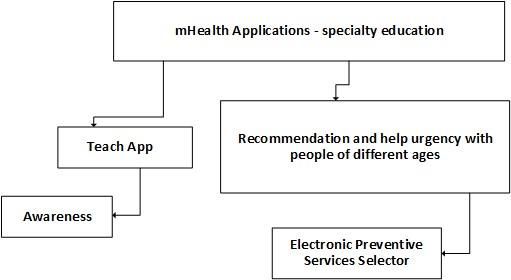
J. Pers. Med. 2020, 10, 11                                                                                        7 of 30

this mobile application are the availability of monographs about 450 laboratory tests and diagnostics;
the adaption of the age, gender, and ethnicity variations; and the patient outcomes. In addition, this
mobile application includes evidence‐based recommendations, PubMed (PMID) links directly to
citations of available journals and articles, search and favorites about the laboratory tests.
      “Micromedex” [107,108] is a free mobile health application, developed for Android and iOS
devices, used for on‐the‐go access to the industry’s most trusted clinical reference information,
providing the peace‐of‐mind of knowing the information to the healthcare professionals. The main
features of this mobile application are related to dosage information, side effects, drug interactions,
administration of dosage adjustments, and generic drug names.
      “Psych Drugs” [109] is a free mobile health application, developed for Android and iOS devices,
that shows information about various psychotropic medications, including antipsychotics, anti‐
anxiety medications, medication for insomnia, mood stabilizers, depression, alcohol dependence,
opioid dependence, and nicotine addiction for each drug. In Table 1, a summary of mobile health
applications related to literature applications is presented.

                             Table 1. Mobile health applications related to literature applications.

     Mobile Applications                Platforms       Free                         Main Features
                                       Android and                 Study of anatomy; test the speed and memory of
  Speed muscles MD [67,68]                               No
                                           iOS                                  identifying the muscles.
                                       Android and                 Study of anatomy; test the speed and memory of
    Speed bones MD [69,70]                               No
                                           iOS                                   identifying the bones.
   Speed Angiology MD [71,             Android and                 Study of anatomy; test the speed and memory of
                                                         No
             72]                           iOS                             identifying the arteries and veins.
   Speed Anatomy quiz [73,             Android and                 Study of anatomy; test the speed and memory of
                                                         No
             74]                           iOS                              identifying the body’s anatomy.
                                                                 Contains more than 50,000 pages of detailed medical
  Medical encyclopedia [75]               Android        Yes
                                                                                      information.
                                                                Provides a web interface adapted to mobile devices to
   PubMed mobile pro [76]                 Android        Yes
                                                                                access a PubMed library.
                                                                  Provides a web interface simplified and adapted to
   Unbound MEDLINE [77]                     iOS          Yes
                                                                       mobile devices to access a PubMed library.
                                                                 Offers a huge drug reference library; offers a disease
                                       Android and                 library, procedures, and protocols; offers a drug
        Medscape [78,79]                                 Yes
                                          iOS                      interaction checker with more resources, such as
                                                                search and save articles searched for future reference.
                                       Android and              Gives easy access to a wide array of medical formulas
         MedCalc [80,81]                                 No
                                          iOS                                          and scores.
                                                                  Intravenous medication drip rate calculator; offers
       Drug infusion [82]                   iOS          No            both weight‐based and non‐weight‐based
                                                                      calculations with unit conversion flexibility.
                                                                 Provides a quick look at the up‐to‐date information
       Quick LabRef [83]                  Android        Yes    on the most commonly used clinical laboratory values
                                                                         and other useful relevant information.
                                                                 Allows for quick lookup, the meaning of more than
                                       Android and
   Medical Eponyms [79,84]                               No       1700 medical eponyms using full‐text search or by
                                          iOS
                                                                          selecting from one of 28 categories.
  Taber’s medical dictionary           Android and                 Presents a medical dictionary used by healthcare
                                                         No
           [85,86]                        iOS                                         professionals.
                                       Android and              Allows healthcare professionals who care for patients
     Sanford guide [87,88]                               Yes
                                          iOS                     with infectious diseases to see their subscriptions.
                                       Android and
        Epocrates [89,90]                                Yes    Various purposes related to healthcare professionals.
                                          iOS
    My pregnancy today                 Android and                Guide pregnant women about their pregnancy and
                                                         Yes
          [91,92]                         iOS                                  answer their questions.
   WomanLog Calendar [93,              Android and               Shows a menstrual and fertility calendar for women,
                                                         Yes
            94]                           iOS                      helping the women to know their fertile period.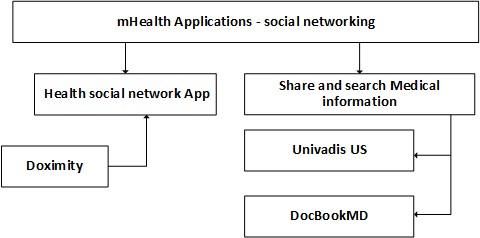
J. Pers. Med. 2020, 10, 11                                                                              8 of 30

                                                      Gives a maintenance rate; allows the user to input
                                                       insensible and blood losses to generate an hourly
   Pediatric Anesthesia [95,    Android and           total; gives the doses of oral ketamine, midazolam,
                                              No
              96]                  iOS                   and nasal dexmedetomidine; gives heart and
                                                     respiratory rates and blood pressure appropriate by
                                                                   age; gives calculated doses.
                                Android and
       ECG Guide [97,98]                      No     Teaches guide to ECG interpretation with examples.
                                   iOS
                                                      Shows reference values both in traditional and SI
      Normal Lab Values         Android and
                                              Yes   units; visualizes labs by categories or alphabetical list;
          [99,100]                 iOS
                                                                     enables to find values.
   Medical Calculator [102]      Android      No           Includes various formulas and equations.
    Davis’s Laboratory and      Android and         Provides evidence‐based information on the selection
                                              No
   Diagnostic Tests [103,104]      iOS                  and interpretation of common laboratory tests.
       Pocket Guide to          Android and         Provides evidence‐based information on the selection
                                              No
   Diagnostic Tests [105,106]      iOS                  and interpretation of common laboratory tests.
                                                       Used for on‐the‐go access to the industry’s most
                                Android and            trusted clinical reference information, providing
     Micromedex [107,108]                     Yes
                                   iOS               users the peace‐of‐mind of knowing the information
                                                                to the healthcare professionals.
                                                        Shows information about various psychotropic
                                                             medications, including antipsychotics,
       Psych Drugs [109]           iOS        Yes
                                                    antidepressants, anti‐anxiety medications, and mood
                                                                            stabilizers.
      Another category of mobile health applications used by healthcare professionals considered in
this paper is related to patient monitoring to help the healthcare professionals in monitoring their
patients. “TeleCardio” [110] is a free mobile health application, developed for Android, for remote
monitoring of patients with heart conditions with built‐in mechanisms for analysis of ECG signals
and generation of automatic alerts in case of emergencies [111]. This mobile app includes features
such as a notebook to store contacts, dates of appointments, and information about treatments.
Additionally, it consists of a travel guide with the recommended precautions and the list of countries
where the app works.
      “MedKart” [112] is a free mobile health application, developed for Android, providing access to
the hospital information system (HIS) and picture archiving and communication system (PACS). It
is a useful application for medical equipment acquisition [111].
      “AirStrip ONE” [113,114] is a free mobile health application, developed for Android and iOS
devices, connecting patients to healthcare professionals anywhere, reducing and eliminating the time
delay in the clinical assessment and treatment [41]. These mobile health applications, based on
telemedicine and health at a distance, can be accessed with mobile devices to improve the people’s
health and monitoring anywhere at any time. This mobile application allows the doctor to view the
output of clinical examinations on the mobile phone.
      The mobile health applications can help healthcare professionals in the diagnosis and treatment
of their patients, and this category is named “diagnosis applications”. “iTriage” [115] is a free mobile
health application, developed for Android and iOS devices, that is related to the diagnosis of the
patient’s health state and finds a healthcare professional in their location [116]. The main features are
related to contacting emergency medical services in the case of health problems, seeking medical
treatment or a doctor, checking their symptoms, and searching for disease information and
procedures for clinical therapies.
      “Diabetes Buddy” [117] is a paid mobile health application, developed for iOS devices, that helps
people to manage diabetes; track factors that influence the blood sugar level, including glucose,
medication, activity, water consumption, and weight; monitor the fluctuations of blood sugar level;
and plan and assist people in sharing these data with their healthcare professionals [116].
      “Glucose Buddy” [118,119] is a free mobile health application, developed for iOS devices, that
tracks glucose readings entered four times a day, as well as food consumed, exercise, insulin dosage,
and activities and allows sending this information by e‐mail [42]. The main features of this mobile
J. Pers. Med. 2020, 10, 11 9 of 30
application are related to the logging of blood glucose, medication, and meals, and the tracking of
trends in blood sugar, insulin, weight, and blood pressure. Besides, it allows users to add notes to the
entries for future reference, observe the changes in blood sugar and carb intake, and log the meals
using an extensive food database.
“HelpDiabetes” [120] is a free mobile health application, developed for Android and iOS
devices, that calculates the total carbohydrates, fats, and proteins of ingredients [42]. This mobile
application allows the tracking of blood glucose levels, insulin, and other medication; the calculation
of active insulin based on own configurable insulin profile; the monitoring of sport and other
activities; and the creation of own food composition table.
“Diabetes App—blood sugar control, glucose tracker, and carb counter” [121] and “Diabetes Lite
App—blood sugar control, glucose tracker, and carb counter” [122] are mobile health applications,
developed for iOS devices, which were built to help patients manage their diabetes by controlling
their activities and exercises, tracking the factors that influence their blood sugar level, monitoring
the fluctuations, planning accordingly and sharing their data with their healthcare professional. In
Table 2, a summary of mobile health applications related to diagnosis and treatment is presented.
Table 2. Mobile health applications related to diagnosis and treatment.
Mobile Applications Platforms Free Main Features
Diagnosis of the health state of the patient; finds
iTriage [115] Android Yes a healthcare professional to the problem in their
location
Helps people manage diabetes; tracks factors
that influence the blood sugar level; monitor the
Diabetes Buddy [117] iOS No fluctuations of blood sugar level; help users plan
accordingly and helping people to share the data
with their healthcare professionals.
Tracks glucose readings entered four times a
Android and day, as well as food consumed, exercise, insulin
Glucose Buddy [118,119] Yes
iOS dosage, and activities; allows sending this by e‐
mail.
Calculates the number of carbohydrates,
HelpDiabetes [120] iOS Yes
tracking total fats and proteins.
Diabetes App ‐ blood Help patients to manage their diabetes; track the
sugar control, glucose factors that influence their blood sugar level;
iOS No
tracker, and carb counter monitor the fluctuations; plan accordingly; share
[121] their data with their healthcare professional.
Help patients to manage their diabetes; track the
Diabetes Lite App ‐ blood
factors that influence their blood sugar level;
sugar control, glucose
iOS Yes monitor the fluctuations; plan ahead
tracker, and carb counter
accordingly, share their data with their
[122]
healthcare professional.
Healthcare professionals can use mobile applications related to personal care, and it has a high
variety of mobile apps, e.g., caloric counter, control the fitness and sports, auto‐diagnosis, and games.
“MyPlate” [123,124] is a free mobile health application, developed for Android and iOS devices, that
is related to the control of the user’s diet, weight change, and workout to help people stay fit,
including a calorie counter that compares the calories spent to the calories that the user consumed
eating [116]. The main features of this mobile application are related to the visualization of a food
database and the use of a bar code scanner to find and track food. Additionally, other features are
present, including the creation of custom foods and meals, the personalized daily calorie goal based
on your profile information, the tracking of weight and progress over time, and the nature of daily
custom goals for the nutritional intake of protein, fat, carbs, fiber, sugar, and sodium. Finally, it allows
the tracking of water intake, the setting of meal‐time reminders, the integration with Google Fit, the
logging of workouts, the creation of custom exercises, and the insertion of calories burned.J. Pers. Med. 2020, 10, 11 10 of 30
MyFitnessPal” [125,126] is a free mobile health application, developed for Android and iOS
devices, that helps with the user’s diet, controlling your weight and calories spent during your daily
physical activities, storing the results in a remote database [127]. Many functionalities are available
in this mobile application, including a food database, barcode scanner, recipe importer, restaurant
logging, food insights, calorie counter, macronutrient and water tracker, creating a diet diary,
customizing goals and habits, and logging exercise and steps.
“Weight Watchers” [128,129] is a free mobile health application, developed for iOS devices,
which calculate the calories needed and uses a barcode to insert the items and check your calories,
using a database of over 250,000 foods. Complementary, this mobile application allows monitoring
the fitness goals with an activity tracker.
“iMapMyRIDE fitness GPS” [130,131] is a free mobile health application, developed for iOS
devices, that measures the calories spent, the time, and separating these values by types of activities.
The main features of this application are the connection with other mobile applications and
wearables, and the existence of a community to meet other users of the app and control the user’s
nutrition.
“Fooducate” [132,133] is a free mobile health application, developed for Android and iOS
devices, which monitors the weight loss and diet control. This mobile application allows the tracking
of meals, food intake, and exercise; the quality of calories and macronutrients; the integration with
other mobile apps; the addition of the recipes; and the availability of a food database with calories.
“Mindful Eating” [134,135] is a paid mobile health application, developed for iOS devices, that
helps to build mindful eating habits over time with the award of badges for nutritional milestones
and points of dietary facts about food. Finally, it recognizes patterns and provides tools for changing
the user’s diet [42]. The mobile application helps users choose food, encouraging messages, see
progress through the resize screen.
“Tap and Track” [136] is a paid mobile health application, developed for iOS devices, which
focuses on food, exercise, and weight, computing the nutritional intake on foods eaten, physical
activity, current weight, and target weight; tracking the calories spent by calculating basal metabolic
rate (BMR); and finding daily calorie count based on gender, age, weight, height, and the lifestyle
[42]. Using this mobile application, the user can track food and burned calories; control daily weight;
set diet plan, goal weight, fat budget, carbs budget; and view body mass index (BMI) and nutrition
data, e.g. calories, protein, carbohydrate, fat (and saturated fat), fiber, sodium, and sugar.
“Is That Gluten‐Free?” [137,138] is a paid mobile health application, developed for iOS devices,
designed for those with gluten sensitivities, celiac disease, or anyone interested in gluten‐free eating,
including searching by categories, brand, and product name and filtering by safe, unsafe, and
possibly unsafe ingredients [42].
“Cook IT Allergy Free” [139] is a paid mobile health application, developed for iOS devices, that
provides a library of recipes for those sensitive to gluten, dairy, eggs, and nuts, suggesting
substitutions and offering the ability to customize methods to avoid specific ingredients and add
personal recipes [42].
“Diet and Food Tracker” [140] is a paid mobile health application, developed for Android
devices, used to track foods, calories, and weight, and it can follow some exercises. This mobile
application includes a database with over 3,500,000 foods tracked, monitoring of diet, fitness, and
weight, availability of diet programs agnostic, calculation of food intake and nutrition, integration
with other mobile applications and devices, and demonstrations of physical exercises.
“Full Fitness” [141] is a paid mobile health application, developed for iOS devices, that provides
an exercise database with bright illustrations, videos, and instructions, allowing the users to add
exercises, track their progress, and e‐mail the data [42]. Thus, this mobile application includes a
database with unique activities, images related to the practices, video instructions, tracking of calories
of over 90,000 food items, logging and monitoring of different exercises, a chart with workout details,
weight monitoring, calculation of BMI, and support to sharing in social networks and cloud.
“GymPact—Absolute Fitness App” [142] is a paid mobile health application, developed for
Android devices, that allows users to log and manage their food intake, exercise, and weight,J. Pers. Med. 2020, 10, 11 11 of 30
allowing the automatic calculation of daily nutrient limits based on personal profile and dietary goals
[42]. In addition, it enables increasing weight loss, tracking GPS receiver, accelerometer and step
counter, and the connection with other mobile applications and devices.
“Quit IT—Stop Smoking Today” [143] is a paid mobile health application, developed for iOS
devices, which motivates and encourages to quit and helps ex‐smokers avoid relapse. For the
purpose, it tracks the number of cigarettes not smoked and checks the money saved. To achieve these
purposes, it allows the definition of daily goals, showing the quantity of the nicotine and carbon
monoxide not consumed and the benefits of quitting [42].
“Quit Smoking‐Cold Turkey” [144] is a paid mobile health application, developed for iOS
devices to help the user to stop smoking, with the calculation of the number of cigarettes [145]. This
mobile application allows the tracking of the number of times with the desire to smoke, the setting of
a date to stop smoking and the progress sharing. In Table 3, a summary of mobile health applications
related to personal care applications is presented.
Table 3. Mobile health applications related to personal care applications.
Mobile Applications Platforms Free Main Features
Android and Control the user’s diet, weight change, and
MyPlate [123,124] Yes
iOS workout to help people stay fit.
Helps the user’s diet; control your weight and
Android and
MyFitnessPal [125,126] Yes calories spent during your daily physical
iOS
activities, store the results in a remote database.
Android and Calculate the calories needed and use barcodes
Weight Watchers [128,129] Yes
iOS to insert the items and check your calories.
iMapMyRIDE fitness GPS Measures the calories spent, the time, and
iOS Yes
[130,131] separates these values by types of activities.
Android and
Fooducate [132,133] Yes Allow the weight loss and diet control.
iOS
Helps to build mindful eating habits over time,
awarding badges for nutritional milestones and
Android and
Mindful Eating [134,135] No points out nutritional facts about food and
iOS
helping users recognize patterns and provides
tools for change.
Focuses on food, exercise, and weight; computes
the nutritional intake on foods eaten, physical
Tap and Track [136] iOS No activity, current weight, and target weight;
tracks the calories spent by calculating the BMR;
finds the daily calorie count.
Application designed for those with gluten
sensitivities, celiac disease, or anyone interested
Is That Gluten‐Free? [137, Android and
No in gluten‐free eating, including search tools by
138] iOS
categories, brand and product name, filtering by
safe, unsafe, and possibly unsafe ingredients.
Provides a library of recipes for those sensitive
to gluten, dairy, eggs, and nuts, suggesting
Cook IT Allergy Free [139] Android No substitutions and offering the ability to
customize recipes to avoid specific ingredients
and add personal recipes in the “recipe box”.
Track foods, calories, and weight; track
Diet and Food Tracker [140] Android No
exercises.
Provides a robust exercise database; provides
clear illustrations, 175 videos, and instructions;
Full Fitness [141] iOS No
allows the users to add exercises, track their
progress, and e‐mail the data.
GymPact – Absolute Allows users to log and manage their food
Android No
Fitness App [142] intake, exercise, and weight, allowing theJ. Pers. Med. 2020, 10, 11 12 of 30
automatic calculation of daily nutrient limits
based on personal profile and dietary goals.
Motivate and encourage to quit; helps ex‐
Quit IT ‐ Stop Smoking smokers avoid relapse; track cigarettes not
iOS No
Today [143] smoked, money saved, and the benefits of
quitting.
Quit Smoking‐Cold Turkey Help the user to stop smoking; calculates the
iOS No
[144] number of cigarettes daily.
Another category of applications used by healthcare professionals is mobile applications for
psychological purposes. “Awareness” is a paid mobile health application, developed for iOS devices,
which is a tool to intercept peoples’ daily routines and prompt them to get in touch with what they
are feeling. The feelings are created into the present moment, providing insight and breaks patterns
of emotions, attitudes, and behavior through awareness and inspirational practices [42]. For different
purposes, this mobile application has 20 meditative music videos, 400 inspirational quotes, and daily,
weekly, monthly, and yearly reports that provide information about your mood, feelings, and
associated activities.
“Meditation Timer” [86,146] is a paid mobile health application, developed for iOS devices, used
to listen to meditations that can be customized by name, time, and sound settings [42]. It also allows
setting session timers, alarms to access the mobile application, the duration of sessions, background
sounds for meditation, and the automatic rejection of incoming calls during sessions.
“Relax Melodies” [147,148] is a free mobile health application, developed for iOS devices, that
offers 70 high‐quality ambient sounds, volume adjustment for each sound, and binaural beats for
brainwave synchronization to help induce relaxation, guided meditation, sleep medications, and
breathing techniques [42].
“Zen Timer” [149,150] is a paid mobile health application, developed for iOS devices, used for
mindful activities, such as meditation and yoga, playing sounds, and allowing the connection with
social networks [42]. It is a cross‐platform mobile application to set meditating tools with critical
features, such as creating and editing of meditation schedule, setting reminders for the user to
practice meditation, and supporting the transfer of data to health app.
“Simply Being‐Guided Meditation for Relaxation and Presence” [151] is a paid mobile health
application, developed for iOS devices, used to choose voice‐guided meditation, with a length of 5,
10, 15, or 20 min with the option to listen with or without music or nature sounds [42]. The user can
able choose the time that the music or nature sounds continue after the meditation session ends.
“Bodhisattva Mind Teachings to Cultivate Courage and Awareness in the Midst of Suffering by
Pema Chodron” [152] is a paid mobile health application, developed to iOS devices, that explores the
insights and practices from the teachings of an eighth‐century Buddhist classic, The Way of the
Bodhisattva, the key to true liberation and the taming of the mind [42].
“Hatha Yoga‐Your Portable Yoga Studio” [153] is a free mobile health application, developed
for Android devices, that provides hours of professionally recorded instruction, including built‐in
classes for various skill levels, the ability to customize any type to suit individual needs, meditation
and breathwork education, and the option to select the background music [42]. This mobile
application is also able to show videos related to yoga and meditation classes, show 280 poses with
detailed advice and instructions, and allow the tracking of fitness goals.
“Yoga Relax” [154] is a paid mobile health application, developed for iOS apps, that shows yoga
sessions, including the ability to turn on or off an audio instructor, detailed information about poses,
the required steps for correct positioning, and how to maintain a pose [42]. This mobile application
is similar to “Hatha Yoga‐Your Portable Yoga Studio”.
“Authentic Yoga with Deepak Chopra and Tara Stiles” [155] is a paid mobile health application,
developed for Android and iOS devices, that contains video explanations of individual poses,
breathwork, and other yoga practices with customizable routines [42]. In Table 4, a summary of
mobile health applications related to psychological purposes is presented.
Table 4. Mobile health applications related to psychological purposes.J. Pers. Med. 2020, 10, 11 13 of 30
Mobile Applications Platforms Free Main Features
Tool to intercepts peoples’ daily routines; prompts
routines to get in touch with what they are feeling;
brings routines into the present moment; provides
Awareness [156] iOS No
insight and breaks patterns of emotions, attitudes,
and behavior through awareness and inspirational
practices.
Meditation Timer Android and Listen meditations that can be customized by name,
No
[146,157] iOS time, and sound settings.
Offers 70 high‐quality ambient sounds, volume
Android and adjustment for each sound, and binaural beats for
Relax Melodies [147,148] Yes
iOS brainwave synchronization to help induce
relaxation, meditation, and sleep.
Android and
Zen Timer [149,150] No Used to mindful activities.
iOS
Simply Being‐Guided Used to choose voice‐guided meditation length of 5,
Meditation for Relation and iOS No 10, 15, or 20 min with the option to listen with or
Presence [151] without music or nature sounds.
Bodhisattva Mind Teachings
Explores the insights and practices from the
to Cultivate Courage and
teachings of an eighth‐century Buddhist classic, The
Awareness in the Midst of iOS No
Way of the Bodhisattva, on the key to true
Suffering by Pema Chodron
liberation, the taming of the mind.
[152]
Provides hours of professionally recorded
instruction, including built‐in classes for various
Hatha Yoga‐Your Portable skill levels, the ability to customize any class to suit
Android Yes
Yoga Studio [153] individual needs, meditation and breathwork
instruction, a pause feature, and the option to select
the background music.
Shows yoga sessions, including the ability to turn
on or off an audio instructor, detailed information
Yoga Relax [154] Android No
about poses, the required steps for correct
positioning, and how to maintain a pose.
Contains video explanations of individual poses,
Authentic Yoga with
breathwork, and other yoga practices with
Deepak Chopra and Tara iOS No
customizable routines, and a full explanation of
Stiles [155]
Authentic Yoga.
Other mobile applications are related to education for healthcare professionals. “Electronic
Preventive Services Selector (ePSS)” [158] is a free mobile health application, developed for iOS and
Android devices, that is a set of calculators and tools with simple screening tools for a variety of
situations [38]. The information is related to the current US Preventive Services Task Force (USPSTF)
recommendations, and it is available for patient‐specific characteristics such as age, gender, and
selected behavioral risk factors.
“Radiology 2.0” [159] is a free mobile health application, developed for iOS devices, that contains
65 radiology cases that pertain to emergency medicine [38,54]. It is used to teach the user to analyze
the computed axial tomography using didactic files. In Table 5, a summary of mobile health
applications related to education for healthcare professionals is presented.
Table 5. Mobile health applications related to specialty education.
Mobile Applications Platforms Free Main Features
Electronic Preventive Services Set of calculators and tools with simple
iOS Yes
Selector (ePSS) [158] screening tools for a variety of situations.J. Pers. Med. 2020, 10, 11 14 of 30
Contains 65 radiology cases that pertain to
Radiology 2.0 [159] iOS Yes
emergency medicine.
In some cases, patients need direct contact with their healthcare professionals. Mobile health
applications can improve communication between patients and healthcare professionals. This
category contains the mobile health applications related to telemedicine, but this area includes a few
other mobile apps that enhance the collection of some sensors signals during the contact with their
healthcare professional.
“WebMD: Check Symptoms, Find Doctors, & Rx Savings” [160,161] is a free mobile health
application, developed for Android and iOS devices, specially designed for people with head pain,
neck pain, nerve pain, fibromyalgia or migraine, allowing patients to control their lifestyle choices,
review personal patterns to understand triggers, set goals, and easily share progress with their
healthcare professional,.
Patients can also check their PHR anywhere at any time with mobile health applications.
“Capzule PHR” [162], “Health and Family” [163], and “HealthNotes” [164,165] are paid mobile
health applications developed for Android and iOS devices that allow patients to check and organize
their medical information and access to their PHR anywhere and any time over the Internet and has
offline access [166]. “Capzule PHR” [162] also allows viewing profile, reminders, and appointments;
creating summary in PDF; creating custom health monitoring templates to track any chronic
condition; setting medication rand doctor appointment reminders; creating QR code summary for
emergency personnel; recording conditions and allergies; tracking health statistics with flowsheets
and self‐health screening; writing notes; and managing physician and insurance information. “Health
and Family” [163] and “HealthNotes” [164,165] are used to take health notes and message doctors.
“OnPatient Personal Health Record” [167] is a free mobile health application, developed for iOS
devices, that allows the patient to access their PHR anywhere at any time with security by Internet or
offline in the mobile application [166].
In general, these applications allow access to the patient to their PHR. “Patient” [168,169] is a
free mobile health application, developed for Android and iOS devices, that allows the patients to
access the latest news, publications and health information; book appointments; order repeat
prescriptions; explore local pharmacy services; and access their medical records. In Table 6, a
summary of mobile health applications to check PHR is presented.
Table 6. Mobile health applications to check PHR.
Mobile Applications Platforms Free
Capzule PHR [162] iOS No
Health and Family [163] Android No
HealthNotes [164,165] Android and iOS No
OnPatient Personal Health Record
iOS Yes
[167]
Patient [168,169] Android and iOS Yes
Patients can use mobile health applications to learn the primary news and activities of healthcare
problems, the human body, and first‐aid applications. “drawMD ‐ Patient Education” [170] is a free
mobile health application, developed for iOS devices, related to the patient education and contact
between patients and healthcare professionals [54]. This group of applications contains mobile apps
related to cardiology, general surgery, orthopedic surgery, obstetrics, gynecology, urology, and
anesthesia [54].
“First Aid” [171,172] is a free mobile health application, developed for iOS and Android devices,
that provides information on urgent and emergent medical situations [38]. This mobile application
includes a variety of treatments, such as allergic reaction, asthma attack, bites and stings, burns, chest
pain, choking, defibrillation, diabetic emergency, fractures, recovery position, removal of the helmet,
severe bleeding, shock, sprains, and strains.
“VueMe” [173] is a free mobile health application, developed for iOS devices, used by patients
for the non‐diagnostic viewing of medical images and share it to a cloud service. It also allows theYou can also read


