THE RURAL REPORT A UNIQUE GUIDE TO THE ISSUES THAT MATTER TO LANDOWNERS 2019 - Knight Frank
←
→
Page content transcription
If your browser does not render page correctly, please read the page content below
THE RURAL
                   REPORT
                     A UNIQUE GUIDE TO THE ISSUES THAT MATTER TO LANDOWNERS

                                                2019
       Issues and insights           Rural property markets            Working for you
    Challenges and opportunities    Latest research and analysis   Adding value for our clients

1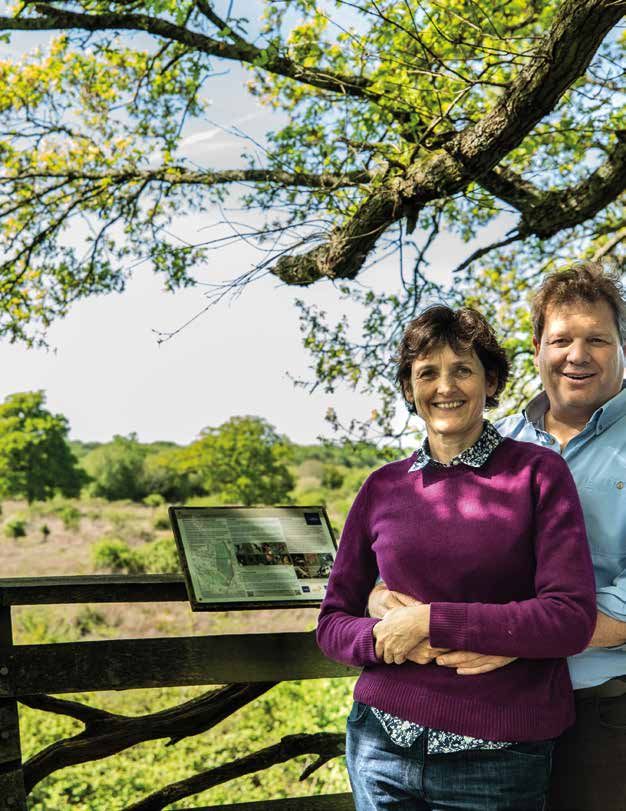
CONTENTS

                                                                              04.                                            35.
          Contents                                                            Issues and
                                                                              insights
                                                                                                                             Working
                                                                                                                             for you
                                                                              The challenges and opportunities               Insight and advice to help landowners
                                                                              facing rural landowners                        add value to their properties

                                                                              06. An overview from Andrew Shirley           36. New horizons: building your business
                                                                                   and Ross Murray                                after Brexit

                                                                              08. The big interview: Charlie and Isabella   44. Need to know: insight from our rural
                                                                                   Burrell, Knepp Castle Estate                   property experts

                                                                              14. My view: landowners share their plans     49. Spotlight on alternative investments:
                                                                                   for life after Brexit                         The Knight Frank Luxury Investment Index

                                                                                                                             50.
                                                                              16. Y
                                                                                   our view: the results of our Rural
                                                                                  Sentiment Survey

                                                                              19.                                            Get in touch
                                                                                                                             Contact details for our rural
                                                                              Property markets                               property teams

                                                                              Analysis of rural land markets
                                                                              across Britain

                                                                              20. Market update: our latest
          knightfrank.co.uk                                                        farmland research
          Important notice
                                                                              22. Regional round-up: the farmland
          © Knight Frank LLP 2019 – This report is published for general
          information only and is not to be relied upon in any way.                market where you are
          Although high standards have been used in the preparation
          of the information, analysis, views and projections presented
          in this report, no responsibility or liability whatsoever can be    29: Opportunities: a trophy fishing asset
          accepted by Knight Frank LLP for any loss or damage resultant
          from any use of, reliance on or reference to the contents of
                                                                              30. International farmland:
          this document. As a general report, this material does not
          necessarily represent the view of Knight Frank LLP in relation           focus on New Zealand
          to particular properties or projects. Reproduction of this report
          in whole or in part is not allowed without prior written approval
          of Knight Frank LLP to the form and content within which            32. Residential development:
          it appears. Knight Frank LLP is a limited liability partnership          creating a legacy
          registered in England with registered number OC305934.
          Our registered office is 55 Baker Street, London, W1U 8AN,
          where you may look at a list of members’ names.                     34. Dear Tom: your questions answered

2
RURAL REPORT 2019

Welcome to the
                                                                    B
                                                                                  y now we should have been helping our clients drive
                                                                                  their businesses forward in a more certain political

2019 edition of
                                                                                  environment, making the most of the opportunities
                                                                                  presented by Brexit and navigating the challenges.
                                                                        Our politicians, to be frank, have let us down. The situation in

The Rural Report
                                                                    which we all have to operate seems, if anything, even more febrile
                                                                    than it was 12 months ago. As a consequence, sales have been
                                                                    delayed – see pages 20–22 for more on the farmland market –
                                                                    and some investment decisions postponed.
Our dedicated magazine for rural property                               The results of our Rural Sentiment Survey on pages 16–18
                                                                    provide a clear view of what our clients think of the situation –
owners and businesses
                                                                    in short, not a great deal! But they also show that in general
                                                                    terms the furore around the botched EU withdrawal discussions
                                                                    has been an annoying distraction for the rural community, rather
                                                                    than creating widespread and significant financial impact.
                                                                        Looking beyond the uncertainty is crucial for rural property
                                                                    owners. Ours is a very long game. As our analysis on pages 6–7
                                                                    makes clear, it is becoming apparent that the environment and
                                                                    climate change are now the prime drivers of government policy.
                                                                    Inevitably, agriculture will be one of the industries to be most
                                                                    affected, with potentially profound changes to land use over
                                                                    the next 30 years.
                                                                        But rather than viewing this as a threat we should embrace the
                                                                    opportunities for change. Throughout this edition of The Rural Report
                                                                    we look at innovative businesses planning for the future, whether
                                                                    it’s the Burrell family rewilding the Knepp Castle Estate – Andrew
                                                                    Shirley’s interview from page 8 is genuinely thought provoking – or a
                                                                    Leicestershire farmer, profiled on page 39, tapping into the growing
                                                                    demand for meat with impeccable provenance.
                                                                        With so much entrepreneurialism being unleashed in the UK
ROSS MURRAY                      CLIVE HOPKINS                      countryside we remain thoroughly excited about working with some
Chairman,                        Head of Farms & Estates            of the country’s most forward-looking rural landowners.
Rural Asset Management                                                  At Knight Frank we are fortunate to have such a diverse range
                                                                    of clients, whose energy and enthusiasm make all our jobs
                                                                    extremely rewarding. In return, our wide-ranging insight and
THE RURAL REPORT
                                                                    expertise provides rural property owners with the intelligence and
Written and edited by            Photography                        connections that they need to create the best long-term strategies
Andrew Shirley                   Tim Scrivener
                                                                    for their businesses. Our residential development focus on pages
andrew.shirley@knightfrank.com   agriphoto.com
Project management               Sofia Yang Martinez                32–33 is a perfect example.
and marketing                    sofiayangmartinez.com                  It feels very much as if we are at a unique point in time. The status
Lauren Haasz                     Illustration
                                                                    quo is no more. We’d be delighted to help you to take advantage of
lauren.haasz@knightfrank.com     Muti at Folio Art
Design and art direction         folioart.co.uk/illustrator/muti/   that. If we, or any of our colleagues, can help please do get in touch.
Quiddity Media Limited           Printing                           You will find all our contacts on page 50.
quidditymedia.co.uk              Optichrome Limited
                                 optichrome.com
Published by Knight Frank LLP                                       Ross Murray Clive Hopkins

                                                                                                                                                       3
4
RURAL REPORT 2019

Issues &
insights
A guide to the challenges and
opportunities facing rural landowners

IN THIS SECTION
ANALYSIS
Andrew Shirley and Ross Murray with an overview

THE BIG INTERVIEW
Charlie and Isabella Burrell, Knepp Castle Estate

MY VIEW
Landowners share their plans for life after Brexit

YOUR VIEW
Results of our Rural Sentiment Survey

                                                            5
ISSUES & INSIGHTS

    OVERVIEW

           Green
           revolution
           Andrew Shirley looks beyond Brexit to the bigger challenge
           facing farmers and landowners

           M
                              y opening paragraph on this            Now, though, it seems momentum is
                              page in the 2018 edition of         really starting to build. It feels as if we are in
                              The Rural Report, which             a period of seismic shifts rather than gradual
                              included the words “our             incremental change.
           departure date [from the EU] is set in stone”,            Agriculture is also much more on the front
           makes for uncomfortable reading now.                   line of the climate change debate now. The
               Probably best then, that I steer clear of Brexit   recently released report from the government’s
           predictions. Perhaps the only thing that can be        Committee on Climate Change – which called
           stated with confidence is that we could all do         for carbon emissions to be cut to zero by 2050
           without another 12 months of uncertainty. This         – ruffled a lot of feathers by recommending that
           year, thankfully, my colleague Ross Murray,            the UK should have less livestock and that we
           Chairman of our Rural Asset Management team,           should all eat less meat.
           has taken on the mantle. For his sage views on            Given that 65% of the UK’s countryside is
           where we might be heading, see opposite.               dedicated to livestock production and that
               Instead, I would like to touch on a trend that,    animals are a vital part of the establishment
           I believe, is going to have a far more significant     of more wild spaces as demanded by
           impact on land managers than leaving the EU:           environmentalists, there is a clear conflict here.
           the growing influence of climate change and            The science behind the report also glosses
           environmental thinking on government policy            over the carbon sequestration capacity of
           and public attitudes.                                  grassland and the fact that grass-fed livestock
               Of course, government papers on the                emits lower levels of greenhouse gases.
           environment are not new. Sir John Lawton’s                Campaigning environmentalism is nothing
           report Making Space for Nature published by            new. But the speed with which pressure groups
           Defra in 2010 clearly identified that the amount       can now directly influence the way farms and
           of land given over to nature in the UK was             estates operate is growing. Natural England’s
           insufficient and too fragmented.                       revocation of the general licences used to
               Previous Defra ministers may have lauded           permit the control of certain bird species with
           such reports – although Owen Paterson was              just a few days’ notice is just one example.
           famously derisive of the “green blob” – but               In the uplands grouse moors and stalking
           Michael Gove is the first politician with the clout    estates are a current battlefield, with their critics
           and conviction to really put the environment           become increasingly strident. But one expert
           at the heart of his policy-making. Indeed, the         we talk to suggests there could be a middle
           first annual progress report on his 25-year            ground (page 42).
           Environment Plan, launched just last January,             Pressure on regulators is also delivering
           was published in May this year.                        significant change. The widely used weedkiller

6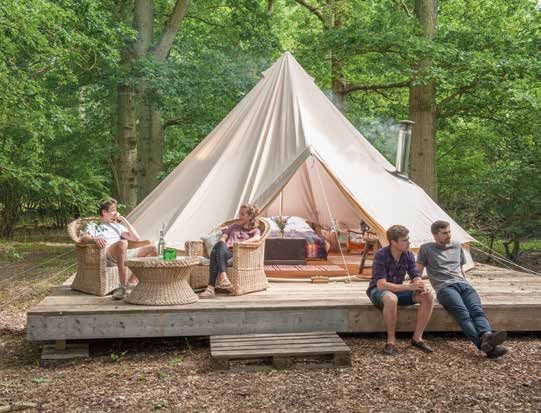
RURAL REPORT 2019

glyphosate hangs on by the skin of its teeth

                                                  SHIFTING POLITICAL SANDS
– although Donald Trump has just declared it
safe – and other chemicals will surely follow
neonicotinoids on to the banned list. A farmer
lamented to me recently that of his 160
hectares of rape, flea beetle had spared only     A personal reflection on current events
five. Nothing can be taken for granted.
   All of the above combines into a melting
                                                  by Ross Murray

                                                  A
pot of challenges, opportunities and mixed
messages. The good news for landowners                            s I reflect on the                 direction of travel for land use policy in
is that Michael Gove’s commitment to the                          unprecedented political            the coming decades seems set. This
environment extends to acknowledging the                          events in Britain over the past    will mean a fundamental move away
need to reward them for delivering public                         year and what might evolve         from direct support as per the Common
goods. We just need more details and a            in the 12 months to come, it is sometimes          Agricultural Policy to the public goods
reliable way of valuing the natural capital       harder to see longer term shifts when the          model, rewarding positive work on the
delivered by farms and estates.                   immediate focus is so confused.                    ground to deliver a range of benefits,
   The bad news is that all of the potential                                                         perceived and tangible.
                                                  Clearly, Brexit will continue to dominate
environmental benefits are still overshadowed
                                                  the news and the nation’s outlook. Scottish        At the same time the whole industry is
by headlines from documents such as the
                                                  independence rears its head again and the          expected to reform and modernise to
State of Nature report highlighting the sharp
                                                  old dog barks in Northern Ireland. There           better withstand economic shock and
decline in our biodiversity, for which farming
                                                  are some indications that the economy              become less reliant on public support.
takes much of the blame.
                                                  moves on despite and not because of our            Market realignment remains illusory for
   But with better communication and
                                                  government and its governance of the               producers of base commodities, often
quantifiable results to shout about, that could
                                                  country. What the implications of trading          trading at world prices. A cheap food policy
change quickly. The opportunities are there, as
                                                  relationships with the continent will be           has more political resonance than an
shown over the following pages, but they will
                                                  remains the subject of speculation. On             expensive one.
require change, compromise and an openness
                                                  these UK agriculture is very dependent.
to new ideas.                                                                                        Meanwhile for the tenanted sector a
                                                  What was clear from the start of the Brexit
                                                                                                     consultation on significant reform is open
                                                  process in 2016 was that there was no
                                                                                                     at the time of writing (see page 45) in both
                                                  margin for error in the negotiations with
                                                                                                     England and Wales. Whether parliamentary
                                                  the EU. It is self-evident that our team
                                                                                                     time can be found to rewrite primary
                                                  has been trumped by the European
                                                                                                     legislation is another matter. But the
                                                  Commission, hindered as we are by seismic
                                                                                                     reality is that both landlords and their
                                                  political differences throughout the UK
                                                                                                     tenants are starting to have conversations
                                                  establishment. Only a radically different
                                                                                                     about the future in advance of whatever
                                                  political make-up in the European Parliament
                                                                                                     changes to agricultural tenancy law
                                                  will alter the resolve of the EU now and, as
                                                                                                     might emerge.
                                                  we creep closer to the end of October, a
                                                  hard Brexit becomes the default and reality.       In 12 months’ time we will judge whether
                                                                                                     the Conservative Party’s instinct for
                                                  The prospect of change within the
                                                  Conservative Party is now real, the extent         political survival prevails over the historic
                                                  depending on who is elected leader this            schism on Europe. It smells to me like a
                                                  summer. The scheduled General Election             split is coming. The greatest irony of
                                                  in 2022 feels some way off, but that too           Brexit would be that the party system
                                                  could change and the challenge for rural           dissolves into multi-party coalitions, and
                                                  landowners and their professional advisors         that we actually become more European
                                                  is to anticipate public policy as it will affect   in our politics.
                                                  their businesses under a range of scenarios.
                                                                                                     Time to de-risk, and wait for opportunities
                                                  Despite the delays to both the Agriculture         to emerge, as they surely will. But it could
                                                  and Environment Bills, the general                 be a bumpy ride for some, if not all.

                                                                                                                                                                 7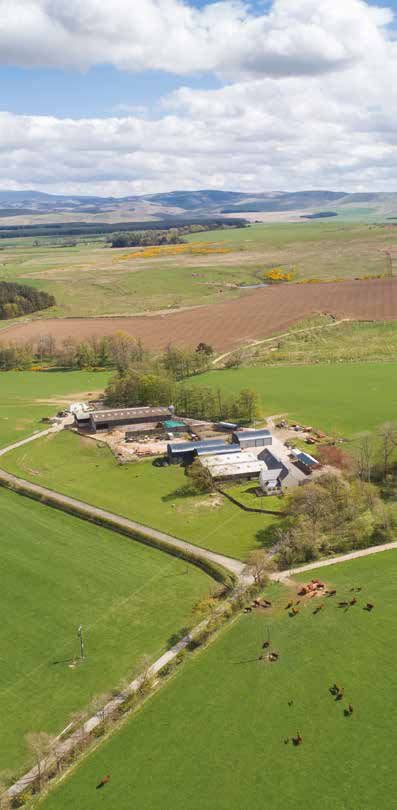
ISSUES & INSIGHTS

    THE BIG INTERVIEW

8        Transformers – Isabella and Charlie Burrell in front of a wild landscape that was until recently arable fields. Image: Sofia Yang Martinez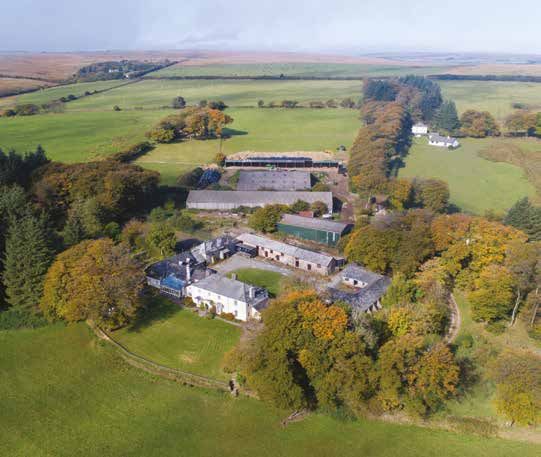
RURAL REPORT 2019

  Take a
walk on the
 wild side
       Charles and Isabella Burrell talk candidly with Andrew Shirley
       during a tour of their pioneering yet controversial estate

      T
                     he sun is strong on my face, the soil is dusty around my boots,
                     and a symphony of birdsong emanates from acres of thorny
                     scrub. In the distance a large animal skips fleetingly across
                     a narrow track.
          For a brief moment it feels like I’ve returned to the African bush where
       I spent my early working years, but reality soon inevitably intrudes. The
       sunlight also glints off planes circling overhead, waiting to land at Gatwick
       airport, while the avian chorus isn’t quite loud enough to drown out the dull
       drone of cars on a nearby dual carriageway.
          I’m standing in the middle of the 1,400-hectare Knepp Castle Estate, not
       far from Horsham in West Sussex. And yet it still seems a million miles away
       from any farm or estate I’ve visited in the UK before.
          Having spent his early years in what was then Rhodesia, Sir Charles,
       or Charlie as he much prefers to be known, understands the feeling well.
       And in her recently published book about the estate, Wilding, the return of
       nature to a British farm – one of the Smithsonian’s top ten science books
       for 2018 – Charlie’s wife Isabella recounts numerous such moments evoking
       memories of other places and times: the return of the warbling coo of the
       turtle dove, almost extinct in the UK; a vivid haze of resurgent Purple Emperor
       butterflies; and, perhaps most evocatively of all, the complex and staccato
       conversations of nightingales once again proudly proclaiming their territories
       to each other.
          It feels that something revolutionary is afoot here. The reviews on the back
       of Isabella’s book – “One of the landmark ecological books of the decade,”
       cries The Sunday Times; “Hugely important,” implores The Guardian –
       certainly bear that out.
          The fact that some of Knight Frank’s biggest landowning clients were
       keen to accompany me on my visit also confirms that things are done
       differently, very differently, at Knepp. And they’re not alone. “Last year we
       were visited by the owners of a million acres and this year it will be a million
       more,” confirms Charlie.
          Their curiosity is driven in part by the need to solve the conundrum
       currently facing many of the UK’s farm and estate owners: how to keep their
       land profitable after Brexit when area-based subsidy payments will gradually
       fade away. The transformation of Knepp seems to offer one of the answers.

                                                                                                    9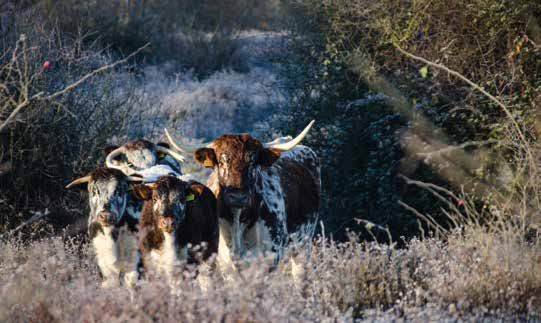
ISSUES & INSIGHTS

 THE BIG INTERVIEW

                TALKING POINT “                                            But for Charlie and Isabella, it wasn’t a single      to be surrounded by nature and wild spaces.
               Rewilding is                                             defining event that catalysed the creation of this       A visit to Holland’s pioneering – and controversial
          destroying traditional                                        seemingly foreign landscape surrounding me.              – 6,000-hectare Oostvaardersplassen (OVP)
                                                                        Rather, it was the gradual realisation at the tail end   nature reserve where grazing animals live, roam,
           British landscapes                                           of the last century that farming grade 3 and 4 land      reproduce and die freely with minimal human
          Look further back and                                         on 320 metres of Sussex clay, despite their best         intervention, all the while reshaping the landscape
                                                                        efforts to modernise and become more efficient,          in unexpected ways, inspired them to look again
          “rewilded” landscapes                                         just wasn’t profitable.                                  at Knepp’s potential in a completely new light.
              were common                                                  The estate’s dairy farms were the first to            The decision to rewild had been taken.
                                                                        go. Then in-hand arable farming bit the dust,               “Until recently the consensus among
                                                                        machinery auctioned off to be replaced by a              ecologists was that land left to its own devices
                                                                        contractor. The Repton parkland ploughed up              would eventually revert back to closed canopy
                                                                        during the Dig for Victory campaign of the second        woodland, but the impact of large herbivores
                                                                        world war was restored to permanent pasture, and         at OVP has turned that theory on its head,”
                                                                        fallow deer were reintroduced. “The estate began         says Charlie.
                                                                        to breathe again,” recalls Isabella. “And as the land       Eager to capitalise on the interest stirred up by
                                                                        began to relax, so did we.”                              these findings, he submitted an ambitious “letter
                                                                           But it wasn’t enough. More radical surgery was        of intent” to establish a biodiverse wilderness
                                                                        required to satisfy the Burrell’s growing hunger         area involving bison, beavers and wild boar

          Grazing licence – English Longhorn cattle are a vital part of Knepp’s herbivore mix

10
RURAL REPORT 2019
“
TALKING POINT
Rewilding is
irresponsible because the
world needs more food
Crop and food wastage is
a far bigger threat
Chilling out – glamping offers attractive margins.
to English Nature. Unsurprisingly, this was generate a significant income, while visitors flock Nevertheless, not everybody approves of
considered too much too soon, particularly on an to go on safaris or stay at Knepp’s campsite and the changes. One of the biggest criticisms
estate criss-crossed with public rights of way. in its glamping tents and treehouses. “We are levelled at Knepp is that it is somehow wrong
But the Burrells persevered, eventually getting fully booked for the whole season,” says Charlie. to let farmland “go to waste” when there are
the entire estate accepted into the Higher Level “Our profit margins are 30 to 40%. You can’t get more mouths to feed in the world and the UK is
Stewardship scheme and gradually substituting that from farming.” becoming less self-sufficient in food. “It does
the wilder animals on their original wish list with And, of course, there is that landscape, so seem to have upset a lot of farmers and the
more acceptable breeds – old English Longhorn redolent to me of African savannah. Left to its NFU,” admits Charlie.
cattle, Exmoor ponies, Tamworth pigs and own devices, it has changed beyond recognition But to Isabella, this is something of a red
fallow and red deer – that would nevertheless with dense scrub and thicket replacing crops herring. “The world already produces enough
roam freely with minimal human intervention, and manicured grassland, while hedges billow food to feed ten billion people, two-and-a-half
replicating the different feeding habits of the out into 30-metre wildlife havens. “We have billion more people than are alive today. What’s
original herbivores that inhabited the Sussex purposefully not tried to recreate habitats for the so shocking is that about a third of that, some
Weald without scaring ramblers and dog walkers. benefit of specific species like nightingales, but 1.3 billion tonnes, is wasted every year.”
The results in little more than a decade have to let nature take its own course and see what Charlie also finds some of the accusations
been phenomenal, both environmentally and returns of its own accord,” says Charlie. “The hypocritical when “the NFU and government
financially (see boxes overleaf). Sales of the results have been beyond what we could ever are happy to give up 20% of productive
estate’s totally organic and free-range meat have hoped for.” farmland to produce fuel”. “There are valleys
11ISSUES & INSIGHTS
THE BIG INTERVIEW
in the south-west covered in maize grown for Again, Isabella believes the ire is misguided,
anaerobic digestion plants where the soil is pointing out that the study often quoted by
just disappearing.” horse lovers to justify the danger of ragwort,
Another argument is that a mass movement which animals will only eat if no other food
towards rewilding will require the remaining is available, was deeply flawed. Its benefits
agricultural land to be farmed even more to wildlife are also largely ignored, she says.
intensively. Again, Charlie is not convinced, nor “Ragwort is one of the most sustaining hosts
does he agree with the proponents of “spare to insects we have. In all, 177 species of insects
not share” who argue that, rather than adopting use it as a source of nectar or pollen.”
low input or organic farming methods, it is better Fears about the spread of this native plant
to farm some areas very intensively, allowing are also overstated, believes Charlie, who says
more land to be released for rewilding. research shows that only a tiny fraction of its
“Nobody is advocating that we rewild most of seeds will travel more than 36 metres. “We
“
the UK. Tony Juniper, the new head of Natural mow 50-metre strips along the boundaries with
England, is talking about 1 per cent of the our neighbours so it is highly unlikely we are
country by 2030 and even that is ambitious. I going to create problems for anybody else.”
also think this idea that farming should be all or Despite all the facts and figures that show
TALKING POINT nothing is quite sad. rewilding isn’t a threat – those worried about the
“Even in intensively farmed areas there is introduction of apex predators can relax, Knepp
Subsidising rewilding room to have some woolly edges and let isn’t large enough to revert to a true wilderness
just benefits large estates nature in, and those practising regenerative where wolves run free – many people still
agriculture have proven that you can still have remain deeply uncomfortable with the idea of
The positive high yields while looking after your soils and what is happening at Knepp, admit the Burrells.
the environment.” Isabella attributes much of that to a kind of
environmental effects A further barb often aimed at Knepp comes nostalgia. “What we see as children, particularly
spread far beyond estate from those uncomfortable that plants they view where we grow up, becomes what we want
boundaries as weeds, in particular ragwort, which when to continue to see. As well as creating a fear
eaten in large quantities can be poisonous to of change, this ‘baseline syndrome’ can have
horses and livestock, are allowed to grow wild a corrosive effect as more and more species
on the estate. and habitats are denuded or lost completely
Environmental wins Species spotted:
Violet dor dung Bats – 13 of 18 Owls – all five
beetle – not seen in UK species UK species
Sussex for 50 years
Nightingales – 34 Turtle doves – Purple Emperor
territories recorded UK’s only butterfly – 388
at peak growing population counted in one day
Financial wins Income 2018:
Meat sales – Environmental Rent from former
£120,000 stewardship – farm cottages –
£191,000 £120,000
Tourism and Rent from converted
glamping – farm buildings –
£320,000
Times they are a changing – Micheal Gove spells out his plans at the NFU conference
£500,000
Royal visitor – the Purple Emperor butterfly
12RURAL REPORT2019
RURALREPORT 2019
Birdwatching – Knight Frank clients spot a rare stalks’ nest during their visit to Knepp. Image: Sofia Yang Martinez
and each generation’s perceptions of what is been achieved at Knepp stretch far beyond the
normal start to shift. estate’s boundaries. “There is so much life here
“When we look at a landscape we see what now. We are a reservoir waiting to pump it out
is there, not what is missing. And if we do into the rest of the landscape; we just need to join
appreciate some sort of ecological loss, we everywhere up.”
tend to only go back as far as our childhood In a world ruled by balance sheets, the future
memories or those of our parents,” explains may revolve around the ability to better measure
“
Isabella. “We don’t have to look too deeply into and financially quantify the tangible and not so
contemporary accounts for scenes dramatically tangible outputs of rewilding, whether it’s the
different to our own to be normal. Yet we live in river that emerges from Knepp with lower levels
denial of these catastrophic losses.” of nitrates than when it entered, or the improved TALKING POINT
The ability to reset this baseline is one of mental wellbeing of those who come to visit
Knepp’s biggest benefits, she enthuses. “When and to stay.
people come here and hear so much birdsong For now, though, rewilding has put Knepp
Rewilding spreads
they realise what they have been missing.” in a better financial position than farming, dangerous “weeds”
Resetting the nation’s baseline, however, is a even with subsidies, managed to achieve.
rather more difficult – and expensive – prospect, “We’re pragmatic estate owners so I would
Plants considered
says Charlie. “If we do leave the EU there is the never rule out farming again. If we had to go weeds are some of
feeling in some quarters that we will be able back to agriculture we could, but it seems the most beneficial
to spend the £3 billion or so paid by Defra to inconceivable at the moment that it would
farmers and landowners each year on other ever make sense,” says Charlie.
to insects. They don’t
things. But if we want to get nature back to It seems a safe bet that the flow of curious spread as freely as
where it should be, it is going to need billions landowners, mingling with day-trippers and people believe
and billions of pounds.” besotted campers, wondering if Knepp
And that, I suppose, rather than worries about perhaps offers a solution to their own worries,
so-called weeds or food security, will ultimately is set to continue.
determine the future of rewilding in Britain. Will
government and the public have the appetite
to swap one subsidy for another, I ask Charlie, To find out more about Knepp visit
particularly when it is large estates like Knepp knepp.co.uk
that are best placed to benefit.
“That’s above my pay grade,” he quips, but he Wilding, the return of nature to a British farm
is utterly convinced that the benefits of what has by Isabella Tree has been published in paperback.
13ISSUES & INSIGHTS
MY VIEW
My view
Kicked down the road for now, but still set to be delivered at some point in 2019,
Brexit will create a new landscape for farmers and landowners. A cross-section of
the industry share their plans for the future
The arable farmer The farming company The livestock farmer
Tim Breitmeyer, CLA President Paul Christian, MD, Sentry Minette Batters, President, NFU
With my weekend farming hat on, there is Preparing for the unknown is not only difficult, For the livestock side of my business, particularly
little doubt uncertainty hangs over us all like a but arguably foolhardy. However, we have sheep, the future will be influenced more than
darkening cloud, coupled with a yearning to know been using the time to establish fit for purpose, anything else by what our final relationship
more detail so we can plan and invest for the healthy and adaptable businesses for ourselves with the EU looks like. With one in three lambs
future. But we should all recognise that whatever and our clients in the post-Brexit world, exported it’s unlikely we’ll see consumption
the outcome of the current grinding impasse, including mitigating risk where we can on the increase in the UK, so exports will be a vital part
significant changes loom on the horizon, and back of risk sharing with our marketing partners. of post-Brexit Britain.
the sooner we start engaging the better.
But while leaving the EU could have a dramatic At home we’ve focused on being as efficient
In response, the CLA has made pragmatic effect in the short term, our view is that the real and effective as we can and are constantly
interventions – making the case that a no-deal challenges – and they are happening at the striving to improve. Animal health, genetics
Brexit will have negative consequences for same time – come from climate change and it is and soils are at the forefront of our livestock
the entire rural economy and that we should this that has been preoccupying our thoughts. business. I’ve always believed that overall herd
be working towards a free and frictionless health is a hugely important defence to achieving
Building soil resilience is, I believe, key to
trading relationship with the EU. We also urge and maintaining TB-free status.
creating some degree of protection against
government to recognise the scale of the likely
climatic extremities. We applied over 100,000 Our suckler herd is predominantly Simmental
upheaval, and the level of investment needed to
tonnes of organics last year and this will cross cows, selling strong stores through
achieve greater rural productivity and resilience.
increase if we can find enough. As a result, Salisbury Auction Market, but we also have a
We live in unprecedented political times, and some of our farms recorded incredible small herd of pedigree Herefords and are about
we stand ready to redouble our efforts to ensure performances. But not all fell into this category to start a pedigree Aberdeen Angus herd.
the rural voice continues to be heard clearly and we have further to go with this policy.
My advice would be to prepare for change and
in the corridors of Westminster.
make sure your business is Brexit match fit.
14RURAL REPORT 2019
But how can such a switch be profitable, trials with farmers, land managers, advisors and
especially when the younger generation is other local experts, using their expertise and
reducing its intake of red meat, believing it is knowledge to design a new system.
the right thing for their health and the health I am looking forward to progressing with the
of the planet, and even in some cases going development of ELMS in my role at Defra.
vegetarian and vegan?
We must all encourage Michael Gove (or his
The traditional estate successor) to introduce incentive payments
directly linked to increasing soil carbon, ideally
Charles Courtenay, Earl of Devon,
The Powderham Estate taking most of the money that is presently given to
us in the form of the Single Farm Payment.
Several months since Theresa May’s original Farming must also unite to explain that the
Brexit day, we find ourselves none the wiser as methane emitted by grass-fed ruminants is
to the ultimate impact of our EU exit. offset by the resulting carbon sequestration in
the soil and that, counter to the current orthodoxy, The institution
Many great minds have considered the effects
animal fats, especially from grass-fed animals, Christopher Sparrow,
of various departure models on agriculture and Head of Rural,
are actually healthier than palm oil, genetically
rural businesses; all of them remain hypothetical The Duchy of Lancaster
modified soya, oil seed rape and other
and debatable. Even the Agriculture Bill, our
plant-based fats.
first substantial agricultural legislation since The whole Brexit process has encouraged
the 1940s, has been marooned, and details of us to look closely at our farming assets and
future government support for agriculture remain how we manage them. In order to gauge the
shrouded beneath the Delphic slogan of “public impact of a more environmentally weighted
money for public good.” support regime in the future we really need
All we can sensibly do is remain light on our to understand the operational capabilities
feet, and embrace two great strengths of rural of our farms as they exist today.
business – long-term planning and diversification. A move to an in-house estate management
At Powderham, we look towards a 100-year team has brought us closer to our tenants.
horizon in our land management strategies, and The politician Work is ongoing to review tenants’ business
ensure a varied portfolio of farming and land Robert Goodwill MP, models, clarify our obligations and identify
management activities. This has allowed our Minister of State, Defra the right capital projects into which we should
business to endure over 700 years of European invest to improve efficiency and longevity.
ambiguity; we hope it will get us through Brexit. One of the areas I was most looking forward
to working on when I was appointed to Defra We will be looking to build on a recently
earlier this year was the planning for a future completed field-by-field biodiversity audit
Environmental Land Management Scheme part-funded by Natural England and facilitated
(ELMS) to replace the Common Agricultural by the Game & Wildlife Conservation Trust.
Policy (CAP). This two-year project has identified where there
is scope for improvement and areas where
My family has been farming in Yorkshire on
we can beat regional benchmarks without
the Castle Howard Estate for well over 150
taking any land out of production. Hopefully a
years. Over time we have adapted to change,
useful segue toward ELMS and Natural Capital
diversifying the business and learning to farm
calculations as and when they go live!
in more sustainable ways. However, we have
The organic farmer also had to contend with the CAP, which has Whatever the future holds in terms of policy and
become increasingly dated, holding back
Patrick Holden, Chief Executive, legislative changes, confidence in our starting
innovation with its “one size fits all” policy for point will be vital and working in partnership with
Sustainable Food Trust
28 member states.
our tenants to give them a head start in this
We are told we only have ten years to avoid The Agriculture Bill sets out ambitious plans for “all new” regime will be key.
irreversible climate change. One of the best a future in which we plan our own policy, with
ELMS at the heart of that. ELMS is still in the
ways to rebuild the lost soil carbon that 50 years
very early stages, but over the coming months
of continuous arable farming has removed is to
and years we will carry out pilot schemes and
switch to a mixed farming system.
15PROPERTY MARKETS
YOUR VIEW
Brexit – it’s
time to move on
Rural landowners and businesses share their views in the latest instalment
of our Rural Sentiment Survey. Andrew Shirley crunches the numbers
T “
his year’s survey was never However, a significant minority – almost 30%
supposed to be about Brexit. – said their businesses had suffered financially
At the time respondents were in some shape or form, whether that was We are finding that our
answering the questions, we through lost business, putting plans on hold or
commercial tenants
should have just embarked on our voyage of spending time and money preparing for a no-
discovery outside the EU instead of facing yet deal Brexit. One respondent lamented: “I have
and events businesses
more months of uncertainty. been planning for my retirement and my plans are suffering from a
So my apologies for inflicting more Brexit on are now completely up in the air.” lack of certainty
you, but it seemed important to quantify just But just as in the original referendum, our
what impact all the uncertainty is really having respondents were fairly evenly split on how
on rural businesses. The answer, for a majority, they wanted the mess sorted out. The top two
is not much. Six out of ten respondents said that choices were a second referendum with a vote
the farrago had been an annoying aggravation, to remain (25%) and, just squeaking into the
but had not had an economic impact. lead with 26%, a no-deal “hard” Brexit.
WHAT IMPACT HAS THE UNCERTAINTY SURROUNDING BREXIT HAD ON YOUR BUSINESS?
60% 17% 8% 4%
An annoying We have lost business We have suffered We have spent time and
aggravation, but no real because of the uncertainty financially by putting money preparing for a no
economic impact business plans on hold deal Brexit
Other 11%
16RURAL REPORT 2019
HOW DO YOU HOPE BREXIT WILL
EVENTUALLY BE FINALISED?
Much of the blame for the inability to strike a
deal seems to be laid at the door of Brussels.
This is reflected in the responses when we
asked if people would vote differently if they had
“
a second chance. While 84% haven’t changed
26% their minds, of those that had, almost 80% said
they would now vote leave instead of remain, a
A no-deal I’m sick of the bully boy
slightly higher proportion than when we asked
“hard” Brexit
the same question last year.
tactics. I didn’t want to
One of the themes running through the leave, but it’s confirmed
survey was a broad polarisation of respondents. everything that’s bad
25% For example, there was a fairly even split about being in the EU
between those planning to change their
businesses to cope with the challenges and
opportunities of Brexit and those maintaining
A second referendum the status quo. Of those planning to make
with a vote to remain
changes, some kind of diversification was the
most popular option, followed by putting more
land into environmental schemes.
22%
Theresa May’s deal is
eventually passed by ARE YOU PLANNING TO CHANGE YOUR BUSINESS TO COPE WITH THE CHALLENGES
parliament AND OPPORTUNITIES OF BREXIT?
16%
A softer Brexit
involving a customs
union or similar
49% 51%
TOP FIVE FAVOURED CHANGES
Yes No
10%
Something
else
1. 2. 3. 4. 5.
2% £
A second referendum
confirming the vote to leave DIVERSIFICATION PUTTING MORE MAKE EXISTING PLANT MORE BUY OR SELL
LAND INTO BUSINESS MORE TREES LAND
CONSERVATION EFFICIENT
SCHEMES
17PROPERTY MARKETS
YOUR VIEW
When we asked whether people were more The one question we didn’t ask was whether
or less optimistic about the prospects for their those taking the survey were confident that the
businesses than this time last year there was an Brexit process would eventually be concluded
even split between those feeling more optimistic within the next 12 months. Let’s hope so. In the
(25%) and those that were less upbeat (26%). words of one of our respondents: “Brexit is a
Interestingly, that still means almost half of those massive distraction, there are so many other
taking the survey haven’t changed their outlook. issues we need to get a grip on.”
Something else that hadn’t changed
according to the results of this year’s survey
were the issues affecting the ability of our
respondents to manage their businesses as HAVE YOU CHANGED YOUR MIND ON BREXIT
efficiently as possible. Once again, restrictive SINCE THE REFERENDUM?
16%
planning polices, poor broadband or mobile
connectivity, commodity prices and succession
“
planning all featured in the top five gripes.
While government can do little about
Yes
84%
commodity prices or succession, its inability
We are now dictated to to deliver decent connectivity to many rural
by Natural England and businesses is winning it few friends, especially
as over half of respondents taking the survey
their political masters
said they were already using social media to
who have no idea about promote their businesses.
No
real conservation
IF YES, HOW HAVE YOUR VOTED REMAIN, BUT WOULD
VIEWS CHANGED? NOW VOTE LEAVE
VOTED LEAVE, BUT WOULD
79%
NOW VOTE REMAIN
21%
DO YOU CURRENTLY USE SOCIAL MEDIA
TO PROMOTE YOUR BUSINESS?
WOULD LIKE TO, BUT
DON’T KNOW ENOUGH
ABOUT IT
5%
NOT YET BUT
PLANNING TO WHAT ARE THE OTHER BIG ISSUES AFFECTING YOUR ABILITY TO MANAGE YOUR
6% BUSINESS AS EFFICIENTLY AS POSSIBLE?
YES
52%
1. 2. 3. 4. 5.
NOT RELEVANT RESTRICTIVE POOR BROADBAND/ FLYTIPPING COMMODITY SUCCESSION
NOT INTERESTED
22% PLANNING POLICY INTERNET PRICES ISSUES
14%
18RURAL REPORT 2019
Property
markets
Changing values and future outlook
Feature property:
Overton Bush, Scottish Borders
A first class, ring-fenced stock farm on the Scottish
Borders with over 500 acres of productive arable land,
permanent pasture, rough grazing and woodland.
Four-bedroom farmhouse and three-bedroom cottage.
For sale as a whole or in two lots.
Offers over £1,750,000
IN THIS SECTION
MARKET UPDATE
Our latest farmland research
REGIONAL ROUND-UP
The farmland market where you are
OPPORTUNITIES
A trophy fishing asset
INTERNATIONAL FARMLAND
Focus on New Zealand
RESIDENTIAL DEVELOPMENT
Creating a legacy
DEAR TOM
Your questions answered
19PROPERTY MARKETS
MARKET UPDATE
Pressure
building
Clive Hopkins, Knight Frank’s Head of Farms & Estates, takes the
temperature of the current farmland market
E
arlier this year I was predicting that But with the deadline for reaching a deal now
more land would have come to the extended to October it seems unlikely that we
market by now and that we would will see any meaningful movement in prices for
have a clearer picture as to where the rest of the year. By mid-May the amount of
prices were heading.
That, however, was of course based on THE AMOUNT OF FARMLAND FOR
SALE PUBLICLY
there being some clarity regarding the Brexit
process, clarity that is still at the time of writing
297,123
(13 May) sadly lacking.
277,665
According to the latest results of the Knight
Frank Farmland Index (to Q1 2019), average
229,622
prices for bare agricultural land have been
193,000
treading water so far this year, holding firm at
186,000
180,521
164,052
175,737
160,591
158,385
just under £7,000 per acre, 5% lower than
158,000
152,114
137,607
142,789
143,000
139,000
they were five years ago, but still 50% higher
136,000
128,514
125,000
112,721
than in 2009.
Uncertainty among both vendors and
potential purchasers has created a bit of a
pressure cooker situation where only those
15,316
strongly motivated to buy or sell are active.
My own feeling was that a Brexit deal of any
form as scheduled would have allowed the
market to let off steam and we might have even
seen a slight bounce in values by the summer.
Not necessarily back to the highs of 2015, when
our farmland index broke the £8,000/acre
1999
2000
2001
2002
2003
2004
2005
2006
2007
2008
2009
2010
2011
2012
2013
2014
2015
2016
2017
2018
2019*
barrier, but perhaps enough to wipe out the 3%
slide of the past 12 months. SOURCE: DEFRA/FARMERS WEEKLY * TO 17 MAY (-32% YOY)
* To 10 May (-38% YoY)
Feature property: Dinmore Manor, Herefordshire
An iconic 1,468-acre estate, in beautiful, secluded countryside. The estate comprises the main Grade
II listed manor house, parkland, productive arable land, pasture and woodland, outbuildings, excellent
shoot, 20 cottages, and a remarkable cattle breeding facility and equestrian complex.
Offers over £28,000,000
20RURAL REPORT 2019
21PROPERTY MARKETS
MARKET UPDATE
land advertised for sale publicly was well down In the meantime, cereal prices are holding
on 2018 and I don’t see too many signs of this up and those high quality farms that do come
trend being reversed, although activity has to the market will sell well – see my colleagues’
picked up slightly. regional round-up over the following pages
Longer term, some commentators are arguing for some examples – but until politicians in
that Brexit will lead to an inevitable sharp decline Westminster and Brussels get their acts
in the average value of farmland. I’m not so sure together we can only wait impatiently for some
that this should be taken as a given – regardless kind of normality to resume.
of whether we are in the EU or not, there are
Please contact clive.hopkins@knightfrank.com
still plenty of reasons to own farmland and, as
“
if you are thinking of buying or selling an estate,
mentioned elsewhere in this report, there are farm or land.
other arguably more pressing challenges facing
Longer term, some farming – but what I do believe is that the market
THE 10-YEAR PERFORMANCE OF FARMLAND
will become even more variable than it already is
commentators are VS OTHER ASSETS
(see map opposite).
arguing that Brexit will For example, as area-based support Gold FTSE 100 Prime central London residential
lead to an inevitable payments are gradually scaled back, soil quality UK house prices (Nationwide Price Index) English farmland
sharp decline in the and productivity will become much more
200
average value of important to commercial farming buyers. But
175
farmland. I’m not so sure that’s not to say only the best agricultural land
will be in demand. As support shifts towards
that this should be taken
Index 100 = Q1 2009
the delivery of environmental benefits, more 150
as a given marginal farms may well be able to create
new income streams. 125
LONG-TERM PERFORMANCE OF FARMLAND
100
(£/ACRE)
75
2009
2010
2011
2012
2013
2014
2015
2016
2017
2018
2019
£6,979
£6,979
£4,673
£4,673
FARMLAND PERFORMANCE
3-month change 0.1%
£1,876
£1,508
12-month change -3%
£927
£927
£186
£186
5-year
2009change -5%
2010201120122013201420152016201720182019
10-year change 49%
Q1 Q1 Q1 Q1 Q1 Q1
Q1
1969
1969
Q1
1979
1979
Q1
1989
1989
Q1
1999
1999
Q1
2009
2009
Q1
2019
2019
50-year change 3,660%
KEY AGRICULTURAL INDICATORS (MAY 2019)
OUTPUTS FEEDWHEAT OILSEED BEEF LAMB MILK INPUTS RED DIESEL OIL
(£/T) RAPE (£/T) (P/KG DW) (P/KG DW) (P/LITRE) (P/LITRE) (£/BRL)
LATEST 148 301 359 458 28.9 LATEST 64 54
ANNUAL CHANGE -2% 5% -6% -22% 8% ANNUAL CHANGE 7% -2%
SOURCE: KNIGHT FRANK RESEARCH
22RURAL REPORT 2019
REGIONAL FARMLAND VALUES (£/ACRE)
NORTHERN
SCOTLAND
£4,000-£6,000
£2,000-£3,000
£500-£750
EASTERN
SCOTLAND
£5,000-£9,000
£3,000-£4,000
£750-£1,500
SCOTTISH
BORDERS
£5,000-£8,000
£3,000-£4,500
£750-£1,500
NORTH
£4,500-£8,500
£1,500-£4,500
WESTERN SCOTLAND £650-£1,500
£4,000-£7,000
£2,000-£4,000 YORKSHIRE
£500-£2,000 £8,000-£10,000
£5,000-£7,000
WEST MIDLANDS EAST MIDLANDS
£8,000-£12,000 £8,500-£10,500
£5,500-£7,500 £6,000-£7,500
£3,000-£5,000
EAST
£8,500-£12,000
£5,000-£6,000
WALES
£6,000-£8,000
£4,500-£7,000
£2,000-£4,500
SOUTH WEST
£7,000-£12,000
£5,500-£7,000
£500-£2,500
SOUTH EAST
£7,000-£10,500
£5,000-£7,000
23PROPERTY MARKETS
THE REGIONS
SCOTLAND – Tom Stewart-Moore
Regional
During 2018 we saw a slight increase in the
number of farms for sale in Scotland. In total,
77 farms with a guide price of over £1 million
totalling 36,000 acres were publicly marketed.
round-up
This compared with 62 farms the year before, but
was still historically low. Demand was strongest
for prime arable units and for stock and hill farms
with tree-planting potential. Aberdeenshire saw
two large farming units of about 4,000 acres
come to the market in excess of £13 million.
Both units were sold, highlighting the resilience
Knight Frank’s experts analyse the farmland market near you of the farms market despite Brexit uncertainty.
and share details of a selection of properties new to the market Knight Frank also purchased a 700-acre arable
farming unit in Angus, and a 700-acre mixed unit
in Dumfries and Galloway for clients. Buyers for
farms are coming from throughout the UK and
Feature property: abroad. Scottish farmland is still deemed good
Finnich Malise Estate, Stirlingshire value compared with the south, with purchasers
moving north to acquire larger farming units.
A private residential estate in Stirlingshire with views towards Ben Lomond. Available as a whole or We expect to see less land on the open market
two lots: Lot 1 – approx. 152 acres encompassing the house, estate buildings, gardens, woodland this year, but plenty available privately.
and in-hand farm; Lot 2 – about 66 acres of grazing land and paddocks.
tom.stewart-moore@knightfrank.com
Offers over £2,450,000
24RURAL REPORT 2019
WALES – Jonathan Bengough
Predictions for 2019 remain mixed. Larger stock
Feature property:
farms of 300 acres or more will be relatively
Newport House, Herefordshire
rare this year, but prices are holding up well
for hill farms, with larger units averaging A magnificent Georgian house with fine
£6,000/acre depending on the quality of the landscaped gardens and lake at the
house and buildings. Smaller farms of up to 100 heart of an idyllic country estate. Coach
acres will be more plentiful with demand possibly house, Victorian stable block, manège and
outstripping supply from those interested paddocks, beautiful restored productive
in lifestyle changes, not to mention living in walled garden, 11 additional cottages and
beautiful countryside. The residential element farmhouses, parkland and woodland,
and location will largely drive these values, with a working farms.
smallholding near Monmouth of some 30 acres
Guide price: £10,000,000
making close to £900,000 recently.
jonathan.bengough@knightfrank.com
THE COTSWOLDS – Will Matthews
Despite unprecedented political uncertainty,
the Cotswolds’ fanbase remains unwaveringly
committed. There is no doubt that demand for
this micro-climate remains as high as ever at a
time when supply is low. Good quality farms and
estates, particularly those with amenity value,
attract significant interest from a wide sector
of the market, from neighbouring landowners
to national and international buyers. This level
of interest in the Cotswolds keeps prices at a
premium with extraordinary sales taking place
for best-in-class properties.
will.matthews@knightfrank.com
Feature property:
Bishops Court Farm, Oxfordshire
A 298-acre residential farm with extensive Feature property: The Hawfield, Gloucestershire
residential planning permission for a principal
A 17th-century estate with a lovely outlook over the River Severn. Three cottages, a courtyard,
house and two further substantial houses
stone barns and outbuildings with development potential, in all about 140 acres with farmland
in addition to the existing listed farmhouse
and woodland. Guide price: £2,900,000
which has consent for an extension, cottage,
agricultural buildings, large lakes, pasture and
arable land. Guide price: £5,600,000 for the
THE WEST MIDLANDS – Will Kerton
whole, or available as nine lots
The past year has seen a mixture of attitudes from buyers. Some have naturally hesitated and been
cautious, while others have pushed forward with committed determination to buy their next farm. One
recent overseas buyer was motivated to purchase a Worcestershire farm of over 210 acres due to his
commitment to environmental and charitable causes. A mainly arable farm of 100 acres was bought
purely as investment earlier in 2019 by a local buyer planning ahead for his family. Looking ahead we
have farming buyers eager to expand their businesses with requests from arable farmers looking to
take on more land in order to manage their economies of scale and reduce their production costs.
Dairy farmers are looking in earnest and one dairy farmer said he would rather consider an arable farm
with no current dairy set-up to allow him to invest in a blank canvas. The Midlands offer a mixed farming
landscape with great accessibility, good climate and value for money. We will no doubt see more
interest from buyers from outside the region over the next year and with more certainty to come in the
political and economic arenas it will prove to be a good year for sellers to approach the market.
will.kerton@knightfrank.com
25PROPERTY MARKETS
THE REGIONS
THE SOUTH EAST – Will Matthews
Generally speaking, land prices in the south east
have continued to struggle to keep pace with
much of the rest of country. Even during the heady
days of 2015 values remained muted here. That
said, in the current market, demand continues to
outstrip supply by a margin and this is seen more
in this region than others. This increased demand
is only further heightened by the continuing rise
of rollover buyers looking to spend funds derived
from development projects in the region. These
buyers have been frustrated by the lack of available
farmland and are willing to pay premium prices to
secure land purchases. This, along with expanding
landowners and general interest in the region, will
lead to premium results.
will.matthews@knightfrank.com
Feature property:
Sussex Farm House, Sussex/Kent border
A Grade II listed family home in 197 acres with swimming pool, tennis court, stabling, indoor arena,
manège and range of farm buildings. Three cottages, pasture, woodland and arable.
Guide price: £5,500,000
Feature property:
Worlingham Hall, Suffolk
THE EAST – George Bramley
A shortage of quality stock in the east of England remains. Despite all the political uncertainty the A 448-acre conservation and sporting
landmark sale of the Sutton Hall Estate (as featured in last year’s edition of The Rural Report) proved estate in Suffolk, with parkland,
that exceptional results can be achieved with the property’s irrigated land making over £12,000/acre. woodland, lakes and marshes. Stable
It is now increasingly clear that there is change ahead in agriculture, but the old adage about the limited courtyard, farm building and plenty of
amount of good quality land is as strong as ever. There is significant demand to invest in the east, secondary accommodation.
an example of which was a recent private deal for a 450-acre farm that sold in excess of expectations Guide price: Lot 1: Offers in excess of
and exchanged and completed within a month. £2,900,000, or available as a whole for
george.bramley@knightfrank.com offers in excess of £5,500,000
26RURAL REPORT 2019
Feature property:
Fell House Farm,
Northumberland
A renowned Northumbrian
stock farm within commuting
distance of Newcastle upon
Tyne. In all, 428 acres of arable
land, mowable grassland,
permanent pasture and
woodland. For sale as a
whole or in five lots.
Offers over £2,250,000
THE NORTH – James Denne
There seemed to be a sense of déjà vu during the first quarter of this year with market activity on the
Feature property:
low side. A limited volume of land, however, has transacted (or is transacting), even though the position Stanton Farm, Wiltshire
in respect of farm subsidy payments remains as uncertain as it was 12 months ago. Values have
A Robert Adam-designed family house with
changed little and £8,000/acre for the best arable soil is still a reality, while good grazing land remains
well-proportioned rooms at the core of 288
at £4,000 to £4,500/acre. Well maintained fixed equipment and a good house (or two) are always an
acres in a sought-after location. Gardens
asset. As ever, demand continues to outstrip supply. Knight Frank Melrose is currently instructed on two
with beautiful views and lakes. Courtyard
high quality stock farms (either side of the border) that we expect to generate significant interest in the
with barn, garaging and storage. Three-bed
market, both locally and from further afield. Interest in farms and farmland remains as strong as ever,
cottage, seven stables, tack room, manège,
whether that is from existing businesses (particularly family-run farms), investors or lifestyle buyers.
agricultural buildings, pasture and arable.
james.denne@knightfrank.com
Guide price: £4,950,000
27You can also read


