Think like a start-up - How to grow in a disruptive market 2017 Global Consumer Executive Top of Mind Survey kpmg.com/cmsurvey - The Consumer ...
←
→
Page content transcription
If your browser does not render page correctly, please read the page content below
Think like
a start-up
                                                    |1|

How to grow in a disruptive market

2017 Global Consumer Executive Top of Mind Survey
kpmg.com/cmsurvey
|2|

      growth
      © 2017 KPMG International Cooperative (“KPMG International”). KPMG International provides no client services and is a Swiss entity with which the independent member firms of the KPMG network are affiliated.
“Revolution is just                                                                                                 “Consumers
 around the corner”
Willy Kruh explains why businesses must
                                                                                                                     want authenticity”
                                                                                                                       Peter Freedman says engaging
respond to geographic, demographic                                                                                     consumers and building brand
and technological changes to survive                                                                                   loyalty is all in the narrative

O                                                                                                                     S
           ur fifth annual Global Consumer Executive                                                                              tart-ups have successfully disrupted the
           Top of Mind Survey reveals that 35 percent                                                                            consumer goods industry because they have
           of respondents have experienced growth of                                                                             been able to understand consumer trends. Yet
           6 percent or more a year. This is great news                                                                          their success has spurred established players
           for them. But for manufacturers and retailers                                                                         who, it’s fair to say, are all now obsessed with
           across the globe to achieve comparable – or                                                                           increasing the pace of change.
           better – results, the key is understanding that                                                                           Today’s consumers want instant gratification,
growth is as much a mindset as a market condition.                                                                     as well as a narrative or story behind the products they
                                                                                                                                                                                                   |3|
Companies that manage change by becoming customer                                                                      buy that resonates with them. Consumers are looking
centric throughout their operations can accelerate growth.                                                             for authenticity – products that have been created by
    I see three revolutions coming. First, a geographic                                                                a couple of individuals whose names they know, and
revolution. Heading towards 2030, the bulk of the global                                                               are produced in a certain place.
consumer base will be a billion new                                                                                        In some ways, smaller start-ups have
customers from China. The second is                                                                                    an easier ride when it comes to creating
demographic. As digital natives, today’s                                                                               authenticity. One of the challenges for
consumers are driving online sales. The                                                                                established brands is that there are some
‘Do It For Me’ generation wants something                                                                              negative associations when it comes to big
that gets the job done efficiently and                                                                                  business, but even they can build trust by
effectively – even if it makes a larger impact                                                                         being transparent about their products.
on their income. So enhancing customer                                                                                     In a world where people have less
experience is crucial. The third revolution is                                                                         time to engage with a multitude of brands,
technological. In the age of the smartphone,                                                                           social media plays a big part in getting that
ensuring customers can buy what they                Willy Kruh                                                         message of authenticity across – word of            Peter Freedman
want, when they want is vital.                      Global Chair                                                       mouth being arguably the strongest advocate Managing Director,
    Businesses need to use data and                 Consumer & Retail,                                                 of a product or service.                            The Consumer Goods Forum
                                                    KPMG International                                                                                                     p.freedman@
analytics wisely to understand their                                                                                       There are still ways to build brand loyalty     theconsumergoodsforum.com
                                                    wkruh@kpmg.ca
customers. The pace of social, economic,                                                                               in a market where heritage is no longer as
technological and environmental change is only going to                                                                important as relevance, but of course you
accelerate, and adapting to it – being agile – is key. The                                                             need to be able to innovate at least as fast as
bigger you are, the tougher it is to be agile, but there is                                                            your competitor.
a real opportunity for those who dare to lead the pace of                                                                  Whatever narrative you choose, it needs to tap into
innovation. Companies that evolve, innovate and truly                                                                  what’s most important to your consumers. Identifying
understand their Millennial employees and customers                                                                    those trends and picking the ones that will provide a
will likely succeed, be they old or new, large or small.                                                               sustainable business opportunity is the key to success.

          © 2017 KPMG International Cooperative (“KPMG International”). KPMG International provides no client services and is a Swiss entity with which the independent member firms of the KPMG network are affiliated.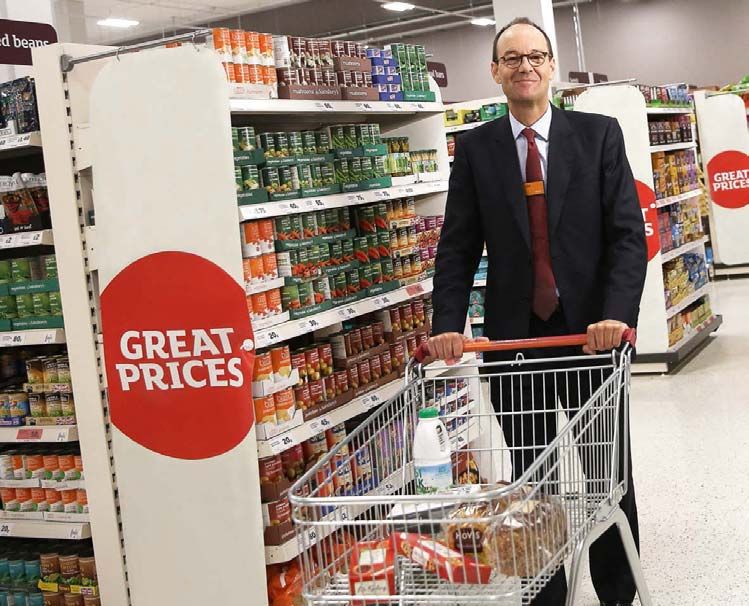
What do high-growth companies in the consumer
      goods and retail sector have in common?

|4|

      36 43
      rank consumer
      trust and loyalty
      as their number
      one priority
                                                                                                                          have full integration
                                                                                                                          across their supply chain

           © 2017 KPMG International Cooperative (“KPMG International”). KPMG International provides no client services and is a Swiss entity with which the independent member firms of the KPMG network are affiliated.
69 39
are successfully using
data analytics to predict
consumer behavior
and preferences
                                                                                                                      believe competition
                                                                                                                      from new entrants
                                                                                                                      will be the biggest
                                                                                                                      industry disruptor
                                                                                                                                                                                                                   |5|

    © 2017 KPMG International Cooperative (“KPMG International”). KPMG International provides no client services and is a Swiss entity with which the independent member firms of the KPMG network are affiliated.
Key findings

      Customer centricity                                                         Changing consumers                                                               Supply chain

      How customer                                                                What do                                                                          Can your supply
      centric are you?                                                            consumers want?                                                                  chain deliver?
      The need to win and keep consumers                                          Consumers are more unpredictable than                                            Companies are still dissatisfied with the
      still dominates the agenda for many                                         ever as Millennials become the critical                                          speed and efficiency with which they
      manufacturers and retailers. The results of the                             demographic for manufacturers and retailers.                                     develop, manufacture and deliver products
      2017 Top of Mind Survey show that customer                                     Companies have never been able to                                             – and that is clearly revealed in this survey.
      loyalty and trust remains the top priority for                              access as much consumer data, yet many                                           These concerns reflect the fact that too
      33 percent of respondents, but there is clearly                             are still grappling with how to turn this                                        many supply chains remain driven by
      work to be done. The industry’s leaders                                     knowledge into actionable insights. Some                                         product – rather than demand – and are
      recognize the challenge: 39 percent admit                                   point to consumers’ shrinking attention                                          not aligned closely enough to the business’s
|6|
      that, when it comes to personalizing the                                    spans, while others to increased choice                                          strategic goals.
      customer experience, their company’s                                        (a factor in almost every sector).                                                  Yet by moving towards a genuinely
      capabilities are only poor to fair.                                            Consumers are more likely to pay heed to                                      demand-driven supply chain, companies
         In a hyper-competitive marketplace, where                                influencers on social media – 82 percent say                                      can boost sales, cut costs and reduce
      industry leaders identify changing customer                                 they would follow a recommendation made                                          inventories. This will also make it much
      preferences as their biggest concern, the                                   by a micro-influencer, which means that they                                      easier to embrace the technologies that are
      rewards for getting it right are significant.                                probably have as much say in defining the                                         already starting to transform the industry
      The survey results showed that companies                                    perception of a brand as the company itself.                                     and the supply function, especially robotics,
      with the strongest customer centric                                            Understanding consumers and capturing                                         virtual reality and artificial intelligence.
      capabilities -- including data analytics, supply                            their attention is exponentially more complex                                    Read more on p36
      chain agility or customer engagement --                                     than it used to be – and companies need
      were also more likely to have higher revenue.                               clarity about their offering to the market. The                                  “In the future, every part of the supply
      Read more on p8                                                             upside is that the far richer interaction with                                   chain will rely on artificial intelligence,
                                                                                                                                                                   because the network of AI systems will
                                                                                  consumers can help businesses get it right.
      “Understanding how consumers                                                                                                                                 design the supply network.”
                                                                                  Read more on p20
      are changing and how your brand                                                                                                                              Erich L. Gampenrieder, KPMG International
      can serve them goes back to the                                             “The key challenges facing
      power of data.”                                                             businesses today focus on
      Julio Hernandez,                                                            understanding these shifts in
      KPMG International                                                          consumer tastes and influences.”
                                                                                  Joel Benzimra, KPMG International

               © 2017 KPMG International Cooperative (“KPMG International”). KPMG International provides no client services and is a Swiss entity with which the independent member firms of the KPMG network are affiliated.
Automation Disruption Thought leaders
Wil automation How do you plan For more in-depth
insights, read our
exclusive interviews
make the difference? for disruption? with these global
business leaders
Artificial intelligence, mobile There is more to disruption than Uber. Mike Coupe
computing, cloud computing, the The consumer industry is operating in an CEO, Sainsbury’s p16
internet of things and robotics are environment where economic growth will Greg Creed
transforming how companies remain subdued, geopolitical tension is high CEO, Yum! Brands p18
develop, produce and sell goods. This and consumer trends, shopping channels Roberto Meir
is the start of a revolution which will, and media are all fragmenting. CEO, Grupo Padrão p31
over the next few years, see robots Yet many companies, this survey
Brian Newman
deployed across the industry, suggests, are going back to the future, Executive Vice President, |7|
significantly impacting its cost base. relying more on historical sales data than Global Operations, PepsiCo p32
Yet there are challenges that AI fresh insights into consumer behavior. That
Stefano Pessina
and machine learning need to deal mindset is changing with such companies
CEO, Walgreens Boots
with right now. Although four out as L’Oréal, Metro, Grupo Bimbo and
Alliance p34
of 10 companies say they are using PepsiCo challenging themselves by asking:
Olaf Koch
AI to improve customer service, for how would we disrupt our business?
CEO, Metro AG p44
many companies online shopping is Strategically, disruption is a challenge for
still far from frictionless. every business in the consumer sector, be Emmanuel Faber
The enormous potential of these they manufacturers or retailers. Larger CEO, Danone p46
technologies will only be fulfilled if global concerns may find uncertainty easier Aliko Dangote
manufacturers and retailers overcome to manage, but history suggests that in the CEO, Dangote Group p58
the obstacles that have hindered the 21st-century consumer marketplace, it’s Alexis Perakis-Valat
application of new technologies in the harder than ever for businesses to bounce President, L’Oréal Consumer
past – lack of clarity about internal back when they’ve lost a competitive Products p60
ownership, confusion about best advantage. For many CEOs, taking volatility Michitaka Sawada
strategic use, and failure to grasp the out of the business is a key goal. CEO, Kao Corp p72
infrastructural challenges. Read more on p62 Daniel Servitje
Read more on p48 CEO, Grupo Bimbo p74
“Disruption is not a word
“A key question when you hear often in the Chinese
implementing automation is consumer industry. Change
who is the logical owner of it is happening faster, and on
within the organization.” a greater scale, here than
David Neely, KPMG in the US in any other market.”
Christoph Zinke,
KPMG in China & Asia Pacific
© 2017 KPMG International Cooperative (“KPMG International”). KPMG International provides no client services and is a Swiss entity with which the independent member firms of the KPMG network are affiliated.
© 2017 KPMG International Cooperative (“KPMG International”). KPMG International provides no client services and is a Swiss entity with which the independent member firms of the KPMG network are affiliated.

Are customers
really at the                                                                                                                                                                                                  |9|

center of your
business?
© 2017 KPMG International Cooperative (“KPMG International”). KPMG International provides no client services and is a Swiss entity with which the independent member firms of the KPMG network are affiliated.

By creating a customer centric business, you can decide where
to play, what to do and how to win – and be better placed to
deliver the growth that stakeholders expect
T
“ he purpose of business is to create and keep demographics, behaviors, expectations and values and Issues of critical importance
a customer,” observed management guru Peter the patterns of start-ups and VC investments to to company’s success
Drucker in the 1950s. For manufacturers and deepen their understanding of the future of their
retailers serving the consumer, that mission business, their sector and their customers. 40%
remains, it’s just that creating and keeping One of the difficulties is that the pace of change Customer trust and loyalty
customers has become significantly more – even in terms of consumer preferences – varies
36%
difficult in the past 60 years – and particularly in enormously from sector to sector. Mike Coupe, CEO
Customer experience
the past five. Companies have not been complacent, of Sainsbury’s, concedes that the supermarket sector
pumping billions of dollars into customer service has seen more than its fair share of disruption, but 31%
programs – but is the investment really paying off? points out: “Customers are shopping around more Product and pricing strategy
The American Customer Satisfaction Index (ACSI) because there are more shops, more choice and
29%
suggests that these investments have, at best, some strong online players. At the other end of the
Food and product safety
incrementally improved the customer’s experience. spectrum, the top ten products we sell today are the
In the third quarter of 1994, when the ACSI started, same as they were ten years ago. Chicken tikka 28%
the overall figure across the whole US economy stood masala is still the best-selling ready meal in the UK, Supply chain/operations
at 74.8. At the end of 2016, it had risen slightly to 76.8. as it was ten years ago. Chicken breast fillets are still efficiency
For some consumer products – notably apparel, food the top-selling item – as they were ten years ago. 28%
manufacturing, personal care and cleaning products What people buy is not changing anything like as Data security and privacy
and soft drinks – satisfaction had actually declined fast as where and how they’re buying it.”
| 10 | 26%
marginally over that period. The ratings for breweries
Marketing and promotions
were the same at the end of 2016 as in 1994, while Retaining customer loyalty
customers had become slightly more satisfied with Yet in an uncertain marketplace, even iconic brands 26%
supermarkets and department stores. and retailers are vulnerable – a fact their leaders seem Data and analytics
To be fair, consumer goods and services’ to recognize. The 2017 Top of Mind Survey shows that 24%
satisfaction scores were not untypical. The industry customer trust/loyalty remains a top three priority for Enhancement of
that most dramatically improved its ratings was 33 percent of companies over the next two years. e-commerce, m-commerce
cellphones – up from 69.0 in 2004 to 79.0 in 2016. Nearly three out of four executives identified this area and payments systems
Yet that improvement in satisfaction has leveled off, as very to critically important to the success of their
23%
increasing by only three points in the past five years. business. The other top-ranking priorities were product
Collaboration with
The ACSI is only one metric – although, in broad and pricing strategies (29 percent) and customer suppliers and partners
outline, the findings are mirrored by its UK equivalent experience (26 percent). In comparison, such
– but does it show that the industry’s investments previously hot issues as talent management,
have not delivered the anticipated return? Or that geographic expansion and social and environmental
customers are much harder to satisfy? Probably both. responsibility were a priority for less than 20 percent.
Many consumer industry executives say that Brand loyalty is a particular concern because, as the
customer expectations are increasing, 2017 Edelman Trust Barometer shows, distrust of
FOOD FOR THOUGHT
becoming more complex, changing business has seldom been higher. Brands have not In 2016, spending on
more quickly and are often harder to been immune to this skepticism, with studies showing food accounted for 17%
of monthly incomes in
fathom even than they were a few consumers have less faith in them, don’t trust them to China, according to
SPEED TEST
years ago. Sensing the signals of Around 42%
handle their data and are more cynical than ever about Credit Suisse’s research
change isn’t easy if you continue to of Australia’s the traditional forms of advertising that are used to
see the market through the traditional mobile promote them. One intriguing finding from the Top of
shoppers say
lens. Consumer goods companies slow delivery Mind Survey is that only 56 percent of executives in
need to take a broader, more holistic puts them off China considered brand loyalty/consumer trust as a key
buying online,
view, that takes into account changing according to a issue. This does not necessarily mean they are ignoring
PayPal study
© 2017 KPMG International Cooperative (“KPMG International”). KPMG International provides no client services and is a Swiss entity with which the independent member firms of the KPMG network are affiliated.NET GAINS
In China and South
Korea, one fifth of
YOUTH CLUB apparel and footwear
India has more Millennials than any sales are generated
other country in the world. The UN digitally, says Mintel
estimates that more than 356m
Indians are aged 19-34
How companies assessed the challenge – it could be that they strategy. This is the stage at which many companies
their capabilities linked to recognize that brand loyalty is just become complacent, thinking they are ‘customer
customer centricity
weaker among Chinese consumers than in some centric’ because they know more about their
Excellent developed markets. customers. One large US consumer electronics retailer
Good The suggestion that “The customer is king” is offers striking proof of this tendency. Management
Fair one of the oldest marketing mantras, but this is not thought they knew their customers pretty well and
Poor the same as actually having a customer centric were shocked to discover that 55 percent of their
organization. As Julio Hernandez, Global Head of customers were women – and they didn’t like the
Being personally engaged Customer, KPMG International, says: “Many in-store experience which, given that the shops had
with our end-customers/users companies define their customer strategy with a been designed to suit men, was understandable.
slogan – and underpin that with a few key attributes. Organizations only begin to become genuinely
But they still fall into the trap of focusing on what they customer centric when they turn insight into action
44% can sell to the customer – not what the customer and shift their focus from selling products to solving
wants to buy from them.” customer problems. This, Gulati suggests, may lead
25%
KPMG’s research suggests that truly customer businesses to become agnostic about whether they
24% centric organizations have a number of common produce all the outputs needed to solve customers’
6%
characteristics. They are more likely to: needs and develop an eco-system of partners and
Providing a compelling Dcollaborate with partners/suppliers collaborators to meet demand. The return on
customer experience Dembrace a culture of innovation and collaboration investment for this kind of corporate transformation is,
| 11 |
Dpersonally engage with end-users/customers Gulati’s research suggests, both clear and dramatic.
Duse social media to promote their brand and engage Between 1999 and 2007, his study of 500 companies
45% with consumers showed that those with a deeper commitment to
Ddrive digital transformation throughout the business customer centricity grew sales by 233 percent, rather
26% Dhave an agile, demand-driven supply chain than the 10 percent achieved by the typical company
Dinvest in the right technologies in the Standard & Poor’s 500. The Top of Mind Survey
23%
6% Dprovide a compelling customer experience also shows a clear correlation between high growth
Dhave an effective pricing strategy across channels companies, and their level of customer centricity.
Using data analytics Duse data analytics to predict customer preferences With that kind of ROI – and the realization, reflected
to predict customer
preferences and behaviors and behaviors. in last year’s Top of Mind Survey, that companies need
For the purposes of this research, firms with to become customer centric, why have so many
“excellent” capabilities in 7 or more of these areas businesses found this goal difficult to achieve? One
40% were considered to be more customer centric. reason is that too many companies focus on a single
Source: 2017 Top of Mind Survey, KPMG International and CGF
customer metric – the Net Promoter Score (NPS) is
25%
How to transform your company particularly popular – as if this is a magic formula that
22% In terms of corporate evolution, Ranjay Gulati, guarantees success. The need for clarity and focus –
13%
Professor of Business Administration at Harvard particularly during times of great organizational change
Offering customization Business School, has identified four stages in the – is understandable, but executives need to put such
and personalization journey to customer centricity. Initially, companies are data into a broader, subtler context. Knowing that a
product-driven, focused on the excellence of their customer is satisfied is useful, understanding why they
technology, with a diffuse understanding of their are satisfied – and applying that knowledge – can help
40% customers. Once they start investing in market transform the business.
30% research, they acquire a basic understanding of their Customer centric organizations are less likely to
customers and can begin to target them in a much regard customer metrics as mere market research and
21% 9%
more segmented way, but the research they have is more likely to use them as critical performance data
not used to influence product development or inform that shapes strategies, tactics and decisions. To do this
© 2017 KPMG International Cooperative (“KPMG International”). KPMG International provides no client services and is a Swiss entity with which the independent member firms of the KPMG network are affiliated.X APPEAL
Generation X shoppers
(born between 1966 and
1981) make 19 online
transactions a year,
KPMG research shows
successfully, these organizations need to ensure that those capabilities and they are among the more Which technologies
customer centricity infuses the entire operation – their successful enterprises.” companies are most likely
to be using
supply chains and logistics departments as much as The HR aspect of the transformation is often
sales or marketing. New technologies and data overlooked. Olaf Koch, CEO of German wholesale group Low customer centricity
analytics can help businesses do this – indeed the Metro AG, says dissatisfied staff are unlikely to lead to High customer centricity
Top of Mind Survey shows that customer centric satisfied customers: “In my view, the relationship
companies are significantly more likely to have between employee engagement and customer Cloud technology
adopted cloud computing, advanced data analytics, satisfaction isn’t linear, it is exponential.” Measuring 82%
e-commerce and mobile commerce than most that engagement is, for Metro, a key metric driving
companies – but ultimately an organization’s culture customer centricity. “Many good strategies,” Hernandez 69%
may have the decisive say. says, “fail because the message doesn’t cascade down
As Stefano Pessina, executive vice-chairman and through the organization – and people don’t really
CEO of Walgreens Boots Alliance, says: “I have always understand how to apply it in their everyday jobs.”
tried to make every company I’ve managed – or am One of the challenges is creating a culture that Checkout/point
managing – customer centric. The big challenge is genuinely hears what consumers are saying, as of 25%
sale technology
changing people’s mindsets and that doesn’t happen opposed to what the organization would like them to 82%
overnight. People have to actively believe this, and be saying. As Roberto Meir, CEO of Brazilian media
consequently they will behave and work in accordance agency Grupo Padrão, says, this problem is even more 62%
with that belief.” L’Oréal has a similar stance – its acute in a digital age: “Doing business in the light of
| 12 |
leaders emphasize that listening to the market is not day, naked, is much more difficult. Today’s consumers
the prerogative of any one program, department want to be engaged – which means it’s not just
or level of management, but is a responsibility shared about what you want, the brand also belongs to Advanced data analytics
throughout the organization. the consumer.” Meir says that part of the problem, 78%
Customer centricity programs can fall short for a particularly at large corporations, is that it is often
variety of reasons. Organizations may operate in silos, unclear who has internal ownership of the customer. 62%
with customer service championed by some functions This may explain why some organizations have started
which cannot influence other parts of the business. appointing Chief Customer Journey Officers (CCJOs).
The programs can be stalled or dropped because leaders
can’t see the return, lack the bandwidth to drive the Understand your data E-commerce/
digital payments
transformation properly – or because they are too The trend for expert consumers – also known as
focused on short-term sales and revenue metrics. Often, influencers and key opinion leaders – who become 71%
businesses don’t have the IT they need to do the job – or virtual co-owners of the brand, is particularly
Source: 2017 Top of Mind Survey, KPMG International and CGF
62%
don’t know how to use the technologies – an obstacle prevalent in China. Dr Christoph Zinke, Leader of
that becomes apparent when they try – and fail – to map KPMG’s Global Strategy Group in China and Asia
the customer journey across different channels. Pacific, says: “The key opinion leaders, on social media
Mark Larson, Head of Consumer & Retail, KPMG in platforms such as WeChat, have large followings –
the US, says: “KPMG has identified eight key areas of a couple of million is not exceptional – and immense
focus – they run all the way from product pricing, power. Manufacturers and retailers want to use these
customer strategy and experience down through the channels to reach consumers but it is expensive and SOCIAL SELLING
supply chain, technology, data analytics, organizational also, to some degree, difficult because they are putting Chinese social media
app WeChat estimates
alignment and people capability -- that are critical to an their brand in the hands of people they don’t know that that 200m of its 800m
exceptional customer experience and to enable growth well.” Yet the opportunity provided by WeChat – users have linked
for today’s consumer companies. a platform which claims to offer 95 percent of global payment cards to their
account. One in three
“Most organizations are focused only on a few, but luxury brands and process 1 million transactions per users spend more than
the higher performing ones are investing in most of minute – is too vast for companies to ignore. $34 a month via the app
© 2017 KPMG International Cooperative (“KPMG International”). KPMG International provides no client services and is a Swiss entity with which the independent member firms of the KPMG network are affiliated.MEAL DEALS
Nearly six out
of ten US
Millennials use
food delivery
services
every month,
according to
an American
Express study
Where companies get their Digital start-ups – where data is part professional make-up business it acquired in 2014. This
information about of the infrastructure of their business success was not the work of a moment. Seven years
consumer behavior
– may find it easier to obtain a clear sight of the ago, the group’s CEO Jean-Paul Agon talked to some
High customer centricity customer. Liz Claydon, Head of Consumer & Retail at friends about the future of digital technology and
Low customer centricity KPMG in the UK says: “Organizations need to have a realized that, as he put it, “a tsunami was coming”.
single view of the customer and understand what they He declared 2010 “the digital year” and, even though
Customer feedback need through whichever channel they engage with you he admitted that not many of his staff knew what that
on. That comes down to really clever data technology meant, it triggered a host of digital initiatives. In 2016,
43%
and analytics. The big global companies can struggle six years after Agon mobilized the company, L’Oréal’s
54% with the complexity of the systems and the sheer e-commerce revenues grew by 33 percent .
amount of data they’ve got, which makes it harder PepsiCo has successfully mobilized to manage
for them to be as flexible and adaptable as a start-up its own ‘tsunami’: meeting increased customer
– yet many big brands get it and know that they’ve demand for healthier foods. Though synonymous with
Website tracking got to get better at it.” fizzy soft drinks and cheese-flavored snacks, the
That realization is reflected in the Top of Mind Survey, company now generates 45 percent of revenue from
34%
which found that 39 percent of companies rated their what it calls “guilt-free” products. These include
56% ability to deliver a personalized customer experience as everyday nutrition products with nutrients like grains,
only ‘fair’ or ‘poor’, 38 percent felt the same about their fruits and vegetables, or protein, plus diet beverages
data analytics capabilities to predict consumer behavior and other beverages with 70 calories or less per
| 13 |
and one in three were not confident in their ability to 12-ounce serving, and snacks with low levels of
Customer surveys continuously monitor customer engagement. sodium and saturated fat. No one can accuse Indra
33% Peter Freedman, Managing Director of The Nooyi, PepsiCo’s CEO, of just walking the walk when
Consumer Goods Forum, says these “remarkably it comes to healthy eating. In the past two years, the
49% honest” findings reflect the reality of a disrupted company has acquired KeVita, a maker of fermented
market. “The fact that so many disruptive companies probiotic drinks, developed an organic version of its
are growing shows that, by definition, they’re Gatorade drink and announced ambitious new targets
Social media
appealing to consumer needs and have spotted those to make its products healthier. The company has
before some of the established players who may find pledged that, by 2025, at least two-thirds of its global
34%
it hard to discern what’s important in what is a lot of beverage portfolio volume will have no more than 100
noise.” The survey findings also suggest, as Freedman calories from added sugars for each 12oz serving.
39%
says, that most companies recognize the urgency: The geographical revolution in the global consumer
“Established companies, particularly when it comes to marketplace – particularly the rapid growth of the
Source: 2017 Top of Mind Survey, KPMG International and CGF
manufacturing, branding, R&D and retail do have some middle class in Africa, China and India – is making
In store tracking
huge advantages over start-ups and almost everyone customer centricity more complex. Quite a few fashion
28% I speak to has woken up to the need to respond to brands have stumbled in the Chinese market after
consumers more quickly and are absolutely obsessed designing products to cater for ‘local tastes’ that
43% with increasing the rate of change.” generated a backlash because they were seen as
condescending, clichéd or in poor taste. Unilever
Larger businesses can learn to be agile has been successful in rural markets in emerging
The idea that persuading large corporations to change economies. Managers at Hindustan Unilever, the
is as easy as teaching elephants to dance has become group’s Indian subsidiary, spend one month a year in
something of a cliché – one which some global players a village. This striking approach to customer centricity
are now disproving. L’Oréal has turned expert has helped it develop such innovations as PureIt, a
consumers into co-creators to launch Colorista, a low-priced water filter and single-sachets of hygiene
hair color range for Millennials, through NYX, the products to appeal to consumers with little disposable
© 2017 KPMG International Cooperative (“KPMG International”). KPMG International provides no client services and is a Swiss entity with which the independent member firms of the KPMG network are affiliated.GROWING GULF
Retail sales in the Gulf
states are expected to
reach US$285bn by
2018, says a study by
Ventures Middle East
income. The latter idea was so successful, Unilever has Companies focused on convenience are the most Customer centric companies
rolled it out across developing markets and now sells likely to be seeing steady or declining sales. are more likely to have strong
revenue growth
about 27 billion of them a year. In reality, the question for businesses is not so
Those initiatives reflected an understanding of much about which model they choose as it is about High customer centricity
consumers’ lives that went beyond data analytics – whether they are realistic about their proposition. Low customer centricity
a topic that intrigues Emmanuel Faber, CEO of As Sainsbury’s CEO Coupe says: “One of
Danone, who believes that even Artificial Intelligence the pillars of our strategy is selling great products 6%+ growth
(AI)’s ability to extract insight from data will not provide and services at fair prices. We don’t aim to be
31%
all the answers. “You get a lot of tactical information the cheapest but we aim to offer great quality at
from analytics: that person is located there and is fair prices and therefore great value.” 59%
doing this. That means tactically I have a selling For most manufacturers and retailers, customer
opportunity. And through digital I can reach that person centricity is an aim, rather than an accomplishment.
and stimulate sales. This is very important – but we The survey shows that high-growth companies – those
also need strategic information in terms of consumers’ with revenues increasing by 6 percent or more – were 1-5% growth
longer-term behavior, changes of habits that would more likely to rate higher on capabilities related to 32%
dictate a significant shift in the way your brand or customer centricity, especially mobile technology,
product offering should be positioned. mobile commerce and data analytics. As businesses 26%
become more customer centric, it becomes easier to
The conversation must evolve decide which customers you want to retain, nurture, Steady/declining growth
| 14 |
“We need to develop soft science about lifestyles and or acquire and design a profitable customer strategy.
sociology, because we really need to have quantitative Many firms are realizing that true customer 36%
analysis, and a very qualitative, thoughtful approach to centricity involves admitting that you don’t
16%
make sense of it. One way for us to put consumers at have all the answers. As Willy Kruh, Global Chair,
the center of the organization is to revise the way our Consumer & Retail, at KPMG International, says:
brands connect to people’s lifestyles – not starting “The more successful companies realize that there are
from what the brand wants to propose, but how the too many challenges for any one business to handle on
brand gains the ‘right’ to be part of the consumer’s their own and they’re reaching out to subject expertise,
conversation with their community.” ‘been there done that’ local talent, engaging in joint
Gaining that right is harder because, Faber says, ventures, and looking for partners to innovate with.”
the strategy for driving demand has changed: “The The reference to ‘local talent’ is apposite. The US
approach is different from 20 years ago, when so many of accounts, Mintel estimates, for less than a third of global
us used the push strategy with TV advertisements. We are consumer spend. As brands have found in China, cultural
Source: 2017 Top of Mind Survey, KPMG International and CGF
at a point where consumers are increasingly on the pull ignorance is not easily forgiven. “How the industry views
side, so you need to understand where the pull is, not only the market is still too heavily weighted in favor of the
through data tracking, but also by developing meaningful Anglo-Saxon western business model,” says Kruh.
conversations between the brand and the consumer.” “Companies need to adapt to the mosaic of cultural
These conversations can help companies clarify differences that exist around the world – sometimes
their offering to the consumer. Many brands and in individual markets. Are they doing enough to
retailers have become confused as to whether quality, ensure their proposition is genuinely different?”
SMART APP
value or convenience are driving their business model For Zinke, success comes down to knowing Starbucks’
and have convinced themselves they can compete where to play, how to win and what to do. The Mobile Order
equally on all three. The survey shows that quality (or companies that are clear on how to win and & Pay already
represents
experience) is the primary priority for 51 percent of execute well, he suggests, “will be those who act 10% of total
companies, compared to 32 percent that are most the fastest on customer insights and implement transactions at
its high-
focused on value and 17 percent on convenience. from strategy through to results” Q volume stores
in the US
© 2017 KPMG International Cooperative (“KPMG International”). KPMG International provides no client services and is a Swiss entity with which the independent member firms of the KPMG network are affiliated.Point of view
“Executing a better experience is vital”
Julio Hernandez, Global Head of Customer at KPMG International,
says CEOs must remove barriers to get closer to customers
C
ompanies recognize that, in an age of disruption communicate, and where they expect you to pay
and volatility, customer experience is a primary attention. Companies recognize this, but are they
differentiator and a key weapon in the battle for listening in the right way?
loyalty. Many executives are also thinking that Part of it is having the right technology and platforms
new business models could disrupt them and to be able to capture that information. But it’s also having
that, in a transparent marketplace, loyalty is not the willingness to pay attention to it – spending time to
as strong as it used to be. Companies recognize understand what is being said, then figuring out how to
the new reality, understand they need to get closer to act on it. That will be different by market – and customer
their customers, and realize that they need to translate segment – and businesses will need to build the muscle
customer insights into a better experience. to do that. It could mean a big capital investment, but it Julio Hernandez
That means having the right data and analytics – could also mean renting that capability by collaborating Global Head of Customer,
KPMG International | 15 |
not only to set the right experience, but to measure and with a third party who has that specialist expertise.
understand the impact. It’s all down to execution – Although good companies recognize the importance juliojhernandez@kpmg.com
knocking down barriers in the business, so that it of getting closer to customers, sometimes they’re so
operates in a unified manner. We’re seeing a lot of energy busy operating their business they find it hard to pay
from companies which recognize what is at stake, but, attention. CEOs know they need to anchor their business
based on our research, some CEOs need help knocking around their customers, the markets they want to win,
those internal barriers down. and who they’re trying to serve. Yet unless companies
Understanding how consumers are changing and translate that into actions that their organization can
how your brand can serve them goes back to the power deliver – at every level – it’s just a platitude.
of data – listening to customers, talking to them, A good customer experience isn’t just down to
observing them. We all recognize the opportunities technology, such as a clever app, it’s about hiring –
of personalization for customer experience – yet some and training – the right people. If the person behind
companies are struggling to deliver personalized the counter is rude, you will never use the app again.
communications, because they are not using data to Companies say customer centricity is critical but
predict customer preferences and behavior. many CEOs are asking how they get the organization
Personalization needs to be founded in deep to act on it. How do they ensure the business
customer insight. According to the results of the operates as one, as opposed to a completely
2017 Top of Mind Survey, companies are saying that fragmented business that thinks about their
they will continue to analyze historical sales data to individual function, not the customer?
predict what’s going to happen in the future. That can CEOs are questioning whether their
DIGITAL FIRST
be useful, but they need to build on that. organizations truly understand customers, Companies
They need to understand what customers are telling know what they need to offer, and are able to that build their
infrastructure
them with primary research, blending that by listening to do so. The capability question is getting more around data,
social media to understand trends and attitudes, and air time in the board room, because companies like Uber, are
figuring out how to navigate the marketplace. Digital want to ensure they deliver a better customer well placed to
personalize
channels are where our customers live. It’s where they experience rather than just designing one. the customer
experience
© 2017 KPMG International Cooperative (“KPMG International”). KPMG International provides no client services and is a Swiss entity with which the independent member firms of the KPMG network are affiliated.Thought leader
Mike Coupe, CEO, Sainsbury’s
“A kid in How is digital technology changing
Sainsbury’s business?
Twelve years ago our food online business
accounted for less than 1 percent of sales.
As we stand, our grocery online business is
The world has been quite volatile over the
past year. Will that change your business?
The biggest driver of our sector is household
disposable income. Until that starts to be
disrupted by foreign or local politics, it
California pushing towards 8 percent of sales. We also
acquired home retail group Argos because of
their digital capability. Well over half of that
business is now online – or initiated online.
doesn’t really interfere with people’s
day-to-day lives. With Brexit there’s an
obvious hit in our business: everything
we import is now a lot more expensive.
is probably As a group, in the Christmas quarter, around
20 percent of our sales were online.
Do you see online continuing to grow?
A clicks-and-bricks strategy will predominate
What other challenges do you face?
The cumulative effect of property taxes and
employment costs will have a profound
effect on the UK retail industry, putting a
dreaming up in the UK. But 20 percent of online sales
could well become 30 percent in the next
five years. We now live in a world where
having something delivered the same day
disproportionate burden on companies like
ours, which employ a lot of people and own
a lot of properties. We are competing with
specialist online retailers or firms that don’t
| 16 |
a disruptive is normal. So it’s also about being able to
compete as customer expectations grow.
Do you see disruptive innovators, such as
Uber and Airbnb, entering your markets?
employ many people and so don’t necessarily
have the same burden. That is a big deal.
Is the perception that consumer
preferences are more volatile correct?
technology In the UK, certain discount retailers are the
biggest disruptive force today. In ten years’
time, it’s likely to be an online retailer. But
there’s probably a kid in California dreaming
I always start from the premise that I have
no idea how consumers are going to behave.
So, let’s build a business model that allows
us to adapt quickly to their changing needs.
we haven’t up a technology that will disrupt this industry,
that none of us have thought of. Our job is
to build a business model flexible enough
to cope with whatever comes our way.
Customers are shopping around more
because they have more choice, there are
more shops, and you’ve got six pretty strong
online players. At the other end of the
spectrum, the top ten products we sell today
thought of” How have you tried to put your customers
at the heart of your business?
We are pretty ruthless about holding a mirror
up to ourselves to make sure that the basic
things that we do – like stocking our shops
are the same as they were ten years ago.
Chicken tikka masala is still the best-selling
ready meal in the UK and it was ten years
ago. What people buy is not changing
anywhere near as fast as where and how
Sainsbury’s Group CEO Mike Coupe and staffing them with friendly people – we they’re buying it. The big story is that people
reflects on building a flexible, do consistently well. Grocery shopping is are shopping more frequently and go
sustainable business model habitual – people tend to buy the same to more outlets. The proportion of the
things week in, week out – so anticipating, population that shop in Sainsbury’s has
and fulfilling, customer needs will be driven actually gone up, but they’re spending less
by how well we capture and apply data, and when they come. That’s challenging. Yet in
that will be driven by artificial intelligence many aspects of their purchasing behavior,
and algorithm-based marketing. people remain creatures of habit.
© 2017 KPMG International Cooperative (“KPMG International”). KPMG International provides no client services and is a Swiss entity with which the independent member firms of the KPMG network are affiliated.| 17 |
GROWTH STRATEGY
Sainsbury’s is looking to
clothes and value-added
fresh foods to help it grow
© 2017 KPMG International Cooperative (“KPMG International”). KPMG International provides no client services and is a Swiss entity with which the independent member firms of the KPMG network are affiliated.Thought leader
Greg Creed, CEO, Yum! Brands
“The secret is to have a consumers through social media. You can’t
out-cool a cool brand, but you can become
a cult brand with a deep emotional
connection with consumers. The secret
is to have a US$10 billion brand and make it
$10bn brand and make feel like a US$10 million brand.
What kind of growth do you expect?
Last year was a landmark for us: we
it feel like a $10m brand” successfully completed the separation of
our China business, returned US$6.2 billion
to shareholders and launched a multi-year
transformation plan to become a one-of-a-
kind global franchisor. We’ve talked about
going from around 4-5 percent system sales
growth a year, excluding foreign exchange,
Yum! Brands CEO Greg Creed explains to 7 percent over the long term. I am
why the future of food is about confident we can. Fried chicken is enjoying
improving the customer experience a renaissance and Mexican food sales are up
| 18 |
as this sector moves outside the US. There
is also an opportunity for us to grow in the
pizza category – focusing on a digital-delivery
How would you define your business? apps. We must also get back to really centric model will allow us to do so.
With our three global brands – Taco Bell, KFC understanding what our customers want.
and Pizza Hut – we are not in the functional For example, we observed that Millennial Has recent volatility affected Yum!?
‘food as fuel’ business. We’re in the business consumers at Taco Bell drive-throughs Not dramatically. We have more than 43,500
of delivering superb food experiences for weren’t buying as many soft drinks. We restaurants in over 135 markets. Some
customers and we do that by creating great realized that our real competition was the countries will always be up and others down.
experiences for our employees. We are family pack of soft drinks at home, which We’re on target to be at least 98 percent
changing from owning restaurants to putting were effectively free to our consumers, franchised by the end of 2018, which will
them in the hands of our franchisees. A small so simply cutting prices would have made reduce costs and risk. Spinning off the China
variation in same-store sales can have a big no difference. Instead, we created a unique business has also made us less volatile,
impact on operating profit. Franchisees take drink that was only available at our outlets. while giving them the chance to expand.
the volatility out of our business and letting
them handle day-to-day operations frees us How important is new technology? What is your biggest challenge?
to build the world’s most loved, trusted and At Pizza Hut we’re investing in technology Within the company, some people will
fastest-growing restaurant brands. to make it easier to get a better pizza. If wonder how we can accelerate growth in this
I can order a shirt online in one or two clicks, environment. We must have self-belief, but
How are you planning to improve the why can’t ordering a pizza be that simple? we’ll need to act differently, think differently
customer experience? For Millennials, the more frictionless the and lead differently. We are on track with
We’re championing the customer experience transaction the better. And better often our refranchising and cost-saving initiatives,
like never before and bringing aspects back means easier, which can be anything from which are making our organization more
in-house. If you’re in customer service, you how they order to how they pay and how focused, more franchised and more efficient.
can’t outsource the experience, so we’re much they pay. Taco Bell is an edgy Millennial The transformation of Yum! is well underway
looking at front-of-house, point of sale and brand, which is why we focus on engaging and I’m confident in our three-year plan.
© 2017 KPMG International Cooperative (“KPMG International”). KPMG International provides no client services and is a Swiss entity with which the independent member firms of the KPMG network are affiliated.| 19 |
FRANCHISING KING
Becoming at least 98 percent
franchised will reduce Yum!’s capex
to US$100m by the end of 2019
© 2017 KPMG International Cooperative (“KPMG International”). KPMG International provides no client services and is a Swiss entity with which the independent member firms of the KPMG network are affiliated.© 2017 KPMG International Cooperative (“KPMG International”). KPMG International provides no client services and is a Swiss entity with which the independent member firms of the KPMG network are affiliated.
What do
consumers                                                                                                                                                                                                      | 21 |

want?
© 2017 KPMG International Cooperative (“KPMG International”). KPMG International provides no client services and is a Swiss entity with which the independent member firms of the KPMG network are affiliated.
With demographic certainties breaking down – and
         technologies and lifestyles changing shopping habits –
         manufacturers and retailers need to rethink their strategies

         T
                  he deceptively simple question – what do                                          middle class (especially in China, India and Africa), an                                        The most disruptive
                  consumers want? – has many answers.                                               aging population (by 2030, UN research suggests, 56                                             consumer trends
                  Dr. Christoph Zinke, Leader of KPMG’s Global                                      countries will have more people over 65 than children),
                                                                                                                                                                                                    Declining consumer
                  Strategy Group in China and Asia Pacific, says:                                    urbanization (globally, there are 37 megacities, each                                           loyalty to brands
                  “In Shanghai, what customers want is to                                           with a population exceeding 10 million), more women
                  have fresh food delivered to their door within                                    in the workplace and smaller households. All of these
                  30 minutes – and if it’s late or they do not like                                 factors are playing out in different ways in different
         the quality they won’t accept delivery and you won’t                                       geographic markets and in different sectors.                                                          38%
         get paid because they only pay by WeChat when their                                            The 2017 Top of Mind Survey suggests that most
         order has arrived.”                                                                        business leaders recognize that tomorrow is likely to
             In Nigeria, what customers want is an app that                                         be radically different to today. Of the 469 companies
                                                                                                                                                                                                    Increasing preference
         allows them to participate in Lagos’s famous Balogun                                       that expect to see an increase in volatility over the next                                      to shop and buy online
         market, so they can buy stuff, haggle and chat with                                        two years, changing consumer behavior was identified
         people without facing the rigors of travel or heat.                                        to be the top driver (cited by 52 percent).
             In Brazil, consumers are intrigued by hairceuticals                                        Specifically, respondents expect the most
         – haircare products that claim to reduce hair loss by                                      disruptive consumer behavior trends over the next two                                                 33%
         blending natural and medicinal ingredients – with                                          years to be declining brand loyalty (38 percent, and
         Mintel estimating that the clinical shampoo market                                         even higher in Europe), online shopping (33 percent),
| 22 |
         expanded by 37 percent between 2010 and 2015, at                                           expectation for immediate service (30 percent) and
                                                                                                                                                                                                    Increasing expectation
         a time when the economy was struggling and                                                 demand for personalization (29 percent).                                                        for immediate service
         unemployment stood at around 14 percent.                                                       It’s clear from these findings that manufacturers
             In India, more than in any other major consumer                                        and retailers know that change is coming – at a scale
         market, what most consumers want is to order                                               and speed unprecedented in the history of the
         something online – and pay cash on delivery. Data                                          consumer goods industry. It’s also clear that many of                                                 30%
         from market research firm Nielsen found that, at the                                        them recognize what needs to be done: 34 percent
         end of 2015, 83 percent of online shoppers in that                                         aim to attract new customers by creating more
         country had paid for their purchases in cash.                                              personalized customer experiences, 31 percent plan                                              Increasing demand
                                                                                                    to increase advertising online and on mobiles and                                               for personalization
         The three-second audition                                                                  30 percent plan to personalize their marketing
         What almost all of the world’s consumer markets have                                       communications. The other tactics being deployed to
         in common is that they are moving much faster than                                         win customers vary from an increased focus on social
                                                                                                                                                                                                          29%

                                                                                                                                                                                                                                 Source: 2017 Top of Mind Survey, KPMG International and CGF
         they used to do. Alex Baldock, CEO of British retail                                       media (28 percent), creating experiences that would
         group Shop Direct, which owns very.co.uk and                                               resonate with Millennials and Generation Z consumers
         Littlewoods, has even gone as far as to say: “You have                                     (27 percent), adding more authentic brands to the
         three seconds to seize the customer’s                                                      product mix (25 percent of those surveyed, but a more                                           Increasing social
         attention. It’s called thumb-stopping.                                                     pressing priority for companies in the food and drink                                           and environmental
         The three-second audition.”                                                                sector) and investing more heavily in mobile channels                                           consciousness
             This phenomenon is often                                                               and apps (24 percent).
                                                       WALK ON BY
         attributed to Millennials but their           52 percent of
                                                                                                        These percentages suggest that many
         growing influence is only one – albeit         US shoppers
                                                       bypass their
                                                                                                    manufacturers and retailers are facing the future – and                                               27%
         the most dramatic – of the social                                                          trying to shape it – rather than denying it, but is the
                                                       closest grocery
         forces changing the consumer goods            store – 68                                   industry doing enough? The Top of Mind Survey shows
         industry. At the same time, the world         percent are                                  that 68 percent of companies believe they offer a
                                                       seeking lower
         is experiencing a rapid growth in the         prices, says                                 consistent, seamless customer experience across all
                                                                           Hartman Group

                  © 2017 KPMG International Cooperative (“KPMG International”). KPMG International provides no client services and is a Swiss entity with which the independent member firms of the KPMG network are affiliated.
You can also read


