UQ GUIDE 2014 INTERNATIONAL UNDERGRADUATE - Top 100 universities worldwide
←
→
Page content transcription
If your browser does not render page correctly, please read the page content below
INTERNATIONAL UNDERGRADUATE

    UQ GUIDE 2014
      Top 100 universities worldwide

CRICOS Provider Number 00025B
SALAMAT
欢迎
BIENVENIDO
VELKOMMEN
ابحرم
BIENVENUE
WILKOMMEN
BENVENUTI
WELCOME FIND OUT WHY
YOU WILL LIKE UQ
By selecting the right university, you assert a new degree UQ FACTS AND FIGURES
of control over your career and your life. Once you have
researched your options and chosen The University of STUDENTS AND STAFF
Queensland (UQ), you can be assured that you have Academic staff 2836
chosen very well. 46,863 from more than
Total students
142 countries
Ranked in the top 100 of universities worldwide, UQ has a
strong global reputation for educating aspiring leaders who International students 11,389
succeed on the world stage. Postgraduate
12,629
students
As a graduate, you will join a network of more than
Top three international China, Singapore,
200,000 alumni in 160+ nations who have succeeded in
source countries Malaysia
virtually every field of endeavour – including senior judges,
government leaders, executives of global companies, Doctor of Philosophy,
Top three programs by
Bachelor of Arts,
inventors of lifesaving drugs and technologies, a Nobel enrolment
Bachelor of Engineering
Laureate, an Academy Award winner, transformational
philanthropists, Olympic champions, and many more. 81.6% (average full-time
Graduate job rate rate for Bachelor degree);
Such leaders exemplify the UQ Advantage, which is national average 74.9%
underpinned by UQ’s linked excellence in learning, research,
Statistics are accurate as at December 2012.
and the translation of research into benefits for global society.
UQ’s student experience is distinguished by opportunities
and choice: opportunity for engagement with researchers,
employers and global partners; and a choice of highly KEY DATES 2014
respected academic qualifications.
UQ SEMESTER 1
We are continually innovating to expand these
Orientation 24-28 February
opportunities and choice. For example, we have established
Semester 1 begins 3 March
Australia’s first Office of Undergraduate Education, we
Mid-semester break 21-25 April
support new scholarships and offer student grants for
Semester 1 resumes 28 April
overseas study exchanges, we provide volunteering and
Revision period 9-13 June
internship opportunities, we coordinate Summer and
Examination period 14-28 June
Winter Research programs, and we have developed a UQ
Semester 1 ends 28 June
Advantage Award to recognise undergraduate students
Mid-year break 30 June-25 July
whose achievements extend above and beyond the
strictly academic. Graduation week 21-25 July
Through extensive networks with industry, government, UQ SEMESTER 2
non-government agencies and other employers, UQ’s Mid-year Orientation 21-25 July
curriculum is regularly updated to give our graduates the best Semester 2 begins 28 July
opportunity for personal and professional success. Mid-semester break 29 September-6 October
UQ welcomes high-achieving Australian and international Semester 2 resumes 7 October
scholars. Please remember that you are taking the first steps Revision period 3-7 November
on a path to lifelong learning and this skill above all others will Examination period 8-22 November
help you re-invent your approach when the world around you Semester 2 ends 22 November
changes. In this spirit, you may later want to consider staying Graduation weeks 8-24 December
on at UQ after your first award, or returning later, to pursue UQ SUMMER SEMESTERS
postgraduate qualifications. 2013-2014 25 November-8 February
Everything we do at UQ is about enhancing the student 2014-2015 1 December-7 February
experience. May I wish you every success with your studies QUEENSLAND PUBLIC HOLIDAYS
and urge you to take advantage of all that this University has New Year’s Day 1 January
to offer, including our vast range of social, cultural, sporting, Australia Day 27 January
recreational and student support services. Good Friday 18 April
Easter Monday 21 April
Anzac Day 25 April
Queen’s Birthday 9 June
Brisbane Show Day 13 August
Labour Day 6 October
Professor Peter Høj Christmas Day 25 December
PRESIDENT AND VICE-CHANCELLOR Boxing Day 26 December
2
    CONTENTS
    Why choose UQ?                                         2      Science programs                                       32        What will it cost?
    For every possible advantage in                               Social and Behavioural Sciences programs               35        Where will I live?                     56
    learning and life...                                          Learning English                                       38
                                                                                                                                   Living costs                           58
                                                                  Foundation Year                                        40
    Where is UQ?                                         12                                                                        Scholarships and financial support     60
                                                                  Further study at UQ                                    41
                                                                                                                                   Tuition fees                           61
    Brisbane, Queensland                                  14
                                                                                                                                   Where to live                          64
    The campuses                                          16      What else can I do at UQ?                             42
    Other UQ sites                                        17                                                                       Travelling to and from UQ              67
                                                                  Get fit                                                44
    What can I study?                                    18       Stay healthy                                           45
                                                                  Be entertained                                         46        How do I apply?                        68
    Undergraduate programs                    20
    How will I be taught and graded?          21                  Make friends                                           47        Application process                    70
    Arts programs                             22                  Expand your horizons                                   48        Admission requirements                 72
    Business, Economics and Law programs 24                       Be yourself                                            49        English language requirements          73
    Engineering, Architecture and Information                     Look after the basics                                  50        Exchange to UQ                         75
      Technology programs                     26                  Get help when you need it                              51        Index                                  76
    Health Sciences programs                  28                  Access learning support                                53        What do we mean?         Inside back cover

    Cover photo: Corrado Zochi (Italy), Bachelor of Health and Sports Studies student, sitting in the Great Court at UQ St Lucia
2 UQ Guide 2014 International Undergraduate

WHY
CHOOSE
UQ?
For every possible advantage
in learning and life...

VIBRANT                                       GLOBAL
CAMPUSES                                      PERSPECTIVES
Our lecture theatres aren’t the only          Discover new cultures with our
places you can excel.                         short-term overseas study programs.

WORLD-CLASS                                   GREAT
FACILITIES                                    CAREERS
Take advantage of our modern                  UQ qualifications are highly regarded by
infrastructure on picturesque grounds.        Australian and international employers.

QUALITY                                       HIGHLY AWARDED
PROGRAMS                                      TEACHERS
Choose from almost 400 high-quality           Our teachers have won more awards
programs and 4000+ courses.                   than any other university in Australia.

HIGHLY                                        LEADING                                    ONGOING
RANKED                                        RESEARCHERS                                CONNECTION
Enjoy the advantages of going to a            Our researchers are answering some of      Keep in touch long after you leave: we
university in the world’s top 100.            the toughest questions facing humanity.    have alumni groups across the globe.

PRACTICAL                                     DEDICATED                                  OUTSTANDING
EXPERIENCES                                   SUPPORT                                    ALUMNI NETWORK
Learn by doing with many “hands-on”           We’ll help you settle in quickly to your   Join our illustrious network of achievers
experiences and field trips.                  new life at University.                    throughout the world.
International Undergraduate UQ Guide 2014 3

VIBRANT CAMPUSES
Life beyond the classroom is a big part         more than 190 social, sports and academic
of university life, and UQ is a great place     clubs and societies; and many cultural
to meet new people and access a wide            activities such as theatre, dances, concerts,
range of sporting and cultural activities.      movies, debates, barbecues, markets, and
                                                art exhibitions.
Our four main campuses at St Lucia,
                                                   Close to beaches, rainforests and other
Herston, Ipswich and Gatton boast
                                                tourist attractions, UQ offers a safe and
beautiful grounds where you can relax
                                                welcoming environment that you will enjoy
between classes or catch up with friends.
                                                as your “home away from home”.
We offer world-class sporting facilities;

WORLD-CLASS QUALITY
FACILITIES  PROGRAMS
UQ is constantly upgrading its teaching         UQ has the most comprehensive range
facilities to meet the needs of both            of high-quality programs in Queensland,
students and industry.                          with just under 400 programs and
                                                more than 4000 courses offered at
We have one of the fastest and most
                                                undergraduate and postgraduate levels.
advanced information networks in the world,
one of the best research libraries in the       You can also undertake a concurrent
country, and modern teaching spaces that        undergraduate diploma in languages, global
enable the use of the latest technology, such   issues or music performance – whether for
as individual touch screens and devices         personal interest or to enhance your job
for tablets/smart phones and recording          prospects – at the same time as you are
mechanisms.                                     completing your bachelor degree.
   Our active building program reflects
our commitment to providing high-quality,
sustainable facilities, with the opening of
the Learning Innovation building and work
progressing on structures such as the Oral
Health Centre at Herston.
International Undergraduate UQ Guide 2014 5

HIGHLY RANKED
Enjoy the advantages of going to a university in the world’s top 100.

UQ RANKINGS

Rated well above world standard in more specialised fields of research than any other Australian
university (2012 Excellence in Research for Australia (ERA) survey)

Rated Five Stars Plus (QS Stars™)

46th globally (2012 QS World University Rankings)

65th globally (2012-13 Times Higher Education World University Rankings)

90th worldwide and 6th in Asia Pacific region (2012 Shanghai Jiao Tong University Academic
Ranking of World Universities (ARWU))

72 world ranking (2012 Performance Ranking of Scientific Papers for World Universities)

Maximum five-star rating for positive graduate outcomes, student demand, research grants, staff
qualifications, research intensivity, toughness to get in (St Lucia), and international enrolments
(2013 Australian Good Universities Guide)

                                                     PRACTICAL EXPERIENCES
                                                     Choosing practical study options                placements of more than a thousand
                                                     – field trips and industry placements           hours. You might work in a campus
                                                     included – will help you emerge                 laboratory, on an island, or down a
                                                     from UQ with the skills and                     mine. You may go to another country.
                                                     knowledge you need to boost your                Or you might just visit a public art gallery.
                                                     career and meet the demands of                     Whatever the experience, all are
                                                     today’s workplace.                              designed to give you a taste of your
                                                                                                     future career, and help you make valuable
                                                     “Hands-on” experiences range from
                                                                                                     industry contacts.
                                                     one-hour experiments to work
6 UQ Guide 2014 International Undergraduate

GLOBAL
PERSPECTIVES
Why not study overseas for up to a year
while gaining credit towards your UQ
degree?
An exchange can be the adventure of
a lifetime: you can improve your foreign
language skills, broaden your career and
academic opportunities, and gain a different
perspective on your studies. And with UQ
having exchange agreements with more
than 175 institutions in 38 countries, you will
have a broad choice.
   Some UQ programs also include
overseas placements or field trips as a core
study component, enabling you to discover
new cultures in a short space of time.

                                                  GREAT
                                                  CAREERS
                                                  UQ qualifications are highly regarded by
                                                  Australian and international employers.
                                                  In the 2012 Employer Review of the QS
                                                  rankings of world universities, UQ was
                                                  ranked 51st for graduate employability.
                                                  In Australia, our graduates enjoy an
                                                  employment rate 4.2 per cent higher than
                                                  the national average and with higher starting
                                                  salaries.
                                                     UQ develops future leaders who can
                                                  take their place in an increasingly globalised
                                                  workforce: graduates who are job-ready
                                                  with the fundamental skills needed to thrive
                                                  in the 21st century.

                                                  HIGHLY
                                                  AWARDED
                                                  TEACHERS
                                                  Since 1997, UQ has won 88 Australian
                                                  Learning and Teaching Council awards
                                                  and citations for its quality teaching
                                                  practice and outstanding contributions
                                                  to student learning: more than any other
                                                  university in the country.
                                                  UQ also has a 100 per cent success rate
                                                  in the Carrick Citations for Outstanding
                                                  Contributions to Student Learning, which
                                                  recognise teaching excellence in higher
                                                  education; a student-centred approach to
                                                  learning that is enhanced by flexible options,
                                                  a strong online program, and innovative
                                                  teaching modes; and more than 2700
                                                  highly qualified academic staff dedicated to
                                                  teaching and research, many of whom are
                                                  recognised internationally as leaders in their
                                                  fields.
International Undergraduate UQ Guide 2014 7

LEADING
RESEARCHERS
Our researchers are answering some of
the toughest questions facing humanity.

With eight internationally recognised
Institutes on-site, along with leading
academics on staff, you will have the
opportunity to study with some of the
world’s best researchers.
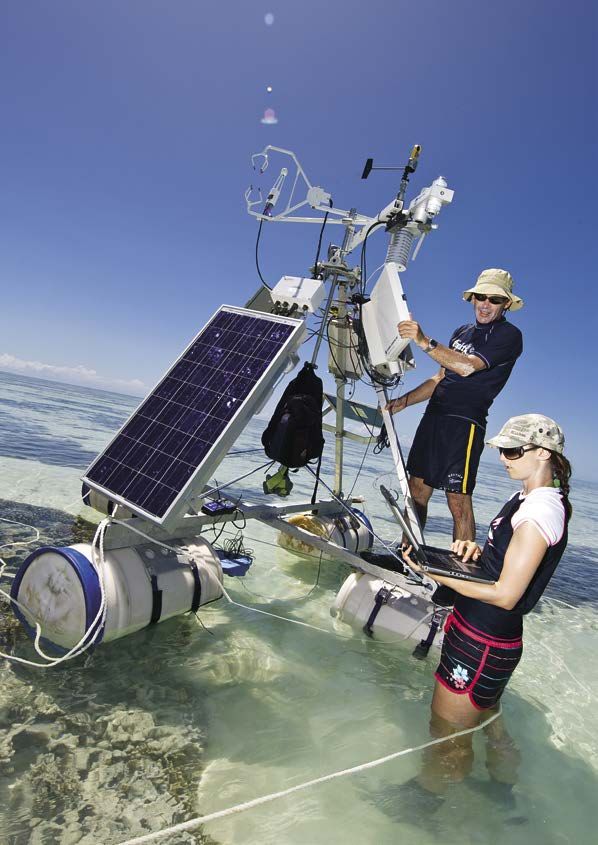
   Recent research highlights include
the installation of Australia’s biggest
solar-power facility at UQ St Lucia; the
continuing development of the nanopatch
vaccine technology, as well as biofuels
and biologics; the mathematical
modelling of crop-planting for
maximum yield; and the mapping
of the Great Barrier Reef to
measure climate change.

                                           SUMMER AND WINTER RESEARCH PROGRAMS
                                           UQ’s Summer and Winter Research                      Participation is open to undergraduate
                                           Programs provide you with an opportunity to       students, including honours, who have
                                           gain research experience working alongside        completed at least one year of study and
                                           some of the University’s leading academics        Masters by coursework students. The
                                           and researchers.                                  program is open to both undergraduate
                                              By participating, you’ll be able to extend     students from The University of Queensland
                                           your knowledge of an area of interest and         as well as students from other international
                                           develop your analytical, critical thinking, and   or Australian universities.
                                           communication skills.                                All selected research scholars will
                                              Summer research projects are available         automatically be considered for an Office of
                                           in many disciplines for between six and ten       Undergraduate Education Grant.
                                           weeks over the summer vacation period                For more information about the Summer
                                           (mid-November to mid-February); winter            and Winter Research programs including
                                           research projects between four and six            how to apply, go to: www.uq.edu.au/
                                           weeks over the winter vacation period (mid-       undergraduate/undergraduate-research-
                                           June to mid-July).                                programs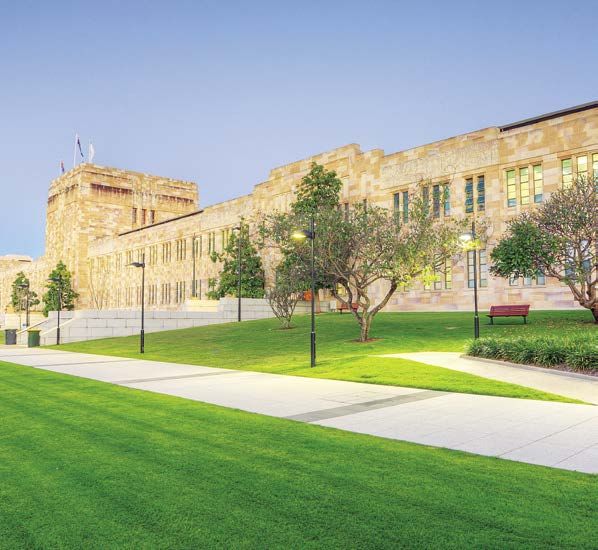
8 UQ Guide 2014 International Undergraduate

                                                                                                             DEDICATED
                                                                                                             SUPPORT
                                                                                                             We provide a range of support services
                                                                                                             to all students, from the time you start
                                                                                                             your degree until after you graduate.
                                                                                                             These include comprehensive orientation
                                                                                                             programs, academic support programs,
                                                                                                             accommodation assistance, careers and
                                                                                                             employment advice, health services, and
                                                                                                             IT support.

                                                                                                             ONGOING
                                                                                                             CONNECTION
                                                                                                             We encourage UQ graduates to keep
                                                                                                             in touch through our many alumni
                                                                                                             networks scattered across the globe.
                                                                                                             Whether you studied here for a semester
                                                                                                             on exchange or completed a full degree,
                                                                                                             we are proud to call you a UQ alumni. As
                                                                                                             a member of the UQ Alumni community,
                                                                                                             you will enjoy a lifetime of experiences,
                                                                                                             with opportunities to maintain and
                                                                                                             renew friendships and engage in social,
                                                                                                             educational and intellectual activities
                                                                                                             within the UQ community.
                                                                                                               And in return, UQ appreciates the
                                                                                                             generous philanthropy of our alumni
                                                                                                             and community in providing support for
                                                                                                             outstanding programs which have real
                                                                                                             impact in the world.

OUTSTANDING ALUMNI NETWORK
Our prestigious alumni network includes            – The Honourable Campbell Newman,                         – Dr Nat Yuen, Philanthropist, 2010 UQ
leaders in fields such as business,                  Premier of Queensland                                     International Alumnus of the Year
government, the judiciary, the arts,               – Dr Johann Koss, Olympian and                            – Path Heang, Humanitarian, 2008 UQ
and academia. Some notable                           humanitarian                                              International Alumnus of the Year
graduates include:                                 – Kate Morton, internationally acclaimed                  – Tan Sri Dato’ Seri Abdul Khalid Ibrahim,
– Professor Peter Doherty, 1996 Nobel                author                                                    Chief Minister of the Malaysian state
  Laureate for Medicine and 1997                   – Professor Kin-Man Ho, philanthropist and                  of Selangor
  Australian of the Year                             environmental engineer                                  – Dr Lee Boon Yang, Chairman, Keppel
– Her Excellency Ms Quentin Bryce AC,              – John Eales, former Australian Rugby                       Corporation Ltd and Singapore Press
  Governor General of Australia                      Union captain                                             Holdings, former Singaporean Minister.
– Her Excellency Ms Penelope Wensley AC,           – Geoffrey Rush, Academy Award winner
  Governor of Queensland                             and 2012 Australian of the Year

Her Excellency Ms Quentin Bryce AC   Dr Yuichi Murakami,                       Kate Morton,                            Professor Peter Doherty,
CVO, Governor-General of Australia   2011 UQ International alumnus of the year internationally acclaimed author        1996 Nobel Laureate for Medicine
International Undergraduate UQ Guide 2014 9
THE UQ
ADVANTAGE
There are so many advantages available to you as a student at The University of Queensland.
You will have access to world-class facilities, learn from Australia’s most awarded
lecturers, and enjoy an enriched campus life full of exceptional opportunities that stretch
well beyond the classroom. With a wide range of study options, sporting and extracurricular
activities, concurrent diplomas, a global network of more than 200,000 students, staff and
alumni – and a ranking in the world’s top 100 universities – it’s easy to see how UQ can give
you every advantage in learning, and in life.
Now imagine the difference all of this could make to you...
YOUR UQ. YOUR ADVANTAGE.
UQ
At UQ, we know that study is only your professional development, and you
one element in producing well- will also participate in activities across
rounded, work-ready graduates. three core categories:
Global and cultural engagement
Participation in co-curricular activities,
such as volunteering, internships, (e.g., international exchange, language
undergraduate research programs and study, international short-term
international study programs, will also programs)
help you make the most of your learning Research and entrepreneurship
experience at UQ – and give you a (e.g., internships, conference
competitive edge after graduation. presentations, summer research project)
That’s why we’ve introduced the Social responsibility and leadership
UQ Advantage Award, a program (e.g., volunteering, student associations,
that acknowledges your non-academic participating in a student mentorship
activities and demonstrates your program).
leadership potential, awareness of If you complete all program
global issues and enhanced transferable requirements, you will receive a formal
skill set, experiences and attributes that certificate when you graduate that
are highly desirable to future employers. attests to your enhanced student
By registering in the program you experience and skill set.
will have the opportunity to attend
workshops and seminars designed to The program is open to students from
improve your life skills and fast-track all disciplines and is free of charge.10 UQ Guide 2014 International Undergraduate
JOHANN KOSS
Bachelor of Medicine,
Bachelor of Surgery
Founder, President and CEO of Right to Play, an organisation
developed to improve the
lives of disadvantaged children by using the power of sport and play
for development, health and peace
“Moving from Norway to Brisbane for personal reasons, I
enrolled in medicine at UQ, which was of great advantage to
me: it is the best course for general surgery and medicine.
I particularly enjoyed the direct patient intervention and
hands-on student approach to solving medical problems.
UQ’s high educational standards and collective teamwork
create an ideal learning environment.
“If you decide to come to UQ, I suggest building strong
relationships with colleagues, and work in many different
locations throughout Queensland to get the broadest
exposure to all kinds of medical problems.”
TILLASYINI SHAN SHAN CHYE
THARMALINGAM (SINGAPORE)
(MALAYSIA) Bachelor of Applied Science
Bachelor of Communication (Food Science and Nutrition)
Senior Account Executive, G2 Public Relations, Postgraduate student at UQ
Malaysia “I chose UQ because I wanted to experience
“In terms of cost and geography, Australia studying overseas, step out of my comfort
was a winner. UQ stood out because it’s zone and learn to be independent – and
a sandstone university and a member of UQ is a highly respected and reputable
the Group of Eight. Being placed in the top university.
100 in the world sealed the deal: there is “Studying in Australia has far exceeded
definitely a reason that UQ has achieved my initial expectations and the many life
such a status. experiences I have had while studying at UQ
“Although teaching methods were drastically have made me grow as a person too.
different from what I was used to and required “I have enjoyed the learning experience,
some adjusting, there is nothing I would change particularly the field trips that provided first-
about my experience at UQ. Simply being hand experience of the different practices
here allowed me to grow as an individual. used in the food industry. The professors
“The best features were learning and lecturers were really helpful and patient,
independence, critical thinking and – most and always available to offer help.
importantly – time management, all skills
that will be invaluable in the future.” “I have also been able to interact with
outstanding people from different countries
and races: it has been very fulfilling.”International Undergraduate UQ Guide 2014 11
HANLU JIANG (CHINA) RANU OBAHA
Bachelor of Arts (English Literature (PAPUA NEW GUINEA)
and Media Studies) Bachelor of International Hotel and
Editor, Xinhua News Agency, China Tourism Management
Manager, Novotel Brisbane Airport
“I chose UQ because of its international
reputation and high academic quality. “I enjoyed my time at UQ and learnt a great
Throughout my studies, staff continually deal in the service and hospitality disciplines
lived up to these high standards. which I now practise in my current role. My
degree prepared me by having courses
“The best thing for me at UQ was learning
that are very relevant to my industry, like
that I had huge potential to develop on my
Service management, Food and beverage
own. Before I started studying, I didn’t know management, and Leisure, meetings and
that I could rival my native English-speaking convention management. An added benefit
peers and achieve a great deal. The courses was the industry knowledge of the lecturers
I took also fully prepared me to handle my and tutors and their real world examples.
current job as a news editor. The skills I learnt I now use in drafting
“My time at UQ is a treasured memory. UQ new standards and procedures for the
academics are all very responsible and kind, company.”
and will help you achieve the best you can.
Don’t underestimate yourself.”
Whatever you want from
learning, whatever you
want from life, choose UQ:
YOUR UQ. YOUR ADVANTAGE.
JONATHAN WEI
(SOUTH AFRICA)
Bachelor of Engineering
(Mechanical and Aerospace)
Winner of 2012 UQ bike-rack design competition,
PhD student in hybrid composites
“Since high school I knew I wanted to be
an engineer and that I should go abroad to
experience something different. I had always
wanted to visit the ‘land down under’ and,
with its good climate, commencement date
similar to South Africa, plus the option of
studying a dual major, UQ was the perfect
choice for me.
“Initially, I found the pace of learning
quite fast, but with the help and support
I received I soon did well. I enjoyed the
many opportunities and well-designed
courses the program offered, befriended
people from all around the world, and took
up interests I never would have started
back home, such as cycling and playing
guitar. Go UQ!”12 UQ Guide 2014 International Undergraduate
UQ business hours (world times) Cairns
BRISBANE 9.00AM 5.00PM
Auckland 12.00pm 8.00pm
Bangkok 6.00am 2.00pm
Beijing 7.00am 3.00pm
Berlin 12.00am 8.00am
Bandar Seri Begawan 7.00am 3.00pm
Dubai 3.00am 11.00am Queensland
Ho Chi Minh City 6.00am 2.00pm Sunshine
Coast
Hong Kong 7.00am 3.00pm
Jakarta 6.00am 2.00pm
Johannesburg 1.00am 9.00am
UQ Gatton
Kuala Lumpur 7.00am 3.00pm
London 11.00pm 7.00am UQ Ipswich
Los Angeles 3.00pm 11.00pm
Manila 7.00am 3.00pm Gold Coast Brisbane
Mexico City 5.00pm 1.00am UQ St Lucia
UQ Herston
Moscow 2.00am 11.00am
New Delhi 4.30am 12.30pm
New York 6.00pm 2.00am
Sao Paulo 8.00pm 4.00am
Seoul 8.00am 4.00pm
Singapore 7.00am 3.00pm
Stockholm 12.00am 8.00am
Suva 11.00am 7.00pm
Taipei 7.00am 3.00pm
Tokyo 8.00am 4.00pm
Vancouver 3.00pm 11.00pm
UQ Herston
UQ Gatton
UQ Ipswich UQ St Lucia
Brisbane CBDInternational Undergraduate UQ Guide 2014 13
WHERE IS UQ?
The University of
Queensland has
four campuses in and
around Brisbane,
South-East Queensland,
Australia, and
40+ sites elsewhere.
OLIVIA PEY YIK LEE (MALAYSIA)
Bachelor of Economics
“Studying in Australia is nothing like I expected. It is so much more.
Brisbane is gorgeous, and the food here is simply delicious.
The people are warm and the resources provided by the University
really help facilitate my growth, both professionally and personally.”14 UQ Guide 2014 International Undergraduate
BRISBANE Entertainment Food
Entertainment in Brisbane encompasses art With just under a third of Brisbane’s
Built on and around the hills overlooking
galleries – including the Gallery of Modern population born overseas, it makes sense
the Brisbane River, Australia’s third
Art (GOMA), an inner city beach, museums, that you will find cuisine from almost every
largest city is characterised by a
unconventional and sophisticated live culture in our thriving restaurant industry, so
subtropical climate, safe relaxed
art venues, a thriving live music scene, if you’re missing food from home, it’s likely
outdoor lifestyle, unique “Queenslander”
an extensive state library, cinemas, and that you’ll find what you’re hankering after.
architecture, bustling restaurants and
kilometres of beautiful riverside parklands Attend one of our popular farmer’s markets
cafés, and thriving arts, sports and
perfect for whiling away hot summer every weekend for fresh produce, music and
entertainment scenes.
afternoons. Our lively festival scene, which delicious meals outdoors. During the week,
With a multicultural population of around includes the Brisbane International Film drink coffee at one of the many cafés that
two million, Brisbane has all the advantages Festival, Brisbane Writers’ Festival and dot the city and suburbs.
of a large modern city — cafés, restaurants, the Brisbane Festival, attracts celebrated
bars, galleries, museums, sporting events, national and international participants. Getting around
and shopping districts — yet retains the
One of the most picturesque and practical
friendliness and charm of a small regional Sport ways to see Brisbane is on the CityCat,
town. Queensland’s subtropical climate,
Whether you’re watching or participating, a ferry that runs along the length of the
lush landscape, and unique architecture
Brisbane’s amazing weather, gorgeous river, from UQ’s St Lucia campus to the
all contribute to this safe and welcoming
parks, and huge range of sporting facilities riverside suburb of Hamilton. Brisbane also
environment you will be pleased to call home.
make physical activity almost impossible has an extensive bus and train network, so
An hour’s drive south of the city are the
to avoid. Kayak along the Brisbane river, everything you want to see or do is easily
golden beaches and theme parks of the
rock climb your way to the top of the accessible. We recommend buying a Go
Gold Coast. North from Brisbane are the
Kangaroo Point cliffs, ride along more than Card, an electronic ticket that allows you
Sunshine Coast beaches, national parks,
20 kilometres of riverside pathways, join one to travel on all Brisbane public transport
rainforests and attractions like Australia Zoo.
of our many sporting clubs, or barrack like a services at a discounted price.
Just off the coast are the pristine Stradbroke
local when you attend a rugby union, rugby
and Moreton Islands, both popular day-trip
league, cricket, “Aussie rules” or football
or holiday destinations for locals and
match at one of our famous stadiums.
visitors alike.
WHAT IS
BRISBANE LIKE?International
International
Undergraduate
Undergraduate 2013 15
students UQ Guide 2014
BRISBANE –
FACTS AND FIGURES
Brisbane
– Capital city of the State of Queensland,
Australia
Population
– 2,043,185 (Brisbane city and surrounds)
– 4,513,850 (Queensland)
– Brisbane is Australia’s third largest city after
Sydney and Melbourne
Time Zone
– GMT/UTC + 10 hours
Heron Island
Language
– English
– Australia is a multicultural country so you will
hear people speaking a variety of languages
Currency
– Australian Dollar (AUD$)
Climate
– Subtropical
– Summer: December to February; Autumn:
March to May; Winter: June to August;
Spring: September to November
– Summer maximum average temperatures
are around 29° Celsius (84° Fahrenheit)
– Average maximum daytime temperature
in winter is around 21° Celsius (70°
Fahrenheit)
– You should wear a hat, cool clothing that
protects you from the sun, and maximum
UV-protection (30+) sunscreen during
summer
– You will need a long-sleeved jacket and
warm clothes during the early morning and
evening in winter
Brisbane City Council
www.brisbane.qld.gov.au
Things to do in Brisbane
www.thingstodo.com/au/queensland
QUEENSLAND West of the Great Dividing Range
(Australia’s longest mountain range) are mine
Study Brisbane The fast-growing population of sites, cattle stations and sheep stations, all
www.studybrisbane.com.au Australia’s second largest state attests examples of the primary industries which –
to the attractiveness of its subtropical alongside bananas, pineapples, peanuts, a
climate, diverse topography and easy wide variety of other tropical and temperate
lifestyle. fruit and vegetables, grain crops, wineries,
Queensland’s landscape comprises lush cotton, sugar cane and wool – are chief
northern rainforests (including the world’s contributors to the Queensland economy.
oldest, the Daintree), red deserts in the However, Queensland is also home
west, and golden surf beaches in the to a diverse range of other market-
south-east. leading industries including advanced
Home to the Great Barrier Reef, the manufacturing, alternative and
largest coral reef on the planet and one of renewable fuels, aviation and aerospace,
the seven wonders of the natural world, biotechnology, creative industries,
Queensland’s marine territory is hugely environmental and mining technologies,
important. The reef is home to around 1500 information and communication technology,
species of fish and 350 types of coral, and nanotechnology, and therapeutic medicines
is significant for its cultural, natural, tourism and devices.
and scientific value (UQ has a research Study Queensland
station on Heron Island, pictured above top, www.studyqueensland.qld.edu.au
one of 900 islands that dot the reef). Queensland Government
In the south-east, Brisbane is a gateway www.qld.gov.au/about/moving-to-queensland/
to some of the world’s largest sand islands
– Moreton, Fraser and Stradbroke, but if
you prefer high country, why not drive to
a mountain retreat? Choose from Mount
Tambourine, Mount Barney, Mount Glorious,
Lamington National Park, or the Bunya
Mountains for camping, cool clear streams,
rainforests, native birds and fauna.
DISCOVER WHAT
IT’S LIKE TO STUDY
IN BRISBANE16 UQ Guide 2014 International Undergraduate
THE CAMPUSES
UQ ST LUCIA Brisbane city
As Australia’s third largest city, Queensland’s
public library, many sporting facilities, and
gracious “Queenslander” houses.
UQ St Lucia is renowned as one of capital has all the advantages of a modern Ipswich City Council
Australia’s most attractive university city but retains the “country charm” and www.ipswich.qld.gov.au
campuses, and is just seven kilometres friendliness of a small town.
from Brisbane’s city centre. Brisbane’s almost two million residents
enjoy a relaxed lifestyle in a subtropical
UQ GATTON
Bounded by the Brisbane River on three
climate, while living in one of Australia’s UQ Gatton combines the historic rural
sides, the 114-hectare site provides
major business hubs with easy access traditions of its Queensland Agricultural
a perfect study, research, and living
to the Asia Pacific region. Most major College heritage with modern research
environment. You will enjoy the best of both and teaching facilities in agriculture, agri-
worlds: a vibrant modern campus with the Australian and international companies have
an office here. business, animals and veterinary science.
tradition of an established university.
Brisbane City Council
Just over an hour’s drive west of Brisbane,
The gracious sandstone architecture, the 1068-hectare campus offers a relaxed,
www.brisbane.qld.gov.au
with its hub of cloistered buildings enclosing friendly atmosphere and access to several
the National Trust registered Great Court world-class facilities including:
— along with parklands and lakes — UQ IPSWICH – Centre for Advanced Animal Science
encompass world-class teaching and – UQ Veterinary Medical Centre
UQ Ipswich provides a high-quality
research facilities, including Queensland’s – veterinary teaching laboratories and a
teaching and learning environment in a
largest research library and fully equipped Clinical Studies Centre
supportive, friendly campus community.
laboratories and lecture theatres. – native wildlife teaching and research facility
Moving from school to university is a big – Gatton Research Dairy
UQ St Lucia
www.uq.edu.au/about/st-lucia step but at UQ Ipswich, the transition will be – nursery and glasshouse facilities
much easier with small classes, easy access – Gatton e-Learning Laboratory
to teaching staff, and facilities purpose-built – cropping facilities
UQ HERSTON to enable the latest technology. – pesticide wind tunnel research facility.
The campus offers programs in medicine,
Herston is UQ’s core campus for clinical The campus also operates several
nursing and midwifery, health science,
health teaching and research. commercial production units in rural
paramedic science, and arts, and features a technologies to support teaching, research
Located alongside the Royal Brisbane suite of health clinics plus a water garden within and hands-on training.
Children’s Hospital and the Royal Brisbane the library. UQ Ipswich is also home to UQ
UQ Gatton
and Women’s Hospital, the campus is College, a new educational centre for school
www.uq.edu.au/gatton
approximately two kilometres from the leavers and adult learners wanting academic
Brisbane city centre. preparation and career-boosting qualifications. Lockyer Valley Shire
Its proximity to a major hospital UQ Ipswich Enclosed on either side of the Great Dividing
benefits students and demonstrates UQ’s www.uq.edu.au/ipswich Range, Gatton is a thriving town of over
commitment to working closely with health 6,000 people in the Lockyer Valley, just five
professionals and staff alike, to deliver Ipswich city kilometres from UQ Gatton and 90 kilometres
innovative and contemporary research and Queensland’s oldest provincial city, Ipswich west of Brisbane. Thirty minutes drive away
education programs. is 40 kilometres from central Brisbane and is Toowoomba, the regional capital of the
Many UQ researchers also work in home to more than 160,000 residents in Darling Downs and home to 155,000 people.
specialised nodes within the hospital one of Australia’s fastest growing regions. Gatton offers the perfect mix of town
complex, including the Queensland Institute An alluring blend of heritage charm, and country living with everything from
of Medical Research. metropolitan sophistication and expansive restaurants, art galleries, shopping, hot-air
green spaces, the city has a wealth of ballooning and sky diving to birdwatching,
UQ Herston
www.uq.edu.au/about/herston-campus facilities — art galleries, parks and gardens, beautiful parks and country markets.
Royal Brisbane and Women’s Hospital a cultural centre, restaurants and coffee Lockyer Valley Shire
www.health.qld.gov.au/rbwh shops, shopping malls, hospitals, a large www.lockyervalley.qld.gov.auInternational Undergraduate UQ Guide 2014 17
TEACHING AND – numerous veterinary science teaching
and research centres
RESEARCH SITES – agricultural sciences farms at Mount
UQ’s diverse facilities off-campus include: Cotton and Redland Bay
– marine research stations at North – the UQ Business School Downtown in the
Stradbroke and Heron Islands Brisbane city centre
– the University Mine and the Julius – teaching hospitals, health centres,
Kruttschnitt Mineral Research Centre at and other medical research facilities
Indooroopilly throughout Brisbane, the Gold Coast, and
– seismograph stations at Mount Nebo and other parts of Queensland.
Charters Towers
OTHER UQ SITES
RESEARCH INSTITUTES cancer, infection pain, childhood diseases,
obesity, superbugs, diagnostics, agriculture
Queensland Brain Institute (QBI)
QBI researchers aim to discover the
UQ is an international leader in research and energy. As well as biomedical research, fundamental mechanisms that regulate brain
and teaching in a comprehensive range IMB scientists study green energy, function in order to better understand brain
of disciplines, including the biosciences, environmentally friendly pest control, and development, diseases and neurological
nanotechnology, sustainable information technology. disorders and, with it, the promise of
development and social science. Institute for Molecular Bioscience (IMB) improved therapeutic treatments for patients.
In partnership with government, industry www.imb.uq.edu.au
Queensland Brain Institute (QBI)
and donors, UQ has developed eight UniQuest Pty Ltd www.qbi.uq.edu.au
globally recognised Research Institutes, www.uniquest.com.au
many of which offer study opportunities Sustainable Minerals Institute (SMI)
Institute for Social Science
for students. By combining modern More and more, Australia’s mining industry
Research (ISSR)
infrastructure with a culture that champions has to deal with the concept of responsible
research excellence, UQ’s institutes have Using evidence-based social science growth – growth that makes economic
attracted a community of more than 1500 research, ISSR addresses society’s “big” sense and is environmentally and socially
scientists, social scientists, and engineers questions, including employment and responsible. Increasingly, the industry is
from Australia and around the world. education; sustainability and environment; turning to SMI for new and unique ways of
policing and security; policy analysis; addressing these responsibilities.
Australian Institute for Bioengineering research methodology and social statistics; Sustainable Minerals Institute (SMI)
and Nanotechnology (AIBN) and social wellbeing, health and housing. www.smi.uq.edu.au
AIBN focuses its research on nano-scale Institute for Social Science Research (ISSR)
science in areas that will alleviate problems www.issr.uq.edu.au The University of Queensland
in human health, manufacturing, energy Diamantina Institute (UQDI)
storage, information technology and the Queensland Alliance for Agriculture UQDI brings together clinicians, clinical
environment. Some current projects include and Food Innovation (QAAFI) researchers and scientists working on
needle-free vaccines, early cancer screening The newest of UQ’s Institutes, QAAFI draws today’s most important health problems,
methods, and improved Cochlear implants. together some 100 research teams from including cancer, diabetes, arthritis,
Australian Institute for Bioengineering and 12 UQ and Queensland Government sites infections (viral and bacterial), bone and
Nanotechnology (AIBN) throughout the state. Researchers at its joint diseases, and brain disorders. Its goal
www.aibn.uq.edu.au three centres — Plant Science, Animal is to develop a better understanding of the
Science, and Nutrition and Food Sciences molecular and cellular basis of disease and
Global Change Institute (GCI)
— aim to improve the competitiveness and to translate that understanding into practical
Researchers from all spheres work together sustainability of tropical and subtropical outcomes for patients.
at the Global Change Institute to focus on the food, fibre and agribusiness industries The University of Queensland Diamantina
complex challenges we face as a nation and through high-impact science. Institute
an international community. Programs include Queensland Alliance for Agriculture and Food www.di.uq.edu.au
living with healthy oceans, land use 2050, Innovation (QAAFI)
food security for the future, clean energy, and www.qaafi.uq.edu.au
resilient people in a healthy environment.
Global Change Institute
www.gci.uq.edu.au
Institute for Molecular Bioscience
(IMB)
Researchers at IMB investigate genes,
proteins and small molecules in
order to understand disease and
develop new pharmaceuticals,
therapies and diagnostics.
The Institute has a
particular focus on
research into18 UQ Guide 2014 International Undergraduate
SARAH
GREENHALGH’S
JOURNALISM STUDIESInternational Undergraduate UQ Guide 2014 19
WHAT CAN
I STUDY?
At UQ you can choose from 60+ Health Sciences
programs, many of which can – Bachelor of Dental Science
– Bachelor of Exercise and
28
be “customised” by major Nutrition Sciences
– Bachelor of Exercise and Sport
Sciences 29
28
– and minor – fields of study. – Bachelor of Health Sciences
– Bachelor of Health, Sport and
29
Physical Education 29
– Bachelor of Medicine/Surgery
Programs are organised through – Science (Graduate Entry) 29
six faculties: – Social and Behavioural Sciences – Bachelor of Midwifery 30
– Arts – Bachelor of Nursing 30
but sometimes you can “mix and
– Business, Economics and Law – Bachelor of Occupational Therapy 30
match” with electives and dual degrees.
– Engineering, Architecture and – Bachelor of Oral Health 30
Information Technology Choose the area and type of study that – Bachelor of Pharmacy 31
– Health Sciences suits you best. – Bachelor of Physiotherapy 31
– Bachelor of Speech Pathology 31
Science
– Bachelor of Agribusiness 32
Arts – Bachelor of Agricultural Science 32
– Bachelor of Applied Science 32
– Bachelor of Arts 22
– Bachelor of Biomedical Science 33
– Bachelor of Creative Arts 22
– Bachelor of Biotechnology 33
– Bachelor of International Studies 23
– Bachelor of Environmental
– Bachelor of Music 23
Management 33
– Diploma in Languages 23
– Bachelor of Environmental Science 33
– Diploma of Music Performance 23
– Bachelor of Food Technology 33
Business, Economics and Law – Bachelor of Occupational Health and
Safety Science 34
– Associate Degree in Business 24 – Bachelor of Regional and Town
– Bachelor of Business Management 24 Planning 34
– Bachelor of Commerce 25 – Bachelor of Science 34
– Bachelor of Economics 25 – Bachelor of Veterinary Science 34
– Bachelor of International Hotel and
Tourism Management 25 Social and Behavioural Sciences
– Bachelor of Laws 25
– Bachelor of Laws (Graduate Entry) 25 – Bachelor of Communication 35
– Bachelor of Education
Engineering, Architecture and (Middle Years of Schooling) 35
information Technology – Bachelor of Education (Primary) 35
– Bachelor of Education (Secondary) 36
– Bachelor of Architectural Design 26 – Bachelor of Human Services 36
– Bachelor of Engineering 26 – Bachelor of Journalism 36
– Bachelor of Engineering and – Bachelor of Psychological Science 36
Master of Engineering 27 – Bachelor of Social Science 37
– Bachelor of Information Technology 27 – Bachelor of Social Work 37
– Bachelor of Multimedia Design 27 – Diploma in Global Issues 3720 UQ Guide 2014 International Undergraduate
UNDERGRADUATE
PROGRAMS
You can choose from a diverse range of Bachelor programs at undergraduate level.
UQ also offers an Associate Degree and a number of Concurrent Diplomas.
UNDERGRADUATE A dual program lets you study several areas
of interest at once. The additional knowledge
COURSES
PROGRAM STRUCTURE and skills you gain will give you a competitive Course selection varies depending on
edge in the workforce, and will significantly your faculty and program.
Associate Degree
broaden your job prospects. You must meet
This 32-unit (#32) program offered at UQ entry requirements for both programs to gain
Courses (subjects)
College is studied over 16 months (four admission. A course is a distinct unit of study within a
trimesters) and can either be a qualification Please note: a dual major is distinct from program, identified by its own alphanumeric
in its own right or can be a pathway to UQ’s a dual program. A dual major allows you to code, title, and fixed unit value. Courses are
Bachelor of Business Management (BBM). undertake two different majors within the usually completed in one or two semesters
defined study period of your undergraduate and most are worth two units (#2); however,
Bachelor degree degree. some have higher workloads and may be
worth four (#4) or eight (#8) units.
Bachelor degrees usually require between
three and five years of full-time study, and Concurrent Diplomas
Course choice
provide a systematic introduction to specific At UQ, you can undertake an undergraduate
fields of study. You will develop an in-depth Some programs have compulsory (core)
diploma concurrently with your bachelor
knowledge of the content, understanding courses only, whereas others may allow a
degree. You may complete it over an
of underlying principles and concepts, and restricted choice within particular categories.
accelerated period, or spread the load
problem-solving and analytical skills. Still others may offer an extended range of
across the duration of your degree.
Bachelor degrees can contain compulsory courses (electives) to expand your learning
If you are interested in the Diploma
courses and elective courses, often experience. You may also have to undertake
in Music Performance or the Diploma
depending on the major. See pages 22-37. research projects. Please check the
in Languages, you can apply for these
You can also combine your bachelor requirements of your program very carefully.
programs directly to UQ once QTAC
degree with a Diploma in Music offers you a UQ place. If you wish to do
Performance, Languages or Global Issues the Diploma in Global Issues, you will Majors
and either spread the workload across the A major, extended major, or dual major is an
need to complete a year (#16 units) of
duration of your degree or complete it in a
undergraduate studies before applying. area of specialised study within a program.
shorter period. It may be compulsory to undertake a major
while completing a program.
Honours STUDY LOAD
If you are undertaking a three-year bachelor A standard load is eight units (#8) per Credit/exemptions
degree, additional study is required to be semester, usually four courses. If you have completed previous tertiary
considered for honours. study you may be eligible to receive credit
For four- and five-year bachelor degrees, Full-time study for certain courses in your undergraduate
honours is awarded based on your program. Check your program details for
academic performance during the program. International students must complete their
more information.
Honours is awarded at different levels studies in the minimum program duration
(normally eight units per semester). Undergraduate study
(Honours I, Honours IIA, Honours IIB or www.uq.edu.au/study
Honours III). Generally, you must achieve
Honours IIA or better for entry into a Doctor Commencement
BACHELOR PROGRAM SAMPLE WITH MAJOR
of Philosophy (PhD) program, and Honours See inside front cover for the complete 2014 Year One
II or better for a Master of Philosophy (MPhil) academic calendar. In 2014, Semester One #2 course #2 course #2 course #2 course
program. will commence on 3 March, and Semester #2 course #2 course #2 course #2 course
Two will commence on 28 July. Some Year Two
Dual programs programs commence earlier than these #2 major #2 major #2 course #2 minor
dates, but they are noted in the Academic #2 major #2 course #2 course #2 minor
Dual programs enable you to study for Programs information on pages 22-37. Year Three
two bachelor degrees at the same time #2 major #2 major #2 course #2 minor
but in a shorter period than if you were #2 major #2 course #2 course #2 minor
completing the two separately.
Note that this is a SAMPLE structure for single
major only, dual majors require at least #24, and
extended majors can be more; some programs have
compulsory courses: check the individual program
for details.TEACHING AND
Health Sciences
LEARNING STYLES
At UQ we use a range of teaching
methods, including lectures, tutorials,
laboratory practicals, fieldwork, group
discussions, and online modules and
workshops.
We want you to understand and apply
concepts and theories, and be able to
critically examine different arguments and
viewpoints. This means we encourage you
to actively participate in class discussions
and to ask questions. TEACHING SPACES
Please express your personal viewpoints! UQ’s four major campuses have more than 180 central teaching rooms,
Many lecturers will deliberately provoke ranging from collaborative teaching and learning spaces to flat floor
discussion and argument to encourage tutorial rooms, traditional tiered lecture theatres and traditional computer
thinking and debate. laboratories.
Apart from face-to-face contact, you
Schools and faculties also have conveniently located general teaching spaces and
will need to complete assignments and
specialised laboratory spaces specific for their own teaching and learning needs.
examinations: you are expected to spend as
All are designed to give you the best possible learning experience.
much time – if not more – on library research
Most lecture theatres have Echo 360 installed, which allows lectures to be
and independent study as you do attending
recorded for online access; others enable video-conferencing. The innovative
lectures and tutorials.
Collaborative Teaching and Learning Centres (CTLC) have the latest audio-
To help you adapt to what is required visual teaching equipment and comprise a series of flexible spaces for group
at undergraduate-level study, our Student work, teaching, and printing. And the Advanced Concepts Teaching Space
Services team offers training throughout (ACTS) has individual touch screens and devices for iPods and recording
the semester for enhancing your learning, mechanisms to allow students to interact directly with teachers.
assignment writing, research, examination, All ensure that you will already be familiar with business and commercial
and time-management skills (see page 52). facilities when you graduate.
Student Services Facilities
www.uq.edu.au/student-services www.uq.edu.au/facilities
HOW WILL I BE TAUGHT
AND GRADED?
ASSESSMENT
Assessment methods vary according to
the course.
You may have to write assignments,
undertake mid-semester and end-of-
semester examinations, participate in
individual and group projects, or prepare
research reports and laboratory practical
reports.
Individual course assessment UQ strongly emphasises written STANDARD ACADEMIC GRADING SYSTEM
requirements are set out in course profiles expression in most forms of assessment,
7 High distinction
(outlines), available online for students at the but good speaking skills are also essential:
start of semester, and are usually explained you will develop both these skills during your 6 Distinction
to you in the first lecture. How you progress program. 5 Credit
in your study depends on your academic You can find out more about the
results, which will be considered by faculties University’s assessment processes at 4 Pass
at the end of each semester. Orientation (see page 51). 3 Fail
2 Fail
1 Fail22 UQ Guide 2014 International Undergraduate
UNDERGRADUATE PROGRAMS
ARTS
ARTS
Explore everything the world has to offer through the diverse
and exciting programs available through the Faculty of Arts.
Please check the following list for basic information about UQ’s arts
undergraduate programs, including academic and English language
entry requirements, indicative program fees, program duration, start
semesters, and majors. To access more detailed information about the
Faculty of Arts, use your smart phone or tablet to scan the QR Code at
left. Or visit www.arts.uq.edu.au.
The oldest degree in Queensland, the BA continues to be UQ’s most popular. With more than 40 majors to choose from, a UQ
Bachelor of Arts degree is the perfect choice if you have broad interests in the humanities, creative arts, social science, music or languages.
While other degree programs are structured to train you for one job, an Arts degree will give you the necessary flexibility to
Arts adapt your knowledge and keep ahead of changes both in the workplace and across industries. It also gives you skills for life –
critical analysis, research, written and oral communication – so that as an employee, you can help shape change, think laterally,
and present new perspectives and solutions.
PROGRAM CRICOS 2014 ENTRY PROGRAM START PROGRAM INDICATIVE ENGLISH LANGUAGE
HONOURS
CODE CODE SCORE DURATION SEMESTER LOCATION SEMESTER FEE^ PROFICIENCY
2000 001942A See page Three Additional 1 (3 March 2014) St Lucia $11,880 IELTS overall 6.5
Majors 72 years year of study 2 (28 July 2014) / 6 in each sub-
Aboriginal and Torres Strait band: see page 74
Islander studies • Ancient history
(EM) • Ancient history/History • Admission requirements Dual degree programs Further study options Closing Date
Anthropology (EM) • Archaeology Queensland Year 12 (or equivalent), Business Management, Commerce, Graduate Certificate in / See page 70
(EM) • Art history (EM) • Asian including Year 12 English (or Communication, Economics, Graduate Diploma in /
studies • Chinese (EM) • Classical acceptable alternative) Education (Secondary), Engineering, Master of Arts (Writing,
languages (EM) • Criminology Human Services, Information Editing and Publishing)
(EM) • Drama (EM) • Economics Technology, International Hotel and or Museum Studies or
(EM) • English (EM) • English Tourism Management, Journalism, International Studies or
language and communication • Laws, Music, Science, Social Science Psychology
English literature (EM) • Film and
television studies • French (EM)
• Gender studies • Geography
(EM) • German (EM) • History (EM)
• Indonesian (EM) • Information
technology • International
relations (EM) • Italian (EM) •
Japanese (EM) • Journalism
and mass communication (EM)
• Korean (EM) • Linguistics (EM)
• Mathematics (EM) • Media,
communication and cultural studies
(EM) • Music (EM) • Peace and
conflict studies (EM) • Philosophy
(EM) • Political science (EM) •
Popular music • Psychology (EM)
• Public policy • Russian (EM) •
Sociology (EM) • Spanish (EM) •
Sports studies (EM) • Studies in
religion (EM) • World literatures
and cultures (EM) • Writing
Understand how human beings use art to make meaning; and attain professional skills, expertise and knowledge specific to the
Bachelor of disciplines studied. Learn how to communicate effectively, think critically, and how to apply these and other more general skills
to a diverse selection of jobs and careers.
Creative Arts PROGRAM CRICOS 2014 ENTRY PROGRAM HONOURS START PROGRAM INDICATIVE ENGLISH LANGUAGE
CODE CODE SCORE DURATION SEMESTER LOCATION SEMESTER FEE^ PROFICIENCY
2308 065375J See page Three Additional 1 (3 March 2014) St Lucia $11,710 IELTS overall 6.5
Majors 72 years year of study 2 (28 July 2014) / 6 in each sub-
Art history • Drama (EM) • English band: see page 74
(EM) • English literature • Film and
Admission requirements Dual degree programs Further study options Closing Date
television studies • Media studies
Queensland Year 12 (or equivalent), Education (Secondary) Graduate Certificate in See page 70
• Music (EM) • Popular music •
including Year 12 English (or / Graduate Diploma in /
Writing (EM)
acceptable alternative) Master of Arts (Writing,
Editing and Publishing)
Contact details: International Student Advisor 1800 671 980 (free call within Australia) or +61 3 8676 7004 www.uq.edu.au/international/enquiryYou can also read


