To Seek A Worthy Goal - CLARE HIGH SCHOOL
←
→
Page content transcription
If your browser does not render page correctly, please read the page content below
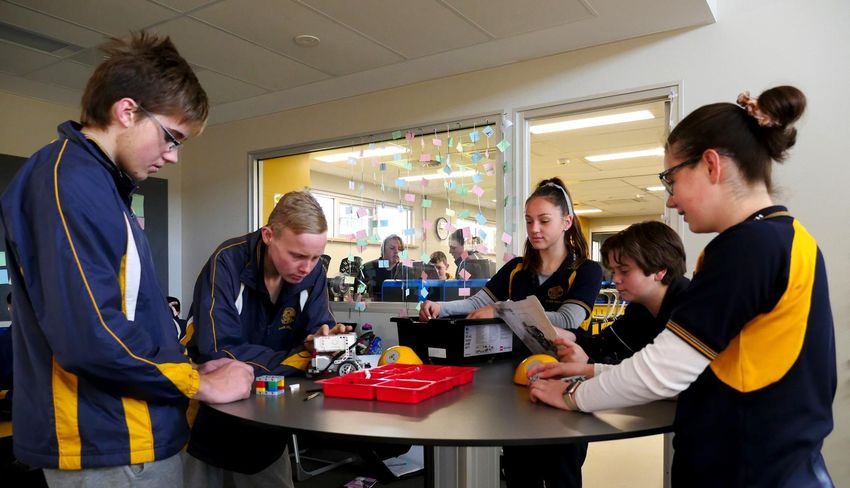
To Seek A Worthy Goal
MESSAGE FROM
   THE PRINCIPAL                                                                                     CONTENTS

                   Welcome to the 2021 edition of the Clare High School Futures Planning             2021 KEY CLARE HIGH SCHOOL STAFF                           3
                   Handbook. This book contains detailed information about possible subject
                                                                                                     CURRICULUM STRUCTURE                                       4
                   offerings for next year. Whilst every effort will be made to run each subject,
                   the final decision depends on both class size and teacher availability.           LEARNING AT CLARE HIGH SCHOOL                              5
                                                                                                     VOCATIONAL EDUCATION TRAINING (VET)                        7
                  Learning at Clare High School is designed to help students develop a broad         SPECIAL OPTIONS (CLASS & UNIT)                             8
                  range of essential skills and knowledge through involvement in a highly
                                                                                                     SUBJECTS
                  structured and supportive educational program. Our curriculum provides
more choice for students as they move from being young adolescents to mature young adults,            English                                                   9
capable of making well-informed decisions about their learning.                                       Health & Physical Education                               14
                                                                                                      Humanities                                                21
Our commitment to teaching and learning goes well beyond the basics of simply teaching facts
                                                                                                      Languages                                                 32
and content. We are committed to building close relationships with all students and parents, and
our common teaching approach is aimed at helping students become lifelong learners who are            Mathematics                                               35
capable of critical thought. We seek to ensure that all our students become well-adjusted citizens    Technologies                                              41
and that they have the capability to positively contribute to the community in which they live.       The Arts                                                  53
                                                                                                      The Sciences                                              63
The learning pathways at Clare High School are aligned with the AC (Australian Curriculum) and
SACE (South Australian Certificate of Education) requirements. At Clare High School we also           STEM                                                      73
ensure alternative pathways for students to undertake School Based Apprenticeships and                Rite Journey & Youth Opportunities                        74
Certificate Courses. These alternative offerings are studied in conjunction with core curriculum
subjects and provide educational pathways to meet the learning interests and abilities of
individual students. Options are outlined within this handbook with further information available    * Please click content above to go directly to that page
from the Vocational Education Coordinator.

This handbook is not intended to be the sole source of subject information for your child. We can
assist you to gather information from a wide range of sources, including teachers, tertiary
institutions, TAFE, Career Centres and other providers of post-school training programs.

I look forward to working with every young person, their family and our teachers to ensure all
students are successful in achieving their chosen career path.

Sharryn Daly

                                                                                                                                                                     2|P a g e
2021 Key Staff
Sharryn Daly Derek Friedrichs Katie Liebelt Melissa Jones Kylie Alozie Kim Maynard
Principal Assistant Principal Assistant Principal Junior Secondary Coordinator Middle Secondary Coordinator Senior Secondary Coordinator & VET
sharryn.daly633@schools.sa.edu.au derek.friedrichs447@schools.sa.edu.au katie.liebelt326@schools.sa.edu.au melissa.jones783@schools.sa.edu.au kylie.alozie276@schools.sa.edu.au kim.maynard715@schools.sa.edu.au
Kristy Lewis Dan Bradley Karen Slattery Annasofia Hamilton Justin Lodge Luke Mensforth
HPE Coordinator Arts Coordinator English & LOTE Coordinator HASS & International Coordinator Mathematics Coordinator IT Coordinator
kristy.lewis290@schools.sa.edu.au dan.bradley640@schools.sa.edu.au karen.slattery355@schools.sa.edu.au annasofia.hamilton169@schools.sa.edu.au justin.lodge779@schools.sa.edu.au luke.mensforth612@schools.sa.edu.au
Mark McCarthy Rebekah Holland Clay Reid Mandy Knight
Practical Technology Coordinator Special Education Coordinator The Sciences & SACE Coordinator Student Wellbeing Coordinator
mark.mccarthy838@schools.sa.edu.au rebekah.holland125@schools.sa.edu.au clay.reid334@schools.sa.edu.au mandy.knight523@schools.sa.edu.au
Respect Achievement Relationships Involvement Education
3|P a g eCurriculum Structure Clare High School Year 7-12 Curriculum Guide 2021
Year 7 Year 8 Year 9 Year 10 Year 11 (Stage 1) Year 12 (Stage 2)
English English English English English
STEM STEM Mathematics Mathematics Research Research Elective 1
Humanities Humanities Science The Sciences Practices Project
HPE HPE Humanities PLP Humanities
Mathematics
Languages (German) Languages (German) HPE HPE Elective 3 Elective 4 Elective 2
Technologies Technologies Technologies Technologies
(Home (Design & (Home (Design & Rite Journey Elective 1 Elective 1 Elective 4 Elective 1
Economics) Technology) Economics) Technology)
Elective 5 Elective 3
Elective 2
Elective 6
The Arts Elective 4
The Arts The Arts The Arts
(Performing Elective 2 Elective 3 Elective 2 Elective 5
(Media Arts) (Music) (Visual Arts)
Arts)
Elective 3 Elective 7 Elective 5
(Optional)
SACE Compulsory Subjects
4|P a g eLearning at Clare
Clare High School Year 7-12 Curriculum Guide 2021
High School
The Australian Curriculum
The Australian Curriculum provides a dynamic teaching and learning framework for all schools COMPULSORY SUBJECTS STUDENT SELECTED SUBJECTS
across Australia. The national curriculum details content, knowledge and skills you are expected to
develop at each year level and within the eight learning areas. At Clare High School, teachers utilise 50 credits + 90 credits + 60 credits
this flexible structure to plan and respond to student needs and interest in a genuine and
meaningful manner, whilst monitoring and assessing student progress through the Achievement
Standards. The Personal Learning Plan Choose and successfully Choose and successfully
(PLP) (10 credits) complete a selection of complete a selection of
The Australian Curriculum is made up of three interconnected elements: Learning Areas, General Literacy requirement (20 Stage 1 and Stage 2 Stage 1 or VET subjects
Capabilities and Cross-curriculum Priorities. All aspects of the curriculum are embedded into the credits) demonstrated from subjects, recognised VET worth at least 60 credits in
courses outline in this guide, helping to build transferable skills, knowledge, attitudes and a range of English subjects courses, or community total.
dispositions to support your development into confident, caring and contributing citizens. at Stage 1 or Stage 2 learning
Numeracy requirement (10 Stage 2 subjects are
What Is The SACE? credits) demonstrated from externally assessed by the
a range of Mathematics SACE Board of South
The South Australian Certificate of Education (SACE) is a modern, internationally-recognised subjects at Stage 1 or Stage Australia.
secondary school qualification designed to equip you with the skills, knowledge, and personal 2
capabilities to successfully participate in our fast-paced global society. The Research Project (10
credits)
The SACE has evolved to provide you with more flexibility to choose subjects that reflect your
interests, skills, and career goals, using a combination of SACE subjects, vocational education and
training (VET), community learning, university, and TAFE studies. Modified SACE Subjects (Senior School)
SACE subjects are made up of investigations, performances and other assessment tasks to Modified subjects are highly individualised subjects in which curriculum and assessment are
demonstrate your skills, knowledge, and personal capabilities throughout the year. Some subjects designed around development of one or more SACE capabilities and personal learning goals
will have an end of year exam worth a maximum of 30% of the overall grade. that are appropriate for the student.
To complete the qualification, you will need to attain 200 credits from a Selection of Stage 1 and Modified subjects are available for the small number of students with disability whose learning
Stage 2 subjects. A 10 credit subject is usually one semester of study, and a 20 credit subject is needs cannot be sufficiently addressed through the flexibilities of other SACE subjects and/or
usually over two semesters. with reasonable adjustments under the Special Provisions in Curriculum and Assessment Policy.
Please see link below for more information: Eligible students can complete the certificate requirements of the SACE using one or more
www.sace.edu.au/studying/your-sace/what-is-the-sace modified subjects.
Students are eligible to enrol in modified subjects on the grounds of documented or imputed
disability that results in significant impairment in intellectual functioning and/or adaptive
5|P a g eLearning at Clare Clare High School Year 7-12 Curriculum Guide 2021
High School
behaviours, which cannot be addressed through reasonable adjustments under the Special Modified Subjects
Provisions in Curriculum and Assessment Policy.
Modified Subject Clare High School Selection
Decisions about a student’s eligibility to enrol in modified subjects must be based on evidence. English Pathways English General
Mathematics Pathways Mathematics General
The decision to undertake a modified subject will be made collaboratively by the student (where Humanities Personal Learning Plan
appropriate), the teacher, parents / carers, and other significant people in the student’s life (eg. Research Practice
agency and NDIS). Research Project
Creative Arts Photography
The signed agreement of the student’s parents / carers to the proposed enrolment of the Design
student in modified subject(s) must be obtained before eligibility is confirmed. Visual Arts
Music
Refer to the SACE Modified Subjects Policy and resources on the SACE website to support Drama
decisions about eligibility for modified subjects.
Media
Scientific Studies Agriculture
Eligible students may enrol in the following subjects:
Business & Enterprise Business Innovation
Business & Enterprise
Work Place Practice
Creative Arts
Technology
Cross-disciplinary Studies
Cross Disciplinary Studies Integrated Learning
English
Society & Culture Society & Culture
Health
History
Language & Culture
Geography
Mathematics
Tourism
Scientific Studies
Health Health
Society & Culture
Physical Education
Personal Learning Plan
Outdoor Education
Research Project
Child Studies
Food & Hospitality
Details of the learning requirements, possible content and assessment for all modified subjects
are available on the SACE website.Vocational Education
Clare High School Year 7-12 Curriculum Guide 2021
Training (VET)
Vocational Education Training (VET) is an optional pathway or experience for students in years 10- • VET training is not linked to a student’s year level. Therefore, Year 10 and Year 11 (Stage 1) in
12. VET is an internationally recognised term used to describe the education and training most cases, students can successfully complete Certificate III level training in the same way that
accreditation, which allow students to explore career pathways and acquire skills and knowledge Year 12 (Stage 2) students can. However, some courses stipulate only senior students can enrol.
for work.
Short Courses
By doing VET courses, students are able to access industry developed training packages and gain Short courses are on offer throughout the year, at various locations, sometimes here at Clare High
accreditation, as well as SACE credits. VET courses are available for students at Clare High School. School. These include White Card Construction Industry Training, First Aid, Barista (coffee making)
and Responsible Service of Alcohol (RSA). No SACE credits are awarded for completing a short
Students 16 and over can access TGSS funding for recognised VET courses and can complete their course, unless they are attached to a certificate of training, but may be preferred or required within
training through other alliances, such as various trade-training centres, TAFE SA and a range of specific workplaces.
private Registered Training Organisations (RTOs). All proposed VET courses are based on training
packages from the Australian Quality Training Framework (AQTF), the national set of standards Payment
that assures nationally consistent, high-quality VET training and assessment services. Payment is required but there are funding schemes available and there is some funding available
from the school in certain instances. As part of the enrolment, process families will be advised of
Some VET courses are offered at Clare High School while others are off campus. Locally courses any out of pocket costs.
are on offer at Riverton & District High School, Burra Community School and Nuriootpa High
School. Training occurs either after school or during a regular weekly training day. All entry-level School-Based Apprenticeships
courses have prerequisites, such as good literacy and numeracy skills and a desire to learn about Some senior students prefer to gain SACE credits through the completion of a School Based
and develop skills in the chosen industry. All courses stipulate that regular, full attendance, full Apprenticeship, should a vacancy arise in an industry of their choice. Potential school based
participation and the completion of set work to a satisfactory standard are required. Some apprentices have generally completed some VET training and / or work experience in their field of
courses also require the completion of a stated number of hours or shifts of Structured Work interest. Students can make an appointment to discuss the matter with our regional
Placement in the industry. Apprenticeship Broker, who can help prepare interested students by perusing their résumé and
offering tips and important information.
SACE Credits:
• Certificate I or II level training generally attract Stage 1 credits. 2021 VET Courses
• Certificate III level training or higher usually attract Stage 2 credits (Note that Certificate III The Clare High School Curriculum Guide outlines a variety of VET courses available for students.
Retail Operations only attracts Stage 1 credits). However, this list is not exhaustive and there may be new VET courses advertised at different
• Students who complete those Certificate III level training courses which are listed on the SACE points of the year. Please contact Mrs Maynard regarding any courses you may be interested in
Board’s VET Recognition Register (given that they contain mostly Stage 2 accreditation) can that are not included in this guide.
use this to help generate an Australian Tertiary Admissions Rank (ATAR), required for tertiary
study entrance. Contact person: Mrs Kim Maynard, Year 11&12 Management and SACE Pathways Coordinator.
• Only one such Certificate III can contribute to ATAR generation. kim.maynard715@schools.sa.edu.au
• The number and level of SACE credits listed below are a guide only, as they are subject to
change, depending on changes to AQTF training packages. Certificate Courses on offer locally:
CERTIFICATE III IN FITNESS - Nuriootpa High School
CERTIFICATE II IN ELECTROTECHNOLOGY - Burra Community School
CERTIFICATE II AUTOMOTIVE SERVICING TECHNOLOGY – Riverton & District High School
7|P a g eSpecial Options (Class and Unit) Clare High School Year 7-12 Curriculum Guide 2021
Our aim is to offer the students a diverse curriculum, meeting the individual needs of all students,
preparing them for an independent life beyond school. Students participate in a number of core
subjects Year 7 to Year 12 as well as a range of elective subjects each Semester in the aim of
maintaining a balanced curriculum.
Open Supported Volunteer Further Job
Moving On
Employment Employment Work Training
With the Special Options Classes, students will have the opportunity to:
Develop Literacy, Numeracy and ICT.
Develop skills in independent living.
Develop skills in community access. Independent Living Skills, Personal Interest, Community Access, Wellbeing and Leisure
Be supported in transitioning to life beyond schooling. Post School Options
Year 12 Cross Curriculum
Complete the SACE Modified Certificate. Stage 2 Stage 2 Stage 2 Stage 2 Stage 2 Stage 2 Stage 2
Connect with DES (Disability Employment Agencies) or Moving On Programs as they develop their SACE Stage 2
pathway to a meaningful post school option. Modified
Participate in a holistic learning environment including camps, excursions, sports days and
Year 11 Stage 1 Stage 1 Stage 1 Stage 2 Stage 1 Stage 1 Stage 1 Stage 1
carnivals. Modified Modified Modified Modified Modified Modified Modified Modified
SACE Stage 1
Curriculum Modified English Maths Health Research Health & Society & Creative Science
Project Business Ed Culture Arts
Curriculum emphasis is placed on:
English (Literacy and Communication). 20 credits 20 credits 20 credits 20 credits 20 credits 20 credits 20 credits 20 credits
Mathematics (Numeracy). Year 10 Stage 1
Independent Living Skills. PLP
Australian
Community Access & Wellbeing. Curriculum
Work and transition. and SACE
Personal interests / leisure. Stage 1
Modified
Year 7-9 English Maths Health & Personal & Home Ec / History / Creative Science
Mainstream Learning Support (Literacy) (Numeracy) Physical Social Tech Geography Arts
Clare High School uses a range of strategies to identify students with learning difficulties in Australian Education Development
mainstream classes and offers support to these students. These strategies include: Curriculum (Swimming) (Int. Learning)
Year Level Coordinators closely monitor participation and achievement to identify those students
Australian Australian Australian Australian Australian Australian Australian Australian
who are significantly underachieving. Year Level Coordinators work with the student, their Curriculum Curriculum Curriculum Curriculum Curriculum Curriculum Curriculum Curriculum
parents and school staff to improve the student participation and achievement and implement
the One Plan.
Support and referrals will be implemented as required, accessing support to improve learning Subject aligned with SACE
outcomes for all students. Subject aligned with Australian Curriculum
School Service Officers support is given in classrooms and implement learning intervention
programs are offered to support students’ learning.
8|P a g eEnglish Clare High School Year 7-12 Curriculum Guide 2021
Year 7 - 10 Year 11 Year 12
General English
English Literary
Compulsory Full Year (Compulsory
Studies
Full Year)
English
Essential English
(Compulsory Essential English
Full Year)
9|P a g eEnglish Clare High School Year 7-12 Curriculum Guide 2021
ENGLISH ENGLISH ENGLISH
Year: 7 Assessment: Year: 8 Expository, persuasive writing Year: 9
Length: Full Year Students are assessed using the Length: Full Year and speaking. Length: Full Year
Contact Person: Karen Slattery Australian Curriculum Achievement Contact Person: Karen Slattery Text studies, comprehension, Contact Person: Karen Slattery
Standard. analysis, transformation and
Content: Content: essay writing. Content:
The English curriculum is built English is a compulsory subject that Critical reading and questioning. English is a compulsory subject
around the three interrelated is studied for a full year. The English Creative thinking and that is studied for a full year, with
strands of language, literature and curriculum is built around the three application. 5 lessons per week at Year 9. The
literacy. Together, the strands focus interrelated strands of language, English curriculum is built around
on developing students’ knowledge, literature and literacy. Together, the Assessment: the three interrelated strands of
understanding and skills in listening, strands focus on developing Students are assessed using the language, literature and literacy.
reading, viewing, speaking, writing students’ knowledge, understanding Australian Curriculum Achievement Together, the strands focus on
and creating. The curriculum is and skills in listening, reading, Standard. developing students’ knowledge,
facilitated through genuine real- viewing, speaking, writing and understanding and skills in
world contexts, encouraging creating. The curriculum is facilitated listening, reading, viewing,
students to understand and apply through genuine real-world speaking, writing and creating.
their learning in meaningful ways. contexts, encouraging students to The curriculum is facilitated
Students will study a range of texts understand and apply their learning through genuine real-world
that include: novels, short stories, in meaningful ways. Students will contexts, encouraging students
poetry, plays, films, multimedia texts study a range of texts that include: to understand and apply their
and everyday texts. They will novels, short stories, poetry, plays, learning in meaningful ways.
continually develop their ICT skills films, multimedia texts and everyday Students will study a range of
and also engage in independent texts. They will continually develop texts that include: novels, short
reading and book sharing activities. their ICT skills and also engage in stories, poetry, plays, films,
Explicit literacy skills are taught and independent reading and book multimedia texts and everyday
underpin all concepts studied such sharing activities. Students texts. They will continually
as: demonstrate, present and applying develop their ICT skills and also
Recount, storytelling and their knowledge and understanding engage in independent reading
narrative writing. in various ways. Explicit literacy skills and book sharing activities.
Expository, persuasive writing are embedded and underpin all Students demonstrate, present
and speaking. topics covered, such as: and applying their knowledge
Text analysis. Recount, storytelling and and understanding in various
Critical reading. narrative writing. ways.
Creative thinking.
(continued over page)
10 | P a g eEnglish Clare High School Year 7-12 Curriculum Guide 2021
ENGLISH (continued) ENGLISH GENERAL ENGLISH A & B
Explicit literacy skills are embedded Year: 10 Expository writing and speaking. Year: Stage 1 Apply clear and accurate
and underpin all topics covered, such Length: Full Year Text analysis and essay writing. Length: Full Year communication skills.
as: Contact Person: Karen Slattery Critical reading and questioning. (20 SACE Credits)
Recount, narrative and short Media analysis. Contact Person: Karen Slattery Successful completion of two
story writing. Content: Creative thinking and units of Stage 1 General English
Expository, persuasive writing English is a compulsory subject that application. Preferred background: will prepare students for Stage 2
and speaking. is studied for a full year. The English Drama texts. B Grade or higher in Year 10 English English Literary Studies, Stage 2
Text studies, comprehension, curriculum is built around the three Comparative text response. (recommended). English or Stage 2 Essential
analysis, transformation and interrelated strands of language, Focus on WW1 text links. English, depending on teacher
essay writing. literature and literacy. Together, the Content: recommendation. SACE requires
Critical reading and questioning. strands focus on developing Assessment: In English, students analyse the all students to undertake a 2-unit
Creative thinking and students’ knowledge, understanding Students are assessed using the interrelationship between author, sequence in English at Stage 1.
application. and skills in listening, reading, Australian Curriculum Achievement text, and audience with an emphasis
Media analysis. viewing, speaking, writing and Standard. on how language and stylistic All students will complete 1 unit
creating. The curriculum is facilitated features shape ideas and of English in both Semesters.
Assessment: through genuine real-world Additional Charges: perspectives in a range of contexts. Students must achieve a C grade
Students are assessed using the contexts, encouraging students to A consumables / excursion fee may Students are expected to: or better in order to meet the
Australian Curriculum Achievement understand and apply their learning apply to this subject in addition to Analyse the relationships requirements of the SACE.
Standard. in meaningful ways. Students will the Clare High School Materials and between purpose, context and
study a range of texts that include: Service Charges. audience in a range of texts. Assessment:
Additional Charges: novels, short stories, poetry, plays, Evaluate how language, stylistic Students are assessed using the
A consumables / excursion fee may films, multimedia texts and everyday features and conventions are SACE Performance Standards.
apply to this subject in addition to texts. They will continually develop used to represent ideas, Students demonstrate evidence
the Clare High School Materials and their ICT skills and also engage in perspectives, and aspects of of their learning through the
Service Charges. independent reading and book culture in texts. following assessment types:
sharing activities. Students Analyse how perspectives in their
demonstrate, present and applying own and others' texts shape Assessment Type 1: Responding
their knowledge and understanding responses and interpretations. to Texts.
in various ways. Explicit literacy skills Create and evaluate oral, written Assessment Type 2: Creating
are embedded and underpin all and multimodal texts in a range Texts.
topics covered, such as: of modes and styles. Assessment Type 3: Intertextual
Vignettes, narratives and short Analyse the similarities and Study.
stories. differences when comparing
texts.
11 | P a g eEnglish Clare High School Year 7-12 Curriculum Guide 2021
ESSENTIAL ENGLISH ENGLISH ENGLISH LITERARY STUDIES
Year: Stage 1 Stage 1. All students will complete 1 Year: Stage 2 Create and evaluate oral, Year: Stage 2
Length: Full Year unit of English in both semesters. Length: Full Year written, and multimodal texts in Length: Full Year
(20 SACE Credits) Students must achieve a C grade or (20 SACE Credits) a range of modes and styles. (20 SACE Credits)
Contact Person: Karen Slattery better in order to meet the Contact Person: Karen Slattery Analyse the similarities and Contact Person: Karen Slattery
requirements of the SACE. differences when comparing
Content: Preferred background: texts. Preferred background:
This subject focuses on the Successful completion of two units B Grade or higher in Stage 1 Essential Apply clear and accurate Successful completion of Stage 1
development of students’ skills in of Stage 1 Essential English will English or C Grade or higher in Stage communication skills. English, with a B/A Grade average,
communication, comprehension, prepare students for Stage 2 1 English. and upon teacher
language and text analysis, and Essential English. Successful Assessment: recommendation.
creating texts. In this subject, completion of one unit each of Content: Students are assessed using the
students are expected to: General English and Essential English Students will undertake three SACE Performance Standards. Content:
Develop communication skills at Stage 1 will prepare students for aspects within this course: Students demonstrate evidence Stage 2 English Literary Studies
through reading, viewing, Stage 2 Essential English or Stage 2 Responding to Texts. of their learning through the focuses on the skills and strategies
writing, listening, and speaking. English, depending on teacher Creating Texts. following assessment types: of critical thinking needed to
Comprehend information, ideas, recommendation. Comparative Analysis interpret texts. Through shared
and perspectives in texts Assessment Type 1: Responding to and individual study of texts,
selected from social, cultural, Assessment: In this subject, students are expected Texts. students encounter different
community, workplace, and/or Students are assessed using the to: Assessment Type 2: Creating Texts. opinions about texts, have
imagined contexts. SACE Performance Standards. Analyse the relationship between Assessment Type 3: Comparative opportunities to exchange and
Identify and analyse how the Students demonstrate evidence purpose, context, and audience Analysis. develop ideas, find evidence to
structure and language of texts of their learning through the in a range of texts. support a personal view, learn to
varies for different purposes, following assessment types: Evaluate how language and Additional Charges: construct logical and convincing
audiences, and contexts. stylistic features and conventions A consumables / excursion fee may arguments, and consider a range of
Express information, ideas, and Assessment Type 1: Responding to are used to represent ideas, apply to this subject in addition to critical interpretations of texts.
perspectives using a range of Texts. perspectives, and aspects of the Clare High School Materials
textual conventions. Assessment Type 2: Creating Texts. culture in texts. Service Charges. In this subject, students are
Create oral, written, and/or Analyse how perspectives in their expected to:
multimodal texts appropriate for own and others’ texts shape Understand the relationship
purpose and audience in real responses and interpretations. between author, text, and
and/or imagined contexts. context.
SACE requires all students to (continued over page)
undertake a 2-unit sequence in
English or Essential English at
12 | P a g eEnglish Clare High School Year 7-12 Curriculum Guide 2021
ENGLISH LITERARY STUDIES ESSENTIAL ENGLISH
(continued)
Year: Stage 2 Analyse the role of language in
Analyse how ideas, perspectives, Assessment Type 2: Creating Texts. Length: Full Year supporting effective
and values are represented in Assessment Type 3: External. (20 SACE Credits) communication.
texts and how they are received Assessment Contact Person: Karen Slattery Create oral, written, and
by audiences. (a) Comparative Text Study. multimodal texts that
Analyse and compare texts, (b) Critical Reading Examination. Preferred background: communicate information, ideas,
through the identification of the Students must have successfully and perspectives for a range of
structural, conventional, and Additional Charges: completed a Stage 1 English course. purposes.
language and stylistic features A consumables / excursion fee may
used by authors. apply to this subject in addition to Content: Assessment:
Use evidence to develop, the Clare High School Materials Students will undertake three Students are assessed using the
support, and justify a critical Service Charges. aspects within this course: SACE Performance Standards.
interpretation of a text. Responding to Texts. Students demonstrate evidence of
Develop analytical responses to Creating Texts. their learning through the following
texts by considering other Language Study. assessment types:
interpretations.
Create oral, written, and/ or In this subject, students are expected Assessment Type 1: Responding to
multimodal texts that to: Texts.
experiment with stylistic features Extend communication skills Assessment Type 2: Creating Texts.
by using and adapting literary through reading, viewing,
conventions. writing, listening, and speaking.
Express ideas in a range of modes Consider and respond to
to create texts that engage the information, ideas, and
reader, viewer, or listener. perspectives in texts selected
from social, cultural, community,
Assessment: workplace, and/or imaginative
Students are assessed using the contexts.
SACE Performance Standards. Examine the effect of language
Students demonstrate evidence of choices, conventions, and
their learning through the following stylistic features in a range of
assessment types: texts for different audiences.
Assessment Type 1: Responding to
Texts.
13 | P a g eHealth & Physical Education Clare High School Year 7-12 Curriculum Guide 2021
Year 7-9 Year 10 Year 11 Year 12
Compulsory Physical Education A
Health & PE Or Physical Education
(One Semester) Physical Education B
Compulsory Specialist Football Health A
(AFL) Elective Or Health
(Full Year) (One Semester) Health B
Health Outdoor Education A
Elective Or Outdoor Education
(One Semester) Outdoor Education B
Specialist PE
Elective
(One Semester)
Recreational PE
Elective
(One Semester)
14 | P a g eHealth & Physical Education Clare High School Year 7-12 Curriculum Guide 2021
HEALTH & PHYSICAL EDUCATION HEALTH & PHYSICAL EDUCATION HEALTH & PHYSICAL EDUCATION
Year: 7 Additional Charges: Year: 8 Assessment: Year: 9
Length: Full Year A consumables / excursion fee may Length: Full Year Students are assessed using the Length: Full Year
Contact Person: Kristy Lewis apply to this subject in addition to Contact Person: Kristy Lewis Australian Curriculum Achievement Contact Person: Kristy Lewis
the Clare High School Materials and Standards.
Content: Service Charges. Content: Content:
This course is designed to help This course is designed to help Additional Charges: This course is designed to help
students develop an understanding students develop an understanding A consumables / excursion fee may students develop skills,
of themselves, provide information of themselves, provide information apply to this subject in addition to understanding and content
on how to make personal decisions on how to make personal decisions the Clare High School Materials and knowledge in Physical Education.
and promote awareness of the and promote awareness of the Service Charges. Data collection and analysis,
importance of healthy behaviours importance of healthy behaviours performance improvement and
and physical activity. Students and physical activity. Students analysis, sport education and
engage in physical activity to learn in, engage in physical activity to learn in, understanding movement
through and about movement through and about movement concepts through a variety of
alongside a contemporary health alongside a contemporary health practical activities and sports.
curriculum. Students will study the curriculum. Students will study the Practical activities and sports
movement concepts and strategies movement concepts and strategies involved are Invasion Games, Net
involved in Invasion Games, Net and involved in Invasion Games, Net and and Wall Games, and Striking and
Wall Games, Striking and Fielding Wall Games, Striking and Fielding Fielding Games, aiming to
Games, aiming to transfer this Games, aiming to transfer this transfer this knowledge.
knowledge. Athletics, Fundamental knowledge. Athletics, Lifelong Athletics, Dance, Group
Movement Skills, Jump Rope for Fitness, Jump Rope for Heart, Group Dynamics and Sport Education
Heart, Dance, Group Dynamics and Dynamics and Sport Education are are also studied practically.
Sport Education are also studied also studied practically. Physical Physical Literacy, Mental Health
practically. Physical Literacy, Sexual Literacy, Mental Health and and Wellness, Fitness and
Health and Relationships Education Wellness, Fitness and Lifelong Lifelong Activity, Drug Education
(SHARE) Program and Safety are key Activity, Drug Education and Sexual and Sexual Health and
focuses for Health. Health and Relationships Education Relationships Education (SHARE)
(SHARE) Program are key focuses for Program are key focuses for
Assessment: Health. Health.
Students are assessed using the
Australian Curriculum Achievement (continued over page)
Standards.
15 | P a g eHealth & Physical Education Clare High School Year 7-12 Curriculum Guide 2021
HEALTH & PHYSICAL EDUCATION HEALTH & PHYSICAL EDUCATION SPECIALIST PHYSICAL EDUCATION HEALTH
(continued)
Year: 10 Year: 10 Year: 10
Assessment: Length: Semester Assessment: Length: Semester Length: Semester
Students are assessed using the Contact Person: Kristy Lewis Students are assessed using the Contact Person: Kristy Lewis Contact Person: Kristy Lewis
Australian Curriculum Achievement Australian Curriculum Achievement
Standards. Content: Standards. Content: Content:
Year 10 HPE is the final Semester of Physical Education is a course This course is designed to help
Additional Charges: compulsory Health and Physical Additional Charges: designed for students wishing to students develop an
A consumables / excursion fee may Education for Life. The aim of our 7- A consumables / excursion fee may study Physical Education at Stage 1 understanding of themselves,
apply to this subject in addition to 10 HPE program is to develop apply to this subject in addition to and Stage 2. Students can choose provide information on how to
the Clare High School Materials and students who are physically literate the Clare High School Materials and Specialist PE for one Semester. make personal decisions and
Service Charges. and able to make informed physical Service Charges. promote awareness of the
activity and wellness choices Students need to be aware that importance of healthy behaviours
throughout their life. placement into this course will be and physical activity.
based on teacher recommendation
At each stage of life you will need to based on Year 9 HPE results. Students engage in physical activity
constantly evaluate, review and to learn in, through and about
develop physical activity plans to suit This course is designed to help movement alongside a
your changing needs. students develop skills, contemporary health curriculum.
understanding and content
Practically students will study knowledge in Physical Education. Topics may include:
movement concepts and strategies Data collection and analysis, Personal, Social and
involved in Invision Games and performance improvement and Community Health.
Target Games, a Coaching and analysis, sport education and Drugs in the Community.
Leadership unit, Outdoor Education understanding movement concepts Sexuality (SHINESA program).
and Personal and Lifelong Fitness throughout a variety of practical Mental Health.
Plans. activities and sports. Disabilities Movement and
Physical Activity.
Theoretically; Physical Literacy, Topics may include: Striking and fielding games.
Wellness, Self- Management and Self Exercise physiology. Target games.
Planning, SHINE and Child Protection Fitness analysis.
Curriculum and the development of Sports event management. Assessment:
Lifelong Physical Activity Plans will all Students are assessed using the
be covered. Australian Curriculum
Achievement Standards.
16 | P a g eHealth & Physical Education Clare High School Year 7-12 Curriculum Guide 2021
RECREATIONAL HEALTH & SPECIALIST FOOTBALL (AFL) OUTDOOR EDUCATION PHYSICAL EDUCATION
PHYSICAL EDUCATION
Year: 10 Year: Stage 1 In each semester there is a three day Year: Stage 1
Year: 10 Length: Semester Length: Semester expedition as well as day excursions Length: Full Year
Length: Semester Contact: Kristy Lewis (10 SACE Credits) dependent on numbers in the class. (20 SACE Credits)
Contact: Kristy Lewis Contact Person: Kristy Lewis Contact Person: Kristy Lewis
Content: Assessment:
Content: This semester based course is Content: Students are assessed using the Preferred background:
A semester course designed for designed to involve both practical Stage 1 Outdoor Education is SACE Performance Standards. Specialist HPE at Year 10.
students to learn to critically analyse and theoretical components encouraged for students wishing to Students demonstrate evidence of
and apply health and physical specifically related to AFL. An study Outdoor Education at Stage their learning through the following Content:
activity information to devise and individual’s technique will be 2. Students can choose Outdoor assessment types: Stage 1 Physical Education is
implement personalised plans for analysed, refined and practiced until Education for one Semester. recommended for students wishing
maintaining lifelong healthy and the skill can be performed Assessment Type 1: About Natural to study Physical Education at Stage
active habits. consistently during competition. Outdoor Education is the study of Environments. 2. Students can choose Physical
the human connection to natural Assessment Type 2: Experiences in Education for either one or two
In practical lessons, students Skill sessions will focus on skill environments through outdoor Natural Environments. semesters. Students need to be
experience a range of striking and development, positional education, activities. aware that placement into this
fielding games and target activities. movement patterns, running Additional Charges: course will be based on teacher-
Students learn to apply more patterns and attacking and defensive Students develop their sense of A consumables / excursion fee may recommendation and Year 10 HPE
specialised movement skills and methods. A variety of feedback will self-reliance and build relationships apply to this subject in addition to results. Content will be covered
complex strategies to evaluate and be used including video analysis of with people and natural the Clare High School Materials and through the three focus areas of in
refine their own movement in the FIT techniques and game play. environments. Service Charges. movement, through movement
program. and about movement. The focus
Theory topics covered will be Outdoor Education focuses on the areas provide the narrative for the
The curriculum provides positional play, fitness, nutrition, development of awareness of knowledge, skills and capabilities
opportunities for students to refine sports psychology, prevention and environmental issues through that students develop. Learning is
and consolidate personal and social management of injuries, pathways in observation and evaluation. delivered through an integrated
skills in demonstrating leadership, football such as goal setting and club approach in which opportunities
teamwork and collaboration in a administration, leadership seminars Practical Components: Outdoor are provided for students to
range of physical activities. and GPS data analysis. Practical options could include: undertake and learn through a wide
Aquatics (Kayaking, Surfing, range of authentic physical
Assessment: Assessment: Snorkelling or Sailing), Rock activities (eg. sports, theme based
Students are assessed using the Students are assessed using the Climbing or Bush walking.
Australian Curriculum Achievement Australian Curriculum Achievement (continued over page)
Standards. Standards.
17 | P a g eHealth & Physical Education Clare High School Year 7-12 Curriculum Guide 2021
PHYSICAL EDUCATION (continued) HEALTH OUTDOOR EDUCATION
Assessment Type 1: Issues
games, laboratories and fitness and Additional Charges: Year: Stage 1 Analysis. Year: Stage 2
recreational activities). A consumables / excursion fee may Length: Full Year Assessment Type 2: Group Length: Full Year
apply to this subject in addition to (20 SACE Credits) Activity. (20 SACE Credits)
Students explore movement the Clare High School Materials and Contact Person: Kristy Lewis Assessment Type 3: Investigation. Contact Person: Kristy Lewis
concepts and strategies through Service Charges.
these activities to promote Content: Additional Charges: Preferred background:
participation and performance Content: This subject is about A consumables / excursion fee may Stage 1 Outdoor Education would
outcomes. The use of technology is allowing students to make informed apply to this subject in addition to be beneficial but not necessary.
integral to the collection of data decisions about health matters, the Clare High School Materials
such as video footage, heart rates, leading to individual action and and Service Charges. Content:
fitness batteries, and game participation in community This subject is designed to
statistics. Students apply their initiatives. It develops skills in develop: Understanding and
understanding of movement communication, decision making appreciation of the natural
concepts to evaluate the data and and social living. Its emphasis is on environment, and concept of
reflect on ways in which changing health-related behaviour sustainable use of natural
performance can be achieved. through increased awareness and environments and the need for
Topics may include: understanding. its conservation. Knowledge,
• Exercise physiology. skills and attitudes necessary for
• Biomechanics. Students complete the study of at survival in a range of outdoor
least one core topic, also complete environments, including planning
Assessment: homework tasks that support the and implementing human
Students are assessed using the development of their health literacy powered journeys that have
SACE Performance Standards. and numeracy. minimal impact on fragile
Students demonstrate evidence of environments. Independence,
their learning through the following Assessment: self-reliance, leadership and a
assessment types: Students are assessed using the sense of responsibility towards
SACE Performance Standards. other people in an outdoor
Assessment Type 1: Performance Students demonstrate evidence of environment. Topics include:
Improvement. their learning through the following Environmental studies.
assessment types: Planning and management
Assessment Type 2: Physical practices.
Activity Investigation.
(continued over page)
18 | P a g eHealth & Physical Education Clare High School Year 7-12 Curriculum Guide 2021
OUTDOOR EDUCATION PHYSICAL EDUCATION HEALTH
(continued)
Year: Stage 2 engage more purposefully in physical Additional Charges: Year: Stage 2
Outdoor journeys. Length: Full Year activity. A consumables / excursion fee Length: Full Year
Sustainable environmental (20 SACE Credits) may apply to this subject in (20 SACE Credits)
practices. Contact Person: Kristy Lewis Students use physical activity addition to the Clare High School Contact Person: Kristy Lewis
Leadership and planning. contexts as the vehicle for Materials and Service Charges.
Self-reliant expedition. Preferred background: developing the 21st-century skills Preferred background:
Stage 1 HPE is preferred but not necessary to reflect on and critique Stage 1 Health is preferred but not
Assessment: essential. their learning in order to enhance essential
Students are assessed using the participation and performance
SACE Performance Standards. Content: outcomes. Content:
Students demonstrate evidence of Stage 2 Physical Education uses Focus Area 3: About movement This course is designed to help
their learning through the following Physical Activity as a way to explore Education ‘about’ physical activity students develop skills and
assessment types: different concepts specifically in enables students to develop attitudes that will assist them in
relation to three focus areas. theoretical knowledge to their personal growth, yet at the
Assessment Type 1: Natural Focus Area 1: In movement understand the richness and same time develop an
Environments. Education ‘in’ physical activity is diversity of movement experiences. understanding of factors affecting
Assessment Type 2: Experiences in about students making meaning of Students apply their knowledge to their wellbeing in a changing
Natural Environments. personal movement experiences. real-life experiences to evaluate world. They will be challenged to
Assessment Type 3: Connections Through these movement participation and performance clarify their values and identify
with Natural Environments. experiences, students must engage outcomes. what is important in their lives and,
Assessment Type 4: Investigations. in thoughtful participation where if necessary, re-evaluate their
internal reflection and articulation of Assessment: priorities.
Additional Charges: learning progress can be established. Students are assessed using the
A consumables / excursion fee may Focus Area 2: Through movement SACE Performance Standards. Students will become aware of the
apply to this subject in addition to Education ‘through’ physical activity Students demonstrate evidence of dynamic interaction they have with
the Clare High School Materials and is about students using movement to their learning through the following the complex economic, physical,
Service Charges. achieve the goals of 21st-century assessment types: socio-cultural and spiritual
education, including personal, environments, and how these
intellectual, and social skill Assessment Type 1: Diagnostics. influence their personal decisions.
development. Such skill Assessment Type 2: Improvement
development will allow students to Analysis.
Assessment Type 3: Group (continued over page)
Dynamics.
19 | P a g eHealth & Physical Education Clare High School Year 7-12 Curriculum Guide 2021
HEALTH (continued)
Students study at least one core
concept and undertake three option
studies. Previous topics included:
Core Concept 2: The social and
economic determinants of Health
Option Study
Health promotion in the
community Option Study.
Sexuality and health Option
Study.
Health and relationships Option
Study.
Risks and challenges to health.
Assessment:
Students are assessed using the
SACE Performance Standards.
Students demonstrate evidence of
their learning through the following
assessment types:
Assessment Type 1: Group
Investigation and Presentation.
Assessment Type 2: Issues Analysis.
Assessment Type 3: Practical.
Assessment Type 4: Investigation.
Additional Charges:
A consumables / excursion fee may
apply to this subject in addition to
the Clare High School Materials and
Service Charges.
20 | P a g eHumanities Clare High School Year 7-12 Curriculum Guide 2021
Year 7 - 9 Year 10 Year 11 Year 12
History Compulsory History History
Modern History
Geography (One Semester) (One Semester)
Civics & Citizenship
Economics & Business
Business & Economics Tourism
Tourism
(Compulsory Full Year) Elective (One Semester) (One Semester)
Geography Business Innovation
Business Innovation
Elective (One Semester) (One Semester)
Compulsory PLP (Stage 1) Geography
(One Semester) (One Semester)
Society & Culture Society & Culture
Workplace Practices Workplace Practices
Research Project (Stage 2) Cross-Disciplinary Studies
Research Practices (Stage 2) Integrated Learning
21 | P a g eHumanities Clare High School Year 7-12 Curriculum Guide 2021
HUMANITIES HUMANITIES HUMANITIES
Year: 7 What emerged as defining Year: 8 Which significant people, Year: 9
Length: Full Year characteristics of ancient Length: Full Year groups and ideas from this Length: Full Year
Contact Person: Annasofia society? Contact Person: Annasofia Hamilton period have influenced the Contact Person: Annasofia
Hamilton What have been the legacies of world today? Hamilton
ancient societies? Content:
Content: Humanities is a compulsory subject Assessment: Content:
Humanities is a compulsory subject Assessment: and is studied for a full year. The Students are assessed using the Humanities is a compulsory subject
and is studied for a full year. It is Students are assessed using the course covers Geography and History, Australian Curriculum and is studied for a full year.
divided into four separate subjects; Australian Curriculum Achievement Business and Economics and Civics Achievement Standards. Geography: Through Geography,
Geography, History, Civics and Standards. and Citizenship. students will develop a sound
Citizenship, Economics and Business Geography. knowledge place and change, and a
and Geography. Two units are Landforms and Landscapes. concept of their own place. It is
studied across the Semester: Changing Nations. essential to develop students’
Water in the World. spatial awareness and
Place and liveability. History: The unit of history taught in understanding of locations, spatial
Year 8 is The Ancient to the Modern distributions and flow. Students
History is studied at a Year 7 level world. Students will develop historical will become confident in using
looking into the ancient world with understanding through the key geographical skills. Topics covered:
the aim of investigating mysteries concepts, including evidence, Biomes and Food Security.
about the periods of History. The continuity and change, cause and Global Communities.
students will develop historical effect, perspectives, empathy,
understanding through the key significance and contestability. The History: Students develop their
concepts, including evidence, key inquiry questions for Year 8 are: knowledge and understanding of
continuity and change, cause and How did society change from the the past in order to understand the
effect, perspectives, empathy, end of the Ancient Period to the present and to plan for the future.
significance and contestability. beginning of the Modern Age?
Historical Knowledge and What key beliefs and values They will develop a critical
Understandings are developed using emerged and how did they perspective of the past and will
inquiry questions. The key inquiry influence societies? learn how to compare and
questions for Year 7 are: What were the cause and evaluate different sources. The
How do we know about the effects of contacts between semester consists of three depth
ancient past? societies in this period? studies:
Why and where did the earliest
societies develop? (continued over page)
22 | P a g eHumanities Clare High School Year 7-12 Curriculum Guide 2021
HUMANITIES (continued) HUMANITIES PERSONAL LEARNING PLAN (PLP)
Industrial Revolution. Year: 10 Topics: Overview: Year: 10 Students must achieve a C grade
Making a Nation. Length: Full Year Between the Wars, UN, Cold Length: Semester or better in order to meet the
World War One. Contact Person: Annasofia War, Developments in (10 SACE Credits) requirements of the SACE.
Business: Economics. Hamilton Technology. Depth Study 1: Contact Person: Annasofia
World War Two. Hamilton Assessment:
The content covered will include: Content: Depth Study 2: Rights and Students are assessed using the
Australia in the Global Economy. Humanities offers students learning Freedoms. Content: SACE Performance Standards.
Financial Risks and Rewards. experiences that will enable them to Depth Study 3: Pop Culture (1945 This subject is compulsory for all Students demonstrate evidence
Global Business Civics and gain a better understanding of the – Present). Year 10 students in Semester 1. of
Citizenship. diverse nature of Australian society
and the world around us. It gives Assessment: Overview: The Personal Learning their learning through the
The content covered will include: students opportunities to develop Students are assessed using the Plan (PLP) aims to develop students’ following assessment types:
Election Campaigns. and evaluate their own opinions and Australian Curriculum Achievement skills in self-awareness, reflection,
Judicial Systems. views, and to enhance their skills in Standards. planning and goal setting, enabling Assessment Type 1: Skills and
communication, critical thinking, them to make informed decisions Capabilitites.
Australian Identity formation.
decision-making and participation. about their future career and study Assessment Type 2: Resume /
The Humanities course encourages options. The course aims to guide Cover Letter and Mock
Assessment:
students to consider and evaluate students to find answers to the Interviews.
Students are assessed using the
different points of view by following questions: Assessment Type 3: Future
Australian Curriculum Achievement
Standards.
investigating issues of historical Who am I? Planning.
concern. Students will be given Where am I going? Assessment Type 4: Work
Additional Charges:
opportunities to develop skills and How will I get there? Journal and Review.
acquire knowledge that will help Assessment Type 5: PLP
A consumables / excursion fee may
them to become informed, Particular focus will be on the seven Reflection.
apply to this subject in addition to
questioning and active participants General Capabilities of literacy,
the Clare High School Materials
in Australian society. numeracy, information
and Service Charges.
communication technologies,
History - The Modern World & critical and creative thinking,
Australia: personal and social, ethical
Global conflict during the understanding and intercultural
twentieth century. understanding.
Consequences of World War II.
23 | P a g eHumanities Clare High School Year 7-12 Curriculum Guide 2021
BUSINESS & ECONOMICS RESEARCH PRACTICES RESEARCH PROJECT
Year: 10 Assessment: Year: Stage 1 Demonstrate knowledge and Year: Stage 2
Length: Students will be given between four Length: Semester understanding of research Length: Semester 2
Contact Person: Emmett Cashel & and six summative assessment (10 SACE Credits) approaches. (10 SACE Credits)
Annasofia Hamilton tasks. Tasks may include business Contact Person: Kim Maynard & Develop specific research skills. Contact Person: Annasofia
reports or other extended writing Annasofia Hamilton Consider the appropriateness, Hamilton
Content: tasks, share market simulation task, uses, and limitations of specific
Recommendation: This subject is practical tasks, oral or multimedia Content: sources. Content:
designed to prepare students for the presentations. Overview: Stage 1 Research Interpret and analyse Stage 2 Research Project is a
study of subjects in Stage 1 SACE, Practices is a 10-credit subject held information and data. compulsory 10-credit subject
particularly Business Innovation and Students are assessed using the in Semester 1. This subject taught at Year 11. Students must
Accounting. Australian Curriculum Achievement provides students with Assessment: achieve a C– grade or better to
Overview: Business & Economics Standards. opportunities to: Students are assessed using the complete the subject successfully
designed to introduce and develop a Examine the purpose of SACE Performance Standards. and gain their SACE.
knowledge and understanding of research. Students demonstrate evidence of
personal financial management and Explore a range of research their learning through the following Students enrol in either Research
business enterprise skills through approaches develop their assessment types: Project A or Research Project B.
practical application. investigative and inquiry skills. Both contribute to a student’s
Undertake, practice and Assessment Type 1: Folio Australian Tertiary Admission Rank
The aim of this subject is to develop research skills prior to Assessment Type 2: Source Analysis (ATAR).
financially educated citizens. It gives undertaking the compulsory (Research, Outcome and Review)
an overview of local and global SACE Stage 2 Research Project. Students choose a research
business and work environments, Students explore research question that is based on an area of
with a focus on small business in the practices to develop skills in interest to them. They explore and
Australian economy. undertaking research, planning develop one or more capabilities in
Topics: their research, developing and the context of their research. The
Introduction to Business analysing their data, and term ‘research’ is used broadly and
Environments. presenting their research findings. may include practical or technical
Small Business in Practice. In this subject, successful students investigations, formal research, or
Personal Financial Management. will: exploratory inquiries.
Investments. Demonstrate knowledge and
understanding of the purpose (continued over page)
of research.
24 | P a g eYou can also read


