Tower Hill School MIDDLE SCHOOL STUDENT HANDBOOK 2020-2021
←
→
Page content transcription
If your browser does not render page correctly, please read the page content below
MIDDLE SCHOOL STUDENT HANDBOOK
                        2020-2021

   Tower Hill School
The Tower Hill Mis sion Statement

Tower Hill School prepares students from diverse backgrounds
for full and creative engagement with a dynamic world. Each
student is provided with an educational experience that
emphasizes the development of an inquisitive, discerning
and critical mind; the value of being creative and aesthetically
sensitive; the appreciation of physical well being; the ability to
collaborate and to function as part of a team; and the growth of
character.

        C ON T EN T S
        Welcome						3                                                Academic Technology				                             29
                                                                      Overview
        The Academic Program				4                                     Application
        Courses of Study                                              Tower Hill Accounts and Personal Devices
        Schedule                                                      On-Site Technology and Network Guidelines
        Communication and Reports                                     General Responsibilities
        Grades                                                        Violations
        Failures and Summer Work                                      Communications with School Employees
        Homework                                                      Warranty
        Homework Planner                                              Bring Your Own Device
        Extra Helping and Tutoring                                    Cell Phones
        Extended Time – Tests and Exams
        Field Trips                                                   Middle School Dress Code				                        36
        Books                                                         Boys
                                                                      Girls
        Advisors and Counseling				12                                 Additional Information
        Class Deans
        Flow of Communication                                         Health Services					38
        Class Meetings                                                Illness
        Chapel/Assembly                                               Illness Notification to School
                                                                      Medications
        Codes of Conduct					15                                       Physical Health Forms
        Honor Code
        Character Code of Conduct                                     Concussion Policy					38
        Disciplinary System                                           “Return to Learn”
        Harassment, Bullying, and Hazing                              Return to Learn Protocol
        Substance Abuse and Weapons on School Property                “Return to Play”

        Attendance and Absences				24                                 Physical Education and Athletics			                 40
        School Day                                                    Athletic Offerings for Boys
        Lateness                                                      Athletic Offerings for Girls
        Absences – Students                                           Athletics – Return After Injury, Illness, Surgery
        Absences – Excused                                            Sportsmanship
        Absences – Unexcused                                          Physical Education Clothing

        Drop Off and Dismissal				                               27   Student Council					44
        Early Morning
        Dismissal                                                     Social Events						47
        After School Program
        Snow Days                                                     Parent Representatives				49

                                                                      Parent Coffees 					49

       2                                       The Tower Hill Mission Statement
Welcome to the Tower Hill Middle School Handbook

                                    The Middle School helps each student discover and develop
                                    his or her own special talents while at the same time refining
                                    the essential skills needed to function in a most challenging
                                    academic environment. The academic program is supplemented
                                    with daily physical education classes, a full fine arts curriculum,
                                    trips of many kinds and explorations into co-curricular activities.
                                    Emphasis is placed upon effective and compassionate
                                    communication, consideration and tolerance of others, the
development of teamwork and the strengthening of one’s value system.
The school program is an extremely full and busy one. All students take classes in the fundamental
disciplines, as well as art, music, technology, physical education, health, personal development and
a wide range of short-term elective activities. The program is supplemented by a chapel assembly
program; interesting day and overnight trips; major dramatic productions; special math, social studies
and science competitions; internal and external community service projects; and an energetic student
council program.
Classes are small, each student has an advisor, the reporting system allows for specialized narratives
at narrowly spaced intervals, all of which helps assure parents that the progress of their child is being
closely followed. A strong counseling and learning support program reinforces the work of the advisor
and Class Dean and provides parents with additional resources within the school.
We believe passionately in the right of each student to take advantage of every aspect of the school
program. Therefore, we react very strongly to those who physically, sexually and/or verbally abuse
others. Abusive behavior of any type will not be tolerated. Please free to contact me at
ahall@towerhill.org if you have questions about the Middle School.

Have a great year!

Sincerely,

Art Hall

Head of Middle School

                        Welcome to the Tower Hill Middle School Handbook                                    3
T HE ACADE M IC
                             P RO G RA M

4   The Academic Progam
We are part of a strong school. Much of our role is to prepare students for the rigors of a challenging
secondary school curriculum. Our goals include having students entering the 9th Grade be
enthusiastic about learning, highly literate, able to compute easily and accurately, and in possession of
the skills necessary to cope with the many demands that will be made upon them.
We want our students to be forthright and honest, able to work independently and able to contribute
to a group effort, and we hope to see them grow and become self-confident individuals. Our job is to
help our students reach toward these goals, recognizing that each is unique and at a different point of
personal development physically, intellectually, emotionally and socially. Character Code of Conduct is
an integral part of the reinforcement of essential core values.
Our rigorous program is designed to foster the development of the individual, helping each student to
become increasingly independent yet able to function well in a group. Through a variety of courses,
field trips, class projects and other activities, we seek to provide each student with the maximum
opportunity for individual growth and expression. It is our hope that the process of learning will be a
rich, joyous and rewarding experience.
Courses of Study
The following list of courses is presented to give a general view of the academic program offered in
the Middle School. A more detailed curriculum is available by checking the online curriculum guide on
our website, www.towerhill.org.
Grade 5—English, Reading, Math, Science, History, Spanish/Prima Lingua, Technology,
Physical Education, Art/Shop, Theatre, Band, Chorus or Strings. All fifth-graders learn to type by
completing lessons in our new online Typing Club Program. The students must complete each lesson
with an average of 20 words per minute with 90 percent accuracy.
Grade 6—English, Reading, Math, Science, History, Foreign Language (French/Mandarin),
Technology, Physical Education, Theatre, Music, Band, Chorus or Strings. All sixth-graders have a
typing requirement and will complete lessons in the Typing Club Program. The student must complete
each lesson with an average of 25 words per minute with 90 percent accuracy.
Grade 7—English, Math, Science, History, Foreign Language (French, Latin, Mandarin,
Spanish), Digital Citizenship, Health, Art/Shop, Theater and Athletics. Seventh-grade students have
the option of continuing to take Band, Chorus and/or Orchestra. Seventh-grade students are involved
in a disABILITIES program, a course designed to build our students’ awareness of and increase their
comfort level with those with physical, mental and cognitive disabilities.
Grade 8—English, Math, Science, History, Foreign Language (French, Latin, Mandarin,
Spanish), Technology and Production, Health, Art, Theatre, Music (Band, Chorus and/or Orchestra)
and Athletics.
The Academic Progam 5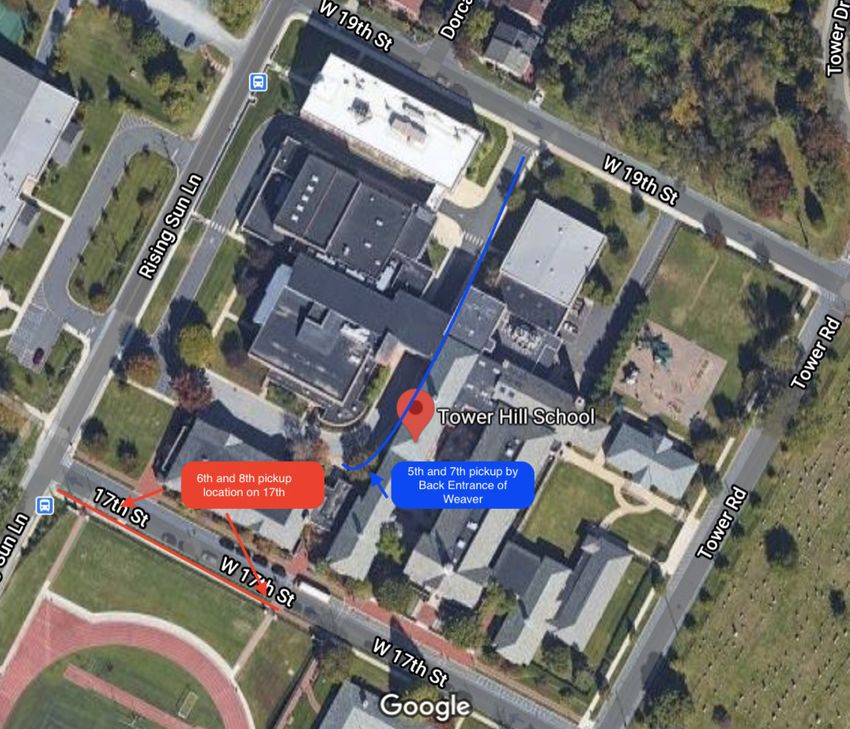
Schedule for the 2020-2021 School Year
    Fifty-minute classes, six periods a day, 10-day cycle

    Academic classes meet 6 times during the 10-day cycle in an effort to allow for deeper exploration of
    topics during class times and diversified classroom instructional approaches.

    This schedule will translate to less daily homework for our students, as homework is only assigned
    on days that classes meet. The Middle School day will continue to be from 8 a.m. to 3:15 p.m. The
    school building will be open at 7:45 a.m. each day. Fifth- and sixth-graders will have band, chorus
    or orchestra instruction during the last period of the school day (2:30 p.m. – 3:15 p.m.) Seventh- and
    eighth-grade students during that time will attend their athletics sessions from 2:30 p.m – 3:30 p.m.
    each day.

    The Middle School is on a semester calendar, similar to the Upper School. This means that students
    have four reporting periods.

    Communication and Reports
    There are several ways in which the student’s progress is monitored and reported upon in the Middle
    School.

    Open Gradebook— This web-based program is available through Tower Hill’s Learning Management
    System, TowerNet. Parents will have access to any graded assignment their child was involved in after
    the child has received it back from their teacher. Faculty share this system with families during virtual
    Parent Night on September 24.

    Conferences— The advisor meets with the parents (and when needed, the student as well) of each
    of his/her advisees formally, after the 1st Quarter (Nov/Dec). This is an excellent time for parents and
    teachers/advisors to share and compare their perceptions of the student’s progress. Please bring your
    calendars to our MS Parent Night on Sept. 18 to sign up with your child’s advisor for your conference
    meeting. Advisors will reach out to advisee families to schedule conferences.

    Interim Reports— Interim reports are written midway through each quarter. Reports will be written for
    students who: 1) are new to the Middle School (this will occur for the 1st Quarter, but might not need to
    be done for the 3rd Quarter); 2) students who are having difficulty in a course.

    Quarter Reports— Reports are written and distributed at the end of each quarter. These reports focus on
    the students’ strengths, challenges and goals for the semester. In all subjects, a reference to the student’s
    effort will be noted.

    Semester Grades— Students receive letter grades at the conclusion of first and second semester. Fri.
    Oct. 16 - Interims shared with families

6                                             The Academic Progam
Tower Hill Middle School
Middle School
Name: Advisor:
10-Day Schedule
Advisor Meeting: Grade:
Music:
Day 1 Day 2 Day 3 Day 4 Day 5 Day 6 Day 7 Day 8 Day 9 Day 10
8:00 Homeroom | Advisory
Period 1
8:30-9:20
Period 2
9:35-10:25
Period 3
10:40-11:30
Lunch
Period 4
12:20-1:10
Period 5
1:25-2:15
Period 6
⅚ 2:30-3:15
⅞ 2:30-3:30
Ensemble English Health History Language Math Science Tech Prod Theatre Visual Art
Reporting Dates
Middle School Schedule 2020 - 2021
Thurs. Nov. 5 (Day 10) - End of 1st QTR
Fri. Nov. 13 - 1st QTR reports shared with families
MS Advisor/Parent Conferences can be scheduled (11/16 - Winter Break)
Thurs. Jan 21 (Day 10) - End of 1st semester
Fri. Jan 29 - 1st semester grades shared with families
Fri. Feb. 26 - Interims shared with families
Tues. April 6 (Day 10) - end of 3rd QTR
Fri. April 16 - 3rd QTR reports shared with families
Fri. June 18 - Final grades posted for parents
The Academic Progam 7
Grades
    5th Grade is the first time in the academic life of a student that grades are given in addition to
    narrative comments from each teacher.

    At the end of the year, the report card will show the semester grades, the exam grade (7th and
    8th Grade only) and the cumulative grade in each subject. The cumulative grade consists of an
    average of the two semester grades plus the exam percentage. For 7th and 8th Grade, the exam
    will count 20% of the final grade.
                                                              Middle School Report Dates 2019-2020
      Grades and Their Numerical Equivalents
                                                              Quarter/Semester Dates
                                                              Oct. 7th - Interims due- struggling 5th graders and
        Letter Grade     Number Equivalent
                                                              new 6-8th graders
             A+ 		             97-100                         Oct. 11th - Interims sent to parents
             A 		               93-96                         Oct. 31st (Day 10) - end of 1st QTR
                                                              Nov. 8th - 1st QTR comments due
             A- 		             90-92
                                                              Nov. 15th - 1st QTR report home to parents
             B+ 		             87-89                          Nov. 14 - Winter Break - MS Advisor/Parent
             B      		         83-86                          Conferences can be scheduled
                                                              Jan. 16th (Day 10) - End of 1st semester
             B- 		             80-82
                                                              Jan. 21st - Interims due
             C+ 		             77-79                          Jan. 24th - 1st semester grades posted for parents
             C      		         73-76                          Feb. 24th - Interims due
                                                              Feb. 28th - Interims sent to parents
             C- 		             70-72
                                                              Mar. 31 (Day 10) - End of 3rd quarter
             D+ 		             67-69
                                                              Apr. 13th - 3rd QTR comments due
             D      		         63-66                          April 17th - 3rd QTR report sent to parents
             D- 		             60-62                          June 8th - 2nd semester grades due
                                                              June 15th - Final grades posted for parents
             F			0-59

8                                             The Academic Progam
Failures and Summer Work
In the event a course is failed, the school will recommend summer work and, when required,
a re-examination. Final exams are given in English, mathematics, history, science and foreign
language. Any student who earns less than a 50% on his/her final exam, regardless of his/
her average prior to the exam, must be re-examined in order to pass the course. Prior to the
re-examination, it is customary for the student to get extra help as determined by the teacher of the
course. If the student earns a 50% or higher on the re-examination, s/he will pass the course for the
year as long as his/her average was at least a 62 going into the final exam. The exception to this
policy is in the seventh-grade foreign language courses, where a student may be advised to drop the
foreign language course in the 8th Grade instead of making up the work over the summer. S/he will
then re-begin foreign language study in the 9th Grade.

Eighth-grade students failing a course will be required to make up the failure before entering the 9th
Grade. Occasional exceptions may be made in the cases of students taking the accelerated math
course or those in a foreign language course.

The status of any student failing a course or showing poor effort will be reviewed carefully by the
Middle School faculty to determine whether that student should continue at Tower Hill. Students
failing two or more courses for the year, or failing a core curriculum course without making it
up during the summer, are normally not invited to return to school in September.

Parents of students having extreme difficulty in any course will be notified well before the end of the
academic year, in order to make necessary summer plans. Although a D or D- are passing marks,
students completing a year of work in major academic subjects at those levels are considered to be
at considerable risk in those subjects for the coming year. We, therefore, may require summer work
for students whose understanding and achievement reveals major gaps in important basic skills.
The Division Head, Assistant Division Head, Department Chair and Class Deans can offer specific
guidance on where to find tutorial assistance or summer programs.

Homework
An important means of developing one’s skills in a subject or a craft is by practice. Beginning in the
5th Grade, students are required to do some homework in preparation for each of their academic
classes.  On the average, such assignments should not be in excess of 20-30 minutes per subject
per night. Parents who find that their child constantly needs more time than that should contact
the teacher. Conversely, parents should contact the teacher if their child never seems to have any
homework.

Parents: Please do not do homework for your child! If a few leading questions or hints are not
enough to help, the child should see the teacher the next day for clarification and/or extra help. If
your child seems to need help frequently, please make the teacher aware. Students develop good
individual learning patterns best when they are able to do their own work, make their own
mistakes and learn by trial and error. “Help,” either from parents or classmates, often can become a
crutch.

The easiest way for a teacher to diagnose a student’s difficulty is to see the work of the student. The
teacher can then make some helpful suggestions or re-teach particular concepts. How a child does

                                         The Academic Progam                                              9
his/her homework is often a valuable clue for the teacher. Parents who are being asked by their child
     to get involved with homework should let the teacher know what is going on.

     Parents will often need to help their children establish a consistent study time, which is both long
     enough and allows for occasional “breaks.” Providing a well-lit and well-organized area and a desk are
     essential, and students work best away from distractions, including conversations, televisions, stereos,
     computer games and radios. If your child is less organized, having her/him study in the kitchen or
     dining room can be helpful. Students should always e-mail their teachers if they have questions about
     an assignment.

     Homework Planner
     We issue student homework planners at the beginning of each school year. Please reinforce with
     your child the value of using this book every day. It is extremely helpful to have all assignments,
     upcoming tests, quizzes and project deadlines listed in one central place. Homework can also be
     found on TowerNet. However, the homework planner should be what a child uses first when s/he
     needs to know what to do for homework.

     Extra Help and Tutor
     Students are encouraged to go to teachers for extra help whenever they need it. Extra Help is
     available:

            1. during periods that both the teacher and student are free

            2. before school from 7:30-8 a.m., approved by the teacher

     For students who need more assistance than the above suggestions, a tutor from outside the school
     community will be suggested.

     Extended Time - Tests and Exams
     Students who have a documented need for extended time for in-school tests and exams (it is
     specifically recommended in their educational evaluation) may have up to an additional 50% additional
     time for a test or exam. Parents should be aware that the student’s educational evaluation should be
     updated every five years. These guidelines are essentially the same as those used by the College
     Board whose website discusses the basic guidelines we use for provision of extended time.

10                                           The Academic Progam
Field Trips
*As per the state guidance, off-site field trips will be discontinued for this school year until further
notice. This may change as conditions allow.
Field Trips are valuable “hands-on” experiences that bring learning to life outside the classroom.
Cheryl Saxton will have contact information for all field trips. If you are uncomfortable about having
your child participate on a trip, please contact the Division Head about your concerns. Permission slips
are provided and required for all field trips and may only be signed by the parent or legal guardian.
Parents may be asked to accompany students who have severe asthma, life-threatening allergies
or other serious health conditions that might put the student at risk on a field trip. Please supply
emergency medications, such as quick-relief inhalers and auto-injectable epinephrine, for all field
trips. Students may be allowed to carry their emergency medication on their person if deemed age-
appropriate at the discretion of the school nurse, physician and parent.
Books
Books are available online via Follett Bookstore. Parents are welcome to order an extra or digital copy
if they desire. There is a buy back book day in the spring for families looking to sell back their student’s
textbooks.
Advisory Program
Each student in the Middle School is assigned an advisor. The advisor and his/her advisory group
meet daily during a 10-day cycle. Additionally, they will meet together for a 50 minute block each cycle.
Establishing relationships with their advisors gives the students opportunities to engage with a trusted
adult about issues that are appropriate for their particular age. It is our hope that this frequent contact
will help facilitate communication during those times when adolescent issues can become a hindrance
to a student’s academic, social or behavioral well-being. Advisors will communicate on a regular basis
with parents about the student’s progress and any issues that will have an effect on the student’s day-
to-day output in the Middle School.
School psychologist, Dr. Lauren Lineback, and middle school learning specialists work closely with
teachers, parents and students to help them deal with both learning and social issues.
The Academic Progam 11AD V ISORS AND CO U NSELIN G
Each student in the Middle School is assigned an advisor. The advisor and his/her advisory group
meet three times for 30 minutes during a 10-day cycle. Establishing relationships with their advisors
gives the students opportunities to engage with a trusted adult about issues that are appropriate for
their particular age. It is our hope that this frequent contact will help facilitate communication during
those times when adolescent issues can become a hindrance to a student’s academic, social or
behavioral well-being. Advisors will communicate on a regular basis with parents about the student’s
progress and any issues that will have an effect on the student’s day-to-day output in the Middle
School.

School psychologist Dr. Laura Lineback and learning specialists Samantha Spruance and Jessica
Douglass work closely with teachers, parents and students to help them deal with both learning and
social issues.

Class Deans
Grade 5—Mary Hobbs Taylor

Grade 6—Andrea Sarko

Grade 7—Luisa Sawyer

Grade 8—Greg Spear

Flow of Communication
Subject Teacher

Student Advisor

Class Deans

Assistant Head of Middle School

Head of Middle School

Class Meetings
Each grade level meets together once a week under the leadership of the Class Deans. These
meetings are designed to foster communication and effective ways of relating within a class and to
allow students and teachers together to discuss an issue as a whole. Sometimes these meetings
focus on upcoming events and how to approach them in the most positive way possible. Issues that
include friendship, peer pressure, the codes of conduct, how to organize and study effectively and
many others are discussed.

                                        Advisors and Counseling                                             13
Middle School Chapel/Assembly A longstanding tradition at Tower Hill, nondenominational chapels are designed to offer students an opportunity to present and mull over important values. The themes for assemblies in 2020-2021 will be connected to our advisory program. Topics may include Gratitude, Community, Kindness, Empathy and Leadership. 14 Code of Conduct
CODES O F
                                                                                              COND U C T
 Honor Code

 Tower Hill provides an enriched and challenging program in which each student’s
 abilities and talents are recognized and respected. The Tower Hill community places
 honesty as its highest value and feels that a community of trust must be maintained
 through the effort of students, faculty, administrators and parents.

 All work that is to be done for a subject should be the work of only that student,
 unless the assignment is a group project or one on which collaboration (working
 with peers, family members and other outside help) has been specifically required,
 suggested or permitted by the teacher. This includes all exams, tests, quizzes,
 classwork and homework. Students are not to communicate unannounced quizzes
 or tests or the contents of quizzes or tests to students in other sections. Copying

Character Code of Conduct

As a member of the middle school COMMUNITY at Tower Hill, I have agreed to follow and sign the
Character Code of Conduct described below, created and written by middle school students.

I will be RESPECTFUL toward my classmates and their belongings. I will be mindful of what I say to
other people whether it is on paper, through an electronic device, or spoken out loud.

I will be KIND and treat my classmates the way I want to be treated.

I will demonstrate all of these character traits on a daily basis by actively participating in class, by
keeping my locker clean and my belongings organized, by seeking out a teacher for help when I am
struggling, and by being RESPONSIBLE for everything I put my name on.

Suggested responses when students witness others violating any of the codes of conduct:

1. Confronting the individual as soon as you can, telling the student you saw what happened.

2. Ask the student to turn him/herself in to the teacher most connected to the situation.

3. Reporting the student to a teacher yourself.

4. Letting your advisor or parent know what has happened and seeking advice from her/him.

                                             Code of Conduct                                               15
Disciplinary System
The welfare of the School community as well as the School’s ability to grow and be effective in its
programs is directly related to each student’s willingness to suspend a portion of his or her individuality.
Students attending Tower Hill are expected to conduct themselves with honor, responsibility
and respect and to have the integrity and self-discipline needed to accept the rules, policies,
and expectations of the School. It is privilege not right to be a member of the Tower Hill
community and, as such, everyone is expected to behave in a manner consistent with the
standards of conduct, both on and off campus, at all times during enrollment. If a student
exhibits negative behavior while clearly representing Tower Hill at an event that is not sponsored by or
does not take place at Tower Hill (such as another school’s dance or an away athletic contest); during
any trip or travel sponsored, organized, or sanctioned by the School; or in a way that affects the School
community, regardless of the time or location of such behavior, that behavior will be subject to discipline
and responded to accordingly. This also holds true for a student’s online presence—students
who are found to have openly disparaged Tower Hill or members of its community in a libelous,
inappropriate, or harassing manner in a public internet forum—Facebook, Instagram, Snapchat,
Kik, Twitter, Yik Yak, etc.—may face disciplinary action, comparable to if the offense occurred in
school. For more information, please visit the Academic Technology section of this handbook.
Sanctions for Disciplinary Violations
Below is a non-exhaustive list of sanctions for disciplinary offenses. The severity of a sanction may vary
based on the nature or circumstances of each case.
Disciplinary offenses may warrant one or more of the following sanctions:
• Letter of Warning
• Letter of Disciplinary Probation
• Loss of privileges for a period of time (defined below)
• Letter of apology to the teacher, Head of Middle School and Head of School
• Loss of any leadership position
• Weekend detention
• Withholding re-enrollment contract
• Weekday in-school suspension
• Out-of-school suspension
• Withholding of enrollment contract
• Expulsion from Tower Hill
16 Code of ConductMajor Infractions
Students involved in “major infractions” of School policies or who repeatedly demonstrate their
unwillingness to accept what is asked of them will meet with the Class Deans, Assistant Head of Middle
School, Assistant Head of School for Student Life, and/or Head of the Middle School at which point an
appropriate course of action will be determined. Sanctions for major infractions may include, but are
not limited to, a Disciplinary Board Hearing, loss of privileges, Letter of Warning, Disciplinary Probation,
suspension, or expulsion.
• A Letter of Warning may be sent to the student and his/her parents when a pattern of
infractions occurs or when the infraction is serious enough to warrant such a letter. The
letter puts the student on notice that his or her behavior needs to be exemplary, and that a future
infraction of any kind will be treated more severely.
• Loss of privileges may be warranted. Loss of privileges may include temporary or permanent
loss of permission to participate in athletic practices and contests, and/or extracurricular activities.
With serious infractions, or repeated minor infractions, eligibility for, or the holding of, a leadership
position may be revoked. Students who hold leadership positions are expected to resign those
positions in the instance of a major infraction.
• When a serious question arises about whether a student should continue at Tower Hill, the
student may be placed on Disciplinary Probation for a specified period of time. Prior to the
end of the probation period, the student must submit to the Head of Middle School a letter indicating
what the student feels he/she has gained by remaining at Tower Hill, and what the School has
gained by his/her presence. The student will discuss the letter with the Head of the Middle School,
who will make a recommendation to the Head of School concerning the student’s future at Tower
Hill.
• In-school suspension is a one to three-day period in which the student remains on campus,
but may not attend classes, participate in the school day, or participate in any athletic or
extracurricular activities. Intentional, intensive educational opportunities are designed for the
student dependent upon the major infraction that occurred. School work may be completed during
this time.
• Out-of-school suspension is a specified period during which a student is not to be on
campus. The student will not attend classes or participate in any athletic or extracurricular activities
until the suspension is over. Though teachers will support a student’s re-entry, faculty members
are not responsible for re-teaching material that is missed due to a suspension. Tests, quizzes and
assigned work missed during a suspension may be made up, however, it is up to the student to
make these arrangements. The Advisor, Class Deans, coaches and teachers will be informed when
Code of Conduct 17a student is on suspension.
The following are examples of infractions that are considered major infractions. Major
infractions may lead to immediate suspension or dismissal from school:
• Any violation of the property our Substance Abuse and Weapons on School Property Policy (see
below);
• Any violation of our Harassment, Bullying, and Hazing Policy (see below);
• Unauthorized presence in any School building including locker rooms, gym, field house, etc. (for
example, students involved in a weekend or evening activity are expected to remain at the site of
the activity, rather than elsewhere in the building).
• Leaving campus without permission during the school day, including during athletic practice time.
• Possession of a School key
This list of major infractions is not an exhaustive list. The Head of the Middle School and/or
Head of School may determine in their sole discretion what discipline is warranted in any case.
Harassment, Bullying, and Hazing
General Statement on Harassment, Bullying, and Hazing at Tower Hill
As a community, we embrace diverse perspectives including, but not limited to race, religion, gender,
sexual orientation and/or political beliefs. We strongly believe that you and all members of the
community should feel safe within Tower Hill. It is expected that all students will treat every member
of the community with respect and dignity. Any harassment, bullying, or hazing of others, including
sexual harassment, is prohibited; this includes on campus, off campus and online, as set forth in
the disciplinary policies above. If at any point you feel as though you have been treated in a manner
that makes you feel unsafe or insecure by anyone, you should seek out a teacher or administrator
immediately and talk to them about the situation. There will be consequences for anyone in the
community who is found to be in violation of our Harassment, Bullying and Hazing policy.
Tower Hill strives to maintain a community free of all forms of unwanted or unacceptable behavior
toward others that is intended to or has the effect of harassing, intimidating, humiliating, degrading,
or hazing an individual. Any such behavior is unacceptable, a violation of School policy, and subject
to School disciplinary procedures. The intent of this policy is not to suppress respectful thought,
study, or discussion concerning controversial issues, all of which are critical to a vibrant educational
environment. The purpose of this policy is to prohibit harassment, bullying and hazing so that each
member of the School community has an equal opportunity to work, learn, and develop to his or her
potential in a safe environment.
Harassment
Tower Hill School prohibits harassment by any member of the Tower Hill community. Harassment
18 Code of Conductincludes but is not limited to any physical, verbal, written, or electronic behavior that creates a
threatening, intimidating, hostile, or offensive environment. This prohibition includes sexual harassment,
as set forth below, as well as any harassment or discrimination on the basis of gender, religion, race,
color, ancestry, national origin, sexual orientation, gender identity, mental or physical disability, or other
distinguishing characteristics. Harassment can be made by (i) any student and directed towards any
other student; (ii) any student and directed towards an employee; or (iii) any employee and directed
towards a student.
Furthermore, because Tower Hill community members are expected to act appropriately and because
students’ behavior, whether inside or outside of School, reflects on the School and can have a
significant impact on life at School, there are times when it is appropriate and important for the School
to respond to incidents that occur outside of School and beyond School hours. Therefore, Tower Hill
reserves the right to discipline those in the community who engage in harassment of others at any
location and at any time if such harassment causes a disruption or has a potential negative impact on
the Tower Hill community. The School reserves the right to address harassment, regardless of where
such harassment takes place. This includes, but is not limited to, whether the harassment takes place
on School property, off School property, during School sponsored activities or activities in which the
School participates, on School trips or otherwise affects the School and/or its students.
Tower Hill denounces the use of words or images to harass individuals or groups based on gender,
gender expression, race, religion, sexual orientation, or any other aspect of identity. “Hate speech”
of this nature is contrary to Tower Hill’s Mission, Diversity and Inclusion Statement, and core values.
Individuals determined to have participated in such harassment, as outlined in the policy outlined
above, may be subject to consequences including suspension and expulsion.
Sexual Harassment
Sexual harassment is a type of harassment. Sexual harassment negatively affects the spirit of
community at Tower Hill and will not be tolerated. Sexual harassment includes unwelcome sexual
advances, requests for sexual favors, stalking, and other verbal or physical conduct of a sexual nature
without the explicit consent of the recipient when:
• An individual’s submission to such conduct is, explicitly or implicitly, a term or condition of the
individual’s education;
• An individual’s submission to or rejection of such conduct is used as the basis for decisions
affecting the individual’s academic standing; or
• Such conduct has the purpose or effect of unreasonably interfering with an individual’s learning or
work performance, or of creating a hostile learning environment.
By way of example, sexual harassment includes but is not limited to:
1. Unwelcome verbal behavior, such as sexual innuendos, comments, suggestions, jokes, whistling,
Code of Conduct 19foul or obscene language, lewd or derogatory remarks, regardless of whether directed at persons of the
opposite or same sex, gossip regarding one’s sex life, body, sexual activities, deficiencies, or prowess,
and questions about one’s sex life or experiences;
2. Unwelcome physical behavior, such as touching, rubbing or massaging someone’s neck or
shoulders, pats, squeezes, grabbing, groping, kissing, fondling, repeatedly brushing against someone’s
body, or impeding or blocking normal movement;
3. Unwelcome nonverbal and/or visual harassment, such as posting or sending sexually suggestive
or derogatory or sex-based messages; posting or sending offensive text, e-mail or voice-mail
messages; or creating, sending or posting unwanted or offensive letters or poems, pictures, cartoons,
or drawings, even in one’s own locker.
4. Unwelcome sexual advances, such as pressure for sexual favors, sexual favors in return for
acceptance, or threats if sexual favors are not provided; and
5. Any other unwelcome sexual contact, act, or interaction.
Bullying and Hazing
Hazing or bullying in any form is unacceptable within the Tower Hill community.
Bullying is defined as any intentional verbal, physical, written, or electronic behavior – or pattern of
behavior – that:
1. Physically harms or damages a person or person’s property;
2. Has the effect of substantially interfering with someone’s education;
3. Creates an intimidating or threatening educational environment; or
4. Has the effect of substantially disrupting the orderly operation of the School.
Bullying may be physical or emotional. Physical bullying includes hitting, punching, poking, shoving,
tripping, vandalizing or stealing. Emotional bullying includes name-calling, threatening, taunting,
malicious and incessant teasing, spreading rumors or persistently excluding others from a group or
activity. Bullying includes cyber bullying.
Bullying also includes coercing or encouraging others to engage in such behavior. Bullying includes
but is not limited to behavior shown to be motivated by race, color, religion, ancestry, national origin,
gender, sexual orientation including gender expression or identity, mental or physical disability or other
distinguishing characteristics.
Hazing is defined as any action or situation that recklessly or intentionally humiliates, intimidates, or
endangers the health or safety of a student, or which willfully destroys or removes the property of
another, for the purpose of initiation or admission into, or affiliation or continued involvement with, any
organization or group.
20 Code of ConductThe School reserves the right to address bullying or hazing, regardless of where such bullying or
hazing takes place. The School reserves the right to discipline those in the community who engage in
bullying or hazing of others at any location and at any time if such bullying causes a disruption or has a
potential negative impact on an individual in the Tower Hill community.
Investigation and Complaints
If a student believes that s/he – or someone s/he knows – has been a victim of any occurrence or
potential occurrence of harassment, bullying or hazing, that student should immediately report that
incident should immediately report that incident to the Assistant Head of School for Student Life or the
Head of Middle School, or any other teacher or administrator with whom the student feels comfortable.
All complaints will be investigated. The investigation may be conducted by Tower Hill or by a third
party designated by Tower Hill. The steps to be taken during the investigation will vary depending
upon the nature of the allegations. Generally, the investigation may consist of personal interviews with
the complainant, the individual against whom the complaint is made, and others who have knowledge
of the alleged incident or circumstances giving rise to the complaint. The investigation may also
consist of the evaluation of any other information or documents which may be relevant to the particular
allegations.
Due to their sensitive nature, allegations of sexual harassment, stalking and sexual assault will be
handled directly by a member of the Tower Hill staff trained and certified in handling such matters.
Complainants will be given the option of anonymity, and will under no circumstances be compelled to
meet with the individual against whom the complaint is made.
Reports of harassment, bullying or hazing, and information gathered in investigating and responding to
such reports, will be treated as confidential subject to the School’s need to disclose such information in
order to conduct its investigation and to take appropriate, responsive action.
In the event the investigation concludes that a violation of this policy has occurred, Tower Hill will take
prompt, appropriate action to address and, where appropriate, remediate the violation. Appropriate
remedial action may include but is not limited to counseling, awareness training, parent-teacher
conferences, warning, suspension, exclusion, expulsion, transfer, remediation, termination, or
discharge. The School reserves the right to address violations of this Harassment, Bullying and Hazing
policy. In the event that the investigation suggests that the harassment or bullying at issue may also
violate Delaware criminal statutes, Tower Hill may also report the results of the investigation to the
appropriate law enforcement agency.
Code of Conduct 21Prohibition on Retaliation
Submission of a good faith complaint of harassment or bullying will not affect a student’s future grades,
assignments, learning environment or opportunities.
Retaliation is a serious violation of this policy and should be reported immediately. Tower Hill will
discipline or take appropriate action against any student, teacher, administrator or other school
personnel who retaliates against any person who reports an incident of alleged harassment or bullying
or who retaliates against any person who assists or participates in an investigation. Retaliation includes,
but is not limited to, any form of intimidation, reprisal, or harassment.
Substance Abuse and Weapons on School Property
Tower Hill School’s top priority is always the safety of its students and community both on and off
campus and to provide the most conducive environment for a student’s well-being and growth,
academically and personally, both inside and outside of school. The School prohibits the
consumption, sale, purchase, possession or distribution of alcohol, illegal drugs or any
improper use of prescription medication by any student on or off campus. This policy applies
to any on or off campus function, event, contest, or activity which Tower Hill participates in or
sanctions, including travel to and/or from an off campus activity. The School reserves the right
to investigate and discipline for any and all violations of this Substance Abuse and Weapons policy
regardless of where and when the violation occurred. Additionally, students should not bring alcohol,
tobacco products (including E-cigarettes or “vapes” of any form), drugs, or weapons of any kind to
Tower Hill facilities or Tower Hill sponsored events at any time. If students require ongoing medication
or take prescription medicine for a current ailment, they should check in with the School nurse to
receive any necessary medications. We reserve the right to expel students found to be consuming,
selling, buying, distributing, under the influence or in possession of illegal drugs.
The School forbids the possession or use of harmful or illegal weapons, or any object that could be
reasonably perceived as a weapon.
Substance Abuse Policy/Procedures
A student is considered in violation of the Substance Abuse policy on or off campus if he/she is found:
• Under the influence (consuming any amount of alcohol, using illegal drugs or abusing prescription
medication)
• Buying, selling, distributing, receiving or possessing alcohol or drugs or attempting to buy, sell,
distribute, receive, hold or possess alcohol, illegal drugs, or prescription medication (except if in
possession of medication, as prescribed).
1. The students will be placed under the care of a teacher, chaperone or administrator and his/her
parents will be contacted immediately.
2. If a student is suspected of being under the influence, he/she will be administered a breathalyzer.
22 Code of Conduct3. If parents/guardians are not available and the incident occurs during school hours, the student
will be accompanied to the Nurse’s Office.
4. If the incident occurs outside of school hours or off campus and parents/guardians cannot be
reached, the School reserves the right to contact the appropriate medical assistance (Emergency
Services) and/or law enforcement.
5. The School reserves the right to immediately expel students found to be under the
influence or in possession of illegal drugs.
The School will always consider the well-being of the student first and will help him/her in
seeking the appropriate support(s).
Guidelines for Social Events
We encourage you and your parents to partner with the School to ensure the health and welfare of
our community, particularly the students. When you are attending any School-related event, any
event chaperoned or sanctioned by a member of the School or held on School property, it
is considered a School function, and at such an event, all School rules are enforced. You
are expected to abide by all School rules and policies. We, as a school, reserve the right to use
practical means (such as a breathalyzer or consultation with police officers) to determine whether or
not you are under the influence of illegal substances at such an event. The School reserves the right to
ask you to leave an event if you are suspected of being under the influence and will communicate with
a parent in such a case. You and your parents will also want to be familiar with your state’s hosting laws
as they pertain to minors.
Tower Hill students should always remember they are representatives of our community and
should abide by our core values of honor, responsibility and respect and therefore will be held
accountable to School rules and policies at all times.
Tower Hill students and parents should be aware that the School may report certain disciplinary
or honor violations, or alleged violations, to child protection agencies, law enforcement, and
other entities as it deems necessary or as required by state and federal law.
Code of Conduct 23AT T ENDANCE
AND ABSENCES
24 Attendance & AbsencesSchool Day
The school day begins promptly at 8 a.m. The school day is over at 3:15 for fifth- and sixth-graders
and 3:45 for seventh- and eighth-graders. Students are expected to be picked up promptly at the
conclusion of their school day. Our After School Program is the extended-day program for fifth- and
sixth-graders, and the Homework Club serves seventh- and eighth-graders.
Lateness
It is extremely important that our students make every effort to be in school by 8:00a.m. Failure to
arrive on time constitutes lateness. Students who are late to school must sign the late book in the
Middle School Office and obtain a late pass. Parents/guardians will be notified of repeated lateness
to school. Students who are late to school three times will be issued a demerit. We feel that it is very
important for the students to be on time so they have the time to organize themselves for the day.
Absences - Students
Students are expected to be in school on all calendar school days. In the event that a student will
be absent, parents are to call Cheryl Saxton, Middle School administrative assistant, at the school
between 7:45 and 8:30 a.m. All students are expected to get their homework assignments, which
are posted daily on TowerNet. If a student is absent for more than one day, students and parents are
encouraged to call the student’s advisor during school hours to coordinate obtaining and completing
assignments. The student and their advisor can reschedule the completion of work with any of the
student’s teachers.
We strongly urge parents to not place their children in an awkward position by taking them
out of school on seventh- and eighth-grade athletic game days or for any band or chorus
performances. Team commitments need to be strong, and the absence of a player for a game
or concert can have a most demoralizing impact on his/her teammates.
Absences - Excused
We ask parents to think long and hard about taking their children out of school for anything but
absolutely essential family events (funerals, graduations, weddings). Since much learning at
school is hands-on, collaborative and experiential, it is virtually impossible for work to be made up
after an absence.
Parents will need to make a request for an excused absence to the Head of the Middle School at
least two weeks before the anticipated date(s). In the event that a request has been approved, the
following procedure will be followed:
Attendance & Absences 251. Teachers will be notified that the student has been granted an excused absence.
2. A week before the student departs for their absence, they are to meet with each
teacher to get assignments and to arrange for make-up tests to be taken. In some cases
it may be possible for the student to take some or all of the tests before their absence
date.
3. The initiative to do this needs to come from the student and the parents. While the
teacher may remind the student of their responsibility, it is up to the parents and the
student to get the necessary information from the teachers.
4. In general, such absences are treated like illnesses; teachers will allow the student
time to assimilate material before testing the child on it.
Excusing students from school is an unusual occurrence; it is very important for families to recognize
the importance of getting assignments ahead of time. When teachers have to take extra time to help
students make up work they have missed, it takes away time that could have been spent on preparing
materials for the students who are present.
Absences - Unexcused
No matter how carefully the calendar is planned, vacations fall at times that are inconvenient for
someone. Nevertheless, parents are advised that if they withdraw their child early for a vacation
or return him or her late after a vacation, they are placing their child in a difficult situation of being
unexcused from school.
Teachers will not provide extra help or make-up time for such absences. Tests and quizzes
given during unexcused absences need to be made up on the day that the student returns to
school or before the student leaves.
Parents will need to have requested and received an excused absence from the Head of the Middle
School for their child at least two weeks prior to them taking their child out of school.
Remote Learning Protocol Note:
Please contact Mrs. Cheryl Saxton about remote learning options and notifications. If your child is
remote or in person and you would like to change their learning status, please let Mrs. Saxton know 24
hours ahead of time. We will inform Nurse Lexy of your child’s change in status.
26 Attendance & AbsencesDRO P O F F
AND DIS M ISSAL
Arrival, Early Morning and Dismissal
While the general procedures for Middle School arrival and dismissal have remained the same for the
2020-21 school year, there are a few changes:
● Locations for drop off are determined by the location of your child’s advisor who your child will be
reporting to upon arriving to school
● Student dismissal will be staggered. Dismissal by advisory begins at 3:20 for 5th and 6th and 3:40
for 7th and 8th “T-Time” pods.
ARRIVAL TIMES & LOCATIONS
Arrival locations are determined by both grade level and location of the advisor*:
5th Grade 7:45 - 8:00 17th Street (1919 Atrium -between front entrance and flagpole entrance)
6th Grade 7:45 - 8:00 Flag Pole Entrance or Back Entrance of Weaver Gym
7th Grade 7:45 - 8:00 17th Street (1919 Atrium -between front entrance and flagpole entrance)
8th Grade 7:45 - 8:00 Flag Pole Entrance or Back Entrance of Weaver Gym
*6th, 7th and 8th students with science or music teacher advisors will be dropped off at the underpass.
DISMISSAL TIMES & LOCATIONS
Reminder: Please remember to pull up if there is space in car line to help traffic flow.
At the end of the 5th and 6th graders day (3:15), they will return to their advisor for checkout.
Staggered advisory dismissal will occur at 3:20.
6th Grade will dismiss from the Weaver Gym Rising Sun doorway to 17th Street.
5th Grade will dismiss from the Back Entrance of the Weaver Gym.
**Families with lower school siblings in 5th and 6th grade will be dismissed first.**
**Families with middle school siblings in 7th and 8th grade will be dismissed closer to 3:30**
At the end of the 7th and 8th graders day (3:30), they will dismiss from their “T-Time” pods. Staggered
dismissal will occur at 3:40.
8th Grade pickup will occur on 17th Street.
7th Grade pickup will occur from the Back Entrance of the Weaver Gym.
Attendance & Absences 27DRO P O F F
AND DIS M ISSAL
Dismissal Map
After School Program
There is an After School Program available for fifth- and sixth-grade students each day at the
completion of their school day. Students need to register for the program and it is open until 6
p.m. each day. Students have the opportunity to relax, have a snack before they begin to work on
homework around 4:00/4:15 p.m. each day. Please contact the Director of After School Cindy Sardo at
csardo@towerhill.org for more details.
Snow Days
If school is closed due to inclement weather, our phone and text alert system will be activated and an
announcement will be sent to you and will also be made on one of the local radio stations. There will
be a recorded message available on the school phone number (302-575-0550). Our usual policy on
days when the weather worsens progressively is not to close. On such days you may wish to pick up
your child early, and that is fine. We do not allow students to call home to ask to be taken home before
the end of the normal day.
28 Attendance & AbsencesACADE M IC
T ECHNOLO G Y
Technology and BYOD 29Overview
The use of technology at Tower Hill is designed to support the educational program of our students
and enhance the learning experience. Students are expected to use the technology resources:
(1) to support their educational program or appropriate recreational use as determined by faculty and
staff, and students should always be able to justify their use of technology by explaining how their
actions are appropriate; and
(2) responsibly, respecting the rights of other users, protecting the integrity of the resources, following
all licensing agreements and applying the principles of the honor code and proper behavior to all
activities.
Access to Tower Hill’s technology resources is a privilege, not a right, and may be revoked or
limited for violations of this policy. It is the sole and exclusive right of the school to provide or deny
such access. Students who act in a manner that is inconsistent with Tower Hill’s standards and
expectations may be denied access and/or subject to discipline.
Any technology use that becomes problematic because it is inappropriate in its content,
disruptive to others or negatively impacts a student’s academic performance will not be
permitted and may be subject to loss of privilege and/or disciplinary action.
Application
This policy applies to students (1) in their use of the Tower Hill “Network” or Network-related devices
or activity; (2) in their use of their own personal technology devices at school or on the Network, and
(3) in their personal technology, social media and communication systems use.
The Network is comprised of technology and communications systems, including but not limited to
TowerApps, TowerNet, and TowerMail accounts, computers, tablets, cell phones, cameras, internet
or wifi access, social media tools and applications, and other related systems and applications.
Therefore, this policy applies to all devices, technology, or communications systems provided by Tower
Hill (even if used for non-school purposes) as well as all devices, technology, or communications
systems which use or affect the school or the school’s Network (whether or not they are school-owned
or provided). For the avoidance of doubt, this policy therefore applies to the use of email, internet,
texting, TikTok, SnapChat, Instagram, Facebook, Twitter, Kik, social networks, message apps, blogs,
games, personal web pages, GoogleDrive, and other web-based sites, social media, and related
applications.
Tower Hill Accounts and Personal Devices
New students will be issued logins and passwords that will allow them access to most Tower Hill
computers on campus. Additionally, new students will be given accounts on TowerNet (website) and
on TowerApps, which will provide them with a TowerMail account, shared documents accessible both
at school and at home, a shared calendar and all course pages and homework assignments.
Personal devices are permitted on campus but they are the sole responsibility of the owner. Tower Hill
does not provide support for personal hardware or software on devices not owned by the school, nor
is it responsible for the loss, theft, or damage to any such device.
If a student brings in their own device, they will also be given access to the school’s wifi. At the
beginning of the school year students must digitally register their devices with the School’s technology
30 Technology and BYODoffice to be granted access to the wireless network.
Students are expected to engage in responsible use of personal technology and technological
devices, whether such use is for school-related purposes, or using the school’s Network.
On-Site Technology and Network Guidelines
The Network is maintained for the use of the entire school community. Users enjoy certain rights and
privileges and are expected to comply with the school’s guidelines and standards which include:
Privacy: The school monitors the use of its Network, and students should have no expectation of
privacy in their use of technology on campus, in their school activities, when using school technology
resources, or when interacting with other members of the school community. Be aware that server
storage, TowerApps and TowerNet accounts, and internet use may be monitored at any time. Students
should have no expectation of privacy in files, disks, documents, etc., which have been created in,
entered in, stored in, downloaded from, or used on the Network. The school may confiscate and or
examine the contents of any electronic device owned by the school, used on school property, or
connected to the Network, if the school, in its discretion, believes that the device is being used in
violation of school policy or in a manner that may create injury or harm to a member of the school
community.
Safety: Even though the school attempts to limit access to only those sites that are reliable and safe, it
is impossible to assure that inappropriate information will be blocked, and this should not be construed
as a guarantee of any such filtering. Ultimately, students must be responsible for their own use, in
accordance with the following guidelines:
• Use personally-identifying information sent over the Network with extreme caution.
• Do not use the Tower Hill computer resources for any monetary or financial transaction (shopping,
auctions, purchases, banking, etc.).
• Do not give out your password or let anyone else use your account.
Security: Students must maintain the integrity and security of the school’s technology and Network. It
is a violation of school policy to access or try to access the school’s Network or an individual’s email or
other accounts under another person’s password and username. Additional security guidelines include
but are not limited to:
• Do not use technology of others without first obtaining permission from the owner of the technology.
• Use the school’s technology only when given permission or authorization to do so during the normal
course of the school year.
• Do not change the settings or add or install software files to school devices, without prior approval by
the technical staff.
• Do not bypass or attempt to bypass firewalls, filters, or other protections.
• Do not access, copy, delete or alter information or files that are not your own.
• Do not attempt to acquire a password from another student or teacher.
If you access or become aware of inappropriate or objectionable material, immediately close the
inappropriate site and immediately alert the attending teacher.
Technology and BYOD 31You can also read


