Trading up for health: How to prevent trade deals from undermining health - War on Want
←
→
Page content transcription
If your browser does not render page correctly, please read the page content below
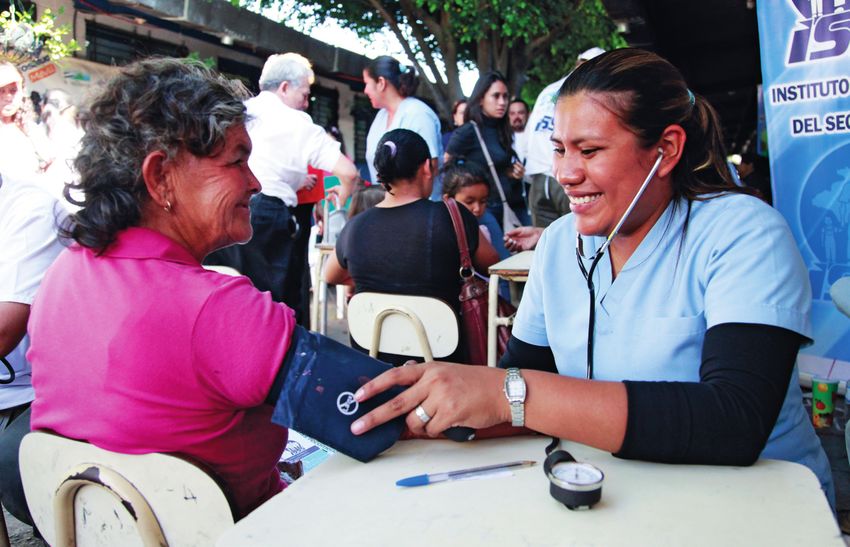
BRIEFING

Trading up for health:
                                                                                     January 2019

How to prevent trade deals
from undermining health

Summary                                          Creating a healthy society and realising ‘Health
                                                 for All’ including the UN target on Universal
Trade agreements have a profound impact          Health Coverage requires trade agreements
on health. Important public policy areas such    that work to promote and protect public health.
as health services, patents for medicines and    Ensuring that trade policy supports access to
even medical qualifications are increasingly     affordable healthcare and medicines is an
being marketised and brought into the trade      essential part of this. However we also need
agenda. Provisions in trade deals such as        trade deals that underpin good quality, universal,
those on intellectual property, public service   public healthcare, and facilitate a healthy society
provision, investment, border taxation and       by providing a healthy and safe environment,
regulations and standards have both direct       control of money and resources and access to
and indirect implications for health outcomes.   nutritious food, jobs, and clean water for all.1
These provisions can make it harder for people
                                                 As the UK seeks to develop its own trade policy
to access medicines and good-quality health
                                                 for the first time in a generation, it is important
services, and for governments to regulate to
                                                 that realising the right to health is a central
improve health outcomes or raise revenues to
                                                 consideration and that the appropriate steps
fund health programmes.
                                                 are taken to ensure that trade protects, rather
                                                 than undermines, our health and the health of
                                                 people around the world with whom we trade.
This briefing outlines the main risks that trade              4. Promotes healthy eating and better food
      policy poses to health, and then sets out the                    standards by:
      alternatives that could help avoid these risks and               •• Ensuring that trade agreements do not
      ensure that trade doesn’t undermine health justice.
                                                                          restrict governments’ ability to promote
      It makes the following recommendations for                          healthy eating
      future UK agreements:                                            •• Ensuring that countries have the policy
                                                                          space to support local and small-scale
      1. Support increased access to medicines by:
                                                                          food producers and restrict imports of
         •• Pushing for permanent exemptions for                          ultra-processed food which is harmful to
            poor countries from the Agreement on                          public health, including by excluding public
            Trade-Related Aspects of Intellectual                         procurement from future trade deals
            Property Rights (TRIPS)
         •• Actively encouraging the use of TRIPS                   5. Exclude investor-to-state dispute settlement
                                                                       (ISDS) or similar mechanisms
            flexibilities
                                                                       •• ISDS mechanisms have been used on
         •• Ensuring trade agreements promote
                                                                          several occasions to challenge government
            the minimum intellectual property
                                                                          policy on health, including challenges to
            obligations possible
                                                                          laws related to cigarette packaging, sugary
         •• Excluding a TRIPS-plus agenda                                 drinks and air quality. ISDS offers companies
                                                                          excessive privileges with no obligations; it
      2. Promote public services by:                                      must be excluded from future UK deals and
         •• Ending the use of ‘negative lists’ which force                existing Bilateral Investment Treaties must
            countries to ‘opt out’ rather than ‘opt in’                   be cancelled.
            services they want to liberalise
                                                                    6. Make trade subordinate to the UK’s
         •• Ensuring that there are strong ‘carve-outs’ in             commitments on sustainable development by:
            trade agreements to exclude public services
                                                                       •• Including binding language in agreements
         •• Including anti-tax avoidance measures or                      so that the Sustainable Development Goals
            commitments                                                   (SDGs) and the UK’s commitments under
                                                                          the Paris Climate Agreement are given
      3. Promote the highest standards to protect                         precedence over the provisions of trade deals
         public health and safety by:
                                                                       •• Ensuring countries have the policy space to
         •• Making agreements subordinate to the                          support and build domestic industries
            UK’s human rights and environmental
            commitments                                                •• Hold richer countries to their promise to
                                                                          eliminate trade-distorting subsidies
         •• Establishing strong ‘right to regulate’
            standards that mean government regulation                  •• Excluding provisions on migration from
            to promote public health is explicitly                        trade deals
            excluded from trade disciplines
                                                                    7. Introduce proper provisions for UK trade
         •• Explicitly allowing the use of the precautionary           policy and agreements to be transparent
            principle to protect public health                         and democratic
         •• Ensuring trade agreements commit                        It is only by ensuring that our elected
            investors to abide by international                     representatives are involved in setting the mandate
            environmental, labour and human rights                  for trade agreements, can see negotiating texts,
            standards as a condition for accessing                  monitor the negotiation of trade agreements,
            benefits of the trade agreement                         and have the chance to vote on the outcome
         •• Committing to joint action to meet the                  that we can ensure that trade agreements can
            highest standards in the production of                  help achieve Health for All. All trade deals must
            internationally traded goods with public                be subject to both ex-ante and ex-post health
            health implications e.g. poultry, livestock             impact assessment by an independent body with
            products, and chemicals                                 relevant expertise, taking into consideration the
                                                                    seven points mentioned above.

2 | Trading up for health: How to prevent trade deals from undermining health
RISK: Trade restricts access                              TRIPS flexibilities
to medicine
                                                          The TRIPS agreement does include
Around the world, in both the global North                ‘flexibilities’ which aim to give countries
and global South, people’s access to essential            greater policy space in order to achieve
medicines is restricted by high prices. This is           public policy objectives. WTO members
caused in large part by intellectual property             issued a statement in 2001 explicitly
rights (IPR) enforced through trade deals.                clarifying that this includes allowing
IPR became a central part of trade deals in               countries to make exceptions to the general
1995 when the Agreement on Trade-Related                  rules in order to address public health
Aspects of Intellectual Property (TRIPS) was              problems.7 This means that countries can,
introduced. This established a common set of              for instance, issue compulsory licenses,
global standards to protect intellectual property,        whereby they grant a licence to a second
largely reflecting the IPR regime that had                company to produce a patented medicine
developed in the US and other industrialised              despite opposition by the patent holder.
countries.2 The result of TRIPS is that an                Countries, including developed nations,
originator company is given an exclusive licence          have taken this action in the past.8 They
for a product which grants them a market                  can also change their patent law so it
monopoly for 20 years, allowing companies to              better protects public health.
push up prices by stifling competition.3
                                                          Yet despite TRIPS flexibilities being a legal,
IPR can form an important part of a government’s          legitimate and effective9 means to protect
industrial policy. However, in trade agreements           the right to health and promote access to
IPR regimes are being used to protect the market          medicines, some pharmaceutical companies
interests of pharmaceutical companies at the              and governments (generally those of richer
expense of those who need medicines, making               countries where pharmaceutical companies
medicines more expensive and delaying the                 are often based) have sought to prevent
market entry of cheaper, generic medicines.               their use.10 Many free trade agreements,
These regimes and their enforcement mechanisms            particularly those between richer and poorer
have been continually extended and reinforced             countries also contain clauses which try to
since the TRIPS agreement, including through              undermine the use of TRIPs flexibilities.11
new trade agreements.4                                    Ultimately, TRIPS flexibilities are under-
Traditionally, these issues have been seen                utilised because of the power imbalances
primarily as an issue affecting countries in the          between rich countries and transnational
global South, which have consistently opposed             corporations, and poorer countries.
TRIPS and lobbied for a permanent exemption
from implementing the deal. However, opposition
from the USA, amongst others, has resulted in a       In effect, TRIPS-plus is the new ‘gold standard’
rolling extension of the deadline for implementing    for intellectual property chapters of trade deals.
TRIPS, rather than a full exemption, which means      TRIPS-plus measures include:
countries have to dedicate already stretched
resources to regular renegotiations.5 The deadline    •• Extending the length of a companies’ market
for the poorest countries now extends to 2033.6          monopoly beyond 20 years
                                                      •• Limiting the use of compulsory licenses and
Whilst TRIPS itself has been rightly criticised
                                                         lowering the criteria for patentability so minor
for restricting access to medicines, the US
                                                         modifications to products (such as changing
and European countries have pushed for even
                                                         from a pill to a powder) can result in a new
stricter intellectual property rights than those
                                                         patent, further delaying the market entry for
under TRIPS in so called TRIPS-plus clauses,
                                                         cheaper generic medicines13
incorporated into many modern bilateral and
‘mega-regional’ trade deals like the Trans-Pacific    •• Making it harder for generic medicines to enter
Partnership (TPP), now the Comprehensive and             the market by forcing generic reproductions
Progressive Trans-Pacific Partnership (CPTPP).12         of medicines to go through new – expensive –
                                                         clinical trials14

                                          Trading up for health: How to prevent trade deals from undermining health | 3
The impact of strict IPR regimes on human health estimated that roughly one third of health
is stark. For instance, although tuberculosis (TB) innovation investment comes from the public
is treatable, in 2016 1.7 million people died from purse.25 However there is no guarantee that the
it15 making it the world’s leading cause of death public see an equitable return on this investment
from infectious diseases.16 Some treatments for since the patent for an innovation almost always
TB can cost over $250,000 (£190,000).17 And becomes the property of the private company.
whilst some drug companies offer concessionary
rates for low-income countries, generic medicines In this way, pushing stricter IPR through
could be produced at a fraction of the cost. For trade agreements is supporting an inefficient
instance, a six-month course of bedaquiline, pharmaceutical system that is failing to provide
produced by the drug company Janssen to treat value for public money, promote research into
drug resistant TB, could be produced for $50 new medicines or increase access to affordable
(£38), but it is currently priced at $900 (£686) medicines.
for low-income countries, and up to $30,000
(£22,880) for high-income countries.18
Healthier solutions: Trade that
The inaccessibility of medicines caused by high increases access to medicines
prices is increasingly a global issue, affecting
those in rich and poor countries alike. Just as In order to ensure everyone can access
patients in the global South cannot access medicines, we need action on multiple fronts.
medicines to treat TB or cancer,19 in richer This includes investment in alternative research
countries patients and/or public services like and development models, ensuring that public
the NHS are struggling to pay higher prices for funders of research receive the benefits of the
medicines. For example, 19% of new treatments medicines which their tax money pays for.26
becoming available are deemed to be too
expensive for the NHS because companies set We also need trade agreements that protect
prices too high. 20 This often means that these access to medicines. Given the failure of TRIPS
medicines remain out of reach or, in some cases, to improve access to medicines, the lack of
have to be rationed.21 NHS England statistics evidence that TRIPS itself is necessary to promote
show the NHS spent a record £20.2 billion on innovation, and the continued expansion of
prescription drugs in 2017 – a 10.9% rise on the the TRIPS regime, governments should take
previous year, meaning the cost of medicines intellectual property out of the remit of trade
continues to rise far faster than the NHS budget. negotiations altogether to prevent IPR being
This is in spite of the fact that seven out the top used in a way that prevents governments from
20 medicines purchased were developed with delivering legitimate public health initiatives.
substantial public funding.22
However, until this is achieved, we urge
The inclusion of investor state dispute settlement governments to exploit and expand the space
(ISDS) mechanisms in trade and investment within the existing IPR regime in order to promote
agreements only exacerbates these risks by access to medicines. This could be achieved by:
potentially exposing governments to costly legal •• Giving poor countries a permanent exemption
cases and awards if they take action to reduce from TRIPS so that they can prioritise public
drug prices, even if they do so by using (legitimate) health
TRIPS flexibilities.23
•• Actively restating the legitimacy of TRIPS
Whilst pharmaceutical companies insist IPR flexibilities and facilitating the import and
regimes are necessary to spur innovation, as export of generic medicines
Stiglitz and others have found, the extension
•• Ensuring trade agreements promote the
of IPR regimes in these ways has actually
minimum intellectual property obligations
reduced innovation and ‘not necessarily led to
possible, rather than promoting TRIPS-plus
the discovery of new medicines’.24 Rather than
measures
promoting innovation, IPR regimes promote
rent-seeking: it can be more profitable for private •• End the use of investor state dispute
companies to find ways to extend patents than to settlement (ISDS) or similar mechanisms in
develop new medicines to address global health trade and investment agreements (see below)
issues. Studies suggest that most innovation •• Excluding the TRIPS-plus agenda from the UK’s
comes via government-funded research: it is
future trade and investment agreements
4 | Trading up for health: How to prevent trade deals from undermining healthISDS and investor protection mechanism
All of the risks that trade poses to health and health systems are reinforced by the use
of the investor-state dispute settlement (ISDS) mechanism. The problem with ISDS is that
it gives corporations the ability to sue governments in private tribunals if a government
introduces policies that they perceive to undermine their investment – even if those policies
seek to protect public health, raise or collect taxes, tackle climate change or bring services
under public control.27 Only international investors can make use of these courts – there
is no equivalent mechanism for domestic companies, governments or citizens – and the
proceedings are held in secret. Simply the threat (either real or perceived) of a case being
brought can be enough to lead governments to rethink their policies – known as ‘policy chill’
– in part because the costs involved in defending a claim alone average $8 million.28 If a
government loses a case, the costs can be so high as to put them into economic hardship.29
For a company, even if they lose a case, the financial gains of simply delaying or deterring
regulatory development can outweigh the cost of bringing a case.30 Companies can also
offset the cost of cases via ‘third party funding’ in which a bank, hedge fund or other finance
company pays part of the costs of a case in return for a percentage of any future award.
Many ISDS cases have impinged on governments’ ability to pursue policies which encourage
access to healthcare for all, or which challenge a governments ability to enact public policies
which promote healthy lifestyles. Examples include:
•• Slovakia sued by a Dutch investor (Achmea) when it tried to partially reverse a decision to
privatise the health insurance market31
•• Canada sued by pharmaceutical corporation Eli Lilly over its insistence that medicines must
demonstrate their ‘utility’ (i.e. usefulness) to warrant a patent 32
•• Australia sued by tobacco giant Philip Morris for plain cigarette packaging laws33
Despite there being little evidence that investment agreements increase investment flows,
ISDS has been increasingly used in trade and investment agreements. It is now included
in over 3,000 active bilateral investment treaties, numerous other trade agreements
with investment chapters, and a number of existing and proposed multilateral trade and
investment agreements.34
Healthier solutions: Alternatives to ISDS
Reforming ISDS, such as has been proposed in the European Commission ‘Investment Court
System’ does nothing to address the underlying problems with such stringent investment
protection.35 Even reformed or re-labelled, ISDS mechanisms require taxpayers to insure the
business risk of international investors and gives investors the unique ability to challenge
policies that could protect and promote public health.36
The UK must exclude ISDS from future trade agreements. Instead, companies should be
encouraged to first undertake due diligence assessments before they invest in a country and to
seek to rectify issues as they arise in the host country, including through mediation and recourse
to domestic courts. Commercial political risk insurance is also available from private providers
or via the World Bank’s Multilateral Investment Guarantee Agency (MIGA), amongst others.
Trading up for health: How to prevent trade deals from undermining health | 5RISK: Trade that threatens Firstly, these trade deals use an approach called
‘negative listing’, which means that all services
high quality, public services are potentially opened up to international
competition unless a country has explicitly listed
People have the right to high quality and it as excluded from the purview of the trade
accessible healthcare. A universal system of agreement. The problem with this approach is
healthcare –funded through public finance – that it leads to the creeping liberalisation of public
is widely regarded as one of the most effective services as negotiators are unable to predict every
ways to deliver healthcare in a way that is fair, detail of what should be excluded or the kinds of
effective and efficient. To realise health for all, exclusions that might be required in future.4748
it is also important that other public services
like water or education are provided in a way Secondly, next generation deals contain
that makes them as accessible as possible. ‘standstill’ and ‘ratchet’ clauses which lock-in
existing levels of privatisation and make it
Yet trade agreements can undermine the harder for future governments to roll back
provision of public services by locking-in privatisation or deregulation.49
privatisation and undermining the tax base
(particularly in impoverished countries) that Thirdly, all of these measures are further reinforced
makes public service provision possible. by the Investor State Dispute Settlement (ISDS)
mechanism, contained in the trade deal themselves
Trading away public health services or in pre-existing bilateral investment treaties
(BITs). The danger with this is that if a government
Privatisation of health services has very clear wanted to move away from a privatised health
impacts on the right to health. Around the world, service (or a partially privatised one as in the
almost 100 million people are dragged into case of the NHS), towards a public health
poverty to pay for healthcare each year.37 This service, they could be sued by corporations.
can lock people into a cycle of poverty and poor
health from which they may never recover. The UK government has attempted to argue that
the NHS is not covered by trade deals such as
Research looking at 15 high-income countries TTIP. However the exceptions included in such
has shown that competition, privatisation or deals mean that public services are only excluded
marketisation in health systems has a negative if they are not provided on a commercial basis
effect on health equity.38 In the UK, increasing or in competition with other suppliers. The vast
use of private providers to deliver NHS services39 majority of care covered by the NHS is now also
has been criticised by doctors who see it as available from private sector suppliers for a fee,
destabilising and fragmenting the NHS.40 which means that it would be subject to the
Outsourcing (privatisation) of support services trade deal. Legal advice commissioned by Unite
such as cleaning has also had a negative effect the Union led to the conclusion from leading
on patient care41 and health.42 QC Michael Bowsher, a former chair of the
Bar Council’s EU law committee, that the NHS
Trade deals have a huge bearing on how
would not have been adequately protected from
public services are run, including the ability of
liberalisation under the proposed TTIP deal.50
governments to reverse privatisation where it
has been shown to have failed. Trade in services, The risks that all of the above poses to public
such as health services, began in earnest with health systems are clear. In the UK, trade
the General Agreement on Trade in Services agreements could make it harder to roll-back
(GATS), brought into force in 1995. Yet whilst the increasing privatisation of the NHS. Across
under GATS countries had some control over the global South too trade deals could increase
which services were opened up to competition, privatisation of public services.51 Indeed, Uruguay
today, so-called next generation trade deals pulled out of the TiSA negotiations in part
such as the (for now aborted) TTIP,43 the EU- because of concerns about privatisation.52
Canada Comprehensive Economic and Trade
Agreement (CETA),44 the TPP45 and the Trade This also impacts services beyond healthcare
in Services Agreement (TiSA – also currently on which are essential for good health, including
ice) go much further than GATS in the ways that water53 and education services.54 For instance,
they force through and lock-in liberalisation and trade agreements could be an obstacle for the
privatisation.46 They do this in three key ways. remunicipalisation of water services, despite
the privatisation of water services being an
unmitigated disaster in the global South.55
6 | Trading up for health: How to prevent trade deals from undermining healthUndermining tax for public services •• End the use of ‘negative listing.’ This will give
countries more power and policy space to
Whilst tax provisions are generally exempt determine which, if any, services are opened
from trade deals, trade liberalisation can result up to foreign competition
in reductions in import tariffs which reduces
government revenue. This is particularly the case •• Ensure that there are watertight ‘carve-outs’
in countries of the global South. Countries in in trade agreements to exclude public services
sub-Saharan Africa often rely on tariffs for up effectively63
to 25 per cent of their revenue, compared to just •• Include anti-tax avoidance measures or
1 per cent in richer countries.56 Trade deals can commitments within trade agreements to help
also reduce government revenue as a result of job countries build a tax base, and promote the
losses or lower consumption. For instance, the upward harmonisation of corporate tax levels
North American Free Trade Agreement (NAFTA) to prevent a race to the bottom64
resulted in huge losses in US manufacturing
•• End the use of ISDS or similar mechanisms
jobs, decimating local governments in areas
hardest hit and reducing the money available for
social services, which were conversely in greater
demand.57 When TTIP was being negotiated,
RISK: Trade deters and
one study suggested many countries in Europe undermines public-interest
would see a loss of government revenue.58 policy making
France would have been most affected, seeing
a loss of government revenue to the tune of Governments need to be able to regulate in
1% of the government budget.59 Reductions in the public interest. Regulations on smoking,
government revenue can result in reductions in air quality, food standards, pollution or the use
government spending on public services. of hazardous substances such as asbestos or
As with other potential threats posed by modern pesticides can all help improve public health. We
trade and investment agreements there is will need new regulations to cover as yet unknown
also the possibility that governments could be threats from unknown products or processes. Yet
challenged through the ISDS system if they trade agreements can undermine governments
seek to make changes to tax rules – such as tax ability to regulate to protect public health.
incentives provided to specific companies.60 At
least 40 cases related to tax measures have been Investor protection undermines
brought against 24 countries.61 For instance, public health
energy companies have repeatedly sued Ecuador
after the country introduced new taxes on sales Regulation of tobacco products is one of the
of and profits from oil and the withdrawal of VAT clearest examples of trade and investment
tax breaks for foreign-owned oil companies.62 This agreements undermining or deterring public
type of claim can prevent countries from collecting health policies. The cigarette manufacturer
tax or reforming their tax systems (by removing Philip Morris challenged Australia when it
subsidies or tax exemptions) or increasing taxes introduced plain packaging, and Uruguay for
to help fund public services like healthcare. introducing graphic warnings, on cigarette packs.
Furthermore, other ISDS claims not related to Whilst Philip Morris technically lost both cases,65
tax can result in huge sums being paid out to they still arguably won: the Uruguay case in
corporations, which also potentially undermines particularly was thought to have deterred
a states’ ability to provide public services. similar measures in Paraguay, Costa Rica and
New Zealand.66 This demonstrates the ‘chilling
effect’ that ISDS or investment protection can
Healthier solutions: Trade that have, whether a case is brought or not.67
promotes public services The health impact of this goes far beyond
smoking regulations, or even the policies of
Public services are essential if we want to achieve health departments. Faced with the threat of
Health for All. Countries should have the policy a case brought under the North American Free
space to determine the best way to provide these, Trade Agreement (NAFTA) Canada rolled back
including the option of providing universal public on restrictions on a gasoline additive called MMT
services. To achieve this, we should exclude public which had been shown to risk nerve and brain
services from trade deals. Where more general damage in children.68 Environmental protection is
services are included, trade deals should: also often in the firing line. Pacific Rim, a mining
company, brought an (ultimately unsuccessful)
Trading up for health: How to prevent trade deals from undermining health | 7ISDS claim against El Salvador when it placed Trade agreements can also undermine the use
a moratorium on mining projects to prevent of the precautionary principle, which requires
further contamination and pollution of water that producers demonstrate that a product
on which half the population relied.69 is safe before it can be sold.79 Countries such
as the US use a different approach, based on
Regulations written by corporations cost-benefit analysis, which puts the onus on
the regulator to show evidence that the risks
Many new trade deals give companies privileged are too great.80 Trade negotiations can be used
access to decision-making about regulations.70 to attempt to influence the approach taken
This happens through so called ‘regulatory by governments, for example US influence can
exchange’ or ‘regulatory co-operation’ be seen in the text of the original TPP, which
mechanisms established by trade agreements required countries to provide a justification,
such as CETA and the Japan-EU Free Trade ‘based on documented and objective scientific
Agreement (JEFTA).71 Of particular concern evidence’, for regulations they wished to introduce
are the ways in which regulatory cooperation that exceeded the international standards.’81
gives corporations early warnings about new
regulations and the opportunity to comment on
the new regulations before they are assessed by Healthier solutions: Trade
democratically elected representatives.72 Giving
a greater role to corporations in this way could
that promotes the highest
undermine public health.73 standards to protect public
health and safety
The regulatory race to the bottom
Governments need to be able to regulate in order
Modern trade agreements can also serve to
to promote and protect public health and we
universalise the lowest standards by aiming
need standards to be set at the highest possible
for ‘mutual recognition’ or ‘harmonisation’ of
level, rather than the lowest. To do this we need to:
regulations and standards across a trading bloc,
so that goods or services accepted in one •• Subject trade agreements to the provisions of
jurisdiction can be sold in the other country or the UK’s commitments under human rights and
countries.74 Indeed, as tariffs are at historical environmental agreements such that where
lows (particularly between richer countries) it is there is a conflict, the other commitments take
regulations which are seen as the primary barriers precedence. This would mean that no provision
to increasing trade.75 Whilst harmonisation of could be included in trade agreements that
regulations need not necessarily lead to lower was at odds with the UK’s commitments on the
standards, because of the influence of big right to health.
business in trade negotiations and through •• Prevent downward pressure on regulation
regulatory co-operation mechanisms outlined by limiting regulatory harmonisation in trade
above, it is likely that harmonisation will lead deals and ensuring mechanisms are in place to
to the ‘lowest common denominator’ becoming protect standards and wages
accepted.76 This is particularly the case where
trade deals carry requirements that regulations •• Ensure trade agreements explicitly allow the
“shall not be more trade-restrictive than necessary use of the precautionary principle to protect
to fulfil the legitimate objective.”77 In Canada, public health and ensure governments
the signing of NAFTA led to the lowering of food maintain the right to regulate
standards for this reason.78 The UK may face •• Ensure trade agreements commit investors to
similar pressure to lower standards in negotiations abide by international environmental, labour
with the US on a potential post-Brexit trade deal. and human rights standards as a condition for
Civil society organisations in the UK have already accessing benefits of the trade agreement.
raised concerns that many of the labour rights, •• Commit to joint action, outside of trade
health and safety and environmental regulations negotiations and trade deals, to meet the highest
currently enshrined in European Union directives standards in the production of internationally
could be abandoned in a bid to secure future traded goods with public health implications
trade deals. Trade agreements could also make e.g., poultry, livestock products, and chemicals.
it easier for UK companies to move production
•• End the use of ISDS
abroad to countries with lower regulatory
standards and weaker human and labour rights,
in a bid to further lower costs.
8 | Trading up for health: How to prevent trade deals from undermining healthRISK: Worse food, increasing RISK: Indirect impacts
obesity and poorer health that drive poorer health
Trade agreements can lead to an increase in Inequality, poverty and climate change have
the availability, promotion and production of a profound impact on health outcomes. Trade
cheap, ultra-processed food, associated with agreements can exacerbate and perpetuate
increasing health risks including obesity.82 In the poverty and inequality, both between countries
UK, health problems associated with obesity and within countries, with the greatest impact
already cost the NHS an estimated £6.1 billion: on poor and marginalised communities. Further,
nearly two-thirds of adults and 1 in 3 children whilst climate change is arguably the biggest
leaving primary school are overweight or obese.83 threat to human health,90 it often remains the
An increase in consumption of ultra-processed elephant in the room in both trade negotiations
food, considered a risk post-Brexit,84 would only and debates about achieving health justice.
add to these problems.
Poverty
Of course, this doesn’t only affect the UK. The
risks associated with increased consumption of Trade liberalisation does not necessarily help
processed food have been demonstrated to be those people living in poverty. Despite having
linked to liberalisation through trade deals the opened up their markets, many countries
world over. After the North American Free Trade still have large numbers of citizens living in
Agreement (NAFTA) was signed, obesity rates poverty. A study by the UN Development
rose significantly in both Mexico and Canada as Programme showed little relation between trade
a result of the increased consumption of sugary liberalisation and growth, and suggested that it
drinks and high fructose corn syrup respectively.85 does not necessarily improve or support human
These links have also been observed in Central development.91 In richer countries too, trade
America,86 Brazil,87 and the Pacific Islands.88 deals can lead to job losses, which would force
Lower-quality, calorie-rich, nutrient-poor food is people into poverty.92 Even if trade liberalisation
hard-wired into the current approach to global does boost economic growth, as its supporters
trade. This has a huge impact on public health. insist it does, this does not necessarily mean
it will reduce poverty. Even the World Bank
In addition, trade agreements impact on the food
themselves concede that “both theoretically and
system by lowering standards that affect health
empirically, the impact of trade openness on
and safety. For instance, if the UK enters into a
poverty is ambiguous.”93
trade agreement with the US post-Brexit, this
could mean that the UK has to accept chlorine- Ultimately, trade liberalisation, like globalisation
washed chicken or hormone-treated beef as itself, creates winners and losers. Those that
equivalent to UK processing methods, which could suffer the most are people living in poverty in
pose threats to food safety and public health.89 the global South, particularly in sub-Saharan
Africa, and poorer communities in richer
countries,94 as trade liberalisation can lead to
Healthier solutions: Trade “deindustrialisation, job losses and stagnating or
promotes healthy eating falling wages…condemning whole generations
to unemployment and poverty and stifling
and better food standards hopes for sustainable development.”95 For
example, in Brazil trade liberalisation reduced
Trade should protect government promotion of
net employment by 2.7 million jobs between
healthy eating, access to nutritious food and
1990 and 1997.96 And in Mexico, the trade
sustainable agriculture. This means supporting
liberalisations both before and after NAFTA
local food producers and ensuring governments
resulted in huge job losses in the agricultural
have the policy space to promote healthier diet
sector.97 Any attempt to tackle poverty and
and safe food. In order to achieve this, we should:
promote health for all needs to address the
•• Ensure that trade agreements do not restrict impact of trade on jobs and access to resources.
governments’ ability to promote healthy eating
This can be particularly problematic where
•• Ensure that countries have the policy space to changes to public services and jobs combine
support local and small-scale food producers and and impact on the health workforce. Trade rules
restrict imports of ultra-processed food which is tend to treat health workers (and qualifications)
harmful to public health, including by excluding as commodities, rather than as an essential
public procurement from future trade deals
Trading up for health: How to prevent trade deals from undermining health | 9part of achieving health goals. They increasingly Dismantling barriers to trade can increase
include ‘mutual recognition of professional inequality in a number of ways. Trade
qualifications’, which means that partner liberalisation and tariff reduction are often
countries accept each others’ qualifications as accompanied by increased income inequality
being of equal quality and makes it easier for between people with different skill levels and
health workers to leave one country to work between different industries,107 making unskilled
in another.98 Trade rules also include so-called workers worse off.108 This has been observed
‘Mode 4’ provisions in which countries agree the around the world, for instance across Latin
number and kinds of visas that they will offer.99 America.109 Trade liberalisation can also stifle
governments’ attempts to tackle inequality,
The inclusion of such provisions in trade deals by making it more difficult to use targeted
can be extremely problematic. Countries often procurement to support marginalised groups,
provide free or subsidised training for health invest in local industries and jobs or direct banks
workers who are then employed in other to provide credit to poor people.110 Lastly, trade
countries: in effect poorer countries often liberalisation is often implemented alongside
provide a hefty subsidy to richer countries.100 The cuts to or privatisation of public services (see
absence of health workers threatens the health above) which erodes the basic opportunities and
of individuals and populations, destabilises services that people need to prosper, and further
health systems, and deepens existing global widens the gap between the rich and poor.
health inequalities. For example, Africa has
24% of the global disease burden yet only 3% The way trade policy has developed – sweeping
of the world’s health workers.101 In 57 countries away government ability to protect people while
the World Health Organization (WHO) has giving transnational corporations and investors
labelled the health worker shortage as critical.102 new ‘rights’ – has been good for those at the top
The scarcity of health workers constitutes of society, but severely detrimental to those who
a major barrier to the provision of essential aren’t. This fuels inequality.
health services, such as safe delivery of babies,
childhood immunisation and the prevention and Inequality has a number of impacts on health,
treatment of HIV/AIDS.103 both physical and psychosocial. A 2009 study
in the British Medical Journal found that people
Workers should have the right to study, work, living in regions with high income inequality
live and form relationships in other countries. had an excess risk of premature mortality
But trade deals should not be seen as a way of independent of their socioeconomic status,
cherry-picking workers from poorer countries. age, and sex.111 Inequality also increases
In particular, where their training is being stress. Stress is linked to a range of health
subsidised by poorer governments, this should issues including hypertension, heart disease,
be redressed through helping those countries mental health disorders, accidents, ulcers, and
develop good quality, universally accessible cirrhosis.112 The Equality Trust’s Index of Health
and publicly funded health services. The UK and Social Problems combines 10 indicators into
should also develop a sustainable workforce a single variable to describe the overall “health”
strategy for the NHS that is based on long-term of a society. They show a positive correlation
investment in training and recruitment. between inequality and health and social
problems, mental illness and infant mortality.113
Inequality
Climate Change
Inequality is being allowed to soar. In 2018,
just 42 people own as much wealth as half of Climate change is arguably the largest threat to
the world’s citizens. In 2017, 82% of the global public health.114 The worst effects will fall on people
wealth generated went to the top 1%.104 In living in poverty and those most marginalised,
the UK, while wealth inequality fell for much particularly in the global South.115 It is already
of the 20th century, it rose dramatically in the causing drought and extreme weather events,
1980s and continues to rise,105 particularly when displacing millions of people from their homes.
inheritance and capital gains of the wealthiest This is only going to get worse. In order to combat
are taken into account.106 climate change and meet the Paris commitments
we need to reduce our use of fossil fuels and
keep many fossil fuel reserves in the ground.116
10 | Trading up for health: How to prevent trade deals from undermining healthTrade agreements impact on climate change in •• Ensure that developing countries have the
numerous ways. They increase the production policy space to support and build domestic
and consumption of goods. These goods are industries and implement ‘buy local’ schemes
transported by shipping or airline around the to support sustainable local economies,
world, increasing emissions of greenhouse including by excluding public procurement
gases.117 They facilitate investment in extractive from trade deals (see above)
industries around the world, displacing greenhouse •• Hold richer countries to their promise to
gas emissions to global South.118 Due to the
eliminate trade-distorting subsidies
codification and extension of intellectual property
regimes, they undermine the dissemination of •• Exclude provisions on migration from trade deals
green technology that could be used to combat
climate change.119 They lock-in dependency on
fossil fuels, by making it difficult for countries to Why we need trade democracy
take action to limit the import or export of fossil
fuels,120 or take action to invest in renewable For trade deals to be truly effective and to
energy.121 And through investment protection achieve Health for All, they firstly need to be
mechanisms such as ISDS they give companies transparent and democratic.126 It is only by
the tools to block government’s action on climate ensuring that our elected representatives
change and shift towards greener, democratic are involved in setting the mandate for
energy system we need.122 In these ways trade trade agreements, can see negotiating
agreements undermine climate action, and texts, monitor the negotiations, and have
expose us all to unhealthy environments. the chance to vote on the outcome that
we can ensure that trade agreements can
Perhaps most significantly, whilst climate deals
help to provide Health for All.
like the Paris 2015 Agreement are non-binding,
trade and investment agreements are both As part of increasing transparency and
binding and enforceable. This means that trade democratic input, all trade deals should be
and investment agreements have de facto subject to a health impact assessment by an
supremacy over environmental agreements and independent body with relevant expertise.
as such have direct impact on the future of our Governments should be obligated to act
society.123 Yet whilst most trade agreements on the findings of such health impact
tend to increase carbon emissions,124 no assessments to mitigate any risks to public
trade agreement currently in force contains health arising out of the trade deal.
any (binding) commitments to ensure that
international trade supports climate targets.125
Healthier solutions: Trade Conclusion
that promotes sustainable We need trade deals to promote and protect
development human rights, access to medicines and healthy
food, environmental protections, labour
We need trade deals that promote sustainable standards and public services. And we need
development, rather than increasing inequality trade deals that leave governments room to
and poverty and exacerbating climate change. regulate and act in the public interest.
To achieve this, we should:
To achieve this the global trade system requires
•• Include binding language in trade deals such fundamental reform. The solutions outlined
that that the Sustainable Development Goals above would require a fundamental shift in the
(SDGs) and commitments under the Paris way we approach trade – away from increasing
Climate Agreement are given precedence over growth towards promoting human health,
the provisions of trade deals human flourishing and sustainable development.
Only then can trade really work to benefit
everyone and achieve Health for All.
Trading up for health: How to prevent trade deals from undermining health | 11References
1. World Health Organisation, Commission on Social 373, Issue 9661, pp.416-422. Available online:
Determinants of Health (2008) ‘Closing the gap in a https://www.thelancet.com/journals/lancet/article/
generation: Health equity through action on the social PIIS0140-6736(08)61776-6/fulltext
determinants of health’ Available online: Médecins Sans Frontières (5 July 2011) ‘TRIPS, TRIPS
http://www.who.int/social_determinants/ Plus and Doha’ Available online: https://msfaccess.org/
thecommission/finalreport/en/ spotlight-trips-trips-plus-and-doha
2. Baker, D., Jayadev A., and Stiglitz, J. (2017) ‘Innovation, Médecins Sans Frontières (2016) ‘Trading away health:
Intellectual Property and Development: A better set of The Trans-Pacific Partnership Agreement (TPP)’, p.2.
approaches for the 21st century’, p.6. Available online: Available online: https://www.msfaccess.org/sites/
http://cepr.net/images/stories/reports/baker-jayadev- default/files/IP_Brief_TPP_ENG_2016_0.pdf
stiglitz-innovation-ip-development-2017-07.pdf 13. Gleeson, D. and Moir, H. The Conversation (5
3. World Trade Organisation (2006) ‘Fact Sheet: TRIPS November 2014) ‘Explainer: evergreening and how
and pharmaceutical patents’ Available online: big pharma keeps drug prices high’ Available online:
https://www.wto.org/english/tratop_e/trips_e/ https://theconversation.com/explainer-evergreening-
factsheet_pharm02_e.htm and-how-big-pharma-keeps-drug- prices-high-33623
4. Médecins Sans Frontières (2016) ‘Trading away health: 14. World Health Organisation Regional Office for South-
the Trans-Pacific Partnership (TPP)’Available online: East Asia (2006) ‘Briefing Note: Access to Medicines’
https://www.msfaccess.org/sites/default/files/IP_Brief_ Available online: http://apps.who.int/medicinedocs/
TPP_ENG_2016_0.pdf documents/s21416en/s21416en.pdf
5. United Nations Committee for Development Policy 15. Médecins Sans Frontières (2017) ‘Out of Step
(19 November 2015) ‘WTO drugs patent waiver for Factsheet’ Available online: https://www.msfaccess.
LDCs extended until 2033’ Available online: org/sites/default/files/MSF_assets/CAME/TB_
https://www.un.org/ldcportal/wto-drugs-patent- FactSheet_OutOfStep_ENG_2017.pdf
waiver-for-ldcs-extended-until-2033/ 16. TB Alliance (undated) ‘The Pandemic’ Available online:
Médecins Sans Frontières (2015) ‘Exempt from access https://www.tballiance.org/why-new-tb-drugs/global-
to affordable medicines?’ Available online: pandemic
https://msfaccess.org/sites/default/files/MSF_assets/ 17. TB Alliance (16 March 2004) ‘Drug-resistant tuberculosis
IP/Docs/IP_Brief_%20LDC_Exempt%20from%20 spreads’ Available online: https://www.tballiance.org/
access%20to%20affordable%20medicines.pdf news/drug-resistant-tuberculosis-spreads
6. World Trade Organisation (6 November 2015) ‘WTO 18. Global Justice Now and STOPAIDS (2017) ‘Pills and
members agree to extend drug patent exemption for profits’ p.36. Available online: https://stopaids.org.
poorest members’ Available online: https://www.wto. uk/wp/wp-content/uploads/2017/10/Pills-and-profits-
org/english/news_e/news15_e/trip_06nov15_e.htm report-WEB-002.pdf
7. World Trade Organisation (20 November 2001) 19. Vaughan, J., STOPAIDS, (2 March 2018) ‘Novartis must
‘Declaration on the TRIPS agreement and public end ‘bullying tactics’ over life-saving medicines’ Available
health’ Available online: https://www.wto.org/english/ online: https://stopaids.org.uk/2018/03/02/novartis-
thewto_e/minist_e/min01_e/mindecl_trips_e.htm must-end-bullying-tactics-over-life-saving-medicines/
8. Beall, R and Kuhn, R (2012) ‘Trends in Compulsory 20. National Institute for Health and Care Excellence
Licensing of Pharmaceuticals Since the Doha Declaration: (NICE) (2018) ‘Summary of Decisions’ Available online:
A Database Analysis’ PLoS Medicine, Volume 9, Issue https://www.nice.org.uk/about/what-we-do/our-
1. Available online: https://www.ncbi.nlm.nih.gov/ programmes/nice-guidance/nice-technology-appraisal-
pmc/articles/PMC3254665/ See also: Government of guidance/summary-of-decisions.
Canada (14 September 2009) ‘Compulsory licences Global Justice Now and STOPAIDS (2017) ‘Pills and
under Canada’s Access to Medicines regime’ Available profits’ p.12. Available online: https://stopaids.org.
online: https://www.canada.ca/en/health-canada/ uk/wp/wp-content/uploads/2017/10/Pills-and-profits-
services/canada-access-medicines-regime/countries/ report-WEB-002.pdf
eligibility/compulsory-licences.html; Just Treatment (17 November 2017) ‘Emma’s
9. Ellen F.M. ’t Hoen, LL.M. (2009) ‘The Global Politics Pablociclib Campaign’ Available online:
of Pharmaceutical Monopoly Power’ Available online: https://justtreatment.org/news/2017/11/8/emmas-
https://msfaccess.org/sites/default/files/MSF_assets/ palbociclib-campaign-your-questions-answered
Access/Docs/ACCESS_book_GlobalPolitics_tHoen_ 21. Boseley, S, The Guardian (28 July 2016) ‘NHS
ENG_2009.pdf ‘abandoning’ thousands by rationing hepatitis C
10. Médecins Sans Frontières (2016) ‘Trading away health: drugs’ Available online: https://www.theguardian.com/
The Trans-Pacific Partnership (TPP)’, p.2. Available society/2016/jul/28/nhs-abandoning-thousands-by-
online: https://www.msfaccess.org/sites/default/files/ rationing-hepatitis-c-drugs
IP_Brief_TPP_ENG_2016_0.pdf 22. Global Justice Now (15 November 2018) ‘Government
Médecins Sans Frontières (27 April 2018) ‘USTR Priority must ‘rein in’ drugs companies to tackle spiralling NHS
Watch List calls out countries for protecting public health’ medicines bill’ Available online: https://www.globaljustice.
Available online: https://msfaccess.org/ustr-priority- org.uk/news/2018/nov/15/government-must-rein-
watch-list-calls-out-countries-protecting-public-health drugs-companies-tackle-spiralling-nhs-medicines-bill
11. Musungu, S. F. and Oh, C., Commission on Intellectual 23. MSF Access (2017) ‘RCEP Investment Chapter
Property Rights, Innovation and Public Health Presents a Grave Threat to Access to Medicines’
(2005) ‘The use of TRIPs flexibilities by developing Available online: https://msfaccess.org/sites/
countries: can they promote access to medicines?’, default/files/MSF_assets/Access/Docs/Access_letter_
pp.54-67. Available online: http://www.who.int/ RCEPinvestmentLetterForNegotiators_ENG_2017.pdf
intellectualproperty/studies/TRIPSFLEXI.pdf?ua=1 24. Baker, D., Jayadev A., and Stiglitz, J. (2017) ‘Innovation,
12. Kelley, L. et al. (2009) ‘Bridging the divide: Global Intellectual Property and Development: A better set of
governance of trade and health’ The Lancet, Volume approaches for the 21st century’, p.6. Available online:
12 | Trading up for health: How to prevent trade deals from undermining healthhttp://cepr.net/images/stories/reports/baker-jayadev- 70% of clinical contracts in England’ Available online:
stiglitz-innovation-ip-development-2017-07.pdf https://www.independent.co.uk/news/health/nhs-
25. Røttingen, J-A. et al. (2013) ‘Mapping of available privatisation-contracts-virgin-care-richard-branson-
health research and development data: what’s there, jeremy-hunt-a8134386.html
what’s missing, and what role is there for a global 40. The British Medical Association (2016) ‘Privatisation and
observatory?’ The Lancet, Volume 382, pp.1286-1307. independent sector provision of NHS healthcare’, p.1.
Available online: https://www.thelancet.com/pdfs/ Available online: https://www.bma.org.uk/collective-voice/
journals/lancet/PIIS0140-6736(13)61046-6.pdf influence/key-negotiations/nhs-funding/privatisation-
Boldrin, M and Levine, D. K. (2008) ‘The Pharmaceutical and-independent-sector-providers-in-nhs-care
Industry’ in Against Intellectual Monopoly, p.256. 41. Lethbridge, J. (2012) ‘Empty promises: the impact
Cambridge: Cambridge University Press. Available online: of outsourcing on NHS services’ London: UNISON
http://www.dklevine.com/papers/imbookfinal09.pdf Available online: http://gala.gre.ac.uk/8084/
26. Global Justice Now and STOPAIDS (2017) ‘Pills and 42. Toffolutti, V., Reeves, A. and McKee, M. and Stuckler,
profits’ pp.38-39 Available online: https://stopaids.org. D. (2017) ‘Outsourcing cleaning services increases
uk/wp/wp-content/uploads/2017/10/Pills-and-profits- MRSA incidence: Evidence from 126 English acute
report-WEB-002.pdf trusts’ Social Science & Medicine, Volume 174, pp.64-
27. Trade Justice Movement (2015) ‘Worried about UK BITs’, 69. Available online: https://www.sciencedirect.com/
p.4. Available online: https://www.tjm.org.uk/documents/ science/article/pii/S0277953616306864
reports/Worried_about_your_BITS_report__FINAL.pdf 43. Global Justice Now (2016) ‘The Transatlantic Trade
28. Gaukrodger, D. and Gordon, K. OECD Working Papers on and Investment Partnership (TTIP)’ Available online:
International Investment(2012) ‘Investor-State Dispute http://www.globaljustice.org.uk/sites/default/files/
Settlement: A Scoping Paper for the Investment Policy files/resources/ttip_briefing_update_feb_16_2016.pdf
Community’, p.19. Paris: OECD Publishing. Available 44. Global Justice Now (2016) ‘CETA: TTIP’s little brother’
online: http://dx.doi.org/10.1787/5k46b1r85j6f-en Available online: http://www.globaljustice.org.uk/
29. Ibid. p.7. sites/default/files/files/resources/2nd_edition_ceta_
30. Pelc, K. (2016) ‘Does the International Investment briefing_2016.pdf
Regime Induce Frivolous Litigation?’ Available online: 45. Public Services International (2014) ‘Public Health
https://ssrn.com/abstract=2778056 Care vs. The Trans-Pacific Partnership Agreement’
31. Ankersmit, L. (24 April 2018) ‘Achmea: The Beginning http://www.world-psi.org/sites/default/files/documents/
of the End for ISDS in and with Europe?’ Available research/en_jan_30_final_draft_tpp_briefing.pdf
online: https://www.iisd.org/itn/2018/04/24/achmea- 46. Public Services International (2014) ‘TiSA versus
the-beginning-of-the-end-for-isds-in-and-with-europe- Public Services’ Available online: http://www.world-
laurens-ankersmit/ psi.org/sites/default/files/documents/research/en_
32. Baker, B.K. (20 September 2013) ‘Threat of tisaresearchpaper_final_web.pdf
Pharmaceutical-Related IP Investment Rights in the 47. UNISON (2015) ‘TTIP, CETA and TISA – what you need
Trans-Pacific Partnership Agreement: An Eli Lilly v. to know about EU trade agreements’ Available online:
Canada Case Study’ Available online: https://www.iisd. https://www.unison.org.uk/content/uploads/2015/02/
org/itn/2013/09/20/threat-of-pharmaceutical-related- On-line-Catalogue229952.pdf
ip-investment-rights-in-the-trans-pacific-partnership- 48. For instance, when TTIP was being negotiated, the
agreement-an-eli-lilly-v-canada-case-study/ NHS was not specifically excluded via the negative list
33. UNCTAD: Investment Policy Hub (2011) Notification of system. Whilst the UK government and the European
Philip Morris v. Australia case. Available online: Commission insisted that the deal protected the NHS,
http://investmentpolicyhub.unctad.org/ISDS/Details/421 the general safeguards provided were not strong
34. Tienhaara, K. (2018) ‘Regulatory Chill in a Warming enough because the NHS is already partially privatised.
World: The Threat to Climate Policy Posed by Investor- 49. World Trade Organisation (2009) A Handbook on
State Dispute Settlement’ Transnational Environmental Reading WTO Goods and Services Schedules, p.14.
Law, Volume7, Issue 2, pp.229-250. Available online: Geneva: WTO Secretariat. Available online:
https://www.cambridge.org/core/journals/ https://www.wto.org/english/res_e/booksp_e/
transnational-environmental-law/article/regulatory- handbook_sched_e.pdf
chill-in-a-warming-world-the-threat-to-climate- 50. Johnston, I. The Independent (22 February 2016)
policy-posed-by-investorstate-dispute-settlement/ ‘NHS could be part privatised if UK and EU agree
C1103F92D8A9386D33679A649FEF7C84 controversial TTIP trade deal, expert warns’ Available
35. Ibid. See also: Corporate Europe Observatory online: https://www.independent.co.uk/news/uk/
(2016) ‘The zombie ISDS’ Available online: politics/nhs-could-be-part-privatised-if-uk-and-
https://corporateeurope.org/sites/default/files/ eu-agree-controversial-ttip-trade-deal-expert-
attachments/zombie-isds-ex-sum-en_0.pdf warns-a6888516.html
36. Corporate Europe Observatory (2016) ‘The zombie ISDS’ 51. Global Justice Now (2016) ‘A blueprint for global
Available online: https://corporateeurope.org/sites/ privatisation’ p.1. Available online:
default/files/attachments/zombie-isds-ex-sum-en_0.pdf https://www.globaljustice.org.uk/sites/default/files/
37. World Health Organisation (WHO) and World Bank files/resources/tisa_briefing_web_0.pdf
(2017) ‘Tracking Universal Health Coverage: 2017 Global 52. Public Services International (14 June 2017) ‘Uruguay’s
Monitoring Report’ Available online: http://documents. exit from TISA: Alliances, campaigns and assessments’
worldbank.org/curated/en/640121513095868125/ Available online: http://www.world-psi.org/en/new-
pdf/122029-WP-REVISED-PUBLIC.pdf publication-uruguays-exit-tisa-alliances-campaigns-
38. Abrahams, D. MP (2014) ‘An Inquiry into the effectiveness and-assessments
of international health systems’ Available online: 53. International Federation for Human Rights (2007)
http://www.debbieabrahams.org.uk/wp-content/ ‘Position Paper: Economic Partnership Agreements
uploads/2014/05/Health-Inquiry-Report_FINAL.pdf (EPAs) and Human Rights’ p.9. Available online:
39. Cockburn, H. The Independent (30 December 2017) https://www.fidh.org/IMG/pdf/APE_final_eng.pdf
‘NHS privatisation soars as private companies win
Trading up for health: How to prevent trade deals from undermining health | 13You can also read


