TROJES TRADITIONAL MAYAN, MAIZE STORAGE ARCHITECTURE - Uphill from - FLAAR MESOAMERICA
←
→
Page content transcription
If your browser does not render page correctly, please read the page content below

TROJES
  TRADITIONAL MAYAN,
MAIZE STORAGE ARCHITECTURE
  Paapa’x, papax, papaax

                                        Uphill from
                           Taponcito Creek, Livingston

    N I C H O L AS HE L L M UT H
TROJES
                    TRADITIONAL MAYAN,
         MAIZE STORAGE ARCHITECTURE
                           FLAAR Photo Archive

                                    Uphill from
                      Taponcito Creek, Livingston

D EC E M E B E R 2 0 2 0
CREDITS                                                APPRECIATION
The helpful individuals listed below are all part of   Assistance for overall project and local
the FLAAR Mesoamerica research and field work          Access, Municipio de Livingston
team. The office research team, webmaster, and         Daniel Esaú Pinto Peña, Alcalde of
web designers are additional individuals in the        Livingston (Izabal, Guatemala).
main office in Guatemala City. Since each report
is a different plant or animal, the individuals who    Initiation of the Project of Cooperation,
assist in preparing the bibliography, species          Febreary and March 2020
identification and botanical information category      Edwin Mármol Quiñonez, Coordinación
are, not the same for each report.                     de Cooperación de Livingston (Izabal,
                                                       Guatemala)
Author
Nicholas Hellmuth                                      Assistance for Knowledge of plants at Tapon
                                                       Creek and Taponcito Creek FUNDAECO
Bibliography Team                                      Lucas Cuz
Nicholas Hellmuth
                                                       Lancheros from Muelle Municipal to Field
Vivian Hurtado
                                                       Trip Base Camp & Back
                                                       Omar Suchite
Editor
                                                       Keneth William De La Cruz
Vivian Díaz
                                                       Lanchero and Guide Buena Vista Tapon
Photographers                                          Creek
Nicholas Hellmuth                                      Edgar Alexander Cuz Choc
Melanny Quiñonez
Victor Castillo                                        Base camp custodian, Aldea Buena Vista
Photography Aassistants                                Tapon Creek
                                                       Cristobal Iq
Senaida Ba Mucu
                                                       Appreciation for a place for the entire team
Manager of Design and Layout
                                                       to stay during flied trip
Andrea Sánchez Díaz                                    Ramiro Garcia, Lilian Garcia, Ericka Garcia

Layout of this English Edition
Alexander Gudiel Diéguez

PHOTO FROM FRONT COVER
                                                                  MUNICIPALIDAD DE
Troje, Paapa’x                                                    Livingston
Photo by: Nicholas Hellmuth, FLAAR
Mesoamerica, Dec. 3, 2020, 3:26 pm. Municipio
de Livingston, Izabal, Guatemala.

Camera: Nikon D810. Lens: Nikon 200mm AF-D
tele-macro. Settings: 1/400 sec; f/14; ISO 800.

PHOTO FROM TITLE PAGE
Troje, Paapa´x

Photo by: Nicholas Hellmuth, FLAAR
Mesoamerica, Dec. 3, 2020, 3:45 pm. Municipio
de Livingston, Izabal, Guatemala.

Camera: iPhone 12 Pro Max.
4                                                      FLAAR Mesoamérica

    CONTENTS

    Troje traditional Maya storage shed for maize                5

    Linguistic Research on Mayan words for
    troje, and other maize storage options                       18

    Ethnohistorical Research on Maize
    Storage is Needed                                            19

    PDF Books and References on Trojes in Maya Areas             22

    Helpful websites on trojes in Maya areas                     24

    Acknowledgements to FLAAR Mesoamerica                        25

    Livingston Map                                               26

    Tapón Creek-Livingston Map                                   27

    Citation                                                     28
5                                                                  FLAAR Mesoamérica

    TROJE, TRADITIONAL MAYA
    STORAGE SHED FOR MAIZE
    We would like to bring back the knowledge of rural homes constructed in
    Mayan style. It is helpful to archaeologists and ecologists to learn what kind of
    Mayan shed for maize storage. The rural Mayan people lived in for thousands
    of years. So, every year we try to find and photograph traditional Mayan Mayan
    shed for maize storage. The present FLAAR report is on maize storage sheds.

    We will make this report available in Spanish and will seek funding to make it
    available in Q’eqchi’ Mayan language. Would also be helpful to make these
    photographs available in PowerPoint format so it can be used in local schools
    and in ZOOM conferences.

    Troje, Storage shed for maize Maya on route to climbing the hills overlooking
    Amatique Bay to look for a wild vanilla orchid that had been flowering that week.
    Photo by: Nicholas Hellmuth, FLAAR Mesoamerica, Dec. 3, 2020, 3:22 pm. Livingston,
    Izabal, Guatemala.

    Camera: Nikon D810. Lens: Nikon 200 mm AF-D Tele-Macro. Settings: 1/400 sec; f/14; ISO 800.
Troje is for temporary maize storage out in the milpa. To study to what degree these trojes are used for sleeping
during harvesting is a separate research project; our goal to start with is to show these trojes in high resolution so
that students can consider this as a thesis topic.

7                                                                                       FLAAR Mesoamérica

    Year by year more rural people use thick                   Yet many hotels feature thatch roofs
    wide wooden boards (chain-saw cut)                         because tourists prefer this kind of roof
    from the few large trees that remain in                    (plus a tin roof makes the rooms below
    the forests. Other rural people then use                   too hot). Personally, I like the thatch-
    concrete blocks to construct their next                    roofed bungalows of hotel Ecolodge El
    homes. Every year more people use tin                      Sombrero (outside the entrance to Parque
    laminas for their roof instead of palm or                  Nacional Yaxha, Nakum y Naranjo, about
    other natural biodegradable materials. A                   50 kilometers east from Tikal National
    tin roof over concrete block walls is higher               Park, Petén).
    status, in a certain way.

    Maize storage shed, La Esperanza, Teleman. Some maize storage sheds are adjacent to the main house; not
    all are out in the milpa. So we need to find whether the word troje is just for the sheds in the milpas. In order
    Mayan areas, the maize is stored inside the main house. Lots of potencial for a thesis or PhD dissertation.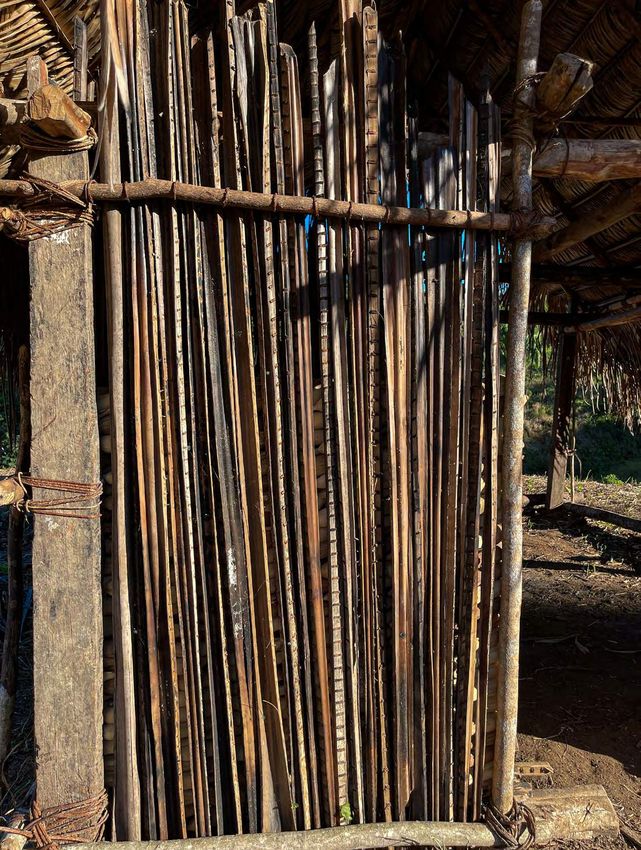
8                                                                           FLAAR Mesoamérica

    Concrete block walls are obtained from mining plus, thousands of trucks belching
    diesel fumes up and down the highway (and causing traffic to slow to a crawl
    going up any hill).

    I myself would rather live and sleep in a Mayan style house than modernplastic-
    fantastic with all the kiln-baked flooring tiles. Aside from the deterioration of the
    natural environment and climate change caused by mining and manufacturing
    what it takes to build a popular modern house, it is crucial to document traditional
    house architecture before more of it disappears.

    Troje, Mayan House on route in La Esperanza Teleman.

    Photo by: Melanny Quiñonez, FLAAR Mesoamerica, Jul. 21, 2018, 5:04 pm. La Esperanza, Teleman, Alta
    Verapaz, Guatemala.
    Camera: Canon EOS 60D. Lens: Tokina opera 16-28mm. Settings: 1/320 sec; f/5.6; ISO 200.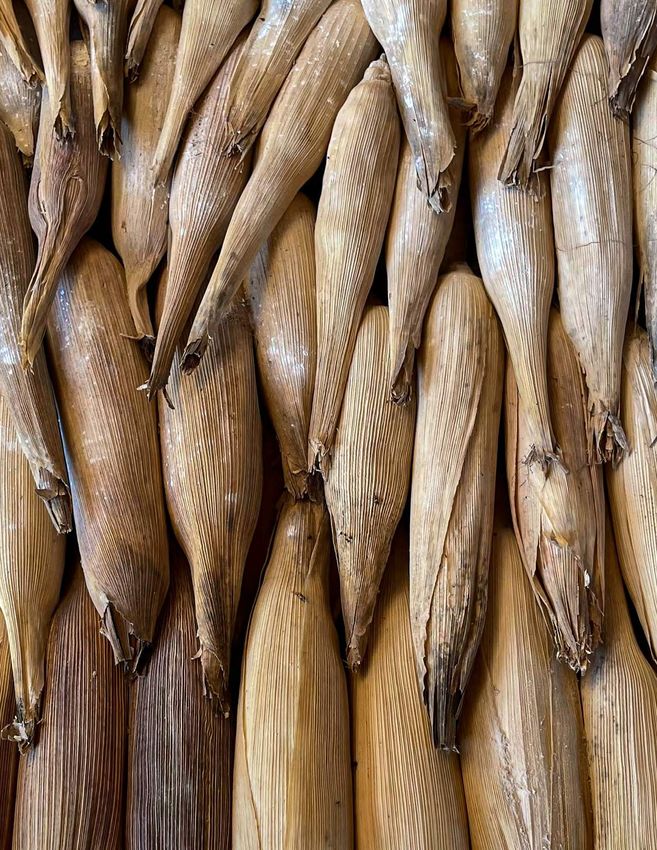
9                                                                                                FLAAR Mesoamérica

    Traditional Mayan house, in the flatlands as we are going towards La Esperanza, Teleman.

    In past years we did field trips primarily in Alta Verapaz. Each area is different in part because there are different plants
    and trees for building materials.

    Photo by: Melanny Quiñonez, FLAAR Mesoamerica, Jul. 21, 2018, 4:59 pm. La Esperanza, Teleman, Alta Verapaz.
    Camera: Canon EOS 60D. Lens: Tokina opera 16-28mm. Settings 1/320 sec; f/5.6; ISO 200.

    Photo by: Melanny Quiñonez, FLAAR Mesoamerica, Jul. 21, 2018, 4:59 pm. La Esperanza, Teleman, Alta Verapaz.
    Camera: Canon EOS 60D. Lens: Tokina opera 16-28mm. Settings 1/320 sec; f/5.6; ISO 200.

    Photo by: Melanny Quiñonez, FLAAR Mesoamerica, Jul. 21, 2018, 5:04 pm. La Esperanza, Teleman, Alta Verapaz.
    Camera: Canon EOS 60D. Lens: Tokina opera 16-28mm. Settings 1/320 sec; f/5.6; ISO 200.
10                                                                                 FLAAR Mesoamérica

     Troje, Maize storage on Mayan houses

     Photo by: Nicholas Helmuth, FLAAR Mesoamerica, Dec. 3, 2020, 1:26 pm. Taponcito Creek, Izabal.
     Camera: iPhone 12 Pro Max.
Troje, from a milpa of a previous season. Notice how quickly the forest regenerates itself. The nice thing about the troje is they are build of renewable resources and are totally biodegradable. Photo by: Nicholas Helmuth, FLAAR Mesoamerica, Dec. 3, 2020, 3:22 pm. Taponcito Creek, Izabal. Camera: Nikon D810. Lens: Nikon 200mm AF-D Tele-Macro. Settings: 1/400 sec; f/14; ISO 800.
12                                                                                   FLAAR Mesoamérica

     The present set of photographs is of maize sheds in milpas. The local Spanish name is “troje”.

     Troje, Different angles of the Q’eqchi’ Troje, Mayan shed for maize storage.

     Photos by: Nicholas Hellmuth, FLAAR Mesoamerica, Dec. 3, 2020, 3:20 pm. Taponcito Creek, Izabal.
     Camera: Nikon D810. Lens: Nikon 200mm AF-D Tele-Macro. Settings: 1/400 sec; f/11; ISO 800
13 FLAAR Mesoamérica
Troje, Mayan House for Maize storage. Troje, Mayan House for Maize storage.
Photo by: Nicholas Hellmuth, FLAAR Mesoamerica, Dec. 3, Photo by: Nicholas Hellmuth, FLAAR Mesoamerica, Dec. 3,
2020, 3:20 pm. Taponcito Creek, Izabal. 2020, 3:22 pm. Taponcito Creek, Izabal.
Camera: Nikon D810. Lens: Nikon 200mm AF-D Tele-Macro. Settings: Camera: Nikon D810. Lens: Nikon 200mm AF-D Tele-Macro. Settings:
1/400 sec; f/11; ISO 800. 1/400 sec; f/11; ISO 800.
Landscape From Taponcito Creek.
Photo by: Nicholas Hellmuth, FLAAR Mesoamerica, Dec. 3,
2020.,1:05 pm. Taponcito Creek, Izabal.
Camera: iPhone 12 Pro Max.
Landscape From Taponcito Creek. Troje, Mayan shed for maize storage.
Photo by: Nicholas Hellmuth, FLAAR Mesoamerica, Dec. 3, 2020, Photo by: Nicholas Hellmuth, FLAAR Mesoamerica, Dec. 3, 2020,
1:26 pm. Taponcito Creek, Izabal. 1:14 pm. Taponcito Creek, Izabal.
Camera: iPhone 12 Pro Max. Camera: iPhone 12 Pro Max.14 FLAAR Mesoamérica
Landscape From Taponcito Creek.
Photo by: Nicholas Hellmuth, FLAAR Mesoamerica, Dec. 3, 2020, 1:23 pm. Taponcito Creek, Izabal.
Camera: iPhone 12 Pro Max.
Landscape From Taponcito Creek. Zea mays. Maize storage.
Photo by: Nicholas Hellmuth, FLAAR Mesoamerica, Dec. 3, 2020, Photo by: Nicholas Hellmuth, FLAAR Mesoamerica, Dec. 3, 2020,
1:39 pm. Taponcito Creek, Izabal. 3:30 pm. Taponcito Creek, Izabal.
Camera: iPhone 12 Pro Max. Camera: iPhone 12 Pro Max.
Maize From Taponcito Creek.
Photo by: Nicholas Hellmuth, FLAAR Mesoamerica, Dec. 3, 2020, 3:30 pm. Taponcito Creek, Izabal.
Camera: iPhone 12 Pro Max.Zea mays. From Taponcito Creek. Photo by Nicholas Helmuth, FLAAR Mesoamerica, Dec. 3, 2020, 3:30 pm. Taponcito Creek, Izabal. Camera: iPhone 12 Pro Max.
16                                                                                                   FLAAR Mesoamérica

     Maize storage, view inside a typical troje.

     Photo by: Victor Castillo, FLAAR Mesoamerica, Dec. 3, 2020, 1:11 pm. Taponcito Creek, Izabal.
     Camera: Canon EOS-1D X Mark II. Lens: 50mm Macro 1:1. Settings: 1/200 sec; f/8; ISO 4,000.
17 FLAAR Mesoamérica
Mayan people also store maize inside their homes (in many different locations).
And maize is also stored in sheds adjacent to the domestic home. But we are
working initially on the sheds built out in the milpas.
Year by year we would like to find, catalog, process, and make our photographs
available. As soon as a kind soul, or institute, or funding entity can provide
funding, then we can make our years of photography available more quickly.
Students who wish to use these for these theses and dissertations there is no fee
and no paperwork needed: simply use the photos with appropriate credit. If the
photos are by scholars in a book, we appreciate copies of the resultant book for
our libraries.
Professors, students, individuals and organizations that wish to use these
photographs in ZOOM conference or classroom PowerPoint presentation, these
photographs are available to you. This is why we prefer to have our PDFs unlocked.
ALMG
2004 Xtusulal Aatin Sa’ Q’eqchi’, Vocabulario Q’eqchi’. 2nd edition, revised.
Academia de Lenguas Mayas de Guatemala –ALMG
We will also be learning about storage facilities for other foods besides just maize.
Troje, From Taponcito Creek.

Photo by: Nicholas Hellmuth, FLAAR Mesoamerica, Dec. 3, 2020, 3:35 pm. Taponcito Creek, Izabal.
Camera: iPhone 12 Pro Max.18 FLAAR Mesoamérica
LINGUISTIC RESEARCH ON MAYAN WORDS FOR TROJE,
AND OTHER MAIZE STORAGE OPTIONS
Further research will be helpful, in Xinca and the over 21 Mayan languages
of Guatemala, plus additional Mayan languages of Mexico, finding all the
words in each Mayan language for maize storage (near the home and out in
the milpa). The Mayan languages remaining today in Belize and in Honduras
are spoken on the Guatemalan side of each of those borders; but many
languages in Mexico are not spoken in Guatemala.
Let’s look at one word in Q’eqchi’ Mayan language for the miniature “Mayan
shed for maize storage. s” made to store maize:
Paapa’x, papax, papaax. Choza,
especie de casa hecha provisionalmente.
Wank jun paapa’x sa’ link’al. Hay una choza
en mi m i l p a . Chanchan li paapa’x
laawochoch. Tú casa parece choza.
(ALMG 2004, no pagination) FLAAR Mesoamerica
Occasionally there are two thatched structures next to each other. We would need to check
which kind of thatch each has, and ask the milpero, but we have been told that often one troje
is for really good maize and the other is to store maize which has already been a bit damaged.19 FLAAR Mesoamérica
ETHNOHISTORICAL RESEARCH
ON MAIZE STORAGE IS NEEDED
I did research in the Archivo General de Centro América in Guatemala in the 1970’s. It
was just a 3 block walk from my office/residence. I found so much of interest that the
American Philosophical Society gave me a grant to fly to Sevilla, Spain, to accomplish
further research in the Archivo General de Indias.
I had a lot of transcripts made; I shared information with Guatemalan ethnohistorian,
Agustín Estrada Monroy, and with ethnohistorian Lawrence Feldman. Many of my
transcripts I loaned to another ethnohistorian in the USA who was working on Peten-
Belize Maya areas. I do not remember that he ever returned them.
What you want from Landa, Avendaño, and all the other ethnohistorians is the description
of where maize was raised, how it was harvested and especially how and in how many
places it was stored.
Troje, in the high mountains of Alta Verapaz, Aldea Pinareas, near Cahabon. This area was not studied during the era of
the Carnegie Institution of Washington so we are finding Mayan buildings that deserve to be recorded.
Photo by: Melanny Quiñonez, FLAAR Mesoamerica, Jul. 21, 2018, 5:04 pm. La Esperanza, Teleman, Alta Verapaz.
Camera: Canon EOS 60D. Lens: Tokina opera 16-28 mm. Settings: f/5.6; 1/320; ISO 200.Troje, Maize storage on Mayan Houses. Photo by Nicholas Helmuth, FLAAR Mesoamerica, Dec. 3, 2020, 3:30 pm. Taponcito Creek, Livingston. Camera: Phone 12 Pro Max.
Troje, From Taponcito Creek. Photo by: Nicholas Hellmuth, FLAAR Mesoamerica, Dec. 3, 2020, 3:35 pm. Taponcito Creek, Izabal. Camera: iPhone 12 Pro Max.
22                                                                                 FLAAR Mesoamérica

     P D FS , B O O K S A N D R E F E R E N C E S
     O N T R OJ E S I N M AYA A R E A S

     This is the first edition bibliography on trojes, by Vivian Hurtado, university student working at FLAAR
     Mesoamerica. I have added the book by Wauchope and other titles. I suggest for future editions adding
     other books and PhD dissertations on traditional Maya house architecture, since most traditional Maya
     houses have maize storage facilities adjacent to the main house or inside the main house. The FLAAR
     Photo Archive has photos of maize storage from several linguistic areas of Guatemala.

     Our focus in the first edition is on trojes out in the milpas. This is because before the Spanish burned
     down all the milpas and forced the Mayan people to live in villages (where the Spanish could grab them
     for slave labor, could take advantage of the females, and could hit every adult for tax to enrich the local
     Spanish intruders and build bigger churches back in Spain), the original Maya lived in different settle-
     ment patterns than today. So, our goal is to find, photograph, and make available photographs of trojes
     of the Mayan people of Guatemala.

     ABRAMS, Elliot
      1994     How the Maya Built Their World: Energetics and Ancient Architecture. University of
               Texas Press, Austin.

     CABRERA-Pacheco, Ana Julia
      2011    Estrategias de Sustentabilidad en el Solar Maya Yucateco en Mérida, México.
              Grupo Interdisciplinario de Estudios Críticos y de América Latina GIECRYAL) de la
              Universidad de Alicante, 2 de enero de 2014, vol. 5, nº 56, p. 1- 32.

                     Available online: http://rua.ua.es/dspace/handle/10045/34792?locale=ca#vpreview

     DÍAZ-Lara, Enma Leticia and César AZURDIA
      2001       El papel de la mujer en la conservación de los recursos genéticos del maíz.
                 Organización de las Naciones Unidas para la Agricultura y la Alimentación. Instituto
                 Internacional para los Recursos Fitogenéticos.

                     Downloadable online: www.fao.org/3/a-y3841s.pdf

     HELLMUTH, Nicholas
      2014    Q’eqchi’ (K’ekchi’) “Palm Thatched” Houses. FLAAR. 51 pages.

                     Available on-line at no cost.

     HERNÁNDEZ-Xolocotzi, Efraín
      n.d.   Graneros de maíz en México. Biblioteca Central, Universidad Autónoma Chapingo
             (Folleto 1738). Pages 87-97.

                     Available on-line: www.codexvirtual.com/maiz/index.php/cultura?id=45
23 FLAAR Mesoamérica
KU-Pech, Elia María, MIJANGOS-Cortés, Javier Orlando, ANDUEZA-Noh, Rubén Humberto,
CHÁVEZ-Pesqueira, SIMÁ-Polanco, Paulino and Luis Manuel ARIAS-Reyes
2019 Management strategies of the milpa maya in Xoy, Peto, Yucatán. Ecosist. Recur.
Agropec. 7(1): e2244, 2020https://doi.org/10.19136/era.a7n1.2244.
Downloadable: www.researchgate.net/publication/340223157_Management_
strategies_of_the_milpa_maya_in_Xoy_Peto_Yucatanç
KU-Pech, Elia María
2019 La diversidad de maíz, frijol y calabaza en la milpa maya de Xoy, Peto, Yucatán.
Centro de Investigación Científica de Yucatán, A.C. Posgrado en Ciencias Biológicas.
Mérida, Yucatán, México.
Available online: http://rua.ua.es/dspace/handle/10045/34792?locale=ca#vpreview
MOYA Rubio, Victor Jose
1988 La vivienda indígena de México y el mundo. UNAM. México.
PÉREZ-Toro, Augusto
n.d. La agricultura milpera de los mayas de Yucatán. Yucatán. Identidad y cultura Maya.
Downloadable: www.mayas.uady.mx/articulos/agricultura.html#autor
PULIDO-Silva, María Teresa
2015 Los rostros ocultos de la ciencia. Capítulo 5. El conocimiento ecológico tradicional
acerca del proceso de sucesión vegetal entre los mayas de X-Maben, Quintana
Roo. Universidad Autónoma del Estado de Hidalgo. Pachuca de Soto, Hidalgo,
México.
Instant download: www.academia.edu/33213667/Los_rostros_ocultos_de_la_
ciencia_pdf?auto=download
REDFIELD, Robert and Alfonso VILLA Rojas
1934 Chan Kom, a Maya Village. Carnegie Inst. Washington, Publ. No. 448.
SMYTH, Michael P.
1991 Modern Maya Storage Behavior Ethnoarchaeological Case Examples from the Puuc
Region of Yucatan. University of Pittsburgh Memoirs in Latin American Archaeology
No. 3.
Downloadable online: http://www.pitt.edu/~ccapubs/pdfdownloads/PITTmem03-
Smyth_1991.pdf24 FLAAR Mesoamérica
TERÁN, Silvia and Christian RASMUSSEN
2009 La milpa de los mayas La agricultura de los mayas prehispánicos y actuales en el
noroeste de Yucatán. Universidad Nacional Autónoma de México
Downloadable online: www.cephcis.unam.mx/wp-content/uploads/2020/04/milpa-
de-los-mayas.pdf
WAUCHOPE, Robert
1938 Modern Maya Houses, a study of their archaeological significance. Carnegie
Institution of Washington. 181 pages plus 37 photos, and 1 map.
WICAB, Guadalupe and Jaime MARTÍNEZ
2011 El frijol maya del siglo XXI. Revista de Divulgación Científica y Tecnológica de la
Universidad Veracruzana Volumen XXIV, Número 2.
Available online: www.uv.mx/cienciahombre/revistae/vol24num2/articulos/frijol/
WILK, R.
1991 Household Ecology: Economic Change and Domestic Life among the Kekchi Maya
in Belize (Tucson: University of Arizona)
WILSON, Michael Robert
1972 A highland Maya people and their Habitat : the natural history, demography and
economy of the Kekchi’, PhD dissertation, University of Oregon. 475 pages.
VÁZQUEZ-Pérez, Elsa Patricia and Ramón MARIACA-Méndez
2006-2010 Técnicas y estrategias tradicionales de conservación en la milpa en San Pedro
Chenalhó, Chiapas, México. Universidad Intercultural de Chiapas. División de
Procesos Naturales. Licienciatura en Desarrollo Sustentable
HELPFUL WEBSITES ON TROJES IN MAYA AREAS
https://mardefondo.online/que-es-el-troje-conoce-el-lugar-donde-resguardan-el-maiz-en-co-
munidades-mayas/
Mayan trojes
www.eluniversal.com.mx/articulo/ciencia-y-salud/ciencia/2016/10/24/maiz-alimento-basi-
co-y-fundamento-de-identidad-de
Maíz, identidad de Mesoamérica
Photo caption (P. 6)
Photo by: Nicholas Helmuth, FLAAR Mesoamerica. Dec. 2020.
Camera: iPhone 12 Pro Max. Lens: back triple camera 7.5mm f/2.2. Settings: 1/850 sec, f/1.6, ISO 20.
Photo caption (P. 7)
Photo by: Melanny Quiñonez, FLAAR Mesoamerica, Jul. 21, 2018, 4:59 pm. La Esperanza, Teleman, Alta
Verapaz, Guatemala.
Camera: Canon EOS 60D. Lens: Tokina opera 16-28mm. Settings: 1/320 sec; f/5.6; ISO 200.
Photo caption (P. 18)
Photo by: Nicholas Hellmuth, FLAAR Mesoamerica, Dec. 3, 2020, 3:23 pm. Taponcito Creek, Izabal.
Camera: Nikon D810. Lens: Nikon 200mm AF-D Tele-Macro. Settings: 1/400 sec; f/14; ISO 800.25
ACKNOWLEDGEMENTS TO
FLAAR MESOAMÉRICA
The reports are a joint production between the field trip team and the in-house
office team. So here we wish to cite the full team:
Flor de Maria Setina is the office manager, overseeing all David Arrivillaga is an experienced photographer and
the diverse projects around the world (including FLAAR- is able to handle both Nikon and the newest Sony digital
REPORTS research on advanced wide-format digital inkjet cameras. Work during and after a field trip also includes
printers, a worldwide project for over 20 years). We also sorting, naming, and processing. And then preparing reports
utilize the inkjet prints to produce educational banners to in PDF format.
donate to schools.
Juan Carlos Hernandez takes the material that we write
Vivian Díaz environmental engineer, is project manager and places it into the pertinent modern Internet software to
for flora, fauna projects (field work and resulting reports produce our web pages (total network is read by over half a
at a level helpful for botanists, zoologists and ecologists, million people around the world).
and for university students). Also coordinates activities at
MayanToons, division where educational material for kids is Paulo Nuñez is a webmaster, overlooking the multitude
prepared. of web sites. Internet SEO changes every year, so we work
together to evolve the format of our web sites.
Victor Mendoza identifies plants, mushrooms, lichen,
insects, and arachnids. When his university schedule allows, Valeria Aviles is an illustrator for MayanToons, the division
he also likes to participate in field trips on flora and fauna in charge of educational materials for schools, especially the
research. Q’eqchi’ Mayan schools in Alta Verapaz, Q’eqchi’ and Petén
Itzá Maya in Petén, and the Q’eqchi’ Mayan and Garifuna
Vivian Hurtado prepares the bibliography for each subject schools in the municipality of Livingston, Izabal.
and downloads pertinent research material for our e-library
on flora and fauna. All of us use both these downloads plus Josefina Sequen is illustrator for MayanToons and also helps
our in-house library on flora and fauna of Mesoamerica prepare illustrations for Social Media posts and for animated
(Mexico through Guatemala into Costa Rica). videos.
Andrea de la Paz is a designer who helps prepare the master- Rosa Sequen is also an illustrator for MayanToons and also
plan for aspects of our publications. She is our editorial art helps prepare illustrations for Social Media posts and for
director animated videos.
Senaida Ba is photography assistant for many years. She Laura Morales is preparing animated videos in MayanToons
knows the Canon, Nikon and is learning the two new Sony style since animated videos are the best way to help
mirrorless cameras. She prepares, packs, sets-up, and school children how to protect the fragile ecosystems and
helps the photographers before, during, and after each endangered species
day’s field trip.
Heidy Alejandra Galindo Setina joined our design team in
Jaqueline Gonzalez is a designer who puts together the August 2020. She likes photography, drawing, painting, and design.
text and photographs to create the actual report (we have
several designers at work since we have multiple reports Maria José Rabanales sheis part of the team for editing
to produce). photographic reports and educational material of Flora
and Fauna since September 2020. She works together with
Roxana Leal is Social Media Manager for flora and fauna others of the team to prepare the finished pdf editions of the
research and publications, and MayanToons educational material of the Yaxha, Nakum and Naranjo Project.
book projects
Alejandra Valenzuela, biology student is now part of Flora
Maria Alejandra Gutierrez is an experienced photographer, y Fauna’s photographic report and educational material
especially with the Canon EOS 1D X Mark II camera and editing team since September 2020.
5x macro lens for photographing tiny insects, tiny flowers,
and tiny mushrooms. Work during and after a field trip Alexander Gudiel: designer who join the editorial design
also includes sorting, naming, and processing. And then team on December 2020. He will combine the text, pictures
preparing reports in PDF format. and maps into the FLAAR Mesoamerica editorial criteria.620000 650000 680000 710000 740000
Livingston,
1780000
BELICE
Mar Caribe
Izabal
N
Petén
W
N
N
E
W
1760000
E
3.
Sarstoon River
SW
SE
Modesto
S
Río Sarstún Bahía de
Mendez CA Amatique
13
Municipio de Livingston
CA Livingston
Municipio de 2.
1740000
13
Livingston
te
CA Go
lfe Municipio de
13 El
Puerto Barrios
Puente de Puerto
Río Dulce Municipio de Barrios
CA
KM 274 Livingston
13
9 CA
CA 13
1720000
Municipio de
El Estor
Lago
La Ruidosa
Izabal Áreas naturales
9 protegidas de Izabal
CA
1700000
1.
Municipio de
Morales 1. Bocas del Polochic
(El Estor)
9
CA
2. Punta de Manabique
(Puerto Barrios)
A S 3. Sarstoon Temash
DUR
Municipio de National Park
Los Amates
N
1680000
(Belice)
HO
Áreas naturales
Zacapa Hacia
Ciudad de
Guatemala
protegidas de Livingston
Petén BELICE
1760000
Bahía de
4. Amatique
4.
6.
te
Municipio de lfe
Go 1740000
Livingston El
5. 2. 3.
7.
2.
Municipio de
Municipio de Puerto Barrios
El Estor
1720000
1.
Municipio de 1.
Lago Izabal Morales
620000 640000 660000 680000 700000
Izabal 1. Área sin protección 4. Área de 6. Biotopo Protegido
Usos Múltiples Chocón Machacas
2. Parque Nacional Río Sarstún
Río Dulce
5. Sierra de 7. Reserva Protectora
3. El Higuerito Santa Cruz de Manantiales Cerro
San Gil
Elaborado por: Andrea de la Paz; Amanda Estrada Rodas. FLAAR Mesoamerica 2020672000 674000 676000 678000 680000 682000
1760000
Reserva Natural
N
W
N
N
E
Tapón Creek, Livingston
W
E
SW
SE
1758000
S
Bahía de Amatique
Área de Usos Múltiples
Río Sarstún Punta
1756000
Cocolí
Rí
Aldea Buena
oT
Vista Tapon Creek
ap
on
C re
ek
Siete
1754000
San Juan Reserva Natural Tapón Creek Altares
Municipio de Livingston
Rí
Rí
Finca
o
oS
Taponcito Gangadiwali
an M a rtìn
Sarstún Creek Creek
Co
Río Tap
col
Río
El Rosario
Lo
í
on Cree
ro Creek
1752000
San Martin
k
La Desmembración Plan Grande
Tatín
1750000
Área de Usos Múltiples
k
x C re e
Río Sarstún
á li
Rí o
Cr
Río C
ee
k
Río Black
1748000
Río Tat
S a lvad
Creek
Cálix Creek Laguna
n
Salvador
í
or
Laguna
Cálix
Biotopo
Ca la d
(Is
yo e P
Gr ája
Chocón Machacas lce
an ros
de )
Parque Nacional
El Golfete Du
Río Dulce o
Laguna
Ri
Negra n
nó
Ca
Izabal Información de referencia:
• Limites departamentales de Guatemala. (IGN)
• Instituto Geográfico Nacional (IGN) (Hojas 2463 IV y 2463 III)
• Google Map data 2020. Shapes: Sistema Guatemalteco de Áreas Protegidas 2017.
• Cuerpos de agua. Ministerio de Agricultura Ganadería y Alimentación (MAGA)
• Dirección de Análisis Geoespacial del (CONAP), Marzo/2017.
Elaborado por: Andrea de la Paz; Amanda Estrada Rodas. FLAAR Mesoamerica 2020The current Alcalde of Livingston, Mr. Daniel Pinto, together with his team of International Cooperation
division, Mr. Edwin Mármol, have set the goal of achieving the municipality development in the years
2020-2024 based on the goals and indicators proposed by the 2030 Agenda for Sustainable Development.
From this agenda, FLAAR Mesoamerica will collaborate to achieve Sustainable Development Goal (SDG)
number 15 “Life on Land”.
Throughout this cooperation project, different materials have been prepared, like this Photo Essay,
that helps to collect information on species, different ecosystems: terrestrial, wetlands and fresh water
biodiversity. This information would also be useful as part of a strategy to protect threatened species and
prevent their extinction. The municipality’s goals include to promote the sustainable use, conservation
and research of the species of flora and fauna of the terrestrial, wetlands and aquatic shore and coastal
ecosystems of the Guatemalan Caribbean. Learn more about this project and the SDG indicators at:
https://flaar-mesoamerica.org/rain-forests-rivers-lakes-bays-ocean-caves-canyons-livingston-the-
caribbean-biodiversity-wonderland-of-guatemala/
SERIES OF MUNICIPIO OF LIVINGSTON
FLAAR Mesoamerica is the creator of the design
and authorship of the document. When sharing
information or designs on social networks, you must
tag the page of FLAAR Mesoamérica, its authors and
photographers. In the case of written documents, use
the corresponding quote.
Any school, college, university, botanical garden, zoological FLAAR (in USA) and FLAAR Mesoamerica (in Guatemala)
garden, botanical or zoological association (or club) may are both non-profit research and educational institutes,
so there is no fee. And you do not need to write and
post this report on their web sites, (at no cost) as long as ask permission; but we do appreciate when you include
they link back to one of our web sites: a link back to one of our sites. Any school, college,
university, botanical garden, etc. can post this PDF on
www.maya-ethnobotany.org their school or university or institute website for their
www.maya-ethnozoology.org students to download at no cost. And you do not need
www.maya-archaeology.org to write and ask permission; but we do appreciate it
www.digital-photography.org when you include a link back to one of our web sites.
www.FLAAR-Mesoamerica.org
Any website in or related to the Municipio of Livingston,
is also welcome to post this PDF on their web site (no
fee). This permission includes travel agencies, hotels,
This report may be cited with this information: guide services, etc. And you do not need to write
and ask permission; but we do appreciate it when you
Hellmuth N, 2020 Trojes Maize store sheds in Milpas include a link back to one of our web sites. CECON-
Uphill from Taponcito Creek, Municipio de Livingston USAC, CONAP, FUNDAECO, Plantemos, AIESEC, are
Guatemala: FLAAR Mesoamerica. welcome to publish our reports, at no cost.
PHOTO FROM BACK COVER All national parks, nature reserves, and comparable are
Troje, Paapa’x welcome to have and use our reports at no cost. USAC,
UVG, URL, Universidad Rural, INTECAP and other
Photo by: Nicholas Hellmuth, FLAAR Mesoamerica, Dec. 3, Guatemalan universities, and high schools, and schools,
2020, 3:31 pm. Taponcito Creek, Livingston.
are welcome to post our reports, at no cost.
Camera: iphone 12 pro.
© Copyright 2020 FLAAR Mesoamerica.29 FLAAR Mesoamérica
OTHER PUBLICATIONS OF
THE FAUNA OF GUATEMALA
The Owl Rescate, Crianza Liberación Three Butterfly Caterpillar
Download here y Reincersión de dos crias de Species
Coaties Download here
Download here
Spider Wrapping Prey Crocodiles, caimans and Stingless Bees of the Maya
Guatemala City alligarors in Mayan art & Download here
Download here mythology of Guatemala
Download here
Sacred Toads Serpientes de Guatemala Photographing Birds
Download here Download here Download here
If you wish more FLAAR reports on fauna of Guatemala,
visit our website: www.maya-ethnozoology.org.30 FLAAR Mesoamérica
OTHER PUBLICATIONS OF
THE FLORA OF GUATEMALA
Waterlily Tasital Arroyo Petexbatun Tasital Arroyo Petexbatun
Download here (part1) (part2)
Download here Download here
Mayan Water Lilies Of Seed Dispersal Native, Pineapples
Monterrico Natural Techniques Download here
Download here Download here
Tasital Arroyo Faisan Floating Heart Waterlily Paradise
Download here Download here Download here
If you wish more FLAAR reports on flora of Guatemala,
visit our website:www.maya-ethnobotany.org31 FLAAR Mesoamérica
OTHER PUBLICATIONS FROM NATIONAL PARK
YAXHA, NAKUM AND NARANJO, GUATEMALA
Neotropic Cormorant Hoja de Piedra Garza Blanca
Download here Download here Download here
Isla del Musgo Cactus de los Árboles Gacrcita Blanca
Download here Download here Download here
Spider Monkey Aquatic Orchids? La Hora Dorada
Download here Download here Oportunidades Fotográficas
Download here
If you wish more FLAAR reports on flora of Guatemala, visit our website:
https://flaar-mesoamerica.org/projects-national-park-yaxha-nakum-naranjo/You can also read


