Parkway Program Long Beach - Long Beach Water Department
←
→
Page content transcription
If your browser does not render page correctly, please read the page content below
Long Beach
Water Department

Parkway
Program
Long Beach Water Department
Parkway Program
               TABLE OF CONTENTS
               1             Getting Started

                p Benefits of your native plant parkway

                p How to participate

               2-5           Parkway Designs

                p Understanding your design

                p Choosing your design

               6-8           Site Prep

                p Turf removal

                p Soil

                p Irrigation

               9             Picking up Your Plants

               10-11         Installation

                p Stepping stones

                p Planting

                p Mulch

               12-13         Long-term Care

                p Watering

                p Mulch

                p Pruning

                p Pests

               Cover Photo: Jeff Silva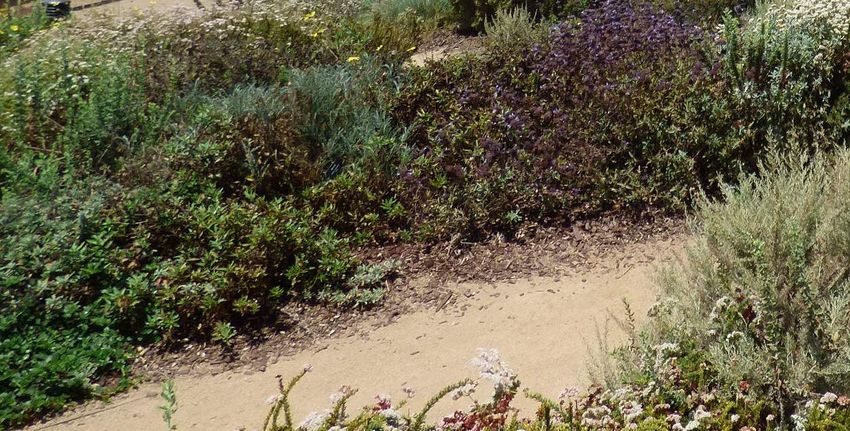
GETTING STARTED
     Thank you for your interest in the Long Beach Water Department Parkway Program (LBWD).
     By participating, you’ll create a home parkway that is not only
     beautiful but supports pollinators and helps the environment.     Apply at lbwater.org/parkway
     It’s a fun, easy way to make a difference in your neighborhood!   or call 562-570-2313.

                                                     The Benefits of Native Plants
                                                     Plants selected for the Parkway Program are California native plants,
                                                     carefully chosen by the California Native Plant Society. These plants
                                                     are uniquely adapted to thrive in our Long Beach climate and offer the
                                                     following benefits:

                                                     p Support for pollinators and wildlife
                                                        Our western monarch butterfly and bird populations are endangered,
                                                        due in part to habitat loss. These native plants can help. In fact, local
                                                        insects and birds need native plants for their survival.
     A blue-eyed grass flower (Sisyrinchium
     bellum) attracts an important pollinator,
     a flower fly in the family Syrphidae.           p Water conservation
     Photo: Kris Ethington                              Once established, many California native plants require little irrigation
                                                        beyond normal rainfall. Saving water conserves a vital, limited resource
                                                        and saves you money!

                                                     p More time for you
                                                        While no landscape is maintenance free, California native plants require
                                                        significantly less time and resources than traditional turf-dominated
                                                        landscapes.

                                                     p Reduced run-off and pollution
                                                        With native plants, you can skip the harmful pesticides and insecticides.
                                                        Native plants have developed their own defenses against many pests
                                                        and diseases.
     California native iris will add color
     and interest to your parkway.
     Photo: Jim Wadsworth                            p A sense of place
                                                        Create a landscape that celebrates the beauty of California, and allows
                                                        you the opportunity to connect with nature in your very own yard.
     How to Participate

      1                     2                    3              4                   5                6                 7

Apply at lbwater.           Choose           Prep your       Notify LBWD           Pick up your     Install your     Display your
org/parkway to              from one         site by         once you have         Parkway          Parkway Kit      free Native
receive your Parkway        of the five      removing        chosen a plan and     Kit at           and notify       Plants Live
Kit Guidebook and           parkway          your turf and   removed your turf.    participating    LBWD to          Here sign in
plan a pre-inspection       designs in       adjusting       LBWD will give you    nurseries        arrange          your parkway to
with LBWD.                  this guide.      irrigation as   your Parkway Kit      using your       for a final      help spread the
                                             needed.         Voucher.              voucher.         inspection.      word.

                                                                                  Long Beach Water Department Parkway Program       1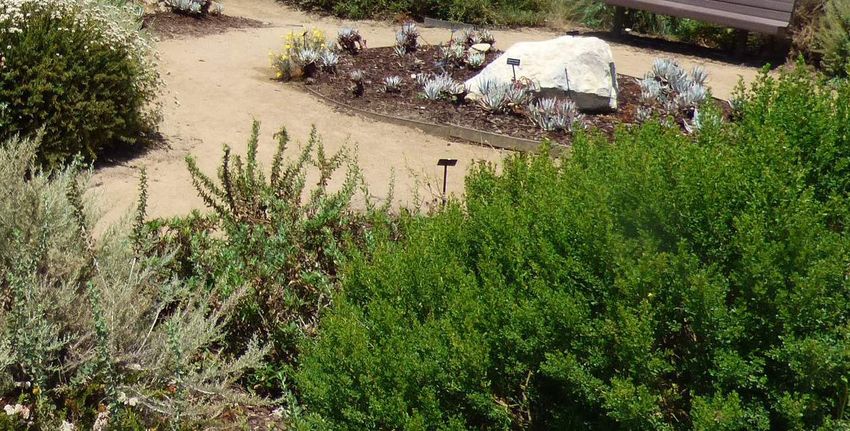
PARKWAY DESIGNS
                       Understanding Your Design
                       Following a landscape design plan will help you create a beautiful landscape that is appropriate in scale and spacing for
                       your parkway. The five designs in this guidebook are presented in plan view (or bird’s-eye view) to help you see how to
                                                                         place your plants. All the designs include an 18” step out area along
                                                                         the entire curbside of the parkway and a path through the parkway
                       Keep in mind that the plant symbols are           every 6’, as required by the City of Long Beach.
                       drawn at the mature growth size of each
                       plant. This will ensure that your parkway         Each plan is designed for a 10’ long by 4’ wide space. Note: If your
                       does not get over-planted. Your parkway           parkway strip is longer than 10’, you can simply repeat portions of the
                       may look sparse when first planted, but it will   design to fill the remaining space. The number of plants you receive
                       grow quickly and fill in the spaces as these      will be based on the size of your parkway. Other features in these
                       designs show.                                     designs include stepping stones for the step-out area and path, mulch,
                                                                         and a “Native Plants Live Here” sign that you will receive when your
                                                                         parkway is completed.

                       Choosing Your Design
                       Each of the five design plans feature an artful mix of low-growing groundcovers and shrubs with varying textures and
                       colors for year-round interest. Review the plants in the design plans. Then, choose the plan that best suits your aesthetic
                       preference and landscape needs.

                                                                                                                                                                                              Canyon Gray sagebrush / Artemisia californica ‘Canyon Gray’
                                                                                                                                                                                              Quantity: 1

                                                                                                                                                                                              Seaside daisy / Erigeron glaucus
    Plan 1                                                                                                                                                                                    Quantity: 1

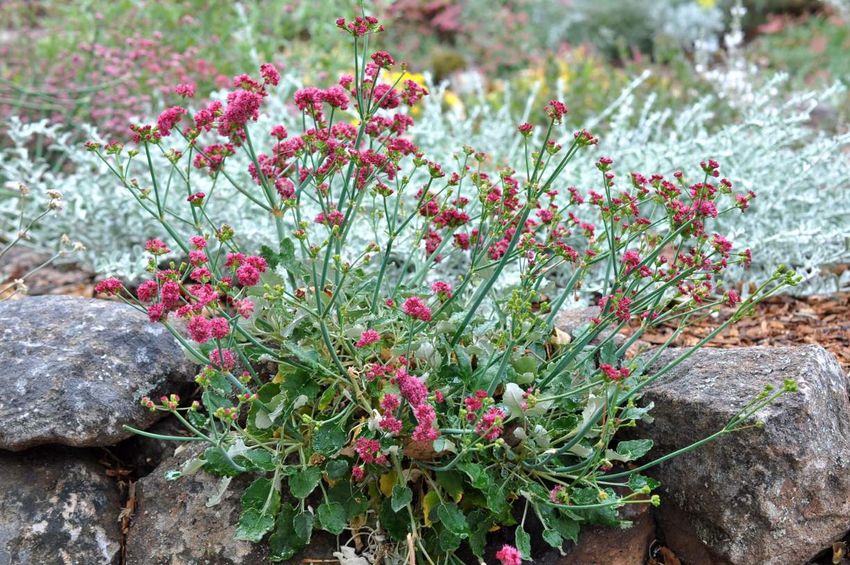
                                                                                                                                                                                              Ashyleaf buckwheat / Eriogonum cinereum
                                                                                                                                                                                              Quantity: 2
                                                                                                                                                                                                       Photo: David Freeman
Photo: Pete Veilleux

                                                                                                                             Photo: Jeff Silva
                                                Quantity: 2
                                                Ashyleaf buckwheat / Eriogonum cinereum

                                                                                          Quantity: 1
                                                                                          Seaside daisy / Erigeron glaucus

                                                                                                                                                 Quantity: 1
                                                                                                                                                 Canyon Gray sagebrush / Artemisia californ

                       Canyon Gray sagebrush (Artemisia                                                                                          Seaside daisy (Erigeron glaucus) is a                                        Ashyleaf buckwheat (Eriogonum cinereum)
                       californica ‘Canyon Gray’) is a low-                                                                                      perennial flower that blooms nearly                                          is an evergreen shrub native to the Long
                       growing groundcover that forms an                                                                                         year-round. Lavender petals surround a                                       Beach area. It’s an important habitat plant that
                       attractive, compact mat of fine-textured,                                                                                 golden yellow disc of florets, and stems                                     supports many types of butterflies, moths,
                       silver-gray foliage. While its flowers are                                                                                can have anywhere from 1 to 15 flower                                        birds, and bees. The woolly hairs on its stems
                       fairly inconspicuous, its foliage has a                                                                                   heads. Low-growing and evergreen,                                            and foliage give it a light, silvery gray color.
                       lovely aroma.                                                                                                             this daisy also attracts butterflies.                                        Light pink flower clusters stick out from the
                                                                                                                                                                                                                              plant and bloom nearly year round, turning
                                                                                                                                                                                                                              rust-colored in the fall.

2                         Long Beach Water Department Parkway Program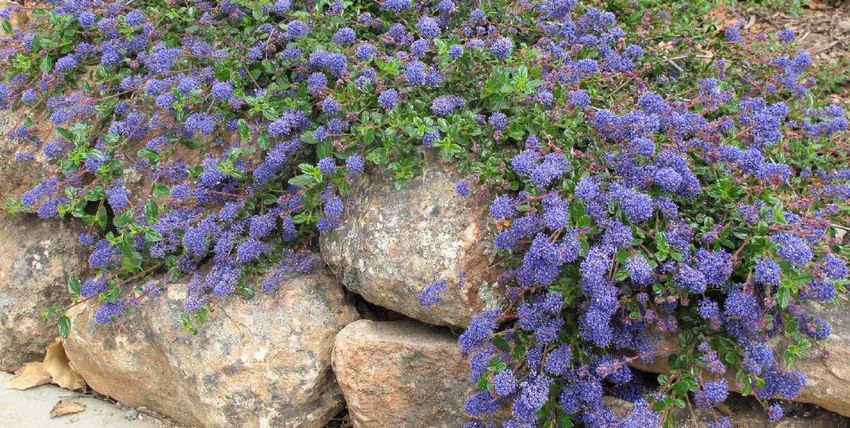
Pigeon Point coyote brush / Baccharis pilularis
spp. pilularis ‘Pigeon Point’
Quantity: 1
Sea cliff buckwheat / Eriogonum parvifolium
Quantity: 1
Plan 2
California fuchsia / Epilobium canum
Quantity: 1
Photo: Calscape.org
Photo: Ann Dalkey
Photo: Saxon Holt
Quantity: 1
California fuchsia / Epilobium canum
Quantity: 1
Sea cliff buckwheat / Eriogonum parvifolium
Quantity: 1
spp. pilularis ‘Pigeon Point’
Pigeon Point coyote brush / Baccharis pilularis
Pigeon Point coyote brush (Baccharis Sea cliff buckwheat (Eriogonum California fuchsia (Epilobium canum) is a
pilularis spp. pilularis ‘Pigeon Point’) is parvifolium) is an important host plant perennial known for its profusion of bright
a hardy, evergreen groundcover that for a number of pollinating insects, scarlet flowers in the summer and autumn –
forms a mound of bright green leaves. including certain endangered species, usually the only plant flowering at the height
It can tolerate both coastal conditions and the El Segundo blue butterfly of summer. It’s a magnet for hummingbirds
and inland heat but may need (Euphilotes battoides ailyni). Easy, and other wildlife. In hotter inland areas,
occasional summer water in inland fast-growing, drought-tolerant, and water it once a month in the summer. Prune
locations. Since this is a male selection, beautiful, this stunning buckwheat back after flowering, and it will come back
it does not produce seed. offers both habitat and beauty. lush and healthy in the spring.
Yarrow / Achillea millefolium
Quantity: 1
Idaho fescue / Festuca idahoensis
Plan 3 Quantity: 3
Firecracker showy island snapdragon /
Gambelia ‘Firecracker’
Quantity: 1
Photo: Jim Brugger
Photo: Stickpen*
Photo: Stickpen*
Quantity: 1
Gambelia ‘Firecracker’
Firecracker showy island snapdragon /
Quantity: 3
Idaho fescue / Festuca idahoensis
Quantity: 1
Yarrow / Achillea millefolium
Yarrow (Achillea millefolium) is an Idaho fescue (Festuca idahoensis) is a Firecracker showy island snapdragon
evergreen perennial groundcover with densely-clumping, long-lived perennial (Gambelia speciosa ‘Firecracker’) boasts
small white flowers with yellow centers. grass. Flower clusters bloom in the summer bright red flowers and a compact habit.
The flowers bloom in the spring and and have hairy spikelets which produce Hummingbirds love this evergreen
summer, clustering together to create bristly, inedible fruits. Tomales Bay Idaho perennial that grows fast and has a
landing pads for native butterflies, fescue is a blue-green, smaller selection long bloom.
moths, and insects. with soft foliage and smaller blooms.
*Wikimedia Commons
Long Beach Water Department Parkway Program 3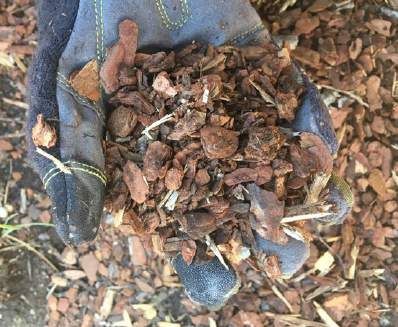
Clustered field sedge / Carex praegracilis or
Sand dune sedge / Carex pansa
Quantity: 2
Red buckwheat / Eriogonum grande var. rubescens
Quantity: 1
Common rush / Juncus patens
Quantity: 1
Plan 4
Point Sal sage / Salvia leucophylla ‘Point Sal’ or
Silver Carpet aster / Corethrogyne filaginifolia ‘Silver Carpet’
Quantity: 1
Blue eyed grass / Sisyrinchium bellum
Quantity: 3
Photo: Calscape.org
Photo: Stickpen*
Photo: Stickpen*
Quantity: 1
Common rush / Juncus patens
Quantity: 3
Blue eyed grass / Sisyrinchium bellum
Quantity: 1
Silver Carpet aster / Corethrogyne filaginifolia ‘Silver Carpet’
Point Sal sage / Salvia leucophylla ‘Point Sal’ or
Quantity: 2
Sand dune sedge / Carex pansa
Clustered field sedge / Carex praegracilis or
Quantity: 1
Red buckwheat / Eriogonum grande var. rubescens
Clustered field sedge (Carex Sand dune sedge (Carex pansa) is an Red buckwheat (Eriogonum grande var.
praegracilis) is an evergreen grass evergreen grass that prefers a sandy rubescens) is a matt-forming, evergreen
that has an upright, mounding form. It soil and grows from a network of thin, perennial that produces flower stalks with
spreads by rhizomes, has a soft texture, coarse rhizomes. Flowers are made clusters of white, pink, or red flowers. It has a
and produces flower clusters in the up of clusters of several spikes of dark long bloom time through the spring, summer,
spring. brown flowers. and fall, making it a favorite among pollinators,
especially butterflies.
Photo: Kristen Wernick
Photo: David Freeman
Photo: Stickpen*
Common rush (Juncus patens) is a Point Sal sage (Salvia leucophylla ‘Point Silver Carpet aster (Corethrogyne
grass-like plant that is tough and easy Sal’) is a low-growing groundcover with filaginifolia ‘Silver Carpet’) is low-
to grow. It can tolerate both wet and dry grayish-green leaves that needs little growing and compact with a mounding
conditions, and produces red-brown water and maintenance. Lavender-pink form, beautiful silver foliage, and pink
flower clusters that sprout from the flower stalks attract butterflies and flowers that last from summer through
sides of the stems rather than the tips. hummingbirds. It can be pruned in late fall. Keep lightly pruned for best
fall to produce a good flush in the spring. appearance.
Photo: Calscape.org
Blue-eyed grass (Sisyrinchium bellum) is an easy-
to-grow perennial that reseeds easily, and will help
fill in spaces. Its blue-purple flowers bloom in the
winter and spring, and provide a pop of color in any *Wikimedia Commons
landscape. A little extra water in the summer will Right: California lilac, Ceanothus spp.
help this plant look good year round. Photo: Jeff Silva
4 Long Beach Water Department Parkway Program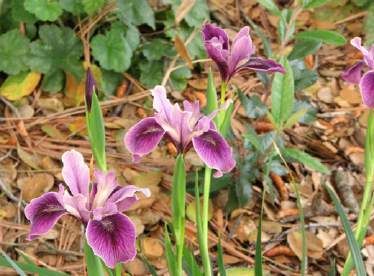
Yankee Point Carmel ceanothus / Ceanothus thyrsiflorus
                                                                                                                                                                                                      var. griseus ‘Yankee Point’
Plan 5                                                                                                                                                                                                Quantity: 1

                                                                                                                                                                                                      Island alum root / Heuchera maxima
                                                                                                                                                                                                      Quantity: 2
Recommended
for parkways
                                                                                                                                                                                                      Douglas iris / Iris douglasiana
with trees.                                                                                                                                                                                           Quantity: 1

                                                                                                                                                                                                      Existing Tree

                Existing Tree or Part/Full Shade
                                                                                                                 Photo: Calscape.org
                                Existing Tree

                                                Quantity: 1
                                                Douglas iris / Iris douglasiana

                                                                                  Quantity: 2
                                                                                  Island alum root / Heuchera maxima

                                                                                                                                        Quantity: 1
                                                                                                                                        var. griseus ‘Yankee Point’
                                                                                                                                        Yankee Point Carmel ceanothus / Ceanothus thyrsiflorus
  Photo: CNPS

                                                                                                                                                                                                               Photo: CNPS
                Yankee Point Carmel ceanothus                                                                                          Island alum root (Heuchera maxima)                                                    Douglas iris (Iris douglasiana) is
                (Ceanothus thyrsiflorus var. griseus                                                                                   is an evergreen perennial. It has large,                                              a perennial herb with a grass-like
                ‘Yankee Point’) is an evergreen,                                                                                       multi-lobed green leaves and erect                                                    appearance and beautiful flowers
                spreading groundcover that forms a                                                                                     flower stalks with many clusters of                                                   that bloom in the winter and spring.
                mound with glossy green leaves. It                                                                                     tiny pink flowers that bloom in the                                                   Flowers are typically blue-purple, but
                produces one-inch-long blue flowers in                                                                                 winter and spring. They are loved by                                                  the color can be highly variable and
                the spring and attracts pollinators.                                                                                   hummingbirds.                                                                         many cultivars are available.

                                                                                                                                                                                                Long Beach Water Department Parkway Program                   7
SITE PREP
                                  Turf removal
                                  Removing your lawn correctly is a critical step to creating a beautiful and sustainable native
                                  plant parkway. There are many effective ways to remove turf, but choosing the proper
                                  method for your site will depend on a close analysis of what type of turfgrass you have.
                                  In Long Beach, you’re most likely to find a mix of perennial grasses and the inevitable
                                  presence of different weed species. The best way to identify what you will be working with
                                  (or against) is to dig out a sample and take it to a landscape professional to help ID your
                                  sample. In addition, visit bewaterwise.com to learn more and find resources to help you
                                  identify the type of grass in your parkway.

                                  Before you begin to prep your parkway, you should know where any utility or irrigation
                                  lines are located. Be sure to call your gas and electrical companies to schedule an
                                  inspection so they can identify the location of pipes in the ground. You can also call
                                  DigAlert at 8-1-1 for their free safe digging services.

                                  In general, cool seasons grasses, such as
                                                                                           warm season
                                  fescue and bluegrass, are easier to remove.                grasses                   cool season
                                  Warm season grass, such as Bermuda and                                                 grasses
                                  St. Augustine grass, are particularly difficult
                                  to eliminate as they have extensive root
                                  systems. The presence or absence of these                                                labor
                                                                                                  time
                                  will help determine which of the following
                                  methods or combination will work best.
                                  Finally, be sure to factor in the time and
                                  labor involved in each of these methods, and
                                  consider hiring a professional if necessary.

                                                   Sheet Mulching
                                                   Sheet mulching has many advantages and is a sustainable approach to
                                                   removing your lawn. This method minimizes weeds, improves soil structure,
                                                   increases plant health, eliminates gas emissions, and produces zero green
                                                   waste by utilizing a layering system. Layers of organic weed barrier (such as
                                                   cardboard), compost (optional), and a 4”-thick layer of mulch will create a
                                                   barrier that kills grass, prohibits weeds, and fortifies your existing soil — all
                                                   without having to haul material off to the landfill. It can be done any time of
                                                   the year, but is best to do when the lawn is actively growing. You’ll typically
                                                   need to leave the sheet mulch in place for at least 1-3 months for cool
                                                   season grasses, and 3-8 months for warm season grasses.
    Cardboard, newspaper, or builder’s paper
    can be used as a weed barrier. Remember            Pros: 	Simple and effective. Minimizes weeds, improves soil structure, increases
    to wet it down as you go so that it stays in               plant health, no gas emissions, and no hauling of green waste. Can be
    place. Photo: Kristen Wernick                              done anytime of the year.

                                                       Cons: Requires advance planning and takes time.

6      Long Beach Water Department Parkway Program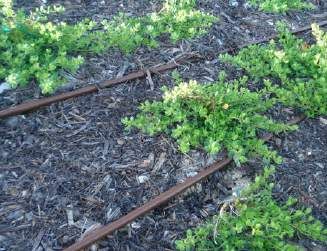
Sod Removal
If you plan to remove a large area of sod, you may be able to rent a mechanical sod cutter at a local tool supply
house. It requires some strength and control to run, and you may want to hire a professional if your turf area is
large enough to warrant its use. If you want to do the job yourself, each motorized cutter comes with its own
operation manual that contains specific directions for using that machine. So, always read those directions before
you begin and exercise caution and safety when operating.

    Pros: Clean and easy

    Cons: 	Uses mechanical petrochemical-based engines. Cut sod and soil will need to be disposed of. May disturb soil and
            remove important top soil and biology. Not effective for warm season grasses such as Bermuda.

Solarization
Solarization involves heating the soil by covering it with a clear plastic tarp for four to six weeks during a hot
period of the year. The plastic sheets allow the sun’s radiant energy to be trapped in the soil, heating the top
12 to 18 inches and killing a wide range of soilborne pests, such as weeds, pathogens, nematodes, and insects.

    Pros: 	Relatively quick and effective. Sterilizes top 1 – 1 ½“ of soil, so several years of weed seed bank are destroyed.

    Cons: 	Kills beneficial soil life and doesn’t work well in cool climates. It needs direct sunlight in order to raise temperature
            and requires several months of a plastic-covered yard. Not effective at eliminating burr clover, vetch, sweet clover,
            nut sedges, Bermuda grass, or bindweed.

            Visit lbwater.org/parkway to learn more about these                      1             2             3
            turf removal methods.                                                     Sheet           Sod        Solarization
                                                                                     Mulching       Removal

Irrigation
Native plants have adapted to California’s unique Mediterranean climate,
characterized by hot, dry summers and cool, wet winters. That means
native plants like to receive the majority of their water in the winter
months and require less in the summer months. Once established, native
plants need little supplemental irrigation beyond normal rainfall. Keep
these adaptations in mind as you consider watering your native plant
parkway. Essentially, you want to mimic Mother Nature for your parkway.
Before considering irrigation options, first observe your parkway to see
what type of irrigation system you have, if any. Turn the system on to
check its condition. You may need to plan for some repairs or changes to
your system depending on which watering approach you decide to use.                                           California fuchsia
                                                                                                              (Epilobium canum) is a
You’ll want to consider the amount of foot traffic and activity your parkway will encounter.                  hummingbird favorite.
                                                                                                              Photo: Stephen Rosenthal
For example, do you see yourself checking on your parkway and observing the plants on
a weekly basis? Is your neighborhood a high traffic area where people park alongside
parkways and pass through these landscapes on a daily basis? These are important factors
to keep in mind as you decide which irrigation approach is best for you and your parkway.

                                                                              Long Beach Water Department Parkway Program               7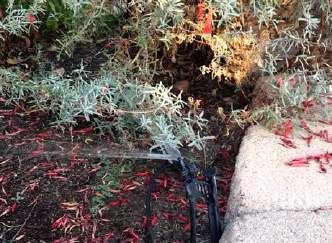
Irrigation
                                                           Hand Watering
                                                           If you enjoy a hands-on approach to gardening, we recommend hand
                                                           watering with a soft rain nozzle. This will allow you to enjoy time outdoors,
                                                           observe the health of the plants on a regular basis, and apply water based
Photo: CNPS

                                                           on the plants’ observable needs. Hand watering the irrigation berms of
                                                           each plant is especially helpful during first month after planting, as it helps
                                                           ensure that water is reaching the root zone of the plant.

                                                           Overhead Spray
                                                           If “set it and forget it” is your motto, consider an irrigation system to water
                                                           your parkway. Overhead spray is great for native plants, because it mimics
                                                           the pattern of rainfall and encourages deep, widespread roots. Be sure to
                                                           use high-efficiency nozzles to maximize your water savings and minimize
Photo: CNPS

                                                           runoff. Updating your spray heads with high efficiency nozzles is as easy as
                                                           screwing off the old nozzle, and screwing on the new nozzle. Tip: Be sure to
                                                           get nozzles that spray appropriate ranges for your parkway size.

                                                           Micro-Spray
                                                           Another option is micro-spray. This approach minimizes runoff and
                                                           overspray, while still mimicking natural rainfall. Micro-spray may not be the
                                                           best option, however, if you or your neighbors have to travel through your
Photo: Tish Berge

                                                           parkway on a regular basis. Be careful to keep tubing away from high traffic
                                                           areas to avoid tripping and damage.

                                                           Drip Irrigation
                                                           Finally, drip irrigation can be used to water your parkway. Drip irrigation
                                                           does help to reduce runoff and only water where needed. However, it
                                                           doesn’t mimic natural rainfall for the plant roots. It also must
                                                           be moved away from the crown of the plant as the plant
Photo: Ron Vanderhoff

                                                           grows larger to encourage wide spread, deep roots. Last,
                                                           drip systems can pose a tripping hazard in a high traffic
                                                           area and be easily damaged. Once covered by mulch,
                                                           it can be hard to see this damage or other problems. If
                                                           used, be sure to secure the drip line down with garden
                                                           staples and take a picture of where you laid the line down
                                                           before covering with mulch.

                             Check the LBWD watering schedule at lbwater.org/save-water/water-use-restrictions.

                                              Learn more about converting your
                                              irrigation system at lbwater.org/parkway

8                       Long Beach Water Department Parkway Program
PICKING UP YOUR PLANTS
Before you pick up your plants, consider the weather forecast. The best
time to plant California natives is in the fall or winter when temperatures are The best time to plant
cool and rain is in the forecast. Plan your project accordingly, preferably on California natives is in
a cool, overcast morning, and if possible, before a rain event. Pick up your the fall or winter when
plants as close to your planned planting day as possible. temperatures are cool and
Be sure to bring your Parkway Kit Voucher and Parkway Kit Guidebook rain is in the forecast.
with you to the nursery. Check your voucher to see which of the two
participating nurseries you were assigned to pick up your plants:
Ricardo’s Nursery
6850 Atlantic Ave, Long Beach, CA 90805
Hours: Mon.-Sat. 7:00am – 5:00pm,
Sun. 9:00am – 5:00pm
Phone: (562) 428-7252
Garibaldo’s Nursery
8834 Rose St., Bellflower, CA 90706
Hours: Mon.-Fri. 7:30am – 4:00pm,
Sat. 7:30am – 12:00pm, Sun. Closed
Phone: (562) 630-6240
El Segundo blue butterfly on its host plant
At the Nursery sea cliff buckwheat (Eriogonum parvifolium).
Photo: Ann Dalkey
1. Find the native plant Parkway Program section.
2. G
ive your voucher to nursery staff to receive the plants in your plan
for free.
3. R
efer to your design plan in your Guidebook to make sure you have the
correct plants.
Step-by-Step Guide to Picking Up Your Plants
1 2 3 4 5 6 7
Temperatures Date is close Check for Bring your Find native Refer to design Give voucher
are cool and to your your assigned Parkway Kit plant Parkway plan to be to staff and
rain is in the planned nursery Voucher & Program sure you have receive plants
forecast planting day Guidebook section at the correct plants for free
nursery
Long Beach Water Department Parkway Program 9INSTALLATION
Now it’s time to do the fun part — installing your parkway
kit! Any major repairs to your irrigation system should be
complete, and you should have your stepping stones,
plants, and mulch onsite ready for installation.
See our quick how-to videos
at lbwater.org/parkway
Stepping Stones
All parkways in Long Beach are required to have an 18” step-out area along
the entire curbside of the parkway, as well as a path through the parkway
every 6’. Installing your stepping stones can be done in a few easy steps:
1. R
emove the top 2” of soil in the 18” strip and pathway area to create a
level surface.
2. P
lace the stepping stones with 2-5” between each stone. Allow 2-5”
between the stones and the curb.
3. P
ack the soil you removed around the stones to help keep them from Level the surface in the 18” step-out area.
moving in the future.
4. C
arefully test each stone to make sure that it is flat and level, and not
rocking or loose.
Pack soil around the stones.
Planting
Taking the time to plant well will help your new plants get established and
thrive in their new home. There are a few important steps to follow when
planting California native plants:
1. P
lace the plants in your parkway according to the plan in your Parkway
Kit Guidebook.
2. D
ig a hole where you placed each plant. The hole should be as deep as
the soil level of the plant in the can and twice as wide. Place the plant
next to the hole so you don’t forget where it goes. Fill the planting hole with water. Don’t skip
this important step!
3. F
ill the hole with water, and let it drain completely. Depending on your
soil type, the water may take anywhere from a couple of minutes to a few
hours to drain. This important step will help get water into the root zone
of the soil for your new plants.
10 Long Beach Water Department Parkway ProgramPlanting cont.
4. O
nce the water has drained completely, check the depth of the hole to
see if it has changed. If the depth has increased, take a small handful of
soil and backfill so that soil level in the pot is even with the surrounding
grade. This will keep the plant from sinking too deeply in the hole. If the
hole is too shallow, remove soil from the hole until the soil level in the
pot matches the surrounding soil. This will ensure the crown of the plant
(where the stem meets the soil) doesn’t dry out. Support the crown of the plant when
removing the can.
5. W
ith one hand supporting the crown of the plant, gently tip the plant
sideways or upside down and remove the can. You may need to gently
massage the can to loosen and remove it.
6. P
lace the plant in the hole and fill the hole with the soil you dug up
(backfill), breaking up any large clumps as you go, and filling in the
space well to avoid large air pockets or spaces. Be sure that the crown of
the plant is level with the grade of the surrounding soil.
7. O
nce the hole has been filled, gently press the soil surrounding the
plant to get rid of any remaining holes or air pockets. Create an irrigation berm to direct water to
the root ball during establishment.
8. C
reate a berm with the remaining soil 6” away from the crown of the
plant. This will help direct water to the plants roots while it is getting
established. After the first few months, these berms can be flattened
or removed.
9. W
ater the plant well by filling the irrigation berm and letting the water
soak in a couple of times.
Fill the irrigation berm with water.
Mulch
After you’ve placed the stepping stones and planted all your plants, you
can lay your mulch. Mulch naturally decomposes over time, recycling
nutrients through the soil for the benefit of your plants, and helps retain
moisture in the soil.
1. Apply a 2-3” layer to the top of the soil.
2. B
e sure to keep mulch a couple of inches away from the crown of the
plant (where the stem meets the soil).
3. Fill in the spaces around the stepping stones with mulch.
4. If you have overhead spray, be sure not to cover the pop-ups to
prevent clogging.
5. G
ive your parkway one last soak with a soft rain nozzle to help
everything settle in. Mulch adds nutrients and retains moisture
in the soil.
Long Beach Water Department Parkway Program 11LONG-TERM CARE
Now that you have a beautiful native plant parkway, let’s review
To help your plants get
some tips to help your garden thrive: established, water like
you’re Mother Nature!
Water deeply and
Watering infrequently.
To help your plants get established, water like you’re Mother Nature! Water
deeply and infrequently. Soil should become moderately dry between
watering so the roots are not prone to rot. A general rule of thumb is to
water 1x week for the first month, then every other week for the second
and third month. By the fourth month, you should only be watering 1x
month. After about six months to a year, the plants should be reaching
establishment, and you can often wait longer between watering.
Be sure to watch your plants and make sure they aren’t drooping or turning
yellow. Overwatering and underwatering can show these similar signs.
You may need to dig a few inches down into the root zone of the plant to
check the moisture of the soil so you know how to adjust your watering.
Remember that native plants are adapted to winter rainfall and summer dry
periods. If summer watering is really needed, water only once a month with
a deep soak on a cool day. Check the moisture of the soil if plants are
drooping or turning yellow.
A general rule of thumb is to water 1x week for the first month, then
every other week for the second and third month. Review the LBWD
watering schedule at lbwater.org/save-water/water-use-restrictions.
Native plant garden. Photo: Megan WolffPhoto: Kristen Wernick
Photo: Kris Ethington
Photo: CNPS
Mulch Pruning Pests and weed control
As needed, replenish mulch to create Native plants require minimal Healthy native plants have fewer
a 2-3” layer. You should only need to pruning if the garden is designed pests than traditional landscaping
do this about once a year. Long Beach well and plants are spaced plants. Learn to recognize good
Office of Sustainability offers free appropriately. If necessary, most pests from bad pests, and practice
mulch to Long Beach residents. Visit trees and shrubs may be pruned integrated pest management to
longbeach.gov/sustainability to find right after flowering. Remove no help you choose the best pest
locations for free pick-up, or to see more than 10 – 25 percent of live control method. Remember that
about scheduling a delivery. Make foliage at a time. Pruning young a munched leaf is not necessarily
sure to choose 2-3” wood chips that trees can establish good structure a bad thing. It can be a sign you
have a consistent look with minimal later, but try to preserve the fruits are feeding local insects, like our
green material. for decoration — and for wildlife. western monarchs, that depend
If you prefer a more decorative on native plants for their survival.
aesthetic, local garden centers offer a Visit CNPS.org to learn more about
wide variety of options. Avoid synthetic pests and how to support beneficial
rubber mulches or varieties that have insects in your garden.
been dyed, as they may contain harmful
chemicals or materials.
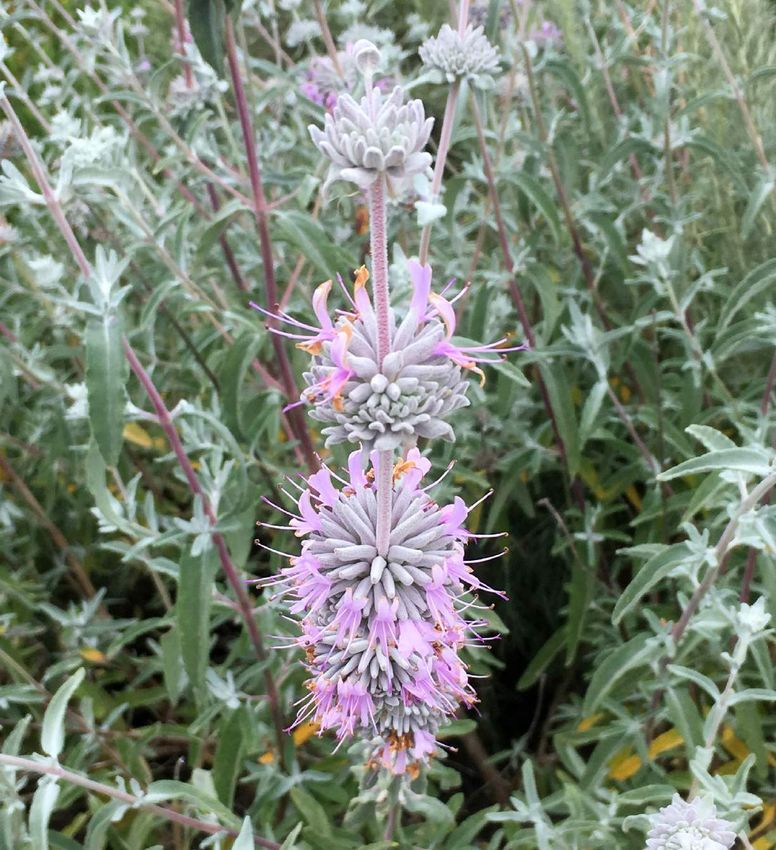
Point Vicente Garden. Photo: Megan WolffPurple sage (Salvia leucophylla). Photo: David Freeman lbwater.org/parkway CNPS.org calscape.org
You can also read


