UCD Students' Strategic Vision - Draft for Consultation March 2019
←
→
Page content transcription
If your browser does not render page correctly, please read the page content below
3/19/2019                                              Draft Vision for Commenting - Google Docs

                         UCD Students’
                         Strategic Vision

                               Draft for Consultation
                                    March 2019

                                    Prepared by
                     UCD Planning & Environmental Policy Society

                                    Auditor - Tom Wallace O’Sullivan
                                   Project Coordinator - Roy Harford
                           Student Planners - Ariane Dupas, Brian Longobardi

                                                                                                   1

https://docs.google.com/document/d/1ZxyqPMJS5II8HVHl_1ldQKyQARBgQLFjulhWjJRf_Uo/edit#                  1/63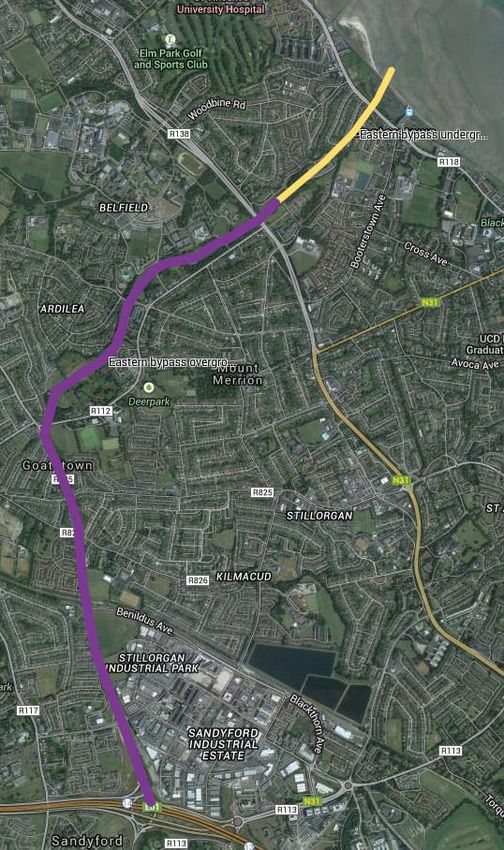
3/19/2019                                               Draft Vision for Commenting - Google Docs

                      We would like to thank everyone who contributed valuable
                      information and assistance to the preparation of this Vision

                                          UCD Planning & Environmental Policy Society
                      Katie-Scarlett Waters, Sophie Sheridan Burns, Llana McMonagle Bulgaru, Michaela Lyons,
                            Hannah Gould, Yusra Eleslambouly, Aimee Winn, Katie McKay, Michael Burke

                                  UCD School of Architecture, Planning & Environmental Policy
                                       Dr. Paula Russell (Lecturer and Assistant Professor),
                                      Dr. Michael Lennon (Lecturer and Assistant Professor),
                                          Frances Ashmore (Senior Executive Assistant)

                                                      UCD Students’ Union
                        Barry Murphy (President), Thomas Monaghan (Campaigns & Communications Officer),
                                Stephen Crosby (Education Officer), Melissa Plunkett (Welfare Officer),
                   Ailbhe O’Halloran (Accommodation Officer), Katie O’Dea (Environmental Campaigns Coordinator)

                                                           University Staff
                                 Aishling Kennedy-Dalton (Community Liaison, UCD Estate Services),
                                 Odhran Lawlor (Hospitality Services Manager, UCD Estate Services),
                                 Jason Masterson (Head of Student Services, UCD Student Centre),
                                          Aisling O’Grady (Head of Student Advisory Service),
                                             Colum Cronin (International Student Advisor),
                                           Niamh Nestor (Student Advisor & UCD Purl Jam)

                                                         Societies and Clubs
                      Aine Freyne (Hockey Club), Aoibh Cotter (LGBTQ+ Society), Angelica Black (Jazz Society),
                         Carla (Mature Students Society), Chloe (World Aid), David Somers (Men’s Boat Club),
                       Grace Lee (Music Society), Hannah Bryson (Disability Inclusion and Awareness Society),
                                James Alkayed (Societies Council), Kristine Rozenberga (Fencing Club),
                                Laura Griffin (Ladies Boat Club), Sorcha Kebbe (Amnesty International)

                                                          Other Students
              Aaron Bowman (College Tribune), Brían Donnelly & Doireann de Courcy Mac Donnell (University Observer),
                Aoibhs McGills (UCD Accessibility Audit & Wheelchair Basketball Team), Sam Hynes, Sorcha O’Brien,
               Fiona Corcoran & Stepanka Kralikova (SPARC Food Waste Project), James Barry, Residential Assistants

                                                              Others
                                           Joe Corr (President, Irish Planning Institute),
                                     Tom Phillips (Managing Director, Tom Phillips + Associates),
                                         Emma Davison (Complaints Assistant, Dublin Bus)

                                          Street Conversations Carried Out By Students in
                                           Community Development and Planning Module
              Aislinn O’Se, Andrew Irwin, Brian Longobardi, Darja Kielthy, Deirdre Dunne, Eimeid O’Grubb, Eimhin O’Reilly,
            Jialu Fan, Keith Condell, Kim Wilson, Lhana Bulgaru McMonagle, Lochlainn Wallace, Mark Keenan, Michael Fay,
                Michaela Lyons, Petra Elo, Pierce Donnelly, Roisin Moyne, Shalva Harshman-Early, Siobhan MacDonald,
                     Sophie Sheridan Burns, Tobias Robinson, Tom Fitzgerald, Tom Wallace O’Sullivan, Yat To Leung

                           And Everyone who Took Part in our Online Survey and Street Conversations

                                                                                                                        2

https://docs.google.com/document/d/1ZxyqPMJS5II8HVHl_1ldQKyQARBgQLFjulhWjJRf_Uo/edit#                                        2/63
3/19/2019                                              Draft Vision for Commenting - Google Docs

            Forward
            As President of UCD Students' Union and on behalf of UCD students, I would encourage all
            of UCD's community, students and staff, to read this Strategic Vision. UCD has the capacity
            to host an ever growing student population and our current rate of capital development is
            steadily leading us towards that. For this reason, coupled with our world's ever alarming rate
            of environmental change, it's vitally important to take a moment to pause and consider if our
            campus is developing in a way it's students see fit.

            We are blessed to have such a beautiful and expansive campus to host UCD's mission. This
            is an asset we will do well to use properly. I congratulate all those involved in this
            consultative project and urge all those who read it to note it's importance.

                            Barry Murphy
                            President
                            UCD Students’ Union

            Students - Have Your Say!
            This UCD Students’ Strategic Vision is intended to outline a Vision of how UCD students
            would like to see the UCD Campus develop into the future, and has been prepared following
            extensive consultation with students. We now encourage all students to review this Draft and
            to provide us with any comments or feedback you have, by Friday 29th March 2019.

               1. Email your comments and feedback to pep.society@ucd.ie, or
                  request to meet up with us if you have more to say.

               2. Go to www.ucdvision.ie and add your comments directly onto a
                  Google Doc version of this file, at the relevant sections.

               3. Come along to our launch event on Tuesday 26th March, 5:30pm,
                  Planning & Environmental Policy Building, UCD Richview.

            If possible, please submit any comments and feedback by Friday 22nd March, so we can
            consider and address them, and respond to you before the launch event on Tuesday 26th
            March. In your comments, please be as specific as possible, making reference to specific
            sections or measures, and providing suggested wording for any changes you request.

            The final date for all submissions is Friday 29th March 2019.

                                                                                                         3

https://docs.google.com/document/d/1ZxyqPMJS5II8HVHl_1ldQKyQARBgQLFjulhWjJRf_Uo/edit#                        3/63
3/19/2019                                              Draft Vision for Commenting - Google Docs

            Vision Statement
            The UCD Students’ Strategic Vision is for a campus which can adequately fulfil its role as a
            major higher education facility for the Greater Dublin Area, the State, and internationally. The
            campus will continue to develop in an efficient manner, with new and refurbished facilities to
            meet the needs of a modern university. Buildings will be of a high quality design, and there
            will be a strong emphasis to involve students in all stages of the design process for all new
            developments. The natural environment and parkland setting of the campus will also be
            preserved and enhanced to maximise biodiversity and amenity spaces.

            The campus will be a leader in environmental sustainability, with a strong awareness and
            culture among the university community. Minimal waste will be generated by the university,
            while an efficient waste segregation system will ensure that much of what is generated can
            be reused or recycled. Energy and water usage will efficient, with renewable and on site
            generation meeting a large proportion of the university’s need. The campus will be easily
            accessible by all modes of transport, with sustainable travel modes accounting for nearly all
            journeys to and from the campus.

            High quality cycling facilities will make it safe to commute by bicycle, while within the campus
            pedestrians, cyclists and those with mobility impairments will be able to move freely and find
            their way around easily. An efficient bus system with high frequency routes and continuous
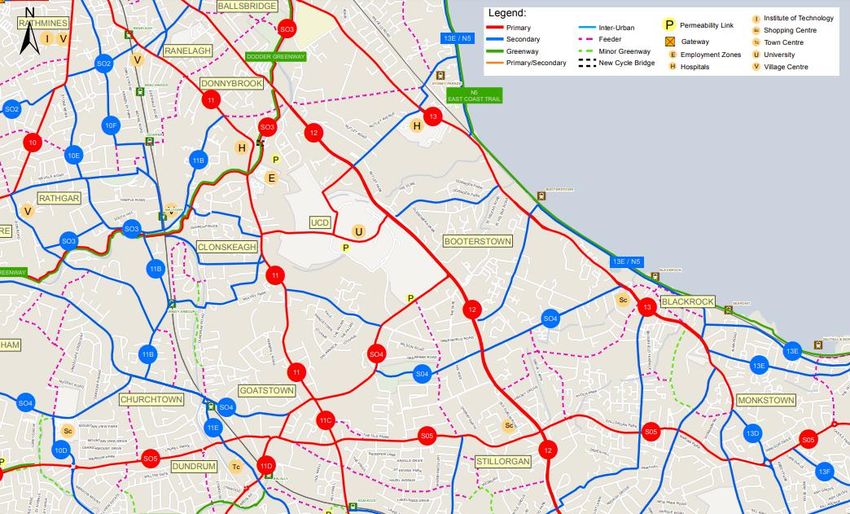
            bus priority will reduce waiting and journey times, while a new bus only link from the M50 at
            Sandyford will provide quick journey times for regional bus services and from park and ride
            facilities.

            Academic facilities will adequately meet the need of students, with sufficient study spaces,
            computers and internet access available at all times. The additional on-campus student
            residences will give more students the opportunity to live on campus, while also reducing
            pressure on the local rental market and helping to lower rents. Students and residents will
            have access to a good choice of food and retail options, catering for all lifestyle choices and
            dietary requirements, while also being affordable.

            The Student Centre will be further developed to provide additional sporting and leisure
            facilities, and to support the activities and events of all student societies and sports clubs.
            During the day, the campus will be a vibrant and lively place, with plenty of places and
            seating to hang out and socialise, while at night there will be sufficient opportunities to
            socialise on the campus, without having to leave the campus.

            Finally, the campus will be a diverse, inclusive community where students of all
            backgrounds, culture and ability are treated equally. All activities, events and facilities will be
            open and readily available to all students, while a range of different supports will be available
            and promoted to cater for the varying needs of students physical and mental health and
            wellbeing.

                                                                                                              4

https://docs.google.com/document/d/1ZxyqPMJS5II8HVHl_1ldQKyQARBgQLFjulhWjJRf_Uo/edit#                             4/63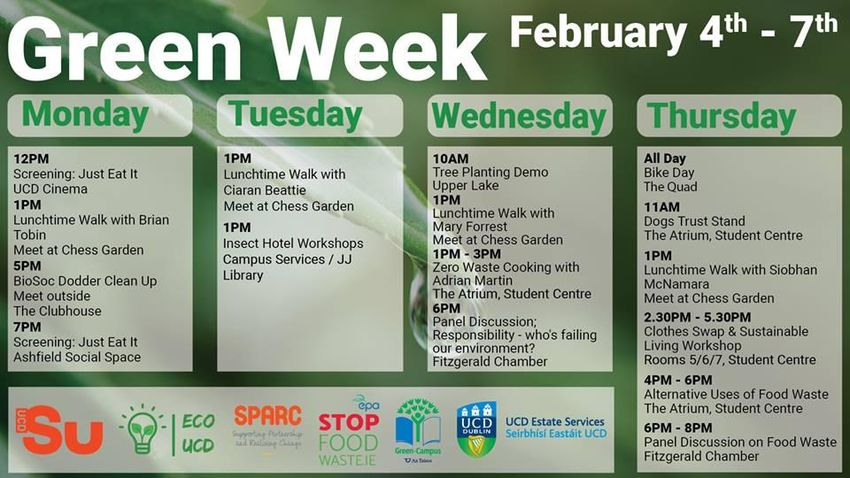
3/19/2019                                              Draft Vision for Commenting - Google Docs

            Contents

            Forward                                                                                 3

            Students - Have Your Say!                                                               3

            Vision Statement                                                                        4

            1. Introduction and Context                                                             7
               1.1 Overview                                                                         7
               1.2 Background                                                                       7
               1.3 Planning Context                                                                 8
               1.4 Current Developments                                                            11
               1.5 Structure of Document                                                           12

            2. Process and Consultation                                                            13
               2.1 Overview                                                                        13
               2.2 Initial Consultation Phase                                                      13
               2.3 Development of Draft Vision                                                     16
               2.4 Next Steps                                                                      16

            3. The Belfield Campus                                                                 17
               3.1 The Role of UCD                                                                 17
               3.2 Land Use                                                                        17
               3.3 Campus Buildings                                                                18
               3.4 Urban Design and Appearance                                                     19
               3.5 Richview Campus                                                                 20
               3.6 Surrounding Community                                                           21

            4. Environment and Sustainability                                                      22
               4.1 Climate Change                                                                  22
               4.2 Natural Environment and Biodiversity                                            22
               4.3 Culture and Awareness                                                           23
               4.4 Waste Management                                                                26
               4.5 Energy and Water                                                                27

            5. Transport and Movement                                                              29
               5.1 Walking and Cycling                                                             29
               5.2 Internal Movement                                                               32
               5.3 Public Transport                                                                35
               5.4 Smarter Travel                                                                  39
               5.5 Private Vehicles                                                                40
               5.6 Addressing Congestion                                                           41

                                                                                                   5

https://docs.google.com/document/d/1ZxyqPMJS5II8HVHl_1ldQKyQARBgQLFjulhWjJRf_Uo/edit#                   5/63
3/19/2019                                              Draft Vision for Commenting - Google Docs

            6. Academic, Libraries and Technology                                                  44
               6.1 Academic Facilities                                                             44
               6.2 Study Spaces                                                                    44
               6.3 Information Technology                                                          45
               6.4 Room Availability                                                               46

            7. Student Housing                                                                     47
               7.1 Affordability and Availability                                                  47
               7.2 On Campus Accommodation                                                         47
               7.3 Off Campus Accommodation                                                        48

            8. Food, Retail and Residential Services                                               49
               8.1 Overview                                                                        49
               8.2 Opening Hours                                                                   49
               8.3 Food                                                                            50
               8.4 Self Catering                                                                   51
               8.5 Retail                                                                          51

            9. Student Experience and Facilities                                                   52
               9.1 UCD Student Centre                                                              52
               9.2 Sporting Facilities                                                             53
               9.3 Activities and Events                                                           55
               9.4 Social Spaces                                                                   56
               9.5 Nightlife                                                                       57

            10. Diversity, Inclusion and Support                                                   59
               10.1 Awareness                                                                      59
               10.2 Activities and Events                                                          59
               10.3 Facilities                                                                     60
               10.4 Supports                                                                       61

            11. Implementation                                                                     62
               11.1 Recognition                                                                    62
               11.2 Implementation                                                                 63
               11.3 Monitoring and Updating                                                        63

            Appendix 1: Consultation Submissions Report

            Appendix 2: Transport Options Assessment

            Appendix 3: Strategic Environmental Assessment

            Appendix 4: Natura Impact Assessment

            Appendices are available as separate documents at www.ucdvision.ie/documents.

                                                                                                   6

https://docs.google.com/document/d/1ZxyqPMJS5II8HVHl_1ldQKyQARBgQLFjulhWjJRf_Uo/edit#                   6/63
3/19/2019                                              Draft Vision for Commenting - Google Docs

            1. Introduction and Context

            1.1 Overview
            The UCD Students’ Strategic Vision is a student-led initiative to prepare a Vision, from the
            perspective of students, of what UCD and it’s campus could look like in the future.

            This Vision will provide a comprehensive reference document which can be used by the
            University, Dún Laoghaire Rathdown County Council and other organisations, to ensure that
            the views of students are taken into consideration when making any decisions which could
            affect the future development of the campus. It will also provide UCD Students’ Union with a
            clear and strategic statement of how UCD students would like to see the campus develop
            into the future, which will assist them in campaigning more effectively on campus related
            issues.

            This initiative is being carried out by the UCD Planning & Environmental Policy Society, with
            the support of UCD Students’ Union and UCD Estate Services. To ensure that the Vision
            accurately represents the best interests of students, there are two phases of extensive
            consultation, where students are asked to provide their views and ideas, while the final
            Vision will also be subject to approval by the full SU Council before it can be adopted as
            official policy.

            1.2 Background
            The UCD Belfield Campus is entering a period of significant change. New facilities, including
            the Ashfield Student Accommodation and Confucius Institute for Chinese Studies, have
            recently opened, while construction is nearing completion on the new University Club and
            UCD Moore Centre for Business. Construction work is now making good progress on the
            first phase of the UCD Student Residences Masterplan, Ireland’s largest ever student
            accommodation scheme, which when complete will double the number of students living
            on-campus from 3,000 to over 6,000 (equivalent to the population of Westport town).

            Further developments are envisaged over the coming years under the UCD Strategic
            Campus Development Plan 2016-2021-2026, including the redevelopment of the Newman
            Building and James Joyce Library Building, and the significant expansion of facilities in the
            UCD Health and Agricultural Science Precinct. A major redevelopment of the Student Centre
            is proposed to provide additional sporting facilities, along with a new athletics track, while a
            preferred design concept by Steven Holl Architects has recently been selected for the UCD
            Entrance Precinct Masterplan, which will guide the future development of this area of the
            campus adjoining the Stillorgan Road, including a new Centre for Creative Design and
            improved transport facilities.

                                                                                                           7

https://docs.google.com/document/d/1ZxyqPMJS5II8HVHl_1ldQKyQARBgQLFjulhWjJRf_Uo/edit#                          7/63
3/19/2019                                              Draft Vision for Commenting - Google Docs

            With such significant changes due to take place in the near future, it is important for students
            to get involved and ensure that they have a role to play in influencing and shaping the future
            of the university. However, at present there is no comprehensive vision of how students
            would like to see UCD develop into the future, which makes it difficult for the University to
            incorporate students’ views, and difficult for the SU to campaign effectively on campus
            related issues. Students’ views are generally sought and provided on a case by case basis,
            in response to proposals or decisions, which can be an ad-hoc and reactive approach.

            This Students’ Strategic Vision aims to take a more strategic and proactive approach
            instead, by producing a comprehensive reference document which can be used by the
            University and other organisations to incorporate students views into future policies and
            decisions. It addresses various aspects of the campus, including the future needs and
            requirements of the university, academic facilities, residential accommodation, sport and
            leisure facilities, retail and food services, transport, environmental impact and sustainability,
            and urban design.

            1.3 Planning Context
            While this Vision aims to represent the general views of UCD students, it also aims to be
            consistent and compatible with existing and established higher level planning policy. A brief
            summary of the relevant national, regional and county policies is provided below, along with
            how these relate to UCD, while an overview of the current university strategy and plans is
            also provided.

            National Policy

            The National Planning Framework (NPF) is the Government’s high-level strategic plan for
            shaping the future growth and development of Ireland out to the year 2040. It aims to support
            the future growth and success of Dublin as Ireland’s leading global city of scale, by enabling
            significant population and jobs growth, and better managing this growth to ensure that more
            of it can be accommodated within and close to the city. It also aims to address infrastructural
            bottlenecks, to improve citizens’ quality of life and to increase housing supply in the right
            locations.

            In relation to higher education, National Policy Objective 31 aims to “prioritise the alignment
            of targeted and planned population and employment growth with investment in the
            expansion and consolidation of Higher Education facilities, particularly where this will
            contribute to wider regional development”. While the framework does not make specific
            reference to UCD, as the largest higher education facility in Dublin and the State, UCD can
            play a large role in helping achieving this objective.

            Other relevant national level policies include Rebuilding Ireland - Action Plan for Housing
            and Homelessness, which includes measures to make funding available for student
            accommodation, as well as a streamlined planning process to cut processing and enhance

                                                                                                                8

https://docs.google.com/document/d/1ZxyqPMJS5II8HVHl_1ldQKyQARBgQLFjulhWjJRf_Uo/edit#                               8/63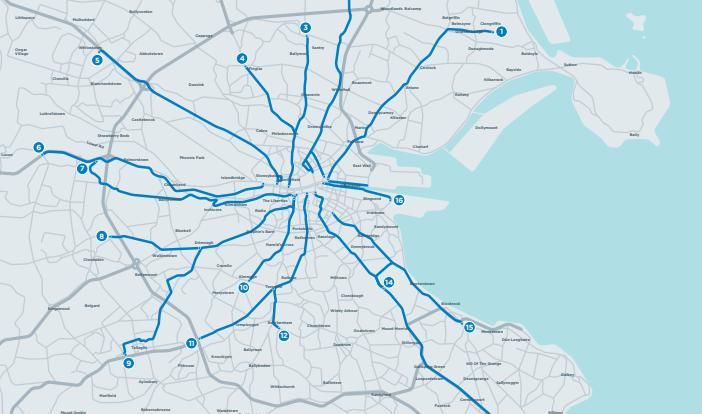
3/19/2019                                              Draft Vision for Commenting - Google Docs

            certainty, and Smarter Travel - A Sustainable Transport Future, which aims to transition
            Ireland to more sustainable transport patterns by reducing travel demand, reliance on fossil
            fuels and transport emissions, and by improving accessibility and efficiency. As one of the
            largest generators of travel demand in Dublin, UCD has an important role to play in this.

            Regional Policy

            The Eastern & Midland Regional Assembly Draft Regional Spatial & Economic Strategy
            transposes the objectives of National Planning Framework at the regional level, and provides
            a framework for investment to better manage spatial planning and economic development
            throughout the Region. It supports the provision of high quality education including
            universities in appropriate locations to cater for population growth targets, provide for greater
            educational choice, facilitate improvement in skills, and to assist in tackling disadvantage.

            The National Transport Authority’s Transport Strategy for the Greater Dublin Area
            2016-2035 provides a twenty year framework for the planning and delivery of transport
            infrastructure and services in the Greater Dublin Area. For UCD, it specifically proposes the
            development of a cross-city Bus Rapid Transit corridor between UCD and Blanchardstown,
            as well Core Bus Corridors south of UCD to Bray and the N11/M11, and west to Tallaght via
            Dundrum. It also supports the implementation of travel plans for all education campuses.

            County Policy

            The Dún Laoghaire-Rathdown County Development Plan 2016-2022 provides the
            overarching planning framework for the County and sets out the zoning hierarchy for the
            County. The plan recognises the significant role that UCD plays in the County and the
            contribution its education, and research and development activities make to the
            attractiveness of the County for investment, as well as the strategic importance of UCD for
            employment creation at Regional and National level.

            Policy SIC9 of the plan supports the development and ongoing provision of Further and
            Higher Level Institutions in the County including University College Dublin, while Policy
            RES12 facilitates student accommodation on student campuses or in locations which have
            convenient access to Third Level colleges. In relation to land zoning, the majority of the
            campus is zoned Objective TLI: To facilitate, support and enhance the development of third
            level education institutions, with the exception of the Thornfield Rugby pitches, which are
            zoned Objective A: To protect and-or improve residential amenity.

            Four Specific Local Objectives also relate to the campus:

               ●   1: To facilitate, support and enhance the development of University College Dublin
                   including all associated and supporting facilities. A range of uses will be facilitated on
                   Belfield campus lands to encourage and foster strong links between education,
                   community and the business sector in the County.

                                                                                                            9

https://docs.google.com/document/d/1ZxyqPMJS5II8HVHl_1ldQKyQARBgQLFjulhWjJRf_Uo/edit#                           9/63
3/19/2019                                              Draft Vision for Commenting - Google Docs

               ●   6: To promote potential additional future uses of the Dublin Eastern Bypass
                   reservation corridor, including a greenway/cycleway, a pedestrian walkway,
                   biodiversity projects, recreational opportunities - inclusive of playing pitches - and
                   public transport provision such as Bus Rapid Transit services, pending a decision
                   from Transport Infrastructure Ireland/Central Government in relation to the future
                   status of the Bypass. Any potential additional future short-term uses of the
                   reservation corridor will be subject to a joint feasibility study to be undertaken by TII
                   and the NTA.
               ●   146: To prepare a Local Area Plan for Clonskeagh/UCD.
               ●   148: To identify and address the ongoing car parking issues within and surrounding
                   UCD Campus. In particular, the Council will support and facilitate the ongoing
                   process of Mobility Management Planning for UCD, involving the University and the
                   NTA, in order to achieve more sustainable travel patterns to and from the University
                   and to work towards the development of a Campus Travel Plan.

            University Policy

            The UCD Strategy 2015-2020 sets out UCD’s vision to be solidly in the world top 100
            universities by 2020. It sets out ten key objectives to achieve this vision, which cover areas
            including research, innovation, educational experience, engagement, community, facilities
            and governance. It also proposes six major strategic initiatives, one of which is reimagining
            our campus. The strategy supports the execution of a campus development plan, and aims
            for the campus to be a vibrant and active place seven days a week.

            The UCD Strategic Campus Development Plan 2016-2021-2026 communicates the broad
            direction of future physical development of the Belfield Campus in terms of the facilities
            required to support the University’s vision of being a global top 100 university. It proposes to
            consolidate development into three character areas, the academic core in the centre of the
            campus, residential to the east, and sport and recreation to the west.

            The Estates Strategy within the plan sets out capital investment requirements in the short
            term through a schedule of prioritised projects focussed on improving and maximising the
            use of existing buildings, with expansion planned in strategic areas. It includes over 60,000
            square metres of new academic facilities, over 70,000 square metres of refurbishments, and
            an additional Student Residence Masterplan of up to 3,000 bedrooms, requiring a total
            investment in the order of €775 million.

            Getting there the Sustainable Way - UCD’s Travel Plan 2016-2021-2026 aims to increase
            the commuting mode share for sustainable travel modes from 75% in 2016 to 81% in 2021,
            corresponding with a decrease in car mode share from 25% to 19%. The plan is guided by
            three core principles; promoting sustainable travel options; encouraging activity, health and
            wellbeing; and developing an accessible, attractive and welcoming campus.

                                                                                                           10

https://docs.google.com/document/d/1ZxyqPMJS5II8HVHl_1ldQKyQARBgQLFjulhWjJRf_Uo/edit#                           10/63
3/19/2019 Draft Vision for Commenting - Google Docs
1.4 Current Developments
A number of projects are currently under construction on the campus, or going through the
planning stages. The Vision takes into account these projects, and aims to support and
complement those projects which are already under construction or in the planning stages. A
brief overview of some of these projects is provided below.
University Club
Currently under construction and due to open in April 2019, the University Club is intended to
provide university staff, corporate clients and alumni with a first class social engagement
setting, complemented by the existing conference event facilities of the adjoining O’Reilly
Hall. The project has been criticised due to its €14 million cost, and the related closure of the
staff common room which has existed in the Newman Building since 1975.
Moore Centre for Business
Currently under construction and due to open in September 2019, the UCD Moore Centre for
Business is an extension to the Quinn School of Business, which aims to empower the next
generation of business leaders. It will contain interactive learning environments, extensive
co-working zones, and transformative learning experiences, as well as a 320 seat lecture
theatre, Entrepreneurship and Innovation Hub, Skills Quarter Support Area, and THINK Lab.
University Club (left) and Moore Centre for Business (right)
Student Residences Masterplan
The UCD Student Residences Masterplan aims to double to number of on-campus
bedspaces from 3,100 at present to over 6,000 when complete. The development also
includes a new student Fulcrum Building containing a function hall, gym, health & wellbeing
centre, supermarket and food court, as well as Activity Hubs within each block containing
lounge, function and study space. Construction is progressing well on the first phase of the
masterplan, which includes 924 bedspaces and the Fulcrum Building.
11
https://docs.google.com/document/d/1ZxyqPMJS5II8HVHl_1ldQKyQARBgQLFjulhWjJRf_Uo/edit# 11/633/19/2019 Draft Vision for Commenting - Google Docs
Entrance Precinct Masterplan and Centre for Creative Design
In August 2018, Steven Holl Architects were announced as the winner of the UCD Future
Campus Design Competition, with their Giant’s Causeway inspired design. The Centre for
Creative Design will provide a new home for architecture facilities currently based in
Richview, and is intended to increase the visibility of the university by creating a landmark
building at the main Stillorgan Road entrance to the campus. The competition also included
the Entrance Precinct Masterplan, which will guide the future development of this northern
area of the campus, fronting the Stillorgan Road.
Student Residences Masterplan (left) and Centre for Creative Design (right)
Student Centre Expansion and Athletics Track
With the mortgage for the construction of the student centre due to be paid off within the next
few years, there is an opportunity to retain the student centre levy and to use it to fund new
facilities within the student centre. While detailed designs are yet to be released, some
options being considered include a very large sports hall capable of holding exams, the
conversion of Hall B into a two-floor gym, a dedicated rehearsal space for performing arts
uses, and a group therapy space within the Student Health Centre.
Independently from this, a new athletics track is to be developed on the site of the existing
Richview gravel car park, following an anonymous €3 million donation to fund its construction
and maintenance for at least twenty years.
1.5 Structure of Document
Chapter 2 provides an overview of the process for preparing this Vision, as well as the
consultation work undertaken. Chapters 3 to 10 outline the content of the Vision, for each
aspect of the campus. Within these chapters are fifteen Strategic Priorities, which are the
core aims which this Vision hopes to achieve, along with a set of Measures, which provide
specific actions or objectives to help towards achieving each of these Strategic Priorities.
Chapter 11 outlines the implementation and monitoring of the Vision.
12
https://docs.google.com/document/d/1ZxyqPMJS5II8HVHl_1ldQKyQARBgQLFjulhWjJRf_Uo/edit# 12/633/19/2019 Draft Vision for Commenting - Google Docs
2. Process and Consultation
2.1 Overview
To ensure that this Vision accurately represents the views of students, it is being prepared
similar to how a local authority prepares a Local Area Plan, with two phases of extensive
consultation. Following an initial consultation phase between October and December 2018,
this Draft Vision has been prepared, taking into account all of the information and views
obtained. A second consultation phase will now take place on this Draft until the end of
March 2019, after which the Vision will revised accordingly. The Final Vision will be subject to
approval by UCD Students’ Union Council before it can be adopted as official policy.
2.2 Initial Consultation Phase
An initial pre-draft consultation phase took place between October and December 2018, with
some aspects of it continuing into February 2019. The purpose of this consultation was to
identify all issues and suggestions which should be addressed or included in the Vision. A
total of 392 submissions were received to this consultation, consisting of:
● A panel discussion with 4 speakers and 3 audience questions
● Targeted interviews and meetings with 18 individuals or groups
● 244 on-campus face to face surveys
● 6 written submissions
● 117 responses to an online survey
The consultation phase was advertised to students through various different methods,
including through UCD SU social media channels, several other facebook pages and groups,
and articles published in the College Tribune and the University Observer. Direct emails
were also sent to all students in the School of Architecture, Planning & Environmental Policy,
and the School of Geography, through their respective school offices. While several attempts
were made to include the Vision in a whole university email, these were not successful.
The consultation phase was advertised to Students’ Union Officers and Class Reps through
a short presentation at the SU Council meeting on Monday 22nd October 2018. Societies
and Sports Clubs were each sent individual emails encouraging them to take part, while a
request was also sent to all SPARC projects. A number of other groups and individuals were
also contacted directly to get their views on specific items relevant to them.
While we would have liked to have been able to advertise this more widely, and to have
received more responses, a significant amount of information was received, which was
sufficient for us to develop the Draft Vision from. A second consultation phase will now take
place on this Draft Vision, so anyone who didn’t get to provide their views during the first
consultation has another opportunity now to contribute their views and ideas.
13
https://docs.google.com/document/d/1ZxyqPMJS5II8HVHl_1ldQKyQARBgQLFjulhWjJRf_Uo/edit# 13/633/19/2019 Draft Vision for Commenting - Google Docs
Method 1 - Panel Discussion
A Panel Discussion on the “Future Development of the UCD Campus” was held on the 8th
November 2018 in the Planning & Environmental Policy Building, UCD Richview. The
purpose of this event was to discuss and debate some of the various issues and challenges
facing the campus. Speakers taking part in the discussion included:
● Joe Corr, President, Irish Planning Institute (Chair)
● Louise McGauran, Senior Planner, Dún Laoghaire-Rathdown County Council
● Barry Murphy, President, UCD Students’ Union
● Tom Phillips, Managing Director, Tom Phillips + Associates
Panel Discussion on 8th November 2018 (photographs by Roisín Moyne)
Each speaker was given an opportunity to outline their vision for the Future Development of
the Campus, while various topics were discussed, including Surrounding Area & Local
Community, Student Accommodation & On-Campus Services, Environment & Sustainability,
and Transport & Parking. The event was well attended and was reported on by the College
Tribune and University Observer.
Method 2 - Targeted Interviews and Meetings
Targeted interviews and meetings were carried out with a number of individuals and groups
to obtain specific information relevant to them, or which they might have specific expertise or
knowledge on. These included staff in Estate Services, the Student Centre and Student
Advisors, representatives of the LGBTQ+ Society and Disability Inclusion and Awareness
Society, and representatives of several SPARC projects.
Method 3 - On-Campus Street Conversations
Fifty hours of on-campus face to face surveys were simultaneously carried out at five
different locations across the campus on Monday 12th and Thursday 15th November 2018.
These were located at the Richview School of Architecture, UCD Student Centre, O’Brien
Centre for Science, Newman Building and the Gerard Manley Hopkins International Centre.
14
https://docs.google.com/document/d/1ZxyqPMJS5II8HVHl_1ldQKyQARBgQLFjulhWjJRf_Uo/edit# 14/633/19/2019 Draft Vision for Commenting - Google Docs
These short surveys asked respondents what they liked about the campus and what issues
they would like to see improved, as well as for ideas of what strategies could be used to help
deal with these issues. The surveys were conducted by students undertaking a module in
Community Development & Planning, under the supervision of the module coordinator, Dr.
Paula Russell.
Street Conversations in Newman Building on 12th November 2018
Method 4 - Written Submissions
Email requests were sent to all 89 student societies and 54 sports clubs, asking them to
provide their opinions on the campus and how they felt it could be improved, and specifically
in relation to the needs of their society or club, or their members. In total, six written
submissions were received to this, from four societies and two sports clubs.
Method 5 - Online Survey
In order to obtain the views of the wider student and university community, not covered by
any of the other methods, an online survey was carried out, with 20 different sections
covering all aspects of the campus, from environmental to transport and from student
experience to services and facilities. The survey was promoted through various social media
accounts and email lists, as well as in newspaper articles in the College Tribune and
University Observer.
In total, 117 responses were received, which is significantly less than we were originally
hoping for, probably due to the large number of questions, which may have been off-putting
for some people (despite it being clearly stated that all questions were optional). However,
the benefits to the long number of questions is that a huge amount of detail was received, on
all aspects of the campus, much more than from any of the other consultation methods.
15
https://docs.google.com/document/d/1ZxyqPMJS5II8HVHl_1ldQKyQARBgQLFjulhWjJRf_Uo/edit# 15/633/19/2019 Draft Vision for Commenting - Google Docs
2.3 Development of Draft Vision
As the online survey provided the most detail and covered all aspects of the campus, the
results from this were the main basis for developing the Vision, with the results from other
methods supplementing these where appropriate. For the comments received under each
question, as well as in the written submissions, interviews and panel discussion, the various
issues and suggestions identified were summarised, and the Strategic Priorities and
Measures were then developed to respond to each of these issues and suggestions.
For a full list of all of the various issues and suggestions raised, and how they have been
incorporated into this Vision, please see the separate Consultation Submissions Report,
attached as Appendix 1. As transport and accessibility was such a large issue during the
consultation, a separate Transport Options Assessment was also prepared to examine this
in detail, attached as Appendix 2.
While not required for a non-statutory plan such as this, for best practice, a basic Strategic
Environmental Assessment of this Vision has been carried out, as well as an Appropriate
Assessment of the likely effects on Natura 2000 sites. These were used to assess the
various Strategic Priorities and Measures, and are attached as Appendix 3 and Appendix 4.
2.4 Next Steps
Following the release of this Draft Vision, a second consultation phase is now taking place to
get the views of students on this Draft Vision, and whether they feel any changes should be
made to add, remove or amend any parts of it. Everyone is encouraged to take part in this
consultation and to provide any feedback or comments that you might have.
Following this current consultation phase, the Vision will be revised and amended as
appropriate, taking into account the feedback and comments received, and a Final Vision will
be prepared. It is intended that this Final Vision will be brought before the UCD Students’
Union Council Meeting on Monday 8th April 2019, when it is hoped that a motion can be
passed to approve the UCD Students’ Strategic Vision, and to adopt it to form part of official
SU policy.
The Final Vision will then be presented to the university, Dún Laoghaire-Rathdown County
Council, and any other organisations which could affect the future development of the
campus, along with a request that this Vision, prepared and approved by the students of
UCD, is fully taken into account when making any decisions which could affect the future
development of the campus.
16
https://docs.google.com/document/d/1ZxyqPMJS5II8HVHl_1ldQKyQARBgQLFjulhWjJRf_Uo/edit# 16/633/19/2019 Draft Vision for Commenting - Google Docs
3. The Belfield Campus
3.1 The Role of UCD
With 33,973 enrolled students as of 2017/18, UCD is the largest university in Ireland, and
plays a significant role in providing third level education to Irish students. Marketing itself as
“Ireland’s Global University”, UCD is also a major provider of third level education
internationally, and consistently performs strong in world university rankings. In addition to
providing education, UCD is the largest employer in Dún Laoghaire-Rathdown, and is a
major contributor to the Irish economy through driving research and innovation.
The university was founded in 1854 and for many years was based in multiple buildings in
Dublin city centre, including St. Stephens Green, Earlsfort Terrace and Merrion Street. In
1947 it was first proposed to relocate the university to a unified campus at Belfield to the
south of the city, and over the following 60 years the Belfield Campus was gradually
developed, with the last departments finally relocating from Earlsfort Terrace following the
completion of the Health Sciences Centre in 2007.
Since the first students moved in, the campus has been in continuous development, with
new facilities being built to cater for increasing student numbers and changes in educational
requirements. To ensure that UCD can continue to fulfil its role as a major provider of third
level education to Irish and international students well into the future, the orderly
development of the campus into the future needs to be facilitated and supported.
Strategic Priority 1: Promote the orderly development of the Belfield Campus,
enabling UCD to fulfil its role as a major higher education facility for the Greater
Dublin Area, the State, and Internationally
3.2 Land Use
The UCD Belfield Campus contains a range of different land uses. The centre of the campus
is primarily academic functions, with the main teaching and administrative buildings located
here. Student residences are located in the south east of the campus, while some research
and innovation uses exist in the northeast of the campus. The western side of the campus is
dedicated to recreational and sporting uses. Between all of this, and around the edges of the
campus, is a network of woodlands containing a wide variety of biodiversity.
The UCD Strategic Campus Development Plan 2016-2021-2016 proposes to reinforce these
uses by consolidating the campus into three distinct character areas, for academic,
residential, and sporting and recreational uses, as illustrated in the map below.
17
https://docs.google.com/document/d/1ZxyqPMJS5II8HVHl_1ldQKyQARBgQLFjulhWjJRf_Uo/edit# 17/633/19/2019 Draft Vision for Commenting - Google Docs
Character Areas as Set Out in UCD Strategic Campus Development Plan 2016-2021-2026
Measure 1.1: Develop the campus in a land and space efficient manner
During the future development of the campus, it is important to locate different functions in
the most appropriate locations for them within the campus. Higher density development
should be promoted at appropriate locations within the campus, to ensure the most
efficient use of campus land and space.
3.3 Campus Buildings
With the continuous development of the campus over the last 70 years, the campus today
consists of a mixture of older, newer and redeveloped buildings. Most of the early buildings
on the campus remain in use today. While some buildings, such as parts of the Science
Centre, have been completely redeveloped to modern standards in recent years, other
buildings such as the Newman and Agriculture Science Buildings have had no major
refurbishment since being constructed.
Many new buildings have also been constructed in recent years to provide additional
teaching capacity and facilities, such as the Quinn School of Business and Sutherland
School of Law. To continue to cater for an expanding university and student population, all
buildings should be maintained at a modern standard, while additional building capacity
should be provided where necessary.
18
https://docs.google.com/document/d/1ZxyqPMJS5II8HVHl_1ldQKyQARBgQLFjulhWjJRf_Uo/edit# 18/633/19/2019 Draft Vision for Commenting - Google Docs
Measure 1.2: Refurbish and modernise older academic buildings to bring them up
to the standard required for a modern university
The Newman Building, James Joyce Library, Agriculture Science Building, and
Engineering and Material Sciences Centre were all constructed in the 70’s and 80’s and
are now in need of refurbishment and modernisation to bring them up to the standard of
other buildings.
Measure 1.3: Provide additional building capacity to meet the needs of an
expanding university and student population
The new Moore Centre for Business, under construction and due to open in September
2019, will provide additional teaching capacity for business programmes, while the new
Centre for Creative Design, currently in planning, will provide additional teaching capacity
for architectural programmes.
Historic Buildings
In addition to the purpose built academic buildings on the campus, there are also a number
of historic houses and buildings which existed prior to the university. These include the
Richview School of Architecture and the many period houses on the campus including
Belfield House and Ardmore House.
Measure 1.4: Protect the character and heritage of historic buildings and features
on the campus
Historic buildings should be protected and preserved, to preserve the history and heritage
of the UCD Campus. Many of these buildings, such as Richview, are admired and liked by
students, and are considered to add to the personality and style of the campus.
3.4 Urban Design and Appearance
Students opinions differ significantly between different buildings on the campus. Most older
academic buildings, including the Newman Building, James Joyce Library and Agriculture
Science Centre, are largely considered unattractive and an eyesore by students, while most
modern buildings, including the O’Brien Centre for Science and Sutherland School of Law
are considered attractive and well designed.
While students are often involved in the design process for new developments, this is often
in a closed or invited manner. For example, residential assistants may be consulted in
relation to new student accommodation proposals, while societies and clubs may be
consulted in relation to new student facilities. While these may be the most appropriate
students to consult with, other students do not see this, and as a result do not feel any sense
of ownership over new developments taking place.
19
https://docs.google.com/document/d/1ZxyqPMJS5II8HVHl_1ldQKyQARBgQLFjulhWjJRf_Uo/edit# 19/633/19/2019 Draft Vision for Commenting - Google Docs
Measure 1.5: Ensure high quality design in all future developments on the campus
Generally, the design of newer buildings are considered attractive by most students, and it
would appear that the university is currently going in the right direction in terms of design.
Future developments should continue to follow this same high quality design.
Measure 1.6: Involve students in the design process for new developments
Student involvement should be open and transparent, to ensure that all students have the
opportunity to get involved, and that students should feel some sense of ownership and
pride for the final designs. For example, in some recent proposals, such as the Confucius
Institute and Centre for Creative Design, students feel as if they have had no part to play
in the design process.
One way this could be done could be simply by having open consultation sessions at
various stages of the design process, where students can have the opportunity to talk
directly to members of the design team, to question different aspects and discuss the
potential for idea or suggestions to be included.
3.5 Richview Campus
Richview is a mini-campus located in the far northwest corner of the UCD Belfield Campus,
which currently houses the School of Architecture, Planning & Environmental Policy. The
main building was built as an estate house in 1790 and became a Masonic boarding school
in 1885, while a series of extensions and other buildings were added over the next 100
years. The estate was eventually bought by UCD in 1974, and was annexed to the main
Belfield Campus.
Today, there are a number of issues with the Richview Campus. The older buildings do not
meet current building regulations relating to universal design, and wheelchair access is
extremely limited. The campus is also a significant distance from other parts of the campus
and public transport services, resulting in lower levels of engagement in student activities on
the campus. While Richview is admired and liked by many students, due to its character and
sense of quietness, it is currently not fit for modern teaching purposes.
20
https://docs.google.com/document/d/1ZxyqPMJS5II8HVHl_1ldQKyQARBgQLFjulhWjJRf_Uo/edit# 20/633/19/2019 Draft Vision for Commenting - Google Docs
Measure 1.7: Support the relocation of existing teaching uses in Richview to new
purpose built facilities in a more central location within the campus
In the long term, the most appropriate solution is to relocate existing teaching uses in
Richview to new, purpose built facilities in a more central location within the campus, with
the current Richview buildings being repurposed for other uses, such as student
accommodation, research or innovation uses. This relocation is currently proposed by the
university to the new Centre for Creative Design, to be located at the main Stillorgan Road
entrance to the campus.
In the short term, all of the Strategic Priorities and Measures contained in this Vision are
equally as applicable to Richview as they are to the rest of the campus.
3.6 Surrounding Community
UCD is located in a suburban residential location, and is surrounded by a number of
residential communities including Clonskeagh, Roebuck, Mount Merrion, Woodbine and
Greenfield. While the UCD Campus is a huge asset for these communities and its facilities
are well used by the local community, the campus also brings challenges, with students
parking in nearby residential areas probably the most highlighted of these issues.
There is also a lack of interaction between the university community and local residents.
Local residents use the campus and its facilities independently from students, often during
the evenings and at weekends, while most students return home at these times. While many
students are renting and living in the vicinity of the campus, it is only for a few months or
years at the most, and many student may never get to know their neighbours.
Measure 1.8: Support the preparation of a local community plan for the Clonskeagh
and UCD area
The Dún Laoghaire-Rathdown County Development Plan 2016-2022 includes specific
local objectives to prepare a Local Area Plan for Clonskeagh/UCD, and to identify and
address the ongoing car parking issues within and surrounding UCD Campus.
While a statutory Local Area Plan is probably not necessary for this area, a more informal
community-led plan could allow local communities to outline their Vision for this area, and
how they would like their communities to interact with the university campus. Together, the
UCD Strategic Campus Development Plan, UCD Students’ Strategic Vision and a local
community-led plan could complement each other and provide an appropriate framework
for the future development of this area.
21
https://docs.google.com/document/d/1ZxyqPMJS5II8HVHl_1ldQKyQARBgQLFjulhWjJRf_Uo/edit# 21/633/19/2019 Draft Vision for Commenting - Google Docs
4. Environment and Sustainability
4.1 Climate Change
The International Panel on Climate Change (IPCC) reported in 2018 that global warming was
happening at a faster pace than ever before. In order to maintain a balanced ecosystem on
earth, average temperature increase needs to be kept under 2 degrees celsius, and
everyone on earth has to play a role in ensuring this. According to the IPCC, Ireland is
already at risk regarding ecosystems and marine biology preservation, as well as extreme
weather events and human health.
As a third level education institutions, UCD has a big responsibility in training future
scientists, politicians and planners, but also citizens. The UCD Campus should be an
environment where sustainability is pushed forward every day, and not just in the classroom.
4.2 Natural Environment and Biodiversity
The UCD Belfield Campus has a unique setting of woodlands and green infrastructures,
much of which has been planted by the university in recent years, and has made the campus
rich in biodiversity and amenity space. While the future growth of the university needs to be
facilitated, it should be accommodated without representing a threat to the natural
environment of the campus.
Strategic Priority 2: Preserve and enhance the natural environment and parkland
setting of the Belfield Campus
The Belfield Campus has a large quantity of woodlands and green spaces, along with
woodland walks which provide recreational and natural experiences for all, students and
visitors. However, some of these spaces are under threat from the continuing development
of the university, and many green spaces have already been lost to buildings or parking. This
is continuing today, and a lot of the green space around Newstead is currently under threat
to provide a replacement to the parking which will be displaced by the new athletics track.
Measure 2.1: Protect the woodlands, natural features and recreational spaces of the
campus from future development
The lakes and woodland walks are particularly appreciated by the students and provide
visual and recreational amenity. The greenness of the campus makes it a distinctive and
welcoming environment to learn in and provides a feeling of openness. A balance should
be struck between the provision of natural areas and development. A better management
of land use is needed to allow development while preserving UCD’s green spaces.
22
https://docs.google.com/document/d/1ZxyqPMJS5II8HVHl_1ldQKyQARBgQLFjulhWjJRf_Uo/edit# 22/633/19/2019 Draft Vision for Commenting - Google Docs
Measure 2.2: Consolidate parking spaces into underground and multi-storey
facilities, to remove the impact of surface parking on the landscape
Many green spaces have already been lost, and will continue to be lost to parking.
Reducing the amount of parking spaces in favour of more sustainable transport use, as
well as investing in multi-storey or underground parking would reduce the need to remove
green spaces to provide, and would free up land space for the additional provision of
green spaces and parkland. This could be one of the key measures to allow future
developments in UCD while preserving its open landscape.
Trees and woodlands are privileged habitats for birds and biodiversity. UCD plays a key role
in enhancing biodiversity habitats in South Dublin, due to the extent of its green
infrastructure.
Measure 2.3: Increase the amount of trees and planting to maximise biodiversity on
the campus
UCD possesses many woodlands which host a wide variety of biodiversity, and further
increasing the amount of trees and planting can help to maximise this biodiversity. If
addition to this, awareness should be increased rose among students of the existing
woodland. Increasing the perception of a green campus can help further sensibilise
students to their unique environment.
Measure 2.4: Determine the amount of carbon sequestered by the campus, and
examine the potential for UCD to become a carbon neutral campus
With the extensive woodlands and forest cover within the campus, there is significant
potential for carbon sequestration within the campus, to offset carbon emissions
generated by the campus. Currently, the amount of this sequestration is not known, but if it
is found to be significant, it could create potential for UCD to become a carbon neutral
campus.
4.3 Culture and Awareness
With 34,000 students and around 3,000 staff, UCD is equivalent in size to a large town. Any
changes in the sustainability of the UCD Campus has to include a raised awareness of
sustainability among its members. The current generation of students will have been raised
in the context of climate change and their university experience should further this culture of
sustainable development.
Strategic Priority 3: Promote a culture of sustainability among the campus
community
23
https://docs.google.com/document/d/1ZxyqPMJS5II8HVHl_1ldQKyQARBgQLFjulhWjJRf_Uo/edit# 23/633/19/2019 Draft Vision for Commenting - Google Docs
Measure 3.1: Improve awareness of the importance of sustainability on the campus
and the role that students can play
Students usually stay in UCD for around 3 years which means that the turnover of
students is high. There is no time for a long mindset shift about sustainable development.
Students should be aware that sustainability is one of the key pillars of their education at
UCD from the start. Implementing sustainable habits and behaviour should be a core
objective of welcoming freshers on campus and highlighting the role they can play in
making our campus a more sustainable place for all.
Case Study: UCD Green Week, 4th to 7th February 2019
UCD’s inaugural Green Week was organised by UCD Students’ Unions Environmental
Campaigns Coordinator, in conjunction with the UCD Green Campus initiative, UCD
Estate Services and number of other groups and societies. It involved a range of
workshops, lunchtime walks, cinema screenings and two large panel discussions, aiming
to promote awareness of different environmental topics, including food waste, biodiversity,
climate change, and sustainable commuting and living.
24
https://docs.google.com/document/d/1ZxyqPMJS5II8HVHl_1ldQKyQARBgQLFjulhWjJRf_Uo/edit# 24/633/19/2019 Draft Vision for Commenting - Google Docs
Measure 3.2: Support student projects and campaigns related to sustainability or
the environment
Students’ initiatives towards sustainable development, are flourishing, like the UCD Green
week organised in February 2019. Better support should be given to projects focused on
sustainability. Sustainability should also become a requirement of all student’s projects.
Sustainability is not just the protection of natural ecosystems, it also has an economic and
social perspective.
Most projects and campaigns in UCD would need to identify one of the United Nations
Sustainable Development Goals that they seek to enhance and which actions and steps
they will take in that direction. Sustainable considerations and actions should be made a
requirement for any allocation of funding for students led project.
Numerous trials have taken place in the past to introduce waste segregation at source within
different buildings on the UCD Campus, but have been unsuccessful due to high levels of
contamination within bins. While UCD’s waste is currently sorted post collection, this cannot
provide the same efficiency as segregation at source, as items which could be recycled
could easily be contaminated and made non-recyclable if initially mixed with other items.
Measure 3.3: Introduce successful waste segregation across the campus
Waste segregation at source should be introduced across the entire UCD Campus, and
appropriate measures should be put in place to prevent past contamination issues from
arising again, and to ensure that this is finally successful. Some possible measures could
include:
● Improve labelling and awareness of recycling bins, and what can and can't go into
them
● Make recycling bins more difficult to use (e.g. with a lever or slot), to prevent
careless contamination
● Fine or penalise those who are caught using bins incorrectly or carelessly
● Rationalise the number of bins to make recycling more manageable (e.g. have bins
on each corridor, rather than inside every single office)
Measure 3.4: Provide financial incentives to use reusable alternatives instead of
disposable items
Students should be incentivised financially to act in a sustainable, and to use reusable
items rather than disposable ones. For example, some cafes on the campus provide
discounts to those who use reusable coffee mugs instead of disposable paper cups (which
are currently not recyclable in Ireland). This should be further expanded on, with the cost
gap between the use of disposable and reusable items increasing over time.
Simple changes in terminology could also help to get the message across to people better.
For example, rather than offering “discounts” for using reusable cups, have “additional
charges” or “penalties” for not using reusable cups, as many students don’t bother looking
for student discounts, but they won’t be as willing to pay an additional or penalty charge.
25
https://docs.google.com/document/d/1ZxyqPMJS5II8HVHl_1ldQKyQARBgQLFjulhWjJRf_Uo/edit# 25/63You can also read


