COMPARING THE HIGHER EDUCATION SYSTEMS IN POLAND AND THE UK
←
→
Page content transcription
If your browser does not render page correctly, please read the page content below
Amelia Przybył
                                                            Mikołaj Szafrański
                                                                 Julia Jasińska
                                                         Konstanty Kowalewski
                                                                      Jan Hincz
                                                                 Marcin Skiba

COMPARING THE HIGHER EDUCATION SYSTEMS
        IN POLAND AND THE UK
Conclusions based on a case study analysis of the Warsaw School of Economics
      and the University of Warsaw with the London School of Economics
                        and University College London.
ACKNOWLEDGEMENTS

We would like to express our special thanks to all those who have supported us in
our study. We would like to mention representatives from Santander Universidades,
especially Wojciech Leśniewski, for helping us get in touch with universities. Our sincere
thanks also go to Marzenna Cichosz for her insights, and Daniel Lichota from the Warsaw
School of Economics, for providing us with data.

                                            1
TABLE OF CONTENTS

Executive summary - key messages:                                     4
Introduction                                                          6
1. Access to higher education                                         7
     Introduction                                                      7
     Student share                                                     7
     Recruitment processes and entry requirements                      8
     University fragmentation                                         10
     Student diversity                                                10
     Conclusions                                                      11
     Key message                                                      11
2. Learning Structure                                                 12
     Course/degree comparison - Synthesis                             12
     Intended learning outcomes                                       13
     Teaching methods and materials                                   16
     Professional orientation of curricula                            18
     Assessment methods                                               19
     Conclusions                                                      23
3. Professional Development                                           24
     Introduction                                                     24
     Popularity of career services                                    24
     Available opportunities of professional development              26
     Student satisfaction and expectations                            28
     Insight from the industry                                        29
     Conclusions/recommendations                                      31
4. Academic research evaluation                                       32
     Introduction                                                     32
     Measuring research excellency                                    32
     The rigidity of Polish classification of academic publications   34
     Classification of sciences: whither formality?                   35
     Conclusions/recommendations                                      36
5. Research and business                                              37
     State of commercialization of research in Poland                 37
     State of commercialization of research in the UK                 39
     Case studies                                                     39
     UW                                                               39
     SGH                                                              40
     LSE                                                              41
     UCL                                                              42
     Conclusions                                                      43

                                          2
TABLE OF CONTENTS

Key Takeaway 								                                                               44

Bibliography                                                                        45

Appendix:                                                                           48
    Survey 1: Careers and University Experience - University of Warsaw (UW) and
    Warsaw School of Economics (SGH) Students                                         48
    Survey 2: Careers and University Experience - University College London (UCL) and
    London School of Economics (LSE) Students                                         52
    Survey 3: Survey for Employers                           				                     58
    Table 1: Comparison of Methology Courses                                          59

                                         3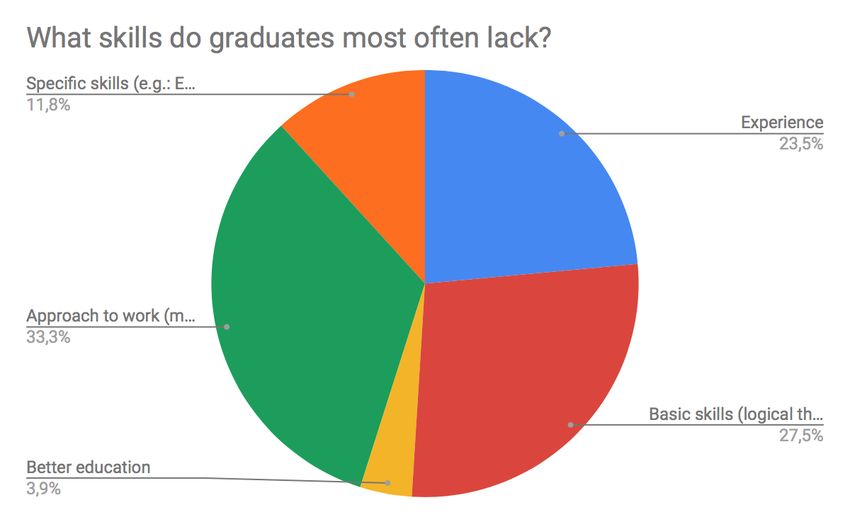
EXECUTIVE SUMMARY - KEY MESSAGES:

1. Poland should aim to build a smaller number of stronger, internationally recognised and
   well-funded universities.
   a. The Higher Education system in Poland should be motivating universities to focus on quality
       rather than quantity of students. In particular, promoting full-time studies.
   b. The system should promote consolidation of universities and dedicate a greater share of funding
       to universities showing best results in teaching and research.
   c. Promoting best Polish universities abroad should be encouraged to attract a greater share of
       diverse top international students.
2. Course convenors should restructure the syllabi and develop transparent modes of assessment.
   Teaching content should be unified between tutorial groups, and more time allocated to
   independent study.
   a. The course conveners should design the modules in a transparent fashion. First, there should be
       harmonized syllabi imposed on all teachers of a particular module. Secondly, fragmentation in
       the design of modules should be avoided. This way, the expectations towards students and the
       intended learning outcomes can be communicated more clearly.
   b. Guided independent study should be encouraged in lieu of burdening students’ timetables with
       classroom teaching. In order to nurture independent thought, students need to be freed from the
       expectation to reproduce the lecturer’s knowledge and understanding of the subject.
   c. Open-access courses should take up a smaller proportion of the degree. As long as they provide
       a perfunctory overview of other disciplines and assessment does not require a true effort, open-
       access courses do not add up to the ideal of holistic education.
       Assessment marking standards should be uniformized and publicized by university departments.
       In order to avoid arbitrariness, exam content should also be made uniform. In the event when
       a module is taught by multiple lecturers, there should be no discrepancy in the examinable
       material. Furthermore, exam assessment should be performed by external, objective examiners.
3. Communication between career services and students should be improved. Students should
   also be provided with a more diverse range of professional development opportunities on
   campus.
   a. Although there are opportunities available (private consultations with career advisors, mentoring
       programmes, job fairs etc.) our studies has shown that many students are not informed about
       them. Career services should send out regular newsletters and update their online pages to
       increase student engagement.
   b. Polish universities should diversify the services that their provide. They could take an example
       from UK universities that organise career panels, career coffee mornings with individuals from
       the industry, company visits and alumni meetings. They should also engage more with students
       from studying all disciplines, particularly those that are less career-focused and are less on
       demand on the job market.
   c. Polish universities should establish working relationships with the industry to provide their
       students with more opportunities of development. Our survey and interviews have revealed that
       companies find it easier to engage students, if they can work with an active university career
       office.

                                                  4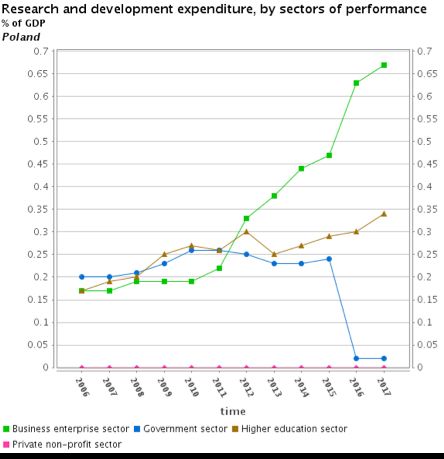
4. The review of quality of research should be attuned to rewarding internationally recognized
   research only. Competition between universities on the domestic level should be replaced with
   a collective strife towards making Polish research globally known. Research in areas of social
   and cultural importance should be exempted from competition and ratings.
   a. The Polish system of impact review should be refocused in order to award points for truly
      outstanding research, and not any research. Domestic recognition of research outputs cannot be
      valued according the same criteria as international standing. Research in areas of particular
      social and cultural importance should be treated sui generis, and not in the same way as outputs
      that have the potential to compete internationally.
   b. Centrally-set indexes of publications and publishing presses should either be abolished in
      favour of review of merits and originality, or be attuned to the dimension of international
      competitiveness.
   c. A devolved system of administration of research resources should be contemplated in order to
      avoid political interference in the classification of research areas and cost indices.

5. Better communication should be cultivated between businesses and universities. To this end, it
   is essential to create a clearer and more comprehensive structure for business cooperation and
   R&D commercialization.
   a. Despite the Polish government’s focus on strengthening science-business cooperation, the rapidly
       growing R&D expenditure does not have positive influence on innovation metrics such as public-
       private co-publications.
   b. Fostering communication and trust between innovative companies and universities requires the
       establishment of a structured system that enables easier cooperation with foreign businesses. The
       system should include a clear point of entry and a special team for managing key partners on
       top of existing solutions.
   c. In order to increase efficiency and relevancy of technology transfer, intellectual property
       regulations need to be further clarified and liberated.
   d. The number of researchers and research suitable for commercialization is too low to supply
       for above needs. PhD candidates need to be incentivized to graduate timely and consider
       collaborations with private sector.

                                                   5
INTRODUCTION

Brain drain is one of the main challenges crippling the development of Polish society. In the era of
knowledge economy, the offer of Polish universities seems to be less appealing to the most talented
graduates. It has become increasingly popular for the most ambitious students to associate their path of
talent development with studying abroad. In 2017-2018, 7,545 Poles were students of UK universities.1
Since 2013-2014, this number has increased by 45%.2 We do not believe that this state of affairs is
something to be cherished. As students of LSE born and raised in Poland, we regret that Polish higher
education institutions do not have a prominent comparative advantage as the UK universities do. Why
are Polish degrees “worth less” according to conventional wisdom? What impacts on the high position
of UK universities in global rankings?

We have decided to answer these questions by conducting a comparative study of higher education
institutions based in the capitals of both states. We contrast University of Warsaw (UW) with University
College London (UCL) due to their interdisciplinary nature. In regards of specialized (social-sciences-
focused) institutions, we chose to compare Warsaw School of Economics (SGH) with London School of
Economics and Political Science (LSE). We submit that this approach is more commensurable than a
comparison of higher education frameworks in abstracto, because of the country-specific variances
(UK having different higher education arrangements in England, Wales, Scotland and Northern
Ireland; Poland having a more dense network of institutions, with a more prominent number of private
universities). The development of strong central higher education institutions should be a priority for all
stakeholders involved in higher education policy-making. Poland has neglected the creation of global
brands of academic excellence, despite having the intellectual capital to move beyond its peripheral
position.

While we realize that the Polish government has undertaken significant steps to make the Polish higher
education system more innovative, legal reform is not capable of addressing the latent cultural barriers
to progress. It is also not able to address the discretionary management practices within universities and
their departments. Our Report is therefore not to be read as a polemics with the 2018 Constitution for
Science (Konstytucja dla Nauki) reform and its corollaries. We acknowledge that the student experience
is construed differently in Poland and in the UK. Instead of proposing solutions to be implemented
at the central level, we imagine that universities and members of academic staff can themselves
pave the way to making students experience more meaningful. Notwithstanding the legal framework,
universities retain a great degree of discretion over shaping the students’ takeaway. Therefore, our
report is addressed to a variety of stakeholders: governmental policy-makers, university heads, heads
of university departments, businesses cooperating with universities, academics, non-academic staff
members, as well as students interested in making a change in the way higher education is provided.

The structure of the Report follows the life-cycle of student experience from admission procedures,
through learning, to employability. To make the assessment of institutional strength complete, we further
addressed the frameworks of review and commercialization of research outputs. We identified five
distinct areas for comparison:
1.       Access to higher education.
2.       Learning structure.
3.       Professional development opportunities.
4.       Academic research evaluation.
5.       Research and business.

1      HESA, n.d.
2      UKCISA, 2018

                                                    6
1. ACCESS TO HIGHER EDUCATION
Building a smaller number of stronger, internationally recognised and well-funded Polish universities.

Introduction
A good university brand can shape the perception of a university, attract renowned academics and
talented students, and therefore contribute positively to the overall performance in rankings. In this
section, we aim to explore some of the factors that either contribute to or stem from the image that is
projected about the university. First, we examine the high share of students in Poland, and its impact
on the creation of numerous private institutions. Second, we analyse factors such as entry requirements
and university fragmentation. Finally, we consider student diversity.

Student share

                                                                                                         3

In Poland, there is a higher share of students in comparison with the UK, with a small international
diversity. In the UK, the percentage of students enrolled in tertiary education has been significantly
lower than in Poland since the second half of 2003. Gross enrolment in UK totalled 57% in 2013, in
contrast to 71% in Poland. These numbers result from the fact that in Poland there is a great pressure
to obtain a degree. To meet that high demand for higher education, more programmes and institutions
were created, amongst them, private ones. Private institutions and part-time studies became the new
means for meeting the demand for education. These programmes, most often offered as paid-for, do
not have rigorous entry requirements unlike those in public institutions, that are free. Therefore, they
continue to attract lower performing students, that are not accepted into selective public programmes.4

3      Our World in Data, 2017.
4      Musial, 2014

                                                    7
Moreover, private institutions are marginally involved in conducting and publishing research, which
questions their academic legitimacy. This stems from the fact that academic faculty chooses to conduct
their research at renowned public universities, as they attract top-performing academics and students,
as well as provide access to better research facilities. Out of the 17,375 fully-employed academics in
the private sector, a mere 588 listed private institutions as their primary workplace.5

Recruitment processes and entry requirements
At LSE and UCL, international students constitute the top 20% of their respective population. This is not
the case in Poland due to the favourable conversion rates of foreign education systems.

General requirements for UCL from Polish Baccalaureateare (Matura): “at least 3 subjects passed at
Extended Level with one at 85% and two at 72%.”. Entry requirements are likely to be higher for most
courses, but even this minimum requirement, depending on the subject taken, forces students to be in
the 86th percentile from the “easiest” subjects, with the requirement ranging to as high as even 100th
national percentile.

Entry requirements for International Baccalaureate (IB) at LSE are just as rigorous – they range from 37
to 38 points, which requires prospective students to be at least in the top 20th in their cohort, with the
numbers being higher for subject-specific Higher Level requirements, i.e. to be considered for a place
at LSE, the student should obtain scores of at least 6 6 6 or 6 6 7 from courses at a Higher Level.

These two universities are very selective in their admissions, and even if one manages to obtain the
aforementioned results, it does not mean that they will be offered a place in those institutions. On top
of that, all candidates must submit a personal statement outlining their motivations to study the subject.
This is supplemented by an outstanding reference from their school. The aim of this process it to enable
the universities’ admissions team to have a more holistic view of a prospective student, who is being
considered for these highly competitive offers.

5      Ibidem

                                                    8
In comparison, the Polish system is limited to points obtained in exams. This approach has certain
advantages, as the admission process is characterised by minimal costs and maximal transparency.
However, we would like to point out some potential areas of improvement:
• There is an uneven conversion between the IB and the Polish system.
To conduct a comparison in admission practices, we have compared different Extended Mathematics
requirements, as we believe that this subject plays a substantial role in the recruitment process in many
fields of study. All of the data used in this section are extracted from the 2018 admission process.
We have found that there are unfair advantages to different learning systems. In Warsaw School of
Economics, a grade 5 (out of 7) in IB Higher Level Mathematics is converted into 100% of Polish “Matura
Rozszerzona”. Analysing these scores, we further discovered significant discrepancies in percentiles of
people who achieved such grades. Namely, IB students who obtained a grade 5 scored as the 41.86th
percentile. The number of Polish matura students who obtained a 100% score was significantly lower,
as the 100% result mark was reserved to the 100th percentile of all students. This evidences a heavy
bias towards the IB system.
The numbers are not as drastic at the University of Warsaw, with a 7 in IB being translated to a 100%
Matura result. However, they still show critical distinctions. Obtaining a 7 in IB, required students to be
in the 86,3 percentile. Being in that percentile in Polish Matura meant obtaining 55%, which means that
there is a difference of 45 percentage points for students who have performed similarly in their cohort.
We are aware that those systems are not equivalent – IB puts more emphasis on projects and essays
rather than exams. However, we believe that nonetheless, these conversion rates put IB students in a
privileged position without a valid reason.
• There are significant disparities between the years in the difficulty in Polish Matura
In 2018, out of the students that took the Polish “Matura rozszerzona”, top 10 percent scored 60% or
better. Meanwhile, in 2017, to qualify in the top 10 percent, one had to obtain at least 73% or better.
This data demonstrates that the burden of any changes in exam difficulty levels is placed solely on
the students. In particular, people who decide to take a gap year, change their subject, or re-apply
for other reasons may find the entry threshold to be significantly higher or lower. For example, the
threshold for the Warsaw School of Economics changed by more than 20 points from 2017 to 2018
(out of the 333 points to obtain). The recruitment system should not be reduced to a gamble in this
aspect.
We propose the introduction of percentiles in the admission process as a sound point of reference
and a solution to the problems described above. Reliance on percentiles would put an end to the
discrimination between various secondary education exam systems. Furthermore, it would ensure that
Polish universities are supplied with high-performing students only.
9University fragmentation
There is a high fragmentation of Polish tertiary education institutions – as of 2018, there are 405
universities in Poland, while the United Kingdom has only 2806. Considering the respective student
population sizes (4,021,584 in Poland and 7,683,605 in the UK)7 in the age group of 15 to 24 years,
British universities have almost 3 times as many potential students per university (9,930 in Poland and
27,441 in the UK).
synergy potential - resources are duplicated, and budget allocation and management practices are
crippled with inefficiencies. Furthermore, according to Barbara Kudrycka, a Former Polish Minister of
Science and Higher Education, Polish universities perform extremely low in international rankings due to
their decentralization.8 Indeed, those rankings do favor interdisciplinary institutions rather than subject
specific ones. In the Times’ Top universities in the world 2019, the first mention of a Polish university is
only at the 601st place9. Meanwhile, the UK scores significantly better, with 29 universities mentioned
in the ranking of global Top 200.
We are aware that university consolidation would mean privileging universities in the biggest cities.
This would raise issues of accessibility, in particular to those at a financial disadvantage who may not
be able to afford moving out to more expensive cities and manage on their own. However, to solve this
problem, we propose to establish a system of financial support that would enable top talents to pursue
education at some of the best institutions. We believe that the cost of running such a programme would
be less than that of financing sub-scale, lower quality institutions from public funding.
Student diversity
The UK experiences a significant influx of international students. 20% of all students are foreign10,
which is not the case in Poland, where the international student community constituted a mere 5.6% in
201711. This negligible number in Poland also lacks in diversity - it is heavily dominated by Eastern
European students, as Ukrainians comprise more than half (52%) of foreign students. The second
biggest influx is from Belarus (8.3%)12.
In 2007, the University of Warsaw (UW) only had 6% of foreign students. However, this university
is an example, that if efforts are being made, it is possible to obtain a much more diverse range of
international students. The university has introduced several initiatives to attract international students
and researchers. For example, UW supports visits of foreign researchers and has launched the first-
ever initiative in Poland of that kind, helping students with their transition to UW (Welcome Point). Even
though Ukrainians still dominate in the international students’ community, they constitute only a fifth of
the foreign cohort13, significantly lower than on average in the country, and the university also welcomes
representatives from more than a hundred other countries.
6 CSIC, 2018. As cited in Statista - The Statistics Portal.
7 United Nations, Department of Economic and Social Affairs, Population Division, 2017.
8 Kudrycka, 2012.
9 Times Higher Education, 2018.
10 HESA, n.d.
11 GUS, 2018.
12 Ibidem.
13 University of Warsaw, 2018.
10According to Times Higher Education, LSE and UCL are respectively the 11th and 12th most international
universities in the world.14 The international student community at LSE constituted 68% of all students
in 201715, and 47.1% at UCL. That being said, we realise that these universities are outliers not only
in the UK but also globally. such a high share of foreign students in Poland would be unreasonable.
However, there is no doubt that an increase in the numbers of students from abroad would have many
benefits. The universities would benefit from the exchange of knowledge and diverse experiences by
students. Moreover, foreign students could financially contribute to the growth of the economy and
support many jobs. According to London and Partners, foreign students in the UK had a Gross Value
Added of GBP 1.62bn, and supported 37,417 jobs in the year 2013/2014. They point out 3 channels
through which students contribute financially to the local economy: university fees, sustenance spending
and visiting friends and relatives.16 This simple economic argument shows why increasing the number of
international students should be a priority for Polish universities.
Conclusions
1. The Higher Education system in Poland should be motivating universities to focus on quality rather
than quantity of students. In particular, promoting full-time studies.
2. The system should promote consolidation of universities and dedicate a greater share of funding
to universities showing best results in teaching and research.
3. Promoting best Polish universities abroad should be encouraged to attract a greater share of
diverse top international students.
Key message:
Poland should aim to build a smaller number of stronger, internationally recognised and
well-funded universities.
14 Times Higher Education, 2018.
15 London School of Economics, 2018
16 London and Partners, 2014.
112. LEARNING STRUCTURE
Increasing intrinsic motivation by restructuring the syllabus as well as unifying content and assessment
around key subjects and more time to self-study.
Course/degree comparison - Synthesis
The results of comparative analyses of degree programmes and individual modules show that there
is much variation in learning outcomes and the ways of teaching between Polish and UK universities.
This is indicative not only of differences in the teaching culture but also of a contrastive understanding
of the role and function of university education. The acquisition of knowledge by students is based on
different pedagogical models, favouring either guided independent study or classroom-authority-led
teaching. As a result, students in the two countries do not share the same commitment to learning and
adopt distinct approaches to managing their university workload.
Students in Poland and the UK are granted a different degree of autonomy. It transpires from the
cases studies that Polish students are often discouraged from pursuing self-conducted inquiries. The
expectation upon them is to reproduce knowledge contained in the course materials. In cases where
the course syllabi do put a premium on independent study, students may find themselves unprepared or
materially unable to conduct time-consuming inquiries on their own due to the volume of their university
workload. Insufficient focus on individual intellectual endeavours distances students away from the
paradigm of responsibility and organization of work. Ultimately, this may hinder the students’ capacity
to meet the demands of professional life after graduation.
However, the study does not suggest that the two pedagogical models are irreconcilable. The
responsibilities of lecturers and students form part of the same bundle and thus can be redistributed
without a radical and costly institutional struggle. The UK model could be refocused to provide students
with deeper knowledge resources. In a similar vein, the Polish model could benefit from a greater
emphasis on independent work. Finding the right balance is a task that belongs to course convenors,
lecturers, tutors, and teaching assistants.
The analysis does not offer a critique of the content of curricula. It is not implied that the gap in the
worldwide recognition between UK and Polish universities stems from a difference in local traditions
of scientific inquiry. The focus of the discussion is a difference in student treatment, manifesting itself in
the teaching methods, learning goals and student expectations. The study has not identified a need to
update or westernize Polish curricula. In terms of quality of knowledge and the scientificity of teaching
material, Polish universities are in a position to compete with their UK counterparts. What impacts their
position however, is a disharmonious approach to the treatment of students vis-à-vis the leading global
standards.
The study adopts a structural method of assessing the similarities and differences in approaches to
teaching. It identifies 4 salient criteria for comparison and provides an overview of findings related
to each criterion. Additional illustrations are provided in the form of case studies with comparisons of
particular courses or degree programmes.
12Intended learning outcomes
• Differences in the pace of learning: The degrees frequently set a different pace of studying in
order to accommodate either a broader or deeper understanding of the subject.
• LSE, BSc programmes centred around maths: The first year of study in the BSc programmes
centred around maths at LSE is structured in a way which provides rigorous foundations of the
subject. Compared to its counterpart at Warsaw School of Economics (SGH), algebra module
builds on the theory of vector spaces rather than provide a ready to use methods. The analysis
module is presented using a broader range of applications and with slightly more generality.
Statistical curriculum at the LSE exposes students to the probability theory and common distribu-
tions of random variables.
• SGH, BSc programmes centred around maths: In the first year of study relevant modules run for
one semester only. Statistics, besides less material, often lacks formal proof work. Mathematics
module introduces students to fewer topics, such as differential equations, which are a key tool
used in modelling of social science problems tackled in subsequent years.
• Structural differences in construction of courses: The structure of the modules takes different
shape across Polish and UK institutions. Fragmentation of modules in most cases makes it difficult
to draw connections between courses despite the overlapping areas of study.
• UW, BA in History: Students of the history BA programme at University of Warsaw (UW) are
mandated to study ancient history in their first year. The study consists of 4 courses: 2 tutorial
blocks (2x 4 ECTS), an exam (8 ECTS) and extended essay (6 ECTS). Elevating each assessment
to the status of a separate subject creates an impression that the body of knowledge is disjointed
and that each assessment is of different value. Disintegration also affects students’ GPA by
parcelling the grades for what essentially is one study area.
• UCL, BA in History: In contrast, elective modules at UCL are constructed as broad (15 ECTS worth)
and students receive a single grade based on mixed course assessment. Term essays amount to
25% of the grade, and exam performance for the remaining 75%.
• LSE, BSc programmes centred around maths: The LSE programmes are characterised by a uniform
structure of modules and transparency in regard to students expectations. The departments
prepare an accessible list of available modules with information on the previous year’s average
class size, distribution of results, together with an indicative reading list.
• Variance in transferable skills: Transferable skills can vary across universities in the same field of
study. This impacts on the students’ professional qualifications: some may receive abilities applicable
beyond their discipline, while others will be wedded to a particular career path solely because of
the focus of their educational curricula
• UW, BA in Economics: The BA Economics programme at UW provides a focus on theory. Topics
such as probability theory, mathematical statistics, and econometrics are studied for an entire
semester each.
• UCL, BA in Economics: In contrast, the UCL programme mandates every student to learn some
form of statistics or econometrics throughout the entire first and second year. For example, in a
first year half module, Applied Economics, acquired proficiency in statistical methods is enhan-
ced by the introduction of related software STATA. This also applies to a 2nd year half module,
Computational Methods for Economists, where UCL students have the opportunity to perform
economically inclined calculations not only on paper, but also on widely used softwares such as
Mathematica, Matlab and Python, which brings curriculum closer to financial sector reality in
which nobody does manually, what can be done far more efficiently by a computer. This disso-
nance fosters different skills, with the UCL programme locating the material in the context of its
practical application in economics and finance.
13• UW, BA in Political Science: The comparison of Introduction to Political Theory modules offered in
the BA Politics programmes at UW and LSE shows radical discrepancies in the transferrable skills
and learning goals. The UW module emphasises passive skills related to knowledge acquisition
(understanding, summarising, identification, and to a lesser extent, analysis).
• LSE, BA in Political Science: The focal point of the LSE module is critical engagement with the
texts of major political thinkers. Students are expected not only to be able to reproduce the
arguments from the readings, but also compare and evaluate various claims, and unpack the
normative assumptions encountered in literature.
• UW, BA in History: Divergence is also visible in studies of history, with methodology courses at
UW and UCL putting emphasis on different takeaways. In structural terms, UW students only
spend 15% of the first year (9 ECTS-worth of subjects) learning about the working methods of
the discipline. Students do not embark on a research project, but rather submit a bibliography
for a potential investigation. Albeit the syllabus for UW Introduction to Historical Research mo-
dule claims that the aim is not to teach problem-solving but rather make students more aware
of research procedures, it is hard to treat the two matters as separate. Students’ progress can
hardly be measured by reliance on some non-demanding or superfluous assignments.
• UCL, BA in History: Method courses comprise 50% of the first year of the BA programme and
continue in the second year. Instead of offering a rushed overview of research approaches, UCL
students embark on research projects conducted individually and in groups. The aim is to move
beyond theoretical instruction and insteaddevelop the students’ presentational skills.
14Comparison of methodology courses
Introduction to Historical Introduction to Academic Approaching History Making History Writing
Module Study Tour (UW)
Research (UW) Writing (UW) (UCL) (UCL) History (UCL)
30 credits (15 ECTS 15 credits (7.5 ECTS 15 credits (7.5
Credits 4 ECTS 3 ECTS 2 ECTS
equivalent) equivalent) ECTS equivalent)
Contact 22.5 hours (syllabus: 30 22.5 hours (syllabus: 30 3 day tour 40 hours 19 hours 15 hours
hours hours) hours)
Tutorials Fieldwork: Lectures, workshops
Form of Large group
(Objective: to prepare lectures, (Fieldwork class
classes Tutorials Lectures workshops, small
a bibliography for a discussions, centred around a
group tutorials
research project) group exercises group project)
Assessment Varies depending on Varies depending on Active • 3 hour unseen • Individual • 2500
tutor. Most commonly tutor. Most commonly participation examination learning words
mentioned assessment mentioned assessment NB The course is (100%), 1 journal - essay
criteria include: criteria include: graded, and not question to be weekly related to
• Attendance • Attendance assessed on a answered submissions another
requirement requirement pass/fail basis. Example questions: (10%; module
(max 3 absences (max 3 absences • “The nation- individual (100%)
possible) possible) state is a mark)
• Class participation • Homework hand- modern • Online group Throughout
• In-class periodic ins invention.” presentation: the semester,
tests • Class participation Discuss. written students
• Individual project • How do we submission prepare an
submission - know when (1500 words) essay related
bibliography political and digital to a topic from
survey authority is outputs (20 a different
legitimate? minutes of module, and
audio/video/ engage in
Formative text) (50%; review and
assessment: group mark) polishing of
• Journal article • Live group their work.
review (500 presentation
words) (40%; group
• Book review mark; the
(1000 words) mark combines
• Essay plan (1 peer-
page) assessment
and
assessment by
staff)
15Teaching methods and materials
• Classroom teaching vs. independent study: The structure of teaching - including criteria such
as: the prescribed number of contact hours, the intensity of class meetings, the number of courses,
the size of classes - has a direct impact on the choice of teaching methods. Keeping the students’
schedule busy translates into the expectation that acquisition of knowledge is an in-class activity.
Conversely, a less rigid schedule does not translate into more leisure for students, as they are
delegated more study responsibilities.
• SGH, BSc programmes centred around maths: The SGH degree programme consists of
approximately 2050 hours of study in a three-year period.
• LSE, BSc programmes centred around maths: The LSE degree takes up between 720 and 960
hours. The difference indicates that higher education in the UK is not understood as a prolongation
of authority-led teaching. Instead, time spent in class is to be used strategically, for the purpose
of informing individual work.
• SGH, BSc in Management: In the case of marketing modules offered in the BSc Management
programmes at SGH at LSE, the tutorials fulfil different functions. At SGH, the traditional
free, tutor-led discussion style prevails, and 40% of the grade depends on the tutorial class
performance.
• LSE, BSc in Management: At LSE, the goal of student interaction during tutorial is to prepare
a marketing plan in the form of a group project. As a result, LSE students are taught not only
academic excellence, but also disciplinary craftsmanship. Thus, the classical synthesis of lectures
and tutorials can be enriched and refined by re-imagining the aims of class participation.
• UW, BA in Political Science: The leading teaching method for the UW Political Thought module is
lecture, supplemented by presentation. Likewise, the LSE counterpart also relies on the traditional
mix of lectures and tutorials. However, the autonomy of the lecturer is understood differently at
the two institutions. As corroborated by student testimony, at UW the formal and material shape
of the class depends on the teacher.
• LSE, BA in Political Science: At LSE, no variability is allowed in terms of the course content or the
method of delivery of classes. Students at LSE are insulated from the threat of arbitrarily-set
standards and incommensurable knowledge takeaways. The existence of a harmonized syllabus
for all tutorial groups guarantees that each student leaves the course with the same knowledge.
• UW, BA in History: The UW programme takes the autonomy of the lecturer to the extreme by
assigning superfluous responsibilities to teaching staff. The fieldwork component (Study Tour
module) is realised by hosting a trip with the lecturer acting in the capacity of a tour guide.
Although discussion is encouraged, the chief aim of the module is to receive knowledge passively,
rather than have the students identify and analyse historical sites or objects.
• UCL, BA in History: In the Making History module at UCL, insights of the lecturer are not the
starting point for fieldwork investigations. Instead, the role of the teacher is to verify and correct
the approach taken by students in preparation for their group project.
16Comparison of degree structure - BSc Management - SGH and LSE
SGH LSE
ECTS/Credits Whole Degree: 6 x 30 ECTS = 180 Whole Degree: 3 x 4 = 12 Units
ECTS (+ LSE 100)
Every term: 30 ECTS Every term: 2 Units
ECTS differ according to the number
of lectures, seminars and the way of
assessment
(exam/graded/not graded)
First Year • 11 exams • 7 exams
Assessment • 7 tutorial assessments • 1 essay
• 2 colloquia/tests • 1 group project
• 2 essays
• 1 other
• Foreign Language I and Foreign
Language II assessments
(no information in the syllabus)
First Year Subjects=14 Subjects=8
Subject 1. Microeconomics I - 60h - 6 ECTS 1. Elements of Management
2. Microeconomics II - 45h - 5 ECTS Accounting and Financial
3. Macroeconomics I - 60h - 6 ECTS Management , OR Elements of
4. Foundations of Law - 30h - 4 ECTS Financial Accounting - 35 or 33h
5. Accounting - 30h - 4 ECTS - half unit
6. Statistics - 60h - 7 ECTS 2. Finance - 20h - half unit
7. Mathematics - 75h - 8 ECTS 3. Economics A OR Economics B - 60h,
8. Economic geography/economic 1 unit
history - 30 h - 3 ECTS ( 4. Quantitative Methods
9. Physical education - 30 h + 30 h - (Mathematics) – 32h + 10h
no ECTS optional - half unit
10. Foreign Language I - 60h + 60h - 5. Quantitative Methods (Statistics) –
3 ECTS x 2 32h + 10h optional - half unit
11. Foreign Language II - 60h + 60h - 6. Operations Management - 19h -
2 ECTS x 2 half unit
12. Method of studying proseminar - 7. Organizational Behaviour and
10h - 1 ECTS Leadership - 25h - half unit
13. Introduction to Economic IT - 30h - 8. LSE100: Understanding the Causes
3 ETCS of Things - 15h of classes and 5h
14. Finance - 30h - 3 ECTS of specialized online lectures, plus
optional workshops, in the term 1 -
no value
Contact Hours 385 contact hours in term 1 109 contact hours in term 1
375 contact hours in term 2 118 contact hours in term 2
TOTAL = 760 TOTAL = 227
17• Engagement with teaching materials: Teaching materials, as well as approaches to engagement
with materials, vary across institutions. While neither Polish or UK universities attempt to spoon feed
students, the materials are used to different ends.
• BSc subjects centred around maths: Workload expectations can be signalled to students in a
transparent way. The students of BSc degrees focusing on maths at LSE are given course packs
containing the teaching materials, including notes. However, the notes are not a full extract of
examinable material, but rather introduce and guide the students’ independent study.
• BSc in Management: Subjects permeated by globalized knowledge flows are taught using
commensurable materials. A notable example here is the use of the same leading textbook by
the marketing modules from BSc in Management offered by both SGH and LSE. Both institutions
ensured that in terms of the content of the teaching, the selection of materials is attuned both to
the local context of professional practice and the mainstream global literature.
• BA in History: Courses requiring deep engagement with written sources, such as BA History,
promote different ways of interacting with texts. UCL devotes an entire 7.5-ECTS equivalent
worth module (Approaching History) to acquaint students with the styles of argumentation
and to teach the tasks of construction and deconstruction of historical claims. Students are also
introduced to the innovative methods of presentation of data thanks to the digital humanities
project element in the Making History module. Similar space for engagement with texts is not
created at UW, with the majority of courses emphasising memorisation of claims contained in
texts as the chief takeaway.
Professional orientation of curricula
• Uses and abuses of open-access courses: Students at Polish universities have a wide choice
over the number of open-access modules offered at university-wide basis (i.e. non-departmental
subjects). The courses are of little value (usually not exceeding 4 ECTS) and are supposed to
provide the students with interdisciplinary knowledge.
• Evidence from Poland: In the UW BSc Economics programme, elective open-access modules take
up 1/9 of the entire studies. The proportion signals the risk of jeopardising disciplinary studies.
Due to the low ECTS value of open-access modules, students need to cope with more assessment.
Moreover, the “first-come, first-served” enrolment procedure rarely translates into students
ending up with their first choice modules. As a result, instead of acquiring holistic education,
students may at the same time devote less attention to their main field of study and not approach
the extra-disciplinary coursework with seriousness.
• Evidence from the UK: The approaches to opening up study to interdisciplinary insights vary
depending on the programme. Some programmes at UCL envisage the possibility of studying a
minor (a secondary academic discipline) and further allow to take courses from any department
in the final year of studies. LSE students, when given the possibility to attend courses from other
departments, are expected to submit a motivational statement to the programme director. They
are also free to audit courses. This evidences that interdisciplinary development proceeds on a
voluntary basis. The students’ curiosity, rather than institutional coercion makes interdisciplinary
studies possible.
18• The aim of making university education holistic can hardly be met by allowing the students to
cherry-pick from a smorgasbord of courses. Students hardly ever exercise the freedom to choose
these courses in order to satiate their demand for knowledge of other disciplines. The choices are
informed by practical considerations, such as the easiness of obtaining a pass.
• Timeliness of specialisation: The structure of degrees presupposes specialisation opportunities
at different times. The general tendency of UK universities is to expose students to courses from
other departments in their early studies. Access to specialist courses is granted in later years, in
order to allow to make informed decisions. At all stages of study, the range of departmental
elective modules is wide and thus accommodates student preferences. It is dubious whether a
similar balance can be found in Polish universities, due to some programmes’ inherent expectation
that students will be able to commit to a particular specialism.
• SGH, BSc in Management: While SGH offers a wider range of elective and specialist courses,
it requires students to commit to one out of three specialist strands. As a result, the student may
choose to omit quantitative courses in second and their year of study altogether and sharpen a
different set of abilities.
• LSE, BSc in Management: In contrast, LSE offers a broader and quantitative-focused course,
which provides students with a wider palette of transferable skills. Whether specialisation is
prudent at an early stage of bachelor’s degree is to an extent dependent on the necessities of
the local job market. However, this does not presuppose the need to allow students to acquire a
universally applicable set of skills in order to facilitate any future decisions about switching to a
different discipline.
Assessment methods
• Formative and mid-term assessments: The institutions in Poland and the UK adopt different
modalities of verifying students’ knowledge throughout the term.
• Evidence from Poland: In the UW BSc Economics programme, elective open-access modules take
up 1/9 of the entire studies. The proportion signals the risk of jeopardising disciplinary studies.
Due to the low ECTS value of open-access modules, students need to cope with more assessment.
Moreover, the “first-come, first-served” enrolment procedure rarely translates into students
ending up with their first choice modules. As a result, instead of acquiring holistic education,
students may at the same time devote less attention to their main field of study and not approach
the extra-disciplinary coursework with seriousness.
• Evidence from the UK: The approaches to opening up study to interdisciplinary insights vary
depending on the programme. Some programmes at UCL envisage the possibility of studying a
minor (a secondary academic discipline) and further allow to take courses from any department
in the final year of studies. LSE students, when given the possibility to attend courses from other
departments, are expected to submit a motivational statement to the programme director. They
are also free to audit courses. This evidences that interdisciplinary development proceeds on a
voluntary basis. The students’ curiosity, rather than institutional coercion makes interdisciplinary
studies possible.
19• Peer review: Some institutions may choose to experiment with peer review as a way to make
grading more fair. However, peer review is not to be introduced blindly, and there should be a
clear role delineated for the course conveners to verify the scientificity of the assessment.
• Evidence from the UK: In the case of Making History module at UCL, one of the assessments
(worth 40% of the final grade) is double graded by peers and the academic staff. This device
ensures that students develop judicious skills of critical reflection and has the potential of building
solidarity among students. However, insofar as first-year students might not be sensitive to
criteria of scientificity and an objective framework of judgment cannot be imposed on them, it is
prudent to moderate the grade and not to subject the entire module grade to peer assessment.
Similar arrangements could be introduced on an informal basis, e.g. for the purpose of checking
formative essays.
• Oral exams: The oral exam format is still widely utilized in Poland, while in the UK it has been swept
away. Over-reliance on one-one-one oral assessment may raise concerns of arbitrary grading of
students.
• Evidence from Poland: In the case of the UW Political Thought module, there were no fixed
criteria of exam performance. Exam preparation was facilitated only by a provisional list of
sample exam questions supplied by the lecturer. The course syllabus is not of help to students, as
the content of the course fluctuates according to the approach of the teacher. Since there are no
limits to the numbers of questions that can be asked and no standards exist to guarantee that
each student receives a question of commensurable complexity, and since there is no screening
of the sole examiner’s decision-making (even in the form of audio recordings to be checked by
an external examiner), the utility of oral exams can be called into question. Without guarantees
of procedural fairness and non-discrimination, the oral exam format produces an uneven
confrontation between the student and the examiner and leads to inequalities between students.
• Written exams: Written exams are the most common way of assessment both in Poland and the UK.
However, there are differences in the design of questions and marking standards.
• Evidence from the UK: Transparency in marking standards is one of the paramount considerations
of UK universities. In social sciences and humanities, the exam questions are designed to invite
students to showcase a multitude of skills. A good understanding of the topic will not translate to
a distinction if the answer is not structured coherently and does not present an attempt of critical
engagements with key concepts or literature. Therefore, the lecturers are not in a position to
produce a right model answer to any question posed. The expectation is that the students will be
able to present how their own reasoning protocols apply to the literature discussed throughout
the course. Furthermore, a selection of the exam papers is reviewed by an external examiner
from another institution, in order to ensure that marking was conducted in an unbiased fashion.
• Evidence from Poland: Written exams tend to be standardised only for teaching groups, but not
on a subject-wide basis. Students have voiced concerns over the fairness of grading, which is
conducted arbitrarily by the lecturers. Challenging a grade is difficult as long as it requires to
confront the lecturer. Overall, this creates an impression of authoritarian control over marking
standards. In terms of substance of the exams, the interviewed students have corroborated
the conventional “learn by rote, pass, forget” expression is largely applicable because of the
exam format. In social sciences, students’ exam responses are frequently supposed to provide a
descriptive overview of the issues discussed in class. Given the fragmentation of subjects, it would
appear that students of Polish universities are expected to reproduce knowledge from different
areas, but are not necessarily invited to draw connections between them.
20COMPARING A POLITICAL SCIENCE CLASS: LSE AND UNIVERSITY OF WARSAW
University of Warsaw LSE
Myśl Polityczna = Political Thought - Introduction to Political Theory -
Core module Core module
2 ECTS - 60 hours (1 year module) 1 unit = 20 seminars - 41h (1 year
module)
60 hours = 8,2% of the year 41h = 33.7% of the year
Syllabus Learning outcomes: Learning outcomes:
• understanding of basic political • A study of the ideas of some of the
concepts major political theorists from the
• knowledge on different stages of ancient Greeks to the 20th Century.
political thought • Each week has separate questions
• understanding the relationship regarding particular thinkers. Some
between different ways of thinking question focus on reconstructing
about political order the argument, others on comparing
• can identify main concepts, ideas and contrasting previous thinkers
etc. to current thinkers, many questions
• can analyse anthropological, epi- are “does it matter if…?”, “to what
stemological, ethical, historical and extent….”, “critically evaluate…”,
philosophical of different political “what are the strengths and
thoughts weaknesses?”
• the ability to notice varieties of
issues connected to political thought
The student also pointed out that the The content is standardised regardless
nature of the subject depends mostly of the seminar tutor.
on the teacher. This year there are
two professors teaching the subject.
One requires basic knowledge on
most topics, the other one discusses less
philosophers and wants his students to
write more detailed and more focused
exams. The student noticed that there
are some classes which are taught
very differently from this module and
“everything depends on the teacher”.
Compulsory reading: Compulsory reading:
6 textbooks about history of political Expected to do weekly required
thought for the year reading from basic texts that are
discussed (e.g. Plato, Socrates and
additional critical literature).
21COMPARING A POLITICAL SCIENCE CLASS: LSE AND UNIVERSITY OF WARSAW
Methods of The website says that the final The module consists of a summative
assessment assessment is an oral exam that takes essay (40%, 2000 words) due in
into consideration “mostly the level of second term and an exam (60%,
knowledge and skills” - 2 questions, duration: 2 hours) in the summer exam
pass. period.
The student of the module told us that
there is actually a written exam. She Most questions require critical thinking
mentioned she learned “not to trust (“To what extent?”, “Do you agree?”,
online resources but only the teacher
and the content he’s giving during class.
During an oral exam one can be asked
about anything”. The student says that
most questions focus on concepts and
you have to describe them (eg. “What
was Hobbes’ “state of nature”?”).
Questions are not critical.
Example of an exam question: Example of an exam question:
“Describe Plato’s ideal city” “What is Aristotle’s objection to Plato’s
account of the ideal city, and is it
There is no information on what are the convincing?”
other criteria of assessment during the
oral exam.
22Conclusion
1. The course convenors should design the modules in a transparent fashion. First, there should be
harmonized syllabi imposed on all teachers of a particular module. Secondly, fragmentation in
the design of modules should be avoided. This way, the expectations towards students and the
intended learning outcomes can be communicated more clearly.
2. Guided independent study should be encouraged in lieu of burdening students’ timetables with
classroom teaching. In order to nurture independent thought, students need to be freed from the
expectation to reproduce the lecturer’s knowledge and understanding of the subject.
3. Open-access courses should take up a smaller proportion of the degree. As long as they provide
a perfunctory overview of other disciplines and assessment does not require a true effort,
open-access courses do not add up to the ideal of holistic education.
4. Assessment marking standards should be uniformized and publicized by university departments.
In order to avoid arbitrariness, exam content should also be made uniform. In the event when
a module is taught by multiple lecturers, there should be no discrepancy in the examinable
material. Furthermore, exam assessment should be performed by external, objective examiners.
Key message:
Course convenors should restructure the syllabi and develop transparent modes of
assessment. Teaching content should be unified between tutorial groups, and more time
allocated to independent study.
233. PROFESSIONAL DEVELOPMENT
Building a more diverse range of professional development opportunities on campus, and communicating
them in a clearer way to students.
Introduction
Although universities are supposed to primarily provide academic qualifications, they also de facto
prepare their students for finding a job after graduation. Some degrees, such as computer science and
economics, have proven to provide better employment prospects than others.17 However, employers
also increasingly value previous work experience that prepares students for the working environment.
This is particularly useful for students that study degrees that are less desirable on the job market.
Pursuing internships at university is also important for students’ personal development. It allows them to
gain a better understanding of the job market and gives a chance to consider different career options
without commiting to a particular profession.
Considering the importance of professional development at a young age, this report studies students’
opportunities to get familiar with the job market at the university. To do this, we conducted a set of
surveys and interviews among students from the LSE and UCL in the UK, and from SGH and UW in Poland.
Additionally, we studied the career opportunities offered by universities online. We focused mainly on
official career services provided by the university, as well as professional development provided by
student societies. We also reached out to employers in Poland to gain a better understanding of their
hiring needs. The underlying aim of this section is to identify the extent to which universities prepare
students for the job market and encourage professional development.
Popularity of career services
Our study has demonstrated that there is a massive gap in the popularity of career services between
Polish and British universities. Using career services is not popular at the University of Warsaw (UW)
and Warsaw School of Economics (SGH) where 90.73% students answered they have never used
career services and 65.37% know only one or no people that have ever used them. In contrast, 76.6%
of the respondents from UCL and the LSE have used career services and the remaining students at least
knew about their existence. While in Poland only 1.19% of the respondents knew 11-20 people that
have used career services, in the UK 32.98% said they knew 11-20 or 21+.
Answers (%)
Experience 23.53%
Basic skills (logical
27.45%
thinking, writing skills)
Better education 3.92%
Approach to
work (motivation,
33.33%
professionalism,
knowledge of work
Specific skills (e.g.:
Excel skills, knowledge 11.76%
of foreign languages)
Students at both UW and SGH either mentioned that their universities did not help much with job
applications (eg. CVs, cover letters, advice concerning professional development), or they mistakenly
claimed that there were no such opportunities available.
17 Grupa Pracuj, 2018.
24You can also read


