Strathclyde Business School Sharing Information on Progress Report 2019-2021 - University of ...
←
→
Page content transcription
If your browser does not render page correctly, please read the page content below
Strathclyde Business School Sharing Information on Progress Report 2019-2021
2   University of Strathclyde Business School | Sharing Information on Progress Report 2019-2021

                                                                                           Contents

                                                                                           Principle 1          08
                                                                                           Principle 2           11
                                                                                           Principle 3          15
                                                                                           Principle 4          28
                                                                                           Principle 5          36
                                                                                           Principle 6          40
                                                                                           Click to view page

    Message from the Executive Dean
    This is Strathclyde Business School’s (SBS) fifth report since becoming
    a signatory to the UN Principles of Responsible Management Education
    (PRME). Strathclyde Business School continues to support and commit
    to the PRME principles, strengthening the School’s vision to be a socially
    progressive, world class business school located within and integral to a
    leading technological university.

                                  Social responsibility      In 2009, the University signed the ‘SDG Accord’.
                                  and sustainability are     The Sustainable Development Goals are very much
                                  issues of concern for      aligned with the University’s values and much of
                                  business, industry,        what the University currently does in the area of
                                  professional bodies        teaching, research and operational activities already
                                  and individuals. With      aligns with the 17 goals, as detailed in this report.
                                  increasing pressures
                                  and challenges around      In line with the University of Strathclyde’s
                                  the world in areas         foundation in 1796 as a ‘place of useful learning’,
                                  such as energy, the        SBS has a long-established commitment to making
    environment, financial regulation, living conditions     our skills, knowledge and resources available for
    and inequality, universities have a duty to play their   the common good both academically and in the
    part in creating positive social impact.                 form of wider community contributions.

    We provide our students with the relevant                We are committed to working internally and
    knowledge and understanding of the decisions             externally with integrity and in an open and
    made in industry which could affect society at           respectful way and are delighted to further renew
    large. We work with public, private and third            our commitment to the PRME principles. This
    sector organisations to produce graduates with a         progress report gathers together examples to
    responsible management education, and carry out          highlight the importance we attach to corporate
    research which leads to positive social impact.          responsibility and our commitment to these
                                                             principles in action.
    Dr Andrea Coulson continues in the role of
    Strathclyde Business School Director, PRME, to
    underline our commitment to the PRME principles.
    Dr Coulson is supported by David Somerville in
    the role of PRME Administrative Lead, who was
    awarded a Strathclyde Values Medal in 2020 for
    his commitment and work on the Business School’s
    accreditations and devising, championing and             Professor David Hillier
    leading the SBS Wellbeing initiative (see Principle      Associate Principal & Executive Dean,
    2: Values, for details of this achievement). Our key     Strathclyde Business School
    achievements for this reporting period (2019-2021)
    are summarised on pages 6-7.

                                                                                            Return to contents >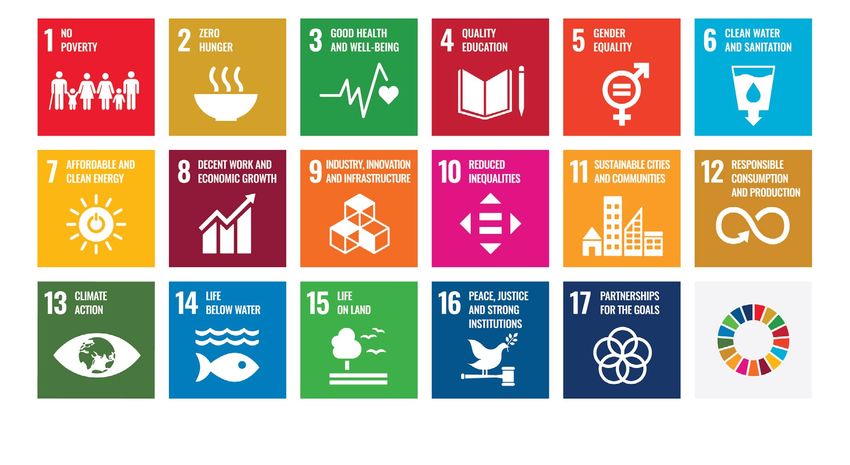
3   University of Strathclyde Business School | Sharing Information on Progress Report 2019-2021

    Launched at the 2007 UN Global Compact Leaders’ Summit in Geneva, the Principles for Responsible
    Management Education (PRME) initiative is the largest organised relationship between the United Nations and
    business schools, with the PRME Secretariat housed in the UN Global Compact Office.

    The mission of PRME is to transform management education, research and thought leadership globally
    by providing the Principles for Responsible Management Education framework, developing learning
    communities and promoting awareness about the United Nations’ Sustainable Development Goals.

    The Six Principles of PRME are inspired by internationally accepted values, such as the United Nations
    Global Compact’s Ten Principles, and provide an engagement structure for academic institutions to advance
    social responsibility through incorporating universal values into curricula and research. They seek to establish
    a process of continuous improvement among institutions of management education in order to develop a new
    generation of business leaders capable of managing the complex challenges faced by business and society
    in the 21st century.

    The PRME Principles, as evidenced throughout this SIP Report are:

                     Principle 1 | Purpose                                     Principle 4 | Research

                     We will develop the capabilities of                       We will engage in conceptual and
                     students to be future generators of                       empirical research that advances
                     sustainable value for business and                        our understanding about the
                     society at large and to work for an                       role, dynamics, and impact of
                     inclusive and sustainable global                          corporations in the creation of
                     economy.                                                  sustainable social, environmental
                                                                               and economic value.
                     Principle 2 | Values
                                                                               Principle 5 | Partnership
                     We will incorporate into our
                     academic activities, curricula,                           We will interact with managers
                     and organisational practices                              of business corporations to
                     the values of global social                               extend our knowledge of their
                     responsibility as portrayed in                            challenges in meeting social and
                     international initiatives such as the                     environmental responsibilities
                     United Nations Global Compact.                            and to explore jointly effective
                                                                               approaches to meeting these
                     Principle 3 | Method                                      challenges.
                     We will create educational                                Principle 6 | Dialogue
                     frameworks, materials, processes
                     and environments that enable                              We will facilitate and support dialog
                     effective learning experiences for                        and debate among educators,
                     responsible leadership.                                   students, business, government,
                                                                               consumers, media, civil society
                                                                               organisations and other interested
                                                                               groups and stakeholders on critical
                                                                               issues related to global social
                                                                               responsibility and sustainability.

                                                                                             Return to contents >
4   University of Strathclyde Business School | Sharing Information on Progress Report 2019-2021

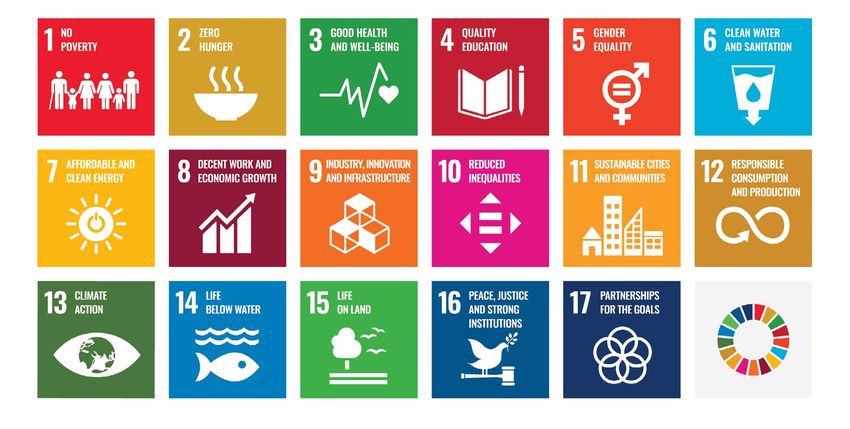
    The SDGs were adopted by the UN in 2015 to provide a framework for developing the world in a
    sustainable way and seek to address: ending poverty and hunger; promoting good health and wellbeing;
    quality education; achieving gender equality; economic growth; providing access to clean water and
    sanitation; affordable and clean energy; and, tackling climate change.

    n   Goal 1: End poverty in all its forms everywhere   n   Goal 11: Make cities and human settlements
    n   Goal 2: End hunger, achieve food security and         inclusive, safe, resilient and sustainable
        improved nutrition and promote sustainable        n   Goal 12: Ensure sustainable consumption and
        agriculture                                           production patterns
    n   Goal 3: Ensure healthy lives and promote well-    n   Goal 13: Take urgent action to combat climate
        being for all at all ages                             change and its impacts
    n   Goal 4: Ensure inclusive and equitable quality    n   Goal 14: Conserve and sustainably use
        education and promote lifelong learning               the oceans, seas and marine resources for
        opportunities for all                                 sustainable development
    n   Goal 5: Achieve gender equality and empower       n   Goal 15: Protect, restore and promote
        all women and girls                                   sustainable use of terrestrial ecosystems,
    n   Goal 6: Ensure availability and sustainable           sustainably manage forests, combat
        management of water and sanitation for all            desertification, and halt and reverse land
                                                              degradation and halt biodiversity loss
    n   Goal 7: Ensure access to affordable, reliable,
        sustainable and modern energy for all             n   Goal 16: Promote peaceful and inclusive
                                                              societies for sustainable development, provide
    n   Goal 8: Promote sustained, inclusive and
                                                              access to justice for all and build effective,
        sustainable economic growth, full and
                                                              accountable and inclusive institutions at all levels
        productive employment and decent work for all
                                                          n   Goal 17: Strengthen the means of
    n   Goal 9: Build resilient infrastructure, promote
                                                              implementation and revitalize the global
        inclusive and sustainable industrialization and
                                                              partnership for sustainable development
        foster innovation
    n   Goal 10: Reduce inequality within and among
        countries

                                                                                          Return to contents >
5   University of Strathclyde Business School | Sharing Information on Progress Report 2019-2021

    About Strathclyde Business School

    A little history                                       International accreditation and
                                                           recognition
    Founded in 1948, the University of Strathclyde
    Business School is a pioneering, internationally       Strathclyde Business School has held triple
    renowned academic organisation that shapes             accreditation from the three main business school
    and develops the business minds of tomorrow.           accreditation bodies – AMBA, EQUIS and AACSB
    Strathclyde Business School is one of four faculties   – since 2004. We were the first business school in
    forming the University of Strathclyde in Glasgow.      Scotland to achieve triple accreditation.
    The University was established in 1796 as ‘the         We were also the first business school in Scotland
    place of useful learning’ and this remains at the      to be awarded the Small Business Charter Award,
    forefront of our mission today.                        which recognises our world-leading support
                                                           for scaling Scottish firms through innovation,
    Our teaching                                           internationalisation and leadership.
                                                           Our departments and programmes also hold
    Strathclyde Business School’s subject departments      internationally recognised industry accreditations
    and specialist units collaborate to provide a varied   such as CIMA, ICAS and CIPD.
    programme of specialist and cross-disciplinary
    courses. We have established international centres
                                                           Research excellence
    in Greece, Switzerland, UAE, Oman, Bahrain,
    Singapore and Malaysia, where we offer degrees
                                                           Strathclyde has a reputation for research
    such as the Strathclyde MBA.
                                                           excellence. Based on the REF (Research
                                                           Excellence Framework) 2014 GPA scores, the
    A collaborative approach                               Times Higher Education ranked us first in Scotland
                                                           and in the top 10 business schools in the UK for its
    We have firm roots in the business community
                                                           research.
    in and around our home city of Glasgow which
    extends not only nationally, but internationally.
    We pride ourselves on our collaborative approach
    to working alongside industry building mutually
    beneficial relationships which add value to both
    organisations and individuals alike.

                                                                                         Return to contents >
6   University of Strathclyde Business School | Sharing Information on Progress Report 2019-2021

    SIP Report Highlights

    Principle 1 | Purpose                                 Principle 3 | Method

    n   Professor David Hillier, Executive Dean of        n   The University launched a dedicated module on
        Strathclyde Business School, championed the           Multi-disciplinary Perspectives of Sustainable
        development of the new University Centre for          Development, focused on education on the
        Sustainable Development to encourage multi-           Sustainable Development Goals. The module
        disciplinary collaborations at all levels and         is distinctive in being delivered by academic
        pursuit of SDGs. See page 8                           staff across all four faculties of the University,
                                                              who present different disciplinary perspectives
                                                              on the challenges expressed in the UN’s SDSs.
                                                              The module is available as an elective to all
                                                              undergraduate students at the University.
                                                              See page 15
                                                          n   The development, impact and feedback
                                                              of the Social Responsibility Pathway that
    Principle 2 | Values                                      SBS students undertake as part of the
                                                              Undergraduate Management Development
    n   The University of Strathclyde is amongst              Programme, as demonstrated by the voices
        the top universities (positioned joint-32nd           represented in the report. See page 16
        in the world, up from 70th last year, first in
        Scotland and seventh in the UK) whose
        work is contributing to the United Nations’
        17 Sustainable Development Goals (SDGs),
        according to the Times Higher Education
        (THE) Impact Rankings 2021. See page 11
    n   Designed to support SBS staff wellbeing
        and mental health, SBS Wellbeing is an            Principle 4 | Research
        initiative devised, developed and championed
        by David Somerville (PRME Administrative          n   Ongoing research projects by the Global
        Lead). It brings together the key elements of         Socially Progressive Entrepreneurship &
        connection, activities, learning, awareness and       Innovation Research Group. Core areas of the
        helping others - to help maintain and improve         Research Group include: Social, Sustainable
        the Faculty’s mental health and wellbeing             and Diversity-focused Entrepreneurship and
        during the COVID-19 pandemic and beyond.              Innovation, strategies for Social and Business
        See page 12                                           Sustainability and Impact as well as related
                                                              Educational and Business Models. The Group
                                                              shares close links to the existing University
                                                              Strategic Sub-Theme of Socially Progressive
                                                              Innovation and Entrepreneurship. See page 28

                                                                                         Return to contents >
7   University of Strathclyde Business School | Sharing Information on Progress Report 2019-2021

    SIP Report Highlights continued

    n   In keeping with the principles of the UN SDGs,
        the Centre for Sustainable Development
        seeks to foster collaboration and equitable
        partnerships to ensure that no one is left
        behind. Central to this is a vibrant and
        cohesive PGR community, serving as a
        platform for inter-disciplinary collaboration,
                                                         Principle 6 | Dialogue
        both nationally and internationally. As
        such, we have launched the Strathclyde
                                                         n   In 2021, SBS was named a Pioneering
        Centre for Doctoral Training for Sustainable
                                                             Institution by the RRBM (Responsible
        Development. See page 29
                                                             Research in Business and Management).
                                                             It’s a virtual organisation initially developed
                                                             by a group of 24 leading scholars in five
                                                             disciplines at 23 university-based business
                                                             schools in 10 countries and now joined by a
                                                             much larger community. The organisation is
                                                             supported by groups including AACSB, EFMD,
                                                             PRME, Aspen Institute’s Business and Society
    Principle 5 | Partnership                                Program, GRLI and many business schools
                                                             worldwide. See page 40
    n   In 2020, Strathclyde Business School was
                                                         n   We promote the impact of our research
        successful in securing more than £1.5 million
                                                             through the University’s flagship programme
        pounds funding from the Economic & Social
                                                             Engage with Strathclyde week, bidding for
        Research Council to establish and launch
                                                             and winning KTPs, promoting and bidding
        a multi-disciplinary, cross-UK, knowledge
                                                             for Innovation vouchers and Consultancy
        exchange hub. The Productivity Outcomes
                                                             projects, delivering commissioned reports
        of Workplace Practice, Engagement
                                                             and offering a portfolio of executive education
        and Learning (PrOPEL), brings together
                                                             classes. See page 41
        researchers from 8 different universities and
        the Chartered Institute of Personnel and
        Development (CIPD) to work with businesses
        to explore how best to boost workplace
        productivity through progressive management
        practices and employee engagement. See
        page 36
    n   In January 2021, Strathclyde’s upcoming
        membership of the University of the Arctic
        (UArctic, https://www.uarctic.org/) was
        announced. UArctic is a network of higher
        education and research institutions from
        across the world who are concerned with
        education and research in and about the
        North. See page 36

                                                                                      Return to contents >
8   University of Strathclyde Business School | Sharing Information on Progress Report 2019-2021

    Principle 1 Purpose
    We will develop the capabilities of students to be future
    generators of sustainable value for business and society
    at large and to work for an inclusive and sustainable
    global economy.

                                                                Professor David Hillier, Executive Dean of
                                                                Strathclyde Business School, championed
                                                                the development of the new University
                                                                Centre for Sustainable Development to
                                                                encourage multi-disciplinary collaborations
                                                                at all levels and pursuit of the SDGs.

       The University established the Centre for Sustainable Development in October 2020, housed
       within Strathclyde Business School. The Centre aims to bring a coherence to our global socially
       progressive vision. In keeping with the principles of the UN SDGs, the Centre seeks to foster
       collaboration and equitable partnerships to ensure that no one is left behind, particularly building on
       our excellent track record and relationships with industry. We have five thematic areas: Education
       and Awareness, Research, Capacity Building, Partnerships and Thought Leadership, pulling in
       interdisciplinary teams from across all four faculties in the University.

       As global citizens we will design our solutions to be appropriate to each distinct context, recognising
       the global interdependencies of economic and social development, and environmental protection.
       We shall be cognisant of the rapid changes and impacts of COVID-19 on global and national
       challenges and on all our activities.

    Introduction                                            As a socially progressive institution, the University
                                                            is enabling access to education by people from the
    In educating Strathclyde students, and upskilling/      widest possible range of backgrounds, and all ages
    reskilling/developing people in work and changing       and stages of life, providing tailored personalised
    careers, we ensure they are challenged in an            support, promoting wellbeing, and fostering onward
    intellectually stimulating environment, which           success.
    is informed by our strengths in research and
    knowledge exchange and is set in a context of           Strategic Plan
    global challenges and sustainability. Our extensive
    UK and international partnerships with industry,        The University of Strathclyde’s Strategic Plan 2020-
    public and third sector partners and our significant    2025 builds on our collective achievements over
    strengths in research and knowledge exchange,           recent years in realising our vision of Strathclyde as
    enable our students to gain the knowledge, skills       a leading international technological university that
    and experience they need to excel in a fast-            makes a positive difference to the world.
    moving world.                                           Established as the place of useful learning – with
                                                            a mission to make the world better-educated,
                                                            prosperous, healthy, fair and secure – we continue
                                                            to live by our socially progressive values today,

                                                                                           Return to contents >
9   University of Strathclyde Business School | Sharing Information on Progress Report 2019-2021

    Principle 1 | Purpose continued

    putting sustainability at the heart of our strategy     We will continue to build on the solid foundations,
    through our commitment to deliver against the           strong financial position, international profile and
    United Nations Sustainable Development Goals.           goodwill that we have established and we will make
    We have grown our partnerships with business,           major investments in our staff, focusing on new
    industry and government to accelerate and amplify       talent attraction and retention and development
    innovation and to boost societal advancement,           across all our staff categories. We will strive for
    economic success and inclusivity in our city, our       even greater progress and to meet the challenges
    country and across the world.                           and capture the opportunities of the years ahead
                                                            with purpose and determination in a world that is
    We have invested enormously in our campus to            continually and rapidly changing.
    deliver a first-class experience for our increasingly
    international and diverse student body, while           Our strength lies in our ability to respond quickly
    making advances towards net zero through the            and flexibly to developments in the external
    setting of ambitious and challenging milestones,        environment and to create and take advantage of
    mindful of the urgent need to reduce humankind’s        opportunities, working with our partners here and
    impact on our planet.                                   overseas, when they arise.

    We make important contributions to the                  Our Strategic Plan outlines our aims for the next
    international acknowledgement of the climate            five years and how we will use our distinctive
    emergency we face and have acted to identify            position as a leading international technological
    solutions to tackle this defining challenge for the     university to be innovative in delivering our
    21st century. This has arisen through our staff         ambitions – questioning, challenging and
    delivering impactful outcomes from our leading          developing our approaches, operations and
    research activities and by our staff appointments       processes to ensure that we are effective in all that
    on bodies influencing government in Scotland            we do. Coupled with our relentless commitment
    and the UK. To deliver net zero we will work more       to pursuing a globally socially progressive vision,
    intensively and in collaboration with others to:        these two overarching characteristics define the
    influence policy; ready our graduates with the          authentic passion we have for making definite, high
    knowledge and approaches they need to make              value, contributions; truly ‘useful learning’ in the
    an impact; create technical solutions through           21st century.
    our research programmes; and ensure our own
    campus and community make the necessary shifts          In doing so, we will ensure Strathclyde provides
    in behaviours and investments.                          a supportive and rewarding working environment
                                                            which allows us to develop our capabilities and look
    Our successes flow from our clear and distinctive       after our health and wellbeing. Our values ethos,
    strategy which, measured against performance            and our focus on social inclusion, social justice,
    data and stakeholder responses, tells us that our       and community and public engagement influence
    values-led approach to working together, and our        not just what we do, but how we do it.
    targeted actions and bold decision-making are
    delivering for our students, our partners and society   As a University, we benefit immensely from
    at large.                                               welcoming diversity from across society and the
                                                            world at large, and we will always remain open
                                                            and outward looking. We will continue to focus
                                                            on improving diversity, enabling inclusion and
                                                            promoting equality at Strathclyde.

                                                                                          Return to contents >
10   University of Strathclyde Business School | Sharing Information on Progress Report 2019-2021

     Principle 1 | Purpose continued

     Strategic Framework                                    Andrea became Strathclyde Business School’s
                                                            first Director of PRME in 2017. The Principles,
     We have three key Strategic Goals through which        as broadly defined by the United Nations, are an
     our ambitions will be delivered:                       ideal example of how Strathclyde Business School
                                                            expresses the University’s values and Strategic
     n   Outstanding education and student experience       2025 vision. As part of her role Andrea is engaged
                                                            with other PRME signatories in sharing good
     n   World-leading research                             practice and evidence/cases of impact from PRME
     n   Transformative innovation & impact                 and engages with the UN Global Compact and
                                                            other UN agencies.

     Our Cross-cutting Goals provide critical context:
                                                            Supported by David Somerville, PRME
                                                            Administrative Lead, who is responsible for
     n   Global engagement
                                                            collecting and collating information on PRME-
     n   Operational excellence                             related activities for the School’s SIP Report.
                                                            David also supports the School’s faculty-wide
                                                            accreditations AACSB and EQUIS, as well as being
     Our commitment to sustainability underpins the
                                                            the SBS Wellbeing Champion (see Principle 2:
     entire Strategy. Through delivery of this Plan we
                                                            Values, for David’s achievement in this area).
     will demonstrate what we intend to achieve as an
     institution over the period to 2025 and how we will
                                                            Contact Us
     focus our collective energy in order to realise our
     ambitions.
                                                            For further information about PRME-related
                                                            activities at SBS, please contact:
     Our Vision
                                                            Dr Andrea Coulson
     Strathclyde Business School’s vision is to be
                                                            Director SBS Principles for Responsible
     a socially progressive, world class business
                                                            Management Education
     school located within and integral to a leading
                                                            a.b.coulson@strath.ac.uk
     technological university.
                                                            David Somerville
     PRME Personnel at SBS                                  PRME Administrative Lead
                                                            david.somerville@strath.ac.uk
     Dr Andrea Coulson is a Reader in Accounting at the
     University of Strathclyde and Strathclyde Business
     School’s Director of the Principles for Responsible
     Management Education (PRME). As an
     accountant, her research, teaching and knowledge
     exchange interests include environmental and
     social accounting and accountability. She is
     particularly concerned with climate adaptation and
     working towards sustainability and accountability in
     everyday lives.

                                                                                         Return to contents >
11 University of Strathclyde Business School | Sharing Information on Progress Report 2019-2021
Principle 2 Values
We will incorporate into our academic activities, curricula
and organisational practices, the values of global social
responsibility as portrayed in international initiatives
such as the United Nations Global Compact.
Our academics are engaged in research across the business school which has a sustainable and
inclusive focus. They work with industry partners on issues relating to global social responsibility and
what is learned from this is incorporated into our teaching programmes, ensuring value for the triangle of
academic staff, students and business partners.
Times Higher Education (THE) Impact Rankings 2021
The University of Strathclyde is amongst the top universities in the world whose work is contributing
to the United Nations’ Sustainable Development Goals (SDGs), according to the Times Higher
Education (THE) Impact Rankings 2021.
Strathclyde is positioned joint-32nd in the world, up from 70th last year, first in Scotland and
seventh in the UK in the latest Rankings which measure how 1,115 global higher education
institutions are working towards the 17 United Sustainable Development Goals (SDGs).
An institution’s overall ranking in the table is determined by the combined score of its three best-
performing SDGs and the compulsory category, which for Strathclyde were:
n SDG 9 Industry Innovation and Infrastructure – joint 55th out of 680 institutions
n SDG 12 Responsible Consumption and Production – 7th out of 503 institutions
n SDG 16 Peace, Justice and Strong Institutions – 13th out of 653 institutions
Strathclyde garnered a total of 91.7 points out of 100, with this improved position set against a
substantial increase in the number of participating institutions.
This is an achievement that reflects increasing recognition that we are delivering on our mission
as the Place of Useful Learning and our authentic commitments to being socially progressive. The
results are a particularly welcome endorsement of our Vision 2025 strategy in the year the COP26
climate conference comes to our city.
Return to contents >12 University of Strathclyde Business School | Sharing Information on Progress Report 2019-2021
Principle 2 | Values continued
SBS Wellbeing
Designed to support SBS staff, SBS Wellbeing is an initiative devised, developed and championed
by David Somerville (Senior Faculty Administrator – Accreditations and Staffing, and also PRME
Administrative Lead). This initiative brings together the key elements of maintaining and improving
staff’s mental health and wellbeing.
Our key messages are:
Connect: stay connected, engage and communicate with all staff to promote good mental health
and wellbeing, both within the School and across the University
Be active: promote activities, exercise, fitness, nutrition and a healthy body and mind
Keep learning: from on-campus staff training to online resources, self-help books and publications
– every day is a school day
Be aware: of those around you and the wide range of influencing factors affecting mental health.
Be curious, take notice and keep caring
Help others: giving can be very rewarding. Do something nice for a colleague, volunteer your time,
fundraise for charity, thank someone, smile, care, listen. Look out, as well as in
In October 2020, David received a Strathclyde Values Medal for his work on the accreditations
of the Business School, and for being a huge champion of mental health and wellbeing at work -
demonstrating all five of the University Values, in his work, relationships and achievements. The
2020 Strathclyde Values Medals looked particularly at those individuals and teams that exemplified
the Values in the process of responding to the COVID-19 emergency.
Our Values Bold: confident and challenging in what we do,
and supportive of embracing appropriate and
The University’s values capture what we’re managed risk in our decision-making
all about: who we are, what we believe in and
what we stand for. Our values flow from how we Innovative: focused on discovering and applying
act and how we expect to be treated as part of knowledge with impact, and encouraging creative
Strathclyde. In delivering our Strategic Plan, we thinking and new ideas
will contribute, act and make decisions guided by
these values. Collaborative: working together, with our
colleagues and external partners, with integrity
People-oriented: committed to our staff and and in an open, respectful way
students, providing opportunities and investing in
their development Ambitious: for our institution, staff and students
as well as supporting the ambitions of our partners
Return to contents >13 University of Strathclyde Business School | Sharing Information on Progress Report 2019-2021
Principle 2 | Values continued
Our Mission The Strathclyde staff pledge
Strathclyde Business School’s mission is to make Building on our core Values, the People Strategy
a positive difference to the lives of our students, sets out a foundation commitment for every
society and the world. All within the context of the colleague. This foundation – ‘The Strathclyde
University’s founding mission of being a place of Pledge’ – commits to ensuring that staff have
useful learning. stable contracts, fair and equal pay, a safe
and secure working environment and that their
Ethical Guidelines and Codes opinions are valued.
of Conduct
A stable contract: In some cases, this will not
necessarily be a fixed-term or flexible contract
The University has a comprehensive list of HR
but we will commit to ensuring as much certainty
Policies and Procedures, including:
as possible and early confirmation of what will
happen at the end of each contract.
n Code of Practice on Investigations Involving
Human Beings
Fair & equal pay: We commit to continuing to
n Dignity and Respect Policy pay the Voluntary Living Wage, to helping staff
n Equality and Diversity Policy understand the rationale for their salary level and
to ensuring that, within each grade, we continue
n Equality and Diversity Strategy Committee to pay colleagues appropriately regardless of their
Policy on LGBT+ Staff and Students gender or other protected characteristic.
n Gender-Based Violence Policy
A safe & secure working environment: We
n Mental Health and Wellbeing Policy aim to ensure zero harm for our colleagues and
commit to moving from reacting to allegations of
Our People Vision harassment to prevention of harassment in the
workplace.
Together we will create an exceptional, Values-
based work environment where colleagues feel An opinion that matters: We commit to listening
deeply connected with the University’s Vision to, and responding to, the views of our staff, both
2025 and have the skills, motivation and reward through our collective bargaining framework and
for delivering it. We will achieve this Vision from those who choose not to be Trade Union
through five Strategic Themes which build upon a members.
foundation pledge for all staff.
Theme 1: Ensuring everyone’s efforts count
Theme 2: Effective Leaders and Managers
Theme 3: A thriving environment
Theme 4: My reward, my contribution
Theme 5: Retention and attraction of talent
Return to contents >14 University of Strathclyde Business School | Sharing Information on Progress Report 2019-2021
Principle 2 | Values continued
Global Goals Teach-In The aim of the Teach-In is not to completely change
the syllabus, but to consider how the SDGs can be
The aims of the Teach-In are to: incorporated into what is already being delivered
and how students can apply what they are learning
n Raise awareness of the importance of in the classroom to real-world problems.
sustainable development
The Teach-In represents a ‘playground’ to explore
n Catalyse curriculum reform and test new ideas
how the SDGs connect with academics’ own
n Embed sustainability and social responsibility subject and teaching, and presents an opportunity
across all disciplines and learning for both staff and students to explore this together.
n Link teaching, learning, and assessment to Staff are invited to pledge their support to
local and global concerns incorporate the SGDs into their teaching.
n Prepare students with the knowledge, skills,
and attributes to tackle the world’s greatest Strathclyde’s Education and Awareness
challenges Raising Thread of the Centre for Sustainable
Development are putting together a Padlet which
In our Vision 2025 strategy, Strathclyde will accumulate useful resources for teaching staff,
committed to “placing Education for Sustainable including a range of best practice examples from
Development at the heart of its curriculum”. The across our institution for embedding ESD in our
Global Goals Teach-In represents an opportunity curricula – at all levels and scales.
for all teaching staff to engage with the SDGs,
particularly if this is not something they have UN Global Compact Champion
explored in their teaching before.
Professor Michael Kelly remains a champion
The seventeen SDGs are varied and wide- of Strathclyde Business School. The School
ranging, including Gender Equality (SDG 5), reappointed Professor Kelly, who is a local UN
Quality Education (SDG 4) and Climate Action Global Compact champion, Emeritus Chair of
(SDG 13), and can therefore apply to any the Living Foundation UK and former Director of
discipline. Engagement with the Teach-In can Corporate Social Responsibility at KPMG, as a
take any form – from a themed lecture, to a Visiting Professor in the Department of Accounting
class discussion of a TED talk, consideration of and Finance.
the SDGs through a case study relevant to your
discipline, or a wide ranging debate.
Return to contents >15 University of Strathclyde Business School | Sharing Information on Progress Report 2019-2021
Principle 3 Method
We will create educational frameworks, materials,
processes and environments that enable effective
learning experiences for responsible leadership.
A review of Strathclyde Business School’s programmes is carried out annually to ensure we are teaching
best practice in terms of business ethics, corporate social responsibility, and responsible management and
leadership. This is reflected in the content of both undergraduate and postgraduate programmes, with a
particular emphasis on increasing the experiential elements. Many of our programmes have reflection built
into them, allowing our students to think critically about the business world and responsible leadership.
Multidisciplinary Perspectives of Sustainable Development
Recognising the importance of interdisciplinary working and skills, our staff contribute to the
credit-bearing module called Multidisciplinary Perspectives of Sustainable Development,
launched in 2020. The module is distinctive in being delivered by academic staff across all four
faculties: Engineering, Humanities and Social Sciences, Science and Strathclyde Business
School, who present different disciplinary perspectives on the challenges expressed in the UN’s
Sustainable Development Goals. The module is available as an elective to all undergraduate
students at the University.
The class introduces students to the UN’s 17 Sustainable Development Goals, and explores in
depth multidisciplinary perspectives of responding to the challenges of four specific goals, namely:
n SDG 3 Good Health and well-being
n SDG 7 Affordable and Clean Energy
n SDG 10 Reduced Inequalities
n SDG 13 Climate action
Through focused study of the SDG agenda and these four SDGs, students gain an understanding
of the different ways in which various disciplines contribute to addressing these challenges. The
pedagogical design of the module aligns to UNESCO’s Education for Sustainable Development
Learning Objectives (2017) so that students have the opportunity to develop the skills UNESCO
say are essential for addressing the goals. This includes the development of socio-emotional skills,
including reflective skills and the ability to collaborate with, and communicate effectively with,
students from other disciplines. Students are also encouraged to see the overlap between the SDG
and how addressing one SDG can facilitate or hinder progress on achieving the targets of another
SDG. It is anticipated that this module will be one of a series of modules, each focussing in depth
on different SDG.
Return to contents >16 University of Strathclyde Business School | Sharing Information on Progress Report 2019-2021
Principle 3 | Method continued
Social Responsibility Pathway
The Social Responsibility Pathway is a 20 credit option for third year students participating on
the Strathclyde Business School Management Development Programme (MDP). The pathway is
designed to give students experience of working with initiatives and external organisations in real-
life contexts while engaging in activities with a positive social dimension, particularly in relation to
widening access to Higher Education. This allows them to gain valuable real-world experience,
developing their employability skills while giving something back to the local community.
Participating students can select options based on three main areas of work; widening access
programmes, educational initiatives and work with third sector organisations.
Since 2014-15, 1,158 students have participated on the pathway. They have worked with 24
external organisations and charities; tackling issues such as poverty, homelessness, and support
for the newly-arrived refugee community; and with pupils from 62 secondary schools from 13
local authorities, contributing thousands of hours to access and outreach projects, including
tutoring care-experienced young people and high school pupils from more deprived areas and
mentoring on the Breaking Barriers programme. Students also have the opportunity to design
and manage the One Step Forward event for pupils interested in studying at the Strathclyde
Business School, mentor school pupils through the Micro Tyco Innovate sustainability challenge
and work as classroom assistants in primary schools in more disadvantaged areas.
Participating students find the work challenging, rewarding and enjoyable. The experience allows
them to address forms of disadvantage in a positive and proactive way and to develop a range of
transferable skills including communication, team-work and time-management.
Due to the circumstances of academic year 2020-21, all of the student work on the pathway
was moved online. New working structures were created to allow students to work remotely with
partner organisations and to engage effectively and securely online with pupils on Tutoring and
Mentoring programmes as well as the One Step Forward Widening Access event. Despite the
challenges presented, there were many benefits to these new ways of working, with students
being able to support both charities e.g Calum’s Cabin on the Isle of Bute, and learners that
are geographically more-distant from the University. In total, students worked with 16 external
charities during the year. The 2021 Strathclyde Christmas Toy Appeal was also moved entirely
online with students raising £8,050, allowing us to purchase and distribute 950 presents to local
charities and schools. 30 pupils, including care-experienced young people, were tutored and
mentored remotely and 20 learners with learning disabilities from across Scotland were mentored
online during 2020/21.
Return to contents >17 University of Strathclyde Business School | Sharing Information on Progress Report 2019-2021
Principle 3 | Method continued
Examples of the impact of the Social Responsibility Pathway since 2014/15, have included:
Widening Access
n 65 students have tutored 161 pupils, including care experienced young people.
n 33 students have mentored 44 senior school pupils interested in studying Business at
university.
n 22 students have mentored 34 students with learning disabilities on the award-winning
Breaking Barriers programme.
n 135 pupils have attended the ‘One Step Forward’ one-day event.
Educational Initiatives
n 63 students have worked as classroom assistants in Annette Street Primary in Govanhill,
supporting pupils with language difficulties, for approximately 4,700 hours. Students have
also fundraised over £12,000 Primary to provide the school with educational resources and
opportunities.
n 68 students have worked over 4,000 hours with MCR Pathways, who support care-experienced
young people. Student roles have included research projects, designing educational
programmes and creating marketing materials.
External Organisations and Charities
n Overall, student fundraising activity on the pathway has raised over £65,000 for several
different charities.
n Since 2016, the Strathclyde Christmas Toy Appeal has received and distributed over 6,000
presents through five schools and nurseries and 10 children’s charities, to some of the most
disadvantaged children in Glasgow.
n 39 students have spent over 3,000 hours working in the Glasgow South-East foodbank,
developing projects that help support the foodbank in its mission, as well as raising over
£10,000.
n 25 students have worked 2,500 hours with Refuweegee, supporting the integration of the
newly-arrived community into Scottish life. Students work in the Refuweegee offices and run a
variety of fundraising and awareness-raising activities.
Return to contents >18 University of Strathclyde Business School | Sharing Information on Progress Report 2019-2021
Principle 3 | Method continued
Testimonials
“Taking part in One Step Forward Strathclyde was an incredibly rewarding opportunity. It gave
me the chance to work with a very skilled team to support young people by helping to break
down the barriers many pupils from disadvantaged backgrounds face when accessing Higher
Education. On a personal level, this experience has provided me with many transferable skills to
take forward with me and allowed me to feel I was making a positive contribution to society. The
awareness it raised has given me a passion for fair access which I am excited to take with me
as I stay on and join the Widening Access Team as a mentor. In addition, as a first-generation
university student from a low SIMD area myself, I have contemplated many times about just
how much initiatives such as One Step Forward Strathclyde would have benefitted me as a high
school pupil, and it was truly an honour to be involved.”
Evie Gardner, Student, Participant on the One Step Forward One-Day Event on the Social
Responsibility Pathway 2020-21
“The young people who took part in the tutoring programme from the University of Strathclyde
spoke about the numerous benefits that the programme gave them. It allowed the young people
to build a relationship with a positive role model whilst receiving individual support in a way that
their family might not have been able to provide. All of the young people feel that they benefitted
from the experience and were very grateful to the team at Strathclyde for all of their hard work.
As a school, we feel that this support has helped the young people at a very difficult time in their
academic journey and provided a fantastic level of support. We are very appreciative of the time
that Strathclyde staff and students spent with our learners.”
Laura Russell, PT Pupil Support, Cathkin High School
“Working with Strathclyde University’s Social Responsibility Pathway is a fantastic and
collaborative partnership for MCR Pathways, which brings enormous benefits on both sides.
The University students are able to gain real and relevant work experience within a fast paced
organisation and we hope it is rewarding for them to see the impact of their work. From pupil
tutoring, to supporting research and the wide ranging needs of the marketing team, the students
have made a truly remarkable difference year on year. As a charity we really value the additional
support they offer us and our young people through their commitment to the programme and its
also rewarding for us to see them flourish and grow in confidence from the experience.”
Kirsty Brennan, MCR Pathways
“Having volunteered as an MCR Pathways tutor over the last few months, I can whole-heartedly say
– and without sounding cliché – that the entire experience has challenged, energised, and developed
me in more ways than I had initially envisioned. Seeing each pupil progress and gain in confidence
each week provided me with the motivation and commitment needed to help them realise their full
potential. Yet, each student I worked with taught me just as much, and for that, I am extremely grateful
for. MCR Pathways are an inspiring and driven organisation with their people at heart - I would
certainly recommend everybody to get involved and help to bridge talent with opportunity.”
Holly McArthur, SBS Student, MCR Pathways Tutor on the Social Responsibility Pathway 2020-21
Return to contents >19 University of Strathclyde Business School | Sharing Information on Progress Report 2019-2021
Principle 3 | Method continued
Testimonials
“Mentoring is a really important part of ENABLE Works Breaking Barriers programme and we
wouldn’t have the same impact on the lives of young people with additional support needs
without the guidance of the students on the MDP3 Social Responsibility Pathway. Not only do
they provide academic support through the programme and help our participants to plan their
assessments, but they are a much larger part of helping young people with additional support
needs to feel immersed in and become equal members of an inclusive university community.”
Emma Malcomson, ENABLE Scotland
We are so grateful for the support of the MDP3 Social Responsibility Pathway from the University
of Strathclyde, and the students who participate and select CHAS as their chosen charity. Each
year we get to work with a group of students who fully commit to raising money for our cause,
and behave so professionally and are so willing to learn and give new things a go. This year’s
students faced the challenge of virtual fundraising. We had no idea how this would go, but they
were not phased. They were professional, committed, creative, and raised over £1,300 for CHAS
at the height of lockdown. It’s been a very tough year to fundraise in, and we are very grateful
that this course continued to operate and produce fundraising results. It’s a pleasure to work with
the students on this course, and I look forward to meeting the new CHAS fundraisers each year!”
Rachel Gedge, Community Fundraiser, CHAS
“During the past year Calum’s Cabin have been working alongside Strathclyde University,
engaging with students on MDP3 Social Responsibility Pathway Awards, this has been an
invaluable partnership and the support and knowledge from students and their lecturers has been
outstanding. The support has been extra beneficial during the pandemic since the majority of
our volunteers have been unable to help, so having the resources and knowledge of students
has been extra valuable. During the partnership, it has been great for the students to learn more
about how a charity is run, being able to develop new skills and adjust the skills they already hold
to suit the needs of the charity.”
Caroline Speirs, Chairperson Calum’s Cabin
Return to contents >20 University of Strathclyde Business School | Sharing Information on Progress Report 2019-2021
Principle 3 | Method continued
Testimonials
“Our very successful partnership with Strathclyde Business School has now been running for
eight years, bringing many benefits for the children in Annette Street School. Our school is unique
in Glasgow because over 90% of the children attending the school are new or early learners of
English. Their families are mainly Romanian or Slovakian Roma and, in addition to having no
English, many have never been to school before, because they have come from situations of
racism, persecution and marginalisation in their home countries. In addition to overcoming the
barriers to learning caused by poverty, one of our biggest challenges is overcoming the language
barrier and ensuring that the children can acquire enough English quickly in order to access the
school curriculum. The students who volunteer with us as part of their “Social Responsibility”
module provide valuable role models of English for the children. By helping groups of children
to understand and keep them on task to complete work set by the teacher, the students are
modelling the language needed. They build relationships with the children and through talk, play
and having fun, they give the children opportunities to practise their English language skills. We
are ambitious and aspirational for the children and working with the students encourages them to
see the benefits of education in the longer term, helping them to understand about how they can
fulfil their ambitions and potential.
The school also benefits financially, thanks to the Fund-raising Group. Through the events
management aspect of their course, the students organise a variety of events to raise funds each
year which we have used to enhance our outdoor learning space, purchase digital technology
and allow us to fund trips for the children to provide rich, experiential learning opportunities.
The Christmas Toy appeal has been one of the highlights of our partnership. Each year, the
university provides a wrapped present for every single child in our school, which for some of
our pupils may be their only present at Christmas. The students usually manage along to our
Christmas parties and are present when the children open their gifts. It is one of the highlights of
the school year for all staff involved and the joy in the room is palpable!
I believe that this project also benefits the students. They find the experience a rich and
rewarding one, which gives them the opportunity to interact with children and support
them in their learning. The opportunity develops their skills as active listeners and effective
communicators and gives them an understanding of the issues of poverty. They experience first-
hand how simple poverty indicators such as poor health and dental care, or lack of sleep due to
over-crowding, can really impact on a child’s ability to learn. Above all however, their experience
in the school demonstrates the need for an anti-racist perspective and the difference that just a
few hours of volunteering can make to the lives of individual children.
In the main, the success of this project is down to the wonderful enthusiasm and commitment of
the students and I cannot praise their efforts highly enough.”
Wendy English, Depute Head Teacher, Annette Street Primary School
Return to contents >21 University of Strathclyde Business School | Sharing Information on Progress Report 2019-2021
Principle 3 | Method continued
Education for Sustainable There are opportunities for all of us involved in
teaching and learning to introduce this into our
Development
teaching, and at any level and scale. For example
I also teach a third year engineering class on
We recognise that we have a core responsibility
renewables, and set an off-grid PV solar system
to ensure our graduates leave with the necessary
design tutorial lasting one hour in the context of a
skills and competencies to address the current and
remote rural community in sub-Saharan Africa.
future sustainability challenges. With this in mind,
we are working hand in hand with the Centre for
This literally breathes life into an otherwise fairly
Sustainable Development, and the Education for
standard technical design exercise, where students
Sustainable Development working group to embed
can become aware of not only how to design the
sustainable development across our curricula.
technical elements of these systems, but of the
In 2020/21, a number of 2nd year undergraduate
social, environmental and economic challenges and
students conducted a student-led survey of
opportunities surrounding these communities, and
academic awareness of the SDGs. The results of
the potential role of such systems in addressing
this will be integrated into the School’s performance
SDG 7 and providing electricity access to the close
appraisal going forward. At the same time, there is
to 1 billion people living without it in the world today.”
also a survey within the ESD group of the students’
awareness of the SDGS.
Management Development
Vertically Integrated Projects for Programme
Sustainable Development
The Management Development Programme
(MDP) is a core module that runs through the
This is an award winning programme that embeds
UG programme for all Business School students
research-based education for sustainable
(n=1671) across Years 1-3. The aim of the MDP
development in Strathclyde’s undergraduate
programme is to support students to put ‘theory into
curricula. Dr Scott Strachan, programme co-
practice’, boost their professional development and
director, has said that “the programme provides our
employability skills and support them to become
students with a platform to proactively contribute
global citizens. Below are some of the ways in
towards meeting various SDG targets as an
which the MDP programme has supported the
integral part of their studies here at Strathclyde.
PRME Principles in 2020 and for 2021 onwards.
Throughout their time here they can work with
MDP1 - Innovation, Commercialisation, and
researchers and academics and crucially with
Entrepreneurship (ICE) (n=496)
each other, and across all sorts of disciplines,
on research that has the delivery of social,
For 2020
economic and environmental impact at its heart.
To paraphrase Sir Jonathan Porritt, the programme
n In Semester 1, students learn about
focuses on preparing our students for the world of
Sustainable Business Practices and the UN
work by tackling the work of the world”.
SDGs. This cumulates in writing an individual
research report to showcase how businesses
Scott says “ESD in our teaching doesn’t need
could become more sustainable to support the
to be through dedicated SDG modules or even
global economy and society. In Semester 2,
programmes like the VIP4SD, it can be one lecture,
students then utilised this knowledge to work
it can be a slide, it can be a mention that ignites
in teams to create a new business product/
that inquisitive spark within our students that sets
service and/or social innovation to support at
them on a path to find out more about the SDGs,
least 2 of the UN SDG goals.
perhaps by registering for some of the SDG-related
classes open to them here at Strathclyde.
Return to contents >22 University of Strathclyde Business School | Sharing Information on Progress Report 2019-2021
Principle 3 | Method continued
n Throughout the Year, students interacted MDP3 - World of Work (WoW) (n=550)
with entrepreneurs, all of whom have had
significant leadership and experience in This year is very different to the other 2 years, as
sustainable and/or responsible leadership. students are allowed to choose their own individual
They were able to be mentored and learn from pathway amongst 6 key areas. So below are some
these entrepreneurs to better their ideas and general ideas of what we cover on the pathways,
knowledge of sustainable business practices. as they link to PRME.
n Internships - on this pathway, students
For 2021 onwards
are encouraged to intern with third sector
organisations and/or working within a larger
n In addition to above, a new format for
organisation’s CSR department and/or
year 1 will now see students take on more
activities. Of this over 50% of our students
Professional Development planning, learning
achieve this. Even with that emphasis, one
fundamental and responsible leadership and
assignment does ask the student to assess the
business skills from global organisations and
business’s CSR and responsible activities and
global leaders.
provide recommendations on what they could
do better.
MDP2 - People, Projects and Professionalism
n CSR & Volunteering - this pathway allows our
(3Ps) (n=625)
students to volunteer with local organisations,
including mentoring underprivileged students
For 2020 onwards
in WP schools. Here students learn about
sustainable business practices and social
n Throughout the year, students worked with
innovations for a better society.
local SMEs and start-ups to help them to
develop social innovations to business n Internationalisation - Global Classrooms: this
challenges. Students also researched external particular section provides students a chance
and internal strategies on how the businesses to work with other students around the world
could adopt the UN SDGs to support their to help support a third sector organisation
business and gain competitive advantage. through consultancy. This allows students
to gain responsible and global leadership
n Throughout the year students worked on
skills, as well as support sustainable business
their own Professional Development skills,
practices globally.
learning how to become better global citizens
and sustainable, responsible leaders. In n Virtually Integrated Projects - this pathway
this students participated in the January sees our students working with Faculty of
Professional Development Fair, which Engineering students to create commercially
was a week-long festival of interactive viable products and/or services that support
workshops that allowed students to learn UN SDG goals for local or international
these development skills via businesses and communities.
organisations.
n Business Consultancy - this pathway has
groups of students working to provide
consultancy for local businesses, with
sections of their reports and recommendations
dedicated to how to adopt the UN SDG goals
as well as become more responsible as a way
to provide competitive advantage.
Return to contents >You can also read


