MARLBOROUGH BOYS' COLLEGE - V IRTU EM - Marlborough Boys' College
←
→
Page content transcription
If your browser does not render page correctly, please read the page content below
MARLBOROUGH
                                 BOYS’
                               COLLEGE

CURRICULUM BOOKLET 2021

                                                             Te Kāreti Taitama o Wairau

                           VIRTUTE                    ARAT
                                   M                 P
                                       D OC T RI N A
                                                                             1
CONTENTS

                                WELCOME, NAU MAI .....................................................               3
                   SUBJECT SELECTION OVERVIEW .....................................................                  4
                    JUNIOR SCHOOL CURRICULUM .....................................................                   5
                                    OVERVIEW
                                     YEAR 9 COURSES .....................................................            6
                                    YEAR 10 COURSES ....................................................             8
        SENIOR SCHOOL CURRICULUM OVERVIEW ....................................................                       11
                                         ARTS FACULTY ....................................................           15
                                                                                                VISUAL ARTS          15
                                                                                                       DRAMA         18
                                                                                                        MUSIC        20
                                                                                 PERFORMANCE DANCE                   21
                                                                                           MEDIA STUDIES             22
                               LANGUAGES FACULTY ..........................................................          23
                                                                                                      ENGLISH        23
                                                                                                LANGUAGES            28
                            MATHEMATICS FACULTY .........................................................            30
                    PHYSICAL EDUCATION FACULTY .........................................................             34
                   NZ SCHOOL OF WINE GROWING .........................................................               44
                           SOCIAL STUDIES FACULTY .........................................................          48
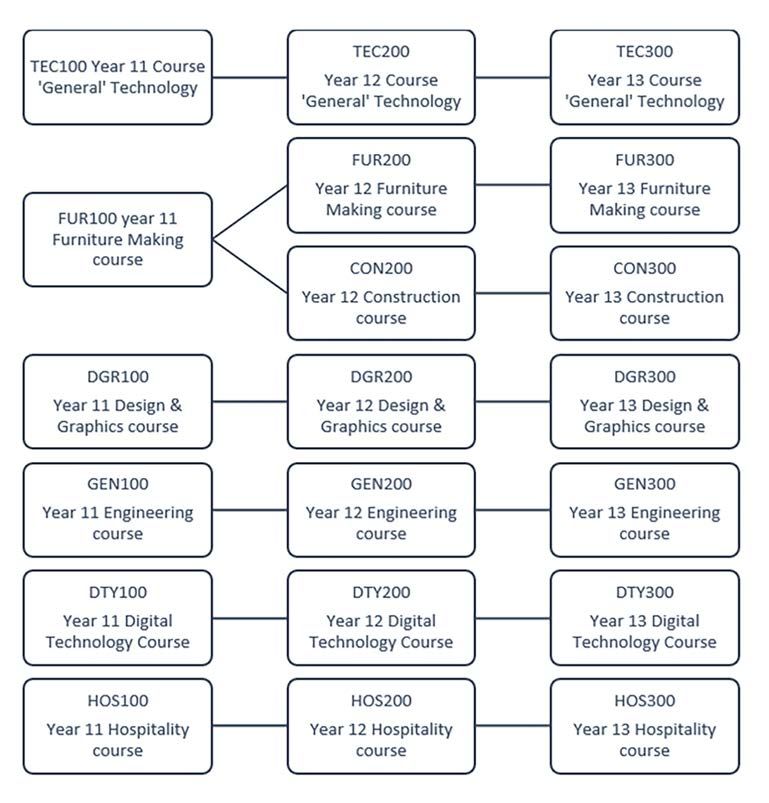
                                         TECHNOLOGY .........................................................        54
                                                                                                HOSPITALITY          55
                                                                                                 FURNITURE           56
                                                                                           CONSTRUCTION              57
                                                                                              ENGINEERING            58
                                                                                   DIGITAL TECHNOLOGY                59
                                                                                     DESIGN & GRAPHICS               60
                                                                                              TECHNOLOGY             61
    TRANSITION & PATHWAYS FACULTY                            .....................................................   62

2
Nau mai
                                                                            Welcome
          Kia Ora Students/ Whānau/ Caregivers
          Our curriculum goals are to:
                 1.Meet the academic needs of students whether students are aspiring for tertiary study or going
                   directly into the world of work.

                    2. Support students to develop/extend passions in areas of co and extracurricular activity whether it
                       be in leadership, service, the arts or sports.

                 3. To develop skills and attitudes (emotional, psychological and social well-being) to live a fulfilled
                     life.
          Quote from the ERO review in 2019 – that we have a

              “A broad, diverse and responsive local curriculum that is increasingly student centred and focused on
                                             meeting learner needs and interests.”

          The 2021 Course Information booklet outlines the subjects available to students at our College.
          It provides the structure of the courses available and outlines qualifications students can achieve. Some courses exist to pre-
          pare students for tertiary study. Others exist to prepare students for trades and/or to join the workforce immediately on leaving
          school. The reading of the Course Information Booklet is one step in the process of choosing your course of study for 2021.
          Begin by asking yourself some important questions:

                   •     What subjects do I enjoy?
                   •     What will I want to do in the future?
                   •     Am I aspiring to do tertiary study or work when I leave school?
                   •     What subjects and qualifications will I need to achieve my aspirations?

          Aim high – do not sell yourself short. It is important that:

            1. The information contained in this booklet is used to discuss what is best for you as the decisions you
                make today will impact on your future.
            2. You discuss the options open to you with your teachers, careers, parents/Whanau, older siblings or
               older friends. Gather as much advice as you can to help you make an informed decision that is right
               for you.
            3. Make choices for yourself, rather than what friends are doing.

          Accept and enjoy the challenges that will be offered in and out of the classroom in 2021

          Ngā mihi
          Jeremy Marshall | Acting Principal

Mr Jarrod Dunn              Mrs Nicole Peterson          Mr Jeremy Marshall         Mr Michael Heath                                         3
                                                                                                          Mrs Michelle Hulland Mr Joshua Harrison
 Assistant Principal		          Deputy Principal		          Acting Principal		         Deputy Principal      Assistant Principal   Assistant Principal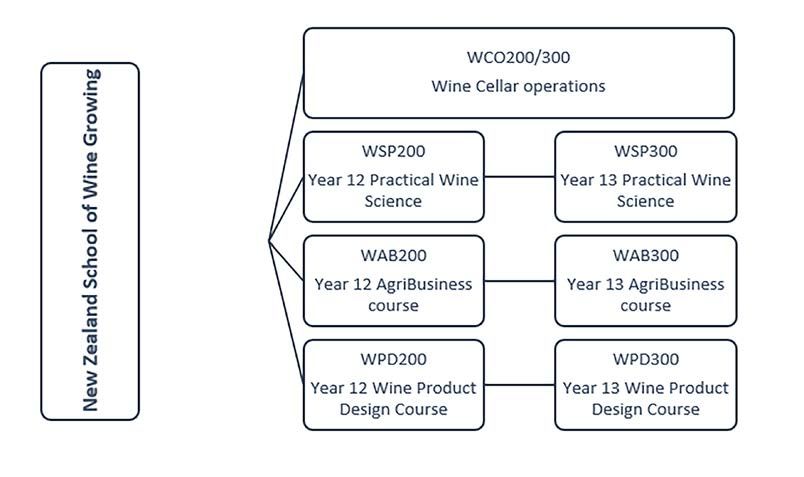
Subject Selection
    COURSE SELECTION EVENING
    This is an opportunity for students and their parents/ caregivers, Whānau to meet with teachers in all
    subject areas to discuss future options. This will be held on the 30th of July 2020.

    DEADLINES FOR SUBJECT SELECTION
    Course selection via the student portal opens on 27th July for students who will be undertaking a course in
    year 11, 12 and 13 in 2021. Course selection via the portal will close on the 7th of August.

    Subject Selection

    Year 9         Students study 10 subjects 6 are compulsory                       Students choose 4 options

    Year 10        Students study 8 subjects, 5 are compulsory                       Students choose 4 options

    Year 11        Students study 6 subjects, 3 are compulsory                       Students choose 3 options

    Year 12        Students study 6 subjects, None are compulsory                    Students choose 6 options

    Year 13        Students study 6 subjects, None are compulsory                    Students choose 6 options

    CHOOSING A COURSE OF STUDY
             ABILITY    +    INTEREST                +      OCCUPATION                 =     SUBJECT CHOICE
    How good are you at a        What do you enjoy?              What do you want to be when
    subject?                                                     you leave school?

                                                                 If you don’t know what you
                                                                 want to be, keep your options
                                                                 open by not specialising.

    Research shows that the two main influences on subject choice are:
    • What subjects your friends are taking.
    • Who is teaching a subject.
    NEITHER of these factors should influence your subject choice. Your friends may not be in the same class as
    you next year, even if you do select the same subjects, and no one knows yet who will be teaching specific
    subject next year. So, concentrate on what you need for YOUR future.
    GENERAL GUIDANCE FOR COURSE SELECTION
    • Choose the subjects that you are good at and which you enjoy.
    • Keep your options open as you are likely to pursue several careers.
    • If you have a career in mind, check with the Careers Advisor whether it has any compulsory subject
    requirements, and that you are choosing the most appropriate courses to get you there.

    • Websites such as Careers NZ (www.careers.govt.nz) also have good information on recommended subjects
    for particular careers that you may have in mind.

    • Plan your course selection through to the end of your secondary schooling
    • Think carefully before dropping a subject that you have studied for several years.
    • Check course entry information for courses you intend to take in future years. Some subjects need to be studied
    in earlier years to be able to continue with them later on.
    Discuss your proposed choice of courses with:
    Your parents / caregiver
    Your teachers
    Your Form teacher
    Your Dean
    The Careers Advisor (Mrs Gail Fletcher)
    The person named as the contact for a specific course
    A member of the Senior Leadership team
4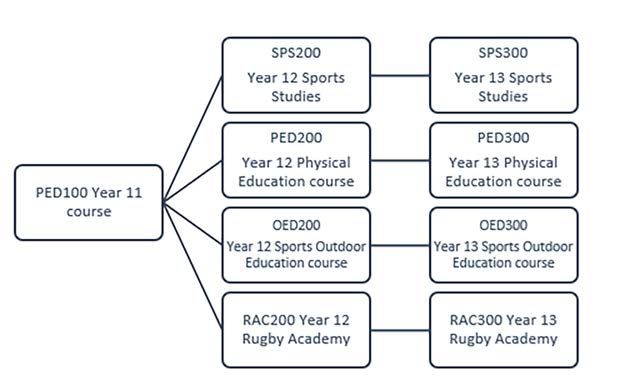
Junior School
                                                    Ngā kaupapa teina
PASTORAL CURRICULUM
All students are supported to be the best they can be through pastoral support at MBC. This happens through daily
contact with a form teacher and a consistent dean linked to each student’s house. Pastoral instruction is integrated
into curriculum delivery with all students working on the school values of Respect, Involvement, Pride, Responsibility
and being the best you can be. Addition Pastoral supports and instruction are provided to students individually or as
a group “as and when “specific are identified.
The Year 9 Programme also includes a specific Pastoral Programme that follows a Tuakana Teina instruction approach.
This occurs every Thursday P1 in terms 1-3 and the focus covers topics including positive behaviors for success and
our school values, effective group working, communication, co-operation, self-awareness/expression, culture and di-
versity, peer pressure, and building strong friendship and trust. The programme invites keynote speakers and follows
a workshop approach. This is followed by opportunities to engage in school and community service projects.

COURSE MATERIALS/COSTS
Included in this course information booklet are the details about write-on books and materials which are designed
to compliment work done in class. A number of these are voluntary charges. The alternative is that the boys make a
copy of the work required and write on their own paper.
Where your son makes use of optional materials, such as write-on book, these will need to be paid for.
We recognize that some families will face difficulties in being able to afford all the materials offered to compliment
their son’s learning. As a school we support families by giving them the opportunities to make regular payments to
the school to cover costs. Please call in at the school office to make arrangements for this.

E-LEARNING AND BYOD
Our e-learning plan for 2021 encourages all students to bring a laptop device to school to aid learning. Having access
to a device is compulsory for all year levels. Options and support are available for families who are not yet able to
provide a device for their son. Please contact the school if you would like to discuss these options. It is preferable
that students are able to use the same device at school and at home, this is why we look to encourage students to
bring a device they own whenever possible. Please contact Dr Eliot Attridge eliot.attridge@mbc.school.nz for advice
relating to support options.

                                                                                                                         5
YEAR 9 COURSE OVERVIEW
                                                             Ngā kaupapa teina
      The Year 9 programme is based on the seven Learning Areas of the New Zealand Curriculum, English, Mathematics
      and Statistics, Science, Social Science, Physical Education and Health, Arts and Languages, and Technology.
      English, Mathematics and Statistics, Science, Social Studies, Physical Education and Health form the core of the Year 9
      programme as full, or half year courses.

      Arts and Technology are taught as one-term Elective courses comprising Art, Drama, Music, Design & Graphics,
      Digital Technology, Food Technology and generic Technology, Students study five of these courses.
      Teo Reo Maori is offered as a three-term optional course replacing Social Studies.
      English for Speakers of Other languaages is offered as a full-year optional course replacing English.

      Year 9 CORE Subjects
ENGLISH - (ENG)                             SCIENCE (SCI)                            MATHEMATICS &                              SOCIAL SCIENCE (SOS)
Te Reo Pākehā                               Pūtaiao                                  STATISTICS (MAT)                           Tikanga ā Iwi
English in Year 9 aims to provide the       Science involves you investigating       Pāngarau                                   ‘The Social Sciences learning area is
necessary learning opportunities            the living, physical, material and       Our junior courses are based on            about how societies work and how
for the students to continue their          technological components of the          the study of the three strands of          people can participate as critical
language development.                       environment and making sense of          mathematics and Statistics.                active, informed and responsible
Opportunities to observe, learn             them in logical and creative ways        • Number and Algebra                       citizens’. (The New Zealand Curricu-
and practice oral, written and visual       It helps you investigate                 • Geometry and Measurement                 lum 2007).
forms of language. Students are             systemically and it will help you to     • Statistics                               Our junior course is based on the
encouraged to read a wide range of          develop a clearer                        In studying these strands and the          study of the four key strands of the
texts for a variety of purposes, to         understanding of aspects of the          connections between them, students         Social Sciences: Identity Culture
develop a range of writing strategies       world around you.                        develop the ability to think creatively,   and Organisation, Continuity and
and to acquire the skills necessary         Aspects of technology are                critically, strategically and logically.   Change, Economic World, Place and
to retrieve and process information         covered in the topics. Practical work    They learn problem solving and skills      Environment.
using different technologies.               is an essential part of the course and   how to interpret and communicate           These strands are examined through
                                            students are                             the solutions to these problems.           a series of study topics based on
                                            expected to learn a variety of skills.   All of the courses at Junior level         the key subject arears of the Social
                                                                                     prepare the students for further           Studies: Geography, History,
PHYSICAL EDUCATION                          Course Topics                            study in the Senior school, including      Economics, Accounting and Classical
                                            Being a Scientist – kaiputaiao           the achievement of the numeracy            Studies.
Akoranga Koiri
                                            Scientists in Space – Tuarangi           requirements at NCEA level one.
The emphasis is on developing large         Scientists using Waves – Ngaru pou,      The teaching of these courses              Our Year 9 topics include:
motor movement skills centered on           ngaru pae                                incorporates the teaching of the           •Pacific Islands
activities that also promote fitness        Scientists in the Sea – Moana            values and key competencies as             • Money and Inequalities
and exercise as fun. Consequently,          tuauriuri                                outlined in the NZ Curriculum.             • Mighty Marlborough
the major games or sports codes             Scientists and Engineers – Mahi i te                                                • Migration
have been de-emphasised to ac-              Pungao                                   Course Material/Costs
commodate individual skill learning                                                  “Mathspace” access
through a wide range of topics and
activities.
Some theory will be used to reinforce       CAREER DEVELOPMENT
practical work and introduce the stu-       CDV001
dents to concepts related to fitness                                                 OPTIONAL LANGUAGE STUDY
and healthy developments. Students          Ngā ara mahi, ngā ara
also undergo an extensive personal          mātauranga                               Students may choose one of these Language Studies
testing programme, with results                                                       TE REO                                    ENGLISH for Speakers of
                                            This course aims to help the students
recorded.
                                            begin thinking about their future.        Te Reo                                    other Languages (ESL)
Course materials/Costs                      Students will look at their skills,
                                            personal qualities, achievements,         A course in Maori Language and            Te Reo Pākehā
Students are required to have a
                                            values and subject interests to           Maori Culture.                            ESOL in Year 9 covers the four skills
prescribed a PE uniform.
                                            develop a Career Plan. Part of the        a) Korero – basic conversational          of reading, writing, listening and
                                            programme will be exploring               Maori, an introduction to male            speaking at elementary level. It is
    HEALTH                                  Vocational Pathways.                      formal speech-making on nga marae         applicable to International Students.
                                                                                      b) Mihi-mihi – introductions for          Students are selected for this course.
    Akoranga Koiri                                                                    people, meetings, topics etc.
    Health Education in Year 9 aims                                                   c) Whakapapa – genealogy.                 The ESOL course develops these skills
    to provide the opportunities for                                                  d) Tikanga – customers of Maoridom.       to improve students English and
    students to gain the knowledge,                                                   e) Maori art and ta moko.                 support their studies in mainstream
    skills, attitudes and values to enjoy                                             f) Haka – the place of the warrior.       subjects.
    a healthy lifestyle and to contribute                                             g) Pakanga – maori warfare.
    actively to the well-being of other                                               h) Noho Marae – overnight
    people.                                                                           marae-based learning.

    Course materials/Costs                                                            Course Material/Costs

    Student Work Booklet                                                              Maori dictionary

6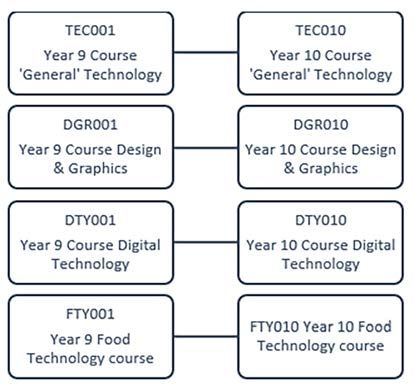
Year 9 Option Subjects
MAORI MAO001 DRAMA DRA001 MUSIC MUS001 GENERIC TECHNOLOGY
Whakaari TEC001
Te Ao Maori Puoro
Students get an introduction to te Ao During the first part of the course, Students learn to play popular tunes Hangarau Whānui
Maori – The Maori World. They will students engage in acting/team on Keyboard, Guitar and Ukulele. In this course the students use the
gain basic conversational skills and building theatre games to develop They develop ensemble skills by play- Technological Process to construct
delve into the history, culture and social and performance skills. The ing music in small groups. They learn a physical solution to a problem set
values of Tangata Whenua (People second part of the course focuses basic conventional notation skills, using workshop skills. It acts as a
of the Land). Students explore the on improvisational activities to im- as well as how to read guitar chord foundation where both practical skills
theories behind Pacific Migrations prove confidence, performance and charts and Tabs. and catering to your stakeholder’s
and traditional Maori and the effects creative thinking skills. The third part need are learnt.
of colonization and modern day, of the course involves performing in a
Course Material/Costs
bi-culture Aotearoa. Kapa Haka is also short group performance.
introduced in this course. Hard Materials for Project work
DIGITAL TECHNOLOGY
DTY001
ART ART001 DESIGN AND GRAPHICS Hangarau Matihiko FOOD TECHNOLOGY
Ngā Toi Ataata DGR001 This is a Computer based course FTY001
Digital Technology supports young
This art course helps students Ngā Toi Ataata Hangarau Kai
people to develop technologies and
develop skill in drawing, painting, This is a drawing and design course, lead them to opportunities across the A variety of nutritious, tasty meals
design, typography and illustration. It which introduces the student to the IT sector. It builds on student skills in including a class culture foods buffet
forms the basis for further extension design process. It involves freehand word processing, meal. The role of food technologists
in years 10,11,12 and 13. sketching of design ideas and formal spreadsheeting and integrated ap- in the food industry focusing on food
Course Material/Costs drawings of solutions. It covers plications. Students learn computer hygiene, packaging and labelling
design elements in the Technology science, data management and requirements. Blind tasting to
Specific Art kit Curriculum. This can lead to a course programming with Python. It leads identify characteristics of successful
of study in Design and Visual Com- to a course of study in Year 10 and food products. Designing menus and
munication at Year 10 and beyond. beyond. invitations for guest participation.
Course Material/Costs
Student Workbook and Art Kit
Learning Areas
Health &
Social
Languages Maths Science Physical The Arts Technology
Sciences
Education
Technology
English Materials
Year 9
Physical Visual Arts
Te Reo Māori Education Design &
Drama Graphics
General
English for Mathematics & Social Studies Health
Science
Speakers of Statistics Education Music Digital
Other Technology
Languages
(ESOL) Food
Technology
Technology
Visual Arts
Materials
English Physical
Social Studies Education Drama
Design &
Te Reo Māori
Graphics
Mathematics & General Geography Health Music
Te Waharoa Statistics Science Education
Digital
Year 10
History Media Studies
Technology
English for Logic & Agriculture & Awata (Sports
Speakers of Reasoning Horticulture Financial Passion) Digital Art
Food
Other Management &
Technology
Languages Consumer Law Sports & Specialist Art
(ESOL) Fitness
Engineering
Specialist Music
Workshop Skills
Outdoor Education (Optional) Rotiti Lodge Camp (Y10 Only)
(Career Development course delivered in year 9 only)
7
YEAR 10 COURSE OVERVIEW
    COMPULSORY COURSES
                                                                   Ngā kaupapa teina
    English, Mathematics and Statistics, Social Studies, Physical Education & Health.

    OPTIONAL LANGUAGE STUDY
    Te Reo Maori (instead of Social Studies)
    English for Speakers of Other Languages (instead of Social Studies)

    ART AND TECHNOLOGY ELECTIVES, EACH STUDIES FOR TWO TERMS
    Core Art        Core Music
    Digital Art     Logic and Reasoning
    Drama

    OPTION SUBJECTS, EACH STUDIES FOR ONE TERM, SELECTED FROM:
    Agriculture/Horticulture			                       History
    Awata (Sports Passion)				                        Media Studies
    Design and Graphics				                           Specialist Art (two terms)
    Digital Technology				                            Specialist Music (two terms)
    Engineering Workshops Skills			                   Sports and Fitness
    Financial Management and Consumer Law             Te Waharoa
    Food Technology				                               Technology
    Geography

    The number of Electives and Options will be influenced by whether an optional Language Study is chosen.
    Refer to the course selection form for details.

      Special note: The Health Education Programme incorporates a Sexuality Education and Human Relationships Programme.
        Permission for students to be withdrawn from this aspect of the course can be indicated on the subject selection form.
              Please ensure that you complete the Health permission section at the bottom of the subject selection form.

    NCEA ASSESSMENTS IN YEAR 10 COURSES
    Some Year 10 courses have a small amount of NCEA Assessment in their programmes. Through these assessments
    students are able to gain credits which will count towards their NCEA in year 11, the credits will be reported in the
    following year.

    NCEA ASSESSSMENT IN YEAR 11 COURSE
    A small number of Year 10 students may be involved in Year 11 (Level 1) courses which include external NCEA
    examinations. Credits gained through NCEA assessments by these students will be reported in the current year.

8
Year 10 CORE Subjects
ENGLISH - (ENG) MATHEMATICS & SOCIAL SCIENCE (SOS) SCIENCE (SCI)
Te Reo Pākehā STATISTICS (MAT) Pūtaiao
Tikanga ā Iwi
Pāngarau The social sciences learning area is Science involves you in investigating
English in Year 10 aims to provide an Our junior courses are based on the about how societies work and how the living, physical, material, and
extension of the necessary learning study of the three strands of Mathe- people can participate as critical, technological components of the en-
opportunities for students to contin- matics and Statistics: active, informed and responsible vironment and making sense of them
ue their languages development with • Number and Algebra citizen’s) The New Zealand Curricu- in logical and creative ways.
particular attention to preparation • Geometry and Measurement lum, 2007). It helps you investigate systemically,
for NCEA Level 1. • Statistics Our junior curriculum is based on and it will help you to develop a
Opportunities to observe, learn and In studying these strands, and the the study of the four key strands of clearer understanding of aspects of
practice oral, written, and verbal connections between them, students the Social Sciences. Identity, Culture the world around you.
forms of language are the basis for develop the ability to think creatively, and Organisation, Continuity and Aspects of technology are covered
the English programme. Students critically, strategically and logically. change, Economic World, Place and in the topics. Practical work is an
are encouraged to read a wide range They learn problem solving skills and Environment. essential part of the course and stu-
of texts for a variety of purposes, to how to interpret and communicate These strands are examined through dents are expected to learn a variety
develop a range of writing strategies the solutions to these problems. All a series of study topics based on the of skills.
and to acquire the skills necessary the courses at junior level prepare key subject areas of the Social Scienc- Course Topics
to retrieve and process information the students for further study in the es, Geography, History, Economics, Experimental Biology – Whakamatau
using different technologies. Stu- Senior school, including the Accounting and Classical Studies. Our matauranga koiaor
dents will be exposed to a variety of achievement of the numeracy Year 10 topics include: Experimental Chemistry –
assessment conditions to assist them requirements at NCEA level one. The • Government Whakamatau matai matu
in developing the skills necessary for teaching of these courses incorpo- • Landscapes and Environmental Experimental Physics – Whakamatau
NCEA Level 1. rates the teaching of the values and Issues matai ahupungao
key competencies as outlined in the • Treaties Electricity – Pukaha hiko
NZ Curriculum. • Human Rights Science Celebration – Putaiao
• Business Enterprise whakahari
Course Material/Costs
• Ancient History
“Mathspace” access Course Material/Costs
Course Material/Costs
PHYSICAL EDUCATION Tua Marina Field trip Workbook recomended
Akoranga Koiri Workbook (Some classes only)
The emphasis is on developing large HEALTH
motor movement skills centered on
activities that also promote fitness Akoranga Koiri
and exercise as fun. At the start of
OPTIONAL LANGUAGE STUDY
Health Education in Year 10 aims
each term, the Year 10 students will to provide the opportunities for
Students may choose one of
select a sporting activity to partic- these Language Studies ENGLISH for Speakers of
students to gain the knowledge,
ipate in for that term. The options skills, attitudes and values to enjoy
other Languages (ESL)
available will vary, depending on the a healthy lifestyle and to contribute TE REO Te Reo Pākehā
season but will always give students a actively to the wellbeing of other
wide choice. Te Reo ESOL in Year 10 covers the four
people.
Students also undergo an extensive The primary emphasis is on oral skills of reading, writing, listening
personal testing programme, with Course materials/Costs
language. The customs, rituals, crafts- and speaking at elementary level.
results recorded and a personal Student Work Booklet ,and history of the Maori will also be It is applicable to International
profile sent home. taught. Students will be introduced to Students. Students are selected
Course materials/Costs all aspects of the culture throughout for this course.
Aotearoa and the differing dialects.
Students are required to have a This is a full year course and is fo-
prescribed a PE uniform. cused on preparing students for Level The ESOL course develops these
1 NCEA Te Reo Maori in the following skills to improve students English
year. and support their studies in
Course Material/Costs
mainstream subjects.
Maori dictionary
Year 10 Electives
The number of Arts Electives you need to choose depends on whether you do the language study.
TE WAHAROA TWA010 DIGITAL ART DAR010 MUSIC MUS010 ART ART010
Te Waharoa Toi Matihiko Puoro Ngā Toi Ataata
Students get an introduction to Te Ao This is a computer-based course This art course explores the basic
Maori – The Maori World. They will This course offers an introduction to Students further develop skills in elements of line, tone, texture,
gain basic conversational skills and the tools, techniques, and operations playing the guitar, bass guitar and shape and colour. These are applied
delve into the history, culture and of Adobe Photoshop. Students learn ukulele. Students further develop to practical assignments through
values of Tangata Whenua (People to present effects in pictures and skills in ensemble performances. drawing, printmaking and painting.
of the Land). Students explore the text. Photoshop is used extensively Design and sculptural opportunities
theories behind Pacific Migrations in the workplace, and in the senior are also available.
and traditional Maori and the effects school subjects of design, Photogra-
Course Material/Costs
of colonization and modern day, phy, Media and Digital Technology. LOGIC AND REASONING
bi-culture Aotearoa. Kapa Haka is also LOR010 Specific Art kit
Course Material/Costs
introduced in this course.
Access to Adobe suite needed Whakakaupapa Mahara
DRAMA DRA010
The Logic and reasoning course Whakaari
explores systemic approaches to Drama is the expression of ideas,
problem solving with a strong focus feelings and human experience
on the STEM fields. The course en- through movement, sound, visual
compasses coding with Python, using image and the realization of role.
the raspberry Pi computer and simple Students will engage in theatre
electronics circuits. The culmination games to develop skills perform a
is a student driven project. mime scene, create and perform two
contrasting monologues and engage
in script work.
9
Year 10 Option Subjects
TE WAHAROA TWA010 AGRICULTURE/ DIGITAL TECHNOLOGY AWATA (SPORTS PASSION)
HORTICULTURE ASP010 DTY001 ASP010
Te Waharoa
This course provides a Matauranga Ahuwhenua Hangarau Matihiko Hākinakina panapana
Maori focus for learners, represent- This is a Computer based course. Is sport your “Passion”? Awata aims
ing the beginning of the journey from A broad course which looks at Digital technology supports young to provide an extension opportunity
the ‘gateway’ towards the whare several aspects of agriculture in New people to develop skills, confidence for students, for whom “Their sport
tipuna of the marae. Zealand. It includes; Agriculture in and interest in digital technologies is their passion”. This course aims
Course Content NZ farm types, animal management. and leads them to opportunities to develop the whole sportsman by
Te Waharoa takes a holistic approach Pasture production, safety and across the IT sector. This course is learning about methods of training,
to Te Ao Maori, with learners em- machinery. based on computational thinking. skill development, nutrition, goal
barking on a journey through Maori The course builds on students’ skills setting as well as the playing of sport.
Performing Arts, Te Reo Maori, diving in spreadsheeting, word processing, By studying these strands and the
and gathering traditional kai, Maori computer science and programming connections between them, students
history, and tribal traditions, carving with Python. It leads to a course of develop the ability to think strategi-
and weaving, plus many other as- study in Year 11 and beyond. cally and creatively. They will learn
pects of Te Ao Maori. DESIGN AND GRAPHICS problem solving skills and how to uti-
Course Material/Costs
Course Material/Costs
DGR010 lize these in their chosen sport. If you
Interactive Programme select this course you will be required
EOTC Costs Ngā Toi Ataata to complete an application form.
This is a design course aimed at
Course Material/Costs
teaching design and drawing and
applying it to a number of design
MEDIA MED010 Student Workbook and Art Kit
GENERIC TECHNOLOGY
TEC001
situations. It is aimed at students mahi pāpāho
with an interest in design. Students
Hangarau Whānui will learn the skills and knowledge
This course gives an introduction to ENGINEERING WORKSHOP
needed to design.
Students complete one practical Media Studies. Students will learn SKILLS EWS010
project along with a project portfolio. Course Material/Costs the components of film and skills of
In preparation for NCEA Level 1, the analyzing film texts. They will film Pūkaha
Student Workbook and Art Kit
focus is on designing the project and digitally edit their own short This course is designed as an intro-
for a specific purpose. Students are film text. There is also a component duction to the machines, tools and
encouraged to consider the needs of exploring interaction with web-based materials used in Engineering. It pro-
the stakeholders. They also follow a FOOD TECHNOLOGY sources and the impact on their day- vides an opportunity to experience
design process and learn basic plan- FTY010 to-day lives. what may be involved if further study
ning skills so that they can track their is undertaken in Year 11-13 without
Hangarau Kai
own progress. having to make a full year commit-
Course Material/Costs ment. The course is based around
Design and make drinks, meals, and project work in the engineering work-
Hard Materials for Project work desserts. Develop knife skills and shop, with an emphasis on gaining
create a two-course roast dinner. SPORTS AND FITNESS SPF 010
practical skills.
Four level 1 NCEA credits can be Akoranga Koiri
GEOGRAPHY GEO010 achieved. Students can continue with Course Material/Costs
these studies in hospitality and chef Hard Materials for Project work
Tikanga ā Iwi training in Year 11, 12 and 13. Explore This course is a practical course
and make nutrient dense meals from with emphasis on participation in
This is an optional one term course countries of their choice/ Study fresh exercise for the physical, social, and
designed to give students an under- local food. mental benefits that it provides. The SPECIALIST MUSIC SMU010
standing of what geography is and aim of this course is to get students
physically active for as much of the Puoro Motuhake
how we study it in the senior school.
Students are introduced to National time that they are in class, Activities
and Cultural Geography and the key will be based on teamwork, a variety Students need to be learning an
concepts of patterns, processes, of sports, fitness, and recreational instrument from a qualified Instru-
HISTORY HIS010 games. It will also introduce aspects
change, interaction, perception, and mental teacher. Voice is included.
sustainability. Tikanga ā Iwi of self-reflection and self-analysis in The performance Music Department
respect to their involvement in exer- could arrange a selection of brass in-
cise which will aid transition to Senior strumental lessons. The assessments
Who was Napoleon? What was a PE in Year 11. include solo and group assessments
Motte and Bailey? Why did rugby be-
FINANCIAL MANAGEMENT and composition assessments. This
come New Zealand’s national sport?
AND CONSUMER LAW course is designed for students who
The history course is designed as a
intend to take MUS100 in Year 11.
FMC010 one term introduction where ques-
Students who have chosen SMU
tions such as these may be answered.
Whakahaere putea me te mahi The class includes an examination of SPECIALIST ART SAR010 should NOT opt for the standard Year
whakature Instrumental Music (IMU012).
historical evidence and an expecta-
Toi motuhake
Budgeting, planning for the future tion that students will analyze the
and making wise choices with their evidence. As a class, the students will This course involves the extension of
finances is a focus. Also, students choose two of several topics of study. skills in drawing, design, photogra-
must know their legal rights and Topics could include New Zealand phy, and painting skills. Students will
responsibilities when purchasing sport, MediEval Europe, New Zealand also be involved in printmaking as
goods and services. This course will at War, The French Revolution, The well as collaborate exercises. Choos-
cover the Consumer Guarantees Act Tudors, or a topic of interest at the ing this gives an excellent introduc-
& Fair-Trade Act and an introduction time. Students will be assessed on tion to Art at Level 1. Students taking
to basic economic concepts. their ability to complete a research this course should NOT also take
assignment, write an essay, and Core Art.
knowledge of historical facts. Course Material/Costs
Specific art kit
10SENIOR QUALIFICATIONS
Ngā kaupapa tuakana
NATIONAL CERTIFICATE IN EDUCATIONAL ACHIEVEMENT
The NCEA is a general certificate based on credit totals rather than on specific Unit Standards or
Achievement Standards. However, it does have Literacy and Numeracy requirements at Level 1.
NCEA (LEVEL 1)
80 Credits (from Unit Standards or Achievement Standards) at Level 1, or higher.
Literacy and numeracy requirements
Literacy Minimum of 10 credits through either:
• Achievement standards – Specified achievement standards available through a range of subjects (minimum total
of 10 credits), or
• Unit standards – package of three Literacy unit standards (total of 10 credits – all three required)
Numeracy Minimum of 10 credits through either
• Achievement standards – Specified achievement standards available through a range of subjects – (minimum total
of 10 credits), or
• Unit Standards – package of three numeracy unit standards (total of 10 credits – all three required)
Literacy and Numeracy requirements can be achieved over more than one year.
NCEA (LEVEL 2)
Level 1 Literacy and Numeracy (as above) and a minimum of 80 Credits, of which 60 must be at Level 2 or higher
(ie 60 at Level 2 and 20 at Level 1 will do).
NCEA (LEVEL 3)
Level 1 Literacy and Numeracy (as above) and a minimum of 80 Credits, of which 60 must be at Level 3 or higher
(ie 60 at Level 3 and 20 at Level 2 will do).
Effectively, you can upgrade the NCEA from one level to the next with 60 credits at the higher Level. You do not
need to have completed the NCEA at a lower Level to achieve it at a higher level, but you must meet Literacy
and Numeracy requirements.
NCEA ENDORSEMENT
Endorsement can be achieved at Certificate Level or at individual Course level.
11CERTIFICATE ENDORSEMENT
NCEA will be endorsed with Excellence if you achieve at least 50 Excellence credits at or above the level of the
certificate. It will be endorsed with Merit if you achieve at least 50 Merit at or above the level of the certificate.
Excellence credits can contribute to a Merit endorsement. Certificate Endorsement can be accumulated over more than one year
COURSE ENDORSEMENT
To achieve Course Endorsement with excellence (or Merit) you must achieve at least 14 credits with Excellence (or
Merit/Excellence). These 14 credits must include a minimum of three internally assessed credits and three externally
assessed credits. There is a variation to this requirement for Physical Education and for Visual Art subjects – see the Head
of Faculty or Course Coordinator for further information. Course endorsement is gained at the level of the lowest-level
standard making up the eligible credits, the course must be completed within one school year. Course endorsement
does not include Scholarship.
Level 100-300 courses that are eligible for Course Endorsement are indicated by “Subject Endorsement applicable in this
course” in their NZQA Assessment notes.
The College also provides study opportunities leading towards a number of Industry National Certificates.
Learning Areas
Health &
Social NZ School of
Languages Mathematics Science Physical The Arts Technology
Sciences Wine Growing
Education
English Technology
Materials
Te Reo Māori Visual Arts
Classical Design &
Studies Drama
Year 11
Te Waharoa Graphics
General
Science Geography Music
Pathway Physical Digital
English Mathematics History Technology
& Statistics Agriculture & Education Media
Horticulture Studies
English for Accounting Hospitality
Speakers of
Other Economics Furniture
Languages Making
(ESOL) Engineering
General Technology
English Science Materials
Classical Visual Arts
Design Cellarhand
Te Reo Māori Agriculture & Studies Sports Studies Design &
Horticulture Painting Graphics Practical
Te Waharoa Geography Outdoor Photography Wine
Mathematics Biology Education Digital Science
Year 12
Pathway History Drama Technology
English Calculus Chemistry Physical
Accounting Hospitality Agribusi-
Education Music ness
English for Statistics Physics
Speakers of Business Media Furniture
Sustainable Studies Rugby Wine
Other Academy Studies Making
Marine Product
Languages Economics Design
Science Engineering
(ESOL)
Forestry Construction
Technology
Materials
General
English Science Design &
Classical Visual Arts Graphics
Te Reo Māori Agriculture & Studies Design Cellarhand
Horticulture Sports Studies Painting Digital
Te Waharoa Geography Photography Technology Practical
Biology Outdoor Edu- Wine
cation
Year 13
Pathway Calculus History Drama Hospitality Science
English Chemistry Physical
Statistics Accounting Music Furniture Agribusi-
Physics Education ness
English for Making
Speakers of Business Rugby Acad- Media
Other Sustainable Studies emy Studies Engineering Wine
Languages Marine Product
Science Economics Construction Design
(ESOL)
Forestry
12Vocational Pathways
When considering courses, you might wonder what sorts of careers (vocations) or further training they could lead to.
Or, if you are considering a career, you might wonder what courses you should consider taking while you are at
school.
Vocational Pathways are being developed to help
students understand how Achievement and Unit
Standards gained at school are relevant to career
or further training opportunities when they leave
school.
NZQA had classified Unit and Achievement
Standards as being related to one or more of six
Vocational Pathways. They are Manufacturing
and Technology, Construction and Infrastructure,
Primary Industries, Service Industries, Social and
Community Services, Creative Industries.
The standards listed in the tables of assessments
for senior courses are colour coded according to
the Vocational Pathway(s) they relate to.
For example 90849 shows that
Achievement Standard 90849 provides credit to-
wards the Manufacturing and Technology, Con-
struction and Infrastructure, Primary, Service,
Social & Community Services, and Creative In-
dustries Pathways.
If you achieve NCEA Level 2 with 60 Level 2 (or
higher) credits from the Recommended Assess-
ment Standards for a particular Vocational Pathways sector e.g Primary Industries, which include 20 Level 2 credits
from Sector-Related Standards for the same sector e.g Primary Industries, then you can will qualify for the Vocational
Pathway Award.
Further information is available at http://youthguarantee.net.nz/vocational-pathways
Study at University
You will need University Entrance to study at a New Zealand university.
University Entrance, as awarded by NZQA, requires NCEA Level 3 including:
14 credits in each of three Approved Subjects – see the list of Approved Subjects.
10 Level 2 Literacy credits comprising five Reading and five Writing credits.
Standards that contribute to UE Literacy are shown in the tables of senior course assessments.
10 Level 1 Numeracy credits
Note: This describes the general University Entrance awarded by NZQA.
Some universities may have more stringent requirements and many university courses throughout NZ have specific subject related
requirements for entry. If you have a particular university qualification in mind, make sure you are aware of these requirements
well ahead of your Year 13 year.
In general, you need to perform well above the requirements of UE in Year 13 to be successful at university.
Approved University Entrance Subjects
These are the Approved UE Subjects taught at Marlborough Boys’ College.
Accounting ACC300 Design & Graphics DGR300 Music MUS300 Technology (Materials) TEC300
Agriculture & Horticulture Economics ECO300 Physics PHY300 Design DES300
AGH300
Biology BIO300 English ENG302/303 Statistics STA300 Painting PTG300
Calculus CAL300 Geography GEO300 Te Reo Rangatira Photography PHT300
Chemistry CHE300 History HIS300 Te Reo Maori MAO300 Physical Education PED300
Classical Studies CLS300 Media Studies MED300 Technology (Digital) DTY300
13Scholarship
Scholarship is available for each of the UE Approved Subjects.
See the Head of Faculty concerned for details.
Course Content and Assessment
The content and assessment of senior courses are subject to ongoing review. Details of course content and assessment
in this booklet were accurate at the time of printing. Some minor changes may occur as a result of Faculty and NZQA
reviews prior to the start of the following year.
Standards listed for each subject represent a “core” of assessments that would apply to a typical student in the course.
Some courses offer additional optional standards depending on any special areas of interest or speciality you might
have.
The assessment for some courses such as Technology, Design & Visual Communication, and the Visual Arts, involves a
major portfolio of work that is produced throughout the year and assessed at the end of the year.
Viability of Classes
The College offers these courses in good faith at the time of printing this booklet.
The College is constrained by the amount of staffing provided by the Ministry of Education.
Numbers of classes in each subject and whether small classes are able to be timetabled will depend on numbers of
students choosing the various subjects, and may be influenced by changes in staffing.
Interchange with Marlborough Girls’ College
In some instances, it may be necessary to have students attend classes at MGC due to timetabling and option con-
straints within our existing system. Students who are impacted upon in this manner may be given the option to at-
tend a class at MGC that meets their academic and career focused needs. Student’s record of successful learning and
self-management will be a prerequisite for consideration of a students’ entry into the Interchange programme.
The Deans and Management Teams will consider each application to participate in the programme. In most cases this
option will only be available to students in Years 12 and 13.
Senior Course Requirements
Most Year 11 students will study English, Mathematics, Science, and three other subjects.
Year 12 students will study six subjects. Students who have not gained Level 1 Literacy must choose an English course.
Remaining students will need to include English unless on an Individual Education Plan that ensures the potential to
meet UE Literacy requirements.
Year 13 students will study at least five subjects. Students requiring UE Literacy must choose an English course.
Key for Subject information:
Literacy for Level 1 Numeracy Literacy for UE Int / Ext Credits Level
L1 Y R = Reading Internal Number of credits NCEA Level of
W = Writing External Exam per standard assessment
14ARTS FACULTY Ngā Toi Ataata
VISUAL ARTS
Visual Arts courses are designed to support students reaching their creative and personal potential.
This is done through a skill-based programme using the matrix provided in the NCEA Visual Arts
curriculum.
This serves to extend confidence and understanding in a Visual Arts context (drawing, painting,
printmaking, sculpture, design, photography, art terminology, etc.). Learners will have the opportunity to co-con-
struct individualised programmes which best reflect their interests, identity, culture, diversity, ideas and skill set.
With a focus on sharing opportunities which generate new ideas from existing
concepts (originality and personal expression).
An outcome of the above is that learners develop self-discipline and self-motivation to succeed,
alongside a willingness to share, develop trust, responsibility, respect and pride through creation
of quality artworks.
On successfully completing a Visual Arts course in the senior school, learners will have developed a
positive disposition towards learning. Have continued to build the ability to think critically, manage
themselves, set goals and overcome obstacles.
VISUAL ART LEVEL 1 CODE: ART100
Level
Int/ Ext
Credits
Lit
Num
ENTRY REQUIREMENTS: Course completion at year 10
Standard Title
COURSE DESCRIPTION: Demonstrate understanding of art
This is a course designed for students interested in developing Art Skills 90913 works from a Maori and another
cultural context using art terminol- 1 I 4 L1
including freehand drawing.
ogy.
Drawing (various media and techniques)
Painting (acrylic) Use drawing methods and skills for
90914 recording information using wet and 1 I 4
Photography and Design basics dry media.
Research skills
Creative and divergent thinking skills Use drawing conventions to develop
90915 work in more than one field of 1 I 6
2 Panel portfolio - Planning & Production practice.
90916 Produce a body of work informed by
established practice, which develops 1 E 12
ideas, using a range of media.
Produce a finished work that
90917 demonstrates skills appropriate to 1 I 4
QUALIFICATION to be gained: Entry into year 12 programme and possible course
cultural conventions.
endorsement
TOTAL CREDITS 28
CONTACT PERSON: MRS D CAVE-HIGGINS
15VISUAL ART - DESIGN LEVEL 2 CODE: DES200
ENTRY REQUIREMENTS:
Level
Int/ Ext
Credits
Lit
Num
10 Credits in Year 11 Art / DTY or DVC or by approval from the Head of Arts.
Standard Title
COURSE DESCRIPTION: Demonstration an understanding of
91305 methods and ideas from established 2 I 4 L1
This is a course designed for students interested in developing Design skills.
practice appropriate to design.
Digital Drawing (various media and techniques) Use drawing methods to apply knowl-
91310 2 I 4
Freehand Drawing Skills edge of conventions appropriate.
Photoshop Applications
Develop ideas in a related series of
Graphic design processes 91315 drawings appropriateto establish 2 I 6
Research & Design Principles design practice.
2 panel Folio
Produce a systematic body of work
91320 that shows understanding of art 2 E 12
QUALIFICATION to be gained: Entry into year 13 programme and possible course making conventions and ideas within
design.
endorsement
TOTAL CREDITS 26
CONTACT PERSON: MRS D CAVE-HIGGINS
VISUAL ART - PHOTOGRAPHY LEVEL 2 CODE: PHT200
ENTRY REQUIREMENTS:
Level
Int/ Ext
Credits
Lit
Num
Open Entry, but 10 Credits in year 11 art are preffered
Standard Title
COURSE DESCRIPTION: Demonstrate an understanding of
This is a course designed for students interested in developing their ideas using 91307 methods and ideas from established 2 I 4 L1
practice appropriate to photography
a camera.
Use drawing methods to apply
Development of Digital Photography Skills 91312 knowledge of conventions appropri- 2 I 4
ate to photography.
Own ideas explored and expanded
Use of mixed media and new techniques Develop ideas in related series of
Development of research and thinking skills drawings appropriate to establish 2 I 4
91317 prhotography practice.
2 panel Folio
Produce a systematic body of work
91322 that shows understanding of art
making conventions and ideas within 2 E 12
QUALIFICATION to be gained: Entry into year 13 programme and possible course
photography.
endorsement
TOTAL CREDITS 24
CONTACT PERSON: MRS D CAVE-HIGGINS
VISUAL ART - PAINTING LEVEL 2 CODE:PTG200
ENTRY REQUIREMENTS:
Level
Int/ Ext
Credits
Lit
Num
10 credits in Year 11 ART or by approval of the Head of Arts Faculty
Standard Title
COURSE DESCRIPTION: Demonstrate an understanding of methods
This is a course designed for students interested in developing their Painting and 91306 and ideas from established practice appro- 2 I 4 L1
priate to painting
general Art skills.
Extension of Painting skills (Acrylic and Oil) Use drawing methods to apply knowledge
Observational and Freehand drawing skills extended 91311 2 I 4
of conventions appropriate to painting
Use of mixed media and new techniques
Development of research and thinking skills Develop ideas in a related series of draw-
91316 ings appropriate to established painting 2 I 4
Own ideas explored and expanded practice
2 panel Folio planning and production
Produce a systematic body of work that
QUALIFICATION to be gained: Entry into year 13 programme and possible course 91321 shows understanding of art making con- 2 E 12
ventions and ideas within painting
endorsement
TOTAL CREDITS 24
CONTACT PERSON: MRS D CAVE-HIGGINS
16VISUAL ARTS CONTd.....
VISUAL ART - DESIGN LEVEL 3 CODE: DES300
ENTRY REQUIREMENTS:
Level
Int/ Ext
Credits
Lit
Num
10 Credits in Year 12 Design or by approval from the Head of Arts.
Standard Title
COURSE DESCRIPTION: 91440 Analyse methods and ideas from L1
3 I 4
This is a course designed for students interested in refining Design skills. established design practice. R
Use drawing to demonstrate
Digital Drawing (various media and techniques) 91445 understanding of conventions 3 I 4
Freehand Drawing Skills appropriate to design.
Photoshop Applications
Systematically clarify ideas using
Graphic design processes 91450 drawing informted by established 3 I 6
Research & Design Principles design practice
2 panel Folio
Produce a systematic boyd of work
QUALIFICATION to be gained: Subject Endorsement available in this course. This is that integrates conventions and
91455 3 E 12
an approved course towards University Entrance regenerates ideas within design
practice.
TOTAL CREDITS 26
CONTACT PERSON: MRS D CAVE-HIGGINS
VISUAL ART - PHOTOGRAPHY LEVEL 3 CODE:PHT300
ENTRY REQUIREMENTS:
Level
Int/ Ext
Credits
Lit
Num
Open entry, but 12 credits in a Year 12 Visual Art course or DTY or Media are
preferred Standard Title
COURSE DESCRIPTION: This is a course designed for students interested in extending Analyse methods and ideas from L1
91442 3 I 4
their Painting skills. established photography practice R
Advanced Painting skills (Acrylic and Oil) Use drawing to demonstrate
Observational and Freehand drawing skills refined 91447 understanding of conventions appropriate 3 I 4
Application of mixed media and other techniques to photography
Expansion of cognitive and conceptual processes Systematically clarify ideas using drawing
Opportunity for Scholarship 91452 informed by established photography 3 I 4
3 panel Folio - planning and production practice
Produce a systematic body of work that
QUALIFICATION to be gained: Subject Endorsement available in this course. This is 91457 integrates conventions and regenerates 3 E 14
an approved course towards University Entrance ideas within photography
TOTAL CREDITS 26
CONTACT PERSON: MRS D CAVE-HIGGINS
VISUAL ART - PAINTING LEVEL 3 CODE: (PTG200)
ENTRY REQUIREMENTS: Level
Int/ Ext
Credits
Lit
Num
10 credits in Year 12 PTG or by approval of the Head of Arts Faculty
Standard Title
COURSE DESCRIPTION: Demonstrate an understanding of methods
This is a course designed for students interested in developing their Painting and 91306 and ideas from established practice appro- 2 I 4 L1
general Art skills. priate to painting
Extension of Painting skills (Acrylic and Oil)
Use drawing methods to apply knowledge
Observational and Freehand drawing skills extended 91311 2 I 4
of conventions appropriate to painting
Use of mixed media and new techniques
Development of research and thinking skills Develop ideas in a related series of draw-
Own ideas explored and expanded 91316 ings appropriate to established painting 2 I 4
2 panel Folio planning and production practic
Produce a systematic body of work that
QUALIFICATION to be gained: Subject Endorsement available in this course. This is 91321 shows understanding of art making con- 2 E 12
an approved course towards University Entrance ventions and ideas within painting
TOTAL CREDITS 24
CONTACT PERSON: MRS D CAVE-HIGGINS
17PERFORMING ARTS
Toi Whakaari
DRAMA
Whakaari
Drama is the expression of ideas, feelings and human experiences through movement, sound, visual imaging and the realisation of role.
Students to develop key competencies in Drama techniques (body, space, movement and voice) and in Dramatic Conventions and Elements.
By undertaking a course in Drama students learn to be innovative, critical thinkers and to reflect on their own ‘worldview’ and perspectives
through Process Drama. Students are encouraged to follow on with Drama as a viable NCEA option at Levels 1, 2 and 3.
Senior students build and strengthen skills learnt from Junior Drama and begin to demonstrate/enhance the following; Complex drama
technique skills where body, movement, space and voice are skilfully enhanced in all areas of script analysis and performance. Creative and
Critical thinking skills where students use empathy, compassion and ‘depth of character’ to perform various roles. Understanding theatre form
through performance and use Dramatic techniques ‘skilfully’ to create credibility and authenticity to respective roles. Theatre Etiquette/team
building/scripted production by being inclusive, reflective and working effectively by responding and listening to others’ viewpoints with an open
mind.
DRAMA LEVEL 1 CODE: DRA100
ENTRY REQUIREMENTS: Open entry
Level
Int/ Ext
Credits
Lit
Num
Standard Title
COURSE DESCRIPTION: 90006 Apply drama techniques in a dramatic context 1 I 4 L1
This is a general course for students interested in a career in the various entertain-
90009 Perform an acting role in a scripted production 1 I 5 L1
ment fields.
Drama techniques. 90011
Demonstrate understanding of the use of drama
1 E 4 L1
Devise and perform a drama. aspects within live performance
Use features of a drama/theatre form in a performance. 90997 Devise and perform a drama 1 I 5
Perform an acting role in a scripted production.
Use features of a drama/theatre form in a
Live performance 90999 performance
1 I 4
QUALIFICATION to be gained: Entry into year 12 programme and possible course
endorsement TOTAL CREDITS 22
CONTACT PERSON: MR C VALLIDRAMA CONTd.....
DRAMA LEVEL 2 CODE: DRA200
ENTRY REQUIREMENTS:
Level
Int/ Ext
Credits
Lit
Num
8 credits in DRA100 or Level 1 English by end Term 2
Standard Title
COURSE DESCRIPTION: 91213
Apply drama techniques in a scripted context 2 I 4 L1
This is a general course for students interested in a career in the various R
entertainment fields or tertiary study. Devise and perform a drama to realise an 2 I 5 L1
91214 intention
Devise and perform a drama to realise an intention.
91216
Use complex performance skills associated with a 2 I 4 L1
Perform features of a complex drama drama or theatre form or period R
Perform a substantial acting role.
Discuss drama elements, techniques, conventions and technologies within live performance. 91218
Perform a substantial acting role in a scripted 2 I 5 L1
production R
91219
Discuss drama elements, techniques, conventions 2 E 4 L1
QUALIFICATION to be gained: Entry into year 12 programme and possible course and technologies within live performance W
endorsement TOTAL CREDITS 22
CONTACT PERSON: MR C VALLI
DRAMA LEVEL 3 CODE: DRA300
ENTRY REQUIREMENTS:
Level
Int/ Ext
Credits
Lit
Num
8 credits in DRA100 or Level 1 English by end Term 2
Standard Title
COURSE DESCRIPTION: 90607
Integrate drama techniques to communicate 3 I 2 L1
meaning in the performance of improvised drama
This is a general course for students interested in a career in the various Integrate drama techniques to communicate 3 I 5
entertainment fields or tertiary study. 90608 meaning in individual performance of scripted L1
drama
90609
Devise, script and perform drama for solo or 3 I 5 L1
paired performance
90610
Demonstrate knowledge of theatre form or period 3 E 4 L1
by analysing and interpreting two scripted texts
Research, prepare and perform a performance 3 E 4
90611 or technical/production role in a significant L1
QUALIFICATION to be gained: Subject Endorsement available in this course. This is production
an approved course towards University Entrance
TOTAL CREDITS 20
CONTACT PERSON: MR C VALLI
19You can also read


