UNDERGRADUATE APPLICANTS - WITS GUIDE FOR 2019 - Wits University
←
→
Page content transcription
If your browser does not render page correctly, please read the page content below
2019

     WITS GUIDE FOR
UNDERGRADUATE APPLICANTS
                   www.wits.ac.za/
The University of the Witwatersrand,
                                                                                     known as Wits,consists of several
                                                                                     campuses spread over 400 acres
                                                                                    in the suburbs of Braamfontein and
                                                                                         Parktown in Johannesburg
                                                                                   (South Africa), the vibrant, culturally
                                                                                   diverse and leading commercial city
            APPLY ONLINE                                                                  on the African continent.
               www.wits.ac.za
                /applications

                                               Published by the Wits Marketing Department in 2018.

 Disclaimer: This publication contains information about regulations, policies, tuition fees, curricula and programmes of the University applicable
at the time of printing. Amendments to, or updating of the information in this publication may be effected from time to time without prior notifica-
                                   tion. The accuracy, correctness, or validity of the information contained in this
 publication is therefore not guaranteed by the University at any given time and is always subject to verification. The user is kindly requested to,
at all times, verify the correctness of the published information with the University. Failure to do so will not give rise to any claim or action of any
                                                nature against the University by any party whatsoever.
CONTENTS
Welcome Message .........................................2              Faculty of Engineering and
                                                                        the Built Environment...................................16
University Rankings ........................................3
                                                                        Admission Requirements ...............................18
5 Faculties ......................................................4
                                                                        Faculty of Health Sciences ..........................20
Application Closing Dates ..............................4
                                                                        Admission Requirements ..............................22
Admission Requirements (NSC) .....................5
                                                                        Faculty of Humanities ..................................24
Admission Requirements (NBT) .....................6
                                                                        Admission Requirements ...............................26
Wits Additional Placement Tests (WAPT) .......6
                                                                        Faculty of Science ........................................28
Admisson Requirements (NCV) ......................7
                                                                        Admission Requirements ...............................30
Study Fees and Financing your Studies.........8
                                                                        Apply to Wits in 5 Steps .................................32
Accommodation Application Fees .................8
                                                                        International Applicants..................................33
Wits Scholarships ...........................................9
                                                                        Student Support .............................................34
Faculty of Commerce, Law
and Management..........................................10              Student Life ....................................................35
Admission Requirements ..............................14

                                                       Student Enrolment Centre
                                                        Private Bag 4, WITS 2050
                   Ground Floor, Solomon Mahlangu House, Jorissen Street, Braamfontein, 2000
                    Operating Hours: Monday to Friday 08:00 to 16:30 | Wednesday 09:00 to 16:30
                                                           www.wits.ac.za/askwits/
                                                           Student Call Centre
                                                                011 717 1888

                                                                                                                                              1
Welcome!
                   It is my pleasure to welcome you to the University of the Witwatersrand.
      Wits enjoys a long history as one of the top universities on the African continent. We strive to be a
     leading, research-intensive institution that is both locally responsive and globally competitive. Wits
         also has a long history of providing a platform for the contestation of ideas. We have a firm
    commitment to social justice, and the institution has often played a significant role during moments of
    historical significance. Indeed, we are proud to count ‘Witsies’ as some of the most influential figures
                              in impacting on our country, continent and the world.
     In addition to research intensiveness, academic rigour and intellectual engagement, the University
     offers a wide range of cultural and sporting activities through its many student clubs and societies.
     We have a diverse and cosmopolitan student population, and I hope that you will take advantage of
           the opportunity to learn from each other, both in the classroom and on the playing field.
    Thank you for choosing Wits as the next step in your important academic and personal development.
                      I wish you the very best as you embark on this exciting journey.

                                  Vice-Chancellor, Professor Adam Habib

2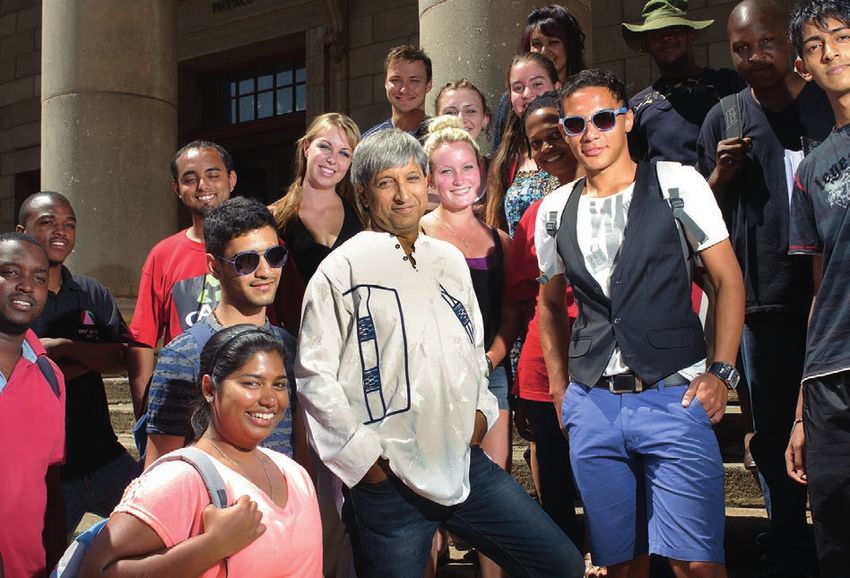
Wits Rankings

South Africa
 Wits is the
                    No.1

                                                                                        CWUR
                                                        Centre for World
  Highest                                              University Rankings
  Ranking
University in
South Africa
                    No.1

                                                                                        ARWU
                                                       Academic Ranking of
                                                        World Universities

 Globally                                      251-300
                                                                    THE

                                                                                  Times
                                                                             Higher Education
            CWUR

   181              Centre for World               364                          QS World
                                                                    QS

                   University Rankings                                      University Rankings
                                                                    BRICS
            ARWU

   230              Academic Ranking
                   of World Universities
                                                    36                           BRICS
                                                                              (QS Rankings)

           www.wits.ac.za/about-wits/facts-and-figures/academic-rankings/

                                                                                                  3
5 faculties
         Engineering and the Built Environment
                                                                         24 50
                                                                         under
                                                                              gradu
                                                                                     ates
                                                                                         0

                                                                      12 00                                      W
                                                                     postg
                                                                             radua
                                                                                     0
           Commerce, Law and Management                                           tes

                                                                  3 610                                      I
                       Health Sciences                                cours
                                                                             es

                                                                                                        T
                         Humanities                                33
                                                                  sc hools

                                                                                                   S
                               Science

                      Application Closing Dates
              P olic
                      y!                        30 JUNE
            t
     Stri
          c              ons
              p l i cati
          ap            e
    Late ill not b d                       Bachelor of Architecture
        w             re
            o n side                     Health Sciences (all degrees)
          c
                                         B-Speech Language Pathology
                                                 B Audiology

                                             31 AUGUST
                                                Sport bursaries

                                                                                         APPLY
                                          30 SEPTEMBER                                               ONLIN
                                                                                             www.w
                                                                                              /appli its.ac.za
                                                                                                                 E
                                                                                                    cation
                                          All other university degrees                                     s

                                            Residence applications

4
Admission Requirements:
National Senior Certificate (NSC)
In order to gain acceptance to any of the faculties, applicants require:

• National Senior Certificate (NSC) or Independent Examinations Board (IEB) subjects, and

• Certain levels of achievement as set out in this Guide, as well as a Bachelor Degree Pass.

Wits tabulates the points score for all subjects on the following basis:

• English must be taken either as Home Language or 1st Additional Language.

• Mathematics is a core and compulsory subject for all numerate degrees in programmes in Engineering and Built
  Environment, Commerce, Law and Management, Science and most of the programmes in the Health Sciences.

• Maths Literacy will be accepted by Law, Education and Humanities (except for Speech-Language Pathology and
  Audiology).

• Wits does not distinguish between designated vs. non-designated subjects when calculating the admission point score
  (APS).

• The APS calculation is based on the best seven subjects including Life Orientation.

                   Wits’ APS for
                                        Wits’ APS for      Wits’ APS for                    National Senior Certificate (NSC)
  Wits’ APS        Mathematics &
                                       Life Orientation    other subjects                    Admission Point Score (APS)
                      English

   90 - 100           8 + 2 = 10              4                     8                NSC Scale of Achievement        NSC %

    80 - 89           7+2= 9                  3                     7                           7                    80 - 99

    70 - 79           6+2= 8                  2                     6                           6                    70 - 79

    60 - 69           5+2= 7                  1                     5                           5                    60 - 69

    50 - 59               4                   0                     4                           4                    50 - 59

    40 - 49               3                   0                     3                           3                    40 - 49

    30 - 39               0                   0                     0                           2                    30 - 39

    0 - 29                0                   0                     0                           1                     0 - 29

NB: Compliance with the minimum requirement does not guarantee a place at the University. The University has a
limited number of places for first year undergraduates as approved by the Department of Higher Education and Training.
Final selection is made subject to the availability of places academic results and other entry requirements where applicable.

                    CALCULATE YOUR POINTS
                                                                              SUBJECT                       %       WITS APS

                                                               1. English Home Language or LOLT

                                                               2. 1st Additional Language

                                                               3. Mathematics/Maths Literacy

                                                               4.

                                                               5.

                                                               6.

                                                               7. Life Orientation

                                                               TOTAL APS

                                                               NB: Seven subjects are used in the calculation of APS

                                                                                                                                5
Admission Requirements:
    National Benchmark Test (NBT)

    All applicants to the Faculty of Health Sciences (except            • For a comprehensive list of test dates, registration dates and
    applicants who are applying for admission into the Graduate           available venues, please refer to the NBT website.
    Entry Medical Programme – GEMP - ONLY) are required to              • Both tests must be written at one session.
    write the National Benchmark Tests (NBT) before being con-
                                                                        • ONLY the first attempt results will be taken into account for
    sidered for admission.
                                                                          selection purposes and thus it is not advisable to write the
    Applicants to the Faculty of Humanities applying for the              tests more than once in any year.
    Bachelor of Speech-Language Pathology, Bachelor of
                                                                        • NBT results are valid for three years.
    Audiology, and Bachelor of Social Work are required to write
    the National Benchmark Tests (NBT) before being considered
    for admission.
                                                                                         BENCHMARK PERFORMANCE LEVELS
    There are two tests: The first is the Academic and
    Quantitative Literacy Test and the second is the Mathematics                                 Academic      Quantitative
                                                                                                                            Mathematics
    Test. The test results will be used in addition to the Grade 11                               Literacy      Literacy

    results (for early decision making purposes) and the Grade 12                                Min   Max      Min   Max   Min   Max
    results (for final decision-making purposes).
                                                                               Proficient        64    100      70    100    68    100
    Please note:
                                                                              Intermediate       38     63      38    69     35    67
    • Applicants who achieve in the ‘basic’ range (refer to table
                                                                                 Basic            0     37      0     37     0     34
      below), are unlikely to be considered for a place in the Health
      Sciences degrees. For more information on the Performance
      levels, please refer to the NBT website.
    • These are standard tests for all medical schools in South
      Africa, and you are only required to write the tests once,                             NBT TEST DATES
      irrespective of the number of medical schools you have
      applied to.                                                             Health Sciences                No later than 11 August
    Rules for applicants taking the NBT tests:
    • Applicants must register on the NBT website, or by mobile,
                                                                                 Humanities                  No later than 31 October
      to write the tests. Registration closes approximately three
      weeks prior to each of the test dates. You can register for
      the NBT even before you submit your application to the
      University. DO NOT wait for an official notification from the
      University in order to register and write the tests. You may      Mature Age Applicants Only
      miss the NBT deadline.                                            For All Arts Degrees (excluding BA Law, Bachelror of Speech-
                                                                        Language Pathology and Bachelor of Audiology)
    • A fee is charged for the tests. The fee can only be paid once
      you have registered to write the test.                            Applicants who wrote matric pre-2008, with no degree
                                                                        exemption, may qualify for mature age exemption, and will
    • Results received for tests written after this date WILL NOT be
                                                                        be required to write the NBT test.
      taken into consideration. Applicants are encouraged to write
      the tests as early as possible. See table for NBT Test Dates.          www.nbt.ac.za

    Admission Requirements:
    Wits Additional Placement Test (WAPT)
    Graduate Entry Medical Programme (GEMP) applicants only

    To be able to calculate a composite index, all components that contribute to this must be finalised (i.e.Tertiary Aggregate).
    Applicants will be notified of their eligibility to write the WAPT, scheduled for September, as and when documentation for
    applications is complete. This means that the Faculty has received an academic transcript and all other pertinent documents. If
    documents are not submitted by 15 July, no further consideration will be given to your application. Applicants will need to start
    preparing well in advance of notification. All information about the content and nature of each of the components of the test is
    given on the GEMP website.

         www.wits.ac.za/health/gemp

6
Admission Requirements:
National Certificate (Vocational) (NCV)

Subject to institutional admission requirements, the minimum             ADMISSION POINT SCORES
admission requirement to a Bachelor’s degree programme is a
National Certificate (Vocational) Level 4 issued by the Council            RATING CODE                 RATING                %
for General and Further Education and Training.
                                                                                    5                Outstanding           80-100
The minimum legislative requirements for admission to a
                                                                                    4              Highly competent        70-79
Bachelors degree include the achievement of:
                                                                                    3                 Competent            50-69
• Three fundamental subjects between 60 - 69% (including
  English as the language of learning and teaching at Wits)                         2              Not yet competent       40-49

• Three vocational subjects from the designated list between                        1                Not achieved           0-39
  70 - 79%.

Wits’ institutional requirements are:

An applicant who holds an NCV may be invited to write a test,
provided that he/she has met the following compulsory institu-
tional requirements as well as the Faculty and degree-specific
requirements. An applicant must have:
• Taken English as either a language of learning and teaching,
  or as the first additional language
• Taken Mathematics as a fundamental component
• Achieved 70 - 79% for all seven subjects - in fundamental
  and vocational categories.

       FACULTY OF COMMERCE, LAW & MANAGEMENT

                        English                  4 (70%)
BCom
                        Mathematics              4 (70%)
BEconSc
BAccSc                  Four subjects from Business, Commerce and
                        Management Studies                                               FACULTY OF HEALTH SCIENCES

                                                                         MBBCh                      English HL/
                                                                                                                             4 (70%)
                                                                                                    1st Add Language
                                                                         BPharm
              FACULTY OF ENGINEERING AND THE                             BSc (Physiotherapy)        Mathematics              4 (70%)
                    BUILT ENVIRONMENT                                    BHSc
                                                                         • Biomedical Sciences
 Besides meeting the University’s requirements, an applicant who holds
                                                                         • Biokinetics              Life Sciences AND/OR
 an NCV will be interviewed by the Dean, Assistant Dean and relevant                                                         4 (70%)
                                                                         • Health Systems           Physical Sciences
 Head of School.
                                                                           Sciences

                                                                                                    English HL/
                                                                                                                             4 (70%)
                                                                                                    1st Add Language
                      FACULTY OF SCIENCE
                                                                         BDS                        Mathematics              4 (70%)
 Besides meeting the University’s requirements, an applicant who holds
 an NCV will be interviewed by the Dean, Assistant Dean and relevant                                Life Sciences AND/OR
 Head of School.                                                                                                             4 (70%)
                                                                                                    Physical Sciences

                                                                                                    English HL/
                                                                         BNurs                                               3 (60%)
                                                                                                    1st Add Language
                                                                         BSc (OT)
                    FACULTY OF HUMANITIES
                                                                         BCMP                       Mathematics              3 (60%)

    THE FACULTY OF HUMANITIES DOES NOT CONSIDER                          Bachelor of Oral Health
                                                                                                    Life Sciences AND/OR
         APPLICANTS WHO PRESENT WITH AN NCV                              Sciences                                            3 (60%)
                                                                                                    Physical Sciences

                                                                                                                                       7
Current Study Fees (2018)                                                                                                       Financing
Approximate tuition fees for the first year of study

As at the time of going to print, the tuition fees for 2019 were not available. These are the         Self-funding
approximate tuition fees for the first year of study in 2018. Fees may increase by approximately
10% or more, so you need to add at least 10% to the figures below. Please note that the fees listed   Work first to raise funds! As a young person
below are for South African citizens only. International students pay a composite fee depending on    ready to start your life, this may seem a
the degree. This information is available at     www.wits.ac.za, click on ‘International’.
                                                                                                      dim prospect but often people who have
                                                                                                      worked for a few years before commencing
Programme                                                                       Fees                  their studies really enjoy their studies once
Commerce, Law and Management                                                                          they start - so much so that they go on to
Bachelor of Accounting Science (BAccSc)                                        R48 530                postgraduate study! Another option is to
Bachelor of Commerce (BCom)                                                    R45 260-R48 330        work part-time while you study. But don’t
                                                                                                      over-extend yourself and fail your courses
Bachelor of Economic Science (BEcon)                                           R44 010
                                                                                                      as a result.
Engineering and the Built Environment
Bachelor of Architectural Studies (BAS)                                        R53 630                Parents/guardian/religious groups
Bachelor of Engineering Science (Biomedical Engineering) (BEngSc(BME))         R61 810                Your parents or guardian may be able to
Bachelor of Engineering Science (Digital Arts) (BEngSc(DA))                    R57 400                help you with funding, or their employers
Bachelor of Science (Engineering) (BSc(Eng)) depending on branch               R47 100-R54 430        may offer student bursaries. Many church
                                                                                                      groups and other religious organisations
Bachelor of Science (Construction Studies) (BSc(CS))                           R67 740
                                                                                                      offer bursaries to their members.
Bachelor of Science (Property Studies) BSc (PS)                                R54 350
Bachelor of Science (Urban and Regional Planning) (BSc(URP))                   R55 060                Bank Loan
Health Sciences                                                                                       Most major banking institutions offer
Bachelor of Clinical Medical Practice (BCMP)                                   R50 710                student loans at attractive interest rates.
Bachelor of Dental Science (BDS)                                               R66 860                Normally, bank loans cover the duration of
Bachelor of Health Sciences (BHSc)                                             R66 600                study and are repaid once you start work-
                                                                                                      ing, or once you have graduated. Some
Bachelor of Nursing (BNurs)                                                    R45 480
                                                                                                      banks offer a grace period to students
Bachelor of Pharmacy (BPharm)                                                  R56 860
                                                                                                      who are completing internships, articles
Bachelor of Oral Health Sciences (BOHS)                                        R43 040                or community service. In most instances,
Bachelor of Science (Occupational Therapy) (BSc(OT))                           R50 700                you are required to repay the interest while
Bachelor of Science (Physiotherapy)                                            R49 840                still studying. Sometimes surety/security is
MBChB                                                                          R67 950
                                                                                                      required, which means that a relative, friend
                                                                                                      or sponsor must guarantee to repay the loan
Humanities
                                                                                                      if you fail to do so. Visit your local bank to
Bachelor of Arts (BA)                                                          R39 240-R50 540        find out what products they offer students.
Bachelor of Arts (Digital Arts)                                                R42 640
Bachelor of Arts (Dramatic Art)                                                R42 080
Bachelor of Film and TV (BAFT)                                                 R42 800
Bachelor of Arts (Fine Arts)                                                   R49 180-R49 620
Bachelor of Music (BMus)                                                       R42 960
Bachelor of Arts (Performing and Visual) (BAPVA)                               R42 080-R45 350
Bachelor of Education (BEd)                                                    R31 600
                                                                                                                   Accommodation
Bachelor of Speech-Language Pathology                                          R48 130
Bachelor of Audiology                                                          R48 130
Bachelor of Social Work                                                        R46 690
Science
Bachelor of Science (BSc)                                                      R47 920

South African citizens will be expected to make a first payment prior to, or during
enrolment before being permitted to enrol at the University. Applicants will be informed of
this in writing. This amount is offset against the fee account.
International applicants pay fees at the beginning of the year. All International applicants
must pay 75% of the tuition fees and related costs at the time of registration. The balance           Applicants who indicate they wish to apply
is to be paid by the end of March.                                                                    for residential accommodation will be sent
                                                                                                      a detailed questionnaire. The completed
All fees are due by 31 March.
                                                                                                      questionnaire must be returned to the
If you cannot pay you will be required to contact the Fees Office to sign a payment plan.

      www.wits.ac.za/study-at-wits/fees-and-funding/

     8
your Studies Wits Scholarships
National Student Financial Aid Scheme The following scholarships are available: The highest marks in a maximum of six
(NSFAS) subjects are considered. The six subjects
University Entrance Scholarships
must include:
NSFAS, funded by the Government, is
For matriculants only, the awards will be
financial assistance in the form of a loan. • Two official languages (English being one)
calculated according to the Wits Admission
Like a bank loan, a NSFAS loan is repayable • Mathematics and Physical Science
Point Score (APS).
once you start working. You are expected • Two other designated subjects.
to start repaying your loan only once you Scholarships are for a maximum of six
are employed and earning more than subjects and exclude Life Orientation. The scholarship is renewable for each year
R30 000 per year. The period allowed for of the first undergraduate degree, pro-
repayments varies according to individual • APS of 51+ (excluding Life Orientation) vided academic performance is of a high
circumstances. Special legislation allows (R42 000) standard.
NSFAS to require employers to deduct loan • APS 48-50 (excluding Life Orientation)
The scholarship increases annually as
repayments from the wages or salaries of (R30 000)
agreed by the Financial Aid and Scholarships
borrowers. • APS 45-47 (excluding Life Orientation)
Committee.
(R15 000)
NSFAS rewards students who succeed
• APS 43-44 (excluding Life Orientation) Equality Scholarships
academically. Academic results are used
(R10 000)
to calculate rebates. If you pass all your An initiative led by the Vice-Chancellor,
courses in any one year, 40% of your annual Scholarship students are still eligible for Professor Adam Habib. It is targeted at the
loan will converted to a bursary. (A bursary, NSFAS funding. top performing students in Quintile 1 and 2
as defined in the Act No.56, 1999, is part schools, who have performed outstandingly
of the loan which you do not have to pay Conditions in their matric year and who are offered a
back.) This means you need to repay only The Scholarship is for a maximum of six place at the University.
60% of your loan (plus interest) for that year! subjects only and excludes Life Orientation.
Sports Scholarships
A student who passes half his/her courses (Advanced Programme Mathematics is
will qualify for a 20% rebate. included.) If you have represented your province or
Scholarship students are still eligible for South Africa in top level sport and display
If you graduate within the minimum number
NSFAS funding (the difference between the appropriate academic potential, you
of years required, you will have saved 40%
the scholarship and the cost of being at may be eligible for a Wits Sport Bursary.
of your loan each year, and you will owe
far less than someone who takes longer to University may be covered by NSFAS). Terms and conditions are outlined in the
complete their degree. Students who took a gap year (not longer sport bursary application form which can
than a year), may be eligible for a University be downloaded from www.wits.ac.za/
By repaying your NSFAS loan as quickly
Entrance Scholarship. Please advise the study-at-wits/fees-and-funding/
as possible, you will increase the funds
Financial Aid and Scholarships Office once Applications must be received by
available in the NSFAS scheme and thus
you register, as the scholarship will not be 31 August 2018.
the amount of money available to assist
automatically recorded on the student
future generations of students who need
system. The scholarship is applicable for National Olympiad winners
financial assistance to study.
the year of registration. (Maths and English Olympiads)
The student should provide the University’s • R20 000 for winners
Student Enrolment Centre with any official • R8 000 for top ten runners up
Application Fees remarked results issued by the examination
Students must provide the University’s
authority that may impact on the amount
of the scholarship by 30 September of the Financial Aid and Scholarships office with
Central Accommodation Office together a certified copy of their certificate.
same year for which the scholarship has
with the residence application fee of R110
been awarded. If a student receives an external bursary
(for a double room) and R610 (for a single
which is more than the maximum alloca-
room). Successful applicants will be No application is necessary as the award is
tion of R155 000, regardless of the source,
required to pay a non-refundable deposit given automatically.
the student will be required to return the
of R950 to confirm acceptance of a res- Vice-Chancellor’s Scholarships sponsorship funding. This is to enable the
idence offer.
University to assist other Wits students.
R60 000 is awarded to the ten most out-
All applicants need to pay the relevant pay- standing matriculants who have applied to All University awards will be cancelled and
ment, regardless of whether or not they Wits. No application is necessary as the forfeited should a student deregister for
have a bursary. award is given automatically. any reason.
Closing date for all undergraduate
residence applications is 30 September.
Late applications cannot be considered.
www.wits.ac.za/accommodation/ www.wits.ac.za/study-at-wits/fees-and-funding/
9Faculty of
Commerce, Law & Management
The Faculty of Commerce, Law and Management offers professional
development in the areas of business and legal expertise through
educational programmes that compare with the very best globally.
The Faculty is home to three schools offering both undergraduate and postgraduate programmes from Bachelors
through to PhDs: the School of Accounting, School of Economic and Business Sciences (SEBS) and the School
of Law. The Faculty offers several undergraduate degrees including the Bachelor of Commerce (BCom) with
flexible major combinations or more specialised programmes such as the BCom(IS), BCom(Acc), BCom(PPE) or
BCom(Law); the Bachelor of Accounting Science (BAccSc) and the Bachelor of Economic Science (BEconSc).
The Faculty is also home to the Wits Business School and the Wits School of Governance. These schools are on
the Parktown campus and offer postgraduate programmes only, including the Wits MBA.
Wits BCom
The Wits BCom is a three year full-time degree. It Accountancy, Taxation, Auditing, Law or selected
is offered as a double major general degree with a approved majors from other faculties. Choices include
choice of majors/plans from a variety of disciplines, or Psychology, Computer Science, Computational and
with one major chosen from another faculty (Faculty Applied Mathematics and Mathematical Statistics.
of Humanities or Faculty of Science). This caters to a
Popular course combinations include: Economics
wide range of interests and potential careers.
and Finance, Economics and Management, Finance
All BCom degrees require first year courses in and Insurance and Risk Management, Finance and
Economics, Accountancy, Law, Computational Management, Marketing and Human Resource
Mathematics, Business Statistics and Information Management, Marketing and Management. These
Systems. From second year onwards, students elect courses tend to follow a more fixed curriculum, as do
their majors from disciplines such as: Economics, the BCom degrees majoring in Information Systems,
Finance, Information Systems, Insurance and Risk Law and the interdisciplinary PPE, which combines
Management, Management, Human Resource study from three disciplines - Politics, Philosophy and
Management and Marketing, or from majors such as Economics (PPE).
Structure of the Wits BCom Degree
First Year (Compulsory)
Economics IA
OR Computational Fundamentals of
Economics Theory IA Mathematics Information Systems
+ Accounting I + +
Economics IB
OR Business Statistics Commercial Law
Economics Theory IB
Second Year (Choose Majors)
Potential Major Potential Major Potential Major
+ +
(2nd Year Level) (2nd Year Level) (2nd Year Level)
Third Year
Major 1 Major 2
+
(3rd Year Level) (3rd Year Level)
www.wits.ac.za/bcom/structuring-your-wits-bcom/
10FLEXIBILITY & SPECIALISATION
ECONOMICS FINANCE
Do you have a flair for problem solving, reasoning and Are your idols just as likely to be entrepreneurs and business
analysis? Are you fascinated by how money actually does people as pop stars or athletes? Would you say that you’re
make the world go round? Then a career in economics might analytical, and good at problem solving and planning? Are you
be perfect for you! good with figures, and have you always been savvy with your
money? Then consider a major in finance.
So, what is Economics?
So, what is Finance?
Economics is the study of how, where and why money and
resources are produced, spent and allocated by government Finance has been simply defined as the science of managing
money. This involves two broadly related activities: firstly the
and businesses, and how these help and affect the lives of
management of money by business (corporate finance), gov-
individuals. When you hear discussions around unemploy-
ernment (public finance), and individuals (personal finance);
ment, monetary policy, budget deficit and inflation, chances and secondly, the process of acquiring the funds needed to
are an economist is involved. Businesses, organisations and operate successfully. Finance is the engine of, and central to,
citizens are all affected by both their country’s economy and all economies and stock markets.
what happens globally, so every commerce graduate will un-
dertake at least one year of study in economics.
combine with Finance, Management, combine with Economics, Insurance and
Information Systems, Insurance and
Risk Management, Information Systems,
Risk Management or Law,
Management and Law
or study as part of a BCom(PPE)
careers • Chief Executive Officer
careers • Analyst • Chief Executive Officer or Chief • Chief Financial Officer • Chief Investment Officer
Investment Officer • Economic Consultant • Financial Advisor • Financial Journalist
• Economist • Investment Analyst • Investment Banker • Financial Risk Manager • Investment Analyst
• Journalist • Manager • Political Advisor, ‘lobbyist’ Policy • Investment Banker • Merchant Banker
Analyst • Politician • Researcher • Portfolio Manager • Public Sector Consultant
• Stock Broker
HUMAN RESOURCE MANAGEMENT INFORMATION SYSTEMS
Are you a great communicator who relates well to a wide range Are you fascinated by how technology affects people, organ-
of people? Do you have excellent problem solving skills, with isations and societies, and vice versa? Are you the first to
the ability to ‘see both sides’? Are you a good listener who
download and use the latest app? Do you enjoy solving ‘real
wants to ‘make a difference’ to an organisation? Then studying
world’ problems? Then you should seriously consider infor-
Human Resource Management may be a great choice for you.
mation systems as a career.
So, what is Human Resource Management?
So, what are Information Systems?
Human resource management (HRM) is the managing of people
within organisations so as to optimise their performance for Information Systems (IS) enable individuals, organisations and
society to gather, store, organise, protect, retrieve, share and
the greater good of the organisation. Recruitment, talent
make sense of information. They provide the opportunity to
management, employee development and motivation, do things differently and are at the forefront of changing the
and compensation are all key aspects of HRM. world we live and work in.
combine with Finance, Marketing, Computer Science,
combine with Management, Psychology, Law,
Management, Economics, Law,
Information Systems, Economics and Marketing
Psychology and many others
careers • Application Developer • Business Analyst
careers • Consulting • Human Resource Management
• Change Manager • Chief Information Officer
• Industrial Relations Management • Management
• IT Auditor • IT Consultant • Project Manager
• Negotiations • Recruitment and Talent Management
• Systems Analyst • Technology Architect
• Strategic Planning • Training and Development
• UX/UI Designer
11MANAGEMENT
Do you have a flair for planning, organising and teamwork?
Are you an effective communicator who is able to motivate
others? Do you see yourself leading a Fortune 500 company
or as South Africa’s next famous entrepreneur? If so, consider
majoring in management.
So, what is Management?
Management is the study and science of how organisations
are run and administered, be they businesses, government
bodies or non-profit organisations.
The important and complex areas of project management and
strategic management also fall within this discipline, as do
the theory and practice of entrepreneurship and new venture
creation.
combine with almost any discipline as most
graduates eventually move into leadership
positions in the course of their careers
careers • Compliance Manager
• Manager in Public Works and Health
• Manager in Tourism • Marketing Manager
• Operations Manager • Project Manager
• Strategic Planning Director • Training Manager
Top Management posts include:
• Chief Executive Officer • Chief Operating Officer
INSURANCE AND RISK MANAGEMENT • Company President • General Manager
• Managing Director
Do the management of risk and the probability of occurrence
of disaster fascinate you? Have you got an eye for complexity,
and a head for figures? Are you analytical and focussed, with
good attention to detail? If so, a career in insurance and risk
MARKETING
management might be ideal for you.
Are you fascinated by trends and fashions, and why certain
So, what is Insurance and Risk Management?
brands are so much more successful than others? Do you ever
Insurance is the way that companies and individuals protect wonder what makes last season’s cool ‘must haves’ suddenly
themselves against the risk of loss, and loss itself. The loss ‘so last year’? Would you love to shape the world’s desires?
may involve property, life, health or income. It is a form of risk Then marketing could be your dream career.
management.
So, what is Marketing?
Risk Management itself refers to the way that risks are identi-
The role of marketing in business is to build the profile of
fied, assessed and prioritised, and the means used to minimise,
brands, get people interested in products, and to persuade
monitor and control the threat that unfortunate events can pose.
buyers that they really need what is on offer. Technology, travel,
entertainment, services, apps and games - even your favourite
musician or sports team - all are marketed.
combine with Finance, Economics, Management
and Law
combine with Management, Information Systems,
Psychology, Finance, Economics and Human Resource
Management
careers • Appraiser • Asset Manager • Claims Adjustor careers • Advertising Manager
• Compliance Officer • Insurance Analyst • Insurance Broker • Brand Manager • Events Manager
• Financial Advisor • Sales Representative • Underwriter • Market Research Manager • Project Manager
• Promotions Manager • Public Relations Manager
• Sales Manager
Career Planner
Launch your career by matching your
personality and subject choices to the
best working environments.
www.wits.ac.za/careerplanner
12Specialised Degrees Politics, Philosophy and Economics -
BCom(PPE)
Bachelor of Accounting Science - BAccSc
The PPE provides an understanding of political, philosoph-
The BAccSc degree is required if you wish to qualify as a Char- ical and economic ideas, the nature of political institutions,
tered Accountant. The programme includes four core areas of processes and decision-making, the working of economic
Accountancy study, namely: Management, Accounting and systems, the causes of poverty and wealth and how to pro-
Finance, Financial Accounting, Auditing and Taxation. Intro- mote development.
ductory courses in Economics, Commercial Law, Mathemat- It is also possible to study Politics or Philosophy or Economics
ics and Statistics and Accounting Information Systems are as part of the general BCom or BA degree.
also taken.
careers • Academia • Civil Service • Development
• Diplomatic Corps • Economics
careers • Charted Accountant • Fund Manager • International Banking or Finance
• Internal Auditor • Tax Specialist • Journalism • Politics • Research
Studying Law at Wits
BCom Accounting - BCom(Acc) Students interested in studying Law at Wits have several
The BCom Accounting degree is a three-year full-time pro- options to consider. Anyone wishing to practice Law needs to
gramme comprising both compulsory courses and elective hold as a minimum an LLB degree. The LLB degree is a four
courses that students can choose from within the School of year degree that comprises largely law subjects with several
Accountancy, School of Law, School of Economic and Business humanity or commerce subjects at first year level. There are
Sciences or from the Faculties of Science and Humanities. certain core law subjects which must be taken by all students
This allows students to tailor their degree quite specifically to wishing to graduate with an LLB, while others form a set of
meet their particular career aspirations. electives from which students choose.
Students wishing to pursue a career as a Chartered Accountant,
While it is possible to enter an LLB at first year undergrad-
who do not qualify initially for entrance into the BAccSc pro-
uate level, students interested in studying law are generally
gramme, can follow the BCom Accounting as an alternative
(four year) option. Consult the Faculty for advice. encouraged to undertake a BCom or BA degree first, pref-
erably choosing Law as one of their majors. This enables
students to get a feeling for the more general law subjects
before committing to the study of Law while also developing
careers • Chartered Certified Accountant knowledge and skills in other disciplines which will be useful
• Chartered Financial Analyst • Internal Auditor to them in the context in which they may practice Law in the
• Management Accountant • Management Consultant future. Students seeking a career in corporate law, working
• Professional Accountant, and many others for either law firms or in the legal department of large organ-
isations, should choose to do a BCom(Law) with a second
major in Finance, Management, Accounting, Taxation, or any
other BCom major. On the other hand, students envisaging
a future in human rights, family law, constitutional law, inter-
Bachelor of Economic Science - BEconSc national law, etc. are generally advised to begin their legal
The Bachelor of Economic Science degree is a mathematically studies with a BA(Law), pairing this with courses like politics,
focused degree that has a major in Economics together with sociology, economics or languages.
a mathematical science major.
Students taking either the BCom(Law) or BA(Law) route into
The entrance requirements are higher than those for the BCom the LLB take several of the introductory and core LLB cours-
and should only be considered by students with very strong es over three years as their Law “major”. This allows students
ability in mathematics. to then complete the LLB degree over a two year period as
The BEconSc is seen as a specialist degree and focuses on they already hold credits for several of the LLB courses.
building strong analytical abilities for graduates wishing to A third route into the LLB is for students holding any under-
work in fields like economics, actuarial science or other busi- graduate degree, without Law as a major. These students
ness and data analytics fields. are not required to do the non-Law courses required in the
LLB and are therefore able to complete all the law courses
The choice of the mathematical science major can be in three years. In both these cases, students have developed
made from Actuarial Science, Computational and Applied critical thinking and analytical skills during the course of their
Mathematics, Computer Science, Mathematics and first degrees which enables the accelerated progress through
Mathematical Statistics. the LLB.
careers • Actuary • Budget Analyst • Economist careers • Advocate • Attorney • Conveyancer • Judge
• Field Marketing Associate • Legal Advisor • Legal Practitioner • Legal, Risk and
• Financial Analyst • Industry Analyst Compliance Consultant • Magistrate
• Management Consultant • Negotiator • Mediator • Arbitrator
• Policy Analyst • Statistician, and many others • Professional Counsellor • Prosecutor
www.wits.ac.za/bcom/
13Minimum Admission Requirements
Faculty of Commerce, Law and Management
National Senior Certificate (NSC) Minimum Admission Requirements
(Bachelor’s Degree Pass)
Closing Date: 30 September 2018
NB: Due to the limited number of places available, meeting the minimum requirements does not guarantee a place.
Final selection is made subject to the availability of places, academic results and other entry requirements
where applicable.
www.wits.ac.za/undergraduate/entry-requirements/admission-requirements-nsc/
English Home Language
Programmes APS OR Mathematics Wait-listing
1st Additional Language
School of Accountancy
Applicants with an APS between 39-41
Bachelor of Accounting Science as well as English at Level 6 and
42 +
(BAccSc) 5 6 Mathematics at Level 7 will be wait-
(3 years) listed subject to the number of places
available.
Applicants with an APS between 35-38
Bachelor of Commerce
as well as English 6 and Mathematics
BCom(Accounting) 39 + 5 5
6 will be wait-listed subject to the
(3 years)
number of places available.
School of Economic and Business Sciences
Applicants with an APS between 35-38
Bachelor of Commerce
as well as English 6 and Mathematics
(BCom) 39 + 5 5
6 will be wait-listed subject to the
(3 years)
number of places available.
Applicants with an APS between 39-41
Bachelor of Economic Science
as well as English 5 and Mathematics
(BEconSc) 42 + 5 6
7 will be wait-listed subject to the
(3 years)
number of places available.
School of Law
Applicants with an APS between 35-42
Bachelor of Commerce with Law
as well as English 6 and Mathematics
BCom(Law) 43 + 5 5
6 will be wait-listed subject to the
(3 years)
number of places available.
14Faculty of Commerce, Law and Management
International Qualifications
(Relevant exemption from South African Matriculation Board)
NB: Due to the limited number of places available, meeting the minimum requirements does not guarantee a place.
Final selection is made subject to the availability of places, academic results and other entry requirements where applicable.
Advanced Level (A Level)
Advanced Level (A Level)
Certificate of Secondary
Ordinary Level (O Level)/
Higher Int. Certificate of
Secondary Education
Secondary Education
International General
Advanced Subsidiary
Advanced Subsidiary
Higher International
Baccalaureate
Baccalaureate
Certificate of
International
International
(IB Diploma)
(IB Diploma)
Education
(AS Level)
(AS Level)
(HIGCSE)
(HIGCSE)
(IGCSE)
English Language Mathematics
School of Accountancy
HL,SL HL,SL
A-C A-C A-C 1-3 A-B A 1-2
4-7 5-7
HL,SL HL,SL
A-C A-C A-C 1-3 A-C A-B 1-3
4-7 4-7
School of Economic and Business Sciences
HL,SL HL,SL
A-C A-C A-C 1-3 A-C A-B 1-3
4-7 4-7
HL,SL HL,SL
A-C A-C A-C 1-3 A-B A 1-2
4-7 6-7
School of Law
HL,SL HL,SL
A-C A-C A-C 1-3 A-C A-B 1-3
4-7 4-7
15Faculty of
Engineering & the Built Environment
The Faculty of Engineering and the Built Environment has the highest number
of endowed professorships or chairs at the University of the Witwatersrand.
We maintain strong links with industry through student bursaries, scholarships
and internships, and offer a range of programmes which includes Information
Engineering and Biomedical Engineering (within Electrical Engineering), and
Environmental Engineering (within Civil Engineering).
Degrees in the Built Environment address the social, spatial and
infrastructural needs of a transforming South Africa. This includes the
degrees in Architecture, Urban and Regional Planning, Property Studies
and Quantity Surveying.
BSc(ENG) Programmes
This continent, and the world, faces challenges in all The BSc(Eng) curriculum is structured to supply a
sectors of the economy where engineers will assist in solid grounding in fundamental engineering science,
solving the problems that plague development, with an emphasis on generalised problem-solving
sustainability and progress.The Faculty’s engineering skills. The first two years of study are common
degrees are recognised by the Engineering Council to each of these three branches – Mechanical,
of South Africa and are approved by professional ac- Industrial and Aeronautical. In the third and fourth
crediting bodies in the USA, Canada, Australia, New years of study, the courses that students take are
Zealand, UK, Ireland and Hong Kong. specialised towards their chosen branch.
BSc(Eng) Mechanical, Industrial and Aeronautical Engineering
1ST Year Compulsory Courses 2ND Year Compulsory Courses
• Chemistry • Mathematics
• Mathematics • Electrical Engineering
• Physics • Fluid Mechanics
• Mechanics • Mechanical Engineering
• Introduction to Mechanical Engineering and Design • Thermodynamics
• Engineering Drawing • Materials Science and Engineering
• Applied Mechanics
• Computer Skills and Software Development
Mechanical Industrial Aeronautical
The Mechanical Engineer applies Industrial engineering, also referred The aeronautical engineer is involved
scientific principles to the design, to as business process engineer- in the design, development and mod-
development, construction, installa- ing, studies the systems, processes, ification of the components and sys-
tion, operation and maintenance of technology and people which make tems of all types of flight vehicles
energy production and harnessing up organisations. - including fixed wing aircraft, helicop-
equipment, machines and systems ters, sail planes, airships and missiles.
in all areas of industry and society.
careers Design, Development, careers Production, Operations,
careers Aircraft Design, Aerodynamics,
Manufacturing, Transport, Energy, Technical Manager, Logistics,
Propulsion, Production, Systems
Systems Resource Planning
Electrical Information careers in Electrical Engineering
Power, High Voltage, Machine and
The electrical engineering programme Information Engineers are Drives, Antennas, Computer, Automation,
covers diverse aspects such as elec- responsible for developing and Telecommunications Engineer
tric circuits, software, microproces- maintaining high level systems in Careers in Information Engineering
sors, power engineering, electronics which computer applications, net- Software, Computer, Network, Information,
and electromagnetics. working and information process- Telecommunications, Software Engineer,
Information Technology
ing are the essential components.
16 www.wits.ac.za/ebe/SPECIALISED PROGRAMMES
Chemical
Chemical engineering deals with
large-scale industrial processes
that convert raw materials into
Biomedical Engineering (BEngSc(BME))
products with higher economic and
social value. For example, fuels and Biomedical Engineering is a discipline in which engineering and quantitative
chemicals are produced from coal, sciences are applied to the solution of medical and biological problems.
natural gas and vegetation. Common examples include the development of sophisticated x-ray imaging
systems, artificial organs and other medical devices.
careers Process Design/Control, A three year undergraduate degree, the BME is a pre-professional qualifica-
Biochemical Engineer, Food
Processing Engineer tion. Graduates with a BME can pursue various routes to obtain a profes-
sional qualification, such as Medicine, Electrical or Information Engineering
or Physics.
Metallurgy and Materials
This engineering programme careers Medical Imaging System Design, Artificial Organs and Prosthetics,
covers engineering principles Modelling and Simulation of Physiological States
required to concentrate, extract
and refine metals, materials and
carbon materials as well as devel- Digital Arts (BEngSc(DA))
oping new alloys, materials, ceram- As an engineer focussing on Game Design, you’ll be afforded the chance of
ics and composites. combining more traditional aspects of Electrical and Information Engineering
with the creative and functional aspects of games – creating a truly unique
careers Extractive, Process, opportunity to apply your skills in a unique and challenging environment.
Corrosion, Foundry, Failure Analysis,
Tribologist On completion of the BEngSc, students may continue into the third year of
Electrical or Information Engineering, or into the Honours course in Digital
Civil and Environmental Arts.
Civil Engineering focuses on plan-
ning, designing and maintenance careers Game Design, Software Engineering, Software Development, Animation
and management of projects to
+2
do with the construction of roads,
buildings, airports, tunnels, dams,
bridges and water supply and
sewage systems. Nuclear Engineering: After completing a three year BSc
following a fixed curriculum (partially made up of courses taken from
careers Structural, Bridge Design,
Geotechnical, Construction, Water
the first two years of mechanical engineering), students may enter the
Resource Management Mechanical Engineering stream in the third year. These students will
graduate after five years of study with both a BSc and a BSc(Eng),
Mining specialising in Nuclear Engineering.
Mining engineers play a key role Industrial Engineering with focus: Students who have completed
in the planning, exploitation and two years of study in another engineering stream may enter directly
excavation of mineral resources. into the third year of Industrial Engineering. This allows students to
graduate as Industrial Engineers, but with a background in another
careers Design Engineer, Rock engineering branch, such as chemical or electrical engineering.
Engineer, Blasting Engineer, Mineral
Resource Manager
Programmes in the Built Environment
Architectural Studies (BAS) Urban and Regional Planning (BSc(URP))
Architecture is the art, science and business of building. The Urban and Regional Planning is concerned with sustaining the
Bachelor of Architectural Studies focuses on aesthetic, theoretical environment and developing more convenient, equitable, healthy,
and practical concerns in the built environment. It involves social, efficient and attractive places for present and future generations.
cultural, developmental, contextual, environmental, technical,
and financial issues.
careers Architect, Landscaper, Interior Designer, careers Property Portfolio Manager, Property Development,
Draughtsperson Urban Planning
Construction Studies (BSc(Construction Studies)) Property Studies (BSc(PS))
If you intend to pursue a career in some capacity in building con- Property refers to land and buildings for use as homes, offices,
struction or technology, or you wish to study built environment shops, restaurants, hotels, and the rights that come with it. Studies
issues and their management, then the construction studies in this area enable you to understand how to invest in property,
progamme will suit you. how to manage it, how much to sell it for and how to develop it.
careers Project Management, careers Banking and Investment, Valuation,
Construction Management, Quantity Surveying Damage Assessor, Policy Analyst, Property Developer
17Minimum Admission Requirements
Faculty of Engineering and the Built Environment
National Senior Certificate (NSC) Minimum Admission Requirements
(Bachelor’s Degree Pass)
NB: Due to the limited number of places available, meeting the minimum requirements does not guarantee a place.
Final selection is made subject to the availability of places, academic results and other entry requirements where applicable.
www.wits.ac.za/undergraduate/entry-requirements/admission-requirements-nsc/
English Home
Language
Programmes Physical
APS OR 1st Mathematics Wait-listing
Sciences
Additional
Language
School of Chemical and Metallurgical Engineering
Bachelor of Science in Engineering in
Generally, applicants who achieve 70% in
Chemical Engineering
42 + 5 5 5 Maths, Physical Science and English
(BSc(Eng))
stand a greater chance of being accepted.
(4 years)
Bachelor of Science in Engineering in Generally, applicants who achieve 70% in
Metallurgy and Materials Engineering (BSc(Eng)) 42 + 5 5 5 Maths, Physical Science and English
(4 years) stand a greater chance of being accepted.
School of Civil and Environmental Engineering
Bachelor of Science in Engineering in Generally, applicants who achieve 70% in
Civil Engineering (BSc(Eng)) 36 + 5 5 5 Mathematics, Physical Science and English
(4 years) stand a greater chance of being accepted.
School of Electrical and Information Engineering
Bachelor of Science in Engineering in Generally, applicants who achieve 70% in
Electrical Engineering (BSc(Eng)) 36 + 5 5 5 Mathematics, Physical Science and English
(4 years) stand a greater chance of being accepted.
Bachelor of Engineering Science in Generally, applicants who achieve 70% in
Biomedical Engineering (BEngSc(BME)) 42 + 5 5 5 Mathematics, Physical Science and English
(3 years) stand a greater chance of being accepted.
Bachelor of Engineering Science in Digital Arts Generally, applicants who achieve 70% in
(BEngSc(DA)) 42 + 5 5 5 Mathematics, Physical Science and English
(3 years) stand a greater chance of being accepted.
School of Mechanical, Industrial and Aeronautical Engineering
Bachelor of Science in Engineering in Generally, applicants who achieve 70% in
Aeronautical Engineering (BSc(Eng)) 40 + 5 5 5 Mathematics, Physical Science and English
(4 years) stand a greater chance of being accepted.
Bachelor of Science in Engineering in Generally, applicants who achieve 70% in
Industrial Engineering (BSc(Eng)) 40 + 5 5 5 Mathematics, Physical Science and English
(4 years) stand a greater chance of being accepted.
Bachelor of Science in Engineering in Generally, applicants who achieve 70% in
Mechanical Engineering (BSc(Eng)) 40 + 5 5 5 Mathematics, Physical Science and English
(4 years) stand a greater chance of being accepted.
School of Mining Engineering
Bachelor of Science in Engineering in Generally, applicants who achieve 70% in
Mining Engineering BSc(Eng) 40 + 5 5 5 Mathematics, Physical Science and English
(4 years) stand a greater chance of being accepted.
School of Architecture and Planning
Acceptance is dependant on departmental selection.
Applicants are required to complete a written and
graphic exercise, and may be required to attend an
interview. Applicants with a Wits APS of 29-33 may
be accepted on the basis of exceptional scores and
an interview. The selection process for the BAS is
Bachelor of Architectural Studies
conducted by a panel of senior academics from the
(BAS) 34 + 4 4
School of Architecture and Planning, monitored by the
(3 years)
Assistant Dean. Selection is based predominantly on
performance against the selection exercise, interview
and academic performance, although demographic
balance is taken in to consideration where a choice
needs to be made between applicants scoring within
the same range.
Bachelor of Science in Urban and Regional Planning Applicants with an APS between 30-35 will be
36 + 5 5
(BSc(URP)) (3 years) waitlisted subject to the number of places available.
School of Construction Economics and Management
Bachelor of Science in Construction Studies Applicants with an APS between 30-35 will be
36 + 5 5
(BSc(CS)) (3 years) waitlisted subject to the number of places available.
Bachelor of Science in Property Studies Applicants with an APS between 30-35 will be
36 + 5 5
(BSc(Property Studies)) (4 years) waitlisted subject to the number of places available.
18Faculty of Engineering and the Built Environment
International Qualifications (Relevant exemption from South African Matriculation Board)
NB: Due to the limited number of places available, meeting the minimum requirements does not guarantee a place.
Final selection is made subject to the availability of places, academic results and other entry requirements where applicable.
General Certificate of
Education (HIGCSE)
Education (HIGCSE)
Education (HIGCSE)
Education (IGCSE)
Ordinary Level (O
Advanced Level
Advanced Level
Advanced Level
Baccalaureate
Baccalaureate
Baccalaureate
Certificate of
Certificate of
Certificate of
(IB Diploma))
(IB Diploma))
(IB Diploma))
International
International
International
International
Subsidiary
Secondary
Secondary
Secondary
Secondary
Subsidiary
Subsidiary
Higher Int.
Higher Int.
Higher Int.
Advanced
Advanced
Advanced
(AS Level)
(AS Level)
(AS Level)
(A Level)
(A Level)
(A Level)
Level)/
Physics
English Language Mathematics
Chemistry
(BSc ChemEng and BSc Metallurgy ONLY)
School of Chemical and Metallurgical Engineering
HL 4-7,
A-C A-C 1-3
HL 4-7, HL 4-7, SL 5-7
A-C A-C A-C 1-3 A-C A-C 1-3
SL 5-7 SL 5-7 HL 4-7,
A-C A-D 1-3
SL 5-7
HL 4-7,
A-C A-C 1-3
HL 4-7, HL 4-7, SL 5-7
A-C A-C A-C 1-3 A-C A-C 1-3
SL 5-7 SL 5-7 HL 4-7,
A-C A-D 1-3
SL 5-7
School of Civil and Environmental Engineering
HL 4-7, HL 4-7, HL 4-7,
A-C A-C A-C 1-3 A-C A-C 1-3 A-C A-C 1-3
SL 5-7 SL 5-7 SL 5-7
School of Electrical and Information Engineering
HL 4-7, HL 4-7, HL 4-7,
A-C A-C A-C 1-3 A-C A-C 1-3 A-C A-C 1-3
SL 5-7 SL 5-7 SL 5-7
HL 4-7, HL 4-7, HL 4-7,
A-C A-C A-C 1-3 A-C A-C 1-3 A-C A-C 1-3
SL 5-7 SL 5-7 SL 5-7
HL 4-7, HL 4-7, HL 4-7,
A-C A-C A-C 1-3 A-C A-C 1-3 A-C A-C 1-3
SL 5-7 SL 5-7 SL 5-7
School of Mechanical, Industrial and Aeronautical Engineering
HL 4-7, HL 4-7, HL 4-7,
A-C A-C A-C 1-3 A-C A-C 1-3 A-C A-C 1-3
SL 5-7 SL 5-7 SL 5-7
HL 4-7, HL 4-7, HL 4-7,
A-C A-C A-C 1-3 A-C A-C 1-3 A-C A-C 1-3
SL 5-7 SL 5-7 SL 5-7
HL 4-7, HL 4-7, HL 4-7,
A-C A-C A-C 1-3 A-C A-C 1-3 A-C A-C 1-3
SL 5-7 SL 5-7 SL 5-7
School of Mining Engineering
HL 4-7, HL 4-7, HL 4-7,
A-C A-C A-C 1-3 A-C A-C 1-3 A-C A-C 1-3
SL 5-7 SL 5-7 SL 5-7
School of Architecture and Planning
n.
n
y
d
e HL 4-7, HL 4-7,
A-C A-C A-C 1-3 A-C A-C 1-3
he SL 5-7 SL 5-7
n
w
c
e
n
HL 4-7, HL 4-7,
A-C A-C A-C 1-3 A-C A-C 1-3
. SL 5-7 SL 5-7
School of Construction Economics and Management
HL 4-7, HL 4-7,
A-C A-C A-C 1-3 A-C A-C 1-3
. SL 5-7 SL 5-7
HL 4-7, HL 4-7,
A-C A-C A-C 1-3 A-C A-C 1-3
. SL 5-7 SL 5-7
19You can also read


