University of Colombo School of Computing
←
→
Page content transcription
If your browser does not render page correctly, please read the page content below
Handbook of the University of Colombo School of Computing

University of Colombo School of Computing

         Undergraduate Handbook

     University of Colombo School of Computing
                 No 35 Reid Avenue
                   Colombo 00700
                      Sri Lanka
          Telephone +94 -11-2581245
              Fax +94 -11-2587239
        Web Site: http://www.ucsc.cmb.ac.lk

                               i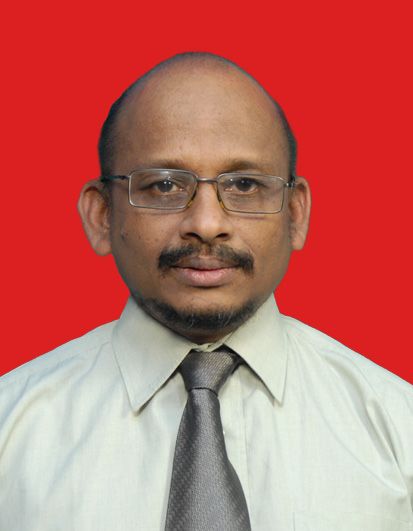
Handbook of the University of Colombo School of Computing

                                             Important

                  This handbook is compiled with information received up to June 2010.
It is hereby informed that this handbook is only for general information and is not for official purposes.
      Any information contained herein should be confirmed by reference to the relevant authority.

                     For the latest version of the handbook please visit our website

                           http://www.ucsc.cmb.ac.lk/ug/index.html

                                               July 2010

                                    Undergraduate Handbook

                                                      ii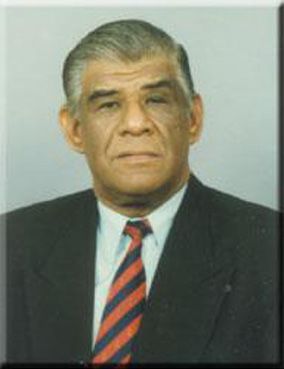
Handbook of the University of Colombo School of Computing

                                  Table of Contents
      Message from the Director								                                        v
      An appreciation of the Founder Director of the UCSC
      Vidya Jyothi Emeritus Professor V. K. SAMARANAYAKE 				                  vi

The UCSC
    A Brief History                                                             1
    Organizational Structure of the UCSC                                        2
    Strengths of the UCSC                                                       5
    Postgraduate Studies and Research                                           6

Registration and Student Facilities
    Registration                                                                7
    Orientation Programme                                                       7
    Hostel Facilities                                                           8
    Financial Assistance: Bursary and Mahapola                                  8
    Library Facilities                                                          9
    Laboratory Facilities                                                       9
    Student Discipline                                                          9
    Sports Facilities                                                           9
    Healthcare Facilities                                                      10
    Industry Placement and Career Guidance                                     10
    Student Counselling                                                        10
    Societies and Students Union                                               11
    Medical Certificates                                                       11

Degree Programmes
    The Structure of the Degree Programmes                                     13
    Bachelor of Computer Science                                               13
    Bachelor of Information and Communication Technology                       19

Evaluation Procedure                                                           25
    GPV & GPA                                                                  26
    Examinations                                                               26
    Degree awarding criteria                                                   27
    Degree with Classes and award of Honours                                   28
    Awards & Prizes                                                            29

Appendices
   Academic staff and Academic Support Staff                                   30
   Administrative Staff                                                        35
   Plan of the University of Colombo                                           36
                                            iii
Handbook of the University of Colombo School of Computing
Vision
To create new knowledge, sustain
a culture of critical inquiry and
foster a spirit of service and
commitment to the nation
Mission
To produce men and women of the highest technical competency
with high ethical standards and social accountability, capable of creative,
analytical and independent thinking, contributing to national
development
ivHandbook of the University of Colombo School of Computing
Message from the Director
The University of Colombo School of Computing (UCSC) is a Centre of Higher
Learning setup under the University of Colombo for achieving excellence
in Research and the dissemination of knowledge in Computer Science and
Information and Communication Technology in Sri Lanka. Far too much of
what passes off as education in this modern ‘market driven’ economy is little
more than an accumulation of facts for facing examinations. At the UCSC we
believe such efforts only scratch at the recall of data level of Bloom’s taxonomy
of the kinds of human learning. This data arranged in context becomes useful
information. Information interpreted correctly becomes knowledge. However,
it is the appropriate use of knowledge, which becomes wisdom. It is towards
helping our students realize this that we strive at the UCSC in keeping with the
motto of the University of Colombo, Wisdom Enlightens.
It is also the case that such enlightening, brings with it to us the freedom to be humble, as were the truly
great minds of the scientific revolution. In the words of Isaac Newton, “If I have seen further than others,
it is by standing upon the shoulders of giants”. It is this same humility that enabled Albert Einstein to pay
possibly the greatest of tributes ever paid to a fellow human when he said of Mahatma Gandhi, “Generations
to come will scarce believe that such a one as this walked the earth in flesh and blood”.
In striving for excellence in education, the UCSC has always attempted to foresee the needs of the country as
a whole. Introducing Computer Science as a field of specialization as early as in 1985, we produced Software
Engineers for the immerging software industry in Sri Lanka in addition to making fit the best of these for
research and higher education. We also responded to the ever increasing demand for IT professionals by the
ICT industry at the end of the millennium by introducing the first external IT degree in the form of the BIT
in 2000. Beginning in 2005, we are also taking the bold initiative of introducing a BICT programme to fill
a widely felt gap in the industry for Information System Engineers – in recognition of the maturing of the
field of Computer Science and Information and Communication Technology.
The UCSC is at a stage of its evolution in which it has been able to secure high donor confidence as
evidenced by no less than ten simultaneous foreign funded projects underway during 2005. It also has gained
the recognition from the local ICT industry with many partners willing to take part in student placement,
collaborative research and job placement activities. Holding down the most qualified set of academics and
researchers in the field, the UCSC is currently engaged in mobilizing its vast research potential in order
to clearly distinguish itself from the rest of the ICT education industry in Sri Lanka and the region as a
whole.
At the end of the day however, we need to remind ourselves of those very wise words of Mahatma Gandhi:
“The things that will destroy us are: politics without principle; pleasure without conscience; wealth without
work; knowledge without character; business without morality; science without humanity; and worship
without sacrifice”.
To this end, I wish that each student walking into our corridors, would at the end of their 3 or 4 year stay at
the UCSC be able to say, that this indeed was the most constructive investment of time they have ever made
in their life. I have no doubt then, that they would go onto become a valuable asset to the ICT industry in
this country, and to Sri Lankan society at large.
Prof. G N Wikramanayake
vHandbook of the University of Colombo School of Computing
An appreciation of the founder Director of the UCSC
Vidya Jyothi Professor V. K. SAMARANAYAKE (1939 – 2007)
Vanniarachchige Kithsiri Samaranayake was born on the 22nd of May 1939
and had his early education in Hewavitharana Vidyalaya, Rajagiriya where
his father was the principal and his mother was a teacher. He entered Ananda
College in 1948 and then Royal College through a competitive examination
in 1950.
Prof. V.K.Samaranayake entered the University of Ceylon to read for a degree
in Science in 1956 having completed his secondary education at Ananda and
Royal Colleges. He was selected to do a Special degree in Mathematics . and
obtained a First Class Honours degree in 1961.
Prof. Samaranayake entered the Imperial College, London in 1963 on a state scholarship for his postgraduate
studies and then moved on to University College, London to complete his PhD in record time before
returning home in 1966. At the age of just 35, in recognition of his great scholarship, the University of
Colombo appointed him to its highest Academic position of Professor of Mathematics in 1974. He was
subsequently appointed Senior Professor of Mathematics in 1984, invited to be the first Senior Professor of
the newly created Chair in Computer Science in 1996 and appointed Emeritus Professor of the University
of Colombo after his retirement in 2004. In recognition of which the University honoured him with the title
Professor Emeritus of Computer Science, and conferred on him the Degree of Doctor of Science, Honoris
Causa at its subsequent Convocation.
As it is not possible to confine the appreciation of his enormous service to the nation and his illustrious career
as an academic and an administrator to a few pages, some of the significant milestones of his illustrious
career are outlined below.
• 1987- He was appointed as Chairman of the Computer and Information Technology Council of Sri
Lanka (CINTEC), which he served for 12 years. During this period he was also tasked with chairing the
Presidential Task Force on Integrated R & D in Science & Technology 1997-2000 and the National Y2K
Task Force in Sri Lanka 1998-2000.
• 1992 - He initiated the participation of Sri Lankan school children in Computer Programming,
by committing CINTEC funds for sending teams of 4 to the International Olympiad in Informatics (IOI).
Through his great foresight, to date, Sri Lanka has been able to secure 3 Gold, 5 Silver and 13 Bronze
medals at successive IOI’s with a record of never returning without a medal since 1994.
• In 1995 he was instrumental in setting up intensive discussions with Sri Lanka Telecom, to commence
Internet services in Sri Lanka. These discussions eventually brought LEARN and Internet connectivity to
Sri Lanka in 1996.
• He was instrumental in organizing the IT industry at large by forming associations for Computer
Training Organizations (ACTOS), for the Software Industry (SLASI), and for the Computer Vendors
(SLCVA). With foresight he also created the umbrella organization for these associations in the form of
the Federation of IT Industry Associations (FITIA) which recently hosted the largest ICT event in Sri
Lanka – the ASOCIO ICT Summit. He has also been involved with the well known ICT Trade Exhibition
organization, INFOTEL whose Chairmanship he has held from 1997. INFOTEL has in turn been the major
funding organization for many industry and human resource development efforts in the field of ICT.
viHandbook of the University of Colombo School of Computing
• In 1984 he had his first major breakthrough with the full backing of the then Chancellor, Dr. P. R.
Anthonis and Vice Chancellor Prof. Stanley Wijesundera in the form of a substantial JICA grant from the
Government of Japan. Almost simultaneously, the UNDP provided some much needed research funding to
build up Academic Faculty in Computer Science at the University of Colombo. Starting with the Statistical
Unit and the Statistical Computing and Data Processing Centre within the Mathematics Department, Prof.
Samaranayake first convinced the University to set up a Department of Statistics and Computer Science in
1985, the first of its kind in Sri Lanka, and then went onto create the first School in the university system in
the form of the University of Colombo School of Computing (UCSC) in 2002.
• Commencing in the year 2000, Prof. Samaranayake initiated another major milestone in ICT HRD
in Sri Lanka with the launch of the innovative Bachelor of Information Technology (BIT) External Degree
programme which provides an ultimately scalable mechanism for affordable ICT education in a way that
incorporates the private sector – a feat no other degree programme has been designed to do. Apart from the
prestige of a University of Colombo degree to students, the BIT programme also has the indirect but most
desirable effect of standardizing ICT education in an era where commercialism is threatening the quality of
education.
• Prof. Samaranayake’s involvement in the scientific community has been no less impressive with
the Sri Lanka Association for the Advancement of Science (SLAAS) electing him to the office of General
President in 1994 and the National Academy of Sciences of Sri Lanka electing him as a Fellow of the
Academy, its Vice President and finally its President for 1998-99.
• His quest for capacity building in ICT human resources can most clearly be seen in his single
handed contribution in this area at the University of Colombo – making it the showcase among the entire
university system in Sri Lanka and beyond. Investing in human resource development in ICT also involves
huge risks – that of aiding in the brain drain. This is where Prof. Samaranayake’s broadness of vision and
almost unreasonable trust, especially in the case of training Faculty in the University, is most clearly seen.
Commencing with the meager funding resources extended by donors in the 1970’s in an era when the
developed countries themselves were just getting into the area of serious ICT human resource development,
Prof. Samaranayake commenced his quest of directing all local and foreign funding to develop ICT Human
Resource development at the University of Colombo. ´´
• In recognition of his towering contribution in the field of ICT in the country, he has been bestowed
with several national awards in the form of the Lions’ Club Gold Medal for the Most Outstanding Citizen
of Sri Lanka in 1986, the Vishva Prasadini Award in 1996 on the occasion of the 80th birthday of the then
Prime Minister Sirimavo Bandaranaike and the Vidya Jyothi Presidential Award in 1998.
• Prof. Samaranayake’s characteristic skill at excelling in multiple tasks simultaneously is also
demonstrated by his continuing involvement in research, being named a Fellow of the Kennedy School
of Government at Harvard University, USA in 2001, Research Fellow at the National Centre for Digital
Government at Harvard University, USA in 2003 and the impending appointment as Visiting Fellow in the
Digital Vision Programme at Stanford University, USA in 2005. A particularly high point of this role was
when he simultaneously chaired two International Conferences while playing a key role in the whole of the
Government declared Information Technology Week in December 2004. He also continued as Chairman of
the International Information Technology Conference till his untimely demise.
viiHandbook of the University of Colombo School of Computing
viiiHandbook of the University of Colombo School of Computing
The UCSC
A brief history
The University of Colombo School of Computing (UCSC) is an integral part of the University of
Colombo, and has a history of over 80 years as the leading higher educational institution in the country.
Begun as the Ceylon University College affiliated to the University of London in 1921 at the same
location as the present campus, it became the University of Ceylon in 1942. Although the University was
to be shifted to Peradeniya commencing 1952, the high demand for university education resulted in there
being two equal heirs to the history, traditions and assets of the University of Ceylon, namely the present
University of Colombo and the University of Peradeniya.
The University of Colombo has developed into one of the leading universities in Asia having had several
transitions since the sixties. The University has exploited its advantageous location in Colombo and has
derived much from the traditions of the Colombo Medical College that began in 1870 and the University
College of 1921. The University of Colombo now consists of Five Faculties, One School, Four Institutes
and several Centers in addition to the Sri Palee Campus.
Teaching of Computing in the University of Colombo first started way back in 1967 by the setting up of
the Statistical Unit as a separate unit of the Department of Mathematics. Later with the initial guidance
of Professor V.K Samaranayake, the statistical unit was enhanced as the Statistical Consultancy and Data
Processing Service Centre. This had paved the way to many future developments. By 1985, this Centre
had grown into the Department of Statistics and Computer Science (DSCS). The major function of this
department was to conduct special degree programmes in Statistics and in Computer Science. The DSCS
offered Computer Science specialization programme, produced only 40 students per batch, was anyway
not sufficient to meet the growing demand in the field of Computer Science.
In 1997 a batch of 50 students were taken directly to study Computer Science, through the University
Grants Commission, but by this time it was realized by many that Computer Science subdivision of the
DSCS need to expand as a separate unit to meet the growing demand in the field of Computer Science.
As a result, in the year 2001, the DSCS separated into two departments namely Department of Computer
Science (DCS) and Department of Statistics (DS).
The Department of Computer Science (DCS) identified its own limitations of being operated in the
restrictive framework of a Faculty and at the same time it understood the importance of having a strong
industry relationship for exploiting the future growth potential. The visionary leadership of Professor
V.K. Samaranayake understood the importance of a strategic merger between the Institute of Computer
Technology (ICT) and the Department of Computer Science (DCS) of the University of Colombo that had
the expert knowledge in the field of computer science.
1Handbook of the University of Colombo School of Computing
The ICT had a strong relationship with industry at the same time a high institutional profile among foreign
donor agencies. ICT also enjoyed much more autonomy than a typical Faculty in their business operations
making it easy for receiving large amounts of resources from JICA, SIDA and other donors.
Finally, the University of Colombo School of Computing (UCSC) was formed on 01st of September 2002
by the merger of the existing Department of Computer Science (DCS) of the Faculty of Science and the
Institute of Computer Technology (ICT) both of the University of Colombo.
Prof. V.K Samaranayake became the founder Director of the UCSC, whose proactive thinking and
visionary leadership set the path to success in every endeavour undertaken by the UCSC. Furthermore
the UCSC has been able to position itself as a Centre of Excellence in Computing and IT in the university
system of Sri Lanka.
After the retirement of Prof. V.K Samaranayake in 2004 Dr. Ruvan Weerasinghe serviced a the Director
of the UCSC for six years.
Organizational Structure of the UCSC
The primary activity of the University of Colombo School of Computing is to deliver quality undergraduate
degree progrmammes in Computer Science and Information and Communication Technology to students
admitted via the UGC. The syllabi and the course contents are regularly reviewed and updated in order to
maintain the quality of the programmes.
Undergraduate academic programmes are directly funded by the government. The UCSC has three
Academic Departments and the academic staff is allocated to these Departments based on their
specialization and teaching expertise.
Information Systems Engineering (ISE)
Academic
Computation and Intelligent Systems (CIS)
Departments
Communication and Media Technologies (CMT)
In addition to the above three departments the UCSC has 5 Centres established under the UCSC Ordinance
of 2002. Each centre is organized and managed under separate Coordinators. Centre Coordinators plan
the expansion paths in relation to each centre. The five centres are:
• Computing Services Centre (CSC)
• External Degrees Centre (EDC)
• Advanced Digital Multimedia Technology Centre (ADMTC)
• Professional Development Centre (PDC)
• e-Leaning Centre (e -LC)
2Handbook of the University of Colombo School of Computing
Computing Services Centre (CSC)
Computing Services Centre is the main consultancy arm of the UCSC. It conducts System Design and
Development, System Recommendation, Software Project Consulting, Recruitment Testing, Tender
Evaluation, Feasibility Study and Acceptance and Testing for Computer Hardware and Software. It also
conducts tailor- made training programmes for the organizations in the private and public sector. CSC has
conducted training programmes for over 12,000 personnals.
For more details visit the website: http://www.ucsc.cmb.ac.lk/centre/csc
External Degrees Centre (EDC)
The main purpose of establishing the External Degrees Centre is to offer external degree programmes to
widen the higher educational opportunities of the students who have been unsuccessful in meeting the
competitive eligibility criteria for admission to the state university system. University of Colombo School
of Computing realized that demand for high quality ICT professionals was far exceeding the number
provided by the state universities.
As a result of it UCSC commenced BIT degree programme in the year 2000 and has so far produced
801graduates and almost all have been absorbed by the ICT industry. Minimum entry qualification for
this programme is three passes in GCE Advanced Level.
For more details visit the website: http://www.bit.lk
Advanced Digital Media Technology Centre (ADMTC)
ADMTC was a successful result of project type technical support extended by the Government of Japan
through Japan International Cooperation Agency (JICA) to the University of Colombo for capacity
building in human resources in Information Technology. The centre also supports the development of
e- learning course contents that could be used by internal and external undergraduates and the general
public. The UCSC has received a state of the art Multi Media Laboratory, Digital Studio and Network
capabilities under this project.
For more details visit the website: http://www.admtc.lk
3Handbook of the University of Colombo School of Computing
Professional Development Centre (PDC)
Professional Development Centre was set up for keeping a close liaison with IT industry and for
improvement of the academic programmes through industry partnership thereby enhancing the quality
of the undergraduates and staff. The programmes conducted by PDC primarily concentrate on three
aspects:
• Improving professional skills of the staff and the students
• Industrial placements for undergraduates
• Promoting inter-cultural harmony
Mission of the PDC is to inculcate the excellence in education and other aspects of life.
For more details visit the website: http://www.ucsc.cmb.ac.lk/pdc
e -Leaning Centre (e-LC)
The UCSC intends to position itself as the nation’s leading e-Learning promoter by introducing new
methods of learning and teaching using Information and Communication Technology. Building awareness
among the general public about virtual learning environments with the collaboration of other relevant
parties can be considered as the task of this centre.
For more details visit the web site http://www.ucsc.cmb.ac.lk/elc
4Handbook of the University of Colombo School of Computing
Strengths of the UCSC
Reputation and Recognition
The University of Colombo has positioned itself as one of Sri Lanka’s pioneering universities in the world
academic arena. The UCSC inherits much of this recognition being a School attached to the University
of Colombo.
The UCSC offers two internal Degree programmes, one external Degree programme and two Masters
Degree programmes. Acknowledging our academic excellence, the British Computer Society has given
full exemption from the academic requirements of Membership of BCS to our former Four year Computer
Science (Special) degree. This has been the only such Computer Science Degree Programme in Sri
Lanka to have received full accreditation. This reflects the fact that our curricula are up to internationally
recognized standards.
Location
The University of Colombo School of Computing is situated in the heart of Colombo as part of one of the
leading metropolitan universities in the country with easy access for student and staff alike.
Highly Qualified Academic Staff
Competency of the academic staff is one of the crucial factors in determining the quality of the educational
process. The UCSC presently has 1 Professor, 17 Senior Lecturers with PhD qualifications, 12 with
Masters Degrees and another 12 with Bachelors level honors Degrees. None of the other universities have
such a human resource in IT/CS, one which has been built up over a long period of time with foresight
and long-term investment. As such, the UCSC can definitely claim a competitive advantage over its
competing universities in this respect.
Computing Facilities
The UCSC is in possession of a large number of laboratories equipped with modern and up to date
computers enabling it to deliver successful computer science study programmes. The UCSC also has
a few dedicated laboratories for external courses that serve as cushion during the peak demand times.
A fully equipped digital studio at the Advanced Digital Multimedia Technology Centre, a state of the
art Data Centre at the Network Operations Centre and a 14 node high performance computing cluster
delivering over 15Gflops are a few specialized resources available.
Friendly Educational Environment
The UCSC wants to foster an environment, which is conducive to students to carry out their study
programmes effectively. In this regard Computer Science and the Information and Communication
Technology programmes are well-balanced having a mix of academic and enhancement courses. “Respect
difference, foster diversity” is an unwritten slogan we preach in promoting harmony in a multicultural
society. The traditional demarcation among academic staff, administrative staff and the student is not to
be seen at the UCSC.
5Handbook of the University of Colombo School of Computing
Strong Industry-University Relationship
The Professional Development Centre of the UCSC attempts to promote a lasting relationship with key
players of the IT industry. This gives the UCSC an advantage over other universities in fulfilling the
industrial training requirements of undergraduate students.
Postgraduate Studies and Research
Masters Degrees
The UCSC conducts part time Masters Degrees in Computer Science (MCS) and IT (MIT). MCS is a
specialization course for good degree holders in Computer Science and IT, and MIT is a conversion
course for graduates in non Computing disciplines.
Postgraduate Research leading to MPhil / PhD
The UCSC has several active research groups in the fields of wireless networks, distributed systems,
natural languages, cryptographic systems, graphics and image processing, GIS databases and e-learning
and others, most with foreign funding, open to capable researchers and working on appropriate and cutting
edge technology.
For more details visit the web site http://www.ucsc.cmb.ac.lk/pg
6Handbook of the University of Colombo School of Computing
Registration and Student Facilities
Registration
The University Grants Commission determines the eligibility of the students to be admitted to the respective
undergraduate courses. Thereafter the UCSC informs students to register for respective courses by filling
in the necessary forms and paying the relevant fees at the registration.
Fee Structure
Type of Fee Amount When to pay
Registration Fee Rs 300.00 At the beginning of each Academic Year
Medical Fee Rs 50.00 At the beginning of each Academic Year
Student Union Fee Rs 50.00 At the beginning of each Academic Year
Student ID Fee Rs 100.00 During the 1st Year Registration only
Amalgamated Club Fee Rs 125.00 At the beginning of each Academic Year
Refundable Lab and Library Deposit Rs 1,000.00 At the 1st Year Registration only
Examination Fee (Repeaters only) Rs 25.00 Per paper at the beginning of the Semester
It is important to note that students are required to re-register at the beginning of each academic year by
paying the Registration fee, Medical fee and Amalgamated club fee prevailing at that time on or before the
date specified. Failure to do so may result in the cancellation of the studentship and the rights to claiming
Bursary or Mahapola payments and right to vote at the election of the student union.
Orientation Programme
University of Colombo School of Computing has designed a special orientation programme to improve
the English Language skills and basic computer awareness skills of the selected students who come from
various parts of the country representing a wide cross section of society. Every student is required to sit
for the Placement Test in English Language. Hands on experience in computing is also given in small
groups.
Post evaluation of the orientation programme is done at the completion of the programme to ensure the
primary objective of placing every student on an equal ground in terms of the computer and English
literacy is achieved.
7Handbook of the University of Colombo School of Computing
Hostel Facilities
It is extremely difficult to provide hostel accommodation to all students of the UCSC within close proximity
to the University premises due to difficulty of paying very high commercial rates for rented apartments.
Presently the men’s hostels are situated at Kirulapone Road, Colombo 05. The Women’s hostel is situated
at Baseline Road, Colombo 08, providing accommodation to the First year students.
Students are required to abide by the rules and the regulations set by the UCSC when accepting
accommodation. Failure to abide by the rules will result in the student being subjected to disciplinary
action.
All matters of inadequacy or failure in relation to hostel facilities should be brought to the notice of the
Sub warden.
Financial Assistance: Bursary and Mahapola
The University Grants Commission and the Ministry of Trade and Consumer Affairs select the eligible
students for the Mahapola Scholarships. The UCSC notifies the students who are qualified to receive
Mahapola Scholarships thereafter.
The UCSC selects the eligible students for the bursary payments according to the UGC Commission
Circular No: 856 & 900. Selected students are notified through a public notice.
Mahapola Scholarship Bursary Assistance
Merit Scholarship Rs 2550 Full Bursary Rs 2000
Ordinary Scholarship Rs 2500 Half Bursary Rs 1900
4th Year Scholarship
This scholarship is offered to encourage the students who are unable to read through the fourth year due
to financial difficulties. One scholarship for the value of Rs 2000.00 per month is offered for 10 months.
Students who register for the fourth year Computer Science Programme can apply at the beginning of the
academic year for this scholarship.
Other Scholarships
Several scholarships are also offered by the industry. Available scholarships are from the following
organizations.
Aeturnum Lanka, Assette, IFS, John Keells Computer Systems, Millennium IT, Navantis IT, Ridgecrest
Asia, and Zone 24x7.
8Handbook of the University of Colombo School of Computing
Library Facilities
The library has a large collection of 9700 Books. The majority of these materials are latest editions.
The library has a reference area with a seating capacity for 136 users and it also provides an electronic
catalogue. Further, it has a collection of e-books [CDs], thesis and dissertations. Library opening hours
are as follows.
Weekdays 09.00 - 18.00 (Till 20.00 Hours during study leave and Examination periods)
Weekends 9.00 am-6.00pm (Specially for postgraduate students)
Mrs. Asoka Rajapaksa
Senior Staff Assistant / Library
Contact No. 011 2-158939
Laboratory Facilities
There are over 200 machines, both standalone and server based thin clients, made into clusters of 40 or 20
machines in each Lab. Linux and Microsoft Windows operating environments are available with software
development environments such as Open source IDE’s, Eclipse for Java, Netbeans and .Net for Rapid
Applications Development. Most of the Laboraties are open during the semester and only from 08.00 to
17.00.However based on the need some laboraties may continue to operate until 19.00. Laboraty facilities
are usualy not provided during study leave & vacation.
Student Discipline
The UCSC expects its student community to be well disciplined. Resources and facilities provided
are liable to be withdrawn, if they are found to be misused.Storing of unauthorized material, hacking,
email spamming or software piracy is strictly prohibited in the Labs. Disciplinary action will be taken
according to the UCSC regulations on such matters. Where necessary, such instances will be reported
to law enforcement agencies. Students violating examination rules will be punished separately. These
punishments include cancellation of exam results and suspens from academic work for specified period.
Sports Facilities
Sports facilities, such as, the Gymnasium and Tennis Courts are made available by the Department of
Physical Education of the University of Colombo. Those facilities can be accessed by the UCSC students.
Furthermore students can participate in the events organized by the University.
Ms. K S S Gunasekara,
(Acting) Director Physical Education, University of Colombo
Contact No: 0112-502405.
9Handbook of the University of Colombo School of Computing
Healthcare Facilities
The Health Centre is located in close proximity to the UCSC and facilities are available for students for
out patient treatment. A Dental Unit is also attached to this health centre.
Dr K D I Vasudewa
M.B.B.S (Ceylon) D.F.M.(Colombo )
Contact No: 011-2584985
Industry Placement and Career Guidance
All 3rd year students of the CS and ICT programmes will be placed in the industry during their 2nd semester,
based on competitive open interviews. For those who are unable to obtain such placements, the UCSC
will make every effort to place them within the UCSC.
The Professional Development Centre through its numerous links with the IT industry is in a position
to provide guidance on job opportunities for passing out graduates. The Career Guidance Unit offers
workshops, seminars and short courses on Career Skills Enhancement. Career counseling and job
placements are among the other services offered by the Unit. The services of the Career Guidance Unit
are also open to the students of all the faculties including the UCSC.
Dr. (Mrs.) S M K D Arunatilake
Coordinator, Professional Development Centre
UCSC
Contact No. 011-2158988
Dr. G D S P Wimalarathne
Director, Career Guidance Unit
University of Colombo.
Contact No. 011-2504748
Student Counseling
Every student has the opportunity of seeking advice and assistance from the student counsellors in relation
to academic matters as well as personal matters. Additionally, the service of a professional counsellor are
also available to the students, under the direction of student counsellors. All academic staff members have
been assigned two specific time slots per week on Thursdays (10.00 – 12.00 noon), Friday (2.00 – 4.00
P.M) for student interaction and the students are encouraged to meet the staff during these time periods
to obtain guidance in academic matters.
10Handbook of the University of Colombo School of Computing
Student Counsellors
Dr. H.L. Premaratne
Dr. T.N.K. De Zoysa
Dr (Mrs). Y. Ekanayake
Dr ( Mrs). A.T. Dharmaratne
Contact No : 011215-8972/3/4/6/7
Professional Counsellor Mrs. A. H. T. N. Thusanthika
Societies and Student Union
As per the by –laws for internal undergraduates, elections will be held at the beginning of each academic
year to elect office bearers to the student union of the UCSC. Acceptance of nominations and election
dates will be notified through a public notice. As a tradition, office bearers of the UCSC Student Union
are appointed unanimously through the consensus of the students.
Medical Certificates
All students who are unable to appear for a theory and/or practical component of an examination due to
medical reasons should submit a Medical Certificate issued by the Chief Medical Officer(CMO)/University
Medical Officer (UMO) of the University of Colombo or a valid Medical Certificate recommended by the
CMO/UMO if they seek relief.
Such students should make a request in writing (by telegram to the Director, UCSC or e mail to: medical@
ucsc.cmb.ac.lk) for relief indicating the reasons for such absence within 3 (three) working days from the
date of absence for such examination.
Students are advised to strictly adhere to the following guidelines in this regard:
(1) (a) A student who falls ill during a period of examination of the UCSC should report to the Chief
Medical Officer (CMO)/University Medical Officer (UMO) of the University of Colombo. The
CMO/UMO will examine the student and issue a Medical Certificate, if necessary.
(b) The Medical Certificate issued by the CMO/UMO with the proof of informing the Director/
UCSC should be forwarded to the Deputy Registrar/Examinations of the UCSC along with the
attached application form within 7 (seven) days from the last date of recommended leave.
11Handbook of the University of Colombo School of Computing
(2) (a) If a student who resides outside Colombo city limits finds it difficult to report to the CMO/
UMO due to seriousness of the illness, he/she should get treatment from the nearest
Government Medical Institution.
(b) In such instances, he/she should follow the procedure given below with regard to submission of
medical certificates:
(i) All Medical Certificates other than those issued by the CMO/UMO with the proof of
informing the Director UCSC should be forwarded to the CMO/UMO along with the
attached application form. These should then be submitted to the Deputy Registrar/
Examinations of the UCSC with the recommendation / observation of the CMO/UMO
within 7 (seven) days.
(3) (a) Medical Certificates submitted after the above deadline and/or without the recommendation/
observation of the CMO/UMO will not be accepted.
(b) The following categories of Medical Certificates will only be accepted by the CMO/UMO for
consideration:-
(i) Medical Certificates issued by a Government Hospital / District Medical Officer
(ii) Medical Certificate issued by a Private Medical Practitioner only in the case of leave for
less than five days;
(iii) The CMO/UMO may request the following documents as further proof of illness:-
• Receipt of payment for the Medical Certificate from the Government Hospital;
• Prescriptions of the medicines taken;
• Reports of the blood tests etc.
(If the required documents are not submitted the application may be rejected.)
12Handbook of the University of Colombo School of Computing
Degree Programmes
The Structure of the Degree Programmes
The students who are admitted to the UCSC may read for a degree programme in Computer Science
or in Information & Communication Technology. The UCSC offers a 3 year programme and a 4 year
programme in each of these disciplines. Initially all students are enrolled for a 3 year degree programme.
Students who achieve a minimum overall GPA of 2.5 in the first three years and satisfy all the relevant
requirements stipulated in the By – Laws and regulations are given the opportunity to enroll for a 4 year
Degree Programme.
The academic programmes of the UCSC are based on a semester system with 2 semesters per academic
year and operate on a course basis. The UCSC offers two types of courses namely Academic Courses and
Enhancement Courses. Academic courses provide subject knowledge and enhancement courses provide
knowledge on a wide range of disciplines that are required for a holistic education. Each year the UCSC
offers a number of mandatory and optional courses. Each course is assigned a credit value. A credit
is equal to 15 hours of lectures or 30 hours of practical or an equivalent combination of lectures and
practical. A student is required to register for a minimum of 30 academic credits and possibly a prescribed
number of enhancement credits per year. A student who obtains at least a “C” grade in each course totaling
a minimum of 10 credits in an academic year is eligible to be registered for the next academic year.
Bachelor of Computer Science Degree Programme
The 3-year and 4-year Computer Science Degrees are named the Degree of Bachelor of Computer
Science, BCSc., and the Degree of Bachelor of Science in Computer Science, BSc., (Computer Science)
respectively.
Medium of Instruction
Lectures, Tutorials, Practical and Examinations will be conducted in the English medium.
13Handbook of the University of Colombo School of Computing
Courses offered in the Computer Science Degree Programme
Year 1
Semester – I
Credits
Course Code Course Name Mode
Lecture Practical
SCS1002 Introduction to Programming Compulsory 3 1
ENH1010 Language Skills Compulsory 1
SCS1003 Computer Systems Compulsory 3
SCS1004 PC Application Laboratory Compulsory 1 2
SCS1005 Systems Analysis and Design Compulsory 3
SCS1009/ST1006 Introduction to Probability and Compulsory 2 1
Statistics
Year 1
Semester – II
Credits
Course Code Course Name Mode
Lecture Practical
SCS1001 Mathematics or Computing Compulsory 3
ENH1020 Life Skills Compulsory 1
SCS1006 Introduction to Data structures Compulsory 3 1
and Algorithms
SCS1007 Software Engineering Compulsory 3
SCS1008 Database Management Systems Compulsory 3 1
14Handbook of the University of Colombo School of Computing
Year 2
Semester – I
Credits
Course Code Course Name Mode
Lecture Practical
SCS2001 Operating Systems Compulsory 3 1
Rapid Application
SCS2002 Development Compulsory 2 2
SCS2003 Object Oriented Systems Compulsory 2 1
Development
SCS2005 Internet Programming Compulsory 2 1
Analogue and Digital
SCS2006/PH2001 Electronics Compulsory 2
Year 2
Semester – II
Credits
Course Code Course Name Mode
Lecture Practical
Introduction to Programming
SCS2004 Languages Compulsory 2
SCS2007 System Programming Compulsory 2 1
SCS2008 Numerical Computing Compulsory 2 1
SCS2009 Advanced Data Structures and Compulsory 2 1
Algorithms
Statistical Inference for
SCS2010 Computing Compulsory 2 1
Analogue and Digital
SCS2011 Electronics II Compulsory 1
15Handbook of the University of Colombo School of Computing
Year 3
Semester – I
Credits
Course Code Course Name Mode
Lecture Practical
Computer Graphics and Image optional
SCS3003/CS3003 2 1
Processing
SCS3004 Networking Technologies optional 2
SCS3005 DatawarehousingDataminingand optional 3
Information Retrieval
SCS3006/CS3005 Neural Computing optional 2 1
SCS3007 Professional Issues Compulsory 2
SCS3008 Compilers and Automata Theory optional 3 1
SCS3009 Middleware Architectures optional 2
SCS3010 Human computer Interaction optional 2 1
SCS3011/CS3006 Cryptography Systems optional 2
SCS3012 Introduction to Virtual Reality optional 2 1
SCS3013/CS3004 Computer Systems Architecture optional 2
SCS3014 System Design for Internet optional 2 1
SCS3015/CS3007 Multimedia Technologies optional 2 1
SCS3016 Group Project optional 3
SCS3019/ICT3012 Instructional Design optional 2 1
SCS3018/ICT3010 Software Localization optional 2
16Handbook of the University of Colombo School of Computing
Year 3
Semester – II
Credits
Course Code Course Name Mode
Lecture Practical
SCS3017 Literature Survey optional 3
SCS3026 Industry Project / Industry Placement Compulsory 8
Year 4
Semester – I
Credits
Course Code Course Name Mode
Lecture Practical
SCS4001 Individual Project Compulsory 10
SCS4003 Logic Programming & Prolog optional 2 1
Formal Methods & Software
SCS4004 Verification optional 3
SCS4007 High Performance Computing optional 2 1
Special Topics in Theoretical
SCS4009 Computing optional 3
SCS4010 Bioinformatics optional 2 1
SCS4014 Research Methods Compulsory 2
SCS4017 Wireless Ad-Hoc and Sensor Networks optional 2 1
SCS4018 Evolutionary Computing optional 3
17Handbook of the University of Colombo School of Computing
Year 4
Semester – II
Credits
Course Code Course Name Mode
Lecture Practical
SCS4002 Distributed Systems optional 3
SCS4005 Intelligent Systems optional 3
SCS4006 Advanced Database Systems optional 2 1
SCS4008 Advanced Computer Graphics and Vision optional 2 1
SCS4012 Communications Networks optional 2 1
SCS4013 Applied Robotics and Embedded Systems optional 2 1
SCS4015 Research Seminar Compulsory 3
SCS4019 Computational Pattern Recognition optional 2 1
Advanced Concepts of Software Design and
SCS4020 optional 2 1
Development
SCS4011 Natural Language Processing optional 2 1
18Handbook of the University of Colombo School of Computing
Bachelor of Information and Communication Technology
Degree Programme
The 3-year and 4-year ICT Degrees are named the Degree of Bachelor of Information and Communication
Technology, BICT., and the Degree of Bachelor of Science in Information and Communication Technology,
B.Sc.,(ICT) respectively.
Medium of Instruction
Lectures, Tutorials, Practical and Examinations will be conducted in the English medium.
Courses offered in the Information and Communication Technology Degree Programme
Year 1
Semester – I
Credits
Course Code Course Name Mode
Lecture Practical
ICT 1001 Introduction to Software Development Compulsory 2 1
ICT 1002 Systems Analysis and Design Compulsory 2 1
ICT 1003 Business Information Systems Compulsory 2
ICT 1004 PC Application Laboratory Compulsory 2
ICT 1005 Fundamentals of Management Compulsory 2
ICT 1006 Mathematics I Compulsory 1
ICT 1007 Communication Skills Compulsory 1
ICT 1008 Fundamentals of Economics Compulsory 1
ICT 1009 Fundamentals of Sociology Compulsory 1
19Handbook of the University of Colombo School of Computing
Year 1
Semester – II
Credits
Course Code Course Name Mode
Lecture Practical
ICT 1010 Communication Technologies Compulsory 2 1
ICT 1011 Database Management Systems Compulsory 2 1
ICT 1012 Computer Systems Compulsory 2
ICT 1013 Guest Lecture Series Compulsory 2
ICT 1014 Mathematics II Compulsory 1
ICT 1015 Fundamentals of Accountancy Compulsory 1
ICT 1016 Fundamentals of Psychology Compulsory 1
Year 2
Semester – I
Credits
Course Code Course Name Mode
Lecture Practical
ICT 2001 Software Engineering Compulsory 3
System Analysis and Design
ICT 2002 Compulsory 1 2
Group Project
ICT 2003 Internet Application Development Compulsory 2 1
ICT 2004 Multimedia Technologies Compulsory 2 1
ICT 2005 Business Statistics & Operational Compulsory 2
Research
ICT 2006 Marketing Compulsory 1
ICT 2007 Industrial Visits Compulsory 2
20Handbook of the University of Colombo School of Computing
Year 2
Semester – II
Credits
Course Code Course Name Mode
Lecture Practical
ICT 2008 Business Process Re-Engineering Compulsory 2
ICT 2009 IT Project Management Compulsory 1 1
ICT 2010 Information Systems Security Compulsory 2
and Audit
ICT 2011 Digital Fine Arts Compulsory 1 1
ICT 2012 Software Development Project Compulsory 3
e-Business Technologies
ICT 2013 Compulsory 2
and Applications
ICT 2014 Special Topics in Computer Science Compulsory 2
Year 3
Semester – I
Credits
Course Code Course Name Mode
Lecture Practical
ICT 3001 Enterprise Resource Planning Compulsory 2
ICT 3002 Human Computer Interaction Compulsory 2 1
ICT 3003 Software Quality Assurance Compulsory 2
ICT 3004 IT Procurement Management Compulsory 2
ICT 3005 Strategic Management Compulsory 2
ICT 3006 Professional Issues in IT Compulsory 2
ICT 3007 Human Resource Management Compulsory 2
21Handbook of the University of Colombo School of Computing
Credits
Course Code Course Name Mode
Lecture Practical
ICT 3008 Middleware Architectures Optional 2
ICT 3009 Computer Graphics & Image Processing Optional 2 1
ICT 3010 Software Localization Optional 2
Data warehousing, Determining &
ICT 3011 Optional 3
Information Retrieval
ICT 3012 Instructional Design Optional 2 1
ICT 3013 Digital Video Production Optional 2 1
ICT 3014 System & Network Administration Optional 2 1
Year 3
Semester – II
Credits
Course Code Course Name Mode
Lecture Practical
ICT3006 Professional Issues Compulsory 2
ICT3015 Industry Placement Compulsory 8
22Handbook of the University of Colombo School of Computing
Year 4
Semester – I
Credits
Course Code Course Name Mode
Lecture Practicals
ICT 4001 Final Year Project Compulsory 10
ICT 4002 Research Methods Compulsory 2
ICT 4003 Contemporary topics in Information Systems Compulsory 2
ICT 4004 Applied Informatics Compulsory 2
Optional Courses
Credits
Course Code Course Name Mode
Lecture Practicals
ICT 4005 Advanced Media Management Optional 1 2
ICT 4006 Mobile Computing Optional 2
ICT 4012 Wireless Ad-Hoc and Sensor Networks Optional 2 1
ICT 4008 Business Process Automation Optional 2
Year 4
Semester – II
Credits
Course Code Course Name Mode
Lecture Practicals
ICT 4001 Final Year Project Compulsory
ICT 4009 Contingency Planning / Risk Management Compulsory 2
ICT 4010 Research Seminar Compulsory 3
23Handbook of the University of Colombo School of Computing
Optional Courses
Credits
Course Code Course Name Mode
Lecture Practicals
Advanced Concepts in Software Design and
ICT 4011 Optional 2 1
Development
ICT 4013 Advance Database Systems Optional 2 1
ICT 4014 Enterprise Modelling Optional 2
ICT 4007 Advanced Business Information Systems Optional 2 1
24Handbook of the University of Colombo School of Computing
Evaluation Procedure
Each academic course is evaluated by written examinations (mid-semester and end of semester), continuous
assessments, assignments, reports, presentations, oral examinations or a combination of such methods of
evaluation. In the evaluation each course is assigned a percentage score. This percentage score is then
converted to a Grade according to the scheme given below. Also, each grade is associated with a Grade
Point Value (GPV) as shown in the table. These GPV values are used to compute the Grade Point Average
of a student as described in the following sections.
Range of
Grade
percentage Grade Attainment
Point Value
score
90 - 100 A+ 4.00 *
80 – 89 A 4.00 Superior
75 - 79 A- 3.75
70 - 74 B+ 3.25
65 - 69 B 3.00 Meritorious
60 - 64 B- 2.75
55 - 59 C+ 2.25
50 - 54 C 2.00 Adequate
45 - 49 C- 1.75
40 - 44 D+ 1.25
30 - 39 D 1.00 Minimal
20 - 29 D- 0.75
00 - 19 E 0.00 Failure
• When calculating classes, A + will be given a Grade Point value of 4.25.
25Handbook of the University of Colombo School of Computing
If a student is absent for an evaluation, a grade of E and zero marks is given unless the student provides
valid evidence accepted by the UCSC within a prescribed period of time. A student is considered to have
‘completed’ an academic course if he/she has received a Grade in respect of the evaluation of such course.
If an academic course has several components, e.g. a theory component and a practical component, then,
he/she is considered to have ‘completed’ such course if he/she has received a Grade in respect of each such
component. A student is considered to have ‘completed’ an Enhancement Course if his/her attendance at
such Enhancement Course and the prescribed course activities if any, is not less than a prescribed
minimum. All courses completed by a student are considered for the award of the degree.
Grade Point Value (GPV) and Grade Point Average (GPA)
The Grade Point Value obtained by a student in respect of each course (contributing to the GPA) for which
he/she has registered is multiplied (weighted) by its Credit Value to obtain the Grade Point Value of each
such Course. The Grade Point Average (GPA) of a student is then computed as the weighted average,
rounded to the second decimal place, of all the Grade Point Values of the contributing academic courses
‘completed’ by the student. It should be noted that some courses do not contribute to the GPA. However,
the completion of such courses not less than a prescribed minimum is required to obtain the Degree.
SUM (Grade Point Value obtained for the course X Credit Value of the course)
GPA =
Total Number of Credit Values of GPA contributing courses completed by the student
Examinations
All examinations are conducted and completed within the given semester except for courses having
practical or research projects. Duration of the theory examinations, practical and oral examinations are
determined by the UCSC at their discretion. The duration of each examination and the rubric of the
examination are informed during the respective semester.
Examination Offences
Students are strongly advised against committing plagiarism in the submission of assignments and thesis
reports. In the case of other written examinations, the possession of unauthorized material is considered
as an offence punishable under the University of Colombo rules on conduct of examinations.
Maximum Duration of the Degree
All students should complete their degrees within a specified time period. The maximum period allowed
for the 3-year degrees and the 4-year degrees will be 12 semesters (6 years) from the first registration.
Students will be allowed to repeat courses subject to the above constraint.
26Handbook of the University of Colombo School of Computing
Registration for the Optional Courses
If optional courses are offered in a particular year, students should register for such courses. Registration
will commence one week prior to the start of the academic year. Optional courses having less than a
specified number of students may not be offered, and students who have registered for such courses
should opt for other available courses based on their preferences. No changes in courses will be permitted
after 2 weeks of the commencement of the semester. Admission cards to sit for semester examinations
will be issued using the registration list. Repeat student has to pay the examination fee at the time of
reregistration.
Attendance
Students are strongly advised to attend all lectures and practical classes of all courses that they select to
follow.
If a student is unable to sit for a theory or a practical examination on medical reasons, the student should
provide a valid medical certificate issued or certified by the Chief Medical Officer of the University of
Colombo. (See page 11). If such a medical certificate produced by a student for an evaluation is approved
by the UCSC, then such student shall not be assigned any grade for the examination concerned but will
be considered as appearing for an evaluation for the first time in the next instance provided that he/she
appears for an evaluation at the immediately following opportunity provided by the school.
Repeat Examinations
A student obtaining a grade below C may re-sit the course examination (if available) for the purpose of
improving the grade. In the event of a student obtaining a lower grade while repeating, he/she is entitled to
the previous grade. However, in calculating the award of a class in the final degree, maximum contribution
from a repeated course is considered to be a grade of “C”.
Degree awarding criteria
To be eligible for the 3 year Degree, a student must
(a) Complete a minimum of 90 Academic Credits with at least 30 Academic Credits from each
of the three years.
(b) Complete the number of Enhancement Credit Value Equivalents prescribed in respect of
each year.
(c) Obtain a minimum GPA of 2.00.
(d) Obtain a grade not inferior to a C for the third year Industry Project / Industry
Placement.
(e) Complete the relevant requirements within six academic Years.
27Handbook of the University of Colombo School of Computing
To be eligible for the 4 year Degree, a student must
(a) Complete a minimum of 120 Academic Credits with at least 30 Academic Credits from
each of the four years.
(b) Complete the number of Enhancement Credits Value Equivalents prescribed in respect of
each year.
(c) Obtain a minimum GPA of 2.50.
(d) Obtain a grade not inferior to a C for the third year Industry Project / Industry Placement.
(e) Obtain a grade not inferior to a C for the fourth year Individual Project and
Complete the relevant requirements within six Academic Years.
Degree with Classes and award of Honours
Students qualifying for the award of the 3 or 4 year degree by completing all the relevant requirements
within a period of three and four consecutive academic years respectively shall also qualify for a class as
follows.
First Class – for obtaining a minimum overall GPA of 3.50
Second Class (Upper Division) - for obtaining a minimum overall GPA of 3.25
Second Class (Lower Division) - for obtaining a minimum overall GPA of 3.00
If a student is eligible to be awarded the three year Degree, the requirements for the award of such Degree
have been fulfilled by him/her within a period of three consecutive academic years beginning with the first
year of registration., and is eligible to be placed in the First Class, Second Class (Upper Division) or the
Second Class (Lower Division), such student shall be entitled to receive such Degree with Honours, and the
title of such Degree shall be “Honours Degree of Bachelor of Computer Science / Bachelor of Information
& Communication Technology (as the case may be). Such a student shall be free to use the qualification
”BCSc (Honours)” or “BICT (Honours)” at the end of his name.
If a student is eligible to be awarded the four year Degree, the requirements for the award of such Degree
have been fulfilled by him/her within a period of four consecutive years beginning with the first year of
registration, and is eligible to be placed in the First Class, Second Class (Upper Division) or the Second
Class (Lower Division), such student shall be entitled to receive such Degree with Honours, and the title
of such Degree shall be “Honours Degree of Bachelor of Science (Computer Science) / Honours Degree
of Bachelor of Science (ICT)” Such student shall be free to use the qualification “BSc(Computer Science)
(Honours) or BSc (ICT) (Honours)” at the end of his name.
28You can also read


