Update COVID-19 (Coronavirus) - 2 March 2020 Dr Tony Holohan Chief Medical Officer Department of Health - Failte Ireland
←
→
Page content transcription
If your browser does not render page correctly, please read the page content below
Update…
COVID-19 (Coronavirus)
2 March 2020

Dr Tony Holohan
Chief Medical Officer
Department of Health
What has been happening?

Where has it been happening?

     What do we know?

 What do you need to know?

 What are we doing about it?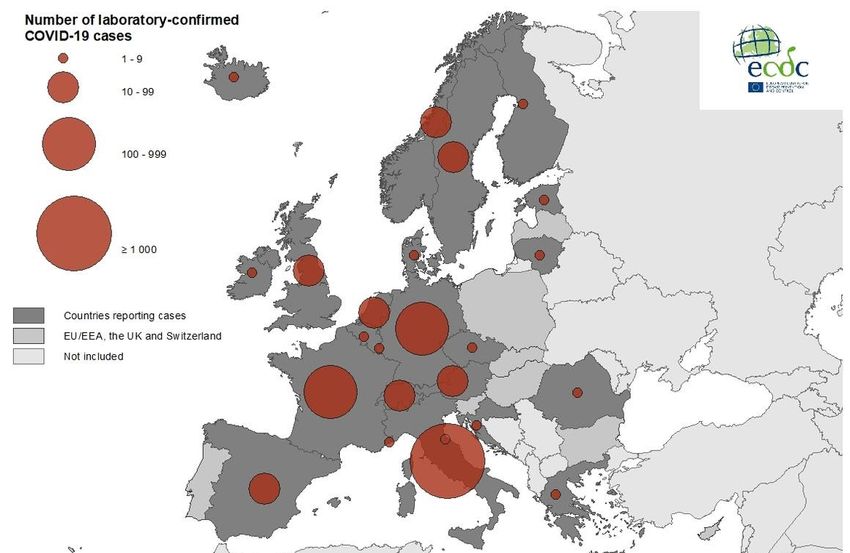
What has been happening?
Jan 20
                                                                           HCW cases
                                                                           Evidence of human-to-                Jan 30
                                                                           human transmission                   PHEIC Declared

                             Jan 7                   Jan 13                                                         Feb 12
Dec 30, 2019                                                                                   Jan 29
                             Novel Coronavirus       First international                                            45,171 Cases
Cluster of cases of                                                                            6065 cases
                             Isolated                case (Thailand)                                                1115Deaths
pneumonia of unknown                                                                           132 deaths
origin reported to China                                                                       15 countries         25 Countries
National Health Commission

    Jan 1                                                                                                            Case
    Hunan Seafood                                                                                                    Definition
    Market Closed                 Jan 12                                               Jan 25                        Changed
                                  Named as                                             Chinese New Year
                                  ‘2019n-CoV’                                          Festivities cancelled                       March 2
                                  WGS shared with WHO                                                                              88,930 Cases
                                                                                       Lockdown extended to                        3,043 Deaths
                                                                                       16 cities – 50m people                      65 Countries
                                                                              Jan 23
                                                                              Public transport
                                                                              ‘lockdown’ Wuhan &
                                                                              other cities in Hubei
                                                                              Outbound flights
                                                                              stopped
                                                 Information valid on 02/03/2020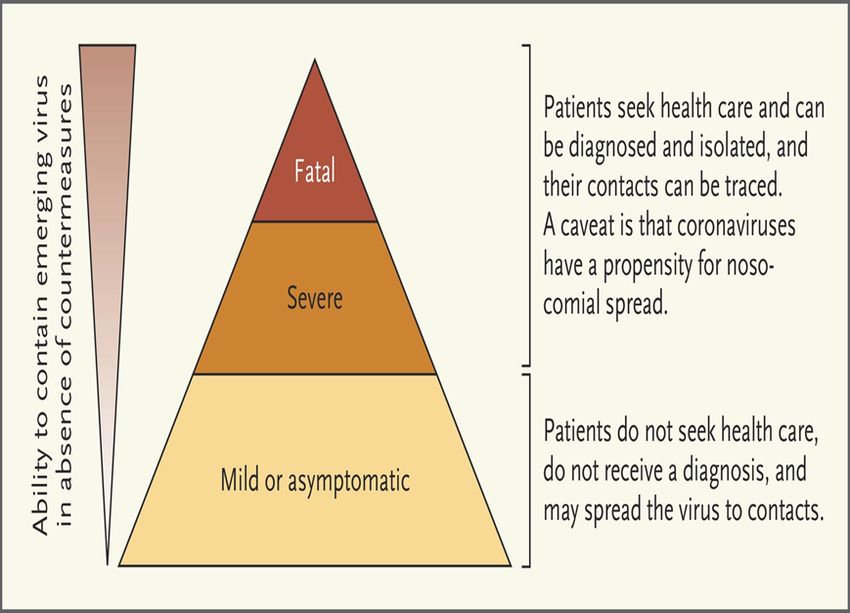
Cases to 2 March 2020

                        Information valid on 02/03/2020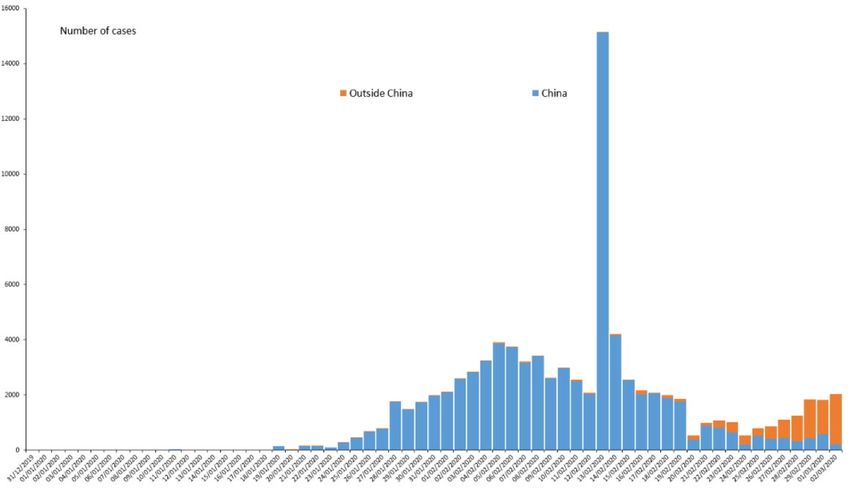
Comparison with previous outbreaks

                                                            88,930

                 3,043

                          Information valid on 02/03/2020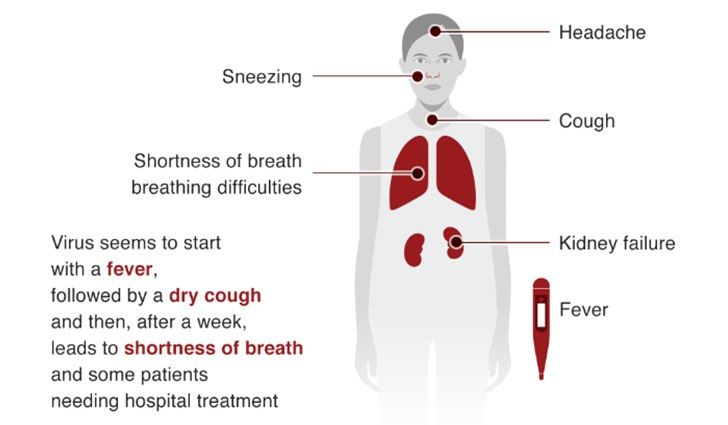
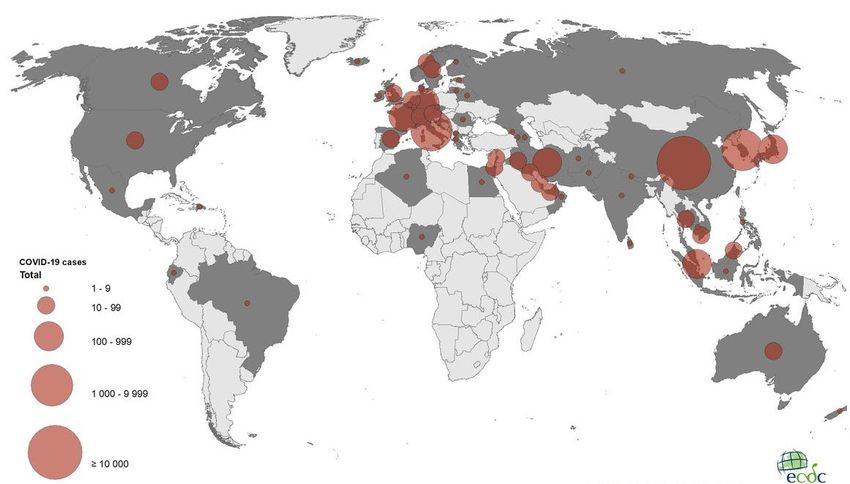
Where has it been happening?
China 80,174
                                                       South Korea 4212
                                                          Italy 1689
                                                           Iran 978
                                                          Japan 239
                                                         Germany 129
                                                        Singapore 106
                                                          France 100

Cases 2 March 2020   Information valid on 02/03/2020
Cases in EU/EEA and UK
2 March 2020
Italy 1689
Germany 129
France 100
Spain 45
UK 36
Switzerland 24
Norway 19
Sweden 14
Netherlands 13
Austria 10
OthersWhat do we know?
What do we know about the COVID-19?

One of a family of 7 coronaviruses (MERS, SARS)

Zoonotic – transmit from animals to humans

Transmission – respiratory droplets via
      Coughing/Sneezing
      Surfaces

R0 2.2 – an average 2 additional people are infected by each person who is infected
        Emerging evidence from China - ? Largely within household contacts

Case Fatality Rate ~2% (1 in 50 people)
       China, outside Hubei Province = 0.7%
What don’t we know about COVID-19? Animal source unclear Incubation Period (estimated 2-14 days) No vaccine No treatment
What do you need to know?
Who is at risk?

In the 14 days before the start of symptoms you:

• Were in close contact with a confirmed or probable case OR

• Stayed in an area with presumed community transmission

                                 China,valid
                             Information Hong    Kong, Singapore,
                                             on 02/03/2020          South Korea, Iran, Japan, 4 Italian Regions
Symptoms to watch out for Information valid on 02/03/2020
How do you protect yourself?

Hand hygiene

Wash your hands regularly. You should wash your hands:
- after coughing or sneezing
- before, during and after you prepare food
- before eating
- after using the toilet
- when caring for the sick
- when hands are dirty
- after handling animals or animal waste

                                   Information valid on 02/03/2020
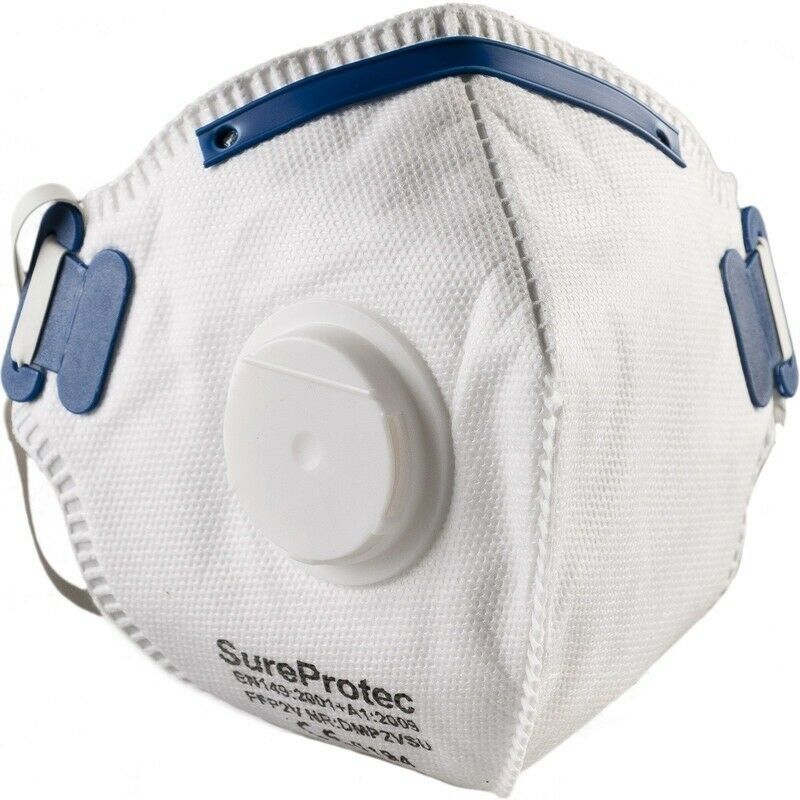
The value of facemasks
Healthcare workers
Yes
In the community
If well – no need to use
If unwell – use to protect OTHERS
More important:
Handwashing
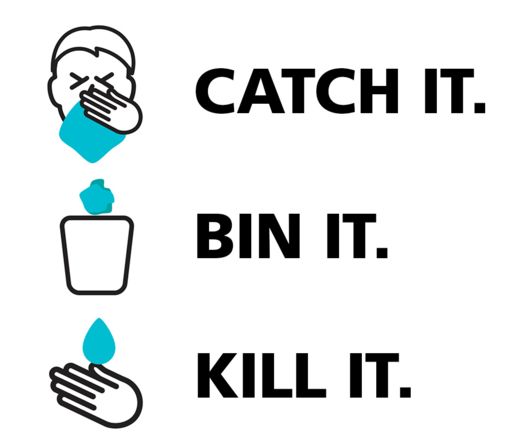
Cover mouth & nose with a tissue when you cough/sneeze
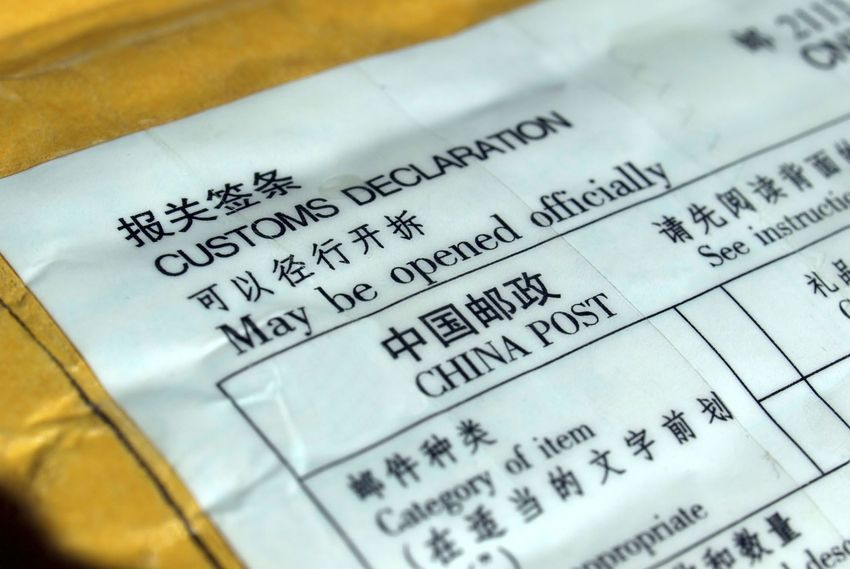
Information valid on 02/03/2020Packages from China
No evidence of risk
Other coronaviruses – don’t survive long on objects
Information valid on 02/03/2020Why are we not performing entry screening?
(Temperature Checks at airports)
1. It doesn't work
• Thousands of arriving travellers were screened during SARS, but no confirmed case was identified (Aust, Canada, Singapore)
• Entry screening measures worldwide during 2009 Pandemic (H1N1) picked up only a tiny proportion of cases
2. It has unintended consequences
• Passengers with fever more likely to conceal this by taking anti-pyretics (i.e. paracetamol)
• High cost and diverts public health resources from more evidence based measures like contact tracing
• Can give a false sense of security
3. It is not recommended by the WHO or ECDC
Information valid on 02/03/2020Current Travel Advice
Avoid all non-essential travel to China
Ireland vs UK
UK: People arriving from Wuhan or Hubei,
Northern Italy or areas in South Korea are being
asked to isolate themselves for 14 days after
arriving in the UK
Ireland: Not asking people who arrive in Ireland to
isolate themselves, unless they develop symptoms
- in line with ECDC guidance
Information valid
* or elsewhere on 02/03/2020
in China or Thailand, Macau, Korea, Japan, Hong Kong, Taiwan, Singapore, Malaysia if they have symptomsWhat are we doing about this?
Information valid on 02/03/2020

                                                        The Response in Ireland: Structures and Governance

                           Body Level One
                               Body Level Two
                                         Body Level Three
                                                Body Level Four
                                                       Body Level Five
       22 An Roinn Sláinte | Department of Health
The Response in Ireland: Current Risk Assessment
The risk for people from the EU/EEA and the UK travelling/resident in areas with presumed
community transmission is high.
The risk of the occurrence of similar clusters, similar to the ones in Italy, in other countries in the
EU/EEA/UK is moderate to high
The risk of widespread and sustained transmission of COVID-19 in the EU/EEA/UK in the coming
weeks is moderate to high
The risk for healthcare systems capacity in the EU/EEA/UK in the coming weeks is considered
moderate to high
‘Containment’
is keyThe Response in Ireland: ‘Containment Phase’
Information valid on 02/03/2020Thank you Questions?
COVID-19 (Coronavirus)
Coordinating Public Health Communication to Citizens
and Staff

Department of Health
Communications Approach
• Led by Public Health considerations
• Containment Phase
   • Awareness: what COVI-19 is and the central role for
     citizens in mitigating the risk and potential spread of this
     disease.
   • Building public trust in public health measures through
     open, transparent communication in national & local
     media and stakeholder engagement
• Co-ordinated through the Department of Health

                          Information valid on 02/03/2020
Communications Approach -
Public
• Public Health advice to be
distributed widely
• Airports, Ports, Schools, Public Offices,
Pharmacies, GP Surgeries etc
• Door to door distribution
• In print, radio etc
• Open, regular and transparent
communication through all media
Information valid on 02/03/2020Communications Approach - Media
• Daily end-of-day press briefing in Dept of Health on Ireland’s Covid-19
preparedness and protocols
• Calling on media to respect patient confidentiality
• Covid-19 spokespeople from Expert Advisory Group and HSE Public
Health Experts available to the media where possible
• No information will be provided about individual cases of Covid-19
(Coronavirus) other than confirmed cases.
• Weekly press release issuing from National Public Health Emergency
Team (NPHET) every Tuesday evening, confirming number of tests
carried out in the previous week and latest decisions
Information valid on 02/03/2020Communications Activities
• Identifying and addressing concerns
- Letter from CMO to schools
- RTE Junior video
- Social listening
• Advice to employers
• Stakeholder briefings
Information valid on 02/03/2020You can also read


