Updated January 2021 - Leading Continuity of Learning Resource Bundle for School Leadership Teams - PDST
←
→
Page content transcription
If your browser does not render page correctly, please read the page content below

Leading Continuity of
      Learning

  Resource Bundle for
School Leadership Teams

                Updated January 2021
INTRODUCTION

The current situation in relation to the COVID 19 virus is a particular challenge for
school leaders. Although school contexts are different there are some key themes for school
leaders during this time which are brought into focus in the categories below. The PDST
Leadership Team has compiled a suite of information and supports that may be useful to
school leaders during the current period. These pages can be used to help support and develop
the thinking of school leaders at this time and will continue to be developed over the coming
period. The PDST Leadership Team advocates a whole school approach to dealing with the
current challenges. In particular, in supporting Continuity of Learning, school leaders will
need regular engagement with their management team and their staff to be able to
support pupils effectively. The support of the Continuity of Learning is an important
professional contribution by teachers during this period of national challenge.

The PDST Leadership Team continues to provide support and guidance to school
leaders through this period.

                                       TABLE OF CONTENTS

                      Communication Structures Reflection Document.............Page 2
        Communication Sample Planning Framework for Communication.............Page 4
                      Communication Resource Bundle....................................Page 8
                       A Framework to establish a Continuity of Learning Plan...Page 9
Leading the Continuity Supporting the Continuity of Learning Plan......................Page 14
                       Reflection Tool for Planning.............................................Page 15
           of Learning
                       Leading Continuity of Learning Resources........................Page 16
                        Supporting Staff..............................................................Page 17
                        Decision Making Structures Audit....................................Page 18
       Supporting Staff
                        Leadership Admin File Template......................................Page 19
                        Supporting Staff and Developing Capacity Resources.......Page 21

 Supporting Wellbeing Supporting Wellbeing......................................................Page 22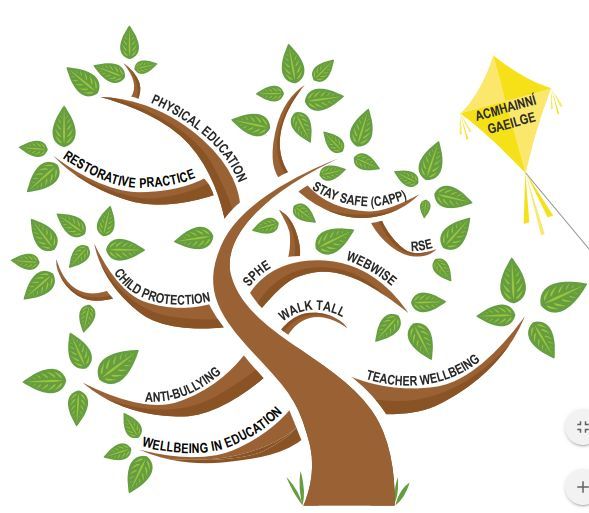
COMMUNICATION STRUCTURES REFLECTION DOCUMENT FOR SCHOOL LEADERSHIP TEAMS
(*******THIS RESOURCE IS UPDATED IN LINE WITH DES AND PUBLIC HEALTH GUIDELINES*******)
The following considerations are designed to prompt discussion at a whole school level Decisions and Actions Required
● Whatever child safeguarding procedures apply for face to face contact with children should
apply with online communication.
● Schools should only use accurate sources of information.
● School’s communications to parents and pupils should be assessed in terms of their benefit to
General the recipients.
Considerations ● Remember that communication should be two-way. Consider the most sustainable method
for Parents/Children to communicate with school. (email, website, twitter, letter, post,
facebook, text, telephone calls, online platforms)
● There is benefit in briefly recording the school’s decision making processes and actions during
the current period
● What is the agreed approach of communication between the leadership team in the school?
● Is there an agreed method in which ALL staff can engage in communication?
● Is there an agreed timeframe for communications that is reasonable in taking family
circumstances into account? (Timing of meetings, use of agreed online platform (Circular
74/2020) and shared documents to record whole school decisions)
● To what extent is the school’s communication system inclusive and mindful of individual
Communicating teachers’ capacity? (Infrastructure, knowledge, tech experience)
with staff ● Can staff be supported with CPD for remote learning, where appropriate?
https://www.pdst.ie/DistanceLearning
● Is the leadership team able to maintain this communication if a member of this team is not
available?
● Has the Leadership Team an effective agreed structure for checking in with staff members to
ensure they have the support they need in order to deliver remote learning in a Covid 19
context?
2
● Does the school have the facility to make contact with all parents/guardians in the school?
● Has the school established a sustainable method of communication with parents/guardians,
especially the most vulnerable in line with circular 74/2020 and ‘Guidance on Remote Learning in
a COVID-19 Context: September – December 2020’
● Is there a method for parents/guardians to contact the school/teachers that is reasonable,
Communicating
sustainable, accessible and two-way? Consider the impact on the wellbeing of all when
with Parents /
agreeing cut-off times/school hours?
Guardians
● How frequently does the school communicate and what impact does this have?
● Does the school have an agreed whole school approach to communication with parents?
Depending on the school context, coordination of communications may need to be
considered. In a small school context, this might be a small team, in larger settings this may be
a designated team with an agreed schedule of communication
● Safeguarding considerations are paramount and in line with the school’s child protection
policy.
● To what extent is the school’s communication system inclusive and mindful of individual
Communicating pupils’ capacity?
with Pupils ● Has a whole school approach to remote learning been agreed as per circular 74/20?
(www.pdst.ie/distancelearning may be useful here)
● Does the school have procedures in place to provide feedback on learning from pupils that
are in line with Circular 74/2020?
● Does the school have regular contact with the Chairperson of the BoM ?
● Has the Chairperson of the Board of Management made contact with the school’s Patron?
Communicating ● How has the Board of Management communicated with the Staff/School Community to affirm
with the Board and reassure in relation to the continuity of learning?
of Management ● Are the Board of Management aware of new practices in the school?
● How are decisions and actions taken being documented?
● How is the Board of Management communicating with ancillary staff?
● External agencies remain available to Principals and Chairpersons to advise and support during
Communicating
this time. Can the communication with external agencies, including the DES be maintained if
with External
Agencies
any member of the leadership team is unavailable?
● The DE information is being updated on a regular basis and can be found here
3
SAMPLE PLANNING FRAMEWORK FOR COMMUNICATION FOR SCHOOL LEADERSHIP TEAMS
(*******THIS RESOURCE IS UPDATED IN LINE WITH DES AND PUBLIC HEALTH GUIDELINES*******)
MONDAY TUESDAY WEDNESDAY THURSDAY FRIDAY
ISM team meeting (Agreed
agenda?) Allocation of roles
ISM
and responsibilities for the
week ahead.
Invite any feedback from staff Check in online meetings
(either working on site or with staff who are offsite
STAFF
working remotely) in relation and engaged in provision of
to their current work. remote learning.
Telephone call Weekly update
BOARD
to chairperson email to all BOM
Request some feedback from Weekly Principal’s update
parents in relation to the email / newsletter / memo to
current work that is taking all parents and guardians
PARENTS/ place. Priority should be with overview of agreed
GUARDIANS given to the most vulnerable priorities for the week.
and families who are not (Possibly in response to email
engaging with remote enquiries and national health
learning. advice)
Possible digital assembly.
PUPILS (Live/recorded?)
Check updates /
OTHER
communications from DE,
Nphet, HSE etc
HAS ALL OF THE ABOVE BEEN RATIFIED BY THE BOARD OF MANAGEMENT AND SHARED AS APPROPRIATE?
4
BLANK PLANNING FRAMEWORK FOR COMMUNICATION FOR SCHOOL LEADERSHIP TEAMS
            (*******THIS RESOURCE IS UPDATED IN LINE WITH DES AND PUBLIC HEALTH GUIDELINES*******)
               MONDAY                 TUESDAY                 WEDNESDAY            THURSDAY              FRIDAY

      ISM

    STAFF

   BOARD

 PARENTS/
GUARDIANS

   PUPILS

   OTHER

              HAS ALL OF THE ABOVE BEEN RATIFIED BY THE BOARD OF MANAGEMENT AND SHARED AS APPROPRIATE?

                                                          5
CONSIDERATIONS FOR COMMUNICATIONS OUT FROM THE SCHOOL
STAFF ISM TEAM
● Agreed time for staff virtual meeting (Suggest no longer than 1 hour. What ● How will the ISM Team agree roles and responsibilities for the week ahead in
day(s) work(s) best in its own school context?) order to ensure continuity and sustainability ?
● Is there an agreed mechanism for staff (teaching or other) who may be
onsite to communicate with staff (teaching or other) who are off site? PARENTS AND PUPILS
● Agree time for weekly ISM virtual meeting? Communication will have to be
sustained in the event of illness of staff members. ● Learning Platform Circular - 74/2020: How and when can pupils’ work be
● Do staff teams (SEN, Infant teachers ASD class staff) need to schedule a sent into schools? (Email? App? Google classroom? etc). How and when will
virtual meeting ? What day suits? feedback be given on pupils' work? (Agree whole school approach.)
● Agree a manageable plan of work for pupils. (Less is more. Keep it simple. ● Regular engagement with pupils/students: It is important that teachers
Consider a variety of learning opportunities other than digital engage with their pupils ideally, be on a daily basis. How will this happen?
(broadband/accessibility considerations) . Also remember that parents are ● A blend of guided and independent learning tasks/experiences:
not teachers. Do not overwhelm parents and pupils with lists of websites or Teacher-pupil engagement should involve both direct teaching by the
lists of pages from textbooks/workbooks.) teacher and the assignment of independent learning tasks for completion by
● Has a learning platform been agreed and communicated to all in line with the pupils/students. Weekly work plan communicated to parents . What
Circular 74/2020? day? By whom?
● Two-way feedback between home and school: Schools should ensure that
BOARD OF MANAGEMENT two-way feedback between teachers and parents/guardians and between
teachers and their pupils is encouraged and supported. Schools should
● Communication to Chair- decisions re work,updates from DE, illnesses or provide manageable and accessible opportunities for all pupils to regularly
absences, etc in line with DE guidance share samples of their work with the teacher(s) throughout each week.
● Weekly email to BOM members. Teachers should ensure that work received is corrected and relevant
● Chairperson to check with Patron body re structures for BoM ‘meet’ using feedback is provided.
video call or conference calls. ● Support for pupils with SEN: Special education teachers (SETs) should
● Consider the use of ‘scheduled send’ for emails. continue to engage with the pupils/students on their caseloads and
● Consider external agencies that the school might need to link with. Suggest class/subject teachers should differentiate teaching and learning in line with
a weekly email. their pupils’/students’ needs to minimise disruption to their learning and
● Is the Board of Management aware of the ‘Guidance on Remote Learning in progression.How will SEN teacher communicate with class teacher,SNA’s and
a COVID-19 Context: September – December 2020’ (Link) parents?
6
CONSIDERATIONS FOR COMMUNICATIONS INTO THE SCHOOL
STAFF
● Note there should be some mechanism for all staff to communicate in a collaborative manner and also for a scheduled time for staff to communicate with the
Principal ie: during normal school hours. This will be arrived at by consensus, and should be sustainable and manageable.
PARENTS/PUPILS
● Likewise there needs to be a sustainable manner in which Parents/Guardians can communicate with school and a reasonable timeframe within which they can
expect a response.
● How can pupils communicate with school so as to provide a sense of continuity and security?
● Is a digital assembly possible? What will work best in your school context?
DEPARTMENT OF EDUCATION
● Communications from the Department of Education are being regularly updated. The school will need to adapt the approach as this guidance emerges.
Ensure that Senior Management in the school can adapt their approach to this guidance.
7
COMMUNICATION RESOURCES FOR SCHOOL LEADERSHIP TEAMS
RESOURCE BANK
Click on the images and links below to find out more about the various platforms and their online features that
can be used to help support communication structures.
These pages are regularly updated in line with public health advice.
Patron Bodies
Useful Twitter Handles CPSMA
@PDSTie https://www.cpsma.ie/
Information and Advice NEPS - Responding to
about the continuity of Critical Incidents @PDST_leadership
@PDST_Techined CIPSMA
Support during Covid 19
Restrictions Guidelines and Resource @education_ire
@ncseirl Islamic Foundation of Ireland
Materials for Schools
@hselive www.islamicfoundation.ie
https://www.education.ie/ @roinnslainte
ETB
en/Schools-Colleges/Servic
https://www.etbi.ie/
es/National-Educational-Ps
ychological-Service-NEPS-/
Educate Together
covid-19.html
https://www.educatetogeth
er.ie/
Foras Pátrunacha
http://www.foras.ie
Information about the Circular 74/2020 HSE - Coronavirus
Continuity of Support Updates Page
during Covid 19 Communication/Teaching
Restrictions & Learning Platform
8
A FRAMEWORK TO HELP ESTABLISH A CONTINUITY OF LEARNING PLAN
Circular 74/2020: “requires all schools to have in place a communication and learning platform that supports
schools to respond in the event of a partial or full school closure in the future”. A minimum requirement for
all schools is to establish a Communications/Learning platform (Circular 74/2020, pg. 1-2).
School leaders should consider the following key principles (Circular 74/2020, pg. 6):
- A whole school approach to remote learning
- Managing in-school and remote learning environments and necessary technologies
- The development of digital skills of all teachers
- Develop digital competency skills of pupils.
- Ongoing effective communication with parents and pupils
Key considerations outlined in Circular 74/2020 include the following:
- School leadership (pg. 7)
- Teaching and Learning approach (pg. 7)
- Access to technology (pg. 7)
- Professional Development Support for school leaders (pg. 8)
- Poor Broadband/Access to Devices (pg. 8)
The Guidance on Remote Learning in a COVID-19 Context: September – December 2020 (Page 12) explains
how we can achieve:
- Regular daily engagement with pupils
- A blend of guided and independent learning tasks/experiences
- Appropriate and engaging learning opportunities and experiences
- Learning tasks aligned to the needs of the pupil/student
- Two-way feedback between home and school
- Support for pupils/students with SEN
STEP KEY CONSIDERATIONS FOR EACH STEP
In the first instance schools could:
● Consider existing communication Infrastructure and how this can be used -
What is established communication practice? What is working well? Any
challenges? Are all staff aware of communication infrastructure and policy (new
staff)? Does communication infrastructure support and promote two-way
communication? Is there anything we may need to change?
In School
● Consider existing Teacher Competence and Capacity to communicate digitally.
Communication
Here is a link to a course which may help support teachers in this area. This may
Structure
not be relevant to all school contexts
● Consider if all teachers have access to devices that are fit for engaging with
remote learning.
● If using Zoom or similar platforms, has the school agreed on norms to be
adhered to during online sessions and have these norms been communicated to
pupils and parents?
9● Are teachers, students and parents familiar with the platform - access, features,
how to upload or download materials? Here is a link to a useful website which
provides an overview of the various platforms schools can use.
Then schools might…..
● Develop and implement an agreed approach to in-school communication for the
duration of the school closure
● Ensure that this approach includes and involves all teachers and raises
awareness of a cohesive approach to communication
● Establish norms for distance communication with staff/ISM team/Board of
Management
1. Good timing for all relevant parties to meet and plan together in an
appropriate way
2. Supporting each other to facilitate meetings in terms of availability of
every member and competence with online communication tools
3. Point of contact to initiate all staff/ISM/BOM meetings
4. Responsibilities to record decisions
What do we want children to learn and how they will experience the learning?
Teachers may need to spend time here revising current work plans at individual class
level to ensure the content of work is appropriate to the new learning environment
- What is feasible to cover in the remote learning space?
- What is not feasible to cover in the remote learning space?
- What did we learn from our previous engagement with staff, pupils and parents
online?
- What did feedback tell us - from staff, parents and pupils?
Also, teachers could consider the amount of time to be spent on these activities as well
as the context of parents working from home, having pupils from varying class levels
Collaborate
e.g.
with Whole
- What format will daily interactions and communication take? e.g. live or
Staff to decide
recorded sessions or blended?
what we want
When scheduling live sessions consideration should be given to time of day, length of
children to
interaction, number of devices available in home, expectation for pupils from different
learn and how
ages and class levels - can they engage in a live session at same time?
they should
experience
Attitudes and Skills as well as knowledge
learning given
Schools might include the following when planning for the content of distance learning
their new
work:
learning
● Development of communication skills - Consider new learning environment and
environment.
impact on family life, family communication - planning daily schedule together,
and reviewing it each day by talking about our daily experience, creating a family
tree and showing relationships (aunts, uncles, cousins), communication with
grandparents/family members abroad - letters, digital resources, postcards,
video messages; Grandparents’ project or interview with parents about their
childhood - devising questions to ask, recording answers, drawing images to
represent answers, playing charades
● Encouraging children to help at home - including jobs like making beds, hanging
out clothes, bringing in fuel, preparing meals in the daily routine,setting table,
feeding pets where appropriate to their context
10● How to support others and myself - Keeping a diary, daily check in, design cards
for grandparents, contact grandparents through telephone or through the use of
digital technology
● Emotional Intelligence and Empathy - awareness of others, resilience, turn
taking, sharing, awareness of the wider world, zones of regularity, resources for
emotion check in for children who experience difficulty regulating emotions
● Independent Learning - long term projects as outlined in Learner Outcomes as
outlined below, children to research/ investigate a topic that is of interest to
them individually
● Fostering responsibility in pupils for their own learning during the school
closure e.g. online portfolios, learning log/diary, self assessment of work e.g.
two stars and a wish, smiley faces, portfolio of writing/art
Learner Outcomes- Suggestions for schools to consider:
Consider learner outcomes that are appropriate to the home environment -
Scoilnet has resources reviewed and mapped to the curriculum by teachers. Teachers
can create Learning Paths to group resources. There are topic centred resources on the
Scoilnet Themepages. There is also access to safe and reliable information through
World Book - This is accessible at www.scoilnet.ie.
● SPHE - Myself (Personal hygiene, my strengths, profiles, skills), Myself and
Others (Turntaking, board games, outdoor games, empathy, resilience,
compromise, my family, family tree projects, Grandparents’ project using
online/telephone interviews), Myself and the Wider World (Weather, signs of
spring, current issues, my local environment)
● Physical Education (Dance, Athletics, Games (online challenges, penalties, turn
taking, soccer, penalties), Running,Outdoor games), skipping, hopscotch,
https://www.pdst.ie/primary/healthwellbeing/distancelearning
● Science - Personal hygiene, Signs of Spring in my environment, identifying birds
in the garden, trees in the local environment, creating an insect hotel, growing
seeds e.g. cress seeds.
https://pdst.ie/PrimarySTEM
● History - Local history (online library to support project), Grandparents’ project,
Family tree, creating a time capsule, history project on a topic already covered
● Geography - Weather charts, map of house, map of local area, map to
school/local shop, long term project on a country/Irish mammal, awareness of
local habitat (trees, mammals, birds, different types of houses in locality),
creating an insect hotel, taking pictures of the local environment
● Maths - Measures (Timetabling, cooking, food for pets), Number (Tables, digital
resources). Investigative approaches to Maths https://pdst.ie/PrimarySTEM ;
https://nrich.maths.org/
● English - Writing (letter writing, diary entries, writing stories and poetry,
recipes), Reading (Independent, read aloud, shared reading experience), Oral
language (Questions to ask for Grandparents’ project, family tree, recount
experiences - family holiday, diary recount, time capsule - what to include and
why - use of digital libraries to support in this area. Use of single texts for class
11groupings where appropriate, use of audiobooks.
https://www.pdst.ie/primary/literacy/literacyathome
● Gaeilge - Use of Gaeilge sa bhaile, use of TG4 Cúla ar scoil to support in this
area.
● Art - Tree rubbings, construction from materials at home (build a city/display of
different houses), collage from materials in the environment (stones, sticks),
chalk drawings outside - hopscotch, still drawing of various objects, family
portraits, making 3D shapes or tall structures with available materials -
spaghetti, marshmallows, recycling used boxes, photography of local
environment, free painting, homemade instrument, virtual tour of art galleries
around the world
● Music - listening to a variety of different genres, practising instrument (if
applicable), make an instrument from materials at home, create a dance to go
with a piece of music.
● Drama- create a play with their toys, dolls, teddybears, imaginative play, games
like I Spy, Charades, etc.
Learner Experiences
During the Covid-19 closures some schools have supported pupils with loans of devices
and/or preparation of tasks, including assessment tasks that do not require technology
(Circular 74/2020, page 8).
Schools might include the following when planning for the content of remote learning
work:
● Support parents to vary learner experiences by considering independent
learning opportunities, buddy learning among siblings, focus on integrated
learning (see suggestions above), etc.
● Younger pupils may be less able to engage independently and
disadvantaged/SEN pupils will require more individual support. The involvement
of parents in supporting primary pupils to manage remote learning is critical and
effective engagement to underpin this partnership approach is essential.
(Circular 74/2020, page 8).
● Work may be activity based and hands on as much as possible.
● If using technology consider the importance of directing to a specific online
resource rather than to an online platform
● Consider utilising the child’s home and local environment when devising
learning activities as much as possible
● Structure and Routine - Consider pillars of wellbeing here….including time for
preparation and eating of food together as well as time for explicit learning,
independent learning and collaborative learning. Include digital technologies to
support independent learning - audio books etc. Encourage parents to include
the children when planning the day….pupil voice and a collaborative approach
to planning will have a better impact on implementation and ownership
12The following norms could be agreed at a whole school level:
School Community:
● Agree on an appropriate communication and learning platform for all class
levels to ensure that parents will not have to access a variety of platforms for
different children.
● Agree daily time and duration of remote learning sessions on agreed school
communication and learning platform with pupils
● Agree on how the school can develop a uniform approach to communicating
learning activities with parents who have children in a number of classes.
Decide when it
Consider parents working from home here also. Consider use of a unifying
is appropriate
theme for a class grouping, a unifying text for a class grouping, the use of online
to
texts, etc.
communicate
● Agree on timing and content of communication to parents and children with
with school
regards to learning activities - time for both sending and receiving
community and
communication.
with
● Agree on norms for engagement with communication and learning platform
staff/ISM/BOM
● Communicate the previous points to parents
Staff/ISM/BOM:
● Agree date, time and duration of staff/ISM/BOM meeting with consideration for
availability of teachers
● Agree with staff/ISM/BOM the form of communication to be used for the
meeting
● Agree norms for online communication
● Share agenda for staff/ISM/BOM meeting with all relevant parties
● One point of contact to initiate staff/ISM/BOM meetings
● One person to record decisions made and actions decided on at all meetings
The following norms could be agreed at a whole staff level
Establish good
practice in ● Consider the benefits of agreed scheduled contact times.
relation to how ● Again, consider it from the parents’ perspective - ensuring parents with children
and when we in a number of classes are communicated with in a uniform way
communicate ● Agreed norms and length of time for online sessions, giving consideration to live
with families material where families will have children of different ages and class levels and
perhaps only one device.
Through engagement with your school’s Assessment policy, schools may identify AfL and
AoL strategies and structures that might support the continuity of learning during school
How can we
closures.
plan to
continue to use
● Following our protocols around communication, time and content, consider the
assessment and
mode through which a pupil or student is able to engage with his/her teacher
feedback to
● What is the purpose of this engagement?
inform learning
● How will it support the continuity of Learning and Teaching?
and teaching?
● How will the teacher provide feedback to the pupil, how will the pupil provide
feedback to the teacher?
13SOME KEY POINTS SCHOOLS MAY CONSIDER WHEN SUPPORTING
THE IMPLEMENTATION OF A CONTINUITY OF LEARNING PLAN AT HOME
● Consider Culture and Environment, Curriculum (Teaching and Learning), Relationships & Partnerships, Policy and
Planning as your school engages with continuity of learning. Endeavour to create learning tasks which are flexible,
achievable, realistic, positive and do not have a negative impact on family life.
● Including children in planning, implementation and review of learning will help to promote flexibility, ownership and
responsibility for learning.
● Consider learning outcomes, strands and strand units of the curriculum that are most appropriate for the home
learning environment. Advocate the development of childrens’ skills and attitudes as well as knowledge.
● Consider advocating varied learning methodologies - play-based learning, pair work, active learning, hands-on
activities, independent learning, investigative activities, buddy learning with siblings, thematic learning.
● Consider how digital technologies can support children's learning.
The culture and the environment where learning now takes place is in the home and
community of the learner. Continuity of learning must engage with this environment and
Culture and understand the opportunities and limitations that this poses. The school day and classroom
Environment life cannot be recreated within the home environment. Be mindful that staff, parents and
pupils are now operating in a home environment which may be catering for multiple needs
and multiple demands.
Schools have always had unique contexts. This unique context is very relevant in the
context of continuity of learning. Schools can be mindful of this as they lead the continuity
of learning through the mode of communication appropriate to their school. Schools and
pupils have different resources available to them to support learning. Schools will make
Curriculum (Teaching judgements about the most appropriate approaches to continuity of learning. Teachers can
and Learning) provide learning opportunities that are appropriate to the learners in developing their
knowledge, skills and dispositions. Teachers can also provide progressive learning activities
that are appropriate to this new environment. The primary school curriculum and the new
primary language curriculum provide opportunities and structure for design of appropriate
learning tasks in our current situation.
Relationships and partnerships can continue to be nurtured and developed. Effective
communication with parents is a critical element. Schools can encourage parents to
continue to support their child’s learning through appropriate scheduling and design of
Relationships and learning activities. Due consideration of the learning environment and the potential
Partnerships demands on parents will help in this regard. Developing an appropriate approach to
communication can support the relationship with home. Learning tasks can also promote
relationships and partnerships by supporting the pupil’s relationships with classmates,
wider family including grandparents and community in an appropriate way.
Appropriate approaches to planning for learning across class groupings and across the
school will be of significant support to pupils. Schools will need to be both flexible and
responsive as the situation evolves. Some approaches to establishing a plan for Continuity
Policy and Planning
of Learning are included below. Schools may be able to access the wide array of online
supports which are available through Scoilnet and through the guidance provided by
https://www.pdst.ie/DistanceLearning/SourcesofInformation
14REFLECTIVE TOOL FOR PLANNING
Prompts similar to these could guide teachers as they reflect on pupil learning and provide guidance to families as they assign learning activities
Learner Outcomes Content Learner Experiences Resources Differentiation Assessment
What Learning Is the content flexible Are pupils engaging Are resources available How can this activity be Can children explain
outcomes, strand or and adaptable to purposefully in and accessible to all? differentiated for what they have
strand unit of the various home learning meaningful learning different levels of learned?
curriculum does this environments? activities? When devising content ability?
lesson relate to? has account been taken Can pupils make
Does the content Have pupils the of time limitations in the connections between
Will this learning activity facilitate the opportunity to engage home learning this learning and other
motivate children to development of in open ended environment or a contexts?
learn independently or attitudes, skills and activities? situation where there
with support? knowledge ? may be a number of Will the assessment
Is there a balance siblings involved in point children to further
Does this learning Has the content been between active learning learning at home? learning in this area?
activity encourage the devised collaboratively activities and book
development of skills to ensure learning work? Is there an opportunity
and or attitudes as well opportunities for all for children to reflect on
as the acquisition of pupils at this class level? Is there an opportunity their learning and
knowledge? for learners to grow develop a sense of
through respectful ownership of and
interactions and responsibility for their
experiences that are learning?
challenging and
supportive? Are learning outcomes
attainable?
15LEADING CONTINUITY OF LEARNING RESOURCES
RESOURCE BANK
Click on the images and links below to find out more about various platforms and their online features that can be
used to lead continuity of learning.
Teaching Online for Primary and PDST Health and Wellbeing SPHE,
PDST Distance Learning Page
Post-Primary Teachers Wellbeing and PE Supports
Scoilnet supports Primary and
Online resources for Children with Post-Primary teachers in sharing and
Curriculum Online
Special Educational Needs finding useful resources for the
classroom.
A hub of information and tools to NPC has prepared learning activities INTO has collected some practical
help teachers during the coronavirus for parents to complete with their tips and tricks for our members on
(COVID-19) crisis children home-based learning
16SUPPORTING STAFF
KEY CONSIDERATIONS Actions / Decisions Taken
Ratified by BOM? (Y/N)
● Ensure communication includes all members of staff
(e.g. teaching, SNAs, ancillary staff etc)
● Ensure all staff are clear on the expectations of them
and the requirements during this period. Refer to
government guidance documents and your distance
learning plan. Circ. 74/2020 The Digital Learning
Planning website dlplanning.ie has a resource at the
bottom of the page in relation to contingency
planning for remote learning. It contains useful
Supporting prompts and templates for reflection and planning
Staff with your staff.
● Ensure all parents are informed of the approach the
school is adopting and when and how they can
communicate with the teachers.
● Consider the benefits of a regular check in with staff
● Consider the school’s approach to the wellbeing of
staff in managing both communication structures and
remote learning. (see Supporting Wellbeing section)
● Ensure that any duties assigned to ancillary staff and
SNAs are appropriate to their role in the school.
● How are the teaching staff engaging with their
students on a daily basis? Has a consistent approach
been agreed by the staff?
● Have you adopted a whole school approach to
support childrens’ learning at this time?
Support Staff ● How can this be monitored and supported?
to ensure ● What approach is being taken for children with SEN
continuity of who are in mainstream classes? Resources available
learning from the NCSE
● Consider possible approaches to building leadership
capacity on staff e.g. can those with a specific skill set
in relation to digital learning support and mentor
others?
● Are teachers aware of CPD available through ESCI.ie
and www.teachercpd.ie and based around supporting
student learning online?
17DECISION MAKING STRUCTURES AUDIT
KEY CONSIDERATIONS Actions / Decisions Taken
Ratified by BOM? (Y/N)
● How are you as School Principal communicating with the Deputy
Principal and Assistant Principals to consider key decisions and
key communications? Is this the most effective mode or method?
Consider the frequency, purpose and timing of these meetings.
Has the current situation impacted on the frequency and
effectiveness of your communication with your management
team? How does this impact the day to day running of the school?
Decision ● How are you communicating with the Board of Management to
making consider key decisions and key communications? Is this the most
structures effective mode or method? (email, virtual meetings, online
within the platforms, data management systems, section 13.3(g) of the
school Governance Manual for Primary Schools 2019-2023, provides for
community the use of a conference call to facilitate a meeting in limited
circumstances. pg.31)
● Consider the possibility of having short staff meetings on a regular
basis. Consult with your staff on what are the most effective
communication platforms and times to facilitate this.
● Communicate to your staff how best to contact you as school
principal during this period and ensure there is clarity around
specific leadership roles and responsibilities.
Consider the benefits of building capacity for the Deputy Principal to be
able to deputise for the School Principal during the current period. What
key information will they need to know? Click here for a Leadership
Admin File Template
Key school information in event of the Principal being unavailable
● Child Protection files
● Alarm company details
● CPSMA log in details
● IPPN log in details
● Medmark https://www.medmark.ie/teachersna/index.html
Leadership ● Keys to filing cabinet(s) and location of same.
Administration ● School email, voicemail, log in details and password.
File ● OLCS, log in details / passwords, link here for user information for
OLCS (Available here)
● Log in details and passwords for online platforms.
● Contact details for Board of Management members especially the
Chairperson and the Treasurer.
● Contact details for caretaker and cleaner.
● FSSU Financial Guidelines (Available here)
● School Insurance rep details
● Staff Personal Private File (Personnel file) name of doctor,
emergency contact details
● Primary Online Database (PoD) details. Link here for online
training, manual and FAQs (Available here)
18LEADERSHIP ADMINISTRATION FILE
SENSITIVE INFORMATION CONTAINED WITHIN THIS DOCUMENT SHOULD BE KEPT IN A SECURE LOCATION
Below is a quick glance guide to key information school personnel may need to know when acting up in the event the
principal is unavailable.
SECTION ONE: CONTACT DETAILS
KEY SCHOOL PERSONNEL
ROLE NAME PHONE EMAIL
DEPUTY PRINCIPAL
AP1
AP2
SECRETARY
CARETAKER
CHAIRPERSON OF THE BOM
CHAIRPERSON OF THE PA
SCHOOL INSPECTOR
SCHOOL SENO
SCHOOL NEPS PSYCHOLOGIST
SERVICE PROVIDER DETAILS
ACCOUNT/REFERENCE
COMPANY POINT OF CONTACT PHONE/EMAIL
DETAILS
SECURITY
FIRE
CLEANING
INSURANCE
PHONE/BROADBAND
ELECTRICITY
GAS
LEGAL
FINANCIAL
LOCAL GARDA STATION
SCHOOL PLUMBER
SCHOOL ELECTRICIAN
SCHOOL IT TECHNICIAN
19SECTION TWO: ACCOUNTS AND DATA SYSTEMS
BANKING DETAILS
Contact the Treasurer of BOM who has access to account details.
Please refer to Financial Guideline P09 - 2018/2019 (FSSU) ‘Using Electronic Banking for making payments’
https://www.fssu.ie/app/uploads/2019/01/Financial-Guideline-P09-Using-Electronic-Banking-for-Making-Payments-2.pdf
TREASURER OF BOM
PHONE/EMAIL
ONLINE CLAIMS SYSTEM
Please refer to Financial Guideline P06 - 2019/2020 (FSSU) ‘The On-Line Claim System (OLCS) – Security Guidelines’,
https://www.fssu.ie/app/uploads/2019/11/Financial-Guideline-P06-On-Line-Claim-System-2.pdf
USER ID
PASSWORD
ONLINE PLATFORMS
DATA MANAGEMENT SYSTEM
USERNAME
PASSWORD
SCHOOL EMAIL
USERNAME
PASSWORD
SCHOOL WEBSITE/SOCIAL MEDIA
USERNAME
PASSWORD
WIFI/INTERNET LOGIN
USERNAME
PASSWORD
SUB SEEKER
USERNAME
PASSWORD
USERNAME
PASSWORD
USERNAME
PASSWORD
USERNAME
PASSWORD
USERNAME
PASSWORD
20SUPPORTING STAFF AND DEVELOPING CAPACITY RESOURCES
RESOURCE BANK
Click on the images and links below to find out more about the various platforms and their online features that
can be used to help build capacity among staff.
COVID-19 Support Hub FAQs, Latest Updates, Here you will find a range The Employee Assistance Service
Resource Bundle and other of resources devised by provides advice to employees on a
Sections on: Resources. the PDST Health and range of issues including wellbeing,
● Leave Wellbeing Team. legal, financial, bereavement,
● Dealing with conflict, mediation etc. This is a
Positive Case free service which extends to all
● FAQs school staff.
● Key Documents
● Departmental
Correspondence
Circular 74 /2020 Contingency Planning for Guidance on Remote PDST Distance Learning Page
Communication/Teaching Digital Learning Learning in a COVID-19 Here you can access distance
& Learning Platform Context: September - learning supports that have been
December 2020 created in the following areas:
This circular requires all The Digital Learning
schools to put in place Planning website has a This document is designed ● Digital Technologies
appropriate contingency resource at the bottom of to provide guidance for ● Health and Wellbeing
measures to ensure that the page in relation to primary schools and ● School Leadership
they are prepared to contingency planning for special schools in ● Primary Literacy
continue to support remote learning. It situations where a partial ● Primary STEM
teaching and learning in contains useful prompts or full school closure is ● Gaeilge
the event of a partial or full advised by Public Health
and templates for
closure of schools arising HSE because of a case or
reflection and planning
from public health advice. cases of COVID-19.
with your staff.
21SUPPORTING WELLBEING: Considerations for School Leadership teams
*** Additional supports for Wellbeing in schools is available on
https://www.pdst.ie/primary/healthwellbeing ***
KEY CONSIDERATIONS Actions / Decisions Taken
Ratified by BOM? (Y/N)
Remember that the messaging in relation to COVID 19 is the
responsibility of the various Government agencies who support in this
Clarity of area.
messaging in
Guidance for parents and schools in relation to talking to children and
relation to
young people has been provided here
COVID 19
An archive of past messages and current messages from the
Department of Education is maintained here
● Celebrate small steps; acknowledge and affirm good practice in
a challenging situation
● Provide confidential communication lines to staff to allow them
to communicate with school leadership if necessary
Supporting the ● Consider the benefits of formal and informal communications
well-being of with staff.
staff ● Make staff aware of the supports available to them, including
the Employee Assistance and Wellbeing Programme website
and NEPS website
● Use the Teacher Wellbeing section of the PDST site here as a
guide and support
● Consider the capacity of the school to provide clarity of
Supporting message and to amplify national messages at a local level that
well-being support the wellbeing of the community. The HSE website is
amongst the particularly useful here.
school ● Where appropriate the school may be able to inform the
community school community of local developments in the current
situation.
● Maintain and develop existing leadership team networks within
the school
● The pdst website has specific wellbeing supports for teachers
here
Supporting the ● In-school support available through PDST Website Password
schoolsupport2020.
well-being of
● Maintain contact with existing teacher leader networks outside
the school
the school, including PDST,CSL,IPPN and locally based INTO
leaders networks
● Keep a monitor on work/life balances in the context of working
from home. Note the benefits of having a designated
workspace which separates work life and home life where
possible
22You can also read


