Urban consolidation centres - A viable business model and their role in electric powered city logistics - NTNU
←
→
Page content transcription
If your browser does not render page correctly, please read the page content below
Urban consolidation centres
A viable business model and their role in electric
powered city logistics

Hans Quak
Oslo September 15th
2nd Innovation in Urban Freight International Workshop
City perspective
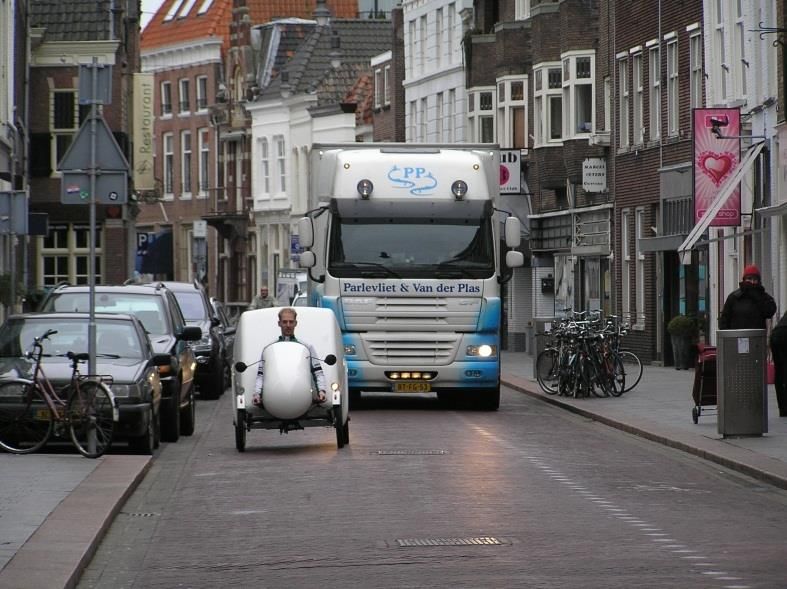
UCC as a solution for unorganized logistics activities
UCC as a solution from city perspective
 City logistics activities appear to be unorganized from city perspective
 UCC as a solution to organize and optimize last mile deliveries
 (Local) authorities see UCCs as solution for carriers because:
   No city access restrictions or
   time- windows
   No difficulties maneuvering trucks
   in narrow streets and historical centers

   No congestion and parking issues
   in cities
 Carriers have a different
 perspective: solving issues is
 their job!
 Many UCCs initiated from city
 perspective failed
Urban consolidation
Why? For whom?
 Urban consolidation => city perspective
  Optimizing logistics from the destination
  side

 Current practice logistics planning =>
  Optimizing logistics from the origin side
  (e.g. carriers’ warehouse, retail
  distribution center)
Urban consolidation
Business model canvas and value proposition

                      Private
                        VP

                       Public
                        VP
     Cost Benefit Analysis for Society
      Private Cost Benefit Analysis
Case 1:
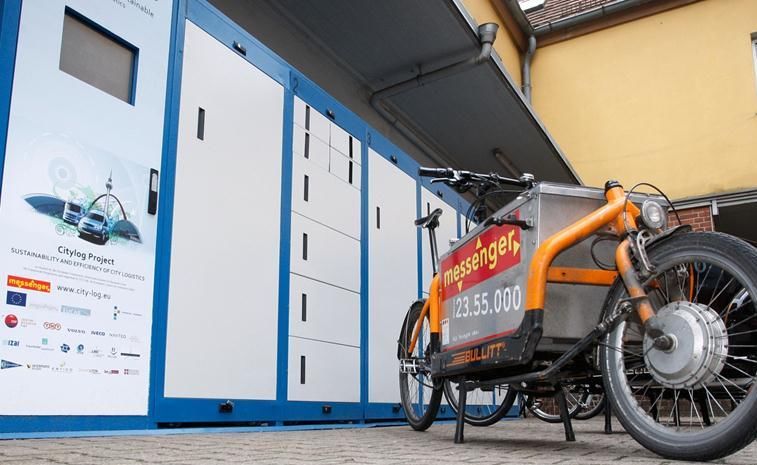
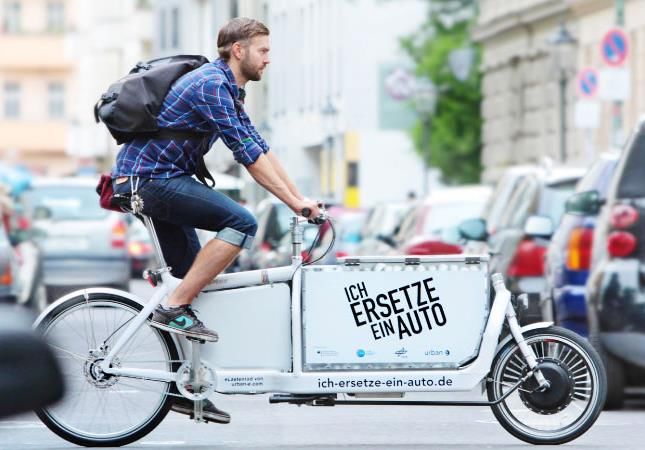
Bentobox transhipment bike - van
                                                     Urban area Berlin                                Urban area Berlin

                                                                                   car

                           car
                                                                         Test site area

                                                                                  bike

                                 Initial situation                                   BentoBox situation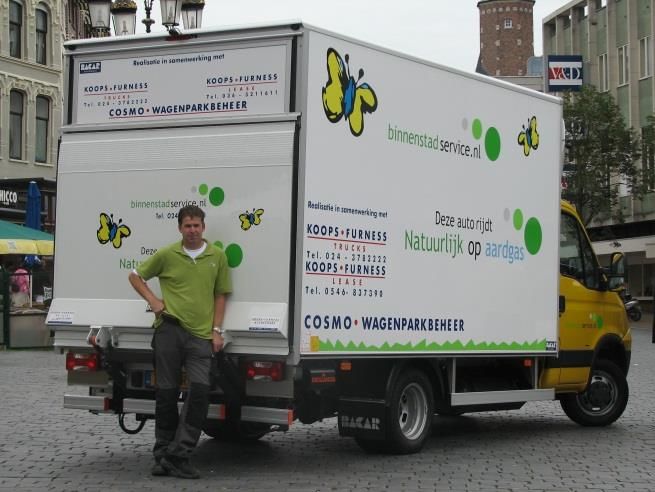
Case 1: Bentobox transhipment bike - van

                              Booking service
                                    > by bike                Customer oriented,     CRM via                       Senders and
                              Planning
  Independent                       < by car                 high quality city      Service center                receivers of parcel
  courier companies                                          logistic services at                                 deliveries: from
  (subcontractors)            City courier services:
                                   Bundling
                              > cycling         of
                                        & < driving          reasonable prices                                    documents to
                                                                                                                  EURO-pallets
  National and                     shipments                 Delivery within 2                                    - Mainly retailers
                              Handling in warehouse
  international                                              hours
       Partners
  partners
    needed for               Handling for BentoBox
                                                             Environmentally
  BentoBox
  Bentobox    and
           supplier                                          friendly services
      location
  Land owner
  BentoBox location                BentoBox,
                               > Cargo bikes and                                    Online and telephone
                                  software vehicles
                               < commercial  and                                    booking
                                     location                  Environmental
                               Warehousing space                                    Face to face contact
                                                                  friendly          with courier (>bike
                                > Bike couriers
                               Bentobox location                                    and Rent        Investment and maintenance of > bikes and < cars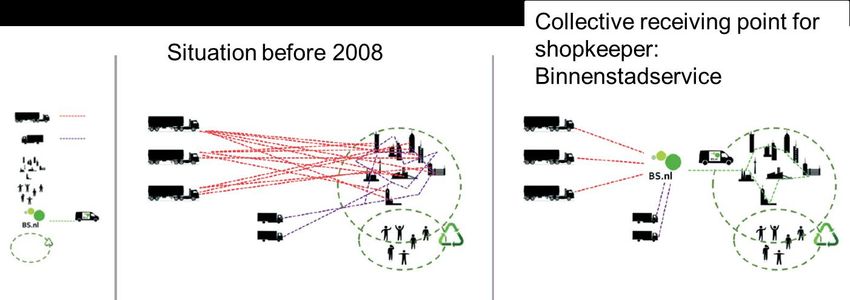
Case 2:
Bentobox as delivery locations retail deliveries
Case 2: Bentobox as delivery locations retail
deliveries
                                                                                                 Email and SMS service on a daily basis

                                  Booking service                                                    CRM via                         B2B customers
                                   < Time needed                    Customer oriented,               Service center
     Independent                                                    high quality city
                                  Courier
                                     for services
                                          delivery                                                                              Shopping mall and 4
     courier                                                        courier services at           Customers were given
     companies                                                      reasonable prices             individual username           TNT customers
                                  6 trolleys up the                                                    < Personal
                                     Outside peak                                                 and passwd
                                                                                                      assistance
      Partners                    elevator and down a         Shipments could have already
                                           hours
                                  long corridor  everyday     arrived before the customer              Software user fiendly and the
     needed for                   (placed in the              starts daily business                    process was generally speaking
    BentoBox
     Bentobox and                 morning, returned                      Flexibility                   smooth
     supplier
       location                   back to the depot in
                                  the afternoon)                Ensure deliveries even if the
                                                                shop manager is not physically
                                                                                                          End customer has to pick
                                                                present
                                                                                                          up parcels bij himself
                                  Commercial vehicle                                              Online / Telephone
                                       BentoBox,                                                  booking
                                       BentoBox and
                                      software                       < Disruption for             No longer face to
                                        location                          traffic                    face contact
                                                                                                  Transport by Cars

                   Main costs:                                                                   Main revenues:
                   • Fixed: Maintenance trucks, depreciation                                     • Courier fees
                  Investment       in BentoBox concept, software
                      trucks, personnel,
                   • Variable: Fuel and training.                                                     < Price (because of selfservice)
                                  Consolidation
                                     < Deliveryof costs
                                                   freight on one single drop
  Avoid traffic peak hours        off point can save time during the delivery
                                  round (Eg - no waiting time, no need for
                                  receiver signature…)
Urban consolidation
  Business model and value proposition

                                          ∆?

                                               ?
Business as usual
                                          ?              ?
Urban freight transport
organized form                  ?
logistics perspective                                                ?
                                          ?              ?
(origin-based)

                                      ?                      ?
                                Urban consolidation
                                Urban freight transport organized
                                form city perspective (destination
                                based)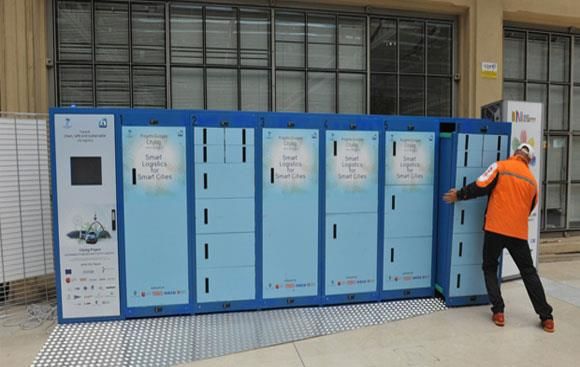
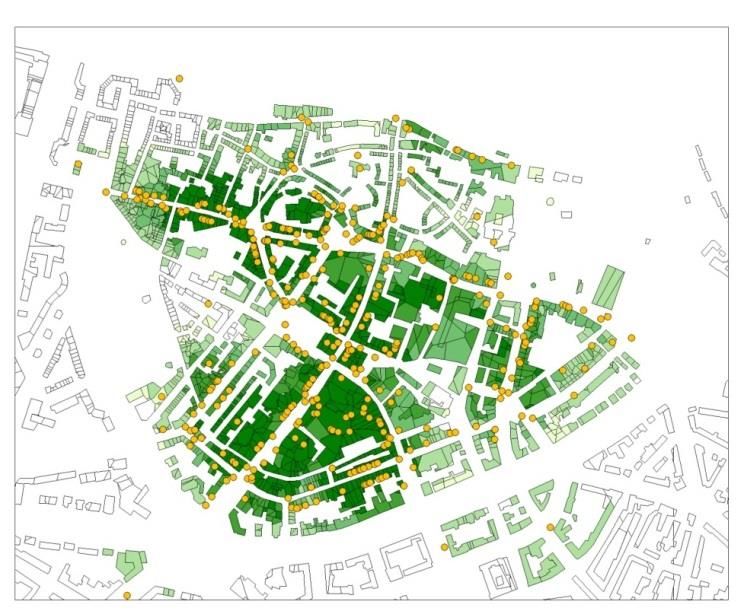
Binnenstadservice - introduction
A Dutch UCC active since 2008: The concept

                                  Nijmegen
                                  • one of the oldest cities in the Netherlands with

                                    over 161,000 inhabitants

                                  • medieval city centre is situated on a small hill

                                    and has a historical structure with streets where

                                    many small, independent retailers are located
Urban consolidation Case of Binnenstadservice ‘Low price’ services packages for local stores: receiving goods, delivering goods at a predictable time, organizing reverse logistics (shopkeeper needs to change his/her delivery address to BSS) Extra services (value proposition receiver): storage, home-deliveries, value added logistics, possibilities for e-tailing Locally focus on small, independent retailers, since their deliveries are often not organized nor optimized.
Urban consolidation
Case of Binnenstadservice
 Nationally focus on shippers and
 retail chains
 BSS bundles deliveries of multiple
 suppliers
 BSS uses clean transportation
 (value proposition authorities):
 electronic bicycles and natural gas
 trucks, electric vehicles
Urban consolidation
Case of Binnenstadservice: effects (after 1 year)
Local effects
 Decrease in vehicle km (5%
 after 1 year, max. 32%)
 Hardly any difference in NO2
 and PM10 concentration.
 After one year small decrease
 of nuisance. In maximum
 scenario a clear shift towards                     Decrease max. potential
                                                    compared to base scenario
 nuisance fewer residents
 Traffic safety and quality of life
 in city centre expected to be
 improved
 VP to local society and local
 retail
Urban consolidation
Case of Binnenstadservice: effects (after 1 year)
National effects (more cities with
BSS simulated)
Considerable savings per
delivery (for carriers)
Savings vary based on:
Type of deliveries
Scenario 0 – no BSS
Limiting factor for length vehicle roundtrip Scenario 1 – 6 cities with BSS █
Number of kilometers between city and Scenario 2 – 20 cities with BSS █ █
carriers’ DC Scenario 3 – 41 cities with BSS █ █ █
Number of deliveries in city
VP to society and private
carriersBinnenstadservice Multiple business models required Starting with a ‘free’ service makes it difficult to develop to a financially viable business model => always a fee for all services Difficult to get rid of label ‘subsidized’ => use subsidy not for operations, local authorities as customer Local growth is difficult: costs (vehicles, staff, IT) develop non-linear in contrast to volume of customers => develop towards non-asset based UCC National growth is difficult: local heroes / entrepreneurs needed, national coverage necessary for value proposition to shippers Value propositions Small retailers: is evident (but relatively limited), local hero required for each city Shipper: only in case of national coverage Carrier: no real proposition, last mile deliveries are the core of carriers’ work (Local) authorities: cleaner, quieter, less nuisance, safer
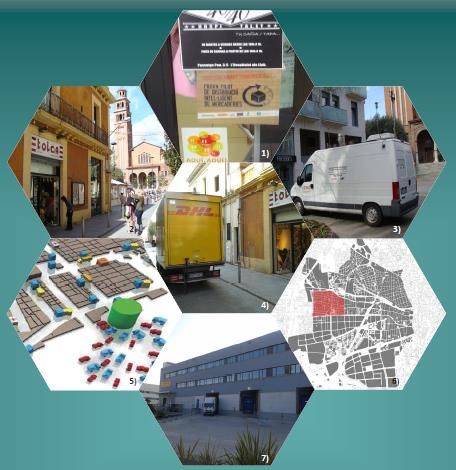
UCC in L’Hospitalet de Llobregat (Barcelona)
Demonstration in STRAIGHTSOL
Setting:
 Demonstrating how UCC can work
 Local retailers as customers
 Local authorities as big launching customer
 DHL Supply Chain as operator
 Using existing facilities
Issues after demonstration:
 Financially viable business model
   Retail involvement, big freight attractors, local authorities,
   other carriers
Urban Consolidation Centre DHL
                     Business models
        Key partners                        Key activities                     Value proposition                    Customer relationships             Customer segments
  Who are the organisation’s key       What key activities do our value     What value does the organisation          What type of relationship is      For whom is the organisation
       partners and suppliers?            propositions, distribution             deliver to the customer?              established between the                creating value?
Which key resources are we acquiring   channels, customer relationships       Which one of our customer’s           organisation and the customer?      Who are the most important
           from partners?               and revenue streams require?        problems are we helping to solve?       What type of relationship does              customers?
  Which key activities do partners                                            Which customer needs are we           each of the Customer Segments
             perform?                                                                  satisfying?                              expect?

                                           Key Resources                                                                    Channels
                                         What key resources do our                                                  How do the customer segments
                                        value propositions, distribution                                                want to be reached?
                                                                                  Externalities
                                       channels, customer relationships                                            How does the organisation reach
                                                                            Which environmental and societal
                                         and revenue streams require?                                              the customer now? How are the
                                                                            impacts does the business model
                                                                                                                         channels integrated?
                                                                                        cause?

                                 Cost structure                                                                             Revenue streams
                What are the costs associated with the business model?                                            For what value are the customers willing to pay?
               Which key resources and key activities are most expensive?                                       For what do they currently pay? How are they paying?
                                                                                                                          How would they prefer to pay?

                                                                                                                                                                                             Shipper
                                                                                                        Receivers/Retailers

                                                                                                                                                                                       Transporter / LSP

                                                                                                                                                 DHL SC Spain/UCC
                   Negative
                   business
                   case
Urban Consolidation Centre DHL
Lessons: possibilities for a financial viable UCC
Different value propositions for different stakeholders
Towards financial viability?
1. Agreement with the receivers (small retail and big freight attractors) with
other value added services for which they would like to pay
2. Agreement with other LSPs for cost or benefit sharing
3. Agreement with shippers (paying UCC separately for last mile delivery
instead of only LSPs) => requires other conditions
4. Serious entrance barriers (natural or by restrictions) for city
Active involvement of the municipality to restrict the entrance for not fully
loaded / polluting or otherwise undesired vehicles in the city center
5. UCC as enabler for other solutions such as electric vehicles or bicyclesUrban consolidation Enabling zero emission city logistics Limited vehicle capacity and range require adaptation of logistics system in order to use electric vehicles (EV) Transhipment from conventional vehicles to EV at city border (transhipment site) Potential to go from transhipment (single company) to consolidation at these sites Examples: Cargohopper (TransMission) Amsterdam Madrid (FREVUE) TNT Mobile depot (STRAIGHTSOL)
Urban consolidation
Enabling zero emission city logistics
 Example: TNT’s Mobile depot (STRAIGHTSOL)
            Key Partners                   Key Activities                  Value Proposition              Customer Relationships Customer Segments
             Subcontractors                 Express services                                               Both short term en long term         B2B and B2C
        Mobile depot manufacturer        Delivery and pick up by                                          relationships are established.
            Tricycle company           tricycle or electric vehicle
                                        1. Deliveries       and                                           Focus on specific client needs.
               (Ecopostale)               Value added
                                       pickups           service.
                                                    by tricycle
          Owner of the parking
                                       instead of vans in
                 location
                                              city.                    Shortest delivery time possible
                                      2. Transport of MD               delivery. On time and in perfect
                                      3. Handling at MD.                          condition
             Partners for
            mobile depot,
              property.
                                          Key Resources                                                             Channels
                                       Drivers, warehouse and                                               Telephone, internet website,
           Tricycle courier
                                       mobile depot personnel,                                            face to face contact with delivery
               company                      Mobilecenter,
                                      distribution   depot, offices,                                                   person
                                           space,
                                        mobile       electric
                                                  depot, electric
                                                                              Externalities
                                               tricycles
                                         tricycles         ,
                                                   and vehicles
                                                                           Less emissions, less
                                          employee for
                                                                         contribution to congestion,
                                         handling. Place                       < emissions
                                                                             packaging,   waste
                                          for charging.                          < space
                                              < fuel.                           occupancy

                                    Cost Structure
          Mobile depot, vehicle fleet (electric cars and tricycles), personnel,
         subcontractors, insurance, locations and buildings, parking location.
                                                                                                                      Revenue Streams
                                                                                                                                               ?
                                                                                          Usually, the receiver does not pay TNT, this is done by the Sender (TNT's
                                                                                          customer). Depending on their volume, frequence, destinations etc., TNT
                                                                                                      Express and the client mutually agree on the price.
           Investment in mobile depot, insurance, space,
                    electric tricycles, personnel.
                           < costs for fuel.
A viable business model?? It is not easy to find a viable business model Value proposition and creating revenues Efforts in convincing stakeholders (local and national) Value for individual stakeholder value is often limited Different groups should be targeted with different value propositions Limit costs Making use of existing infrastructure Interesting developments for zero emission city logistics (transhipment areas as enabler for consolidation) Solution from city perspective (destination), so local actors (city authorities, local retail) should be supporting it
Thanks for
   your
 attention
                                Questions?

             Hans Quak
             hans.quak@tno.nl
              +31 631792851
You can also read


