Viral Hepatitis Fact sheets on sustainable development goals: health targets - World Health Organization
←
→
Page content transcription
If your browser does not render page correctly, please read the page content below

SDG target 3.3: by 2030, end the epidemics of AIDS,
                                                                    tuberculosis, malaria and neglected tropical diseases
                                                                    and combat hepatitis, waterborne diseases and other
                                                                    communicable diseases.

      Fact sheets on sustainable development goals: health targets

                                Viral Hepatitis
Viral hepatitis is a global public health challenge, taking a heavy toll on lives, communities and health systems.
However, hepatitis has been largely ignored as a health and development priority until recently (1,2). The 2030
Agenda for Sustainable Development calls for specific action to combat viral hepatitis, with huge opportunities
for action (3). Failure to combat viral hepatitis can compromise the achievement of the Sustainable Development
Goals (SDGs), affecting health security and the reduction of inequalities. Action is necessary across sectors and
settings to eliminate viral hepatitis as a public health threat.

Overview
Viral hepatitis is a liver disease responsible for an estimated 171 000 deaths in the European Region each year
(4). There are five hepatitis viruses (HAV, HBV, HCV, HDV and HEV)1 with different modes of transmission that
can affect different populations and result in different health outcomes.
• HAV and HEV are associated with food, waterborne or person-to-person transmission and typically resolve
  without long-term pathology.
• HBV, HCV and HDV are bloodborne infections with a high risk of transmission through unsafe injections and
  other medical practices, sexual contact and sharing equipment for injecting drug use.
• HBV transmission can also occur horizontally from mother to child or through household contacts in early
  childhood.
• HBV, HCV and HDV often result in chronic infection, which may remain undetected for decades and lead
  progressively to cirrhosis and liver cancer (3,4).

                                                           1
                                                               While this factsheet addresses all five hepatitis viruses, there is
                                                               a particular focus on HBV and HCV, owing to the relative large
                                                               public health burden they represent.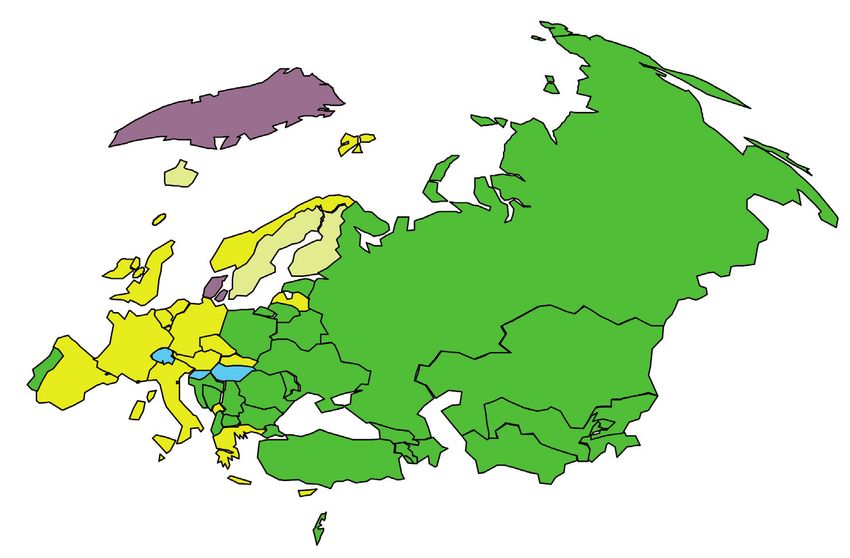
Viral hepatitis and SDGs: facts and figures
               Effectively combating viral hepatitis produces public health benefits by reducing mortality and
               improving health and well-being in affected communities.
               • In the European Region, approximately 15 million people are estimated to be living with chronic
                 HBV infection and approximately 14 million with chronic HCV infection (5).
               • Two thirds of those infected are in eastern Europe and central Asia (6).
               • Infections with HBV and HCV lead to more than 400 deaths in the Region every day (6).
               End the epidemic of AIDS as a public health threat: viral hepatitis is a growing cause of
               mortality among people living with HIV. Combating viral hepatitis will improve the health and well-
               being of people living with HIV and reduce mortality.
               • Globally, an estimated 2.75 million people living with HIV were co-infected with HCV and 2.6 million
                 with HBV in 2015 (7,8).
               Reduce premature mortality from noncommunicable diseases: chronic hepatitis is a major
               cause of cirrhosis and primary liver cancer (4,9). Preventing and treating viral hepatitis will reduce
               the number of deaths from these diseases.
               • In the European Region, an estimated 171 000 people die each year from viral hepatitis-related
                 causes, generally from the late effects of chronic HBV and HCV infection (10).
               Strengthen the prevention and treatment of substance abuse disorders: comprehensive
               harm reduction strategies can prevent and control epidemics of HBV and HCV among people
               who inject drugs; these people are at increased risk of HBV and are disproportionally affected with
               HCV infection (4).
               • Injection drug use accounts for 80% of new HCV infections with reported transmission route in
                 countries of the European Union/European Economic Area (11).
               Achieve universal health coverage: priority actions required to eliminate viral hepatitis can
               contribute to the achievement of universal health coverage. Similarly, achieving universal health
               coverage is crucial and an overarching health target to combating viral hepatitis.
               • Universal childhood vaccination and vaccination of the newborn when indicated will drastically
                 reduce new HBV infections and reduce rates of chronic illness and death from the sequelae of
                 liver cancer and cirrhosis.
                    o After implementation of HBV vaccination programme, many countries of the European
                      Region saw a reduction of the burden of disease due to HBV: from 8–15% of children
                      becoming chronically infected with HBV to less than 1% among immunized children (11).
                    o Currently, a total of 49 Member States in the European Region (92%) have implemented
                      universal childhood HBV immunization programmes (4). Four remaining Member States,
                      with very low HBV endemicity, rely on selective immunization of people who are at high risk
                      for infection (4,12,13).
                    o Perinatal transmission of HBV is prevented in the European Region in all Member States
                      through either universal newborn vaccination or universal screening of pregnant women
                      and targeted prevention of transmission from mothers living with chronic HBV infection
                      (4). However, some countries still do not have effective systems to monitor the coverage
                      of screening for pregnant women and the timeliness and completeness of post-exposure
                      prophylaxis for newborns (4).
               • Infection prevention and control in health care settings, including blood and injection safety,
                 have improved significantly in the European Region over recent decades. However, nosocomial
                 transmission of viral hepatitis may continue to play an important role in some Member States,
                 particularly in eastern Europe and central Asia (4).

2
Provide access to affordable medicines and vaccines: a substantial reduction in viral hepatitis-
               related morbidity and mortality is possible with recent developments in treatments for chronic
               infection. Chronic HCV infection can be cured in more than 90% of patients and chronic HBV
               infection can be effectively controlled.
               • Although an increasing number of countries in the Region are providing access to treatment
                 for HCV infection, affordability and sustainability of treatment, as well as treatment access,
                 remain major obstacles in some countries, particularly because of the cost of novel direct-acting
                 antiviral therapies for chronic HCV infection (4).
               Interventions for hepatitis infections are most effective when they occur in appropriate social,
               legal, policy and institutional environments that encourage and enable people to access and use
               services (3). Progress has been achieved in some Member States of the European Region with
               regard to enhancing political commitment to control viral hepatitis, as evidenced by an increase
               in the number of countries developing national hepatitis prevention and control strategies and
               action plans (4). However, geographical variability persists and specific populations can be more
               affected by, or be at higher risk of, viral hepatitis (Box 1).
               • In the European Region the epidemiology of viral hepatitis is diverse, with very low prevalence
                 of chronic HBV and HCV infection among the general population in northern Europe and high
                 prevalence in many countries in southern and eastern Europe and central Asia (4,14).
               • In most countries of western and northern Europe, the majority of cases of chronic HBV
                 infections is now registered as imported (15), and the burden is considerably higher among
                 migrants from countries with high prevalence (11).
               • Certain groups (e.g. people with multiple sexual partners, men who have sex with men, people
                 who inject drugs, transgender people, sex workers and health care workers) are particularly
                 vulnerable to HBV and HCV infection, and co-infection with hepatitis and HIV is common
                 (4,9,14).

Commitment to act
Member States of the European Region agreed at the Regional Committee session in September 2016 to
eliminate viral hepatitis as a public health threat by 2030, in line with Global health sector strategy on viral
hepatitis, 2016–2021 (3,4). Member States committed to a European Region in which the transmission of new
hepatitis infections is halted, testing is accessible and all people living with chronic hepatitis have access to care,
and affordable and effective treatment.

 Box 1. Leaving no one behind…
 To eliminate viral hepatitis, equity is critical: human rights violations, along with widespread stigmatization
 and discrimination, continue to hinder access to health services for populations that may be criminalized
 and marginalized and who are at higher risk of hepatitis infection, including people who inject drugs, men
 who have sex with men, prisoners, sex workers, mobile populations and people affected by conflict and civil
 unrest (4).

Elimination of viral hepatitis as a major public health threat is feasible with the tools and approaches currently
available and in development. The Action plan for the health sector response to viral hepatitis in the WHO
European Region (4) is built around three organizing frameworks: universal health coverage, the continuum
of viral hepatitis services and the promotion of a public health approach. Countries are encouraged to set
national targets, in accordance with their local context, based on the following regional essential targets:

                                                                                                                          3
• 95% coverage with three-dose HBV vaccine in countries that implement universal vaccination;
    • 90% coverage with interventions to prevent mother-to-child transmission of HBV  by vaccinating the infant
      within 24 hours of birth against HBV or by other approaches;
    • 100% of blood donations screened using quality-assured methods;
    • 50% of injections administered with safety-engineered injection devices, integrated with broader infection
      control;
    • at least 200 sterile injection equipment kits distributed per person per year for people who inject drugs, as part
      of comprehensive package of harm-reduction services;
    • 50% of people living with chronic HBV and HCV infections are diagnosed and are aware of their condition; and
    • 75% treatment coverage of people diagnosed with HBV and HCV infections who are eligible for treatment (4).
    These targets will be achieved through the application of scientific evidence and technical knowledge. Full
    involvement of civil society, taking whole-of-society and whole-of-government approaches, should be ensured
    with respect for human rights, gender equality and equity and using a multisectoral partnership model (Box 2)
    (3,4). It is also imperative to increase public awareness of these infections, to encourage advances in hepatitis
    medication, diagnostics and other technologies and to strengthen commitment to achieve health equity (3).

     Box 2. Intersectoral action
     Prisons and health: the rates of infection with HIV, hepatitis and tuberculosis are much higher among
     prisoners than in the general population because of their own vulnerability compounded by the characteristics
     of their environment. Therefore, the prison setting presents not only challenges but also opportunities for the
     prevention and treatment of these diseases.
     Public and penitentiary health systems are recommended to work together to ensure that harm reduction
     becomes the guiding principle of policy on the prevention of HIV and hepatitis transmission in penitentiary
     systems, for example taking opportunities such as pre-trial detention for screening and early detection and
     providing the same interventions as in the community (16).

    Fig. 1. Hepatitis B immunization policy, WHO European Region 2017

           Universal newborn vaccination (26 countries)
           Universal childhood vaccination (20 countries)

           Universal children/adolescent (3 countries)
           Risk groups vaccination (3 countries)
           Risk groups/universal newborn vaccination (1 country)

      Source: WHO/UNICEF joint reporting forms.
      Disclaimer: the designations employed and the presentation of this material do not imply the expression of any opinion whatsoever on the part of the
      Secretariat of the World Health Organization concerning the legal status of any country, territory, city or area or of its authorities, or concerning the
      delimitation of its frontiers and boundaries.

4
Monitoring progress
The WHO Regional Office for Europe is developing a joint monitoring framework for the SDG, Health 2020 and
noncommunicable diseases indicators2 to facilitate reporting in Member States and to provide a consistent and
timely way to measure progress. Viral hepatitis compromises all Health 2020 targets (17). The following, as
proposed in the global indicators’ framework of the United Nations Economic and Social Council (ECOSOC), will
support monitoring progress in viral hepatitis (18).

ECOSOC indicator
3.3.4. Hepatitis B incidence per 100 000 population

WHO support to its Member States
WHO activities to prevent and control viral hepatitis include:
• raising awareness and promoting partnerships;
• formulating evidence-based policy and data for action;
• promoting prevention of transmission by vaccination, safe injection practices and blood safety; and
• promoting wider access to monitoring, screening, care and treatment services for HBV infection (4).
The WHO Regional Office for Europe provides technical support to Member States in planning and strengthening
national responses to viral hepatitis, including raising awareness, surveillance, prevention, laboratory capacity
and guidance on testing and treatment, and is supporting regional partnerships.
The WHO Regional Office for Europe supports Member States implementing and developing country-owned plans
aligned with the Action plan for the health sector response to viral hepatitis in the WHO European Region (4).

Partners
WHO collaborates with the following partners to achieve the goal of eliminating viral hepatitis as a public health
threat in the European Region:
• European Commission
• European Centre for Disease Prevention and Control
• European Monitoring Centre for Drugs and Drug Addiction
• WHO collaborating centres, research institutions, national institutes of excellence, civil society (including patient
  organizations) and other partners and technical experts.

Resources
• Global health sector strategy on viral hepatitis 2016-2021
  http://apps.who.int/iris/bitstream/10665/246177/1/WHO-HIV-2016.06-eng.pdf?ua=1
• Action plan for the health sector response to viral hepatitis in the WHO European Region
  http://www.euro.who.int/__data/assets/pdf_file/0008/315917/66wd10e_HepatitisActionPlan_160555.pdf
• Manual for the development and assessment of national viral hepatitis plans, provisional, September 2015
  http://apps.who.int/iris/bitstream/10665/183726/1/9789241509350_eng.pdf
• Combating hepatitis B and C to reach elimination by 2030
  http://apps.who.int/iris/bitstream/10665/206453/1/WHO_HIV_2016.04_eng.pdf?ua=1
• World Hepatitis Summit 2015 meeting report: building momentum, making the case (best practice for HBV and HCV)
  http://www.who.int/hepatitis/publications/whs-2015-report.pdf?ua=1

Key definitions
• Elimination of viral hepatitis as a public health threat. The 90% reduction in number of new chronic HBV and HCV infections
  and 65% reduction in number of deaths by 2030, with milestones for 2020 defined as 30% and 10% reductions, respectively (3).

2
    EUR/RC67/Inf.Doc./1: joint monitoring framework: proposal for reducing the reporting burden on Member States.

                                                                                                                                 5
References
1.   Stanaway JD, Flaxman AD, Naghavi M, Fitzmaurice C, Vos T, Abubakar I et al. The global burden of viral hepatitis from
     1990 to 2013: findings from the Global Burden of Disease Study 2013. Lancet. 2016;388(10049):1081–8.
2.   Manns MP, Wedemeyer H, Manns MP. Epidemiology, pathogenesis and management of hepatitis D: update and challenges
     ahead. Nat Rev Gastroenterol Hepatol. 2010;7:31–40.
3.   Global health sector strategy on viral hepatitis 2016–2021. Towards ending viral hepatitis. Geneva: World Health Organization;
     2016 (http://apps.who.int/iris/bitstream/10665/246177/1/WHO-HIV-2016.06-eng.pdf?ua=1, accessed 3 August 2017).
4.   Regional Committee for Europe resolution EUR/RC66/10 2016 on an action plan for the health sector response to viral hepatitis
     in the WHO European Region. Copenhagen: WHO Regional Office for Europe; 2016 (http://www.euro.who.int/__data/assets/
     pdf_file/0017/318320/European-action-plan-HS-viral-hepatitis.pdf?ua=1, accessed 3 August 2017).
5.   Global hepatitis report. Geneva: World Health Organization; 2017 (http://apps.who.int/iris/bitstre
     am/10665/255016/1/9789241565455-eng.pdf?ua=1, accessed 3 August 2017).
6.   Viral hepatitis: 400 deaths a day in the WHO European Region could be prevented. In: Health topics [website]. Copenhagen:
     WHO Regional Office for Europe; 2015 http://www.euro.who.int/en/health-topics/communicable-diseases/hepatitis/news/
     news/2015/07/viral-hepatitis-400-deaths-a-day-in-the-who-european-region-could-be-prevented, accessed 3 August 2017).
7.   HIV and hepatitis coinfections. In: HIV/AIDS [website]. Geneva: World Health Organization; 2017 (http://www.who.int/hiv/topics/
     hepatitis/en/, accessed 3 August 2017).
8.   Platt L, Easterbrook P, Gower E, Mcdonald B, Sabin K, Mcgowan C et al. Prevalence and burden of HCV co-infection in people
     living with HIV: a global systematic review and meta-analysis. Lancet Infect Dis. 2016;16:797–8.
9.   Hepatitis. In: Health topics [website]. Copenhagen: WHO Regional Office for Europe; 2014 (http://www.euro.who.int/en/health-
     topics/communicable-diseases/hepatitis, accessed 3 August 2017).
10. Global, regional, and national age-sex specific all-cause and cause-specific mortality for 240 causes of death, 1990–2013: a
    systematic analysis for the Global Burden of Disease Study 2013. Lancet. 2015;385:117–71.
11. Epidemiological assessment of hepatitis B and C among migrants in the EU/EEA. Stockholm: European Centre for Disease
    Prevention and Control; 2016 (https://ecdc.europa.eu/sites/portal/files/media/en/publications/Publications/epidemiological-
    assessment-hepatitis-B-and-C-among-migrants-EU-EEA.pdf, accessed 3 August 2017).
12. Change of vaccine for routine primary baby immunization programme. Vaccine Update. 2017;(261):1–2.
13. Hepatitis B vaccine included in childhood immunization programme. Oslo: Norwegian Institute of Public Health; 2016 (https://
    www.fhi.no/en/news/2016/na-innfores-hepatitt-b-vaksinen-i-barnevaksinasjonsprogrammet/, accessed 3 August 2017).
14. Hope VD, Eramova I, Capurro D, Donoghoe AMC. Prevalence and estimation of hepatitis B and C infections in the WHO
    European Region: a review of data focusing on the countries outside the European Union and the European Free Trade
    Association. Epidemiol Infect. 2014;142:270–86.
15. Hepatitis B and C surveillance in Europe 2012. Stockholm: European Centre for Disease Prevention and Control; 2014 (https://
    ecdc.europa.eu/sites/portal/files/media/en/publications/Publications/hepatitis-b-c-surveillance-europe-2012-july-2014.pdf,
    accessed 3 August 2017).
16. Enggist S,, Lars Møller GG, Galea G, Udesen, C. Prisons and health. Copenhagen: WHO Regional Office for Europe; 2014 (http://
    www.euro.who.int/__data/assets/pdf_file/0005/249188/Prisons-and-Health.pdf, accessed 3 August 2017).
17. Targets and indicator for Health 2020, version 3. Copenhagen: WHO Regional Office for Europe; 2016 (http://www.euro.who.
    int/__data/assets/pdf_file/0011/317936/Targets-indicators-Health-2020-version3.pdf, accessed 3 August 2017).
18. Statistical Commission Report E/2017/24 on the forty-eighth session (7–10 March 2017). New York: United Nations; 2017
    (https://unstats.un.org/unsd/statcom/48th-session/documents/Report-on-the-48th-session-of-the-statistical-commission-E.pdf,
    accessed 3 August 2017).

                                                     URL: www.euro.who.int/sdgs
                                          © World Health Organization 2017. All rights reserved.
     The Regional Office for Europe of the World Health Organization welcomes requests for permission to reproduce or translate its
                                                      publications, in part or in full.
                                     World Health Organization Regional Office for Europe
                                     UN City, Marmorvej 51, DK-2100 Copenhagen Ø, Denmark
                                             Tel.: +45 45 33 70 00 Fax: +45 45 33 70 01
                                                      E-mail: eurohep@who.int
You can also read


