Waitematā District Health Board - Waitemata DHB
←
→
Page content transcription
If your browser does not render page correctly, please read the page content below
Waitematā District Health Board

Waitematā DHB Yearbook 2019

A word from the CEO and Chair
E ngā mana e ngā reo kārangaranga tenei te mihi atu
This is the call and a greeting of insight and
acknowledgement
Kō ena o tātou kua wheturangitia ki tua o te Arai Hāere,
Hāere, Hāere
We also acknowledge and recognise those of the many,
who have crossed the veil,
farewell, farewell, farewell
Ko tātou enei ngā mahuetanga o rātou kia tātou
We the remnant Whānau of them
Tena koutou Tena koutou Tena ano ra tātou katoa.
                                                                        CEO Dr Dale Bramley               Board Chair Professor
Greetings of goodwill and kindness to all                                                                    Judy McGregor

We finish 2019 with exciting, major developments across
                                                                    At Mason Clinic we have:
Waitematā DHB where the largest expansion in services
and facilities since the opening of our North Shore Hospital        •    started earthworks for a new $22 million,
tower in 1984 is now underway.                                           15-bed medium-secure unit at our Regional Forensic
                                                                         Psychiatry Service, more commonly known as Mason
Our much-anticipated new four-storey hospital building
                                                                         Clinic, in Pt Chevalier.
will include four new wards with up to 150 extra beds,
eight additional operating theatres and new endoscopy               •    purchased additional land to expand our existing site
suites by the end of 2023.                                               and future-proof forensic services in the Northern
                                                                         Region for many years to come.
The $240 million-plus four-storey project will significantly
boost our ability to deliver care to our community as
                                                                    DHB-wide, we have:
demand for our services continues to increase.
                                                                    •    introduced free te reo Māori lessons to help raise
The project’s development to this point is just one of many
                                                                         cultural awareness in our workplace and strengthen
milestones celebrated by our DHB over the last year in
                                                                         our connection with Māori patients and their whānau
our ongoing drive to achieve better health outcomes for
everyone, reduce health inequities wherever they exist,             •    launched our new Waitematā DHB Consumer Council
relieve suffering and promote wellness.                                  to ensure we better-understand the complex and
                                                                         varied needs of our wonderfully diverse population in
At North Shore Hospital we have:                                         West Auckland, Rodney and on the North Shore
•   opened a new CT scanner in refitted modern surrounds            •    further developed telehealth - enabling patients,
                                                                         where appropriate, to attend medical appointments
•   upgraded our lower ground floor phlebotomy and
                                                                         via video link from the comfort of home, work or
    outpatient areas to improve patient experience and
                                                                         wherever suits
    contribute to a better workplace for our staff
                                                                    •    advanced plans to open a $16.7 addiction
•   pushed ahead with plans to relocate our Diagnostic
                                                                         treatment centre as part of Auckland City Mission’s
    Breast Service in new and freshly renovated rooms
                                                                         HomeGround precinct in 2020.
    that will provide a more-welcoming environment for
    patients.                                                       We have again been proactive in our efforts to keep
                                                                    people well and our Health Promotion Team has – for
At Waitakere Hospital we have:                                      the first time – been working directly with high school
                                                                    students to teach them about bowel cancer and the
•   started work on an upgraded $6 million Waitakere
                                                                    importance of early detection through regular screening.
    Hospital Special Care Baby Unit (SCBU) that is due
    to open towards the end of next year – providing                Meanwhile, our Rural Point of Care Testing service
    comfortable cot-side sleeping arrangements for                  (R-POCT) has enabled rural practices to test for suspected
    parents or caregivers wanting to stay overnight with            heart attacks, blood clots and blood infections in-practice
    their infants.                                                  and get the results within 10 minutes – helping medical
                                                                    professionals clarify the best course of treatment and,
•   Opened Waitakere Hospital’s new multi-faith spiritual
                                                                    without doubt, saving precious time and lives.
    centre, Wairua Tapu, Chapel of the Holy Spirit, to
    cater for the spiritual needs of patients, their families
    and whānau.

                                                                             “ everyone     “ with
                                                                                                                    ” “ brilliant ”
                                                                                                                       better, best,
                                                                                                        ” “
                                                                                                           connected

                                                                2
                                                                                matters
                                                                                       ”   compassion
Waitematā DHB Yearbook 2019

These initiatives contribute to an overall life-expectancy          One of our organisational values is to be better, best and
within our boundaries of 84.2 years – 2.4 years higher than         brilliant in all that we do and our staff have certainly lived
the national average. They are also specifically designed           up to that over the last 12 months by earning national and
to reduce health inequities, thereby contributing to a              international acclaim across multiple platforms.
Māori life expectancy of 82.4 years, the highest Māori life-
expectancy in Aotearoa.                                             Among them were representatives of the Institute of
                                                                    Innovation and Improvement (i3), whose efforts resulted
All this in a catchment that is home to the largest DHB             in our Leapfrog programme winning the Business
population in New Zealand with more than 639,000                    Transformation through Digital and IT category of the 2019
people expected to rise in number by over 100,000 in the            CIO Awards
next decade.
                                                                    Leapfrog is tasked with fast-tracking digital innovations
That kind of growth drives our efforts to ensure our                that further modernise and enhance the services we offer.
workforce better represents the population we serve
- assisting in our ongoing work to improve equity of                An example is our development of the award-winning Qlik
outcomes and enhance patient, family and whānau                     Data Discovery Programme – providing real-time data that
experience.                                                         helps us plan better for the care of our patients, manage
                                                                    flow in our hospitals and continually strive for quality
Multiple recruitment and mentoring initiatives have, by             improvement. That kind of high-tech innovation makes us
way of example, seen the number of Māori clinical staff at          world-class when combined with the hard work of all our
our DHB increase by 96% between June 2015 and March                 hospital and community-based staff.
2019 - resulting in the total number of Māori personnel
rising by 81% during that same period.                              Their tireless efforts truly do make a difference in the lives
                                                                    of thousands of people every single day and we take this
Meanwhile, the many ethnicities represented by our staff            opportunity to say a heartfelt thank you.
on our wards and in the community continue to reflect
the ever-changing face of Waitematā – providing a level of          Christmas greetings to you and your families and the very
familiarity that helps put our patients and their families at       best for 2020.
ease in their times of need.

A snapshot of our Waitematā DHB population

                                                                             “ everyone     “ with
                                                                                                                    ” “ brilliant ”
                                                                                                                       better, best,
                                                                                                        ” “
                                                                                                           connected

                                                                3
                                                                                matters
                                                                                       ”   compassion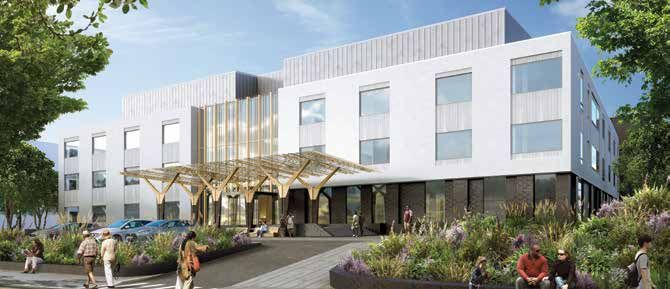
Waitematā DHB Yearbook 2019

  KEY FACTS                                                                                                     Life-expectancy for
                                                                                                              Māori in Waitematā has
                                                                                                                        six years
AND FIGURES –                                                                                              increased by
                                                                                                            over the past decade which
                                                                                                               shows inequities are
  OVER THE                                                                                                          decreasing.

  PAST YEAR
                                                                                                             We employ   7413
        Waitematā has                                                                                        people who represent
          the highest                                                                                          a diverse range of
                                       We have
      life-expectancy in                                                                                           ethnicities.
                                   contracts with
        New Zealand at
        84.2     years.
                                   around 600                                             We have the
                                     community                                           highest Māori
                                      providers.                                    life-expectancy in the
                                                                                           country at
                                                                                            82.4
                                                                                            years.
                                                      The number of                                               We delivered
         Life-
   expectancy for
                                                     Māori staff at our                                       24,169 elective
                                                    DHB has increased by                                     surgeries, exceeding the
people in Waitematā
  has increased by
                                                      75%     in the last
                                                        four years.
                                                                                                              national requirement
                                                                                                                      by 6%.
 3.7    years since
        2001.

                                                                                       We have one of the
                                                                                    highest  five-year
                                                                                     cancer survival rates in
                                                                                         New Zealand.                       Our
                                                                                                                    smoking rate is
                                                                                                                   one of the lowest
                                                                We
                                                                                                                   in the country at
                                                            discharged
                                                            more than                                               12%       and it’s

            We have more than
                                                         126,000                                                     still dropping.
                                                        inpatients over the
               639,000                                       last year.
               people in the
             Waitematā District.

 We provide dental
   care to over                                        In the last

  300,000                                           year, we birthed
                                                    7425      babies.
 children across the         We achieved the
  Auckland region.           lowest avoidable
                            mortality rate in NZ
                            at 63.3%        per
                              100,000 people.

                                                                              “ everyone     “ with
                                                                                                                     ” “ brilliant ”
                                                                                                                        better, best,
                                                                                                         ” “
                                                                                                            connected

                                                              4
                                                                                 matters
                                                                                        ”   compassion
Waitematā DHB Yearbook 2019

Waitematā 2025 the year finished
Doors open to Wairua Tapu, Chapel of the Holy Spirit
The spiritual needs of our patients, whānau and staff were
front-of-mind when we started work on Wairua Tapu,
the Chapel of the Holy Spirit, which opened at Waitakere
Hospital on May 4. The new spiritual centre caters for people
of all faiths and features a prayer room and main chapel
that open out to a sun-drenched deck and a landscaped
courtyard.
The project was made possible by more than $300,000
in generous donations to Well Foundation, our official
fundraising body, and to the DHB directly. Community
groups also kindly donated sacred items and furnishings that
are of significance to their faiths and cultures.
The opening was officiated by Catholic Bishop Patrick Dunn
and Anglican Bishop Ross Bay, supported by students from
Liston College, Massey High School and a choir from the
Calvary Wesleyan Methodist Church of New Zealand. The
opening was attended by several hundred people.
Waitematā DHB Chief Executive Dr Dale Bramley says the
development will play a key role in the DHB’s efforts to
deliver best care to everyone. “For people who may be going
through a difficult time personally, or in relation to a loved
one, it is important that we offer a space for reflection,
contemplation and, for those who are so inclined, prayer.”

            (Top) Bishop Patrick Dunn addresses the crowd.

(Middle) The new chapel caters for multiple faiths and beliefs.

  (Bottom) The Liston College kapa haka group performs a
                                           rousing haka.

   Radiology services gets boost with new CT scanner
   A newly installed high-tech CT scanner will help Waitematā
   DHB meet the increased demands of its rapidly growing
   population. The new machine was unveiled in North Shore
   Hospital’s Radiology Department where an estimated
   40,000 people will be referred for scans in the next year.
   Its opening in June was complemented by the recruitment
   of nine new staff and is specifically designed to meet
   phenomenal population growth. Waitematā DHB CEO Dr
   Dale Bramley says North Shore Hospital now has three CT
   scanners.
   He says the latest installation follows an extensive upgrade
   of Waitakere Hospital’s Radiology Department in 2018 to            Pictured with the newly opened CT scanner at North
   accommodate two new CT scanners and improve waiting                Shore Hospital is General Manager and Head
   areas for patients.                                                of Division – Diagnostic Services and Clinical Support
                                                                      Services, Dr Jonathan Wallace; Radiology Clinical
   “All of these developments clearly demonstrate the                 Director, Dr Hament Pandya; CEO, Dr Dale Bramley;
   significant investment we’ve made to enhance our overall           former Director of Hospital Services, Cath Cronin;
   radiology service and deliver better health outcomes for           Waitematā DHB Chair, Professor Judy McGregor;
   our community,” Dr Bramley says.                                   Chief Medical Officer, Dr Andrew Brant.

                                                                            “ everyone     “ with
                                                                                                                   ” “ brilliant ”
                                                                                                                      better, best,
                                                                                                       ” “
                                                                                                          connected

                                                                  5
                                                                               matters
                                                                                      ”   compassion
Waitematā DHB Yearbook 2019

                                                                                                         WAITEMATĀ
Waitematā 2025                                                                                           2025
Major development prepares DHB for future growth

   A concept design of the new hospital building.

Construction of a new four-storey hospital building in              the North Shore Hospital tower block in the early 1980s.
Takapuna is scheduled for completion in 2023.
                                                                    CEO Dr Dale Bramley says the hospital may also benefit
The building will sit on the North Shore Hospital campus            patients from elsewhere. “It creates the opportunity for
– poised to meet fast-growing demand for world-class                a specialist elective surgery centre within the Northern
healthcare services in a DHB catchment where the                    Region, which is consistent with the Long Term Investment
population is expected to reach 803,550 by 2036/37. It will         Plan,” he says. The disused Taharoto and Pupuke buildings
include four new wards with up to 150 extra beds, eight             – both home to the original North Shore Maternity Hospital
additional operating theatres and new endoscopy suites.             built in 1958, are being demolished to make way for the
                                                                    complex. Deconstruction began in September and is
The new hospital building will be the biggest single DHB
                                                                    expected to be complete by late 2020.
development in the Waitematā district since construction of

  New Mason Clinic building a major investment for mental health
  A new $22 million, 15-bed medium secure unit is                   facility which is designed to support a kaupapa Māori
  expected to open at the Mason Clinic in late 2020 to              approach to clinical care.
  meet growing demand for specialist mental health
                                                                    “Buildings at the site that have some weather tightness
  services in the Northern Region. Work is now underway
                                                                    issues will be systematically replaced and upgraded with
  on the new-and-improved E Tū Tanekaha (stand strong
                                                                    contemporary facilities in the coming years as funding
  Tanekaha) unit which will replace a smaller disused 10-
                                                                    becomes available. We are grateful to the Government
  bed facility that was demolished earlier this year after
                                                                    for the funding that has enabled this new building to now
  ongoing weather tightness issues. The new unit has been
                                                                    occur,” says Dr Bramley.
  designed to accommodate patients who require secure
  care in a clinical and culturally appropriate environment.
  “We have one of the fastest-growing populations of
  any DHB in the country and provide specialist mental
  health services at Mason Clinic for the entire Northern
  Region,” Waitematā DHB CEO Dr Dale Bramley says. “This
  development will enable us to meet the ever-growing
  demand for those services on this site in a contemporary
  and culturally informed way.” The work now underway
  represents part of a planned renaissance of the entire
  site. Other developments completed at Mason Clinic
  over the last two years include the state-of-the-art Te Aka         An artist’s impression of the new $22 million building.

                                                                              “ everyone     “ with
                                                                                                                     ” “ brilliant ”
                                                                                                                        better, best,
                                                                                                         ” “
                                                                                                            connected

                                                                6
                                                                                 matters
                                                                                        ”   compassion
Waitematā DHB Yearbook 2019

Plans for new breast diagnostic service centre unveiled
A new Diagnostic Breast Centre at North Shore Hospital will           Diagnostic Breast Service Head Dr Susan Gerred says the
bring all breast services into one area so that patients can be       new service is the result of six years of planning. “The
assessed and treated faster. The centre will collocate breast         inclusion of a new mammogram and ultrasound machine
and plastic surgeons, oncologists, radiologists and nurses            will streamline breast imaging, reduce waiting times and
and is set to open in July.                                           allow more biopsies to be done on the same day. We are
                                                                      also looking at training-up specialist nurse practitioners to
Waitematā District Health Board’s official fundraising body,
                                                                      carry out preliminary assessments, including clinical breast
Well Foundation, secured a $1 million contribution from
                                                                      examinations. This will get more people in the door and
the Breast Cancer Foundation this year and is working to
                                                                      will make smart use of experienced nurses’ skills,” says Dr
secure more funding from sponsorship and donations. North
                                                                      Gerred.
Shore Hospital has the busiest breast clinic in New Zealand.
Up to 100 women-a-week are referred there by GPs for                  The building is designed to make sure it has a warm,
assessment and patients also come through BreastScreen                welcoming and inclusive atmosphere that caters for a
Aotearoa’s mammogram programme.                                       diverse population.

  Refurbishments of North Shore Hospital ground floor areas
  Waiting areas on the lower ground floor of North Shore              The final stage of the project was to upgrade the
  Hospital were modernised and made more comfortable for              Outpatients Department where close to 400 patients
  patients during a three-stage refurbishment project that            attend appointments every day. Work to improve the look
  started in June. Phase one of the project was the upgrade           and feel of these spaces enhances the patient experience
  of the Radiology Department waiting room followed by a              and creates a nicer working environment for staff.
  renovation of the entire Phlebotomy Department.

   Plans continue for special care babies in the west
  Planning for a $6 million expansion of the Special Care             looked after in a neonatal intensive care unit outside
  Baby Unit (SCBU) at Waitakere Hospital continued this               of Waitematā but transferred to their local SCBU once
  year with construction scheduled to start in 2020. More             they’re well enough. The SCBU expansion will increase
  than 300 babies are cared for by staff in the Waitakere             the number of cots on the ward from 12 to 18. The
  SCBU each year, a number that is expected to grow along             extra space will allow more families to benefit from the
  with the population in the west.                                    specialist care closer-to-home and give staff more space
                                                                      to work effectively.
  All babies cared for in SCBU are either born premature
  (between 32 and 40 weeks’ gestation and weighing more               The project has been largely funded by generous
  than 1500 grams) or at full-term but in need of specialist          donations gifted through Waitematā DHB’s official
  nursing care. Babies born before 32 weeks gestation are             fundraising body, the Well Foundation.

      More than 300 babies are cared for by staff in the Waitakere SCBU each year.

                                                                                 “ everyone     “ with
                                                                                                                        ” “ brilliant ”
                                                                                                                           better, best,
                                                                                                            ” “
                                                                                                               connected

                                                                  7
                                                                                    matters
                                                                                           ”   compassion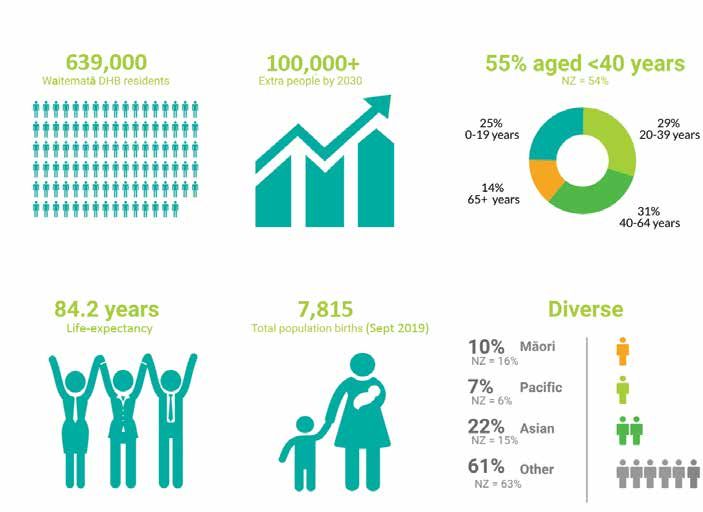
Waitematā DHB Yearbook 2019

Innovations Better, best, brilliant
Budgeting software changes the
financial game for DHBs                                            Telehealth clinics break down
Ground-breaking budgeting software earned Waitematā                access barriers for patients
DHB a runner-up spot in the 2019 New Zealand Chief                 Distance is less of a barrier to good health care for
Financial Officer (CFO) Awards in April. The cloud-based           some patients thanks to Waitematā DHB’s telehealth
e-budget application streamlines and automates the way             clinic trial - an innovation enabling patients to have
financial experts project the annual budget - with greater         medical appointments via video link from the comfort
speed, transparency and reliability. Waitematā DHB works in        of home, work or wherever it suits.
a complex accounting environment that is tied to an annual
budget of around $1.8 billion. The new eBudget software            Richard Harris, 75, of Wellsford was one of first people
makes annual projections easier than ever before. Tasks that       to take advantage of the trial this year. After three
would normally take staff months to complete are now fully         heart attacks and a quadruple bypass 10 years ago,
automated and updated by the software on a daily basis.            Mr Harris faces the possibility of regular hospital
eBudget took six months to develop in-house and its impact         check-ups for the rest of his life. This potentially means
upon full implementation in July 2018 was immediate.               a 142km round-trip to North Shore Hospital every few
                                                                   months. “I can’t drive because of my heart condition,
CFO Robert Paine says he and his team were able to present         so one of my children has to come with me - but that’s
Waitematā DHB’s draft 2019/20 budget to the Executive              a big ask to take a whole day out,” he says. “I will
Leadership Team in January 2019, at least six weeks earlier        sometimes take a shuttle but because we’re picking up
than usual. “This means we’re able to get a better look            a few people all over the place, I can leave at 7am and
ahead and make more-informed decisions on the annual               not get home until after 5pm. I appreciate the service
allocation of funds to get the best for the community we           but that is a long day for someone who isn’t well.”
serve,” Mr Paine says. “The software is tried, tested and a
potential game-changer where big numbers are concerned.            Mr Harris doesn’t have a computer at home and
“It’s nimble and accurate in a sector where every saved            instead used one at Te Ha Oranga clinic in Wellsford
dollar can be redirected to frontline healthcare and better        where a nurse sat with him while he had his first
outcomes for our patients.”                                        telehealth clinic appointment. The clinic is just seven
                                                                   minutes from his home. “No travelling and no waiting
                                                                   around. It was an easy option for me,” he says.

  Patient safety at the heart of                                   Waitematā is among the first DHBs in the country to
                                                                   offer telehealth specialist appointments across a wide
  eNotes initiative                                                variety of services and over 300 have been carried
                                                                   out over the past 12 months. Waitematā DHB Clinical
  Handwritten blue note pages that were once kept                  Director for Otorhinolaryngology Dr David Grayson
  inside patients’ folders have been replaced with a new           says access issues are a common barrier to good
  electronic record that helps modernise our service and           health care. “For some patients, these clinics have
  improve safety. The eNotes system was introduced                 meant they haven’t needed to leave work, travel great
  across our Medical and Assessment, Treatment and                 distances or, in some instances, take their sick children
  Rehabilitation wards at North Shore and Waitakere                out of the home - avoiding exposure to potentially bad
  hospitals in July. The notes can be attributed to their          weather and other illnesses in the waiting room of a
  creators and accessed by multiple staff simultaneously           hospital,” he says.
  - making it easier and faster for clinicians to follow
  up on individual cases. That means no more time lost
  searching for misplaced bits of paper or difficulties
  reading someone else’s hand-writing. It also means we
  save around 768,000 double-sided pieces of clinical
  note paper per year. The initiative is yet another step
  towards a fully-electronic system where ePrescribing,
  eVitals and Inpatient Snapshot have already made
  a huge difference by improving efficiency and
  significantly reducing any room for error. More
  computers have been placed throughout the wards
  to enable better access to electronic systems and the
  notes can also be read on clinical iPads. Waitematā
  DHB Manager of IS Clinical Change David Ryan says the
  system saves clinical time that can now go back into
  direct patient care.                                               A remote consultation in action via mobile device.

                                                                           “ everyone     “ with
                                                                                                                  ” “ brilliant ”
                                                                                                                     better, best,
                                                                                                      ” “
                                                                                                         connected

                                                               8
                                                                              matters
                                                                                     ”   compassion
Waitematā DHB Yearbook 2019

Innovative life skills workshops aimed at Asian youths
Around 270 students and their parents attended two life
skills workshops aimed specifically at Asian youth this year.
The events were the first of their kind to be led by
Waitematā DHB’s Asian Health Services and were hosted at
two secondary schools.                                                                                        Hi! You d
                                                                                                                        on
                                                                                                             to be you t seem
Both were funded as suicide prevention initiatives.                                                                    rself late
                                                                                                             #wanna               ly
                                                                                                                      talk
Asian Health Services Operations Manager Grace Ryu says
the workshops promoted a range of coping strategies                                           I am fee
                                                                                                       ling a bit
through interactive group discussion, specialist speakers and                                 down :(
presentations.
“Participants found them user-friendly and effective in
showing them how to manage their stress levels more                                                     Come to
                                                                                                                  the Asia
positively and safely than they might have before.                                                     Youth L
                                                                                                                ife Skills
                                                                                                                            n
                                                                                                       Worksh
                                                                                                               op with m
“The sessions were very informative - providing everyone                                              I’m sure
                                                                                                               it will help
                                                                                                                            e.
                                                                                                                            :)
with some valuable insights from the young people who
took part and a greater appreciation of the challenges facing
the migrant youth sector.
“Life is full of ups and downs and sometimes we struggle to
cope. These workshops provided some of the skills we all
need from time to time to get through some of the tougher
days.
“They were also designed to help people understand the
issues their friends and families might be working through
and how they can help.
“I think a number of parents in particular came away with
a greater realisation of how they can work together with
their children on some of the coping mechanisms that were
discussed.”
The workshops were aimed at youths aged between 14 and              Promotional material for a life skills workshop was
18.                                                                 aimed specifically at Asian teenagers between 14 and 18.

  A high-tech approach to our ED inventory
  Ever wondered how we stay on top of supplies in a busy
  hospital emergency department (ED)?

  Much of the work used to be done manually and
  recorded on paper – a huge task in a department that
  uses over 600 different items in its day-to-day dealings
  with the public.

  But our finance team has just introduced a new and fully
  automated inventory system that enables us to keep tabs
  on approximately $2.1 million worth of supplies every
  year – ensuring our ED is always fully stocked and ready
  to respond in times of crisis.

  The automated approach replaces pen and paper with a
  handheld scanning device that ensures no wastage and
  saves our clinical supplies people between two and three
  hours-a-day.
                                                                    Clinical supplies staff member Gurvinder Singh has
  That’s valuable time they can now spend helping our ED            replaced pen and paper with a scanning device that
  staff deliver the highest possible standard of care to our        enables him to keep track of outgoing and incoming
  patients.                                                         stock in our emergency department.

                                                                           “ everyone     “ with
                                                                                                                  ” “ brilliant ”
                                                                                                                     better, best,
                                                                                                      ” “
                                                                                                         connected

                                                                9
                                                                              matters
                                                                                     ”   compassion
Waitematā DHB Yearbook 2019

Our services Initiatives for our people
                                                                    Dental care reaching more
                                                                    communities
                                                                    More children now have improved access to good dental
                                                                    care, thanks to the launch of a new Auckland Regional
                                                                    Dental Service (ARDS) mobile clinic in March.
                                                                    The mobile clinic is self-powered and will make dental
                                                                    care more accessible for children up to year 12-age in the
                                                                    Waitematā district.
                                                                    Oral health specialists can treat up to 15 children in a day
                                                                    (more than 3000 per year) and the clinic will also be used for
                                                                    preventative visits in preschool centres.
                                                                    The Well Foundation, Waitematā DHB’s fundraising
                                                                    body, worked with The Trusts West Auckland, The Trusts
                                                                    Community Foundation, Hector Trust and the Sir John
 An orange mobile clinic is the newest addition to the              Logan Campbell Residuary Estate to raise $260,000 for the
 ARDS fleet.                                                        initiative.

 Rural Point of Care Testing a life-saver
 Courtney Mason is alive thanks to the Rural Point of Care          count, that she should have had - indicating something
 Testing service (R-POCT) that is now fully-operational in          was seriously wrong. Her GP acted quickly to get her
 rural general practices across Waitematā DHB .                     transferred to North Shore Hospital where further tests
                                                                    revealed she had an actively bleeding stomach tumour.
 Equipment provided by Waitematā DHB enables rural
 practices to test for suspected heart attacks, blood clots         Ms Mason is now receiving the treatment she needs and
 and blood infections in-practice and get the results within        is on her way to making a full recovery. R-POCT enables
 10 minutes – helping GPs decide on the best course of              rapid decision-making from assessment and diagnostics
 treatment faster than before. Ms Mason (19) presented              to treatment. It also minimises non-essential emergency
 to her GP in Wellsford with sudden shortness of breath,            department presentations, ensuring patients receive the
 weakness and fatigue. Results of a blood test showed               appropriate care at the right time, in the right place.
 she only had half the haemoglobin, or red blood cell

Future of feet in good hands thanks to new podiatry partnership
 Trainee podiatrists are gaining hands-on experience                Bachelor of Health students that gives patients access to
 in early diabetes diagnosis and prevention thanks to a             a wide range of services, including occupational therapy,
 partnership between AUT and Waitematā DHB. Diabetes                oral health, physiotherapy, counselling, psychology,
 affects six percent of the population and is the leading           psychotherapy and nursing.
 cause of lower-limb amputation due to complications
                                                                    Director of Allied Health, Scientific and Technical
 from nerve and blood vessel damage, according to the
                                                                    Professions Tamzin Brott says podiatrists treat active foot
 Ministry of Health. Preventative treatment by podiatrists
                                                                    wounds or infections and work closely with patients and
 can significantly reduce the likelihood of serious
                                                                    whānau to educate them about early warning signs and
 complications and is a key area of focus for Waitematā
                                                                    how to protect their feet from deterioration.
 DHB’s High-Risk Foot Clinic, which is currently treating
 more than 500 patients in North and West Auckland.                 “It is important for patients to identify nerve damage
                                                                    and structural changes to their feet that could result in a
 Waitematā DHB’s Diabetes Podiatry Service and AUT’s
                                                                    loss of sensation and put them at risk of further damage
 Department of Podiatry launched a combined clinic
                                                                    or wounds,” she says. “The more proactive we are in
 this year to help undergraduate students get skills and
                                                                    this area, the better the outcomes are for our patients,
 experience to care for people with high-risk feet. The
                                                                    which is why we see huge potential in developing a future
 clinic is located at AUT Integrated Health (AIH) – a state-
                                                                    workforce in this specialist area.”
 of-the-art interprofessional learning environment for

                                                                               “ everyone     “ with
                                                                                                                      ” “ brilliant ”
                                                                                                                         better, best,
                                                                                                          ” “
                                                                                                             connected

                                                               10
                                                                                  matters
                                                                                         ”   compassion
Waitematā DHB Yearbook 2019
Mental health workforce pilot initiative
Inclusiveness
expanded
a key to good
A programme designed to help The trial was expanded across the
recruitment get mental health consumers into broader Waitematā DHB mental
the workforce is being trialled at health service in July 2019 and will
Waitematā District Health Board
Waitematā DHB. continue until mid-2021 when further
was awarded the Accessibility
evaluation will take place. It now caters
Tick this year in recognition of its Individual Placement Support (IPS)
for people between the ages of 18 and
inclusive workplace culture. involves key DHB staff working with
64 and involves three NGOs - Ember,
specific non-government organisations
The Accessibility Tick is an Workwise and Emerge Aotearoa.
(NGOs) to support eligible consumers
independent endorsement of
throughout the job-seeking process Minister for Social Development and
an organisation’s commitment
and during employment. Disability Issues Hon Carmel Sepuloni
to being more accessible to, and
is monitoring progress and has visited
inclusive of, employees with A prototype was initially trialled over
staff at Waimarino Waitematā DHB
disabilities. It is awarded by six months with a small cohort of
Mental Health Services twice for an
specialist consultancy firm Access consumers aged 18-35 years and one
update on developments.
Advisors and was presented on 3 NGO in west Auckland.
December - the International Day Her last visit took place in November.
of Disabled Peoples.
“At Waitematā DHB, we’re Hon Carmel Sepuloni joins staff at Waimarino Waitematā DHB Mental Health
always working towards an Services for an update on the Individual Placement Support.
inclusive culture so that our
people thrive and diversity
is celebrated. Achieving the
Accessibility Tick supports our
vision of being fully accessible,”
says Director of Human
Resources Fiona McCarthy. The
DHB has introduced initiatives
to specifically cater for people
who have disabilities and has a
dedicated consultant who works
with candidates throughout the
recruitment process. “We want
to be able to attract, support
and retain people with access
needs by proactively reducing
barriers during the recruitment
process,” Recruitment Manager
Vanessa Aplin says.
Boosting CADS awareness
Staff from our Community Alcohol
and Drug Service (CADS) took part
in a multi-agency event at Freyberg
Square for World Homeless Day on
10 October to increase awareness
of the support services available
to people who are homeless or
sleeping rough – particularly those
with drug and alcohol related issues.
CADS provides a range of specialist
services across the Auckland region,
including community and home
detoxification for people who have
a physical dependence on addictive
substances. CADS staff pictured during the World Homeless Day event.
“ everyone “with
” “ brilliant ”
better, best,
” “
connected
11
matters
” compassionWaitematā DHB Yearbook 2019
Our people Staff making a difference
Research aims to improve outcomes for Māori
Māori and Pacific patients with research grant from the Heart She will then develop a plan for
cardiovascular disease (CVD) are Foundation and is the first major health policy-makers and providers
the primary focus of a new research programme of its kind in New that could alter the way healthcare
project started by Waitematā DHB Zealand. Statistics show Māori is delivered across primary and
public health physician Dr Corina and Pacific people are less likely to secondary care.
Grey. Corina will work with University receive treatment and more likely
of Auckland Associate Professor to die from heart disease than other
and former Waitematā DHB Board New Zealanders. Corina will explore
member Dr Matire Harwood on how the risk of heart disease is
ways to improve CVD-related health assessed and managed. She’ll also
outcomes in both ethnic groups. look at how access to hospital care
and post-hospital management
Their three-year research project
of heart disease can be improved Dr Corina Grey and Dr Matire
will be funded through a $2 million
further. Harwood.
Free Te Reo Māori classes to help reduce inequity
Waitematā DHB staff started learning some of the people who need it towards bridging that gap. We are so
te reo Māori on-site for free in most,” she says. pleased we are now able to do that
February thanks to a new initiative in a way that is totally accessible,
“Encouraging our staff to learn te
aimed at raising cultural awareness convenient and achievable.”
reo is a move in the right direction
in the workplace and improving the
way we work with Māori patients and
whānau. More than 800 expressions of
interest were received after the idea
was first floated in November 2018.
Classes started with sessions at North
Shore Hospital and Waitakere Hospital.
Waitematā DHB Chief Advisor
Tikanga Dame Rangimārie Naida
Glavish (Ngāti Whātua, Ngāpuhi) says
learning a new language can lead to
a better understanding of the culture
it originates from. “We know there
are inequities for Māori in our health A free te reo lesson underway at North Shore Hospital’s Whenua Pupuke
system and barriers to treatment for Clinical Skills Centre.
Above and beyond community vaccination clinic
Staff rallied to help in the midst of a measles outbreak
this year – organising and running a special community
vaccination clinic at Waitakere Hospital in September.
More than 440 people turned out to have a free
immunisation shot and the queue backed out of the
building and along the footpath.
Nurses worked tirelessly to meet demand and support
staff did their bit to manage traffic, people and
expectations.
A second clinic targeting babies and children aged six Nursing staff ready themselves for a day of vaccinations
months to five years-old was held in November. during a special clinic at Waitakere Hospital.
“ everyone “ with
” “ brilliant ”
better, best,
” “
connected
12
matters
” compassionWaitematā DHB Yearbook 2019
CIO talent at Waitematā spans DHBs
New faces join
Waitematā DHB’s Chief Information
Officer (CIO) Stuart Bloomfield was
Support Group Information Manager
and assumed the role of CIO in 2013.
Board after
named joint CIO for Counties Manukau
DHB in July. Stuart joined Waitematā
Stuart worked across the Waitematā elections
and Counties Manukau DHBs as CIO
DHB in 2003 as the Mental Health We welcomed two new
through 2019 and is well-known and
Services Information Manager. He was members to the Waitematā DHB
respected across both organisations.
later appointed as the DHB’s Decision Board in December.
Former member of parliament
Chris Carter and endovascular
specialist Dr John Bottomley
joined the board after successful
campaigns in the 2019 local
government elections.
Five Board members were re-
elected for a further three years.
They are Max Abbott, Sandra
Coney, Allison Roe, Warren
Flaunty and Edward Benson-
Cooper.
The new Board took office in
December.
Waitematā DHB’s Chief Information Officer (CIO) Stuart Bloomfield.
New Chief Medical Officer inspired by GP's example
Waitematā DHB Chief Medical Officer Dr Jonathan “And I’ve been here ever since in varying roles, including
Christiansen hasn’t forgotten the hard-working family GP Head of Division for Medicine and Health of Older People
whose example helped put him on the path to medical Services and Associate CMO.”
school. “It is one of my most abiding memories as a
Dr Christiansen is a key member of the DHB’s Executive
child,” the father-of-two says. “House visits were the
Leadership Team.
norm back then and there was something incredibly
reassuring about the fact that Dr Lloyd Richwhite would “My job is about ensuring we provide the best possible
appear if something was wrong. clinical service,” he says. “I am focused on the quality of
the service, how we might improve it, our patients’ view
“He was an old-fashioned, available-to-the-community-
of what we do and maintaining the right level of expertise
24/7-GP who did everything… delivering babies and
among our clinicians. Wrapped around that, of course, is
visiting the elderly – an absolutely extraordinary guy.”
the equity of care.”
Dr Christiansen took up the CMO role in July replacing Dr
Andrew Brant who, after nine years as CMO, remains with
the DHB as its Deputy Chief Executive and the lead on a
number of planned new major facilities, including our a
new building project.
Dr Christiansen completed medical school in 1993 and
first worked as a Registered Medical Officer (RMO) in
Tauranga. Previous aspirations to be a surgeon were put
aside as his interest in the medical specialties grew.
Dr Christiansen was appointed as an Emergency
Department House Officer in 1994 at North Shore
Hospital where he’d first set foot three years prior as a
fifth-year medical student.
He was still at the hospital and working as a medical
registrar in 1996 when he left for the US and seven years
of specialist training. “I came back in 2003 as a general
physician, running a general medical team and working as Waitematā DHB Chief Medical Officer (CMO)
a consultant cardiologist. Dr Jonathan Christiansen.
“ everyone “ with
” “ brilliant ”
better, best,
” “
connected
13
matters
” compassionWaitematā DHB Yearbook 2019
Our community Everyone matters
New Consumer Council provides additional Memorandums of
community voice at Waitematā DHB Understanding
Thirteen people had their first taste 2019 – seeking a broad cross-section
Patients and staff at Waitematā
of life behind the scenes of New of candidates to represent the
DHB will benefit from
Zealand’s biggest DHB in August. All interests of its diverse community. The
Memorandums of Understanding
were welcomed to Waitematā DHB council is authorised to give advice and
signed with the Cook Islands
with a traditional Māori pōwhiri make recommendations to the CEO
Ministry of Health (MoH) and the
as members of the new Consumer as well as any other DHB services or
Chinese province of Shandong this
Council. They now meet at least seven divisions that seek its input. It includes
year. The Cook Island agreement
times-a-year with CEO Dr Dale Bramley people with strong connections to
formalises a partnership to
and Patient Experience Director local Māori, Pacific, Asian, disability
help enhance the professional
David Price – providing input towards and youth communities. All members
development of healthcare
the design, planning and delivery have experienced Waitematā DHB
workers based in the Pacific nation
of accessible, safe and high-quality services within the last two-to-three
and creates learning opportunities
health care services. Waitematā DHB years – either as patients or family and
between our hospitals. Two
recruited for the positions early in whānau.
staff members instrumental in
establishing the MOU are Clinical
Director of Pacific Mental Health
Dr Francis Agnew and anaesthetist
Dr Ted Hughes. Both are of Cook
Island descent.
The Shandong MOU is expected
to assist with the ongoing
development of healthcare
technology in New Zealand.
Waitematā DHB will advise
Shandong on ways to reduce
inefficiencies and gain better
health outcomes in provincial
services. Shandong will offer
Waitematā DHB insight into
building capability and capacity
through the use of technology.
A group photo taken during the first-ever meeting of the Waitematā DHB
Consumer Council.
Supporting our Pacific neighbours
Tupua Tamasese Meaole Hospital “The exchange between hospitals is CEO Dr Dale Bramley and Dr
in the Samoan capital of Apia has a key way in which we can improve Josephine Aumea Herman from
expanded its renal unit substantially health outcomes for Pacific people the Cook Islands MoH.
thanks to the donation of 31 dialysis at home and in the Islands. We
machines by Waitematā DHB. are sharing more than skills and
equipment - we are also sharing
The equipment was used at North
our culture and values. Ultimately,
Shore Hospital's Dialysis Unit
this will help us to provide better
before being replaced under a
care to the Pacific populations we
new contract. It will now help
care for,” Waitematā DHB CEO Dr
hundreds of patients in Samoa
Dale Bramley says. “I am very happy
each year. Waitematā DHB works
that our donation of these dialysis
in partnership with several Pacific
machines can make a difference in
countries to boost the capability of
Samoa and help many people to
medical staff and improve health
achieve a better quality-of-life.” Deputy CEO Dr Andrew Brant
outcomes for Pacific people.
at the Shandong MOU signing.
“ everyone “ with
” “ brilliant ”
better, best,
” “
connected
14
matters
” compassionWaitematā DHB Yearbook 2019
Students take the lead in health messaging
Waitematā DHB’s Health Promotion Team worked directly
with senior students at Massey High School this year to help
promote the importance of early bowel cancer detection
through regular screening.
It was the first time the team had ever worked with the
school on bowel screening and its role in catching and
treating the disease early. The national free Bowel Screening
Programme is aimed at people aged between 60 and 74.
Senior Massey High School students believe they can play an
important role in fighting the disease by sharing information
and encouraging older family members to get themselves
screened.
They have already shared the message with Year 9 and
10 students at a health expo as part of an NCEA internal
assessment and the DHB provided them with a giant
inflatable bowel to help.
Health Promotion Lead for Bowel Screening Sandra Skipwith
says the inflatable bowel was bought by Waitematā DHB in
January and is a useful learning tool. She says young people
can play an effective part in promoting bowel screening.
“We are now extending the whānau ora approach - where
wellbeing is a family concern, rather than an individual
matter - into secondary schools.”
Massey High School health teacher Mikayla Loader says the
students were highly motivated by the opportunity to get
Health Promotion Lead for Bowel Screening Sandra
directly involved in health promotion.
Skipwith (left) with students from Massey High School.
Christchurch random act of kindness
Waitematā DHB staff, led by registered nurse Samantha The gesture was designed as a show of support for the
Meale, donated money to have pizzas delivered to work mental health staff were doing with people affected
mental health personnel in Christchurch in the days by the tragedy.
following the mass shooting in Christchurch on 15 March.
Canterbury DHB mental health staff send their thanks to colleagues at Waitematā DHB.
“ everyone “ with
” “ brilliant ”
better, best,
” “
connected
15
matters
” compassionWaitematā DHB Yearbook 2019
Social media Connecting with our community
2019 was a big year for Waitematā DHB's social media growth. Our Facebook posts alone were seen over 971,254 times! We
saw huge growth in the number of page followers and community engagement. Facebook proved to be a key platform to
connect with the people in our district on a range of public health topics, particularly measles. Our social media videos were
used by multiple news outlets and contributed to positive media coverage. Some of our greatest hits were:
34,305 1,668 46,392 6,260
People reached Engagements People reached Engagements
When the age limit for the MMR vaccine was Max's story was unique and encouraged people to
lowered to 12 months, we joined little Ava for her get immunised for their own sake as well as for the
dose at Swanson Medical Centre. Ava's mother wellbeing of people with autoimmunity issues.
Brijana urged others to make sure their children
The post was seen 46,000 times and was picked up
were vaccinated also and her message resonated
by the NZ Herald.
with the public – attracting over 34,000 views!
68,836 12,011 67,300 9,836
People reached Engagements People reached Engagements
The story of Kaylee turning one in Waitakere The power of social sharing was evident with our
Hospital due to measles resonated strongly with our measles vaccination clinic post. The post promoted
viewers. The post had a huge reach and was shared the clinic and was shared over 1200 times, making
over 250 times. The story was picked up by Stuff NZ it one of our highest reaching posts to-date with
and Kaylee's father, Anthony, was interviewed on TV over 67,000 views. Needless to say, the clinic had an
by The Project. amazing turn out, including Radio NZ!
“ everyone “ with
” “ brilliant ”
better, best,
” “
connected
16
matters
” compassionWaitematā DHB Yearbook 2019
22,615 4,357 44,613 5,940
People reached Engagements People reached Engagements
A five-part series called The Carmen and Carmel Pacific language weeks offer all New Zealanders a
Show featured our wonderful emergency chance to experience Pacific languages, culture and
department nurses running through a range of identity. Our Pacific Health Team made a video for
common scenarios faced by patients. Carmen and each week, providing handy words and phrases for
Carmel were a hit, raking in a total 43,600 views! viewers to use. The video for Niue language week
was the greatest hit, with a whopping 45,000 views!
44,613 5,940 7,709 2,029
People reached Engagements People reached Engagements
Social media was a powerful tool for recruitment in The Secret Lives of Hospital staff was created as a
2019. We had packed-out open days and an increase regular social media series to give our audiences a
in applications and web traffic from our regular sneak peek into the amazing things our people get
weekly #CareerProfiles. Using our social reach up to in their spare time. We had everything from
to attract the best applicants from far and wide roller derby to ukulele, 4WDing to archery! The
supports our efforts to build an amazing workforce. extracurricular talents of our staff are incredible.
“ everyone “ with
” “ brilliant ”
better, best,
” “
connected
17
matters
” compassionWaitematā DHB Yearbook 2019
Campaigns Highlighting important issues
Asian Health Week and a special birthday at
Waitematā DHB
Waitematā DHB’s Asian Health Services “We have an organisational promise to
(AHS) marked its 20th anniversary with deliver best care to everyone and AHS
traditional tea-sharing ceremonies at helps us achieve that in a culturally
both of the DHB’s general hospitals in appropriate way – enhancing patient
September. Visitors to special stalls in experience and contributing to better
hospital foyers were served cups of tea health outcomes.”
by traditionally-clothed members of
the Yemyung-Won community group
Asian Health Services Operations
who hosted the event to thank the
Manager Grace Ryu speaks during
DHB for its contribution to the Asian
an Asian Health Week event at
community.
Waitakere Hospital's Wairua Tapu,
AHS Operations Manager Grace Ryu the Chapel of the Holy Spirit.
says the ceremonies coincided with
her organisation’s 20th birthday. “We
were the only Asian-specific service
SInger/songwriter Julia Grace. in the government sector in 1999
and many new migrants joined our
hospital volunteer programme to help
Singer highlight ethnic people and to get the work
of Mental Health experience that would help them find
jobs in New Zealand,” she says. “We
Awareness Week closed the volunteer system when we
restructured in 2009 and today have
Mental Health Awareness Week was 22 full-time employees, 30 bureau
celebrated in September with staff workers and over 200 interpreters –
learning how to manage stress and making us the biggest service of our
practice mindfulness thanks to events kind in the DHB sector.”
organised by the Waitematā DHB Well
Waitematā DHB serves a fast-growing
at Work group.
population of over 630,000 people and
A highlight of the week was a special 23% of them are of Asian ethnicity.
concert and speaking event by Around 30% of the DHB’s total
singer/songwriter Julia Grace in the workforce is also of Asian descent.
Whenua Pupuke auditorium at North “AHS started as a pilot project in 1999
Shore Hospital. Julia is well-known and has proved its worth time and
nationally and comes from Massey in time again by delivering accessible,
West Auckland. She talked about the responsive and effective services to our
importance of mental wellness and growing Asian migrant and former-
how she works to overcome crisis, refugee communities,” Waitematā DHB
stress and anxiety. CEO Dr Dale Bramley said.
Hello, My Name Is campaign calls for compassionate care
Hospital can be an unsettling place in 2018. “Easing the suffering of
for some patients and their whānau. our patients is crucial but it’s also
Waitematā DHB’s annual Hello, My important to take a moment and offer
Name Is Campaign aims to change them some reassurance,” he says.
that by reminding staff about the
More than 3000 name tags were
positive impact a warm introduction
sent out this year to Waitematā DHB
can have on patients and visitors.
staff who have direct patient contact
Director of Patient Experience David at the main hospital sites. Staff were
Price says the campaign has grown encouraged to use the name tags
in popularity since being launched during the campaign week.
“ everyone “ with
” “ brilliant ”
better, best,
” “
connected
18
matters
” compassionWaitematā DHB Yearbook 2019
Get up, get dressed and get moving
Getting up and staying active paid off
for Agnes Tully during her stay at North
Shore Hospital in June.
Her admission coincided with
Waitematā DHB’s annual Get Up, Get
Dressed, Get Moving campaign and
Agnes, who was so ill with pneumonia
that she could barely move, took on
the advice of her physiotherapist as
soon as she could.
Physical activity reduces the risk of falls
by improving a patient’s strength and
stamina – often contributing to a faster
recovery. Evidence shows 10 days in
a hospital bed can lead to 10 years’
worth of loss of muscle mass in people
over the age of 80. “I must admit, I did
feel so much better once I was able to
get dressed and moving again,” Agnes
says. “Now that I’m home, I have been
able to keep active. I go for regular
walks around the village, albeit on my
walker, but I’m doing it. I’m planning
on going back to cooking our meals at
night again and soon I hope to start
swimming again.” Agnes Tully made a good recovery after taking the advice of her
physiotherapist.
Waitematā DHB Professional and
Clinical Lead for Physiotherapy Sharon
faster when they swap bed rest for “Every little bit of activity can help keep
Russell says staying active is the key
active recovery, which can include people get strong and healthy. This
to enhancing quality-of-life for people
simply getting up for the day, getting will help them carry on with what they
recovering from an illness or injury that
dressed and walking down the corridor were able to do at home. People should
has resulted in limited mobility.
to eat lunch in the patient lounge,” she speak to a healthcare professional
“It’s proven that patients get better says. about what they can do to stay active.”
Learning from serious adverse events
There weren’t too many dry eyes in the Whenua Pupuke Matt was 15 when he died in a South Island hospital after
auditorium at North Shore Hospital when Heather Gunter what should have been a routine appendix removal.
spoke to Waitematā DHB staff about the tragic and
Heather visited North Shore Hospital in July as the keynote
avoidable death of her son, Matt.
speaker for Waitematā DHB’s first-ever Learning from
Serious Adverse Events week.
Waitematā DHB Quality Lead Jacky Bush says Heather’s
presentation gave staff members an opportunity to learn
about the impact of their decisions.
“The importance of open communication and transparent
decision-making were just a few of the lessons learned
from this event,” she says.
“This was an awful lesson for healthcare professionals but
a necessary one and we were privileged to have someone
as brave as Heather speak to us.”
Heather Gunter was the guest speaker during our
first-ever Learning from Serious Adverse Events week.
“ everyone “ with
” “ brilliant ”
better, best,
” “
connected
19
matters
” compassionWaitematā DHB Yearbook 2019
Achievements Celebrating success
ESC reaches 30,000 patient milestone
Top marks for
Staff celebrated the sixth anniversary including some performed using
junior doctor of North Shore Hospital’s Elective robotic surgery. More than 2000
Surgery Centre in July - as well as the hernias were repaired in the six years
training admission of its 30,000th patient. At to July when staff also operated on
that point, more than 1800 people more than 900 breasts lumps. Over
North Shore and Waitakere had received hip replacements while 700 patients had prostate surgery
hospitals achieved the maximum close to 2500 had knee replacements, during the same period.
possible accreditation of five
years from the Royal Australasian
College of Physicians (RACP) in
2019.
The rigorous accreditation
process is part of Waitematā
DHB’s commitment to providing
the highest level of workplace
training, ensuring that doctors
develop their skills while
providing safe and effective
care to patients. The process
started in 2015 and has involved
multiple visits from the RACP
to review facilities, teaching
programmes and models of
care. The last visit was in June
when North Shore Hospital was
recognised for offering trainees
a well-balanced workload, high
levels of supervision and broad
experience in general medicine
- along with a strong orientation
programme for new employees.
“Our junior doctors play a
very important role within our Orthopaedic surgeon calls time on
hospitals and we are committed
to supporting their growth and ‘extraordinary’ 50-year career
development,” Chief Medical
Well known orthopaedic surgeon He became a permanent face
Officer Dr Jonathan Christiansen
Mr Tim Astley retired in July after at Waitematā DHB after helping
says.
50 extraordinary years in medicine. get the orthopaedics division
“Considerable effort is focused Mr Astley, who helped create established. He says training new
on our training programmes Waitematā DHB’s orthopaedic generations of surgeons has been
and supervision. We have also service alongside Mr John Cullen a career highlight. “Spending time
invested into our teaching in 2004, is recognised as an expert with enthusiastic, young, talented
facilities and simulation in shoulder surgery and has been and committed people has been a
equipment to ensure our a highly sought-after figure on the privilege,” he says.
trainees are competent, well- lecture and training circuit here
trained and well-supported. and overseas. He operated, as a Orthopaedic surgeon Mr Tim Astley.
visiting surgeon, in every major and
“We have continued to
provincial hospital in New Zealand.
refine and adapt our training
Mr Astley started his career as
programme to ensure junior
a house surgeon at Middlemore
doctors have access to the
Hospital in 1969.
dedicated space, support, tools
and technology they need to The 73-year-old later worked at
succeed. It is wonderful to be Auckland City Hospital before doing
recognised for our success in this elective surgeries at North Shore
area.” Hospital in the late 1990s.
“ everyone “with
” “ brilliant ”
better, best,
” “
connected
20
matters
” compassionYou can also read


