Walking the Talk: 2021 Blueprints for a Human Rights-Centered U.S. Foreign Policy Chapter 1: Holding Human Rights Abusers and Corrupt Actors ...
←
→
Page content transcription
If your browser does not render page correctly, please read the page content below
Walking the Talk:
2021 Blueprints for a Human Rights-Centered
U.S. Foreign Policy

Chapter 1: Holding Human Rights Abusers
and Corrupt Actors Accountable Through
Global Magnitsky and Other Targeted
Sanctions

                                    October 2020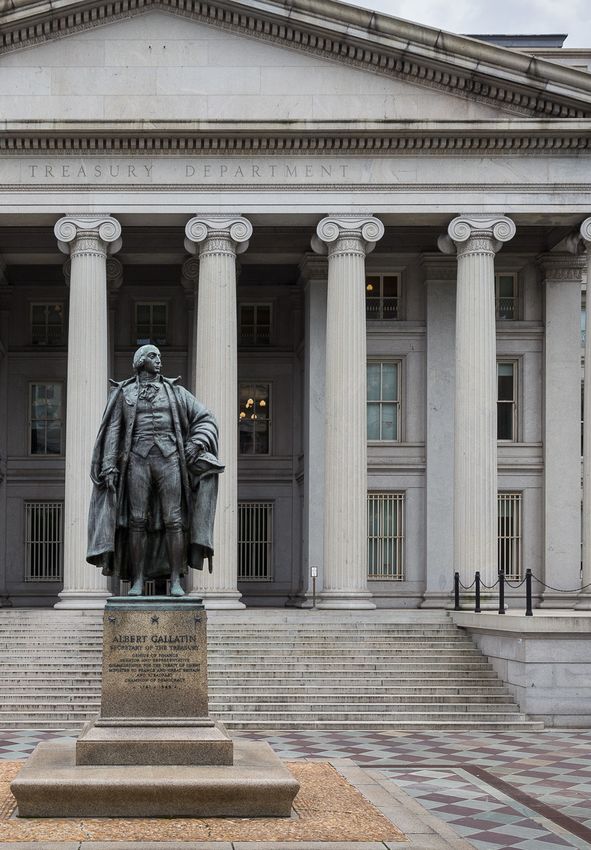
Acknowledgments
Human Rights First is a nonprofit, nonpartisan human rights advocacy and action organization based in
Washington D.C., New York, and Los Angeles. © 2020 Human Rights First. All Rights Reserved.

Walking the Talk: 2021 Blueprints for a Human Rights-Centered U.S. Foreign Policy was authored by Human
Rights First’s staff and consultants. Senior Vice President for Policy Rob Berschinski served as lead
author and editor-in-chief, assisted by Tolan Foreign Policy Legal Fellow Reece Pelley and intern Anna
Van Niekerk.

Contributing authors include:
Eleanor Acer                           Scott Johnston                          Trevor Sutton
Rob Berschinski                        David Mizner                            Raha Wala
Cole Blum                              Reece Pelley
Benjamin Haas                          Rita Siemion

Significant assistance was provided by:
Chris Anders                           Steven Feldstein                        Stephen Pomper
Abigail Bellows                        Becky Gendelman                         Jennifer Quigley
Brittany Benowitz                      Ryan Kaminski                           Scott Roehm
Jim Bernfield                          Colleen Kelly                           Hina Shamsi
Heather Brandon-Smith                  Kate Kizer                              Annie Shiel
Christen Broecker                      Kennji Kizuka                           Mandy Smithberger
Felice Gaer                            Dan Mahanty                             Sophia Swanson
Bishop Garrison                        Kate Martin                             Yasmine Taeb
Clark Gascoigne                        Jenny McAvoy                            Bailey Ulbricht
Liza Goitein                           Sharon McBride                          Anna Van Niekerk
Shannon Green                          Ian Moss

Human Rights First challenges the United States of America to live up to its ideals. We believe American
leadership is essential in the struggle for human dignity and the rule of law, and so we focus our advocacy
on the U.S. government and other key actors able to leverage U.S. influence. When the U.S. government
falters in its commitment to promote and protect human rights, we step in to demand reform, accountability,
and justice.

When confronting American domestic, foreign, and national security policies that undermine respect for
universal rights, the staff of Human Rights First focus not on making a point, but on making a difference.
For over 40 years we’ve built bipartisan coalitions and partnered with frontline activists, lawyers, military
leaders, and technologists to tackle issues that demand American leadership.

Human Rights First is led by President and Chief Executive Officer Mike Breen and Chief Operating
Officer Nicole Elkon.

We thank the many foundations and individual donors who provide invaluable support for the organization’s
research and advocacy.

This and other reports are available online at humanrightsfirst.org.
Holding Human Rights Abusers
    and Corrupt Actors Accountable
    Through Global Magnitsky and
    Other Targeted Sanctions
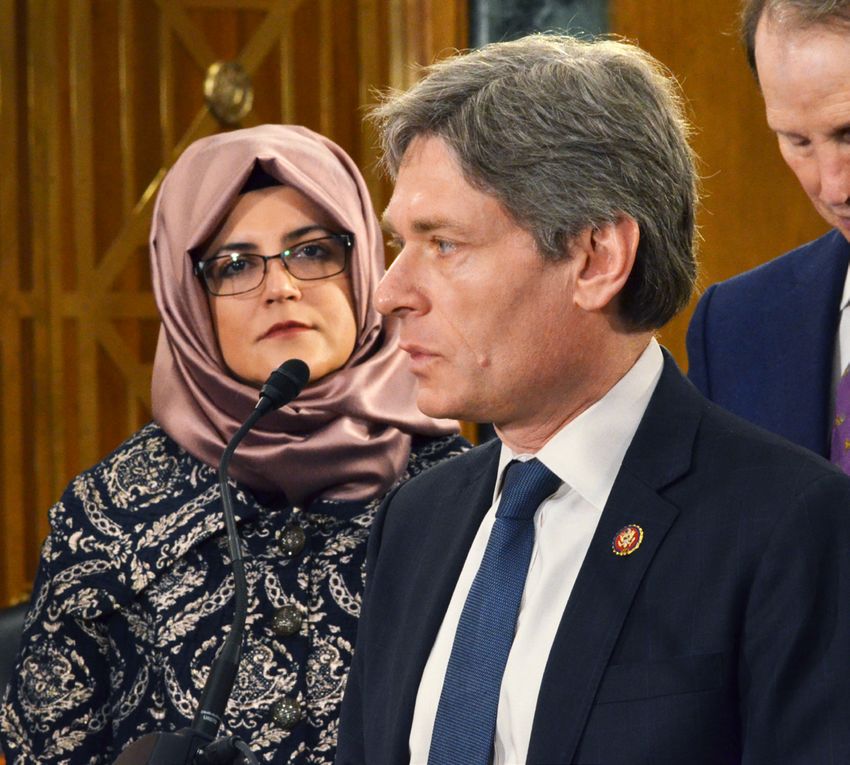
3   Human Rights First - 2021 Blueprints   Photo by The Project on Middle East Democracy (POMED)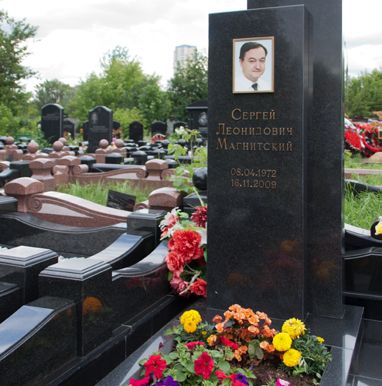
Introduction
              Human rights violations and corruption destroy lives, erode rule of law, undermine international security,
              and inhibit economic development. Foreign government officials and their enablers who exploit public of-
              fice for private gain and maintain power through repression should not expect impunity. Yet all too often,
              the world’s most corrupt actors and egregious human rights violators are shielded from accountability.

              Cognizant of this reality, the United States and a growing number of likeminded governments have recent-
              ly enacted, or are in the process of enacting, laws that enable targeted sanctions against individuals, corpo-
              rations, security force units, and other organizations found to be involved in human rights violations and
              corruption. The United States pioneered the use of global targeted sanctions to hold accountable human
              rights violators and corrupt officials by passing, in late 2016, the Global Magnitsky Human Rights Account-
              ability Act (“Global Magnitsky Act”), which enables visa restrictions and asset freezes against designated
              individuals and entities anywhere in the world.1 Today, the Global Magnitsky Act, as implemented by Ex-
              ecutive Order 13818, is perhaps the most well-known example of an expanding roster of targeted sanctions
              programs intended to address human rights violations and corrupt acts.2 Internationally, Canada, Estonia,
              Kosovo, Latvia, Lithuania, and the United Kingdom have each passed their own “Magnitsky-like” targeted
              human rights sanctions regimes, though these programs vary widely in scope and implementation.3 Similar
              laws are under consideration in Australia, the European Union, and Japan.4

              As a diplomatic tool, all sanctions programs are a means to achieve policy ends, not an end unto themselves.
              Yet when included as one element in a larger diplomatic strategy, targeted human rights and anti-corrup-
              tion sanctions offer a powerful means to contest impunity, weaken criminal networks, signal support for
              international legal obligations and standards of behavior, and protect journalists, activists, and others at risk
              for their work.5 Additionally, by penalizing those directly responsible for human rights abuses and corrup-
              tion, as well as their enablers, targeted sanctions sidestep many of the downsides inherent in embargoes and
              other comprehensive sanctions programs.6 When managed and messaged adroitly, targeted human rights
              and anti-corruption sanctions can isolate individual actors and networks within foreign governments with-
              out rupturing bilateral relations, while greatly lessening the risk of penalizing the innocent.7

              Despite a poor record of upholding America’s commitment to human rights more broadly, the Trump
              1 The Global Magnitsky Human Rights Accountability Act, 22 U.S.C. § 2656 note (2016) available at https://www.humanrightsfirst.org/sites/default/files/GMA-Law.pdf.
              2 Similar programs include the 2012 Sergei Magnitsky Act, so-called Section 7031(c) visa restrictions (see infra note 5), Presidential Proclamation 7750 of 2004, and coun-
              try-specific targeted sanctions programs intended to address human rights, democracy, and rule of law. Such programs are herein jointly referred to as U.S. targeted human
              rights and anti-corruption sanctions.
              3 The three Baltic states’ programs, though global in scope, focus on human rights abuses by Russian nationals, and are limited in penalty to travel ineligibilities. Canada’s
              law, which includes both human rights violations and corruption, and includes both visa ineligibilities and asset blocking, is titled the Justice for Victims of Corrupt Foreign
              Officials Act (S.C., c. 21) (2017), and is available at https://laws.justice.gc.ca/eng/acts/J-2.3/. The United Kingdom’s law is limited in scope to human rights violations,
              and includes both visa ineligibilities and asset blocking. It is titled the Global Human Rights Sanctions Regulations 2020, SI 2020/680, art. 55(3), Sanctions and Anti-Mon-
              ey Laundering Act, and is available at https://www.legislation.gov.uk/uksi/2020/680/made. Note that Kosovo has passed a Global Magnitsky Act, but the act has yet to
              be implemented by the new government. Xhorxhina Bami, Outgoing Kosovo Govt Adopts Magnitsky Act, Balkan Insight (Jan. 29, 2020) available at https://balkaninsight.
              com/2020/01/29/kosovo-to-adapt-magnitsky-act/.
              4 See Australian Lawyers for Human Rights, Inquiry into whether Australia should examine the use of targeted sanctions to address human rights abuses (Feb. 7, 2020) available at
              https://www.aph.gov.au/DocumentStore.ashx?id=866bce8c-f689-44ed-9c42-e502cdf26aae&subId=678469 (recommending the Australian Parliament adopt a US-style
              Global Magnitsky law); Alexander Brzozowski, EU ministers break ground on ‘Global Magnitsky Act’, EurActiv (Dec. 10, 2019) available at https://www.euractiv.com/section/
              justice-home-affairs/news/eu-ministers-break-ground-on-european-magnitsky-act/ (describing foreign ministers launching ‘preparatory work’ to enact a US-style Global
              Magnitsky sanctions regime); Narumi Ota, Japan eyes bill to sanction human rights abuses in Hong Kong, Asahi Shimbun (Jul. 30, 2020) available at http://www.asahi.com/
              ajw/articles/13591720 (detailing the formation of a group of lawmakers and activists designed to respond to human rights abuses in Hong Kong, and considering a bill that
              would allow for targeted sanctions against those who have committed human rights abuses).
              5 In addition to the Global Magnitsky Act, the U.S. government has made significant use in recent years of visa restrictions authorized through Section 7031(c) of the
              annual appropriations bill for the Department of State, Foreign Operations, and Related Programs (SFOPS). For more information, see Congressional Research Service,
              R46362, Foreign Officials Publicly Designated by the U.S. Department of State on Corruption or Human Rights Grounds: A Chronology (May 18, 2020) available at https://
              crsreports.congress.gov/product/pdf/R/R46362. A comprehensive list of designations made under Section 7031(c) authority can be found on Human Rights First’s targeted
              sanctions resources page, available at https://www.humanrightsfirst.org/topics/global-magnitsky/resources.
              6 See, e.g., Richard Haas, Brookings Institution, Economic Sanctions: Too Much of a Bad Thing (Jun. 1, 1998) available at https://www.brookings.edu/research/economic-sanc-
              tions-too-much-of-a-bad-thing/ (noting the adverse side effects of broad, non-targeted sanctions on innocent civilians); see also United Nations Office of the High Commis-
              sioner for Human Rights, UN Experts: Sanctions proving deadly during pandemic, humanitarian exemptions not working (Aug. 7, 2020) available at https://www.ohchr.org/EN/
              NewsEvents/Pages/DisplayNews.aspx?NewsID=26155&LangID=E.
              7 Collin Anderson et al., Enough Project, U.S. Sanctions Regimes & Human Rights Accountability Strategies (Jun. 2018) available at https://enoughproject.org/wp-content/up-
              loads/2018/06/ToolsofTrade_Enough_ICAR_June2018.pdf.

1   Human Rights First - 2021 Blueprints
administration has implemented targeted human rights and anti-corruption sanctions robustly. In De-
         cember 2017, it significantly expanded the Global Magnitsky Act’s scope and potential utility through the
         issuance of Executive Order 13818.8 At the same time, it designated 52 serious human rights abusers and
         corrupt actors in countries ranging from China to Myanmar to Nicaragua to the Democratic Republic of
         the Congo. As of mid-September 2020, the U.S. government has sanctioned 214 individuals and entities,
         from 27 countries, under the Global Magnitsky program; 127 for corruption, 72 for human rights abuses,
         and 15 on both grounds.9 Many of these designations were made in consultation with, or based on inputs
                                                                 from, non-governmental organizations specializ-
    [I]n keeping with its broader approach to ing in documenting human rights violations and
    human rights, the Trump administration corrupt activity. Noteworthy designations include
                                                                 those against persons involved in atrocities perpe-
    frequently implemented sanctions in a                        trated against the Rohingya in Myanmar,10 corrupt
    highly selective manner.                                     mining contracts in the DRC,11 the assassination of
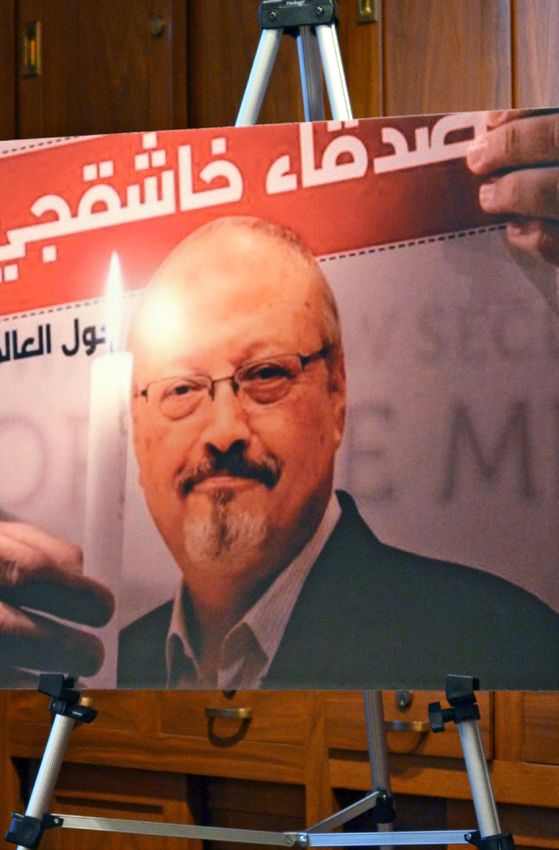
                                                                 Jamal Khashoggi by Saudi government agents,12 the
         Odebrecht bribery and money laundering scandal,13 and the ethnic cleansing of Uyghurs and other minority
         groups in the Xinjiang region of China.14 These designations are complemented by new, country-specific
         targeted sanctions programs, such as those addressing the situations in Hong Kong and Nicaragua, as well
         as the robust use of Section 7031(c) visa restrictions.

              Notwithstanding this activity, the administration’s implementation of targeted human rights and anti-cor-
              ruption sanctions has been met with criticism in certain cases. Most notably, although the administration
              sanctioned 17 Saudi government officials and agents for the premeditated killing of Saudi dissident and
              Washington Post columnist Jamal Khashoggi, it declined to sanction Saudi Crown Prince Mohammed bin
              Salman, despite credible reports from U.S. intelligence agencies that the Crown Prince likely ordered the
              killing.15 Furthermore, in keeping with its broader approach to human rights, the Trump administration
              frequently implemented sanctions in a highly selective manner. The administration declined to impose
              targeted sanctions against, and in some instances openly supported, foreign government officials credibly
              documented to have systematically engaged in sanctionable activities. For example, the administration took
              no action to designate the architects of kleptocratic systems and brutal repression in countries including
              Azerbaijan, Bahrain, Egypt, the Philippines, Tajikistan, the United Arab Emirates, and Uzbekistan, among
              others. This inaction endured despite overwhelming, credible documentation of systematic rights violations
              and theft that in many instances threatened U.S. interests on matters ranging from counterterrorism to
              energy security.16

              In some instances, sanctions decisions appear to have also been influenced by political considerations. In
              mid-August 2018, the Trump administration sanctioned two senior Turkish officials for what it described
              8 For a detailed explanation of EO 13818, see Rob Berschinski, Trump Administration Notches a Serious Human Rights Win. No, really, Just Security (Jan. 10, 2018) available at
              https://www.justsecurity.org/50846/trump-administration-notches-human-rights-win-no-really/.
              9 All figures provided are current as of September 15, 2020. See Human Rights First, Global Magnitsky Designations, available at https://www.humanrightsfirst.org/sites/
              default/files/200113-USG-GMA-Designations.xlsx.
              10 U.S. Department of the Treasury, United States Sanctions Human Rights Abusers and Corrupt Actors Across the Globe (Dec. 21, 2017) available at https://home.treasury.gov/
              news/press-releases/sm0243; U.S. Department of the Treasury, Treasury Sanctions Commanders and Units of the Burmese Security Forces for Serious Human Rights Abuses (Aug.
              17, 2018) available at https://home.treasury.gov/news/press-releases/sm460; U.S. Department of the Treasury, Treasury Sanctions Individuals for Roles in Atrocities and Other
              Abuses (Dec. 10, 2019) available at https://home.treasury.gov/news/press-releases/sm852.
              11 United States Sanctions Human Rights Abusers and Corrupt Actors Across the Globe, supra note 10; U.S. Department of Treasury, Treasury Sanctions Fourteen Entities Affiliated
              with Corrupt Businessman Dan Gertler Under Global Magnitsky (Jun. 15, 2018) available at https://home.treasury.gov/news/press-releases/sm0417.
              12 U.S. Department of the Treasury, Treasury Sanctions 17 Individuals for Their Roles in the Killing of Jamal Khashoggi (Nov. 15, 2018) available at https://home.treasury.gov/
              news/press-releases/sm547.
              13 United States Sanctions Human Rights Abusers and Corrupt Actors Across the Globe, supra note 10.
              14 U.S. Department of the Treasury, Treasury Sanctions Chinese Entity and Officials Pursuant to Global Magnitsky Human Rights Accountability Act (Jul. 9, 2020) available at
              https://home.treasury.gov/news/press-releases/sm1055.
              15 See supra note 12; Shane Harris, Greg Miller, Josh Dawsey, CIA concludes Saudi crown prince ordered Jamal Khashoggi’s assassination, Washington Post (Nov. 16, 2018)
              available at https://www.washingtonpost.com/world/national-security/cia-concludes-saudi-crown-prince-ordered-jamal-khashoggis-assassination/2018/11/16/98c89fe6-
              e9b2-11e8-a939-9469f1166f9d_story.html.
              16 For example, the administration refrained from sanctioning Egyptian officials central to that country’s program of widespread torture, despite documentation of the links
              between the treatment of detainees and ISIS radicalization within Egypt’s prison system. See, e.g., Human Rights First, Like a Fire in a Forest: ISIS Recruitment in Egypt’s Prisons
              (Feb. 2019) available at https://www.humanrightsfirst.org/sites/default/files/Like-a-Fire-in-a-Forest.pdf.

2   Human Rights First - 2021 Blueprints
as their role in the unlawful detention of an American evangelical pastor.17 Shortly thereafter, Turkish lead-
              ers released the pastor, at which point the administration lifted the sanctions.18 The move, while illustrating
              the power of Global Magnitsky sanctions to achieve discrete U.S. foreign policy ends and successfully win-
              ning the welcome repatriation of a U.S. citizen, attracted criticism for ignoring other, widespread human
                                     rights abuses in Turkey—including the ongoing detention of Turkish-American dual
                                             citizens—while providing a marketable policy victory likely geared at Presi-
                                                   dent Trump’s evangelical base.19

                                                                                 The Trump administration’s mixed record concerning targeted
                                                                                   human rights and anti-corruption sanctions leaves room
                                                                                      for improvement. Most importantly, Global Magnitsky
                                                                                         and similar human rights sanctions should be applied
                                                                                           objectively and in a systematic manner. Further
                                                                                             action should also be taken to bolster the credi-
                                                                                               bility, robustness, and procedural safeguards of
                                                                                                 the sanctions regimes to assure their long-term
                                                                                                  viability. Thus, an administration that assumes
                                                                                                    office in January 2021 could improve upon
                                                                                                     the U.S. government’s record to date through
                                                                                                      a series of executive actions and Congressio-
                                                                                                       nal engagement in five key areas: growing
                                                                                                       capacity; minimizing charges of hypocrisy;
                                                                                                        ameliorating due process concerns; multi-
                                                                                                        lateralizing designations; and maintaining
                                                                                                        and codifying improvements.

                                                                                                                   Recommendations
                                                                                                                  ✓ Maintain, clarify, and codify
                                                                                                                    EO 13818’s improvements to
                                                                                                                   the Global Magnitsky Act
                                                                                          Despite being less well-known than the law
                                                                                        it rests upon and implements, Executive Or-
                                                                                       der 13818 significantly and beneficially expanded
                                                                                    the scope, reach, and potential power of the Global
                                                                                   Magnitsky Act.20 In comparison with the Act itself,
                                                                               EO 13818 broadens the range of crimes subject to poten-
                                                                            tial sanctions, eliminates key barriers to the imposition of
                                                                        sanctions related to the status of victims, and vastly increases the
                                                                   number of perpetrators who can be held at risk of sanction through
                                                               so-called status-based targeting. As the vehicle by which all designations
                                                           commonly referred to as “Global Magnitsky” sanctions are effectuated, EO

              17 Adam Goldman, Gardiner Harris, U.S. Imposes Sanctions on Turkish Officials Over Detained American Pastor, New York Times (Aug. 1, 2018) available at https://www.
              nytimes.com/2018/08/01/world/europe/us-sanctions-turkey-pastor.html.
              18 U.S. Department of the Treasury, Global Magnitsky Designations Removals (Nov. 2, 2018) available at https://home.treasury.gov/policy-issues/financial-sanctions/re-
              cent-actions/20181102.
              19 Rob Berschinski, U.S. Sanctions Against Turkey Undercut a Key Human Rights Tool, Just Security (Aug. 6, 2018) available at https://www.justsecurity.org/60039/u-s-sanc-
              tions-turkey-undercut-key-human-rights-tool/.
              20 Executive Order 13,818, supra note 8. For a detailed analysis of the ways in which EO 13818 expanded upon and improves the Global Magnitsky Act, see Rob Berschins-
              ki, Trump’s surreptitious move against foreign human rights abusers, Newsweek (Jan. 10, 2018) available at https://www.newsweek.com/trumps-surreptitious-move-against-
              foreign-human-rights-abusers-777186.

3   Human Rights First - 2021 Blueprints                                                                                           Photo by The Project on Middle East Democracy (POMED)
13818 has proven to be an important and flexible tool in America’s human rights toolkit. Under any future
              administration, it should be maintained.

              In so doing, the next administration should seek to clarify key terms. Among its other positive adaptations
              of the Global Magnitsky Act, EO 13818 altered the standard for sanctionable actions from “gross viola-
              tions of internationally recognized human rights” (a term defined under U.S. law) to “serious human rights
              abuses” (a legally undefined concept). Beyond underscoring that Global Magnitsky
              sanctions may be applied against non-state actors in addition to state offi-
              cials, the change in standard from “gross violations” to “abuses” remains
              vague and poorly understood. An incoming administration should
              therefore seek to remedy any uncertainty concerning this key defi-
              nition. Doing so may improve the Global Magnitsky program’s
              deterrent effect, while also resulting in more relevant sanctions
              recommendations from civil society.

              Finally, recognizing that the Global Magnitsky Act is due to
              sunset (i.e., expire) in December 2022, a new administration
              should work with Congress to pass a reauthorization that incor-
              porates EO 13818’s beneficial elements.

              ✓ Minimize charges of selectivity and hypocrisy
              As highly coercive measures, it is imperative to U.S. foreign policy that the
              government’s human rights and anti-corruption sanctions be viewed as legitimate,
              credible, and fairly administered. The key to maintaining widespread support for sanctions, therefore, is for
              the U.S. government to minimize selectivity in its application of the tool, in line with the Global Magnitsky
              Act’s rationale as reflected in EO 13818:

              Human rights abuse and corruption undermine the values that form an essential foundation of stable,
              secure, and functioning societies; have devastating impacts on individuals; weaken democratic institutions;
              degrade the rule of law; perpetuate violent conflicts; facilitate the activities of dangerous persons; and un-
              dermine economic markets.21

              The insights reflected in EO 13818 remain true no matter where sanctionable activity is found. Yet the
              tendency within the executive branch to value perceived stability and access over any action deemed likely
              to upset bilateral relations has remained difficult to dislodge, despite obvious harms to American credibility.
              Such a perception has endured despite mounting evidence that targeted sanctions can be beneficially ap-
              plied to foreign nationals of countries with which the United States maintains positive relations.22

              To decrease selectivity in application, therefore, the Secretary of State should establish a standing process
              by which representatives of the department’s regional bureaus routinely coordinate with staff from the
              bureaus for Economic and Business Affairs (EB), Democracy, Human Rights, and Labor (DRL), and In-
              ternational Narcotics and Law Enforcement (INL) to jointly develop a human rights and anti-corruption
              targeting list informed by the State Department’s annual Country Reports on Human Rights Practices
              and reporting from credible human rights and anti-corruption NGOs. Such a list should include inputs on
              meaningful targets supplied by U.S. diplomatic posts, each of which should be required by the Secretary to
              nominate potential targets on a recurring basis.23

              21 Executive Order 13,818, supra note 8.
              22 Examples include Global Magnitsky sanctions designating nationals of Israel, Mexico, and Saudi Arabia, among other close U.S. partners.
              23 While in some cases it may be appropriate to exclude from this process embassies operating in countries with criminal justice systems functioning under rule of law,
              history has shown that actors in such countries may have transnational linkages to corrupt and/or human rights-abusing actors (such as through facilitation networks). In
              these instances, targeted sanctions may serve as a valuable accountability tool when implemented in close coordination with the host government.

4   Human Rights First - 2021 Blueprints                                                                                                                         Photo by Dmitry Rozhkov
✓ Multilateralize sanctions designations through information-sharing
                and coordination with key partners
              Sanctions are most effective, and seen as most legitimate, when implemented multilaterally. As noted
              above, at present, Canada, the UK, the three Baltic states, and Kosovo each possess a rough equivalent to
              the Global Magnitsky Act, while the EU, Australia, and Japan, among other jurisdictions, are in varying
              stages of considering adopting similar laws.24 In order to maximize the potential for coalition-based multi-
              lateral sanctions designations in the future, the next administration should build on efforts undertaken to
              date to routinize information sharing and sanctions-related decision-making.

              With this goal in mind, the Secretaries of Treasury and State should announce an intention to create an
              information-sharing arrangement with Canada, the UK, and other like-minded jurisdictions as their “Mag-
              nitsky-like” laws are adopted, with the long-term goal of establishing a semi-permanent human rights and
              anti-corruption information fusion, targeting, and enforcement cell.25 Leadership of this effort should be
              vested with a new office of the Coordinator for Sanctions Policy, in coordination with relevant regional and
              functional bureaus (see final recommendation below). Under such a model, likeminded governments could
              agree to share pre-decisional and enforcement-related information and analysis in accordance with pre-de-
              termined criteria, once certain notification thresholds had been crossed. Recognizing that the United States’
              tally of applicable designations under the Global Magnitsky program and related authorities far exceeds
              those of other countries, such an effort would also work to standardize past designations where applicable.

              ✓ Ameliorate due process concerns by enacting a more robust
                administrative review and appeals procedure
              At present, the administrative process provided by the Treasury Department’s Office of Global Targeting to
              persons seeking to challenge designations issued against them is not well understood by external audiences
              and arguably insufficient, leaving the U.S. government open to criticism that it is able to impose significant
              penalties with little meaningful opportunity for recourse. In keeping with the section above, improvements
              can and should be made to targeted sanctions’ administrative appeals processes to minimize any risk—or
              even perception—of unjust implementation.

              The next administration should therefore issue updated guidelines and processes for how a designated indi-
              vidual could seek removal from the Specially Designated Nationals and Blocked Persons (SDN) list.26 Such
              reforms should include:
                ɧ Providing more information to the public at the time of initial designation. Under current
                  practice, targeted sanctions designations are published as updates to the SDN list and announced via a
                  press release issued by the Treasury Department. These statements generally provide a brief overview
                  of the behavior that gave rise to the sanction, but do not provide an explanation of the actions that
                  the U.S. government wishes to see the designated individual take so as to become eligible for removal
                  from the SDN list. Notably, in the sole Global Magnitsky sanction whereby the Treasury Department
                  used its designating press release to clearly signal the U.S. government’s desired behavior modification,
                  the desired change was made rapidly.27 Subsequent to this action, the U.S. government promptly lifted
                  sanctions from the designated persons.28 As this single example demonstrates, transparency about the
                  desired outcomes of targeted sanctions provides the sanctioned individual with a clear framework

              24 See supra notes 3, 4, and accompanying text.
              25 Differences in legal authorities will likely preclude fully coordinated action across national jurisdictions in some instances. Notwithstanding this fact, information sharing
              in the context of targeted human rights and anti-corruption sanctions is likely to involve fewer hurdles than similar programs focused on antiterrorism and non-prolifera-
              tion, given that much of the information used to target human rights abusers and corrupt actors is open-source and thus unclassified.
              26 For OFAC’s current guidance on filing an appeal to remove sanctions, see U.S. Department of the Treasury, Filing a Petition for Removal from an OFAC List, available at
              https://home.treasury.gov/policy-issues/financial-sanctions/specially-designated-nationals-list-sdn-list/filing-a-petition-for-removal-from-an-ofac-list.
              27 U.S. Department of the Treasury, Treasury Sanctions Turkish Officials with Leading Roles in Unjust Detention of U.S. Pastor Andrew Brunson (Aug. 1, 2018) available at https://
              home.treasury.gov/news/press-releases/sm453.
              28 Global Magnitsky Designations Removals, supra note 18.

5   Human Rights First - 2021 Blueprints
within which to consider modifications to his or her behavior, as well as any potential appeal on the
                    merits of the designation. Incidentally, such guidance would also be of value to human rights and anti-
                    corruption advocates, who could better monitor and assess the post-designation activities of sanctioned
                    persons.
          ɧ Making the administrative appeals process more robust. All designated persons should be
            guaranteed a fair, clearly delineated, and well-understood opportunity for appeal. To do so, the Office
                                                                       of Global Targeting should initiate a review
    [T]ransparency about the desired outcomes of best practices in administrative appeals
    of targeted sanctions provides the sanctioned procedures adopted by other government
                                                                       entities, and expand its processes accordingly.
    individual with a clear framework within                           An example for consideration is to offer at
    which to consider modifications to his or her least one in-person hearing to the designated
                                                                       individual, their appointed counsel, or both,
    behavior, as well as any potential appeal on                       to present their case to adjudicating officials.
    the merits of the designation.                                     Such a meeting could be arranged by granting
                                                                       an allowance for the designated individual to
            appear in person at a U.S. diplomatic facility in their home country, or by allowing designated counsel
            to appear at government offices in Washington D.C. This meeting could be followed by a mandatory
            formal adjudication letter that clearly states the administration’s position regarding the case following
            review of any information shared in the hearing, to include the provision of justification for either
            maintaining or lifting sanctions.
                ɧ Instituting regular review. Finally, any future administration should maintain current guidelines
                  regarding accepting unlimited written appeals, and make an explicit commitment to periodic mandatory
                  review of each designation (e.g., a designation is reviewed once every three years irrespective of any
                  petition or request for review). Unlimited appeals and regular review guarantee sufficient opportunity
                  for re-adjudication as circumstances change, helping better ensure accurate and fair designations that
                  strengthen the U.S. sanctions regime as a whole.

              ✓ Grow capacity and coordination at State and Treasury
              The U.S. government’s ability to implement targeted human rights and anti-corruption sanctions is limited
              by staff and coordination constraints within the Treasury Department’s Office of Foreign Assets Control
              (OFAC) and relevant bureaus within the State Department.29 Over the past four years, both OFAC and the
              State Department have experienced staffing shortfalls linked to low morale, high workload, and significant
              private-sector demand.30 In response to these shortfalls, in 2019 and 2020, Congress specifically appropri-
              ated funds to the Treasury Department to support targeted human rights and anti-corruption sanctions
              work.31 This funding increase resulted in the Human Rights and Corruption Team at OFAC increasing in
              size from 6 to 11 officials, which has already led to perceptibly higher levels of critical civil society engage-
              ment. Even with this increase, however, the OFAC team is still limited to just two investigators each for
              Africa, Asia, Europe, and MENA, and just one for the entire Western Hemisphere—insufficient numbers to
              provide effective coverage of the abuses occurring in those regions and beyond.

              As part of a larger effort to rebuild the diplomatic infrastructure weakened since 2017, the Secretaries

              29 Executive Order 13818 authorizes the Secretary of the Treasury to act in consultation with the Secretary of State. Lead offices within the State Department for imple-
              mentation of Global Magnitsky Act and several similar sanctions programs include the bureau for Economic and Business Affairs (EB), the bureau for Democracy, Human
              Rights, and Labor (DRL), and the bureau for International Narcotics and Law Enforcement (INL).
              30 See, e.g., Saleha Mohsin, Trump’s Sanctions Staff Defects as U.S. Expands Economic War, Bloomberg (Mar. 22, 2019) available at https://www.bloomberg.com/news/arti-
              cles/2019-03-22/trump-sanctions-staff-defects-even-as-u-s-expands-economic-war; Bethany Milton, My Final Break with the Trump State Department, New York Times
              (Aug. 26, 2019) available at https://www.nytimes.com/2019/08/26/opinion/trump-state-department.html.
              31 H.R. Report No. 115-792 (2019) available at https://www.congress.gov/congressional-report/115th-congress/house-report/792/1; U.S. Government Accountability
              Office, GAO-20-324, Economic Sanctions: Treasury and State Have Received Increased Resources for Sanctions Implementation but Face Hiring Challenges (Mar. 2020) available at
              https://www.gao.gov/assets/710/705265.pdf.

6   Human Rights First - 2021 Blueprints
of State and Treasury should work closely with Congress to reverse staffing shortfalls that have limited
            the government’s ability to implement and robustly enforce human rights and anti-corruption sanctions.
            Through its annual budget request, the incoming administration should ask that Congress increase funding
            directed toward OFAC and relevant State Department bureaus for this work.

                                                At the same time, the Secretary of State should reestablish the office
                                                       of the Coordinator for Sanctions Policy, to be headed by an
                                                             official with the rank of ambassador. This senior official
                                                                  should report directly to the Secretary. He or she
                                                                       should be tasked with coordinating sanctions
                                                                          actions across State’s regional and functional
                                                                             bureaus, and integrating such actions with
                                                                                broader bilateral and multilateral dip-
                                                                                   lomatic strategies. Likewise, regional
                                                                                     bureaus should consider designat-
                                                                                       ing senior-level leads for sanc-
                                                                                         tions integration, in coordina-
                                                                                           tion with applicable teams in
                                                                                             the bureaus for Economic
                                                                                              and Business Affairs (EB),
                                                                                               Democracy, Human
                                                                                                Rights, and Labor (DRL),
                                                                                                 and International Nar-
                                                                                                  cotics and Law Enforce-
                                                                                                  ment (INL).

7   Human Rights First - 2021 Blueprints                                                                   Photo by Mattia Panciroli
Human Rights First challenges the United States
to live up to its ideals. When the U.S. government
falters in its commitment to promote and protect
human rights, we step in to demand reform,
accountability, and justice. For over 40 years,
we’ve built bipartisan coalitions and partnered
with frontline activists, lawyers, military leaders,
and technologists to tackle issues that demand
American leadership.
humanrightsfirst.org
@humanrightsfirst
@humanrightsfirst
@humanright1stYou can also read


