Washington State Minority and Justice Commission Commission Meeting - TVW ...
←
→
Page content transcription
If your browser does not render page correctly, please read the page content below
Washington State
   Minority and Justice Commission
         Commission Meeting

    TVW: https://www.tvw.org/watch/?
clientID=9375922947&eventID=2020091152

       Friday, September 18, 2020
           9:00 a.m.– 1:00 p.m.
MINORITY AND JUSTICE COMMISSION
BIMONTHLY GENERAL MEETING
SEPTEMBER 18, 2020
9:00 A.M. – 1:00 P.M.
JUSTICE MARY YU, CO-CHAIR
JUSTICE G. HELEN WHITENER, CO-CHAIR
TVW Link:
https://www.tvw.org/watch/?clientID=9375922947&eventID=2020091152
AGENDA
CALL TO ORDER 9:00 – 9:10 a.m. (10 minutes)
Welcome and Introductions
Approval of July 31st Meeting Minutes
GUEST INITIATIVES 9:10 – 10:10 p.m. (60 minutes)
Announcement and Acknowledgement, Court License Suspension Order
Discuss Proposal: MJC Race Equity Summit
Discuss 2022 Symposium Proposal: Reparations in Washington State
Vote on MJC Participation on Race and Criminal Justice System Task Force 2.0
Update on Judicial Institute 2020 Programs – Judge Johanna Bender
CO-CHAIRS’ & STAFF REPORT 10:10 – 11:00 a.m. (50 minutes)
Personnel and Membership Update
2020 Symposium Steering Committee
The Symposium, “Behind Bars: The Mass Incarceration of Women and Girls,” has been
suspended until June 2nd, 2021.
Symposium will be held from 8:45 a.m.-1:00 p.m. at the Temple of Justice.
Staff Report
MJC Research Project Updates
o LFO Reconciliation Day Research Project Update – Cynthia Delostrinos
o MJC-WSCCR Juvenile Detention Special Report Update – Frank Thomas
o Jury Diversity Project Update – Cynthia Delostrinos
o Discuss Pretrial Justice Project
COMMISSION LIAISONS & COMMITTEE REPORTS 11:00 – 11:30 a.m. (30 minutes)
Education Committee – Judge Lori K. Smith and Justice G. Helen Whitener
DMCJA 2021 Spring Conference
Proposed: “Legal Status” of LFO Collections, and Legal Debt as a Historical Means of
Oppression
SCJA 2021 Spring Conference
2020 Rollover: Immigrant Families Tool Kit
2020 Rollover: Juvenile Justice Session
Proposed: History of LFOs and Legal Debt, and Cycles of Poverty
Discuss Housing Justice Emergency Webinar with SCJA & OCLA
BREAK 11:30 – 11:45 a.m. (15 minutes)
Page 1 of 21
BREAKOUT WORKGROUPS 11:45 – 1:00 p.m. (75 minutes)
Outreach Committee
Workforce Diversity Subcommittee Roster – Judge Bonnie Glenn
Judge Veronica Alicea-Galvan
Judge Johanna Bender
Ms. Karen Murray
Ms. Leah Taguba
Judge Faye Chess
Jeffrey Beaver
Judge Anthony Gipe
LSLs
Communications Subcommittee Roster – Cynthia Delostrinos
Justice G. Helen Whitener
Lisa Castilleja
Professor Jason Gilmer
Judge Dennis Yule
Professor Lorraine Bannai
Briana Ortega
Professor Bob Boruchowitz
Theresa Cronin
LSLs
Juvenile Justice Committee – Annie Lee
Roster:
Chief Adrian Diaz
Judge LeRoy McCullough
Travis Stearns
Joshua Treybig
P. Diane Schneider
Grace Cross
LSLs
Frank Thomas
Rules and Legislation Committee – Theresa Doyle
Roster:
Justice Mary Yu
Anne Benson
Justice Raquel Montoya-Lewis
Judge Linda Coburn
Christopher Sanders
Judge Lori K. Smith
LSLs
Next MJC meeting: Friday, November 13th, 2020 @ 9:00 a.m. (via Zoom).
Page 2 of 21
MINORITY AND JUSTICE
                                 COMMISSION
                                 ZOOM VIDEOCONFERENCE
                                  FRIDAY, JULY 31, 2020
                                    9:00 A.M. – 1:00 P.M.
                                JUSTICE MARY YU, CO-CHAIR
                            JUSTICE. HELEN WHITENER, CO-CHAIR

                                     MEETING NOTES

Commission Members                 Liaisons                     Guests
Justice Mary Yu, Co-Chair          Esperanza Bolboa             Corliss Samaniego
Justice Helen Whitener, Co-Chair   Israel Carranza              Faith Boyd
Judge Veronica Alicea Galvan       Laura Edmonston              Michelle Brown Lee
Lorraine Bannai                    Rigo Garcia                  Annette Clark
Judge Johanna Bender               Dalia Pedro-Trujillo         Dominique Davis
Annie Benson                       Peggy Rodriguez              Ariel Davis
Professor Bob Boruchowitz          Furhad Sultani               Jasmin DeArmond
Lisa Castilleja                    Beverly Tsai                 Linsay Foster
Judge Linda Coburn                 Jenny Wu                     Justice Steven Gonzalez
Theresa Cronin                                                  Shelon Harris
Judge Grace Cross                  Staff                        Jaime Hawk
Jason Gillmer                      Cynthia Delostrinos          Theresa Henderson Brown
Judge Anthony Gipe                 Moriah Freed                 Trish Kinlow
Judge Bonnie Glenn                 Bob Lichtenberg              Jennie Laird
Kitara Johnson                     Frank Thomas                 Amesha Lawton
Anne Lee                                                        Jen Lombardi
Judge LeRoy McCullough                                          Mynor Lopez
Justice Raquel Montoya-Lewis                                    Carlos Menentes
Karen Murray                                                    Carsen Nies
Brianna Ortega                                                  Nikkita Oliver
Christoper Sanders                                              Guy Oron
P. Diane Schneider                                              Dontay Proctor-Mills
Judge Lori K. Smith                                             Martha Ramos
Travis Stearns                                                  Katharine Robinson
Katie Svoboda                                                   Brianna Rollins
Leah Taguba                                                     Chukundi Salisbury
Joshua Treybig                                                  Sara
Judge Dennis Yule (ret.)                                        Kitty Scott
                                                                Corwin Scott
                                                                Justice Debra Stephens
                                                                Marcus Stubblefield
                                                                Sam Sueoka
                                                                Juliana Tesfu
                                                                Andrea Wenet
                                                                Kirsten Wysen
                                                                Emnet Wysen
                                                                George Yeannakis
                                                                Cindy Yeung

                                                                               Page 3 of 21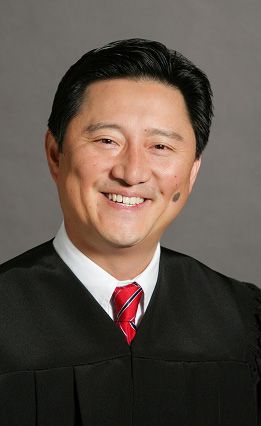
CALL TO ORDER

The meeting was called to order at 9:00 a.m.

The March 13th and May 29th meeting minutes were approved as presented.

GUEST PRESENTATIONS
Reparations in Washington State: Presentation by Seattle University Law Fellows, Dontay Proctor
Mills, Mynor Lopez, Same Sueoka, and Carsen Nies
See distributed memo for additional information.
The Seattle University Law Fellows presented on a memo distributed to the Commission that
proposes for the Minority and Justice Commission to engage in a research study of reparations for
Black and Indigenous communities of color. The memo categorizes reparations into 3 main
categories: monetary, cultural, and land reparations.
Washington is on stolen land. Charles Mitchell was brought to Olympia, WA with the same legacy of
anti-black racism as the rest of the country. Modern racism in Washington bars people of color from
economic opportunity, from the New Deal to the burgeoning cannabis industry. It is responsible for
disparate court outcomes, and outcomes in every institution.
They are hoping that the Commission hears the proposal and will start working towards anti-racism
in courts by presenting an education program at the 2022 Court Symposium that will cover 1,) the
history of racial oppression and exclusion in Washington State; 2.) different examples of reparations
that have been made in the United States; and 3.) suggested reparations measures that Washington
may take. A symposium on these issues would align with the MJC’s Education Committee’s goal to
improve the administration of justice by eliminating racism and its effects by offering and supporting
high quality education programs designed to improve the cultural competency of legal professionals
They recommend working with community organizations, and to continue to work to build trust
between the community and the judicial system. As things stand, there are currently several
opportunities where MJC can help repair relationships with communities of color, such as
encouraging the Court to eliminate the bar exam, which disproportionately impacts people of color
and dissuades them from entering the legal profession. MJC should also use its influence to build
trust with communities of color. In 2019, robbery 2 was struck from the list of three strikes offenses,
but was not made retroactive. 62 majority Black inmates will die in prison as a result.
The goal is to address these issues at the 2022 Supreme Court Symposium. What does a Justice
system with anti-racism as an organizing principle look like? Policy has been “race neutral” and color
blindness does not fix the issues. Race needs to be put at the forefront to solve these problems.
ACTION: Frank Thomas will circulate the Seattle University memo on reparations.

Presentation by Driver’s Relicensing Task Force: Martha Ramos, Amesha Lawton, Guy Oron,
Juliana Tesfu, Jen Lombardi, Corliss Samaniego, Emnet Wysen
See distributed memo for additional information.
The Driver’s Relicensing Task Force is a group of concerned volunteers consisting of community
members, lawyers, etc. who see relicensing as a major community issue. There are currently no
legislative members, but they are in contact with legislators who support the issue.
Through license suspension and its criminalization, the policies have unfairly impacted poor
communities and communities of color. The system of licensing is an interlocking structure that limits
the mobility of poor, disabled, and undocumented individuals, leading to other economic

                                                                                            Page 4 of 21
disadvantages such as lack of employment. A simple traffic ticket can lead to not just suspensions,
but also unsafe interactions with law enforcement and immigration enforcement. A license can mean
the difference between poverty and a living wage, and is even more dire when unemployment is
high.
The Task Force sees programs such as King County’s UP program as a temporary solution.
Working with courts has been difficult due to the unified court system. Each court does repayment
and relicensing differently. A model like the LFO reconsideration days could be followed to lower or
reconsider payments.
The Task Force is asking the Commission to support two actions: 1) Commit ongoing support from
MJC at task force meetings and their work and 2) That MJC pursue a stay of license revocation due
to the pandemic and the Governor’s emergency order.
The Task Force was in contact with the Governor’s Office in April,, and was told they do not have
authority to issue a stay of license revocation due to separation of powers. This might be incorrect,
as the statute to report to the Department of Licensing is a law, not a choice the courts make.
ACTION: The Minority and Justice Commission will look into setting up a Zoom call between
Washington and other states that have gotten rid of license revocation for failure to pay.
Announcement of Race and Criminal Justice System Task Force 2.0: Professor Bannai
10 years ago, the Race and Criminal Justice System Task Force 1.0 was founded after some
Supreme Court Justice made racist comments about black criminality. The group unified to discuss
the root of disproportionalities and other discrimination issues. The goal was to create a document
that was not just a study, but a pathway forward. MJC has served as a conduit for many of the action
items from the initial report in 2012.
Now, the Task Force is ready to reconvene and write a new report. MJC has been asked to join
organizationally, and individual members are invited to participate in their own capacity.The
requirement to participate is minimal, and will be based on whatever time people can contribute.
There will be 4 working groups that individuals can join, with a final report to be submitted on July 1,
2021.
ACTION: A vote on approving the task force will be conducted via email.
ACTION: Ask your own organizations if anyone is interested in joining the Race and Criminal Justice
System Task Force 2.0, or contact Professor Bannai or Frank Thomas if you are interested in
joining.
CO-CHAIRS’ & COMMITTEE REPORTS
Personnel and Membership Update
LaTricia Kinlow has been appointed as the DMCMA representative. Congratulations!
The new Legislation & Rules Committee is seeking members. Because AOC staff cannot
testify on bills on behalf of the Commission, MJC is seeking members who are interested in
speaking before the legislature. Currently, Judge Doyle, Chris Sanders, and Annie Benson
have volunteered. Contact Frank Thomas if you are interested in joining.
ACTION: Contact Frank Thomas if you are interested in joining the new Legislation & Rules
Committee.
2020 Symposium Steering Committee
Page 5 of 21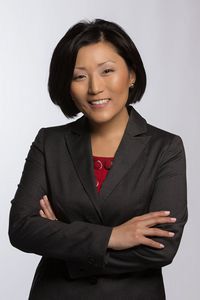
The Symposium, “Behind Bars: The Mass Incarceration of Women and Girls,” has been
suspended until June 2nd, 2021.
Symposium hours have been expanded to 8:45 a.m.-1:00 p.m. to accommodate 5 panels.
The research project: Girls of Color Detention Report and LFO Reconciliation Day Survey, in
collaboration with WSCCR.
Tribal State Court Consortium – Judge Lori K. Smith
The Spring Regional Meeting was cancelled due to COVID-19. TSCC is hoping to circle back
in 2021. The Annual Meeting will also be cancelled because Fall Conference has been
cancelled.
The June edition of updates is delayed. The Tribe that is being spotlighted needs permission
from their Tribal Council.
AOC is working on an online training module for court rule 82.5
Education Committee – Judge Lori K. Smith and Justice G. Helen Whitener
Professor Lorraine Bannai and Christopher Sanders have joined the Education Committee.
Session Proposals:
o DMCJA 2021 Spring Conference due September 30th
Cancelled: Annual Fall Judicial Conference, September 13-16:
o Co-Sponsor of Holocaust Museum’s “Law, Justice, and the Holocaust: How the
Courts Failed Germany” with Gender and Justice Commission
o Co-Sponsor of “Working with DisAbled Jurors” with Interpreter’s Commission
o Jurisdiction: CR 82.5 Where State and Tribal Court Intersect. A Discussion of
Overlapping Jurisdiction and GR 82.5 by NWTJA.
LISTENING SERIES: COMMUNITY PANEL
The Minority and Justice Commission hosted the first of what will be a series of listening panels on
race and the community. For this panel, the Commission invited leaders from the Black community
to share some thoughts on systemic racism, their work, and how courts can help restore confidence
in our judicial processes
Speakers included: Nikkita Oliver, Corwin Scott, Brianna Rollins, Chukundi Salisbury and Dominique
Davis.
Panelists:
Nikkita Oliver, Co-Director, Creative Justice NW (Seattle)
Corwin Scott, CEO, Evergreen Empowerment Group (Tacoma)
Brianna Rollins, Census Outreach, The Carl Maxey Center (Spokane)
Chukundi Salisbury, CEO, Seaspot media group (Seattle)
Dominique Davis, CEO/Founder, Community Passageways (Seattle)
1. What does an anti-racist judge look like? What does it look like to be an anti-racist in the
legal profession?
Brianna Rollins: Starts with yourself, your personal self, then inner circle, and then society. Leave
your biases at home. Talk to your children, intervene with colleagues. End white silence.
Page 6 of 21
Corwin Scott: Leave your biases at home. This includes the crime shows, cop shows etc. Teach
your children that racism exists, and at work to do what you can to stop colleagues. There are things
we can do on a day-to-day basis. End white silence and speak up when you feel something is
wrong. Starts in the workplace.
Nikkita Oliver: King County built a new youth jail for 240 million dollars. For a county that talks
about zero youth detainment, what is the purpose of this new facility if not to continue detainment?
Imagine if that money had been used to help elevate the communities that otherwise will be
incarcerated. Repurposing the facility now feels like a slap in the face to those who advocated
against it for years.
Due to failure to pay child support, her father was incarcerated. She lost more than financial support,
but a relationship with her father as a result. There is nothing easy about criminal court.
Briana Rollins: An action step anyone can take is to pick up the phone and tell them not to build a
new jail in Spokane.
Nikkita Oliver: We need to go back and revisit cases. It will be a lot of work, but it was a lot of work
to lock everyone up. A lot of judges can go back and work on that. Get people out of jail. Often, all
people need was a resource and an opportunity. Not about rehabilitation, but opportunity.
Young prosecutors recently wrote a memo arguing how they cannot support the racist structure.
Change is happening at the individual level. Push for new legislation, regulations, and rules to
reinvent the criminal punishment system. We need stronger words from those in power – judges and
justices.

ACTION: Two anti-racist texts were suggested by the panelists for listeners to read. These titles
were How to Be an Antiracist by Ibran X. Kendi and So You Want to Talk about Race? by Ijeoma
Oluo.

2. What are judges and courts doing wrong? What are we doing that contributes to structural
racism? What are we doing right and what do you want to see more of?
Dom Davis: The courts are starting to listen, and operate outside of their usual parameters. In
negotiation right now with prosecutors’ office for mitigation of a young person’s charged, due to the
open-door policy with the prosecutor’s office. Defense attorneys are calling community
interventionists to come to the aid of young defendants.
Brianna Rollins: During the pandemic, courts have been dropping warrants and releasing youth to
home for health safety. We are at risk of sliding back. COVID has proved that the reasons for locking
youth up are no longer true. The court needs to come to the community.
Corwin Scott: Courts are starting to work cross jurisdictionally, and are using divestment programs.
There are Seattle specific warrant clearing events. To build community trust, you need to be visible
in the community. Drug courts – divestment. Veterans court, mental health court, etc. Being
available to the community. Courts considering indigency and LFOs. There are judges in King
County doing a good job considering all factors.

3. What does your organization do and how do you reach clients? What role does the court
system play in your work?
Dom Davis: About walking it out, staying with them for the long term. Opportunity not just
rehabilitation.

                                                                                             Page 7 of 21
Corwin Scott: I started at the Evergreen State College. Now we do LFO reconsideration, job
coaching, parenting plans, etc.
Brianna Rollins: Currently doing census outreach.
ACTION: A proposal was suggested to change the name of the MJC task force to the MJC change
force. It could include attorneys, judges, and community advocates to initiate real change and hold
ourselves accountable.
4. In what ways does your personal approach, professional discipline, or cultural worldview
differ from the approach of the courts?
Nikkita Oliver: We’ve been talking restorative justice in Seattle for a long time, but it is a
bastardized version. Restorative justice looks at a circumstance, and asks, “What are all the
conditions that lead to that outcome?” We do not see that holistic approach in the courts. Courts are
not designed to account for our collective contributions to harms that occur. Youth in the justice
system are ultimately being accountable for the harms done to their community.
Justice is multi-faceted. Trying to keep our kids from touching the court system; courts are ill-suited
to improve outcomes for people. Need to re-divert resources away from this flawed system. Need to
listen to people closest to the point of impact – people who have been criminalized have the most
wisdom about these challenges, and are often most muted in the conversation.
Absolutely believe in accountability and responsibility, but social contracts also require compassion
and care. Think critically about the harm that the current system causes.
Corwin Scott: We have an impact to actually put boots on the ground and visit and work with
programs designed to develop and uplift community. With the recent murders in our community, we
do not see the empathy with regards to the courts’ approach.
Dom Davis: Murders and shootings in south king county recently. Little to no media attention on
shootings, would be vastly different if kids were white. How do you build a village to sustain a
community when the village has been decimated? Communities are giving aid the system should be
giving. Let communities heal their own if the system refuses to do it.
Brianna Rollins: In social work, there is a saying that the goal is to “work yourself out of a job,”
because the goal is that there will be no one left who needs the help. Legal community does not
appear to be doing the same.
5. What comes from this panel?
Chukundi Salisbury: I hope this is the beginning of a reform where the courts listen to the
community, but also to look at what brought a person into court in the first place. What are the
structures that that person was living in? Community must also keep in mind that many legal roles
are elected positions. I feel that the public should have the opportunity for a forum like this where the
community can voice their concerns and frustrations.
Judges and people in the system should take this as a moment to add empathy and compassion to
their toolkit. It’s an opportunity to look at everything with a new lens, including government policy.
When people say they’re hurting we don’t hear it – our skin has become thick. Hope people take a
second look at things, then work on it themselves. Speak up personally and systemically. At the next
meeting, there could be some type of check in – what happened or didn’t happen?
Brianna Rollins: Tired of repeating myself. This is conversation number one of many. I hope that
MJC listens and does some of the things suggested. Policy changes. I’ll have to wait and see and
then hold you accountable.
Page 8 of 21Dom Davis: What does it look like to have community organizations represented with prosecuting
attorneys at the table? How can community organizations be represented at the table? Power shift
needs to happen, power needs to be shared. Needs to come from the top down. People making
decisions need to hear the pain and frustration. It took us shutting down everything, getting all
distractions out of the way, for people to care and participate. Action needs to be taken.
Closing Remarks – Justice Yu and Justice Whitener
We hear you. It was important for us to listen today, to be quiet and listen. Fight must continue.
Thank you to Commission members for attending and listening. Reflect on challenge and invitation
to listen and do more. Leverage our power to do more and impart change.
Page 9 of 21THE SUPREME COURT OF WASHINGTON
IN THE MATTER OF STATEWIDE RESPONSE ) ORDER AUTHORIZING
BY WASHINGTON STATE COURTS TO THE )
COVID-19 PUBLIC HEALTH EMERGENCY ) DELAYED REPORTING TO
)
) DEPARTMENT OF LICENSING
)
OF FAILURES TO APPEAR
)
) No. 25700-B-640
)
)
__________________________________________ )
WHEREAS, Washington State has been in a state of emergency since Governor Jay
Inslee’s proclamation on February 29, 2020 due to the novel coronavirus (COVID-19) pandemic,
necessitating court-imposed restrictions on in-person court proceedings; and
WHEREAS, the court recognizes that while some courts have set-up remote access to
court hearings, there are nevertheless a significant number of people who do not have the ability
to connect remotely and thus have been unable to appear for in person non-criminal traffic
related hearings. Non-appearance in these matters results in a Failure to Appear (FTA) court
docket entry and the mandatory reporting of such FTAs to the Department of Licensing which
results in license suspensions; and
WHEREAS the limited ability of in-person proceedings to address matters relating to
license suspensions for non-criminal matters has had a negative economic impact on individuals
across the state; and
Page 10 of 21WHEREAS, access to public transportation is limited and where available, may pose an
increased risk to some populations and there are many populations for whom the utilization of a
vehicle is the only means of transportation for employment, medical needs, and essential
services; and
WHEREAS, the court acknowledges that license suspension for non-criminal reasons
disproportionately affects historically marginalized communities.
NOW THEREFORE, pursuant to the Supreme Court’s authority to administer justice,
IT IS HEREBY ORDERED:
For the duration of the Governor’s State of Emergency in response to the COVID-19
pandemic, all courts are authorized to delay the reporting of FTAs to the Department of
Licensing until individuals are provided full access to appear in court, either in person or
remotely, to address their infractions and license suspensions.
DATED at Olympia, Washington this 10th day of September, 2020.
For the Court
Page 11 of 21To: The Minority and Justice Commission
From: Dontay Proctor Mills; Mynor Lopez; Sam Sueoka; Carsen Nies
Date: July 28, 2020
RE: Reparations Memo
Executive Summary
Introduction
The 2020 Calhoun Family Fellows propose that the Washington State Supreme Court Minority
and Justice Commission (“MJC”) engage in a research study of reparations for Black and
Indigenous people and communities of color in Washington State and develop and present an
education program about Washington’s racial history and the results of the study on how
Washington may develop reparations measures. This proposal falls within the MJC’s mission of
taking affirmative steps to address and eliminate racial, ethnic, and national origin bias.1
Education Proposal
For its 2022 Supreme Court Symposium, we recommend that the Commission present an
educational program that addresses the following: (1) the history of racial oppression and
exclusion in Washington State; (2) different examples of reparations that have been made in the
United States; and (3) suggested reparations measures that Washington may take. A symposium
on these issues would align with the MJC’s Education Committee’s goal to improve the
administration of justice by eliminating racism and its effects by offering and supporting high
quality education programs designed to improve the cultural competency of legal professionals.2
The Commission should also consider supporting the Mandatory Continuing Legal Education
Board’s suggested amendment to Admission to Practice Rules (APR) 11 that would require each
licensed legal professional to complete an hour of equity, inclusion and the mitigation of bias as
part of the minimum requirement of six ethics and professional responsibility credits.3
Research Proposal
With the guidance of our preliminary research, we recommend that the MJC conduct a more
extensive research study to determine how best to implement reparations measures in
Washington. Further, we recommend that the Commission work with community organizations,
such as King County Equity Now4 and Africatown Community Land Trust,5 in its research on
1
Minority and Justice Commission, Mission Statement (Last visited Jul. 15, 2020,
http://www.courts.wa.gov/?fa=home.sub&org=mjc).
2
Minority and Justice Commission, Education Committee (Last visited Jul. 23, 2020,
https://www.courts.wa.gov/?fa=home.sub&org=mjc&page=education&layout=2&parent=work).
3
MCLE Board, Special Meeting Agenda: Suggested Amendments to APR 11 (2020), (Last visited Jul. 23, 2020,
https://www.wsba.org/docs/default-source/legal-community/committees/mcle-board/mcle-board-report-and-
recommendation.pdf?sfvrsn=52e008f1_4).
4
King County Equity Now is a coalition of accountable, Black-led, community-based organizations fighting to
achieve equity in King County. (Last visited Jul. 24, 2020, https://www.kingcountyequitynow.com/).
5
Africatown Community Land Trust was formed to acquire, steward and develop land assets necessary for the
Black/African diaspora community to grow in the Central District. (Last visited Jul. 24, 2020,
https://www.africatownlandtrust.org/).
Page 12 of 21how best to implement reparations measures in Washington. The three areas of reparations we
have explored are the following: (1) monetary, (2) land, and (3) cultural. We have also explored
a couple of international reparation examples.
Examples of monetary reparations that we have researched include the following:
- Japanese American reparations, for which 82,219 eligible Japanese American claimants
were given $20,000 each;6
- Reparations for victims of the Tuskegee Experiment, for which living survivors of the
experiment were given lifetime medical benefits and burial services;7 and
- Reparations measures other jurisdictions have taken or will soon implement, including
Chicago, which will research how to pay reparations to its citizens8 and Evanston, which
has established a $10 million reparations fund;9 Asheville, whose City Council recently
voted to provide reparations to the city’s Black residents and descendants;10 Tulsa, where
a scholarship fund has been established for the descendants of those affected by the
Greenwood Race Massacre;11 and Florida, which paid $500,000 to African American
families who were affected by the Rosewood Massacre of 192312 and passed a bill to
include instruction on the 1920 Ocoee Election Day Riots in schools.13
Examples of land reparations that we have researched include reparations for Native Hawaiians,
for whom the United States committed that land that was ceded to the U.S. Government must be
used for the betterment of the Hawaiian people under the Admissions Act of 1959.14
Examples of cultural reparations that we have reviewed include the following:
- The Native American Graves Protection and Repatriation Act, which requires federal
agencies and institutions that receive Federal funds to transfer Native American human
remains and other cultural items to the appropriate tribes;15
6
David Takami, World War II Japanese American Internment- Seattle/Ling County, HistoryLink, (November 06,
1998), https://www.historylink.org/File/240.
7
Centers for Disease Control and Prevention, The Tuskegee Timeline, U.S Public Health Service Syphilis Study at
Tuskegee, viewed July 15, 2020, https://www.cdc.gov/tuskegee/timeline.htm.
8
Heather Cherone, Chicago Will Not Create Reparations Commission After Lightfoot Objects, WTTW (2020),
https://news.wttw.com/2020/06/12/chicago-will-not-create-reparations-commission-after-lightfoot-objects.
9
See Eric Lutz, One city’s reparations program that could offer a blueprint for the nation, The Guardian (2020),
https://www.theguardian.com/us-news/2020/jan/19/reparations-program-evanston-illinois-african-americans-
slavery.
10
Joel Burgess, In historic move, North Carolina city approves reparations for Black residents, USA Today (2020),
https://www.usatoday.com/story/news/nation/2020/07/15/asheville-passes-reparations-black-residents-
historic/5441792002/?fbclid=IwAR1HqSdYx8zaT1zPjFJ7YA3HXGA4J_CBB9EiwpN2WZ3XD5voOdrTX3SSmN
s.
11
Okla. Stat. Ann. tit. 70, § 2621 (West).
12
Fla. HB 591 (1994).
13
Fla HB 1213 (2020).
14
Admission Act of March 18, 1959, Pub. L. No. 86-3, § 5(f), 73 Stat 4. https://dhhl.hawaii.gov/wp-
content/uploads/2020/02/Hawaiian-Homes-Commission-Act-1921-As-Ammended-Searchable.pdf.
15
25 U.S. Code, Chapter 32, Section 3005, (Last visited Jul. 22, 2020,
https://www.law.cornell.edu/uscode/text/25/chapter-32).
Page 13 of 21- The Equal Justice Initiative Memorial, which built the National Memorial for Peace and
Justice in Montgomery, Alabama, to remember the legacy of enslaved black people,16
and which developed the Community Remembrance Project to memorialize documented
victims of racial violence throughout history across the nation;17 and
- The transfer of Portland, Oregon-based Yale Union’s land and building to the Native Arts
and Cultures Foundation, which is a Native-led national organization that works with
artists, communities, and leaders to advance Indigenous arts and artists.18
Finally, examples of international reparations measures we have researched include New
Zealand, where the Crown created the Waitangi Tribunal to consider claims of the Māori people
and provide recommendations to parliament19 and which has also paid over 2.2 billion New
Zealand dollars, or nearly 1.5 billion U.S. dollars, in settlements to the Māori people,20 as well as
Germany, which has paid over $80 billion to Jews who suffered under the Nazi regime21 and has
criminalized the public use of symbols of unconstitutional organizations.22
Recommendations:
Along with our proposals that the Commission provide an education program and conduct a
study on reparations in Washington, we recommend the MJC support the following changes:
- A renaming of eight counties in the state that were originally named after slaveholders,
including Pierce, Douglas, Stevens, Grant, Thurston, Jefferson, Clark, and Lewis
counties;23
- Eliminating the bar examination, which has a racially disparate impact;24
- Retroactivity for legislation such as SB 5288, which has removed robbery in the second
degree from the list of offenses that qualify an individual as a persistent offender, and
similar legislation for resentencing purposes;25
- An inclusion of Washington’s racial history in K-12 curricula; and
16
Equal Justice Initiative, The National Memorial for Peace and Justice, (Last visited Jul. 18, 2020,
https://museumandmemorial.eji.org/memorial).
17
Community Remembrance Project, https://eji.org/projects/community-remembrance-project/.
18
Naomi Ishisaka, Arts organization Yale Union transfers its land and building to Native ownership, The Seattle
Times (2020), (Last visited Jul. 23, 2020, https://www.seattletimes.com/entertainment/arts-organization-yale-union-
transfers-its-land-and-building-to-native-ownership/).
19
Te Ahukaramū Charles Royal, Story: Treaty of Waitangi, Te Ara - the Encyclopedia of New Zealand (Last
accessed Jul. 14, 2020 https://teara.govt.nz/en /treaty-of- waitangi/page-7.
20
New Zealand Office of Treaty Settlements, Healing the Past, Building a Future, 22 (Jun. 2018)
https://www.govt.nz/assets/Documents/OTS /The-Red-Book/The-Red-Book.pdf.
21
Rebecca Staudenmaier, Germany extends Holocaust compensation to include survivor spouses, Deutsche Welle
(2019), (Last visited Jul. 22, 2020, https://www.dw.com/en/germany-extends-holocaust-compensation-to-include-
survivor-spouses/a-49438399).
22
Andreas Stegbauer, The Ban of Right-Wing Extremist Symbols According to Section 86a of the German Criminal
Code, German Law Journal Vol. 08 No. 02, 178, 184 (2007), https://www.time.com/wp-
content/uploads/2018/08/3e228-glj_vol_08_no_02_stegbauer.pdf.
23
Knute Berger, Opinion, 8 Washington Counties Carry a Racist Legacy in Their Names. Crosscut. (June 30, 2020,
https://crosscut.com/2020/06/8-washington-counties-carry-racist-legacy-their-names).
24
Society of American Law Teachers, "Statement on the Bar Exam" (2002). Statements. 2.
https://scholars.law.unlv.edu/saltarchive_statements/2.
25
Final Bill Report, S.B. 5288, 66th Leg (2019).
Page 14 of 21The Judicial Institute, in partnership with Seattle University School of Law, join
The Center for Civil & Human Rights at Gonzaga School of Law to present:
Bridging the Gavel Gap
Making the judiciary more accessible to all attorneys.
A panel presentation Join us for a panel discussion with judges from
facilitated by minority and traditionally underrepresented
Hon. John H. Chun backgrounds. They will address the value of
Washington State Court of diversity in the judiciary, their experiences as
Appeals Division One judges from traditionally underrepresented
communities, and efforts underway in
Washington to increase diversity on the bench.
Hon. Aimee Maurer Hon. Ken Kato Hon. Charnelle Bjelkengren Hon. Shelley Szambelan
Spokane County Court of Appeals Spokane County Spokane County
District Court Division Three, Retired Superior Court Superior Court
Thursday, October 15, 2020 4:30 - 6:00pm PST
Click Here For The Zoom Link
Additional sponsors: District and Municipal Court Judges Association,
Gender and Justice Commission, Minority and Justice Commission,
National Association of Women Judges and Winston & Cashatt Page 15 of 21PRESENTS Pathways to the Bench Interested in becoming a judge? We want to show you the path forward. Judicial officers with a wide variety of professional and life experiences will share their journeys to appointment and election. October 14, 2020, 1:00–4:30 p.m. via Zoom (meeting information to be given upon registration) 1.0 Ethics CLE Credits and 2.0 Other CLE Credits Registration $50 – https://seattleulaw.irisregistration.com/Form/PathwaysBench FEATU R ED S PEA K ER S IN C LU DE Hon. Debra L. Stephens, Chief Justice, Washington State Supreme Court Hon. Salvador Mendoza Jr., US District Court for the Eastern District of Washington Hon. Charnelle M. Bjelkengren, Spokane County Superior Court Hon. Ruth Reukauf, Yakima County Superior Court Hon. David Estudillo, Grant County Superior Court Hon. Kristin Ferrera, Chelan County Superior Court Hon. Rebecca Pennell, Washington State Court of Appeals, Division III Hon. Laura Riquelme, Skagit County Superior Court Hon. Veronica Alicea-Galván, King County Superior Court Hon. Gregory Gonzales, Clark County Superior Court Taylor “Tip” Winhoff, Office of Governor Jay Inslee W E A R E G R AT E F U L F O R T H E S U P P O R T O F I N PA R T N E R S H I P W I T H The District and Municipal Court Judges Association • The National Association of Women Judges • Washington State Gender and Justice Commission • Washington State Minority and Justice Commission • Stokes Lawrence Law Firm Page 16 of 21
BUDGET NARRATIVE
Increasing Jury Diversity Through Community Engagement:
A Washington State Pilot Project focused on Pierce County and the City of Lakewood
PHASE I – Seeking Input Through Virtual Community Engagement
Description / Timeline Cost
Goods & Services
Honorarium for Participation October Honoraria
- 50 Participants Outreach & Recruitment - $2500
- $50 check honorarium sent by Online sign up via zoom or survey
AOC monkey
Virtual Meeting Space First Week of November
Via Zoom Hold 2 virtual convenings
November - December
Analyze and report on findings from
virtual convenings
Total October – December 2020 $2,500
PHASE II – Implement & Track Recommendations from Phase I
IMPLEMENT RECOMMENDED CHANGES – This can be anything from changing
language or appearance of jury summons’, implementing text reminders, creating a
PSA, possibly implementing another juror pay pilot, etc. Share recommendations
with statewide partners.
CONDUCT RESEARCH - Seek partnership with Washington State Center for Court
Research or one of the local universities to develop a research plan to track
outcomes before and after changes are implemented.
PHASE III – Make Recommendations for Statewide Policy and Action
SHARE RECOMMENDATIONS – Share findings from pilot as a report. Work with
statewide stakeholders to change policy and/or practices that will help increase jury
diversity within Washington State.
Page 17 of 21JURY DIVERSITY
ADVISORY GROUP
CLOVER PARK April 2nd 12-2:30 pm
TECHNICAL COLLEGE April 4th 4:30-7 pm
Clover Park Technical College/McGavick Conference Center Rotunda is located in Building No. 3
Perimeter St SW, Lakewood, WA 98499. The nearest parking lot is “Building 11 Parking” and parking
is free. Public Transportation-Routes: 48 | 202 | 500 | 501 | Sounder South
APPLY TODAY
Adults (18+) in the Lakewood and surrounding communities who
wish to participate on the Jury Diversity Group please visit this link
or scan the QR Code on this form. Scan this QR code with
your phone camera.
www.surveymonkey.com/r/PSHFX6D
MAKE A DIFFERENCE COMPENSATION
The group will help inform policy efforts to increase Participants will be paid a $50
diversity of juries in Pierce County and Washington State. stipend for participation.
WHY JURY DIVERSITY IS IMPORTANT CONTACT US
The 6th Amendment of the Constitution guarantees a defendant a jury selected Cynthia Delostrinos
from a fair cross-section of the community—yet data has shown that jurors in Supreme Court
several courts in Washington are not racially reflective of the community. Commissions Manager
Compared to all-White juries, racially mixed juries tended to deliberate longer, Cynthia.Delostrinos
discuss more case facts, and bring up more questions about what was missing @courts.wa.gov
from the trial.
A diverse jury furthers the goal of ensuring litigants and the public that the system
is fair and impartial.
Lakewood is the most diverse city in Pierce County, yet has the highest “no
response” rate to jury summons’ in the entire county. Our goal is to understand
the reasons behind that.
Cynthia.Delostrinos
Cynthia.Delostrinos
Cynthia.Delostrinos
Cynthia.Delostrinos
Cynthia.Delostrinos
Cynthia.Delostrinos
Cynthia.Delostrinos
Cynthia.Delostrinos
Cynthia.Delostrinos
@courts.wa.gov
@courts.wa.gov
@courts.wa.gov
@courts.wa.gov
@courts.wa.gov
@courts.wa.gov
@courts.wa.gov
@courts.wa.gov
@courts.wa.gov
Jury Diversity
Jury Diversity
Jury Diversity
Jury Diversity
Jury Diversity
Jury Diversity
Jury Diversity
Jury Diversity
Jury Diversity
Page 18 of 21Outreach Subcommittee
Workforce Diversity Workgroup Communications Workgroup
Judges of Color Directory Periodical Reports
Color of Justice Artwork & Poster
Bridging the Gavel Gap Website and Social Media
Desired: Barriers to Entry Issues Advocacy and Visibility
(ban the box, mental health, Campaigns / PSAs
character & fitness, etc.)
Law Student Liaison Program
Liaison Annual Projects
General Mentorship
Youth & Justice Forum
Page 19 of 21Mission Statement:
Facilitate communication between the Washington State Minority and Justice Commission, the
public, and the legal and court communities of Washington State, including to promote equal
employment in judicial and non-judicial leadership positions for racial, ethnic and cultural
minorities, and to study and improve the conditions under which minorities or persons of color
interact with and participate in the justice system.
Outreach Committee Goals:
Establish, maintain and enhance sustained relationships between courts, legal
community organizations and other public and private agencies engaged in work
relating to the courts and diversity.
Oversee development and production of the Commission's periodic reports.
Obtain artwork expressing an issue important to the Commission's goals and mission for
the Commission's annual poster.
Assist the Commission in broadening its exposure to the public and constituencies it
serves by recommending and facilitating Commission meetings, mass communications,
social media engagement, and public events at community locations and forums
throughout the state.
Study the status, importance and benefits of a representative workforce in the courts,
state judicial agencies, and the bar.
Conduct and facilitate internal and external outreach about the status, importance and
benefits of a representative workforce in the justice system.
Coordinate with the Commission's Education Committee and other entities to ensure
that a representative workforce remains a regular part of the continuing education of
the courts, bar and other stakeholders.
Develop resource materials that can be used to improve the conditions needed to
develop and sustain a diverse workforce in the courts and the state’s judicial agencies.
Provide guidance and mentorship for the Commission’s Law Student Liaison program.
Page 20 of 21Mission Statement:
The mission of the Juvenile Justice Committee is to work with justice partners to focus attention,
inquiry, and action on addressing bias and undoing institutional racism in the juvenile justice
system and juvenile courts that allow for disparities for youth of color to persist.
Juvenile Justice Committee Goals:
Expand the ways that youth can be diverted away from juvenile justice involvement.
Review the types and utilization of detention alternatives in Washington and leverage and
increase their use beyond those achieved through the Juvenile Detention Alternative
Initiative (JDAI).
Shift the paradigm of juvenile justice from corrections/"rehabilitate" to one that is trauma
informed, restorative, and positively transformative.
Reduce lifelong impacts of juvenile justice involvement, like debt, juvenile records,
registration and other stigma.
Develop race equity impact tools and statements for proposed rules, guidelines, laws, and
policies.
Page 21 of 21You can also read


