ANNUAL REVIEW 2014- 2015 - Environmental Justice ...
←
→
Page content transcription
If your browser does not render page correctly, please read the page content below
ANNUAL 2014-
REVIEW 2015
Contact us
Telephone: 03 8341 3100
Facsimile: 03 8341 3111
Email: admin@envirojustice.org.au
Website: www.envirojustice.org.au
Address:
The 60L Green Building
Level 3, 60 Leicester Street
Carlton, VIC, 3053
Post:
PO Box 12123
A’Beckett Street PO
Melbourne, VIC 8006
Environmental Justice Australia
ABN 74 052 124 375
Hours of operation
9:00am – 5:30pm,
Monday to Friday

Report Design: Paoli Smith Creative Agency
Printed on 100% recycled paper
Contents

Chairperson’s report                                3

Our first year as Environmental Justice Australia   4

Climate                                             6

Healthy Communities                                 8

Nature Conservation                                 10

Thanks and acknowledgements                         12

Financial Report 2014–2015                          18

                                                         1
Our Vision
A legal system that delivers
environmental justice and
ecological sustainability,
safeguards nature, and protects
the rights of all Australians
to a healthy environment.

Our Mission
We use our legal expertise to
be a powerful force for change,
to empower communities to
protect the environment,
and to achieve a better legal
system that delivers justice
to people and the planet.
Chairperson’s report

We are very proud of everything we achieved this year.          Our first full year of operation without federal government
                                                                funding required fundamental change in the way we do
In our court case on alpine grazing, we represented the         things. This change required some outlay. We spent some
Victorian National Parks Association against the then Liberal   of our reserves investing in our future as a citizen-funded
state government. The case meant that cattle were kept          organisation. In order to achieve our vision of a nationally
out of Victoria’s sensitive high country – a huge win for       focused, citizen-funded, not-for-profit law firm, we needed
our threatened species and fragile alpine ecosystems.           to spend money upfront on creating a workable fundraising
Our case against the Commonwealth Bank for the                  model and financing the extra staff input required.
Australasian Centre for Corporate Responsibility brought        Support from partner organisations was a key part
the bank’s financing of carbon emissions into the spotlight.     of allowing us to deliver important outcomes for our
The case hinged on the rights of shareholders to hold           environment and our communities, as we made the
corporations to account and, is at the time of writing,         transition to a citizen-funded organisation. We are truly
still underway via an appeal to the Federal Court.              grateful to the Reichstein Foundation, the Australian
We also represented the people of the Latrobe Valley            Communities Foundation, and the Lord Mayor’s Charitable
in their quest for justice after the devastating Hazelwood      Foundation for their support. We also could not have
Mine Fire left their communities blanketed in thick,            done it without the many individuals who rallied behind
toxic coal smoke. Our help saw the community get the            us in record numbers to lend their financial support.
Hazelwood Mine Fire Inquiry reopened to consider                Megan Utter, Chairperson
whether short-term deaths occurred as a result of the fire.

                                                                   ENVIRONMENTAL JUSTICE AUSTRALIA   ANNUAL REVIEW 2014 – 2015   3
Our first year as
    Environmental Justice Australia
    2014–15 was our first full year of operation
    as Environmental Justice Australia.

    As a not-for-profit, citizen-funded law firm,
    we take a national and strategic approach to
    environmental issues, including pollution and
    protection of Australia’s unique biodiversity.

    Our challenge was to overcome a sudden and
    catastrophic withdrawal of federal funding and
    relaunch as an entirely new, citizen-funded
    organisation. This was no easy task – building up
    a supporter base and creating relationships with
    funders takes time and significant resources.

    We now have specialist roles in communications
    and fundraising. This has helped us to engage in
    activities aimed at increasing our reach and
    broadening our support base. Successful events
    with high-profile speakers including scientist
    Tim Flannery, commentator Stephen Mayne, and
    Marjan Minesma who spearheaded the successful
    Dutch climate litigation have helped to inspire
    Australians to get behind our vision of an Australia
    where our laws truly protect our environment,
    and where communities enjoy equal access to
    clean air, clean water and the natural world.

    “ Environmental Justice Australia exists to provide accessible legal
      representation for communities defending their local environment.
      We’re also working hard to get better environment laws – laws which
      truly protect our shared environment .” – BRENDAN SYDES, LAWYER AND CEO

4      ENVIRONMENTAL JUSTICE AUSTRALIA   ANNUAL REVIEW 2014 – 2015
PARTNERSHIPS SUPPORT CITIZEN FUNDING
Transitioning from a government-funded to a citizen-funded organisation was never going to be easy.
But generous support from two organisations who share our vision has helped us to make it a reality.
These two organisations made pledges to match donations from individuals. These matching grants
encouraged more people to give more generously – helping to put Environmental Justice Australia on
a firmer footing.
The Reichstein Foundation has always made philanthropic support for social justice and environmental
sustainability part of its remit. “We welcome the EDO’s evolution into Environmental Justice Australia, with
its commitment to work with local communities and to fix the failures in our legal system. We are proud to
support people with a passion for justice, the technical expertise and practical understanding needed to
protect our environment.”
Australian Communities Foundation uses its grantmaking expertise and in-depth knowledge of community
issues to assist donors in developing strategic giving plans and make effective grants that meet their own
charitable goals and address needs in the community. CEO Brendan Sydes said: “Australian Communities
Foundation really stepped into the breach when we most needed support. Its dollar matching offer allowed
us to strengthen our end of financial year appeal, meaning more donations from everyday Australians.
We set an ambitious target of $100,000 and we reached that. The Foundation’s help was instrumental
in getting us there, keeping our lawyers in court and working for reform of our legal system.”
We look forward to working further with these two organisations in the future.

                                                              ENVIRONMENTAL JUSTICE AUSTRALIA   ANNUAL REVIEW 2014 – 2015   5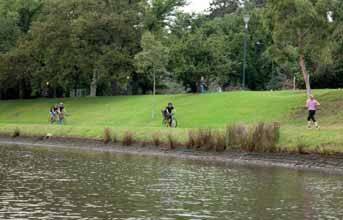
Climate

    Scrutinising Adani’s mega coal mine
    Indian corporate giant Adani Mining has spent years
    seeking approval to build and operate the largest coal
    mine in the southern hemisphere, in Queensland’s Galilee
    Basin – the $16.5 billion proposed Carmichael mine.
    If allowed to go ahead, the mine is predicted to produce
    60 million tonnes of coal each year, releasing emissions
    equal to four times New Zealand’s entire annual fossil             A review of the Adani group’s
    fuel count, as well as destroying vital habitat for native         environmental history in the context of
    species on land and at sea.                                        the Carmichael coal mine approval
    Adani has a truly terrible track record. In India, they’ve
    shown disregard for Indian laws, causing extensive
    environmental harm, destroying mangroves and
    waterways, and causing air pollution.

    Adani Group has secured registration in Queensland
    as a ‘suitable operator’ for the proposed Carmichael
    mine. But how can a company which has consistently
    disregarded environmental laws overseas be trusted
    to obey them here in one of Australia’s most
    environmentally sensitive regions?

    Our investigations revealed that the process by which
    Adani was signed off as a ‘suitable operator’ for the
    proposed Carmichael coal mine was rushed and
                                                                       www.envirojustice.org.au
    inadequate. Queensland officials did not scrutinise
    Adani thoroughly after registering them as a ‘suitable
    operator’ of a mega mine.

                            “ There are big questions around
                              the process by which Adani got
                              their ‘suitable operator’ status.”
                            – ARIANE WILKINSON, LAWYER

6      ENVIRONMENTAL JUSTICE AUSTRALIA     ANNUAL REVIEW 2014 – 2015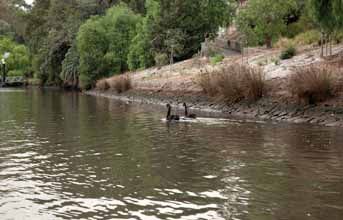
A legal handbook for coal and gas campaigners
Environmental Justice Australia, in conjunction with CounterAct,
created the Campaigners’ Handbook for coal and gas campaigners.

The handbook is a comprehensive publication intended to empower
and inform anyone from farmers to city-based activists on their rights.
It explains the law in an accessible, easy-to-read format, in relation to
protesting coal and unconventional gas developments.

Empowered citizens who know their rights are a key part of any
functioning democracy. This engaging publication helps citizens to
understand their rights and the risks they might be taking, including
when arrest could be possible and what they could be charged with,
if they choose to participate in protests and other actions.

     TAKING ON THE MIGHT OF THE COMMONWEALTH BANK
     Environmental Justice Australia was proud to represent the Australasian Centre
     for Corporate Responsibility in a case against the Commonwealth Bank.
     This important test case is about the rights of shareholders to put ordinary
     resolutions to company AGMs.
     With the power and reach of corporations growing around the world, any extra
     avenue to hold them accountable for their actions is a welcome boost to efforts
                                                                                                           DIRECTOR OF LITIGATION
     to make a better world. If our case succeeds, it will provide an important new                        FELICITY MILLNER
     avenue for shareholders to promote corporate social responsibility.
     Our client in this matter, the Australasian Centre for Corporate Responsibility, put an ordinary shareholder
     resolution to the Commonwealth Bank asking the bank to report on the bank’s financing of fossil fuels and
     exposure to risk from climate change.
     Commonwealth Bank declined to put the resolution at their AGM. We argued that the Corporations Act
     requires the bank to consider the shareholder resolution.
     Right now, Australian law is unclear about whether shareholders have the right to put ordinary resolutions
     to company AGMs, and, when it suits them, companies have been acting on the assumption that they do not.
     This case will set a precedent which will apply to future AGMs of listed companies in Australia.
     The case continues…

                                                                        ENVIRONMENTAL JUSTICE AUSTRALIA   ANNUAL REVIEW 2014 – 2015   7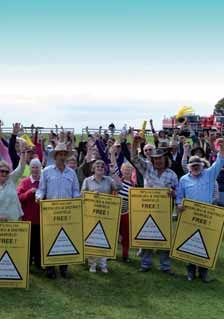
Healthy Communities

    Working across Australia to protect the                           We are working with the local community to hold the
                                                                      NSW government to account for its failure to mandate
    air we breathe
                                                                      covering coal trains; and to build the base for national
                                                                      laws to protect our clean air.
    Hazelwood Mine Fire is only one example of the harm
    that particulate air pollution can cause to human health.         In Melbourne’s west, trucks from the Port of Melbourne
                                                                      thunder through residential areas. Their diesel exhausts
    Particulate pollution – fine particles in the air, which when
                                                                      means that levels of air pollution are dangerous, with
    inhaled can cause serious short and long-term health
                                                                      ordinary people like schoolchildren exposed to unsafe
    effects – can be caused by coal dust, smoke, vehicle and
                                                                      levels of particulates. We work with local anti-truck group
    industrial emissions. Australia lacks air pollution laws,
                                                                      Maribyrnong Truck Action Group to call for national air
    with air pollution limited only by a series of advisory limits
                                                                      pollution laws. For example, we coordinated an event
    and self-reporting by industry. National air pollution laws
                                                                      with scientist Tim Flannery where resident and MTAG
    are the solution, and we are working with air pollution-
                                                                      member Martin Wurt told a packed auditorium exactly
    affected communities across the country to achieve this.
                                                                      what it is like to live with this kind of air pollution.
    Communities in NSW’s Hunter Valley are suffering ongoing
    health effects due to coal dust. A failure to cover coal trains
    means that coal dust is spread over suburbs, exposing homes,
    schools and childcare facilities to this airborne danger.

    “In 2014, when the Hazelwood Mine Fire covered the Latrobe Valley with choking smoke,
    Voices of the Valley was formed as a community group to try to get some official action
    to help the people daily affected by the fire. We collected information about people’s
    health, concerns about safety, costs and cleaning up. We found difficulty is getting those
    in authority to take these matters seriously and even found our information dismissed.
    Environment Justice helped us by acting on our behalf to get information from official
    sources and acting for us with agencies and departments, so that we were able to
    advocate on behalf of the people of the Latrobe Valley.” – WENDY FARMER, VOICES OF THE VALLEY

8      ENVIRONMENTAL JUSTICE AUSTRALIA    ANNUAL REVIEW 2014 – 2015
AIR POLLUTION
HOT SPOTS JUSTICE FOR LATROBE VALLEY
AFTER MINE FIRE
Since the Hazelwood Mine Fire unleashed a
cloud of toxic smoke over Victoria’s Latrobe
Valley in February 2014, Environmental Justice
1 2 Australia has helped local people to fight for
justice.
3 We provided legal representation for
community group Voices of the Valley, as they
4 fought for an inquiry to take place into what
occurred. When this was granted, we helped
11
12 them ensure that the issues that worried them,
10
5
like the health effects of breathing in this cloud
8 6
of thick coal smoke, were considered.
9 7 The first inquiry, in August 2014, considered
the long-term health effects of the fire and
recommended a 20-year study to determine
what these were. But the community was still
1 2 3 terrified about the short-term effects. Local
PORT HEDLAND MT ISA GLADSTONE people felt that they were experiencing a very
BIGGEST SOURCE BIGGEST SOURCE BIGGEST SOURCE unusual spike in deaths in the months after
Iron ore dust from
port operations
Copper, lead, zinc mines Coal operations,
aluminum smelter,
the fire.
PROBLEM chemical manufacturing
PROBLEM
Asthma mortality rates are PROBLEM We supported Voices of the Valley throughout
Pollution from iron ore dust 322% higher than the rest of
regularly exceeds national Queensland. At least 11% of Community concern for
years over excessive coal
the process of getting the inquiry reopened to
standards. Hospitalisation children have lead poisoning.
for respiratory problems is dust, alumina dust and
other toxic air pollutants.
consider the crucial question: Did the fire cause
30% higher than WA average.
a spike in deaths?
4 5 6
HUNTER VALLEY MORWELL
Local residents are plagued by questions about
BRISBANE
BIGGEST SOURCE BIGGEST SOURCE BIGGEST SOURCE whether exposure for several weeks to the air
Coal trains Coal mines and coal trains Coal mines and coal pollution caused by the fire has resulted in
fired power stations
PROBLEM PROBLEM
PROBLEM
deaths or serious health problems.
8.6 million tonnes of coal The national standard for
a year transported through PM10 pollution was exceeded One of the highest PM
Brisbane suburbs in 171 times in 2013 in the pollution levels in Australia. We were very happy that the Andrews
uncovered trains. Hunter region. The 2014 Hazlewood coal
mine fire caused pollution government agreed to reopen the Inquiry
15 times the acceptable limit.
to consider this crucial question.
7 8 9
The fact that the Hazelwood Mine Fire inquiry
YARRAVILLE BROOKLYN ANGLESEA
BIGGEST SOURCE
was reopened shows the health effects of air
BIGGEST SOURCE BIGGEST SOURCE
Diesel trucks – 7000 trucks Nearby industrial estate Coal mine and power station pollution caused by coal are a serious concern
daily on one residential street
PROBLEM PROBLEM of the community.
PROBLEM Power station emits
Worst air and dust pollution
Particulate pollution exceeds levels in Melbourne. high levels of sulphur
dioxide
The Latrobe Valley community has fought hard
safe health levels on Particulate pollution regularly
numerous days each year. exceeds acceptable limit. to find the truth about the fire and its impacts.
10 11 12 They have collected evidence and found the
PORT PIRIE PORT AUGUSTA WHYALLA
experts needed to interpret it. They have told
BIGGEST SOURCE BIGGEST SOURCE BIGGEST SOURCE their own stories, even when governments
Lead smelter, one of the
biggest in the world
Coal mine and power station Iron pelletising plant have been reluctant to listen.
PROBLEM PROBLEM
PROBLEM
Power stations are the Lung cancer rates are We’ll be with them every step of the way in
More than 3000 children most polluting in Australia. 50% higher in Whyalla
hadelevated blood lead Lung cancer rates twice the than similar towns. their fight for justice.
levels in the last decade. expected number. Highest
rate of childhood asthma
in the State.
ENVIRONMENTAL JUSTICE AUSTRALIA ANNUAL REVIEW 2014 – 2015 9Nature Conservation
Re-imagining our environmental laws Improving Victoria’s biodiversity laws
Our environmental laws are failing. At a time of 2014-15 saw the announcement of a suite of reviews
unprecedented pressure on the natural world, and assessments of Victoria’s biodiversity laws.
the laws we rely on to protect our environment We have had provided our specialist legal input
reflect the thinking of the 1970s, 80s and 90s. into several ongoing processes:
But if our laws are going to meet new challenges > Biodiversity strategy
like climate change, they need to be re-imagined. A review of Victoria’s 1996 statewide biodiversity
Environmental Justice Australia is playing a leading role strategy is long overdue. There is clear need to develop
in an important and exciting initiative to build ‘the next a comprehensive overarching policy for protecting
generation of environmental laws for Australia’. and restoring Victoria’s valuable natural areas and
caring for our wild plants and animals. We will
Our support for this work is one of the roles we are playing participate in the reference group for the review.
as part of our membership of the Places You Love Alliance, > Flora & Fauna Guarantee Act
an alliance of more than 40 environmental groups The Andrews government has started a review
throughout Australia which came together to defend of the laws that protect Victoria’s wild species in
national environmental protection laws, embark on a conjunction with the Biodiversity Strategy Review.
wide-ranging ‘nature conversation’ in communities
throughout Australia, and create a framework and > Fixing flawed native vegetation laws
vision for environmental governance to 2025. The laws introduced in 2014 allowed wholesale
clearing of native vegetation. The review into
Led by Professor Rob Fowler from the University of these regulations commenced and will hopefully
South Australia, a panel of Australian and international provide an opportunity to rectify this.
experts in environmental law (‘APEEL’) has been
organised and has commenced its work.
The Panel’s brief is to develop recommendations for renewal
of the current Australian environmental legal system and
a new generation of federal environmental legislation.
The Panel’s initial work has included developing discussion
papers to enable communities and stakeholders to
participate in the thinking around and creativity of
new environmental governance. As this exciting work
progresses, we will report on the progress of the Panel and
how you can join the conversation on how our laws can
truly protect the environment on which we all depend.
10 ENVIRONMENTAL JUSTICE AUSTRALIA ANNUAL REVIEW 2014 – 2015WIN: ALPINE GRAZING CASE
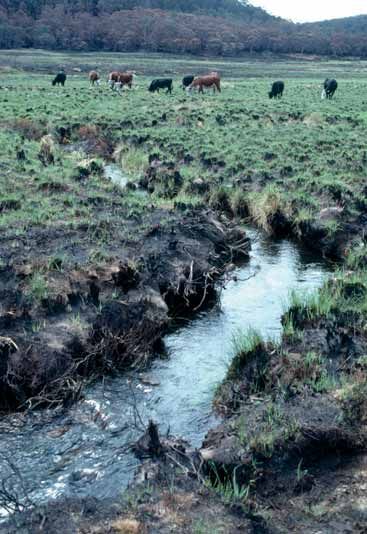
Last year, we took on a court case against the
former Victorian state government’s ‘trial’ of
cattle grazing in the Alpine National Park.
Our case argued that the grazing trial is not
permitted under the National Parks Act.
Following a campaign by us, our clients
the Victorian National Parks Association,
and others, the new Victorian government
committed to not proceed with the grazing trial.
As a result, the case has now been settled. As
part of the settlement, the government agreed
to make an Action Statement under the Flora
and Fauna Guarantee Act that will protect
Alpine rivers from cattle grazing. There is also
legislation before the Victorian Parliament
that will prevent cattle grazing in the Alpine
National Park and other national parks in
Victoria.
We think this commitment is a tremendous
outcome for Victoria’s national parks. This case
is an excellent example of the way that using
the law can add strength to a campaign and
achieve long-term environment protection
outcomes.
Credit: Victorian National Parks Association
“This case is an excellent example of the way that using the
law can add strength to a campaign and achieve long-term
environment protection outcomes.” – FELICITY MILLNER, LAWYER
ENVIRONMENTAL JUSTICE AUSTRALIA ANNUAL REVIEW 2014 – 2015 11Act for the Yarra
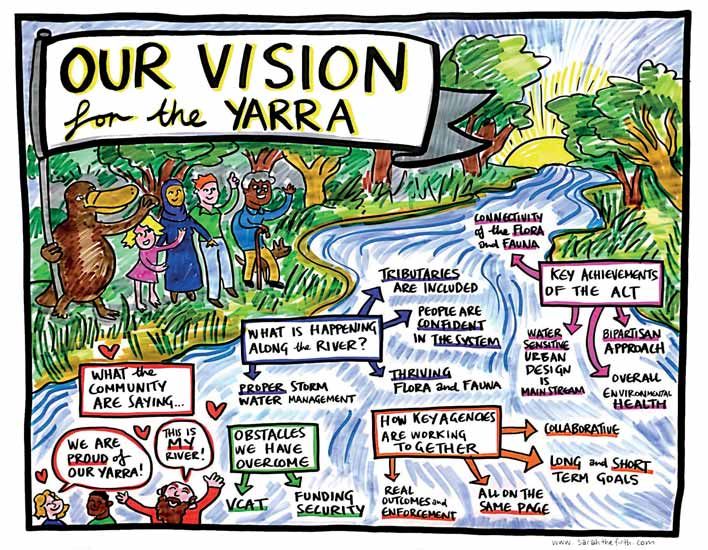
The Victorian government has pledged to cut through the After a lively question and answer session, community
complex web of laws governing the Yarra River by creating members put down their issues and suggestions for what
a Yarra River Act. In partnership with the Yarra Riverkeeper, an effective Yarra River Protection Act would be like. Artist
we’ve been working to ensure the Act will truly protect the Sarah Firth drew pictures and diagrams of what speakers
river and the wildlife who call it home. were saying, to create a visual record of the meeting.
Our report Act for the Yarra described the ways in which There is still a lot of work to do and we will keep you
council, planning, and environment laws across the river’s posted as the campaign develops.
length are failing to deliver the protection the river needs.
Our Yarra Community Forum brought together around
100 representatives from across the Yarra catchment to
discuss the issues facing the river and put forward ideas
for a vision for the Yarra.
12 ENVIRONMENTAL JUSTICE AUSTRALIA ANNUAL REVIEW 2014 – 2015ENVIRONMENTAL JUSTICE AUSTRALIA ANNUAL REVIEW 2014 – 2015 13
Thanks and acknowledgements

     Environmental Justice                Jennifer Trewhella             OUR PEOPLE                   VOLUNTEERS AND
     Australia warmly thanks the          Danielle Tucker                Brendan Sydes                PRO BONO SUPPORT
     following organisations for          Andrew Walker                  Chief Executive              Our ability to provide
     their financial and in-kind           Kristen L Walker QC            Officer/Lawyer                services to the community
     support:
                                          Rupert Watters                 Jode Cowie                   relies on the generous
     Australian Communities                                              Web and Events Coordinator   support of our volunteers
     Foundation                           INTERNS & OTHER                Cathy Coote                  and the provision of pro
     Centre for Resources, Energy         VOLUNTEERS                     Communications Manager       bono assistance from legal
     and Environmental Law,               Jessica Allen                  Caitlin Cross                and other professionals.
     Melbourne Law School                 Jenny Awad                     Fundraising Officer
     DLA Piper                                                           (until September 2014)       Voluntary contributions
                                          Alana Bayliss
     Doctors for the                                                     Mandy Johnson                of time and expertise is
                                          Greta Boots
     Environment Australia                                               Operations and               important in all areas of
                                          Rufus Coffield-Feith
     Lord Mayor’s Charitable                                             Publications Manager         our operations – office
                                          Michael Coleman
     Foundation                                                          Bruce Lindsay                administration, graphic
                                          Jeff Cranston
     Paoli Smith Creative Agency                                         Project Officer               design, the provision of
                                          Anthony Di Gregorio                                         information and advice,
     Reichstein Foundation                                               Felicity Millner
                                          Stephanie D’Souza                                           legal representation,
     Victoria Law Foundation                                             Director of Litigation
                                          Annabel Elliot                                              writing publications and
     Victoria Legal Aid,                                                 Nicola Rivers
                                          Elanor Fenge                   Director of Advocacy         submissions, undertaking
     Community Legal
     Centres Funding and                  Lillian Graystone              and Research                 complex policy analysis,
     Development Program                  Isabelle Green                 Tom Warne-Smith              and the governance of the
                                          Dion Hawkins                   Lawyer                       organisation by the Board.
     PRO BONO SUPPORT                     Sally Knowles-Jackson          Alex Wells
                                                                                                      Our day-to-day operations
     Daniel Bongiorno                     Katia Lallo                    Fundraiser (from
                                                                                                      rely on the support of
     Elizabeth J Boros                    John Le Feuvre                 August 2014)
                                                                                                      law student volunteers
     Jonathon Burdon                      Nadia Lee                      Ariane Wilkinson
                                                                         Lawyer
                                                                                                      and others who assist
     Tom Clarke                           Hannah Lethlean                                             with tasks ranging from
     Daniel Clough                        Ian Lieblich                   SERVICE PROVISION:           answering the phones to
     Mark Costello                        Aaron Magri                                                 conducting legal research.
                                                                         Bruce Dolphin continues
     Tracey Fantin                        Madeleine Manifold
                                                                         to provide excellent         We work with barristers,
     Megan Fitzgerald                     Dianne Markov                  bookkeeping services         solicitors and experts,
     Ian Gordon                           Philip Marshall
                                                                         Juanita McLaren and          many of whom have
     Caroline Kenny QC                    Katy Milne
                                                                         Why Not This provided        provided invaluable
     Graeme Lorimer                       Steve Mourtikas
                                                                         fundraising advisory         support to us over many
     Christine Melis                      Lloyd Murphy
                                                                         services                     years.
     Richard Niall QC                     Catherine Nadel
     Lisa Nichols                         Ingrid Nagorcka                Comvision Victoria has
     Sarah Porritt                        Lina Puerto                    provided reliable regular
     Jonathon Redwood                     Laura Purcell                  IT support
     Michael Rush                         Inshani Sappideen              Choc Chip Multimedia
     Alexander Solomon-Bridge             Orietta Surace                 (James Crook) has
     Melanie Szydzik                      Stephanie Willis               supported our website
     Ray Ternes                           Yaokang Wong

14      ENVIRONMENTAL JUSTICE AUSTRALIA      ANNUAL REVIEW 2014 – 2015
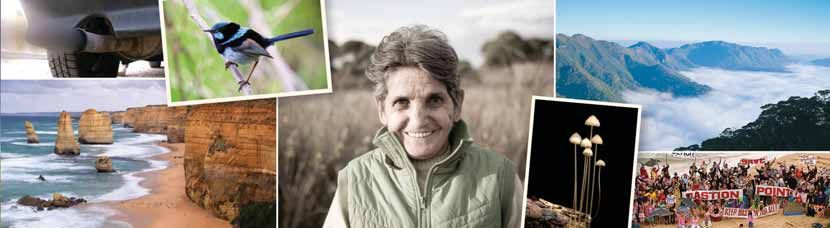
Environmental Justice Environmental justice award:
Australia Awards Gayle Osborne
These awards are our way of recognising This special recognition is reserved for
how much we value the work of others someone we believe has made a long-
and also acknowledging the extra mile term contribution to environmental
that some go in supporting us and what justice – righting environmental wrongs,
we stand for. fixing bad laws, championing public
participation and generally standing
Pro bono contribution award: up for the things we believe in, like
Lisa Nichols and Jennifer Trewhella an effective and accountable system
of environmental regulation and the
Since we began as the EDO, we have community’s right to know and to
relied very heavily on legal and other participate in decision-making.
professionals to support our work
on a pro bono basis. We couldn’t Wombat Forestcare Inc have been
Valuable volunteer award:
have done what we did without our speaking up for the Wombat Forest for
John Le Feuvre
colleagues in private practice and many years and took the brave step of
at the bar supporting us and our taking their concerns about the Bullarto Environmental Justice Australia
clients with their time and expertise Gold Mine to VCAT, with our help, earlier benefits greatly from the enthusiastic
at little and often no cost. this year. Gayle is a considered, eloquent contribution of a large number of
and determined advocate for the group, enthusiastic law student volunteers.
Lisa and Jennifer appeared at who themselves are very active and Volunteers supported us through
the Hazelwood Mine Fire Inquiry, dedicated in protecting this important providing legal research and
representing our clients, Environment forest from the threats of inappropriate administrative support during their
Victoria. Both barristers worked long mining and logging. Gayle has a university year, by undertaking
hours, at short notice. Thanks to their phenomenal capacity to contribute to internships over summer and winter
commitment, we made a real difference the work of protecting the environment breaks and also by helping us out with
to the final Inquiry Report. Jennifer on so many levels, and is an inspiration managing events and workshops.
also helped us represent the South to us, as her lawyers and the lawyers
Beach Wetlands and Landcare group at for Wombat Forestcare Inc. In addition, John was a two-week intern who
VCAT, in a case where we succeeding in she is a great person to work with. Our then returned to be a day volunteer
protecting wetlands that are important advocacy work benefits significantly for a full year. Even better, he ran
habitat for migratory birds. from her attention to detail and her 10km to raise money for us in the
dedication to the work of Wombat marathon and made his girlfriend
Forestcare Inc. The Wombat Forest is a do it too! John has legal smarts, fast
place that provides crucial habitat for
typing skills, excellent concentration,
many native species, and all Victorians
commitment, and an ability to do
are lucky that we have such a dedicated
a boring exercise to an excellent
group speaking up for the welfare of
the wombat, for all of us. standard. We still refer to his work
on the Water Act provisions. John
went above and beyond in helping
Bruce Lindsay with our water project
– including attending meetings
until 2am – and the project could
not have been done without him.
ENVIRONMENTAL JUSTICE AUSTRALIA ANNUAL REVIEW 2014 – 2015 15Access to Justice report back Statistics
Providing legal help for Victorians as Environmental Justice Australia As part of our funding requirements
part of the Community Environmental believes that all Australians have under the Community Legal Services
Legal Service (CELS) program is one a right to clean air, clean water, Program (CLSP), Environmental Justice
of the many ways Environmental and intact ecosystems. It’s also Australia’s Community Environmental
Justice Australia pursues access crucial that our communities Legal Services participates in the
to justice. With the withdrawal of have a real say over what happens Community Legal Services Information
Commonwealth government support, to our environment, and that System (CLSIS) which provides the
the program continues at a much means participating in decision- following summary of how we have
reduced level with a modest amount making processes. We’re working helped individuals and groups in 2014-
of funding through the community to pursue environmental justice 2015 in the course of CLSP activities.
legal centre program administered for communities affected by Provision of information 482
by Victoria Legal Aid. environmental harm by supporting
Advice given 42
their right to information, their
The CELS program provides legal help right to participate in the legal CASEWORK:
for Victorians through the publication and legislative process, and their
of kits, fact sheets and videos which Cases completed 21
right to participate in decision-
provide accessible and practical making about their communities Cases ongoing 51
environmental law information to and the places where they live. PROJECTS:
the Victorian community. Through the
CELS program we also deliver legal Community Legal Education
workshops in Victoria, run by one of Projects completed 14
our expert environmental lawyers to Community Legal Education
suit the needs of community groups Projects ongoing 42
or groups of individuals concerned Advocacy and Research
about or impacted by environmental Projects completed 3
issues. Empowering the Victorian
Advocacy and Research
community via our CELS program Projects ongoing 46
is an important part of the work of
Environmental Justice Australia in
pursuing access to justice.
16 ENVIRONMENTAL JUSTICE AUSTRALIA ANNUAL REVIEW 2014 – 2015Environmental Justice Australia ABN 74 052 124 375 Financial Report For the Year ended 30 June 2015
Contents

     Directors’ Report                                                  19 – 21

     Auditor’s Independence Declaration                                     22

     Statement of Comprehensive Income                                      23

     Statement of Financial Position                                        24

     Statement of Changes in Equity                                         25

     Statement of Cash Flows                                                26

     Notes to and forming part of the accounts                          27 – 30

     Directors’ Declaration                                                 31

     Independent Auditor’s Report                                           32

18     ENVIRONMENTAL JUSTICE AUSTRALIA   FINANCIAL REPORT 2014 – 2015
Directors’ Report
Your directors present this report on Environmental Justice Australia for the year ended 30 June 2015.
DIRECTORS
The names of each person who has been a director during the year and to the date of this report are:
> Samuel Thomas Broughton
> Andrew Spenser Cox (appointed 17/12/13)
> Richard Dominic Hilton
> Thea Margaret Lange
> Sally Romanes
> Elizabeth McMeekin (appointed 18/3/14)
> Megan Utter
PRINCIPAL ACTIVITIES
The principal activities of the company in the course of the financial year were providing environmental and planning
law services to the community, promoting and developing educational programs for the community in connection with
environmental and planning law matters, and promoting and encouraging environmental laws and policies for the
conservation, protection and enhancement of the natural or cultural environment.
No significant change in the nature of these activities occurred during the year.
OPERATING RESULTS
The loss from ordinary activities after income tax amounted to $117,811 (2014: surplus $12,440).
INFORMATION ON DIRECTORS
Samuel Thomas Broughton
Diploma Management Practices – Marketing, Certificate of Direct Marketing
Non-executive Director, Vice-Chairperson
Sam Broughton has worked within the not-for-profit sector in the areas of fundraising, marketing and communications
since 1983. During his career Sam has held senior positions with national organisations such as Australian Red Cross,
The Salvation Army and CARE Australia. He currently provides fundraising related consultancy services and works
part-time for the Eastern Health Foundation.
Andrew Spenser Cox
BSc, Grad Dip (Environmental Studies)
Non-executive Director
Andrew Cox has actively worked and volunteered in the environmental sector since 1991 including contributions
through about twenty management and governance roles in government and non-government organisations.
He is currently CEO of the Invasive Species Council, board member of the Weed Society of Victoria, delegate of the
Council of Australasian Weed Societies and president of 4nature Inc.
Richard Dominic Hilton
BSc Management Sciences, Fellow of the Institute of Chartered Accountants in England and Wales,
Member of the Institute of Chartered Accountants Australia
Non-executive Director, Honorary Treasurer
Richard Hilton is an Executive Director in the Assurance Group at Ernst & Young Melbourne, specialising in
external audit and statutory reporting, process analysis and design, due diligence and risk management.
His key industry experience covers the energy, utilities, infrastructure and telecoms sectors.
ENVIRONMENTAL JUSTICE AUSTRALIA FINANCIAL REPORT 2014 – 2015 19Directors’ Report
Thea Margaret Lange
LLB (Hons) / BEng (Environmental) (Hons)
Non-executive Director, Secretary
Thea Lange is a consultant, helping companies to improve their business operations and processes. Her industry experience
spans Australia and the UK and includes media, health, utilities and mining. Previously she has worked as a commercial lawyer
and as an environmental engineer supporting site assessments and statutory audits of contaminated land.
Sally Margaret Romanes
LLB (Hons) Exon
Non-Executive Director
Sally Romanes is a consultant and artist. By training a corporate and commercial lawyer she now works as a consultant on
specific projects ranging from the arts to business transactions, in both for profit and not for profit areas. She has been a
Director of the not for profit Abbotsford Convent Foundation since operations began in 2004, and, apart from her previous
experience as a corporate and commercial lawyer, has specific experience in fundraising, corporate governance and the
operation of enterprises in the primary production sectors.
Elizabeth Jane McMeekin
BA, Certificate in Direct Marketing, Certificate in Fundraising
Non-executive Director
Libby started her working life with the Australian Conservation Foundation and continued working there for over 9 years.
After a number of years spent in working commercial organisations including direct marketing advertising agencies she
moved into an agency specialising in direct response fundraising and consulting. Her role was to develop direct marketing
campaigns for each of these clients as well as develop long term donor retention and acquisition strategies.
Libby is currently the Client Relationship Manager for Laser Computer Services, a specialist provider of direct marketing
services. In addition she continues her fundraising consulting role for a number of not-for- profit organisations including
Melbourne City Mission, Foodbank Victoria and Walk for Life.
Megan Katherine Utter
BA (Hons) / LLB (Hons), Dip Mod Lang (French), MEnv.
Non-executive Director, Chairperson
Megan Utter is a Director in the infrastructure regulation division at the Australian Competition and
Consumer Commission (ACCC). Previously she practised as a lawyer in environmental and planning law
with Phillips Fox (now DLA Piper). She has had long-term involvement with the not-for-profit sector.
MEETINGS OF DIRECTORS
During the financial year, 14 meetings of directors were held. Attendances by each director were as follows:
NUMBER ELIGIBLE NUMBER
DIRECTORS TO ATTEND ATTENDED
Samuel Thomas Broughton 13 9
Andrew Spenser Cox 13 12
Richard Dominic Hilton 13 10
Thea Margaret Lange 13 8
Elizabeth Jane McMeekin 13 12
Sally Margaret Romanes 13 10
Megan Katherine Utter 13 13
The company is incorporated under the Corporations Act 2001 and is a company limited by guarantee. If the company is
wound up, the constitution states that each member is required to contribute a maximum of $10 each towards meeting
any outstanding obligations of the entity. At 30 June 2015, the total amount that members of the company are liable to
contribute if the company is wound up is $1,140 (2014: $970).
20 ENVIRONMENTAL JUSTICE AUSTRALIA FINANCIAL REPORT 2014 – 2015AFTER BALANCE DATE EVENTS
No matters of circumstances have arisen since the end of the financial year which significantly affected or may
significantly affect the operations of the company, the results of those operations, or the state of affairs of the
company in future financial years.
DIVIDENDS PAID OR RECOMMENDED
No Dividends were paid or are recommended for payment, and, in any case, are not permitted to be paid as the
company is limited by guarantee.
LIKELY DEVELOPMENTS AND RESULTS
No changes are envisaged at present.
AUDIT COMMITTEE
At the date of this report the Company does not have an audit committee.
CORPORATE GOVERNANCE
At the date of this report, the Company does not have a policy covering Corporate Governance.
DIRECTORS AND AUDITORS INDEMNIFICATION
The company has not, during or since the financial year, in respect of any person who is or has been an officer or auditor
of the company or a related body corporate, indemnified or made any relevant agreement for indemnifying against a
liability incurred as an officer, including costs.
SHARE OPTIONS
No options to shares in the company have been granted during the financial year and there were no options outstanding
at the end of the financial year. Options are not permitted to be granted as the company is limited by guarantee.
DIRECTORS’ BENEFITS
No director has received or become entitled to receive, during or since the financial year, a benefit because of a contract
made by the company, controlled entity or a related body corporate with a director, a firm of which a director is a member
or an entity in which a director has a substantial financial interest.
Auditor’s Independence Declaration
The lead auditor’s independence declaration for the year ended 30 June 2015 has been received and can be found on
page 5 of the financial report.
Signed in accordance with a resolution of the Board of Directors:
Director Director
Dated: Dated:
ENVIRONMENTAL JUSTICE AUSTRALIA FINANCIAL REPORT 2014 – 2015 21Auditor’s Independence Declaration
UNDER SECTION 307C OF THE CORPORATION ACT 2001
I declare that to the best of my knowledge and belief, during the year ended 30 June 2015 there have been:
i. no contraventions of the auditor independence requirements as set out in the Corporations Act 2001
in relation to the audit; and
ii. no contraventions of any applicable code of professional conduct in relation to the audit.
Sean Denham
Dated:
Sean Denham & Associates
Suite 1, 707 Mt Alexander Road
Moonee Ponds VIC 3039
22 ENVIRONMENTAL JUSTICE AUSTRALIA FINANCIAL REPORT 2014 – 2015Statement of Comprehensive Income
FOR THE YEAR ENDED 30 JUNE 2015
Note 2015 2014
$ $
Revenue
Grants 191,373 247,655
VLA Funds 179,416 273,945
VLA Surplus Carried Forward (incl. ERO State and Extra) (25,798) (7,729)
Fee for service 66,648 52,973
Donations, Fundraisings, Lectures 221,560 240,537
Donations - Reichstein Foundation 20,000 –
Sundry Income 4,613 6,678
Interest Received 3,601 12,729
661,413 826,788
Expenditure
Employee Benefits expenses 577,475 592,562
Occupancy expenses 45,504 44,982
Depreciation expense 2,792 4,120
Legal Practice expenses 5,180 3,644
IT expenses 12,466 28,720
Consultants expenses 54,227 61,429
Travel expenses 16,553 15,741
Sundry expenses 65,027 63,150
779,224 814,348
Surplus before income tax for the year (117,811) 12,440
Income tax expense – –
Surplus after income tax for the year (117,811) 12,440
Total other comprehensive income – –
Total comprehensive income for the year (117,811) 12,440
The accompanying notes form part of these financial statements.
ENVIRONMENTAL JUSTICE AUSTRALIA FINANCIAL REPORT 2014 – 2015 23Statement of Financial Position
AS AT 30 JUNE 2015
Note 2015 2014
$ $
CURRENT ASSETS
Cash and cash equivalents 2 318,951 220,888
Trade and other receivables 3 37,173 28,184
Financial Assets 4 10,000 192,958
TOTAL CURRENT ASSETS 366,124 442,030
NON-CURRENT ASSETS
Property, plant and equipment 5 1,686 4,478
TOTAL NON-CURRENT ASSETS 1,686 4,478
TOTAL ASSETS 367,810 446,508
CURRENT LIABILITIES
Trade and other creditors 6 24,329 33,016
Amounts received in advance 7 121,722 75,463
Provisions 8 33,811 33,254
TOTAL CURRENT LIABILITIES 179,862 141,733
NON-CURRENT LIABILITIES
Provisions 8 42,306 41,322
TOTAL NON-CURRENT LIABILITIES 42,306 41,322
TOTAL LIABILITIES 222,168 183,055
NET ASSETS 145,642 263,453
MEMBERS’ FUNDS
Retained profits 145,642 263,453
TOTAL MEMBERS’ FUNDS 145,642 263,453
The accompanying notes form part of these financial statements.
24 ENVIRONMENTAL JUSTICE AUSTRALIA FINANCIAL REPORT 2014 – 2015Statement of Changes In Equity
FOR THE YEAR ENDED 30 JUNE 2015
Retained Total
Earnings
$ $
Balance at 1 July 2013 251,013 251,013
Comprehensive Income
Surplus for the year 12,440 12,440
Other comprehensive income – –
Total comprehensive income 12,440 12,440
Balance at 30 June 2014 263,453 263,453
Comprehensive Income
Surplus for the year (117,811) (117,811)
Other comprehensive income – –
Total comprehensive income (117,811) (117,811)
Balance at 30 June 2015 145,642 145,642
The accompanying notes form part of these financial statements.
ENVIRONMENTAL JUSTICE AUSTRALIA FINANCIAL REPORT 2014 – 2015 25Statement of Cash Flows
FOR THE YEAR ENDED 30 JUNE 2015
Note 2015 2014
$ $
CASH FLOWS FROM OPERATING ACTIVITIES
Receipts from grants 391,250 509,456
Receipts from customers 303,832 283,776
Payments to suppliers and employees (783,578) (776,380)
Interest received 3,601 11,820
Net cash (used in)/generated from operating activities 9 (84,895) 28,672
CASH FLOWS FROM INVESTING ACTIVITIES
Redemption of term deposits 182,958 97,042
Payments for purchase of property and equipment – (1,809)
Net cash generated from investing activities 182,958 95,233
Net increase in cash held 98,063 123,905
Cash at the beginning of the year 220,888 96,983
Cash at the end of the year 2 318,951 220,888
The accompanying notes form part of these financial statements.
26 ENVIRONMENTAL JUSTICE AUSTRALIA FINANCIAL REPORT 2014 – 2015Notes to the Financial Statements
FOR THE YEAR ENDED 30 JUNE 2015
Note 1: Statement of Significant Accounting Policies
This special purpose financial report has been prepared for distribution to the members to fulfil the directors’ financial
reporting requirements under the Corporations Act 2001 and the Australian Charities and Not-for-Profits Commission Act
2012. The accounting policies used in the preparation of this financial report, as described below, are consistent with the
financial reporting requirements of the Corporations Act 2001, the Australian Charities and Not-for-Profits Commission
Act 2012 and with previous years, and are, in the opinion of the directors, appropriate to meet the needs of members.
The financial report has been prepared on an accrual basis of accounting including the historical cost convention and the
going concern assumption.
The requirements of Accounting Standards and other financial reporting requirements in Australia do not have mandatory
applicability to Environmental Justice Australia because it is not a “reporting entity”.
a. Cash and Cash Equivalents
Cash and cash equivalents includes cash on hand, deposits held at call with banks, and other short-term highly liquid
investment with original maturities of three months or less.
b. Income Tax
No provision for income tax has been raised, as the entity is exempt from income tax under Div 50 of the Income Tax
Assessment Act 1997.
c. Property, Plant and Equipment
Each class of property, plant and equipment is carried at cost or fair values as indicated, less, where applicable,
accumulated depreciation and impairment losses.
Leasehold improvements and office equipment are carried at cost less, where applicable, any accumulated depreciation.
The depreciable amount of all property, plant and equipment is depreciated over the useful lives of the assets to the
company commencing from the time the asset is held ready for use.
Leasehold Improvements are amortised over the shorter of either the unexpired period of the lease or the estimated
useful lives of the improvements.
d. Employee Entitlements
Provision is made for the entity’s liability for employee benefits arising from services rendered by employees to the
end of the reporting period. Employee benefits that are expected to be settled within one year have been measured
at the amount expected to be paid when the liability is settled.
Employee benefits payable later than one year have been measured at the present value of estimated future cash
outflows to be made for those benefits.
Provision is made for the entity’s liability for long service leave when an employee reaches 5 years of consecutive
service with the company.
e. Provisions
Provisions are recognised when the entity has a legal or constructive obligation, as a result of past events, for which
it is probable that an outflow of economic benefits will result and that outflow can be reliably measured.
f. Impairment of Assets
At the end of each reporting period, the entity reviews the carrying values of its tangible and intangible assets to determine
whether there is an indication that those assets have been impaired. If such an indication exists, the recoverable amount
of the asset, being the higher of the asset’s fair value less costs to sell and value in use, is compared to the asset’s carrying
value. Any excess of the asset’s carrying value over its recoverable amount is expensed to the income statement.
ENVIRONMENTAL JUSTICE AUSTRALIA FINANCIAL REPORT 2014 – 2015 27Notes to the Financial Statements
FOR THE YEAR ENDED 30 JUNE 2015
Note 1: Statement of Significant Accounting Policies (cont.)
g. Revenue
Revenue is brought to account when received and to the extent that it relates to the subsequent period it is disclosed
as a liability.
Grant Income
Non-reciprocal grant revenue is recognised in the profit or loss when the entity obtains control of the grant and it is
probable that the economic benefits gained from the grant will flow to the entity and the amount of the grant can be
measured reliably.
If conditions are attached to the grant which must be satisfied before it is eligible to receive the contribution, the
recognition of the grant as revenue will be deferred until those conditions are satisfied.
When grant revenue is received whereby the entity incurs an obligation to deliver economic value directly back to
the contributor, this is considered a reciprocal transaction and the grant revenue is recognised in the statement of
financial position as a liability until the service has been delivered to the contributor, otherwise the grant is recognised
as income on receipt.
Fees for Service
Fees for service are recognised to the extent that it is probable that the economic benefits will flow to the Company
and the revenue can be reliably measured.
Interest Revenue
Interest revenue is recognised using the effective interest rate method, which for floating rate financial assets is the
rate inherent in the instrument.
Donations
Donation income is recognised when the entity obtains control over the funds which is generally at the time of receipt.
All revenue is stated net of the amount of goods and services tax (GST).
h. Goods and Services Tax (GST)
Revenues, expenses and assets are recognised net of the amount of GST, except where the amount of GST incurred is
not recoverable from the Australian Taxation Office. Receivables and payables are stated inclusive of the amount of
GST receivable or payable. The net amount of GST recoverable from, or payable to, the ATO is included with other
receivables or payables in the statement of financial position.
i. Adoption of New and Revised Accounting Standards
During the current year the company adopted all of the new and revised Australian Accounting Standards and
Interpretations applicable to its operations which became mandatory.
j. New Accounting standards for Application in Future Periods
No accounting standards issued but not yet effective are expected to impact the company.
28 ENVIRONMENTAL JUSTICE AUSTRALIA FINANCIAL REPORT 2014 – 20152015 2014
$ $
Note 2: Cash and cash equivalents
Cash on hand 400 200
Cash at Bank 318,551 220,688
318,951 220,888
Note 3: Trade and other receivables
Accounts receivable 37,173 28,184
Note 4: Financial Assets
Term Deposits 10,000 192,958
Note 5: Property, plant and equipment
Office equipment - at cost 29,494 29,494
Less accumulated depreciation (27,808) (25,016)
1,686 4,478
Movements in carrying amounts
Carrying amount at beginning of year 4,478 6,789
Additions at cost – 1,809
Disposals – –
Depreciation expense (2,792) (4,120)
Carrying amount at end of year 1,686 4,478
Note 6: Trade and other payables
Accounts Payable 4,109 14,546
Sundry creditors and accruals 20,220 18,470
24,329 33,016
Note 7: Project funds received in advance
Project funds received in advance 63,195 67,734
Project funds received in advance - Reichstein 25,000 –
VLA Surplus carried forward - ERO Extra 16,551 7,707
VLA Surplus carried forward - ERO State 16,954 –
VLA Surplus carried forward - Surplus 22 22
121,722 75,463
VLA Surplus includes ERO Extra funds of $8,844 from 2014/2015, $6,020 from 2013/2014 and $1,687 from 2012/2013.
ENVIRONMENTAL JUSTICE AUSTRALIA FINANCIAL REPORT 2014 – 2015 29Notes to the Financial Statements
FOR THE YEAR ENDED JUNE
Ñ Ñ
Note 8: Provisions
Current
,NKREOEKJ BKN =JJQ=H HA=RA
Non-current
,NKREOEKJ BKN HKJC OANRE?A HA=RA
Note 9: Reconciliation of Cash Flow from Operations
with Profit from Ordinary Activities after Income Tax
Profit =BPAN EJ?KIA P=T
=OD flows AT?HQ@A@ BNKI KLAN=PEJC profit =PPNE>QP=>HA PK KLAN=PEJC =?PEREPEAO
*KJ ?=OD flows EJ profit
ALNA?E=PEKJ
D=JCAO EJ =OOAPO =J@ HE=>EHEPEAO
%J?NA=OA @A?NA=OA EJ PN=@A =J@ KPDAN NA?AER=>HAO
%J?NA=OA @A?NA=OA EJ ?NA@EPKNO
%J?NA=OA @A?NA=OA EJ =IKQJPO NA?AERA@ EJ =@R=J?A
%J?NA=OA @A?NA=OA EJ LNKREOEKJO
*AP ?=OD QOA@ EJ CAJAN=PA@ BNKI +LAN=PEJC
?PEREPEAO
Note : Comparative Figures
3DANA NAMQENA@ >U
??KQJPEJC /P=J@=N@O ?KIL=N=PERA figures D=RA >AAJ =@FQOPA@ PK ?KJBKNI SEPD ?D=JCAO EJ LNAOAJP=PEKJ
BKN PDA ?QNNAJP financial UA=N
3DAJ PDA ?KIL=JU =LLHEAO =J =??KQJPEJC LKHE?U NAPNKOLA?PERAHU I=GAO = NAPNKOLA?PERA NAOP=PAIAJP KN reclassifies EPAIO
EJ EPO financial OP=PAIAJPO = OP=PAIAJP KB financial LKOEPEKJ =O =P PDA >ACEJJEJC KB PDA A=NHEAOP ?KIL=N=PERA LANEK@ IQOP >A
@EO?HKOA@
Note 12: Company Details
0DA NACEOPANA@ office =J@ LNEJ?EL=H LH=?A KB >QOEJAOO KB PDA AJPEPU EO ( (AE?AOPAN /PNAAP =NHPKJ 2%
Note 13: Members Guarantee
0DA AJPEPU EO EJ?KNLKN=PA@ QJ@AN PDA KNLKN=PEKJO
?P =J@ EO =J AJPEPU HEIEPA@ >U CQ=N=JPAA %B PDA AJPEPU EO
SKQJ@ QL PDA ?KJOPEPQPEKJ OP=PAO PD=P A=?D IAI>AN EO NAMQENA@ PK ?KJPNE>QPA = I=TEIQI KB Ñ A=?D PKS=N@O
IAAPEJC =JU KQPOP=J@EJCO =J@ K>HEC=PEKJO KB PDA AJPEPU
P &QJA PDA JQI>AN KB IAI>ANO S=O
ENVIRONMENTAL JUSTICE AUSTRALIA "EJ=J?E=H.ALKNP Directors’ Declaration
In accordance with a resolution of the directors of Environmental Justice Australia, I state that in the opinion
of the directors:
a) the Company is not a reporting entity as defined in the Australian Accounting Standards;
b) the financial statements and notes of the Company are in accordance with the Corporations Act 2001
and the Australian Charities and Not-for-Profits Commission Act 2012, including:
(i) giving a true and fair view of the Company’s financial position as at 30 June 2015
and of its performance for the year ended on that date; and
(ii) complying with Australian Accounting Standards to the extent described in Note 1
to the financial statements and complying with the Corporations Regulations 2001
and the Australian Charities and Not-for-Profits Commission Regulation 2013; and
c) there are reasonable grounds to believe that the Company will be able to pay its debts as and when
they become due and payable.
On behalf of the Board
Director
Dated:
Director
Dated:
ENVIRONMENTAL JUSTICE AUSTRALIA FINANCIAL REPORT 2014 – 2015 31Independent Audit Report to the Members of
Environmental Justice Australia
Report on the Financial Report
We have audited the accompanying financial report, being a special purpose financial report of Environmental Justice
Australia, which comprises the statement of financial position as at 30 June 2015, and the statement of comprehensive
income, statement of changes in equity and statement of cash flows for the year then ended, notes comprising a summary
of significant accounting policies and other explanatory information and the directors’ declaration.
Director’s Responsibility for the Financial Report
The directors of the company are responsible for the preparation of the financial report and have determined that the basis
of preparation described in Note 1 to the financial report are appropriate to meet the requirements of the Corporations
Act 2001 and the Australian Charities and Not-for-Profits Commission Act 2012 and is appropriate to meet the needs of the
members. The directors’ responsibility also includes such internal control as the directors determine is necessary to enable
the preparation of a financial report that is free from material misstatement, whether due to fraud or error.
Auditor’s Responsibility
Our responsibility is to express an opinion on the financial report based on our audit. We have conducted our audit in
accordance with Australian Auditing Standards. Those standards require that we comply with relevant ethical requirements
relating to audit engagements and plan and perform the audit to obtain reasonable assurance whether the financial report
is free from material misstatement.
An audit involves performing procedures to obtain audit evidence about the amounts and disclosures in the financial report.
The procedures selected depend on the auditor’s judgment, including the assessment of the risks of material misstatement
of the financial report, whether due to fraud or error. In making those risk assessments, the auditor considers internal control
relevant to the company’s preparation of the financial report that gives a true and fair view in order to design audit procedures
that are appropriate in the circumstances, but not for the purpose of expressing an opinion on the effectiveness of the entity’s
internal control. An audit also includes evaluating the appropriateness of accounting policies used and the reasonableness of
accounting estimates made by the directors, as well as evaluating the overall presentation of the financial report.
We believe that the audit evidence we have obtained is sufficient and appropriate to provide a basis for our audit opinion.
Independence
In conducting our audit we have complied with the independence requirements of the Corporations Act 2001 and the
Australian Charities and Not-for-Profits Commission Act 2012. We have given to the directors of the company a written
Auditor’s Independence Declaration, a copy of which is included in the directors’ report.
Auditor’s Opinion
In our opinion, the financial report of Environmental Justice Australia is in accordance with the Corporations Act 2001, including:
(i) giving true and fair view of the company’s financial position as at 30 June 2015 and of its performance for the year
ended on that date; and
(ii) complying with the Australian Accounting Standards to the extent described in Note 1 and the Corporations
Regulations 2001.
Basis of Accounting
Without modifying our opinion, we draw attention to Note 1 to the financial report, which describes the basis of accounting.
The financial report has been prepared for the purpose of fulfilling the directors’ financial reporting responsibilities under the
Corporations Act 2001 and the Australian Charities and Not-for-Profits Commission Act 2012. As a result, the financial report
may not be suitable for another purpose.
Sean Denham
Sean Denham & Associates
Dated:
Suite 1, 707 Mt Alexander Road, Moonee Ponds Vic 3039
32 ENVIRONMENTAL JUSTICE AUSTRALIA FINANCIAL REPORT 2014 – 2015You can also read


