We can help you plan, plant and successfully harvest your own home-grown fruit year-round! - Decor Gardenworld
←
→
Page content transcription
If your browser does not render page correctly, please read the page content below
We can help you plan, plant and successfully harvest
your own home-grown fruit year-round!
Fruit trees are easy to grow in New Zealand no matter where
you live, even if your garden is on the small size. There are
dwarf forms and varieties of most fruits which don’t take a
lot of space and when many can be grown in containers or
espaliered on a fence, anything is
possible.
When planning your orchard
it’s important to consider
pollination, when fruit
ripens and the mature
size of your trees. It is
also helpful to know
that some fruits may
only be available for
                                                                          ican Harvest is a selection of
purchase at certain
                                                                         fruit trees that are ideal for the
times of the year.
                                                                      home gardener. You can be assured
                                                                   that they will perform exceptionally well
                                                                  as these fruit trees have been hand-picked
                                                                 by experts. The varieties have been selected
                                                                for their excellent taste, reliable fruiting ability,
                                                                  ease to grow and suitability for the smaller
                                                                 garden. In addition they can be successfully
                                                                                  grown in pots.

                                                                    Yes, you can have fruit on your
                                                                      deck and patio, and they
                                                                           make great gifts!

                    Find more ican products and advice on Facebook
                            facebook.com/theicangarden.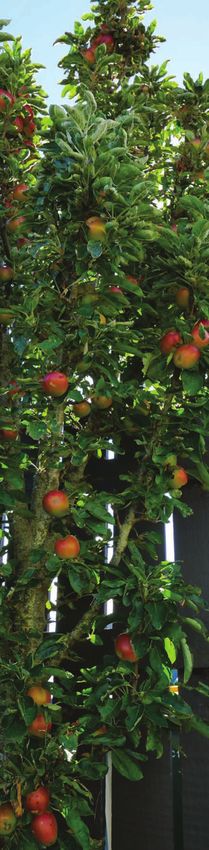
Consider these factors when choosing
     what fruit and varieties to grow.

     1      What fruit do you like?
           Everyone has favourite fruit. Apples, pears, peaches,
           plums and nectarines are regular favourites.
                                                                           Blueberries

     Some citrus are essential such as lemons and easy peel

                                                                       5
     mandarins. Or you might prefer berry fruits and easy to
     grow feijoas. Hence it often comes down to what to leave                 Consider the work involved
     out!                                                                     Some fruits require very little work (eg. feijoas
                                                                              and citrus), while others require time for
                                                                       pruning, spraying or netting, and sometimes all three.

     2      How much space do you have?
            In very small gardens, space may be limited to a
            lemon, perhaps a mandarin and a feijoa; but when
                                                                       In summary, each of these factors will carry
                                                                       more or less emphasis for you. You might
     dwarf trees can be trained as espaliers, columns, or grown
     in pots, you can fit more in. Mix fruit trees and bushes          reach a compromise based on – fruit you
     through your garden, where they may provide shade,                like that will grow well in your region, that
     screening, and spring and autumn colour.                          provides fruit to pick for most or all of the
                                                                       year, that requires moderate to minimum

     3      What grows best in your region?                            levels maintenance.
             Fruit trees will grow in most regions, although
             because of severe frosts, some areas will not be          Ask our team in store for advice on the best
     suitable for some citrus, feijoas and other subtropical fruits.   fruits to grow in your garden.
     Fruits that require low winter temperatures to set fruit,
     may not be suitable for warm regions but new varieties
     are available that will set fruit without winter chilling. For
     success, your site should be sunny and sheltered from
     strong wind.                                                          Rootstocks &
                                                                           ‘dwarfing’
                                                                           Some fruit tree varieties are
                                                                           naturally dwarf, whilst other
                                                                           fruit trees can be grafted onto
                                                                           a ‘dwarfing rootstock’ which
                                                                           will reduce the size of the tree
                                                                           from its usual height. Container
                                                                           growing also restricts the size
                                                                           of a tree.
    Lemon tree                                                                                                  Apple blossom
                                                                           Pollination
                                                                           Pollination is essential to
                                                                           ensure fruit set and is normally performed
                                                                           by bees and insects and in some fruits, by

     4       When does it ripen?
             The popular summer fruits such as apples, plums,
             peaches and nectarines, all fruit around the same
                                                                           birds and wind. Most fruit trees will set fruit
                                                                           freely, but some require a companion tree
                                                                           of the same type to set fruit or enhance the
     time which means you can have barrow loads in just a few              crop. For a small garden, you may be able to
     weeks. However with careful planning and selection from               purchase double or triple grafted fruit trees
     the extensive range of fruit available to home gardeners, it          which have different pollinating and fruiting
     is possible to pick a steady supply of fresh fruit from your          varieties on the one trunk.
     garden for 12 months of the year.

2    A Home Orchard in a Small Space ICAN HARVEST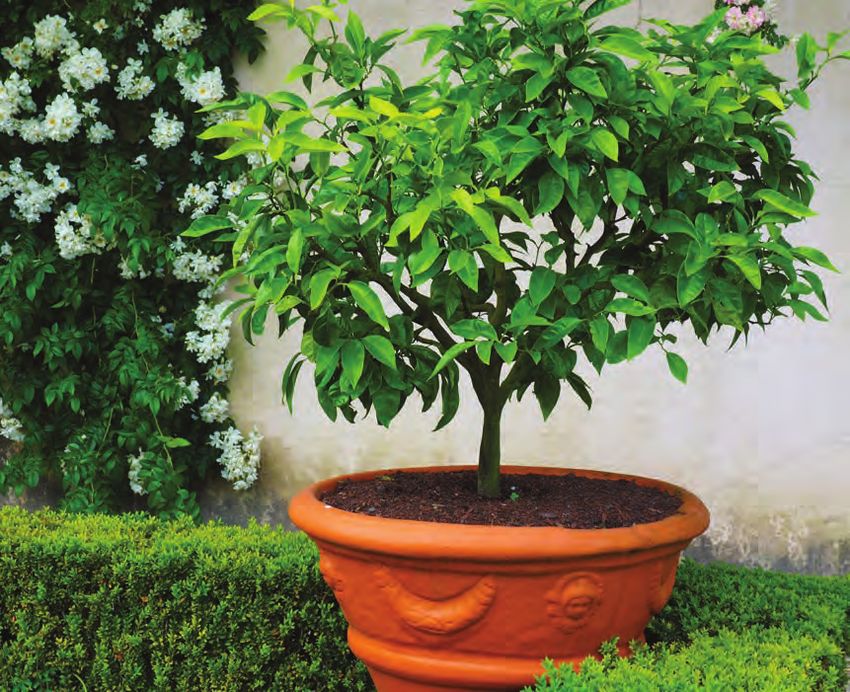
The site                               Feeding
                 For success, your fruit trees          The fertiliser applied at planting
                 will grow best in a warm sunny         time will be sufficient for the first
                 position with shelter from             12 months. After the first year,
                 strong winds.                          feed your fruit trees with ican
                                                        Fruit Food three times a year
                                                        – September, December and
                 The soil                               March.
                 Fruit trees grow best in a free
                 draining soil enriched with
                 organic matter (compost). If           Watering
                 your soil is heavy with clay,          Your fruit trees will need to be
                 build up the planting area             watered during dry periods
                 15 cm or more with topsoil             especially in their first few years.
                 and compost to improve the             A weeper soak hose connected
                 drainage.                              to a timer is an easy alternative to
                                                        hand watering.
                 Soil preparation
                 Before planting your fruit trees,
                 prepare the soil by working-
                 in generous quantities of
                 compost, 3-4 handfuls of lime
                 (or a lime dolomite mix), and
                 3-6 tablespoons, depending
                 on the plant size, of ican Slow
                 Food.

                 Planting
                 Before you plant, soak the
                 plant’s root ball in a bucket of
                 water so it is fully saturated.
                 Dig a hole as deep as the root
                 ball and wide enough to allow
                 the roots to spread out evenly.
                 For bareroot trees, place the
                 roots on a low mound in the
                 bottom of the hole to reduce
                 air pockets. Supporting stakes
                 are recommended for trees and                We Recommend
                 should be positioned now to                  ican Slow Food will provide
                 prevent root injury.                         your fruit plants with
                                                              24 months of balanced
                 Backfill the hole with the                   feeding as and when they
                 prepared soil. Firm the soil in              need it. The controlled
                 well until it is filled to the same          release fertiliser acts with
                 level as before. Make sure the               temperature to provide
                 graft union on grafted trees, is             more fertiliser when the
                 well above the soil level. Use               plant growth is active and
                 a soft tie to secure the tree to             less when it’s not.
                 the stake(s). Finally, water well
                 to settle the soil in around the
                 roots.

Columnar apple                            A Home Orchard in a Small Space ICAN HARVEST          3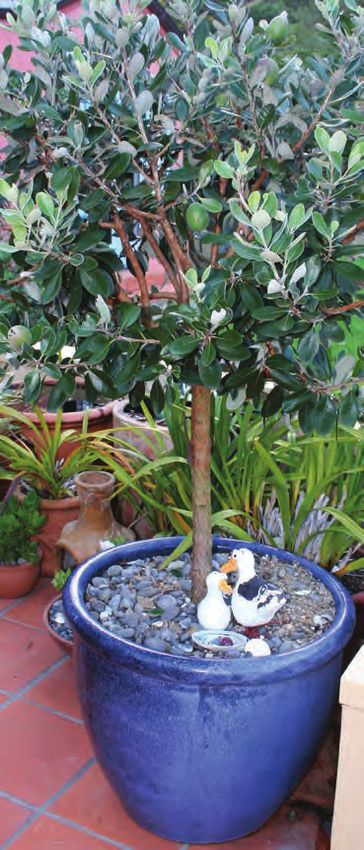
Fresh fruit for every month of the year
FRUIT                                  WE RECOMMEND                                                               GROWS IN CONTAINERS
SMALL BERRIES
Strawberry                             Numerous
Boysenberry                            Brulee
                     Early             O'Neal / Muffin
Blueberry*           Early to mid      Tasty Blue* / Blue Magic* / Tifblue
                     Mid to late       Centurion / Muffin / Rahi
Currant                                Black Magnus / Black Sefton / red / white
Gooseberry                             Farmer’s Glory / Invicta / Pax
                     Early to mid      Aspiring / Mini Me / Waiua / Tulameen
Raspberry
                     Late              Aspiring / Heritage
Blackberry                             Black Satin
STONE FRUIT
                     Early             Solar Perfection
Apricot**            Mid               Aprigold (dwarf)
                     Late              Trevatt
                     Early             Tangshe
Cherry*
                     Mid to late       Compact Stella (dwarf) / Lapins
                     Early to mid      Kay Pearl / Silver King / Snow Queen
Nectarine
                     Mid to late       Theo Ching / Fantasia / Red Gold
Peacherine                             Healy's Peacherine
                     Early             Pixzee (dwarf) / Golden Tatura
Peach                Mid               Rich Lady / Blackboy / White Princess / Wiggins
                     Late              Golden Queen / Honey Babe
                     Early             Duff's Early Jewel / Wilsons Early
Plum*                Mid               Billington / Black Doris / Hawera / Teak Gold
                     Late              Luisa / Hunterston / Omega
PIP FRUIT
                     Early             Cox's Orange / Croquella (dwarf) / Sweetie
Apple*               Mid               Splendour / Roy's Pearl / Pinkie
                     Late              Scarlet & Crimson Spire / Topaz / Granny Smith
Nashi pear**                           Reddy Robin / Nijiseiki
                     Early to mid      Williams Bon Chretien / Crispie (pear-nashi hybrid) / Conference
Pear*
                     Mid to late       Beurre Bosc / Doyenne du Comice / Packham's Triumph
OTHER FRUIT
                                       Hass
                                       Reed
Avocado**
                                       Bacon
                                       Feurte
Passionfruit                           Black
                     Early to mid      Schuyler / Niagara
Grape
                     Mid to late       White Diamond / Albany Surprise
                     Early             Ventura
Fig**                Mid               Mrs Williams / Brown Turkey
                     Late              Brunswick / Preston Prolific / French Sugar
                     Early to mid      Sherbet / Takaka / Unique / Pounamu
Feijoa*              Mid               Wiki Tu / Den's Choice / Kakapo
                     Mid to late       Opal Star / Triumph / Waingaro
Persimmon                              Fuyu
Tamarillo                              Ted's Red / Hardy Harry
CITRUS
                                       Meyer / Yen Ben
Lemon                                  Genoa / Villa Franca
                                       Lemonade
                                       Encore
Mandarin                               Satsuma - Miho / Miyagawa / Kawano / Silverhill
                                       Clementine / Afourer
                                       Valencia - Lue Gim Gong / Harwood Late
Orange                                 Navel - Navellina / Washington Navel / Fukumoto
                                       Blood orange
Tangelo                                Seminole
                                       Golden Special / Cutler's Red
Grapefruit
                                       Wheeney
Lime                                   Tahitian - Bearss
 Notes *pollinating plant required. Pipfruit require a pollinating plant but often a neighbourhood tree does the trick
       **mostly self-fertile but will produce more fruit if planted with another variety nearby
This calendar serves as a guide to the fruiting seasons. In the regions, fruiting may start earlier or later depending on your climate.
To grow fruit trees in containers, choose compact varieties or those grafted onto dwarf rootstock - ask our team in store for advice.

NOV         DEC         JAN          FEB        MAR          APR         MAY          JUN         JUL         AUG          SEPT           OCT

                                                                               A Home Orchard in a Small Space ICAN HARVEST                     5
ABOVE:
                                                                               Citrus tree                        Feijoa Tree

                                                                                                                  LEFT:
                                                                                                                  Citrus Tree

                                                                                                                  MIDDLE:
                                                                                                                  ican Slow Food
                                                                                                    Feijoa tree

    You can grow most fruits successfully in                        The pot
                                                                    For success, choose pots of 42-60 cm diameter holding
    containers, providing a few simple but                          approximately 35-40 litres of potting mix. This size is
    important rules are followed.                                   suitable for most small growing fruits and will restrict the
                                                                    size of larger trees.
    Growing in containers will assist in maintaining a small size
    and if you want to grow large fruit trees such as pip and       Potting mix
    stone fruit select a dwarf or compact variety for success.      We recommend you use only the best. The potting mix for
    Fruit trees and bushes grown in pots will need watering         fruit trees needs to be free draining but also have good
    and feeding more regularly than those planted in the            water holding and feeding capacity. Premium potting
    ground. Keep your fruit in pots well-watered and fed,           mixes contain a slow-release fertiliser that will last for 6
    and you’ll soon be harvesting your own delicious crops.         months, water storage granules and a soil wetting agent.

                                                                    Feeding
                                                                    Fruiting plants growing in containers will use all the
                                                                    nutrients in the potting mix in a few months. You can
                                                                    replenish the potting mix with ican Slow Food which will
                                                                    slowly release nutrients to the plant over the next few
                                                                    months.

                                                                    Watering
                                                                    In spring and autumn your fruit pots may require daily
                                                                    watering, and twice daily in summer. To give your fruit a
                                                                    boost when they are actively growing, water with liquid
                                                                    ican Fast Food. When potting mix becomes dry, it repels
                                                                    water and you may see water quickly runs out the bottom
                                                                    of the pot. Add a wetting agent such as Saturaid so that
                                           Apple Croquella          water soaks into the potting mix and is available to the
                                                                    plant.

6   A Home Orchard in a Small Space ICAN HARVEST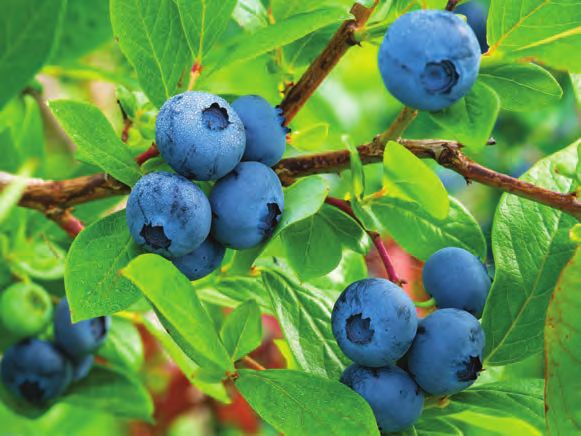
Blackberries

                                                                                                Strawberries

A few simple, well-
placed cuts can
improve fruiting
                                 1       Current season growth (new growth)
                                                                                     These are easiest to prune, because
                                                                                     whether you prune hard or light they
and limit the size                                                                   will still crop. Aim to maintain the desired
                                     Passionfruit   Mandarins        Oranges
of your fruit trees,                                                                 size and shape of the tree, that is open
                                                                                     enough for good air flow, and maintains
ensuring they stay                                                                   and replaces fruiting wood that is
compact enough                          Figs        Strawberries      Grapes
                                                                                     vigorous and high producing.
for your garden.                                                   (from old wood)

Pruning creates the shape
of a plant, removes dead
and diseased wood, thins
                                 2       One-year old wood (last year’s growth)
                                                                                     Peaches and nectarines produce a lot of
out growth for better                                                                new wood each year, which is often much
airflow and disease control,          Lemons        Nectarines         Feijoa
                                                                                     more than required. To maintain the size
and reinvigorate trees to                                                            and shape of the tree and also regular
                                                                                     crops, cut back and thin out much of the
produce new growth for
                                                                                     growth. In older trees, some branches
fruiting.                                                                            may be removed totally and new ones
                                      Peaches       Blueberries      Currants
                                                                                     established.
To make best use of space

                                 3
a central leader shape or
espalier is most popular. This           New growth from one-year old wood
makes pruning, picking, and
spraying easier.                                                                      In general, following harvest, remove
                                                                                      stems that carried fruit and tie in new
However, not all fruiting                                                             stems grown from the main plant to
plants require an annual             Blackberries Raspberries Boysenberries           replace them. The new stems may also
prune and some dwarf                                                                  be shortened.
varieties have been bred to
eliminate the need for it.

Before you start any
                                 4       Spurs which last several years
                                                                                     It takes two to three years for spurs to
pruning, identify on what                                                            form and fruit. These spurs continue to
growth the flowers and fruit                                                         produce fruit each year. Old spurs may
form for each type of fruit            Apples         Apricots       Cherries        be removed which will rejuvenate new
and if pruning is required.                                                          ones, or if the branch carrying the spurs is
                                                                                     losing vigour, remove the whole branch
Ask our team in store for                                                            to encourage new growth. It is normal
advice on your fruit trees’                                                          for trees to produce new growth each
                                        Pears       Gooseberries       Plums
requirements.                                                                        year but when your trees have reached
                                                                                     the desired size and shape, all unwanted
                                                                                     growth can be removed.

                                                                          A Home Orchard in a Small Space ICAN HARVEST              7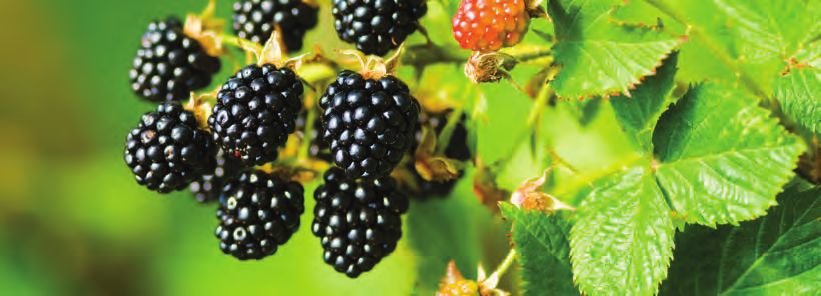
ican Harvest Fruit and products are
 available at retailers in the Garden
Independents Network, a group of
 innovative, independently owned
garden centres across New Zealand.
     Country Dog Garden Centre, Paeroa
       Décor Gardenworld, Tauranga
    Touchstone Garden Centre, Gisborne
  Big Jim’s Garden Centre, New Plymouth
            Garden Edge, Hawera
Green Door Garden & Décor, Havelock North
    Springvale Garden Centre, Wanganui
      Harrisons Gardenworld, Feilding
      Harrisons Gardenworld, Waikanae
           Garden Barn, Masterton
  Twigland Gardener’s World, Wellington
  Terra Viva Home & Garden, Christchurch
 Lushingtons Garden Gift & Café, Ashburton
You can also read


