What You Need To Know About Financial Aid - Presented by MiraCosta College - Sunset High School
←
→
Page content transcription
If your browser does not render page correctly, please read the page content below

What You Need To Know
About Financial Aid
        Presented by MiraCosta College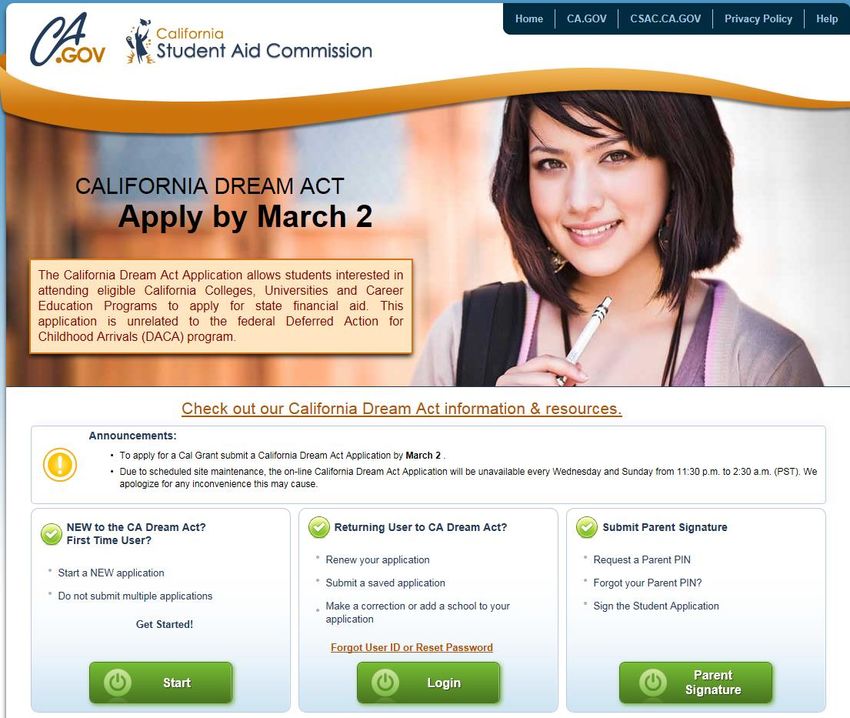
Topics we will cover

Major Steps to Financial Aid
How to Complete the FAFSA/Dream Act
Application

Determining Financial Need

Types of Financial Aid Available

Resources/Important Information
What is financial aid?
   Financial aid consists of funds
provided to students and families to
    help pay for postsecondary
       educational expenses.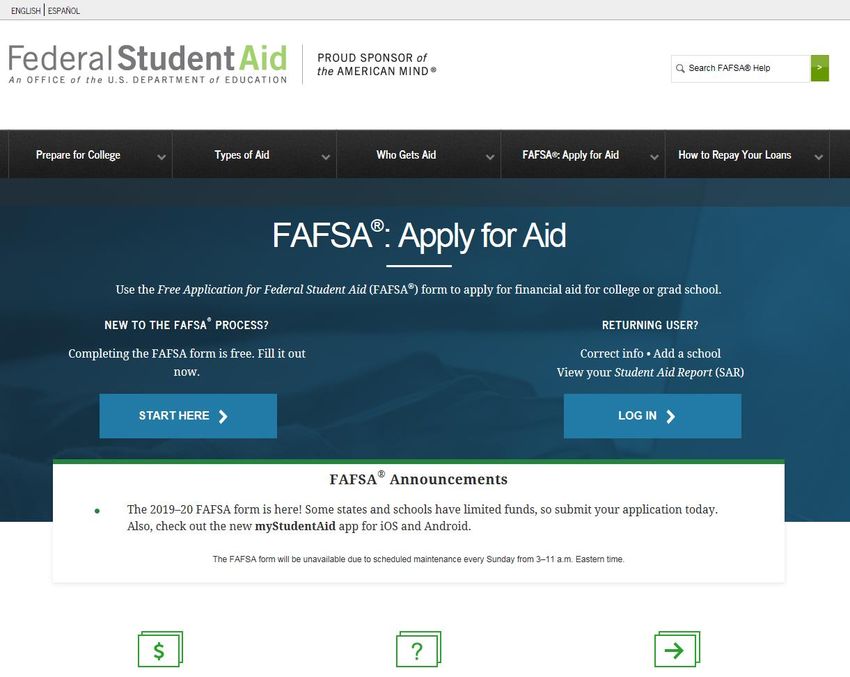
FINANCIAL AID PROCESS

        1. Apply               2. Email         3. To-Do List
     Complete FAFSA        Receive Estimated   Submit additional
      or DREAM Act           Award Notice         documents
       Application
     GPA Verification

4. Review/Revision            5. Payment is           6. Maintain
Changes/Tying up Loose          Disbursed             Satisfactory
           Ends                                        Academic
Financial Aid Awards May                                Progress
         Change

        Stay connected! Communicate any major
           changes to the Financial Aid Office.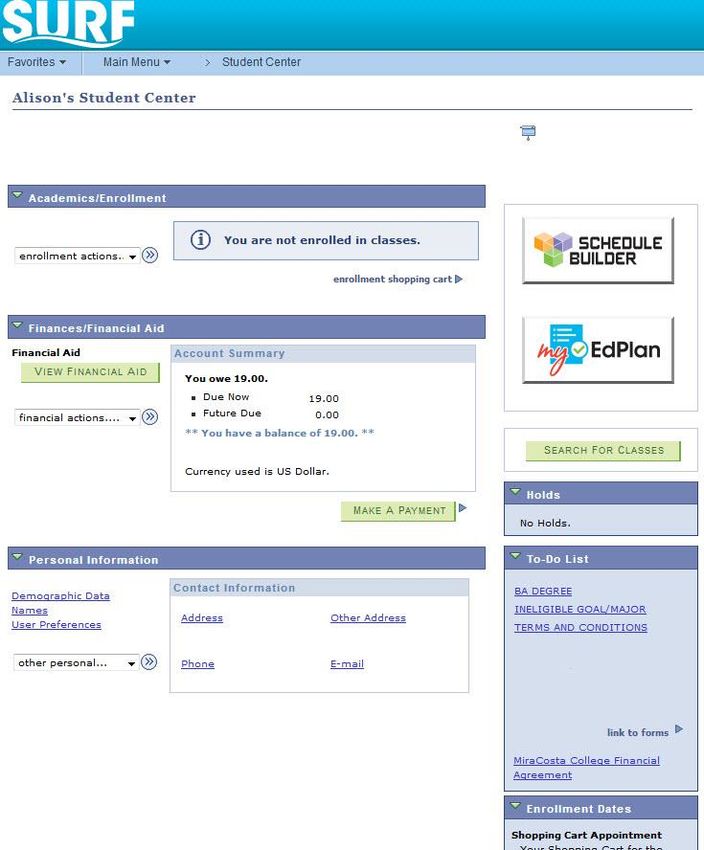
FAFSA
FREE APPLICATION for FEDERAL STUDENT AID
fafsa.gov
U.S. Citizen or Eligible
Non-Citizen
Social Security Number
(not through DACA)
High School Diploma,
GED, or the equivalent
Register for Selective
Service (males 18-25)
5
DREAM ACT APPLICATION
dream.csac.ca.gov
Undocumented
Students
AB540/ AB2000/ SB68 Eligible:
Attended the required
combination of elementary,
secondary, or post secondary
schools in CA
Graduate from California high
school or equivalent
Register at an accredited
institution of higher education
in California
Affidavit of student without
lawful immigration status
Register for selective service
(males 18-25)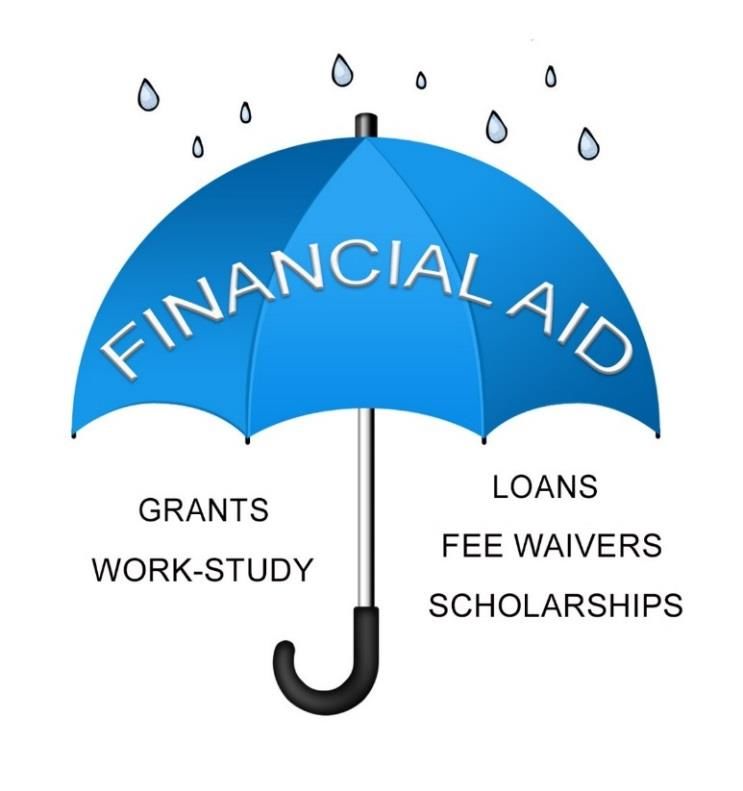
FAFSA or Dream Act
Application
A standard form that collects demographic and financial
information about the student and student’s family.
For 2019-2020, income from 2017 will be used to
calculate eligibility.
Information is used to calculate the Expected Family
Contribution (EFC)
Stays the same at all colleges
Colleges use EFC to determine student’s financial need
Cost of attendance differs from college to college
One application for up to ten (10) schools at a time
Complete application every year
Applications are available October 1st for the following
school year
Documents
Before starting the 2019-2020 FAFSA or Dream
Act Application, gather:
Student’s Social Security Card (if applicable)
Student Alien Registration Card (if applicable)
Parent(s) Social Security Card
If a parent does not have a SSN, use all zeros on application
Student Driver’s License Number
Student and Parent
2017 W-2 forms and records of money earned and other
taxable benefits
2017 federal income tax form
Current bank statements
Business, farm, and other real estate records
Records of stocks, bonds, and other investments
Records of untaxed income
Create a file for copies of all financial aid documents submitted
Federal Student Aid ID
       (FSA ID)
                         Student and
                          one parent
                         will need an
                           FSA ID in
                         order to sign
                          the FAFSA.

                          Cannot use
                           the same
                         email address.
Select Correct Aid Year
FALL 2019 - Summer 2020 = 2019-2020 FAFSA/Dream App
FALL 2018 - Summer 2019 = 2018-2019 FAFSA/Dream App
Helpful Tools
Student Information

                      Use full legal name
                      as it appears on
                      your Social Security
                      card!

                          Because the FAFSA
                             belongs to the
                           student, "you" and
                         "your" always (unless
                         otherwise noted) refer
                             to the student.
School
Selection
Up to 10 schools can be
listed at a time
More schools can be
added after the
application has been
processed
For Cal Grant you must
list an eligible in-state
college; the order will
not impact your
eligibilityIf all these
Student Dependency Status questions are
"no”, you are
I was born before January 1, 1996 considered
I am married dependent for
federal aid.
I have children and I provide more than half of their support
I am serving on active duty in the U.S. Armed Forces
I am a veteran of the U.S. Armed Forces
I have dependents who live with me and I provide more than half
of their support
In the 2019-2020 academic year, I will be working on a master’s
or doctorate program
At any time since the age of 13, both my biological parents were
deceased
At any time since the age of 13, I was in foster care or I was a
ward of the court
I am currently or I was an emancipated minor
I am currently in a legal guardianship or I was in legal
guardianship until the age of 18
I am homeless or I am at risk of being homelessWho is considered a parent?
Married - provide information about both parents
Remarried – provide information about parent and stepparent
Widowed or single – provide information about that parent
Divorced or Separated – provide information about the
parent that you lived with most during the last 12 months.
(If you did not live with one parent more than the other, provide info. for
the parent who provided more financial support during the last 12 months).
Both BIOLOGICAL parents are unmarried and living
together – provide information for both parents
Do not include:
Grandparents, foster parents, legal guardians, older brothers or
sisters, and uncles or aunts
15Parent Information
Enter
parent’s
name
EXACTLY as
it appears on
social
security card.
If they do not
have a SSN
– use all
zeros.Household
Size
Includes
• Student
• Parent(s), including step-parents
• Other children if
(a) your parents will provide more than
half of their support between July 1, 2019
and June 30, 2020
OR
(b) the children would be considered
dependent for FAFSA purposes
• Other people, if they now live with your
parent(s) and your parent(s) provide
more than half of their support and will
continue to provide more than half of their
support between July 1, 2019 and
June 30, 2020Student AND Parent Financial Information
Have your 2017 income taxes by
your side!
If possible, use
the IRS DRT to
retrieve your
2017 income
tax info directly
from the IRS’
website!IRS Data Retrieval Tool
• Tax information can be transferred directly
from the IRS website to the FAFSA
• Participation is voluntary, but may reduce
additional documents needed by financial aid
office
• The following are not eligible for DRT:
conflicting marital status and tax filing status
filed married-filing separate
no SSN was entered
foreign or Puerto Rican tax return filedStudent and Parent
Asset Information
As of the day you submit the FAFSA:
• What is total current balance of cash, savings, and checking accounts
for student and parent(s)?
Don’t include student financial aid.
• What is the net worth investments, including real estate
for student and parent(s)?
• Include the balance of qualified tuition programs or education savings
accounts (ex. 529 plans, and Coverdell accounts).
• Do Not include the balance of qualified retirement accounts (IRA,
SEP IRA 401k, 403b, etc.)
• Do Not include the value of the home you live in.
• What is the net worth current businesses and/or investment farms for
student and parent(s)?
• Don’t include a family farm or family business with
100 or fewer full-time or full-time equivalent employees.
Detailed instructions regarding investments and businesses are on
the FAFSA/Dream Application.Sign and Submit
Confirmation and EFC
                       This is an estimated
                       EFC. The official EFC
                       will be determined
                       once the financial aid
                       process has been
                       completed by the
                       college the student
                       is attending.
Processing Results
• U.S. Department of Education/Federal
Student Aid notifies student that their
FAFSA was processed successfully
• Review Student Aid Report (SAR) for errors
• Update or correct application, if necessary
• FAFSA information is sent to school(s) electronically
• Once school receives information additional
documents may be requestedWhat is the Expected Family
Contribution (EFC)?
Calculated using data from a FAFSA application or Dream Act
application.
Stays the same regardless of college selected.
Your EFC is not the amount of money your family will have to pay
for college nor is it the amount of federal student aid you will
receive.
It is a measure of your family’s financial strength and is calculated
according to a formula established by law.
Your family’s taxed and untaxed income, assets, and benefits
(such as unemployment or Social Security) are all considered in
the formula. Also considered are your family size and the number
of family members who will attend college during the year.
Colleges use this to determine your federal student aid eligibility
and financial aid award.What is Cost of Attendance
(COA)?
Direct and Indirect costs combine into cost of attendance
Direct Cost:
Campus Fees
Tuition
Indirect Cost:
Books and Supplies
Room & Board
Personal Expenses
Transportation
**COA varies widely from college to collegeWhat is Financial Need?
Cost of Attendance (COA)
– Expected Family Contribution (EFC)
= Financial Need
*A student can receive any combination of aid
(need based or non-need based) up to their cost
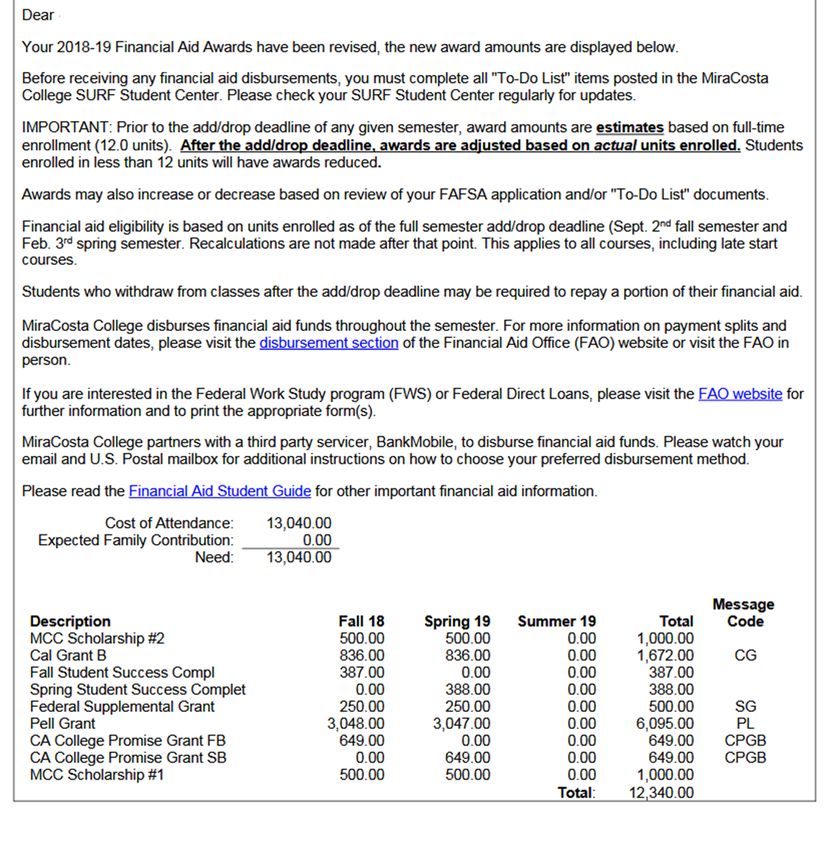
of attendance.*College Aid
Package
(Example)
27To-Do List
Return
documents
to the
financial
aid office
28Special Circumstances
Contact the financial aid office if there are circumstances which affect
the family’s ability to pay for college
Change in employment status
Death or serious illness
Change in marital status
Unable to obtain parent
information
Any other unusual circumstances
that affect a family’s ability to
contribute to higher educationFunding Sources
Where does the money come from?
• Federal
Largest source of financial aid
Primarily awarded on basis of financial need
Must apply each year using the FAFSA
• State
Residency requirements usually apply
Awarded on basis of both merit and need
Use information from FAFSA and/or state application
Deadlines vary by state
• Colleges and Universities
Awarded on basis of both merit and need
May be gift aid or self-help aid
Use information from FAFSA and/or state application
Deadlines and requirements vary by institution
• Private and Civic Organizations
Foundations, business, and various organization's
Deadlines and application procedures vary widely• Pell Grant
• Federal Supplemental Educational Opportunity
Federal programs
Grant (FSEOG)
• Iraq and Afghanistan Service Grant
• Federal Work Study (FWS)
Work on campus
Earn money to help pay for educational costs
Gain experience
Earnings are taxable but do not affect eligibility the following year
• Teacher Education Assistance for College and
Higher Education Grant (TEACH)
• Federal Loans: 5.05% interest rate*
(2018-19 undergraduate rate, 2019-2020 rates not available yet)
31• Residency requirements
• Fee Waivers
• CA College Promise Grant – CCC only
State Programs
• Cal Grant Programs
• Must submit FAFSA/Dream App and Cal Grant GPA
Verification by MARCH 2, 2019
• Cal Grant “A”, “B”, or “C”
• Middle Class Scholarship – UC/CSU
• Student Success Completion Grant– CCC only
• Extended Opportunity Programs & Services (EOPS)
• Chafee Grant (Foster Youth)
• DREAM Loan Program (UC & CSU only)
32WebGrants for Students
mygrantinfo.csac.ca.gov
Create your account to
get information
regarding your Cal
Grant eligibility.
33Colleges & Universities
• Institutional Funds
• CC - Promise Programs
• UC - Blue + Gold Opportunity Plan
• CSU - State University Grant
• Scholarships
• Institutional funds and Private donors
• Internships
• Career Center
• Private loans
• Use federal or state options first! 34Free college for one year!
Possible assistance with textbooks!
Be a First-Time/Full-Time (FT/FT) college student.
Attend MiraCosta College for the both fall 2019 and spring 2020
semesters
Enroll in and maintain enrollment in 12 units or more for both semesters
with a 2.0 GPA.
Meet CA residency requirements for tuition purposes (or be AB 540
eligible).
File the Free Application for Federal Student Aid (FAFSA) or a Dream
Act application and qualify for the California College Promise Grant
(CCPG)
FT/FT students that graduated from a high school within the MiraCosta
Community College District boundaries may also be eligible for
assistance with books and instructional supplies.
35Scholarships
CAN BE NEED BASED OR NON-NEED BASED
Good Grades
Athletic Ability
College Major
Special Talents
Heritage
Tribal
Community Service
Americorps
**NOTE: Scholarship searches should always be FREE!
STAY AWAY from anyone who charges you for a
scholarship search!Important Information
Resources Reminders
MiraCosta College Financial Aid Office • Applying for financial aid
miracosta.edu/financialaid and scholarships
(760) 795-6711 is FREE
Federal Student Aid Information Center:
studentaid.ed.gov
• Only use the Government
1-800-4FED-AID
websites
Hearing Impaired: 1-800-730-8913
fafsa.gov
California Student Aid Commission (CSAC) dream.csac.ca.gov
csac.ca.gov or calgrants.org
1-888-224-7268
I Can Afford College
icanaffordcollege.com
FAFSA/Dream Act tutorials
youtube.comThank you! Questions?
You can also read


