Wisdom Computing: creative collaboration between humans and machines - Tsuyoshi Motegi Japan Science and Technology Agency
←
→
Page content transcription
If your browser does not render page correctly, please read the page content below
Wisdom Computing: creative collaboration
between humans and machines

                Tsuyoshi Motegi
      Japan Science and Technology Agency
Wisdom Computing: creative collaboration between
humans and machines

                   Kazuo Iwano
       Japan Science and Technology Agency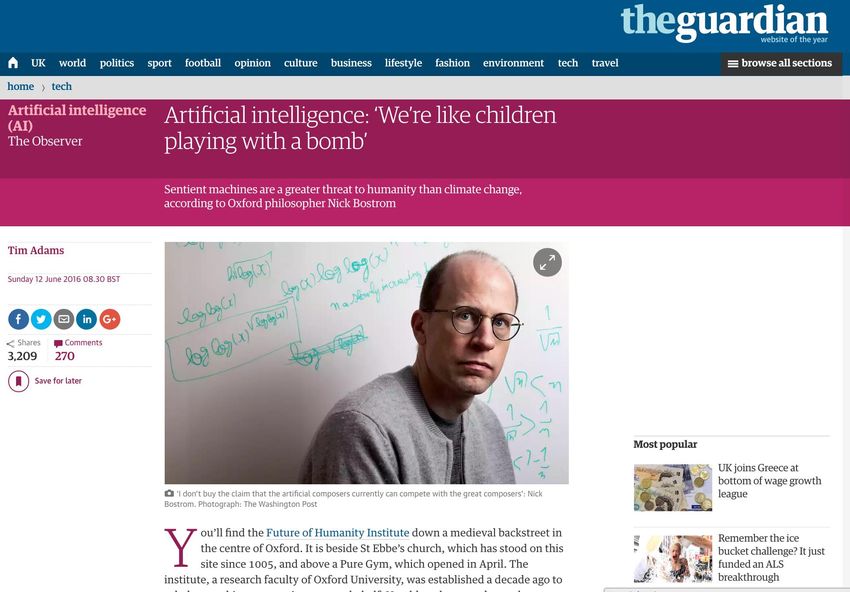
•0. (2) Introduction of Panelists
     Agenda
•1. (10) Kazuo Iwano “Wisdom Computing: our aims and challenges”

• 2. (10) James Wilsdon
• “How can we design policies to anticipate and navigate the unforeseeable outcomes of
  advances in science and technology?”

• 3. (10) Nicole Dewandre
• "Game over for Modernity! Time to shift from the rational subject to the relational self, as
  proxy for human beings”

• 4. (10) Norihiro Hagita
• "Intelligent Information Processing Systems Creating Co-Experience Knowledge and Wisdom
  with Human-Machine Harmonious Collaboration”

• 5. (33) Tateo Arimoto, Moderator of this panel
Wisdom Computing: creative collaboration between
humans and machines
ビッグデータ時代におけるICTの社会的役割
Wednesday, 27 July 2016, 14:15 – 15:30

Kazuo Iwano, Principal Fellow
Center for Research and Development Strategy
Japan Science and Technology Agency

Past and Now

                      1950
               The Imitation Game
                    Turing Test

                                    2014 “Eugene Goostman” passed the Turing Test?

                                        2016 Google's AlphaGo Beat a Go World
                                                champion, Lee Sedol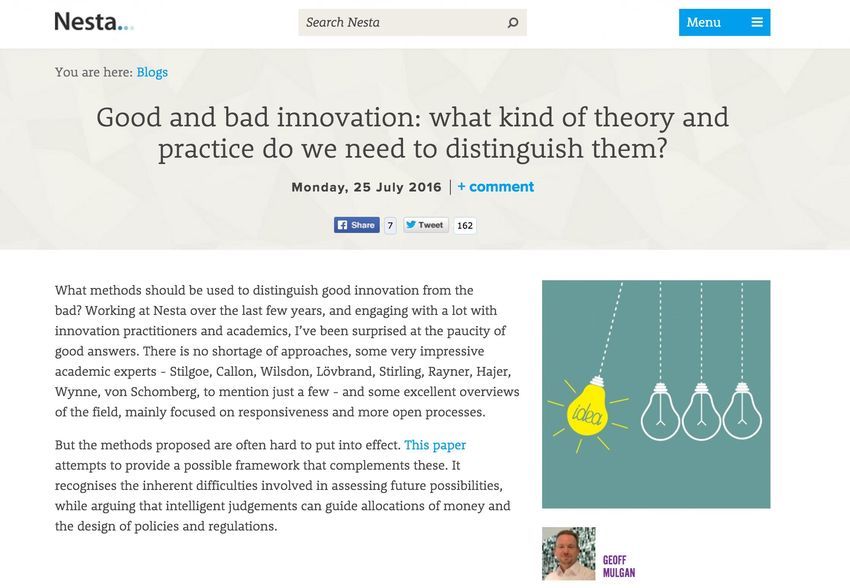
1. Frontier of IT is shifting from Business, Society, toward Mankind
• S&T’s
Things commitment
happening now to Society and its social responsibility
• Importance of SSH and ELSI
• Wisdom is now the front of the future R&D
SSH: Social Sciences and Humanity
ELSI: Ethics, Legal and Societal Issues
2. Sources of business values are shifting:
Things Services ecosystems
3. Various boundaries are blurring and vanishing
• Inseparable fusion of Cyber and Physical being (Reality 2.0)
• Relationships between Machines and Human beings
4. Identities and competition principles of individuals, communities, institutes, and
nations will be fundamentally changed
New services and occupations will appear
Maturity level of IT will matter for powers of nations, institutes, and individuals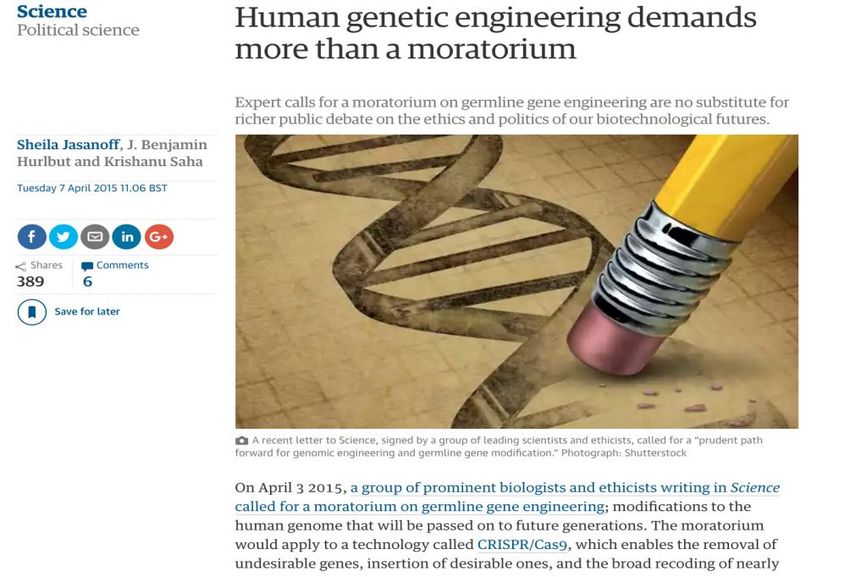
Frontier of Information Technology
   Establish new relationship among the whole things,
   in particular, People and Machines, and create new values

                     The whole things (Man, People, Machines)
                                     Wisdom

                      IT as a Social Critical Infrastructure
                                                   community
               IT as a Business                       Physical Infrastructure
               Critical Infrastructure                Law, Institutions
           Bank, Manufacturing, Logistics, …      Shared vision and value
                                                     Social services
                   Security, dependability        Data model
                             Societal architecture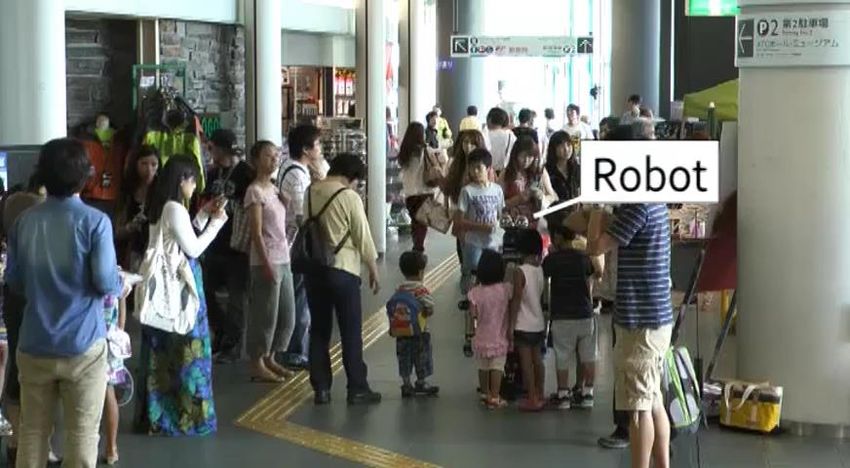
Sources of business
Changes happening values
around are shifting:
things
Things Services ecosystems
Ecosystem of functions
Function
service
things
Software Defined Society

 Realize (substantiate) various ecosystem through lenses
                                             Realization Lense
                 REALITY2.0 Service platform

                                                                                                 Startups support platform 1
                                                                                                 社員教育
                                                                                                          知材   調査

                                                                                                 高度技術支援

                                                                                        法定文書作成
                                                                                                               情報技術環境
                                                                                                 ファイナンス

                                                                                                  物流      調達   会計
                                 Group of functions
   Data, IT Infra, Technicians, Prototyping, Finance,
   Survey, Medical services, Personnel, Marketing,
   Design, Education, Consulting, Legal, Patens, Audit, Education etc.   Realization Lense       Startups support platform 2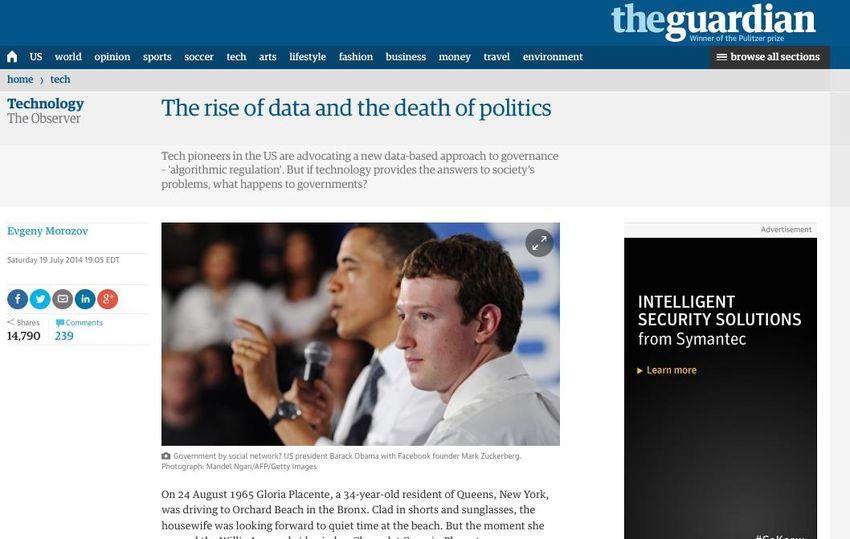
New era called “REALITY 2.0” is coming
An Inseparable fusion of cyber and physical things will become a reality
Cyber + Physical (REALITY1.0) ー> REALITY 2.0
Everything will become a module (lego) to be assembled for realizing a value
“ecosystem of functions”
Cyber
Cyber Cyber
Physical Physical Physical
REALITY1.0 REALITY2.0Wisdom Computing
DIKW model and our challenge

   Our challenge

   “Redefining Fundraising – Data”, Posted on September 6, 2011 by Curt Swindoll
   http://www.pursuant.com/blog/tag/dikw-model/
Shape of Future Services

 People/Community/Machines                           Services
                                 1. Situation
                                                                          Wisdom
                              2. Suggest
                                                                         Knowledge
                              Options
                                 3. Interaction
                           4. Select/Decide/Behave

     • Service suggests options with risks after understanding the situation,
       and then interact with people to reach a satisfactory choice
     • How can people/community reach a wise/wiser decision?
        • Value sharing, Philosophy, Consensus building, Social acceptance
        • Policy design, Norm
        • Messages/Incentives
     • Accumulated wisdom and knowledge help to create better options
Wisdom Computing (2013)
"Wisdom Computing" is our initiative to make our world more intelligent and lead us to
wiser decisions under our complicate and ever changing situations. We will be able to
explore, discover, and accumulate wisdom, predict and transfer it, and more actuate things
in the world with wisdom. We, thus, can lead us human being a better existence with
machines.
Creation, Accumulation, Acceleration of prediction Actuation of Wisdom
Propagation, Search of and discovery
Wisdom ① ② ③
Platform ④
Policy ⑧
Accumulation Propagation Exploration Prediction, Actuation
Discovery
Learn from Learn from Learn from
ELSI, SSH Community and Human and Life Computer Science
Mass ⑦
⑤ ⑥
Law Economy Sociology Management Biology Medicine PhycologyImplementation of Wisdom Computing
Group Machine
Services Expert
Researcher
Social system
Specialist
Consensus building
Citizen service Optimum control
Education/training
Discovery support service service
Optimum data
service service
Proposal/advice
Question answering
service For people For systems to change
service to live wisely the living of people wisely
Service Platform with Applications
Knowledge
Wisdom of crowds
Knowledge agent
Specialist Knowledge
agent Knowledge Knowledge
Knowledge Knowledge Practical knowledge
Literatures/ Knowledge system Life log agent
agent WEB SNS agent
papers agent agent Crowd sourcing
Encyclopedia
Craftsman
Internet Social Life log
Information Sources networkWisdom (Oxford Dictionary)
The quality of having experience, knowledge, and good judgment;
the quality of being wise: listen to his words of wisdom
1.1 The fact of being based on sensible or wise thinking:
some questioned the wisdom of building the dam so close to an active volcano
1.2 The body of knowledge and experience that develops within a specified society or period: Eastern
wisdom
Chie, 智慧
Power to attain spiritual Enlightenment; Grasp things as they are and
ascertain the truth of thingsSSH and ELSI aspects of “Wise Computing”
Discussion from the AAAS Panel on “Wise Computing” in 2013
1. Readiness: Steps toward wise computing
technical
people/social/government readiness
2. Power and Trust
Power of Institutes and Smart & Intelligent system
will become beyond our imagination.
3. How can we raise up intelligence of Mankind? Level of Maturity?
4. Humanity and Science – Vilnius declaration
5. Wisdom
co-creating value
rights and responsibility
raise capability of community
empathy SSH: Social Sciences and Humanity
ELSI: Ethics, Legal and Societal Issues
6. Reality 2.0Key Questions 1. What wisdoms do we realize within ourselves and society and how? 2. How can we be wiser as an individual, community, society, and/or Mankind? How can we lead us to a wiser decision? 3. What is the identity we establish when facing an enormous advancement of technology? How can Wisdom Computing, Social System, and ways of thinking answer the above? Technology, Service Platform, Software Defined Society, Social System, Education, Community, R&D
Wisdom Computing: creative collaboration between
humans and machines
ビッグデータ時代におけるICTの社会的役割
Wednesday, 27 July 2016, 14:15 – 15:30

                                                         Kazuo Iwano, Principal Fellow
                                         Center for Research and Development Strategy
                                                 Japan Science and Technology Agency
Appendix
20• When facing a seems-to-be profound impact to society, business, and individuals caused by ever-accelerating progress of Science and Technology, especially Information Technology (IT), we rather stop and stand here and now to think the following. That is, 1) what kind of society we aim with harmonious relationship with technology, 2) what value we pursue to create in society and/or business, 2) how we, humankind, can be wiser for various issues, 3) how we design social system, services, and policies, 4) what kind of relationship we establish among people and machines, 5) how we can reach the wisdom to survive or enrich our coming future, 6) what kind of research we pursue to attack the above questions by utilizing the advancement of Information Technology. Since these questions address society, human being, and values, we are sure to gain various courses of actions from the discussion in the context of SSH (Social Sciences and Humanities) and ELSI (Ethics, Legal and Societal Issues). Moreover, to answer the last question, we initiated what we call “Wisdom Computing” research program in 2013. •
• "Game over for Modernity! Time to shift from the rational subject to the relational self, as
  proxy for human beings”
• Ms. Nicole Dewandre is advisor for societal issues to the Director General of the
  Directorate General for Communications, Networks, Content and Technologies (DG
  CONNECT) at the European Commission. She shares her wisdom on technology and
  societal issues, and presents the main conclusions of the Onlife Manifesto, calling for
  rethinking what it is to be human in a hyperconnected era.

• “How can we design policies to anticipate and navigate the unforeseeable outcomes of
  advances in science and technology?”
• James Wilsdon, Professor of Research Policy and Director of Impact and Engagement
  at the University of Sheffield, will address these debates from a policy perspective. How
  can we design policies better able to anticipate and navigate the unforeseeable
  outcomes of advances in science and technology? What progress has there been in
  developing new frameworks for responsible research and innovation?
Strategic Objective (FY2014 MEXT)
•“Development of intelligent information processing technology to realize creative
collaboration between human and machines”

•Research Supervisor (PO)
                    •Norihiro Hagita
                    (Board Director, Director, Social Media Research Laboratory Group, ATR:Advanced Telecommunications
                    Research Institute International)

•Research Area Advisors
   •Akiko Aizawa (NII: National Institute of Informatics)
   •Miwako Doi (NICT: The National Institute of Information and Communication Technology)
   •Minoru Etoh (NTT DOCOMO, INC.)
   •Hiroshi Ishiguro (Osaka University)
   Kazuo Iwano (Mitsubishi Corporation, JST/CRDS)
   •Masahiro Kobayashi (HANAMIZUKI LAW OFFICE)
   •Eisaku Maeda (NTT: Nippon Telegraph and Telephone Corporation)
   •Kenji Mase (Nagoya University)
      http://www.jst.go.jp/kisoken/crest/en/research_area/ongoing/areah26-2.html
Tateo Arimoto (Moderator) •“We are facing the age of great transformation. ICT •revolution has been giving us opportunities and challenges for new values and social system. How to build cyber –physical society for peace and sustainability with trust among stakeholders. What kind of science and science system we need under the changing world.” •Tateo Arimoto is currently Professor and Director, STI Policy Program at the National Graduate Institute for Policy Studies and Principal Fellow, CRDS at Japan Science and Technology Agency.
Another View of Information Technology

                           Wisdom
                                             Wisdom Computing
                         Information

                           Service              REALITY2.0
                         Application

                              SW

                              HW

                  Device, Sensor, Actuator
Societal Revolutions in REALITY 2.0 era
Cyber
information
Physical
Cyber operation
Societal service platform realizing
“ecosystem of functions”
Physical
machine
Cyber human human
REALITY 2.0 = machine
Cyber + Physical (REALITY 1.0) machine
Physical
human
Eecosystem based on new relationships among
machines and humansEssence of
Services areService
to provide functions (legos) in Society
Functions
Functions in Society
Data, IT Infra, Technicians, Prototyping, Finance,
Marketing research, Medical services, Personnel, Marketing,
Design, Education, Consulting, Legal, Patens, Audit, Education etc.Wisdom Computing: creative collaboration between humans and machines How can we design policies to anticipate and navigate the unforseeable outcomes of advances in S&T? James Wilsdon @jameswilsdon University of Sheffield
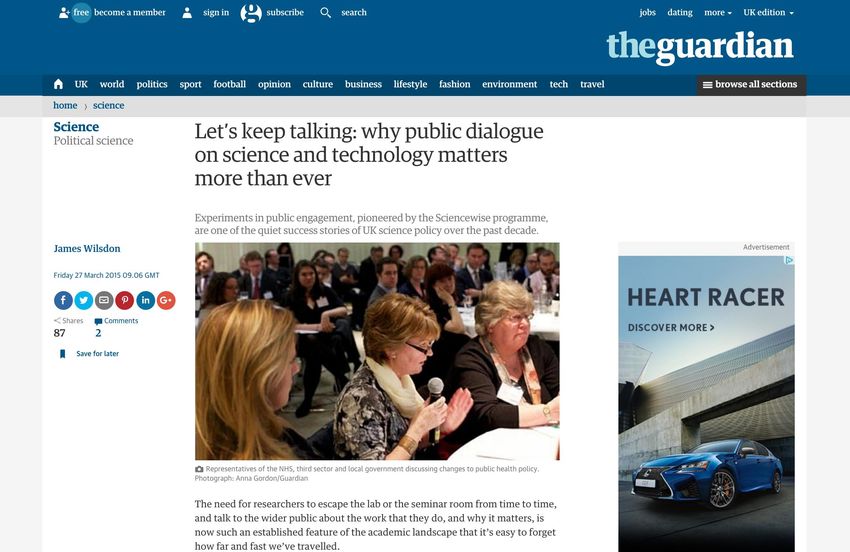
Gartner's 2015 Hype Cycle for Emerging Technologies
‘The task of designing systems of
regulation and practice that are based on
rigorous evidence and well- informed
public debate is difficult. In some areas,
regulatory systems have become sclerotic
and stifle growth. In others, ambiguity
about ‘who is accountable for what’ acts
as an inhibitor.
Debates about risk are often highly
technical while, at the same time, being
at least as much about values and
choices, about who benefits and who
pays. Social, political and geographical
contexts matter hugely….When
governance goes wrong, we can miss out
on major potential benefits, or suffer
needlessly.’

Sir Mark Walport & Claire
Craig, UK Government
Office for Science (2014)
3 August, 2016 Campaign for Social Science 42
Andy Stirling
(2010)
Keep it Complex.
Nature, 468. pp.
1029-1031.
Stuck between the old model & the new?

Old model of expertise         New model of expertise
Closed                         Open
Homogenous                     Diverse
Hubristic                      Humble
Demanding public trust         Trusting the public
Expecting expert consensus &   Expecting plural and
prescription                   conditional advice
Managerial control             Distributed control
Presenting the evidence        Presenting, evidence, judgment
                               and uncertainty
http://www.globalscienceadvice.org/
@jameswilsdon
j.wilsdon@sheffield.ac.uk
Game over for Modernity!

           Nicole Dewandre

Advisor for societal issues, DG CONNECT
Game over for Modernity!
Time to shift from the rational subject to the relational
self, as proxy for human beings
Nicole Dewandre
Advisor for societal issues, DG CONNECT
nicole.dewandre@ec.europa.eu
@NicoleDewandre
TEDx talk : https://www.youtube.com/watch?v=VcGywYSJlf0Onlife
« Sticky » interactions (social hypergravity)
« Sticky » environment (reactive and talkative)
Once upon a
time….
DAE
i-2010
ESPRIT On-line Onlife
Off-line
time
todayLeft over from Modernity…
Alone Control
and his rational subject…Left over from Modernity… and his rational subject… …haunted by perpetual doubt
Left over from Modernity…

                                         other

and his rational subject…                lower
Human
Towards the relational self

Equality                  Uniqueness

           Plurality
            Rational subject

       Relationality
Towards the relational self
Recognition Orientation
from humans in the world
Relational
Self
(foregrounding
plurality)
Control
Freedom on toolsmaterial connectivity human relationality
Relational Self

Attentional
sphere
https://ec.europa.eu/digital-single-
market/en/onlife-initiative
Rethinking public spaces in the digital transition
Rethinking the human condition in a hyperconnected era: why freedom is not
about sovereignty but about beginnings
The Human Condition and the Black Box Society
TEDx talk: Staying human in a hyperconnected era!
Thank you for your attention!Wisdom computing: creative collaboration
between humans and machines
Norihiro Hagita
Advanced Telecommunications Research Institute
International (ATR)Intelligent Information Processing Systems
Creating Co-Experience Knowledge and Wisdom
with Human-Machine Harmonious Collaboration
Norihiro Hagita (ATR)The Balanced or Harmonious Collaboration Not only users but also human society may feel the services of machines (or systems) acceptable in the human-machine collaboration.
Congestion Coming from Robotic Services
   in Human Populated Environment
                                          From
                                          JST Crest
                                          Project

                                          By T. Kanda
                                             (ATR)
Human-Robot “Harmonious” Interaction
In Human Populated Environments
Criterion 1 From
Maximizing the number of Pedestrians JST Crest
persons with they meet Project
User(s)
Robotic Harmonious By T. Kanda
Services Interaction (ATR)
Criterion 2
minimizing the influence The others
on walking discomfortReal Time Simulator for Detecting Congestion
From
JST Crest
Project
By T. Kanda
(ATR)Escaping from Children‘s Abuse of Social Robots
while a Robot is patrolling
Robot
Drazen Brscic et.al: Escaping from Children's Abuse of Social Robots, From JST Crest
The 10th ACM/IEEE International Conference on Human Robot Interaction (HRI2015), Project
Best Enabling Field Studies Award, Portland, Oregon, March 5th, 2015. By T. Kanda (ATR)
65If the user believes (android) robots (companions), ・・・
Hello, Yoko Kato-san. Did you
like the bag you bought in Why do you know my name
Tokyo last weekend? and what I bought in
Tokyo?
From
JST Crest
Project
In 2010-2014
By H. Ishiguro
(ATR)Telenoid (Robot Companion) allowing elderly to remotely communicate
with the others
From
JST Crest
Project
In 2010-2014
By Hiroshi Ishiguro
(ATR)IEEE Spectrum , 50th Anniversary Issue (June, 2014) Beyond Words Self-Driving Car The End of Disability
RoboLaw Final Report(2014/9/28)
                     http://www.robolaw.eu
D6.2 Guidelines on Regulating Robotics 215pages
Table of Contents
Introduction
1. The roadmap towards the
       “Guidelines on regulating robotics”
2. Self-Driving Cars
3. Computer integrated surgical systems
4. Robotic Prostheses
5. Care Robots
Conclusions
Implication from Conclusion in RoboLaw (EU FP7)
(1) Do robots deserve a special case?
we may discuss whether robots deserve a special case in order to justify a
change in the existing legal paradigm to accommodate these new technologies
(2) The role of ethics in regulating emerging technologies
it is necessary to clarify the direct and indirect role ethics can play in
regulating technology, in particular by extending the object of the analysis
from the artefact to include its meaning – and moral implications – for society,
the way it is conceived and designed, and ultimately how it shapes the
knowledge and democratic culture of technology.Implication from Conclusion in RoboLaw (EU FP7)
(3) Robotics overcoming human vulnerabilities and capabilities
it is important to realise that vulnerabilities do not disappear through
technological interventions, but often change in scope or character, and new
vulnerabilities arise as side-effects of risk-reducing interventions
(4) Human enhancement technologies: reframing the debate and policy suggestions
robots can not only restore functioning, but also improve functioning beyond
“normal” or “average”, and we can envision that at some point, also ‘normal’
people may want the benefit of prosthetics or companion robots, which will
provide new regulatory challenges of ethical assessment and distribution of
resources.Thank you for your kind attention
Wisdom Computing: creative collaboration
between humans and machines

                 Tateo Arimoto
      Japan Science and Technology Agency
Panel
Moderator:
Tateo Arimoto (Japan Science and Technology Agency)
Panelists:
Nicole Dewandre (Directorate General for Communications
networks, European Commission)
Norihiro Hagita (Advanced Telecommunications Research Institute
International, Japan)
Kazuo Iwano (Japan Science and Technology Agency)
James Wilsdon (Professor of Research Policy / Director of Impact
74
and Engagement, University of Shefield)Issues 1. What is at stake when we design socio-technical systems, services, and policies? 2. What should be roles and responsibilities for the scientists, engineers and individuals in a society? 3. What does the wisdom computing mean for you? 75
You can also read


