Women's empowerment for sustainable rural livelihoods: Uni ...
←
→
Page content transcription
If your browser does not render page correctly, please read the page content below
ICDD Working Papers1 | Paper No. 24 | Dec 2018

                                 Akua Opokua Britwum, Angela Dziedzom Akorsu, Loretta Baidoo

                                 Women’s empowerment
                                 for sustainable rural
                                 livelihoods:
                                 Voices from selected communities in Ghana

                                 The International
                                 Center for Development
                                 and Decent Work

-- ICDD WP24_Britwum_02.indd 1                                                                 26.11.18 13:19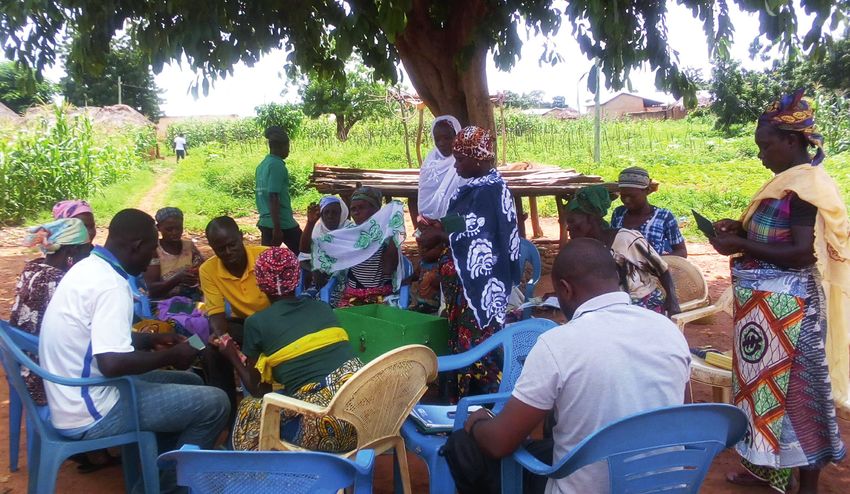
Akua Opokua Britwum (PhD) is an Associate Professor at the Department of Labour and Human Resource
Studies, University of Cape Coast, Ghana. She has researched and published in the area of gender and labour
relations and is currently researching comparing the postcolonial development strategies of Ghana and
Tanzania. Her most recent publication is: Britwum Akua O. (2018) Organizing Rural Women in Ghana since
the 1980s: Trade Union Efforts and ILO Standards in Boris, E; Hoehtker, D and Zimmermann, S (Eds) Women’s
ILO, Transnational Networks, Global Labour Standards and Gender Equity, 1919 to Present. Lieden: Brill.
Angela Dziedzom Akorsu (PhD) is a Senior Research Fellow and Head of the Department of Labour and
Human Resource Studies, University of Cape Coast, Ghana. Her current research is around informal economy
organising, decent work along agricultural value chains as well as gender and rural women’s livelihoods. Here
most recent publication is: Akorsu, A. D., & Britwum, A. O. (2018). Trade Union’s Response to Decent Work
Deficit among Agricultural Workers in Ghana. In C. Scherrer, & S. Verma, Decent Work Deficits in Southern
Agriculture: Measurements, Drivers and Strategies (pp. 251-272). Augsburg Munchen: Rainer Hampp Verlag.
Loretta Baidoo holds a Mphil in Development Studies from the University of Cape Coast, Ghana. She
previously worked as a research intern at the Centre for Gender Research, Advocacy and Documenta-
tion, University of Cape Coast. She is currently a Project field Officer with the Department of Nutrition
and Food Sciences, University of Ghana. Her research interests are in gender, livelihoods and women’s
studies. Her most recent research is on improving the livelihoods of women fishers along Ghana’s
Coast, as well as collective organizing among waste pickers in Ghana.
Editorial Board
Prof. Dr. Scherrer (University of Kassel)
The ICDD Working Papers are peer-reviewed.
Contact Address
Prof. Dr. Christoph Scherrer
ICDD – University of Kassel, Germany
Mailing address: Mönchebergstr. 19, D-34109 Kassel
Visitors’ address: Kleine Rosenstr. 3, D-34117 Kassel
Contact: felmeden@icdd.uni-kassel.de
Design / Layout: Nina Sangenstedt, gestaltvoll.de
ICDD Working Paper 24
ISBN: 978-3-7376-0630-1 (print)
ISBN: 978-3-7376-0631-8 (e-book)
DOI: http://dx.medra.org/10.19211/KUP9783737606318
© International Center for Development and Decent Work. All rights reserved.
The material in this publication may not be reproduced, stored or transmitted without the prior permis-
sion of the copyright holder. Short extracts may be quoted, provided the source is fully acknowledged.
The views expressed in this publication are not necessarily the ones of the ICDD or of the organization
for which the author works.
First published 12 / 2018 in Kassel, Germany
Publishing House:
kassel university press GmbH
www.upress.uni-kassel.de
-- ICDD WP24_Britwum_02.indd 2 26.11.18 13:19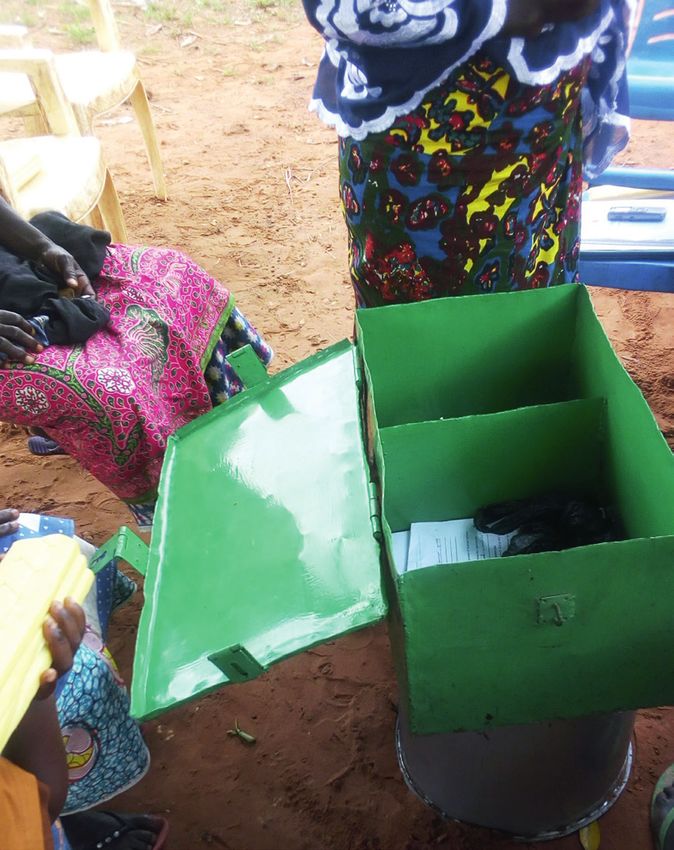
Akua Opokua Britwum2, Angela Dziedzom Akorsu3, Loretta Baidoo4
Women’s empowerment
for sustainable rural
livelihoods:
Voices from selected communities in Ghana
1 See Cover: The authors are grateful for research grants from the International Centre for Development
and Decent Work, University of Kassel Germany and the Directorate of Research and Innovation,
University of Cape Coast, Ghana.
2 Corresponding author Email: aobritwum@ucc.edu.gh; Mailing Address: Department of Labour and
Human Resource Studies, School for Development Studies, University of Cape Coast, Ghana.
Phone +233 208150869
3 Email: aakorsu@ucc.edu.gh
4 Email: loretta.baidoo@stu.ucc.edu.gh
-- ICDD WP24_Britwum_02.indd 1 26.11.18 13:19ICDD | Women’s empowerment for sustainable rural livelihoods: Voices from selected communities in Ghana.
Contents
Abstract ............................................................................................................. 3
i List of abbreviations ..................................................................................... 4
1 Introduction ..................................................................................................... 5
2 Research methodology and related issues ......................................... 7
3 Exploring empowerment and women’s social positioning ......... 11
3.1 Empowerment as a process and outcome .............................................. 12
3.2 Power in empowerment ........................................................................... 14
4 Giving expression to empowerment: findings from the field ... 17
4.1 Women’s social positioning ...................................................................... 17
4.2 Women’s social positioning ....................................................................... 19
4.3 Women’s expanding spheres of influence ............................................... 21
4.4 Conception of Empowerment .................................................................. 22
4.5 Women exercising power ......................................................................... 25
4.6 Men and women’s empowerment ........................................................... 27
5 Conclusions .................................................................................................... 29
References ...................................................................................................... 31
ICDD Working Paper Series ...................................................................... 34
-- ICDD WP24_Britwum_02.indd 2 26.11.18 13:19ICDD | Women’s empowerment for sustainable rural livelihoods: Voices from selected communities in Ghana.
Abstract
Agricultural interventions are designed on certain assumptions of empowerment that
do not necessarily address the livelihood constraints of the rural women they set out to
support. This is a failing that might be due to the omission of women’s voices express-
ing their understanding of empowerment and its relation to existing gender orders.
Using primary data from the Upper East and Northern Regions in Ghana, we explored
women and men’s notions of the processes and outcomes of empowerment. We began
by understanding the basis of women’s disempowerment and confirmed its location
within agricultural production relations that granted women limited access to resources.
Respondents recognised all the main dimensions of power: within, with, to and over.
The restrictions of women’s empowerment to the provisioning role on condition that
it did not usurp male power over women limited intervention’s ability to provide true
empowerment for women. But signs of increasing transfer of women’s power within into
group action and male acceptance of women’s expanding spheres of influence indicate
that some grounds for true transformation in the future exists.
Key words: agricultural interventions, disempowerment, livelihoods,
power, rural women
3
-- ICDD WP24_Britwum_02.indd 3 26.11.18 13:19ICDD | Women’s empowerment for sustainable rural livelihoods: Voices from selected communities in Ghana.
i List of abbreviations
CEGRAD Centre for Gender Research, Advocacy and Documentation
COL Commonwealth of Learning
DAWN Development Alternatives with Women for a New Era
DWA Decent Work Agenda
FGD Focus Group Discussion
FNV Federation of Netherlands Trade Unions
GAD Gender and Development
GAWU General Agricultural Workers Union
IITA International Institute of Tropical Agriculture
KPI Key Persons Interviews
L3F Lifelong Learning for Farmers
NR Northern Regions
ORGIIS Organisation for Indigenous Initiatives and Sustainability Ghana
RIRO Regional Industrial Relations Officer
RWOP Rural Workers Organisation Programme
SHGs Self-Help-Groups
TUC Trade Union Congress
UCC University of Cape Coast
UER Upper East Region
URBANET Urban Agricultural Network, Ghana
UWR Upper West Region
WID Women in Development
4
-- ICDD WP24_Britwum_02.indd 4 26.11.18 13:19ICDD | Women’s empowerment for sustainable rural livelihoods: Voices from selected communities in Ghana.
1 Introduction
Rural women’s inhibited access to and control over productive resources in agriculture
has been documented in several studies (Doss, Truong, Nabanoga, & Namaalwa, 2012;
Britwum, 2009; Apusigah, 2009). Most of these studies have been concerned with the
implications of resource limitations for women’s livelihoods and the corresponding threat
to rural food security and poverty alleviation. In response, interventions to better wom-
en’s situation in rural agriculture have been designed, targeting resource restrictions and
related issues. The results of such interventions have been mixed: women adopting such
interventions were few and women who chose to be involved registered low outcomes.
Some of the findings of such research report, for example, that off-season livelihood
diversification interventions targeting women were unable to overcome constraints
posed by lack of access to productive resources (Baidoo, 2017). Some interventions
were noted to have left women worse off in terms of their labour burdens and in others
participating women have been pushed further into hardships from indebtedness due to
the need to purchase new seed varieties and agricultural inputs (Doss, Truong, Nabanoga,
& Namaalwa, 2012).
Explanations for the unsatisfactory outcomes of interventions for rural women’s live-
lihoods have included failure to account for women’s unpaid labour. Studies outlining
resource limitations revealed a strong connection between land tenure systems and
agricultural labour recruitment and rural women’s likelihood to adopt agricultural inter-
ventions (Britwum, Tsikata, Akorsu, & Aberese, 2014; Byerlee, Janvry, & Sadoulet, 2009;
Doss, Truong, Nabanoga, & Namaalwa, 2012; Geda, Kimenyi, & Mwabu, 2001; Olagunju
& Adebayo, 2015). Women’s positions within the agricultural production systems have
been noted to determine the extent to which the outcome of such uptake of interventions
will be beneficial (Britwum & Akorsu, 2016; Lemba, 2009). This is a fact that is sometimes
informed by trade-offs that women make to safeguard existing gendered orders (Brit-
wum & Akorsu, 2016; Mullaney, 2012). Other studies blame project conception derived
from the erroneous assumption that standardized policies stand to benefit women and
men equally (Yoong, Rabinovich, & Diepeveen, 2012; Byerlee, Janvry, & Sadoulet, 2009).
5
-- ICDD WP24_Britwum_02.indd 5 26.11.18 13:19ICDD | Women’s empowerment for sustainable rural livelihoods: Voices from selected communities in Ghana.
Several interventions ride on the goal of empowering women, seeking to address gen-
der imbalances within targeted communities. These interventions assume their own
conception of empowerment which do not necessarily meet the objective of easing the
livelihoods constraints of rural women. Neither do they comprehend the community
specific gender dynamics. Kabeer (1999) notes, however, that agricultural interventions
need to incorporate the choices of women, their achievements, or ‘realised capabilities’,
emerging from their strategic actions. The inclusion of women’s voices, expressing their
preferences, and interests are deemed important in devising gender responsive policies
(O’Neil, Foresti, & Hudson, 2007). This makes the need to detail rural women’s perspec-
tives on empowerment a key feature in the design of interventions to their benefit O’Neil
et al. (2007).
This document presents findings from a study that sought to generate an understanding
of gendered agrarian dynamics and rural women’s participation in agricultural interven-
tions. The overarching objective of the study was to explore rural women’s perceptions
of empowerment as well as the connection between livelihood interventions and their
empowerment. Additionally, the study sought to outline their notions of empowerment
and its supporting indicators. To meet these objectives the study set out to answer ques-
tions about the value placed on rural women’s positioning within agricultural production,
their perception of empowerment and men’s view of an ideal man to link up with an
empowered woman. Ultimately the study was interested in addressing how interventions
meet the empowerment needs of rural women.
The rest of the paper is organised into four sections. Section two describes the methodo-
logical decisions made in the course of the data gathering. Section three, titled, exploring
empowerment and women’s positioning reviews literature, while findings are discussed
in the fourth section. The conclusions are contained in fifth section.
6
-- ICDD WP24_Britwum_02.indd 6 26.11.18 13:19ICDD | Women’s empowerment for sustainable rural livelihoods: Voices from selected communities in Ghana.
2 Research methodology and related issues
Research seeking to unravel rural women and men’s meanings of empowerment has
historically adopted a qualitative design. This fact is buttressed by research scientists
who explain that the qualitative approach lends itself better to engaging its participants
in deep conversations to comprehend local dynamics (Neuman, 2011; Ritchie, Lewis,
Mcnaughton, & Nicholls, 2013). This study was interested in constructing meaning out
of participants’ views derived from their lived experiences. The study’s population as
a result, were female and male farmers in the Upper East (UER) and Northern Regions
(NR) of Ghana involved in agricultural interventions. Agriculture is the main source of
livelihoods in the above mentioned regions. A significant proportion of the population
is engaged in the cultivation of food and cash crops, and the rearing of small ruminants
and fowls for home consumption and income earning. There is, in addition, some rearing
of large livestock like pigs and cattle. These regions are known for the presence of sev-
eral interventions some led by state institutions, NGOs and private entities. They were
mainly directed at crop and livestock production (Britwum & Akorsu, 2016; Baidoo, 2017).
Additionally, the cultural dynamics in these regions presented more exciting possibilities
for a study seeking to understand rural women’s conception of economic empowerment
(Apusigah, 2009). The predominant ethnic group in the NR is Dagomba and in the UER,
largely Kassena-Nankana. Both reckon descent through patrilineage. This determines
who can access land and control its use. There are, in addition, culturally determined
and upheld norms about female and male on and off farm tasks that feed into notions
of entitlements to productive resources (Apusigah, 2009).
The selection of study communities was determined by the existence of a mix of agri-
cultural interventions and the nature of the sponsoring organisations in operation.
The main determining factor was interventions based on group formation. Three main
organisations that met this criterion were purposively selected based on the length of
the interventions and the variations in focus. Other factors were the nature of the organ-
ising institution and modes of organising. The selected organisations were the General
Agricultural Workers Union (GAWU), Urban Agricultural Network, Ghana (URBANET) and
Organisation for Indigenous Initiatives and Sustainability Ghana (ORGIIS).
7
-- ICDD WP24_Britwum_02.indd 7 26.11.18 13:19ICDD | Women’s empowerment for sustainable rural livelihoods: Voices from selected communities in Ghana.
The choice of GAWU was informed by the union’s widely acknowledged activities in
organising rural agricultural workers in Ghana since the 1970s. Established in the 1945,
GAWU is a workers’ union affiliated to the Trades Union Congress (TUC), Ghana. It
organises workers in formal enterprises as well as rural and urban informal economy.
GAWU organises and supports women and men workers in rural agriculture through
its Rural Workers’ Organisation Programme (RWOP). Key RWOP projects that GAWU
has implemented in recent times include the Decent Work Agenda (DWA) project in
collaboration with Federation of Netherlands Trade Unions, and the Lifelong Learning
for Farmers (L3F) project, implemented in partnership with Commonwealth of Learning
(COL) in Canada. The DWA project aims to support GAWU’s established union structures,
systems and processes at national, district and community levels to enhance union
benefit to workers in the Rural Informal Economy. The L3F project of GAWU in partnership
with COL seeks to empower rural smallholder farmers, especially women, to increase
their productivity and enhance livelihood security. The project, in addition, works to
consolidate the membership of GAWU SHGs, increase women’s access to leadership and
decision-making roles and responsibilities, and support members to start appropriate
agro-based enterprises with support from financial institutions and their own savings.
The second organisation, URBANET is a local NGO, a partner of the International Institute
of Tropical Agriculture (IITA). Set up in 2003, it operates mainly in eight districts in the
NR. URBANET seeks to implement interventions that build capacities of communities to
secure food and nutrition in an environmentally sustainable manner. It does this using
indigenous knowledge patterns to explore the potential and opportunities available in
local communities to build resilience. Its specific activities include capacity building
focusing on the transfer of yield-increasing technology to farmers. It runs, in addition, a
livelihood programme that supports women’s groups with microcredit and offers skills
training in shea butter and rice processing, seed production as well as entrepreneurial
and business management.
8
-- ICDD WP24_Britwum_02.indd 8 26.11.18 13:19ICDD | Women’s empowerment for sustainable rural livelihoods: Voices from selected communities in Ghana.
The third agency, ORGIIS is a community-based organisation formed in 2011. ORGIIS
seeks to facilitate and support the application of indigenous knowledge for sustainable
human development for poverty alleviation and climate change mitigation. Its main
target groups are women and the youth, whom it seeks to empower through entrepre-
neurial skills and capacity development to sustain and conserve natural resources. Its
focus is based on the belief that once people earn income from a natural resource their
predisposition to protect it will be enhanced. The main project activities of ORGIIS are
agricultural and alternative livelihood improvement, entrepreneurial skills development
and enhancing tourism potentials. ORGIIS operates in UER only.
The study targeted the two regions in northern Ghana where the three organisations
operated. While GAWU’s projects were being implemented in all the 3 northern regions,
that of URBANET and ORGIIS were based in NR or UER respectively. Three communities
with GAWU’s SHGs were selected in the NR and UER, based on their performance and
level of women and men’s involvement in group activity. The selected study communities
for GAWU were Doba, Kongwania and Korania in UER and in the NR, Kampong, Libga
and Zoggu. Communities selected for URBANET were Kapong-Ayele and Tunti both in
NR and for ORGIIS it was Viana in the UER. Research participants covered were women
and men members of GAWU, URBANET and ORGIIS Ghana. The two Regional Industrial
Relations Officers (RIRO) of GAWU, Head of programmes at URBANET and the Executive
Director of ORGIIS Ghana as well as identified persons in leadership roles within the
community groups were purposively selected as key persons to provide their expert
insights on group activity and impact.
Primary data gathering methods were Focus Group Discussions (FGDs) and Key Person
Interviews (KPIs). Key person interviews were used to cross-validate group perspectives
and augment information about project goals and history. For each GAWU group, one
in-depth interview was conducted with secretaries, chairpersons and women organizers
(mangajia), and two FGDs women and men in separate sessions. Key officers of both
URBANET and ORGIIS Ghana as well as members of their supported groups were also
interviewed. A total of 146 participants, made up of 81 women and 65 men participated
in the 15 FGDs, 14 in-depth interviews and key person interviews.
9
-- ICDD WP24_Britwum_02.indd 9 26.11.18 13:19ICDD | Women’s empowerment for sustainable rural livelihoods: Voices from selected communities in Ghana.
Field work was conducted from 14th September 2017 to 21st September 2017 using FGD,
as well as key person and individual in-depth interview guides. To draw out voices about
empowerment the instruments examined the respective positions of women and men
within existing agricultural production systems, their conception of empowerment, spe-
cifically their decision-making strategies to navigate their livelihood challenges, identified
changes in women and men’s positions and community views on such changes. Data
was gathered manually through note-taking and electronically by recording discussions
in interview sessions with the prior consent of participants.
After transcription and editing, the data was initially subjected to open coding, allowing
themes to emerge from the findings, advised by the main research questions. The themes
derived from open codes were then subjected to axial coding to refine the emerging
trends, based on Kabeer’s empowerment framework which views empowerment as
a series of actions that produce positive social change for the socially marginalised
(Kabeer, 1999; March, Smyth, & Mukhopadhyay, 1999). The derived themes to guide data
analysis are those considered essential elements of empowerment the expressions of
various forms of power, within, with, to and over. The study was interested in women’s
decision-making approaches for making livelihood choices.
For ethical considerations, levels of consent present included the choice be part of the
research, to be recorded and to be photographed. Thus, the purpose and scope of the
study was introduced and discussed before each interview session and research and
only those who accepted were covered either as individuals or in the FGDs. The research
participants were assured of anonymity and confidentiality. Where research participants
objected to electronic recording only notes were taken during interviews. An additional
ethical consideration was research rigour for upholding academic integrity. Measures
employed included data triangulation, collecting data from multiple sources, group mem-
bers, executives and project officials. Multiple methods FGDs and KPI helped provide
information from persons located in different positions within the groups.
10
-- ICDD WP24_Britwum_02.indd 10 26.11.18 13:19ICDD | Women’s empowerment for sustainable rural livelihoods: Voices from selected communities in Ghana.
3 Exploring empowerment
and women’s social positioning
Feminists are credited with the appearance of the term “empowerment” in the field of
international development studies and practice (Calvès, 2009). The term was introduced
as a new approach to the role of women in development, carried in the work of feminist
researchers and activists’ group, the Development Alternatives with Women for a New
Era (DAWN) (Moser, 1989). Empowerment was introduced to counter liberal feminists’
Women in Development (WID) policy agenda that women’s reintegration into mainstream
development will lead to gender equality. Radical and socialist feminists challenged the
WID agenda and offered alternative views within the Gender and Development (GAD) and
Women and Development theoretical frameworks. Both strands of feminists criticized
WID induced projects which refused consistently to question structures at the base of
women’s subordination. Such projects, they explained, failed to address existing inequal-
ity and offer any chance of social redistribution (Snyder & Tadesse, 1995). The DAWN
sponsored Empowerment approach called for a consideration beyond the inequality
between women and men, that focused on the political spaces where inequalities thrive.
GAD adopted a dual approach focusing on women’s material conditions and social posi-
tions, as well as the patriarchal structures and ideas that defined and maintained their
disempowerment (Snyder & Tadesse, 1995).
11
-- ICDD WP24_Britwum_02.indd 11 26.11.18 13:19ICDD | Women’s empowerment for sustainable rural livelihoods: Voices from selected communities in Ghana.
3.1 Empowerment as a process and outcome
Various theoretical positions conceptualise empowerment either as a process – a factor,
or as an outcome-achieved goal (Tandon, 2016; Cattaneo & Chapman, 2010; Anderson
& Funnell, 2010). When empowerment is conceptualised as a process, the focus is on
actions made, and how choices influence these actions. Here empowerment is said to
involve several actions, enabling people’s capacity to make choices and to transform
the choices into desired actions and outcomes (Alsop & Heinsohn, 2005). For authors
like Anderson and Funnell (2010) who see empowerment as a process, the purpose is
to increase people’s ability to think critically and act autonomously, independent of
prescribed social norms and values. For Tandon (2016), empowerment as a process
includes group action, organising, to increase self-reliance and to assert independent
right to make choices and to control resources. Kabeer (2005) adds a further dimension to
the discussion on empowerment as a process when she presents the flipside of empow-
erment, disempowerment. For her, disempowerment occurs when people are denied
opportunities to make choices, explaining that the very “processes by which those who
have been denied the ability to make choices acquire such a capacity” is empowering
(Kabeer, 2005, p. 13). This suggests that empowerment occurs only within the context of
disempowerment. Persons who structurally wield power from their socially privileged
positions do not need to be empowered.
Our interest is gendered disempowerment and how this affects women’s ability to make
choices to influence their life chances. We note that women over time, have internalised
their lower claim to productive resources. This in turn affects their life chances. Quoting
Schuler and Kadirgamar-Rajasingham, Tandon (2016) notes that:
… the causes of women’s inferior status and unequal gender relations are deeply
rooted in history, religion, culture, in the psychology of the self, in laws and legal
systems, and in political institutions and social attitudes, if the status and material
conditions of women’s lives is to change at all, the solutions must penetrate just as
deeply (Tandon, 2016, p. 8).
12
-- ICDD WP24_Britwum_02.indd 12 26.11.18 13:19ICDD | Women’s empowerment for sustainable rural livelihoods: Voices from selected communities in Ghana.
This introduces the need to explain empowerment as a process for challenging existing
structural relations. For Batliwala (1994), structural relations sit at the core of empower-
ment. Its conceptualisation should then be presented as a process of challenging power
relations to transform the structures and institutions that reinforce gender discrimination
and social inequality. A process which works towards enabling poor women to gain
access to, and control over resources. Bennett (2002) offers such explanation by describ-
ing empowerment as the enhancement of assets and capabilities of diverse individuals
and groups to engage, influence and hold accountable, the institutions that affect them.
Such individuals and groups develop the ability to alter structures that affect them by
acting as purposive agents.
Empowerment is therefore achieved when individuals or groups progress from a state
of inequality to equality. Attaining this state of equality turns empowerment into an
outcome, an achieved goal. Thus, people shift from a submissive position to a state
where they gain the ability to make strategic life choices in contexts where they were
previously denied. An indication of their empowered status (Cattaneo & Chapman,
2010). Cattaneo and Chapman (2010) highlight further that the empowering process
occurs at various levels in an incremental manner until the final goal is achieved. As an
outcome then, empowerment is said to have been attained when an enhanced sense
of self-efficacy occurs and individuals and groups exercise agency to gain control over
their lives and external resources. It is in its form as an outcome that empowerment,
according to Batliwala (1994), can be measured. Measuring empowerment can be done
by determining how much influence previously disempowered people are beginning to
exert over situations at the very base of their welfare. Determining levels of influence
require that we understand the nature of a key component of empowerment, power. An
exercise we engage in the next section.
13
-- ICDD WP24_Britwum_02.indd 13 26.11.18 13:19ICDD | Women’s empowerment for sustainable rural livelihoods: Voices from selected communities in Ghana.
3.2 Power in empowerment
Our earlier discussions noted that the general conception of empowerment highlights
two aspects: a process and an outcome. As a process, we noted its personal dimension
where individuals defy the accepted norms and values, which uphold their unequal
status. Empowerment, we also noted, involves group action to transform choices into
actions and alter discriminatory and exploitative structures. Group action turns the
disempowered into agents capable of acts leading to achievement of an empowered
status. This leads to the second dimension of empowerment as an outcome, the result
of a combination of activities undertaken by disadvantaged actors to claim their space
and gain control over all or most aspects of their lives. We have noted that the second
dimension that allows empowerment to be measured is an important consideration for
our discussion in this paper.
To comprehend and provide a deep analysis of women’s understanding of empow-
erment, we must unpack its constituent parts. To do so, we must first determine the
appropriate conceptual tools for this exercise. It is in this light that we come to examine
the composition of the term and how the various parts can be engaged. In defining
empowerment, a few terms come up regularly. Here we consider the term power as
dominant (Moser, 1989, O’Neil et al., 2007). These, we apply in our analysis of data in this
paper. We have noted that the process of empowerment begins with disempowerment.
A fact that draws attention to an important concept at the centre of our discussion:
power. In exploring power in empowerment in gender relations, writers like Townsend,
Zapata, Rowlands, Alberti and Mercado, (1999) note its different scopes, as ‘power over’,
‘power from within’, ‘power with’ and ‘power to’.
We begin with power over, because women’s domination is derived from the exercise
of ‘power over’. It is accompanied by the very process that gets them to accept social
positions of subordination to men. Townsend et al. (1999) draw from Lagarde’s under-
standing of power which describes ‘power over’ as consisting ‘primarily in being able
to take a decision which will affect someone else or in acting to force, confine, forbid or
prevent’ others from engaging in certain activities. Such power provides its holder the
ability to dominate, degrade, force an action, or even assume the right to punish and
withhold from those they control, critical resources to well-being. ‘Power over’ is usually
accompanied by use of force, sometimes physical, economic and / or social, and mostly
backed by socio-cultural institutional rules and norms. In the exercise of ‘power over’
women, Hardy (1996) explains, that they are often not left completely powerless. They
14
-- ICDD WP24_Britwum_02.indd 14 26.11.18 13:19ICDD | Women’s empowerment for sustainable rural livelihoods: Voices from selected communities in Ghana.
can and do manipulate existing situations to their interests. Women are sometimes able
to persuade men to believe they both have similar interests or that some ideas emerging
from them were originally owned by the men. Some scholars have interpreted such
actions as agency, though for others insofar as such actions do not challenge the status
quo, women cannot be said to be exercising agency. This brings us to the next dimension
of power, ‘power within’.
Dealing with disempowerment and livelihood constraints calls for exercising some
power or at least, taking some actions to mitigate the impact of existing disadvantages
people are experiencing. Over time, as individuals continuously defy boundaries that
demarcate socially accepted behaviours, there comes a recognition of some innate
capacity. This is what is perceived as ‘power within’. For some scholars, ‘power within’
serves as self-empowerment (Fitzsimons & Fuller, 2002; Kroeker, 1995; Zimmerman,
1995). Beliefs about individual abilities bring about efforts that result in self-actualisation.
‘Power within’ yields acceptance and respect for the self and others in similar social
situations (Williams, Seed, & Mwau, 1994). ‘Power within’ points to the consideration that
empowerment derives from individual efforts. A situation leading Fitzsimons and Fuller
(2002) to demand that interventions purporting to promote empowerment recognise the
inherent capacities and capabilities of women and focus on their ability to increase their
self-reliance and internal strength (Moser, 1989).
For empowerment to yield social change, individuals must connect with others in similar
situations to overturn their disadvantage. An action that draws on ‘power with’. Described
as the capacity to achieve set goals with others. Woolcock and Narayan (2000) note that
‘power with’ offers a stronger position to confront social inequality than the other forms
of power. This dimension of power calls for collective action, where communities with
similar experiences of disempowerment build networks based on trust to facilitate their
actions for changing the social systems and structures that support the discrimination
they suffer. The group is built of individuals with self-generated power. According to
Townsend et al. (1999, p. 92) power with develops only in the presence of power within
and it is the latter form of power that allows individuals to come together to form a group
for pursuing a common purpose. A situation that leads them to assert that ‘power within’
supports the development of ‘power with’. Thus, there can be no ‘power with’ if its base,
‘power within’, has not been developed, it is the attainment of power within that individual
women use to mobilise to form and exercise group power with.
15
-- ICDD WP24_Britwum_02.indd 15 26.11.18 13:19ICDD | Women’s empowerment for sustainable rural livelihoods: Voices from selected communities in Ghana.
When ‘power within’ combines with power with, efforts generated require ‘power to’
for effecting social change. For Pitkin (1972) it is ‘power to’ that renders individual and
group actions, the capability to carry out social change. Sen (2003) and Nussbaum (2000)
support this position by asserting that ‘power to’ gives individuals the opportunity to gain
access to a full range of human abilities and potentials. Therefore, when individuals gain
the ability to acknowledge options, make decisions, and follow through their decisions
they can be said to exhibit the ‘power to’ dimension of power (Lukes, 1974).
Our discussions so far reveal how the different components of power are connected.
Women’s empowerment requires the ability to wield ‘power within’ to build self-con-
fidence; establish ‘power with’ others to achieve a common purpose. They can take
decisions to effect change through ‘power to’. Thus, the process of empowerment does
not preclude those exercising ‘power over’ others. Here, we draw attention to Rowlands’
(1998, p. 30) observation that, ‘[t]he empowerment of women is… not just a women’s
issue but is a gender issue which necessitates an examination of gender relations, and
which, ultimately, will require changes of men as well as of women’.
In outlining the power in empowerment, we noted their interconnectedness. The emerg-
ing task is how to apply the constituents to distil meaning from the data gathered in
the field. To do this we want to explore first perceptions about women’s sphere of deci-
sion-making and its connection to their control over resources. Second, we examine
conceptions of empowerment by outlining which notions of power are at play. We shall
later determine the implications of such conceptions for gender equality.
16
-- ICDD WP24_Britwum_02.indd 16 26.11.18 13:19ICDD | Women’s empowerment for sustainable rural livelihoods: Voices from selected communities in Ghana.
4 Giving expression to empowerment:
findings from the field
This and other sections that follow present our findings from the field. We begin with
discussions on conceptions of women’s spheres of influence and how these determine
their place in decision-making. This we explored as areas under women’s control, where
they had the autonomy to act without permission. We were interested in women and
men’s place within prevailing gender orders. We used decision-making as a proxy to
determine spheres of influence. Thus areas where women could make decisions without
consulting men were their zones or spheres of influence. We also outlined persons who
had authority to grant others permission to exercise their roles and examined signs of
change in existing gender practices as women’s spheres of influence expanded. In the
sections that follow, we discuss prevailing conceptions of empowerment by trying to
understand how power is conceived and the levels of empowerment women are believed
to have. The last section explores men’s reaction to signs of women’s empowerment and
the supposed benefit or otherwise they derive from the emerging trends.
4.1 Women’s social positioning
To understand women’s social positioning within the study communities, we tried to sketch
their resource access especially in agricultural production. Our findings were consistent
with early studies on women’s unequal access to critical agricultural resources. Research
participants in all the study communities underscored women’s limited access to produc-
tive resources like land, capital, technologies and labour. The real reason, they explained,
was that men were considered the land owners and women, their assistants. Women did
not, therefore, have full entitlement to agricultural resources. “Women are our helping
hands, they should not have resources” (FGD, Male, Doba). There was one area though that
women recorded better access than men. This was in relation to credit. It was explained
that women were turning out to be more creditworthy than men as this narration reveals:
… in my village where men and women collected loan together as a group, … all
the women had paid, and the men had not. Now they are giving the loan again and
they said all the men should pay, so the women had to make a case, they had to go
after the men to make them pay up. Most development agencies who give loans
and credit have seen that strength in the women, so now they like giving credit
more to the women. This is better than to give individual men loans because their
repayment is very bad (Male, KPI, Navrongo).
17
-- ICDD WP24_Britwum_02.indd 17 26.11.18 13:19ICDD | Women’s empowerment for sustainable rural livelihoods: Voices from selected communities in Ghana.
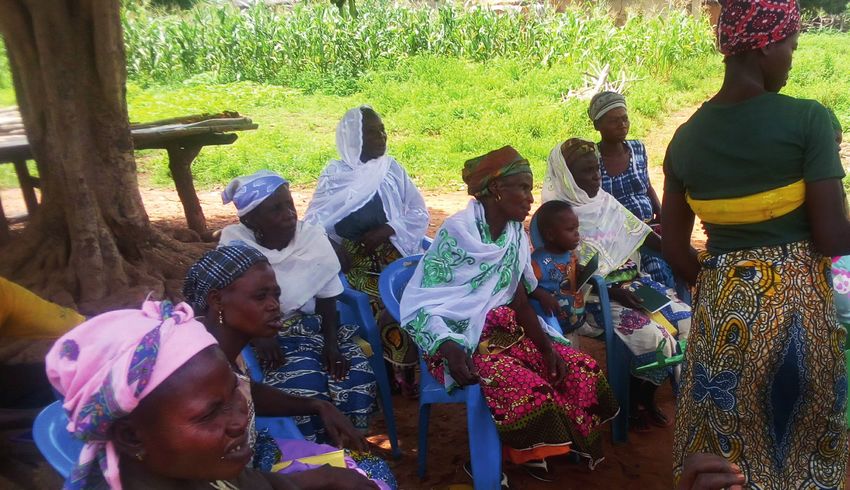
Picture 1: Female village loans and savings group meeting in Libga, Ghana
Source: Loretta Baidoo
Picture 2: Group savings´s safe to collect
and store money in Ligba, Ghana
Though women’s access to credit was
improving, constrained access to the
main resource, land, still hampered
women’s ability to develop fully their
independent income earning activities.
Women’s social status within the study
communities was therefore seen as
secondary to men, an indication of
their levels of disempowerment. It is
within this background that we go on
to explore the main questions set for
the study. These, as explained earlier,
covered notions of women’s empow-
erment subscribed to by women and
men as well as the corresponding male
figure evolving in response to such
women.
Source: Loretta Baidoo
18
-- ICDD WP24_Britwum_02.indd 18 26.11.18 13:19ICDD | Women’s empowerment for sustainable rural livelihoods: Voices from selected communities in Ghana.
Picture 3: Female village loans and savings group meeting in Libga, Ghana
Source: Loretta Baidoo
4.2 Women and spheres of influence
Our findings revealed that women’s spheres of influence in the study communities were
very strong around their gender roles. All research interactions with both women and
men, asserted that women need no permission to undertake domestic chores or caring
responsibilities, no matter the place and time of day. If my wife wants to carry water, she
will not tell me. If women are going to clean the house they will not ask for p
ermission
(FGD, Male, Libga). If they are going to gather the garbage, bathe the children and them-
selves they will not inform anybody (FGD, Female, Libga). Their autonomy to act without
permission did not extend to matters unrelated to the performance of domestic chores.
Generally, in all instances where women had to leave their home for tasks not asso-
ciated with their caring roles they were obliged to seek permission. Failing that could
attract sanctioning. ‘If she is going to the meeting she will inform you that she is going
for the meeting. If she doesn’t then you can stop her’ (FGD, Male, Libga). Women also
acknowledged the need to seek permission over issues such as joining groups or adopting
an agricultural intervention. Research participants at the Kongwania, the female FGD,
explained that … we all seek permission from our husbands and informed them even
before joining this group …. And the mixed group at Viana confirmed this. ‘Actually, there
is nothing you do in the house that you don’t tell your husband’ (FGD, Mixed, Viana). All
women were under obligation to seek permission for undertaking non-domestic activities.
19
-- ICDD WP24_Britwum_02.indd 19 26.11.18 13:19ICDD | Women’s empowerment for sustainable rural livelihoods: Voices from selected communities in Ghana.
The main reasons why women had to seek permission for certain actions were related
to the fact that they lived under the authority of the heads of households. Research
participants explained ‘you can’t just do anything without telling your husband or father
because they are the head’ (Kongwania female FGD). Heading a household gave men
authority over its members. For others, it was due to the fact that the man ‘brought you
to his house’ or it was just a matter of showing respect. Some explained that it was a
question of men’s superior knowledge over certain affairs especially over issues related
to land. Other reasons advanced were practical: the need for support in case of business
failure or to track women’s investment performance. ‘But before you start any business
like the rice processing, you must inform him first. Because if you don’t inform him and
there is a debt, who are you going to consult? So normally a woman will have to inform
her man that oh this is the business activity that I want to invest in, if he grants her per-
mission then that is fine.’ (FGD, Mixed, Viana). Women were said to require supervision
from males, especially to guard them against business failure. Thus, women had to:
… account for what has happened in the season, so they will tell whoever is
the head of their household, in this case the husband or the elder brother, that I
harvested this number of bags of maize and he will ask how many acres did you
plough? Then you mention two, then he will say if it is two, then you have lost
something. … They then will go to the records to check costs, like how much the
ploughing cost, the chemicals, the labour, they will determine how much they are
making, whether it is profit or loss. (FGD, Female, Zoggu).
Persons who had the authority to supervise and grant women permission to under-
take activities outside their spheres of influence were a range of relations, both women
and men, whose authority sources were their age or gender. Husbands were not the
only persons women had to seek permission from: others were their fathers, brothers,
fathers- and brothers-in-law, male friends of their husbands as well as their own sons.
The women were older, like mothers, mothers-in-law. Fathers appeared to have control
over both women and men. Men were subject to their fathers’ influence. Your father
must know first before … your wife (FGD, Male, Kampong). Zones of influence were
therefore circumscribed by others with power over whose authority was derived not
only from gender but age as well. Thus, older men had power over younger men and
likewise older women exercised power over younger women. Male spheres of influence
however, expanded to include all females and younger men, whereas older women’s
authority extended only over younger women. Sources of influence were either ascribed
or attained. Ascribed sources were derived from blood relations like fathers, mothers,
brothers and sons. Attained sources were based on social relations like age, marriage and
even friendship with husbands. Men had complete control over agricultural productivity.
20
-- ICDD WP24_Britwum_02.indd 20 26.11.18 13:19ICDD | Women’s empowerment for sustainable rural livelihoods: Voices from selected communities in Ghana.
Where women could make decisions on agriculture-related activities, they were limited
to the purchase or sale of certain livestock. Even in instances where they undertook to
farm independently, they still had to account to their husbands. And where they bought
a piece of land, they still required permission to determine what to plant.
4.3 Women’s expanding spheres of influence
Notwithstanding prevailing practices restricting women’s spheres of influence there were
indications of change triggered by actions by both women and men. Women’s spheres of
influence within their households were expanding, enabled by their access to independ-
ent income, as well as education and capacity building received from interventions. Other
enablers were formal education. Having an independent income gave women some
freedom to make decisions without consulting their husbands. Research participants
explained that ‘they use the money to buy books for the children even when their fathers
don’t know that they came to their mothers to ask for books. Some women can cater
for their children’s medical bills without informing their fathers because sometimes the
husbands don’t have money and since the women are into business they have money to
pay the bills’ (FGD, Female, Kongwania). There appeared to be more relaxation in terms
of women’s autonomous operation over income, mainly their independent earnings,
and sometimes even that of their husband’s. Generally, women have full control over
the income they earn.
There were indications that some men were beginning to break existing gender barriers,
allowing for joint decision-making with their wives, thus expanding women’s traditional
zones of influence. The reported trend was greater consultation and joint decision making
between husbands and wives. Some men for example insist on involving their wives in
all major decisions affecting the household. Viana mixed FGD insisted that: is not good
to go and be doing something that your wife is not aware of. Some women and men felt
that women were better at keeping money. According to males at Korania FGD, ‘Our wives
are ‘bankers’ if you have good relations with your wife she keeps your money, unless
you have an account with the bank.’ Females at Kongwania FGD, felt it was expedient
that women keep household income because they are always at home ‘… men, they are
always outside the home’ they explained.
There were caveats to the observed trend of greater consultation with women. Some
respondents made a distinction between decision-making, consultation and information
sharing. Some insisted that women should not be lead decision-makers. Women could
offer their opinion on certain decisions but it remained men’s prerogative to accept
such views. Participants in the male FGD at Doba explained that wives could advise
their husbands against certain decisions only on condition that they could provide alter
21
-- ICDD WP24_Britwum_02.indd 21 26.11.18 13:19ICDD | Women’s empowerment for sustainable rural livelihoods: Voices from selected communities in Ghana.
natives. Some were sceptical about women’s ability to respect confidentiality, should
their husbands trust them with sensitive information. They concluded however that it
was all about how much trust married couples had in each other. Korania males at their
FGD stated that signs of trust between married couples was on the increase and ‘more
men trust their wives and seek to cooperate with them. Such men always want to consult
their wives.’
We observed from the study that evidence of power within on the part of women was
facilitated by additional resources, inner capabilities and personal achievements, espe-
cially in income earning. Women were showing signs of using their power within to
increase their spheres of influence. They were expanding their spheres of influence by
making decisions about children’s welfare, school and medical treatment without con-
sulting their husbands or others in authority. There were limits to the observed expansion
of women’s decision-making abilities and their spheres of influence. Men had the right
to initiate the decision-making. Thus, some men might consult their wives before they
purchase land, but these women had no say in the use to which the land would be put.
Women had no power over to ensure their husbands’ compliance to decisions they have
jointly taken. There were prohibited areas where women were never consulted or even
provided information, and this was over religious rituals where women were required to
provide food and beverages for the rites. Others with power over exercised their authority
in ways that reinforced male authority, whether it was power over exercised by women
over women or by men over men. Male power over, whether exercised directly by them
or by older women, prevailed in ways that limited women’s spheres of operation.
4.4 Conception of Empowerment
In this section, we explore research participants’ notion of power and their conceptions
of an empowered woman. Generally, research participants conceived empowerment
around independence, based on inner strength and access to an autonomous income.
Being empowered, according to the participants, entailed an inner capacity, a demon-
strable ability to make decisions, express oneself at meetings, especially on matters
of community welfare. An empowered woman was presented as one who can ‘take
decisions and has knowledge about things around her’ (Libga KII Male). A recognition of
power within, having a voice was regarded as an important ingredient for empowered
women, which voice they exercised based on their stock of independent knowledge
devoid of influence. It also included the ability to control others.
22
-- ICDD WP24_Britwum_02.indd 22 26.11.18 13:19ICDD | Women’s empowerment for sustainable rural livelihoods: Voices from selected communities in Ghana.
Economic independence was one significant factor used to identify empowered women.
Here empowerment was equated with having a secure livelihood. Such women were
not dependent on their husbands or, in the case of single women, on others for their
economic needs and those of their children. ‘Yes, you know if they can be independent,
if it is a woman she doesn’t leave all her burden on the husband ….’ (Male, KPI, Tamale).
Such a woman demonstrated the ability to earn and manage an independent income.
To be truly empowered, women had to direct their earnings towards supporting their hus-
bands’ income provisioning responsibilities in their households. ‘It means doing good things
like she can pay school fees, take good care of the children, and provide food for the house.
Such a woman has power.’ (Male, KPI, Libga). For some, wealth gives power only if one has
children to spend other income on. Research participants went on to measure women’s
empowerment through the number of children in school. In communities like Zoggu and
Libga, research participants explained, ‘So, any child who is in school is proof that the mother
has money.’ In fact, research participants viewed wealth without a family as pointless.
Research participants made a distinction between women’s empowerment as individuals
and as a group. Some insisted that empowerment begins at the individual level as inner
capacity. At the individual level ‘… power is the strength you hold on to’ (Female, KPI,
Kongwania), and the ability to make decisions on one’s ‘own without any influence’
(Female FGD, Tunti). An indicator of empowerment shows in women who can sit together
at meetings and speak out at such meetings. Others insisted that individual power was
meaningless unless exercised through a group. At the group level it was explained that
‘power is togetherness in working’ (KPI, Tamale). Group formation enhanced the empow-
erment potential of women. Thus, women can do things in their groups that they would
not do as individuals. The female FGD participants at Tono noted that: ‘… being in this
group has given us women a lot of power like if we need anything we now have the
capability to go and meet the assemblyperson on our own. We can also go and meet
the chief directly on our own without going through any other persons. We can just go
by ourselves.’
23
-- ICDD WP24_Britwum_02.indd 23 26.11.18 13:19ICDD | Women’s empowerment for sustainable rural livelihoods: Voices from selected communities in Ghana.
Power had to be exercised always for the collective good for the expression of women’s
empowerment to be accepted. Women in the FGD, at Tunti described women’s empower
ment as ‘The voice and the capacity to do things on her own for herself and others.
Explaining further that, it is only when ‘the woman … use her power to take care of the
family’ that ‘everybody will give her that respect; and they should help the community
too.’ Voice was highlighted as a key element in the expression of empowerment for group
benefit. The expression of voice must be knowledgeable ideas backed by accurate facts
about the situation under discussion, and one’s rights and opportunities. Empowerment
was inner strength and was connected to the ability to handle challenging conditions
at home and within the community. Ultimately, then an empowered woman must be of
benefit to her community:
… she should be able to handle the decisions of the community because she also
lives in the community so whatever decision that community is going to take,
she should have a voice in that. She should be able to express herself whether at
the home or at the community level. If there is a meeting she should be able to
say whatever she wants to say without any problem. So, this is how we look at …
empowerment; you are independent, you have your business that is giving you
some income, you can add your voice to … community … decision-making.
(Male, KPI, Tamale).
Women’s empowerment had the support of the community due to an increased recog-
nition of its positive impact on family and community welfare. ‘[W]hen you see a school
child, it is the mother that is paying the fees, these days men don’t pay school fees.’
(Female FGD, Libga). Beyond the socio-economic benefits of picking up school fees and
hospital bills, others mentioned the respect such women commanded and the important
part they played in community and household cohesion. So, such women were effective
in conflict resolution and served as role models for other women as well. Female FGD in
Kongwania stated that ‘when you come to my house and you see that this is what I have
done as a wife and you go home and say to yourself, “let me also do same and see if my
husband will be happy with me” so it helps in one way or the other’.
24
-- ICDD WP24_Britwum_02.indd 24 26.11.18 13:19You can also read


