Working in India
Dr. Wolfgang Messner

Roundtable Internationalization BICCNet
Munich, 18th January 2011
←
→
Page content transcription
If your browser does not render page correctly, please read the page content below
Working in India Dr. Wolfgang Messner Roundtable Internationalization BICCNet Munich, 18th January 2011

India opened its economy in 1991; my experience working and living on
the subcontinent started just four years afterwards
Dr. Wolfgang Messner

                                Deutsche Bank
                       1995: first projects with Indian
                             software engineers
                       1998: Expatriate assignment as
                             program manager to India

                                                                since 2002
                                                                married to
                                                                 Pratibha
                        Capgemini              India
                          Head of           exposure and
                          Offshore           experience
                       Delivery DACH

                               2007-09
                           Expat assignment                 2005/06
                              as delivery
                               director         Visiting Faculty at
                                                       IIM-B

                                                                             Copyright © 2011 Dr. Wolfgang Messner. All rights reserved.
                                                                                         MESSNER_WORKING IN INDIA 180111.PPTX              2
In India, the IT and BPO services industry contributes 5.5% to the GDP;
export to Continental Europe has a share of 12%
Major IT and BPO locations in India
                                                Tier-I cities

                                                • Bangalore       • Kolkata
                                                • Chennai         • New Delhi NCR (+ Noida, Gurgaon)
                                                • Hyderabad       • Mumbai (+ Navi Mumbai)

                  New Delhi NCR

                  Big
            Northern Triangle
                                      Kolkata   IT/BPO exports from India

                                                Entire market size: USD 49.7b (FY 2010)
 Mumbai
                    Hyderabad                                          APAC Rest of World
                                                         Continental
                      Small                              Europe           7%
                 Southern Triangle                                     12% 2%
     Bangalore
                      Chennai
                                                                       18%                     61%
                                                                UK                                        USA

                                                                   Copyright © 2011 Dr. Wolfgang Messner. All rights reserved.
                                                                               MESSNER_WORKING IN INDIA 180111.PPTX              3
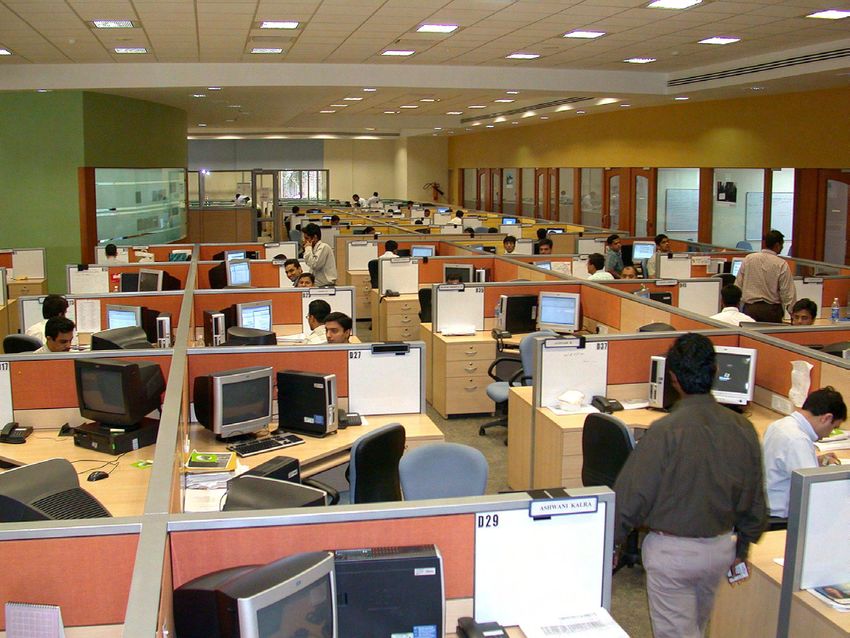
Workplaces are organized in an open space concept with individual
cabins for higher-ranking employees

                                                Copyright © 2011 Dr. Wolfgang Messner. All rights reserved.
                                                                                                              4
                                                            MESSNER_WORKING IN INDIA 180111.PPTX
The size of the industry offers possibilities to industrialize offshore IT
delivery thereby going beyond factor cost savings
Offshoring and Industrialization
                                                                                                  Professional Offshore Delivery
                                                                                                  • Delivery excellence through
                                                                                                    quality control
                                                                                                  • Lean delivery
                                                                                                  • Domain experience through
                 • Efficiency increase
                                                                                                    training, projects, and
                 • Quality increase                                                                 customer intimacy
                                                                            Offshore
                                                                                                  • Intercultural awareness

Industrialized IT Factory
• Governance of development
  process along assembly line                                               • Factor cost reduction
  (in-built quality)                        Industria-                      • Better availability of
• Pre-fabrication, re-use,                   lization                         resources
  and common tools & templates
• Specialized resources
• At every step, best input leads to best
  output, and best end product

  One could theoretically reap benefits through industrializing IT delivery in the Western world as well. However, only
                  the project and resource concentration in India creates the necessary leverages.

                                                                                       Copyright © 2011 Dr. Wolfgang Messner. All rights reserved.
                                                                                                                                                     5
                                                                                                   MESSNER_WORKING IN INDIA 180111.PPTX
India‟s IT industry has grown by a factor of 10 within the past ten years
 and is projected to grow further to 10m employees by 2020
  IT industry growth and challenges
                                                         Supply vs. demand                Corporate training
                                                              shortfall                       centers
    Employees
    (thousand)                    Stress on the
                                education system                                                                                  2,500
2,500                                                                      “Scrape the barrel
                                                                                                                     2,286
                                                                             a little deeper”           2,196
                        Fast-track                 Career disalignment                         2,010
2,000                promotions and                   India vs. West
                       salary hikes                                                                                                                Software
                                                                                       1,621                          993
                                                                                                         958                                       (export)
                                               Quality frameworks
                                                                                                860
1,500
                      Scarcity of               and certifications             1,293
                     experienced                                                       690
                   middle managers                                    1,058
1,000                                                                          513                                                                 BPO
                                                               830                                                    768                          (export)
                                                                         390                             738
                                                        670                                     700
                                                               296                     553
                                               522      205                    415
  500                                   430                              316
                                  284          170      180    216
                         230            162                                                                                                        Domestic
              190                              106                                                       500          525                          market
                                         70
                                                                         352   365     378      450
                                               246      285    318
                                        198
      0
             1998        1999    2000   2001   2002     2003   2004   2005     2006    2007    2008      2009         2010        2011             Financial
Data: Nasscom Analysis                                                                                                            estd.            Year

                                                                                                 Copyright © 2011 Dr. Wolfgang Messner. All rights reserved.
                                                                                                                                                               6
                                                                                                             MESSNER_WORKING IN INDIA 180111.PPTX
The rising importance of India in the global world creates a feeling of
„new worth‟ within India – and is nurtured through campaigns
Times of India commercial with Amitabh Bhachan

          The New India
          • Pulsating dynamic new India
          • Buys out foreign companies
          • History is turning a page
          • It’s time to fly!

                                                   Copyright © 2011 Dr. Wolfgang Messner. All rights reserved.
                                                               MESSNER_WORKING IN INDIA 180111.PPTX              7
When working across borders, culture seems to be the most neglected
source of challenge; but differences are real and felt
Cultural perceptions

  What Germans think about Indians                              What Indians think about Germans

  •   Polite, indirect                                          •   Quality-oriented
  •   ‘No’ is difficult; always say ‘Yes’                       •   Cold, aggressive, brutally direct
  •   Unreliable                                                •   Serious, no sense of humor
  •   Dependent on others                                       •   Reliable, punctual
  •   Not open to problems                                      •   Perfectionists, dedicated to work
  •   Passive, need clear instructions                          •   Work-life balance (vacation)

Source: Intercultural trainings conducted by Wolfgang Messner

                                                                                  Copyright © 2011 Dr. Wolfgang Messner. All rights reserved.
                                                                                                                                                8
                                                                                              MESSNER_WORKING IN INDIA 180111.PPTX
These differences are driven by values and attitudes; they are invisible
at first glance, but impact the work style the most
Comparison of Indian and German Values

                   Collectivistic                                          Individualistic
              people-oriented society                                   task-oriented society

             • Family                                                • Punctuality

             • Hospitality                                           • Orderliness

             • Spirituality                                          • Quality

             • Respect for Elders                                    • Individuality

             • Dependability                                         • Education

                      Indian values                                         German values

 Only when we are fully aware of our differences, we can develop synergies and work together to a successful cross-
                                                cultural relationship.

                                                                                 Copyright © 2011 Dr. Wolfgang Messner. All rights reserved.
                                                                                             MESSNER_WORKING IN INDIA 180111.PPTX              9
In order to successfully work in India, first and foremost, it is important
   to consider both the Indian as well as the home culture as equal
   Qualities Required for Working in India

      Competences                                                       Components of intercultural competences

                                                                        • Non-ethnocentrism. Does not consider own culture to be superior
             Affective competences                                        to others
                                                                        • Open-mindedness. Open towards new ideas and experiences
                                                                        • Empathy. Able to put him/herself in others‘ places and to share their
                                                                          emotions
                                                                        • Cultural awareness. Knows that behaviour is culture-bound and
             Cognitive competences                                        may differ from person to person
                                                                        • Self-awareness. Knows him/herself well, propensity towards
                                                                          introspection
                                                                        • Self-confidence. Is not shy or insecure
                                                                        • Realistic expectations. Has realistic, detailed expectations of the
                                                                          host country and its inhabitants
                                                                        • Motivation for success. Has a strong orientation towards
                                                                          pragmatism and useful action

                                                                        • Tolerance for ambiguity. Able to handle uncertain and contradictory
             Behavioral competences                                       situations
                                                                        • Communication skills. Able to communicate skilfully in the host
                                                                          language
                                                                        • Respect. Appreciates and tolerates his/her counterparts

Source: Gelbrich K (2004) The Relationship between Intercultural Competence and Expatriate Success.
        Die Unternehmung, Vol 3/4 (58)
                                                                                                                Copyright © 2011 Dr. Wolfgang Messner. All rights reserved.
                                                                                                                            MESSNER_WORKING IN INDIA 180111.PPTX              10
Thank you for your attention!
Dr. Wolfgang Messner
Principal
Head of Offshore Delivery
Capgemini Deutschland GmbH
Carl-Wery-Str. 42
D-81739 München / Germany
Phone: +49 151 4025 0875
Fax: +49 69 9515 2518
E-Mail: wolfgang.messner@capgemini.com
wolfgang.messner@gmail.com
www.wolfgangmessner.com
Dr. Wolfgang Messner, 10 Elm Bank Mansions, The Terrace, Barnes, London – SW13 0NS, U.K. Copyright © 2011 Dr. Wolfgang Messner.
Email: wolfgang.messner@gmail.com All rights reserved.You can also read


