Working with EU member States - Chemical Industries ...
←
→
Page content transcription
If your browser does not render page correctly, please read the page content below
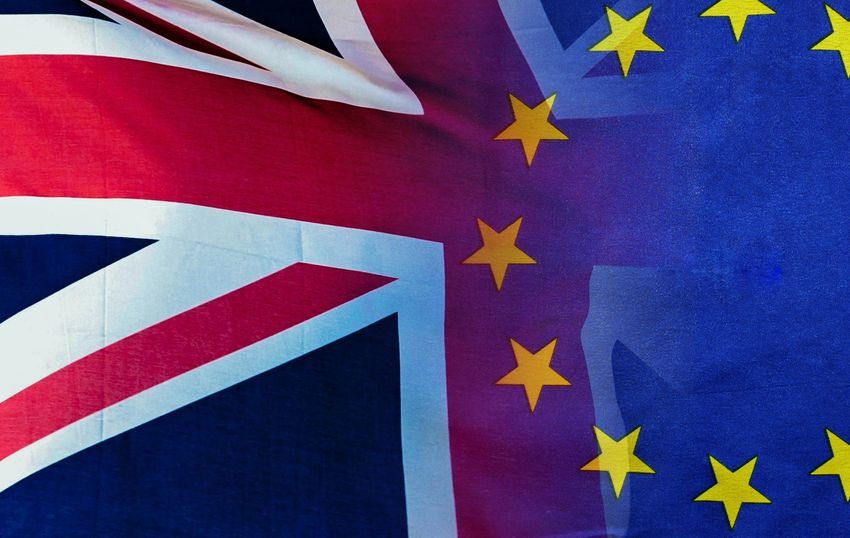
DECEMBER 2020

                       Working with
                   EU member States

WWW.CIA.ORG.UK

@SEE_CHEM_BUS

RESPONSIBLE CARE
This guidance has been updated following the                CIA their priorities for any future trading relationship
agreement reached between the UK and the                    between the UK and the EU. Those businesses
European Union (EU) on a future trading relationship        explained that with 60% of UK chemical exports
beginning 1 January 2021.                                   going to the EU and the UK sourcing 75% of raw
                                                            materials from the EU, maintaining a close
We have welcomed the agreement in terms of the              relationship was crucial.
avoidance of tariffs and quotas, and what seem to
be supportive rules of origin plus the commitment           Our sector needed tariff-free trade, minimal border
for both parties to work together in future. However,       delays, regulatory consistency and continued
we have said publicly and privately that we are             access to skilled people. Members of the Chemical
very concerned about there being no provision               Industries Association (CIA) have examined the issue
yet for UK regulators to automatically access the           of Brexit and our relations with the European Union in
REACH data we have supplied for the past decade.            great detail. We now have some, but not all, of this.
We are continuing to work with Government, with             Trading will be more difficult even with a deal. The
Regulators and with Parliament to look at how we            big challenge though is UK regulators not being able
can best enable the sector to minimise the amount of        to access EU REACH data. We need Government
inevitable duplication.                                     to urgently address this in the context of the new
                                                            UKREACH.
We set out the key issues affecting UK chemical
businesses in the new trading relationship with the         The depth and breadth of engagement across
EU from 1 January 2021. We address a number of              Government over the past four years has resulted in
key policy areas – trade, energy & climate change,          the chemical industry being much better understood
environment, chemicals management, health &                 and appreciated by policymakers. That engagement
safety and employment – we highlight current                will ensure the views of, and issues being faced by,
arrangements and what changes need to be made as            chemical businesses can be better addressed by
a result of the new agreement.                              Government.

On 23 June 2016 the country voted to leave the              We will provide updates to this guidance as new
European Union. Whilst respecting the result of the         information becomes available.
referendum, UK chemical businesses shared with

                                                        2
BREXIT BRIEFING: OCTOBER 2019

TRADE

                                        Current arrangements                    The agreement
Tariffs – Export and Import             No tariffs on trade within the Single   The EU agreement covers 100% of
                                        Market.                                 manufactured goods, 0% tariff and zero
                                                                                quotas on goods and raw materials from the
                                                                                EU27.
Trade – Customs with EU                 No customs requirements on trade        Customs declaration and compliance costs
                                        between the UK and the EU27.            will apply as the UK is now classed as a 3rd
                                                                                country by the EU.

                                                                                Companies should ensure that they have
                                                                                an Economic Operator Registration and
                                                                                Identification (EORI) number to continue
                                                                                to export to the EU. The EORI registration
                                                                                process can take three days so apply before
                                                                                you look to ship goods.
Rules of Origin (RoO)                   Cumulative RoO apply.                   The UK and EU have agreed that EU content
                                                                                will be seen as UK content and that UK
                                                                                content will be classed as EU content after
                                                                                1 January 2021. This is known as full bilateral
                                                                                cumulation. Helpfully this agreement
                                                                                recognises cumulation on processes as well
                                                                                as materials.
Do FTA signatories gain access to the   No. Using the CETA (Canada)             No. The UK will have a sovereign trade policy
markets of other countries that have    Agreement as an example. Having an      from 1 January 2021 and will negotiate
signed FTAs with the EU?                agreement with Canada does not give     bilateral deals. Priorities are the US, Australia
                                        the EU access to the Mexican or US      and New Zealand.
                                        markets through USMCA arrangements.
Continuity of existing EU Free Trade    The UK has access to the 40+ Trade      At the end of the transition period UK
Agreements                              agreements that the EU has negotiated   companies will no longer have access to EU
                                        with trading blocs (multilateral) and   FTA markets and will need to agree bilateral
                                        bilaterally with other nations.         deals to continue to benefit from preferential
                                                                                tariff rates.

                                                                                Continuity agreements have been signed
                                                                                with Canada, Mexico, South Korea to ensure
                                                                                UK companies are not disadvantaged.

                                                                                A new trade deal has been signed with
                                                                                Japan and will become effective from
                                                                                1 January 2021.

                                                                                Negotiations towards agreeing an FTA with
                                                                                the US have made progress but have not yet
                                                                                resulted in agreed text.
Trade Remedies                          EU Commission applies protective        The UK has established the framework of
                                        measures against dumping and unfair     the UK Trade Remedies Authority. The TRA
                                        trade practices such as subsidies.      will become operational the day after the UK
                                                                                leaves the implementation period.

                                                                                Hopefully, the TRA will be more responsive
                                                                                to protecting UK interests where unfair trade
                                                                                can be proven.

                                                             3
Key changes following the UK-EU agreement

The nightmare of tariffs payable on exports     ensure all its trading partners operate under        Standard customs declarations will be
to the EU (60% of UK trade) and EU sourced      WTO conditions of fairness. If a company             needed from 1 January 2021 for controlled
imports (75%) has been avoided through the      learns of unfair trading practises, they will        goods and excise goods, including drug
EU trade deal.                                  need to raise a complaint with the new UK            precursor chemicals, ammonium nitrate
                                                Trade Remedies Authority (TRA).                      fertiliser, fuels (including alcohols and
But import tariffs from the rest of the world                                                        biodiesel etc.) and ozone depleting
will change from 1 January 2021. The UK has     The UK Government states that the TRA                substances. Full declarations will also be
introduced the UK Global Tariff that outlines   will be nimble and decisive in defending             required for all goods subject to trade
taxes to be levied on all imported goods        UK interests, rather than having to consider         remedies, safeguards and sanctions.
where an FTA agreement is not in place.         the wider impact on 27 EU member states.
Please use the UK Global Tariff lookup tool     It is likely that, at some point, the UK will        Also remember that goods not from the
to confirm what tariff is payable on imported   challenge EU suppliers with a threat of              EU (e.g. trans-shipped) or entering a special
goods.                                          dumping duties, and vice versa. CIA has              procedure in the UK (like Inward Processing)
                                                been engaged with the process throughout             will require full declarations.
Companies will be required to provide           and will continue to advise in the interest of
export/import documentation on all UK           member companies.                                    Regardless of whether people can make use
exports to the EU27. Customs declarations                                                            of this short-term measure, any of them can
will be required every time goods cross         Trade with Northern Ireland: Changes for             apply to make simplified import declarations
the UK/EU border, similar to the current        goods moving from Great Britain to Northern          from 1 January and into the future at
requirement for trade with non-EU countries.    Ireland will be kept to a minimum – A Trader         https://www.gov.uk/guidance/using-
All UK exporters will have to register for an   Support Service has been introduced by the           simplified-declarations-for-imports.
EORI number in order to trade with the EU.      UK Government. If you are moving goods
                                                from GB to or through NI, you can sign               Export declarations and UK exit Safety and
Rules of Origin do impact on whether            up now at https://www.gov.uk/guidance/               Security declarations will be required for
preferential rates can be claimed on EU         trader-support-service. In summary, the              all goods. Traders importing and exporting
exports. Fortunately the UK/EU deal has         UK Government has ensured unfettered                 goods using the Common Transit Convention
agreed full bilateral cumulation which means    access to NI for GB exporters, avoided any           will need to follow all of the transit
that UK and EU content will be classed as       documentation requirements on NI to GB               procedures – these will not be introduced in
contributing to overall value. This is very     Trade and ensured that no physical border            stages. The goods vehicle movement service
important. If you do import materials from      will be required on the island of Ireland.           (GVMS) will be introduced from January for
3rd countries and are looking to sell into      A determination will be made of goods                Transit movements only.
the EU then you must meet local content         deemed ‘at risk’ of entering the EU market
thresholds set in the agreement. Most local     following a transfer from GB to NI.                  From July 2021: Traders moving any
content requirements are set at around 50%                                                           goods will have to make full customs
but do check on your individual product.        Staged import controls: the UK                       declarations at the point of importation
                                                Government has introduced a range of                 and pay relevant tariffs. Full Safety and
In the recently signed UK/Japan FTA, it         easements to facilitate trade in the 6 months        Security declarations will be required.
was agreed that EU content will continue        from 1 January. These easements are
to count as UK content securing tariff free     temporary and companies must maintain                Import VAT: VAT will be levied on imports
access to the Japanese market. This might       records of tariff and VAT liability for the period   of goods from the EU, following the same
not always be the case in future FTAs that      from 1 January. However, it is also worth            rates and structures as applied to Rest of
the UK negotiates.                              noting that the EU has not reciprocated the          the World (RoW) imports. VAT registered
                                                easements outlining that they are ready for          importers will be able to use postponed
UK companies will no longer be able to          the new procedures.                                  VAT accounting. They will not be compelled
take advantage of preferred tariffs, whether                                                         to do so unless they import non-controlled
reduced or zero tariffs, when exporting to      From January 2021: Traders importing                 goods and either delay their supplementary
countries where the existing EU negotiated      standard goods, covering everything from             customs declarations or use the Simplified
FTA had not been rolled over into a bilateral   clothes to electronics, will need to prepare         Customs Declarations process and make
agreement. Encouragingly the Department         for basic customs requirements, such as              an Entry in Declarants Records. Non-VAT
for International Trade has successfully        keeping sufficient records of imported goods.        registered importers have the same options
transitioned EU agreements with South           Traders will also need to consider how they          vailable to report and pay import VAT as they
Korea, Mexico, Canada and Singapore into        account for and pay VAT on imported goods.           do for customs duties, i.e. they can apply
bilateral agreements or holding agreements      Traders will then have up to six months to           to use a Duty Deferment Account to defer
until bilateral FTA’s can be agreed. Please     complete customs declarations. While tariffs         duties and import VAT.
check your supply chains and export             will be payable where due on relevant goods,
destinations to ensure you are not affected.    payments can be deferred until the customs           Export process: UK-based businesses
                                                declaration has been made. UK Safety and             sending goods from the UK will have to
Trade Policy becomes a sovereign issue          Security declarations will not be required on        complete a UK customs export declaration
from 1 January 2021. The UK will negotiate      imports for the first six months.                    after the end of the transition period. Most
its own bilateral FTAs. It will also have to                                                         RoW declarations are currently submitted

                                                                        4
by an intermediary, such as a customs          Importing requirements are consistent              The refund process differs across member
agent. Alternatively, exporters can submit     across the EU27 but do check on any                states – use this page as a starting point
declarations through the National Export       specific requirements for an individual            https://ec.europa.eu/taxation_customs/
System (NES) or by using commercial            member state on the UK Government                  business/vat/eu-vat-rules-topic/vat-refunds_
software.                                      website. https://www.gov.uk/government/            en).
                                               collections/exporting-after-eu-exit-country-by-
The simplest guide to UK exporting from        country.                                           Reminder: GOV.UK has a new tool which
1 January 2021 can be accessed at https://                                                        can be used to look up tariff rates and
www.gov.uk/prepare-to-export-from-great-       Helpful additional information on EU import        other import requirements, including
britain-from-january-2021. Your EU-based       procedures can be accessed directly from           documentation, in export markets (this
customer will face new administration          the EU. The starting point will be at              is a UK-specific replacement for the
requirements from 1 January. Please share      https://trade.ec.europa.eu/tradehelp/eu-           EU’s Market Access Database) https://
with EU partners the linked note advising on   import-procedures; and on VAT at https://          www.check-duties-customs-exporting-
what to do now to avoid hold-ups. https://     ec.europa.eu/info/sites/info/files/brexit_files/   goods.service.gov.uk/selectdest?_
assets.publishing.service.gov.uk/government/   info_site/vat-goods_en_0.pdf.                      ga=2.74757393.2098389943.1594626790-
uploads/system/uploads/attachment_data/                                                           1650061039.1577462002.
file/927992/7392_Get_Ready_UKG_EU_
Trader_Leaflet_KJ_access3_A5.pdfguide.

Simpler guides to key changes and actions

Step-by-step guide for exports
https://www.gov.uk/prepare-to-export-from-great-britain-from-january-2021
Step-by-step guide for imports
https://www.gov.uk/prepare-to-import-to-great-britain-from-january-2021
HMRC videos and webinars (more to be uploaded soon)
https://www.gov.uk/guidance/help-and-support-if-your-business-trades-with-the-eu

Additional useful links

https://www.gov.uk/check-tariffs-1-january-2021 – this is where traders can go to check the tariff rates the UK will apply on all imports
from markets that we do not have preferential trading arrangements with.

UK trade remedies can be found at https://www.gov.uk/guidance/trade-remedies-transition-policy#:~:text=Trade%20remedies%20
protect%20domestic%20industries,includes%20a%20trade%20remedies%20system.

Links to EU Commission guidance

For EU import procedures, the starting point can be found at https://trade.ec.europa.eu/tradehelp/eu-import-procedures;
for EU tariff at https://ec.europa.eu/taxation_customs/business/calculation-customs-duties/what-is-common-customs-tariff/taric_en
and on VAT at https://ec.europa.eu/info/sites/info/files/brexit_files/info_site/vat-goods_en_0.pdf.

The refund process differs across member states but https://europa.eu/youreurope/business/taxation/vat/vat-refunds/index_en.htm is a
starting point.

                                                                       5
ENERGY

                      Current arrangements                        The agreement
 Energy               Tariff and barrier free access to the       UK and EU to cooperate and further develop both physical and market
                      internal energy market (IEM) for natural    interconnectivity; We are to pursue the objectives of facilitating
                      gas and electricity.                        energy trade and investment, Security of Supply, and the avoidance
                                                                  of market distortions through subsidies, compensation, or other such
                                                                  measures.

Key changes

As an EU member, the UK had tariff-free and     As such any reduction in IEM integration      In additional compensation for electro-
barrier-free integration to Europe’s Internal   is considered highly unlikely, and with       intensive consumers is granted to sectors
Energy Market. In addition, the EU has zero     the UK’s commitment to Offshore wind          at significant risk of carbon leakage.
tariffs on energy supplied, or received from    and further decarbonising generation,
global markets.                                 we foresee electrical interconnectivity
                                                increasing.
Under EU membership the UK increased
physical and market interconnectivity of        Furthermore, the UK is expected to
both gas and power networks and sought          become a third party under the EU’s gas
greater harmonisation of Codes and              solidarity mechanism. This mechanism
trading regimes. It was also bound by Third     is designed to address supply disruptions
Party Access and Ownership Unbundling           within the EU.
Obligations which were developed in the
UK as a means of increasing competition in      The prevailing regimes for Energy and
Energy Supply.                                  Environmental Subsidies are to continue
                                                and importantly, may be further
Under the EU FTA deal, the UK and EU will       developed on the proviso that these
cooperate, maintain, and further develop        will not distort a Level Playing field and
integrated access to each other’s energy        are determined by a transparent, non-
markets and pursue the principles of            discriminatory, and effective competitive
competition and Third-Party Access to           process.
energy infrastructure.

Key points to consider

What energy contracts are in place with         What purchasing strategy is appropriate?
EU entities, and will these be impacted
impact?

Further reading

www.gov.uk/government/publications/generating-low-carbon-electricity-if-theres-no-brexit-deal
www.gov.uk/government/publications/running-an-oil-or-gas-business-if-theres-no-brexit-deal
www.gov.uk/government/publications/trading-gas-with-the-eu-if-theres-no-brexit-deal
www.gov.uk/government/publications/trading-electricity-if-theres-no-brexit-deal

CLIMATE CHANGE

                      Current arrangements                   The agreement
 Climate change       Requirement to comply with the         UK participants will be required to surrender EU ETS allowances, for
                      EU Emissions Trading Scheme (EU        emissions between 1 January 2020-31 December 2020, before 30 April
                      ETS)                                   2021.

                      Phase 4 of the EU ETS (2021-2030)      For emissions after 31 December 2020, UK participants will be subject
                      has been largely agreed, although      to a standalone UK ETS. The FTA stipulates cooperation between the UK
                      preparations for implementation        and EU on carbon pricing with serious consideration to linking respective
                      are ongoing at the EU level.           carbon pricing systems.

                                                                     6
Key changes

The UK is currently participating in Phase      The Government has confirmed that it will
3 of the EU ETS, which began in 2013 and        introduce a replacement carbon pricing            Under the standalone UK ETS, a Supply
will conclude at the end of 2020. Phase 4       scheme from 1 January 2021 that will apply        Adjustment Mechanism (SAM) and
of the EU ETS is set to run from 2021 to        to those UK operators who would otherwise         temporary Auction Reserve Price (ARP) will
2030 and has been largely agreed, although      have been eligible for Phase 4 of the EU ETS.     replace the EU’s Market Stability Reserve
preparations for its implementation are still   A UK ETS will replace the UK’s participation      (MSR), to prevent a drop in allowance price.
ongoing at the EU level.                        in the EU ETS from 1 January 2021.                A Cost Containment Mechanism (CCM) will
                                                                                                  replace the EU’s Article 29a mechanism to
Article 96 of the Withdrawal Agreement,         Initial guidance on the UK ETS has been           address price spikes.
concluded between the EU and the UK,            published, see https://www.gov.uk/
establishes that UK operators will need to      government/publications/participating-in-the-     Under the UK ETS, existing holders of
comply with the EU ETS for the final year       uk-ets/participating-in-the-uk-ets with further   greenhouse gas emissions permits will not
of Phase 3. This means participants will        detailed guidance to follow in early 2021.        need to register for the new tax, as the
be required to submit an EU ETS annual          Phase 1 will run from 2021-2030, to match         regulators will use existing data to determine
emissions report covering 2020 emissions        Phase 4 of the EU ETS. From the start, the        who is liable. UK operators will be required
data by 31 March 2021, and surrender EU         rules will broadly mirror Phase 4 of the EU       to use verifiers who are accredited by the UK
allowances (EUAs) commensurate with their       ETS but with a review of benchmarks in            Accreditation Service to obtain verification
obligations under the scheme by 30 April        2021, an emissions cap set at 5% below            reports.
2021.                                           the UK’s share of the EU ETS cap, and an
                                                emission reduction trajectory set by the          We expect that in addition to free allocation,
In order to do so, participating UK operators   Committee on Climate Change.                      energy-intensive industries should retain
will retain access to the Union Registry                                                          access to indirect emission compensation,
and the UK’s Kyoto Protocol Registry. UK        In the standalone UK ETS, UK operators will       as part of their carbon leakage protection
trading accounts will be blocked from           not be permitted to use any banked EUAs for       package. An equivalent to the current
1 January 2021, but UK operators will still     UK compliance obligations and UK operators        scheme that compensates these industries
be able to transfer EUAs from EU trading        will lose access to the Consolidated System       for the indirect emission costs of the EU ETS
accounts to UK operator holding accounts.       of European Registries (CSEUR) after the          will be established.
UK businesses that have trading accounts        2020 surrender deadline (30 April 2021). The
in EU member states will be able buy EUAs       Government therefore advises participants         The UK-only Carbon Price Support (CPS)
with those trading accounts. The UK has         to transfer their surplus EUAs before this        will remain in place until 2021. This tax was
also been permitted to issue free allowances    deadline, to accounts in the parts of the         introduced in 2013 and applies an additional
and to auction EUAs to cover compliance         CSEUR administered by other participating         carbon price to all fossil fuels used in energy
obligations for the 2020 reporting year.        states of the EU ETS, in order not to lose        generation. The 2018 Budget confirmed that
                                                access to their holdings.                         the CPS rate will be frozen at £18/tonne of
                                                                                                  CO2 until 31 March 2021.

Key points to consider

Continue to comply with the EU ETS              account in another EU member state,
Phase 4 MRV requirements after 2020.            before 1 May 2021. The account can be in
Operators should plan to employ a verifier      your company’s name, or in a third-party
who is accredited by the UK Accreditation       escrow account.
Service.
                                                Look out for developments on the
Prepare for compliance under the UK             government’s website. The relevant
ETS standalone scheme.                          notices below cover meeting climate
                                                change requirements, proposals for a UK
Transfer any holdings of EU ETS                 ETS and draft proposals for a CET.
allowances to a Union Registry trading

Further reading

www.gov.uk/government/publications/meeting-climate-change-requirements-if-theres-no-brexit-deal
https://www.gov.uk/government/consultations/the-future-of-uk-carbon-pricing
https://www.gov.uk/government/consultations/carbon-emissions-tax

                                                                       7
ENVIRONMENT

                          Current arrangements                      The agreement
 Principles &             About 80% of UK environment law           The European Union (Withdrawal Act) 2018 ensures existing EU
 Governance               originates from EU regulations and        environment law continues to have effect in UK law beyond the
                          directives. The EC oversees Member        end of the transition period but may be subject to change. In
                          State implementation. Each UK             England, gaps in principles and governance will be addressed by
                          country has the power to set its own      a new Environment Act, including a new Office for Environmental
                          environmental laws.                       Protection, and powers to create and update requirements. Similar
                                                                    legislation is under development in the devolved administrations
                                                                    and therefore divergence within the UK could increase.
 Industrial Emissions     UK governments, agencies and other        The EU Withdrawal Act 2018 and secondary legislation provides
 Directive (IED)          stakeholders can no longer vote           continuity for existing requirements. The Act amends current
                          on new requirements including the         legislation to correct references to EU legislation, transfer
                          approval of new BREFs and are only        obligations from EU institutions to UK institutions, and ensure the
                          ‘observers’ in the Technical Working      UK meets international agreements.
                          Groups. EU Best Available Techniques
                          (BAT) conclusions, published before       In England, future Best Available Techniques will be defined
                          the end of the transition period, have    through a new process, expected to draw from international
                          to be implemented in the UK via           information such as EU BREFs. Devolved administrations may
                          environmental permits and related         choose to be fully engaged with that process or they may take a
                          legislation.                              different approach.

 Shipments of waste       The UK’s Transfrontier Shipments of       The UK will be treated as an ‘OECD decision country’ in the EU
                          Waste Regulations 2007 implement          Waste Shipments Regulations.
                          the EU Waste Shipments Regulations,
                          which are both based on the               The current waste shipments procedures will continue to apply
                          provisions of the Basel Convention        and the UK will continue to implement similar rules on waste
                          and the OECD decision on waste            movements and remain party to the Basel Convention and subject
                          shipments.                                to the OECD decision.

                                                                    Many existing consents will continue to be valid for movements of
                                                                    waste between the UK and the EU but there are exceptions.
                                                                    See also trade section for tariffs and customs procedures.

Key changes

The UK has committed to upholding              Some potential gaps that will result          enable devolved competencies, including
environmental standards. Existing EU           from EU exit are addressed in the 2020        the environment, in Scottish law remain as
environment law not already on the UK          Environment Bill, which continues its         close as possible to future EU law.
statute book has been transposed through       passage through Parliament with the goal
the EU Withdrawal Act and secondary            of gaining Royal Assent and to be made        Industrial Emissions Directive
legislation and is unlikely to be subject to   an Act.
substantial change, at least in the near                                                     Since the beginning of the Transition
term.                                          Under the Bill, an Office for Environmental   Period, UK governments, agencies and
                                               Protection will be set up to carry            other stakeholders have lost voting rights
However, it is likely that there will be       out functions in England that were            on EU Best Available Techniques (BAT)
amended, updated and new environment           previously covered by EU bodies and           conclusions, which are the mandatory
laws in the future, depending on various       hold governments to account on their          requirements within BREF (AKA
factors such as the political environment.     environmental commitments and                 Best Available Techniques Reference)
Messages from government focus on              obligations. The Bill will also establish     documents that must be implemented
maintaining and improving environmental        five environmental principles, to be          through environmental permits. Since
outcomes and politicians across the            accompanied by a policy statement             January 2020, the UK has also not been in
UK have stated ambitions for global            from the Environment Secretary on their       full membership of the Technical Working
environmental leadership.                      interpretation and application. Similar       Groups (TWGs) that govern the exchange
                                               withdrawal legislation has been introduced    of information when BREFs are being
Negotiations are expected to continue          by the devolved administrations, with         developed or updated and instead the
about the extent of consistency and            plans for comparable approaches to            UK is classified as an ‘observer’ whereby
collaboration across the devolved              principles and governance. The recent         some access to the information within
administrations.                               Scotland Continuity Bill however seeks        the TWGs is accessible but without the
                                               to provide Scottish ministers powers that     opportunities to input to and influence the
                                                                                             process.

                                                                    8
The EU Withdrawal Act 2018 includes             administrations, for a future process to     of waste for disposal, or mixed municipal
secondary legislation (with further             determine Best Available Techniques. EU      waste for recovery. The rules regarding
legislation in the devolved administrations     BREFs not published before the end of the    shipping waste for recycling under the
where necessary) to ensure the                  transition period will then be expected to   Green Control Procedure will unchanged.
domestic legislation that implements            be considered by the new BAT process.        The UK will continue to implement similar
the IED will continue to operate by             However, the current Scotland Continuity     rules on waste movements and meet is
addressing ‘deficiencies’ and ensuring          Bill may result in EU BAT conclusions        international obligations. Tariffs may apply
that international obligations are still met.   being implemented in same way they are       for waste that has a positive value. This
This will require implementation of BAT         required to be in the EU.                    will include waste streams exported to the
conclusions published before the end of                                                      EU for recovery.
the transition period. The UK Government        Waste shipments
and the devolved administrations will also                                                   Agreements reached between the
have powers to define and implement             The UK is a party to the Basel Convention    UK and EU Member States mean that
future requirements for Best Available          on the Control of Transboundary              consents for waste shipments agreed
Techniques e.g. that is created through the     Movements of Hazardous Waste, and            before exit will still be valid after exit,
Environment Bill.                               as a member of the OECD is also              subject to some exceptions, and provided
                                                subject to the OECD Decision regarding       additional procedures are fulfilled. The
Investments for compliance with the             transboundary movements of recoverable       main additional procedure is that the
Industrial Emissions Directive can be           wastes. The EU Waste Shipments               Waste Carrier must possess a copy
very expensive, and the project planning        Regulation implements both of those          of the Waste Movement Document
and implementation process can take             international agreements, along with other   and present it to the Customs Office
several years. Not only this, but given the     requirements. The relevant UK legislation    of Entry if requested. If importing to
significance to chemical manufacturing,         is the Transfrontier Shipments of Waste      Germany, a copy of the Movement
the requirements often influence the            Regulations.                                 Document must always be presented.
overall business plans of sites and need to                                                  The full details of this are available in the
be factored into strategic decisions. Brexit-   The UK and all EU member states have         Border Operating Model below. Customs
related uncertainty has added further           agreed that most existing consents will      declarations will also be required.
layers of complexity and has impacts on         continue to be valid for movements of        Movements of waste are likely to face
decisions regarding inward investment.          waste between the UK and the EU. The         similar disruption to the movement of
Defra is expected to consult on behalf          UK will be treated as an ‘OECD decision      other goods, such as queues at ports and
of England, potentially in collaboration        country’ in the EU regulations, which        other potential impacts on infrastructure
with some or all of the devolved                will prevent exports from the EU to the UK   and transportation.

Key points to consider

Engaging with CIA and relevant                  continued waste movements to and from        Companies could also consider using
regulators is advisable if the uncertainty      the EU, such as ensuring waste carriers      customs agents, both in the UK and the
caused by Brexit is complicating                hold a copy of the waste movement            EU, to facilitate customs processes.
investment decisions that are required          document, are outlined in the UK guidance
under the Industrial Emissions Directive        on the topic linked below.                   If waste is being shipped by an external
– for example, regarding deadlines about                                                     waste management company, businesses
future UK Best Available Techniques.            It is important to consider risks of         are advised to check whether relevant
                                                disruption to waste movements and            continuity and contingency plans are in
Several measures can be taken regarding         form contingency plans, including an         place, including relevant disruption risks
continuity and contingency plans for            analysis of whether there are alternative    and options to mitigate them.
shipments of waste. The additional              routes or treatment options, should they
procedures that will be required to permit      become necessary.

Further information

UK guidance on upholding environment standards
www.gov.uk/guidance/upholding-environmental-standards-if-theres-a-no-deal-brexit
Devolved administrations’ scrutiny on draft Environment Bill
publications.parliament.uk/pa/cm201719/cmselect/cmenvaud/1951/195109.htm
UK (England) Environment Bill summer policy statement
www.gov.uk/government/publications/draft-environment-principles-and-governance-
bill-2018/environment-bill-summer-policy-statement-july-2019
UK guidance on industrial emissions standards
www.gov.uk/government/publications/industrial-emissions-standards-best-available-
techniques-if-theres-no-brexit-deal/industrial-emissions-standards-best-available-
techniques-if-theres-no-brexit-deal

                                                                     9
Defra’s Clean Air Strategy 2019 (chapter 8 – industrial emissions)
www.gov.uk/government/publications/clean-air-strategy-2019
HMG Border Operating Model – The Border With the European Union – importing and exporting goods (page 30 for waste)
https://www.gov.uk/government/publications/the-border-operating-model
UK guidance on waste shipments (includes links to other resources)
www.gov.uk/guidance/importing-and-exporting-waste-if-theres-no-brexit-deal
Current UK guidance on waste – imports and exports
www.gov.uk/guidance/importing-and-exporting-waste

REACH
                   Current arrangements                            The agreement
 REACH             UK complies with EU regulations.                EU regulations cease to apply to Great Britain. Imports to the EU
                                                                   must continue to comply with EU regulations.
                   ECHA is the central regulatory agency in the
                   implementation of REACH, CLP, BPR and PIC.      UK Government implements separate UK REACH, CLP, BPR and
                                                                   PIC and builds necessary infrastructure. Industry is required to re-
                                                                   submit dossiers to the UK authority.

                                                                   FTA facilitates cooperation of non-confidential information through
                                                                   a specialised committee under Technical Barriers to Trade.
 Voting rights     As soon as the transition period started, the   No voting rights and no power to influence EU rules once the
                   UK Government lost its voting rights and the    transition ends.
                   power to influence EU rules.

Key changes

Chemicals regulations such as EU              as part of the solutions identified by the    and the UK authority will be unable to
REACH will cease to apply to Great            Withdrawal Agreement to avoid a hard          continue to evaluate chemicals in the
Britain (GB) as soon as the transition        border on the island of Ireland. Businesses   UK. Registrations obtained in the EU by
ends. Imports into the EU will still have     based in Northern Ireland are also set        GB-based businesses will need to be
to be EU REACH compliant, while               to maintain unfettered access to the GB       resubmitted under UK REACH, if the
imports into GB will be subject to new UK     market under specific arrangements.           manufacture and import of chemicals is to
legislation. REACH, and other chemicals       Further guidance is available on HSE’s        continue at 1 tonne or more per year.
legislation, will be converted into UK        website, please check regular updates.
law via the EU (Withdrawal) Act. As a                                                       GB-based companies who source
result, similar regulatory requirements for   Registrations, authorisations and             chemical substances or mixtures from
the manufacture, import and supply of         approvals that were obtained before           the EU, either directly or in articles,
chemicals will apply in GB.                   the end of the transition by businesses       and who were previously deemed
                                              based in GB will become void in the EU,       downstream users under EU REACH
Registration, authorisation, Substances of    unless they are transferred to an EU27/       may immediately become importers
Very High Concern (SVHC) communication        EEA legal entity. EU27/EEA companies          under UK REACH. Again, there may be
and restrictions will remain key provisions   who import from GB, and were previously       new registration obligations if these are
of UK REACH.                                  considered downstream users, may              not supported by suppliers.
                                              instantly be deemed importers under EU
From the end of the transition period,        REACH and, potentially, have new REACH
the Protocol on Ireland/Northern Ireland      registration duties to comply with if they
will apply, subject to a periodic consent     are not supported by their suppliers.
of the Northern Ireland Assembly. Under
the Protocol, EU REACH, BPR and CLP           Furthermore, access to REACH dossiers
will continue to apply to Northern Ireland    via the ECHA database will be lost

Key points to consider

All companies are advised to identify all     Any existing data sharing contracts may       chains may change, and how they would
products within their supply chains that      have to be reviewed to permit the use         maintain market access, both in the EU
may be affected by a no-deal.                 of EU data for future compliance with UK      and the UK. Companies are advised to
They should review the status of related      regulations.                                  engage with their suppliers and customers
existing approvals, authorisations and                                                      to identify how any potential disruption
registrations. This applies to substances,    It is essential to establish whether,         might be minimised.
mixtures and articles.                        and how, a company’s role in supply

                                                                   10
Existing EU approvals should substances in the UK, respectively through arrangements will also be in place for
be transferred to EU-based a grandfathering process (120 days) and other regulations such as the Biocidal
representatives. ECHA has set up a a notification scheme (300 days). A full Products Regulation (BPR). Please consult
process for this. Transfer of dossiers must registration will then be required at a later the HSE website for more detailed
be initiated before 31 December 2020. If stage with a timeframe based on tonnage information.
companies use a suspensive conditional bands and the hazard profile of the
clause, it is important that the successor substance (i.e. within 2, 4 or 6 years from Companies are advised to identify all
reviews the transfer but does not proceed 28 October 2021). Companies that may the substances they import into the
to accept it yet. After the end of the wish to manufacture or import chemicals UK, and track volumes. For example, this
transition period, the EU successor will in GB for the first time after the end of will determine whether there will be any
need to accept the transfer as soon as the transition will need to register before registration obligations under UK REACH
possible, and within 3 months. manufacture or import into the UK reaches that apply to individual chemicals, and also
1 tonne per year. those included in imported mixtures.
To mitigate the impact of a no-deal
scenario in the short term, the UK GB-based companies sourcing products As part of the future UK REACH
Government has introduced some from outside the UK are advised to liaise implementation, UK registrants will
transitional arrangements in the UK. On with suppliers, who may be able to relieve need to familiarise themselves with a
REACH, these measures will apply to GB- them from notification and registration new IT system the UK Government will
based companies with existing EU-REACH requirements under UK REACH by put in place to process REACH dossier
registrations and UK-based companies appointing an Only Representative (OR) submissions.
currently importing EU-REACH registered after the end of the transition. Transitional
Further information
REACH
Companies who will need to maintain trade with the EU should read the ECHA manual on how to transfer registrations
echa.europa.eu/documents/10162/13552/how_to_transfer_uk_reach_registrations_en.pdf
UK Government guidance on UK REACH
https://www.gov.uk/guidance/how-to-comply-with-reach-chemical-regulations
CIA’s REACHReady helpdesk has launched a ‘Brexit navigator’ designed to help companies understand their REACH obligations for
maintaining UK and EU market access and any potential actions they may need to take in light of UK withdrawal
www.cia.org.uk/reachready/SiteAccess/Login?returnurl=%2freachready%2fBrexit
Cefic and CIA have also published advice for companies to prepare for a future scenario with the UK out of REACH.
https://www.cia.org.uk/Portals/0/Brexit_Preparing_for_UK_out_of_REACH_Scenario%20Updated%2025%20September%202020%20
FINAL.pdf?ver=2020-10-08-094057-953
BPR, CLP, PIC
Advice and Brexit Q&A can be found on the ECHA website echa.europa.eu/advice-to-companies-q-as/general
Guidance material and different scenarios on how the UK chemical sector and its supply chains are regulated is available on the HSE
website https://www.hse.gov.uk/brexit/chemicals-brexit-guidance.htm
A few scenarios of the consequences for EU REACH-
registered products within supply chains are shown in CURRENT EU REACH
REGISTRATIONS
the diagram below.
UK SUPPLIER FOR UK UK SUPPLIER FOR EU EU SUPPLIER FOR UK Non-EU SUPPLIER FOR UK SUPPLIER FOR
CUSTOMER CUSTOMER CUSTOMER UK CUSTOMER Non-EU CUSTOMER
UK supplier EU supplier nominates Non-EU supplier nominates
UK Supplier completes UK Supplier completes
transfers registration to UK OR to complete UK UK OR to complete
UK REACH registration UK REACH registration
EU27/EEA legal entity REACH registration UK REACH registration
Alternatively, EU Customer Alternatively, UK Alternatively, UK
registers as an importer customer registers as customer registers as
under EU REACH UK Importer UK Importer
UK supplier completes
UK REACH registration
11HEALTH & SAFETY
There is little or no change to the some minor changes of terminology to
current scope, application and reflect changes once the UK is no longer
enforcement of primary health and a Member State, but otherwise the status
safety legislation for our sector. The quo will remain for the foreseeable future.
Health & Safety at Work Act 1974 is not
European- based, and therefore will not CIA’s discussions at senior level with
change, and neither will any regulations HSE and the environment agencies have
made under it. confirmed there is no appetite in
government to use Brexit as an opportunity
Regulations based on European Directives, to either reduce or tighten the standards
for example, COMAH 2015 which expected of UK businesses.
implements the Seveso III Directive,
will, effectively, continue. There will be
EMPLOYMENT
Current arrangements The agreement
Employment law UK adopts EU Many but not all aspects of UK employment law derive from EU employment law.
employment regulation. All current employment law remains in place until UK legislators’ make changes.
The agreement contains a number of commitments to maintain current standards
and not to reduce them including ‘in a manner affecting trade or investment
between the Parties, its labour and social levels of protection below the levels in
place at the end of the transition period, including by failing to effectively enforce
its law and standards’.
UK businesses with EWCs may need to review those agreements in the absence
of UK/EU reciprocal arrangements. Trade unions are pushing for a clause in the
agreement that UK reps can remain on EWCs.
Companies can continue to move people within their businesses between the
UK and the EU and vice versa.
A new immigration policy
EU/EEA and Swiss citizens can remain points-based immigration system, anyone • the specific salary requirement for
working in the UK if they apply for ‘settled coming to the UK for work must meet a their occupation, known as the ‘going
status’ before 30 June 2021. On doing specific set of requirements for which they rate’.
this they will be granted settled or pre- will score points. Visas are then awarded
settled status. Settled status will be given to those who gain enough points. All applicants will be able to trade
to those who have lived continuously in Under the new skilled worker system, characteristics, such as their qualifications,
the UK for five years and this enables the anyone coming to the UK to work will against a lower salary to get the required
holder to remain in the UK indefinitely. need to demonstrate that: number of points. If the job offer is less
Pre-settled status will be given to those than the minimum salary requirement, but
who do not yet have five years’ continuous • they have a job offer from a Home no less than £20,480, an applicant may
residence. Individuals with pre-settled Office licensed sponsor still be eligible if they have:
status can apply for settled status once • the job offer is at the required skill
they have accrued five years’ continuous level – RQF 3 or above (A Level and • a job offer in a specific shortage
residence. The application process can equivalent) occupation
be completed via any mobile device or • they speak English to the required • a PhD relevant to the job
computer. standard. • a PhD in a STEM subject relevant to
the job.
From 1 January 2021 a new immigration In addition to this, the job offer must meet
policy will apply. The new system will treat the applicable minimum salary threshold. For the most part this is unlikely to impact
EU and non-EU citizens equally. This is the higher of either: CIA member company roles, but it could
Anyone hired from outside the UK, do and it could impact organisations and
excluding Irish citizens, will need to • the general salary threshold of individuals they work with
apply for permission in advance. Under a £25,600, or
12Key points to consider
Ensure all employees and workers have Future skills planning is important anyway
the right to work in the UK. Identify EU and CIA member companies work to
staff and make sure they are aware of the achieve this, but it may become more
new settled status scheme. However, difficult if potential employees want to
employers need to be careful not to push remain in the EU.
staff into applying for pre or settled status.
That is a matter for individuals.
Further reading
All of the new detail can be seen here:
https://www.gov.uk/government/publications/uk-points-based-immigration-system-
employer-information/the-uks-points-based-immigration-system-an-introduction-for-
employers#:~:text=Contents&text=From%201%20January%202021%2C%20free,apply%20
for%20permission%20in%20advance.
13CONTACT
Nishma Patel, Policy Director
Chemical Industries Association, Kings Buildings, Smith Square, London, SW1P 3JJ
Mob: +44 (0)7885 831742 Telephone: +44 (0)20 7963 6782 Email: PatelN@cia.org.uk www.cia.org.uk
Ian Cranshaw, Head of International Trade, Operations Manager at Chemicals Northwest
Chemical Industries Association, Kings Buildings, Smith Square, London, SW1P 3JJ
Mob: +44 (0)7885 831742 Telephone: +44 (0)20 7963 6767 Email: CranshawI@cia.org.uk www.cia.org.uk
Simon Marsh, Communications Director, Employment Policy Director
Chemical Industries Association, Kings Buildings, Smith Square, London, SW1P 3JJ
Mob: +44 (0)7951 389197 Telephone: +44 (0)20 7963 6725 Email: MarshS@cia.org.uk www.cia.org.uk
© Chemical Industries Association December 2020
WWW.CIA.ORG.UK
@SEE_CHEM_BUS
RESPONSIBLE CARE
14You can also read


