XXXVII Conferenza scientifica annuale AISRe
←
→
Page content transcription
If your browser does not render page correctly, please read the page content below
XXXVII Conferenza scientifica annuale AISRe
             Quali confini? Territori tra identità e integrazione internazionale
             Ancona (AN), 20-22 Settembre 2016

A.I.S.Re SO.20.2 SO.20.2 The development of Peripheral Areas: A European challenge

Luisa Pedrazzini
IL PAESAGGIO COME POTENZIALE SOCIO-ECONOMICO PER LE VALLI PERIFERICHE ALPINE

Struttura Azioni per il clima, il Paesaggio e Autorità Ambientale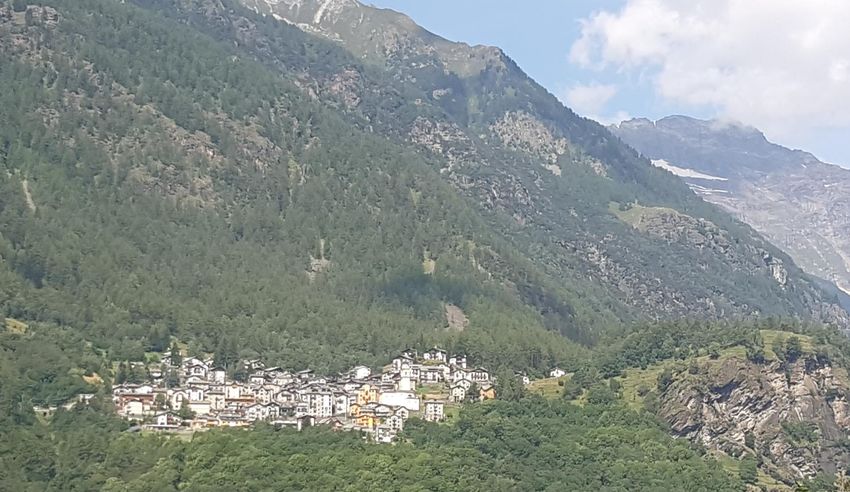
The Potential of Peripheral Mountain

Alpine peripheral valleys and territories at middle altitude in Lombardy,
positioned between highly urbanised areas and leisure resorts, are the most
marginal actors of the social-economic development in the Alps.
These territories are underestimated in dimension and potential, and
present common problems of decline but also unexploited possibilities
having preserved an authentic cultural and natural heritage, covering a
broad diversity (landscape, agriculture, handcraft, food).
This hidden territorial and social capital is on risk to be abandoned or
trivialized.
The peculiar territorial capital is the foundation to design an alternative
green development model built on inner existing potential applicable on
weak and inner areas of Lombardy, based on the environmental heritage,
richness in biodiversity and natural resources and averting the risk is to
waste and definitively loose this asset.
A preliminary reflection: how to meet different perspectives
                SPATIAL PLANNING AND REGIONAL DEVELOPMENT

PLAN «without» resources             Regional Development Policies
(Regional Territorial Plan,          «without»
Landscape Plan,…)                    a spatial perspective

             Territorial                  Territorial allocation
             perspective and              of resources in a
             vision                       social-economic
                                          perspective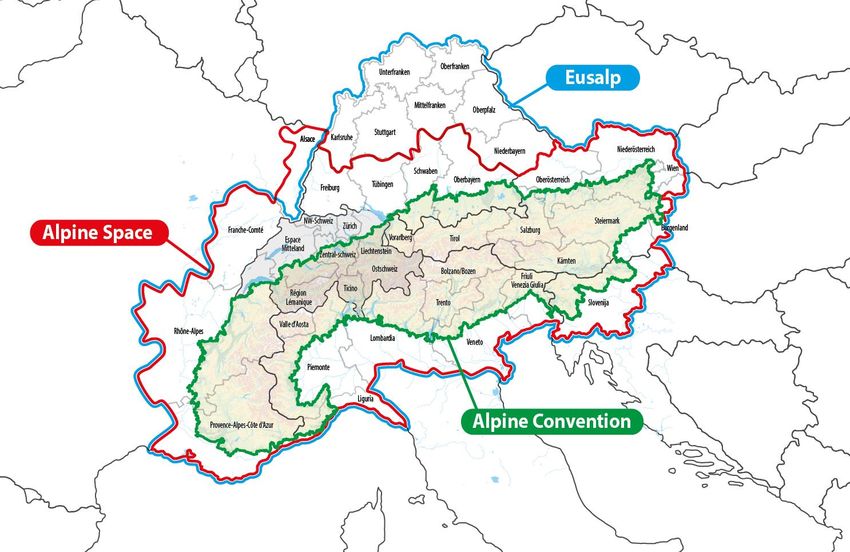
Give peripheral territories the center of attention

                 REGIONAL DEVELOPMENT POLICY

  "one size fits all"       VS         space-aware policy

                              productive vocation    cultural traditions
  Economic targets

                                        natural assets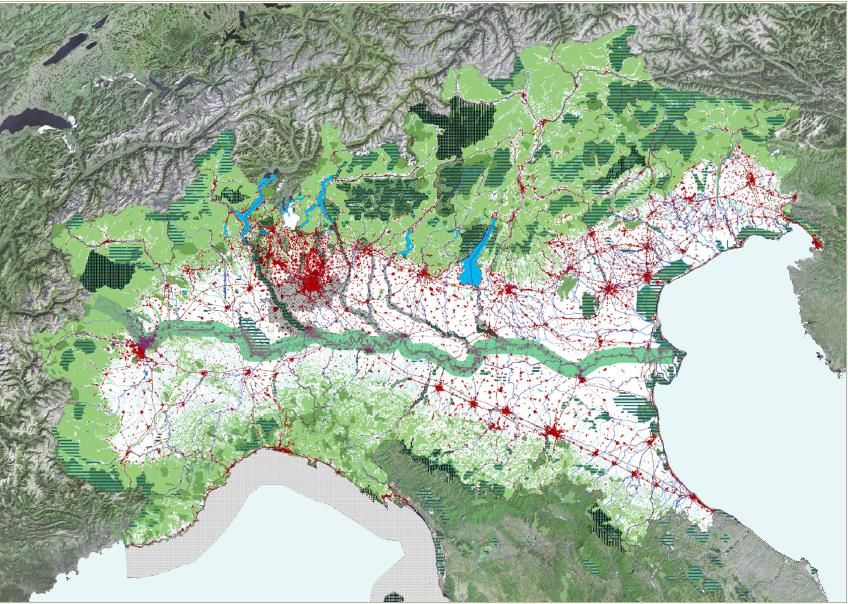
Territorial cohesion and place based approach
                   Towards an Inclusive, Smart and Sustainable
                   Europe of Diverse Regions

Place based
Development
Policies

                                  A strategy for smart, sustainable
                                  and inclusive growth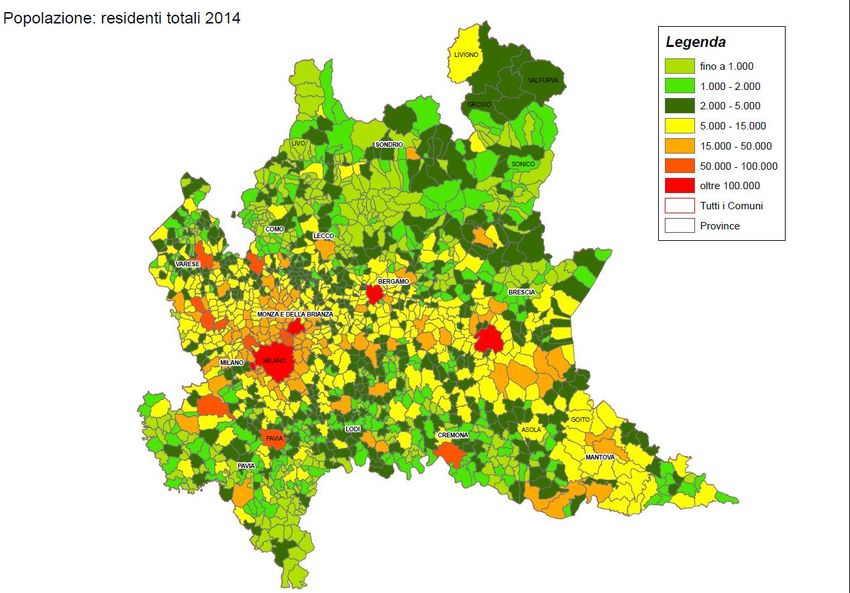
Ways of cooperation for spatial development - ESDP
Ways of cooperation for the Territorial Agenda 2020

     The principles of horizontal coordination, evidence‐informed
     policy making and integrated functional area development,
     implement the subsidiarity principle through a multilevel
     governance approach. These aim to unleash territorial
     potential through development strategies based on local and
     regional knowledge of needs, and building on the specific
     assets and factors which contribute to the competitiveness of
     places. Places can utilize their territorial capital to realise
     optimal solutions for longterm development, and contribute in
     this way to the achievement of the Europe 2020 Strategy
     objectives (TA2020)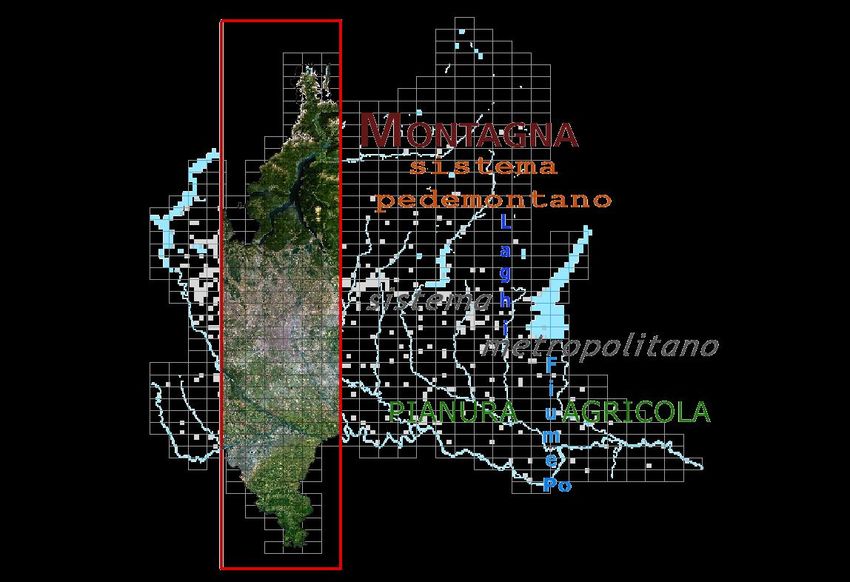
The European vision in the Regional Territorial Plan

“strengthening competitiveness of the diverse      «a balanced and
                                     territories
                                                   sustainable spatial
    promoting territorial balance in Lombardy      development»
protecting and enhancing Regional territorial
                                    resources”
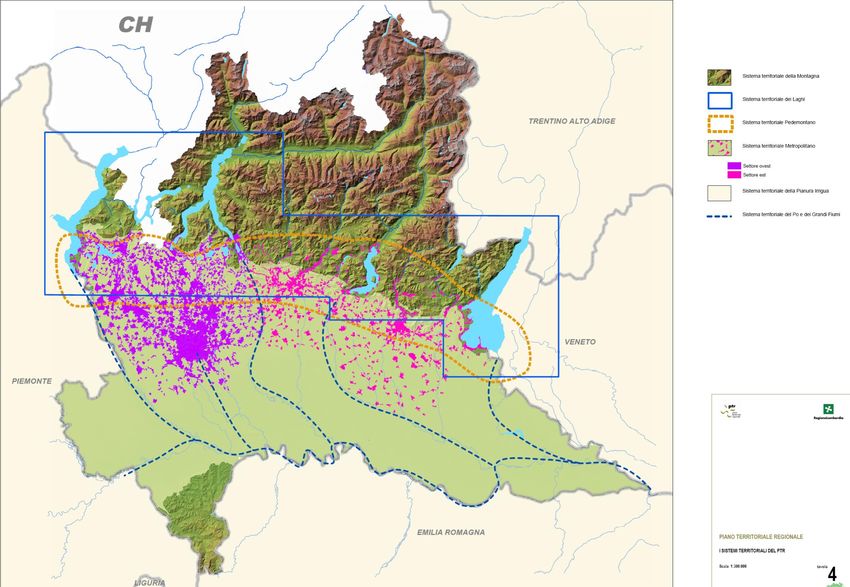
Six Territorial Systems

   … they aren’t a
 spatial continuum
with boundaries, but
 functional and
    related
  geographical
systems, spatially
      shaped

          … finalised to address local development
Territorial Systems
Environmental macro region of North Italy
Total population by municipality

                         10% of the total population
                         40% of the region
                         65,000 daily commuters
The new Regional Landscape Plan and the
European Landscape Convention
« “Landscape” means an area, as perceived
by people, whose character is the result of
the action and interaction of natural and/or
human factors »Main Topics of the Regional Landscape Plan
Periurban areas, derelict areas, Lakes as world heritage
frindge areas and peripheries
20 % of the region, 7.5 million inhabitants It is the best known worldwide landscape!
Very high value Landscapes Rural landscapes: culture and agriculture
52 % of the region is protected by law The first agrarian region in Italy
The mountain region: to protect, safeguard and enhance the Alps
40 % of the region: the
most important
hydropower and water
supply reserve
The landscape dimension of the Regional parks
24% of the region is
covered by regional or
national parksEnvironmental Value of the Mountain: an integrated
approach
Soil values: Habitat Quality, Natural HabitatCharacters
Heritage and
Identity Ecosystem
services
Lombardy’s
Landscape
Protection
Risks
Pressures
The project of the Regional
Landscape PlanEU resources and policies for Mountain Areas in
Lombardy
• ERDF – ROP Lombardia
• Inner areas
• Rural Development Programme (CAP)
• Territorial cooperation
Interreg IT-CH
Alpine SpaceInner Areas in Lombardy
Rural Development Programmes (RDP) PSL
Financial resources for the mountain
    Inner areas in Lombardy
The following areas are operative:
• Alta Valtellina (SO)
• Valchiavenna (SO)
Next Inner Areas:
• Oltrepò pavese (PV)
• Alto Lario (CO)

Budget:
• 38 M€ ERDF (European Regional Development
  Fund)(19 M€ cultural tourism);
• 15 M€ ESF (European Social Fund);
• 11,324 M€ EAFRD (European Agricultural Fund
  for Rural Development) - RDP (Rural
  Development Programs)
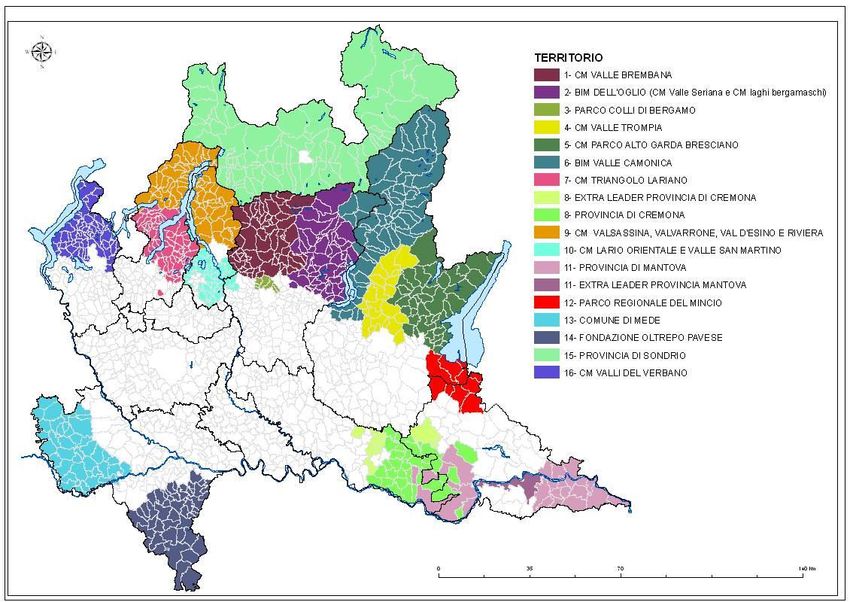
Financial resources for the mountain Rural Development Programmes (RDP) PSL M€ 58,339 M€ (Valle Trompia, Provincia di Sondrio, Alto Garda Bresciano, Oltrepò Pavese, Valle Brembana, Valle Camonica, Valsassina, Valvarrone, Val D’Esino e Riviera, BIM dell’Oglio (Val Seriana e CM Laghi Bergamaschi), Triangolo Lariano.
Territorial cooperation 2014-2020 Interreg IT-CH
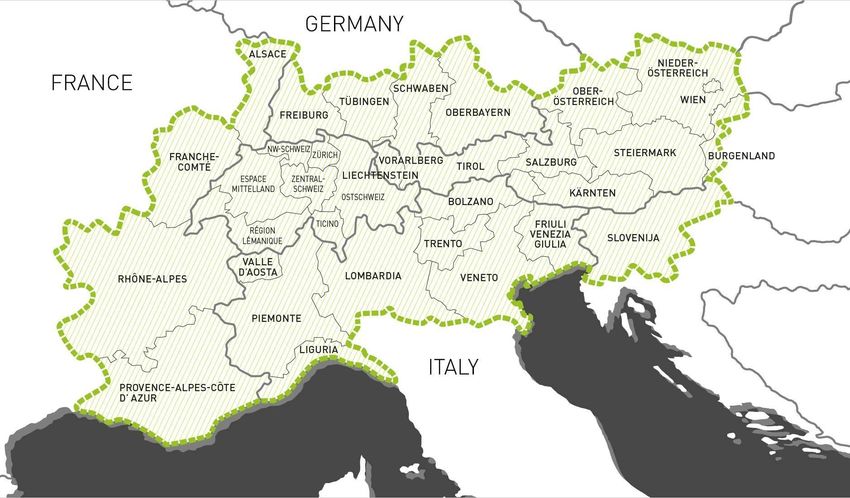
Territorial cooperation 2014-2020 Alpine Space
EUSALP Macro Region
Financial resources for the mountain

Territorial cooperation
Interreg IT_CH total budget M€158,435
1. Competitività delle imprese: € 30.082.043
2. Valorizzazione del patrimonio naturale e culturale: € 41.545.854
3. Mobilità integrata e sostenibile: € 28.055.629
4. Servizi per l’integrazione delle comunità: € 15.326.393
5. Rafforzamento della governance transfrontaliera: € 36.351.537
6. Assistenza tecnica: € 7.074.456

Interreg Alpine Space total budget M€ 139.8
Financial resources for the mountain

Territorial cooperation: EUSALP Macroregion.
Three Pillars:
The Link Between Policy and Planning

The challenge pursued by the Plan is to link regional planning
with operative policy instruments that could have a stabilizing
sectorial impact on the region through a proactive and multi-
level approach.
The plan focuses on genuine identity of these areas,
characterizing them, in order to shape differences and
possibilities for their development, based mainly on the holistic
potential of landscape.
The link between the regional Landscape plan, the regional
Territorial plan and the European programmes, and in particular
the role of internal areas in the present cohesion policy 2014-
2020, will allow to promote operative policies aiming at
revaluing these areas as liveable and smart places for local
communities and multi-local residents.
Thank you for your attention!
You can also read


