Roshan Bajracharya, Regional Advisor, UIS-Asia Pacific Nyi Nyi Thaung, Programme Specialist, UNESCO Bangkok - Launch of the Publication 'School ...
←
→
Page content transcription
If your browser does not render page correctly, please read the page content below
Launch of the Publication ‘School Closures
 and Regional Policies to Mitigate Learning
 Losses: A Focus on the Asia-Pacific’,
                 3 July 2021

Roshan Bajracharya, Regional Advisor,
UIS-Asia Pacific

Nyi Nyi Thaung, Programme Specialist,
UNESCO Bangkok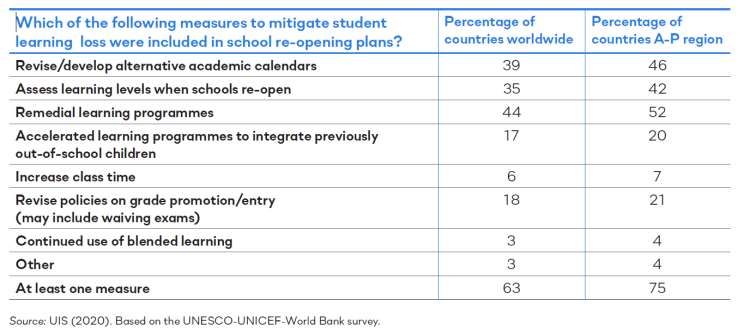
Effects on Education                    Continuity of Learning – School Reopening
 COVID-
   19
            Teachers             Students

          Secondary               Secondary
SCHOOL
           Primary                 Primary
CLOSURE
            ECE                      ECE

          Quick Overview                              of the report
                                                                              Key Findings
                       IMPACTS                    $
                                              Mind the gap

                                                                            The Way Forward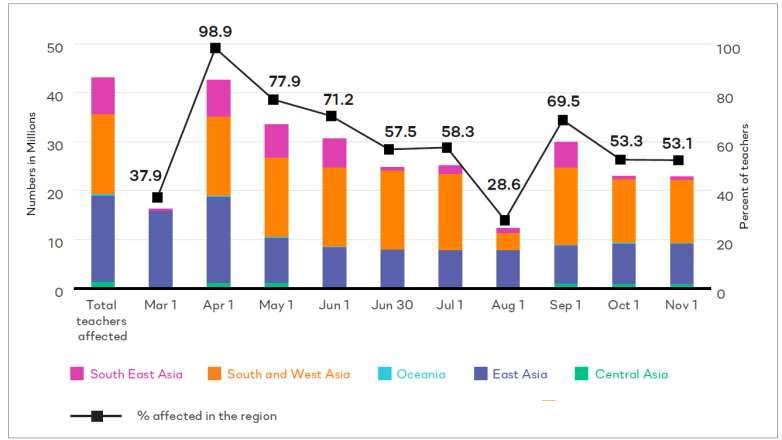
The global pandemic and school
            closures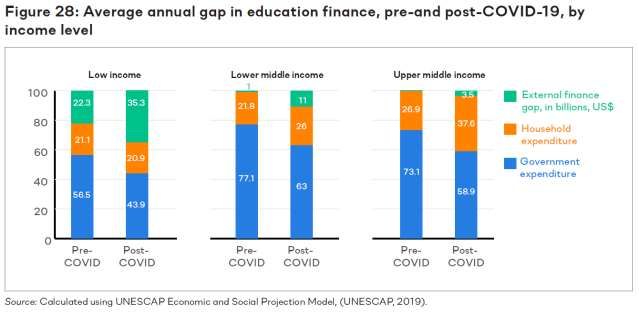
Figure 1: Number/percentage of countries that closed their schools,
worldwide (left) and Asia-Pacific (right).
250 100.0 60 100.0
93.3
90.4 90.0 90.4 90.0
50
200 80.0 80.0
76.9
73.7
70.0 70.0
40 67.3
63.5
150 60.0 60.0
57.7
53.8 53.8
51.9 51.9
50.0 30 50.0
48.8 48.1
46.9
43.1 44.2
42.1 42.3
100 40.2 40.2 40.2 40.0 40.0
36.8 37.8
34.4 20 32.7
30.0 30.0
25.0
22.0 23.1
50 20.0 20.0
10
11.5 10.0
9.6 10.0
3.8
0 0.0 0 0.0
1-Mar 1-Apr 1-May 1-Jun 1-Jul 1-Aug 1-Sep 1-Oct 1-Nov 1-Dec 1-Jan 1-Feb 1-Mar 1-Apr 1-May 1-Jun 1-Mar 1-Apr 1-May 1-Jun 1-Jul 1-Aug 1-Sep 1-Oct 1-Nov 1-Dec 1-Jan 1-Feb 1-Mar 1-Apr 1-May 1-Jun
Academic Break CLOSED 2020 2021
2020 2021
OPEN PARTIAL Academic Break CLOSED
OPEN PARTIAL
#N/A % of countries with partial and complete closure
#N/A % of countries with partial and complete closure
Launch of the Publication ‘School Closures and Regional Policies to
Mitigate Learning Losses: A Focus on the Asia-Pacific’, 3 August 2021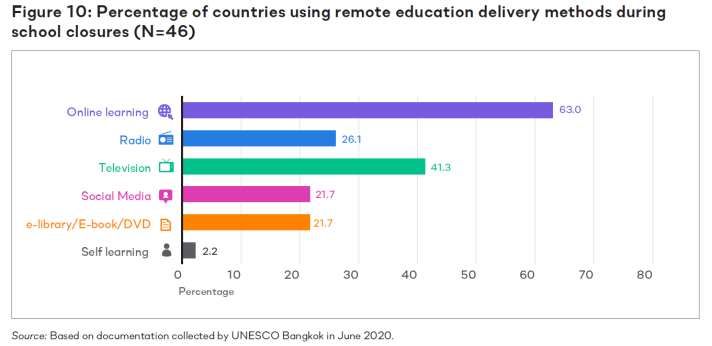
120.0

                                                               Global School Closure
                 100.0
                                     4.8     6.1            6.9          4.6
                                                    12.8
                                                                               20.6
                                                                                                                25.6
                                                                     26.1                                                                           38.3
                  80.0                                                                                                  42.8
                                                                                       51.9     49.4    51.1                    52.1      51.0
                                                                                                                                                            55.0

                                                                                                                20.3
                                                            60.8
                  60.0

Global and
                            91.6
                                    94.8    91.9                                                                                                    27.7
                                                    82.1

Regional
                                                                               68.6
                  40.0
                                                                     68.9                                               43.6

School Closure    20.0
                                                                                       46.7
                                                                                                45.9    45.8    54.4            45.0
                                                                                                                                          42.0

                                                                                                                                                    34.2
                                                                                                                                                            42.5

                                                            32.0

                                                                                                                        13.9
                             8.0                                               10.4                                                           7.2
                                              1.6    4.7                                        4.6      3.4                     3.2                         2.8
                     0.0     0.0     0.0                                                1.4
                            1-Mar   1-Apr   1-May   1-Jun   1-Jul    1-Aug     1-Sep   1-Oct   1-Nov    1-Dec   1-Jan   1-Feb   1-Mar     1-Apr     1-May   1-Jun
                                                                  2020                                                                 2021

                                                                          ACADEMIC BREAK       CLOSED    OPEN

                 Schools Closed
                 •         In April 2020, 95% of the schools around world 99% in AP
                           Region
                 •         In June 2021, 43% of school globally and 50% of the schools in
                           AP region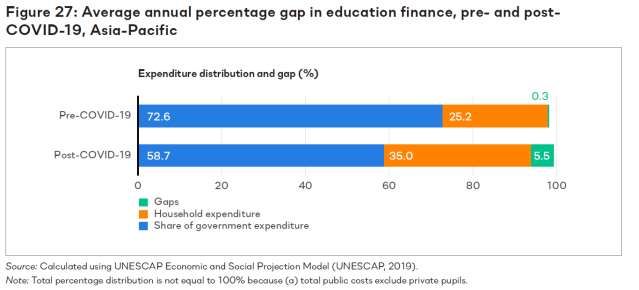
• Globally 1.6 billion
                     Total                 • AP region 850 millions
                   Students

                                           • Globally 95%
                                           • Ap Region 99%
Number and %
                  April 2020

of students
affected due to   November
                                           • Globally 43%
                                           • AP Region 57% (biggest proportion is from SW Asia 80%)
school closure      2020

                                           • Students equally affected regardless of the levels of education.
                                           • Pre-Primary schooling has higher risks of sustaining (55% of
                   Levels of
                  education                  students in the EAP and 58% in SWA attend private schools)

                   Launch of the Publication ‘School Closures and Regional Policies to
                  Mitigate Learning Losses: A Focus on the Asia-Pacific’, 3 August 2021
Estimated
number of
teachers
affected by
school
closures, by
subregion      Total numbers of teachers affected
               - In April, 2020, 43 million (99% of the teachers from Pre-primary to
                  Secondary)
               - In November, 2020 23 million teachers ( 53% ) were still not engaged in
                  face-to-face direct teaching
               - Many teachers, especially private school teachers lost their jobs

                Launch of the Publication ‘School Closures and Regional Policies to
               Mitigate Learning Losses: A Focus on the Asia-Pacific’, 3 August 2021
Continuity of Learning and School
Re-openingRemote
learning during
school closures - Not all the delivery methods are equally effective
- Online learning platforms where available seems effective compared
to other methods.
- The effectiveness of such methods varied between various sub region
- In 2 out 3 countries where online platform is used, MoE are taking
lead in developing and deploying contents for online platforms (
68%)
Launch of the Publication ‘School Closures and Regional Policies to
Mitigate Learning Losses: A Focus on the Asia-Pacific’, 3 August 2021Support provided to teachers for remote teaching in the region (N=28)
90%
82%
80%
71%
70% 64%
61%
60% 57%
50% 45% 45% 46%
43% 43%
40%
40%
32% 32% 32%
Support to the
29% 30%
30%
20% 20% 18% 20%
20% 14%
teachers for
10% 11% 9%
10% 4%
0% 0% 0%
0%
organizing
Offered special Instructions for Professional and Teaching content ICT tools and free No additional Do not know
training oline, TV, radio psychosocial adapted to remote connectivity support
learning, etc. support (e.g. chat teaching
remote
groups, forums to
share educational
approaches)
learning • In 1
Asia (Central and Southern) Asia (Eastern and South-eastern)
in 10 counties teachers are not provided with additional support
Oceania Asia pacific
• Only one third of the countries provided special training to the teachers
• Only 3 out 5 countries provided instruction to the teachers on remote
learning
• Only 1 in 3 countries provided ICT tools and free connectivity
to their teachers
Launch of the Publication ‘School Closures and Regional Policies to
Mitigate Learning Losses: A Focus on the Asia-Pacific’, 3 August 2021Numbers of Academic days lost in Asia pacific region ( until
September 2020)
140
Country
126.9
120
strategies to 100
89.4
mitigate 80 76.3
Days
student 60 54.1
learning loss
45.4
40
with schools 20
re-opening 0
Central Asia East Asia Oceania South and West Asia South East AsiaRe-opening of schools
• Countries in East and Southeast and Oceania considering to re- open fully
in-person
1/5th • Countries in East and Southeast and Oceania re-open with blended model
Country • of the countries will continue distance learning in Central and Southern
strategies to 25%, 36%
and 18%
Asia, East and Southeast Asia and Oceania, respectively.
mitigate
student Measures to mitigate student learning loss
learning loss
with schools
re-opening
Launch of the Publication ‘School Closures and Regional Policies to
Mitigate Learning Losses: A Focus on the Asia-Pacific’, 3 August 2021Impacts of School Closure on
Learning- 6.7 million students in the
region are at risk of dropping
Risk of out of school, (highest
Dropout dropouts expected at the
secondary -4.2 million).
- Estimated 4% increase in OOSC
Impact of numbers in the region
school closures • 10 percentage points
declines in Grade 3 age
on dropout, Learning
children cohort proficient in
reading between 2019 and
learning and Loss
2020, from 59% to 49%
• Over 100 million additional
data collection students fall below the
minimum proficiency due to
the school closure
• More than 80% of the
Disruption Lower middle income and
Low-income countries face
in data moderate to severe
education data disruption
Launch of the Publication ‘School Closures and Regional Policies to
Mitigate Learning Losses: A Focus on the Asia-Pacific’, 3 August 2021End of Primary, millions
Projected 6.3
number of
East and South East Asia 4.1
9.4
21
additional
Central and South Asia 14.4
32.5
students
65.8
World 48.5
102
completing 0 20 40 60 80 100 120
Surveyed percentage of
countries pursuing
If surveyed If all If no country
education
percentage countries pursues mitigation
of countries pursue mitigation 68 67
70
pursues mitigation (businessas- 64
levels without
mitigation usual) 65
58
60
55
End of Lower Secondary, millions
minimum
50
World Central and East and Oceania
8.5 South Asia South East
proficiency in
East and South East Asia 6.1 Asia
11.6
20.9
reading,
Central and South Asia 14.7
30.8
More information: http://gaml.uis.unesco.org/wp-
56.9 content/uploads/sites/2/2021/03/UIS_COVID-19-
between 2020
World 41.2 interruptions-to-learning_EN.pdf
86.5
0 10 20 30 40 50 60 70 80 90 100
to 2030 If surveyed
percentage
of countries
If all
countries
pursue
If no country
pursues
mitigation
pursues mitigation (businessas-
mitigation usual)
Launch of the Publication ‘School Closures and Regional Policies to
Mitigate Learning Losses: A Focus on the Asia-Pacific’, 3 August 2021Implication to Resources
Summary of Findings and Wat
ForwardsImplication on
resources to
achieve SDG 4
Launch of the Publication ‘School Closures and Regional Policies to
Mitigate Learning Losses: A Focus on the Asia-Pacific’, 3 August 2021• Millions of students and teachers affected due the pandemic- Pre-
primary education could be in risk as more than 55% of the students are
in private schools
• Many countries in the Asia-Pacific developed remote and distance
learning options, especially the use of online platforms, to ensure
ongoing learning. However, infrastructure is big challenge
• Most low income countries planned to re-open schools for face-to-face
learning rather than adopting a hybrid model which is more popular in
Key findings high income countries.
• Many schools had inadequate digital infrastructure and teacher capacity
to deliver remote learning by ICT
• Teacher job security was negatively affected by school closures,
especially in the private sector
• School feeding programmes stopped when schools closed
• Disruption in collecting and compiling education data.
• Effective remedial programmes are essential
• Increasing education finance gaps for low income and lower-middle
income countries will impact their ability to achieve SDG 4.
Launch of the Publication ‘School Closures and Regional Policies to
Mitigate Learning Losses: A Focus on the Asia-Pacific’, 3 August 2021• Strengthen data collection systems for effective monitoring of school
re-opening plans. This approach should focus on safety, equity and
inclusion.
• Monitoring and data systems should also collect data on online and
distance learning programmes, their delivery and student
achievement.
• National monitoring authorities should receive greater support to
The way expand their capacity to enhance and develop data collection and
forward (
compilation methodologies. These approaches could include the use
of technical devices such as smart phones and tablets, as well as
Focusing on Internet-based innovations.
• Data collection guidelines and tools should be developed so countries
Monitoring ) can adjust practices and collect the most essential data for planning
and policy strategies. This approach will advance the development of
remedial and intervention programmes.
• Support should be provided for regional, subregional and national
impact assessments, in coordination with national statistical
organizations and ministries of education, so the true impact of
COVID-19 on learning can be assessed.
Launch of the Publication ‘School Closures and Regional Policies to
Mitigate Learning Losses: A Focus on the Asia-Pacific’, 3 August 2021Thank you
Learn more: www.unesco.org/education
@UNESCOYou can also read


