Y4 - ANSWER PACK - Remote Learning - 2021 22th- 26th February - Pontefract Academies Trust
←
→
Page content transcription
If your browser does not render page correctly, please read the page content below
Y4
  Remote
  Learning

ANSWER PACK
  22th- 26th February
         2021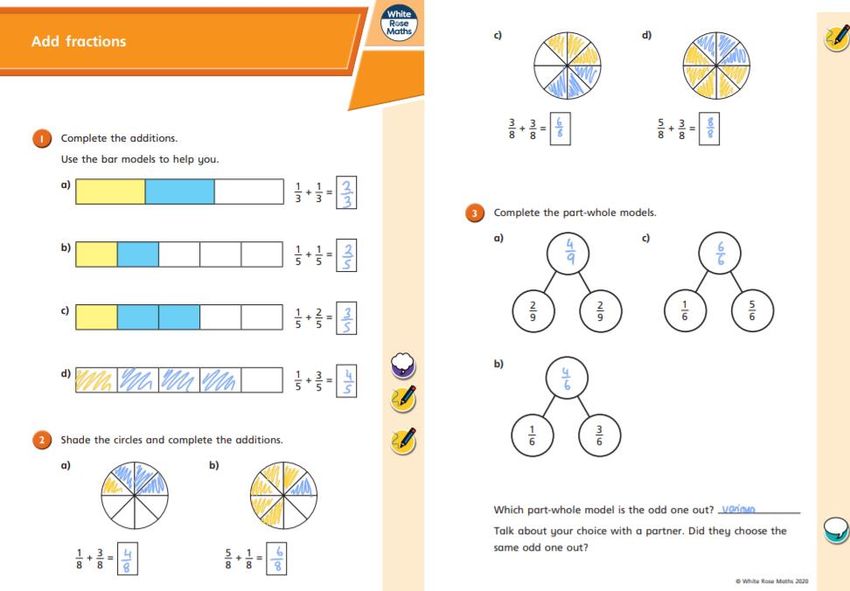
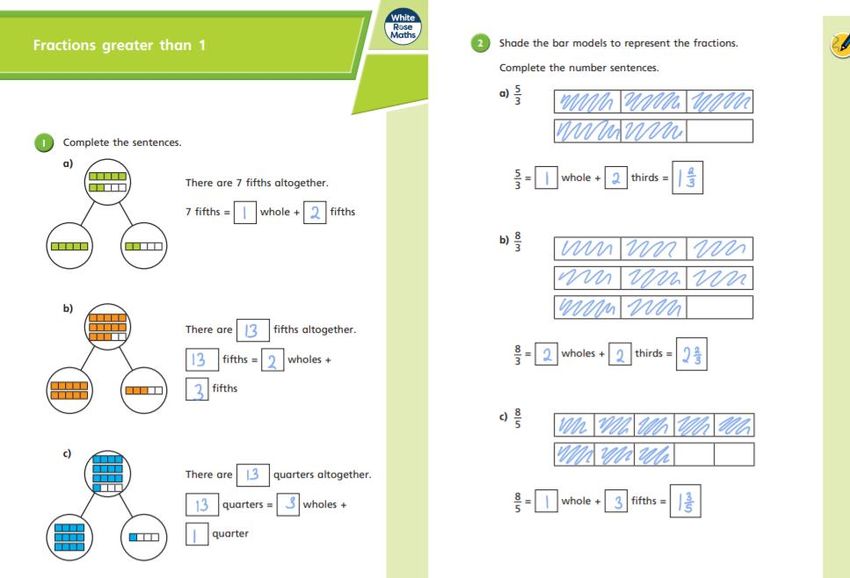
Math lesson 1 Answers

Year 4 Answer Pack
Year 4 Answer Pack
Year 4 Answer Pack
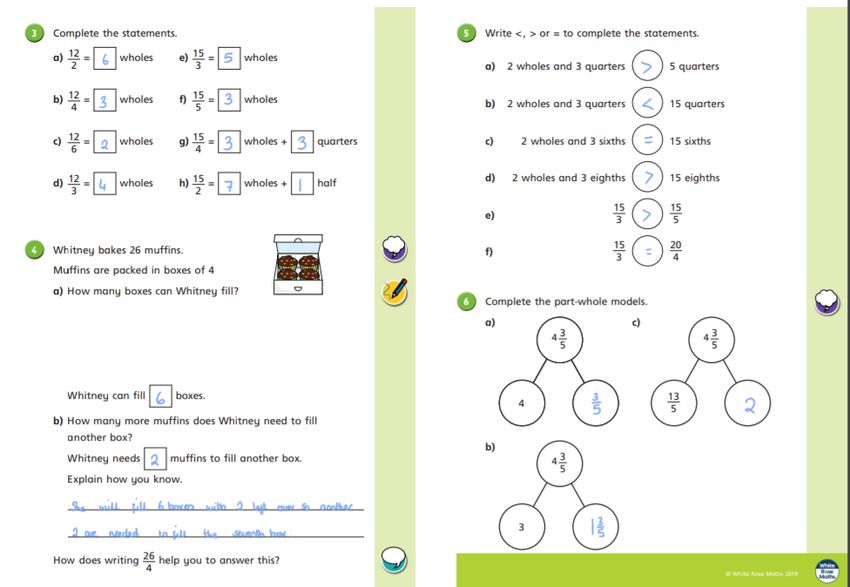
Math lesson 2 Answers

Year 4 Answer Pack
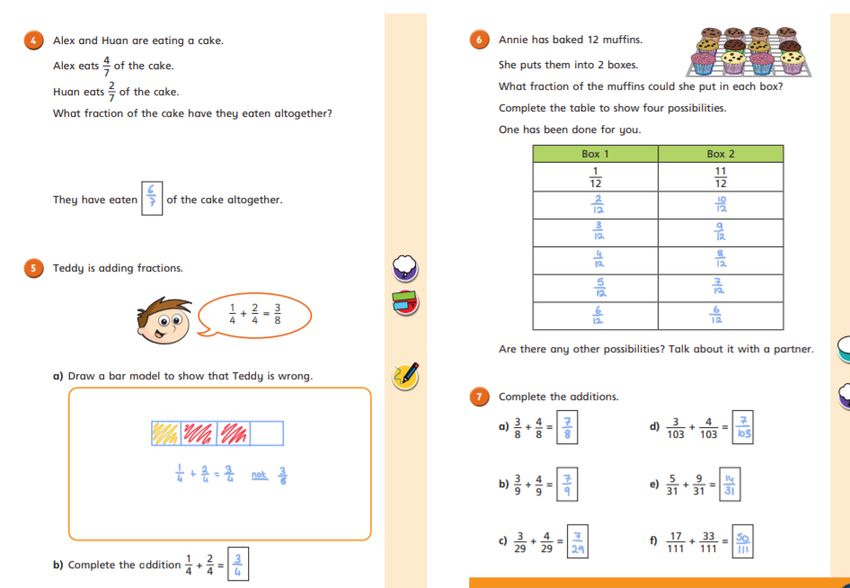
Math lesson 3 Answers

Year 4 Answer Pack
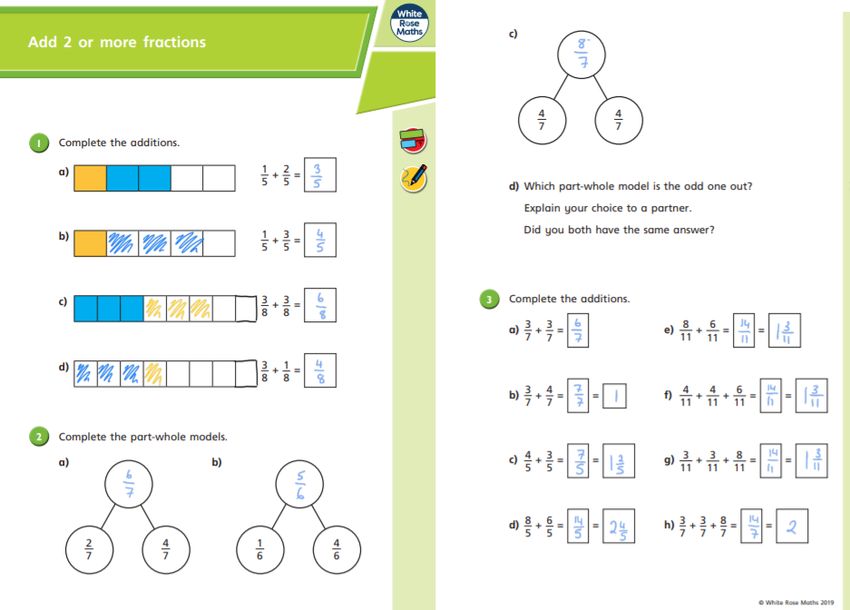
Year 4 Answer Pack
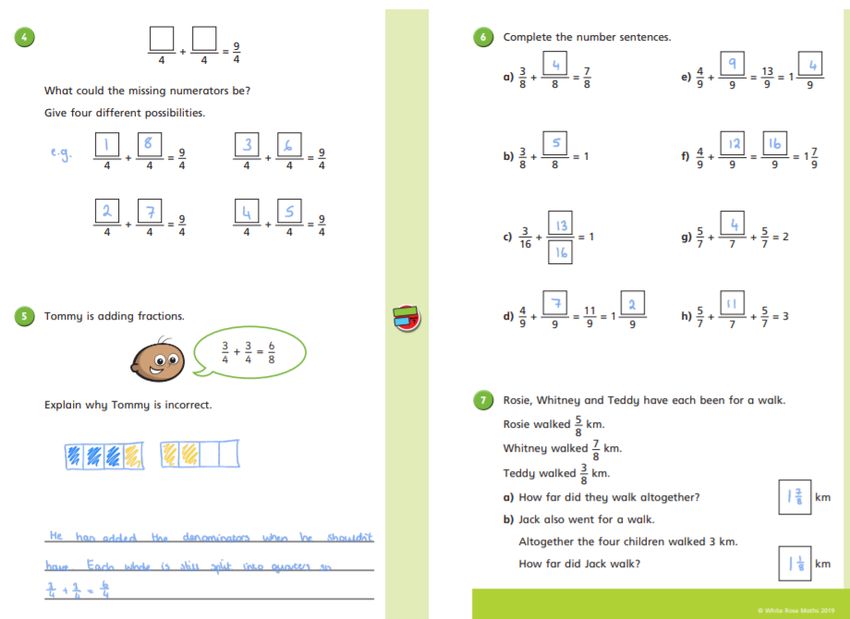
Math lesson 4 Answers

Year 4 Answer Pack
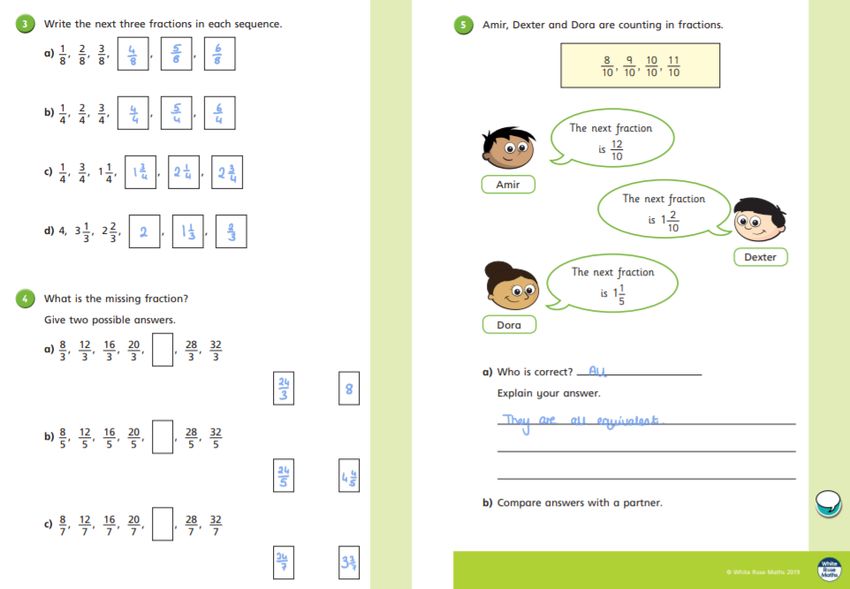
Year 4 Answer Pack
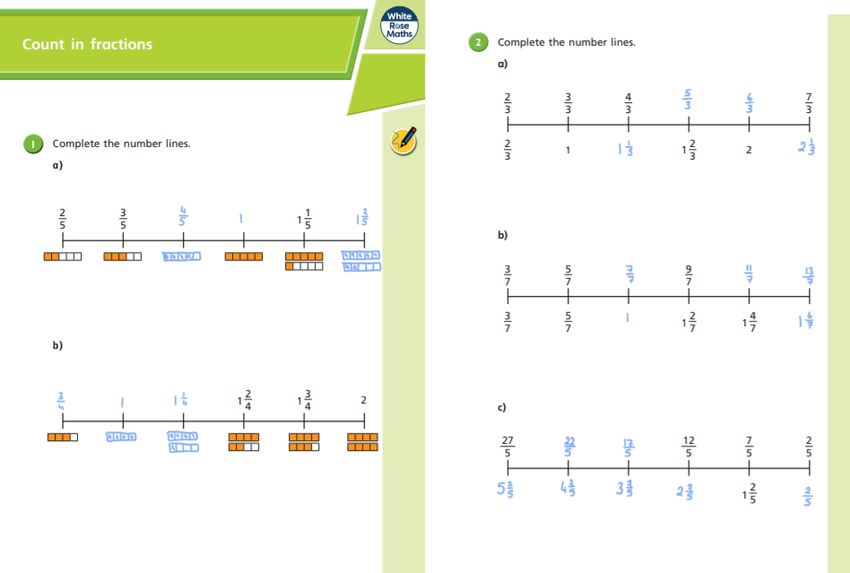
Math lesson 5 Answers

Year 4 Answer Pack
English Lesson 1: Reading - The Old Teacher Answers
                                           The Old Teacher by Alan Ahlberg

                                                       ANSWERS

Key vocabulary: Stock-cupboard, Hymn-books, Wendy house.

Retrieval
1.) Where did the old teacher sleep?

The old teacher usually slept in the stock-cupboard

2.) What did the children bring her to eat?

The children brought her apples to eat

3.) How did the old teacher keep herself clean?

She washed her face in the goldfish water.

Inference
4.) Do you think that the old teacher was happy living as she did? Explain your reasoning.

If yes, answers may include that she continued to live there and had lived there for many years /her basic needs
were being met; the poem says that she had food, shelter, somewhere to sleep, somewhere to wash / She had been
a teacher for many years, an may have loved the school so much that she chose to live there / there is nothing in the
poem to suggest that she wanted things to be any different.

If no, answers may include that she could have been lonely, the stock-cupboard was probably not very comfortable
/ she would have been cold with paper for blankets, hungry with only apples to eat, dirty with only the goldfish
water to wash her face in / the Wendy house would have been small, even for an old lady to live in.

5.) Do you think a Wendy house is an appropriate place for the old teacher to live? Why / Why not?

Yes it is – answers may include that the Wendy house is cosy / it is free to live in / it is a small place to keep clean
and tidy and any other reasonable explanations.
No it is not – answers may include that the Wendy house is too small for anyone to live in properly / it does not
have running water and electricity and any other reasonable explanations.
Vocabulary
6.) What does “as a rule” mean in line 3?
As a rule means usually

7.) What is a Hymn-book? Where else, other than a school, might a Hymn-book be used?
A hymn-book is a book that contains religious songs and music

8.) What is a stock cupboard? Why might a stock cupboard be needed in a school?
A stock-cupboard is where all the school’s resources (the stock) such as pens, paper, books are kept.

Deepen the Moment
"There was an old teacher, who lived for years in a Wendy house, or so it appears."
Do you think the teacher really lived in school? Why might people have believed this to be true?
Yes I believed this to be true because the poem talks about how she lives in the Wendy house and sleeps in the stock
cupboard / the poem goes into detail about how she lived, ate, washed and slept/ any other reasonable explanation.
No I do not believe this to be true because it would not be possible for a grown lady to live in a Wendy house as it is
too small / the stock cupboard resources such as the paper blanket and the hymn books for pillows would be
uncomfortable – she would not get a good night’s sleep to then be able to teach the next day.
People may have believed this to be true because the old teacher is always seen at school from early in the morning
until late at night / may work hard and have little time away from school / any other reasonable explanations.
English Lesson 1 Reading - The Old Teacher Answer Red Task
Year 4 Answer Pack
The Old Teacher by Alan Ahlberg
ANSWERS – Red Set
Key vocabulary: Stock-cupboard, Hymn-books, Wendy house.
Retrieval
1.) Where did the old teacher sleep?
The old teacher usually slept in the stock-cupboard.
2.) What did the children bring her to eat?
The children brought her apples to eat
Inference
3.) Do you think that the old teacher was happy living as she did? Give one reason to support
your answer.
If yes, answers may include that she continued to live there and had lived there for many years
/her basic needs were being met; the poem says that she had food, shelter, somewhere to sleep,
somewhere to wash / She had been a teacher for many years, an may have loved the school so
much that she chose to live there / there is nothing in the poem to suggest that she wanted things
to be any different.
If no, answers may include that she could have been lonely, the stock-cupboard was probably not
very comfortable / she would have been cold with paper for blankets, hungry with only apples to
eat, dirty with only the goldfish water to wash her face in / the Wendy house would have been
small, even for an old lady to live in.
Vocabulary
4.) What does “as a rule” mean in line 3? Does it mean usually, sometimes or never?
As a rule means usually.
5.) What is a Hymn-book?
A hymn-book is a book that contains religious songs and music
Deepen the Moment
Why do you think that the teacher lived in school? Write at least one reason to support why she
might live there.
Reasons could include that she had no house of her own / not enough money / that she loved the
school / that she wanted to look after the school / she worked so hard at being a teacher each
day, that it was easier to live in school than to travel each day / her house was too far away to
travel to school each day.
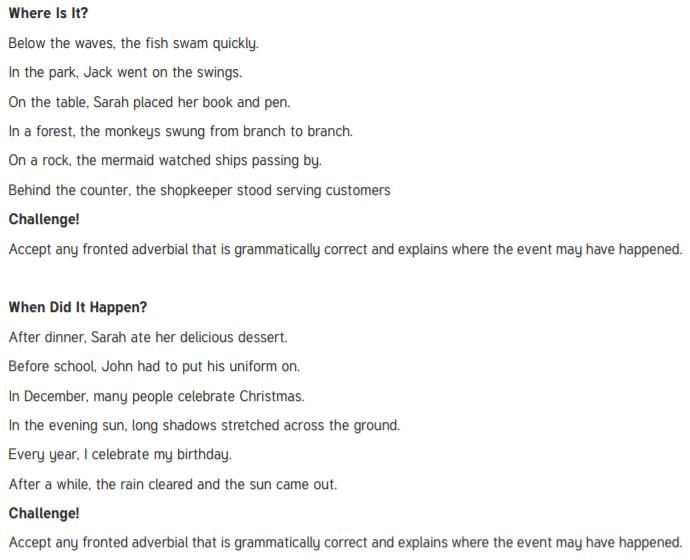
Year 4 Answer PackEnglish Lesson 2: Fronted Adverbials Task 1: Accept any appropriate fronted adverbial e.g. 1. Without looking back, the girl ran through the park. Deepen the moment: English Lesson 3 Reading Various acceptable similarities / differences between formal and informal letters. e.g. Both have a receiver address, both say Dear ____, both would say who it’s from. etc. Only a formal letter would have sender address, only an informal letter might tell them news or gossip, only a formal letter would introduce the reason for writing in an introductory paragraph etc. Year 4 Answer Pack
English Lesson 4: Formal Writing

               Formal and Informal Language

Fill in the blanks using the word bank below.

             Formal                 Informal              Slang

 Spectacles                 Glasses             Specs

 Beverage                   Drink               Bevy

 Pick your Brains           Pleased             Chuffed

 Gentleman                  Man                 Bloke

 Enquire                    Ask                 Wicked

 Brilliant                  Great               Delighted

 Acquaintance               Friends             Mates

 Insignificant              Small               Piddly

Year 4 Answer Pack
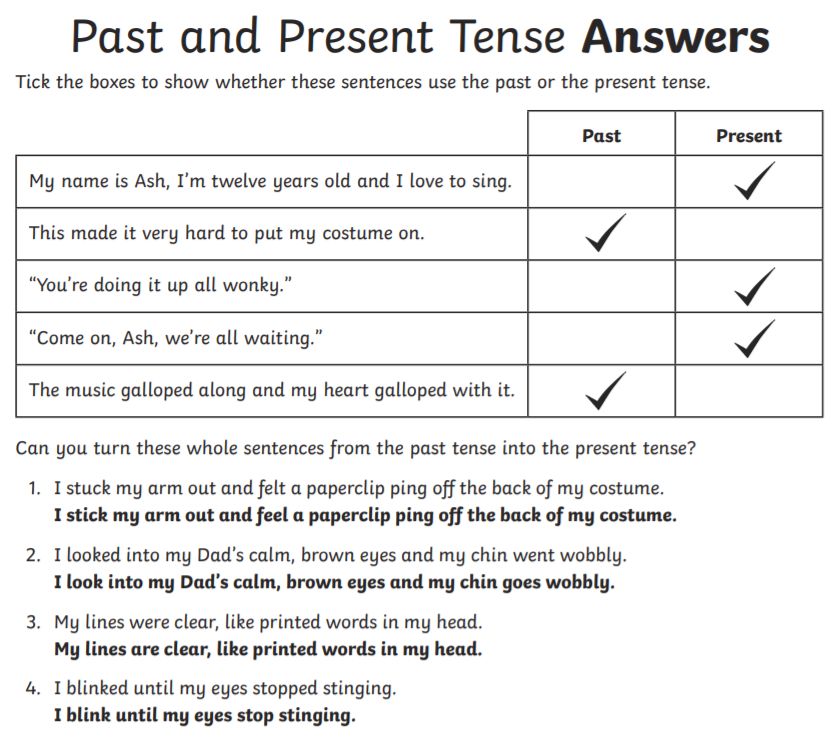
English Lesson 5: Verb tenses Reading for Productivity Answers Lesson 1: Geography Year 4 Answer Pack
Lesson 2: R.E.
Retrieval
    1.    How many different names does Allah have?
          99.
   2.     What are used by Muslims when praying to remember the names of Allah?
          Subhah beads.
   3.     What do Muslims believe Allah created?
          Heavens and the Earth.
Vocabulary
   4.     What does the word ‘merciful’ or mercy mean?
          Forgiving, gracious, kind, sympathetic, understanding, patient, compassionate.
   5.     What do you think the word ‘entity’ means?
          Something that exists on its own, separate, independent.

Inference
    6.    How could Muslims show respect to Allah in their everyday life?
          Read the Qur’an, show peace and kindness to others, pray when they are supposed to, follow
          rules.
    7.    Why do you think Muslims strictly believe in one God and not more than one?
          Because if there were more than one God then those Gods would be powerful in one thing but
          not powerful overall.

Lesson 3: D.T.
                                      Reading for Productivity- DT

   1. Name two examples of fruit and vegetables. Cucumber, apple etc.
   2. What food and drink is high in sugar? Fizzy drink, sweets etc.
   3. Name two types of protein that are important to our diet. Fish, eggs, meat etc
   4. What does the word ‘alternative’ mean in this sentence?
      Beans and pulses are a good alternative to meat as they contain less fat and are higher in fibre and
      protein. Different etc
   5. Why do you think it is important for a baby to have a good amount of protein and calcium in their
      diet? To grow strong bones and teeth
   6. If an individual was struggling with tiredness, what would you recommend they eat and drink?
      Increase the amount of fruit, vegetables, wholegrain foods, low fat dairy products and lean meats in
      your diet.

Year 4 Answer Pack
Lesson 4: Science
Retrieval
1. What are the three things that vibrate with sound?
1. the source object
2. the molecules in the air
3. the eardrum
2. Does air travel with sound? Use the text to back up your answer?
Air itself does not travel with the wave (there is no gush or puff of air that accompanies each sound); each
air molecule moves away from a rest point and then, eventually, returns to it.
3. What is the fastest vibration is your ear able to hear?
The fastest vibration we can hear is 20,000 times per second.
Vocabulary
4. What do you think the word ‘frequency’ means?
The rate at which something occurs over a particular period of time. etc.
5. Can you find a synonym for the word ‘individual’?
Single
Lesson 5: Computing
Retrieval
1) What is a branching story? A story with multiple options and endings.
2) Why is a branching story different to a normal story? A normal story only has one ending.
3) How many options could a branching story have? As many as you want.
4) How is the reader more involved in a branching story? The reader gets to decide how the story
goes.
Inference
5) Why do you think branching stories are better when using software such as PowerPoint? Explain
your answer. Accept any appropriate answer.
6) What type of stories do you think would work best as a branching story? Accept any appropriate
answer.
Vocabulary
7) Find and copy a word from the text that has the same meaning as ‘for all time’. Forever
8) What does the word ‘interactive’ mean? You can interact with it, so you can change it and make
it move – anything similar to this.
Year 4 Answer PackYear 4 Answer Pack
You can also read


