YEAR 9 2021 - Mandurah Catholic ...
←
→
Page content transcription
If your browser does not render page correctly, please read the page content below
2021
YEAR 9
CURRICULUM
HANDBOOK
Discover & Explore
Discovering new ways to live out the values from
the College Charism and behaving in a positive
manner. Even though discovery of new things is
part of the process, learning to embrace changes
but make good choices.
Year 9 Pastoral Care Theme

                                                   9
Year 9 Curriculum Handbook 2021

                                                               CONTENTS

GENERAL INFORMATION
        Foreword............................................................................................................................................ 2
        Christian Service Learning………………………………………………………………………………………………………...……3
        Curriculum Overview ......................................................................................................................... 4
        Selection of Specialist Curriculum...................................................................................................... 4
        Contacts ............................................................................................................................................. 5
CURRICULUM
      Core Courses
          Religious Education ......................................................................................................................... 7
          Careers Education ........................................................................................................................... 7
          English ............................................................................................................................................. 8
          Health Education ............................................................................................................................. 8
          Humanities and Social Sciences....................................................................................................... 9
          Mathematics ................................................................................................................................. 10
          Physical Education ......................................................................................................................... 10
          Science........................................................................................................................................... 11
      Elective Courses
          Dance............................................................................................................................................. 13
          Design Technology Design ............................................................................................................. 14
          Design Technology Food ............................................................................................................... 14
          Design Technology Materials ........................................................................................................ 15
          Design Technology Textiles ........................................................................................................... 15
          Digital Technology ......................................................................................................................... 16
          Drama ............................................................................................................................................ 17
          HaSS Extension .............................................................................................................................. 17
          Italian ............................................................................................................................................. 19
          Media ............................................................................................................................................ 20
          Music ............................................................................................................................................ 21
          Outdoor Education ........................................................................................................................ 21
          Science Extension .......................................................................................................................... 22
          Specialised Sport ........................................................................................................................... 23
          Visual Art ....................................................................................................................................... 25

                                                                          1
Year 9 Curriculum Handbook 2021

                                             FOREWORD

Our goal at Mandurah Catholic College is to excite and stimulate young people to become self-directed and
independent problem-solvers, capable of thinking critically and feeling deeply about issues. This requires a
curriculum that provides opportunities for young minds to focus on what they can do, extend their learning
experience and empower them to reach their potential.

There is both great depth and breadth provided in Year 9 curriculum and there is something for everyone at
Mandurah Catholic College. Taking the time to sit with your daughter or son, reading and discussing the
content of this booklet, is a very powerful form of modelling the value of learning to your child. I hope the
detail assists both of you with understanding the next chapter in your child’s education.

Mr Chris Wallace
PRINCIPAL

                                                     2
Year 9 Curriculum Handbook 2021
CHRISTIAN SERVICE LEARNING PROGRAM
The Christian Service Learning Program commenced at Mandurah Catholic College in 2007 and enables
students to grow in a Catholic faith perspective as people of service and justice. Whilst providing students with
opportunities to meet people with needs, the program focusses on learning life skills, encourages the habit of
giving and using personal gifts and abilities to care for others. Underpinned by the spirituality of the Holy Family
and College motto to ‘Seek Truth’, the program has a unique educational value for our students as well as
impacts on their personal, academic and social development. The Year 9 Christian Service Learning program
has three main goals:
• to engage students in the action of service learning;
• to engage students in guided reflection about their service learning activities, which are integrated into
the Religious Education curriculum;
• to prepare students for the senior years of community service learning.
Year 9 students complete a minimum of 10 hours of ‘School Based’ Christian Service Learning (volunteer work)
by the end of Term 3, Year 9. These hours may be completed either at school, in the Parish or with the student’s
family.
The College’s Year 9 Christian Service Learning program provides opportunities for young people to give
something back to their school/Parish/family while developing the values, skills and understandings needed to
contribute to civic wellbeing. By educating students to ‘think of other’, the program enables students to
address many of the core shared values outlined in the National Curriculum and the Christian values of the
Gospel.
Christian Service is defined as:
‘Activities undertaken for the benefit of individuals and/or community for no financial reward’.
RECORDING HOURS
A journal, provided by the College, is the official record of a student’s Christian Service Learning work and it is
their responsibility to maintain, keep safe and submit the journal to their Religion teacher so the hours can be
recorded by the College. Students will complete the journal’s guided reflection questions/activities in class
with the support of their Religion teacher.
For more information please contact the Coordinator of Christian Service Learning.
3Year 9 Curriculum Handbook 2021
CURRICULUM OVERVIEW
Year Nine students at Mandurah Catholic College study the following Core courses:
• Religious Education
• Careers Education
• English
• Health Education
• Humanities and Social Sciences
• Mathematics
• Physical Education
• Science
Students will choose six (6) electives to study for one semester each in Year 9. Where two different units are
offered in a course, a student may choose one unit, either Unit A or Unit B, or both. It is important to read
the course information later in this book to understand what each course entails before making a selection. If
you require information about a course beyond what is provided in this booklet please contact the appropriate
person on the Contacts page. The electives available are outlines later in this handbook.
Some electives have entry requirements. If your child wished to choose one of these electives, please ensure
that they meet the entry requirements.
SELECTION OF SPECIALIST CURRICULUM
This booklet provides a brief outline of the aims of each course that students in Year 9 can undertake. Students
are required to choose a number of electives from specialist areas to supplement the process skills undertaken
in the core courses. A description of each of these courses is contained in this book.
Students do six (6) semester-long elective courses in Year 9. When selecting these electives, you will be asked
to choose eight (8) elective courses. Since allocation to courses depends on timetable restrictions, students
are asked to rank all electives in order of preference. Choice of a course does not guarantee acceptance into
the course. Timetabling considerations make some course combinations restrictive. Acceptance is conditional
on there being sufficient students to form a class and satisfactory completion of the required levels of Year 8
work where specified. Parents are emailed information on how to choose electives, with appropriate due
dates. Failing to submit choices on time may result in a student missing out on high demand courses.
4Year 9 Curriculum Handbook 2021
CONTACTS
If parents have further concerns about Year 9 they can direct them through the following departments or
members of staff:
ENQUIRIES ABOUT THE ACADEMIC CURRICULUM
General Enquiries Head of Year 8 (2020)
Mr Matt Edwards
Head of Learning Area - Religious Education Mr Richard Sellwood
Head of Learning Area - English Mr Chris Winters
Head of Learning Area - Mathematics Mr Ricky Pedersen
Head of Learning Area - Science Mr Andrew Proctor
Head of Learning Area - Humanities and Social Sciences Mrs Karen Hall
Head of Learning Area - Health and Physical Education Mr Matthew Ritikis
Head of Learning Area – Design and Digital Technologies Mr Ian Pemberton
Head of Library Services Mrs Sarah Love
Director of Learning Technologies Mr Johnny Ho
Director of the Arts Mrs Torryl Blackwell
Teacher of Italian Mrs Megan Delport
ENQUIRIES ABOUT:
School Dates for 2021 Student Administration
Sports Mr Shaun Clifford
Head of Sport
Course Selection Mrs Sonia Stephenson
Timetabling Co-ordinator
Should a parent desire further information, please contact:
Deputy of Teaching and Learning Mr Paschal McCarthy
Deputy of Pastoral Care Mrs Mary-Anne Reynolds
Vice Principal Mr Troy Francesconi
Principal Mr Chris Wallace
5Year 9 Curriculum Handbook 2021
YEAR 9
CORE CURRICULUM
6Year 9 Curriculum Handbook 2021
RELIGIOUS EDUCATION 9RE
AIMS OF COURSE
Religious Education at Mandurah Catholic College seeks to be educational, challenging and creative in
approach, while being open and supportive to the growth and enrichment of the faith of all students. The
specific aim of Religious Education is to provide enriching opportunities for experience, which will help
students to:
• integrate this knowledge into their everyday lives
• respond freely
• grow in faith within the catholic community
• develop tolerance and empathy in students for their peers, and in turn, build responsibility in students
who otherwise may not have had the same opportunity for this type of leadership
• impart the teachings of the catholic church
It is further hoped that students will be:
• able to speak confidently about their faith
• able to make judgments and decisions with an informed conscience that is consistent with the values of
christ
• develop self-esteem and leadership skills
COURSE DESCRIPTION
Students will be challenged to explore a variety of issues outlined in the Perth Archdiocesan Religious
Education Guidelines, which are used by all Catholic colleges in Western Australia. The program for Year 9
includes opportunities to learn about the Search for Truth, Spiritual Growth, Emotional Peace and Christian
Love and Sexuality. Opportunities are also provided for faith development through daily prayer, liturgical
celebrations and the Year 9 Retreat.
CAREERS EDUCATION 9CR
COURSE DESCRIPTION
The Careers Education Program is based on the following format:
1. Learning About Me: developing a clear idea of values, abilities and interests about aspects of life, especially
career choices.
2. Learning About Further Education and Work: gaining information about future education and work options
to base decisions on.
3. Putting Career Decisions Into Practice: develop knowledge, skills and attitudes which will help put career
decisions into practice.
4. Learning To Make Career Plans and Decisions: learning how to make decisions based on good information
and well thought out choices.
7Year 9 Curriculum Handbook 2021
ENGLISH 9EN
AIMS OF COURSE
English Curriculum in Year 9 is constructed to address the varying needs of the students. The courses in English
are designed to enhance the cultural, critical and functional literacy of the students through the strands of
language, literature and literacy. Students will learn about language and how to use it effectively through their
engagement with and study of texts, (any form of written, spoken or visual communication involving language).
The study of specific texts is the means by which students achieve the desired outcomes of English, rather than
an end in itself.
COURSE DESCRIPTION
A range of texts will be offered, reflecting the aims of the curriculum including biography, prose fiction texts,
poetry, drama and multimodal texts. English curriculum courses are delivered and designed in such a way so
as to enhance individual learning needs.
ASSESSMENT
Continuous assessments consist of both informal reviews of student progress as well as portfolio/assignment
based assessments and in class timed responses. Assessments will include components such as class
participation and contribution to the learning environment. Students will learn to create texts of their own and
to engage with texts produced by other people.
EXCURSIONS/INCURSIONS
English requires students to participate in a writing workshop. This workshop will have direct links to the
curriculum, NAPLAN and elements of the workshop will be assessed in exams.
HEALTH EDUCATION 9HE
AIMS OF COURSE
In Year 9, the Health content provides for students to broaden their knowledge of the factors that shape their
personal identity and the health and wellbeing of others. They further develop their ability to make informed
decisions, taking into consideration the influence of external factors on their behaviour and their capacity to
achieve a healthy lifestyle. They continue to develop knowledge, skills and understandings in relation to
respectful relationships. With a focus on relationship skills that promote positive interactions and to manage
conflict. The Health Education curriculum provides opportunities for students to develop, enhance and exhibit
attitudes and values that promote a healthy lifestyle.
COURSE CONTENT
• factors that shape identities and adolescent health behaviours
• skills to deal with challenging or unsafe situations
• actions and strategies to enhance health and wellbeing in a range of environments
• impact of external influences on the ability of adolescents to make healthy and safe choices relating to
alcohol and other drug use and risk taking
• characteristics of respectful relationships
• strategies for managing emotional responses and resolving conflict in a family, socially or in an online
environment
ASSESSMENT
All students will be assessed on their ability to demonstrate the outcomes of the course.
8Year 9 Curriculum Handbook 2021
HUMANITIES AND SOCIAL SCIENCES 9HASS
AIMS OF COURSE
The Humanities and Social Sciences learning area develops students’ understandings of how and why
individuals and groups live together, how people interact with their environment, manage resources and
create institutions and systems. Students further understand that, over time, these relationships and
interactions may change to varying degrees.
COURSE OUTLINE
Geography
This unit investigates the features of the biotic environment and its role in food production. Students examine
world biomes, their alteration and the environmental challenges, including water scarcity, competing land uses
and climate change. Students will also study the geographies of interconnections, focusing on the way
technologies are used to connect people and the interconnections made through trade in goods and services.
Civics and Citizenship
Students will examine their democratic rights and the role political parties play in our government system.
How citizen’s choices are shaped at election time through interest groups, polls and social media is a key aspect
of this topic. Students will study the features of the court system in Australia and how courts apply and
interpret laws through precedent. Lastly, the topic focuses on key principles of our justice system including
equality and the rights to appeal.
Economics and Business
Students examine Australia and the global economy and examine why and how key participants are dependent
on each other. This includes the activities of transnational corporations in the supply chain and impact of global
events on this. Students also investigate the way in which consumers can protect themselves from financial
risks, such as debt, scams and identity theft.
History: The making of the modern world
Students study the historical period from 1750 to 1918 through two depth studies. Students investigate the
cause and effects of the Industrial Revolution and World War One and the significance of each. The importance
of commemorating the war in regard to the impacts and effects on Australia as a nation is also a focus. Students
will use evidence to explain the patterns of change and continuity over time and identify the motives and
actions of the individuals and groups at that time.
COURSE OUTCOMES
Students will:
• develop an understanding of geographical, economic and historical knowledge, understanding and skills
• analyse interconnections between people, places and environments and strategies to geographical
challenges
• develop an understanding of Australian government and democracy
• refer to key events and the actions of individuals and groups to explain patterns of change and continuity
over time
• analyse the causes and effects of events and explain their significance
• throughout the year, develop essential skills in literacy, numeracy, information and communication
technology, thinking, creativity, teamwork and communication
ASSESSMENT
A range of assessment types will be used including, group assessments, oral presentations, topic tests, research
assessments and examinations.
9Year 9 Curriculum Handbook 2021
MATHEMATICS 9MA
There will be a number of Year 9 Mathematics courses to cater for the varying abilities, and future pathways
of the students. At the beginning of Year 9 students will be placed into classes that will be working at a level
commensurate with their ability displayed during Year 8. Initially content will vary only slightly from class to
class to allow for student movement between classes. As the year progresses however, the courses may
become more divergent with content varying according to the course, and background and ability of the
students.
AIMS OF COURSE
The courses are designed to give students a broad base in mathematics education at a level of difficulty
designed to offer a challenge to the students, while still allowing them the opportunity to achieve success. The
various courses should provide students with the necessary background to enable them to proceed to a
mathematics course in Year 10, which will adequately prepare them for future studies in Mathematics.
COURSE OUTLINE
Student will cover topics in Number, Measurement, Algebra, Space and Chance and Data. It is envisaged that
students will:
• acquire a mathematical knowledge, skills and terminology
• interpret, organise and analyse mathematical information and data
• apply mathematical knowledge and skills to solve problems
• communicate mathematical information and data
• justify mathematical results and make connections between important mathematical ideas and concepts
• value mathematics as an important component of their lives
TECHNOLOGY
Students will be shown a variety of and the purpose of technology, how to apply the technology, and to
evaluate the effectiveness of the application. This ability depends not only upon the students learning when
and how to use technology, but also on their learning when the use of technology is inappropriate or even
counterproductive.
ASSESSMENT
A range of assessment types will be used including class tests, examinations, assignments, homework,
investigations, problem solving and class work.
PHYSICAL EDUCATION 9PE
This course focuses on the importance of health and physical activity in their daily lives. There is a large
emphasis on enjoyment of activities.
COURSE CONTENT
Students learn variety of individual and team sports, both indoor and outdoor.
ASSESSMENT
All students will be assessed on their ability to demonstrate the outcomes of the course.
10Year 9 Curriculum Handbook 2021
SCIENCE 9SCI
AIMS OF COURSE
Students consider the operation of systems at a range of scales. They explore ways in which the human body
as a system responds to its external environment and the interdependencies between biotic and abiotic
components of ecosystems. They are introduced to the notion of the atom as a system of protons, electrons
and neutrons, and how this system can change through nuclear decay. They learn that matter can be
rearranged through chemical change and that these changes play an important role in many systems. They are
introduced to the concept of the conservation of matter and begin to develop a more sophisticated view of
energy transfer. They begin to apply their understanding of energy and forces to global systems such as
continental movement.
COURSE DESCRIPTION
Students in Science are exposed to contents covering, Biology, Chemistry, Earth Science and Physics. Working
scientifically and investigating are common threads throughout the course.
ASSESSMENT
Assessments include assignments, class presentations, investigations, research tasks, topic tests, examinations
and homework validation tests.
11Year 9 Curriculum Handbook 2021
YEAR 9
ELECTIVE COURSES
12Year 9 Curriculum Handbook 2021
DANCE 9DANA AND 9DANB
AIMS OF COURSE
This course is designed to offer beginner and more advanced dance students a wide variety of dance
experiences. It is also designed to improve fitness and flexibility, whilst developing technique and
choreographic devices in a variety of dance genres. The course will involve both theoretical and practical
components.
COURSE DESCRIPTION AND OBJECTIVES
In Year 9, Dance students build on and refine their technical competence in dance skills in specific dance styles.
They are given further opportunities to choreograph using the elements of dance (BEST), choreographic
devices and structures to develop choreographic intent. In the written component, they further discuss the
choreographer's use of the elements of dance, choreographic devices and structures, and design
concepts for choreographic intent in the dances they make and view. They investigate the evolution of
particular dance genres/styles.
Available Units
Unit A – Contemporary and Acro Dance
Unit B – Ballet and Lyrical
Performance opportunities may include: Cultural Assembly, Catholic Performing Arts Festival, Speech and
Awards Night, Christmas Carols
ASSESSMENT
Making: Technique and Choreography Workshops (practical) 70%
Responding: Dance Analysis (written) 30%
Dance students must be prepared to perform in front of their peers. Dance Extension is for the more serious
dance student who is willing to perform for larger audiences.
13Year 9 Curriculum Handbook 2021
DESIGN TECHNOLOGY DESIGN 9DTDA AND 9DTDB
COURSE DESCRIPTION
Design is the language of communication technology. It allows you to ‘show’ people what you mean by
presenting concepts and ideas through 2D and 3D images, eye-catching graphics, detailed plans and diagrams.
Design teaches you the various drawing techniques used by engineers, architects and designers and shows you
how to produce your own high quality and detailed drawings. These will include pencil sketching and colour
rendering, instrument drawing in pencil and pen and an introduction to CAD (Computer Assisted Drafting).
When you consider that every man-made product started out as a drawing you can see the enormous scope
that design has. Design is a necessity for any student interested in Design and Technology as a career choice.
From engineering and architecture to design and the practical trades, all depend on the ability to understand
the language of design. Practical projects will include:
Unit A Unit B
2D sketching and development 3D and 2D sketching and development
CAD using Adobe Illustrator (vector graphics) 3D CAD using Autodesk Fusion 360
Vinyl Design and make - Personalised License Plate Laser cut Puzzle and Candle Holder
ASSESSMENT
Students’ work will be assessed on their coverage of the course outcomes. Students will demonstrate these
outcomes through a variety of tasks including assignments, practical projects and folio work.
Year 9 DESIGN TECHNOLOGY FOOD 9DTFA AND 9DTFB
COURSE DESCRIPTION
Unit A – Food Styling
The focus of Unit A is to develop presentation techniques and styling to the standards of cafés and food trucks.
Skills relating to food preparation and self-management will be developed through planning and producing
products. In addition, students will be educated in the areas of nutrition, food safety and hygiene to enable
them to make informed decisions in relation to food choices and meal planning.
Practical experience will include:
• Morning Tea Snack design
• Food Truck Menu & production
• Chocolate Pancakes
• Cornish triangle
• Lamington cupcakes
Unit B – Special Diets
Unit B explores the requirements of individuals on special diets such as Lactose intolerance, Coeliac and Vegan
diets as well as various cultural and religious backgrounds and how this impacts their day to day food
preparation and consumption both in the home and when eating out. In addition, students will develop
knowledge in nutrients, food safety and hygiene, food presentation and recipe planning.
Practical experience will include:
• Dinner Party design and production
• Own choice Gourmet Pizza
• Chicken Enchiladas
• Carrot cake
• Vegetable Risotto
ASSESSMENT
Students will be assessed throughout the course on a variety of investigative, theoretical and practical tasks.
14Year 9 Curriculum Handbook 2021
DESIGN TECHNOLOGY MATERIALS 9DTMA AND 9DTMB
COURSE DESCRIPTION
Your role as a designer within Design Technology Materials is to use creativity and imagination to come up
with a solution, in the form of a suitable product, to the design briefs that you are given. You will then be
tasked not only with building that product, but also with testing and evaluating it to determine its suitability
for its purpose. In designing and manufacturing these projects, students will experience working in a number
of materials (wood, metals and plastics), as well as using any available tools or machinery required for
manufacture. They will also develop their presentation and communication skills through the design portfolio.
Practical projects will include:
Unit A Unit B
2D Design and Development of a C02 Dragster 2D Design, Development and Modelling of a Clock
Manufacture of a C02 Gas Powered Dragster Manufacture of an Acrylic Clock
Students must note that if they study Unit A in Semester 1, they may be entered in the Toyota State C02
Dragster Challenge. Success in this may lead to selection for the Inter-State competition. Students who study
Unit A in Semester 2, will be entered for the Mandurah Catholic College Dragster Challenge.
ASSESSMENT
Students will demonstrate their coverage of the course outcomes through a variety of tasks including design
folio work, product analysis and focused manufacture tasks.
DESIGN TECHNOLOGY TEXTILES 9DTTA AND 9DTTB
COURSE DESCRIPTION
Unit A – Innovative Textiles
The focus of Unit A is to build upon sewing skills in developed in years 7 and 8 with an emphasis on trending
textile designs. Students will explore both niche and mainstream fashion and textile trends. Skills relating to
the use and care of equipment and fabric development, management and advancements will also be
developed. Students will be exposed to using smart materials such as conductive thread.
Students in this course will manufacture the following products:
• Potato Chip packet pouch
• LED fabric design and decoration
Unit B – Fashion Frenzy
The focus of Unit B is to build upon sewing skills in developed in years 7 and 8 with an emphasis on trending
apparel design. Students will have the opportunity to express their personal style and showcase their creativity
in their work by designing, producing and appraising their own products. Skills relating to the use and care of
equipment and fabric development, management and advancements will also be developed. Students will be
exposed to Industry Technologies such as Adobe Illustrator to design and manufacture their own fabrics.
Students in this course will manufacture the following products:
• Personalised Fabric Design & Manufacture
• Boxer Shorts & bag
ASSESSMENT
Application of knowledge will be demonstrated through design briefs throughout the semester.
15Year 9 Curriculum Handbook 2021
DIGITAL TECHNOLOGY 9DIGA AND 9DIGB
COURSE DESCRIPTION
Unit A: Autonomous Path Finding Robot (MazeBot)
Topics covered in this unit will include the Mazebot, constructing, programming, troubleshooting and
operating a robot, developing low voltage circuit designs, simple electrical circuitry. Students will gain an
enriched understanding of robotics and leave the course with an extensive knowledge base of Artificial
intelligence and focus on future robotics opportunities.
Through practical activities, students will learn simple programming techniques to create an autonomous
solution to a problem. These techniques will include the use of the Arduino C language to program Infrared
sensors, Colour sensors, Motor Boards, Arduino UNO control boards, DC Motors and Algorithm design.
Students will demonstrate a fully autonomous vehicle that can navigate a Maze without user input.
Practical Projects include:
• Speaking Arduino
• Light it Up
• Buzz
• Traffic Light
• Motoring Around
• Sensing Light
Unit B: Game Design and Development.
This course will focus on the skills and knowledge required to User Interface program in the form of Classic
Arcade Games. Students will learn the fundamental Swift programming language tools using Xcode. They will
learn about SpriteKit and UIKit and the distinguishing features of the available constructs to develop their own
Designed Solutions.
Through practical activities, students will learn simple programming techniques to include physics, gravity,
touch actions, scoring, collision detection and many more elements in their program. Students will
demonstrate their understanding by completing a range of guided projects to deliver a polished assortment of
programs.
Practical Projects include:
• Space Invaders
• Brick Breaker Game
• Colour Switch
• Snake
• Cards
• Blackjack
ASSESSMENT
Application of knowledge will be demonstrated through design briefs throughout the semester. These will
incorporate theory and practical tasks.
16Year 9 Curriculum Handbook 2021
DRAMA 9DRAA AND 9DRAB
AIM
Students expand their knowledge of Drama skills for performance and begin to understand a range of styles
and conventions of Drama.
COURSE DESCRIPTION
Unit A Creative Drama
Students learn skills in improvisation and playbuilding. They work collaboratively and perform in groups to the
class. This course allows students to build skills in voice and movement and further understand the elements
of drama.
Unit B Performance Drama
Students learn skills to perform Drama for a live audience. Students are introduced to Melodrama and study
the coventions for this style of Drama. This course further builds on skills for performance including voice and
movement. Students will participate in a range of improvisation activities to gain skills on focus for
performance.
ASSESSMENT
Making (Practical) 70%
Responding (Written) 30%
HASS EXTENSION UNIT A From infinity to beyond……. 9HSXA
This course is intended for students who have made good progress in Year 8 HaSS and who have an interest in
HaSS related subjects such as History, Civics and Citizenship. The aims of the extension course are to expand
on current skills and knowledge in all HaSS applications.
COURSE DESCRIPTION
We didn’t start the fire! - Inquiry based History project
Analyse the “big picture” historical significance of big events in the post-World War Two era and based on the
Billy Joel song. Some of the key features involve:
• Political scandals- Joe McCarthy – a US senator who went on a “witch hunt” for Communists and
Richard Nixon – US president who resigned because of the Watergate scandal
• Celebrity scandals- Marylin Monroe – tragic movie actress who took her own life
• Popular culture- Beatlemania – the Fab Four & Woodstock – the revolutionary music festival of the
sixties
• Historical significance - Albert Einstein – German Jew who fled to the US before the Jewish
persecution and contributed to the creation of the Nuclear Bomb and Charles De Gaulle -French
Prime Minister who, as a general, led the French resistance during WW2
The Barbarians are at the Gate - Unusual Political Movements
Civics and Citizenship Origins of political structures- Research project
Reasons for political organisations and structures
• Types of political systems
• Radical & vicious political leaders
• Empires that changed the way we think
17Year 9 Curriculum Handbook 2021
ASSESSMENT
Project based skills assessment, students choose a topic of their choice from each of the categories.
COMPETITIONS
The National History Competition
EXCURSIONS
To be arranged.
ENTRY REQUIREMENTS
Entry to this course will be based on achieving a grade of B or higher in Year 8 HaSS.
HASS EXTENSION UNIT B Sticks and stones may pay for homes…. 9HSXB
This course is intended for students who have made good progress in Year 8 HaSS and who have an interest in
HaSS related subjects such as History, Geography, Economics and Business or Civics and Citizenship. The aims
of the extension course are to expand on current kills and knowledge in all HaSS applications to include:
COURSE DESCRIPTION
So you want to live in the Sticks - Geography Inquiry Skills Project
• All about water- movement of water, water shortages, the water cycle, river systems, water as
energy generator, disasters!
• And then there’s soil – types, importance, farming, and more disasters
• Making a living from the land
Take the Money and Run: Economics looks at systems of exchange - Based on the change from barter to
money to card- Investigation Project
Starting with the effectiveness of barter as a system of exchange
• Why did it have to change
• What are the origins
• Anything between barter and coins?
• Why money?
• Inflation and hyperinflation
ASSESSMENT
Project based skills assessment, students choose a topic of their choice from each of the categories.
COMPETITIONS
The National Geographic Competition
EXCURSIONS
To be arranged.
ENTRY REQUIREMENTS
Entry to this course will be based on achieving a grade of B or higher in Year 8 HaSS.
18Year 9 Curriculum Handbook 2021
ITALIAN 9ITA
This is a full-year course.
AIM OF COURSE
Students will expand and enrich their existing knowledge of Italian language and culture. Students are
encouraged to use their Italian knowledge to create simple and more complex conversations that apply to real-
life situations.
COURSE DESCRIPTION
Students will:
• Comprehend and communicate in the Italian language through listening and responding and speaking.
They will view and read a variety of Italian texts and respond appropriately.
• Acquire a range of skills and strategies to support their ability to make meaning of and express themselves
in the Italian language.
• Learn more about the life of an Italian teenager through communication with an Italian pen pal from our
sister school in Florence.
• Enjoy an excursion to the Italian Film Festival and lunch at an Italian restaurant.
• Engage in cultural activities such as cooking, sports, games and craft.
• Explore the rich culture of Italy including the festival of Carnevale and participate in a theatrical
“Commedia dell’Arte” incursion by the Commedia Academy.
Note: This course is beneficial for students who are considering participating in the College’s Cultural Tour to
Italy or Italian Exchange Program. Students can also access the 10% LOTE ATAR bonus by continuing Italian
studies to year 12.
ENTRY REQUIREMENTS
Prior study of Italian in Year 8 is highly desirable for entering this course in Year 9. However, students have
entered Italian at Year 9 level and achieved great success. A positive attitude and interest in the Italian culture
are essential for success.
19Year 9 Curriculum Handbook 2021
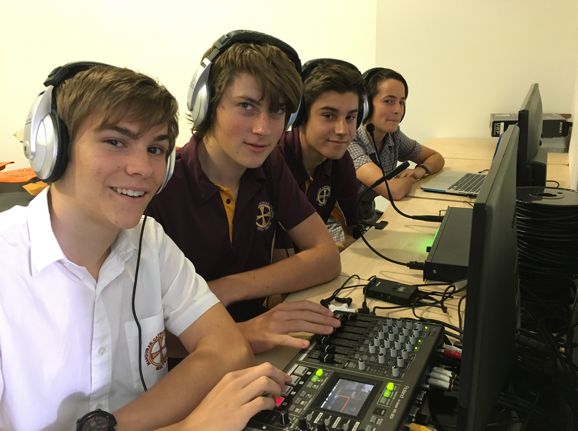
MEDIA UNIT A – FILMMAKING 101 9MEDA
AIMS OF THE COURSE
The aim of this course to use professional filmmaking equipment to plan, produce and edit a number of short
films and productions. You will learn the inside Hollywood tricks and tips from how directors create the sound
of a laser gun in Star Wars, to how editors use the green screen.
COURSE CONTENT
Using the camera crane, dolly, Steadicam and DSLR cameras you will produce a showreel of professional
cinematography techniques. You will also be smashing lettuce, grinding sticks and slapping steaks to create a
soundscape for your favourite Disney film. This will all lead to the production of your own short film.
ASSESSMENT
Students will be assessed throughout the course with both written and practical tasks.
MEDIA UNIT B – NETFLIX FILMMAKING 9MEDB
AIMS OF THE COURSE
The media industry is changing with new and emerging trends impacting how we produce and consume
content.
COURSE CONTENT
In this unit you will explore how innovations within the media industry influence audiences. You will also
view a number of Netflix programs to analyse how media work appeals to mass audiences. The production
aspect of this course will involve you using high definition cameras to plan and produce a short Netfix trailer.
ASSESSMENT
Students will be assessed throughout the course with both written and practical tasks.
20Year 9 Curriculum Handbook 2021
MUSIC UNIT A – MUSIC SKILLS 9MUSA
COURSE CONTENT
Students will be introduced to basic keyboard skills and will continue to learn to read and write music. The
emphasis is on performance activities that build technical skills and an understanding of the elements of music
(rhythm, pitch, dynamics and expression, form and structure, timbre, texture.) Students will also study music
literacy, aural perception, composition and arranging incorporating both solo and ensemble performance. The
students will further explore contemporary styles of music.
ASSESSMENT
This course includes practical assessments for solo and ensemble performances. Students will also complete
written components of the course and will be assessed on these areas.
MUSIC UNIT B – BAND INSTRUMENTAL SKILLS 9MUSB
COURSE CONTENT
Students will continue to learn to play band instruments and further develop their skills to read and write
music. The emphasis is on performance activities that build technical skills and an understanding of the
elements of music (rhythm, pitch, dynamics and expression, form and structure, timbre, texture.) They will
also study music literacy, aural perception, composition and arranging incorporating both solos and ensemble
performances. The students will explore different music styles including Contemporary, Jazz and Blues.
ASSESSMENT
This course includes practical assessments for solo and ensemble performances. Students will also complete
written components of the course and will be assessed on these areas.
OUTDOOR EDUCATION 9OEDA AND 9OEDB
AIMS OF COURSE
To provide a wide variety of outdoor pursuits, recreational activities and life skills not covered in Physical
Education classes, and which students may enjoy and pursue outside and beyond school.
COURSE OUTLINE
Unit A
Students learn survival skills that includes navigation and first aid. They will also participate in recreational
outdoor pursuits such as climbing and kayak polo. Students are given the opportunity to be self-reliant and to
work as a team. Note : This unit contains a water-based activity.
Unit B
Students learn survival skills that includes bush cooking and camp craft. They will also participate in
recreational outdoor pursuits such as mountain biking and archery. Students are given the opportunity to be
self-reliant and to work as a team.
ASSESSMENT
All students will be assessed on their ability to demonstrate the outcomes of the course.
21Year 9 Curriculum Handbook 2021
SCIENCE EXTENSION UNIT A – THE FIVE SECOND RULE + LIGHT UP MY LIFE 9SCXA
AIMS OF COURSE
The aim of this course is to extend students who enjoy and are seen to be talented in the Science learning area.
Students will not only acquire skills in Science and STEM (Science, Technology, Engineering and Mathematics)
but will also develop skills in collaboration, problem solving and critical thinking. Students may also have the
opportunity to participate in State, National and International Science competitions.
COURSE DESCRIPTION
Students will engage in a variety of activities based around two main topics – The Five Second Rule and Light
Up My Life. In The Five Second Rule, students will learn about microbiology, test the five second rule and make
their own hand sanitizer. During Light Up My Life students will learn about electricity and different circuit types
before putting the A in STEAM by making their own light up LED greeting card.
ASSESSMENT
Students will be assessed on a range of personal and group skills. Assessments include laboratory reports,
laboratory workbooks, research, card design and construction.
ENTRY REQUIREMENTS
Entry to this course is restricted to those students who have achieved an A or B grade in Year 8 Science and
demonstrated positive behaviour and a keen attitude.
SCIENCE EXTENSION UNIT B – CRIME SCENE INVESTIGATION 9SCXB
AIMS OF COURSE
The aim of this course is to extend students who enjoy and are seen to be talented in the Science learning area.
Students will not only acquire skills in Science and STEM (Science, Technology, Engineering and Mathematics)
but will also develop skills in collaboration, problem solving and critical thinking. Students may also have the
opportunity to participate in State, National and International Science competitions.
COURSE DESCRIPTION
Students will engage in a variety of activities based on Forensics and Crime Scene Investigation. Students will
learn forensics skills including fingerprinting, blood typing and splatter, foot printing, hair & fibre analysis and
evidence collection. They will then be presented with a fake murder to solve, including collecting evidence
from mock crime scene and interviewing suspects.
ASSESSMENT
Students will be assessed on a range of personal and group skills. Assessments include laboratory reports,
laboratory workbooks, bridge design and bridge construction.
EXCURSIONS
Science Extension will involve some field work at Perth Zoo and consequently an approximate fee of $25 is
associated with this option.
ENTRY REQUIREMENTS
Entry to this course is restricted to those students who have achieved an A or B grade in Year 8 Science and
demonstrated positive behaviour and a keen attitude.
22Year 9 Curriculum Handbook 2021
SPECIALISED SPORT – TRIATHLON 9SPST
AIMS OF COURSE
This course is designed to allow students the opportunity to develop skills, knowledge and experience in
triathlon at a higher level than is available in standard Physical Education classes.
COURSE DESCRIPTION
Students will learn about the processes such as strength and conditioning that athletes need to undertake to
improve their performance in triathlon. The course will also offer an insight into the equipment used in
triathlon and the tactics of triathlon through coaching and video analysis. Competitive events will incorporate
tactics and strategies learned during the course. This course will have both theory and practical components
and is completed over one semester. Students who select this option should be seeking an opportunity to
develop and advance their athletic ability in triathlon.
ASSESSMENT
All students will be assessed on their ability to demonstrate the outcomes of the course.
ENTRY REQUIREMENTS
Selection for this course will be based on the recommendation from the student’s current Physical Education
teacher, student involvement in the College Sports Program and the number of applicants for the course. Only
students who have demonstrated positive behaviour and a keen attitude in Year 8 Health and Physical
Education and have achieved a minimum grade of B will be considered.
SPECIALISED SPORT – VOLLEYBALL 9SPSV
AIMS OF COURSE
This course is designed to allow students the opportunity to develop skills, knowledge and experience in
volleyball at a higher level than is available in standard Physical Education classes.
COURSE DESCRIPTION
Students will learn about the processes such as strength and conditioning that athletes need to undertake to
improve their performance in volleyball. The course will also offer an insight into the tactics of volleyball
through coaching and game analysis. Opportunity will be given for all students to develop and practice
volleyball umpiring. Competitive game play will incorporate tactics and strategies learned during the course.
This course will have both theory and practical components and is completed over one semester. Students
who select this option should be seeking an opportunity to develop and advance their athletic ability in
volleyball.
ASSESSMENT
All students will be assessed on their ability to demonstrate the outcomes of the course.
ENTRY REQUIREMENTS
Selection for this course will be based on the recommendation from the student’s current Physical Education
teacher, student involvement in the College Sports Program and the number of applicants for the course. Only
students who have demonstrated positive behaviour and a keen attitude in Year 8 Health and Physical
Education and have achieved a minimum grade of B will be considered.
23Year 9 Curriculum Handbook 2021
SPECIALISED SPORT – TOUCH RUGBY 9SPSR
AIMS OF COURSE
This course is designed to allow students the opportunity to develop skills, knowledge and experience in touch
rugby at a higher level than is available in standard Physical Education classes.
COURSE DESCRIPTION
Students will learn about the processes such as strength and conditioning that athletes need to undertake to
improve their performance in touch rugby. The course will also offer an insight into the tactics of touch rugby
through coaching and game analysis. Opportunity will be given for all students to develop and practice touch
rugby umpiring. Competitive game play will incorporate tactics and strategies learned during the course. This
course will have both theory and practical components and is completed over one semester. Students who
select this option should be seeking an opportunity to develop and advance their athletic ability in touch rugby.
ASSESSMENT
All students will be assessed on their ability to demonstrate the outcomes of the course.
ENTRY REQUIREMENTS
Selection for this course will be based on the recommendation from the student’s current Physical Education
teacher, student involvement in the College Sports Program and the number of applicants for the course. Only
students who have demonstrated positive behaviour and a keen attitude in Year 8 Health and Physical
Education and have achieved a minimum grade of B will be considered.
24Year 9 Curriculum Handbook 2021
VISUAL ARTS UNIT A – GENERAL ART 9VARA
This General Art course will incorporate aspects of 2D art (painting, drawing and printmaking, photo and digital
media, graphics, collage), 3D art (sculpture, ceramics, installations). Art styles may be related to Ancient art,
Modernism, Australian art, Contemporary craftspeople, designers, photographers and urban art.
Course Content
Art Making - This course focuses on exploration of the creative processes to refine ideas. Students will use a
variety of skills, media and techniques to translate ideas and concepts into visual statements. Experimentation
and individual expression are encouraged.
Art Responses - Via a critical study component and their own work, students will acquire appropriate language
and terminology and grow in their understanding and appreciation of the Visual Arts. Greater emphasis will be
placed on the development of research skills, written analysis and active participation in class discussions.
Assessment
Art Making 70%
Art Responses 30%
VISUAL ARTS UNIT B – DESIGN/CRAFT 9VARB
This course introduces students to Design within the Visual Arts. Distinct areas of Graphics and Visual
Communication, Product Design and Environmental Design will be explored along with Design within the
Crafts. Studio forms will be both 2D and 3D. Art styles may be related to Ancient art, Modernism, Australian
art, Contemporary craftspeople, designers, photographers and urban art.
Course Content
Art Making - Students will be introduced to the design process to generate creative and diverse ideas in
response to the constraints of the design problem or ‘brief’. A variety of Design-related Craft disciplines will
also be introduced and explored, including jewellery, glass/ceramic, photography and fabric design. The
process of research, idea generation, exploration, refinement and evaluation to determine a final solution will
be thoroughly documented. The use of the computer as a valuable design tool will be encouraged utilising a
range of graphics software to develop knowledge using available technologies.
Art Responses - Students will study design/craft from a variety of perspectives in order to gain a greater
understanding and appreciation. Students will acquire and develop skills in analysis using subject specific
terminology.
Assessment
Art Making 80%
Art Responses 20%
25You can also read


