Year 9 Curriculum Guide 2021 - Otago Boys' High School
←
→
Page content transcription
If your browser does not render page correctly, please read the page content below
2021

      Year 9
Curriculum Guide
                          1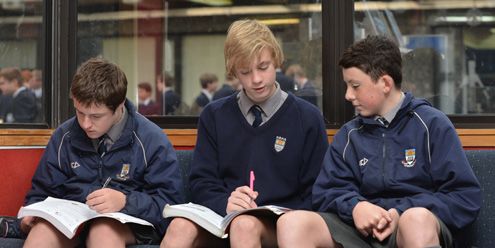
Year 9 Subjects
At Otago Boys’ High School all Year 9 students study the following compulsory subjects:

•    English
•    Health
•    Mathematics
•    Science
•    Social Studies
•    Physical Education

Along with the compulsory subjects all Year 9 students study 7 option subjects, choosing
at least 3 art options and at least 2 technology options.

Arts                                          Technology

•    Art                                      •   Food
•    Drama                                    •   Robotics
•    Business Studies                         •   Digital Technologies
•    French                                   •   Electronics
•    German                                   •   Wood
•    Design & Visual Communication            •   Metal
•    Literacy
•    Te Reo Māori
•    Music

2
English
Junior English aims to foster a love of language, literature and learning in all of our students.
We carefully select texts which are relevant and accessible to our boys and also use a range
of teaching tools and activities in order to cater for as wide a range of abilities and learning
styles as possible. In Year 9 we have English four times a week.

Topics we cover in English:

•    Novel Study
•    Visual Texts Study
•    Short Texts (poetry and short stories)
•    Creative and Formal Writing
•    Oral Language, including speeches and debates

    Mathematics
We study Mathematics four times a week. We try and use context and links to other areas
of the curriculum as much as we can, creating engaging and relevant lessons.

Extension and numeracy support are also offered, ensuring that all students’ needs are
catered for.

Topics we cover in Mathematics:

•    Number
•    Statistics
•    Geometry
•    Measurement
•    Algebra
•    Probability
•    Graphing
•    Right Angle Triangles

                                                                                               3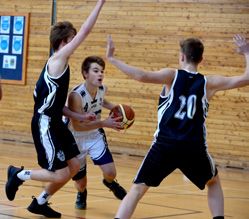
Science
Science lessons are held four times a week and taught in specialised laboratories. Science
is explored by experimentation and discussion of the key ideas that make up the world we
live in.

Topics we cover in Science:

•    Introduction to Science
•    Mixing and Separating
•    Matter
•    Food and Digestion
•    Hydrology
•    Astronomy
•    Ecology
•    Botany
•    Energy and Waves

    Social Studies
Social Studies is taught four times per week. In Social Studies students explore how societies
work and how they themselves can participate and take action as critical, informed and
responsible citizens.

Topics we cover in Social Studies:

•    Introduction to OBHS and its Neighbourhood
•    Epidemics Through Time
•    Pasifika
•    Culture and Change in 20th Century Germany
•    Mt Aspiring
•    Human Rights
•    The American West
•    The Treaty of Waitangi

4
Physical Education
Students participate in Physical Education three times a week. The course involves a lot of
different activities with the chance to work as an individual or as part of a team.

Teamwork, communication and self-management are major focuses in lessons.

The PE curriculum is delivered in five areas:

•    Invasion Games: Touch, Football, Rugby, Hockey, Basketball, AFL
•    Aquatics: Swimming, Water Polo, Kayaking
•    Athletics and Fitness: Athletics, Cross Country, Circuits
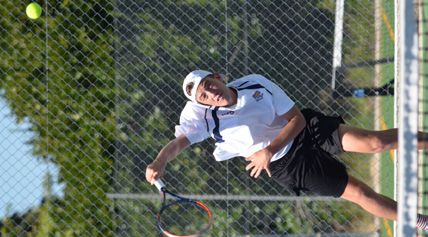
•    Net games: Badminton, Tennis, Volleyball, Table Tennis
•    Striking and fielding games: Cricket, Softball

                                                                                         5
Arts Subject Information You must choose at least 3 from this list. ART The aim of the Year 9 Art course is to demonstrate to students the effects of the various elements of art such as line, colour, texture and tone, and have them imaginatively use these while exploring elementary print, paint and drawing media. DRAMA During this course, students will experience aspects of stagecraft, movement, and the opportunity to express themselves creatively within group situations and as a class. Students will be encouraged to develop their confidence and skills, and to express them in the form of a presentation at the end of this course. BUSINESS STUDIES The emphasis is on the individual business and their households. It should enable students to understand how the individual makes economic decisions and equip them with skills needed to manage their limited means. This will allow students to participate more effectively as consumers and workers. FRENCH An introductory course to the French language and culture, emphasising the primary skills: listening, speaking, reading and writing. Students learn how to communicate with other people, how to talk about themselves and their families, using a variety of means, including role-playing, audio and online activities. GERMAN The introductory course is to show boys some of the language learning skills. By means of textbooks, film and other material, Germany, its language and people are introduced. We also use online programmes. The themes covered are introductions, likes and dislikes, numbers, basic instructions, talking about sport, and some typically German celebrations. DESIGN & VISUAL COMMUNICATIONS This subject explores the methods of communication using drawn information. Skills such as sketching, colouring, rendering, instrumental drawing and model making are learnt as the student solves simple design problems and presents the results in an appropriate manner. Much of the information learnt in presentation, layout and use of colour is applicable to other subjects. 6
LITERACY
This option gives students the opportunity to improve and widen their reading and
comprehension skills. There is also the opportunity to further develop a student’s writing
skills. This option is an extension programme designed for able readers. It is NOT a reading
recovery programme.

TE REO MĀORI
An introductory course in Te Reo Māori (language) and Tikanga Māori (customs). Students
will learn basic sentence structure, mihi (introduction), pronounciation and basic
conversation. The students will also be introduced to Māori history, Māori mythology,
Marae protocol, Māori art, Waiatu and haka. By the end of this course students should feel
comfortable in a Māori environment and have a knowledge of Tikanga Māori.

MUSIC
The option includes an introduction to basic elements and understandings of Music
through the use of the keyboard, an introduction to the basic skills of Guitar and Percussion,
and Composition, including the use of MIDI keyboard/computer composition software,
the language and appreciation of music, singing and individual performance. There are
also opportunities for participating in Music performance groups and learning to play a
musical instrument through the Itinerant Music Teacher Programme. Most instruments
are available for hire through the school.

READING SKILLS SUPPORT
This course is for those students who require additional assistance with their reading
skills. The focus is on reading activities designed to improve word attack, reading fluency
and vocabulary. Writing skills, including handwriting, are included in course activities as
appropriate. Students will be selected by their teachers and deans.

NUMERACY SKILLS SUPPORT
This course is for students who require additional assistance with their numeracy skills.
The focus is on the basic mathematical processes involving decimals, fractions and
percentages. Students will be selected by their teachers and deans.

                                                                                            7
Technology Subject Information You must choose at least 2 from this list. FOOD TECHNOLOGY The emphasis is to develop skills and knowledge within the food technology room. Students will incorporate aspects of design, nutrition, hygiene and safety. ROBOTICS Students will work together in teams to learn how to code a EV3/NXT robot and complete a series of challenges. The Green City Challenge will be the key focus of this course, enriching students understanding of basic computational thinking principles. Students will compete against one another to complete as many of the challenges as possible, enhancing their team work and critical skills. DIGITAL TECHNOLOGY This course offers the chance to ignite a passion for digital technologies, and lead students into a rewarding and fulfilling future and further studies. The course is designed to equip students with a wide range of basic skills: photo editing, spreadsheets, design, and programming. Students will learn how to code their own game and become confident creators of digital technologies. ELECTRONICS Students will investigate and gain knowledge of electronic components and construct their own circuits. WOOD Students gain knowledge of the qualities and suitability of wood and other materials as well as design and problem solving. Health and Safety work practices are also emphasised. METAL Students investigate the use of metal and other materials as well as design and problem solving. Health and Safety work practices are also emphasised. Language Extension Option Students will have the opportunity to study an extension course in a language. These are in term four and students will be surveyed towards the end of term three to ascertain interest in this option. They should take this second level if they are considering doing a language in Year 10. 8
High Performance Sport Options
Year 9 and 10 students can choose to be part of the High Performance Sports programmes.
This involves elite mentoring/coaching for selected students in the following codes:

•    Basketball
•    Cricket
•    Football
•    Rugby
•    Tennis

Rugby, Football, and Basketball are available as a one term module in Year 10.

                                                                                     9
Cultural Activities
Orchestra – combined with Otago Girls’
High School Pacific Island Group
Chamber Orchestra School Production
• Performance
Music Groups • Lighting
• Rock Band • Sound
• Jazz Band • Set design
• Backstage and front of house
Choirs
• Combined choir with OGHS
• Boys’ Choir
Itinerant Music Lessons
• Woodwind
• Brass
• Strings
• Piano
• Guitar
• Drums
• Vocal tuition
Drama
Theatre Sports
Debating
Kapa Haka
10Sporting Opportunities
Otago Boys’ High offers plenty of sporting opportunity.....
• Athletics • Swimming
• Badminton • Table Tennis
• Basketball • Tennis
• Chess • Touch Rugby
• Cricket • Triathlon
• Cross Country • Volleyball
• Curling • Waterpolo
• Cycling • Yachting
• Debating
• Football
• Futsal
• Golf
• Hockey
• Ice Hockey
• Mau Rakau
• Mountain Biking
• Multisport / Adventure Racing
• Orienteering
• Rowing
• Rugby
• Ski Racing
• Smallbore
• Softball
• Squash
• Surfing / Surf Lifesaving
11Visit us on our Facebook page
facebook.com/OtagoBoysHighSchool
2 Arthur Street, Dunedin
(03) 477 5527 www.obhs.school.nz
12You can also read


