YEAST EXTRACT A TREASURE FROM NATURE FOR FOOD - Bio Springer
←
→
Page content transcription
If your browser does not render page correctly, please read the page content below

YEAST
EXTRACT
    A TREASURE
  FROM NATURE
     FOR FOOD

                 white paper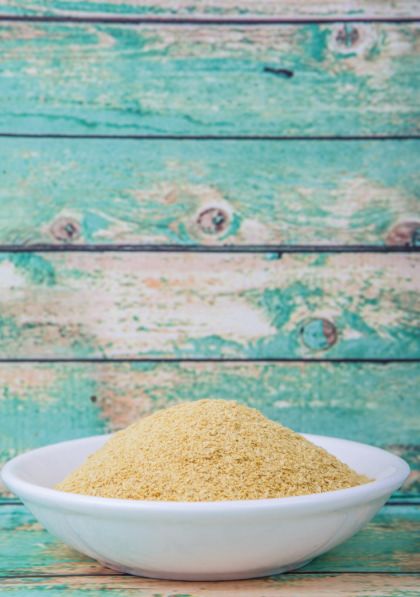
Content
I. What is yeast extract?                                                           P.4
A few definitions and historical facts
       Yeast definition
       Yeast has been used as a natural origin food ingredient for centuries
       Yeast extract as a natural flavoring ingredient
Yeast extract is an ingredient from nature
       Yeast extract is coming from yeast
       Composition of yeast extract
Yeast extract as a food ingredient
       Natural ingredient
       Yeast extract and gluten
       100% vegan
       An ingredient which fits a non-GMO approach
       A Halal and Kosher certified ingredient
       Process resistant

II. How is yeast extract produced?                                                  P.8
Fermentation
Breakage
Separation
Different forms of yeast extract

III. What are the main uses of yeast extract?                                      P.12
Yeast extract main applications in food industries
       A natural and culinary ingredient from yeast
       Yeast extract in your kitchen
Taste
       What is taste?
       What is yeast extract taste?
       Zoom on the diversity of yeast extract tastes
       Focus on umami taste
       How does yeast extract improve taste in food?
       Let us see the properties of yeast extract with a few examples of recipes
Nutritional profile improvement
       Major public health issues explain current trends in nutrition
       Salt reduction
       Sugar reduction
       Fat reduction
Clean label

IV. Biospringer is an expert of yeast extract                                      P.20
Our technical expertise
Expert on taste building
Local teams worldwide
| Biospringer WHITE PAPER

    owadays, food manufacturers have several challenges to
N   face when responding to consumer trends. Consumers are
more and more careful about the composition and the quality
of the products they eat: naturalness, nutrition and pleasure
are essential criteria in the purchase decision. 55% of the world
consumers look for natural features when buying products1.
In this context, choice of ingredients is strategic for food
formulators.

Yeast extract is one of those strategic ingredients for food and
beverage industry.

Yeast culinary potential has been employed for centuries and is
well-known all over the world. As for yeast extract, it has been
used since the beginning of the 20th century for its organoleptic
qualities. In today’s world, it raises some questions:

   •   What is it exactly?
   •   How is it produced?
   •   Is it natural?
   •   How does it improve taste?

                                                                                                                  3
            1. FoodBev Media, according to Euromonitor ; https://www.foodbev.com/news/almost-half-of-consumers-
            expect-products-to-be-all-natural-euromonitor/, December 2016
#1
What is
 yeast
extract?
WHAT IS YEAST EXTRACT? | Biospringer WHITE PAPER

A few definitions and historical facts

Yeast definition
Yeast is a microorganism which belongs to the fungus family. The first yeast originated hundreds of
millions of years ago. It is composed of: proteins 49%, carbohydrates 40%, minerals 7% and lipids 4%.
Those components are protected from the extracellular environment by a cell wall.

Yeast has been used as a natural origin food ingredient for centuries
Whether it is “baker’s yeast” or “brewer’s yeast’, yeasts are applied to make many products. Indeed,
fresh yeast has been utilized for thousands of years to make everyday consumer products such as
bread, beer and wine thanks to its fermentation properties. In the absence of air, yeast cells produce
carbonic gas and aromas. During bread making, baker’s yeast gives bread its unique taste and texture
using sugar and oxygen to perform fermentation. Regarding beer or wine, yeasts can adapt in different
substrates, like grapes or malt, and provide the product different tastes, different alcohol levels…

Yeast extract as a natural flavoring ingredient
After centuries of bread, beer and wine, a new potential has been discovered for yeast in the 19th
century by Professor von Liebig. He has been the first scientist to find out that yeast could be interesting
to substitute taste of meat in a dish.
At the beginning of the 20th century, the interest in yeast as an aromatic base to improve the flavors
of soups, sauces, broths and other dishes has been developed until the 50’s, when yeast extract was
introduced to the market...

                                                                                  Introduction of
                                                                                  yeast extract
                                                                                  on the market

                                                                                                                   5
Biospringer WHITE PAPER | YEAST EXTRACT, A TREASURE FROM NATURE FOR FOOD
Yeast extract is an ingredient from nature
Yeast extract is coming from yeast Composition of yeast extract
Yeast extract comes from fresh yeast and Composition of yeast extract is based on
is therefore a natural origin ingredient. composition of yeast: proteins, free amino acids,
No synthetic or chemical ingredients are carbohydrates, vitamins and minerals.
added during its production. It keeps its
natural attributes and organoleptic qualities
throughout the whole manufacturing process:
Carbohydrates
its inner enzymes2 cut yeast proteins into
4% Lipids
amino acids to isolate tasty components. Thus, 9%
9.8%
Mineral matter
we obtain a yeast extract.
Nitrogene
Proteins (N*6.25)*
Yeast extract 26% *N represents
nitrogen rate content
the
as a food ingredient of proteins. 6.25 is
the grossing-up factor
of total nitrogen into
proteins. We use ratio
61.2%
6.25 to convert nitrogen
(measured) into proteins.
Natural ingredient
Yeast extract has a natural origin, and using it as a food ingredient is valuable for food manufacturers
and consumers, especially as it is minimally processed. As a matter of fact, the natural attribute of food
and beverage products is what consumers are looking for. Moreover, clean label represents a major
challenge: consumers seek products with natural ingredients that they recognize.
52% of respondents of a survey across Europe, North America and Asia-Pacific said they would spend
over 10% more on a food or beverage product that contains ingredients they recognize and trust3.
Besides, 56% of consumers are interested in a “natural” feature on food and beverage products4. Tasty
natural products are achieved with yeast extract.
Yeast extract and gluten
Baker’s yeast extracts usually do not contain gluten as no gluten derivative is used during process.
This is a good thing when you know that gluten-free is a one of the main food trends: the prevalence
of gluten intolerance has been estimated to globally approximate 1%5. According to this trend, even
people who do not have celiac disease are trying to avoid it.
This is a real challenge for food manufacturers, because gluten-free products are often associated
with bad taste: the consumer wants to eat gluten-free and tasty products. We invite you to refer to the
related legislation of your country on this subject.
On another note, yeast used to produce brewer’s yeast extracts comes from the beer manufacturing.
Thus, because of use of cereals such as barley or wheat in beer manufacturing, brewer’s yeast extracts
may contain residual gluten. Gluten declaration and gluten-free status depend on local regulation.
6
2. Enzymes: small proteins originating from living cells, capable of catalyse or activation of organic reaction / 3. Food Manufacture, Food makers can benefit from
trusted ingredients: survey, Jan 2017 / 4. Euromonitor, Global consumers trend tracking survey, 2016 / 5. World Gastroenterology Organization Global Guide-
lines, Celiac Disease, July 2016 / 6. Etude CHD Expert « Le marché végétarien et vegan en France », Sept 2016WHAT IS YEAST EXTRACT? | Biospringer WHITE PAPER
100% vegan
Eat vegan occasionnaly in France 6
Yeast extract is a non-animal
ingredient which make it the Eat meat alternatives for ethical
ideal choice for many vegan concerns in Germany10
products. This is a chance to
bring taste to vegan products
and also proteins, vitamins Of the American population is
and minerals. Meat and cheese having occasional meat-free days8
analogs, vegetal-based products
can be formulated with yeast
extract. The food industry is the Of increase in the vegan products
first one to be concerned, when offer in French supermarkets in 20167
the number of vegetarians, 50%
vegans, and flexitarians are still Of product launches in Asia Pacific
growing. between 2011 and 2016 had vegan
or vegetarian claims9
An ingredient which fits a non-GMO approach
The yeast strains selected to manufacture Biospringer yeast products are not genetically modified
organisms11. All our products are non-GMO products. Moreover, we take part to the «Non-GMO Project
USA». The «Non-GMO Project USA» is a non-profit organization focusing on genetically modified
organisms. The organization began as an initiative of independent natural foods retailers in the USA
and Canada. The goal is to prevent genetically modified foodstuffs from being present in retail food
products. It provides third-party verification and labeling for non-genetically modified food and
products. The non-GMO project acts for the reduction of contamination risk of the non-genetically
modified food supply with genetically modified organisms.
A Halal and Kosher certified ingredient
All our products are certified Halal and Kosher by recognized organizations.
Certification is renewed annually and is done batch by batch for Kosher Passover certification.
The Halal certification is renewed annually in the presence of a religious representative. For further
information about certifications, please contact our local teams.
Process resistant
Yeast extract is a process resistant ingredient (acid, heat, and freeze) and is therefore suitable for
many applications, regardless of the process, such as soups, broths, fish, meat and analogue products
and seasonings.
7
7. Les Echos, selon Xerfi ; https://business.lesechos.fr/entrepreneurs/actu/030546509865-les-vegan-cultivent-l-ambiguite-avec-les-produits-
d-origine-animale-313011.php 8. Mintel, Meat-free days is the top reason for eating protein alternatives among US consumers, 2017, http://www.mintel.com/
press-centre/food-and-drink/meat-free-days-top-reason-for-protein-alternative-use / 9. Protein trend: plant-based protein will continue to flourish in Asia,
Mintel, 2016 / 10. Mintel, Vegetarian meals and meal centres increased seven-fold un Germany between 2011-2015, 2016, https://www.mintel.com/
press-centre/food-and-drink/vegetarian-meals-and-meal-centres-increased-seven-fold-in-germany-between-2011-2015 / 11. Directive 2001/18/EC and its
subsequent modifications, dated 12.03.2001, replacing the Directive 90/220/EEC#2 How is yeast extract produced?
HOW IS YEAST EXTRACT PRODUCED? | Biospringer WHITE PAPER

It all starts with fresh yeast composed by:

• Cell wall, to separate and protect the yeast cell from extracellular environment,
• Cytoplasm rich in nutrients such as proteins, free amino acids, vitamins and minerals,
• Nucleus, location of the precious DNA molecule of the yeast, its genetic information.

        Yeast cell:

                                                                   Nucleus

            Cell wall                                           Cytoplasm

Basically, yeast extract is only yeast, without its cell wall - Nothing else.

Its production consists in 3 steps:
• fermentation,
• breakage,
• separation,
without any chemical additives.
Thanks to a copy of natural phenomenon, Biospringer preserves the characteristics
of the original yeast.

                                                                                                         9
Biospringer WHITE PAPER | YEAST EXTRACT, A TREASURE FROM NATURE FOR FOOD
Fermentation
To fit with customer’s final expectation and
depending on the uses, a specific yeast strain
is selected. Once this selection is made, yeast
fermentation starts. It is conducted in tanks
under regular growing conditions: a glucose
source, a monitored temperature (around 30°C Yeast cell
/ 86°F) and a sufficient oxygen supply. Those
conditions are essential for the efficient growth
and the multiplication of yeast population.
This first step results in a juice called “yeast
cream”.
Growth of the yeast population
Breakage
Breakage induces a solubilization of the yeast
cell content. This one uses heat and the own
enzymes naturally present in the yeast cell,
without any additions. This step is also known
by scientific term of autolysis.
To do so, and after a cooling step to stop the
multiplication of yeast population, the yeast
cream is placed in large tanks at a temperature
of 45-55°C12 (113-131°F) and the inner
enzymes break down the proteins and other
macromolecules into smaller molecules.
Solubilization of yeast content by thermal heat
treatment and selection of tasty components
It allows the selection of tasty components (elementary particles):
• Protein portions: peptides, free-amino acids such as glutamic acids
• Nucleic acid: Ribonucleic Acid (RNA), Oligonucleotides, Nucleotides (IMP-GMP)
• Polysaccharides: sugars, mannans and glucans
It is necessary to monitor the lysis to select the “right” tasty components in the correct ratio.
This step induces the dissolution of the yeast cell content in elementary particles able to leave the
yeast cell wall, giving rise to the soluble yeast extract. Each parameter of the breakage (duration,
temperature and pH) is crucial and influences the final tasting properties of yeast extract.
10
12. EURASYP – “How it’s made”, http://www.yeastextract.info/yeast-extract/how-it-s-madeHOW IS YEAST EXTRACT PRODUCED? | Biospringer WHITE PAPER
Separation
Centrifugation then allows the separation of cell walls from tasty components and nutrients obtained
during the breakage.
Every nutrient from the initial yeast is preserved into yeast extract. This centrifugation ends with
a flavorful solution, which is concentrated in a gentle evaporation (60°C/140°F) to preserve all
organoleptic properties and qualities of the product. At the end of this step, water is evaporated,
and nothing remains but yeast extract.
Cell wall Yeast extract
= yeast content
Centrifugation / High speed separation
Different forms of yeast extract
The result of this process is a yeast extract powder, liquid or paste:
• Paste and liquid forms are obtained after the standard production that ends after evaporation and
concentration.
• Powder form needs an additional step which consists of spray drying. The liquid is fed into a
so-called spray tower and dried using hot air. Then water evaporates, yeast extract falls down and
is collected at the base of the tower; it confers its final texture.
Depending on intended usage, a form is preferred due to its technological properties and capacity of
incorporation into a formula and industrial production lines.
POWDERS PASTES LIQUIDS
Evaporation, concentration and spray-drying are additional steps
to prepare the requested yeast extract commercial forms
11#3 What are the main uses of yeast extract?
WHAT ARE THE MAIN USES OF YEAST EXTRACT? | Biospringer WHITE PAPER

Yeast extract main applications in food industries

A natural and culinary ingredient from yeast
Yeast extract is added in everyday consumer products. It is commonly incorporated by many
professionals in the food industry as an aromatic ingredient.

It has several functionalities:
  1. Improve and build taste
  2. Bring signature flavor
  3. Make healthy formulations
  4. Bring richness
  5. Or as an ingredient in flavor manufacturing

Thanks to a wide range of aromatic notes, it improves the taste of many savory or sweet foods.
These properties in taste perception are attractive for nutrition purposes, and make yeast extract
an appropriate solution for developing healthier products. Yeast extract allows food manufacturers
engaged in a nutritional improvement approach to reduce salt, fat or sugar content in their dishes
while keeping pleasure and taste in their products.

Yeast extract in your kitchen
Basically, there are two different uses of yeast extract:

As a food ingredient
                                                      Red Fishcake with Sea Bream
Employed as an ingredient, the historical
                                                       Ingredients
product is the bouillon cube, which is sold
                                                      Fish (cod, white flower croaker, snappers), egg
worldwide for seasoning dishes. It is also            white, algae salt, sea bream stock, sugar, mirin,
present in soups, meat, snack seasonings,             starch, vegetable oil, yeast extract, seasoning
soy sauce, dressings and gravies.                     (amino acids), processed starch, shell calcium,
                                                      coloring.

As a condiment or spread
Directly consumed by consumers as a                   Yeast Extract spread
condiment, “yeast extract spread” is a                 Ingredients
very specific everyday product for Anglo-             Yeast extract (barley), salt, vegetable juice concen-
Saxon market (Great Britain, Australia…).             trate, vitamins (thiamin, riboflavin, niacin, vitamin
                                                      B12, folic acid), natural flavoring (celery), folic acid.

Taste
What is taste?
Different words describe taste: flavor, savor, aroma… Taste is the consequence of what
our tongue perceives when something is eaten. Actually, both the mouth and nose are
concerned when it comes to sending information to the brain, in order to characte-
rize that taste: the two senses, taste and smell, combine and are integrated into the higher
cerebral level and that is what allows our brain to define the taste and the flavors of food.

                                                                                                                   13
Biospringer WHITE PAPER | YEAST EXTRACT, A TREASURE FROM NATURE FOR FOOD
5 TASTES ARE COMMONLY DESCRIBED: SALT, SWEET, SOUR, BITTER AND UMAMI.
If « Saltiness », « sweetness », « bitterness » and « sourness» are well-known and recognized around
the world, umami has been characterized later. It was discovered in 1908 and means “ delicious ” in
Japanese. It provides a pleasant taste of broth or meat with a long-lasting effect and appetizing sensa-
tion which covers the whole tongue.
Even though there is a worldwide consensus about these 5 tastes, neurobiologists’ knowledge is
constantly evolving. They have shown that the specific molecules linked to each taste arouse sensory
images specifically recognized by the brain. This is why new flavors and concepts are more and more
highlighted, like kokumi (specifically a taste and flavor modulator) characterized by smoothness and
mouthfullness, which is often associated to the taste of “slow-cooking” or “home-prepared food.
What is yeast extract taste?
Yeast extracts are natural flavor ingredients13. Some provide the essential flavor notes to bring body
and depth to a recipe and some others are specific notes themselves, to drive the taste in a certain
direction by providing a signature (chicken, beef, and cheesy flavor notes). As they balance the overall
flavor by bringing the umami taste and richness, they are always combined with other ingredients in
recipes.
Zoom on the diversity of yeast extract tastes
Yeast extract main contribution is for taste improvement. It brings vegetal aromatic notes and also
meaty, toasted, roasted, cooked, salted, buttered notes... with different levels of intensity. Each of these
aromatic possibilities is differently exploited, depending on the final expected application.
Our Springarom® yeast extract reflects an example of the diversity of tastes:
Organoleptic profile done by Biospringer
sensory expert panel following ISO 8586,
13299 and ISO 8589 standards.
Product tasted at 1% in 55°C water.
This profile does not predict product’s
behaviour and impact in culinary application.
These different tastes are developed thanks to a modulation of various parameters during production:
• Strain selection: before starting the production of yeast extract, the yeast strain is selected for its
ability to bring a specific flavor relating to customers’ needs.
• Breakage parameters: each one is pre-eminent and influences the final tasting properties of yeast
extract.
For example, temperature and steps duration are some of the parameters that can be changed
depending on the final taste expected. Breakage of yeast cell and its modulation is precisely one of
Biospringer’s expertise.
14
13. ISO norm from Dec 2017-ISO/TS 19657WHAT ARE THE MAIN USES OF YEAST EXTRACT? | Biospringer WHITE PAPER
Focus on umami taste
Although it is a taste which is often associated with Asian cuisine, umami is found worldwide in a
very large number of foods like parmesan, onions, fish sauce, and even tomatoes! Everyone has ever
experienced umami in his everyday cooking. Umami taste in food is due to its natural content in glutamic
acid. Yeast extract contains only approximately 5 percent of glutamate when one tomato contains
approximately twice the amount of glutamate present in 200 ml of yeast extract flavored bouillon14.
≈ 40 mg/100g ≈ 246 mg/100g
of glutamate of glutamate
VERSUS
Yeast extract Tomatoes
flavored bouillon
The umami taste of yeast extract is partly explained by its protein content, very similar to that
of meat broth. As a result of its special and unique taste, yeast extract has been employed as an
ingredient in food products for approximately the past 70 years.
Our Springer® 2020 yeast extract provides natural umami taste in foods:
Organoleptic profile done by Biospringer
sensory expert panel following ISO 8586,
13299 and ISO 8589 standards.
Product tasted at 0.5% in 55°C water.
This profile does not predict product’s
behaviour and impact in culinary application.
How does yeast extract improve taste in food?
It is by combining ingredients that we get a tasty and flavorful dish.
Thanks to its natural content, yeast extract is an attractive ingredient in food formulation. Some of its
components bring savory notes to the product while others round off original taste of foods.
15
14. EURASYP – Yeast extract, naturally good http://www.yeastextract.info/public/documents/brochures/0281404001_yeast_extract_a5-engl.pdfBiospringer WHITE PAPER | YEAST EXTRACT, A TREASURE FROM NATURE FOR FOOD
Let us see the properties of yeast extract with a few examples of recipes:
• Yeast extract improves and builds taste by providing base-notes to get subtle and savory taste profiles,
ideal to give a bouillon or meaty note to basics flavors.
Example from China: Example from South America:
Springalys® D201 (dosage 0.3%) improves spiciness, Pronal® 0210 (dosage 0.1%) adds roundness and
masks bloody off-notes. improves the beef taste.
• Yeast extract gives richness thanks to the umami taste. It brings a savory and rounded mouthfeel
perception of taste ideal for salt reduction.
Example from Asia Pacific: Example from Europe, Middle East and Africa:
Springer® 2006 (dosage 0.3%) adds umami and balances Springer® 2012 (dosage 0.38%) allows a 30% salt
the taste. reduction without compromising the taste.
16WHAT ARE THE MAIN USES OF YEAST EXTRACT? | Biospringer WHITE PAPER
• Yeast extract brings smoothness and mouthfullness by boosting saltiness, sweetness and umami notes.
Example from North America: Example from Europe, Middle East and Africa:
Springer® 4101 & Springer® 2020 (dosage 0.24%) Springer® 4115 (dosage 0.2%) provides smoothness
improve naturally the chicken flavor with an umami and mouthfeel effect.
contribution.
• Yeast extract brings signature flavor by bringing more specific flavor notes such as white meat chicken,
red meat, beef juice, roasted/grilled/smoked meat, cheese...
Example from North America: Example from Asia Pacific:
Springarom® CH 7012 (dosage 1.4%) provides a rich Springer® 6008 (dosage 0.3%) contributes to grilled,
cheesy note. roasted meat notes.
17Biospringer WHITE PAPER | YEAST EXTRACT, A TREASURE FROM NATURE FOR FOOD
Nutritional profile improvement
Major public health issues explain current trends in nutrition
Salt, sugar, fat…Those ingredients are major concerns in the food industry. Consumers are more and
more aware of the correlation between food and health: obesity, diabetes, cardiovascular health… all
of these medical issues are strongly influenced by food consumption and lifestyle habits.
Besides, food crisis and the growth of environmental awareness explain the fact that the consumer
is looking for more simplicity and naturalness. This is the source current food trends: the craze for
healthy snacks and healthy ingredients such as super foods, plant proteins, clean label…
In this context, improvement of food formulation is a tremendous issue for food manufacturers.
They are trying to reduce salt, sugar and fat contents in their products in order to answer consumers’
expectations and needs, while paying attention to develop tasteful products at the same time. Quite
a considerable challenge!
Salt reduction
According to the World Health Organization (WHO), the average daily salt intake is between 9g and
12g15, when official recommendations say it should be around 5g for an adult. Indeed, excessive sodium
consumption is known to possibly lead to hypertension and a higher risk of developing cardiovascular
health issues. In this context, food manufacturers are strongly encouraged to reformulate their pro-
ducts to reduce salt content, without compromising the taste.
Yeast extracts offer taste properties to support the development of salt-
reduced and flavorful foods and beverages. Thanks to their strong natural
aromatic taste, similar to that of spices, yeast extracts allow manufacturers to
reduce up to 30% the sodium content of numerous dishes (soups & broth, sauces
& dressings, snacks & seasonings and more) without compromising their taste.
They help to increase the salty perception (thanks to umami taste) or bring some
nice flavor notes. The product taste is reinforced and the lack of salt/sodium is
not noticed while still very good.
Sugar reduction
Diabetes, as well as most of metabolic diseases, is a growing problem since 8.5% of the world’s
population (or 422 million people) are diabetic16. These numbers are serious, and there are now strong
public campaigns to fight against it. Furthermore, the World Health Organization (WHO) recommends
reducing the daily intake of free sugars to less than 10% of the total energy intake for adults and
children17. In this context, the food industry has a key role to deliver a satisfying taste when reducing
sugar in foods and beverages.
18
15. World Health Organization, fact sheet on salt reduction, June 2016 / 16. World Health Organization, fact sheet on diabetes, Nov 2017 / 17. World Health
Organization - WHO calls on countries to reduce sugars intake among adults and children, March 2015WHAT ARE THE MAIN USES OF YEAST EXTRACT? | Biospringer WHITE PAPER
Yeast extracts are an interesting solution to reduce sugar when incorporated
in sweet recipes. They help to bring out and balance the aromatic notes
of ingredients such as eggs, vanilla... They also subtly reveal roasted
flavors, malted, cocoa or cereals. The intensity of these flavors allows food
manufacturers to develop tasteful products while reducing up to 30% sugar
and maintain the overall taste balance of many products such as cookies, sweet
sauces like ketchup. For food manufacturers that chose to add sweeteners in
their recipes, and especially in “no sugar beverages”, metallic taste or licorice can
be highlighted with such ingredients. In this case yeast extract is also useful to
mask undesirable notes.
Fat reduction
Lipids are essential components of a living cell. However, a high fat intake can lead to obesity
increasing risks of heart diseases. In 2016, 39% of the world’s adult population were overweight
(1.9 billion adults) and 650 million of these were obese. Worldwide obesity has tripled since 197518.
Regarding fats, the main goal for food technologists is the reformulation of products to reduce fat
content while preserving gustative properties, texture, pleasure and shelf life.
Yeast extracts are an interesting solution to recover a lingering effect and
roundness in low-fat foods. They provide a sensation of mouthfulness and
smoothness and give a richer, fuller and stronger taste, allowing a fat reduction
up to 30%.
For example, in a low-fat peanut butter, yeast extract will intensify fatty flavor:
all without compromising the flavor of the recipe.
Clean label
Yeast extract comes from fresh baker’s or brewer’s yeast and has therefore a natural origin. It is used in
very small quantities, similar to spices and seasonings. Generally less than 1% is enough to obtain a result
because its taste is intense: in the list of ingredients, yeast extract is almost always at the end (the ingre-
dients are ranked in descending order19).
Moreover, its production is carried out without adding any chemical molecule.
Yeast extract is a natural and simple flavoring ingredient, like herbs and spices are applied by cooks
to create recipes.
Unlike chemical glutamate or MSG, it is not an additive: the packaging of products containing yeast
extract can announce “without additives”.
19
18. World Health Organization, fact sheet on obesity and overweight, Oct 2017 / 19. According to: Regulation (EU) No 1169/2011 of the European Parlia-
ment and of the Council, article 18, available here : https://eur-lex.europa.eu/legal-content/EN/TXT/PDF/?uri=CELEX:32011R1169&from=en - US Food &
Drug Administration, Code of federal regulations, title 21, available here : https://www.accessdata.fda.gov/scripts/cdrh/cfdocs/cfcfr/CFRSearch.cfm?fr=101.4#4 Biospringer is an expert of yeast extract
BIOSPRINGER IS AN EXPERT OF YEAST EXTRACT | Biospringer WHITE PAPER

Biospringer is a key player and global producer of yeast
extracts. As a matter of fact, it relies on Lesaffre’s 165 years
of expertise and know-how in yeasts and fermentation.

Today, 1 bread out of 3 is made with Lesaffre yeast and more
than one billion people across the world consume food made
with Lesaffre’s yeast products every day.

With eight productions plants (France, United States of
America, Brazil, China (PRC), Republic of Serbia), a commercial
team across Europe, Middle East, Africa, America, Asia and
Oceania, a worldwide network of Culinary Centers, a team
of technologists and R&D, Biospringer brings taste and
pleasure to customers.

                                                                                                21
Biospringer WHITE PAPER | YEAST EXTRACT, A TREASURE FROM NATURE FOR FOOD
Our technical expertise
Thanks to Lesaffre technical expertise on yeasts, Biospringer has developed a strong knowledge on
fermentation and breakage of yeast cell.
Indeed, Biospringer R&D center is composed of 20 scientists fully dedicated to yeast extract, who
are part of a strong Lesaffre R&D team of 570 experts worldwide. These scientists actively work on
strain selection and parameters of yeast cell breakage to provide the best taste options and sensory
properties to the customer.
This expertise also lies in a sensory laboratory, a branch of the R&D department dedicated to the
sensory analysis and taste properties of Biospringer’s products. These specialists monitor potential
opportunities brought by yeast extract in terms of taste and develop scientific sensory profile of our
products.
Expert on taste building
By providing close technical assistance, the Culinary Center
builds strong and reliable partnerships with Biospringer’s
customers. Our team of food product experts is dedicated
to find technical solutions with Biospringer’s natural and
vegan yeast products. They initiate new product develop-
ment and implement innovations relating to customers’
needs: taste improvement, healthier formulations, clean
label solutions… Studying the solutions for today and
tomorrow is the main goal of those experts.
Local teams worldwide
EMEA
NORTH Maisons-Alfort,
AMERICA Strasbourg,
Milwaukee, France
United States of Senta,
America Serbia
Shanghai,
Chongzuo, China
Laibin,
China ASIA
PACIFIC
Singapore
SOUTH
AMERICA
Valinhos,
8 Production plants Brazil
5 Commercial offices
5 Culinary centers
1 Central R&D
22For more information, please visit www.biospringer.com
white paper        www.biospringer.com
              ©Biospringer - Global Marketing - March 2019
You can also read


